
EDF launches Britainโ€™s first solar tariff with no standing charge

EDF has launched a market-first solar tariff with daily off-peak discounts and zero standing charges or exit fees.

Exclusively available to new customers that install a solar panel and battery bundle through EDFโ€™s solar installer, Contact Solar, the new Empower Exclusive tariff will help customers slash household bills and carbon emissions. Typical energy users could reduce electricity bills to almost zero thanks to the energy generated by the panels and through optimising the battery1.

EDF is committed to helping customers save cash and carbon and following the acquisition of Contact Solar earlier this year, this one-year introductory offer marks the first of its exclusive solar โ€˜net zero homeโ€™ product and tariff bundles.

Alongside zero standing charges, the time of use tariff helps customers save cash and carbon by providing three hours of discounted, zero carbon electricity every day between the hours of 1am and 4am.

The discounted night rate has been cleverly designed to optimise battery charging. Whether itโ€™s low sunshine during winter months, or overnight, customers can significantly reduce their reliance on the grid in peak hours by charging the battery in cheaper hours.

The launch of the Empower Exclusive tariff follows EDFโ€™s recent acquisition of Chorley-based solar and battery installer, Contact Solar. Together EDF and Contact Solar are offering ยฃ500 off new solar panel and battery installations for the first 500 customers signing up to the bundle2, as well as nothing to pay until the system is fully installed.

With solar panel systems available for on average ยฃ8,495 for a typical 3-bedroom house, Contact Solarโ€™s package offer includes 10 solar panels, a 5kw hybrid inverter and 5.32kw battery, all installation and scaffolding costs, a 10-year battery and inverter warranty, a 25-year solar panel warranty, virtual and technical survey costs, and access to a system monitoring and performance app. All combinations of solar and battery installs will also benefit from 0% VAT.

Philippe Commaret, Managing Director of Customers at EDF, said: โ€œWe know more and more people are looking for ways to save cash and carbon, which is why weโ€™re pleased to bring this unique solar product bundle to the market.

โ€œWorking closely with Contact Solar, we look forward to helping more customers enjoy the benefits of solar panels, providing them with a fantastic end-to-end installation service and significant reductions on household bills.โ€

Tom Taylor, Director at Contact Solar, said: โ€œWeโ€™re delighted to now be a fully integrated part of EDF, bringing exceptional new benefits to customers such as this new exclusive energy bundle.

โ€œWith an incredible ยฃ500 discount on solar and battery installations for the first 500 customers, we look forward to helping more customers install solar technology in their homes as the country progresses towards a greener future.โ€

Rated โ€˜Excellentโ€™ on TrustPilot, Contact Solar is a wholly owned subsidiary of EDF. The company is certified by the Microgeneration Certifications Scheme (MCS) and TrustMark Certified by the Government Endorsed Quality Scheme.

For more information or to sign up to the Empower Exclusive tariff, click here: https://www.edfenergy.com/solar#empower

To check eligibility for the tariff, click here: Tariff Eligibility Criteria | EDF (edfenergy.com)


[1] Savings based on Apr 2024 Standard Variable Price Cap and dependant on household consumption patterns. The average saving of more than ยฃ800 per year compared to the price cap assumes Ofgem typical consumption, payment by Direct Debit and national average tariff rates. A typical customer on Standard Variable Tariff (2,700 kWh consumption with Standard Electricity meter) would pay ยฃ881 per year for electricity based on April 2024 energy price cap rates. A typical customer with 2,700 of solar generation and a battery with capacity of 3 kWh will pay ยฃ0 over a year, based on April 2024 (Import and Export) Empower Exclusive tariff rates. Assumes that solar generation is prioritised to power the home with excess stored in the battery. Battery discharge is prioritised for use in peak hours. The battery is topped up using imported energy in off-peak hours and discharges during the peak. Excess energy not used for the home / when the battery is full is exported.

[2] T&Cs apply. For more information on the offer click here: https://contact-solar.co.uk/wp-content/uploads/2024/06/EDF-Empower-Import-Export-tariff-Celebration-Discount-Terms-and-Conditions-V1-June-20241.pdf

Equity Energies launched by DCC Energy to advance the energy transition and accelerate the path to Net Zero

Specialist in Net Zero pathway design and execution will help unlock the value of energy strategy.

DCC Energy, part of FTSE 100-listed DCC plc, has launched Equity Energies, a Net Zero pathway consultancy to advance and accelerate progress on Net Zero while empowering organisations to unlock the commercial, environmental and societal value of energy management. This adds more capability for commercial and industrial customers as DCCโ€™s Cleaner Energy in Your Power strategy is implemented in the UK.

Equity Energies, formerly eEnergy Management, is changing the way organisations approach energy strategy at a time when the reduction of energy waste and emissions and the acceleration of decarbonisation has never been so crucial.

The rebrand follows the acquisition of eEnergy Management via Flogas Britain โ€“ part of DCC Energy – in February 2024 and reflects the belief that the route to Net Zero is still unnecessarily complex, despite widespread appetite from organisations to move out of the target setting phase and turn their ambitions into action.

Introducing Equity Energies 

Equity Energies is not just another Net Zero consultancy. It offers a brand-new holistic model built around the ethos of energy equity; the concept that everyone should have access to the right advice, knowledge and solutions to advance their pathway to Net Zero, and the value that is created and unlocked when energy strategy is used as a catalyst for sustainable business performance.

Crucial to this approach is recognising that every organisation is different and will have its own unique requirements, so no two Net Zero pathways are ever the same. Through partnership consultancy and proprietary technology, Equity Energies provides bespoke solutions that cover pathway design, execution, benchmarking, and reporting, all underpinned by the data and insights gained through working collaboratively with each organisation on its unique pathway.

Overcoming a complex and confusing energy landscape

The mission of Equity Energies is to inspire and support organisations across the UK to overcome the unnecessarily complex energy landscape which they are forced to navigate, and the many barriers to Net Zero progress that still exist.

Key to unlocking this is democratising the knowledge, expertise and tools needed to create energy equity, so more organisations can take their first, or next, step to using energy strategy as a catalyst for sustainable business performance.

This has never been more vital, as UK organisations face a continued series of challenges that hamper progress, including;

  • The current political landscape. With the election process underway, businesses will be anticipating the outcome and any potential impact on environmental policy in relation to climate commitments and progress on Net Zero.
  • The prevalence of greenstalling. The continued proliferation of claims of greenwashing and contradictions in some organisations practicing what they preach, is causing many others to stall in their own progress, through fear of making the wrong decisions, criticism, and accountability.
  • Lack of knowledge and clarity on how to take the first, or next, step. The overwhelming amount of information and options available is conversely leading to many organisations lacking the understanding of how to approach the challenge at all, or in a strategic and sustainable way.

Decarbonisation through integration – Flogas Britain and DCC Energy

Equity Energies is the latest in a series of acquisitions by Flogas Britain that continue to enhance the DCC Energy portfolio in the UK, supporting the transition to lower carbon and renewable energy options. Customers of the group stand to benefit from our integrated offer, which combine to advance progress towards a more sustainable future, irrespective of where customers are on their journey.

Steve Taylor, Managing Director, DCC Energy Solutions UK & Ireland, commented:

“The acquisition and relaunch of Equity Energies is an important component of our own transition strategy, but this fresh and bold approach will also be a welcome accelerant on the path to Net Zero for so many of our customers and organisations across the UK.

โ€œReframing what has been such a significant challenge for so many into that of a powerful opportunity that improves energy efficiencies, reduces waste and increases generation and consumption of sustainable energy, will be a game-changer and help put the concept of energy equity at the heart of organisations up and down the country.โ€

Ryan O’Neill

Ryan Oโ€™Neill, Chief Strategy Officer of Equity Energies commented:

โ€œWith so much information on offer, itโ€™s no wonder so many organisations have been drowning in advice, while struggling to define and decide what to do next. Greenstalling has been an unfortunate, if not unexpected, outcome for many.

โ€œEssentially, Net Zero is not a project, itโ€™s a pathway. Taking the right steps, however small, are what will combine to deliver Net Zero progress. Thatโ€™s why we firmly believe that every Net Zero pathway needs to be realistic and not idealistic, to maintain business continuity and avoid disruption, all the while delivering incremental, ongoing positive impacts.โ€

For further information, visit https://www.equityenergies.com/

Why Market-wide Half Hourly Settlement is an energy opportunity not an administrative burden

Ben Whitelam

Ben Whitelam, Director of Commercial at npower Business Solutions (nBS)

Over the past few years, organisations across both the public and private sectors have experienced the impact of a highly volatile energy market.

As a result, the government has published several policies and strategies that have outlined its plans to strengthen the UKโ€™s energy security and pave the way to net zero.

The overwhelming conclusion is that, for the UK to successfully decarbonise, and for organisations to benefit from a responsive, secure and low-carbon energy system, we need to radically reshape the way in which our energy sector operates.

This is because as we shift to more intermittent renewable power sources and decrease 24/7 fossil fuel generation, weโ€™ll need to manage all aspects of electricity more efficiently.

So, in addition to decarbonising generation, we need to change the way we supply, trade, consume and interact with electricity โ€“ so that it becomes far more targeted, responsive and flexible.

A key enabler of this energy transformation will be Market-wide Half Hourly Settlement (MHHS) โ€“ a revolutionary project instigated by the government-appointed energy market regulator Ofgem. Set to be one the biggest transformations to the British electricity market since privatisation, at its heart is unlocking more granular and timely data to understand how and when all consumers use electricity.

So, what does this mean for public and private sector organisations?

Preparing for MHHS

The MHHS means that all organisations will be settled half-hourly, rather than relying on estimates and potentially inaccurate meter readings associated with old-style technology.

The  industry timeline for delivering MHHS starts in April 2025 and runs through 2026. The changes an organisation will see will depend on the type of meter you have installed. For example, if you already have an automated meter reading (AMR), Smart or Half-Hourly meter, it is unlikely that any change in meter will be required.

That said, while it wonโ€™t be a mandated requirement under MHHS for energy meters to be upgraded to AMR or Smart meters, there are multiple benefits for doing so. They allow consumption data to be extracted electronically without having to rely on manual meter reads, providing you with more accurate data so you can better manage your energy use. This can help to identify potential efficiencies and also means that energy invoices are based on actual consumption rather than estimated readings.

In addition, MHHS will mean an increase in the data available, so it is also important that organisations already have an understanding of their energy consumption.

There are intelligent tools and easy-to-use energy management platforms available that allow energy managers to visualise, track and analyse their consumption. They can also enable users to customise features and reporting, set alarms and compare sites to help maximise efficiencies and reduce costs and carbon emissions.

Using these platforms, such as our Intelligent Analytics tool, means your data can then be transformed into actionable insights that can be used across your organisation.

Greater accuracy brings greater opportunity

One of the primary benefits of the MHHS reform is the level of insight it will bring. Once implemented, MHHS will provide an incredible level of visibility into how much electricity is being consumed for every 30-minute period throughout the day and night โ€“ thatโ€™s 48 data points for every UK meter in every 24-hour period.

Having access to all this insight will help to support an energy system that can forecast, generate and distribute electricity far more accurately and efficiently than ever before.

MHHS will also support the more flexible use of electricity, which weโ€™re already starting to see with โ€˜time of useโ€™ tariffs emerging to incentivise the use of energy at times of abundant supply and away from peak-demand periods.

Consumers will benefit from more accurate rather than estimated bills, access to new products, more innovation, new technologies and flexibility services from suppliers, and ultimately a more cost-efficient energy system.

A flexible and responsive energy future

The energy industry is working together right now on the industry architecture that will enable so much more data to be processed.

The responsibilities of meter service providers are also changing, with new roles emerging for the gathering, analysis and delivery of meter data.

For organisations in the public and private sectors, it will pay to get ahead of the game by understanding your energy data, and by working with your meter operator, data collection and data aggregator service provider to ensure you are prepared for this important change.

While bringing a major shift in how the energy sector works, MHHS will also bring significant opportunities, particularly in terms of improved flexibility, the drive to net zero and – importantly – cost savings.

For more information, visit nBSโ€™s dedicated MHHS information page.


This article appeared in the June 2024 issue of Energy Manager magazine. Subscribe here.

What might the general election mean to the industry?

    Will it be a brave new world or just more of the same?

    Chris Goggin

    Chris Goggin reviews the Net Zero policy statements espoused by both of the main political parties this side of the General Election and considers the viability of these plans andย gives a summary of the key issues regarding investment, infrastructure and cost evaluated against the trajectory of the international energy market and realistic domestic requirements.

    A potential change of government is thought to be likely after the forthcoming General Election. If a change of direction in UK governance is introduced a redrafting of every major UK policy will take place. One area of legislation that remains an important pillar of political discussion is the question of energy โ€“ its supply, its price, its security and its impact on NetZero.

    To provide a brief overview: the current opposition believes that renewable generation should be expanded far beyond the present governmentโ€™s ambitions. Nuclear expansion will also be pursued whilst all North Sea drilling contracts will be honored. However, the oppositionโ€™s long-term plan is to shelve oil and gas usage in favour of carbon reducing alternative energies.

    A more detailed look reveals discrepancies between the opposition and the current governmentโ€™s approach to all critical areas of UK energy. However, additional renewable energy integration into the UK grid is reliant upon electrical grid upgrades that assist in renewable grid connections. Both political parties have separate plans for UK electric grid upgrading, later visited in this article.   

    Solar power will be tripled from 15.6 GW to 50 GW of installed capacity, whilst onshore wind will be more than doubled from 15 GW to 35 GW. Green hydrogen targets will also be doubled from 5 GW to 10 GW. Existing nuclear projects will also be completed alongside the completion of smaller nuclear projects such as the construction of small modular reactors.  Clean offshore wind production will be quadrupled to 55GW by 2030.

    Although the opposition has pledged to increase investment into hydrogen and CCUS (Carbon Capture & Storage) it has not been highlighted how this strategy would best result in a mutually beneficial outcome. For instance, the opposition has not stated whether they will purchase or invest in privately owned hydrogen projects or construct their own hydrogen projects.

    A cornerstone of the oppositionโ€™s energy policy will be the creation of GB Energy which has been recently described in The Guardian as: โ€œa state-owned investment vehicle and company working alongside and often in partnership with the existing private sector suppliers. The plan is for it to be largely invisible to households, not offering electricity directly to consumers but financing and helping to build low-carbon infrastructure, from windfarms to โ€“ potentially โ€“ nuclear reactors.โ€

    GB Energy will have access to ยฃ8.3 billion of capital to assist in the completion of strategic objectives. ยฃ3.3 billion will be directed towards the construction of localized smaller power projects whilst ยฃ5 billion will be invested into larger projects and supply chains. This money will be raised through the taxing of North Sea fossil fuel companies. ย ย 

    Both UK political parties believe that decarbonising the national electricity grid remains a priority that will enable cheaper customer costs and increase clean energy usage across the entire UK. However, they are yet to agree on an appropriate pathway that secures beneficial economic and societal benefits.

    The opposition believe decarbonising the UK energy grid by 2030 can be achieved through capacitating ยฃ116 billion of investment, whilst the current governmentโ€™s plan is to extend the 2030 timeline to 2035 and absorb ยฃ104 billion of additional subsidy. Time and finance are central issues to both strategies. Both approaches have been labelled as viable and non-realistic, according to which political party an individual subscribes to.  

    A financial breakdown report was commissioned by Policy Exchange, a research institute that aims to influence domestic and international policy. The report was completed by an independent energy market analytics company – Aurora Energy Research

    The current opposition will require huge amounts of capital investment to achieve their aim of decarbonising. Aurora has calculated that ยฃ15.6 billion a year until 2030 is required (total ยฃ93.5 billion) and a further ยฃ4.4 billion a year from 2031 – 2035 (ยฃ22.5 billion) equating to a total of ยฃ116 billion over the next 11 years.

    In contrast current government plans to decarbonise the UKโ€™s power grid by 2035 will require ยฃ8.2 billion a year of additional investment until 2030 – a total of ยฃ49.3 billon. A further ยฃ11.1 billion a year of additional investment from 2031 โ€“ 2035 a total of ยฃ55.3 billion. The total accumulative investment over 11 years will amount to ยฃ104.6 billion over the next 11 years.

    The approach undertaken by the current opposition when compared to the present Govt party focuses on the expanding of renewables, hydrogen and nuclear in a shorter span of time at increased financial expense.

    We need to keep in mind also that future energy policy by both UK political parties is dependent on wider international energy market conditions and geopolitical influences. There is no doubt that there are no easy or quick answers to the question of providing energy to both commercial and domestic markets.

    Rinnai follows all news and developments connected to national and international energy policy, investment and legislation. Rinnai will continue to provide updated information and data-driven knowledge to all UK customers on events that could potentially affect cost and energy options.

    Join the Rinnai newsletter for the latest updates on policy, legislation and energy matters visit https://www.rinnai-uk.co.uk/contact-us/newsletter-sign

    Visit www.rinnai-uk.co.ukย ย Or email engineer@rinaiuk.comย ย 

    For more information on the RINNAI product range visit www.rinnaiuk.com

    Popular Nor Ray Vac heat system relaunched with efficiencies to cut costs and eco impact

    A heating system has been relaunched by leading manufacturer Reznor UK to give users greater control to boost efficiency levels and reduce running costs.

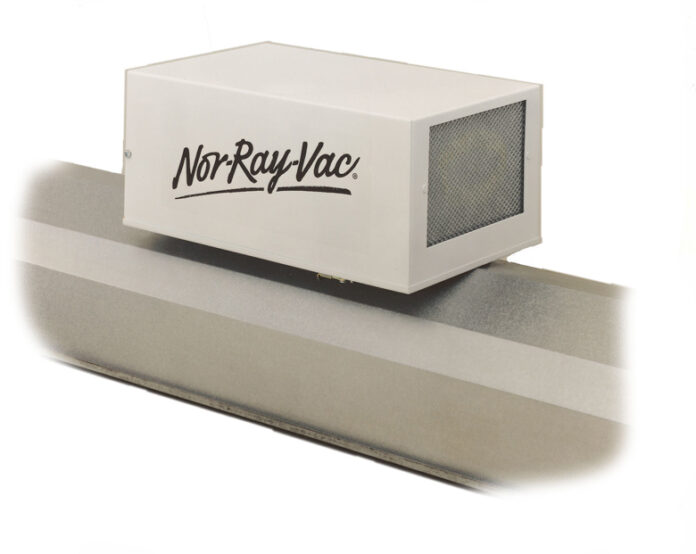
    The Nor Ray Vac system, a gas fired continuous radiant tube heating system, has modulating burners for improved efficiency and control, provides better uniformed heat coverage thanks to its continuous radiant tube, with a filtered burner air inlet helping keep the burner head and components clean.

    Boasting an aesthetically pleasing, bespoke appearance it can be tailored to suit building shape and size, while its NR40 rating means noise levels are lower than other systems on the market.

    Offering a larger rated burner than before, it has more burners per fan which means less flue points. With a long continuous tube which can reach 84m, the Nor Ray Vac system can be used in rail sheds and aircraft hangars or other large open spaces.

    Richard Leese, European General Manager at Reznor UK, said: โ€œReznor UK has always been committed to providing premium heating solutions combining comfort, efficiency, and reliability, so with the relaunch of the Nor Ray Vac system, we are taking these principles to new heights.

    โ€œInstallation is quicker, it is easier to maintain and it is easier on the eye, all while maintaining the functionalities that make Nor Ray Vac an industry name.

    โ€œThe Nor Ray Vac has been popular so when we put production on hold in 2022 we took the opportunity to simplify the system to manufacturer, ensuring we kept to its original great design.

    โ€œWe are looking forward to building upon the systemโ€™s heritage by engaging with consultants, end consumers and contractors to demonstrate how the Nor Ray Vac system is tailored for both small and large buildings.โ€

    The Nor Ray Vac System have been used in a range of premises including aircraft hangars, garages and showrooms, greenhouses, museums, factories, warehouses, distribution centres, sports halls and large retail outlets.

    Its reliability and safety of operation meets the latest European standard for multi-burner systems.

    Reznor UK is a trusted supplier of efficient industrial and commercial HVAC solutions, specialising in warm air heating, radiant heating, air curtains and more.

    It is part of the most trusted worldwide HVAC manufacturer group, Nortek Global HVAC.

    Operating for more than 100 years, Nortek works to a commitment to excellence and industry-leading innovations has set us apart.

    Get in touch for more information, visit www.reznor.co.uk/nor-ray-vac/ or call 01384 489700


    This article appeared in theย June 2024ย issueย of Energy Manager magazine. Subscribeย here.

    The better the data, the better the heat pump performance

    Andy Green

    Real measured data of a building, including its thermal profile and energy usage, is critical to designing successful heat pump solutions, says Andy Green, Baxiโ€™s Head of Technical Solutions

    As energy managers start to consider the options for decarbonising heat in their buildings, heat pumps will frequently be the favoured solution. Certainly, high temperature air source heat pumps (HT ASHPs) like our Auriga+ R290 (propane) series bring greater design options in existing buildings. But swapping out boilers for heat pumps is not always as simple as it is made out to be. And this is where taking time to gather real, measured data on the existing building and heating system can be beneficial.

    Understanding the buildingโ€™s thermal profile

    The merits of ASHPs are well established and introducing them into older buildings is certainly possible. However, there is no escaping the fact that it is frequently more complicated than in new buildings which are designed to be net zero.

    One of the problems with existing buildings is the lack of thermal modelling and legacy issues. In dated buildings, any design information is limited at best. However, a full understanding of the thermal performance of a building is absolutely essential in order to develop solutions that will improve its operational efficiency.

    So what data do we need to truly understand the building? Information relating to comfort levels in the building, the original design temperature and loads, any hydronic inefficiencies, as well as changes to the building and/or heating system, is key. Are there any bounding constraints? Are electrical capacities sufficient? Does budget allow for 100% of the required heating power to be via ASHP? Is there adequate space? And are there any complementary technologies that could support the operation of an ASHP, such as solar PV? The aim is to understand what may be able to change and what cannot, as well as any risks.

    Installing ultrasonic heat meters, carrying out a detailed heat loss calculation, and analysing gas meter readings will then provide deeper insight. An optimal scenario would involve a yearโ€™s worth of data with installation planned for warmer months.  

    Fabric first

    As part of this investigative pre-design process, itโ€™s advisable to identify any feasible opportunities for fabric upgrades. A fabric first approach should always be the initial consideration when considering a switch to heat pumps to reduce heat loss from a building. The benefit of reducing heat loss is that it can significantly reduce the size or capacity of plant required โ€“ thereby reducing capital expenditure – while improving running costs by limiting heat loss to the environment. One example might be to improve insulation.

    Optioneering

    With fabric upgrades addressed, heat experts like Baxi can then use this real measured data to engineer different solution scenarios. Optioneering is a valuable design support process that enables energy managers and designers to make the best choice for a specific building within the project requirements and constraints. The digitally produced solutions, backed with predicted energy and carbon savings and capital expenditure modelling, provide precise, validated advice to help make the move to low carbon heat more seamless.

    Hybrid solutions

    While the initial intent and brief may be to move directly from gas boilers to full electrification of heat, depending on the building and the retrofit challenges, a compromise may be required. A hybrid solution is nearly always a fast, efficient and affordable answer so should not be overlooked as an achievable option on the road to net zero. After all, even a modestly sized heat pump will enable a large portion of the heat in the building to be decarbonised. As such, a hybrid system can be a quick win solution for energy managers, delivering immediate sustainability improvements while overcoming major challenges including budget and risk.

    Optimisation

    Once the design is locked in, itโ€™s advisable to set performance targets that should be reviewed on a regular basis to ensure that the building is performing as designed.

    When the targets have been hit, close monitoring will then open up the opportunity to identify and implement additional improvements to optimise the solution and deliver still greater savings.

    In conclusion, the more accurate the data, the better the heat pump performance and value โ€“ and the more truly sustainable the solution. Having real, measured data allows for the possibility to design and evaluate multiple validated solution scenarios and, in so doing, arrive at the best solution in every case.

    For more information on Baxiโ€™s commercial heat pumps, visit: https://www.baxi.co.uk/landing-pages/baxi-auriga-air-source-heat-pump


    This article appeared in theย June 2024ย issueย of Energy Manager magazine. Subscribeย here.

    Lessons from the UKโ€™s largest voltage optimisation project

    The four steps to success when considering VO technology

    Whether youโ€™re looking to boost your companyโ€™s green credentials or simply cut costs, voltage optimisation (VO) can help by reducing electricity consumption by an average of eight per cent. Here, James Goodby, director of voltage optimisation specialist, Powerdown220, shares what he learned while managing the countryโ€™s largest ever VO project.

    A hangover from the standardisation of grid voltages across Europe means that the UK Grid can provide electricity at a much higher voltage than strictly necessary. Standard electrical equipment is designed to receive 220V, but the UK supply averages 242V and can be as high as 253V. This means that most of us are using โ€” and paying for โ€” more electricity than we need.

    Voltage optimisation (VO) technology tackles this inefficiency by acting as a voltage regulator, supplying only the exact amount your equipment needs. The result is an average reduction in electricity use by eight per cent. Supplying the correct voltage also reduces maintenance costs, because overvolted equipment suffers a reduced lifespan.

    Investigate

    Before deciding whether to invest in VO, youโ€™ll need to know what return you can expect. Taking time to monitor a siteโ€™s power supply makes it possible to accurately calculate potential savings.

    Passively monitoring your power supply with data loggers for four to six weeks is a non-intrusive way to build a detailed picture of voltage stability and load balance across all phases. This information is crucial for determining the exact amount of excess electricity your site is receiving and the potential cost savings, typically accurate to within one per cent.

    With this data, a simple calculation reveals a VO systemโ€™s payback period, usually under 18 months. Furthermore, some providers offer guarantees that your savings will meet the calculated amount.

    An added benefit of this careful monitoring is that once the technology is installed, it shouldnโ€™t require any ongoing maintenance or adjustment. In my experience, only about one in ten sites need a subsequent visit to tweak the settings and maximise savings.

    Eliminate

    The eight per cent average mentioned earlier takes into account the fact that some types of equipment provide better savings with VO than others. For instance, LED lighting and variable speed drives donโ€™t typically contribute significantly to savings, so should be excluded from calculations.

    However, weโ€™ve found that even when disregarding 50 to 70 per cent of the entire load on a site, itโ€™s still possible to get savings of five to ten per cent. On top of that, VO will still make the equipment last longer and provide maintenance savings.

    Integrate

    Itโ€™s important to include any on site renewable energy systems when considering VO. People often say that wasting electricity doesnโ€™t really matter if you generate it with renewables, because wind and sunlight are free. In reality, thereโ€™s still a tariff on renewable electricity: itโ€™s kWh of electricity generated in the systemโ€™s lifetime divided by the cost of the system.

    Combining VO with a system that generates electricity can help in two ways. First, it makes the electricity you generate go further by wasting less and improving efficiency. Second, if you are selling electricity to the grid, wasting less means you can sell more, improving ROI.

    Coordinate

    Meticulous logistics planning is key to a smooth installation process, particularly for VO rollout involving multiple sites. By carefully synchronising production schedules, delivery timetables and installation crews, each VO unit can often be installed within a tight 30-minute window, minimising disruption even for high-volume installations of ten to fifteen units per day. If youโ€™re considering a project involving multiple sites, you might benefit from choosing a VO provider with experience managing large projects.

    By cutting electricity use, voltage optimisation delivers both financial and environmental benefits. For Dale Fenton, energy manager at Mitchells & Butlers, who commissioned the UKโ€™s largest VO project, the technology โ€˜โ€˜ticked both boxesโ€™โ€™. If youโ€™re wondering if VO could benefit your company, try our free voltage optimisation savings calculator at Powerdown220.co.uk.


    This article appeared in theย June 2024ย issueย of Energy Manager magazine. Subscribeย here.

    Discover the Technology Powering the Energy Transition – Energy Technology Live Launched

    To coincide with the exciting growth of the flexible energy sector, Event Partners are delighted to announce the launch of the newย Energy Technology Liveย brand, which features both the existingย The Distributed Energy Showย and the exciting new event The Energy Storage Show. Energy Technology Liveย featuringย The Distributed Energy Showย andย The Energy Storage Showย will provide a unique opportunity to discover the technology powering the energy transition, at the largest exhibition space in the UK, the NEC on 12th & 13th March 2025.

    Building upon the success of The Distributed Energy Show and introducing the all-new The Energy Storage Show, Energy Technology Live will deliver unparalleled insights into the latest developments in renewable energy integration, smart grids, energy storage, demand-side management, decentralisation, electrification, policy and regulation as well as investment and innovation.

    The free to attend event in March 2025 will welcome over 5000 visitors, 200 exhibitors and 150 speakers. With a commitment to innovation, collaboration and sustainability, Energy Technology Live will serve as the unrivalled platform for industry professionals, thought-leaders, and innovators to explore the latest advancements, trends, and challenges shaping the global energy landscape.

    The Energy Storage Show will feature battery and energy storage systems for large-scale applications ranging from utility scale systems through to onsite and domestic technologies. Along with the full systems, the show will feature the components, services and technology to develop, install, operate and maintain them.

    The Distributed Energy Show is established as the UKโ€™s leading event for flexible, decentralised energy systems. It is an opportunity for energy users from commercial and industrial sectors, local authorities, property developers and land owners to meet with the energy supply chain and find technologies and services to implement a flexible energy strategy.

    Steve Bryan, Managing Director of Energy Technology Live says, โ€œEnergy Technology Live featuring The Distributed Energy Show and The Energy Storage Show will bring together industry stakeholders from around the world for two days of insightful discussions, networking, and innovation. Whether you are a seasoned energy professional, an emerging start-up, or a policymaker driving change, Energy Technology Live offers a unique opportunity to engage with the latest trends, technologies, and strategies shaping the future of the energy market.โ€

    For more information and to find out how your organisation can get involved contact us.

    Energy Technology live is brought to you by Event Partners.

    https://energytechlive.com

    Bradford College Winsย UK’s Biggest Sustainability Competition in Further Education

    Bradford College has triumphed in this yearโ€™sย Planet Earth Gamesย – the biggest sustainability competition for the UK further education sector.

    With over 3,000 good deeds for the planet undertaken since January, Bradford College topped the national leader board of FE colleges.ย Staff and students racked up an incredible 9,045 points, more than 3,000 points clear of the second-place college.

    Planet Earth Games aims to support climate action through sport and physical activity. Using an innovative model, institutions of all types battle it out to help save the planet.ย The Games run from January to Aprilย in partnership with the Association of Colleges.ย 

    By signing up for the initiative, student and staff competitors were encouraged to participate in various challenges of all different types to earn points for the wider College team. These include activities like tree planting, litter picking, and green commuting.

    Bradford College student-led activities included a climate march by the Studentsโ€™ Union and a large-scale community clean-up by the ESOL (English for Speakers of Other Languages) department.

    Bradford College Sustainability Lead, Chelsie Naylor, said:ย 

    โ€œWe are thrilled to win this yearโ€™s Planet Earth Games.ย Although weโ€™re at the start of our sustainability journey, this competition has started the conversation about climate change, sparking an interest in small, local action.

    โ€œBy taking part in challenges, staff and students engaged with environmental issues in a positive and tangible way; this often feels more empowering than signing a petition or sharing something on social media โ€“ itโ€™s real action.

    โ€œThe staff and students from the ESOL department earned over half over the total points collected by Bradford College throughout the duration of the competition, so special thanks and well done to them! Congratulations also goes to Sarah Cooper who was the highest scoring Vice Principal.

    โ€œWinning Planet Earth Games has really put Bradford College on the map and at the heart of conversations with other colleges nationally.ย We are committed to tackling climate change to support the 17 UN Sustainable Development Goals and have an ambitious roadmap in place to reach a net-zero target by 2050.โ€

    After securing nearly ยฃ32 million in funding over the last two years, the College now aims to make substantial carbon savings from retrofitting estates, energy-efficiency upgrades, and new buildings such as the Future Technologies Centre opening 2025/2026. Work also includes a successful ยฃ2.6m Public Sector Decarbonisation Scheme grant, run by the Department for Energy Security and Net Zero and delivered by Salix.

    Bradford College is now working on embedding sustainability and green skills across all curriculum areas. Delivery of Carbon Literacy training has already begun with more sessions planned for October and beyond. Electric vehicle (EV) training, sustainable fashion collections, environmental staff development days, water refill stations, and electric vehicle charging points are just some of the successful green initiatives already in place at Bradford College.

    Find out more about Bradford Collegeโ€™s Sustainability Plan or see the Capital Projects website for the latest Bradford College estates sustainability news.

    How to decarbonise the grid? Policy exchange report highlights separate, different approaches

    Chris Goggin of Rinnai reviews a recent report that details three separate routes to the decarbonisation of the UK national energy grid. The report highlights a present government plan and an opposition strategy โ€“ does either methodologyย  ensure beneficial results which delivers Net Zero?

    The recently released report โ€œDecarbonising the Grid Three Scenarios for Achieving Net Zero Powerโ€ presents three pathways that explore different routes towards providing clean and cheap energy to the 60 million-plus UK population. An independent energy market analytics company – Aurora Energy Research – was commissioned to review each pathway. The reviewers have provided their interpretation of feasibility of the proposals.

    The three scenarios are:

    • Net Zero 2030 plans under the opposition
    • Net Zero 2035 guided by the current government. ย 
    • โ€œBusiness-As-Usual” model, which follows the current trajectory of policy development and market conditions.

    This article will ignore the โ€œBusiness-as-Usual” model as this would also fall under current government plans. These paths focus on Net Zero status being achieved in 2030 and 2035 and what action must be undertaken to realize this ambition.

    The report was commissioned by Policy Exchange, a research institute that aims to influence domestic and international policy by highlighting ideas and attitudes associated with each political party. Funding comes from donations and supporters.

    Our industry needs to be mindful of the details here โ€“ societal goals are driven by the need for NetZero and a sustainable energy future. Politicians set policy, the industry is at the metaphoric coal face here, in delivering a healthy future of heating, hot water provision and clean air,

    The main argument of this report states that the British energy grid is better placed to decarbonise in the year 2035 using the current Government’s plan rather than 2030 under the opposition’s strategy. However, there are objectives that both parties agree upon in principle, such as the expansion of capacity in renewables.

    Both parties will seek to enhance production and distribution of onshore and offshore wind, solar as well as hydrogen. Additional funding will be directed towards CCUS (Carbon Capture Underground Storage) whilst nuclear energy manufacturing and deployment will also be scaled up.

    Differences in approach is evident in the separate timeframes each party believe can deliver feasible and tangible results. The opposition plan is to decarbonise the grid by 2030 whilst the current government say that 2035 would be more appropriate.

    The report summarises the 2030 approach as follows: โ€œAuroraโ€™s modelling shows that NZ 2030 is deemed an infeasible scenario, justified by an insufficient time available to conduct what would be a radical overhaul of the power system, policy, planning systems and investment landscape. The speed required to build critical technologies โ€“ including offshore wind, onshore wind and solar โ€“ would need to increase to multiple times their historical installation speed, as would investment in grid capacity.โ€

    The current political opposition will require huge amounts of capital investment to achieve their aim of decarbonising. Aurora has calculated that ยฃ15.6 billion a year until 2030 is required (total ยฃ93.5 billion) and a further ยฃ4.4. billion a year from 2031 – 2035 (ยฃ22.5 billion) equating to a total of ยฃ116 billion over the next 11 years.

    The Aurora reviews state that the definitive feasibility of the 2035 approach: โ€œReaching the Governmentโ€™s current target of a Net Zero power system by 2035, though more feasible than a NZ 2030 scenario, will still however require an extensive systems level change and significant policy intervention.โ€

    Current government plans to decarbonise the UKโ€™s power grid by 2035 will require ยฃ8.2 billion a year of additional investment until 2030 – a total of ยฃ49.3 billon. A further ยฃ11.1 billion a year of additional investment from 2031 โ€“ 2035 a total of ยฃ55.3 billion. The total accumulative investment over 11 years will amount to ยฃ104.6 billion over next 11 years.

    The 2035 approach is regarded by Aurora as more achievable due to the rate of introduction required in new and updated technology and policy amendments. The investment landscape is also considered more viable within this timeframe.

    Both the current government and opposition party are dedicated to decarbonising the energy grid; however, they are yet to agree on an appropriate pathway that secures beneficial economic and societal benefits. The opposition believe decarbonising the UK energy grid by 2030 can be achieved through capacitating ยฃ116 billion of investment, whilst the current governmentโ€™s plan is to extend the 2030 timeline to 2035 and absorb ยฃ104 billion of additional subsidy. Time and finance are central issues to both strategies. 

    Rinnai take an active role in reporting and consulting on potential policy shifts in energy related issues that mainstream UK political parties adopt. Rinnai aim to supply UK customers with a balanced reflection on all matters that affect UK energy options, cost and access.

    To stay up to date with policy news and views subscribe to our newsletter https://www.rinnai-uk.co.uk/contact-us/newsletter-sign

    RINNAI OFFERS CLEAR PATHWAYS TO LOWER CARBON AND DECARBONISATION PLUS CUSTOMER COST REDUCTIONS FOR COMMERCIAL, DOMESTIC AND OFF-GRID HEATING & HOT WATER DELIVERYย ย 

    www.rinnai-uk.co.uk/about us/H3

    • Rinnaiโ€™s range of decarbonising products – H1/H2/H3 – consists of hot water heating units in gas/BioLPG/DME, hydrogen ready units, electric instantaneous hot water heaters, electric storage cylinders and buffer vessels, a comprehensive range of heat pumps, solar, hydrogen-ready or natural gasย  in any configuration of hybrid formats for either residential or commercial applications. Rinnaiโ€™s H1/2/3 range of products and systems offer contractors, consultants and end users a range of efficient, robust and affordable low carbon/decarbonising appliances which create practical, economic and technically feasible solutions.ย 
    • Rinnai is a world leading manufacturer of hot water heaters and produces over two million units a year, operating on each of the five continents. The brand has gained an established reputation for producing products that offer high performance, cost efficiency and extended working lives.ย 
    • Rinnai products are UKCA certified, A-rated water efficiency, accessed through multiple fuel options and are available for purchase 24/7, 365 days a year. Any unit can be delivered to any UK site within 24 hours.
    • Rinnai offer carbon and cost comparison services that will calculate financial and carbon savings made when investing in a Rinnai system. Rinnai also provide a system design service that will suggest an appropriate system for the property in question.
    • Rinnai offer comprehensive training courses and technical support in all aspects of the water heating industry including detailed CPDโ€™s.
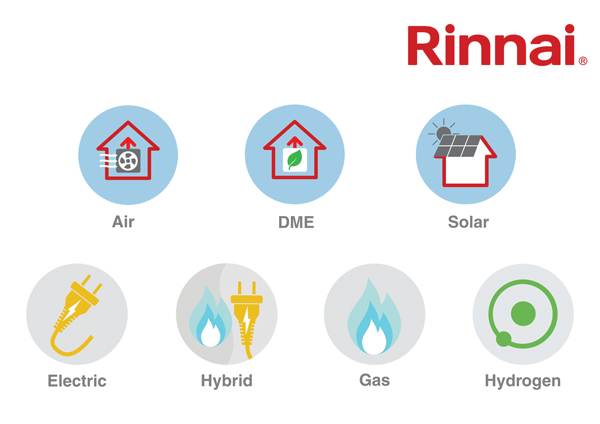
    • The Rinnai range covers all forms of fuels and appliances currently available – electric, gas, hydrogen, BioLPG, DME solar thermal, low GWP heat pumps and electric water heaters More information can be found on Rinnaiโ€™s website and its โ€œHelp Me Chooseโ€ webpage.ย 

    RINNAI FULL PRODUCT AVAILABILITY 24/7 FOR NEXT DAY DELIVERY of ALL HOT WATER HEATING UNIT MODELS INCLUDING 48-58kW UNITS-

    SAVINGS OF

    20%              REDUCTION of opex cost,

    30%              REDUCTION of initial cost

    15%              REDUCTION in carbon

    75%              REDUCTION of space

    Visit www.rinnai-uk.co.uk  

    Or email engineer@rinaiuk.com  

    For more information on the RINNAI product range visit www.rinnaiuk.com