Chris Neilon, Partner, EMEA Energy Consulting Leader at Infosys Consulting
The energy market faces another volatile period as we enter the winter months. Wholesale costs are on the rise again, impacted by geopolitical events. The 5% jump in the price cap, recently announced by Ofgem, highlights the UK’s vulnerability to these global energy shocks.
That’s not to say resiliency isn’t built into the UK energy sector. It weathered last year’s storm of record-high wholesale gas costs, and has ramped up infrastructure for gas storage since then. Now, the sector is more focused than ever on planning ahead and buying in supplies for future demand. Yet, storage can only do so much and isn’t a long-term solution, with gas widely considered a transition fuel as we move longer-term into renewables.
The transition to renewables won’t happen overnight – but it must lay at the heart of our long-term national strategy if we are to become energy independent. Decarbonisation is vital to making energy security a reality –using cleaner energy sources, moving further away from fossil fuels, and putting the right infrastructure in place. So, how can the UK maximise clean investment to make this happen?
Leveraging renewable inputs
Access to multiple renewable energy sources like hydro, wind, solar and tidal puts the UK in a unique position. Many countries don’t have this variety of green energy inputs – and the UK should be maximising the advantage these bring to achieve energy security.
Together, these can create a community renewables system which is relatively cheap, plentiful, and environmentally friendly. Yet currently, homes in certain regions of the UK don’t have any real option of clean energy because of a lack of capacity and connectivity in the system.
The UK must find a way of taking the renewable energy we’re producing from more remote locations, typically in the north, to towns and cities throughout the UK. This requires greater investment in the National Grid, which currently faces a considerable backlog to connect renewable energy projects. With more cables and storage across the country, every region can access low carbon electricity – stimulating growth in renewables programmes and the UK’s green economy.
Unlocking the potential of mini nuclear
Mini nuclear energy presents another solution for cleaner energy – with the government already pledging to invest £20 billion in this to meet net zero targets. Similarly with community renewables, these can be deployed close to population centres, and their establishment is far more agile and speedy compared to huge power plant sites like Hinkley and Sizewell which can take years to construct.
Small modular reactor (SMRs) initiatives offer a cheaper, quicker model compared with traditional plant designs, and can power some 400,000 homes. Initiatives like these means we can significantly speed up the move to net zero and become energy independent, while keeping costs down – making it a viable energy source alongside community renewables.
Redirecting oil and gas production to reduce waste
Realistically, we’re not at a point where we can completely decarbonise the industry. With the majority of energy used last year coming from coal, oil and gas (78%) there will still be a mass amount of oil and gas production while we transition to cleaner energy sources. The transition will take time, and it’s likely that fossil fuels will continue on a considerable scale until at least the mid-2030s.
We can, however, combat its effects by reducing waste. With the right strategies in place, investments can be funnelled towards cleaning up bad industry practices that are causing environmental damage, such as the flaring and spillage of oil. Ideally, half of capital expenditure from North Sea oil giants needs to be invested into net zero and low carbon sources of energy, as well as cleaning up bad habits, to truly make an impact whilst maintaining necessary access to energy for the nation.
Working towards a low carbon future
The transition to renewables and increased energy security will happen – but it’s not a simple case of the big players winding down oil and gas production. Lots of different parties need to move in concert with one another to make it happen, and there also needs to be strong alignment from a policy perspective to help optimise low carbon investments from the private sector. We’re also starting to see tech companies working more closely with the energy sector, building platforms that allows for better tracking of carbon from production through to supply chain, meaning more accurate reporting and better alignment with ESG legislation.
With these moving parts working in tandem, the UK can set a global precedent for investment in clean energy. It can also help other countries establish renewable projects like solar, wind and geothermal effectively. Ultimately, every effort needs to be made to unlock the potential for renewables and clean up bad practices – helping pave the way for energy independence and a greener future.
Initial capital commitment of up to £100m for AMPYR Distributed Energy to develop, fund, own and operate sustainable energy assets for business customers in the UK and Europe
AGP Sustainable Real Assets (“AGP”), the Singapore-headquartered fund and asset management group, has announced the launch of AMPYR Distributed Energy (“ADE”), a new business focussing on the development, ownership and operations of B2B energy infrastructure in Europe.
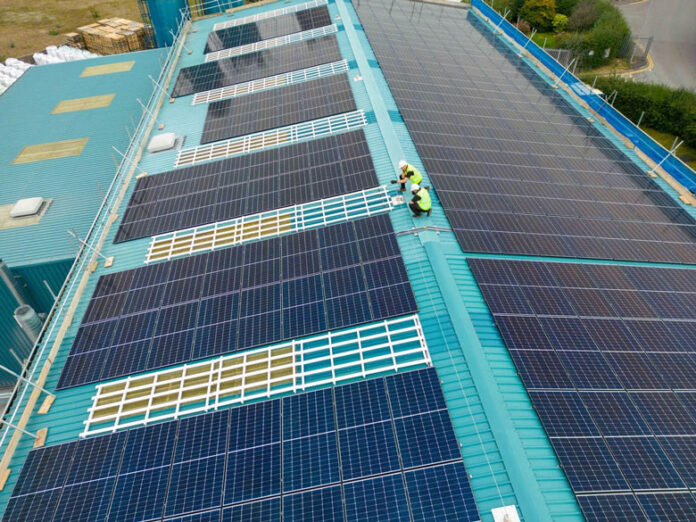
ADE will simplify the transition to net zero for business customers through the addition of rooftop solar PV, energy efficiency, and energy storage solutions. Backed by a significant commitment from AGP, ADE will accelerate the flow of capital into distributed energy projects in the UK and Europe. It will provide innovative financing for business customers, delivering clean energy solutions with no upfront cost. The launch of ADE in Europe expands the existing AGP portfolio of energy transition businesses in Australia, Asia, and the USA.
The creation of ADE builds on the success of OME Capital (“OME”) in establishing the initial platform with a highly experienced management team and a growing development pipeline across multiple target markets.
ADE will be led by John Behan (founder of OME). Behan said, “OME was established to bring together an experienced management team, a material project pipeline and capital behind a clear distributed energy strategy. The launch of ADE demonstrates that plan in action and I’m excited to work with AGP. They’re a leader in the energy transition and understand the operational requirements to build and scale the platform.”
The expansion of clean distributed energy solutions underpins commitments by the UK and EU governments to achieve Net Zero by 2050. Customer demand is being driven by energy price increases, sustainability mandates, new reporting requirements, and concerns about security of power supply. Behan added, “We know that businesses are struggling with the cost and complexity of decarbonisation. Our innovative funding solutions and energy expertise mean that we can make it simple – and profitable – for our customers to go green now.”
Rajpal Chaudhary, AGP Partner, said, “The European market is forecast to be one of the largest distributed energy markets in the world within the next five years. Investors recognise the growth opportunity from distributed energy, as well as the strong regulatory tailwinds. This makes scalability in the sector achievable, with attractive opportunities for investors to deploy material capital. Leaning on our experience and expertise in similar businesses in Australia and India and investing in a strong management team led by John Behan, we are confident that AMPYR Distributed Energy is well positioned for 2024 and beyond.”
About AMPYR Distributed Energy
AMPYR Distributed Energy (ADE) designs, builds, owns, and operates clean energy technologies that help its customers go green and reduce their energy costs. With the backing of AGP Sustainable Real Assets, ADE delivers sustainable solutions with no upfront expenditure, offering innovative financing options for business customers. ADE’s design-and-build capabilities make it simple for customers to reduce their carbon footprint, and its ongoing management services deliver reliable clean energy for the long-term ADE is an important step in building a European footprint in a global distributed energy business. For more information, please visit www.ampyrde.com.
About AGP Sustainable Real Assets
AGP Sustainable Real Assets is a fund and asset management group, investing in, developing, and operating sustainable infrastructure. AGP exclusively invests in sustainable real assets across three key investment themes – Power, Shelter and Food. AGP established AMPYR Energy, its global renewable energy platform, to power the future and respond to the rapid changes in the energy sector worldwide. With operations and assets in Europe, India and Australia, AMPYR Energy provides low-cost renewable power, battery storage and other network and non-network solutions to customers. For more information please visit: www.agpgroup.com and www.ampyrenergy.com.
About OME Capital
OME Capital is an investment platform that focused on building a distributed energy business for large scale investors. For more information, please visit www.omecapital.com.
Martin Huber, CEO and Co-Founder of 3D modelling and spatial data company Amrax, discusses how 3D visualisation can lead to more innovative and efficient building layouts.
According to the US Government, operational carbon emissions – that is the heating, cooling, and lighting of buildings – account for approximately 28% of global emissions each year. That is a staggering amount. To put it into context, it’s just shy of the 30% contribution from all the planes, trains, trucks and cars in the world. While electric vehicle sales are soaring, a report by the World Green Building Council found that well under 1% of the world’s commercial buildings and homes were net zero. A CBRE analysis also revealed that only 13.8% of commercial office buildings could be considered ‘green’. I could go on throwing out statistics but the bottom line is that there is huge scope for the world’s buildings to become more sustainable and, if we achieve this goal, it could go a long way to solving the climate crisis.
Of course, identifying the problem is a far cry from solving it. We have to ask ourselves, with sustainable buildings making both economic and moral sense, why are developers, building managers, landlords and tenants not doing more to make their buildings green? The simple answer is that designing, renovating or maintaining a building to make it greener has a lot of up front costs and unknowns. To make a real impact, information, tools and techniques to become sustainable need to be much more accessible. We need to empower stakeholders – particularly in facility management – to choose greener, more efficient options.
Enter advances in design and visualisation tools. Digitization and Building Information Modeling (BIM) is propelling the AEC industry towards efficiency, collaboration, and sustainability.
3D modelling and visualisation is increasingly being used in the design and construction process. Now, with growth in the power of AI, designers and facility managers have unprecedented insights into how the layout of their buildings influences a huge range of factors – including energy consumption, maintenance and sustainability.
The combination of spatial data and AI is a powerful cocktail. First, an astonishing number of data points can be collected that really drill down into how buildings are used in practice – everything from the route people take to their desks through to which windows lose the most heat and the efficiency of insulation or air conditioning. This information, coupled with predictive analytics, can be used to inform changes to design that make building layouts more ergonomic, efficient and functional.
Crucially, tools like virtual modelling can take these proposed changes or design ideas and allow stakeholders to see how they work in practice. Everyone can work across the project lifecycle, from owners to facility managers. Shared digital representations allow teams to visualise, simulate, and analyse design and construction decisions in real-time, ensuring alignment of vision and reducing costly error. Innumerable tweaks can be made to marry what would work best in theory with practical reality. This is no small thing – it is manifestly different experiencing a design in 3D, VR or AR versus seeing it on a flat screen or piece of paper.
This ease of collaboration and experimentation vastly reduces the time, cost and risk associated with designing new offices, factories or residencies. As a result, there is no longer a balancing act for developers or building owners to strike between what they deem to be a safe cost-effective solution and more complex considerations such as sustainability. In short, every need can be factored into design and adequately balanced to get the best outcome possible.
The entire lifecycle of a building can also be better managed. BIM has expanded beyond the design and construction phase to encompass models for maintenance and space utilisation. A host of promising products including Nemetschek dTwin, Autodesk Tandem and Catenda Duo have entered this segment and gained serious traction.
And that’s just the start. Eventually, the majority of buildings will be embedded with smart devices and beacons that will monitor energy consumption and a range of other factors in real-time. When combined with AI automation and visualisation platforms, we’ll have an incredibly powerful set of tools to create ultra-efficient and highly responsive ‘living buildings’ that will use considerably less energy and resources to maintain. With AI, spatial data and 3D visualisation advancing hand-in-hand, the speed and precision of room and building design and ongoing maintenance are only going to accelerate. In the not so distant future, machine learning algorithms will be powerful enough to create design proposals with optimal efficiency.
In short, the AEC industry is on the cusp of a digital revolution. This will be instrumental as challenges such as urbanisation, sustainability requirements and resource management play a critical role in combating climate change.
Around 70% of homes with heat pumps tested in a study were found to have had the wrong size installed, new research suggests.
It means that the householders faced higher energy costs – or a colder home – as a result.
The findings from the joint study by three energy monitoring experts – Build Test Solutions, Veritherm and Elmhurst Energy – will fuel the argument of those who point to the success that other European nations have had with heat pump installation.
“The UK Government has set a target of 600,000 heat pumps installed by 2028 but without a more accurate approach to measurement, people will never trust the new green technology and that figure won’t be achieved,” says Richard Jack, technical director at Build Test Solutions.
“Heat pumps are really important for decarbonising heat and achieving net zero but it is crucial that we maximise efficiencies. Before any heat pump is installed, specific heat loss measurement is needed to ensure the correct size for the property’s requirements.
“The performance gap between the assumed and actual heat loss calculations will have significant implications for residents if we don’t make changes – with the risk of higher costs and colder homes.”
The study of 56 homes (measuring heat loss through BTS’s SmartHTC system or a Veritherm overnight test) included several types of dwelling, weighted towards detached and more recently built homes.
Oversized heat pumps cost more to run
The research found that the difference in heat loss between that calculated and the measured heat loss was a substantial 35 per cent. There was a significant bias towards overestimating the heat loss; 59 per cent of houses.
An oversized heat pump incurs higher capital costs, of around 10 per cent on average, alongside higher maintenance costs and lower running efficiency.
With an undersized heat pump, the risk is that the home will not be warm enough during the coldest periods, driving the occupant to turn to more expensive heating methods, such as a fan or oil heater.
Making measurement mainstream
“Measuring the thermal performance of a home should be the first step in any consumer heat pump journey,” said Mr Jack. “Measurement helps engage residents, leading to higher heat pump uptake and trust, and reduces risk when making this investment.”
Build Test Solutions, Veritherm and Elmhurst Energy suggest that both industry standards and software tools should be updated to recognise the role of measured heat loss as part of the heat pump design process, sizing and specifying.
Chris Ricketts, head of consultancy at Elmhurst Energy adds: “Heat loss measurements provide a more accurate method to determine the overall heat demand of a building, which can feed down to the design process and improve efficiencies.
“It is a service that installers can integrate within their offering, using software tools to capture and present the data. Residents see value in this information, and the savings that can be achieved through doing this accurately more than covers the costs.”
Tom Fenton, CEO at Veritherm said: “If the industry does not work together, residents will be forced to pay unnecessary costs, and we’ll never make heat pumps a trusted low carbon heating alternative for our homes.”
Read the full report and find further resources from Build Test Solutions, Veritherm and Elmhurst Energy at www.measuredheatloss.com
Kimpton, an award-winning Heating, Ventilation, and Air Conditioning (HVAC) installation and maintenance specialist, reflects on the transformative changes witnessed in 2023 and predicts an even more accelerated shift towards decarbonization in 2024. With a 60-year legacy in the industry, Kimpton unveils insightful predictions for the coming year that not only highlight emerging trends but also contribute to the race towards achieving net-zero emissions.
Key Decarbonisation Predictions for 2024:
Energy Costs and Carbon Pricing:
The evolving energy landscape is set to impact the decarbonisation journey. Kimpton recognises the need to break the link between electricity prices and the wholesale cost of fossil fuels. As the energy mix undergoes significant transformations, the company anticipates that closing the gap between retail gas and electricity prices will play a pivotal role in driving the shift from gas to electricity in homes and businesses. With a potential change in government in 2024, there is an opportunity for a bold green statement that could reshape the energy market.
Solar PV Growth:
Kimpton sees substantial growth in commercial-scale Solar Photovoltaic (PV) installations. Businesses making the switch to solar energy gain a even greater competitive advantages with lower running costs and increased cash flow for further investments. Tax incentives will further incentivise capital investment, making the effective aggregate rate for electricity when solar PV is part of the mix, highly attractive both now and in the future.
VTG Battery Storage:
Vehicle-to-Grid (VTG) technology should emerge as a genuine game-changer in the electricity market. Electric vehicles plugged in at home or work serve as distributed storage for excess energy, contributing to the levelling of overall demand and reducing reliance on grid-based storage or excess production from gas-powered stations. Kimpton notes that although the technology is ready and in beta test mode, regulatory approval will be welcomed.
Heat Pumps and District-Based Solutions:
Kimpton highlights the increasing demand for district-based ground source heat pump systems, providing cost-effective and space-efficient solutions for well-insulated groups of buildings. The synergy with Solar PV (and potentially VTG) on new build sites positions heat pumps as a key element in delivering comfortable, low-impact developments.
Hot Water Storage as an Alternative to Battery Storage:
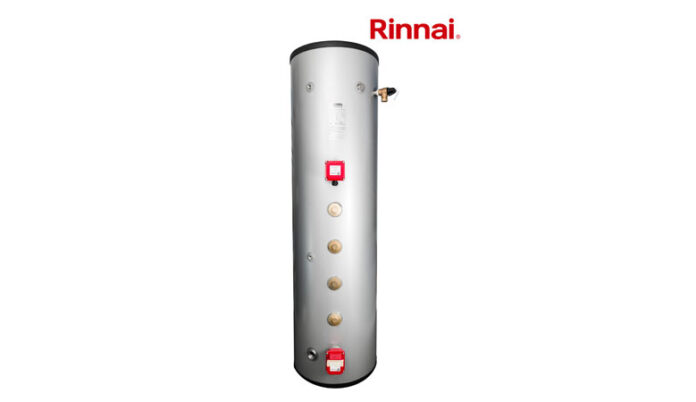
In response to evolving battery technology, Kimpton observes a growing trend of using excess energy to heat water, presenting an alternative to traditional battery storage. This approach proves beneficial for establishments with high hot water demand during specific periods. Hot water tanks, once removed with the advent of condensing boilers, are making a comeback to harness cheap or free energy from renewable sources and variable supply based pricing.
Business Development Manager at Kimpton said “We see some big changes happening this year and the drive towards net zero gathering even more pace. Whilst these predictions may seem some way off to many, any of them could begin to have an impact for our clients almost as soon as they are introduced.
Net Zero is achievable but it isn’t going to happen overnight. It will be delivered with a series of small logical steps, and picking the big wins first. Levelling out demand is one critical area that is often overlooked, but would save millions of tons in co2, by not having to have gas power stations on standby, just in case there’s a sudden rise in demand”
Equans, has announced that the activities of its Bouygues Energies & Services (E&S) subsidiary in the UK will adopt the Equans brand.
All Bouygues E&S branded facilities management, energy solutions and connected cities operations in the UK, will become Equans from January 2024.
Management and teams of both businesses brought together their complementary expertise to form a single business serving customers across the UK & Ireland in January 2023, but until now have continued to operate under separate brands.
The move to a single brand completes an integration programme which began in October 2022 when Bouygues Group acquired the global Equans business.
The rebrand further strengthens Equans’ brand presence across the UK & Ireland, which now comprises 15,000 employees, with revenues of approximately £2.5 billion in sustainable facilities management, community regeneration and cutting-edge energy and digital services.
Jean-Philippe Loiseau, CEO of Equans UK & Ireland, said: “This rebrand is a key moment in the evolution of our business which follows a smooth integration of our teams. Uniting together behind a single brand – Equans, means that across the UK & Ireland we have 15,000 employees committed to supporting our customers to create a low carbon, more resilient world.”
Chris Goggin examines the current state of UK domestic energy policy that focuses on the implementation of clean energy dispersal. As the UK phases out fossil fuels for renewable alternatives a considerable amount of work must be completed for the UK to become carbon neutral. Following is a brief overview of the indecision, chaos, and confusion that the UK energy market finds itself in.
UK energy policy is currently convoluted and chaotic with apparent scant insight into the future pathway and direction provided to customers and energy industry professionals alike. At present, the UK relies on fossil fuels for national energy resources with a future aim of transitioning to significant carbon reducing alternatives. These reductions are targets, written into law. The government of the day is expected to observe its own laws.
As the UK moves away from oil and gas, cleaner energies such as solar, wind and lower carbon gases will become more available and commonplace inside the UK energy market. So, what role will these alternative energies play in a future UK domestic energy mix?
Solar, wind, and greener gasses like hydrogen or renewal DME are likely to play significant roles in delivering power to UK housing and building stock once natural gas usage is nullified. For this to happen, a concise strategy must deliver infrastructure and installations capable of transporting clean energy into UK properties.
To begin, UK decarbonisation plans and commitments have been diluted, preferring instead to expand and increase North Sea oil and gas production. The Times newspaper recently published an article that quoted the UK’s largest insurance provider, Aviva, as saying: “the government increasingly focuses on short-term energy security over long-term sustainability.”
As European and American big business have embraced large renewable projects, UK political indecision and rising global energy costs has led to a lack of investment within large scale UK renewable projects. Also published in the same Times article as above, Aviva believe that “the recent dilution in government net zero targets is an even bigger challenge and creates uncertainty.”
The Energy Transition Readiness Index 2023 is a measurement of a regions ability to transition towards NetZero. A report is compiled for potential investors to evaluate a country’s viability towards profiteering from renewable electricity. The latest report believes that investors will only be attracted towards UK projects if they can observe clear and succinct governance as well as regulatory stability. Presently there is not enough evidence of either to entice outside capital investment.
Installer, specifiers and consultants of heating & hot water products must absorb centralised information to devise a strategy capable of producing carbonising solutions. Presently, the flow of governmental information can be contradicting and even bipartisan. For a UK national energy transition to be successfully implemented the information and agendas must be clear and consistent.
Without this required synchronicity all those in the supply chain risk appearing uninformed, especially in view of constant misinformation from a variety of questioning sources and bodies. The industry needs a unified approach which delivers clean, sustainable and renewable energies with all associated appliances and systems.
Hydrogen is an example of the confusion that travels throughout the UK energy sector. Two recent reports have been released claiming a contradicting outcome regarding the future of the UK national gas transmission network. The Future of Great Britain’s Gas Networks Report by the National Infrastructure Commission and Ofgem, say that the national gas network should be decommissioned in favour of widespread electrification.
An additional report funded by UK gas operator Cadent and conducted by The Imperial College of London has stated that a switch to hydrogen as domestic and commercial fuel could save the British taxpayer up to £5 billion a year when compared to widespread electrification.
One of the UK’s biggest names in energy is preparing for a future with hydrogen – this is the UK’s main supplier of property heat and believes a switch to hydrogen is probable. Its website informs all readers of a likely time frame in which hydrogen will be introduced. If the UK does switch to hydrogen the current gas infrastructure will be retrofitted to transport hydrogen gas mixes and eventually 100% pure hydrogen.
Offshore wind is a further area of the energy industry that is encountering problems. Despite government subsidies being made available major renewable firms are beginning to question the viability of huge UK offshore wind projects.
Furthermore, it was widely reported in September that the CFD (Contracts for Difference) scheme failed to attract any bids whatsoever. Although the CFD scheme offered subsidies to foreign investors, European, American, and Asian alternative investment opportunities are currently more attractive.
At the time of writing The Guardian published a story stating that the UK Govt is aiming to raise subsidies by two-thirds and the starting price by 50% to attract financial investment in the next round of offshore wind auctions
Major energy companies that specialise in offshore wind have now either raised financial concerns or have pulled out of planned large UK projects. Danish multinational energy organization Orsted has publicly voiced doubts on the financial viability of their Hornsea 3 wind project off the coast of Yorkshire. A final decision on proceeding to a third stage of project advancement is pending.
Swedish wind company Vattenfall have stopped work on a huge wind farm being constructed off the coast of Norfolk. Both Orsted and Vanttenfall have cited rising inflationary international market costs and inadequate government subsidies as influencing factors in each respective decision.
Solar energy appears to be the least turbulent and contested area of energy adoption. Solar is well placed to play a significant role in future UK power provision. If wider electrification is embraced solar will contribute by way of delivering a source of generational power
However, due to the uncertain state of UK energy policy any move towards solar will be in the future. The main issue regarding present solar power is a long wait for grid connectivity. Some businesses and domestic customers have been told that they must wait between 10 and 15 years for access to the UK grid. A lack of infrastructure and a queuing system for grid applications are contributing factors in this long wait.
UK energy policy is far behind other economies such as Germany, France, and the Netherlands, let alone Europe as a block and the USA. The UK energy industry lacks infrastructure, financial subsidies or firm decision-making direction and therefore cannot uphold certain decarbonising ambitions as a result. When all the above elements are combined, the UK falls short in offering decent international investment opportunities.
Contractors, specifiers, system designers and installers of home heating and hot water systems should consider companies who offer a range of decarbonising products that ensure low customer costs and efficient performance. Rinnai’s H3 range covers all low carbon needs such as solar, hydrogen and heat pump technologies.
Rinnai believe in providing consistent and transparent updates on domestic and global energy issues that could affect UK decarbonising product options and costs. Rinnai aim to supply UK customers with information that assists investment making decisions on future clean energy heating and hot water systems.
To keep up to speed with the changing face of UK energy policy visit www.rinnaiuk.com and sign up for our monthly newsletter.
RINNAI’S H3 DECARBONISATION OFFERS PATHWAYS & CUSTOMER COST REDUCTIONS FOR COMMERCIAL, DOMESTIC AND OFF-GRID HEATING & HOT WATER DELIVERY
Rinnai’s H3 range of decarbonising products include hydrogen / BioLPG ready technology, hybrid systems, and a wide range of LOW GWP heat pumps and solar thermal. Also, within Rinnai’s H3 range is Infinity hydrogen blend ready and BioLPG ready continuous flow water heaters which are stacked with a multitude of features that ensure long life, robust & durable use, customer satisfaction and product efficiency.
Rinnai’s range of decarbonising products – H1/H2/H3 – consists of heat pump, solar, hydrogen in any configuration, hybrid formats for either residential or commercial applications. Rinnai’s H3 range of products offer contractors, consultants, and end users a range of efficient, robust, and affordable decarbonising appliances which create practical, economic, and technically feasible solutions. The range covers all forms of fuels and appliances currently available – electric, gas, hydrogen, BioLPG, DME solar thermal, low GWP heat pumps and electric water heaters.
Rinnai H1 continuous water heaters and boilers offer practical and economic decarbonization delivered through technological innovation in hydrogen and renewable liquid gas ready technology.
Rinnai’s H1 option is centred on hydrogen, as it is anticipated that clean hydrogen fuels will become internationally energy market-relevant in the future; Rinnai water heaters are hydrogen 20% blends ready and include the world’s first 100% hydrogen-ready hot water heating technology.
Rinnai H2 – Decarbonization simplified with renewable gas-ready units, Solar Thermal and Heat PumpHybrids. Rinnai H2 is designed to introduce a practical and low-cost option which may suit specific sites and enable multiple decarbonisation pathways with the addition of high performance.
Rinnai H3 – Low-GWP heat pump technology made easy – Rinnai heat pumps are available for domestic and commercial usage with an extensive range of 4 – 115kW appliances.
Rinnai’s H3 heat pumps use R32 refrigerant and have favourable COP and SCOP.
Rinnai is a world leading manufacturer of hot water heaters and produces over two million units a year, operating on each of the five continents. The brand has gained an established reputation for producing products that offer high performance, cost efficiency and extended working lives.
Rinnai’s commercial and domestic continuous flow water heaters offer a limitless supply of instantaneous temperature controlled hot water and all units are designed to align with present and future energy sources. Rinnai condensing water heaters accept either existing fuel or hydrogen gas blends. Rinnai units are also suited for off-grid customers who require LPG and BioLPG or DME.
Rinnai products are UKCA certified, A-rated water efficiency, accessed through multiple fuel options and are available for purchase 24/7, 365 days a year. Any unit can be delivered to any UK site within 24 hours. Rinnai offer carbon and cost comparison services that will calculate financial and carbon savings made when investing in a Rinnai system. Rinnai also provide a system design service that will suggest an appropriate system for the property in question. Rinnai offer comprehensive training courses and technical support in all aspects of the water heating industry including detailed CPD’s. More information can be found on Rinnai’s website and its “Help Me Choose” webpage.
Building Services Consultants and contractor attendees at the recent Rinnai London Focus Group expressed ‘cautious positivity’ in reviewing 2023 and looking forward to 2024. All looked forward to the decarbonising of the energy/fuel mix and ancillary products in domestic and commercial properties. All reported their view on the increasing awareness and popularity of sustainable heating & hot water systems across the whole of the UK and that it will continue to do so, considering the medium and long-term aim of transitioning towards renewable energies.
Rinnai’s monthly London focus group is an opportunity for all to listen to energy industry professionals share their ideas on how heating and hot water product manufacturers can provide services and technologies that positively assist Building services consultants, installers, heating engineers, specifiers, and system designers.
Key factors that remain a concern for the London Focus Group entering 2024 are installation measurements that effect heat pump performance efficiency, clear centralised policy distribution and unclear legal framework that punishes system designers, installers or specifiers for work that causes a property to be labelled unfit.
Other subjects that provoked a sense of apprehension include hydrogen misinformation and misleading information regarding heat pumps performance. All professionals present also agreed that competency across all sectors can only be proved if information stemming from government is concise and unanimously accepted by all policy makers before release.
However, everyone who attended felt positive about the potential of 2024. New buildings are being constructed across London that need heating and hot water systems and with the Future buildings regulation set to electrify all new builds from 2025 all agreed that system design and infrastructural upgrades are central to success.
The up-and-coming energy transition also means there will be a multitude of required decarbonising solutions that are suitable for new builds and the nuances of the existing building stock, which will keep energy related professionals busy for the near future.
Rinnai will continue to sponsor this regular event which give voice to the thoughts and opinions of multiple energy related professionals across London and the Southeast throughout 2023.
Rinnai will maintain the monthly focus groups into 2024 and would gladly welcome any newcomers. Simply visit Ask us a question :: Rinnai UK (rinnai-uk.co.uk) Fill in the online form and Rinnai will update you with the latest schedule of events.
Rinnai aims to absorb all provided information to adapt the company’s extensive list of services, CPDs as well as heating and hot water products for all UK commercial, domestic and off-grid customers.
Rinnai is determined to provide UK customers with cost effective low carbon solutions towards commercial and domestic hot water and building heating provision. To see the present range of Rinnai solutions that include Hydrogen, BioLPG ready water heaters, solar thermal and heat pump Hybrids and LOW-GWP heat pumps visit www.rinnaiuk.com
RINNAI’S H3 DECARBONISATION OFFERS PATHWAYS & CUSTOMER COST REDUCTIONS FOR COMMERCIAL, DOMESTIC AND OFF-GRID HEATING & HOT WATER DELIVERY
Rinnai’s H3 range of decarbonising products include hydrogen / BioLPG ready technology, hybrid systems, and a wide range of LOW GWP heat pumps and solar thermal. Also, within Rinnai’s H3 range is Infinity hydrogen blend ready and BioLPG ready continuous flow water heaters which are stacked with a multitude of features that ensure long life, robust & durable use, customer satisfaction and product efficiency.
Rinnai’s range of decarbonising products – H1/H2/H3 – consists of heat pump, solar, hydrogen in any configuration, hybrid formats for either residential or commercial applications. Rinnai’s H3 range of products offer contractors, consultants, and end users a range of efficient, robust, and affordable decarbonising appliances which create practical, economic, and technically feasible solutions. The range covers all forms of fuels and appliances currently available – electric, gas, hydrogen, BioLPG, DME solar thermal, low GWP heat pumps and electric water heaters.
Rinnai H1 continuous water heaters and boilers offer practical and economic decarbonization delivered through technological innovation in hydrogen and renewable liquid gas ready technology.
Rinnai’s H1 option is centred on hydrogen, as it is anticipated that clean hydrogen fuels will become internationally energy market-relevant in the future; Rinnai water heaters are hydrogen 20% blends ready and include the world’s first 100% hydrogen-ready hot water heating technology.
Rinnai H2 – Decarbonization simplified with renewable gas-ready units, Solar Thermal and Heat PumpHybrids. Rinnai H2 is designed to introduce a practical and low-cost option which may suit specific sites and enable multiple decarbonisation pathways with the addition of high performance.
Rinnai H3 – Low-GWP heat pump technology made easy – Rinnai heat pumps are available for domestic and commercial usage with an extensive range of 4 – 115kW appliances.
Rinnai’s H3 heat pumps use R32 refrigerant and have favourable COP and SCOP.
Rinnai is a world leading manufacturer of hot water heaters and produces over two million units a year, operating on each of the five continents. The brand has gained an established reputation for producing products that offer high performance, cost efficiency and extended working lives.
Rinnai’s commercial and domestic continuous flow water heaters offer a limitless supply of instantaneous temperature controlled hot water and all units are designed to align with present and future energy sources. Rinnai condensing water heaters accept either existing fuel or hydrogen gas blends. Rinnai units are also suited for off-grid customers who require LPG and BioLPG or DME.
Rinnai products are UKCA certified, A-rated water efficiency, accessed through multiple fuel options and are available for purchase 24/7, 365 days a year. Any unit can be delivered to any UK site within 24 hours. Rinnai offer carbon and cost comparison services that will calculate financial and carbon savings made when investing in a Rinnai system. Rinnai also provide a system design service that will suggest an appropriate system for the property in question. Rinnai offer comprehensive training courses and technical support in all aspects of the water heating industry including detailed CPD’s. More information can be found on Rinnai’s website and its “Help Me Choose” webpage.