Ideal Heating Commercial has launched its next generation ECOMOD heat pumps, with natural refrigerant. The first to be released this year is the ECOMOD 290HT, with ECOMOD CO2 to follow.
The ECOMOD 290HT is a monobloc air source heat pump able to achieve high temperatures up to 75°C, whilst benefitting from an ultra-low global warming potential (GWP) of just three as a result of the use of R290 natural refrigerant. An ultra-low GWP is not only good for the planet, but also makes commercial sense as high GWP refrigerants become increasingly scarce and therefore more expensive.
Available in three chassis sizes and five outputs from 15kW through to 50kW, ECOMOD 290HT has been specifically designed for use in larger commercial buildings and can be used in cascade to achieve even higher outputs. This latest generation of heat pumps can also be installed alongside other Ideal Heating commercial solutions, such as the EVOMAX 2 and the IMAX XTRA 2 commercial condensing boilers, to build a low carbon hybrid heating system.
With its ability to achieve high temperatures up to 75°C, ECOMOD 290HT is ideal for Domestic Hot Water (DHW) applications and district heating systems. Furthermore, with potentially no need to upgrade radiators with the ECOMOD 290HT, it is a practical, cost-effective solution for retrofit installations.
ECOMOD 290HT comes with a high efficiency rating and high co-efficient of performance (CoP) rating of up to 4.94. The heat pumps also include an inverter-controlled compressor to accurately match the heat demand based on the specific requirements, further enhancing the efficiency of a building. ECOMOD 290HT heat pumps are quiet in operation, with noise levels as low as 64dB(A).
ECOMOD 290HT models all represent the output at Air 7°C and Water 35°C.
Chris Caton, Product Director – Commercial, at Ideal Heating, comments on the company’s move into natural refrigerants: “We have led the way in commercial heating by ensuring our heating products are at the forefront of technology, quality and design by delivering both high efficiency and low running costs. This latest, innovative addition to our ECOMOD heat pump range, featuring natural refrigerants with ultra-low GWP, will ensure our customers have the best and most advanced solutions for heating and hot water, while helping businesses in the UK on their journey to Net Zero.”
All ECOMOD 290HT heat pumps come with a five-year warranty when commissioned by Ideal Heating. Ideal Heating is the only manufacturer to offer a free of charge commissioning service across its full range of commercial ECOMOD heat pumps and condensing boilers, saving customers time and money, and ensuring appliances are correctly commissioned and operating.
Ideal Heating delivers commercial heating solutions that are at the forefront of technology and developed in line with the latest market trends and legislation. For more information visit: idealcommercialboilers.com/products/ecomod-290ht
This article appeared in the June 2024 issue of Energy Manager magazine. Subscribe here.
Adrian Barber of Prefect Controls investigates shifting the responsibility for payment of energy bills.
Can over-consumption and anti-environmental practices in student accommodation be blamed on “all-inclusive rent” packages?
The inclusion of utilities has become standard practice for many providers and is popular with students. Marketing of rooms is easier and more attractive when fixed rents are offered, and occupants aren’t worried about finding money to pay the energy bill at the end of the month.
Surveys regularly return high scores regarding student concerns about sustainability. However, in the privacy of their rooms, their principles may be challenged if the choice between wearing a jumper or turning up the thermostat doesn’t impact their bank balance.
There is an opinion amongst some providers, particularly since the rapid rise in energy costs, that charging occupants by consumption should return. In an erratic market, passing on the energy costs relieves providers of price hike uncertainties. It could also be a valuable lesson for the energy consumers of the future – to be aware of costs!
We could see ‘no-frills’ accommodation providers emerging, like some well-known airlines. Where the headline rent is alluring, but when necessities such as heating is ‘added-on’, the offer is not so attractive.
Does this provide a potential for greater transparency, giving occupants a choice of how they spend their allowance? Or conversely the possibility of cold, uncomfortable rooms with potential health and structural issues caused by humidity and dampness.
A ‘fair usage policy’ is another approach that has been mooted. This is where an amount of energy is included in the rental, but an agreed rate is charged for consumption over and above. This would provide comfortable environments, mitigate issues arising from under-heating, and enable those wanting greater warmth to have it – but at their own expense.
Properties where residents are charged individually for their energy, require MID approved meters in each room (Measuring Instruments Directive MID 2014/32/EU). This approach would bring with it major installation undertakings and cost of retrofitting apparatus. Plus, the headache of administering the billing process.
Technological progress is heading towards individual measurement being viable, but what is the demand?
I am sure that students, probably in greater numbers than the wider population, are aware of why energy needs to be conserved. I’m also sure they aren’t flagrantly using it unnecessarily.
It’s the inadvertent wastage that requires attention.
If room by room measurement becomes feasible, incentives may be attractive.
Two alternatives sprang to mind: A rebate at the end of term as a reward for conscientious use could be welcomed by many. But this doesn’t remove the infrastructure and administration issue; Driving a behavioural change programme could yield results. But this would need to be repeated every year as a new cohort of residents moves in.
Accommodation providers know the proportion of income they allocate to energy. But changing their business model to reduce rents and then charge ‘add-ons’, is perhaps a step backwards.
Sufficient energy must be used to maintain comfort. Whoever it is that pays, the cost won’t be reduced! The key is not restricting consumption, it’s identifying unnecessarily used energy – In empty rooms; When thermostats are constantly at maximum; If heaters are on, and windows are open.
In these cases, ‘automating control’ significantly reduces energy input, and is perhaps a less challenging solution. I visited a building recently installed with automated central control. During the first year, the heating load of 400+ bedrooms has halved, saving close to £70K per year.
Energy isn’t being restricted; it’s simply not being used unnecessarily.
Choosing the right HVAC sensors can have a significant impact on energy efficiency and power usage effectiveness (PUE). Anu Kätkä from the measurement technology company Vaisala believes that while sensor costs are relatively small, their impact on energy use can be disproportionately large, and in the following article, she explains why….
Small investment, big impact
According to the International Energy Agency, the operations of buildings account for 30% of global energy consumption and 26% of global energy-related emissions (8% being direct emissions in buildings and 18% indirect emissions from the production of electricity and heat used in buildings). This sector therefore represents an enormous opportunity in the fight against climate change, and one of the key issues is the accuracy of indoor and outdoor measurements, when managing indoor environments.
The cost of accurate sensing technologies is negligible in comparison with the magnitude of the cost savings and the climate-related importance of energy efficiency. This was highlighted at COP28, where the global community agreed to double energy efficiency measures by 2030.
It all starts with a sensor
Sensors and transmitters play an essential role in building automation and building management systems (BMS). Sensors are crucially important because everything the system does is based on measurements. The BMS monitors prevailing indoor and outdoor conditions through parameters such as temperature and humidity, and uses this data to manage the building as efficiently as possible. Precise indoor conditions can only be accurately maintained through accurate measurements that can be trusted to remain accurate throughout the life of the building.
Additional sensors may be necessary when a BMS is already in place and if there is a requirement to verify, monitor and optimise the building systems, or when a separate environmental monitoring system is required to monitor, map, and highlight trends. It may also be necessary to report to third parties, for example to show that service level requirements have been fulfilled.
Good HVAC measurements can reduce energy consumption, while inaccurate measurements can cause it to increase. For example, false high temperature readings can result in excessive cooling. This means more energy is being used, resulting in higher costs and greater CO2 emissions. False low readings might result in insufficient cooling, which increases discomfort and risk to IT equipment. Similarly, if air is too dry it can cause short circuits in IT equipment, and too much humidity can cause damage from condensation. Although the tolerances of electrical equipment have increased, the consequences of inaccurate measurements and unreliable building systems can be dramatic.
Choosing a sensor solution
There are several important criteria to consider when choosing a sensor solution, including reliability, stability, accuracy, and the varying requirements of different applications. Stability is the most important criterion; sensors must be accurate and reliable even in demanding environments, both now and in the long term. When buying sensors, the datasheets of different suppliers may state similar accuracies, but this does not provide insights or verification of sensor accuracy after one year, or a few years.
A low-quality sensor might break down faster, requiring maintenance or even replacement. However, a more serious risk is that the sensor might have drifted and be operating inaccurately without the user being aware. ‘Drift’ means that the measurement is no longer a valid input for the control system, and this can go undetected unless there is a visible consequence, like equipment being damaged by sub-optimal conditions.
All sensors drift, but some drift a lot or quickly, while others have good stability with minimal drifting; maintaining measurement accuracy for years. Therefore, the stability of sensors should be the most important factor to consider because it influences performance over a long time and is reflected in calibration and maintenance requirements.
In addition to good stability, high-quality instruments are also easy to maintain, calibrate, adjust, and fine-tune. Having convenient tools for verifying and maintaining sensors and transmitters enhances reliability and provides peace of mind throughout the life of the instrumentation.
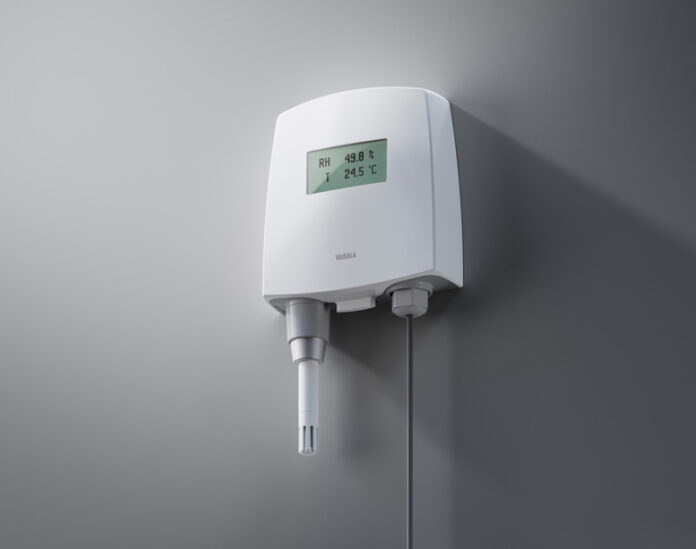
Sophisticated transmitters are also capable of providing calculated parameters (such as humidity) straight from the transmitter, which also improves both reliability and the ease with which the system is commissioned. Other factors to consider include modularity, exchangeable probes, and convenience – installation and commissioning should be flexible, while calibration and maintenance should be as easy as possible. For example, a multi-use transmitter like the Vaisala HMT120 meets all of these requirements, allowing users to easily switch probes for calibration, for example. The measurement probe is either attached to the transmitter itself, or attached by a cable, so the transmitter can be somewhere easy to read while the measurement is close to the process it needs to measure.
Small inaccuracies lead to large costs
Vaisala participated in a trial to simulate how much more energy would be used if there was just one-degree of temperature measurement error, causing too much cooling in a datacentre. The results showed that this one-degree error increased energy consumption by more than 8.5%. With the size of datacentres and assuming the same deviation can occur over a decade, this seemingly tiny error translates into many millions of euros of extra costs, particularly if server uptime is affected.
Invest in long-term thinking
Cheaper sensors will require more maintenance and need replacing more often, but the invisible threat is that they may drift without users even realising, leading to sub-optimal indoor conditions and poor energy efficiency. It is wiser to think long-term over the sensor lifetime and to understand and compare the total cost of ownership – when it comes to stability of measurement, the comparative unit cost is only a small part of the story. Real lifetime value is obtained when a decision is made to invest in reliable, high-quality sensors that maintain their accuracy in the long-term.
The more critical the building, the more important the sensors. Minimising the total cost of ownership is different to minimising the cost of investment. High-quality sensors will last 15–20 years, so it is worth purchasing those that maintain their accuracy over time and are designed for effortless calibration and maintenance. This will help to keep the facility running optimally, saving energy, saving money and improving the sustainability of the business.
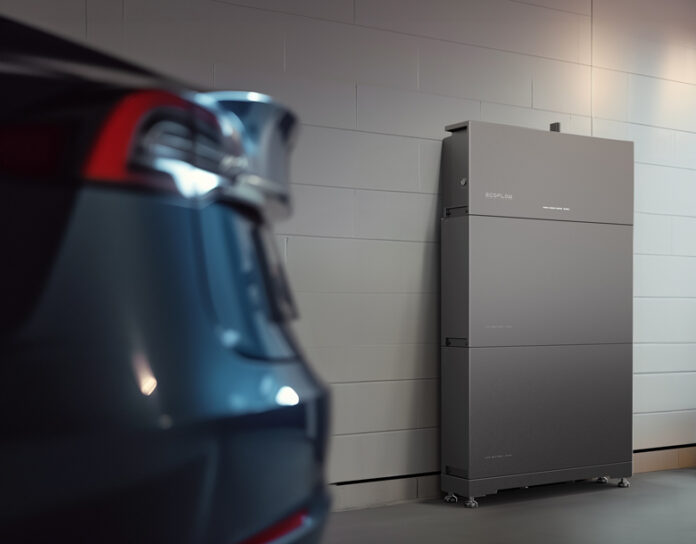
Pan European distributor, Ecobat Battery, has used the Solar & Storage Live event held at ExCeL London at the end of April, to launch the latest additions to the EcoFlow range of backup power units for houses, the PowerOcean Single-phase and PowerOcean Three-phase.
Whereas the original EcoFlow PowerOcean DC Fit was primarily designed as a retrofit solution to existing properties, or for renovation projects, these two versions are aimed fundamentally as first fit additions to new build installations to provide these buildings with both off-grid security and fiscal benefits as a standard feature.
For most domestic applications, it will be the single-phase version that will be the option of choice and with up to six kW of continuous power, it has the capacity to backup all essential home appliances together, and ensure an uninterrupted power supply until the grid kicks back in, or the solar supply comes back online.
With the vagaries of changing weather always a potential issue, both versions are equipped with a built in charge controller that seamlessly switches the supply to the ideal source, which provides the ultimate in performance, day or night and in whatever weather conditions. It also updates remotely, without interrupting the system or its output.
Fully compliant for home installation, the elegantly designed modular system can be tailored to the needs of the individual home and either mounted on a wall or free standing, outside or undercover, and with IP65 certification, it is highly resistant to dust and water ingress, even from low pressure water jets.
With the EcoFlow App, installers can not only commission the system quickly and efficiently, but also diagnose and remedy faults remotely, and home owners can manage the system and ensure it achieves its greatest possible power generation and consumption potential, even when away from home.
To ensure the highest level of power security, the system can be backed up with a 4G dongle ESS, which ensures network connectivity should the normal Wi-Fi or ethernet network be interrupted.
Although perhaps more suitable for smaller commercial applications, the three-phase version of the PowerOcean solar power storage solution has all the benefits of its single-phase cousin, but with the option of six, eight, 10 or 12kW capacities.
The EcoFlow PowerOcean series is designed around the advanced PowerOcean LFP battery, a high-voltage battery system that is connected in parallel. Users can enjoy the flexibility of starting with a single battery of five kWh, expanding their system at any time. With trusted LFP battery chemistry and fire-preventing safety measures, they deliver unrivalled battery reliability and performance, providing in excess of 6,000 cycles and with a warranty of 15 years.
Navigate the complexities of outsourcing your energy management with these expert tips from TEAM Energy.
If your business has an energy management team who is allocating vast amounts of time to checking energy data and analysing invoices, outsourcing to an energy bureau service will allow them to apply their strengths and core competencies elsewhere. By assigning these tasks to a professional service provider, your energy management team can focus on strategic carbon reduction activities and dedicate time to planning for a net zero future.
Outsourcing your utility suppliers bill validation to an energy management bureau can provide significant benefits including:
Increased efficiency
Access to domain expertise and facilities
Risk mitigation
Increased cost recovery.
Choosing the right energy bureau services for your needs can significantly impact your organisation’s energy management, carbon reduction and cost savings.
1. Expertise and Experience.
Look for an established bureau service with a proven track record and years of experience working with utilities suppliers. An established bureau service that is supported by a team of industry experts with a wealth of knowledge can provide valuable insights and guidance.
2. Range of Services
Look for a bureau that offers a comprehensive portfolio of carbon and energy management services that align with your organisation’s specific needs.
3. Bill Validation Capabilities
Ensure the bureau service provider offers a full bill validation service covering all charge elements of your utility suppliers bill including network charge validation (TNUoS and DUoS). Check their readiness to support the Market Wide Half Hourly Settlement industry change.
4. Customisation
The energy management bureau should be able to tailor their services to fit your organisation’s unique requirements, providing personalised solutions rather than a one-size-fits-all approach.
5. Cost-Effectiveness
Compare the rates offered by different bureaus with the depth and quality of service they can provide.
6. Customer Service
A bureau that provides excellent customer service with specialists available to address your concerns can make the process smoother and more efficient. Check the supplier’s ability and flexibility in terms of service setup, data migration and their overall quality management framework.
7. Technology and Tools
Check if the bureau utilises advanced technology and automation tools for accurate data handling, reporting, carbon and energy management. These technologies should support automated data integration including API, EDI, IoT and seamless integration with your in-house business intelligence and financial accounting software.
8. Account Management, Transparency and Reporting
The right energy bureau should offer transparent reporting and clear communication about your carbon data, energy data, savings opportunities and recoveries. Your service provider should assign to your account a name service delivery manager, deliver off-the-shelf reporting templates, build you own reports and integration capabilities with your in-house reporting tools.
9. Compliance and Sustainability
It is important to choose a bureau that can help your organisation to meet its regulatory requirements, support your sustainability goals and security requirements. Check for security certifications to include ISO 27001 and Cyber Essential Plus.
10. Reputation
Ensure that your supplier has the appropriate Net Zero ambitions and carbon reduction strategies in place supported by a robust environmental management framework so as not to add to your scope 3 emissions.
A good energy management bureau should make the process hassle-free, taking care of all aspects of carbon and energy management so you can focus on your core operational activities.
HI Group, a leading force in driving innovation and sustainable transformation has engineered an ambitious sustainability initiative in partnership with MidKent College, putting the college on track to become the greenest of its kind in Britain.
With the signing of contracts on 13 May 2024, the College is set to replace its fossil fuel based heating system at the Maidstone and Medway campuses as it embarks on an £11m green energy retrofit. True to MidKent’s strategic goal to spearhead an ambitious decarbonisation initiative for the further education (FE) sector, the investment marks a substantial step towards sustainability, enabling the college to transition its two locations entirely off gas for its energy needs by March 2025*.
The groundbreaking move, thanks to Government funding under the Public Sector Decarbonisation Scheme, and principal contractor CBRE, echoes the growing environmental concerns of its 8000-strong student body and will serve to satisfy the demands of prospective students who, more and more, are seeking institutions that provide environmentally responsible education.
The Public Sector Decarbonisation Scheme is run by the Department for Energy Security and Net Zero and delivered by Salix Finance.
Identifying the most effective and viable green energy solution for the college has been the result of two years’ worth of extensive analysis and meticulous planning by HI Group.
This has included environmental audits encompassing energy and water supply across a complex site of buildings cross the two campuses. The results have formed the foundation of a detailed emissions reduction strategy and a five-step energy retrofit plan which entails:
Electrification of heating via installation of renewable electricity-powered heat pumps
On-site renewable power generation through extensive solar PV systems, including a rooftop solar system and a unique vertical solar façade featuring college branding
A solar car port will also be installed which will be the one of the largest arrays of its type in the UK
Optimisation of energy use with battery storage and smart controls for economic energy management
Installation of new domestic hot water systems
MidKent’s journey follows a successful blueprint created by the Nottinghamshire-based environmental consultancy for Gloucestershire College where a remarkable 70% reduction in GHG emissions was achieved in the first 12 months following its adoption of green energy.
The college’s commitment is not just an institutional responsibility but a strategic move to influence future generations and the wider community towards sustainability, whilst also positioning the FE sector as a pioneering force to deliver low carbon operations well ahead of government targets.
Martin Peat, Executive Director of Finance and Estates at MidKent, explains: “HI Group and CBRE’s appointments mark a pivotal step towards realising our ambitious vision of sustainable campuses. Their expertise aligns seamlessly with our commitment to combat climate change by transitioning to renewable energy sources. Together, we’re poised to lead by example in creating environmentally conscious educational spaces for generations to come.”
With significant funding secured by HI Group via grants from the Department for Education and Salix Finance, initial preparations on site are already underway and a groundbreaking ceremony is scheduled for this June. Completion is anticipated by the end of February 2025.
To find out more about the project, please visit MidKent College.
This article appeared in the June 2024 issue of Energy Manager magazine. Subscribe here.
In a diverse energy landscape, monitoring and control of decentralized energy resources can be challenging. Distributed Energy Resources (DERs) offer a way to harness a wider range of energy resources and boost grid resilience, but they require advanced control and monitoring systems. Here, Stefan Hufnagl, Industry Expert for Energy at automation software supplier COPA-DATA, explores how digital technologies can offer a solution.
The modern energy mix is more diverse than ever. Accelerated growth and innovation have resulted in a new generation of energy technologies to harness power from natural resources at various locations and scales, from individual microgeneration systems through to gigawatt-scale installations. DERs allow energy to be generated from these natural resources closer to where it will be used and create a more diverse range of generation sources, but this greater variability brings unique challenges for monitoring and control.
Large-scale DER installations are undoubtedly a positive addition to the energy network, but their integration and management is more complex than that of individual, smaller scale DERs. A rooftop solar panel, for example, is typically relatively simple to both install and run — they usually do not require complicated control mechanisms to function and to connect to the grid, and all components are often from a single vendor. When scaling up to large-scale DERs, operations immediately become less straightforward.
Challenges of scale
A utility-scale DER operation comprises vast amounts of equipment in addition to the energy capture assets. A typical installation will require large inverters, combiner boxes, trackers, weather stations or power switching equipment. As an example, a solar plant with a 500 MW (megawatt) capacity may use hundreds of inverters and thousands of trackers in its day-to-day operation. This equipment may come from different manufacturers and vendors with varying IT (information technology) and OT (operational technology) standards and requirements. All these assets need to be integrated to provide a holistic overview of the plant’s state and performance for effective operation and monitoring.
What’s more, these utility-scale DERs are often connected directly to the grid. This connection requires the operation to function correctly and consistently to ensure accurate grid frequency and voltage. This relies on automated plant controllers and the transmission of telemetry data to the distribution network to maintain overall grid balance and stability.
Digital solutions
For efficient and effective operation of DERs, digital solutions are an invaluable tool. Renewable energy projects must be safe and reliable in the context of specific electrical parameters. The system must operate in line with defined rules in order maintain internal integrity and to help maintain the grid stability. The monitoring and flexible management of diverse generation assets can only be achieved with digital technology.
Digital technology on the OT side enables the monitoring and flexible orchestration of generation assets. Immediate, automatic responses are crucial for certain situations, including identifying and isolating malfunctions, instructing service teams and ensuring rapid problem resolution. Effective control of extensive systems like solar, wind, or battery farms rely on digital communication, advanced software visualization and intelligent algorithms for protection and automation.
Optimizing profitability within specified constraints is paramount. Detecting and correcting inefficiencies, adjusting to environmental conditions and coordinating system maintenance with production schedules are essential tasks. Additionally, participating in energy trading pools demands reliable digital information regarding production schedules and generative capacities. Successful operation within these parameters requires a holistic approach, leveraging digital technologies and intelligent algorithms for both stability and economic efficiency.
COPA-DATA’s zenon software platform offers connectivity to many of the important components in large scale DER installations, including substation control and communication with regional and national control centres. Based on this, zenon can manage high volumes of data, and provide advanced visualization, control and analytics to optimally manage the facility. The system can be completely tailored to the needs of the respective users.
The integrated platform offers a variety of functions for robust networking, real-time data processing and flexible visualization both on site and remotely. It also has features ideal for supporting DER operation, for example, specialist cloud services such as weather forecasting or operational optimization for dedicated generation processes, based on machine learning and AI.
Utility-scale DERs represent an emission-free solution to generate energy and to diversify the overall energy mix, but they pose a challenge for both operators and the distribution grid.
Open, independent and future-proof solutions are essential in achieving safe, effective and economic operation of large-scale DERs. zenon offers an unparalleled mix of industry-proven functionality and IT and IoT based technologies, in order to achieve the perfect balance between robust system operation and innovative DER operation and monitoring.
Find out more about how using zenon can create a smarter, more connected DER operationhere.
This article appeared in the June 2024 issue of Energy Manager magazine. Subscribe here.
CCUS delivered hydrogen can help alleviate pressure on already constrained electricity grids. Image: Shutterstock
Nadim Chaudhry, CEO of World Hydrogen Leaders, looks at the opportunities for CCUS-enabled low carbon hydrogen and how US policy is accelerating the advancement of this vital fuel of the future.
While its relevance in helping to reach climate goals has long been recognised, deployment of carbon capture, utilisation and storage (CCUS) has been slow and consistently accounting for less than 0.5% of global investment in clean energy technologies.
Although CCUS is not a new technology and there are currently around 41 operational facilities globally, it has typically been deployed at a small scale – mainly for R&D projects and for enhanced oil recovery[1]. In order for CCUS to meaningfully contribute to climate change goals, the amount of CO₂ captured would need to grow four-fold from current levels by 2030)[2]. However, stronger climate targets and investment incentives are now starting to drive increased momentum into CCUS – and one of the key strategies to provide a boost to the technology is the efficient production of hydrogen.
The role of CCUS in low carbon hydrogen production
Hydrogen is a versatile energy carrier that can help support the decarbonisation of a range of hard-to-abate sectors where electrification from renewable sources cannot deliver the level of energy output required. These include iron, steel, chemicals and cement production – as well as hydrogen-based fuels for aviation, shipping and long distance haulage.
CCUS can facilitate the production of low carbon hydrogen (sometimes referred to as ‘blue’ hydrogen) from natural gas and provide an opportunity to bring it into new markets in the near term – and at reasonable cost.
It can help alleviate pressure on already constrained electricity grids, allowing renewable electricity generation and electrolytic hydrogen production to scale at a more manageable pace. This benefit of CCUS-enabled hydrogen over the next decade has been recognised in the Committee on Climate Change’s recently published Climate Change Committee’s 2023 Progress Report to Parliament.
Today, the cost of CCUS-enabled hydrogen production is likely to be around 50% of hydrogen production via electrolysis powered by renewables-based electricity. While the cost of electrolytic hydrogen is anticipated to reduce over time with the onset of increasingly cheaper electrolysers and renewable electricity, CCUS-equipped hydrogen will most likely remain a competitive option across regions typically associated with low-cost fossil fuels.
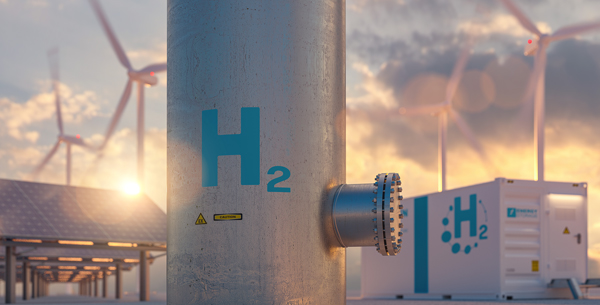
Cost of CCUS-enabled H2 production can be 50% of that via renewables-based electrolysis. Image: Shuttershock.
Recently there has been a significant increase in the appetite to develop CCUS projects, with a 50% increase in CO2 capture in the 12 months between 2022 to 2023[3]. This has been driven by governments internationally coming under increasing pressure to meet global climate targets, implementing robust legislation and providing clear pricing signals in order to make CCUS commercially viable.
Despite this positive news, there remain three significant issues. From the many announced CCUS projects, only around 5% have taken firm investment decisions due to the uncertainty of demand, a lack of clarity around certification and regulation – and critically important – the lack of infrastructure available to actually deliver the hydrogen to customer sites. And, according to the IEA, to help deliver a much decarbonised heavy industry by 2030, a third of all hydrogen production will need to be dedicated to those hard to abate sectors – and currently these applications only account for around 0.1% today. So, there is considerably more work to do.
Challenges with deploying CCUS at scale
The fact that CCUS is far from a mature industry, a single stakeholder is typically unable to take on all the expertise, risk and capital expenditure needed across the whole value chain. As such, the most significant challenges with deploying CCUS at scale are the multiple different, distinct stakeholders that need to be coordinated including: the industrial plants which are the CO₂ emitters themselves; the various CCUS technology suppliers which separate and capture the CO₂; providers of processing, compression solutions transportation solutions – and, finally, experienced storage providers who can inject and store the CO₂ underground.
It is evident that urgent policy action is needed to create demand for low carbon hydrogen and unlocking the necessary investment to accelerate the scale-up of production and the building of delivery infrastructure.
The US leading the way
Currently, different policy approaches are being undertaken by governments to encourage the deployment of CCUS at scale. In particular, the United States has provided a much-needed shot in the arm for the infrastructure required to scale up technologies. Incentives under the Inflation Reduction Act (IRA) provide project developers with a US$50 per metric tonne of CO₂ tax reduction where CO₂ is stored in dedicated storage sites. And the Infrastructure Investment and Jobs Act passed in November 2021 provided a combined US$15 billion to support CCUS and low-carbon hydrogen production.
The IRA has had a considerable positive impact on hydrogen, enabling the US to have the largest hydrogen project pipeline of any country. It currently accounts for 18% of total announced capacity, allocating Australia to second place at 14%. And while the percentage of hydrogen projects in the EU surpass both of those (at 29%), it should be remembered that this figure accounts for the whole of the EU (consisting of 27 countries) and the UK – which ultimately results in relatively minor pipelines per country.
While Europe may be advancing the highest number of projects overall, the US is considerably closer to offering early scale-up, with the generous IRA tax credits, eventually helping a strong flow of US projects towards final investment decision (FID).
The majority of announced projects are for green hydrogen, which is produced using renewable energy and electrolysis and is the cleanest form of hydrogen production. However, it is also expensive, making access to cheaper clean power necessary to achieve the desired economics.
While most of the recently announced projects are for carbon-free hydrogen, the projects that are most advanced are dominated by blue hydrogen, especially in the US. Blue hydrogen is mainly produced from natural gas and creates carbon dioxide as a by-product, so it’s a low carbon solution, but not strictly a ‘clean’ one. However, it enjoys a significant cost advantage over green hydrogen, particularly where natural gas is cheap, as in the US and Canada.
Today, the cost of CCUS-enabled hydrogen production remains around half that of producing hydrogen through electrolysis powered by renewables-based electricity. And while the cost of electrolytic hydrogen will decline over time, with cheaper electrolysers and renewable electricity, CCUS-equipped hydrogen will most likely remain a competitive option in regions with low-cost fossil fuels and CO2 storage resources.
In discussions with Greg Bean, Director, Gutierrez Energy Management Institute at the University of Houston, he commented: “Recent federal government policies affecting low carbon intensity (LCI) hydrogen – specifically the funding of seven hydrogen hubs, along with IRA production tax credits for LCI hydrogen and enhanced CCUS tax credits – should accelerate the initial wave of CCS hydrogen given its current cost advantage over electrolytic hydrogen, especially in the US with low natural gas prices. However, the more favourable tax treatment for electrolytic hydrogen in the IRA and the likely reduction in electrolytic hydrogen cost suggests that it might ultimately have a larger market share in an aggressive decarbonisation scenario.”
Hydrogen trading is still at a relatively nascent stage but could see significant growth this decade. Even low carbon hydrogen will be crucial for net importers to reach net-zero targets – and for net exporters like the US to maximise benefits from clean energy deployment. CCUS-based hydrogen is likely to become an internationally traded commodity to help countries meet their hydrogen demand in a more economical way.
However, Greg Bean goes on to note: “With main export markets likely to be in Europe and North Asia, there could be policy actions in these countries that penalise or limit CCS hydrogen imports. A relevant example is the “maximum methane intensity values” and associate penalty structure being discussed for LNG imports into Europe. Time will tell.
Conclusion
We are in a decisive decade and need to scale solutions today if we wish to avoid the worst of climate impacts on our society and global ecosystem. Both CCUS and low-carbon hydrogen are well-tested and the US has shown that they can be rapidly scalable solutions that can deliver decarbonised industries at a lower cost.
The significant opportunities for low carbon hydrogen can only be delivered through coordinated international collaboration. This requires cross-industry partnerships that must work together based on guiding principles of lower costs, speed, and uncompromising quality.
[1]Global Status of CCUS Report 2023, CCUS Institute
From council offices and hospitals to residential homes and schools, the public sector relies on HVAC and refrigeration systems to control temperatures in buildings and prevent perishable goods from going to waste. However, when refrigerant gas is accidentally released, a common problem with these types of systems, employees and users are put in danger and a considerable amount of energy is wasted. Shaun Evers, Managing Director of Stonegate, explains how today’s advanced gas detection technology enables public sector organisations to eliminate these health and safety risks and ensure energy-efficient temperature control.
Hidden hazards
For organisations responsible for providing public services, often for some of the most vulnerable people in society, a leaking HVAC or refrigeration system presents a major challenge. An inability to control temperatures effectively can make buildings like hospitals and care homes uncomfortable for users, and cause foods, medicines and other materials in cold storage to perish, with their replacement stretching already tight budgets. At the same time, organisations will need to ensure that employees and users do not come into contact with these harmful and potentially lethal gases. Indeed, the risks here are not just to health and safety, but to the reputation of the organisation and the potential financial losses resulting from lawsuits.
The biggest challenge for public sector organisations is knowing that a refrigeration gas leak has taken place at all. In the UK, the majority of leaks remain undiscovered until around 60% of the gas has already escaped, by which time it may have been causing issues for a considerable period. Employees and users exposed to these gases are at risk of a wide range of harmful effects, including coughing, headaches, nausea, breathing difficulties and skin and eye irritation. When gas concentration levels are high, for instance, in confined spaces, people can lose consciousness or potentially asphyxiate. Furthermore, some refrigerant gases are flammable, creating a substantial fire hazard: a major risk in buildings like hospitals where evacuations are highly challenging operations.
Given the financial pressures facing the public sector and today’s high energy prices, the cost of running an HVAC or refrigeration system can be a burden on budgets. These costs, however, are exacerbated by a leaking system. According to The Carbon Trust, the average system loses 20% of its refrigerant gas each year. As a result, those systems work 11% less efficiently and thus require 11% more energy to perform as required. With leaks not usually detected until 60% of the gas has been lost, running costs by this time will be 33% higher. To prevent this money from being wasted, it is important to detect and fix issues swiftly.
Complying with F-gas regulations
As refrigerant gases can have a global warming potential (GWP) several thousand times greater than CO2, the government has imposed strict regulations to limit their environmental impact. For instance, when servicing or refilling systems with a refrigerant charge equal to or above 40 tonnes of CO2, the use of fluorinated gases (F-gases) with a GWP above 2,500 is prohibited. With regard to gas leak checks, there are now rules that stipulate their frequency, ranging between quarterly and annually, depending upon a system’s CO2 equivalent tonnage. Systems with F-gas equivalent to 500 tonnes of CO2 or higher, meanwhile, must be fitted with gas leak detectors. Moreover, the UK is currently reviewing its F-gas regulations and may follow the EU in phasing F-gases out completely by 2050.
Next-gen gas detection technology
The evolution of F-gas regulations has inspired the development of next-generation gas detection technology. These intelligent sensors can swiftly detect both hazardous and non-hazardous gases and use specially configured semiconductors or infrared sensing elements to identify refrigerant gases with acute precision. Indeed, their sophisticated programming enables them to detect predetermined mixtures of refrigerant gas and air so that their sensitivity can be tailored to the precise environment where they are to operate. This is possible even in extreme environments, such as cold storage, or in large facilities, like sports centres or public libraries. Additionally, by calibrating a sensor’s integrated active filters to ignore non-important gases, it is possible to extend its lifecycle.
Aside from detecting gas leaks, modern gas detectors also carry out the vital role of alerting people in the vicinity so they can be kept out of danger. Built-in LED indicators indicate the presence and status of the sensors, and there are audio-visual signalling alarms to alert employees and users. These next-gen detectors have also been created to integrate with Building Management Systems, enabling proactive monitoring to be facilitated either centrally or online, thus improving diagnostics and communication.
For public sector organisations using HVAC or refrigeration systems, the latest gas detectors provide a range of key benefits. They make buildings safer for employees and users while assisting with regulatory compliance; they prevent ineffective temperature control causing perishable items to go to waste; and they significantly reduce energy wastage and its related costs. As such they can play an instrumental role for the public sector.
As the United Kingdom deepens its engagement with clean nuclear energy, the importance of providing suitable accommodations for workers at remote nuclear sites is more critical than ever. The integration of temporary modular buildings is set to be a cornerstone of the UK’s approach to achieving its nuclear energy goals.
The “Civil Nuclear Roadmap to 2050” represents the UK government’s detailed plan to increase nuclear power production as a step towards realising its net zero objectives. With the construction of Hinkley Point C, the first new nuclear power station since 1995, on track for operation by 2030 and Sizewell C soon to follow, the demand for rapid construction of quality housing is pressing.
Constructing Vibrant Communities
The construction of nuclear power plants employs thousands, often in isolated coastal regions which are chosen for their accessibility to water needed for cooling processes. Locations such as West Somerset’s Hinkley Point C and Suffolk’s Sizewell C, as well as upcoming sites in Cumbria, Teesside, Gloucestershire, and Wales, are earmarked for the development of small modular reactor (SMR) power stations.
Temporary pop-up towns are emerging as a viable solution in these sparse areas, providing on-site housing that cuts down on commuting, reduces emissions, and lessens impact on local communities. Hinkley Point C, for example, includes amenities ranging from hotels and pubs to sports and fitness facilities, which not only support a healthy work-life balance but also attract the necessary skilled workforce.
Benefits of Modular Towns
The flexibility of modular buildings to adapt and scale with the phases of a project is invaluable. They can be quickly expanded or downsized based on workforce needs and, once no longer needed, can be dismantled and repurposed, significantly reducing the carbon footprint.
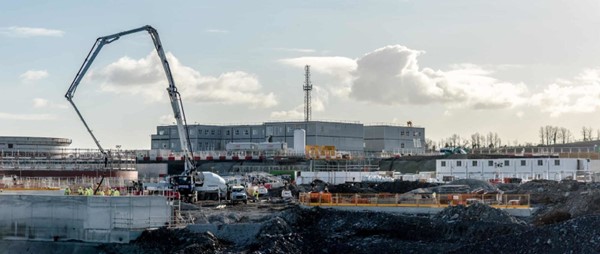
At Hinkley Point C, modular solutions have been successfully implemented, from office spaces to catering facilities, showcasing their adjustability and cost-effectiveness. Premier Modular has provided over 41,500 square feet of such temporary structures, proving their efficiency and adaptability.
A Sustainable Approach to Building
The use of temporary modular buildings at sites like Hinkley Point C and Sizewell C is integral to the UK’s commitment to Net Zero. These structures are built offsite, significantly reducing waste, and are designed to be recycled or reused, aligning with sustainable building practices. Moreover, the long-term rental or reuse of these units helps prevent the release of carbon associated with the demolition of traditional buildings.
Modular buildings are therefore not only essential for meeting immediate housing needs but are also central to promoting sustainability in the construction of the UK’s future nuclear facilities.
For further information on how modular construction can be integrated into your projects, consulting with industry experts is advised.