


As the United Kingdom deepens its engagement with clean nuclear energy, the importance of providing suitable accommodations for workers at remote nuclear sites is more critical than ever. The integration of temporary modular buildings is set to be a cornerstone of the UK’s approach to achieving its nuclear energy goals.
The “Civil Nuclear Roadmap to 2050” represents the UK government’s detailed plan to increase nuclear power production as a step towards realising its net zero objectives. With the construction of Hinkley Point C, the first new nuclear power station since 1995, on track for operation by 2030 and Sizewell C soon to follow, the demand for rapid construction of quality housing is pressing.
Constructing Vibrant Communities
The construction of nuclear power plants employs thousands, often in isolated coastal regions which are chosen for their accessibility to water needed for cooling processes. Locations such as West Somerset’s Hinkley Point C and Suffolk’s Sizewell C, as well as upcoming sites in Cumbria, Teesside, Gloucestershire, and Wales, are earmarked for the development of small modular reactor (SMR) power stations.
Temporary pop-up towns are emerging as a viable solution in these sparse areas, providing on-site housing that cuts down on commuting, reduces emissions, and lessens impact on local communities. Hinkley Point C, for example, includes amenities ranging from hotels and pubs to sports and fitness facilities, which not only support a healthy work-life balance but also attract the necessary skilled workforce.
Benefits of Modular Towns
The flexibility of modular buildings to adapt and scale with the phases of a project is invaluable. They can be quickly expanded or downsized based on workforce needs and, once no longer needed, can be dismantled and repurposed, significantly reducing the carbon footprint.
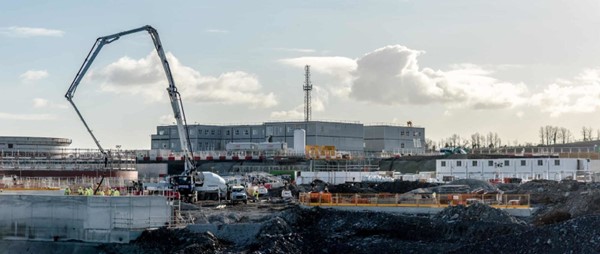
At Hinkley Point C, modular solutions have been successfully implemented, from office spaces to catering facilities, showcasing their adjustability and cost-effectiveness. Premier Modular has provided over 41,500 square feet of such temporary structures, proving their efficiency and adaptability.
A Sustainable Approach to Building
The use of temporary modular buildings at sites like Hinkley Point C and Sizewell C is integral to the UK’s commitment to Net Zero. These structures are built offsite, significantly reducing waste, and are designed to be recycled or reused, aligning with sustainable building practices. Moreover, the long-term rental or reuse of these units helps prevent the release of carbon associated with the demolition of traditional buildings.
Modular buildings are therefore not only essential for meeting immediate housing needs but are also central to promoting sustainability in the construction of the UK’s future nuclear facilities.
For further information on how modular construction can be integrated into your projects, consulting with industry experts is advised.
