

Local Area Energy Planning โ€“ What does good look like?

Rich Leach

Comment by Richard Leach, Senior Local Energy Transition Advisor at Energy Systems Catapult.

A coordinated approach 

I coined the phrase Local Area Energy Planning in 2018 and I am pleased it is gaining traction across the UK as places look to plan and deliver their Net Zero ambitions. At the end of 2021 we had 15 local areas in the UK either with a LAEP in place or were developing one. As of May 2024, there are over 100 areas who have either completed or are undertaking a LAEP – accounting for around 25% of local authorities in the UK. And that is without LAEP being mandated or funded in a co-ordinated way centrally (except for Welsh Government who have commissioned LAEPs for all 22 of their local authorities).

The Catapult came up with the concept of LAEP because we could see that unlike other practices, like transport planning, decarbonisation activity was uncoordinated, with different organisations doing their own thing.

To achieve Net Zero and to do this cost-effectively it is clear that we need a โ€˜whole energy systemโ€™ approach. Also key is that plans should be locally led, rather than being imposed on local places through a national, top-down approach. Over the last decade weโ€™ve delivered 22 LAEPs and it is great to see others have entered the market to deliver and help support continued innovation in this space. We created guidance as a framework for local areas to procure someone to help them deliver a local LAEP โ€“ but consistency and robustness remain a challenge.

The โ€™perfect planโ€™

At its core, a good LAEP gives a local area a highly granular plan that shows what needs to be done, where it can be done, and when it can be done.

A well designed LAEP will include the following:

  • The chosen pathway with sequenced interventions that set out the areaโ€™s proposed route to Net Zero.
  • A โ€˜plan on a pageโ€™ that provides an at-a-glance impression of the scale of least regret interventions across the different geographical zones of the local area.
  • Visual focus zones for all the prioritised activity associated with getting to Net Zero.
  • Outline priority projects, providing users of the LAEP with priority. Interventions to take forward.
  • Breakdown of investment to decarbonise the local area.
  • Highlighted next steps including key immediate/near-term activities and actions needed to progress the LAEP.
  • Corresponding data sets that can be used for a future LAEP update or by organisations to support project/implementation activity.

A seven-stage process

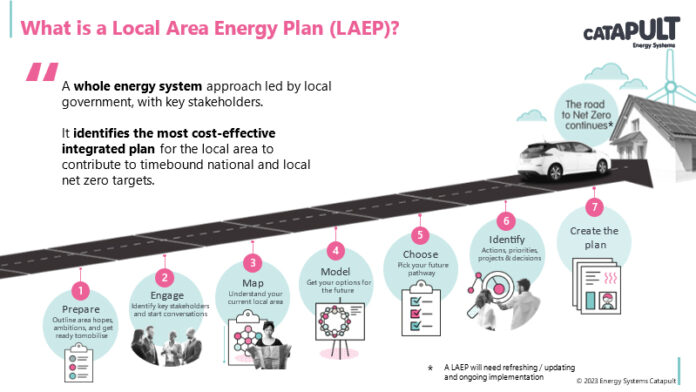
A good LAEP will follow the guidelines and the seven stages, there are lots of tools and approaches out there which use the term LAEP but when you look into it quite often all it really is some data visualisation of the current energy system in a location. Whilst this is useful to identify quicks wins, it doesnโ€™t model future pathways and take a whole energy systems approach, helping a local area deliver the most cost-effective route to Net Zero.

Prepare โ€“ In this stage, key for a good LAEP is to ensure that mobilisation includes having an understanding of how the LAEP is going to be used afterwards by local government. This may include considering if it is better placed to try and develop a LAEP regionally with partners or individually.

Engage โ€“ A good outcome is that all major stakeholders  who are going to play a role in delivering net zero in a place support/are bought into the LAEP

Map โ€“ Representing the local area and its energy system with a very high level of spatial granularity (ideally at building level) is important as this provides the building block to identifying the what, where and how many in the LAEP

Model โ€“ technical robustness of the modelling/analysis is so important, a good outcome is being confident with the proposed solutions when compared to other options from a whole energy system perspective โ€“ you need to be able to explain why options have been selected

Choose โ€“ Looking across options and scenarios for trends to identify where energy system decisions are low regret e.g. a heat network is always a good option for a place when compared to other options

Identify โ€“ Breaking down all of the activity in a LAEP in a sequence, prioritising what to do in the short term (where low regret / less risk) versus key decision points and less certain (longer term activity)

The plan โ€“ Spatially visualising, to a high degree of detail, the what, where, how many, and how much (e.g. how many EV charge points in this post code area and how ยฃ) โ€“ this is what organisations use to take forward activity, not lots of technical writing. Also providing the outputs as data to be used and kept up to date.

Unlocking funding

By following the above and by using data right down to the street level and the lower super output areas you get the level of granularity which can help local decision makers know for example where the best homes are for retrofit or the best homes for solar. This enables areas to create areas of focus and understand opportunities to deploy at scale and therefore support investment.

LAEPs are helping areas unlock funding opportunities both from the public and private sectors, we are seeing this in both York and North Yorkshire and Greater Manchester.

As we recently highlighted in our Time is Now Report – which looked at the barriers to LAEPs from capacity, capability, and data. Data is key to the success of a LAEP and a good LAEP needs good data to inform decision making and the choosing of the right pathway.

If we want every local area in the UK to progress its own Net Zero journey, I passionately believe we need consistency and an agreed framework. I remain committed to championing LAEP as the approach that gives our towns and communities the power and evidence to get to their destination in the best possible way.


This article appeared in theย June 2024ย issueย of Energy Manager magazine. Subscribeย here.

Grid connections crisis: How can UK businesses overcome grid constraints on the path to decarbonisation?

Dan Moore

Daniel Moore, Head of Utility Services โ€“ SMS Plc

Britainโ€™s energy transition has become fraught with well-publicised delays in obtaining crucial grid connections, leading to stalled investments and imperilling emissions reduction targets. Amidst this challenge, a range of strategic solutions have emerged as vital lifelines to help organisations navigate grid constraints and propel decarbonisation efforts forward.

As the urgency to combat climate change intensifies, businesses across the United Kingdom are increasingly looking towards electrification as a key strategy to reduce greenhouse gas emissions. However, a significant obstacle stands in their path: grid constraints.

The challenge of grid constraints not only hampers the efforts of businesses to transition to cleaner energy sources but also poses risks of delayed investments and lost opportunities.

What are grid constraints?

Grid constraints arise when there is insufficient capacity within the electricity grid to accommodate increasing power demand and/or integration of new renewable energy sources. This bottleneck in the grid infrastructure poses a formidable challenge for businesses embarking on decarbonisation and electrification initiatives.

For many large commercial or industrial energy users, it is an unfortunate reality that transitioning to cleaner energy sources requires (often costly) new or upgraded grid connections from their site(s).

Electrification of processes previously reliant on fossil fuels (such as adoption of efficient heat pumps in place of gas-fired heating or installing electric vehicle infrastructure to facilitate low-carbon transport) as well as integrating onsite electricity generation like solar PV, typically necessitates establishing a larger grid import / export capacity to and from the site.

However, with the huge increase in demand for new or upgraded grid connections from UK businesses looking to kickstart their electrification journey in recent years, there now exists a huge backlog of connections requests. Currently, businesses face delays ranging from 2 to 12 years for grid connections depending on how much capacity they require, with some reported to be waiting well into the 2030s.

How do grid connection delays affect business decarbonisation plans?

The impact of grid constraints on decarbonisation plans is profound. These delays not only escalate costs but also jeopardise critical investments and emission reduction targets. The implications extend beyond individual businesses, affecting downstream sectors in the supply chain and impeding the broader transition to a low-carbon economy.

Moreover, businesses encountering grid limitations are forced to explore alternative, often suboptimal, decarbonisation routes. This can often compromise long-term emission reduction efforts and undermine the economic viability of renewable energy projects if businesses are not advised sensibly and strategically by genuine experts on their best possible alternative options.

What is Government doing to address grid constraints?

Following mounting pressure from industry, media, and the public, in November 2023 the UK Government released its Connections Action Plan, which outlines reforms to the process of grid connections including raising entry requirements, removing stalled projects, better utilising existing network capacity, improving data and processes, and developing longer-term connection process models. The goal is to significantly reduce connection timescales, ensuring viable projects can connect faster to support the transition to a net-zero power system.

The plan involves collaboration between government, regulatory bodies, energy companies, and customers to ensure timely implementation and accountability. Benefits are expected for all types of connection customers, from large-scale renewable projects to individual consumers installing home appliances like heat pumps.

In April 2024, Ofgem also endorsed the National Grid Electricity System Operatorโ€™s (ESO) own ambitious proposals to revamp the grid connections process, which aims to prioritise viable projects and potentially halve the connections queue. Whilst the regulator acknowledged the proposalโ€™s potential to significantly contribute to the overall vision of the Connections Action Plan (CAP), it highlighted the need for continued progress on other CAP actions.

Delivering this action plan and its proposed benefits is itself expected to take a number of years to implement fully. This is time that many businesses wishing to decarbonise can ill afford to lose if they are to make good on their sustainability and net zero targets, which in many cases have been publicly declared.

How energy infrastructure experts can help businesses mitigate the risks of grid constraints

Amidst the challenges posed by grid constraints, strategic partnerships with energy infrastructure experts and carbon reduction partners have emerged as indispensable assets for businesses navigating the transition to cleaner energy sources. These partners, equipped with expertise in grid infrastructure and decarbonisation strategies, play a pivotal role in guiding organisations through the complexities of grid limitations.

One such solution lies in collaborating with โ€˜power partnersโ€™, such as SMS, who offer tailored support in value engineering grid connections. Such energy infrastructure experts specialise in facilitating seamless grid connections, managing critical responsibilities, and offering tailored solutions to address businessesโ€™ unique energy needs.

Experienced partners like SMS also bring specialised expertise in grid integration and DNO management, enabling businesses to navigate regulatory frameworks, technical requirements, and capacity constraints effectively, helping avoid longer delays than necessary, mitigate risks, and maximise efficiency of planned electrification projects.

Alternative approaches to overcoming grid constraints

Besides tackling grid connections head on, businesses can also explore alternative approaches to circumvent grid constraints and accelerate decarbonisation efforts.

Microgrids (self-sufficient energy systems serving specific sites) offer a decentralised solution to energy needs. By incorporating distributed energy sources and energy storage, microgrids enhance resilience and minimise reliance on the central grid, particularly in areas with constrained infrastructure.

Onsite energy storage solutions, such as long-duration battery systems in particular, provide an ideal avenue for businesses to manage local demand and generation effectively. By optimising energy usage and reducing transmission losses, these storage solutions offer a cost-effective alternative to grid upgrades and enhance the integration of renewable energy resources.

While addressing grid constraints is essential for decarbonisation efforts, businesses can also enhance resilience and mitigate risks by diversifying their energy sources and adopting a multi-faceted approach to energy management.

Working with a Net Zero partner

When embarking on alternative approaches to overcome grid constraints and accelerate decarbonisation efforts, organisations should engage with expert energy consultants to navigate and implement such complex solutions exampled above, ultimately advising you on the most viable route forward for your business.

strategic net zero partner like SMS can guide the establishment of microgrids, for instance, ensuring they are designed to optimally balance load and generation while enhancing resilience against grid instability. SMS can also aid in integrating onsite energy storage systems to manage energy flows and optimise usage in line with the businessโ€™s operational demands and sustainability goals.

Furthermore, by leveraging expertise in renewable energy technologies, carbon reduction experts like us can help businesses diversify their energy sources creating a robust, multifaceted energy management strategy that reduces grid dependence, shields against price volatility, and boosts energy security.

Overall, our role is pivotal in crafting a tailored, strategic approach that not only addresses grid constraints but also positions your businessโ€™ long-term energy efficiency and cost savings.

Looking ahead: Clearing the path to resilient, sustainable energy

As businesses chart their course towards decarbonisation and electrification, overcoming grid constraints has emerged as a critical imperative.

By forgingย strategic partnershipsย and leveraging alternative energy solutions, businesses can surmount the challenges posed by grid limitations and accelerate the transition to a resilient, sustainable energy future.


This article appeared in the June 2024 issue of Energy Manager magazine. Subscribe here.

Installer show 2024 – exclusive Rinnai low carbon product launches in Hydrogen & RDME / Hybrids / Heat Pumps / Electric / Solar

Visit https://www.rinnai-uk.co.uk/contact-us/installer-show and leave your name and email to be automatically entered into a prize draw to win ยฃ1000 of Rinnai heating tech products

Rinnaiโ€™s Installer SHOW is packed with new products and services coupled with a welcoming site & stand – packed with refreshments, entertainment such as darts, golf putting and table football competitions.

The stand will also feature the H3 Rinnai heating & hot water system initiative that consists of:

  • H1– Natural Gas, Hydrogen and BioLPG-ready hot water heating units and systems & Boilers.
  • H2 โ€“ Hybrid systems featuring a mix of appliances and renewables such as solar.
  • H3 โ€“ heat pumps, instantaneous hot water heaters electrically powered and electric cylinders.

All technological options focus on creating decarbonization pathways that are technically, practically, and economically feasible and have been designed specifically to reduce carbon emissions and lower capital and operational expenditure. The H3 range is supported by in-house design support along with carbon, OPEX and CAPEX cost modelling.  

Rinnaiโ€™s H1/H2/H3 offers multiple avenues of cost reducing decarbonization across various energy vectors. To create a healthier way of living, Rinnai is expanding customer choices in hot water provision as well as heating domestic and commercial buildings through a wide range of renewable energy systems.

Rinnaiโ€™s solar thermal water heating systems are a market leading solution that saves up to 3.5x more carbon per m2 compared to conventional solar technology.

Once Rinnaiโ€™s solar technology is combined with the condensing hot water heater system, savings in carbon and cost can be made as the units will modulate from 58kW – 4.4kW dependent on the solar input. Therefore, gas will only be used to boost the temperature when needed. Rinnaiโ€™s solar hybrid technology harnesses renewable gains whilst maintaining robust and efficient operational performance.

Rinnai intelligent condensing continuous flow hot water heaters can save more than 30% in operational running costs when compared to gas fired storage systems, helping to reduce fuel costs and exposure to ever-increasing energy and climate change legislation.

All solar thermal products are precisely aligned with the hot water heating systems & units which are hydrogen blends-ready 20% and renewable liquid fuel (BioLPG and rDME) ready combustion technologies.

Rinnaiโ€™s H3 range of decarbonizing products includes commercial and domestic Low-GWP R290 heat pumps that contain a variety of features: the HPIH range of commercial heat pumps is suited towards schools, restaurants, and small retail outlets.

Rinnaiโ€™s HPIH Monobloc Air Source Heat Pumps – 21, 26, 28 & 32kW range can allow for up to seven units to be cascaded together or operate alone as one unit. Once joined together Rinnaiโ€™s HPIH Monobloc Air Source heat pump can serve increased demand for heating and hot water.

Rinnaiโ€™s HPHP series of LOW GWP heat pumps range from 48kW โ€“ 70kW. State-of-the-art technology added in the injection process outperforms gas compression technology and ensures that even with outside temperatures of โ€“25 Celsius, heating, and hot water of up to 60+ Celsius can still be delivered.

Rinnaiโ€™s Infinit-E range is an optional three-phase all-electric water storage heater for commercial hot water applications. All electric storage water heaters are designed with flexibility in mind.

All units are fitted with between one and six titanium elements. The kW rating within the Infinit-E range is scalable from 12kW to 72kW ensuring that the appliances are suitable for a wide variety of applications.

Each cylinder is manufactured with stainless steel adding durability and enabling extensive warranties. The use of stainless steel also makes the Infinit-E range lightweight and easily manoeuvrable when compared to glass-lined variants. The empty weight of the Infinit-E is 54kg maximum.

All electrical elements can be fitted to a single-phase supply, should site limitations dictate. Each element within the appliance range has its own controllable thermostat with a temperature range of between 49 and 90 degrees Celsius. All elements are fuse protected and there is no need for expensive sacrificial anodes due to a tough stainless-steel build.

Rinnai is also showing the new and innovative KCM series of continuous flow water heaters into the UK market. The KCM series is designed to specifically increase customer savings in energy, capital, and carbon with the inclusion of internally refined technological advancements.

The KCM unit possesses micro-processors that ensures hot water is delivered at the exact pre-set temperature. The advanced micro-processors will measure incoming water temperatures and modulate gas input. This guarantees the system will only use the required amount of energy to increase water temperature whilst supplying limitless volumes of clean hot water.

The inclusion of micro-processors enables the customer to pre-set water temperature supporting the minimization of legionella and eliminating the risk of safety issues such as scalding.

The KCM series leads the UK market in gross energy savings and operational costs at 93% and are compact design reducing the requirement for installation wall and floor space (unit dimensions length 670x 470x 257). System set up, monitoring and error codes are all made easily available via inbuilt status monitors located at the front of the panel.

An all-electric ignition system has been added to ensure no energy wastage – as no additional energy is required to maintain unused water temperature. Hot water temperature is internally monitored, if any fluctuations that rise above 3 degrees of the maximum set temperature, operation of the system will immediately stop ensuring customer safety and low operational costs.

Rinnaiโ€™s H3 range is supported by free training courses, CPDs, FREE design services and extensive warranty options โ€“ simply visit www.rinnaiuk.com for further details.

Rinnaiโ€™s staff will look forward to meeting you at the up-and-coming Installer event at the Birmingham NEC between the 25th-27th June where additional information on Rinnaiโ€™s low carbon product offering is freely available to anyone of interest.

ย ย ย ย  For more information on the RINNAI product range visit www.rinnaiuk.com

MSIP Demonstrates Significant Economic Impact for Scotland

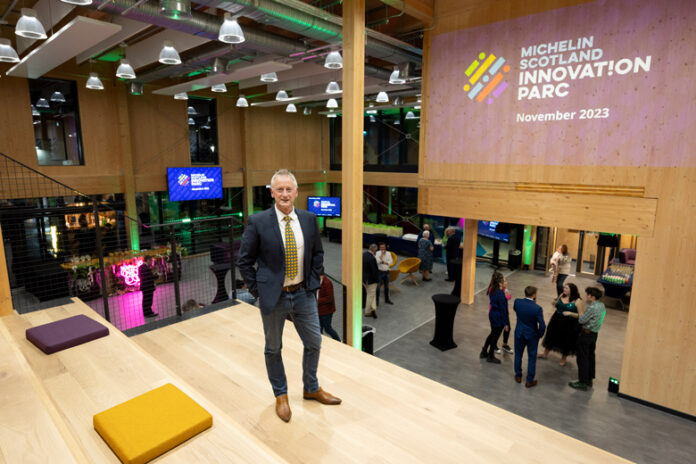
Greig Coull, CEO, MSIP in the ยฃ5m Innovation Hub

Michelin Scotland Innovation Parc (MSIP) is proud to announce that it has demonstrated substantial economic potential since its formation.

MSIP, a joint venture between Michelin, Dundee City Council and Scottish Enterprise, is a dynamic and creative home for innovators, manufacturers and skills leaders who are actively working towards reducing carbon emissions and fostering a cleaner, more sustainable future.

MSIP has been operational for three years, since taking ownership of the former Michelin tyre factory site in 2020. Despite being in its early stages of operations, significant progress has been made in that time.

The MSIP Accelerator Programme, part funded by Scottish Enterprise, has driven estimated net sales impact exceeding ยฃ12.65 million, generating a net Gross Value Added (GVA) impact of ยฃ6.4 million. Additionally, participating businesses in the MSIP Accelerator have successfully leveraged over ยฃ4.37 million in innovation grants and ยฃ17 million in investment.

Construction and refurbishment at MSIP have totalled almost ยฃ25 million. This investment has not only enhanced the available infrastructure at the Innovation Parc but also created numerous job opportunities, supporting local economies.

The physical transformation of the Innovation Parc has enabled 16 companies to establish their operations at MSIP, collectively supporting 190 jobs.

MSIP has maintained a focus on working with the local community and has directly engaged with over 5,000 young learners over the last three years.

Each of these initiatives has generated various outputs, outcomes, and impacts that align with the objectives of Scotland’s National Strategy for Economic Transformation (NSET). This alignment underscores MSIP’s crucial role in advancing Scotland’s economic ambitions and securing MSIPโ€™s ambition to be Scotlandโ€™s home for sustainable innovation.

Greig Coull, CEO of MSIP, said: “As we continue to evolve, our commitment to sustainable innovation and robust support for businesses promises even greater economic benefits.

“While we are early in our journey, the potential for transformative impact is undeniable, inspiring confidence in MSIP’s mission and vision for the future.

โ€œMSIP remains dedicated to fostering an environment of growth, innovation, and economic prosperity. The early successes highlight the promising trajectory of MSIP as a pivotal player in Scotlandโ€™s economic landscape.โ€

Dundee City Council leader, Councillor John Alexander, said: โ€œThe progress that MSIP has made in a relatively short period of time is something that we as a city can be really proud of.

โ€œItโ€™s encouraging not only to see jobs being created right now in Dundee, but also the building blocks being laid for the workforce of the future at the Skills Academy.

โ€œOn top of that thereโ€™s the huge contribution to the local community through school engagement and the ground-breaking collaboration taking place daily in the Innovation Hub.

โ€œWhile there have been and will continue to be challenges to overcome, Iโ€™m in no doubt thereโ€™s still lots of potential for MSIP to grow further in the years ahead.

โ€œIts role in the sustainable and low carbon technologies will not only help create prosperity here in Dundee, but also play a part in addressing the global climate emergency.โ€

Further information can be found in MSIPโ€™s Three Year Impact Report here โ€“ https://www.msipdundee.com/resource/three-year-imact-report/

MSIP Tenants include:

  • Swarco
  • Scottish Enterprise
  • Mabbett
  • Data Monitoring Systems
  • Tronius
  • MEP Technologies
  • Ember
  • Genista
  • SolarisKit
  • HGP (Scotland)
  • Dundee and Angus College
  • Medigold
  • Utili-Tay
  • Tay Country Travel
  • Coast Training
  • Silva Service Catering

Seddon to improve Manchester collegeโ€™s environmental performance

Seddon appointed to transform an iconic part of Loreto College.

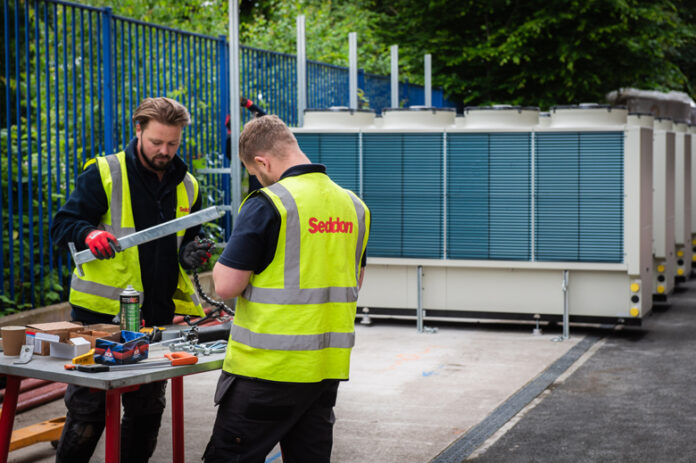
Bolton-headquartered Mechanical, Electrical, Plumbing (MEP) specialists, Seddon Engineering Services, have been appointed to retrofit the college building in Hulme following a successful competitive tender.

Loreto College, a Roman Catholic sixth form college in Hulme, Manchester, brought Seddon on board to help improve the environmental performance of its iconic Ball Building, home to its science labs, as well as the History, Economics and Theology, Philosophy & Ethics departments.

The project, which will cost close to ยฃ1m (ยฃ961,730), will improve the buildingโ€™s sustainability, and efficiency through the replacement of all existing gas sources with state-of-the-art air source heat pumps.

The project will see the implementation of a new innovative cutting-edge Building Management System that will optimize the operational efficiency of the entire facility.

Karl Barraclough, Head of Commercial Energy Services at Seddon Engineering Services, said: โ€œWorking on a building as recognizable and culturally important as Loreto Collegeโ€™s Ball Building, is both a huge responsibility and opportunity. We will demonstrate how new technologies can work at scale, but also how seamless the transition can be within buildings of scale.

โ€œMany schools, colleges and educational facilities will be reckoning with how to move into a Net Zero future and the installation of modern new technologies will be a crucial part of achieving those goals.โ€

Seddon will install significant electrical upgrades to the local substation in order to fortify the buildings power infrastructure and meet the demands of modern amenities and future developments.

Attending to the electrical grid will be essential for the seamless integration of the air source heat pumps and sophisticated Building Management System, ensuring a cohesive and robust energy management system.

Tracy Livesey, Vice Principal at Loreto College, said: โ€œThe upgrade to our collegeโ€™s heating systems is a crucial next step for our long-held sustainability and technological ambitions. Seddon has proven to be a great collaborative partner, helping us to understand what was possible and how we could install new heat pumps with minimal disruption to learning.

โ€œWe hope that this project will set the bar for energy efficient and environmentally conscious educational buildings.โ€

Seddon Engineering Services is part of the Seddon family of companies and operates throughout the Northwest and the Midlands.

https://seddon.co.uk

How UK businesses can keep on top of sustainability expectations with data-driven insights and AI

Jason Janicke

Jason Janicke, SVP, Sales, EMEA at Alteryx

The clear message from last Decemberโ€™s COP28 conference was that climate action canโ€™t wait. Nations across the world are working to accelerate carbon-cutting plans, including the UK which has outlined its ambitions to reduce emissions by 68% by 2023 compared to 1990 levels.

To meet this target, businesses are under increased pressure to monitor their energy consumption and develop a plan to limit and reduce future carbon footprints. This will only become more important given the UK governmentโ€™s aim to introduce climate disclosure standards in July for listed companies, based on those set by the International Sustainability Standards Board (ISSB). These standards envisage the disclosure by businesses of material information about all sustainability-related and climate-related risks and opportunities they are exposed to. Even for companies that arenโ€™t listed, pressure for similar disclosure will only grow as carbon-cutting efforts remain front of mind for stakeholders.

To reckon with these new requirements, data-driven technologies, especially Artificial Intelligence (AI), are critical to keeping on top of the sheer amount of data related to energy usage and automating its analysis for insights. This encompasses sources like smart meters, historical consumption, external usage records, pricing information, consumption forecasts and more.

Consolidating all this data into a cohesive data pipeline, however, is a massive challenge. The data is sprawling and decentralised by nature. It comes in varying formats and poses integration complexities that hinder seamless processing.

But these complexities arenโ€™t reasons to opt out of building a data pipeline. Doing so is urgently needed for gaining customer and business insights but, more than that, so businesses can reap the benefits of running more environmentally efficient operations. But, where to begin?

Starting the journey to an environmental impact data lake

Forward-thinking companies are learning the value of getting data into the hands of more people. When getting started with sharing and collating data from disparate sources and diverse departments, relationship building is key to understand how data can drive business value.

Conversations with data owners across the business provides context to the problem they are solving with analytics, as well as making clear exactly what data is required from each stakeholder. Itโ€™s also helpful to be clear that the trajectory of building a data pipeline is towards automated workflows. With access to automated analytics, data workers can answer bigger questions, seek out more transformative business outcomes, and ease the burden of those time-consuming, manual tasks that eat up precious minutes every day.

Automating the data pipeline processes can also help avoid errors and ensure the data that drives key business decisions can be trusted to be complete, accurate, and valid. When the data is clean, consolidated and consistent, it can be used to train AI models to identify energy usage trends and waste anomalies as well as forecast consumption and costs. The powerful potential of this for better, more sustainable decision-making shouldnโ€™t be underplayed. These four real-world areas show where businesses can use AI to find ways to cut their energy consumption and dramatically reduce their energy costs.

AI and data analytics: true allies of energy efficiency

Some of the most effective applications of AI to optimise energy consumption and reduce costs include:

  1. Managing energy use in buildings and factories

By using AI to consolidate electricity bills and analyse energy consumption, organisations can identify which aspects of their operations take up the biggest share of total consumption, as well as consumption peaks. This information can be used to inform decisions that improve operational efficiency.

  1. More control over grid management

If a company’s energy supply includes renewable sources, occasional unpredictability needs to be accounted for. With the right training data, AI applications can spin up very effective predictions to help optimise energy storage and, therefore, limit the risk of shortages.

  1. Smarter transport management

AIโ€™s ability to consolidate and analyse data from disparate points makes it well suited to smarter transport management. Applications can automate the verification of drivers’ compliance with legal guidelines, optimise transport routes in real-time, schedule maintenance to preserve fuel economy and more.

  1. A more efficient supply chain

Global demand continues to grow for environmentally friendly logistics, with 75% of shippers actively seeking greener options when exporting goods, according to the World Bank. Every supply chain is susceptible to inefficiency given the complex nature of cumulative links. AI intervenes to reduce friction and maintain good coordination between carriers, suppliers and customers through effective predictive capabilities and automated decision-making.

For example, AI can optimise supply chains through functions like predicting product shortages and price fluctuations. It can reveal scheduling issues and enable better management of a smart warehouse while reducing costs. 

Ushering in real sustainability informed decision making

Environmental sustainability is a priority for more boardrooms than ever. But far fewer of these boardrooms are actually factoring information about their businessโ€™ energy usage into decision-making. This equates to flying blind.

Organisations that havenโ€™t made a start to centralising data sources related to their energy efficiency should do so quickly. Once this happens, business stakeholders can apply AI to effectively address current and future energy challenges in a data-driven way.

University of East London reduces carbon emissions in first stage of net zero strategy

The University of East London (UEL) has reduced its carbon emissions by 10 per cent from its 2020/21 baseline to 2022/23 in its new net zero strategy, putting the organisation on track to achieve its 2030 net-zero target.

UEL partnered with technology company Siemens to develop the strategy, which included a roadmap to reduce carbon emissions across the universityโ€™s campuses in the London Docklands and Stratford, which are home to 25,000 students.

The first major step towards the reduction of energy consumption on campus was through the installation of LED lighting in all buildings and upgrades to all building management system controllers.

As part of the second phase, Siemens is installing technologies across the Universityโ€™s campuses which will help it to decarbonise its energy consumption. This includes the installation of approximately 2MW of solar photovoltaics (PV), which is estimated to generate 1.2 GWh of zero carbon electricity a year, and the installation of 27 electric charging points at the Universityโ€™s Docklands Campus, which will go live in the next month. UEL estimates that 90 per cent of this zero carbon energy will be consumed across the Universityโ€™s campuses, with the remainder exported to the National Grid.

Siemens will also support UEL in creating a โ€˜Living Labโ€™ to embed sustainability across the Universityโ€™s course curriculums and provide real-time data allowing students to develop the skills they need to succeed in a green economy.

Simon Burgess, Head of Solutions, Energy Performance Services, at Siemens in the UK and Ireland, said: โ€œOur partnership with UEL will support the University in meeting its net zero targets, providing a structured roadmap to cut carbon emissions across both campuses.

โ€œWeโ€™ve already made significant progress over the last 12 months and the next phase will focus on installing more new renewable energy assets on-site to support sustainable generation.

โ€œTrue partnership and collaboration are key to this success, and that goes beyond decarbonisation. Achieving a net zero economy also depends on developing the right talent for the future, and weโ€™re making the data from our work available to students to inform their studies and equip them with the knowledge and skills they will need to thrive in the green economy.โ€

Professor Amanda Broderick, Vice Chancellor and President, University of East London, added: โ€œOur long-term partnership with Siemens is central to our commitment to becoming a national decarbonisation leader, and providing a global blueprint for urban sustainability. We have already delivered significant carbon reduction savings and reduced both our emissions and energy consumption more than any other modern university in London, thanks to state-of-the-art energy generation technology.

โ€œAnd, importantly, our โ€˜Living Labโ€™ will provide our students, researchers and local businesses an inclusive place to test, research and commercialise green technology in a real-world environment, with access to the latest developments in smart technology to empower our students to become sustainability leaders of the future.โ€

Siemens will be showcasing how technology can accelerate organisationsโ€™ decarbonisation journeys at its free-to-attend Transform event on 17th and 18th of July. To register click: https://siemens.co.uk/transform


This article appeared in theย June 2024ย issueย of Energy Manager magazine. Subscribeย here.

Join professionals from over 150 different countries worldwide and enrol onto the Renewable Energy Instituteโ€™s accredited training courses.

All courses are available to study Online, On-demand, providing flexibility to study whenever suits you. All courses can be viewed at www.renewableinstitute.org

We also have a selection of our courses available to study in the Live Virtual Classroom. The Live Virtual Classroom course will run on set dates and will feature 1-2 full days (9amโ€“5pm UK time) of interaction and networking with the lecturer and other delegates. You will have the opportunity to sit the internationally recognised Galileo Master Certificate exam online at the end of the course.

All courses are CPD accredited and contribute to your professional development.

On completion of your studies, you will receive 1 year of complimentary REI membership.

ย For further information, reach out to the REI at +44 131446 9479 or via email at training@renewableinstitute.org

Boiler & Heat Pump Accessories: a make or break situation

Charlie Mowbray, Senior Product Manager, Ideal Heating – Commercial

When it comes to a successful commercial heating installation, the boiler or heat pump are, of course, fundamentally important, but these appliances do not operate alone.  Key components essential for quick, cost-effective, simple and safe installation, and a well-designed heating system that performs to the standard expected, are the accessory parts.  Accessories should never be an after-thought, but should be considered from the very outset. 

In this article we look at the four most important accessories to a successful commercial heating installation.  We provide advice on the different types available and their suitability for your project, along with recommendations on key features to look for to ensure the best possible cost and efficiency.

Frame & header kits for boiler cascades

When you have a site that requires a high output, you have the option to install a single large commercial condensing boiler or several smaller boilers in a cascade.  The cascade option offers several benefits, including a high turn-down, easier access to challenging install areas (as the parts are smaller and more manageable to handle) and, overall, the cascade can be space saving compared to an equivalent single boiler of the same capacity.  For ease and speed of installation, most manufacturers supply prefabricated frame and header kits, removing the need to build (including welding in the case of steel frames) the support frame to mount the boilers and the pipework that all your individual boilers are connected to, including the connection pipework between the main headers and the boilers.  All that is required onsite is to bolt the prefabricated sections together.  In the case of Ideal Heatingโ€™s own frame and header kits, this can save the installer several hours compared to traditional site based fabrication, as they are already largely complete when received onsite.

The types of frame and header kits vary depending on the manufacturer, with inline headers being the most prevalent.  Back-to-back versions are also available, along with standard and low height versions of the mounting frames for the boilers, so be sure to check your boiler manufacturer supplies frame and header kits that suit the plantroom you are working on.

Hydraulic separation

By their very nature, heating systems can become contaminated with debris and dirt over the years.  When installing new boilers onto an old system, the very last thing you want is for that โ€˜dirtyโ€™ water to circulate through your new boiler as it may impact its efficiency, lead to boiler breakdowns and reduce its working life.  System separation will prevent this.

This can be achieved through using low loss headers and plate heat exchangers with filters or strainers, or air and dirt separators to assist with removal of harmful debris in the system.

A low loss header is essentially a large chamber through which the system water flows at a low velocity.  As the flow rate through the header is very slow, dirt and debris fall to the bottom, where they are removed via a drain valve.  To prevent any of the debris that settles out being carried back through the boiler, low loss headers are normally mounted vertically. This also allows any air in the system flow to migrate up to a point where it can be vented. If you are using a horizontal low loss header, itโ€™s important to employ additional dirt separation on the return to the main plant.  In systems based on ferrous metals, such as iron and steel, consider using a magnetic low loss header which combines the benefits of a low loss header with the addition of a magnet inside it, capturing the magnetite particles as well.

Low loss headers have a further benefit in that they enable the boiler to operate independently to a system where the load is likely to be variable and the operating range for the system may not be ideally suited to the boiler. For the boiler, if it was installed directly to the system pipework, a variable flow rate may lead to minimum flow rates for the boiler not being maintained. By keeping both systems hydraulically separate, each side of the system can operate without disturbing the other. The boiler can provide as little or as much heat input as is required, and the system load can vary over a very wide range without affecting the boiler.

When specifying a low loss header, talk to the manufacturer or the supplier to confirm that it’s suitable for the type of product you’re going to use it with and your expected flow rates. If the flow velocity in the body of the header isn’t low enough, you won’t get effective separation between the two systems.

Moving on to Plate Heat Exchangers, which are becoming the more popular choice, this method of separation works by transferring heat from the boiler circuit to the system circuit without the two circuits coming in direct contact; they are hydraulically separated by a pressure break with no mixing of the fluids in the different systems. The heat is transferred through a series of parallel plates with channels between them which the water can flow through independently of the other system.

The advantage of installing a plate heat exchanger onto a system is that they do more than simply protect the boilers from potentially poor quality water. The boiler circuit and secondary circuit can operate at different temperature profiles provided the plate heat exchanger is specified correctly; the two systems can operate at different pressures; or the fluid within the secondary system could be a process or food grade fluid that could not be heated directly by a boiler.

Something to take into consideration when looking to install a plate heat exchanger would be the heat transfer capacity and the temperature profiles on each side of the plate. These parameters will have a direct impact on how effectively the plate heat exchanger will function, therefore the plate will need to be accurately sized prior to installation to achieve and maintain these parameters.

Plate heat exchangers are typically offered in two types, gasketed and brazed. Gasketed plate heat exchangers comprise a series of plates fitted with elastomeric gasket which are retained in a frame whereas brazed plate heat exchangers eliminate the gasketed joints, often allowing for higher design pressures and temperatures.

Insulation kits

All headers and pipework should be insulated in accordance with current standards and guidance Whilst you could use standard insulation material, choosing an insulation kit made specifically for your header is by far the better option as they will provide better insulation, with less energy loss, and will be far faster to install.

In the case of our own insulation kits, these are manufactured from expanded polypropylene and consist of modular sections which are combined to encase the header.  They are secured together by coupling together the corresponding interlock features.

Boiler circulation pumps

Pumps may all perform the same task of moving water, but the volume that they can move and the head which they can apply to that volume varies greatly. 

When selecting a pump, always opt for a recognised manufacturer with a robust reputation for quality.  Scrimping on a pump is pointless and detrimental; pointless, because of their cost relative to the entire commercial heating system, and detrimental as their service life may not be as long.

One useful feature to look for in a pump is the ability to modulate the pump speed, which allows the boilers to operate more efficiently.  By modulating the pump speed to match the boiler output you can efficiently maintain a certain temperature differential, whilst also using less energy to drive that pump. 

Also aim for a compact sized pump as it needs to fit between the main headers and the boiler itself.

Check availability

On a final note, one aspect that is frequently under looked is parts availability.  The HVAC industry has suffered from scarcity over recent years.  Make sure there is good availability not just on the heating appliance but on all the accessory parts as well.

Ideal heating โ€“ Commercial is the UKโ€™s leading commercial heating manufacturer, with market leading availability.ย  idealcommercialboilers.com/products/accessories


This article appeared in the June 2024 issue of Energy Manager magazine. Subscribe here.

Equans partners with UrbanChain to deliver virtual power plant in Dudley

Project is Europeโ€™s first net zero carbon neighbourhood

Equans, has announced a major boost for its pioneering project in Brockmoor, Dudley, where the company is set to deliver Europeโ€™s first net zero carbon neighbourhood – tackling climate change and fuel poverty in tandem.

Equans will partner with UrbanChain, a peer-to-peer (P2P) energy exchange company and Dudley Metropolitan Borough Council (DMBC) to progress with developing and deploying one of the UKโ€™s first Virtual Power Plantโ€™s (VPP) in council-owned building stock to create a pooled energy solution in Brockmoor.

The initiative will integrate solar panels and battery storage across a mix of residential and commercial properties to form a cohesive energy generation and demand management system โ€“ enabling tenants to buy cheaper energy through the VPP than purchasing directly from the grid.

The VPP solution will empower communities and asset owners to share 100% clean energy, by integrating blockchain and Artificial Intelligence (AI) into a P2P energy exchange. It will flexibly distribute energy and savings to multiple beneficiaries with no upfront capital costs to the local authority or tenant.  The revolutionary method allows Equans to create revenue streams to unlock private finance or simply supplement the revenue stream of its partners – local authorities for reinvestment in other projects or services.

Equans previously secured ยฃ1.65 million in funding from the West Midlands Combined Authority (WMCA), for the wider net zero neighbourhood, which will act as a pilot to seek a scalable solution for decarbonising neighbourhoods across all seven local authority areas in the West Midlands, while supporting efforts to combat fuel poverty.

Colin Macpherson, Divisional CEO for Equans UK & Ireland, commented: โ€œWe are pleased to be working with UrbanChain, who share our vision of making green energy affordable and putting communities first.  Together, we hope to unlock capital for the council so it can continue its bold journey of decarbonising, while improving lives.

โ€œThis is a truly innovative and groundbreaking project. As well as the promise of reducing carbon emissions, it has the potential of spearheading a step change in energy supply; but more importantly, it has the capability of making real inroads to combat fuel poverty.โ€

Dr. Somayeh Taheri, CEO of UrbanChain said: “This collaboration represents a significant milestone in our mission to address fuel poverty and provide a return on investment for local authorities and communities committed to making a lasting impact. We are excited to showcase how our innovative technology can play a crucial role in transforming energy management and sustainability at the community level.”

Work on the net zero carbon neighbourhood is already underway and will continue over the next two years.


This article appeared in theย June 2024ย issueย of Energy Manager magazine. Subscribeย here.