Schneider Electric UK&I research shows emergency repairs are consuming up to half of maintenance budgets for some NHS Trustsย ย 

Schneider Electric, a global energy technology leader, has released a new research report based on Freedom of Information (FOI) data from 66 NHS Trusts in England. The findings in The Hidden Cost: Unveiling inefficiencies in the NHSย show that nearly oneย in five Trusts (19.6%) are now spending more than half of their maintenance budgets on emergency repairs. ย 

The NHS is responsible for up to 5% of the UKโ€™s carbon emissions, and the research highlights the growing need for sustainable infrastructure improvements. It also shows that no single organisation can address these challenges alone, and that cross-sector partnerships involving NHS Trusts, government and private-sector experts will be important in supporting progress.  

The FOI data shows that nearly half (41%) of Trusts report limited visibility into infrastructure. When faults occur, fewer than a third (27.45%) can repair equipment within one working day, increasing the impact of unplanned outages. And only around one in six Trusts (17.65%) have improved equipment monitoring as part of their Net Zero initiatives.  

As hospitals modernise, digital tools are increasingly being used to make equipment performance visible through real-time data. By connecting assets to sensors and software, estate teams gain a clear, continuous view of how equipment is behaving โ€“ providing insight comparable to an engineer diagnosing issues around the clock. This enables more proactive, planned maintenance and helps reduce avoidable disruption.   

โ€œNHS estates teams work tirelessly to maintain essential infrastructure, often without the asset visibility needed to prevent faults before they disrupt services,โ€ said Kas Mohammed, Vice President of Services, Schneider Electric UK & Ireland. โ€œDigital insight can help shift maintenance from reactive to planned, easing pressure on teams and supporting more resilient, energy-efficient estates.โ€  

Networked Ground Source Heat Pumps: the infrastructure thatโ€™s revolutionising new home decarbonisation

John Marsh

John Marsh, GTC Chief Innovation Officer

As the Future Homes Standard (FHS) moves from policy into practice, the conversation is no longer simply about selecting a compliant low-carbon heating system; it is increasingly about long-term performance, reliability, whole-life cost, and how new homes can integrate more intelligently with a changing energy system.

Individual air source heat pumps receive much of the public attention, yet a quieter transformation is taking place beneath our feet. Networked Ground Source Heat Pumps are emerging as one of the most robust, efficient and future-proof solutions for FHS-ready developments, offering a 75-80% reduction in carbon from day one. By combining shared ground loop infrastructure with individual in-home heat pumps and smart optimisation technology, these networked systems offer predictability, comfort and grid-friendly performance.

FHS compliance, made simple

For developers, the first challenge is ensuring that new homes meet FHS requirements in a way that is buildable, scalable, and attractive to buyers. Networked Ground Source Heat Pumps simplify this significantly. The constant year-round ground temperature provides a stable heat source that enables high seasonal performance, typically with heating coefficients of performance around 4.2, exceeding many air-to-water systems.

When combined with smart thermostat technology, these systems optimise heat delivery based on occupantsโ€™ routines and integrate seamlessly with rooftop solar PV and other renewables. This makes it easier for developers to future-proof homes and deliver predictable low-carbon performance without requiring oversized emitters or intrusive equipment.

Attractive and tangible benefits for homebuyers

The financial side of low-carbon heating is increasingly important to buyers. Rising energy bills have sharpened awareness of running costs, and new home purchasers are approaching heating choices with more scrutiny than ever before.

Against this backdrop, Networked Ground Source Heat Pumps perform strongly. A typical three-bed semi-detached home, built to the expected Future Home Standard and connected to a shared ground loop can achieve whole-home energy cost reductions of up to 44% compared with an equivalent gas-heated house. When compared with homes using individual air source heat pumps, the whole-life cost advantage is typically around 25% – a notable difference for households.

Comfort is another compelling factor. With no outdoor unit, the system avoids noise concerns and preserves outdoor space and aesthetics. Inside the home, quiet operation and consistent heat delivery create a comfortable living environment. And as the UK contends with increasing summer temperatures, the passive cooling capability of ground loops provides a low-cost way to meet Part O requirements while improving summertime comfort without resorting to energy-intensive air conditioning.

Supporting a smarter, more flexible energy system

As the UK shifts toward widespread electrification of heat, the resilience of the electricity system becomes a vital consideration. One of the most compelling advantages of Networked Ground Source Heat Pumps is their low peak electrical demand, often requiring a similarly sized electricity connection to gas-heated homes. This is typically half that required for individual air source heat pumps thanks to a stable temperature ground source versus variable air temperatures and humidity issues which cause frosting with air-source heat pumps.

Smart controls amplify this benefit by enabling households to participate in grid flexibility services. When residents opt in, their heat pumps can automatically shift or reduce their demand for short periods to help balance the grid during peak times.

This ability to integrate with the energy system marks a shift in how new homes contribute to decarbonisation. Rather than adding strain during peak periods, developments built around ground source networks can actively support the transition to a smarter, cleaner grid.

A predictable, transparent experience for residents

From the resident perspective, Networked Ground Source Heat Pumps offer a simple, predictable and confidence-inspiring ownership experience. Residents pay a single monthly charge that covers all servicing, maintenance and replacements over the lifetime of the system. There are no unexpected repair costs, and no requirement to source specialist engineers.

The smart thermostat plays a central role in enhancing comfort and energy savings. It enables remote control via a mobile app, optimises heating schedules automatically, and provides transparency over energy use. These features make the system easier and more intuitive than many traditional heating controls.

Efficiency benefits also translate into environmental reassurance. Networked Ground Source Heat Pumps are up to five times more efficient than gas boilers, and around 15% more energy-efficient than individual air source heat pumps.

Finally, heat networks now fall under Ofgem regulation, offering residents the same protections and consumer confidence that they expect from established utilities.

A future-proof pathway

Decarbonising heating will require a range of technologies, but Networked Ground Source Heat Pumps occupy a uniquely advantageous position. They offer high efficiency, predictable performance, grid-friendly operation, low running costs, and long-term simplicity for both developers and residents.

www.gtc-uk.co.uk


This article appeared in the April 2026 issue of Energy Manager magazine. Subscribe here.

AC vs DC charging: a strategic decision you can’t afford to get wrong

Natasha Fry

With continuing growth in fleet electrification, Natasha Fry, head of sales at Mer Fleet Services, talks about why businesses must put charging infrastructure at the top of their EV fleet plans, and the risks to those that donโ€™t.

Transitioning a fleet to electric vehicles (EV) is a board-level concern: it requires significant investment and has far-reaching operational implications. And, like many capital projects, the decisions made in the early stages have a habit of compounding โ€“ for better or worse โ€“ as the project heads towards completion.

For EV fleets, one of the most consequential early decision points is how to design and specify charging infrastructure. Itโ€™s a decision that is frequently delegated too far down the organisation, approached as a procurement exercise and decided by cost and delivery times, rather than a strategic decision that defines the project.

The choice between AC (alternating current) and DC (direct current) charging sits at the heart of this. Get it right and your infrastructure becomes a competitive asset that can reduce operational costs, increase driver retention and grow the fleet in the future. Get it wrong and you’re looking at wasted investment and operational disruption, and probably some expensive retrofitting that erodes confidence in your electrification programme.

A technical decision with long-term business consequences

The technical difference between AC and DC charging comes down to where the power conversion happens. The electricity grid delivers AC power, but EV batteries store DC power. With AC charging, the conversion happens inside the vehicle itself, using the car’s onboard charger, which is limited in size and weight, and therefore power capacity, or speed of charge. DC charging bypasses the vehicle’s onboard charger entirely. The conversion from AC to DC happens not in the car, but in the charging unit itself, which can therefore be much larger and more powerful, shortening charge times dramatically.

It might seem like a simple decision โ€“ after all, who wouldnโ€™t want faster charging? But DC charging infrastructure requires a higher capital outlay than AC, often by a significant multiple. At scale, across a large depot or many sites, that can run into hundreds of thousands of pounds. DC chargers are also more complex, more expensive to maintain and fix, and place significantly greater demand on your incoming electrical supply. For many sites, this triggers long and expensive grid reinforcement works, causing project timelines to stretch well beyond initial expectations.

So if vehicles donโ€™t need rapid charging to meet their operational duties, installing DC chargers can result in a significant investment tied up in infrastructure that delivers no tangible business benefit.

But the reverse error also has a cost: relying on the cheaper, easier-to-install AC infrastructure in an operational environment that needs at least some rapid charging, results in vehicle downtime and service disruption. It will ultimately require retrofit investment to fix, something that almost always costs more than paying for the right specification up front.

Operational resilience as a strategic priority

Itโ€™s clear that the companies which most successfully transition to EV fleets are those who reframe the AC versus DC question, turning it from a technical decision to a strategic direction. Theyโ€™re asking the question: which infrastructure model best protects our ability to operate continuously, at scale, and with the flexibility our business demands?

In practice, there is no single right answer: it varies significantly by business model and other factors, including geography and available investment. A logistics operation with depot-based vehicles and predictable overnight dwell times has fundamentally different infrastructure requirements to a field service business with unpredictable schedules, or a passenger transport operator running vehicles across multiple shifts. A business operating in an urban environment faces different challenges to one in a rural setting.

Each business has a charging profile that needs correctly matching to the right technology to become an operational strength. Incorrectly matched, it becomes a liability.

Approaching charging infrastructure strategically also builds in three advantages that compound over time.

  • Scalability. Infrastructure designed with growth in mind, using the right technology mix from the outset, makes it easy to accommodate additional vehicles without expensive site or technology reconfiguration. This is particularly valuable for businesses with ambitious fleet transition timelines or those anticipating significant growth in their EV fleet.
  • Cost efficiency. Correctly specified infrastructure, matched to actual operational patterns rather than theoretical scenarios, avoids both over-investment in unnecessary capability and under-investment that creates operational bottlenecks. Over a fleet’s lifetime, this can translate into a significant financial sum.
  • Organisational confidence. One of the less-discussed challenges of fleet electrification is internal buy-in. Drivers, operations managers, and finance teams are all watching the transition closely. Infrastructure that works reliably, charges vehicles as expected and doesnโ€™t affect operations, builds internal confidence in what can often be a multi-year transition programme.

Changing charging projects for better outcomes

The AC versus DC charging decision is ultimately inseparable from a deeper set of operational questions: how vehicles are deployed, how sites are configured, how the fleet will evolve and how energy costs are structured. These are questions that charge point operators are best placed to answer.

Specialist fleet charging expertise brings a different kind of value to an organisation. It’s not simply about knowing which charger to install โ€“ it’s about understanding the operational context in which that infrastructure must perform. That means proven experience modelling real duty cycles, anticipating growth scenarios, integrating with fleet management systems and designing infrastructure that remains fit for purpose as your fleet, your vehicles and your business evolve.

For organisations at the early stages of fleet electrification, this expertise is most valuable precisely when it feels least urgent: before commitments are made, before hardware is ordered and before the cost of changing course becomes prohibitive.

AC versus DC charging is, on the surface, a technical question. But for any organisation making a serious commitment to fleet electrification, itโ€™s really a question about capital allocation, operational resilience and long-term strategic fit. And itโ€™s the organisations making this distinction and making the right decisions that are delivering on the full promise of fleet electrification.

https://uk.mer.eco/ev-fleet-charging/


This article appeared in the April 2026 issue of Energy Manager magazine. Subscribe here.

Future role of gas? The Rinnai survey saysโ€ฆ

Rinnai marketeer Beckie Lam presents the results of a representational survey of HVAC industry consultants & contractors on the subject of โ€œThe Future Role of Gas in UK Heating and Hot Water.โ€ From this survey are findings on current confidence โ€“ or lack of โ€“ on the role of Natural Gas regarding future technologies and practises.

For free policy, opinion pieces, and more sign up for the free Rinnai newsletter today – https://www.rinnai-uk.co.uk/contact-us/newsletter-sign

Rinnai has conducted a survey asking industry professionals a series of questions with multi-choice responses on โ€œThe Future Role of Gas in UK Heating and Hot Water.โ€

The key extrapolations made from this survey reveals that there is a reluctance or uncertainty to fully ignore natural gas as a primary source of UK energy. The reasons for uncertainty were not probed in this survey but can be reasonably assumed when analysing the current conditions of the domestic and global energy markets.

A main influence in the energy industry that could be attributed towards a feeling of uncertainty is cost. UK customers appear to trust natural gas and accompanying technology more so than renewables. This is despite natural gas being vulnerable to geopolitical conflict. This was demonstrated by the spike in costs following the inception of the Russia-Ukraine conflict. A similar rise in natural gas cost is expected to be experienced this year.

It could be argued that if this survey was completed in the near future when additional costs become apparent, confidence in natural gas will be reduced and confidence in renewables increased. However, this survey does reflect a level of reluctance to move away from natural gas as a reliant form of energy.   

This survey was completed before the military conflict in Iran, so the answers to the survey do not take into consideration potential fluctuations in gas costs. The current state and economic military action throughout the globe means that natural gas could be regarded as a financial concern by energy industry professionals and customers.

When considering the feedback – 53% believe that gas has a long-term UK future, an additional 46% think gas will be a main contributor towards UK power for 21 โ€“ 50 years, with a further 11% believing that gas has a shelf life of over 50 years.

Is this evidence that confidence in replacement energies and technologies does not appear to have been fully adopted by UK energy industry professionals?  Or is this evidence of total confidence in natural gas by UK energy sector professionals?  

When asked if new builds should be constructed with gas infrastructure 15% strongly agreed whilst 46% agreed. When compared to the figures of 19% of participants who disagreed and the 7% who strongly disagreed, you can argue that there is discernible support for the continuity of gas usage in UK new builds.

When you also add the 57% of respondents who strongly believe gas has a role in supplying energy to existing UK buildings and the 38% who also believe the same albeit in less rigorous assertion, gas appears to be favoured across new build and existing buildings. Again, natural gas is regarded as an energy source capable of delivering UK power requirements for heating and hot water.

When asked about pathway potential of gaseous energy only 3% answered โ€˜unsureโ€™. This could insinuate that confidence in gas supplying infrastructure is high and that gasses are immediately identified as an available and convenient energy solution by UK energy industry professionals. The aforementioned survey figures imply that natural gas is still viewed as a cornerstone of UK energy supply and that gas has a pertinent role in the near and far future.  

This survey highlights that gas is still a strong option for all concerned and potentially reveals an uncertainty. What, precisely, is the uncertainty is ironically uncertain. Is it holistically NetZero as a concept and approach, alternative energies and related technology or simply cost of alternatives?

We are interested in your views โ€“ have you say at https://www.rinnai-uk.co.uk/contact-us/ask-us-question

Rinnai aims to clarify the thoughts and concerns of UK contractors, specifiers, installers and customers of energy as well as appliances. Work will continue in presenting concise and transparent information that is designed to aid understanding of commercial, domestic and global energy direction and to assist in identifying the correct energy sources, fuels and appliances for all UK customers.

RINNAI OFFERS CLEAR PATHWAYS TO LOWER CARBON AND DECARBONISATION PLUS CUSTOMER COST REDUCTIONS FOR COMMERCIAL, DOMESTIC AND OFF-GRID HEATING & HOT WATER DELIVERY

www.rinnai-uk.co.uk/aboutus/H3

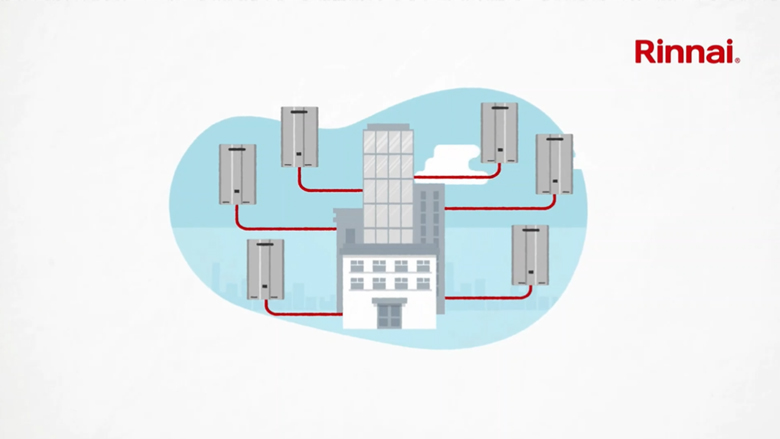
  • Rinnaiโ€™s range of decarbonising products – H1/H2/H3 – consists of hot water heating units in gas/BioLPG/DME, hydrogen ready units, electric instantaneous hot water heaters, electric storage cylinders and buffer vessels, a comprehensive range of heat pumps, solar, hydrogen-ready or natural gas in any configuration of hybrid formats for either residential or commercial applications. Rinnaiโ€™s H1/2/3 range of products and systems offer contractors, consultants and end users a range of efficient, robust and affordable low carbon/decarbonising appliances which create practical, economic and technically feasible solutions. 
  • Rinnai is a world leading manufacturer of hot water heaters and produces over two million units a year, operating on each of the five continents. The brand has gained an established reputation for producing products that offer high performance, cost efficiency and extended working lives. 
  • Rinnai products are UKCA certified, A-rated water efficiency, accessed through multiple fuel options and are available for purchase 24/7, 365 days a year. Any unit can be delivered to any UK site within 24 hours.
  • Rinnai offer carbon and cost comparison services that will calculate financial, and carbon savings made when investing in a Rinnai system. Rinnai also provide a system design service that will suggest an appropriate system for the property in question.
  • Rinnai offer comprehensive training courses and technical support in all aspects of the water heating industry including detailed CPDโ€™s.
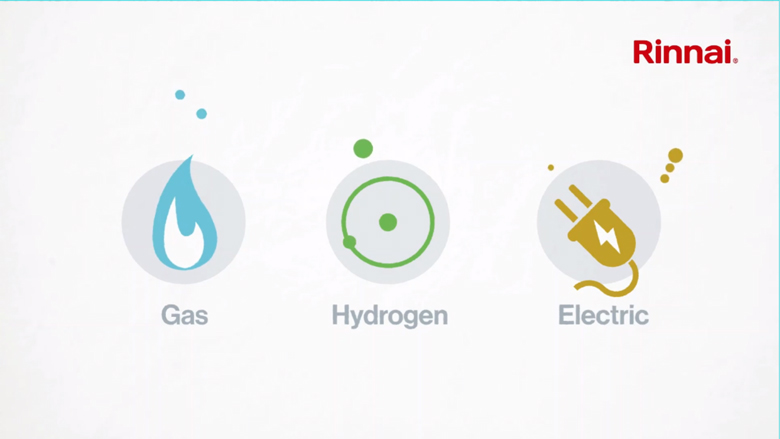
  • The Rinnai range covers all forms of fuels and appliances currently available – electric, gas, hydrogen, BioLPG, DME solar thermal, low GWP heat pumps and electric water heaters More information can be found on Rinnaiโ€™s website and its โ€œHelp Me Chooseโ€ webpage. 

RINNAI FULL PRODUCT AVAILABILITY 24/7 FOR NEXT DAY DELIVERY of ALL HOT WATER HEATING UNIT MODELS INCLUDING 48-58kW UNITS-

SAVINGS OF

20% REDUCTION of opex cost,

30% REDUCTION of initial cost

15% REDUCTION in carbon

75% REDUCTION of space

Visit www.rinnai-uk.co.uk Or email engineer@rinaiuk.com  

For more information on the RINNAI product range visit www.rinnaiuk.com


This article appeared in the May 2026 issue of Energy Manager magazine. Subscribe here.

Bridging the gap:ย accelerating public sector fleet electrificationย 

Naomi Nye

Naomi Nye, Head of Sales, Drax Electric Vehiclesย 

Public sector fleets play a vital role in delivering essential services. From waste collection and highway maintenance to patient transport and community care, vehicles are central to day-to-day operations. Theyโ€™re also central to the United Kingdomโ€™s net zero ambitions. 

In recent years, thereโ€™s been clear momentum across the public sector to accelerate fleet electrification. Targets have been set and strategies developed. However, while the ambition is strong, translating plans into delivery is often more complex than anticipated. 

Electrification is not simply a vehicle swap 

Far more goes into fleet electrification than simply replacing vehicles. In reality, it requires a coordinated approach that ensures infrastructure and energy requirements match up with the transition from diesel to electric vehicles. This looks like accounting for grid capacity, not just physical space, when looking to install chargers. Aligning charging windows with duty cycles. Making cost considerations based on whole life modelling, not just upfront costs. 

Factors such as these sit alongside physical site considerations and long-term energy strategy. Without a joined-up plan, organisations are more likely to encounter operational issues and may not fully utilise their infrastructural opportunities – electrification decisions taken in isolation can create challenges when work is already underway when solutions are much harder to come by. 

The importance of procurement and governance 

In the public sector, technical readiness is only one part of the picture. Demonstrating transparency, value for money and compliance with regulations is especially important. Running full tender processes can be time consuming and resource intensive, particularly where in house expertise is limited. 

This is where frameworks play a critical role, prequalifying suppliers against the defined standards. They provide a compliant, structured route to access specialist support without initiating a new procurement process for every project. 

Through Drax Electric Vehiclesโ€™ appointment to the ESPOโ€™s VCI3 (Vehicle Charging Infrastructure 3) framework, public sector organisations can now access end-to-end fleet electrification expertise via an established and compliant route. This helps to reduce friction and accelerate progress toward sustainability goals. 

Bridging the capability gap 

In my experience, the greatest barrier to fleet electrification is not intent but confidence. 

Fleet teams are navigating evolving vehicle technologies, charging standards and energy markets, often alongside their core service responsibilities. Many organisations do not have dedicated in-house expertise across fleet, infrastructure and energy planning. 

Bridging this gap requires collaboration between fleet managers, site teams, finance professionals and external specialists. When every stakeholder is aligned earlier in the process, organisations can achieve smarter infrastructure investment, more accurate cost forecasting and stronger operational resilience. 

Electrification then becomes more than an environmental initiative. It becomes a strategic programme that supports efficiency, long term cost control and service continuity. 

From ambition to implementation 

Public sector organisations have been set ambitious decarbonisation targets, and achieving these requires operationally sound, financially robust, and procurement-compliant strategies. The ESPO VCI3 framework provides a prequalified route to the specialist support needed, matching the ambition of fleet decision-makers with the capacity to simplify and optimise their fleet transition. 
 
Now constituting one of those prequalified routes, Drax Electric Vehicles will be accessible to help public sector bodies align vehicle transitions with long-term infrastructure and decarbonisation strategies through their subsidiary, BMM Energy Solutions. 

To find out more about the ESPO VCI3 framework – https://www.espo.org/vehicle-charging-infrastructure-vci3-636-25.html  

How can digital water meters support the UKโ€™s water resilience?

Photo by Rajesh S Balouria

Back in October, the National Drought Group warned that much of England needs to prepare for ongoing drought into 2026 due to the record low rainfall that many regions of the country have experienced.

Since then, record levels of rainfall have helped some parts of England โ€“ including the West Country and Yorkshire โ€“ to come back from the brink of drought and move into drought recovery.

However, with the Environment Agency predicting that England needs to experience at least 100 per cent of its average rainfall every month until the end of March 2026 to ensure that everywhere largely recovers from the drought, even this boost in rainfall may not be enough.

There is increasing talk about what needs to be done to secure water supplies for the future, given that climate change is affecting weather systems and making rain less predictable in England. 

While systemic change is important, both individual businesses and households can also make changes in how they use water to help support ongoing water resilience. One type of technology that is becoming an increasing focus for water companies is digital smart meters. 

What are digital smart meters for water?

In a recent webinar for Smart Water Magazine, Sylvia Varga, head of UK & Ireland operations at Diehl Metering, and Vadim Lyu, managing director UK & Ireland at Netmore, discussed the different types of digital smart meters and how they can be used to save water. 

There are two main types of digital smart meter currently in use by water companies in the UK

  • LoRaWAN
  • NB-IoT

LoRaWAN is able to cover the majority of the country, because it offers long-range, low-power communication for water providers to help them gather data about their networks. Itโ€™s used primarily in densely populated areas at present.

NB-IoT, meanwhile, relies on strong mobile network coverage as it is part of the Internet of Things (IoT). This form of metering is typically used in rural locations โ€“ although the need for a strong mobile network means itโ€™s not appropriate everywhere. 

How do digital smart meters help save water?

For water companies, the reason to install digital smart meters is threefold: to improve leak detection, to improve customer service and to encourage data-driven operations. 

Varga explained that South West Water has already introduced digital smart meters to its area, with over 100,000 meters deployed within its network. To date, these meters have helped the water supplier uncover 3,400 leaks and save 1.67 million litres of water per day. 

In addition South West Water announced earlier this year that it is accelerating its rollout of smart meters for domestic customers to help them keep their bills down. 

Similarly, Lyu highlighted Yorkshire Waterโ€™s rollout of digital smart meters on its network, which is already saving two megalitres of water per day. As a result of the water savings the supplier has already seen, it is exploring how it can accelerate the rollout of such meters across its entire network. 

Are other water suppliers going to install digital smart meters?

Yes. The aim is to considerably increase meter coverage across the UKโ€™s network. In 2025, water meter coverage stands at just 12 per cent, but the aim is to increase this to 51 per cent by 2030 and to 75 per cent by 2040.

The rollout of digital smart meters across the water network is supporting the ongoing work under asset management period 8 (AMP8), which aims to halve leakage within the countryโ€™s water infrastructure, reduce demand and increase water use efficiency. 

The Regulatorsโ€™ Alliance for Progressing Infrastructure Development (RAPID), which was launched in 2019, is leading the way with this work.

One of the key aspects of RAPIDโ€™s work has been bringing together water suppliers to ensure strategic collaboration to secure the countryโ€™s water supplies for decades to come. 

In addition to work to improve efficiency within the water system and reduce leaks, both of which can be supported by digital smart meters, RAPID is also working on significant infrastructure projects including the creation of new reservoirs and strategic large-scale water transfer schemes. 

The scale at which AMP8 is working means that working with partners, such as Netmore and Diehl Metering, is essential to deliver the water savings required to secure the water supply for England and Wales.

Can a business install its own digital smart meters?

Yes, a business can install its own smart meter to monitor its water usage. An automated meter reading (AMR) service will allow you to see how much water you are using in your organisation and where it is going. 

The smart meters available for businesses log water use on an hourly basis, providing consistent data which can be used to make decisions about water efficiency, as well as help identify leaks. 

AMR systems work by measuring the water flow. A spike in water flow might indicate a leak, for example. By knowing this has happened within an hour, you can find the leak and take action quickly, even if it isnโ€™t immediately apparent through a visible burst pipe, for instance. 

For most businesses, the reason to install a smart meter is to reduce their water bills. In our experience, the cost of an AMR system is usually covered within a few weeks based on savings on a companyโ€™s water bill.

How can automated meter reading help my business?

When you have data about your organisationโ€™s water usage, you can analyse it to identify peak periods of usage and explore how you can lower your water consumption consistently.

Whatโ€™s more, by having AMR in place, you can ensure that you maintain those savings and that your water usage doesnโ€™t creep up again over time. 

This gives you data you can use to highlight the importance of focusing on saving water to your teams, as well as to point you in the direction of which parts of the business may benefit from innovative water-saving technology.

Your system will also be set up to send an alert should your water consumption exceed the preset limits, which means you will be able to take action quickly if your water consumption spikes. 

This alone can save a business hundreds if not thousands, given the charges you pay for your water supply as a company.


This article appeared in the April 2026 issue of Energy Manager magazine. Subscribe here.

Precise temperature monitoring: an overlooked carbon-cutting solution

Jason Webb

Jason Webb, Managing Director, Electronic Temperature Instruments (ETI)

The recent completion of JPMorgan Chaseโ€™s new Manhattan skyscraper typifies how far the built environment sector still is from a sustainable level of environmental performance. Constructed with enough steel to wrap around the Earth twice, engineers have also estimated that subtle design changes could have reduced its overall carbon footprint by 20-30 per cent.

The built environment is full of missed opportunities for energy reduction like this. While many can be found in the construction stage, itโ€™s a similar story once buildings enter their operational phase.  Heating and cooling technologies, for example, currently account for 15 per cent of global carbon emissions according to the World Economic Forum. Yet the potential impact of areas such as temperature monitoring are often overlooked.  

What building managers are typically nudged towards

Major asset replacements and deep retrofit projects have long been go-to solutions for reducing carbon output. Under net zero strategies, organisations will typically consider replacing gas boilers with heat pumps, upgrading to high-efficiency chillers, implementing solar photovoltaic and battery storage, and overhauling entire insulation networks.

But while these solutions can deliver effective results over time, their impact must be appropriately contextualised. Each requires significant investment, often depends on lengthy grant funding or board approval processes and can then take years to plan, procure, and implement.

In the meantime, as buildings continue to operate day to day, theyโ€™re wasting significant levels of energy across their heating and cooling systems due to avoidable inefficiencies that more precise temperature monitoring could address immediately.

Temperature-related issues that go under the radar

Poor sensor calibration is a common issue. While most thermometers are initially accurate, they can easily drift after installation without regular calibration checks. Even small inaccuracies of just a few degrees can have a disproportionate impact on asset output. HVAC systems, for example, often respond over-aggressively to slight deviations, where they keep running at an unnecessary intensity for longer than required. The result is huge amounts of unnecessary carbon output.

Temperature sensors are also carelessly placed in many workspaces, ending up next to heat sources, in direct sunlight or in draughty air pockets. As a result, their measurements donโ€™t reflect actual conditions and assets begin compensating for issues that donโ€™t exist. A sensor placed next to a window, for instance, will likely record lower averages and then instruct a HVAC to pump out more heat than required.

Even when sensors are well placed, many building managers fail to monitor temperature with the level of detail required. Readings are often taken from a single set point that serves as an average for an entire space. Unusually hot or cold spots, as well as inevitable fluctuations throughout the day, go consistently unnoticed, once again resulting in inaccurate system outputs and unwarranted carbon emissions.

Ultimately, all these inconsistencies erode trust in the data over time. And when this happens, decision making over optimum temperature levels shift to guesswork, with vague rules of thumb replacing any rational, data-led approaches. Building managers and their occupants begin relying on manual overrides and abandon energy optimisation strategies.

Translating accuracy into carbon reductions

By correctly positioning sensors, performing routine verifications and calibrations and checking whether representative readings are being recorded, building managers can start achieving instant carbon savings.

This means system faults can be detected earlier. With reliable data to work with, identifying broken sensors, valves that are stuck open and zones that are behaving inconsistently all become easier. Carbon savings are uncovered that would have otherwise remained hidden.

Assets can then perform better, for longer. When they arenโ€™t instructed to aggressively respond to false temperature fluctuations, their output remains more consistent over time, extending lifespans and ultimately reducing the need for costly replacements.

Precision also eliminates those concerns over data reliability. In the cold winter months, facilities teams donโ€™t need to ramp up the heating โ€˜just in caseโ€™, while in the summer they can stop pre-empting employee complaints by unnecessarily overcooling their spaces. Decision making remains data-driven and more aligned with live workspace conditions.

Achieving hidden carbon savings through precise temperature monitoring

All these changes are relatively inexpensive and quick to implement, making them essentials for any carbon-conscious building management team. While large-scale retrofit projects often take centre stage, accurate, representative and consistent temperature monitoring delivers its own, often underestimated, decarbonisation benefits. These solutions simply cannot be overlooked in the built environmentโ€™s efforts to reduce its carbon footprint.


This article appeared in the March 2026 issue of Energy Manager magazine. Subscribe here.

From public buildings to homes: What Public Sector Decarbonisation Schemeย technical lessons reveal about delivering the UKโ€™s Warm Homes Plan

Davide Natuzzi, assistant director, energy, carbon and technical, Salix.

Davide Natuzzi, Salix

The UKโ€™s new Warm Homes Plan (WHP) marks the largest public investment in domestic energy upgrading in the countryโ€™s history. Published on 21 January 2026, the plan sets out how ยฃ15โ€ฏbillion will be deployed to retrofit five million homes by 2030, focusing on electric heat pumps, rooftop solar, insulation, smart controls and improved housing standards. With residential buildings accounting for around oneโ€‘fifth of national emissions and more than 24โ€ฏmillion fossilโ€‘fuel boilers still in operation, the challenge is vast and technically complex.

What is often overlooked in commentary around the Warm Homes Plan is the deep pool of technical learning already generated by the Public Sector Decarbonisation Scheme. Our teams at Salix have delivered the scheme since its launch in 2020 on behalf of the government.

Since then, we have supported more than 1,400 publicโ€‘sector decarbonisation projects, from hospitals and schools to museums and council campuses, with more ยฃ3.5 billion of investment delivered or committed up to 2028.

As the Public Sector Decarbonisation Scheme completes its existing Phase 3c and Phase 4 commitments, the question is how do we transfer the knowledge and skills of the scheme, into the delivery of home retrofits under the Warm Homes Plan?

Our work delivering the Public Sector Decarbonisation Scheme can directly improve the performance, costโ€‘effectiveness and credibility of the Warm Homes Plan.

1. Accurate heatโ€‘loss calculations: the first critical lesson

    A first insight from Public Sector Decarbonisation Scheme is that heatโ€‘loss modelling determines everything: system sizing, running temperatures, controls logic, and ultimately, heat pump performance.

    Across public buildings funded through Public Sector Decarbonisation Scheme, technical assessments consistently revealed poorly understood thermal characteristics. Many sites had oversized boilers, undersized emitters, or inconsistent insulation conditions mirrored in UK housing, which is often described as among the least energyโ€‘efficient in Europe.

    The Warm Homes Plan shifts emphasis from a traditional fabricโ€‘first approach toward electric heat pumps and solar, while still retaining fabric measures where costโ€‘effective. This shift increases the importance of accurate heatโ€‘loss calculations because:

    • Heat pumps must be sized to low temperature heating, not boilerโ€‘replacement approach
    • Radiators and pipework often require upgrading
    • Comfort levels depend on real, not assumed, thermal behaviour

    If heat pumps underperform in the Warm Homes Plan, it will rarely be the technology that fails, it will be the calculations.

    2. System temperatures, emitters, and controls: lessons on lowโ€‘temperature heating

    The Public Sector Decarbonisation Scheme has demonstrated repeatedly that converting large buildings from fossilโ€‘fuel heating to lowโ€‘temperature systems requires, full emitter audits, hydraulic modelling, upgraded pipework and pumps and critical recalibration of controls.

    These are the same technical pitfalls facing the Warm Homes Plan, but on a vastly larger and more fragmented scale across millions of homes.

    The Warm Homes Plan significantly expands the Boiler Upgrade Scheme with grants up to ยฃ7,500 for heat pumps and additional support for airโ€‘toโ€‘air systems. However, subsidy alone does not guarantee performance.  

    Our Public Sector Decarbonisation Scheme experience shows that heat pumps consistently underperform when controls are not reconfigured to weatherโ€‘compensation strategies, radiator circuits designed for 70ยฐC cannot achieve comfort at 45ยฐC without emitter upgrades, commissioning quality is the decisive factor in operational success.

    3. Grid capacity and demand modelling: publicโ€‘sector rigor applied to homes

    I believe, one of the least discussed but most influential insights from the Public Sector Decarbonisation Scheme is the need to model local electrical capacity and peak demand when electrifying heat across multiple buildings. Homes present similar challenges. The Warm Homes Plan includes significant scaleโ€‘up of heat pumps, solar PV, battery storage and heat networks.

    Public Sector Decarbonisation Scheme projects, especially those on campuses and hospital estates, have shown that local substations can become limited very quickly when multiple heat pumps are installed and smart controls and load shifting significantly alleviate peak demand but must be designed from the outset.

    As millions of homes electrify simultaneously, the Warm Homes Plan must embed gridโ€‘aware retrofit practices, exactly the type pioneered in public sector decarbonisation projects.

    4. Delivery, commissioning and quality assurance: where outcomes are won or lost

    Another powerful lesson from our work delivering the Public Sector Decarbonisation Scheme is that technical quality determines energy and carbon savings. The Warm Homes Plan risks encountering the same pitfalls unless commissioning and quality assurance are prioritised.

    Public Sector Decarbonisation Scheme projects have shown that monitoring & verification (M&V) frameworks are essential for validating carbon savings. Installers need training in lowโ€‘temperature hydronics, not just heatโ€‘pump installation.

    This aligns with Warm Home Planโ€™s ambition to create 180,000 new jobs across retrofit and clean heating by 2030 – but only if technical standards match the scale of investment.  

    4. Data: the quiet foundation of every successful retrofit

    Through our Public Sector Decarbonisation Scheme assessments we see that data quality is the single biggest predictor of project success. The Warm Homes Plan includes new regulatory standards for the private rented sector, potentially upgrading nearly three million rental properties in four years. I believe, success will depend heavily on accurate EPC revisions, heatโ€‘loss models, smart meter data integration and robust retrofit assessment frameworks.

    The Warm Homes Plan is a onceโ€‘inโ€‘aโ€‘generation opportunity to transform the UKโ€™s housing stock. To succeed, it must integrate the technical verification, the delivery governance and the commissioning and M&V standards that have defined the Public Sector Decarbonisation Scheme.

    As Public Sector Decarbonisation Scheme funding ends and the focus shifts to homes, the UK must carry forward these engineering lessons. The Warm Homes Plan can succeed, but only if it considers technical quality as the foundation of its strategy. If it does, the UK will not only decarbonise its homes but build a retrofit market capable of sustaining netโ€‘zero ambitions for decades to come.

    Visit our website to find out more about our work.


    This article appeared in the April 2026 issue of Energy Manager magazine. Subscribe here.

    Turning heat pump awareness into action

    Sachin Vibhute

    Sachin Vibhute, HVAC and Heat Pumps Technical Consultant and Product Training Manager at LG.

    Heat pump awareness has been steadily growing in the last few years, largely due to a wider understanding of the benefits of installing green technology and increased government incentives. To this point, itโ€™s encouraging to see the Heat Pump Associationโ€™s latest figures show that adoption of heat pumps rose again in 2025, to 125 thousand

    Yet the same set of data also shows that the number of individuals being trained to install heat pumps dropped in 2025. A downtick in trained installers threatens to introduce a new problem to an already complicated puzzle. There are a myriad of other challenges impacting greater heat pump deployment; take for example, space constraints and legacy infrastructure. These two issues have long been seen as holding wider installation back, although there has been positive progress in these areas.

    While removing existing barriers is easier said than done, with cooperation between industry and government, itโ€™s more than possible. Alongside, increased investment in hands-on-practical training of installers, there are innovative new technologies which can offer solutions and prevent a stall in momentum in the switch over to heat pumps.

    Cutting red tape

    The governmentโ€™s decision to relax rules around the size of external heat pumps was a welcome move, helping homeowners in England to install multiple units within one metre of any neighbouring property without planning permission. And detached property owners also have the option to install two heat pumps instead of a single unit, simplifying the process of heating bigger homes.

    These moves are viewed by industry professionals as a productive step forward, providing clearer pathways to installation and enabling widespread deployment of the technology. But more needs to be done.

    For instance, multifamily housing and large high-rise office buildings represent a significant opportunity for reducing emissions. But legacy infrastructure, a lack of space for external units, and fluctuating heat demands, can often mean these buildings are seen as too challenging for the technology.

    That doesnโ€™t mean it’s an impossible task. Smart controls and sensors can balance demand across varying building zones and keep water circulating throughout heating systems as low as possible. This helps identify inefficiencies such as heat loss or short cycling. And in high-rise buildings, replacing individual boilers with a centralised heat pump system can reduce maintenance cost and improve efficiency. Thermal storage also helps smooth load fluctuations and ensures reliable heating and hot water.

    Innovation to support evolving needs

    Raising public awareness about new innovative heat pumps can also change perception and encourage adoption of the technology.

    Cascade heat pumps, for example, are central to the acceleration of heat pump installation in crowded spaces. Alongside centralised plant-room solutions and rooftop installations, these pumps address issues with space constraints as they distribute capacity across available areas, rather than relying on a single large unit. As they are smaller, they fit far easier into tight or irregular spaces such as flats, tall buildings or where there is limited outdoor space.

    These pumps are made up of distinct units controlled by a cascade system which operates together like a single, smart heating plant. The individual units automatically switch on and off based on demand. This helps with efficiency and reduction of energy waste whilst also meeting performance requirements, making them an especially good option for social housing.

    Closing the installer gapย 

    New and innovative technologies can only turn the tide on heat pump acceleration successfully, if can be installed successfully in the first place. This means ensuring there are enough installers, technicians, and services partners with the right skills.

    The current state of play is that courses are limited in availability and often far flung, making access more difficult than it should be.

    Installing heat pumps requires careful assessment of space, accurate system sizing and specialist configuration โ€“ all of which means proper training is essential. Manufacturer-led training academies are already doing great work in equipping industry workers with the right skills to install systems, but more training needs to be made readily accessible and available.

    Making real change happen

    Growing awareness of low-carbon heating and government backed-incentives mean property owners are increasingly open to heat pump adoption. But coordinated heating industry and government effort is needed to remove existing barriers to the installation process. This includes scaling solutions that work in a variety of buildings, and making sure a skilled workforce is primed and ready to deliver. Failure to address these challenges will see interest stall, and adoption of the technology drop. But, getting it right will ensure awareness is turned into action.


    This article appeared in the April 2026 issue of Energy Manager magazine. Subscribe here.

    The Royal Parks journey to Net Zero

    The Royal Parks is the charity that cares for the most famous collection of urban parks in the world. Its role is to manage, protect, and improve the parks in an exemplary and sustainable manner so that everyone, now and in the future, has the opportunity to enjoy their natural and historic environments.

    The charity looks after eight of Londonโ€™s finest open spaces, managing 5,000 acres of historic parkland. These are: Hyde Park, Kensington Gardens, St Jamesโ€™s Park, The Green Park, The Regentโ€™s Park and Primrose Hill, Greenwich Park, Richmond Park, and Bushy Park. It also manages other important open spaces in the capital, including Brompton Cemetery and Victoria Tower Gardens.

    It costs around ยฃ75m a year to manage the parks. The charity raises around 85 percent of its income independently with the remaining 15 percent funded through our contract with Government.

    The Net Zero challenge

    Climate targets have become a central strategic priority for any organisation in recent years. This is especially relevant for UK-based organisations, as the United Kingdom was the first major economy to set a Net Zero 2050 target as a result of a 2019 amendment to the Climate Change Act 2008. 

    The Royal Parks has taken decisive steps to meet these targets.

    The Royal Parksโ€™ ambition to meet Net Zero

    The charity is committed to eliminating all emissions from fossil fuels from The Royal Parksโ€™ directly controlled operations to achieve โ€˜Operational Net Zeroโ€™ and switch to renewable energy sources by 2030. This is an important first step as the charity is addressing direct impacts first before addressing the wider value chain emissions. The Royal Parks is working towards Net Zero by 2050, which means a reduction in indirect greenhouse emissions from sources not owned or controlled by The Royal Parks – these are known as Scope 3 emissions. An important step in this journey is working collaboratively with suppliers and contractors to reduce emissions from โ€œgoods and servicesโ€, which are responsible for over 80 per cent of The Royal Parksโ€™ scope 3 emissions.

    The United Nations Intergovernmental Panel on Climate Change defines Net Zero emissions as when โ€œanthropogenic emissions of greenhouse gases to the atmosphere are balanced by anthropogenic removals over a specified periodโ€.

    What is The Royal Parks charity doing to meet these targets?

    The Royal Parks has already taken decisive action to reduce emissions and is initially targeting the emissions within its direct control, for example emissions caused by directly burning fuel – known as โ€˜scope 1โ€™ emissions.  

    Pedro Flores, Head of Sustainability at The Royal Parks, says: โ€œWe are committed to eliminating fossil fuels, moving towards renewable energy to power all our operations, by 2030, and improving energy efficiency of our operations to create sustainable parks for future generations.

    โ€œWe have tackled the emissions associated with natural gas consumption, responsible for over 70 percent of our direct (scope 1) emissions, for example the gas used to heat buildings. We have witnessed a 12 percent reduction in tCO2e for scope 1 emissions since the financial year, 2023 to 2024. 

    โ€œWe have switched to sourcing biomethane. This renewable energy is produced from waste, processed into biogas and then refined into biomethane. All the biomethane we buy has been sourced sustainably, backed by Renewable Gas Guarantees of Origin (RGGO) certification.โ€  

    Work in this area includes switching from gas oil to hydro-treated vegetable oil (HVO) to providing heating in the nursery in Hyde Park. As well as switching to an electric vehicle fleet, the charity has stipulated that contractors should switch from diesel-powered machinery and equipment โ€“ from sweepers to power tools – wherever there is an electric-powered alternative.

     Simultaneously, the charity is also targeting the emissions created from the energy that the organisation purchases and uses, for example emissions associated with lighting in buildings, our vehicles, park lighting and event power โ€“ known as scope 2 emissions.

    โ€œAll our electricity is now sourced from renewable sources, backed by Renewable Energy Guarantee of Origin certification (REGO). This provides transparency and credibility to our energy procurement process, ensuring full traceability in our energy providersโ€™ supply chain,โ€ adds Flores.

    In 2023, the charity added the impact of major events into its carbon footprint calculations, in order to be transparent and ambitious in its commitment to its journey to working towards Net Zero by 2050. The charity has switched to HVO-powered generators from diesel for all its events โ€“ including major events such as from British Summer Time, Hyde Park, and Hyde Park Winter Wonderland.

    The Royal Parks will continue to review its scope 3 boundary (which currently captures fuel emissions related activities, waste operations and sections of purchased goods and services).

    Case study โ€“ switching to an electric fleet

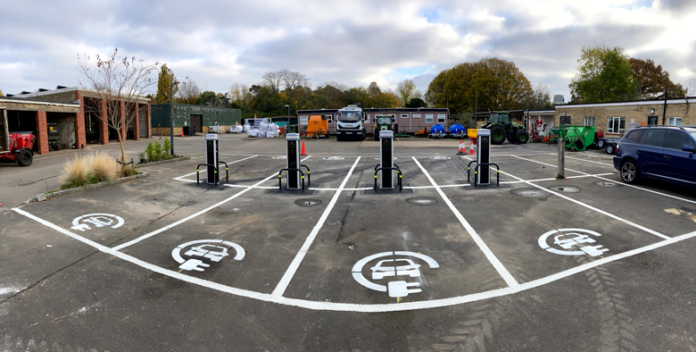
    The Royal Parks charity has been working towards a 100 percent electric vehicle fleet to manage operations across the parks, as suitable alternative EV vehicles become available.  Electrifying the fleet is a preferable alternative to using traditional fuels, such as petrol and diesel. This lowers the carbon footprint as the charity is not relying on traditional fossil fuels, which emit substantial amounts of greenhouse gases when burned.  Electrical vehicles also contribute to improved local air quality, as they don’t release nitrogen oxides. By using electricity from renewable sources, the charity is charging its EV fleet with clean energy, thus decreasing overall emissions across the supply chain.