
The DSO Incentive creates an uneven playfield for different-sized DSOs

Christopher Jackson

Christopher Jackson, CEO and Co Founder of Advanced Infrastructure

Is the DSO Incentive Scheme producing winners and losers amongst the UK DSOs not purely on performance but size as well? Reports published over the past two years suggest that this might be the case. While the framework is designed to reward improvements, the financial outcomes are directly linked to the size of the customer base, a factor beyond the DSOs control. As a result, two operators delivering similar progress can experience different financial impacts, raising questions about how equitably the incentive operates across the sector.

How the incentive is calculated

Each year, Ofgem evaluates every licensed DSOโ€™s performance across Great Britain and determines whether they have earned a reward or have to be penalised. The results are published in the Distribution System Operation Incentive Annual Report. The scheme is often discussed in terms of scores and rewards, but it also signals a broader shift in expectations – network operators are being assessed not only on reliability, but on their transparency, flexibility, and data provision.

The incentive is measured annually and built around two main assessments. The Stakeholder Satisfaction Survey measures how well each DSO engages with and responds to a variety of stakeholdersโ€™ needs. The Performance Panel Review involves an expert panel evaluating the evidence which was submitted by the DSOs, including the development of flexibility markets, conflict management, data transparency, and delivery of benefits.

Is satisfaction a good indicator of performance?

An interesting pattern emerging from the results is the variance between satisfaction scores, panel scores, and financial rewards. Satisfaction scores tend to cluster relatively closely, likely because respondents steer away from being overly critical. Moreover, engagement experiences can feel broadly similar across operators. As a result, satisfaction alone does not always differentiate performance strongly. The results show that every DSO improved year-on-year, with a threshold of 7.5 before a DSO can expect to be penalised.

LicenseeStakeholder Satisfaction Survey scores 2024/5Stakeholder Satisfaction Survey scores 2023/4
UKPN9.599.06
NGED9.037.77
SSEN8.537.42
EWNL8.867.94
NPg8.087.77
SPEN9.028.13

Panel challenges lack of evidence

Panel scores show greater variance because they test capabilities rather than sentiments. The panel is assessing the evidence and processes, for which DSOs are at different stages of development. Small differences in approaches to data, transparency or options assessment can lead to significantly different scores. The panel often challenges claims if they lack evidence, leading to the variation in scores.

The panel results show a clear trend, with UKPN and NGED (the two largest operators) at the very top. Notably, all six improved over the course of the last regulatory period, suggesting an overall development in delivery and evidence quality. This is also the more dependable benchmark of performance because stakeholder selection is not fully transparent and may introduce bias.

LicenseePanel Assessment scores 2024/5Panel Assessment scores 2023/4
UKPN9.368.91
NGED8.458.24
SSEN7.817.59
EWNL6.716.19
NPg7.346.58
SPEN6.085.08

Large variations in financial rewards

Financial rewards show the greatest variance of all. They are determined by the two assessment components and the size of the customer base served by the operators. Hence, small increases in satisfaction or panel scores can be worth more for larger operators like UKPN and NGED (each serving around 8 million customers) than for smaller DSOs, which serve roughly 3 million customers. The result is an uneven playing field: smaller DSOs have to deliver broadly the same upgrades but the financial upside is lower, even when performance improves by the same amount.

There is limited clarity in the published reports as to whether the scaling mechanism adequately adjusts for the differences in size between operators. This raises an important question: does the current policy design incentivise excellence equally across operators?

(Data Sources: 23/24 and 24/25 reports)

How LAEP+ is helping DSOs improve their performance

Over the course of the next assessment period it will be interesting to see what actions DSOs are taking to improve their scores. From our experience working with UK DSO teams, as reflected in their published reports, the direction is clear: more structured and data-driven planning that can be clearly evidenced against Ofgemโ€™s criteria.

That is exactly where our LAEP+ software tool comes in. It helps network operators and local authorities align their understanding of future energy demand and infrastructure needs. By bringing together network and demand datasets, among others, LAEP+ enables more coordinated planning and clearer evidence for investment decisions. The shared environment for scenario modelling, data integration, and stakeholder collaboration helps DSOs explain the decision-making process. Supporting National Grid Electricity Distribution, UK Power Networks, Scottish and Southern Electricity Networks, and Northern Powergrid, has shown us how this approach is becoming central to delivering transparent planning and stronger performance as electrification accelerates.

 www.advanced-infrastructure.co.uk


This article appeared in the April 2026 issue of Energy Manager magazine. Subscribe here.

The value of multi-module building services management

As expectations around building performance continue to rise, energy managers are under increasing pressure to deliver measurable efficiency, sustainability, and safety outcomes, particularly in multi-occupancy environments such as Purpose-Built Student Accommodation (PBSA), Build-to-Rent (BTR), Hotels, and Co-living schemes. These buildings are complex ecosystems, with hundreds of residents placing constant demand on heating, hot water, power, and safety systems.

Traditional approaches to building management often fall short in these settings. Large-scale systems can be expensive, complex to install, and overly engineered for residential applications. Whatโ€™s emerging instead is a more agile, modular approach, one that enables targeted control, scalable deployment, and real-time performance insight by reporting on individual rooms.

Modular intelligence

Multi-module building services performance management is redefining how energy managers approach operational control. Rather than relying on a single, monolithic system, modular platforms allow different aspects of a buildingโ€™s performance, heating, hot water, utilities, water usage, and safety, to be monitored and controlled individually, yet managed centrally.

This approach provides two critical advantages. First, it enables precise, granular control over energy consumption and system performance. Second, it allows buildings to evolve over time, with additional modules introduced as operational needs or sustainability targets change.

At the centre of this shift is the growing adoption of intelligent central control systems. Designed specifically for multi-occupancy accommodation, and offering centralised monitoring and control of environmental conditions, equipment functionality, and utility consumption, through modular components using a single, scalable infrastructure.

Efficiency through control

Heating remains the single largest controllable energy cost in most residential buildings. Intelligent room-level control, using occupancy detection, automated setback, and custom heating profiles, can significantly reduce waste while maintaining comfort.

Similarly, hot water systems, which are traditionally energy-intensive and difficult to monitor, are now optimised through integrated control and sensor-driven insight. With real-time data on temperature, load, and system health, operators can identify inefficiencies and respond proactively.

Utility sub-metering takes this a step further, offering visibility down to room or circuit level. This level of detail pinpoints anomalies, optimises load distribution, and supports ESG reporting with accurate, auditable data.

Risk management and sustainability

Beyond energy, performance management plays a crucial role in risk reduction and resource efficiency.

Leak detection systems identify issues early and automatically isolate supply, preventing costly damage and reducing insurance exposure. Meanwhile, smart water management tools can monitor flow, detect abnormal use, and encourage behavioural change among residents, supporting both cost savings and sustainability goals.

Safety is another key consideration. Cooking-related fires are a major risk in student accommodation, and intelligent monitoring that detects dangerous temperature levels and isolates power before ignition provide a vital layer of protection.

Practical benefits

One of the most compelling aspects of modular systems is their practicality. Solutions that use existing electrical infrastructure for communication minimise the need for additional cabling or complex IT integration, making them suitable for both new-build and retrofit projects.

Installation is typically faster and less invasive, while ongoing maintenance is simplified through remote diagnostics and centralised management portals. For building managers, this means reduced operational burden and improved responsiveness.

Crucially, modular systems also support phased investment. Buildings can start with core functions, such as heating control or safety, then expand over time, aligning CapEx with evolving priorities.

Measurable value

For energy managers, the value of multi-module performance management lies in its ability to deliver tangible outcomes: reduced energy consumption, improved asset performance, enhanced resident safety, stronger ESG credentials, and increased asset value.

In a sector where data-driven decision-making is becoming the norm, having access to real-time, granular insight is a necessity.

Future-proofing

As multi-occupancy estates continue to grow in scale and complexity, the demand for smarter, more adaptable control systems increases. Modular performance management offers a future-proof approach, one that combines flexibility, control, visibility, and intelligence.

For those responsible for building performance, the message is clear, the future isnโ€™t just about smart buildings, but about smarter, more connected ways to manage them.

www.prefectcontrols.com


This article appeared in the April 2026 issue of Energy Manager magazine. Subscribe here.

The mandate for the energy CEO is to provide clarity through the era of AI

Helena Muir

Helena Muir, Principal, Heidrick & Struggles.

Under the IEAโ€™s current policies scenario, global oil demand could increase from 100 mb/d in 2024 to 105 mb/d by 2035 and potentially rise further towards 2050. For more than a decade, the global energy conversation has been framed around a smooth and irreversible transition from hydrocarbons to renewables. But the reality is proving far more complex.

Global energy demand continues to rise, driven by artificial intelligence, data centres and industrial growth, while oil demand continues to exceed expectations. Recent inaccurate predictions around demand highlight how confirmation bias has become a strategic risk. Avoiding that bias is now a core test for CEOs across the energy sector.

Analysis from Heidrick & Struggles shows we are not witnessing a transition in the conventional sense, but entering an era of energy addition, where every viable form of power is being layered urgently on top of the last. The challenge now facing the sector is navigating expansion, uncertainty and structural demand growth all at once. Geopolitical, macroeconomic, infrastructural and technological forces have always defined this industry and have been part of the decision-making process for CEOs. What is different now is the cost of misreading the combination of forces at play. CEOs who do so risk mis-investing billions and losing their organisationโ€™s place within the global economy.

Energy abundance as strategic advantage

AI is fundamentally reshaping electricity demand. Data centres already account for 1.5% of global electricity consumption, a share that is growing rapidly as digital infrastructure scales. Regions capable of providing reliable, abundant power are becoming magnets for the next generation of technological development, and energy companies are increasingly the ones determining where that development lands.

For energy CEOs, this reframes the stakes around generation capacity, grid investment and long-term supply decisions. But while grid investment will take years to materialise at scale, the opportunity behind the meter is more immediate. On-site generation, battery storage, microgrids and power purchase agreements are already allowing energy companies to partner directly with data centres and large industrial users while bypassing grid constraints and capturing demand that cannot wait.  These choices, in both the long and the short term, will shape the geography of the digital economy.

Capabilities shaping the next energy cycle

The energy industry has never lacked capital, technology or geological advantage. What it has periodically lacked is clarity, both in reading external forces and in understanding what is shaping its own decisions. Four capabilities are now defining effective leadership in the sector.

Agility has become a genuine source of advantage. Spare capacity policy can shift over a weekend, geopolitical tensions can disrupt supply routes overnight, and regulatory frameworks can turn on a single election. The modern energy CEO must combine long-term conviction with tactical flexibility, able to change course quickly without losing strategic direction.

The activist mindset must be internalised. Activist investors have reshaped expectations around capital discipline and returns, but the most resilient energy companies are now embedding that discipline themselves, through continuous portfolio reviews, strict return thresholds and proactive consolidation.

Strategic integration has moved from desirable to essential. Operational excellence matters, but it is no longer sufficient on its own. AI demand, geopolitics, supply chains and energy policy are deeply interconnected, and effective leaders must be able to join those signals and act before the curve shifts beneath them.

Finally, foresight must replace faith in forecasts. In a world where projections have repeatedly underestimated the pace of change, the leaders who succeed will be those willing to challenge assumptions, stress-test alternative scenarios and prepare for outcomes that diverge from the consensus.

Board oversight in an uncertain energy future

If the CEO mandate is changing, board oversight must keep pace. Traditional performance metrics were built for a more stable environment. They are poorly suited to a system shaped by technological disruption, geopolitical volatility and chronic demand misforecasting.

Experience shows that the leaders who navigate turbulent periods most effectively share three traits: realism, humility and the ability to anticipate how shifts, whether in tariffs, technology or trade flows, may reshape markets faster than expected.

For boards, this means rethinking both how they select and how they evaluate CEOs. Succession candidates need to be stress-tested across different scenarios, from surging AI power demand to prolonged hydrocarbon resilience to geopolitical disruption. The central question is straightforward: can this person lead through complexity without losing direction?

In an industry that powers modern life, that quality of leadership is a baseline requirement.


This article appeared in the April 2026 issue of Energy Manager magazine. Subscribe here.

The impact of current geopolitics

Rinnai Director Chris Goggin examines the impact of current geopolitics to the UK customer. Since the current Middle Eastern conflict began, costs have risen and are expected to rise and UK domestic energy security is again a debated topic of public interest.   

Conflict in the oilfields of the Middle East will have a greater impact than desired with this being the second time in four years that fossil fuels have been weaponised due to military actions. And once again, customers worldwide will be handed higher and rising prices for their domestic, commercial and industrial energy needs.

For more information on global geopolitical issues join free newsletter today Newsletter Sign Up : Rinnai UK

The conflict is receiving 24hour media coverage – and the current facts that we can be as certain of are this –  In late February the military action started with the USA and Israel making strikes on Iran. One of the counter-measures from Iran was closing access to the Straits of Homuz, a vital shipping lane carrying oil tankers with 20% of the worldโ€™s crude oil supply.

A number of ships have been granted safe passage from India and one from Turkey. Other countries such as Italy, France and China are all seeking talks with the Iranian leadership to gain access through the shipping lane. China will push talks rapidly as 45% of national oil requirements are met through the trading passage.  

As a result of this blockade the price of Brent crude oil was recently recorded at $105.70 a barrel. This is a 40% increase from before the start of the conflict.

So what does this mean to the UK customer?

Essentially, this conflict means additional costs to households for energy requirements. Around 1.5 million UK off grid premises rely on oil for heating and hot water. The BBC reported in mid-March that โ€œA home-owner, Denise, from rural Suffolk, has seen the price of oil she uses for hot water and central heating rise from ยฃ275 for 500 litres to ยฃ800โ€ฆ.โ€ The UK government has since confirmed a ยฃ53 million financial support package to those vulnerable households which rely on oil.

Natural gas costs have also been affected. A UK mainstream newspaper reported that the price of natural gas had risen 93%. The newspaper quoted analysts that monitor UK energy markets and costs as follows, โ€œDr Craig Lowrey, principal consultant at analysts Cornwall Insight, said: โ€œThe UKโ€™s dependence on global gas markets means movements in international wholesale prices feed directly into domestic bills.โ€

Qatar – a major producer of LNG (Liquified Natural Gas) has halted production, which is estimated to fulfil 20% of global supply. This pause in production has caused widespread concerns over supply chain issues. Now major importers of LNG such as China and India must now source supply from elsewhere.

Both China and India are believed to import around a third of all Qatari LNG and will now seek a replacement supplier, therefore increasing the value of LNG and subsequently adding to the final cost. The UK is also reliant on LNG for electrical generation, with around 28%-30% of all UK electricity being produced in 2024-2025 deriving from LNG imports. Throughout 2023, LNG made up 42% of total natural gas UK imports. As the UK relies on LNG and will have to import at an increased value, costs will filter down to the customer.

The conflict has reintroduced a debate regarding national energy security. A report commissioned by Renewables UK has stated the belief that energy security should be viewed in line with national security measures. The report also suggests that deployment of renewables should be widened as fossil fuel costs are subject to geopolitical influence –  in ordinary speech that means wild price fluctuations. 

There is already quantifiable evidence that proves adding renewables to UK national grid capacity reduces electrical costs to the UK customer. A recently published report explained how adding renewables into the UK electrical grid has reduced energy costs and protects customers from increases to natural gas cost fluctuations.

Jess Ralston, Head of Energy at the Energy and Climate Intelligence Unit (ECIU) was recently quoted: โ€œFortunately, any looming crisis is unlikely to hit electricity bills quite as hard because more renewables have been linked up to the grid meaning we donโ€™t have to run gas power stations as much. Last year renewables cut the wholesale price of electricity by a third.โ€

By domestically generating sustainable and renewable sources of energy the UK not only reduces carbon output but also strengthens domestic energy security and reduces energy costs.

Specifiers, contractors and installers should consider using manufacturers who have positioned themselves to include a selection of low carbon technology in their inventories. As natural gas costs are expected to rise soon technology that is designed to accept clean electricity can assist in reducing long- and short-term energy costs. Customers should also evaluate what services are provided in system design and specification processes by manufacturers.

Rinnai is keen to share all information with the UK customer that potentially affects appliance and energy options. Rinnai works hard to identify any domestic or global energy related news as to encourage better customer decision making.

RINNAI OFFERS CLEAR PATHWAYS TO LOWER CARBON AND DECARBONISATION PLUS CUSTOMER COST REDUCTIONS FOR COMMERCIAL, DOMESTIC AND OFF-GRID HEATING & HOT WATER DELIVERY

www.rinnai-uk.co.uk/aboutus/H3

  • Rinnaiโ€™s range of decarbonising products – H1/H2/H3 – consists of hot water heating units in gas/BioLPG/DME, hydrogen ready units, electric instantaneous hot water heaters, electric storage cylinders and buffer vessels, a comprehensive range of heat pumps, solar, hydrogen-ready or natural gas in any configuration of hybrid formats for either residential or commercial applications. Rinnaiโ€™s H1/2/3 range of products and systems offer contractors, consultants and end users a range of efficient, robust and affordable low carbon/decarbonising appliances which create practical, economic and technically feasible solutions. 
  • Rinnai is a world leading manufacturer of hot water heaters and produces over two million units a year, operating on each of the five continents. The brand has gained an established reputation for producing products that offer high performance, cost efficiency and extended working lives. 
  • Rinnai products are UKCA certified, A-rated water efficiency, accessed through multiple fuel options and are available for purchase 24/7, 365 days a year. Any unit can be delivered to any UK site within 24 hours.
  • Rinnai offer carbon and cost comparison services that will calculate financial, and carbon savings made when investing in a Rinnai system. Rinnai also provide a system design service that will suggest an appropriate system for the property in question.
  • Rinnai offer comprehensive training courses and technical support in all aspects of the water heating industry including detailed CPDโ€™s.
  • The Rinnai range covers all forms of fuels and appliances currently available – electric, gas, hydrogen, BioLPG, DME solar thermal, low GWP heat pumps and electric water heaters More information can be found on Rinnaiโ€™s website and its โ€œHelp Me Chooseโ€ webpage. 

RINNAI FULL PRODUCT AVAILABILITY 24/7 FOR NEXT DAY DELIVERY of ALL HOT WATER HEATING UNIT MODELS INCLUDING 48-58kW UNITS-

SAVINGS OF

20% REDUCTION of opex cost,

30% REDUCTION of initial cost

15% REDUCTION in carbon

75% REDUCTION of space

Visit www.rinnai-uk.co.uk  Or email engineer@rinaiuk.com  

For more information on the RINNAI product range visit www.rinnaiuk.com


This article appeared in the May 2026 issue of Energy Manager magazine. Subscribe here.

School estate cuts energy costs and carbon

Rob Wall

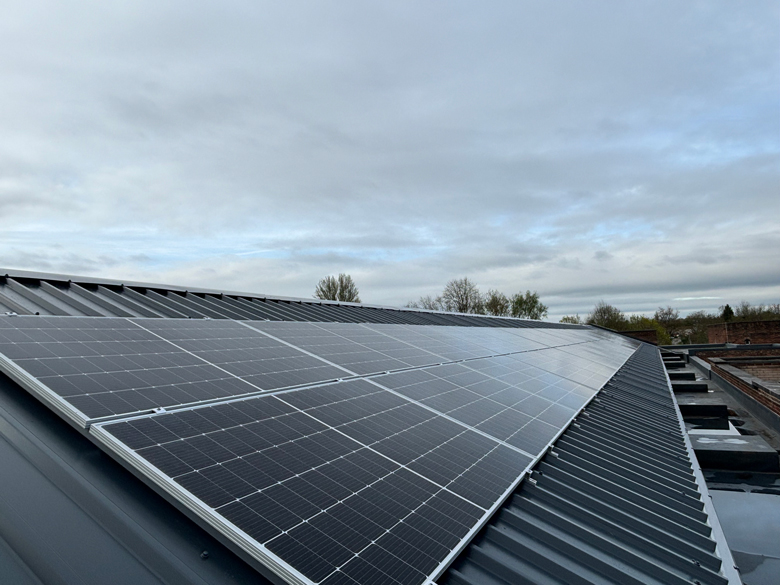
As part of its strategic estate and asset management planning, the Excel Learning Trust worked closely with Garland UK’s Technical Manager, Rob Wall, to refurbish the roof and reduce electricity bills at Carr Junior School, safeguarding the site from future energy cost hikes.

Across the UK public sector estate, many buildings face a similar challenge, ageing roof structures that are unable to support renewable technologies without prior refurbishment. For estate managers looking to accelerate decarbonisation while managing operational budgets, combining roof renewal with solar installation can provide a practical route to improving both building performance and long-term energy resilience.

A detailed roof condition survey revealed various issues with the existing build-up at Carr Junior School, including signs of cut-edge corrosion that had severely diminished the composite steel roof panels. In some cases, the protective coating was non-existent in large sections, exposing bare steel to the elements.

In its current condition, Garland UK advised that the existing roof was unsuitable for supporting a solar PV system without substantial refurbishment. Installing solar panels on a deteriorating roof would lead to high costs and operational downtime for future repairs, as the panels would need to be removed and reinstalled.

Before

One Project, One Partner

An initial Solar Investment Analysis revealed that by installing 70 PV modules using Garlandโ€™s Solarise PV system, Carr Junior School would realise a 28.7 kWp system, generating 26,287 kWh a year and providing ยฃ5,840 in first-year energy savings.

For the Trust, the project represented an opportunity not only to restore the roof but also to generate renewable energy on-site, reducing operational energy costs and contributing towards wider carbon reduction targets.

Garland UK designed a solution that would restore the roofโ€™s integrity and make it solar-ready in a single programme of works. The refurbishment used the R-MER CLAD system, a lightweight and durable metal overlay that avoided the need for full roof removal, reducing waste and disruption to the school day.

Delivering both upgrades together meant the Trust avoided the disruption and cost associated with undertaking two separate projects while ensuring the roof structure would support the solar installation throughout its lifecycle.

Long-term Sustainability Goals

Rob Wall was the clientโ€™s single point of contact throughout the project, providing weekly site visits throughout the roof refurbishment and solar installation and supplying detailed progress reports to all parties via Garland UKโ€™s cloud-based RAMP (Roof Asset Management Programme) system.

For estates teams responsible for multiple buildings, access to centralised documentation and maintenance records can play an important role in long-term asset management. The RAMP system provides a secure digital record of inspections, project updates and maintenance schedules for the building.

Specifying the R-MER CLAD system also delivered significant environmental benefits. By encapsulating the existing roof rather than removing it, the project prevented 4.7 tonnes of waste from being sent to landfill. The system is 100% recyclable, meaning that when the roof reaches the end of its natural life, the school can recycle the panels and avoid further unnecessary waste.

The roof refurbishment also significantly improved Carr Junior School’s thermal performance, achieving a 0.18 U-value. Combined with the Solarise PV system, the school is expected to reduce its carbon footprint by up to 12 tonnes of COโ‚‚ emissions annually.

Supporting Sustainable Estates

On completion, Garland UK supplied the Trust with a 20 year Single-Point Guarantee for the R-MER CLAD system and a 15 year product and 20 year performance guarantee for the Solarise system.

By covering design, materials and installation under one provider, the guarantee simplifies long-term risk management for estate owners and facilities teams responsible for maintaining building performance over decades.

The Trust will see a return on investment for the solar installation in just over four years.

Oliver Johnson, Director of Estates, adds, โ€œThe team at Garland UK did a fantastic job. The school is already seeing the benefits of the improved roof and solar panels, and we’re confident this project will achieve the Trust’s long-term sustainability and cost savings goals.โ€

www.garlanduk.com


This article appeared in theย April 2026ย issueย of Energy Manager magazine. Subscribeย here.

Bonomi UK delivers integrated flow control solutions for data centre cooling systems

As demand for data processing continues to accelerate across sectors such as AI, cloud computing and financial services, the need for reliable and efficient data centre cooling systems has never been greater.

Bonomi UK is supporting this growing sector with high-quality European-manufactured valves, actuators and instrumentation, delivering fully integrated flow control solutions for mission-critical data centre infrastructure.

Cooling systems are fundamental to data centre performance, ensuring stable operating conditions for high-density server environments. Whether used in chilled water systems, adiabatic cooling, or free cooling applications, effective flow control is essential to maintaining efficiency, uptime and long-term reliability.

Bonomi UK provides a comprehensive range of solutions designed specifically for these demanding applications.

High-Performance Valve and Automation Solutions

Valves play a critical role in regulating cooling and heating circuits, enabling isolation, flow control and system optimisation.

Bonomiโ€™s offering includes:

  • Ball valves from RB and Valpres (brass, carbon steel and stainless steel) for reliable isolation and high-pressure performance
  • Butterfly valves for large diameter pipework in chilled water and condenser systems
  • Valbia electric and pneumatic actuators for automated control and seamless integration with BMS and IoT platforms

These solutions are complemented by a full range of pressure, level and flow instrumentation, providing real-time system visibility and supporting predictive maintenance strategies.

A Complete Solutions Provider

Through its global group of manufacturers and subsidiaries, Bonomi UK is able to deliver fully integrated valveโ€“actuatorโ€“instrumentation packages, tailored to the specific operational, control and regulatory requirements of each data centre facility.

This integrated approach provides several key benefits:

  • Proven compatibility between components
  • Simplified procurement and installation
  • Reduced project complexity
  • Technical support from a single supplier

Combined with extensive UK stock availability and responsive service, Bonomi ensures customers can access both high-quality products and reliable support when it matters most.

Supporting Advanced Cooling Applications

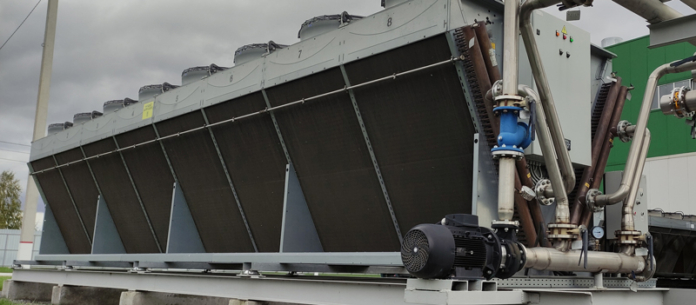
Bonomiโ€™s solutions are widely used within advanced cooling technologies, including adiabatic systems designed to improve energy efficiency and reduce water consumption.

In a recent project supporting a specialist cooling equipment manufacturer, Bonomi supplied a range of components including:

  • Brass ball valves
  • Servo-assisted valves and solenoid valves
  • Pressure gauges
  • Lugged butterfly valves in multiple sizes

These products contributed to a reliable and efficient cooling system, supporting long-term performance in a demanding data centre environment.

Global Expertise with Local Support

Bonomi combines globally recognised European valve and actuator brands with local UK-based expertise.

From its UK headquarters, automation centre and warehouses, the company provides:

  • Technical specification support
  • Application guidance
  • Local stock and fast delivery
  • After-sales service and support

This ensures engineers, contractors and OEMs can confidently specify solutions for critical infrastructure projects.

Supporting the Future of Data Centre Infrastructure

As data centres continue to evolve, driven by increasing digital demand and sustainability requirements, the importance of reliable and efficient cooling systems will only grow.

By delivering integrated flow control solutions backed by technical expertise and local support, Bonomi UK is well positioned to support the next generation of data centre infrastructure.


Contact Information

For further information, please contact:

Bonomi UK
๐Ÿ“ง sales@bonomi.co.uk
๐Ÿ“ž 024 7635 4535
๐ŸŒ www.bonomi.co.uk


This article appeared in the April 2026 issue of Energy Manager magazine. Subscribe here.

HVAC electrification is accelerating – but without flexibility, energy costs will follow

Energy managers across the UK are entering a new phase of building decarbonisation. Electrification of heating and cooling, rising deployment of heat networks, and the rapid growth of EV charging infrastructure are reshaping electricity demand across commercial estates. While these technologies are essential to achieving net zero, they are also concentrating load onto the electricity network, increasing exposure to peak pricing and system constraints.

The challenge is no longer simply how to reduce consumption, but how to manage electrified assets dynamically, in real time, without compromising operational performance or occupant comfort.

HVAC systems remain the largest single driver of electricity demand in many commercial buildings. As gas boilers are phased out and electric systems such as VRF, heat pumps and electric resistance heating become more prevalent, buildings are becoming increasingly sensitive to electricity price volatility. At the same time, EV charging introduces new, often unpredictable demand profiles that further amplify peak loads.

This shift means that energy efficiency alone is no longer sufficient. Without intelligent coordination, electrification can reduce carbon emissions while simultaneously increasing operational costs.

Demand-side flexibility is emerging as a practical solution to this challenge. By automatically adjusting electricity consumption for short periods during times of grid stress, buildings can reduce peak demand without affecting comfort or performance. This allows organisations to capture savings while also supporting grid stability and renewable integration.

A recent example of this approach in practice can be seen at Bolton Wanderers Football Club. The club operates a complex estate combining the 28,000-seat Toughsheet Community Stadium and the adjacent Bolton Stadium Hotel, both of which rely heavily on electric heating and cooling to maintain comfort for fans, guests and staff throughout the year.

Like many large venues, Bolton Wanderers faced the dual pressure of rising energy costs and the need to reduce carbon emissions, without disrupting operations or undertaking costly retrofit projects. Through a partnership with Voltalis, the club deployed the Voltalis Edge platform to connect and optimise more than 70 VRF systems and over 160 live monitoring and control points across both buildings.

The system provides real-time visibility of temperatures, setpoints and energy consumption while enabling automated optimisation of HVAC assets. By intelligently reducing non-critical demand during peak periods, the solution is expected to deliver up to 15% electricity savings on heating and cooling, while maintaining guest and fan comfort and enabling participation in national flexibility markets.

Importantly, the deployment required no capital investment from the club and was completed without disruption to stadium or hotel operations. For Bolton Wanderers, this has provided a route to cut operational costs, reduce Scope 2 emissions and modernise building controls simultaneously.

The lessons extend beyond stadiums. Hotels, universities, offices and healthcare facilities all operate similar electric HVAC systems and face comparable pressures around energy costs, carbon reporting and grid constraints. In many cases, buildings already contain the assets required to deliver meaningful reductions in consumption but lack the control layer needed to coordinate them effectively.

As renewable generation continues to expand, the ability for buildings to respond dynamically to grid conditions is becoming increasingly valuable. Flexible buildings can shift or reduce consumption when supply is constrained and make greater use of renewable electricity when it is abundant. This capability will play a critical role in maintaining grid stability as electrification accelerates.

For energy managers, the implication is clear. Investments in HVAC upgrades, heat networks and EV charging infrastructure must be paired with intelligent control and flexibility. Without it, the benefits of decarbonisation risk being offset by higher electricity costs and increased operational complexity.

The next phase of energy management will not be defined solely by new hardware, but by how effectively existing assets are orchestrated. By combining real-time monitoring, automated optimisation and participation in flexibility markets, organisations can reduce consumption, control costs and strengthen resilience – all while supporting the wider energy transition.

To learn more about how demand response and intelligent HVAC optimisation can support your estate, visit voltalis.co.uk.


This article appeared in theย April 2026ย issueย of Energy Manager magazine. Subscribeย here.

New regulation can lower the costs of heating homes and businesses. Are you HNTAS ready?

Photogapher credit: Nat Rosa
Tom Burton

Tom Burton, CEng, MCIBSE, a principal engineer at FairHeat.

In the media and public discourse, we often hear how deregulation is a catalyst for growth. And, of course it very much can be.

However, we hear much, much less about how good, well thought through regulation helps to deliver growth by ensuring common standards, which are essential for building trust, increasing demand and supply and delivering growth.

What do the Electricity Supply Act of 1926 and the European single market both have in common?

They are both examples of regulation which were brought in to harmonise rules which delivered significant growth and lower prices for consumers.

Heat networks are now on the cusp of going through a similar regulatory journey which will help set the heat network sector on a path to supplying DESNZโ€™s target of 20% of UK heat demand by 2050, up from just 3% of heat demand now.

DESNZ estimates that delivering this growth will involve investment of between ยฃ60 billion to ยฃ80 billion by 2050 and create about 30,000 jobs across the UK. 

However, we believe heat networks could grow beyond that target with jobs and investment growing further too.

Becoming a regulated utility is an important journey for the heat network sector as it shows that the UK government has confidence in heat networks as a solution for decarbonising our energy supply and also for improving British energy security by providing heat from domestic sources for more British homes and more British businesses.

New regulations coming into force for heat networks include:

  • Zoning: setting out where heat networks are the best solution for decarbonisation and increasing energy security.
  • Consumer protection: Heat networks have until January 2027 to register with Ofgem as the new regulator which is putting in place new requirements around pricing, quality of service, and transparency.
  • HNTAS: Heat networks will also need to meet the requirements of the Heat Network Technical Assurance Scheme (HNTAS).

What is HNTAS?

While many modern heat networks operate efficiently too many do not and there are currently no regulatory standards to enforce performance.

HNTAS is a new heat network technical assurance scheme that ensures a minimum level of performance and reliability for heat networks in the UK.

What does HNTAS mean for new networks? Having delivered some of the first new heat networks to go through the HNTAS pilot programme, FairHeat is pleased to say that builders who’ve adopted structured quality assurance are seeing significant capital expenditure (CAPEX) reductions, even after factoring in assessment costs.

Why? Because there has been a tendency both historically and in the present day for some heat network developers and consultancies to oversize networks and make them too complex.

The savings from HNTAS can be substantial and weโ€™ve seen cost savings of between ยฃ500 to ยฃ2,500 per dwelling depending on technology choices.

What does HNTAS mean for existing networks?

To safeguard the performance and longevity of an asset, proactive monitoring and maintenance is a minimum requirement under HNTAS.

Local authorities, social landlords, ESCOs and managing agents operating large numbers of heat networks will also need to take a portfolio approach to prioritise which heat networks require investment first.

We are certain that minimum standards for heat networks will lead to better outcomes and lower costs for consumers and heat network investors in the long-term.

To this end heat network developers have already pledged to achieve a 7.5% reduction in the capital cost of building heat networks and a 20% cut in the cost of electricity consumed by them by 2030.

Furthermore, households connected to heat networks in England could save almost ยฃ150 million per year according to FairHeatโ€™s analysis of HNTAS-style regulations so far.

The average annual cost to residents of heat from a heat network pre-HNTAS would fall by almost one-third (32%) and by ยฃ328 per dwelling assuming the same cost assuming 15p kw/h.

This plays into the governmentโ€™s agenda to reduce costs reflected in its decision to lower energy bills by an average of ยฃ150 by removing funding for the Energy Company Obligation scheme from household energy bills.

While we appreciate there is always a cost and a time investment that organisations need to make to adapt to new HNTAS regulations, there is solid evidence that HNTAS will build trust, deliver growth and lower costs for operators and households.

And this is the kind of pro-growth regulation that should be welcomed.


This article appeared in the April 2026 issue of Energy Manager magazine. Subscribe here.

When energy management becomes a daily struggle: Rethinking the approach

Organisations across public and commercial estates are struggling with rising energy costs, yet many still rely on fragmented, reactive processes that limit realโ€‘time visibility and lead to missed opportunities. As they shift towards proactive, dataโ€‘driven energy management, integrated platforms like E.ON Optimum Connect & Control are helping teams spot issues earlier, control costs and strengthen operational resilience. Early adopters report clearer insight, making proactive energy management an increasingly strategic advantage.

The Problem

Energy management is emerging as a significant pressure on the public sector and commercial estates at a time when they face far more critical frontline issues. Rising costs, price volatility and growing decarbonisation expectations are converging just as estates teams face increasing strain. Yet many organisations still manage energy reactively, addressing issues only after budgets and performance have already been affected.

Too often, energy is handled through fragmented systems and historical data. Bills are reviewed after consumption, problems are identified once costs are locked in, and opportunities to optimise are missed. With both financial control and carbon reduction under constant scrutiny, this approach is becoming increasingly difficult to defend.

More Data, Less Clarity

The issue isnโ€™t a lack of data โ€“ most organisations already collect vast amounts from meters, suppliers and building systems. The challenge is visibility, with information spread across disconnected platforms, making it hard for estates teams to see whatโ€™s happening in real time. This is even more pronounced across multi-site estates, where small inefficiencies repeated across many buildings can quickly drive up costs and carbon, leaving teams unsure where to focus their efforts.

Is Your Energy Usage Within Your Control?

As a result, a shift in mindset is underway. More organisations are beginning to treat energy not as a fixed overhead, but as something that can be actively managed, optimised and improved. This means moving beyond retrospective reporting and towards proactive energy intelligence. The focus switches from understanding what went wrong last month to spotting issues as they emerge and acting before they escalate.

In practice, this involves bringing energy data, performance insights and alerts into a single, accessible view. With real-time monitoring across an entire estate, teams can quickly identify abnormal usage, investigate causes and take action. This approach supports tighter cost control, improves operational resilience and allows more confident, informed decision-making.

Different Estates, Shared Outcomes

While the pressures differ, the benefits are shared. For public sector organisations, better visibility supports accountability and transparency, helping teams demonstrate progress against sustainability targets while making the most of limited budgets. For commercial estates, it enables stronger cost forecasting, benchmarking between sites, and closer alignment between energy use and business activity. In both cases, moving from reactive to proactive energy management is becoming a clear strategic advantage.

Building Resilience for What Comes Next

Platforms such as E.ON Optimum Connect & Control are designed to support this shift, providing real-time visibility and easy remote connection to single sites, entire estates and assets without adding unnecessary complexity. The emphasis is not on more data, but on clearer, more actionable insight that helps teams intervene at the right time.

Our client in the defence sector had this to say after they signed a 3-year partnership to pilot Optimum Connect & Control at their remote site in south-west Scotland.

โ€œOptimum represents a step change in how we manage energy across our estate. The platform has given us clear visibility of our performance (often in real time) and helped identify opportunities to reduce both costs and carbon emissions, supporting our wider net zero strategy.

Working with E.ON has been collaborative and productive. Their team understood our objectives and helped us get the most out of the system at every stage. Iโ€™d recommend Optimum to any organisation serious about improving energy efficiency and driving decarbonisationโ€ – Alex Hunter, Defence sector client

Ultimately, Optimum Connect & Control allows estates to move away from constant firefighting and focus instead on targeted, long-term improvements. As energy challenges continue to evolve, the organisations best placed to respond will be those that invest in visibility, insight and control.

Interested in learning more? Visit https://eon.li/RelORYz3 or scan the QR code to complete the online form, and weโ€™ll take it from there.


This article appeared in the April 2026 issue of Energy Manager magazine. Subscribe here.

Unlocking insights from your buildingโ€™s data

A building can meet every expectation at design stage and still fall short once it is in use. Research from the UK Green Building Council highlights a persistent gap between expected and actual performance, which is one reason why building data matters more than ever to facilities managers. The issue is rarely the lack of information itself. More often, the challenge lies in making sense of it across systems and using it in a way that supports practical decisions. Here, Peter Schwartz, senior technology consultant at IT and cyber security partner OryxAlign, explains how better integration and visibility can help.

The data is already there

Modern building management systems support more than basic monitoring. They capture data across HVAC, energy use and environmental conditions, often at a detailed level. As a result, facilities teams already have access to large volumes of operational data, and there is growing expectation that this information should support better decision-making.

As RICSโ€‘funded research into big data in UK facilities management notes, โ€œFacilities Management organisations are facing increasing pressure from client organisations to manage facility portfolios with stringent goals for both cost efficiency and environmental impact. The ability to integrate, visualise and closely monitor building dataโ€ฆ is critical to achieving these goals.โ€

Not all data is easy to interpret in context. Individual data points can show what is happening, but they do not always explain why. Without a clearer view of how systems interact, it becomes difficult to draw meaningful conclusions. The opportunity lies in making better use of existing data rather than introducing additional systems.

Why siloed systems limit insight

Many estates still rely on systems that were implemented at different times and for different purposes. These systems do not always share data effectively, which limits visibility across the building.

When information sits across separate platforms, it becomes harder to validate, compare and act on. Patterns that span multiple systems can be missed, even when the underlying data exists. This can affect how facilities teams understand energy use, occupancy and overall building performance.

As buildings become more connected, the ability to bring these data sources together becomes increasingly important. Integration allows data to be viewed in context rather than in isolation.

What useful insight actually looks like

When data is brought together, it can support a more practical understanding of how a building is operating. It can help identify where systems are not running as expected, such as equipment operating outside of required hours. It can also highlight patterns that may be affecting occupant comfort before they develop into wider issues.

Greater visibility of occupancy and usage can help align building operation with actual demand. Trend data can also support more informed maintenance decisions, allowing teams to act earlier rather than respond to faults after they occur. As the Better Buildings Partnership notes, โ€œcontinued monitoring for energy performance involves analysing and reporting energy performance to avoid unnecessary cost and to drive on-going energy performance improvement.โ€

In each case, the value comes from interpreting information in context rather than relying on isolated data points.

Start with integration, not reinvention

For many organisations, improving insight does not require a complete overhaul of existing systems. A more practical starting point is to identify which systems already generate useful data across the estate. From there, it becomes easier to assess where gaps exist in visibility, compatibility or accessibility.

Focusing on areas where clearer insight is likely to deliver immediate value can help build momentum. This may include HVAC performance, energy use or occupancy patterns.

An incremental approach can be more realistic in existing buildings, where full replacement is not always feasible. Involving both facilities and IT teams early also helps ensure that systems remain secure, scalable and aligned with wider operational needs.

Facilities managers do not necessarily need more data, but a clearer way of understanding what is already available. The ability to connect systems and interpret information in context is becoming an important part of building operation.

Organisations that treat IT infrastructure as part of that foundation are better placed to act on insight and respond to changing demands. With the right level of integration and visibility, building data becomes something that can be used to inform decisions rather than simply observed.

To find out more about how to make better use of building data, visit www.oryxalign.com.


This article appeared in the April 2026 issue of Energy Manager magazine. Subscribe here.