

The Green Revolution: Taming the Energy Beast with Technologies for a Sustainable Future

Dr James Crosby, Head of Sustainability, and Antoine El Tayah, Sustainability Consultant at Advantage Utilities.

The energy market and costs to companies over the past few years has been akin to a wild beast — hard to predict and imperative to manage. Companies are discovering that the secret to taming this beast lies through transformative internal reflection. The journey to net zero is no longer just an environmental ideal but a strategic advantage, opening doors to new opportunities and financial savings. As the ripple effect of each company’s environmental impact becomes increasingly scrutinized under the lens of scope 3 emissions, adapting to greener practices is not just advisable: it’s becoming a necessity. With government regulations tightening their grip, the race to identify and implement green technologies and processes is on. This article is your guide to navigating this new landscape, offering a roadmap to significantly reduce emissions and, importantly, cut costs. Here are our top picks for the technologies every energy manager should consider and implement on their path to net zero.

Solar PV

Solar PV installations, when appropriate, is the most beneficial technology for businesses in the UK. It is proven, consistent and currently should be a no brainer. The main reason being that generation hours coincide with the common business hours. Depending on the size of the system, you can reduce grid reliance by 15 – 40% on a system that will pay for itself on average in 4-5 years and has a covered lifespan of 25-30 years.

LED Lighting

LED lighting is the best technology for saving money and helping the environment. These lights last much longer than regular bulbs -up to five times longer – with an average life of 50,000 hours. They use very little power, only between 6 and 18 Watts, which is much less than other lights that can use as much as 500 Watts. They are cheaper to run and use less energy. LED lights have a return on investments of about two years and will keep you saving money for many years after that.

Voltage Optimisation

Voltage Optimisation, or VO, is a method that adjusts the voltage coming from the power grid to better match what your company needs. Essentially, lowering the voltage that comes into your facility means you’re using less power. This leads to reduced energy consumption and therefore fewer emissions are produced. This technology works best with energy uses over 150,000kWh a year, especially if you have equipment that uses a lot of power. VO can help you cut down your electricity bills by 6% to 12% and protects your equipment from damage as incoming voltage is controlled.

Heating, Ventilation and Air Conditioning (HVAC) Optimisation

HVAC systems are often the most underappreciated part of a building. Including a smart optimiser improves how long the systems operate. Even with modern heating systems, the refrigerant compressor keeps running even after the building reaches the desired temperature. A retrofit solution allows the compressor to operate, when necessary, as determined by sensors monitoring the temperature of the air coming in and going out. This approach can lower operating expenses by 10% to 30% and offers a return on investment (ROI) within 1 to 3 years.

EV Chargers

Electric Vehicle (EV) chargers are a cornerstone in the shift towards sustainable transportation, offering a dual benefit of reducing emissions and generating revenue. By providing the infrastructure for electric cars to recharge, these chargers facilitate a decrease in the reliance on fossil fuels, significantly cutting down the carbon footprint associated with vehicular travel. Businesses can attract eco-consciousness and generate income through charging fees. EV chargers thus stand at the intersection of environmental responsibility and economic opportunity, promoting a greener planet while offering a new revenue stream.

The shift towards sustainability is not just a moral imperative but a strategic business decision. The technologies and processes discussed here offer a roadmap for companies looking to reduce their carbon footprint and operational costs. From harnessing solar power and optimizing lighting, to managing voltage and optimizing HVAC systems, each solution presents an opportunity to contribute to a greener planet while saving money. Furthermore, the adoption of EV chargers encapsulates the essence of this transition, bridging environmental stewardship and economic gain. As the world moves closer to net zero, the adoption of these technologies will not only ensure compliance with tightening governmental regulations but also position businesses as leaders in the drive for a sustainable future. In embracing these innovations, you would not only safeguard the environment but also secure your place in a rapidly evolving market landscape.


https://www.advantageutilities.com/

Waste, Time, and Money.

Adrian Barber

Adrian Barber, from Prefect Controls, identifies waste as an ‘easy win’, towards net-zero and decarbonisation targets.

Offsetting and Reduction

With target deadlines set, organisations are well on their way to realising their strategies. The inexorable march of time dictates that 2050 will come around all too soon. While 2030 is as close as 2018, when Britain was subjected to ‘The Beast from the East.’

Carbon neutrality can only be achieved by lowering the emissions an organisation is responsible for, or increasing the amount it removes from the atmosphere. The latter being pro-active investment in initiatives, such as: Carbon Dioxide Removal (CDR) – the planting and management of forests, and Direct Air Capture (DAC) – facilities using giant fans to extract CO2 from the atmosphere. Carbon Sequestration, Negative Emissions Technology (NETs), along with Carbon Capture and Storage (CCS) undoubtably play their part, but are beyond the time and financial resources of many organisations.

So, this leaves most businesses examining ways to reduce consumption.

Reduction without compromise

The UK student accommodation sector, with more than 1.7 million student rooms in the UK estate, has a population that is greater than that of our second city. It is a large consumer of energy and its space and water heating accounts for 70% of the energy it uses. But how much of that is essential? And how much is unnecessary? More to the point, how much is wasted? Only specific monitoring and better information can tell us.

Investment in energy control is expected to reduce consumption. But with that there usually comes a compromise in comfort. However, utilising existing technology can identify and cut energy use without any compromise.

Renewable energy procurement is a small but obvious step to take in helping net-zero and decarbonisation targets. But focusing on monitoring use, within individual student rooms and bathrooms, and reducing waste without compromising comfort, produces surprising results.

Since 1997, our controls have enabled accommodation providers to manage the time and temperature available to residents. Rooms are kept at a comfortable level, and occupants can boost the temperature, but only for a pre-set time. The controls are always striving to reduce energy input. When rooms are empty or the pre-determined boost-time elapses, input is reduced. A basic concept!

Better information, better control

Technology has enabled these rudimentary controls to become very sophisticated. Measuring, monitoring, and managing energy use throughout entire campuses via a secure internet portal. Automatically reducing unnecessary energy consumption, when windows are open, rooms are empty, or the ambient temperature is comfortable.

Sensors measure air temperature; electric current; water temperature, volume, and flow. They detect supplementary heaters; over-heating; leaking pipes; dripping taps; over-consumption; faulty cisterns; defective elements; vacant rooms; even flow of hot water through a tundish.

Waste is benefitting no one

Better information and better control are essential in reducing consumption. But the big difference we are experiencing, is that our reductions have no impact on the room occupant. Our systems are controlling essential use and eliminating unnecessary use, while identifying and reducing waste.

SMART Tank has revolutionised data gathering for water systems within our properties. Recently a site was alerted to a leak. By the time the maintenance team reacted, 26,000 litres of water and 1,283kWh of electricity had been wasted. Across another estate, over an 8-month period, 2.3 million litres were wasted.

Real time monitoring provides reliable information and alerts, but the maintenance reaction is what counts! Time spent developing a swift response procedure, to deal expeditiously with notifications, is an investment that will only pay dividends.

The outcome – complete overview of properties, and elimination of waste. An ‘easy win’ in reducing consumption, great for the bottom line, great for net-zero targets, and achieved without affecting student comfort.

www.prefectcontrols.com

The need for environmental accountability throughout the supply chain

Matt Tormollen

By Matt Tormollen, CEO, POWWR

We are in the midst of one of the most consequential energy transitions since records began. The increasing availability of clean electrons has motivated public sector businesses in the UK and beyond to think green. And for good reason. Being environmentally conscious appeases regulators, retains staff, and provides untold goodwill.

The public sector’s move towards a greener future will only continue to gather pace in the years to come. Renewables’ share of the power generation mix is set to rise to over a third by next year alone. With solar and wind driving most of the growth, the renewable energy market is expected to grow from its current $1.21 trillion at a compound annual growth rate (CAGR) of 17.2% between now and 2030.

In their drive to appeal, certain energy suppliers have been guilty in the past of ‘greenwashing’ to exaggerate their environmental credentials. Those suppliers – in addition to those that played fair – have recognised the need for greater environmental accountability. They are, therefore, looking to produce a certificate of authenticity such as a Renewable Energy Certificate (RECs) to prove that the energy they generate is indeed from the renewable sources they say.

A lack of consistency

Unfortunately, producing a REC or similar is remarkable difficult. Ensuring complete energy genealogy throughout the supply chain is tricky because of a lack of consistent data from top to bottom. This is because the majority of energy production globally still runs on outdated, bespoke, software that doesn’t play nicely with others.

Also, there is the fact that the systems themselves were designed for predictable assets like coal or oil, not dynamic assets like solar and wind. This dynamism makes the problem of extracting intelligence more difficult as it increases the sheer amount of data being produced. So much so, that the energy industry is now thought to generate up to 200 exabytes of data per year.

Thankfully, there is now technology available – underpinned by the latest in artificial intelligence (AI) and machine learning (ML) – that can sift through this mountain of data in a timely manner. Facilitating accountability by collecting the requisite data to produce the aforementioned REC.

The need to collect the right data

For some time, technology has been used to facilitate everything from providing an end-to-end connected journey for energy sales, to managing risk at a time of unprecedented price volatility. Yet, recent advancements in technologies such as Internet of Things (IoT) sensors, robotics, and AI have helped create novel approaches for the energy industry to help public sector organisations meet climate and sustainability goals. However, accessing these devices – and the data held within – can still involve manual and time-consuming processes. Even when technology such as AI can help, it must be remembered that it is only as good as the data the flows into it.

Today, it is not just about collecting more data from such devices, but the right data. So much so, that the market for the use of big data analytics products within the energy sector is expected to grow from $8.37 billion in 2023 to $14.28 billion by 2028, at a CAGR of 11.28%.

Completing the circle

As well as certain energy suppliers looking to clean up their act, there are also countless new entrants wanting to set themselves apart by being seen as the green alternative for the public sector. It is no surprise. Any supplier that can help the public sector access cleaner sources of energy will only grow to become an enduring partner for years to come.

Accountability will be key. Ensuring energy genealogy throughout the supply chain became difficult as its production became increasingly decentralised as well as decarbonised. However, technology such as IoT sensors can facilitate this accountability by collecting energy data from a myriad of distributed devices.

For some time, data has been imperative to help predict weather patterns, production demand, and optimise operation process efficiency within the energy sector. But as stakeholders look to hold energy companies accountable for the claims they are making, proving the energy they are producing is from renewable sources has never been more important. Or more difficult. Yet, using the latest in AI empowered technology can help complete the circle.

The benefits are twofold. As data becomes more prevalent and accessible, energy management solutions will also become more precise, amplifying the benefits public sector organisations can derive from renewable energy. At the same time, it will enable businesses to save on energy costs, whether by procuring energy from the cheapest supplier or facilitating energy use when rates are cheapest.

www.powwr.com

‘Game-changing’ British heat pump unlocks gas-free home heating for the masses

  • To reach Net Zero by 2050 up to 80% of UK homes could need a heat pump
  • Kensa’s Shoebox NX heat pump unlocks a viable solution to decarbonise heating for 60% of UK homes, from high-rise flats to terrace streets
  • The British-made Ground Source Heat Pump is compact, powerful, can heat and cool properties and is five times more energy efficient than a gas boiler
  • Small enough to fit in a cupboard and designed with Networked Ground Source Heat Pumps in mind, a system that replicates the gas network model
  • Networked Ground Source Heat Pumps are around 20% cheaper to install and operate than Air Source Heat Pumps

Low-carbon heating and cooling for every UK home is one step closer as Kensa breaks ground with the next generation of heating.

By 2050 millions of UK homes will need to decarbonise their heating and, with the launch of its new small and powerful Shoebox NX Ground Source Heat Pump, Kensa is unlocking a proven, Net-Zero-ready solution.

Kensa’s solution – Networked Ground Source Heat Pumps – replicates the familiarity and accessibility of gas networks and enables the mass rollout of heat pumps in the UK, bringing low-cost renewable heating and cooling to almost any type of home, whether that’s a new build, a 19th-century Victorian terrace, a tenement or a high-rise urban flat.

One-third of the UK’s greenhouse gas emissions come from heat, and 6.5 million homes are estimated to be in fuel poverty. Kensa’s solution will boost heat pump installations, shielding millions from unpredictable energy costs by replacing imported gas with domestically produced renewable electricity.

Tamsin Lishman, Kensa Heat Pumps CEO, said:

“This is a game-changing heat pump designed for the UK. Until now, achieving mass heat pump rollout has been a complex challenge, but with the launch of our Shoebox NX, we’ve engineered a small, high-performance heat pump that’s ready to replace gas as the main home heating choice.

“When combined with our Networked Ground Source Heat Pumps solution, it unlocks cosy homes in the winter and cooler homes in the summer for almost anyone, and at low costs to the consumer.

“For 25 years Kensa has been pioneering Ground Source Heat Pump technology, and with the Shoebox NX we’re ready to deliver heat pumps for everyone, cut household carbon emissions and make green home heating a reality.”

John Bromley, Managing Director – Clean Energy Strategy & Investments at Legal and General Capital, said:

“Housing requires some of the most substantial and immediate overhauls of any industry to improve standards, reduce running costs for consumers, and to reach net zero. The Kensa Group’s highly efficient, networked ground-source heating and cooling will play a key part in this transition.

“As an experienced energy transition investor, we are proud to be supporting Kensa’s growth and we are delighted to see the launch of their latest ground-breaking Shoebox NX heat pump, a culmination of years of expertise and development.

“We share Kensa’s ambition to deliver reliable, efficient heating solutions for consumers, developers, housing providers, and more – taking us a step closer to decarbonising UK properties at scale.”

Shoebox NX heat pump performance facts and figures:

  • Small and compact, but packs the power and efficiency of large heat pumps – making the most efficient and lowest carbon form of heating accessible to properties with limited space.
  • High efficiency, low electricity usage and low maintenance deliver long-term cost savings for consumers compared to air source heat pumps, and even gas boilers.*
  • Is five times more efficient than a gas boiler – Coefficient of Performance of 4.36** (gas boilers typically operate at 0.9).
  • Has an A+++ energy efficiency rating and a 25-year life expectancy.
  • Can heat water to over 60oC without the need for an immersion heater.
  • Can provide passive cooling to cool homes during the summer at a much lower cost than air-conditioning.
  • Designed to work in flats, apartments, terraced houses, tenements and new build properties.

Networked ground source heat pump findings:

  • Mimicking the gas network model, privately funded infrastructure lowers the upfront installation costs, with consumers paying a standing charge as part of their energy bill to connect to a shared ambient heat network, giving them access to low-cost, low-carbon heat.
  • Individual and independently controlled ground source heat pumps fitted inside each property are connected to the shared ambient heat network, a form of fifth-generation district heating.
  • Networked Ground Source Heat Pumps are up to 20% cheaper to run than air-source heat pumps, whilst upfront costs are 8% less when installed at scale as part of a funded heat network:
    • For a typical 3-bed Victorian terraced house, a networked ground source heat pump can cost £900 (8%) less than an air-source heat pump to install due to its smaller size and the lack of external installation work required.
    • Due to their higher efficiency, lower maintenance and longer life expectancy, the annual costs of running a networked ground source heat pump are up to 20% lower than an air-source heat pump. 
  • Networked ground source heat pumps consume 40% less electricity to provide the same heat as air source equivalents, reducing peak strain on the grid.
  • Networked ground source heat pumps are the decarbonisation solution for 60% of UK homes.

Kensa’s Shoebox NX is the latest development in ground source heat pump technology and delivers the efficiency of a large heat pump, in one that’s small enough to fit in a cupboard.

Designed with mass heat pump rollout and ease of installation in mind, factory production of the NX can be readily scaled up to deliver 30,000 per year, with further expansion planned, and can be easily fitted by most heating and plumbing engineers without extensive training.

Networked ground source heat pumps are a proven, scalable solution, which have next to no above-ground presence and are already providing clean heating for new build homes and complex-to-decarbonise private and social retrofit properties.

Kensa’s model is designed to be as familiar and as accessible as the gas network and, once the infrastructure is deployed, allows households to connect at a time that suits them.

With the Future Homes Standard, which is set to effectively ban gas boilers in new build homes from 2025, and the Government’s target to deliver 600,000 heat pumps a year by 2028, UK heat pump installations are set to rapidly increase.

Sleeping energy models hold the key to closing the performance gap

Industry whitepaper reveals the untapped potential of dormant digital assets

Reinstating existing 3D design, energy compliance or BIM models created during a building’s development is instrumental in closing the gap between a building’s predicted and actual operational energy performance, according to experts from across the built environment sector. 

A landmark collaborative whitepaper published by Glasgow-based climate technology firm, IES, underlines that digital models created for compliance purposes during building design or refurbishment are rarely used to their full potential throughout the rest of a building’s lifecycle. This is despite the fact that 90% of AEC professionals see the value of using energy models in operation and cite closing the performance gap as the biggest driver for doing so. 

The whitepaper, which brings together influential voices from organisations including the UK Green Building Council (UKGBC), HLM Architects, the University of Glasgow, SWECO, and Perth & Kinross Council, argues that putting an existing compliance energy model through further modelling stages and combining it with actual data from the building itself to create a Performance Digital Twin, can help bridge the energy performance gap. This process has been coined as the Sleeping Digital Twin theory by IES. 

Beyond closing the performance gap and accelerating progress towards net zero, the concept of ‘awakening’ an existing model also brings productivity benefits to AEC practitioners. It could significantly reduce the initial modelling time involved in post-occupancy studies as well as retrofit and rebuild projects, improving project turnaround times and maximising the capacity of modelling teams. 

However, the whitepaper explores several hurdles that the industry must overcome to make use of energy models in operation. For example, the accompanying survey of 167 AEC consultants revealed funding, lack of understanding from clients, and accessibility of models as the top three barriers to utilising existing assets. 

Commenting on the findings of the whitepaper, Don McLean, CEO of IES said: “In this digitally enabled age, the industry must move beyond archaic practices and make the most of the insights already at its fingertips. We must make the shift from a ‘design for compliance’ culture, in which buildings are designed to reach minimum performance standards, to a ‘design to performance’ approach which garners real results. 

“If we are to address the performance gap and make greater progress towards net zero targets, accurately predicting and measuring the performance of buildings throughout their lifecycle is a must. Without doing so, it’s impossible to know how efficient they are and the industry risks missing opportunities to make improvements that cut emissions – and costs.

“All partners involved in the lifecycle of a building must design with other stages of the process in mind, not just their constituent part, to reduce disparities between predicted and actual performance.

“Increasing uptake of post-occupancy evaluations will also be key to closing the performance gap and act as a stepping stone to highlight the benefits of awakening existing models. Despite this, only 30% of AEC consultants say that they are being asked to deliver these. As such, built environment professionals have a role to play in educating clients on the importance of in-use evaluation and the role that models can play in optimising a building in operation. Not only will this help to develop client understanding and drive demand, but it will also enable those in the AEC sector to expand the services that they provide at the operational stage of a building. 

“Collaboration is key here, and we’re calling for the industry to open greater dialogue and make better use of our existing digital assets to accelerate the decarbonisation of the built environment.” 

The full whitepaper, which includes viewpoints from the UKGBC, CIBSE, Introba, SWECO, Gafcon Digital, HOK, HLM Architect, Perth & Kinross Council, The University of Birmingham, and the University of Glasgow, is available to read here.

Join the Net Zero Journey with Ideal Heating Commercial’s New Information Hub

Ideal Heating Commercial Products has introduced a new net zero information hub on its website – idealcommercialboilers.com/net-zero – where visitors can regularly return to read up-to-date information on the UK’s drive to decarbonise commercial heating, paving the way to net zero in 2050.  It has been created as part of Ideal Heating’s Join the Net Zero Journey strategy, aimed at providing customers with low carbon commercial heating solutions.

The new information hub is home to informative case studies, white papers, and instructive guides created by Ideal Heating.

Case studies, the latest of which include a school, housing development and offices, clearly demonstrate how industry colleagues are deploying low carbon heating solutions to the best effect, and the impact on energy usage and emissions.  The full array of Ideal Heating low carbon commercial heating technologies is covered, from heat pumps through to highly efficient heat networks and hydrogen blend ready boilers.

For more in-depth examinations of low carbon heating and hot water solutions, the White Paper and Guide sections on idealcommercialboilers.com/net-zero are invaluable.  The ‘Heat Pumps – Road to Decarbonisation’ White Paper is essential reading, whilst the new ‘Hydrogen Guide: Understanding the Hydrogen Discussion’ is designed to educate and inform people on the evolving subject of hydrogen in heating.  It provides an overview on the use of hydrogen as a fuel for commercial boilers, summarising the key issues and identifying where we currently sit and future possible pathways.

Ideal Heating Commercial’s range of low carbon heating solutions are also addressed on the new Net Zero information hub.  These include ECOMOD commercial heat pumps, hydrogen-ready condensing boilers, and POD Heat Interface Units (HIU) for heat networks. 

For more information, please visit idealcommercialboilers.com/net-zero.

SSE leads energy partnership to slash carbon emissions by 90% across London school trust

Business energy supplier, SSE Energy Solutions, has embarked on an ambitious project to reduce carbon emissions by 90% across 11 Harris Federation academies in South East England.

Funded through the UK Government’s Public Sector Decarbonisation Scheme (PSDS), the £14.3 million project will overhaul heating systems, building controls, and electrical infrastructure across buildings in South London and Kent.

The initiative is forecast to reduce Harris Federation’s collective emissions by over 38,000 tonnes of CO2 – the equivalent of planting 1.73 million trees.

Upgrades will include replacing gas boilers with energy-efficient air source heat pumps, installing advanced building energy management systems, and upgrading ageing electrical infrastructure. Renewable energy technologies will also be incorporated where feasible.

In addition to the environmental benefits, the project is expected to significantly reduce energy costs for the academies over its 20-year course and exemplifies SSE Energy Solutions’ capabilities in orchestrating large-scale decarbonisation initiatives.

From initial project development and design through long-term monitoring and verification, SSE leverages its experience across energy project planning, engineering design, project management, building controls and renewable technology integration. 

Grant Widlake is Business Director at SSE Energy Solutions’ Smart Buildings. He said:

Grant Widlake

“At SSE Energy Solutions, we’re committed to partnering with all our business customers to deliver bespoke solutions enabling them to reduce their energy consumption, emissions, and costs. Reducing emissions from non-domestic buildings is critical to accelerating the UK’s transition to Net Zero and as a dedicated business energy supplier, this is a key focus for our business.

“This project with Harris Federation exemplifies our approach to decarbonising buildings – overlaying effective building controls with other solutions like air source heat pumps, solar PV, and battery storage to create substantial emissions reductions.

“Our team are experts in conceptualising and delivering low-carbon retrofits across the public and private sectors and want to help many other organisations like the Harris Federation benefit from the opportunities of a low-carbon building estate.”

 Tom Webster, director of Estates and Commercial at the Harris Federation, said: 

“The grant we have received from the Public Sector Decarbonisation scheme is a win-win, enabling us to make significant savings over time and thus plough more of our money directly into children’s education, whilst also playing our part in delivering a net zero future.”

https://www.sseenergysolutions.co.uk/

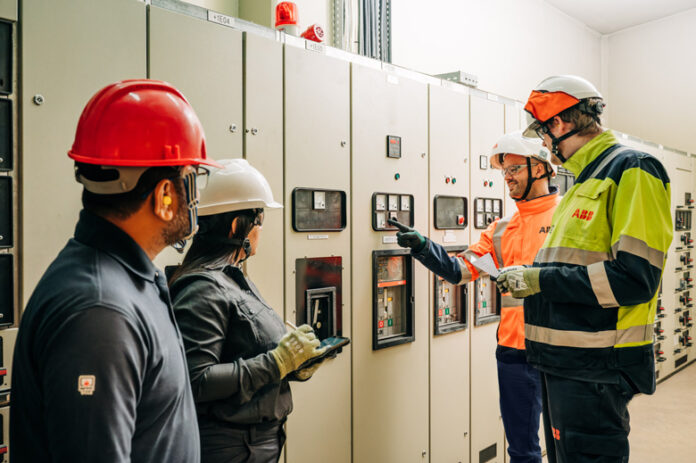
Navigating a New Landscape: The Evolution of Energy Distribution and Servicing in 2024

Stuart Thompson

Stuart Thompson, President of ABB’s Electrification Service Division.

The year 2024 promises significant shifts in energy distribution and servicing, propelled by a confluence of global factors and technological advancements. In response to an increasingly volatile geopolitical landscape and the lingering effects of the pandemic, industrial businesses find themselves compelled to adopt a paradigm shift in their approach to energy management.

Firstly, the traditional model of globalised servicing is transforming, yielding to a preference for regionalized and localized solutions. Businesses are prioritizing speedy response times, in-depth understanding of local nuances, and readily available expertise. This trend manifests in the establishment of regional service centers strategically positioned to cater to specific markets, fostering a symbiotic relationship between service providers and clients.

Furthermore, the expanding prominence of edge computing marks a pivotal development in data processing. By enabling real-time data analysis at the source, edge computing empowers businesses to make informed decisions based on granular insights. This decentralization of data processing fosters operational efficiency, optimizes energy utilization, and bolsters cybersecurity measures.

The realm of servicing itself is poised for a profound transformation, embracing the digital revolution and the tenets of intelligent systems. Integrating predictive maintenance algorithms, self-diagnosing equipment, and intuitive chatbots empowers proactive problem-solving and minimizes downtime. Wearable technology further enhances safety protocols, acting as a digital guardian angel for technicians interacting with complex electrical systems.

Beyond efficiency and performance, sustainability emerges as a central theme in the evolving energy landscape. Circular economy principles are gaining traction, emphasizing the prolongation of equipment lifecycles, the responsible management of resources, and the minimization of waste. Businesses are actively exploring avenues for retrofitting, upgrading, and repurposing existing infrastructure, recognizing the environmental and economic benefits of such endeavors.

Finally, collaborative partnerships are becoming the cornerstone of success in this dynamic landscape. Synergies between established service providers and nimble technology startups foster innovation and accelerate the development of cutting-edge solutions. This collaborative spirit, exemplified by ventures such as ABB’s partnership with OKTO GRID for advanced transformer monitoring, demonstrates the collective commitment to driving positive change in the industry.

In conclusion, 2024 ushers in a new era for energy distribution and servicing, characterized by decentralization, digitalization, and a conscious pursuit of sustainability. By embracing these transformative trends and fostering collaborative partnerships, businesses can navigate the evolving landscape with confidence, ensuring efficient, reliable, and responsible energy management for the future.

Stuart Thompson is the President of ABB’s Electrification Service Division, leading a $1.1b revenue business of more than 3,000 global service professionals across 50 countries.

UWL named Environmental Corporate of the Year at West London Business 2024 Awards

The University of West London (UWL) has been rewarded for its commitment to sustainability and its work towards becoming a net-zero carbon institution by 2030 at the West London Business 2024 Awards, where it won Environmental Corporate of the Year.  

The Awards, which took place at Twickenham Stadium, recognise the achievements of businesses and organisations based in the west of the capital. It was a good evening for the ‘career university’, with International Student Experience Coordinator Andreea-Daniela Coroama also receiving a Highly Commended Award in the Apprentice of the Year category. 

UWL is committed to being a leader in environmental and sustainability management by preventing pollution, complying with environmental legislation, and continuously striving to improve its sustainability performance.  

 “Winning the Environmental Corporate of the Year award is not just a recognition of our efforts; it’s a testament to our commitment to sustainability,” UWL’s Head of Environmental Sustainability Nasrin Khanom says. “It highlights our success in engaging key stakeholders in our shared mission to protect and preserve our planet for future generations.” 

The award also recognises how successful the University has been in embracing energy-saving technologies, as its Director of Property Services Claire Willitts explains: “I am delighted to receive this award which is yet another recognition of our impressive decarbonisation journey to date.  

 “It really is a testament to the success we have had in implementing complex and challenging projects with very ambitious timelines and our ability to embrace innovation.”

UWL’s decarbonisation journey began in 2012 when it transformed its buildings in Ealing into a new campus incorporating energy-saving technologies. Claire says: “Improvements to the fabric and lighting of buildings not only provided a better learning and social experience for students, but also significantly upgraded the site’s environmental performance.”  

Since then, in 2019, the University has invested £800k in further upgrading its lighting in west London to LEDs, saving around 350 tonnes of CO2 emissions every year. And in 2021, UWL secured £5.1m of grant funding to install a range of clean and renewable technologies including the world’s largest combined ground source heat pump and solar photovoltaic thermal system at its Ealing facilities. The project saves as much as 529 tonnes of CO2 emissions every year.  

“We created new jobs to support the local economy at a time when many people were being furloughed due to the Covid 19 pandemic,” Claire adds. “And we also worked with the local community, including Kew and Cultivate London, to enhance biodiversity in the green spaces at our Ealing site.”   “We are working to continuously improve our performance against our targets,” Claire concludes. “And going forward we are looking at how we can embed sustainability in all our capital projects.” 

Find out more about UWL’s commitment to sustainability here.  

Heat networks in England and Wales receive £3.5 million for efficiency improvements, benefitting over 5,000 residents.

£3.5 million is being awarded in Round 4 of the Government’s Heat Network Efficiency Scheme (HNES) to 20 local authorities, housing associations, NHS trusts, universities and private sector organisations. The funding aims to improve the performance of heat networks, so they provide better services to their customers, increased efficiency and reduced energy costs.

This latest announcement of £3.5 million will positively impact 25 heat networks across England and Wales, benefiting 5,700 residents, including students, hospital patients, and other private and public sector occupants. This brings the total funding awarded under HNES to over £28 million. Notably, the news comes as the scheme celebrates its one-year anniversary since opening for applications in February 2023.

Furthermore, capital grant funding will result in annual carbon savings of over 422 tCO2e per year over the next 40 years, equivalent to removing the annual emissions of 172 diesel-powered cars, or 6,883 across 40 years. Revenue grant funding will also enable optimisation studies, identifying opportunities for additional carbon savings in the coming years.

Swan Housing, an East London and Essex-based housing association, is among the recipients, being awarded almost £700,000 from HNES for the Bow Cross Estate heat network in Tower Hamlets. The funding will benefit 543 residents, enabling improvements to the network’s efficiency levels. HNES support aims to reduce heat losses, providing greater comfort and improved resilience, particularly for low income, vulnerable residents and those at risk of fuel poverty.

HNES is an integral part of the Government’s broader Heat Network Transformation Programme (HNTP), focusing on developing new heat networks and improving existing ones. This will aim to encourage further investment in the sector and ramp up the UK’s decarbonisation efforts. The scheme provides both capital and revenue funding to optimise inefficient heat networks, enhancing overall performance for the benefit of residents, and ensuring they are futureproofed.

Lord Callanan, Minister for Energy Efficiency and Green Finance, has welcomed today’s HNES funding announcement:

“Customers living on heat networks need to get the regular, reliable heating and hot water they are entitled to.

This important funding will help upgrade inefficient systems, preventing breakdowns and using less energy, while allowing customers to reduce their energy bills and keep their homes warm.

It’s part of our plan to ensure every home in the country can cut their energy use and save money on their bills.”

Louise Singleton, Principal Consultant at Gemserv, added:

“We’re pleased to announce the success of Round 4, with a significant funding allocation of £3.5 million, just as we celebrate the scheme’s one year anniversary.

The diverse range of projects funded in this round is something we are particularly proud of, with the funding set to deliver heightened heat network efficiency for residents in social housing, those within the NHS and students at universities across England and Wales.

Funding delivered under HNES plays a crucial role in supporting the transformation of older heat networks into resilient, low carbon heating solutions, strategically preparing for upcoming sector regulations in 2025.”

Below is a summary of the projects which have successfully secured HNES funding in Round 4.

Capital Grant Funding

Capital grant funding will go directly towards covering the cost of operational works to improve the efficiency of existing heat networks. In this round, over £3 million will directly improve the efficiencies of heat networks serving 3,101 residents.

Housing Associations and Social Housing Providers

Bow Cross Estate

Swan Housing Association has been awarded £686,296 for improvements works on the Bow Cross Estate heat network. This funding will be matched with significant additional investment by Swan Housing Association. It will support upgrading the primary heat network pipework and the distribution pumps and control systems at the energy centre. Taken together, these works will mitigate heat losses, enhance network efficiency, and improve overall system resilience, benefitting residents.

Local Authorities

Philpot Square Heat Network

The London Borough of Hammersmith and Fulham has been awarded £754,609 for the Philpot Square heat network. The project involves a full upgrade of the network covering the plant room, distribution systems and apartments. New inverter driven pumps, a pressurisation and expansion system, a plant room buffer vessel, new distribution pipework with improved insulation, Heat Interface Units and Thermostatic Radiator Valves will be installed. This will eliminate service interruptions, improve efficiency levels and allow residents to be billed based on usage rather than a fixed fee.

Spedan Close Heat Network

The London Borough of Camden has been awarded £659,641 for the Spedan Close Heat Network. The project involves a complete upgrade of the whole network to

address extremely high numbers of service interruptions. Work will cover the plant room, distribution systems and dwellings, including the installation of inverter driven pumps, distribution pipework with improved insulation, Heat Interface Units and Thermostatic Radiator Valves. This will improve efficiency levels and ensure residents only pay for the heat they use.

Private Sector

Greenwich Millennium Village

Switch2 has been awarded £773,178 for the Greenwich Millennium Village (West) heat network to install 435 new Heat Interface Units, as well as to upgrade insulation on part of the primary network and replace automatic air release valves. This will reduce unplanned outages, improve network performance as well as reduce maintenance costs.

First Central

First Central Heating Company Limited has been awarded £192,562 for the First Central heat network. Funding will support the introduction of an improved control strategy across the network, replacement of the degasser and pressurisation systems and distribution pumps. It is expected that these works will improve system reliability, reduce heat losses and significantly reduce carbon emissions.

Revenue Grant Funding

Projects across England and Wales in Round 4 have also been awarded over £413,000 of revenue grant funding to undertake optimisation studies to review the performance of their heat networks and identify areas for improvement.

The following organisations have been awarded revenue grant funding for optimisation studies:

Housing Associations and Social Housing Providers

Wythenshawe Community Housing Group, for the Hollyhedge Court Road heat network.

Rochdale Boroughwide Housing Limited, for The Strand Community Hub and social housing heat network.

Thirteen Group Limited, for the Nolan House and Kennedy Gardens heat networks.

Plus Dane Housing, for the Brunswick Street Estate and Conway Court heat networks.

Linc Cymru, for the Danygraig heat network (Communal ASHP serving individual HIU’s in 33 flats).

Health and Education Organisations

Newcastle upon Tyne Hospitals, for the Freeman Hospital heat network.

Royal Devon University Healthcare NHS Foundation Trust, for the RD&E Hospitals (Wonford and Heavitree), and the Pathology and Mortuary Block heat networks.

Lancaster University, for the Bailrigg main campus district heating network, serving over 20,000 full-time students and staff.

Local Authorities

Rotherham Metropolitan Borough Council, for the St Annes and Beeversleigh heat networks.

Suffolk County Council, for the Endeavour House heat network.

Private Sector & Others

Lifestory Group Limited, for the Chapter House heat network.

FirstPort Group Limited, for the Park 25 Redhill heat network.

Highbury Square Management Company Limited, for the Highbury Square heat network.

Berkeley Homes (North East London), for the KSS1 heat network.

B&D Energy Limited, for the Weavers Quarter heat network.

Those interested in applying for the scheme can express their interest by emailing
HNES@gemserv.com

More information about HNES including upcoming events can be found on Gemserv’s website, the delivery partner for the HNES Scheme, here.

Gemserv has been appointed as the Delivery Partner for HNES supported by Ramboll who will be providing technical assessment, Turner & Townsend providing applicant support and Lux Nova providing legal support.