


Dr James Crosby, Head of Sustainability, and Antoine El Tayah, Sustainability Consultant at Advantage Utilities.
The energy market and costs to companies over the past few years has been akin to a wild beast — hard to predict and imperative to manage. Companies are discovering that the secret to taming this beast lies through transformative internal reflection. The journey to net zero is no longer just an environmental ideal but a strategic advantage, opening doors to new opportunities and financial savings. As the ripple effect of each company’s environmental impact becomes increasingly scrutinized under the lens of scope 3 emissions, adapting to greener practices is not just advisable: it’s becoming a necessity. With government regulations tightening their grip, the race to identify and implement green technologies and processes is on. This article is your guide to navigating this new landscape, offering a roadmap to significantly reduce emissions and, importantly, cut costs. Here are our top picks for the technologies every energy manager should consider and implement on their path to net zero.
Solar PV
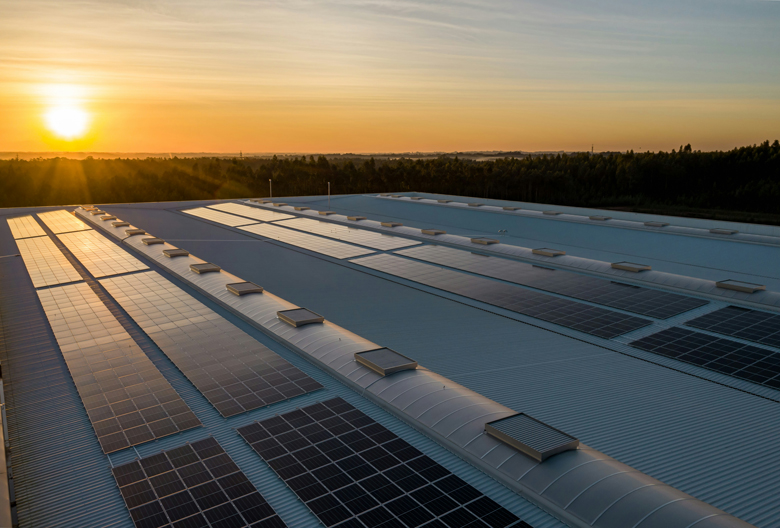
Solar PV installations, when appropriate, is the most beneficial technology for businesses in the UK. It is proven, consistent and currently should be a no brainer. The main reason being that generation hours coincide with the common business hours. Depending on the size of the system, you can reduce grid reliance by 15 – 40% on a system that will pay for itself on average in 4-5 years and has a covered lifespan of 25-30 years.
LED Lighting
LED lighting is the best technology for saving money and helping the environment. These lights last much longer than regular bulbs -up to five times longer – with an average life of 50,000 hours. They use very little power, only between 6 and 18 Watts, which is much less than other lights that can use as much as 500 Watts. They are cheaper to run and use less energy. LED lights have a return on investments of about two years and will keep you saving money for many years after that.
Voltage Optimisation
Voltage Optimisation, or VO, is a method that adjusts the voltage coming from the power grid to better match what your company needs. Essentially, lowering the voltage that comes into your facility means you’re using less power. This leads to reduced energy consumption and therefore fewer emissions are produced. This technology works best with energy uses over 150,000kWh a year, especially if you have equipment that uses a lot of power. VO can help you cut down your electricity bills by 6% to 12% and protects your equipment from damage as incoming voltage is controlled.
Heating, Ventilation and Air Conditioning (HVAC) Optimisation
HVAC systems are often the most underappreciated part of a building. Including a smart optimiser improves how long the systems operate. Even with modern heating systems, the refrigerant compressor keeps running even after the building reaches the desired temperature. A retrofit solution allows the compressor to operate, when necessary, as determined by sensors monitoring the temperature of the air coming in and going out. This approach can lower operating expenses by 10% to 30% and offers a return on investment (ROI) within 1 to 3 years.
EV Chargers
Electric Vehicle (EV) chargers are a cornerstone in the shift towards sustainable transportation, offering a dual benefit of reducing emissions and generating revenue. By providing the infrastructure for electric cars to recharge, these chargers facilitate a decrease in the reliance on fossil fuels, significantly cutting down the carbon footprint associated with vehicular travel. Businesses can attract eco-consciousness and generate income through charging fees. EV chargers thus stand at the intersection of environmental responsibility and economic opportunity, promoting a greener planet while offering a new revenue stream.
The shift towards sustainability is not just a moral imperative but a strategic business decision. The technologies and processes discussed here offer a roadmap for companies looking to reduce their carbon footprint and operational costs. From harnessing solar power and optimizing lighting, to managing voltage and optimizing HVAC systems, each solution presents an opportunity to contribute to a greener planet while saving money. Furthermore, the adoption of EV chargers encapsulates the essence of this transition, bridging environmental stewardship and economic gain. As the world moves closer to net zero, the adoption of these technologies will not only ensure compliance with tightening governmental regulations but also position businesses as leaders in the drive for a sustainable future. In embracing these innovations, you would not only safeguard the environment but also secure your place in a rapidly evolving market landscape.
