



John Dawson, Energy Trader & Market Intelligence Manager, eic.co.uk
In a volatile market, the aim is not to remove risk entirely, but to manage it in a way that is clear, deliberate and aligned to business objectives.
Energy prices have become a more significant cost for organisations to manage over the last 4 to 5 years.
Non-commodity charges have risen rapidly, wholesale prices have become more volatile, and the wider energy buying landscape has become more complex as organisations balance affordability, security of supply and sustainability expectations.
In this environment, energy managers need to consider how to buy energy effectively while also looking for opportunities to reduce consumption from the grid.
While flexible energy contracts can help organisations to manage wholesale price risk, for many organisations, energy procurement is also only one part of a wider operational picture. The right strategy will depend on demand, operations and wider business priorities.
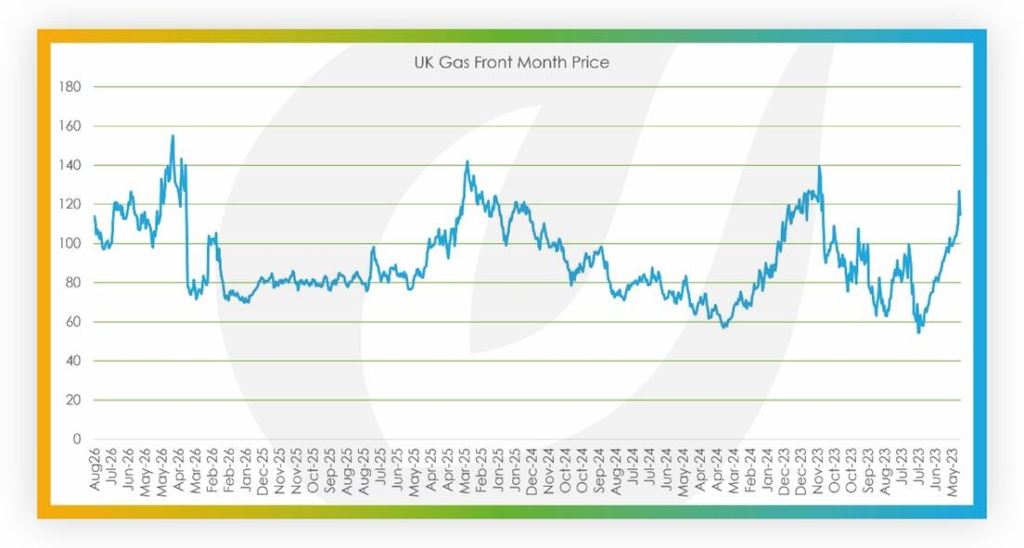
The chart illustrates how quickly market conditions can change, reinforcing the need for buying decisions shaped by risk, timing and strategy; not price alone.
Why is there an expansion in price volatility?
The recent expansion in energy price volatility is largely a legacy of the Russia-Ukraine gas crisis, which has left the gas market more sensitive to supply disruption, geopolitical developments and shifts in demand. Several factors now reinforce that volatility, as outlined below.
Increasing renewable generation, greater interconnectivity and geopolitical instability have also changed the way energy is supplied and traded. This has also attracted more speculative trading activity, which can amplify short-term market movements.
These main drivers can be broken down as follows:
1. Greater exposure to global LNG markets
Europe’s move away from stable pipeline gas has increased reliance on globally traded LNG, making prices more sensitive to international supply risks. Disruption to production or shipping, competition from Asian buyers during periods of high demand, or issues at LNG facilities as far away as the U.S. or Australia can all influence gas prices in the UK.
2. Gas still sets the marginal power price
In the UK power market, lower-cost generation such as renewables and nuclear is used first, but the final market price is often set by the most expensive source needed to meet demand. Because that source is frequently gas, movements in gas prices continue to feed through into power prices.
3. Weather and Renewables Dependence
A transition to cleaner energy is susceptible to supply fluctuations based on weather conditions, such as wind speeds and solar hours. When wind or solar output dips, gas-fired generation often fills the gap.
4. Storage reserves
The market remains highly sensitive to gas storage levels, whether that is the pace of refilling over summer or available reserves during winter. Storage acts as an important buffer against unexpected supply disruption, but the UK has had limited domestic capacity since the closure of the Rough Gas Storage facility, increasing reliance on LNG and imports from Europe to top up supply.
What are the main energy buying challenges?
Choosing the right type of energy contract, understanding your objectives and staying informed about market conditions are essential.
There are several areas that can form part of a long-term strategy, including onsite generation and Power Purchase Agreements. However, where organisations continue to import electricity from the grid, they remain exposed to unpredictable and volatile commodity markets.
Using Flexibility to Manage Market Risk
Unlike fixed contracts that tie you to a single rate, flexible contracts create opportunities to buy strategically, respond to price dips, and protect your budget from unnecessary risk.
The right hedging strategy can help secure prices for part of your energy demand while leaving room to benefit from future market falls.
Organisations need to make decisions in line with a clear, robust and realistic strategy that reflects their objectives, risk appetite and operational requirements. That means balancing certainty, flexibility and wider business priorities.
If you would like to understand the price drivers and how to manage the risk, please join our Energy Market Outlook webinar in late September/early October. To view our previous webinars, please visit eic.co.uk.
This article appeared in the July/August 2026 issue of Energy Manager magazine. Subscribe here.
