


ESOS Phase 3 in review: Practical lessons for a smoother Phase 4

The Energy Savings Opportunity Scheme (ESOS) Phase 3 introduced several changes that increased the complexity, time and cost of compliance for many organisations. These included a reduced de minimis threshold, the introduction of energy intensity matrices, mandatory Action Plans and annual progress reporting. Late-evolving guidance and stretched internal and external resources compounded these changes, leading to duplication of effort and increased delivery risk.

Whatโ€™s changing from Phase 3 to Phase 4?

For Phase 4, only minor changes have been announced to date. No major structural changes to the ESOS framework have been confirmed, providing continuity and allowing organisations to apply lessons learned from Phase 3 rather than adapt to a fundamentally new scheme.

Key lessons from Phase 3

Phase 3 showed that challenges rarely stem from the technical requirements themselves. Instead, issues most often arose from timing, data quality and unclear ownership. As organisations enter Phase 4, these lessons provide a clear opportunity to reduce risk and extract greater value.

  • Late engagement and compressed timescales. Many organisations delayed engagement until the compliance year, leaving insufficient time for audits, data validation and approvals. ESOS audits can be carried out at any point during the four-year cycle. Organisations that started earlier benefited from higher-quality audits, fewer data gaps and more opportunity to implement savings before the deadline.
  • Poor data quality and unclear ownership. Poor or unverifiable data was a major cause of delay and rework in Phase 3. Issues around organisational boundaries, missing energy data and unclear accountability reduced confidence in recommendations. Strong performers invested time early in defining scope, validating data and assigning clear responsibility for data collation and sign-off.
  • Action Plans treated as compliance-only. The introduction of Action Plans was a positive step, but plans created purely to meet compliance requirements often failed to gain traction. Where audits were completed early and aligned with wider business priorities, Action Plans became effective delivery tools, supporting capital planning, Net Zero strategies and operational decision-making.
  • Weak governance and accountability. Strong governance consistently led to smoother outcomes. Early director engagement, clear accountability and structured progress tracking reduced compliance risk and improved confidence. JRP Solutionsโ€™ Phase 3 assessments identified 1,055 energy efficiency opportunities, equating to approximately ยฃ29.56 million in potential savings, highlighting the value available when governance supports delivery.

When things went wrong: Phase 3 enforcement

Phase 3 saw increased enforcement activity from the Environment Agency. Late submissions increased risk, errors required resubmission and enforcement action rose, with 36 financial penalties issued at the time of reporting.

Indicative penalties included:

  • Up to ยฃ5,000 for record-keeping or notification breaches
  • Up to ยฃ50,000 plus ยฃ500 per day (capped at ยฃ40,000) for failure to complete audits
  • Total potential exposure of up to approximately ยฃ90,000, excluding publication and enforcement costs

This reflects greater scrutiny, reduced tolerance for delays and clearer expectations going into Phase 4.

How organisations made ESOS Phase 3 work for them, with support of JRP

  • Greencore (Food and Drink Manufacturing). A large multi-site food manufacturer audited 15 sites, identifying 100 opportunities, with 70 implemented. Behaviour change was a major opportunity alongside technical measures. Despite challenges around data quality, increased production and competing priorities, the programme delivered ยฃ6.3 million per year in identified savings, an 18% potential energy reduction and over 15,000 tCOโ‚‚e in emissions reductions. Phase 4 will focus on earlier engagement, improved data quality and clearer ownership.
  • Circle Health Group (Healthcare). A large private healthcare provider with around 50 UK sites audited nine representative sites. Implemented measures have already delivered over ยฃ600,000 per annum in savings and reduced emissions by 488 tCOโ‚‚e, with further opportunities identified totalling ยฃ2.2 million in annual savings. Phase 4 priorities include early engagement, regular progress reviews and earlier implementation.

Preparing for ESOS Phase 4

  • Get your house in order. Engage an experienced ESOS Lead Assessor early, ensure auditors understand your sector and confirm organisational structure and site portfolios at the outset. Early director engagement helps avoid sign-off delays.
  • Data is your most valuable asset. High-quality, verifiable data is critical. SECR and GHG reporting can provide a strong starting point, but boundaries, metrics and asset data must be clearly defined. Poor data significantly increases risk and rework.
  • Maximise ESOS as an opportunity. Complete audits early to enable implementation and savings. Align ESOS with Net Zero and wider business objectives, review opportunities from previous phases and ensure Action Plans are realistic, prioritised and delivery-focused.

How JRP supports Phase 4

JRP delivers ESOS Phase 4 as a structured, proportionate programme that adds value beyond compliance. With experience across all ESOS phases, JRP focus on early readiness, robust data and delivery-focused Action Plans. JRP can also help you implement your plans.

To receive a tailored ESOS Phase 4 Readiness Checklist, email info@jrpsolutions.com with โ€œESOS Readiness Checklistโ€ in the subject line and your company name in the email body.


This article appeared in the March 2026 issue of Energy Manager magazine. Subscribe here.
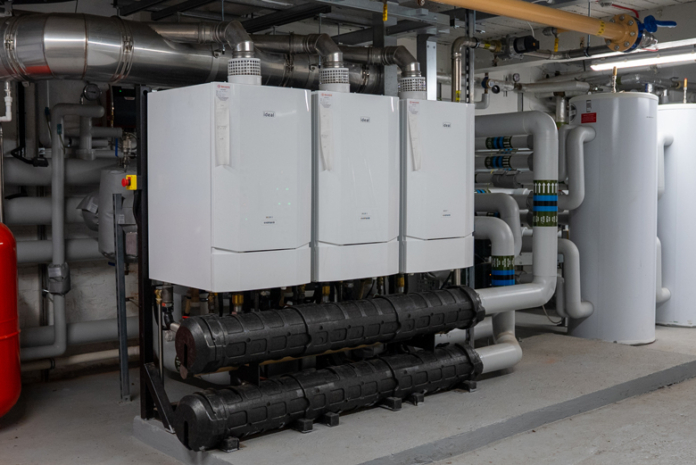
Maximising the efficiency of commercial boilers

Charlie Mowbray, Senior Product Manager, Ideal Commercial Heating

While modern condensing boilers are designed to achieve high levels of efficiency, their real-world performance can vary dramatically depending on system design, maintenance and method of operation.  Here we explore several key factors that influence commercial boiler efficiency and how best practice can help achieve optimal results.

System Cleanliness

Over time, heating systems naturally accumulate debris, sludge and particles from corrosion which can restrict water flow and reduce heat transfer, forcing boilers to work harder to maintain the required output. Poor water quality can also contribute to premature component failure.

When installing a new boiler into an older system, itโ€™s good practice to isolate the new plant from the existing system. Plate heat exchangers provide full separation between the boiler plant and the secondary system, preventing contaminated water from circulating through the new equipment. On the secondary side, system protection can be enhanced with filters, strainers, or air and dirt separators. These help remove particulate matter and air pockets, improving the overall efficiency of heat transfer. Low loss headers and magnetic low loss headers can also play a role in maintaining hydraulic balance and cleanliness, though they do not provide full separation on their own.

Water Treatment and Corrosion Control

The quality of the water circulating in a heating system has a direct impact on performance. Limescale deposits, for instance, act as an insulating layer within heat exchange equipment, impeding heat transfer. Corrosion, meanwhile, produces debris that can block pipework and strainers.

Adopting a proper water treatment regime is therefore essential. Industry guidance, such as that provided in the CIBSE and ICOM water treatment publications, should be followed to ensure correct treatments are applied, together with ongoing monitoring and maintenance. Consulting a water treatment specialist can help identify appropriate treatments and filtration systems based on system size, materials and water hardness.

Insulating the Distribution System

Insulating the heating distribution system remains one of the most straightforward and effective efficiency measures. Without adequate insulation, valuable heat energy is lost from pipework, valves and distribution manifolds before it ever reaches occupied spaces.

All accessible sections of pipework and equipment installed in the pipework should be insulated with suitable materials rated for the operating temperature. Where possible, preformed insulation kits for plant items can simplify installation and ensure consistent coverage.

Removing Air from the System

Air trapped within heating systems can have a significant effect on both efficiency and comfort. Air pockets reduce water circulation, create cold spots in emitters and increase noise within pipework. As a result, heating plant may cycle or operate more frequently to maintain the required output, increasing wear and energy use.

During commissioning and maintenance, itโ€™s essential to ensure that all air is removed from the system. Manual bleeding of radiators and emitters, along with the installation of automatic air vents at high points such as risers and on top of boilers, can help maintain stable system operation.

The Role of Regular Maintenance

Even the most advanced boiler will not perform efficiently without proper maintenance. Annual servicing by a Gas Safe registered engineer is essential, both to comply with regulations and to maintain optimal performance. A typical service should include inspection of combustion settings, cleaning of heat exchangers, checks on flue integrity, and verification of control function.

Regular maintenance also provides an opportunity to identify emerging issues before they develop into major problems.

Smart Controls and Energy Management

Installing appropriate time and temperature controls ensures that the system only delivers heat when and where it is needed. Weather compensation controls can further enhance efficiency.

For large sites or multiple-boiler installations, incorporating the heating system into a wider building or energy management platform can yield further efficiency gains. Energy management systems enable real-time monitoring of energy use, boiler sequencing, and performance trends. They can identify periods of high demand, highlight anomalies, and support predictive maintenance strategies.

Building Knowledge Through Training

The efficiency of a commercial boiler system depends not only on the technology itself but also on the people operating it. Building managers and maintenance staff should understand how to manage controls, interpret operating data and perform routine checks effectively.

A Smarter Approach to Efficiency

With energy prices high and carbon reduction now a defining goal of building management, optimising the performance of commercial boilers makes sound operational and environmental sense. Whether through effective system design, routine maintenance, or intelligent control, each improvement contributes to lower emissions, reduced costs, and a more sustainable built environment.

idealcommercialboilers.com


This article appeared in the March 2026 issue of Energy Manager magazine. Subscribe here.
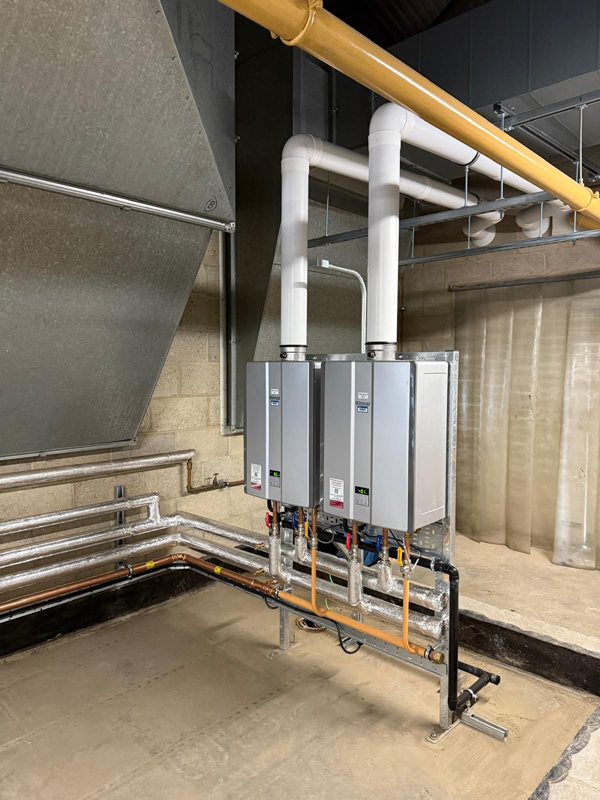
Arcus installs Rinnai high efficiency water heaters to replace storage and lower onsite carbon at major superstore

Interested in replacing storage and lowering onsite carbon? Contact the Rinnai design team today https://www.rinnai-uk.co.uk/contact-us/help-me-choose-product

Arcus is one of the UKโ€™s leading FM companies offering a total maintenance and service solution via 1000s of multi-skilled and specialist engineers on the road, supporting an ever-growing list of nationally branded companies which operate in all retail sectors โ€“ superstores, supermarket chains, hotels, homewares, retail banks plus individual healthcare, business parks and online retail concerns.

The company recently completed the installation of 2 x Rinnai 1600 models at a superstore retailing grocery & fresh produce and on-site baked goods. The units โ€“ temperature accurate and capable of producing on demand over 1000 litres per hour โ€“ were replacing an old, traditional gas-fired calorifier. The two Rinnai units now meet and exceed all on site hot water needs whilst also significantly reducing the risk of legionella.

โ€˜Ashley Eaton of Arcus FM was leading the installation team doing a superb jobโ€™,  says Rinnaiโ€™s Harry Barton, adding, the site now has a reliable and robust hot water system supplying all needs on-demand. The Rinnai units will improve energy efficiency, reduce carbon emissions with a more compact, space-saving and easily serviceable configuration.

โ€œWe are pleased to assist Arcus FM with a solution that helps drive both operational reliability and sustainability for one of the UKโ€™s leading supermarket chains that has annual sales in excess of ยฃ35Billionโ€™

The bespoke Rinnai system has been designed not only to lower onsite carbon due to its expansive range of modulation, but the system is also configured to assist the superstore with ongoing compliance. The Rinnai system is specified with a bespoke unvented system expansion and valves giving the site G3 compliance.

The system is also set at 65 degrees with a hot water delivery capability accurate within 1 degree of this setpoint, thus assisting that legionella risk is minimised. Finally, the Rinnai system can be configured to integrate with any onsite BMS.

Find out more about Rinnai solutions in superstores across the UK https://www.rinnai-uk.co.uk/about-us/case-studies/supermarkets

Arcus FM is an award-winning full-service facilities management company self-delivering over 80% of its services across the UK. The company has a fleet of over 1000 multi-skilled and specialist engineers and technicians on the road, supporting a growing list of national customers and their ever-expanding needs. From mechanical and electrical to cleaning and customer service, Arcus FM is available 24/7 365 days, being there to serve customersโ€™ needs.

Arcus FM is a technical-led facilities management expert that uses in-house developed technology to support all its services, offering customers faster response times and higher first-time fix rates. This blends well with the capabilities of Rinnai which can deliver products anywhere in the country next day and offer round the clock technical support.

                       Find out more about Rinnai today www.rinnaiuk.com

**************************************************************

RINNAI OFFERS CLEAR PATHWAYS TO LOWER CARBON AND DECARBONISATION PLUS CUSTOMER COST REDUCTIONS FOR COMMERCIAL, DOMESTIC AND OFF-GRID HEATING & HOT WATER DELIVERY  

www.rinnai-uk.co.uk/about us/H3

  • Rinnaiโ€™s range of decarbonising products – H1/H2/H3 – consists of hot water heating units in gas/BioLPG/DME, hydrogen ready units, electric instantaneous hot water heaters, electric storage cylinders and buffer vessels, a comprehensive range of heat pumps, solar, hydrogen-ready or natural gas  in any configuration of hybrid formats for either residential or commercial applications. Rinnaiโ€™s H1/2/3 range of products and systems offer contractors, consultants, and end users a range of efficient, robust, and affordable low carbon/decarbonising appliances which create practical, economic, and technically feasible solutions. 
  • Rinnai is a world leading manufacturer of hot water heaters and produces over two million units a year, operating on each of the five continents. The brand has gained an established reputation for producing products that offer high performance, cost efficiency and extended working lives. 
  • Rinnai products are UKCA certified, A-rated water efficiency, accessed through multiple fuel options and are available for purchase 24/7, 365 days a year. Any unit can be delivered to any UK site within 24 hours.
  • Rinnai offer carbon and cost comparison services that will calculate financial and carbon savings made when investing in a Rinnai system. Rinnai also provide a system design service that will suggest an appropriate system for the property in question.
  • Rinnai offer comprehensive training courses and technical support in all aspects of the water heating industry including detailed CPDโ€™s.
  • The Rinnai range covers all forms of fuels and appliances currently available – electric, gas, hydrogen, BioLPG, DME solar thermal, low GWP heat pumps and electric water heaters More information can be found on Rinnaiโ€™s website and its โ€œHelp Me Chooseโ€ webpage. 

RINNAI FULL PRODUCT AVAILABILITY 24/7 FOR NEXT DAY DELIVERY of ALL HOT WATER HEATING UNIT MODELS INCLUDING 48-58kW UNITS-

SAVINGS OF-

15% REDUCTION in carbon

20% REDUCTION of Opex Cost,

30% REDUCTION of initial cost

75% REDUCTION of space

Visit www.rinnai-uk.co.uk Or email engineer@rinaiuk.com  


This article appeared in theย April 2026ย issueย of Energy Manager magazine. Subscribeย here.

Communal heat pumpsย can undercut gas boilers onย runningย cost, major report revealsย 

The UK can finally ditch its addiction to volatile gas prices, with a new report showing that clean heat networks are on track to be cost competitive with gas boilers.

The landmark Clean Heat 2040 report from ADE: Heat Networks, the UKโ€™s largest non-profit trade body for the heat network sector, reveals that by the time you factor in revenues from flexibility, lower delivery costs and the benefits of re-investment, the cost of running a heat network becomes cost competitive with a traditional gas boiler.

A heat network is central heating for your whole neighbourhood or even city. A network of insulated pipes carrying hot water from a single source โ€“ a large-scale heat pump, a river, an old mine, even the waste heat from a data centre – into people’s homes. It means one efficient system instead of hundreds of individual boilers.

Starting from a baseline cost, the Clean Heat 2040 report shows how flexibility revenues, lower delivered electricity costs and smart operation combine to push heat network costs below those of the gas boiler sitting in most UK homes today. By electrifying heat and connecting it to thermal storage, heat networks can soak up cheap renewable power when the wind blows and prices tumble. They become a giant thermal battery for the grid, mopping up excess power and releasing heat when needed. That flexibility cuts costs for everyone, even those not on a heat network.

Chris Unsworth, Head of ADE: Heat Networks, said: โ€œWe are flushing money and energy down the pipes. We let heat from data centres vanish into thin air and switch off our wind turbines while millions struggle with bills. This report proves that clean heat can be cost competitive with gas, but only if the Government starts treating heat networks like the essential infrastructure they are.โ€

The report sets a path to 2040, outlining how the sector can attract ยฃ100bn of investment and create 100,000 jobs. But it warns that without urgent Government action, this opportunity will be lost. It calls on the Treasury to create a proper incentive for households and businesses to switch and on ministers to give heat networks the same long-term investment support as technologies like nuclear.

With the right leadership, the UK can build an economy of networked heat that ends our exposure to gas volatility once and for all. 

https://www.theade.co.uk

The silicone shield: Why next-gen data centre construction starts with the roof

Errol Bull

Errol Bull, P.E., CSI, Application Development Leader at Momentive Performance Materials Inc. Member: IIBEC, ASTM C24, ISO TC59/SC8

In the world of data centre construction, the conversation is dominated by what happens inside the building. After all, thatโ€™s where youโ€™ll find the high-performance computers and liquid cooling loops as energy managers discuss rack density and chip efficiency.

But thereโ€™s an equally important part of the energy equation missing โ€“ and one that provides the first line of defence against the elements.

The building envelope is frequently overlooked, yet it has a significant impact on operational efficiency. For those tasked with driving down Power Usage Effectiveness (PUE) and extending asset lifecycles, the roof is more than just weatherproofing โ€“ it is an active component that plays a key role in energy usage.

Specifying high-performance options like reflective silicone coatings is a strategic design choice that influences cooling loads and long-term ROI.

Solving the Energy Equation

Cooling is often one of the largest operating expenses for data centres, sometimes accounting for up to 40% of a facilityโ€™s total energy consumption. In the push for a lower PUE, construction teams often look inward by optimising airflow. However, an effective way to manage heat gain is to prevent it from entering the building in the first place.

Dark roofing materials act as massive heat sinks, absorbing solar radiation and transferring that thermal load directly into the structure. Reflective silicone coatings, designed to create a “cool roof” environment, are the opposite. By creating a white, seamless surface with high Solar Reflectance Index (SRI) values, these coatings provide both solar reflectance and thermal emissivity.

The financial implications can be significant. Industry data suggests that by lowering the ambient thermal load, these coatings can reduce cooling energy expenses by an estimated 10% to 50% depending on the environment. In real terms, this can translate to a 7-15% reduction in annual overall cooling costs. Furthermore, this reduces strain on HVAC systems, potentially allowing developers to downsize infrastructure during construction or extend the lifespan of existing equipment, thereby deferring significant capital expenditure.

The Solar Dilemma

As data centres increasingly integrate on-site solar panels to offset carbon footprints, a new challenge has emerged: the “lifecycle gap.” Solar panels typically have a service life of 25 to 30 years, whereas many traditional roofing membranes may require maintenance or invasive repairs every 7-10 years. This creates a logistical failure where functioning solar arrays must be decommissioned to repair the roof beneath them.

The right silicone coatings bridge this gap. Because silicone is inorganic, it is inherently resistant to UV degradation. When specified correctly, these coatings offer a service life that better aligns with the lifespan of the solar panels. Additionally, they provide the elasticity required to withstand the thermal shock and movement inherent in solar racking systems without cracking or delaminating, helping to create a unified, long-term asset lifecycle.

Protecting Valuable Assets

In a data centre, roof failure is a significant business risk. Water leaks above a server hall can lead to downtime that costs an immense amount of lost time and money. Liquid-applied silicone roof coatings provide a seamless membrane, creating a robust barrier against water ingress. Because it is applied as a liquid, it fills cracks and covers seams, ensuring the envelope โ€“ and the costly technology below โ€“ is protected.

Furthermore, silicone enables a “restore rather than replace” approach. Traditional roof tear-offs are highly disruptive, creating dust and vibration โ€“ two of the greatest enemies of sensitive server equipment. Silicone coatings are compatible with almost all roof types, including metal, single-ply and bitumen. This allows construction teams to save time and money while removing the risk of exposing interior hardware during renovation.

Alongside this, one of the trending topics for Energy Managers is dealing with “Embedded Carbon.” Replacing a roof creates massive waste (Scope 3 emissions); restoring it with silicone helps to delay, and reduce over time, the amount of waste to landfill.

Case in Point: Restoring Efficiency in Mexico

This approach was recently demonstrated for a leading global technology infrastructure provider in Mexico. The facilityโ€™s roof was only six years old, yet the existing single-ply PVC system had failed prematurely due to intense UV exposure and hail damage.

Rather than a disruptive replacement, the team applied a high-performance, 100% alkoxy silicone roof coating over the 170,000 sq. ft. (15,793 m2) surface. The result was a seamless, durable barrier that immediately protected the building. Crucially, the white finish restored the roofโ€™s high solar reflectivity, bringing the facilityโ€™s temperature control capabilities back to an optimal state without losing any uptime.

A Strategic Investment

In an era where data centres are being built at a record pace, the building envelope should be viewed as a performance-enhancing component, not just a shell over expensive circuitry. A reflective silicone coating is a relatively small, strategic investment that provides long-term thermal performance, secures the building and provides a clear pathway to a more sustainable long-term PUE. As we design the next generation of data centres, silicone is an essential choice for a future-proofed facility.

For more information, visit: https://siliconesforbuilding.com/

Kingspan and Zestec launch an innovative funded solar roofing solution for commercial refurbishment projects

Kingspan and Zestec have launched a funded solar roofing solution for commercial refurbishment projects.

Kingspan, a global leader in high-performance building envelope systems, has partnered with Zestec Renewable Energy, a wholly owned business within Octopus Energy Generation funds, to deliver a groundbreaking solution for building owners: funded solar roofing for refurbishment projects. This innovative approach combines roof renovation with integrated solar PV technology, enabling owners to future-proof their assets without the burden of significant upfront capital expenditure.

Ageing roofs often prevent building owners from capitalising on the benefits of solar. This new combined offering addresses this challenge head-on by integrating roof refurbishment with renewable energy generation. Using PowerPanel, owners can replace or overclad existing roofs with FM-approved insulated panels that incorporate advanced photovoltaic technology. These systems deliver exceptional thermal performance, fire safety, and energy output, up to 475 Wp per module, while enhancing the buildingโ€™s aesthetics and market appeal.

Kingspanโ€™s technical excellence underpins the solution. QuadCoreยฎ insulation technology delivers U-values as low as 0.11 W/mยฒยทK, improving thermal efficiency and compliance with evolving regulations. PowerPanel is tested to FM 4478 standards, confirming resilience against fire, wind uplift, hail, and structural loads.

For projects where over-cladding is the preferred route, Kingspan also offers the Elite Refresh Roof System, designed to work seamlessly with solar PV installations. This system maintains coating warranties, meets stringent fire classifications, and provides a lightweight, durable solution for extending roof life while enabling renewable energy generation.

At the heart of this solution is a flexible Power Purchase Agreement (PPA) model. Under this model, Zestec funds 100% of the solar PV installation, along with a significant proportion of any roof upgrades aligned to the overall project investment, often covering the entire project value.  Where total project costs exceed the maximum investment criteria, the building owner contributes the remaining balance, creating a pragmatic partnership that unlocks both renewable generation and critical building upgrades.

Rather than funding the full project cost upfront, building owners simply purchase the solar electricity generated and consumed on-site at predictable rates below market prices. This PPA structure delivers immediate cost savings, long-term price stability and increased energy resilience, while removing traditional financial barriers to investing in on-site renewable infrastructure.

Zestec takes responsibility for the entire project lifecycle, spanning design, funding, installation and long-term operations and maintenance, simplifying delivery and materially reducing complexity and risk for building owners. Underpinned by Octopus Energy Generationโ€™s long-term investment strategy, the model prioritises quality, safety and performance over the long term, providing lasting reassurance and alignment for clients and building owners alike.

Beyond energy savings, this approach strengthens ESG credentials, improves EPC ratings, and enhances asset valueโ€”critical factors for attracting tenants and investors. By combining refurbishment with renewable energy, building owners can demonstrate a tangible commitment to sustainability while mitigating the risk of stranded assets.

“Our Renovate + Generate approach is designed to remove barriers for building owners who want to upgrade their assets and embrace renewable energy,” said Phil Smith, Managing Director at Kingspan Insulated Panels. “By partnering with Zestec, we can offer a funded model that makes critical refurbishment projects financially accessible while delivering long-term performance and sustainability.”

This partnership is about removing the structural barriers that have historically held back both roof refurbishment and on-site solar,โ€ said Simon Booth, CEO of Zestec Renewable Energy. โ€œBy combining Kingspanโ€™s roofing expertise with our long-term funded PPA model, weโ€™re enabling building owners to upgrade critical infrastructure and access lower-cost, clean energy through a single, trusted solution backed by Octopus Energy Generation.โ€

Kingspan and Zestecโ€™s collaboration represents a new era in building refurbishment. With a funded model, technical expertise, and long-term operational support, owners can transform their roofs into energy-generating assetsโ€”without compromising budgets or timelines.

For full details please contact:

UK: +44 (0) 1352 716100  

IRE: +353 (0) 42 9698 500 

Web: https://www.kingspan.com/gb/en/campaigns/innovative-solar-roofing-solutions/  

LinkedIn: https://uk.linkedin.com/company/kingspan-insulated-panels


This article appeared in the March 2026 issue of Energy Manager magazine. Subscribe here.

Hybrid heating systems: transitional technology or long-term solution?

Griff Thomas

Griff Thomas, Executive Director of Energy Transition and External Affairs at United Infrastructure and Managing Director at GTEC Training

As the push to decarbonise the built environment accelerates, hybrid heating systems are attracting more attention. For the commercial property sector, which is facing tighter carbon targets, rising energy costs, and increasing regulatory pressure, an important question remains: are hybrid systems simply a transitional measure on the road to net zero, or a viable long-term solution in their own right?

In my view, hybrid heating systems are more than just a stopgap. Unlocking their real value depends on a clear understanding of how they work, careful deployment, and aligning them with broader energy and carbon goals.

Understanding hybrid heating systems

A hybrid heating system usually combines a renewable technology (most commonly a heat pump) with a traditional fossil-fuel-based boiler. The system is designed to switch between heat sources to optimise for efficiency, carbon emissions, and cost, depending on demand, external conditions, and energy prices.

In commercial buildings, hybrid systems typically run heat pumps when conditions allow, switching to boilers when demand is high or temperatures drop sharply. While this flexibility is seen as a benefit, it raises debate about whether hybrids offer a realistic approach or delay the switch to full electrification.

Why hybrids matter now

The commercial property sector accounts for a large portion of built environment emissions, and decarbonising heating in this space presents a tough challenge. There are three key reasons why hybrid heating systems have become more appealing for facilities managers, engineers, and sustainability leaders:

1. Practical pathway to reduced carbon emissions

While heat pumps are an efficient renewable option, their performance can suffer in extreme cold and installing them in existing commercial buildings can be complicated and costly. Hybrid systems provide a more pragmatic route, enabling organisations to use heat pumps for a large share of their heating needs while utilising boilers for peak demand.

This step-by-step approach can make a real difference. For buildings with fluctuating or high heat loads, hybrids can significantly reduce emissions today instead of waiting for full electrification to become practical.

2. Mitigating risk and cost volatility

Energy markets are still unpredictable, with gas prices, grid limitations, and balancing costs all putting pressure on commercial energy spend. Hybrid systems help manage this uncertainty by intelligently switching between energy sources to balance costs and performance. As tariffs fluctuate, this adaptability can provide a mix of financial and environmental resilience.

When electricity is cheap, such as when renewable energy is ample, the heat pump does most of the work. When prices go up and demand is higher, the boiler takes over to keep costs down and homes comfortable.

3. Easing the transition to full electrification

Hybrid systems may not be the end goal, but they are an effective way to move forward. They make it possible to phase out fossil heating gradually, spread investment, and give operators space to build confidence with new technologies. This transition aligns more naturally with how commercial organisations tend to manage budgets and risk.

Rather than an all-or-nothing shift to electrification, hybrids offer a sensible middle ground that cuts carbon without disrupting day-to-day operations.

Commercial sector challenges and hybrid solutions

That said, decarbonisation goes beyond new technology and depends on broader systemic change and well-informed decisions at every level.

Technical complexity and skills gap

Hybrid systems are inherently more complex than single-source systems. They require sophisticated controls, robust commissioning, and knowledgeable operators. Unfortunately, the commercial heating sector faces a significant skills gap. Many engineers have deep experience with boilers, but limited exposure to heat pumps and hybrid logic.

This is where skills development becomes strategic. In order to take full advantage of hybrid technology, training requires emphasis on both the technical installation of hybrid systems and the operational understanding and optimisation required to deliver real performance gains.

System integration and building context

Every commercial property is different, and hybrid system design should account for building fabric, occupancy patterns, existing plant, and future flexibility. Off-the-shelf solutions are rarely sufficient. Instead, integration with data from building management systems (BMS), weather forecasting, and predictive analytics can unlock the true potential of hybrids.

Buildings with poor insulation or large distribution losses may experience reduced returns from heat pumps unless fabric improvements go hand-in-hand with technology upgrades. When the two are viewed holistically, hybrid systems become one element within broader decarbonisation planning.

A long-term role, not a short-term fix

So, are hybrid heating systems transitional technology or a long-term solution? The answer is both.

As a transitional technology, hybrids provide a feasible route to immediate carbon reductions while accommodating existing infrastructure and market realities. They buy valuable time, reduce risk, and help estate managers align with near-term regulatory deadlines.

As a long-term solution, hybrids will be relevant for years to come in many commercial contexts. Particularly in mixed-use facilities, sites with diverse load profiles, or buildings where full electrification is financially impractical today, hybrid systems can offer sustainable efficiency and resilience.

The future of commercial heating wonโ€™t follow a single template. It will be shaped by a mix of technologies that are smart, flexible, and able to adapt to different buildings and needs. Hybrid systems capture this approach by connecting existing infrastructure with the low-carbon solutions that are coming next.

As part of the wider decarbonisation effort, hybrid heating plays a practical and strategic role. Its benefits go beyond cutting emissions, helping organisations stay flexible, manage costs, and build the skills needed across the industry.

To realise their full potential, we must invest in people as much as technology, empowering engineers, designers, and estate managers with the knowledge to design, operate, and optimise hybrids effectively.

Decarbonisation is a marathon, not a sprint. Hybrid heating systems give us both a sensible pace and a sustainable path forward, so letโ€™s make them count.


This article appeared in the March 2026 issue of Energy Manager magazine. Subscribe here.
Norwichโ€™s Eaton Park Pavilion scores bespoke Baxi heat pump solution to kick-off decarbonisation plans

A tailored Baxi air source heat pump (ASHP) solution is supplying low-carbon heating and hot water at Eaton Park Pavilion, a Grade II-listed building at the heart of one of Norwich City Councilโ€™s most popular parks.

The century-old historic pavilion has recently undergone an extensive refurbishment project to provide upgraded, modern, Football Association-compliant sports changing facilities. This includes new individual showering cubicles, toilets and officialsโ€™ rooms.

The improvements ensure the pavilion meets the highest standards of inclusivity, with the aim to boost participation of women and girls in sports within the park.

In keeping with Norwich City Councilโ€™s 2030 net zero goal for council operations and a 2045 target for the entire city, the listed building has received a substantial decarbonisation investment with building fabric and ventilation upgrades as well as solar PV panels and battery storage.

The project was designed by Jonathan Gray at M&E Consultancy JD Gray Associates Ltd, working with Chaplin Farrant Architects. Baxi provided technical and product support as well as commissioning to help achieve a successful heating and hot water solution that meets the project requirements.

Heating and hot water at the refurbished pavilion are now provided by the Baxi all-electric solution, comprising:

  • Two roof-mounted Baxi HP50 13 kW ASHPs
  • Two buffer vessels
  • Two Baxi 300 litre ASHP cylinders.

Jonathan said: โ€œOne of the factors to consider was the size and placement of the ASHPs. Due to its heritage and distinctive architectural design, the pavilion is frequently photographed by both cameras and drones. As the ASHPs needed to be roof-mounted, a key design parameter of the council was to keep visibility of any of the kit on the roof minimal above the pavilion balustrade.

โ€œWhen researching this project, I also had a session with the Baxi technical solutions team, which proved extremely useful. Critically, the Baxi heat pump that we selected was actually a good six inches lower than the one weโ€™d considered up to that stage. And as this was to be a packaged heat pump and hot water plant, we selected the Baxi ASHP cylinder as well.โ€

With four football matches held consecutively at Eaton Park on both Saturdays and Sundays, the solution needed to meet high simultaneous demand for domestic hot water for the post-match showers. The challenge from an engineering perspective was designing a heat pump system capable of ensuring sufficient hot water as efficiently as possible, even on a cold winterโ€™s day.

Jonathan added: โ€œUsing large-volume hot water storage was not an option due to plant room space limitations. Instead, working with Baxiโ€™s technical solutions team, we explored different ways of using PV panels and battery storage with the heat pumps. The aim was to accumulate and store low-carbon energy for use at times of peak load.

โ€œWe established that we could accommodate 66 solar panels on the roof, which would be sufficient to charge two 8 kW batteries ahead of the weekend. The technical advice Baxi provided and their analysis of the different schematic options were invaluable.โ€

The pavilionโ€™s solar PV panels generate electricity throughout the week to charge the batteries. When the batteries are full, the control divertor panel detects this and diverts the excess energy into the immersion heaters in the hot water tank.

The heat pumps then use the stored solar energy to heat water, which is held in the buffer tanks. Hot water is drawn from these stored cylinders when needed. Low-temperature fan convectors use the stored heat from the heat pumps to provide space heating within the pavilion.

By prioritising solar power, the solution reduces reliance on grid electricity and lowers bills by converting surplus energy into heat.

โ€œAccurate control and ongoing energy monitoring are critical to ensuring the success of any heat pump system,โ€ added Jonathan. โ€œRemote access via the web allows the council to monitor energy consumption easily and control the time periods for the heating of hot water. Extension timers mean that the system can be brought on quickly if there is any out-of-hours or out-of-program use required.

โ€œAnd, of course, the ability to monitor remotely also means we can keep an eye on how the system is operating and identify potential ways of optimising performance through time-of-use tariffs.โ€

Richard Green, project co-ordinator in parks and open spaces, climate and environment at Norwich City Council, said: โ€œWe were already familiar with Baxiโ€™s boiler solutions and are extremely pleased with our all-electric heat pump heating and hot water solution at the pavilion. Itโ€™s been running issue-free for the last four months now. This is a great project that successfully meets sustainability objectives โ€“ and it looks good too!

โ€œWorking with Jonathan, we will continue to monitor energy performance at the pavilion closely to maximise the benefits of this system and identify the most suitable electrical tariffs for us.โ€

Shane Suter, commercial business director at Baxi, said: โ€œAs local authorities and councils work towards tighter climate goals, decarbonising heat across their building estate and operations is a natural target to reduce their carbon footprint. Heat pumps are a proven technology, but the challenge is to strike the right balance between financial and environmental sustainability.

โ€œWe are proud that the technical design service and product support we provided on this project helped identify and deliver the right outcome for Norwich City Council at this iconic UK landmark.โ€

Project team

  • Client: Norwich City Council
  • Architect: Chaplin Farrant
  • Mechanical Design: Jonathan Gray at J D Gray Associates
  • Contractor: P J Plumbing and Heating
  • Heat pump solution provider: Baxi

Discover more about Baxiโ€™s portfolio of energy-efficient and low-carbon heating and hot water solutions.

Why ‘wasted’ public sector land could be a renewable energy revenue generator

Ben Wallace

Ben Wallace, Development Director, AMP Clean Energy

The UK Government has set an ambitious goal to achieve a clean power system by 2030. This will involve the development of a huge amount of renewable infrastructure, including a significant increase in wind and solar capacity.

Due to the intermittency of renewables, energy storage is also set to play a huge role in supporting this goal, to first capture renewable power on windy days, then export it when itโ€™s cold and dark – delivering both a low carbon and a secure energy system.

Energy storage takes many forms, and we have seen plenty of high-profile grid-scale assets being developed. These projects can be hundreds of megawatts, covering dozens of acres.

The big projects help to balance our electricity system at a national level, but our local electricity networks also have an urgent need for reinforcement and support as we connect heat pumps and electric vehicles. Therefore, smaller scale and local energy storage projects are also set to play a vital role in our clean energy future.

This presents a unique opportunity for local authorities and other public sector bodies. How? By turning small plots of unused land into sites for a small Battery Energy Storage System (BESS).

The energy storage opportunity

Local authorities will play a vital role in the road to net zero.

However, when it comes to spending on sustainability, local councils and other public sector bodies are under intense scrutiny.

Many local councils are also, sometimes unknowingly, sitting on a huge amount of โ€˜orphanedโ€™ land that canโ€™t be used for anything productive. These can include grass verges, sites such as small parcels of land between buildings, or even unused car parking spaces.

These sites often have little or no development potential and can be expensive to maintain. However, innovations in energy storage technologies mean that this surplus land could be given a new lease of life by installing a small BESS.

Doing so benefits local councils in three key ways:

  1. Supporting sustainability plans and economic growth – many local authorities are leading the way with plans to reduce their impact on the environment through carbon emissions reduction initiatives. Energy storage provides a way of supporting these plans, particularly when budgets are under scrutiny, to both meet climate goals and support economic growth. For example, independent estimates show that one of our Battery Box storage facilities saves around 160 tonnes of CO2 per year.
  1. Providing renewable power to local networks and supporting grid resilience – as we make the transition to renewable power, energy storage will be crucial to maintaining security of supply in local areas by preventing power cuts, particularly during times of low wind and solar output. And, by reducing the amount of investment needed to upgrade local networks, it can reduce the impact to bills.
  1. Proving the opportunity to earn long-term income – perhaps most importantly, installing a small scale asset on a piece of unused land comes at no cost to a local council. Rather, it provides a source of long term indexed rental revenue that can be reinvested in local communities.

Making the most of โ€˜wastedโ€™ land

So, if a local authority has a suitable piece of land, how does a small-scale asset work?

Each BESS connects directly into the local electricity network, the same network that supplies homes, businesses, schools, and hospitals. Needing just 24m2 of land, they charge when the cost of electricity is low, which is normally on windy or sunny days when there is excess renewable power, or overnight when the demand for power is reduced.

They then discharge electricity back into the local network when the demand for power is high, normally early evenings or weekdays.

Being small and connecting locally means they can be built almost anywhere. We are working with many local councils to deliver projects, having signed leases with over a dozen local authorities and organisations such as the Canal and River Trust and the National Football Trust.

Towards a secure and sustainable energy future

Small-scale distributed energy storage will play a vital role in supporting the roll out of renewable energy and the increase in electrification. For local authorities with surplus unused land, this presents a real opportunity to not only lower emissions, support the low-carbon transition and help local economic growth, but to also earn long-term revenue. A win-win for everyone.

For more information about AMPโ€™s Battery Box technologies, visit https://www.ampcleanenergy.com/grid-flexibility/battery-box/


This article appeared in the March 2026 issue of Energy Manager magazine. Subscribe here.

Switching on to local and community energy: Planning local power

Tom Elliott

Tom Elliott, Senior Energy Transition Advisor at Energy Systems Catapult

Great British Energy aims to turn the energy transition into a major economic opportunity for the UK. This is a rallying cry for community energy groups, local authorities and innovators that want to access support for energy projects that create value locally.

Success goes beyond reaching carbon targets. Itโ€™s about building modern, resilient energy systems. And it requires new delivery models, collaboration and ways of mobilising investment โ€“ opening the door to community benefit and shared ownership.

While project design and implementation can be complex, Energy Systems Catapult has spent the last decade helping local authorities, communities, innovators and industry navigate the process, turning opportunity into reality.

Three initiatives weโ€™ve worked on stand out:

These show how local generation and smarter approaches to matching local demand are already helping places and innovators unlock the economic, social and system benefits at the heart of Great British Energyโ€™s mission.

SLES: Creating Investable, Scalable Local Energy Markets

One of the most powerful opportunities in the energy transition lies at the local level. Smart local energy systems (a way to bring together different energy assets and infrastructure in a local area and make them operate in a smarter way) can reduce bills, create skilled jobs and unlock opportunities for public ownership. Yet many local authorities and community energy innovators face fragmented markets and unclear routes to scale.

Great British Energyโ€™s strategy recognises this challenge and places strong emphasis on โ€˜GBE Localโ€™, a commitment to empower communities, support local authorities and ensure that the benefits of clean energy flow directly to people and places.

Through the Prospering from the Energy Revolution (PfER) programme, the Catapult evaluated 25 pioneering smart local energy systems projects across the UK. From this, we identified five emerging business models that make local energy systems more investable, scalable and replicable:

  • marketplace models that connect local projects with investors
  • local energy markets that link local generation with local demand
  • local flexibility markets that reduce grid constraints
  • virtual network management approaches that optimise local energy flows
  • anchor asset models that derisk emerging technologies such as heat networks, electric vehicle (EV) hubs and storage

These models demonstrate how local authorities and communities can take on different roles โ€“ convenor, investor and operator โ€“ depending on their capacity and ambition. They also show how to structure partnerships that deliver real community benefit and unlock wider social and economic value.

UCEGM: Turning local ambition into delivery

Cities and regions across the UK have ambitious Net Zero plans, but many struggle to turn strategy into delivery. Barriers include limited access to capital, complex procurement processes and uncertainty around commercial viability. Yet the economic opportunity is enormous. Local clean energy projects can create skilled jobs, reduce long-term energy costs and stimulate local supply chains. Increasing revenue certainty through power purchase agreements (PPAs) is also key to unlocking investable business models.

The UCEGM programme showed what is possible when local ambition meets whole system expertise. Working with five Greater Manchester local authorities, the Catapult helped deliver a coordinated programme that deployed clean energy across the region, alongside the design and validation of PPA business models.

The results speak for themselves:

  • 10 MW of new renewable generation capacity
  • 8,881 MWh of clean electricity generated annually
  • 15 renewable energy assets delivered across the region

These assets included solar panels, battery storage and EV charging infrastructure, demonstrating the breadth of opportunity available when supported by the right expertise.

UCEGM is a powerful example of how public sector leadership, supported by Catapult expertise, can unlock deployment at pace and scale. It also shows how regional collaboration can accelerate delivery and maximise public benefit, a theme strongly echoed in Great British Energyโ€™s strategy.

To build on this success, Great British Energy could provide capital to replicate UCEGM style programmes across the UK, support local authorities to identify investable sites and business models, and enable blended finance approaches that crowd in private investment. Backing regional delivery bodies to coordinate multi-authority programmes would also help accelerate progress.

Local area energy planning and community energy: A powerful delivery partnership

Local authorities often face fragmented governance, inconsistent data and limited capacity, making it difficult to identify where to target interventions. At the same time, community energy groups have the passion and local legitimacy to deliver projects. But they often lack access to high quality data or clear routes to ownership and action.

Great British Energyโ€™s strategy emphasises local empowerment and public benefit, and the Leicestershire CAN demonstrator shows how Local Area Energy Planning (LAEP) and community energy can work together to deliver exactly that.

Leicestershire CAN brought together local government, universities, community partners, energy networks and the Catapult to accelerate Net Zero delivery. The project delivered a full, whole-system LAEP, alongside a Community Energy Pathway developed with Green Fox Community Energy, which built the capacity of local groups and strengthened collaboration across the region.

The link between LAEP and community energy is particularly powerful:

  • LAEP identified hundreds of thousands of potential projects across heat, power, transport and buildings.
  • the LAEP Lens visualisation platform democratises access to this data, giving community groups the same visibility as developers and network operators.
  • the Community Energy Pathway helps groups act on those opportunities, turning insights into real, locally owned projects.

Together, this creates a best practice, replicable model for other regions: LAEP provides the evidence base, and community energy provides the delivery mechanism, ensuring community benefit and empowerment.

Letโ€™s solve it together

Great British Energyโ€™s strategy is a welcome signal of national ambition, but delivery will depend on evidence, capability and practical models that work on the ground.

The Catapult has been supporting the sector to build this foundation.

Weโ€™ve shown how to design, finance and deliver clean energy projects that create jobs, reduce bills and strengthen local economies.

If youโ€™re exploring opportunities aligned with Great British Energyโ€™s mission, whether youโ€™re working for a local authority, a community energy innovator or regional body, the Catapult team would be delighted to discuss how we can support you.

Email us to start a conversation and take the next step: netzero_places@es.catapult.org.uk


This article appeared in the March 2026 issue of Energy Manager magazine. Subscribe here.