

Seven frequently asked questions about drought impacts for business

Photo by Rajesh S Balouria

Following on from the Jan/Feb 2026 issue of Energy Manager, the team at SwitchWaterSupplier.com explore 7 FAQ’s about drought impacts for business.

1. How does water scarcity affect business?

Water scarcity โ€“ where demand outstrips supply โ€“ can have a negative impact on businesses by driving up operating costs, disrupting supply chains (particularly in sectors like manufacturing, agriculture and energy) and even halting production altogether if your operations are heavily reliant on water.

Further costs can also be incurred by adopting specific measures to ensure business continuity if water supplies are interrupted.

Additionally, if supplies continue to see disruption over a prolonged period, business expansion plans can be affected as a result, putting a cap on growth.

You may also see your business reputation damaged if youโ€™re a heavy water user and you arenโ€™t seen to be doing all you can to act sustainably in the face of drought, which can again have an impact on profits.

Failure to proactively manage water usage and consumption can also put you at a competitive disadvantage.

2. How are factories affected by drought?

Factories make heavy use of water for a range of different production processes, including cooling, washing and diluting. When drought conditions arise, operations can either slow or be halted altogether.

For example, in 2018 a heatwave in Europe saw cargo ships struggle to navigate the River Rhine, which led to chemical and pharmaceutical production in Germany dropping by ten percent between September and November.

Elsewhere, in California โ€“ which experienced one of its most severe droughts in history last year โ€“ the stateโ€™s food processing, beverage manufacturing and semiconductor production factories were also badly affected.

Some sites in Silicon Valley, for example, found they had to pay up to 40 per cent more for water than in previous years.

And the energy sector saw hydroelectric output drop by 35 per cent because reservoir levels reached record lows, meaning that California had to then rely more on natural gas and imported electricity, pushing up prices for both consumers and businesses.

Other issues that factories can face as a result of drought include infrastructure damage as a result of soil shrinkage and coinciding subsidence.

3. Which sector will be most affected by drought?

As the biggest consumer of freshwater around the world, using around 70 percent of all freshwater resources, agriculture will be most affected by drought conditions. Most of the water used by this industry goes towards irrigation.

The impact of drought for businesses in this sector includes:

  • Reduced crop yields and lower crop quality
  • Crop failure
  • Stressed plants (which can affect growth and function)
  • Increased feed costs for livestoc
  • Herd size reduction
  • The need to transport water to ensure livestock have sufficient resources
  • Significant financial losses through crop destruction/yield reduction
  • Higher food prices for consumers
  • Supply chain disruption
  • Soil degradation

4. How does drought affect the economy?

As climate change continues to take hold, drought conditions will become more frequent, potentially slowing economic growth, driving migration, affecting tourism and international travel and disrupting transportation networks.

As previously explained, agriculture will be one of the hardest hit by drought, with figures showing that the actor makes up for almost 50 percent of all economic losses linked to drought.

However, energy production can be severely hindered, as well, particularly for hydropower and thermal energy plants, both of which require ready access to water for electricity generation and cooling processes.

In China, for example, which was badly affected by drought in 2022, the Yangtze River saw water levels fall to record lows, forcing Sichuan province to reduce or suspend power supply to thousands of factories.

As for tourism and leisure, any businesses reliant upon water-based activities will see these rendered impossible if water levels drop, which will have an impact on visitor numbers, booking cancellations and inevitable lost income.

Similarly, hotels, shops and restaurants in tourism-dependent areas will be affected, having a significant impact on local economies.

Last year, Sicily was faced with widespread water shortages and tourists were turned away by hotels and guesthouses because basic amenities like showers and toilets couldnโ€™t be guaranteed. The residents themselves had to ration water in response to restrictions, limited rainfall and ageing infrastructure.

5. How does drought affect business decisions?

Considering drought as a risk that will increasingly impact business operations is wise, influencing decisions such as:

  • Location planning and where to build new facilities, taking into account climate risk
  • Reevaluation of supply chains to ensure operations are resilient in the face of drought-related disruption
  • Investment in water-efficient technologies and processes to reduce water consumption
  • Emergency preparedness, with contingency plans developed to safeguard against disruptions (such as ensuring that there are alternative methods of production that can be used)

6. Do businesses have to close if they have no water?

If you donโ€™t have working or running water at your place of business, it is typically not reasonable (or even legal, in some instances) to continue operating, particularly if you work in a sector that requires cleaning of any kind.

For most organisations, water supply disruption will mean a complete halt to operations, but office-based companies may still be able to continue business as usual.

How long a business can stay open without water will, again, depend on the nature of the work being done. Construction companies, for example, will likely have to close within a few hours if water supplies are interrupted.

The reason for the water outage is important to bear in mind. For example, if itโ€™s down to a burst pipe you will need to have this resolved, either by calling the water company to come out and fix it if itโ€™s on their network or by calling your own plumber.

You may also have to arrange alternative working options if working toilets cannot be ensured, as well as providing drinking water alternatives if the taps run dry.

Ultimately, youโ€™ll likely find that if you are unable to provide access to clean running water for washing, drinking or flushing, then youโ€™ll probably be breaching workplace welfare standards

Furthermore, if you operate a sensitive site (such as a medical centre, hospital or veterinary clinic), you will need to have contingency plans in place to prevent downtime if water shortages occur.

7. How can businesses save water?

Saving water as a business is an ongoing endeavour and itโ€™s likely that youโ€™ll have to adjust your conservation strategies over time as operational requirements change over time.

Different measures to adopt include rainwater harvesting, installing an Off Grid Water Supply, water leak detection and repair, greywater recycling and so onโ€ฆ but in order to identify the most effective methods, youโ€™ll need to have a water audit of your site carried out so you can find the most vulnerable areas across your business.

If youโ€™d like to find out more, get in touch with the SwitchWaterSupplier.com team today.

“Join Us On The Journey” To A Sustainable Water Business.


This article appeared in the March 2026 issue of Energy Manager magazine. Subscribe here.

Three energy market developments businesses should watch out for in 2026

Sally Phillips

Sally Phillips, Director of Corporate and Strategic, npower Business Solutions (nBS)

Last year was a significant year for business energy users. The governmentโ€™s Modern Industrial Strategy put clean energy firmly at the centre of economic growth. With Clean Power 2030 targets fast approaching, the industrial strategy set out how investment in networks and energy infrastructure will accelerate.

But this energy transition will come at a cost. Our 2025 Business Energy Tracker, which tracked the views of more than 130 of the UKโ€™s largest energy users, found strong support for Clean Power 2030 but also growing concern about the network, system and policy costs required to deliver it.

So, as we move through 2026, here are three developments organisations should be preparing for.

Rising non-commodity costs will hit business energy invoices

Analysis from our Optimisation Desk shows that 2026 will be a significant year for industry costs, with several increases expected to start feeding through to invoices from May 2026. Together, these could add around ยฃ25 per megawatt hour (MWh) to business energy prices.

The largest increase comes from Transmission Network Use of System (TNUoS) charges, which are set to rise sharply as the first year of the RIIO 3 regulatory period begins. At the end of January 2026, the National Energy System Operator published its final TNUoS rates for the charging year starting in April. While these broadly matched expectations, many businesses will see TNUoS charges increase by more than 60% year-on-year.

Gas network charges published for the first year of RIIO 3 follow a similar pattern. While essentially unchanged from draft rates, they still represent a notable increase compared with current levels.

September 2026 is also expected to be a significant month, as decisions affecting some April 2027 costs are likely to be taken then.

Taken together, 2026 is the year when rising industry costs begin to materially impact business energy invoices as the transition to clean power accelerates.

Support for energy-intensive industries

The Modern Industrial Strategy included two initiatives designed to help energy-intensive industries manage rising non-commodity costs.

The British Industry Supercharger will increase the level of electricity network charge discounts available to eligible energy-intensive industries. Currently set at 60%, this discount is due to rise to 90% from April 2026.

In addition, the British Industrial Competitiveness Scheme aims to extend support to a broader range of businesses. Under current proposals, around 7,000 additional organisations could benefit from reduced charges and levies from 2027. The consultation on how this scheme could work closed in January 2026, with outcomes expected later this year.

While these measures are welcome, they will only apply to a relatively small proportion of businesses. Rising network and system costs will affect organisations of all sizes, which is why continued engagement between government and industry remains essential.

Energy data will become an essential business tool

The Market-wide Half-Hourly Settlement (MHHS) programme reached a major milestone in September 2025, when the systems underpinning the new arrangements went live. The aim is to support a more accurate, efficient and flexible electricity system that is ready for Clean Power 2030.

During 2026, migration will continue for businesses of all sizes. All electricity meters, including traditional meters, will move into new market segments, alongside changes to metering services to reflect the new settlement framework.

While businesses are not required to change their meter as part of MHHS, upgrading from a traditional meter to an automated meter reading (AMR) or smart meter can unlock access to half-hourly data. This level of insight improves understanding of consumption patterns and creates opportunities to enhance energy efficiency.

Organisations that actively engage with MHHS and use its data are likely to see the greatest benefits over time.

Steps businesses can take now

Although businesses cannot control industry-wide cost increases, they can take steps to manage their impact.

Improving understanding of energy data can help identify opportunities to reduce consumption, while online data visualisation tools can support informed investment in energy efficiency measures.

Some organisations may also consider on-site generation. Energy generated behind the meter is not subject to industry costs such as balancing or capacity charges, while also supporting participation in flexibility markets.

Finally, reviewing and reducing network capacity can lower Distribution Use of System (DNUoS) and TNUoS charges.

2026 will bring both opportunity and uncertainty. Short-term cost pressures sit alongside the long-term benefits of a cleaner, more secure energy system. Businesses that prepare early will be best placed to navigate the year ahead.

www.npowerbusinesssolutions.com


This article appeared in the March 2026 issue of Energy Manager magazine. Subscribe here.

Regaining control in a fragmented utilities system

Claire Slade, Data and Communications Manager, MEUC

Large energy and water users across the UK are dealing with a utilities system that has become far more complicated than simply finding the best price. Markets remain unpredictable, nonโ€‘commodity charges continue to rise, and ongoing reforms are changing how costs appear on bills. On top of that, organisations are under greater pressure to show resilience and sustainability while still keeping spending under control.

Wholesale prices may draw the most attention, but for many organisations they are no longer the element that shapes overall costs. A growing share now comes from networks, system charges, policy schemes, settlement processes and data quality issues – areas that are often poorly understood and difficult to influence. At the same time, grid constraints, climate impacts and ageing infrastructure mean that energy and water resilience can no longer be treated as side concerns. These risks affect dayโ€‘toโ€‘day operations just as much as budgets.

This situation leaves energy managers, procurement teams and finance leaders with decisions that must hold up for years, not just for the next contract. Yet many of these decisions must be made while rules, relief mechanisms and longerโ€‘term strategies are still uncertain. The problem isnโ€™t a shortage of information – itโ€™s the lack of clear connection between market changes, real costs, shifting risks and the practical steps that can help organisations stay ahead.

This is the focus of Buying and Using Utilities Live, returning this April. MEUCโ€™s Spring Conference and Exhibition brings together major users, practitioners and specialists for a day designed to give organisations clearer footing in a complicated system. Instead of treating energy, water and sustainability as separate subjects, the programme shows how cost control, resilience and longโ€‘term planning are now tightly linked.

Sessions will look at how bills are changing beyond the commodity element, how settlement and data reforms can create avoidable charges if not actively managed, and where efficiency, flexible demand and onโ€‘site solutions can provide real operational and financial benefits. Later discussions explore procurement strategies when nonโ€‘commodity costs dominate, how policy relief works in practice, and how to build investmentโ€‘ready approaches to PPAs, renewables and flexibility that finance teams can trust.

Equally valuable is the chance to compare experiences with other major users. In a system defined by continual change, shared insight and open discussion often provide as much value as formal presentations.

For organisations aiming to regain control, strengthen resilience and make wellโ€‘founded decisions amid shifting conditions, the conversation continues at MEUCโ€™s Buying and Using Utilities Live on Tuesday 21 April at IET Savoy Place, London. More details can be found at: https://meucnetwork.co.uk/events/buu-live-spring26/


This article appeared in the March 2026 issue of Energy Manager magazine. Subscribe here.

New local energy flexibility opportunities

UK100 and UK Power Networks DSO at a recent UK100 parliamentary reception.

A new guide to help local authorities scale up local energy flexibility programmes has been launched by UK100, UK Power Networks Distribution System Operator (DSO) and the Association for Decentralised Energy (ADE).

The new Unlocking Flexibility guide provides local authorities with a practical, easy to understand introduction to how energy flexibility works and the benefits it can unlock.

It outlines the assets councils can use, the markets they can access, and the simple steps needed to get started, whether acting directly through their own estate or enabling flexibility across their communities.

Flexibility allows councils and households to shift when they use, generate and/or store electricity, helping manage local networks and unlocking new revenue streams.

As the UK shifts to a cleaner, more renewables-led energy system, flexibility presents a growing opportunity for local authorities. It has an important role to play in balancing supply and demand. Local authorities are being supported to take advantage of these opportunities through the guide โ€“ a practical way to reduce costs, generate income and support local Net Zero plans.

This resource highlights the dedicated support available from UK Power Networks DSO, including one-to-one discussions, events, webinars, and guidance through the Localflex platform, plus digital planning tools such as LAEP+ and ChargePoint Navigator which help councils build long-term, locally-tailored energy strategies.

The guide was created with input from both local authorities and flexibility providers, making sure it reflects real experiences from across the community, is practical, downโ€‘toโ€‘earth and genuinely helpful for anyone getting started.

The guide, launched at UK100’s Lunchtime Learning webinar this week, features UK Power Networks DSO, ADE and Shuffle Energy. You can access the guide here: Unlocking Flexibility: A Guide for Local Authorities.

Sarah Kerr, energy systems lead,โ€ฏat Oxfordshire Countyโ€ฏCouncil, said:โ€ฏโ€œItโ€™s refreshing to feel that the voices of local authorities have genuinely been listened to and reflected in this work.

โ€œCutting through the jargon in the flexibility space can be challenging, so having a guide that speaks our language โ€” and creates a space we can genuinely inhabit alongside network operators โ€” is invaluable. The focus on both how councils can participate directly in flexibility markets and how we can enable others to do so is crucial in helping us unlock the full potential of local energy systems.โ€โ€ฏ


This article appeared in the March 2026 issue of Energy Manager magazine. Subscribe here.

Warmer weather, hidden risk: Protecting steam coils from stall

Photo by Pixabay

Weโ€™re now entering the time of year when many of us start looking ahead to spring and summer – longer days, warmer temperatures, and (hopefully) a few well-earned breaks.

For building services, the shift into warmer weather can feel like a relief. Heating demand reduces, boilers run less, and energy consumption falls – all positive outcomes for both sustainability and operating costs.

However, for steam heating systems, the move from winter full-load conditions to spring and summer part-load operation can introduce a less obvious challenge: stall.

And in critical environments such as hospitals, a stall-related failure can be expensive, disruptive, and entirely avoidable.

Why steam coils are most at risk in spring

Many steam-using building services applications – particularly hospitals and healthcare estates – rely on steam coils in air handling units (AHUs) for frost protection and heating.

In winter conditions, when the ambient temperature is low, the AHU requires significant heat. That means:

  • high steam demand
  • higher steam pressure at the coil
  • strong flow through the control valve
  • sufficient differential pressure to discharge condensate through the steam trap

Under these conditions, the steam pressure is usually high enough to push condensate out of the coil and across the trap, even if there is some backpressure downstream.

What changes when the weather warms up?

As ambient temperatures rise, less heat is required, steam demand falls and the control valve begins to close.

This is where the risk begins.

With reduced steam demand, the pressure at the coil can drop significantly. If there is also backpressure in the condensate return line – for example due to:

  • rising pipework (โ€œliftโ€)
  • long condensate runs
  • a pressurised return system
  • undersized condensate lines

then the steam pressure may no longer be sufficient to push condensate through the trap.

The result is condensate backing up into the coil.

This condition is known as stall.

What is stall (and why does it matter)?

Stall occurs when a steam coil is operating at low load, causing the inlet steam pressure to drop, therefore the steam trap does not have enough differential pressure to discharge condensate.

Itโ€™s important to be clear on this point:

Stall is not a steam trap failure.
It is a differential pressure problem.

Even a perfectly selected and fully operational steam trap cannot discharge condensate if the available differential pressure is too low.

The consequences of stall

If condensate cannot drain, it accumulates inside the coil. This can lead to:

  • reduced heat transfer and poor temperature control
  • erratic heating performance
  • corrosion and premature coil degradation
  • waterhammer risk
  • freezing risk during unexpected cold snaps
  • damage to the coil, valves and associated ancillaries

For a hospital or large building services site, a failed frost coil or damaged AHU can be hugely inconvenient and costly particularly if it affects ventilation performance, infection control requirements, or downtime across critical areas.

A common factor: control valve leakage

Stall risk can be made worse when a control valve is not performing correctly.

One common issue is seat erosion, often caused by:

  • an oversized control valve
  • poor steam quality
  • wet steam and condensate carryover
  • debris in the line

When the seat erodes, the valve may no longer shut tightly. This can allow low-pressure steam to โ€œweepโ€ continuously into the coil even when there is minimal heating demand.

That creates two major problems:

  1. Energy waste โ€” steam is being supplied unnecessarily
  2. Increased stall risk โ€” the coil may sit at low pressure while still generating condensate, which cannot be discharged

In the worst cases, this combination can accelerate damage significantly.

Prevention and root-cause checks

The good news is that stall can be predicted, and the risks can be reduced with a combination of good design, correct selection, and practical system checks.

1) Control valve selection and protection

A correctly sized control valve, protected by the right upstream components, can significantly reduce the risk of erosion and leakage.

Key considerations include:

  • correct valve sizing for the application
  • protection from debris using a strainer
  • improved steam quality using a separator

If steam quality is exceptionally poor, upgrading to a leak-tight control valve may be worth considering โ€” such as a polymer-seated design.
(Insert link: Spirotrol steam-tight control valve)

2) Steam trap performance and suitability

Even though stall is not a trapping problem, the trap must still be correctly selected and fully operational.

Ask:

  • Is the steam trap working correctly?
  • Is it the correct type for the coil?
  • Does it have the correct capacity for the load?

3) Differential pressure on low-load conditions

This is the critical question:

Does the trap have sufficient differential pressure to evacuate condensate when the coil is at low load?

If not, condensate will back up โ€” regardless of trap condition.

4) Backpressure and condensate lift

Backpressure is often the hidden culprit, especially in building services systems.

Check:

  • Is there a lift in the condensate line downstream of the trap?
  • Is condensate being returned to a pressurised line?
  • Is the return pipework correctly sized?

Even a relatively small lift can create enough backpressure to prevent condensate discharge when the coil pressure drops.

5) Consider an Automatic Pump Trap (APT)

If differential pressure is too low, or backpressure is unavoidable, replacing the trap with an Automatic Pump Trap (APT) can provide a reliable solution.

An APT is designed specifically to:

  • discharge condensate under low or zero differential pressure
  • prevent stall
  • improve coil drainage and performance

Stall is predictable and preventable

Stall can result in significant damage to heat exchangers, coils and associated equipment, and it prevents the system from doing the job it was designed to do.

But the key takeaway is this:

Stall is a differential pressure issue not a trap issue and it can be predicted with a simple calculation.

Speak to Spirax Sarco

If you operate steam coils in AHUs particularly for frost protection spring is the ideal time to review stall risk before the next seasonal change catches you out.

Speak to your Spirax Sarco Area Engineer today to discuss a stall risk analysis and identify practical solutions for your site.

www.spiraxsarco.com/uk


This article appeared in the March 2026 issue of Energy Manager magazine. Subscribe here.

Heat pumps, smart grids and energy storage are scaling – But flexibility is what makes them work in 2026

Energy managers in 2026 are navigating a fundamentally different landscape. Electrification is accelerating across estates, heat pumps are replacing gas systems, smart meters are embedded across portfolios, and battery storage is becoming more common. Yet as buildings decarbonise, electricity demand is rising โ€” and with it, exposure to volatility, peak pricing and grid constraints.

The central challenge is no longer simply how to reduce consumption. It is how to manage electrified estates intelligently, in real time, without compromising operational performance or occupant comfort.

Efficiency upgrades remain essential. However, without flexibility, electrification can increase risk rather than reduce it.

Across the UK and Europe, heating systems are shifting towards electric solutions. Heat pumps are being deployed at scale in housing and public buildings. Electric heating remains prevalent in hospitality and residential portfolios. EV charging infrastructure is expanding rapidly. Each of these technologies supports decarbonisation, but they also concentrate demand onto the electricity network.

Renewable generation continues to grow, yet it is weather-dependent. Grid reinforcement takes time and significant capital. As a result, peak demand periods are becoming sharper and more expensive. For estates reliant on electric systems, this creates financial exposure during high-price periods and operational vulnerability during system stress.

This is where demand-side flexibility is increasingly becoming a structural layer within energy strategy.

A practical example can be seen at Brit Hotel Morlaix, where rising winter electricity bills were placing growing pressure on operating margins. The 49-room hotel relies on electric heating to maintain consistent comfort for both leisure and business guests throughout the year. However, ageing standalone equipment, limited central control and continuous heating in unoccupied rooms were driving unnecessary consumption. During colder months, electricity bills could reach โ‚ฌ2,500 per month.

Rather than undertake disruptive retrofit works, the hotel partnered with Voltalis to deploy smart electricity control across all guest rooms. Connected thermostats were installed in just two days without construction work or disruption to operations. The solution was fully funded, requiring no capital investment from the hotel.

The technology enables centralised, room-by-room heating control and automated optimisation during peak grid periods. Staff can adjust temperatures remotely, anticipate arrivals and departures, and avoid heating empty rooms unnecessarily. Between April 2025 and January 2026, Brit Hotel Morlaix reduced heating electricity consumption by 30 percent, saving 12 MWh during the winter period alone. Importantly, guest comfort was unaffected. The project demonstrates that measurable reductions in electricity use can be achieved without adding operational complexity.

The same principle applies to heat pump deployment. Heat pumps are central to decarbonisation strategies across public and residential estates, yet their widespread adoption increases electricity demand at precisely the time when grids are under pressure. Without intelligent coordination, electrification can amplify peak pricing exposure.

To address this, Voltalis partnered with Passiv to integrate demand response technology into 10,000 new UK heat pump installations. Passivโ€™s smart thermostat technology enhances heat pump performance through intelligent scheduling and tariff optimisation, improving efficiency significantly. Voltalis adds a flexibility layer that connects these systems to a virtual power plant, enabling short, automated adjustments during periods of grid stress. This integration does not alter the existing installation process and does not introduce additional cost to the end user.

By pairing efficiency with flexibility, heat pumps shift from being passive electrical loads to becoming active contributors to system stability. For estate managers planning electrification programmes, this ensures that carbon reduction does not come at the expense of financial resilience.

Monitoring and metering also play a foundational role. Many estates discover that a significant proportion of electricity consumption occurs during unoccupied periods. Smart monitoring provides the visibility required to identify inefficiencies, validate savings and strengthen carbon reporting. However, monitoring alone does not reduce consumption. Data must be paired with automated optimisation to deliver sustained results.

Demand response technology enables precisely this transition from visibility to action. By integrating with existing electric heating systems, heat pumps and connected devices, it allows micro-adjustments in demand that are imperceptible to occupants but meaningful at grid scale. When aggregated across portfolios, these adjustments form part of a wider virtual power plant capable of supporting renewable integration and reducing reliance on carbon-intensive peak generation.

Energy storage, combined heat and power systems and district heating networks all contribute to supply-side resilience. However, they often require significant capital expenditure and long planning horizons. Demand-side flexibility complements these investments by reducing peak demand, enhancing renewable utilisation and lowering overall system costs without major infrastructure upgrades.

Across Europe, Voltalis now connects more than 1.5 million appliances across 250,000 buildings, forming one of the largest aggregated flexibility platforms in operation. In the UK, the ambition is to develop up to 5 GW of demand response capacity by 2030, supporting grid stability while delivering direct savings to households and commercial estates.

The strategic shift for 2026 is clear. Electrification is necessary, but it must be orchestrated. Heat pumps, electric heating, EV charging and storage technologies deliver their full value only when connected through intelligent control.

The most forward-looking energy managers are not simply installing new assets. They are asking how those assets can interact dynamically with the wider energy system. Flexibility provides a practical route to reduce electricity consumption, mitigate peak price exposure, strengthen carbon performance and future-proof estates against continued volatility.

For estates exploring heat pump rollouts, smarter electric heating management or enhanced monitoring strategies, the next step is not necessarily new hardware, but smarter coordination of what already exists.

To explore how demand-side flexibility could support your estate strategy in 2026, visit voltalis.co.uk.


This article appeared in the March 2026 issue of Energy Manager magazine. Subscribe here.

The microgrid revolution: Why behind-the-meter solutions are reshaping UK developments

Brian Loft

In response to growing grid constraints and rising sustainability ambitions, developers are increasingly turning to microgrids to deliver more resilient, cost-effective and future-ready developments. Brian Loft, director of operations at Leep Utilities, looks at how this works.

The drivers for change

The UK’s electricity infrastructure is undergoing a quiet but profound transformation, as developers across the country start to implement microgrids on projects from housing estates to electric vehicle charging hubs. These localised electricity networks are usually a combination of solar generation and battery storage, and increasingly, intelligent energy management.

We’re seeing this shift accelerate month by month, driven by compelling economics and practical necessity.

Firstly, the retirement of older gas-powered combined heat and power (CHP) plants is removing a power generation option that many developments might have relied upon. Secondly, the electrification of heat is dramatically increasing power demands on sites, as heat pumps replace gas boilers. Thirdly, and perhaps most significantly, access to the national grid is severely constrained, with connection waiting times and capacity limitations forcing developers to look elsewhere for solutions.

The result is a rethinking of how we power new developments, with more developers looking to behind-the-meter solutions to reduce the cost of building their electricity networks. And itโ€™s a trend that will continue to grow as more developers recognise how microgrids can enable them to increase the viability or value of a site.

The economics of microgrids

The financial case for microgrids has reached a tipping point. By generating and storing electricity on-site, developments can significantly reduce their reliance on the national grid. The potential cost savings of this approach are already recognised at a consumer level โ€“ solar panels generate power during the day, battery systems store excess capacity, and the stored power is used in preference to expensive grid power.

The principle remains the same for larger developments, but as the size of the development increases, so can the size and output of the microgrid. With the right planning, equipment and installation, microgrids make it possible to shrink the overall capacity of grid connection a development needs. This can reduce the overall cost of development, while also speeding up timescales currently affected by long grid connection wait times. This tactical use of microgrids can help developers meet increasingly stringent planning requirements, and achieve core business objectives around sustainability.

A good example of this is EV charging hubs, where we’re seeing solar and battery elements becoming standard rather than optional. The financial viability of these sites improves dramatically when they can generate their own power and avoid costly grid reinforcement charges. For housing developments, the economics work similarly โ€“ a microgrid reduces both the developer’s infrastructure costs, and residents’ ongoing energy bills. Later savings can be sizeable, particularly for developments with substantial common areas, EV charging infrastructure, or heat pumps.

New challenges require new thinking

Although a welcome transformation, the use of microgrids brings challenges that the industry must address. Perhaps the most critical is safety. Utility companies have traditionally assumed that a site disconnected from mains supply is safe to work on. That assumption no longer holds. With battery storage and solar panels potentially continuing to generate and store power even when grid supply is isolated, work practices must evolve.

At Leep, we’re updating our safety protocols to account for this new reality. Every site now requires a thorough assessment of behind-the-meter generation before work begins โ€“ our teams are being trained to identify and safely isolate all potential power sources, not just the grid connection. Itโ€™s a significant shift in operations that needs to be adopted across the entire utilities sector.

Monitoring presents another challenge. Networks need enhanced capabilities to track behind-the-meter generation, understand load patterns, and maintain system reliability. The traditional model of centralised grid management is giving way to a more distributed approach, where intelligence sits at the edge of the network as well as the centre.

The impact on developers

For developers, the message is clear: microgrid solutions should be considered from the earliest stages of project planning, not retrofitted as an afterthought. The optimal configuration of solar capacity, battery storage and grid connection will depend heavily on the site’s specific characteristics โ€“ the mix of residential and commercial space, the presence of EV charging, the building orientation, and local planning requirements.

For residents in these developments, the implications of microgrids are largely positive. Energy costs should be lower than in traditional developments, which is of great value in a time when electricity prices remain volatile. The infrastructure is typically managed by the IDNO or residents’ management company, making it largely invisible to individual households. However, homeowners should understand that their energy system is more sophisticated than a simple grid connection. Maintenance requirements differ, and the presence of solar panels and batteries may affect ongoing maintenance and service charges. Transparency from developers about how these systems work and who maintains them will be crucial.

All this is true for more than residential projects โ€“ microgrids can also deliver significant benefits to commercial projects ranging from charging hubs, small commercial sites, or even an eHGV depot. In short, behind-the-meter solutions can often make viable a site that would otherwise face prohibitive grid connection costs or impossibly long waiting times. They can also help satisfy planning conditions around sustainability and carbon reduction. As grid constraints worsen, we expect these solutions to transition from a competitive advantage to basic necessity for many developments.

Looking ahead

The microgrid trend reflects a broader shift toward decentralisation in energy systems. As renewable generation becomes cheaper, battery technology improves, and grid constraints persist, the logic of generating and storing power close to where it’s consumed becomes clear. Weโ€™re moving towards a hybrid model where local generation and storage work in partnership with the wider network.

For the utilities sector, this requires adaptation. Our infrastructure designs, work practices, monitoring systems and commercial models all need to evolve. At Leep Utilities, we’re embracing this change, working with developers to design and implement microgrid solutions that deliver reliability, sustainability and value.

www.leeputilities.co.uk/developers


This article appeared in the March 2026 issue of Energy Manager magazine. Subscribe here.

University Hospital Wales โ€“ Solar Carport Installation

University Hospital Wales has transformed an ordinary multiโ€‘storey car park into one of the NHSโ€™s most innovative renewable energy assets. RenEnergy UK Ltd delivered a bespoke solar carport directly beneath the hospitalโ€™s active Air Ambulance flight path and beside a live blueโ€‘light route – without disrupting a single clinical service. The installation now generates significant onโ€‘site clean energy, cuts more than 100 tonnes of COโ‚‚ each year and strengthens the hospitalโ€™s longโ€‘term energy resilience. Combining technical precision with meticulous planning, the project demonstrates how renewable infrastructure can enhance critical healthcare environments while supporting the NHSโ€™s journey toward Net Zero.

Scope of Work

Work completed by RenEnergy UK Ltd included the design, installation, and commissioning of a multi-storey solar carport system within a live NHS hospital environment. The carport is located directly beneath the operational flight path of the Air Ambulance helipad and adjacent to a blue-light emergency access lane at the lower level of the car park; both critical assets remained fully operational for the entire duration of the construction phase.

The primary objectives of the project were to reduce long-term energy costs, lower operational carbon emissions, and support NHS Net Zero ambitions, while ensuring full compliance with all relevant NHS standards, legislative obligations, and safety requirements.

The project was delivered within a highly complex, live clinical setting, requiring rigorous planning, detailed risk management, and close stakeholder coordination to ensure zero disruption to hospital operations, emergency services, or patient care.

This scope reflects our core expertise in safely delivering technically complex renewable energy infrastructure in high-risk, operational environments, where maintaining the continuity of critical services is paramount.

Systems Installed

  • Total installed capacity: 653.82 kWp
  • Solar modules installed: 1,282
  • Total PV surface area: 2,893 mยฒ
  • Inverters: 12 inverters

Expected Annual Performance

  • Electricity generated: 1,048.54 kWh/kWp
  • COโ‚‚ emissions avoided: 102,148 kg / year
  • On-site renewable generation without impacting clinical operations

Benefits

  • Supports NHS Net Zero ambitions
  • Reduces long-term exposure to volatile energy costs
  • Makes productive use of existing estate footprint
  • Provides weather protection for staff, patients and visitors
  • Delivers dual-use infrastructure without disrupting hospital services
  • reduces carbon emissions by approximately 102,148 kg / year
  • strengthens long-term energy resilience

Conclusion

The University Hospital Wales (UHW) solar carport installation demonstrates how large-scale renewable energy can be successfully delivered within a live NHS environment, without disrupting clinical operations. With an installed capacity of 653.82 kWp across 1,282 modules, the scheme generates significant on-site electricity, avoids over 102 tonnes of COโ‚‚ emissions annually, and strengthens long-term energy resilience. By making productive use of the existing estate, the project supports NHS Net Zero ambitions, reduces exposure to volatile energy costs, and provides added benefits such as weather protection for staff, patients, and visitors. Overall, the installation represents a practical, dual-use infrastructure solution that delivers measurable environmental, operational, and economic value.

โ€œIโ€™m proud of how this complex, bespoke solar carport was delivered on top of a fully operational, multi-storey car park at the largest and busiest hospital in Wales. Careful and diligent planning of every phase with patient care and hospital operations front of mindโ€”carefully sequencing works, coordinating closely with hospital stakeholders, and always maintaining safe access to all non-working areas. Through detailed logistics planning, out-of-hours works where required, and proactive communication, we minimised disruption to staff, patients, and visitors while successfully delivering a high-quality renewable energy asset in an extremely constrained live environment.โ€ William Lloyd, Senior Project Manager, RenEnergy UK Ltd.

Veloris, the complete ESS battery supply partner

Veloris, formerly Ecobat Battery, is Europeโ€™s largest battery distributor and as it continues its journey, which began more than 70 years ago, it remains committed to delivering energy with certainty for its many customers across the energy storage system (ESS) industry, supplying them with premium quality products and prominent brands, thereby supporting businesses throughout Europe.

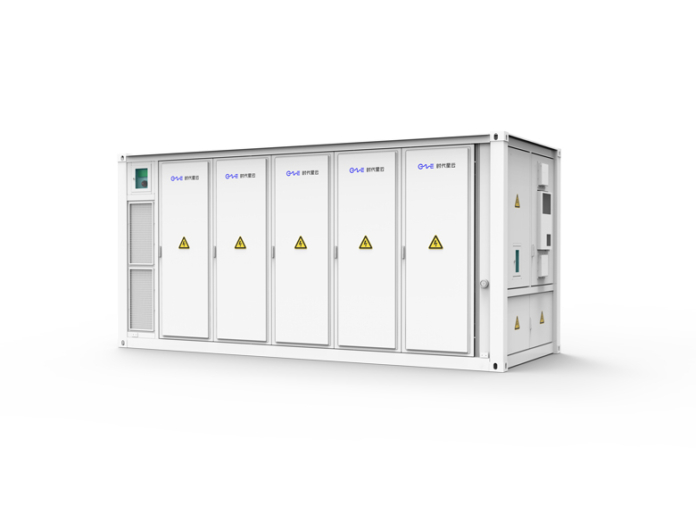
Endorsing its position as a versatile service and supply partner for the ESS sector, Veloris is highlighting the fact that within its comprehensive range are options from Contemporary Nebula Technology Energy (CNTE), that provide fully off grid and back up ready solutions for efficient commercial and industrial power storage.

All CTNE products use market leading CATL cells and each cabinet is equipped with either air or liquid cooling, fire suppression, venting panel and a heat detector. As the units can be linked in parallel, they also provide flexibility when it comes to the scope and scale of the project requirements.

The CTNE Star Q, Star Q-Plus and Star H are cabinets, with the Star T being either a 285 Ah, or 306 Ah, container system.

Going into further detail of the all in one, one tap start, Star Q-Plus cabinet, this versatile 306 Ah system can accept solar, grid or generator power input and its 125kW hybrid inverter can provide a muti scenario solution for self use, off grid or emergency back up power.

Another factor that provides its customers with great peace of mind, is the fact that Velorisโ€™ engineers are also fully trained in various battery technologies, covering both the batteries themselves and the charging regimes that need to be followed.

With the experience inherent within a specialist business that has been trading for more than 70 years, along with the high quality training each engineer undertakes, the company is also able to provide its customers with an economical breakdown repair or short term resolution, to ensure they have a first fix solution that means that equipment downtime is reduced to an absolute minimum.

This customer service benefit is further enhanced by the truly national coverage that Veloris is able to provide through its 12 branch network across the UK and Ireland. This results in shorter lead times, which also positively contributes to reducing costly equipment downtime.

In parallel with the service and supply side of the equation, Velorisโ€™ in depth knowledge also comes into play when it comes to the important factors that need to be considered when choosing the most appropriate solution.

These include technical matters such as battery life and runtime, fast charging capabilities to maximise equipment availability, and the like.

Operational factors, including durability and reliability, must also be considered, as does the ease of retrofitting into existing equipment and battery monitoring and diagnostics. Naturally, business related matters such as cost and return on investment, warranty and support, and sustainability must also come under the microscope.

These are the added value customer service benefits that the company can provide across every sector, because Veloris is more than simply a battery distributor, it is a power storage specialist that is able to consider the requirements, analyse the objectives and deliver the solutions.

As is evident, Veloris has the necessary credentials to underline its position as the battery partner to the ESS industry.

For further details, please visit: www.veloris.com


This article appeared in the March 2026 issue of Energy Manager magazine. Subscribe here.
A data-led upgrade: The case for intelligent hot water in multi-occupancy residential buildings

For energy and asset managers operating high-occupancy residential schemes, hot water remains a significant and often under-optimised load. In electrically heated buildings, conventional immersion cylinders can account for substantial energy, water and maintenance costs. A recent case study from a 393-bed, campus-style student accommodation scheme illustrates how upgrading to a cylinder with integrated sensors and meters can deliver rapid financial and carbon returns without major infrastructure change.

The five-storey property, opened in 2009, is served by individual electric immersion tanks within flats. A centrally controlled infrastructure for heating was already in place, providing a foundation for enhanced monitoring and system visibility. The project involved replacing ageing immersion cylinders with factory-assembled, pre-wired and pre-plumbed units incorporating intelligent controls that collected data for incoming, in-tank, and output supply of water temperature, and metering of both energy and water.

Measured data showed annual energy consumption of 501 kWh per bed for water heating. Benchmarking against comparable residential sites operating intelligent cylinders for several years established a long-term achievable performance of 369 kWh per bed. This represents a 26% reduction. Across the scheme, this translates to reducing electricity costs by ยฃ13,000 (at an assumed tariff of 25.6p/kWh). For larger portfolios, savings at this scale accumulate quickly into material reductions in both operational expenditure and emissions.

Water performance was assessed against guidance from the Chartered Institution of Building Services Engineers, which benchmarks comparable residential buildings at 125 litres per person per occupied day. Actual incoming meter data indicated significantly higher consumption. By tracking how spaces are being used, and continuous monitoring, the new system identifies hidden leaks, faulty valves, dripping taps and outlets, and unusual discharge events, such as tundish flow as a result of pressure issues.

With remote alerts enabling timely intervention, projected annual water savings are calculated to be 12,879 mยณ. This reduced annual water costs by ยฃ32,198 (at an assumed ยฃ2.50 per cubic metre). Beyond the financial impact, early fault detection reduces the risk of consequential damage and disruption, an important but often overlooked benefit in student and multi-occupancy accommodation.

Operational efficiency gains were also evident. Continuous temperature logging and automated reporting reduce the need for manual inspection visits and support compliance with water hygiene regimes. On medium-to-large schemes, removing just a 15-minute monthly inspection per cylinder can save several thousand pounds per year in labour costs. Maintenance shifts from routine attendance to exception-based intervention, allowing in-house teams to prioritise assets that genuinely require attention.

Carbon reductions were calculated using UK grid electricity intensity (124gCOโ‚‚/kWh) for Scope 2, and BEIS/Defra intensity (1.05โ€ฏkgCOโ‚‚/mยณ) for Scope 3. The annual impact equates to 6.4 tonnes of COโ‚‚ from reduced electricity use and a further 13.5 tonnes from avoided water consumption. For organisations reporting under ESG frameworks or progressing toward net-zero targets, these measurable and auditable reductions provide credible evidence of improvement.

From a capital expense perspective, the comparison was made between the incremental uplift over like-for-like cylinder replacement, as the existing assets were approaching end of life, and the new SmartTanks. With a total project cost of ยฃ221,000 and a like-for-like replacement cost of ยฃ144,000, the upgrade premium was ยฃ77,000. Combined annual savings across energy, water and labour were calculated at approximately ยฃ53,000, producing a simple payback of around 1.4 years under conservative assumptions, including 5% inflation.

For high-occupancy buildings reliant on electric immersion systems, this case study demonstrates that intelligent cylinder upgrades represent a low-disruption, quick-payback investment. The outcome: reduced operating cost, improved compliance assurance and meaningful carbon savings, delivered through better data, earlier intervention and more precise control rather than wholesale system redesign.

www.prefectcontrols.com


This article appeared in the March 2026 issue of Energy Manager magazine. Subscribe here.