Two fifths of English schools say pupils’ education is suffering as high energy prices bite, raising the question of whether the 2025 Spending Review will go far enough.
More than half (56%) of secondary schools or Multi-Academy Trusts (MATs) in England report they are currently operating in a financial deficit lasting a year or more, and energy bills were cited by a fifth (21%) as one of the main areas where spend has had to be reduced to balance the books.
Although energy bills represent one part of a broader funding challenge schools face, their continued volatility is adding significant pressure on already stretched school budgets, yet just one in five (19%) of schools say they currently plan to seek external advice on reducing energy spend.
To help balance budgets, (17%) are considering combining class sizes or reducing extra-curricular activities to save money, while 15% are exploring cuts to subjects such as languages, arts, or music. One in six (17%) plan to turn heating off or down in classrooms, and 22% are switching lights off during the day to reduce costs.
Eamon Grimes, Managing Director, Energy & Carbon at LASER, added:
“With wholesale prices still well above pre-2020 levels, it’s understandable that energy remains a concern for many schools. Even with high network prices, there are ways to reduce the financial burden and there is expert advice out there that can make a huge difference. While there’s no one-size-fits-all answer, we’ve seen a growing number of schools finding practical ways to reduce costs whether through flexible contracts, energy reduction measures, generating their own energy, or working together on procurement.
“Raising awareness of these options and making it easier to navigate them is an important step in supporting schools through ongoing financial pressures.”
Matt Johnson, CEO of Commercial Services Group, said: “School leaders are juggling enormous challenges — from funding and staffing to pupil wellbeing and infrastructure. Energy costs are just one part of a much bigger picture. An extra £4.5 billion is welcomed but it must also translate into a significant boost to budgets to cover utility costs. We need a more joined-up effort between government, energy providers, and education partners to raise awareness of the support that exists and help schools make informed, strategic decisions. By sharing what works and ensuring access to trusted advice is easier, we can relieve some of the pressure and help protect vital learning experiences for pupils.”
Strained budgets have had an impact on educational outcomes, according to 43% of school leaders, with 15.5% saying they’ve had a major impact. More than half (55%) of the 500 senior leaders and head teachers to respond to the survey by Commercial Services Group say pupil wellbeing has been affected by the need to meet energy bills, and 51% say staff wellbeing has been affected.
LASER, part of the public-sector owned Commercial Services Group, has supported schools with energy and energy-saving advice for more than 30 years and currently works with more than 5,000 schools to help minimise energy bills.
The survey also revealed that, while 31% of schools say they are aiming to use financial planning tools to help reduce their financial burden, nearly a quarter are considering cutting back on teaching resources such as stationery, computers, and science equipment.
Commercial Services Group is a public sector-owned organisation that reinvests every penny back into the communities it serves. Supporting over 22,000 organisations and thousands of schools across the UK, its services span procurement, HR, energy management, recruitment, special educational needs and disability (SEND) support, legal services, school supplies, and school improvement.
Marshland Primary Academy’s transformative renewable heating installation, delivered by British ground source heat pump manufacturer and installer Kensa, has been awarded ‘Energy Project of the Year – Public’ at the 2025 Energy Awards.
The major decarbonisation project, which saw Kensa replace an ageing gas boiler system with seven ground source heat pumps, has helped the Venn Academy Trust school in South Yorkshire secure its heating future, keep classrooms warm, and cut carbon emissions by close to 80%.
The Energy Awards recognise and celebrate innovation and achievement in the energy sector. When awarding the Marshland Primary Academy project, judges described it as a “good technology solution with an excellent environmental improvement.”
The six-month project, completed in October 2024, involved drilling 18 boreholes beneath the school’s playing field to provide the heat energy used by the ground source heat pumps. New radiators were also installed as part of the retrofit, which was partially funded by the Department for Education’s Condition Improvement Fund.
Marshland Primary Academy has also become one of the first schools in the UK to integrate solar PVT (Photovoltaic-Thermal) panels with ground source heat pumps. These panels generate both electricity and thermal energy, increasing the system’s efficiency and reducing overall installation costs.
The result is a low-cost, low-carbon heating system that has significantly reduced emissions and improved classroom comfort. It also provides a scalable blueprint for other schools across the UK looking to decarbonise their estates and tackle rising energy costs.
Wouter Thijssen, Commercial Director at Kensa, said:
“We’re absolutely delighted the Energy Awards have awarded this installation the Public Energy Project of the Year. It’s a shining example of how forward-thinking schools and trusts like Venn Academy Trust can lead the way on climate while giving their pupils a reliable, effective heating system all year round.
“Marshland Primary Academy now has a heating system that is better for pupils, better for the environment and sets the standard for what’s possible in schools up and down the country. Thousands of UK schools still rely on gas heating – we hope this award-winning project can serve as inspiration for those looking to start their decarbonisation journey.”
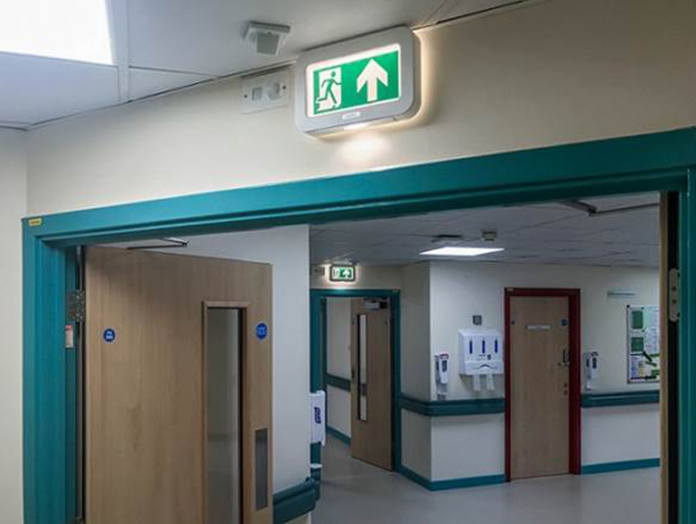
Thorlux is warning that more than 2,000 premises a year are breaching fire regulations following an analysis of data from the National Fire Chiefs Council (NFCC).
The lighting firm revealed the figure as it unveiled a new generation of its industry leading Firefly emergency lighting product, designed to ensure facilities managers are never left in the dark when it comes to their compliance with stringent regulations and budgetary pressures.
The data from the NFCC shows that 2,066 enforcement and prohibition notices were issued by fire authorities between June 2024 and the end of May 2025, including 10 against hospitals, six against schools and 140 against care homes.
Having appropriate emergency lighting in place is a crucial part of compliance with fire regulations. While the data published by the NFCC does not only relate to breaches concerning emergency lighting, it nonetheless offers an indication of the level of non-compliance.
With emergency lighting offering critical protection for occupants during power failures, whether resulting from fire or other causes, facilities managers must ensure their systems comply with building regulations and are tested regularly so they are ready when needed.
The next generation Firefly from Thorlux offers an enhanced ten-year warranty, improved environmental performance and a choice of precisely engineered optics that deliver regulatory compliance using fewer units than ever before. The new units, which integrate with Thorlux’s SmartScan lighting control system, feature self-testing capabilities offering facilities managers real-time access to a dashboard showing the status of their emergency lighting and logging automated tests to create the required compliance paper trail.
Together, the need for fewer units and significantly reduced maintenance requirements are set to offer substantial cost savings to facilities managers. The upgrades that come with the new generation of Firefly mean that, in some cases, half as many units are needed, with battery life doubled and manual maintenance schedules slashed.
Liam Greene, Product Manager for Emergency Lighting at Thorlux Lighting, said: “Emergency lighting is a legal requirement under the Regulatory Reform (Fire Safety) Order 2005. Despite the critical importance of compliance, many employers, occupiers, or property owners remain unaware of their responsibilities or the fact that they may already be non-compliant. Breaches of these regulations can result in significant consequences, including personal liability for the designated responsible person, site closures, and restricted access due to safety concerns.
“A common challenge is the lack of clarity around who holds responsibility, which can lead to serious safety risks for occupants and legal exposure and fines with no maximum amount for organisations.
“In response to these challenges, the Thorlux team set out to create a solution that simplifies ongoing compliance – making it more effective, reliable, and cost-efficient. The result is Firefly, the next generation of discreet emergency lighting. With increased luminaire spacing, reduced battery maintenance, enhanced sustainability, and a fully integrated wireless reporting and control system, Firefly ensures that you’re never left in the dark -and more importantly, never non-compliant.”
Long gone are the days of a timer clicking a heater on and off periodically, anticipating an occupied room. But the plethora of sensors available today for monitoring temperature, energy use, efficiency etc. are generating data like never before. But how useful is this data?
The adage, ‘Data without action is just noise’ springs to mind. This is where a pragmatic approach to designing heating control systems pays dividends. Another adage, ‘the cheapest energy is the energy we don’t use’ inspired Prefect Controls to develop practical systems that physically turn heat sources on and off, informed by demand, thus not using energy unnecessarily.
With ‘ControlSensor’ energy use AND control is optimised in multi-occupancy buildings. It builds on established capabilities of the Irus BEMS, which is proven to deliver up to 50% heating load reduction, while incorporating new functions to enhance system intelligence, occupant interaction, and operational transparency.
Core Functionalities At its foundation, it retains key features such as: • Intelligent Temperature Control: Heating output is based on real-time environmental data and occupancy. • Adaptive Occupancy Sensing: Presence detection informs heat input, ensuring energy is only consumed when spaces are in use. • Optimised Heating Management: Usage patterns are analysed to refine heating schedules dynamically, improving energy efficiency and reducing waste.
These capabilities are particularly effective within variable occupancy environments, such as student accommodation, Build-to-Rent and Co-Living property, where consistent user behaviour cannot be predicted.
Direct-to-Room Communication A notable advancement is the implementation of direct-to-room messaging. This enables the delivery of targeted notifications—such as maintenance alerts, compliance notices (e.g., fire drills), or operational messages—directly to individual rooms via it’s screen. This enhances occupant awareness and reduces the need for physical access and manual communication, streamlining building management processes.
Behavioural Influence via Intelligent Nudges An occupant-facing behavioural modification tool has been incorporated in the form of automated Nudges. These micro-interventions are informed by continuous data analysis and influence user habits towards more sustainable behaviours. Example interventions could includecomparisons of energy consumption over time, prompts to adjust set temperatures for better efficiency. recommendations to reduce shower time, or even suggestions for appropriate seasonal clothing.
Nudges are generated using environmental and historical data, ensuring relevance, while avoiding intrusive messaging. Over time, such interventions contribute to measurable shifts in consumption patterns.
System Integration and Analytics The ControlSensor interfaces seamlessly with the broader Irus portal, which provides centralised monitoring and control across various building services. Such as, Space and Water Heating, Leak Detection, Kitchen Safety, Utility Metering and Water Waste.
Data collected from is processed by a suite of analytical tools:
Optimiser: Detects anomalies in usage (e.g., excessive consumption, fault conditions). Then suggests corrective actions.
Investigator: Enables detailed drill-down from building-wide to room-level diagnostics, identifying sources of inefficiency.
Reporter: Makes sense of data. Generating structured reports from a range of data points.
These tools equip facility managers with actionable insights to maintain system performance, reduce downtime, and support sustainability reporting.
Ease of use Irus is suitable for both new and retrofit installations. Its modular architecture allows scalable deployment without the need for significant infrastructure overhaul. A user-friendly interface ensures accessibility for both technical and non-technical users, facilitating widespread adoption.
It exemplifies a convergence of automation, data-driven decision-making, and user engagement in building energy management. By integrating real-time analytics, direct user communication, and behavioural change methodologies, it supports a more granular and responsive control strategy. Prefect’s approach highlights the growing role of occupant-aware, adaptive systems in achieving both environmental and operational targets. A far cry from a time switch!
Studied by participants from well-regarded organisations such as National Grid, The World Bank and many more, the Master in Renewable Energy Award offers the opportunity to study 12 to 15 specialised courses over 18 months, each designed to provide expert knowledge and relevant skills within the renewable energy sector.
Upon completion, you’ll earn internationally recognised certificates that strengthen your credentials in one of the world’s fastest-growing industries.
All courses are accredited by the CPD accreditation service. By studying the Master in Renewable Energy Award, you will accrue a minimum 280 CPD hours.
Study at your own pace, from anywhere in the world and fit your learning around your personal and professional commitments.
In today’s market, commercial buildings are recognised not only for the income they generate, but for the broader role they play in shaping local economies, investment quality and environmental outcomes. These buildings are no longer just spaces to let: they influence how towns grow, how capital is allocated, and how communities operate.
Recent studies show that sustainability credentials are becoming a clear driver of market performance. A single EPC band improvement can deliver a 1 to 4 percent uplift in rental income or capital value. Green certifications such as BREEAM often attract rent premiums of 6 to 12 percent and capital uplifts of 14 to 21 percent, with some examples showing even greater returns.
These findings confirm what many of us are seeing in practice: buildings with stronger energy and wellbeing credentials are becoming more valuable, more desirable and more resilient. That applies not just to new builds, but also to existing assets, including those with architectural or historical significance.
Against this backdrop, energy performance is now central to how buildings are assessed and managed. Since April 2018, landlords in England and Wales have not been permitted to grant new leases on commercial properties rated below E on the Energy Performance Certificate (EPC). In April 2023, the rules were extended to apply to ongoing leases too, making it unlawful to continue letting buildings rated F or G unless exempt. Another step came in April 2025: all let commercial buildings must now hold a valid EPC at all times. This shifts the requirement from a one-off check to an ongoing legal duty.
Government policy is also advancing. In 2021, the Department for Business, Energy and Industrial Strategy proposed raising the minimum requirement to EPC C by 2027 and EPC B by 2030. While the formal response to that consultation is still pending, in April 2025 the Department for Energy Security and Net Zero confirmed an update would be published by the end of June. Officials have indicated that future rules will be designed to balance ambition with practical delivery across the sector.
The scale of potential improvement is significant. According to data from the Valuation Office Agency and BEIS, England and Wales have around 400 to 450 million square metres of commercial floorspace. In seven major cities, including London, Birmingham and Manchester, a recent British Property Federation study found that 83 percent of commercial buildings were rated below EPC B. This suggests that over 170 million square metres of space could benefit from energy upgrades.
Much of this stock is already reaching key lifecycle moments. Services may be nearing the end of their design life. Occupier needs are shifting. General refurbishment or reconfiguration is often due. These are natural points at which to consider energy performance improvements. A technology-neutral review of the asset, considering systems, layout, use, condition and regulation, helps identify the right opportunities.
From there, value impact analysis can guide planning. This process explores how different retrofit approaches align with investment plans, lease cycles and occupant needs. It combines scenario testing, cost planning and risk management. Frameworks like PAS 2038 provide practical structure to this process, helping ensure upgrades support long-term performance.
The wider economic environment reinforces the need for this kind of thinking. Construction and material costs remain high. Fuel prices have been volatile, with diesel prices in Europe rising more than 10 percent in June 2025 due to geopolitical instability. Delivery times and supply chains remain under pressure. In this context, buildings that are well-performing and cost-stable are easier to manage and more attractive to investors.
Other regulations are also shaping the future. The Building Safety Act is raising standards for design, maintenance and handover. The new building regulator is reframing how owners and dutyholders manage long-term safety and operational risk. National strategies for energy use, housing and net zero are reinforcing a direction of travel toward higher-performing buildings across the board.
Properties that meet Minimum Energy Efficiency Standards (MEES) requirements but also align with wider quality frameworks like BREEAM or WELL often outperform their peers. They attract tenants more easily, achieve better terms in funding and insurance, and reduce exposure to future compliance issues. In my own work, I’ve seen how lifecycle cost modelling, Choosing by Advantages and structured decision tools help unlock both performance and long-term value in retrofit projects.
Financial institutions are also responding. Banks and insurers increasingly prefer buildings that are future-ready and demonstrate strong operational control. These assets are seen as lower risk, more adaptable and better aligned with ESG goals. A further change is expected in 2026, with EPC methodology reform likely to place greater emphasis on real-world energy use. This will make performance more transparent and bring design and operation closer together.
MEES is not just a minimum legal standard. It is part of a wider shift in how we define quality in commercial real estate. Buildings that combine energy strategy, occupant wellbeing, capital planning and operational reliability will lead the way. They will be more stable, more investable, and more valuable in the years ahead.
This article appeared in the July/August 2025 issue of Energy Manager magazine. Subscribe here.
Chris Goggin explains what E-methane is, how it is produced and its potential relevance inside the UK alternative gasses market. An informed synopsis of the current off grid gas and energy market will be used to highlight how E-methane and other lesser well-known gasses such as Bio-LPG and biomethane can contribute towards off-grid NetZero aims and support commercial enterprises.
To attain NetZero status future usage of fossil fuels will need to be limited in the medium term and eventually nullified, completely. A range of alternative energies that include renewables, hydrogen and clean electrification will replace fossil fuels. E-Methane is a new gas that has been identified as an additional low carbon gaseous alternative capable of performing the same role as fossil fuels.
E-methane is the abbreviated name given to electro-methane, a gas which is created by extracting captured carbon dioxide and blending with green hydrogen, itself produced via renewable energy.
The number of e-methane production plants across Europe and Australia is notably increasing. Danish energy supplier, Andel, and Danish biogas company, Nature Energy, have invested DKK 100 million in constructing and operating an e-methane plant located in Glansager, Denmark.
Australia is the chosen location of three Japanese energy concerns who are exploring e-methane production possibilities. Tokyo Gas, Toho Gas, Osaka Gas Australia (OGA) alongside Australian oil and gas company Santos have entered into an agreement that will focus on producing 130,000 tonnes of e-methane annually. E-methane is 1 of 14 priorities that the Japanese government’s Green Growth Strategy has highlighted as a major component towards Japanese decarbonisation objectives.
Finnish energy company Nordic Ren-Gas Oy is developing a Power-to-Gas project located in Tampere, Finland. The production facility will manufacture hydrogen and e-methane as well as provide power for local district heating sourced through waste heat. Nordic Ren-Gas Oy are actively seeking to introduce a decentralised e-methane production network throughout Finland that assists in reducing fossil fuel usage.
E-methane is remarkably like biomethane which is produced in a separate process – methane is captured from natural biological waste and forms during a natural process called ‘anaerobic digestion.’ In the absence of oxygen microorganisms will begin to break down matter yielding a gas – methane. Once impurities are removed the methane gas becomes upgraded and biomethane is created.
Both biomethane and e-methane are capable of identical operating behaviour when compared to fossil fuels and can therefore be placed into existing infrastructure. Biomethane and e-methane can immediately fulfil the role of fossil fuels without any fracture towards appliance operating efficiency, commercial activity, or societal cohesion.
E-methane and biomethane are potential fuels that can be used in off-grid applications also. The UK off-grid fuel market is a growing economic entity and is also a hard-to-decarbonise section of society. The UK’s gas grid network extends to 84% of UK households. Of the remaining 16%, 2 million properties are rural off grid homes and require daily power.
The primary power source used to fuel off grid UK properties and commercial activities is LPG and there is growing usage of BioLPG. The tourism and leisure sector also relies on off grid fuels and utilises both LPG and BioLPG as its main source of power. There are 2,643 businesses in the Caravan & Camping Sites industry in the United Kingdom, which has grown at a CAGR (Compound Annual Growth Rate) of 3.6 % between 2020 and 2025.
LPG is created through the refining of crude oil or extracted during the process of manufacturing natural gas. LPG consists of butane and propane and is considered a low carbon alternative to fossil fuels.
BioLPG contains an almost identical chemical structure to LPG. BioLPG is produced from renewable materials derived from a diverse mix of sustainable biological feedstocks and processes. Supported through cleaner sourced chemical ingredients BioLPG provides huge benefits in carbon reductions and air quality, compared to traditional off-grid fuels such as heating oil.
BioLPG is conceptually renewable and sustainable, as it is made from a blend of waste, residues, and sustainably sourced materials. BioLPG, can be described as an eco-propane, the chemical makeup of this gas is identical to LPG and is therefore compatible with existing in situ LPG products from a combustion perspective.
The market for synthetic and biogas in Europe is expanding, UK liquefied petroleum gas market is projected to lead the regional market in terms of revenue in 2030. In the UK, around 10% of off-grid properties use LPG for heating, which translates to approximately 220,000 users. In terms of revenue, UK accounted for 4.3% of the global liquefied petroleum gas market in 2023.
Off grid fuels, synthetic gasses and biogas are areas in which growth is expected to rise steadily through the up-and-coming decade. E-methane is considered a convenient alternative capable of being placed in existing infrastructure and successfully fulfilling the role of natural gas. European and the Asia-Pacific regions are refining strategies that centre on the production and distribution of e-methane and are confident that commercial sales will follow.
Biogas and synthetic gasses such as BioLPG, LPG, e-methane and Biomethane will play a discernible role in the global pursuit of NetZero. Current UK and European off grid gas markets maintain an upward trajectory.
Potential usage of alternative gasses can only increase as NetZero time limits recede, meaning that any gas capable of operational capabilities and behavioural similarities to natural gas will instantly be viewed favourably due to current infrastructure and natural gas reliance.
As the continued pursuit of low carbon and zero carbon energy and power sources continues both BioLPG and e-methane are promising variants on the road to net zero. To learn more about renewable fuels and technologies follow our free newsletter at https://www.rinnai-uk.co.uk/contact-us/newsletter-sign
Rinnai follows all domestic and international developments in current and future energy information. Doing so, provides potential customers with a solid foundation of information that assists product purchase. Any news relating to appliance or energy options that is shaped by legislation will be immediately shared with UK customers. Access to information that affects customer judgment is an area that is Rinnai values.
The UK’s gas grid network extends to 84% of UK households. Of the remaining 16%, 2 million properties are rural off grid homes. (Liquid Gas UK)
There are 2,643 businesses in the Caravan & Camping Sites industry in the United Kingdom, which has grown at a CAGR of 3.6 % between 2020 and 2025. (IBIS World)
In terms of revenue, UK accounted for 4.3% of the global liquefied petroleum gas market in 2023. (Horizon Grand View Research)
The UK market is expected to grow at a CAGR of 2.1% from 2024 to 2030.
In terms of segment, residential / commercial was the largest revenue generating application in 2023. (Horizon Grand View Research)
In Europe, UK liquefied petroleum gas market is projected to lead the regional market in terms of revenue in 2030.
In the UK, around 10% of off-grid properties use LPG for heating, which translates to approximately 220,000 users.
E-methane holds great promise for the decarbonisation of energy uses. On the one hand, it converts non-storable electricity into storable renewable gas. On the other, it recovers the CO2 released by industrial sites or extracted from the biogas during the purification phase of biogas production, pyrogasification or Hydrothermal Gasification (processes for producing renewable gases from biomass, solid waste or liquid or wet waste, respectively).
Thanks to e-methane, the CO2 released is given a new lease of life, helping to reduce the global carbon footprint.
E-methane can be stored and injected directly into the NaTran transmission system, without requiring any prior adaptation of the infrastructure. As a substitute for natural gas, it covers domestic and industrial uses (heating, electricity). It can be used in road (bioGNV) and sea transport.
Andel and Nature Energy’s work with the green transition has reached a crucial milestone. In a partnership formed in the autumn of 2022, the two companies have invested DKK 100 million in a biological Power-to-X plant in Glansager on Als in Denmark, which is now ready for production. Here, Andel’s electrolysis plant converts excess electricity from the sun and wind into hydrogen that is fed into Nature Energy’s methanation plant, where it combines with CO2. It forms e-methane, thereby increasing biogas production from the existing biogas plant and reducing the amount of CO2. Nature-energy.com
Austrade International
Tokyo Gas, Toho Gas, Osaka Gas Australia (OGA) and Santos have entered into an agreement to explore e-methane production in Australia.
Under the agreement, the four organisations will conduct technical, regulatory, and commercial studies to produce 130,000 tons (180 million Nm3/year) or more of e-methane annually. The studies will also explore exporting the e-methane to Japan.
OGA will conduct Pre-Front End Engineering and Design (Pre-FEED) work to produce e-methane in the Cooper Basin, located in central Australia. E-methane is a carbon-neutral synthetic methane. It is produced by capturing carbon dioxide and combining it with green hydrogen.
The prospective project will be located at Moomba, an area where Santos has been developing and operating natural gas fields for many years. The area offers access to:
abundant solar and wind energy
carbon dioxide sources from nearby projects
natural gas pipelines to eastern Australia and the Northern Territory
liquified natural gas (LNG) export terminals at Gladstone in Queensland and Darwin in the Northern Territory.
This article appeared in the July/August 2025 issue of Energy Manager magazine. Subscribe here.
As the world becomes increasingly interconnected, with 40 billion devices projected to be connected to the IoT by 2030, it’s no surprise that data centres are under pressure to meet soaring demand. As artificial intelligence and other energy-intensive technologies grow in popularity, data centre operators will need new and innovative ways to manage the surge in new devices and create resilient infrastructure.
In fact, three-quarters of data centres currently face increased pressure from AI-driven demands, with only three-in-ten decision makers believing that they are doing enough to enhance the energy efficiency of data centres. Creating energy efficient data centres becomes an even more prevalent concern when you consider that global data centre capacity is set to triple in size between 2022 and 2030.
As the data centre industry is catapulted into hypergrowth, operators will need new and innovative ways to manage the surge in new devices, ensuring electrical assets are dependable to minimise unplanned downtime.
Playing it cool
It is imperative that AI data centre growth is decoupled from the environmental impact. For this to be accomplished, low carbon energy sources need to be utilised, new flexible and efficient AI-ready data centre designs must be developed, and sustainable business practices must be put into place. Traditional power and cooling optimisation technologies will need to evolve if they are to support the demands of higher density racks, which accommodate even greater amounts of computing power.
Technologies such as liquid cooling, software-based cooling optimisation, and advanced airflow management are becoming increasingly popular, making it possible to maintain optimal temperatures whilst consuming less energy. With proper airflow management, operators can ensure that cool air is distributed evenly throughout the data centre, preventing hot spots and improving overall cooling efficiency.
AI’s role in predictive monitoring and maintenance
Though artificial intelligence is creating increased demand for data centre infrastructure, it could also hold the key to unlocking energy efficiency gains when it is integrated into data centre infrastructure management (DCIM) software.
When AI is integrated within an infrastructure management system, it collects and analyses data from thousands of sensors, monitoring variables such as temperature, humidity, server loads, airflow, and energy consumption. AI can also learn from external data sources, such as weather data. Instead of controlling cooling based on a fixed schedule, AI aggregates past data and predicted future insights to make adjustments in real time.
This is a gamechanger for data centre operators looking to optimise their resources and prevent existing parts from overheating if a sudden shift in weather, such as a heatwave, occurs. With tools that track energy usage, temperature, and performance metrics around the clock, operators can confidently allocate resources, as well as identify potential areas to optimise energy use.
AI & automation
Along with anticipating shifts in temperature, AI algorithms can forecast hardware failures and schedule maintenance before issues snowball, reducing downtime and waste resulting from burnt out parts. By switching to a more proactive approach, operators can keep equipment performant for longer periods of time, prolonging its lifespan and dependability. Proactive asset management is already proving its worth, with some sites reporting reductions in critical asset failure by up to 60%, with maintenance visits only required every five years instead of every three.
AI technologies are also making a significant difference for data centre operators by automating tedious manual tasks, including backup management, load balancing and system updates. Delegating these tasks to AI not only reduces the margin for human error: it also enables operators to focus their energy on more strategic activities which require a more discerning human eye.
AI is also advancing data centre security through tools such as remote management. By deploying cloud-based AI tools, operators can gain visibility across several sites at once: an especially valuable tool for teams working across hybrid environments. These tools offer operators automated alerting should performance deviate from an agreed baseline. Automated alerting not only reduces the likelihood of human error; it also acts as the ‘eyes and ears’ for data centre operators at any time of day, anywhere. Operators are informed at speed should potential security or equipment issues arise, so system vulnerabilities can be addressed in good time, before they impact end-users and services.
Into the future, AI integrations in infrastructure management will play a vital role in facilitating resilient, future-ready data centres that the world can depend on. Tools such as remote monitoring, cooling, and predictive maintenance will all play a vital role in ensuring the longevity and resiliency of these structures as demand grows over the next decade.
This article appeared in the July/August 2025 issue of Energy Manager magazine. Subscribe here.
Dan Sullivan, Vice President, Mid-Market Sales, UK and Europe at SEFE Energy
Today, managing energy consumption is a priority for businesses across all sectors. With an imperative to reduce costs in a challenging economic environment and, often, an overarching green strategy to execute, energy efficiency is non-negotiable.
There’s no silver bullet for solving energy consumption issues but with the rapid pace of technological development it stands to reason that technology should make the journey quicker and more efficient.
According to The European Investment Bank around 61% of EU companies have invested in climate mitigation and adaptation, with 74% embracing advanced digital technologies to enhance competitiveness.
But finding that ‘best’ energy technology for a business can be tricky, with specific needs having to be considered. With many touted tech solutions coming with a prohibitive price tag, or yet to reach maturity, let’s explore what avenues should be considered and the benefits.
Building a Foundation
The most logical starting point, ahead of considering new tech investments, is to first take stock of existing equipment and understand whether this can be optimised or if an upgrade is required.
We would typically recommend investing the time in a detailed audit, with the support of a consultant if needed, for a more comprehensive picture of your businesses’ performance. This will likely spotlight some potential efficiencies – sometimes related to curbing bad employee habits – that can be made in the short-term.
The location of your energy meter, for example, can create potential issues. If placed incorrectly, for example in a basement or difficult to reach areas, this can impact WI-FI signal strength or make important maintenance updates more difficult. If not factored in, then meters might experience periods of downtime which can result in inaccurate readings. Likewise, your thermostat for example, it might be worth moving it to a location that’s more efficient, away from draughts, windows, and skylights.
Implementing a smart meter or automated meter reading (AMR) device which, in addition to ensuring your business is only paying for the energy it uses, can help with monitoring where you spend your money in near real-time.
Intelligent monitoring
For more energy-intensive industries such as large-scale manufacturing where even small refinements in energy usage can result in substantial financial savings, energy management systems (EMS) can be a wise investment. These are more complex systems that use real-time data, to monitor, analyse and optimise energy usage at a granular level. This includes breaking down costs per department and providing reports which helps in tracking energy performance, cost analysis, and regulatory compliance.
Taking this a step further, some businesses are exploring more advanced solutions, leveraging AI and predictive analysis. For example, Amazon is currently using AI to make its buildings and utility management systems more efficient – apparently catching utility meter issues and identifying energy leaks at loading dock doors.
In comparison to traditional EMS’s which are restricted by pre-defined rules, AI tools use machine learning to enable more advanced autonomous decision-making by learning from current data and historical trends. This allows them to quickly adjust to unexpected changes, such as an equipment malfunction or an increase in energy demand from an external factor like a heatwave.
Predictive analysis is another key benefit, with AI solutions able to forecast future energy demands with a higher level of sophistication. This predictive capability ensures systems are adjusted in anticipation of future needs, rather than just reacting to them. This allows organisations to continuously refine energy usage which is particularly helpful if a company has a lot of offices or warehouses to consider.
Investment in AI can also enable smart grids to predict supply fluctuations which for companies with high and complex energy demands, can build more resilience into operations. While on their own smart grids can enable real-time monitoring and better distribution, AI can enhance this by amplifying predictive capabilities. This can flag potential issues such as outages and minimise downtime by notifying teams of faults before they develop. Looking forward, I expect we’ll see continued investment in this area as governments across Europe look to relieve pressure on grid infrastructure as we transition to more renewable energy sources.
Staying the Course
Energy efficiency is not a universal formula; it’s a tailored strategy shaped by the specific industry, organisational size, and individual energy objectives. These factors determine which technologies take precedence and will guide the scope of the investment that’s required.
To stay on track, businesses must gain a thorough understanding of their energy consumption nuances. This insight enables informed decision-making, ensuring the most effective solutions are prioritised and implemented for maximum impact.
Monitoring energy consumption has become essential for organisations aiming to cut expenses and improve operational efficiency — particularly in the face of rising electricity prices.
Tracking power usage across a facility helps businesses shine a light on hidden inefficiencies that drag down performance and drive-up costs. It reveals the real culprits behind soaring energy bills and frequent equipment breakdowns, turning guesswork into actionable insight.
Elliot Ajose, Regional Sales & Technical Manager at Chauvin Arnoux UK, highlights the most common issues in today’s industrial setups and shows how engineers and maintenance teams can use smart energy monitoring devices to uncover and fix them.
In recent years, studies by the Carbon Trust have shown that businesses can slash energy use by up to 20% simply by upgrading outdated equipment and adopting smart solutions like variable- speed drives for fans, pumps, and motors. Meanwhile, a British Gas survey of smart meters across 6,000 UK SMEs found that “out-of-hours” electricity usage accounted for 46% of total consumption. This was due to lighting, heating, and IT equipment being left on in unoccupied offices, as well as car park lighting operating around the clock.
Office equipment plays a significant role in energy consumption. Simply turning off non-essential equipment at the end of the day can result in 12% energy savings. Moreover, leaving office equipment on standby during weekends and bank holidays can cost an average SME up to £6,000 per year.
While many businesses have already benefited from switching to LED lighting, further savings can be achieved through occupancy sensors, which can cut electricity use by an additional 30%. Using daylight sensors or photocells to adjust artificial lighting based on natural light availability can lead to another 40% reduction in electricity consumption.
Beyond efficiency measures, 50% of UK industrial facilities still suffer from poor Power Factor and load balancing. Power Factor measures how efficiently electrical power is used, while load balancing ensures an even distribution of electrical loads across the three supply phases. Both factors contribute significantly to increased energy losses and higher consumption.
Identifying and addressing these inefficiencies requires a Power and Energy Logger (PEL). Whether troubleshooting specific problems or proactively optimising power distribution, PELs should be as essential to a building maintenance technician as a multimeter or thermometer.
Modern PELs are compact, lightweight electronic instruments designed to collect electrical data efficiently. They can be temporarily installed in distribution panels or various locations within a facility without interrupting the mains supply or shutting down operations. This makes them invaluable for ongoing monitoring and energy audits.
PELs are highly versatile, capable of monitoring specific equipment or entire departments. They use Rogowski coil current sensors that loop around conductors, and magnetic voltage probes that attach to MCB screw heads, ensuring a completely non-intrusive installation. Importantly, PELs can be installed by a qualified electrician without requiring them to switch off the power.
PELs gather and log critical electrical parameters such as three-phase current, voltage, power, and energy consumption over customisable periods ranging from seconds to months. Advanced models, such as the Chauvin Arnoux PEL113, also measure Power Factor, Total Harmonic Distortion (THD), and individual current and voltage harmonic levels, storing millions of data points accessible locally or remotely via USB, Wi-Fi, Ethernet, or internet connections.
Once local monitoring is complete, some PELs can be semi-permanently installed inside cabinets at the main supply point. They can be self-powered from the installation itself and, when connected to a local network, allow continuous monitoring with configurable alarms for immediate issue detection.
For businesses requiring permanent energy monitoring, retrofitting older installations with panel- mounted equipment often involves costly downtime and extensive modifications. Instead, semi- permanently installing a PEL can be a cost-effective alternative, offering real-time monitoring from a PC. This enables businesses to track energy usage, Power Factor, and harmonic content over time while setting up alerts for potential issues.
A well-implemented PEL solution provides an efficient and flexible approach to energy management, helping businesses reduce costs and improve operational efficiency. To learn more about optimising electricity consumption and cutting expenses, visit https://cauk.tv/
This article appeared in the July/August 2025 issue of Energy Manager magazine. Subscribe here.