

Dan Sullivan, Vice President, Mid-Market Sales, UK and Europe at SEFE Energy
Today, managing energy consumption is a priority for businesses across all sectors. With an imperative to reduce costs in a challenging economic environment and, often, an overarching green strategy to execute, energy efficiency is non-negotiable.
There’s no silver bullet for solving energy consumption issues but with the rapid pace of technological development it stands to reason that technology should make the journey quicker and more efficient.
According to The European Investment Bank around 61% of EU companies have invested in climate mitigation and adaptation, with 74% embracing advanced digital technologies to enhance competitiveness.
But finding that ‘best’ energy technology for a business can be tricky, with specific needs having to be considered. With many touted tech solutions coming with a prohibitive price tag, or yet to reach maturity, let’s explore what avenues should be considered and the benefits.
Building a Foundation
The most logical starting point, ahead of considering new tech investments, is to first take stock of existing equipment and understand whether this can be optimised or if an upgrade is required.
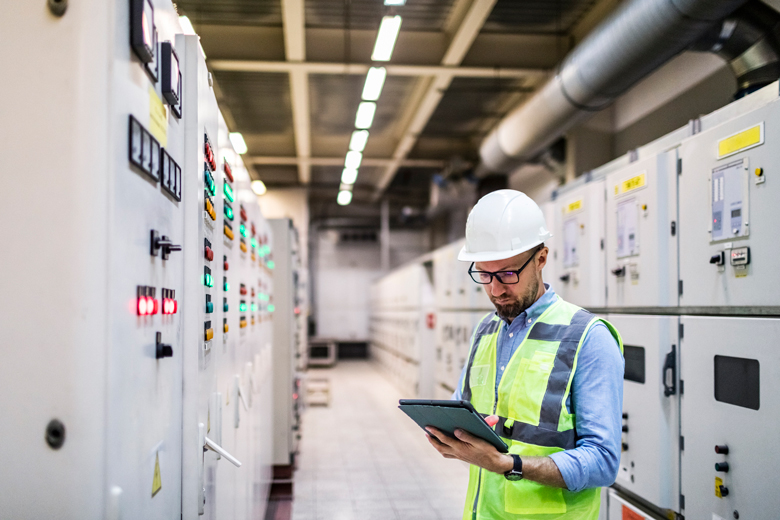
We would typically recommend investing the time in a detailed audit, with the support of a consultant if needed, for a more comprehensive picture of your businesses’ performance. This will likely spotlight some potential efficiencies – sometimes related to curbing bad employee habits – that can be made in the short-term.
The location of your energy meter, for example, can create potential issues. If placed incorrectly, for example in a basement or difficult to reach areas, this can impact WI-FI signal strength or make important maintenance updates more difficult. If not factored in, then meters might experience periods of downtime which can result in inaccurate readings. Likewise, your thermostat for example, it might be worth moving it to a location that’s more efficient, away from draughts, windows, and skylights.
Implementing a smart meter or automated meter reading (AMR) device which, in addition to ensuring your business is only paying for the energy it uses, can help with monitoring where you spend your money in near real-time.
Intelligent monitoring
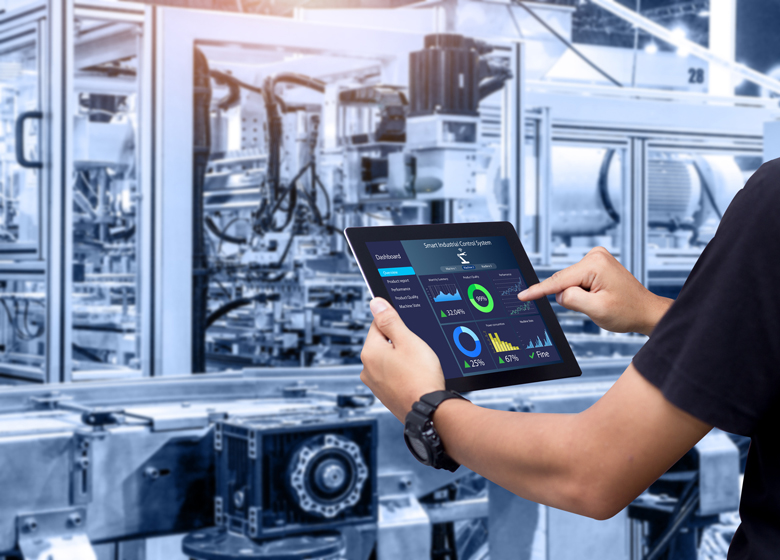
For more energy-intensive industries such as large-scale manufacturing where even small refinements in energy usage can result in substantial financial savings, energy management systems (EMS) can be a wise investment. These are more complex systems that use real-time data, to monitor, analyse and optimise energy usage at a granular level. This includes breaking down costs per department and providing reports which helps in tracking energy performance, cost analysis, and regulatory compliance.
Taking this a step further, some businesses are exploring more advanced solutions, leveraging AI and predictive analysis. For example, Amazon is currently using AI to make its buildings and utility management systems more efficient – apparently catching utility meter issues and identifying energy leaks at loading dock doors.
In comparison to traditional EMS’s which are restricted by pre-defined rules, AI tools use machine learning to enable more advanced autonomous decision-making by learning from current data and historical trends. This allows them to quickly adjust to unexpected changes, such as an equipment malfunction or an increase in energy demand from an external factor like a heatwave.
Predictive analysis is another key benefit, with AI solutions able to forecast future energy demands with a higher level of sophistication. This predictive capability ensures systems are adjusted in anticipation of future needs, rather than just reacting to them. This allows organisations to continuously refine energy usage which is particularly helpful if a company has a lot of offices or warehouses to consider.
Investment in AI can also enable smart grids to predict supply fluctuations which for companies with high and complex energy demands, can build more resilience into operations. While on their own smart grids can enable real-time monitoring and better distribution, AI can enhance this by amplifying predictive capabilities. This can flag potential issues such as outages and minimise downtime by notifying teams of faults before they develop. Looking forward, I expect we’ll see continued investment in this area as governments across Europe look to relieve pressure on grid infrastructure as we transition to more renewable energy sources.
Staying the Course
Energy efficiency is not a universal formula; it’s a tailored strategy shaped by the specific industry, organisational size, and individual energy objectives. These factors determine which technologies take precedence and will guide the scope of the investment that’s required.
To stay on track, businesses must gain a thorough understanding of their energy consumption nuances. This insight enables informed decision-making, ensuring the most effective solutions are prioritised and implemented for maximum impact.
This article appeared in the July/August 2025 issue of Energy Manager magazine. Subscribe here.
