

Navigating net zero in the emergency services

Andrea Shoel

The public sector has its own unique set of challenges when it comes to transitioning to net zero. As an energy and carbon consultancy, TEAM Energyโ€™s role is to support a wide range of public sector organisations, including emergency service organisations, in achieving their net zero targets.

TEAM has spoken with several of their customers in the public sector about the challenges they face and their solutions in working towards their sustainability goals.

What are the challenges emergency services are facing when striving to become net zero?

One of the most significant challenges for emergency services is transitioning their extensive fleet of on-call vehicles to electric. Given the 24/7 operational demands, these vehicles must be ready at all times. Transitioning to electric vehicles is essential for reducing carbon emissions, as these fleets are often high carbon emitters. However, the substantial costs associated with purchasing electric vehicles and installing charging infrastructure make this commitment challenging.

As well as high cost, there are additional challenges when switching to EV, such as the time it can take to charge vehicles that need to be available on demand, the complexity of establishing sufficient charging infrastructure at emergency service stations, and the risk of having a reduced range in more rural areas of the country.

TEAMโ€™s Business Development Manager, Andrea Shoel, works closely to support many of the businessโ€™ public sector customers, on this topic Andrea said:

โ€œFor the public sector, the biggest challenge is financial constraint. For Emergency Service organisations, they face the additional difficulty of decarbonising their fleet of vehicles, with EVs costing up to 30% more than a petrol car, organisations are faced with some tough decisions on where to prioritise their budget.โ€

What are emergency services doing to work towards net zero?

Emergency services across the country are trialling electric vehicles within their fleet, such as ambulances, police cars and fire trucks. In 2024 the London Ambulance Service deployed its first ever all electric ambulance, with other ambulance services across the country following suit.

The Metropolitan Police is also leading the way in the adoption of electric vehicles, with over 1600 EVs in their fleet, this includes marked and unmarked cars used for a wide range of activities.

Additionally, hydrogen cars (FCEVs) are an alternative to EVs, using hydrogen to generate electricity these offer advantages over battery EVs. These can have much faster refuelling time making them more suited to 24/7 operations. These vehicles also offer longer driving ranges when compared to electric vehicles, which can support services that have rural parts of the country to take care of.

Andrea discusses the other successes emergency services organisations have celebrated:

โ€œOrganisations in the emergency services sector have also shifted their focus to reducing energy waste in their buildings. They have installed air source heat pumps, LED lighting, and ensured that buildings are not operational when not in use to enhance energy efficiency. Additionally, some organisations have decommissioned older buildings and relocated offices to solar-powered facilities to further decrease their carbon emissions.”

What needs to change for the public sector to meet its net zero targets?

The biggest issues are the shifting goals from the UK Government. Public sector organisations need specific targets and adequate funding to implement necessary changes. The high cost of electric vehicles also needs to be addressed to enable more emergency service organisations, especially those in smaller counties with limited budgets, to transition their fleets to EVs. Currently, the high cost of these vehicles is slowing the transition from high-emitting vehicles.

Progress and commitment

There is a lot of progress being made across the UKโ€™s emergency services to reduce carbon emissions, despite the challenges they are faced with. County services like the Gloucestershire Police have successfully integrated EVs into their fleet, with a quarter of their vehicles powered by electricity. Fire services are also committing to this transition, with some having more than 10% of their fleet fully electric.

Trials like this have demonstrated that EVs can effectively serve in various roles including rapid response and patrol duties. This means services can rely on EVs more often, reducing the use of their petrol and diesel vehicles. It also allows for challenges, such as operational downtime for charging, to be addressed and improved upon for the future. Positive results will encourage further adoption of EVs and FCEVs, allowing for expanding fleets and enhanced infrastructure.

Overall, emergency services organisations are working hard to reduce their carbon emissions with reduced budgets and limited guidance from the government. Despite this, the commitment to net zero is clear.

www.teamenergy.com


This article appeared in the July/August 2025 issue of Energy Manager magazine. Subscribe here.

INSIGHT: Ensuring compliance – preparing for Ofgem’s heat network regulation

John Marsh

John Marsh, GTC COO

The UKโ€™s transition to net-zero carbon emissions has driven regulatory changes across the energy sector, with Ofgem set to oversee the heat network industry, as established in the Energy Act (2023).

Under current proposals, we expect Ofgem to formally undertake their role as regulator of the heat sector from 26th January 2026, followed by a 12-month transition period.

Itโ€™s essential for heat network providers to proactively positioned themselves to comply with upcoming regulations. Here we look at what can be done to prepare for Ofgemโ€™s regulatory framework and how we are leveraging compliance as a competitive advantage.

Ofgemโ€™s role as the regulator for heat networks will focus on key areas such as consumer protection, ensuring fair pricing, reliability, and service standards, as well as technical and performance requirements, including efficiency and metering obligations. Regulatory licensing will become available to heat network entities, providing statutory rights like other utilities, such as access to public highways enabling construction and maintenance of assets.

All heat networks will have to be authorised by Ofgem to be able to operate and supply heat, this will be achieved at the entity level rather than per scheme. The purpose of authorisation is to ensure that all heat networks adhere to standards set in consumer protections and technical assurance requirements. We are well-placed to ensure authorisation due to our standardised designs and construction processes. There will also be an emphasis on aligning with the UKโ€™s net-zero objectives and the Future Homes Standard.

Our existing business model and infrastructure already align with these regulatory principles in several ways. The company operates transparent and predictable pricing models, ensuring competitive rates for housebuilders and end-users. Through its smart thermostat controllers, consumers can monitor and control their heat usage efficiently, improving transparency and billing accuracy. We adhere to best practices in customer service, ensuring responsiveness and clear communication with end-users, which is a key regulatory requirement.

We also have a price promise, where we guarantee to our customers that the price they will be paying for their heat will be the same or lower to the closest counterfactual heating solution. For example, on our electrified Community Heat Hub solution the price promise is linked to individual air sourced heat pumps. Therefore, the solution ensures that consumers can expect a similar or better outcome compared to counterfactuals, while simultaneously helping house developers alleviate some of the increasing issues obtaining energy loads from the upstream electricity networks, which remains a challenge for individual air sourced solutions.

Networked Ground Source Heat Pumps and Community Heat Hubs provide highly efficient and low-carbon heat networks that align with Ofgemโ€™s efficiency and reliability criteria. The modular design of the Community Heat Hubs ensures scalability and compliance with future performance standards.

As an established multi-utility provider, GTC is already accustomed to operating under Ofgemโ€™s regulations in the electricity and gas markets. This experience ensures a smooth transition into heat network regulation. The companyโ€™s governance structure supports regulatory compliance, including data reporting, consumer complaint handling and service level commitments. We are actively engaging with Ofgem, industry bodies and housing developers to ensure our heat network models align with expected licensing conditions.

The Networked Ground Source Heat Pump and Community Heat Hub solutions align with the Future Homes Standard by providing low-carbon alternatives to gas boilers, ensuring housebuilders meet the 2025 regulatory requirements. By integrating heat networks with other utilities such as electricity, water, and fibre, a holistic multi-utility solution is offered, making it easier for developers to comply with net-zero legislation. These systems are designed to integrate with renewable energy sources, ensuring long-term sustainability and resilience against future regulatory changes.

With regulation approaching, heat network providers will need to adapt quickly to meet Ofgemโ€™s requirements. Our proactive compliance strategy provides several advantages. By already meeting regulatory expectations, we can differentiate ourselves from competitors still adapting to compliance.

We can already demonstrate our compliance with the expected regulatory regime through our Heat Trust Scheme membership and accredited heat networks, combined with our designs and operation complying with the industry led CP1 technical standards, both of which have been used as a basis to develop the incoming regulations.

Compliance ahead of regulation is a strategic advantage for heat network providers. By staying ahead of regulatory changes and continuing to bring innovation to the sector, we can drive the adoption of sustainable, future-proofed heating solutions across the UK housing market.


This article appeared in the July/August 2025 issue of Energy Manager magazine. Subscribe here.

Baxi launches three new CIBSE-accredited commercial heating and hot water CPD seminars

Heating and hot water solutions provider Baxi has launched a series of free Continuing Professional Development (CPD) accredited seminars, aimed at helping heating professionals expand their knowledge and performance in commercial heating and hot water projects.

Accredited by the Chartered Institute of Building Services Engineers (CIBSE), Baxiโ€™s three new CPD seminars are specially designed to support understanding of latest industry developments and learnings, while counting towards CPD hour requirements. Participants can then apply this knowledge to boost efficiency, performance and value in their own projects to benefit their customers.

Baxiโ€™s CPD training is tailored to suit individual business needs and can be attended online, delivered via Microsoft Teams, or in person. With sessions lasting no longer than an hour, seminars can be delivered at a time that best suits participants, providing greater flexibility and opportunities to ask questions for open discussion.

The first CPD, โ€˜Next-Gen Heating Solutions: Hybrid Systems and Heat Decarbonisation with Air Source Heat Pumpsโ€™, focuses on partial decarbonisation with air source heat pumps. It covers considerations around project feasibility, optioneering, and how to use investigative engineering to source the right solution for each project. The presentation uses example schematics set with challenges to help participants understand considerations when decarbonising heating and hot water in existing commercial buildings.

โ€˜Heat Networks: The Impact of Increasing Standardisation and Regulation on Network Connectionsโ€™, the second new Baxi CPD, provides an overview of Heat Networks in the UK, outlining why the growth rate is accelerating, and how the CIBSE code of practice applies to heat network connections. It also covers heat network zoning, the classification under the British Standard 8635 on hydraulic interface units, and how the latest Building Engineering Services Association (BESA) Heat Interface Unit (HIU) Test Regime applies. In addition, the seminar provides an overview of the Energy Act 2023, Part 8, and a preview of the heat network technical assurance scheme (HNTAS).

The third CPD, โ€˜Hot Water Generation for Commercial and Industrial Applicationsโ€™, offers a comprehensive overview of hot water generation technologies and system design principles. It addresses various system types โ€“ including direct, indirect, instantaneous and storage based โ€“ while highlighting the benefits of hydraulic separation and decentralised system design. The session concludes with insights into low-carbon technologies, emerging heat trends, and best practices for hot water sizing and demand profiling.

James Matthews, Director of Building Solutions at Baxi, said: โ€˜As commercial heating and hot water professionals continue to rise to the challenge of decarbonising systems across a variety of sectors, keeping up to date with the latest best practice and innovations is crucial. Weโ€™re pleased to be able to offer these new CIBSE-accredited CPD seminars for those eager to enhance their knowledge and performance in commercial heating and hot water projects.

โ€˜Baxi is committed to supporting the industry with high quality training and development, supporting specifiers, consultant engineers and contractors with the skills and knowledge required in the changing heat landscape. Our new CPD seminars are part of that commitment, as we continue to support industry professionals to navigate the energy transition through prioritising best practice, sharing insight on industry updates and providing quality solutions, service and training.โ€

Further information on Baxiโ€™s range of commercial hot water and heating solutions is available here

Monitoring and metering: cornerstones of a net zero strategy in the public sector

Davide Natuzzi

Davide Natuzzi, assistant director, energy, carbon and technical, Salix

As the UK increases its efforts to reach net zero carbon emissions by 2050, public sector organisations are still a central role in driving this transformation.

Through funding initiatives such as the Public Sector Decarbonisation Scheme (PSDS) and the increasing emphasis on transparency in energy performance, accurate monitoring and metering have become foundational to achieving real, measurable change. I believe these tools are essential not only for managing energy use, but also for ensuring that implemented measures deliver the carbon reductions they promise.

We can see how the urgency for better energy management is highlighted by the impacts of climate change already visible across the UK.

Record-breaking heatwaves and extreme weather events place unprecedented stress on public buildings, particularly hospitals, schools, and care facilities. Climate adaptation requires not just more resilient infrastructure but also smarter energy use. Accurate monitoring of energy systems ensures buildings are operating efficiently, even under stress, and helps prioritise improvements to support occupant health and operational continuity.

To achieve net zero, public organisations must implement a wide range of measures from fabric upgrades and LED lighting to low-carbon heating systems and renewable energy generation. Without robust monitoring in place, these measures risk falling short of their potential. Metering enables organisations to identify inefficiencies, set baselines, and verify actual savings, ensuring a continuous feedback loop that supports performance improvement.

For instance, replacing a gas-fired boiler with a heat pump can substantially reduce carbon emissions. However, the real-world impact of this change pivots on proper commissioning, ongoing monitoring, and adaptive control. Heat pumps can underperform if not properly integrated with the building’s heating demand or if users are not adequately trained in their operation. Monitoring provides the data necessary to fine-tune these systems and maximise their carbon-saving potential.

Effective energy and carbon accounting is critical for public bodies to track their performance, set realistic targets, and ensure compliance with statutory government carbon reduction targets and support the organisation’s internal decarbonisation roadmap.  Rather than relying solely on utility bills, this approach requires a strategic framework, establishing clear governance, integrating sub-metering and energy management systems, and utilising advanced software platforms to turn raw data into meaningful analytics.

However, limitations continue. Many public sector buildings, particularly historic or complex estates, lack granular metering infrastructure. Data gaps, inconsistent formats, and legacy systems can make it difficult to establish accurate baselines or measure performance over time. Additionally, shared energy systems and mixed-use spaces complicate allocation of emissions to specific departments or activities.

To overcome these barriers, organisations can invest in modern Building Energy Management Systems (BEMS) that allow for real-time energy tracking and remote diagnostics. Cloud-based platforms can help centralise and standardise data, making it easier to benchmark performance across sites. Furthermore, smart meters and IoT sensors provide high-resolution data that can reveal usage patterns and identify opportunities for behavioural or technical interventions.

Another valuable strategy is to adopt recognised standards for Measurement and Verification (M&V), such as the International Performance Measurement and Verification Protocol (IPMVP). This framework provides a structured approach for quantifying the impact of energy-saving measures, using either whole building analysis or isolating specific systems. Applying IPMVP ensures that reported savings are credible and replicable critical for securing ongoing investment and stakeholder support.

The UKโ€™s building regulations increasingly reflect the need for better energy monitoring. Part L (Conservation of Fuel and Power) mandates energy performance standards for new and existing non-domestic buildings, including requirements for metering and sub-metering systems in larger facilities. These regulations are pushing public sector organisations to embed metering in both refurbishment and new build projects, ensuring long-term accountability.

However, compliance does not always guarantee performance. A building that meets regulatory standards on paper may still operate inefficiently due to user behaviour or control issues. This is where metering becomes not just a compliance tool but a continuous improvement mechanism.

One of the most promising examples of metering and verification in action is how we at Salix have administered the Public Sector Decarbonisation Scheme since 2000. Across its multiple phases, the Public Sector Decarbonisation Scheme has funded thousands of low-carbon projects, until now, in local authorities, universities, NHS trusts, schools and more. A key requirement for recipients is to demonstrate energy and carbon savings, turning metering from a technical requirement into a strategic asset.

By requiring robust M&V plans aligned with standards like IPMVP, we are helping the public sector build a culture of accountability and continuous learning. This not only ensures public funds are spent effectively but also accelerates the development of best practice for carbon measurement and management.

Monitoring and metering are no longer optional components of energy management; they are strategic enablers of the public sectorโ€™s transition to net zero. From mitigating the risks of climate change to complying with regulatory requirements and demonstrating value for money, data is at the heart of the journey.

As public bodies continue to implement ambitious carbon reduction programmes, their success will depend not just on the measures they take, but on how well they measure them. Through smart technology, robust standards, and supportive funding mechanisms like the Public Sector Decarbonisation Scheme, the sector can lead by example – transforming good intentions into verified outcomes.


This article appeared in the July/August 2025 issue of Energy Manager magazine. Subscribe here.

Leading holdiay park enhances hot water system with Rinnai N Series for peak season demand

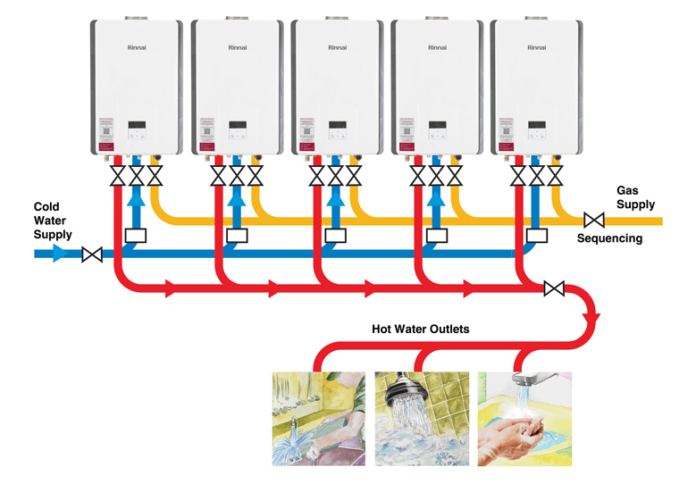
Rinnai has installed 5 x N Series 1600i units and a 1000L storage cylinder at a leading southwest holiday resort, Northam Farm Caravan & Holiday Park in Somerset, to ensure increased demand is met with a practical, economic, and technically viable new hot water delivery system.

The holiday park, in Brean, Somerset, offers a top-class range of facilities with a selection of bars, restaurants, fishing lakes and access to a beach.

The new hot water delivery system replaced a stored system which instantly lowered carbon and costs as there was no need to constantly re-heat potable hot water. Rinnai units were first installed two years ago โ€“ at that time, the install covered twenty-six showers, forty basins, and eight wash-up areas. The installation included 6 x N1600i + 1000L storage.

The installation site was spacious which allowed for Rinnai UKโ€™s design team to suggest a flexible system internally mounted design that met customer requirements. Rinnai can offer a multitude of systems using all fuels and energy saving technologies as solutions for heating and hot water supply to sites of any size.

Rinnai N series continuous flow water heaters arrive with a 12-year extended warranty that safeguards a customer against additional product payments. All appliances are manufactured under strict guidelines of ISO 9001 quality management and ISO 14001 environmental management and come with full manufacturersโ€™ warranty.

Rinnai N Sensei Series continuous flow water heaters are designed to provide domestic and commercial access to vast volumes of cost-effective, clean and temperature controlled hot water. Rinnai aim to supply UK customers with practical, economic, and technical solutions for water heating.

Each Rinnai Sensei N Series water heater unit offers a more compact and enhanced combustion design that allows for convenient installation, superior operational performance, and easy accessibility when servicing is required. All additional components are designed and manufactured by Rinnai ensuring proven quality and reliability.

There are four models in the range.

  • N1600i giving 954 litres per hour.
  • N1600e (external) also giving 954 litres per hour (at 50 degrees).
  • N1300i giving 775 litres per hour.
  • N1300e also giving 775 litres per hours of temperature controlled at 50 degrees.

The two 1600s have load profiles of XXL and are water efficiency class A rated, while the 1300s are load profile XL and are also water efficiency class A rated.

Other features include:

  • Flue up to 30+ metres for concentric
  • Turbo Fan
  • Built-in controller as standard on both internal and external models
  • Cascade Cable assembly allows up to twenty-four water heaters to be connected and function as one total and complete system. Any number of N-series Rinnai water heaters can be manifolded together enabling the largest capacities on the market.
  • Built in flue damper.
  • Air inlet filter
  • Frost Protection โ€“ minus 15ยฐC on the internal versions and minus 20 ยฐC on the external versions.
  • New PCB Design
  • Controller as standard โ€“ Lockable, set up of appliance, temperature set up to seventy-five.
  • Maintenance Monitor for engineers

The Sensei N Series uses Rinnaiโ€™s patented advanced burner technology with a 13-1 turn down ratio โ€“ the largest on the market โ€“ including extremely quiet operation. Integral controls on the units enable the water heater to achieve high efficiencies due to advanced burner control and high modulation ranges. All designs in this range are low-NOx.

Advanced burner controls with the Sensei N Series models ensure all appliances are well ahead of the NOx requirements set within ERP. The current level of permissible NOx set by ERP is 56 mg/Kwh. The Sensei N Series is third-party tested at 28 mg/Kwh making each unit one of the most ecological water heating appliances available on the market.

As the units do not incorporate storage their โ€˜green credentialsโ€™ are further recognised by BREEAM and score additional credits under the building regulations.

Rinnai hot water specialists have been designing hot water solutions for the leisure sector for over twenty years, to take advantage of a free design and cost saving consultation contact us today https://www.rinnai-uk.co.uk/contact-us/help-me-choose-product


This article appeared in the July/August 2025 issue of Energy Manager magazine. Subscribe here.
The ยฃ57 billion public sector decarbonisation question

Matt Caville

Matt Caville, Senior Advisor for the Decarbonisation of Complex Sites at Energy Systems Catapult

On 17 Juneโ€ฏ2025, the UK governmentโ€™s Spending Review confirmed that no further funding will flow through the Public Sector Decarbonisation Scheme (PSDS). Since its launch in 2020, the Department for Energy Security and Net Zero (DESNZ) has distributed ยฃ3.5โ€ฏbillion via PSDS grants, paving the way for heat decarbonisation across schools, hospitals, libraries and other public buildings. Yet, as the UK strives to cut public building emissions by 50% by Marchโ€ฏ2032 and 75% by 2037 (against a 2017 baseline), the funding shortfall has never been clearer.

The true cost of Netโ€ฏZero for public estates

Our latest analysis puts the total investment needed to fully decarbonise the UKโ€™s public estate at around ยฃ57โ€ฏbillion. This figure reflects the high capital expenditure of heat pump installations, fabric improvements, building energy management systems and emerging technologies such as thermal storage and demand flexibility. It also recognises that many technologies see cost reductions only after widespread deployment, as witnessed with solar PV under Feedโ€‘in Tariffs and LED lighting.

Estimating these costs remains challenging. Inconsistent data on building floor areas, energy consumption profiles and system specifications can lead to wide variances in budget forecasts. To overcome these gaps, innovative data platforms such as InSite are aggregating and interpreting largeโ€‘scale smart energy data, delivering insights into realโ€‘world performance and helping to refine cost projections.

Beyond grant funding: bridging the investment gap

Government grants were never going to cover the full bill. With PSDS funding now stopped, private capital must shoulder a greater share of public sector decarbonisation. Fortunately, institutional investors and impact funds possess significant resources ready for deployment in sustainable infrastructure.

The challenge lies in structuring decarbonisation projects to meet investor requirements for clear returns and manageable risks. Energy efficiency upgrades and heat electrification often yield predictable energy cost savings and avoided carbon levies, yet these benefits need robust financial models and dataโ€‘driven evidence to attract finance.

One pioneering approach has been the West of England Combined Authorityโ€™s Green Growth Impact Fund. By blending public grants with loans and equity, the fund offers a diversified riskโ€‘return profile that appeals to both local authorities and private investors. This model demonstrates how jurisdictions can scale up investments through tailored financial products, matching finance to specific building archetypes and technology mixes.

Dataโ€‘driven decision making

Credible data is the bedrock of successful blended finance. Public bodies can build investor confidence by capturing energy consumption patterns, heat demand profiles and project performance metrics from early pilot installations. Aggregating this data across portfolios helps to smooth risk and to quantify savings at scale.

Tools like the Smart Energy Data Service (SENSE) aim to broaden access to highโ€‘quality datasets for researchers, project developers and policy makers. By enhancing transparency, these platforms enable lenders to assess project viability more rigorously and support the development of standardised contract terms and performance guarantees.

Practical steps for energy managers

Energy managers should start by conducting thorough energy audits to establish accurate baseline data on how each building performs. With this information in hand, small-scale pilots of emerging technologies, such as hybrid heat pumps or thermal batteries, can help validate both cost and performance assumptions before committing to wider roll-out.

Once baseline performance and pilot outcomes are clear, exploring blended finance options becomes crucial. By leveraging local authority devolution deals or tapping into regional finance vehicles, organisations can structure projects that meet both public-sector needs and investor return expectations. Alongside finance considerations, collaboration with data-platform providers ensures that real-time consumption data feeds into central repositories, strengthening the evidence base for future investments. Finally, early stakeholder engagement aligns project goals with the priorities of both public and private partners, smoothing the path towards successful implementation.

Looking ahead

The stopping of the PSDS grants signals a shift towards marketโ€‘driven decarbonisation of public buildings. While government support will remain crucial for earlyโ€‘stage risk reduction, energy managers must now lead the charge in designing investable projects and harnessing private capital.

Successful decarbonisation will depend on a combination of rigorous data analysis, innovative financing structures and crossโ€‘sector collaboration. By adopting these principles, public sector organisations can transform their estates, deliver substantial carbon reductions and secure longโ€‘term operational savings.

For more information, please visit: https://es.catapult.org.uk/tools-and-labs/public-sector-decarbonisation-guidance/


This article appeared in the July/August 2025 issue of Energy Manager magazine. Subscribe here.

Superdielectrics launches next generation Faraday 2 battery

The Cambridge-based energy storage technology company, Superdielectrics, has announced the launch of its next generation aqueous polymer battery, the Faraday 2.

This launch marks a major milestone in the companyโ€™s mission to revolutionise energy storage with a safer, more sustainable, and cost-effective alternative to traditional lithium-ion batteries. The Faraday 2 builds on the success of the Faraday 1 prototype, being a major step towards the offering of a fridge-sized residential energy storage unit capable of reducing household electricity bills by 85% or more.

Developed from advances in contact lens polymers, Superdielectricsโ€™ internationally patented technology uses abundant, non-toxic materials and contains no critical or rare earth metals. With a full charge time of just 30 minutes, significantly faster than a traditional battery, the Faraday 2 is designed to store surplus renewable energy efficiently, enabling flexible tariffs and greater energy independence for homes. This innovation addresses the growing need for scalable energy storage across Europeโ€™s rapidly expanding renewable energy sector, and also offers a transformative solution to lower electricity costs, enhancing energy security.

Key advantages of the Faraday 2 include:

  • Safe: Unlike lithium-ion batteries, approximately 50% of the technology is water-based, eliminating the risk of thermal runaway which is a fire-safety hazard
  • Low cost: The technology does not rely on critical metals making its materials cheaper than lithium-ion batteries with securer supply chains
  • Sustainability: Built with readily available, materials that are easily recyclable
  • Long lifecycle: Potential for even longer use than existing batteries
  • Energy density potential: Currently outperforming lead-acid batteries and with ongoing R&D efforts to surpass currently available lithium-ion energy storage capacity in the future

Commenting on the launch, Jim Heathcote, CEO of Superdielectrics, said:

โ€œThe launch of Faraday 2 is a major step towards a low cost and clean energy future, as well as a key milestone for us as we work towards a commercial product. As the world shifts towards renewable energy, storage is the technological bottleneck. Our technology is low cost, safe and recyclable, helping the world in the global transition to sustainable energy.โ€

Earlier this year, Superdielectrics announced a wide-ranging collaboration agreement with E.ON, one of the UKโ€™s leading energy providers. The partnership is focused on accelerating the development and deployment of Superdielectricsโ€™ battery solution, with the next step being the creation of larger prototypes that can be trialled in customersโ€™ homes. This collaboration aims to give millions of homes access to safer, cleaner, and more affordable energy.

Julian Lennertz, Chief Commercial Officer at E.ON Next, said:

โ€œThe transition to cleaner energy is about making that energy more affordable and sustainable, and our partnership with Superdielectrics is one of a huge number of ways we are working to help customers take control of their energy by making energy storage widely available. We are delighted to be a part of the Superdielectrics journey, sharing insight into how millions of customers use energy and what they need to benefit from a smarter energy system. The launch of Faraday 2 is an important milestone in the evolution of battery design using readily available materials โ€“ and is yet another world-leading innovation designed and developed in the UK.โ€

With the demand for renewable energy surging, the launch of the Faraday 2 positions Superdielectrics at the forefront of the global energy transition.

https://superdielectrics.com/

Smarter, Cleaner, Leaner: Utility Strategy at a Turning Point

Robin Hale, Chief Executive, MEUC

When it comes to energy and water, complexity is now the constant. Utility users face a convergence of demands: from carbon reduction and cost control to shifting policies and the need for operational resilience. This is not a phase to be ridden out. It is a new environment that calls for sharper strategy and stronger collaboration.

Yet within this pressure lies potential. The UK Governmentโ€™s Industrial Strategy has framed infrastructure investment, clean growth and innovation as national imperatives. Utility management is central to that agenda. It connects operations to outcomes and risk to resilience.

Beyond the Baseline

The way large organisations engage with utilities has moved far beyond fixed rates and volume deals. Todayโ€™s strategies are built around flexibility, balancing risk with forward hedging and often spreading decisions across seasonal windows and multi-year horizons.

What defines the more capable teams is not size but adaptability. They are using digital tools more intelligently, questioning data with purpose, and embedding decisions within broader planning frameworks. These professionals have stepped beyond back-office functions. They are delivery leaders, shaping outcomes across cost, carbon and consumption.

At MEUC, we see how the role of energy and water teams continues to evolve. They have moved from purchasers to pioneers, becoming enablers of change.

From Aspiration to Implementation

Delivering cleaner operations is rarely straightforward. Goals may be clear, but turning them into viable action plans requires patience, technical alignment and internal consensus. This is especially true across large estates or complex portfolios.

Onsite generation, power purchase agreements, flexibility, connections, water efficiency and decarbonisation all hold promise. But they also require legal input, engineering review, business case approvals and, often, cultural change. Those making the most credible progress are not always the loudest, just the most persistent.

This is where real conversation matters. The most valuable insights often emerge not in place of structured case studies or sharp presentations, but around them, through honest exchanges that reveal the context, challenges and compromises behind the slides

Precision Over Panic

With rising costs, itโ€™s tempting to focus solely on reductions. Yet leaner systems are not about cutting corners. They are about improving precision. Demand side management, smart metering, and behaviour-focused initiatives can all offer small gains that scale.

The Governmentโ€™s Clean Growth Strategy supports this direction. Energy and water teams are no longer peripheral. They are agents of delivery, putting strategic decisions into action. Each gain reinforces competitiveness and environmental credibility; and the Energy Savings Opportunity Scheme (ESOS) continues to highlight the growing expectation for large organisations to deliver real, trackable savings.

Resilience Is Designed, Not Declared

Strategic risk now comes from all angles, contract terms, market volatility, policy change, and supply gaps. Resilience cannot be added after the fact. It must be designed into utility strategies from the outset.

Flexible contracting, regulatory fluency and market awareness now represent the minimum capability needed to remain credible. Equally, human resilience matters. Organisations are upskilling teams, strengthening peer networks and broadening their perspective.

The Value of Listening, Not Just Looking

In a digital world, face-to-face dialogue is still very much needed. Not for novelty, but for nuance. Contributor sessions and solution showcases remain the useful context to drive the conversations around them that deliver lasting value.

Thatโ€™s what defines events like MEUCโ€™s Autumn BUU Live Conference and Exhibition. The focus is not on showmanship, but substance. People attend to explore, question and connect with others who understand whatโ€™s at stake.

As one regulatory lead from a water retailer put it:
โ€œItโ€™s really great coming to MEUC events because I get to hear first-hand from customers what they want from retailers and the wider market.โ€

And from the user side, a senior category manager in a major utility user noted:
โ€œGreat opportunity to network with large corporates in the energy sector and to understand their challenges within the industry and help discussions within our organisation.โ€

A Strategic Pause With Purpose

Although no single event provides all the answers, the need to step out of the everyday, to reflect, recalibrate and challenge assumptions has never been more important. Expectations are rising and margins for error are tightening.

BUU Live is not a spectacle. Itโ€™s a strategic pause, an opportunity for industrial and commercial energy and water users to sharpen their questions, deepen their insight, and return to the everyday more prepared.

If you are responsible for buying or using utilities, this is where the next wave of leadership, clarity and connection is taking shape. Visit meucnetwork.co.uk โ€” you really should be in the room.


This article appeared in the July/August 2025 issue of Energy Manager magazine. Subscribe here.

Mitsubishi Electric and SNGโ€™s innovative heat pump approach leads the way in cost-saving, low-disruption residential retrofits to accelerate decarbonisation

Mitsubishi Electric and SNG (Sovereign Network Group) have joined forces to deliver a pioneering retrofit programme that has the opportunity to transform the social housing renewable heating landscape in the UK.

By leveraging Mitsubishi Electricโ€™s Ecodan R290 high-temperature air source heat pumps in homes with existing microbore/small bore pipework, the initiative cuts costs, reduces disruption, and could accelerate decarbonisation across SNGโ€™s housing portfolio.

SNG, which manages more than 84,000 homes for 210,000 customers across London and southern England, is piloting the use of high-temperature Ecodan heat pumps which work effectively and efficiently with legacy microbore/small bore systemsโ€”narrow pipework once thought incompatible with heat pump technology.

This innovative approach, backed by Mitsubishi Electric and SNGโ€™s extensive research and paper on microbore/small bore compatibility, removes one of the biggest barriers to large-scale heat pump retrofitting in older homes. 

Jim Dyer, Built Environment Director at SNG, explains: โ€œThis solution emerged from our desire to innovate and balance key priorities for both our customers and SNG: minimising disruption, cutting fuel bills, avoiding early replacement of components, and reducing both installation cost and the ongoing maintenance costs. It’s an ambitious holistic approach that places our customersโ€™ wellbeing and operational cost-effectiveness at its core.โ€ 

The benefits of this retrofit strategy are far-reaching: 

  • Reduced disruption to residents by avoiding the need to replace radiators and pipework or remove and replace floor coveringsย 
  • Significant capital savings by retaining existing pipework and radiatorsย 
  • Improved energy efficiency and fuel bill reductionโ€”crucial for tackling fuel povertyย 
  • Lower operational and long-term maintenance costsย 
  • Faster installation timelines, with SNGโ€™s trusted contractor reporting installations completed in as little as two daysย 

The project builds on the strengths of Mitsubishi Electricโ€™s R290 Ecodan system, which offers up to 300% efficiency, reliable performance in sub-zero temperatures, and the use of a natural refrigerant with a global warming potential of just 0.02. It is an ideal match for both retrofit and new-build social housing. 

By retaining the radiators and microbore/small bore infrastructure (plastic and copper pipework), the direct replacement of gas heating with a heat pump is possible. Mitsubishiโ€™s Electric R290โ€™s Ecodan system is the key enabler in this approach. 

James Chaplen, Mitsubishi Electric Head of Product Marketing and Communications said:  โ€œThe ability to retain microbore/small bore pipework of all types is a game-changer for retrofit projects. With our Ecodan heat pumps working effectively with existing systems, weโ€™re removing a major financial and logistical hurdle. This opens the door for housing providers like SNG to scale-up their net zero efforts without compromising on resident comfort or driving up costs.โ€ 

Mitsubishi Electricโ€™s and SNGโ€™s partnership reflects a priority in the housing sector for smart, scalable, and resident-friendly solutions to decarbonise UK homes. With a firm commitment to achieving net zero by 2050, this programme demonstrates how innovation, when paired with local insight, can drive real changeโ€”now. 

Visit microbore information page 


This article appeared in the July/August 2025 issue of Energy Manager magazine. Subscribe here.

Whatโ€™s REMA โ€“ and why is it important for UK businesses?

The Review of Electricity Market Arrangements (REMA) is a highly significant reform programme. It will affect the commercial, regulatory and policy aspects of the UK power industry, and could have a fundamental impact on all power consumers.

In fact, itโ€™s the most complete review of the GB power market since the early 2000s. That period saw the introduction of the New Electricity Trading Arrangements (NETA) and British Trading and Transmission Arrangements (BETTA).

The aim of REMA is to ensure the wholesale electricity market, and its associated policies, ancillary services and balancing operations, are all suited to delivering a net zero future. While current market arrangements have successfully delivered the early phases of power sector decarbonisation, the government believes the market needs changing to be fit for the future. This is due to the importance of delivering on the countryโ€™s decarbonisation ambitions while also ensuring affordability and security of supply for consumers.

These competing priorities have long been termed the โ€˜energy trilemmaโ€™. Can we minimise costs while supporting the transition to a sustainable, low carbon future โ€“ and ensuring UK energy security? The intention of REMA is to enable all three, by revising the market arrangements to reflect its changing dynamics – more locationally constrained, becoming more decarbonised and less centralised.

Whatโ€™s more, a fundamental question underpins the REMA programme. Will the predicted system benefits of the proposed changes outweigh the costs (and the time and trouble) thatโ€™s likely to be involved in implementing the reforms? Although we canโ€™t answer that, we can look at why electricity market reform is happening now, and what might be changing. Weโ€™ll also consider how those changes might affect the countryโ€™s businesses and other organisations.

Why change now?

One of the cornerstones of the GB energy system is the presence of a single national price for wholesale electricity. Even so, itโ€™s one of the key features of the current arrangements that the governmentโ€™s thinking about changing (to a zonal pricing model). Thatโ€™s because it questions whether or not the existing approach results in the most efficient operation of the system and the cheapest outcomes for consumers.

Finances are crucial. With the system increasingly congested in certain areas, the countryโ€™s spending billions of pounds a year on managing network constraints by getting generators to turn on/off, up or down. This is one of the challenges REMA hopes to address, while also delivering a more cost-effective solution for energy users.

The fact that intermittent renewable sources like wind and solar now play a much bigger role in the electricity system is a key factor. While this evolution delivers greener energy, it also makes it harder for the National Energy System Operator (NESO) to keep demand and supply in balance. Accordingly, certain generation assets, storage technologies and demand side response (DSR) schemes all need to be capable of responding quickly and flexibly.

The transition to wind (and, to a lesser extent, solar) has seen a growing number of power stations being deployed at the geographical edges of the existing system. These deployment areas include the North Sea, the coastline, and the generally wild and windy parts of the country.

In addition, the UK has increased its interconnectivity with Europe, as a means of sharing resources and improving the availability of capacity. With a higher number of renewable power sources now part of the nationโ€™s energy system, weโ€™re using less gas than we did in 2010 (or even 2018).

Increasingly then, gas is transitioning from being a source of baseload power to being a back-up resource the system relies upon when itโ€™s needed. One of the negative impacts of this situation is environmental: gas is a fossil fuel. The economic downside is that, as the โ€˜marginal plantโ€™ being brought online on many occasions, gas often sets the single national electricity price. This has proved expensive in recent years โ€“ particularly since the Russia-Ukraine conflict caused gas prices to rise dramatically.

Having more renewable power on the system also presents a significant challenge in terms of infrastructure. As NESO has stated: โ€œAround four times as much new transmission network will be needed in the next seven years as was built since 1990โ€.

To help overcome this issue, the Transmission Acceleration Action Plan aims to halve the timeline for building new transmission network infrastructure from 14 to 7 years. If successful, this will help to save money as well as time, since doing nothing will mean delays continuing and โ€“ probably โ€“ causing annual constraint costs to rise.

In 2023, NESO (then known as the Electricity System Operator, ESO) published its analysis. It suggested these costs may go up from around ยฃ2 billion per year (ยฃ80 per household annually) in 2022 to ยฃ7-8 billion in the late 2020s. Given this timeline, itโ€™s encouraging that the end of the policy design phase is close. In summer 2025, weโ€™re expecting the government to provide a high-level outline of some of its key decisions.

What reform options are available?

Since pretty much every aspect of the GB electricity system is on the table for discussion, itโ€™s easier to start by explaining whatโ€™s not in scope. The industry expects the Contracts for Difference (CfD) and Capacity Market (CM) schemes to stay (although with changes to the detail likely โ€“ see below). As now, both will be integral to delivering a net zero system.

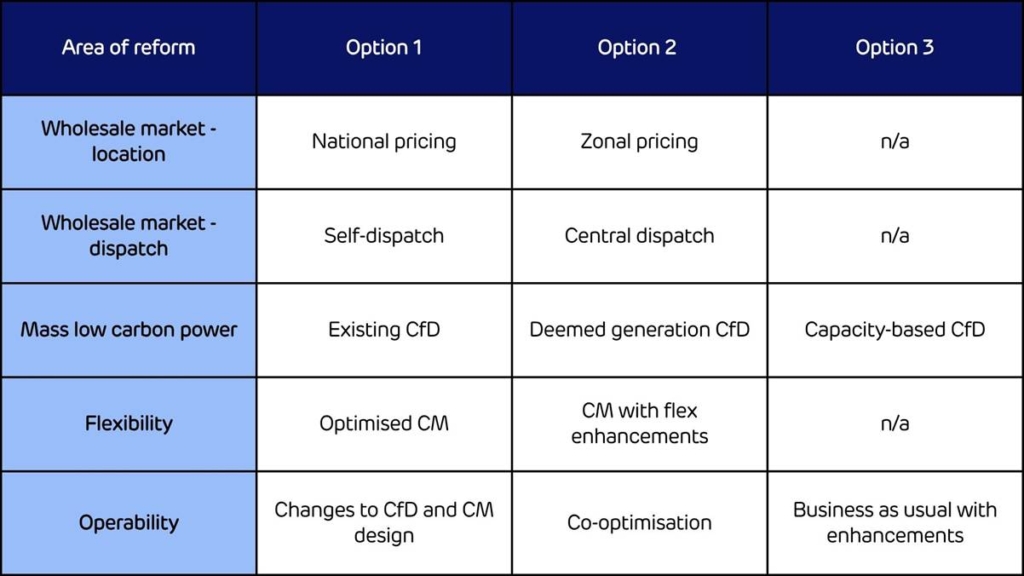
At the second (and most recent) round of the REMA consultation in March 2024, the following options were still under consideration:

Why do businesses care?

With the exact date of the Governmentโ€™s REMA announcement still unknown, thereโ€™s still uncertainty across the industry and amongst business customers.

In the industry, generators and suppliers (Drax occupies both camps) need clarification as soon as possible to function efficiently and cost-effectively. Those with generation assets need to understand how much their power is likely to be worth in the future, both for existing assets and potential investments. For assets that use biomass or gas, their planning includes securing the feedstock theyโ€™ll need (well ahead of when they need it). It may also involve working out when they can schedule maintenance and outages.

Suppliers will already be making similar predictions about how much electricity theyโ€™ll need to buy (to ensure they can meet demand) and how much it will cost. Suppliers crucially need certainty on price so they can offer fixed-price, fixed-term contracts to consumers. For business suppliers handling the needs of energy intensive industries (EII) and other high-demand organisations, these calculations can account for contracts lasting many years. In addition, power purchase agreements (PPAs) and corporate PPAs (CPPAs) tend to go beyond even these timeframes, making the uncertainty even more impactful.

Investors considering whether to back renewable power also need clarity. While they remain uncertain, theyโ€™re likely to stall their investments โ€“ further hindering the transition to a net zero energy system and economy.

Like all the players in the industry, and our customers, we look forward to gaining clarification and certainty about REMA very soon. Once we have it, weโ€™ll be compiling and releasing new Intelligence content to help you make sense of it all.

For more insights into the UK energy market, head to energy.drax.com/insights.


This article appeared in the July/August 2025 issue of Energy Manager magazine. Subscribe here.