
Building carbon-conscious supply chains in utilities and industrial transport

Jack Kent, Engineering Manager, Towmate Trailers

Jack Kent, Engineering Manager, Towmate Trailers

Reducing emissions across utility and industrial supply chains has become a non-negotiable. As the UK moves toward net-zero, there is increasing pressure on businesses to find credible ways of cutting operational carbon, not just within energy generation and end-use, but across all the logistics and transport systems that support core infrastructure.

One of the most carbon-intensive, yet often overlooked, components of these networks is the movement of heavy plant and equipment. From transporting pipe coils and diggers to pulling reinstatement materials between sites, machinery logistics still rely heavily on diesel vehicles, inefficient routing, and outdated trailer designs.

Before solutions can be implemented, companies need to understand where emissions are being generated and how those impacts accumulate across operations.

Identifying the carbon hotspots

The true carbon cost of transporting machinery goes far beyond exhaust pipe emissions; energy is consumed at every stage. Transport is a major contributor to UK gas emissions, accounting for 28% of the total in 2022. This encompasses everything from loading and unloading to wasted mileage caused by poor route planning or underutilised return journeys, as well as unnecessary emissions and escalating operational costs.

Driven by rising environmental concerns, stricter regulations and the need for cost efficiency, companies are now looking at the full picture. This includes reducing vehicle miles, minimising trailer weight, consolidating routes and introducing modular trailer solutions that make equipment more adaptable and suitable for a range of uses.

As with the domestic vehicle market, electrification is playing a vital role in reducing carbon emissions, but it also introduces a new set of challenges. Electric vans and diggers are typically heavier and offer reduced payload capacity, which can undermine efficiency unless the right transport solutions are in place.

This is where lightweight trailer innovation is making a measurable difference, by allowing teams to safely carry more equipment per journey while staying compliant with legal weight limits.

Designing with net-zero in mind

As a carbon-neutral business, we have seen how embedding sustainability into design and engineering processes has a compound effect. Our modular trailer systems, for example, allow customers to transport multiple load types without needing a different trailer for every task. That flexibility reduces fleet size and encourages more circular, lower-impact operations.

In the case of our work with The Kier Group, a leading provider of infrastructure services, construction and property development in the UK, our modular design enabled Kier to complete excavation and reinstatement work using a single crew and trailer, rather than multiple vehicles. By consolidating the equipment and reducing vehicle movements, we were able to improve the companyโ€™s efficiency performance, lower emissions and implement more streamlined project delivery.

Kier originally approached us because of our previous experience working with Clancy. We had developed a hotbox trailer, based on an adaptable Ram General Duty chassis, that allowed them two operatives and one vehicle to carry enough hot mix asphalt at working temperature for up to two days’ work; a solution that reduced return trips for refills and shortened time spent on site, enabling their teams to complete multiple jobs in one day.

Better trailer design can deliver tangible carbon savings without disrupting site productivity, streamlining operations and supporting greener, more efficient working models.

Regulatory readiness

The push for carbon accountability is no longer just an internal ambition; itโ€™s baked into procurement frameworks and compliance targets.

In fact, supply chain emissions are being followed more closely than ever today, especially in public infrastructure, with contractors required to show carbon reduction plans. Under the UKโ€™s Procurement Policy Note (PPN) 06/21, suppliers bidding for major government contracts must commit to net-zero and provide detailed carbon disclosures.

These regulations mean that logistics providers, and their subcontractors, must not only provide evidence of safe and efficient equipment but also prove a clear understanding of regulatory compliance and carbon impact.

In this space, fleet data and digital tools are as critical as the physical solutions that can be implemented to lower carbon emissions. GPS-enabled tracking, load monitoring and route optimisation are vital for measuring emissions performance and reporting. Only by developing processes that combine both the digital and physical facets of operations can companies obtain the full picture they need and start to achieve significant reductions in carbon emissions.

Retrofitting for resilience

Environmental impact is a key topic of conversation for many sectors right now, yet another key trend weโ€™re seeing is the industryโ€™s move toward retrofitting. Instead of embarking on the costly and wasteful job of replacing entire fleets, many contractors are upgrading existing pipe trailers with new systems and capabilities like LaySafe. This modular concept enables modernisation and upgrading without the emissions or cost associated with manufacturing new equipment.

These kinds of retrofits donโ€™t just extend the life of existing assets; they also reduce waste, improve safety, and make it easier to adapt to changing legislation. For many of our clients, itโ€™s a smarter path toward long-term decarbonisation that fits within their current operational model.

A shift in mindset

Ultimately, building a carbon-conscious supply chain is less about radical overhauls and more about incremental, well-informed change. Route by route, component by component, efficiency gains and emission reductions are achievable, but they require a joined-up mindset across the value chain.

From trailer design to fleet strategy, every decision now has a carbon consequence. For utility providers and industrial contractors navigating the road to net zero, transport logistics should no longer be an afterthought; they should be central to making decarbonisation work at scale.
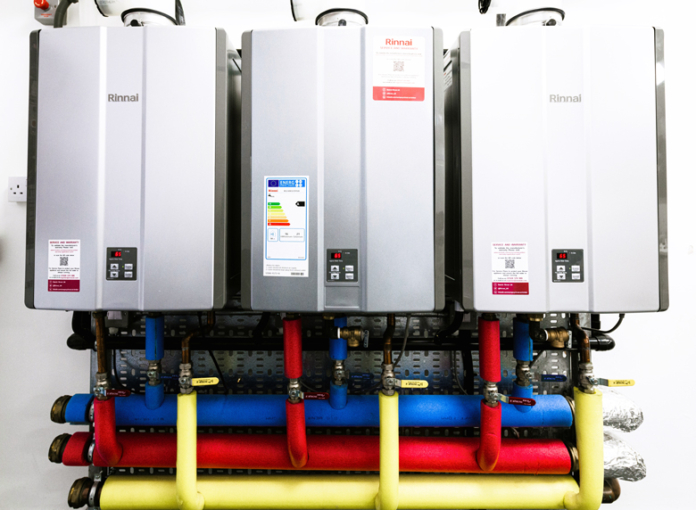
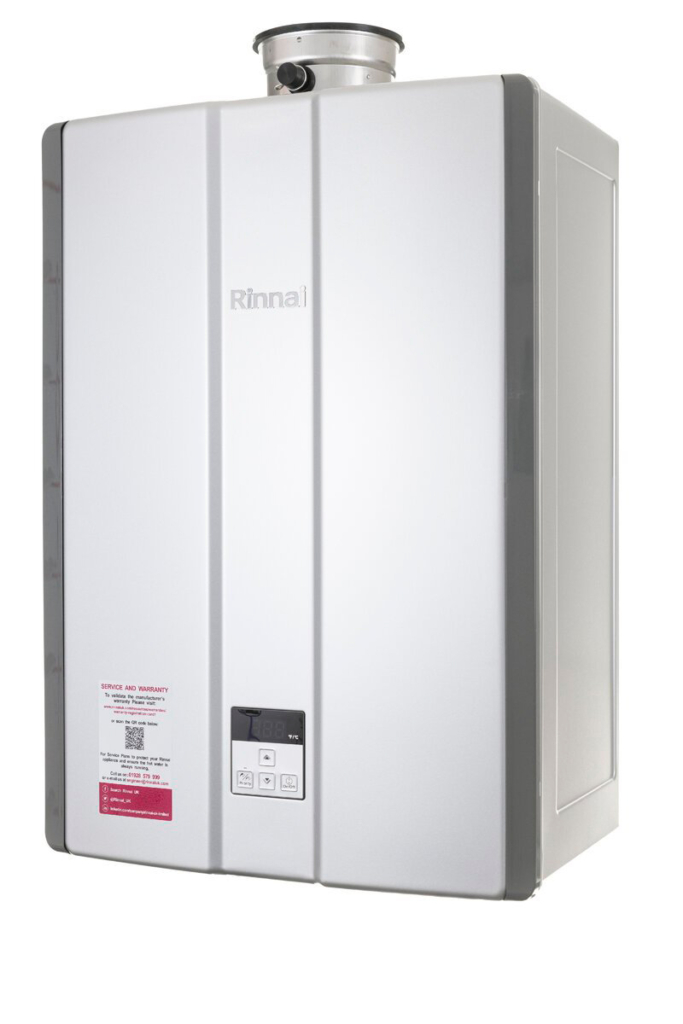
Now Rinnai offers extended warranties on all continuous flow hot water heating units – up to 12 years

Now available from Rinnai is a comprehensive range of continuous flow water heaters with market leading warranties that protect customers from additional costs on the appliances. Rinnai commercial instantaneous water heaters have a 12-year extended warranty that protects an end-user from unlikely but unforeseen costs. All continuous flow units achieve this through complete design manufacture with vertical integration of all internal components โ€“ put simply all components are made by Rinnai, and this means that their effectiveness is optimised. The company aims to supply UK customers with practical, economic, and technical solutions for heating and hot water needs in any type of building.

All Rinnai appliances are manufactured under strict guidelines of ISO 9001 quality management and ISO 14001 environmental management. The commercial continuous flow water heaters are designed to provide almost limitless volumes of cost-effective and temperature controlled hot water.

Each Rinnai N Series gas fired water heater offers a more compact and enhanced combustion design that allows for convenient installation, superior operational performance, and easy accessibility when servicing is required. All additional components are designed and manufactured by Rinnai ensuring proven quality and reliability.

The Rinnai N Series is the first ever continuous flow water heater manufactured with stainless steel heat exchangers to be available in the UK – this provides an extended working life at optimum performance to each of the four models in the range.

The N series models are:

  • N1600i giving 954 litres per hour
  • N1600e (external) also giving 954 litres per hour (at 50 degrees)
  • N1300i giving 775 litres per hour
  • N1300e also giving 775 litres per hours of temperature controlled at 50 degrees.

The two 1600s have load profiles of XXL and are water efficiency class A rated, while the 1300s are load profile XL and are also water efficiency class A rated.

Other features include:

  • Flue up to 48+ metres for concentric for flexible mounting
  • Turbo Fan and longevity
  • Built-in controller as standard on both internal and external models for easy set up
  • Cascade Cable assembly allows up to twenty-four water heaters to be connected and function as one total and complete system. Any number of N-series Rinnai water heaters can be manifolded together enabling the largest capacities on the market.
  • Frost Protection โ€“ minus 15ยฐC on the internal versions and minus 20 ยฐC on the external versions for flexible installation
  • Temperature setting up to 85 degrees for legionella protection or high temperature projects
  • Maintenance Monitor for engineers for easy system updates, diagnostics or set up.

All Rinnai products in this range are low-NOx. The N Series uses Rinnaiโ€™s patented advanced burner technology with a 13-1 turn down ratio โ€“ the largest on the market meaning the water heater is optimising gas usage at all times which equates to energy and cost savings. All Rinnai units are extremely quiet in operation. Integral controls on the units enable the water heater to achieve high efficiencies due to advanced burner control and high modulation ranges.

Advanced burner controls within the N Series models ensure all appliances are well ahead of the NOx requirements set within ERP. The current level of permissible NOx set by ERP is 56 mg/Kwh. The Sensei N Series is third-party tested at 26 mg/Kwh making them one of the greenest gas-fired water heating appliances available. As the units do not incorporate storage their โ€˜green credentialsโ€™ are further recognised by BREEAM and score additional credits under the building regulations.

Rinnai also supports the installer and end-user with

  • full Technical Support
  • System Design Service
  • Carbon Cost Comparison calculation
  • CAPEX and OPEX reports on any given site.

Rinnaiโ€™s continuous flow heater systems are proven to be more energy efficient than conventional storage systems and are the expertsโ€™ preferred mode of hot water provision. Rinnai units easily cater for any size projects that demand high volumes of water at intermittent and any times of day.

For further information on the Rinnai N Series simply visitย  www.rinnai-uk.co.uk/about us/H3

Rinnaiโ€™s aim is to provide all customers with cost-effective products that can accept the variety of fuels whilst supplying convenience through every step of purchase and beyond.

RINNAI OFFERS CLEAR PATHWAYS TO LOWER CARBON AND DECARBONISATION PLUS CUSTOMER COST REDUCTIONS FOR COMMERCIAL, DOMESTIC AND OFF-GRID HEATING & HOT WATER DELIVERY

  • Rinnaiโ€™s range of decarbonising products – H1/H2/H3 – consists of hot water heating units in gas/BioLPG/DME, hydrogen ready units, electric instantaneous hot water heaters, electric storage cylinders and buffer vessels, a comprehensive range of heat pumps, solar, hydrogen-ready or natural gas in any configuration of hybrid formats for either residential or commercial applications. Rinnaiโ€™s H1/2/3 range of products and systems offer contractors, consultants, and end users a range of efficient, robust, and affordable low carbon/decarbonising appliances which create practical, economic, and technically feasible solutions.ย 
  • Rinnai is a world leading manufacturer of hot water heaters and produces over two million units a year, operating on each of the five continents. The brand has gained an established reputation for producing products that offer high performance, cost efficiency and extended working lives.ย 
  • Rinnai products are UKCA certified, A-rated water efficiency, accessed through multiple fuel options and are available for purchase 24/7, 365 days a year. Any unit can be delivered to any UK site within 24 hours.
  • Rinnai offer carbon and cost comparison services that will calculate financial, and carbon savings made when investing in a Rinnai system. Rinnai also provide a system design service that will suggest an appropriate system for the property in question.
  • Rinnai offer comprehensive training courses and technical support in all aspects of the water heating industry including detailed CPDโ€™s.
  • The Rinnai range covers all forms of fuels and appliances currently available – electric, gas, hydrogen, BioLPG, DME solar thermal, low GWP heat pumps and electric water heaters More information can be found on Rinnaiโ€™s website and its โ€œHelp Me Chooseโ€ webpage.ย 

RINNAI FULL PRODUCT AVAILABILITY 24/7 FOR NEXT DAY DELIVERY of ALL HOT WATER HEATING UNIT MODELS INCLUDING 48-58kW UNITS-

SAVINGS OF

20% REDUCTION of open cost,

30% REDUCTION of initial cost

15% REDUCTION in carbon

75% REDUCTION of space

Visit www.rinnai-uk.co.ukย ย Or email engineer@rinaiuk.comย ย 

For more information on the RINNAI product range visit www.rinnaiuk.com

Office replaces gas with heat pumps to get five years ahead of legislationย ย 

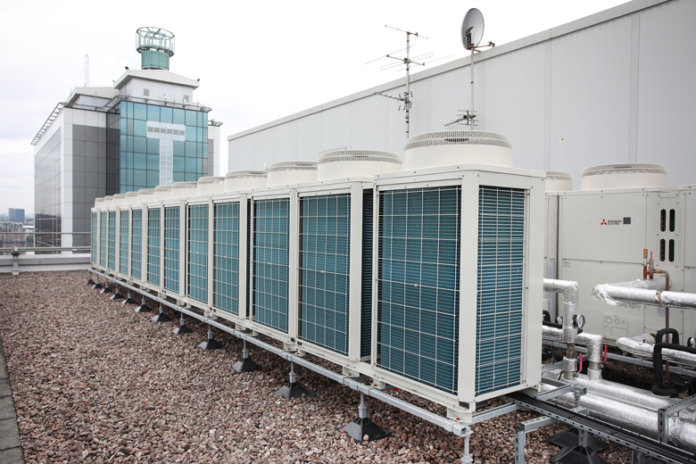
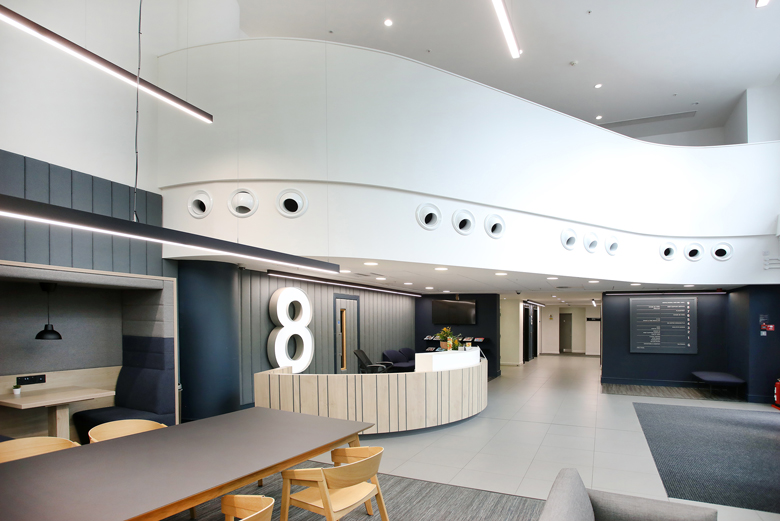
Exchange Quay, a landmark office campus in Manchester, has significantly improved the energy efficiency of one of its major buildings by replacing gas boilers with Mitsubishi Electric commercial air source heat pumps. The upgrade has enabled Building Eight, a ten-storey office block on the campus, to achieve an Energy Performance Certificate (EPC) rating of B, aligning with future Minimum Energy Efficiency Standards (MEES) and paving the way for full gas removal. Commercial offices need to achieve a minimum EPC rating of Cโ€ฏby 2027, and a rating of B by 2030.ย ย 

The installation was commissioned by the landlord, Till Asset Management (Tillam), as part of its long-term plan to decarbonise its portfolio and meet growing tenant demand for energy and ESG credentials. The company appointed air conditioning contractor Austin Broady to deliver a system that could reduce emissions and running costs without disrupting existing occupants. 

โ€œOne of the most important things for our tenants now is their credentials in terms of carbon emissions, energy and social governance,โ€ said Les Lang, Director at Tillam. โ€œSo, our challenge is how we can upgrade our buildings to reduce their energy use and carbon footprint, without disturbing or decanting existing tenants.โ€ 

Tailored decarbonisation for Manchesterโ€™s climateย 

Developed in the 1980s, Exchange Quay is one of the largest office campuses in the North-West, featuring ten buildings and a wide range of amenities. Building Eight is among the largest on-site, and its decarbonisation presented a specific challenge: how to deliver meaningful carbon savings without a complete overhaul of its heating, ventilation and air conditioning (HVAC). 

Mitsubishi Electricโ€™s CAHV commercial heat pumps were selected as the optimal solution. Twelve CAHV-P500YB-HPB heat pumps, each offering 40 kW, were installed in a cascaded configuration, to optimise performance and length equipment life. The design leveraged historical climate data to size the system effectively for local winter conditions, ensuring reliability even during the cityโ€™s coldest months. 

By delivering hot water temperatures of up to 70ยฐC without the need for supplementary heaters, the CAHV system provides low-carbon heating across all ten floors via existing four-pipe fan coil units. This approach avoided intrusive works and enabled a phased transition off gas. CAHV units can be cascaded together to provide scalable heating performance of up to 688 kW. 

Proof through performanceย 

The system passed its first real-world test during one of Manchesterโ€™s coldest winters in a decade. With Building Eight now operating comfortably and efficiently, Tillam plans to remove the legacy gas system entirely. 

โ€œThe project has been really successful, as weโ€™ve just had a very cold winter, the coldest for ten years,โ€ added Les Lang. โ€œNow weโ€™ve had that experience, and the system has worked perfectly, we are in a position where the gas will be removed from the building.โ€ 

Following the projectโ€™s success, Tillam has committed to upgrading Building One later this year, with Building Five scheduled shortly after. The wider goal is to futureproof the entire Exchange Quay estate while sharing learnings with other landlords facing similar challenges. 

โ€œWe are now looking at other buildings in other parts of the country, and we are bringing landlords to this site to show them what weโ€™ve done,โ€ said Mark Broady, Managing Director at Austin Broady. โ€œWeโ€™re showing them our design and how we reached the solution, and theyโ€™re now sufficiently confident to roll this sort of project out in their buildings.โ€ 

Installation Summaryย 

  • 12 x CAHV-P 40kW Commercial Air Source Heat Pumpsย 
  • Total heating capacity: 480kWย 
  • Operating temperature: up to 70ยฐC without boostย 
  • Application: Ten-storey office space, serving existing four-pipe fan coil systemย 

World Bank: Clean Energy Gets Funding โ€“ Efficiency Gets Just 8%

Old grids waste. Smart systems adapt.

The World Bank calls out policy inertia, outdated building codes, and underuse of AI tools as key barriers to scaling fast, low-cost energy savings. Experts warn that digital retrofits remain overlooked, even though they deliver proven returns.

A new World Bank report points out one of the biggest blind spots in EU energy policy: energy efficiency remains widely overlooked, despite giving big returns. For every โ‚ฌ1 invested, the average return is โ‚ฌ3 to โ‚ฌ5. Yet funding, regulation, and political focus still fall short, the report states.

As energy demand is expected to rise by 30% in the next decade, energy experts warn that investments in efficiency must nearly triple by 2030 to meet climate and economic targets.

The report reveals that two-thirds of global primary energy is lost or wasted. Yet just 8% of clean energy financing in low- and middle-income countries is directed toward energy efficiency. This inefficiency represents an economic loss equivalent to 5% of global GDP.

Buildings โ€“ both new and old โ€“ are named as the single largest opportunity. Even high-tech facilities like data centers are falling short, especially as demand from AI systems and cooling grows.

โ€œThe report makes it clear that energy efficiency isnโ€™t being held back by a lack of technology, but by how slowly weโ€™re applying it,โ€ said Donatas Karฤiauskas, CEO of Exergio, a company developing AI-based tools for optimizing energy use in buildings. โ€œWe already have effective solutions. But instead of using them widely, most funding still goes into physical upgrades or energy supply. Smart, software-driven retrofits are still missing from the picture โ€“ even though they can deliver fast results.โ€

The analysis details three persistent barriers: weak policies, lack of digital standards, and pilot projects that remain too small to scale. These findings mirror what energy efficiency companies see on the ground. The World Bank recommends treating efficiency as critical infrastructure, not a secondary add-on. It urges governments to strengthen national building codes, create utility-backed incentives, and reform energy pricing to reflect actual costs and risks.

โ€œRegulations today incentivize new supply more than reduced demand,โ€ added Karฤiauskas. โ€œBut if we want to power more with less, we need smarter grids and smarter buildings. Energy efficiency doesnโ€™t mean using less. It means wasting less. Thatโ€™s exactly what real-time optimization is built for.โ€

One of the most pressing concerns raised in the report is the lack of progress in the public sector. Government buildings are among the least efficient. The World Bank recommends national retrofitting programs that use shared templates, pooled procurement, and open access to results.

Karฤiauskas believes private-sector software could accelerate these efforts. โ€œIt doesnโ€™t take years to optimize,โ€ he said. โ€œWeโ€™ve helped reduce energy bills by 15-30% in a matter of months across office buildings, universities, and healthcare systems. The upgrades donโ€™t require major construction โ€“ just data access and the will to act.โ€

The report identifies clear and scalable solutions to remove fragmented governance and high transaction costs barriers. These include harmonizing standards across countries, providing credit guarantees to reduce investor risk, and making project performance data more widely available.

The World Bank stresses that the shortfall is not technical, but institutional. In 2023, countries averaged just 1% annual improvement in energy efficiency, which is far below the 4% needed. The need is especially urgent in middle-income countries facing fast-growing urban and industrial demand. As the report makes clear, the main barrier now is action, not tools.

โ€œYou donโ€™t need a new device. You need to start using the right tools at the right time. Digital retrofits are fast, cheap, and scalable โ€“ but they require political and operational will. If countries are serious about decarbonization, this is where they should start,โ€ concluded Karฤiauskas.

Powering the EV future: can Northern Ireland keep up?

Damian Wilson

Northern Ireland is at a pivotal crossroads in the journey toward net zero โ€” and electric vehicles (EVs) are fast becoming a central part of that story. As charging infrastructure expands and adoption accelerates, we face an urgent challenge: building an EV ecosystem that is not only fit for purpose but truly works for everyone, everywhere.

In this piece, Damian Wilson, CEO at Share Energy, discusses the importance of putting people at the heart of Northern Irelandโ€™s EV transition.

At Share Energy, weโ€™re not here to watch from the sidelines. As a challenger brand shaking up Northern Irelandโ€™s energy market, we believe this transition should be smart, fair, and customer-first โ€” because the EV revolution wonโ€™t succeed unless people trust it to work in real life.

Laying the groundwork: rural gaps canโ€™t be ignored

The UKโ€™s EV charging infrastructure is accelerating at pace. In early 2025 alone, over 3,100 new charge points were installed, bringing the total to nearly 77,000 โ€” a 29% year-on-year increase, according to Zapmap.

But in Northern Ireland, the story is more complicated.

Since ESB introduced pay-to-charge models in 2023, there has been a  24% rise in charge points and a 63% jump in ultra-rapid chargers. However, itโ€™s still playing catch-up, both in scale and in strategy.

Rapid charging hubs, with multiple 150kW+ bays, are driving progress in key urban areas,  but the rural network remains patchy and underdeveloped.

According to the Department for Transport and the Electric Vehicle Association, Northern Ireland has just 35,600 charge points per 100,000 people. Wales, by comparison, has nearly three times more. England and Scotland are even further ahead, with over 110,000 per 100,000 people.

Zoom in, and the disparities are even starker: Belfast leads with 12.9 rapid chargers per 100,000 residents, while Derry City and Strabane lag with just 4.

If people canโ€™t rely on the network, they wonโ€™t make the switch. And without demand, investment slows โ€” creating a cycle of stagnation we canโ€™t afford.

NI doesnโ€™t just need more chargers. It needs a smarter, fairer deployment strategy that serves everyone.

What gets measured gets managed

Smart meters are a foundational building block for a thriving EV ecosystem, especially in Northern Ireland, where most EV owners will charge their vehicles at home.

Yet, this is precisely where we continue to fall behind the rest of the UK in its EV transition. Without widespread access to smart meters, local EV drivers are missing out on essential functionality that goes far beyond traditional energy measurement.

Smart meters enable time-of-use (TOU) tariffs, allowing electricity to be cheaper during off-peak hours. EV owners can program their vehicles to charge when rates are lowestโ€”reducing costs, easing pressure on the grid, and promoting more sustainable usage patterns.

Last November marked a welcome step forward, with the launch of public consultations on smart meter rollout across NI. However, it remains early daysโ€”and the goal of installing 920,000 meters, as proposed by the Department for the Economy, still feels a long way off.

While Northern Ireland lags behind both Great Britain and the Republic of Ireland in terms of smart meter infrastructure, we are ready for the transition here. At Share Energy, weโ€™ve developed our systems with smart meters in mind, including an app that works alongside them to give customers real-time control and insights into energy consumption.

Smarter, greener, more empowering charging

The hardware is only half the equation. The future of EV charging must also be intelligent โ€” helping people charge when itโ€™s cheapest, greenest, and most convenient. This is where energy providers have a critical role to play.

At Share Energy, weโ€™ve developed an EV tariff designed to reward smart behaviour. Customers are encouraged to charge during off-peak hours, when the grid is greener and the cost is lower โ€” promoting both savings and sustainability.

Our approach reflects what we believe the market needs: innovation with empathy. A local, transparent provider thatโ€™s aligned with peopleโ€™s real-world needs โ€” not just profit margins.

Private investment from Weev, Fastned, and EasyGo is helping move the dial. But to truly build an ecosystem that lasts, infrastructure growth must go hand-in-hand with customer trust, education, and smart incentives.

This is a defining moment for the energy and transport sectors in Northern Ireland. The technology exists. The demand is growing. The public is ready.

Now we need to connect the dots.

At Share Energy, weโ€™re committed to doing our part โ€” not just by powering EVs, but by being a true partner to the people who drive them.


This article appeared in the July/August 2025 issue of Energy Manager magazine. Subscribe here.

Northern Powergrid launches free digital tool to empower Local Authorities in achieving Net Zero goals

Northern Powergrid has partnered with spatial analytics and software company, Advanced Infrastructure to offer LAEP+, a powerful online spatial planning platform, free of charge to all local authorities within its licence area, starting from Autumn 2025.

By using LAEP+, local authorities can save up to 54% (around ยฃ50,000) on the cost of creating a Local Area Energy Plan (LAEP) compared to traditional consultancy methods.

This significant saving makes data-driven planning far more accessible, particularly for councils operating with limited resources.

The move reflects Northern Powergridโ€™s commitment to a fair and efficient transition to net zero, empowering councils with tools that drive smarter, data-led energy decisions at the local level.

LAEP+ will complement existing support available from Northern Powergridโ€™s Regional Insights team and Open Data Portal.

On the tool, Siobhan Barton, Head of Sustainability and Regional Engagement at Northern Powergrid said:

โ€œLocal authorities are at the heart of the UKโ€™s transition to a Net Zero future, and we recognise the critical role they play in shaping and delivering sustainable energy plans.

โ€œThatโ€™s why weโ€™re committed to working in close partnership with local governmentโ€”providing the tools, insights and support they need to succeed.

โ€œThrough our dedicated regional insights function, weโ€™re able to offer a deep understanding of the unique challenges and opportunities across our communities.

โ€œThis enables us to collaborate effectively with major stakeholders, provide tailored support and ensure that our collective efforts deliver meaningful, long-term benefits for the people and places we serve.โ€

Designed for both technical and non-technical users, LAEP+ is an intuitive, web-based platform that allows councils to create Local Area Energy Plans (LAEPs), model low-carbon projects, explore future energy scenarios, and engage stakeholders through interactive data visualisation. It includes access to key datasets such as network data, fuel poverty indicators and building stock information, helping councils target interventions where they are needed most.

Dominic Brown, Net Zero Project Manager at York and North Yorkshire Combined Authority, said:

โ€œAs part of our commitment to providing clean energy to homes and businesses in York and North Yorkshire, weโ€™re exploring ways to attract private sector partners to invest in efficient, low carbon energy.

โ€œOur Local Net Zero Accelerator Programme (LNZA) is being developed to achieve this ambition, so itโ€™s vital we understand the assets in our region, and how to represent them visually to investors.

โ€œThe LAEP+ tool will play a key role in supporting York and North Yorkshire achieve this, and in-turn play a part in our strategic goal of a carbon negative region by 2040.โ€

Already deployed across 200 local authorities across the UK, LAEP+ pinpoints areas eligible for funding schemes such as LEVI and Solar Together, with outputs easily exportable for consultations, reporting, or funding applications.

As councils plan for increasing deployment of low carbon technologies, LAEP+ provides critical insight to help Northern Powergrid forecast where and when these technologies will be deployed. This shared visibility ensures the grid can be upgraded efficiently, and that local ambitions are aligned with future network readiness.

Lily Cairns Haylor, Head of Product at Advanced Infrastructure said:

“We designed LAEP+ to be accessible and practical for all local authority users, regardless of their technical background. By providing essential datasets and easy-to-use modelling tools, weโ€™re empowering councils to take control of their net zero planning while reducing costs and improving collaboration with Northern Powergrid. This partnership marks a significant step forward in making sustainable energy planning more inclusive and effective across the region.”

About Northern Powergrid

Northern Powergrid is the electricity distribution network operator for the North East, Yorkshire and northern Lincolnshire. It delivers power safely and reliably to 8 million customers across 3.9 million homes and businesses through its network of more than 63,000 substations and 60,000 miles of overhead power lines and underground cables, spanning some 9,650 square miles.  

In an evolving energy industry, Northern Powergrid has a key role in creating and managing future energy systems that increasingly interact with customers and smart and low carbon technologies. The company is innovating and investing today so its network is ready for the demands of a net zero tomorrow. Find out more about Northern Powergrid at northernpowergrid.com.ย 

About Advanced Infrastructure

Advanced Infrastructure’s mission is to create a greener and fairer Energy System by making big data, transparency, and traceability accessible to all users of the energy system.

The company provides GIS tools, datasets and APIs to support energy planning and accelerate the deployment of low carbon technologies.

Its flagship platform, LAEP+, serves over 200 local authorities and four of the six UK DNOs to build strategic energy plans and accelerate progress towards net zero.

 www.advanced-infrastructure.co.uk

New Ideal Heating Commercial CPD provides invaluable advice on surveying the modern plant room

The latest CIBSE-approved CPD from Ideal Heating Commercial โ€“ the UKโ€™s market leader of high efficiency commercial heating solutions โ€“ is focussed firmly on the modern plant room.  It addresses plant room surveying, along with the evolution of the plant room and heat source technology over recent years brought about, in part, through legislation and product innovation.

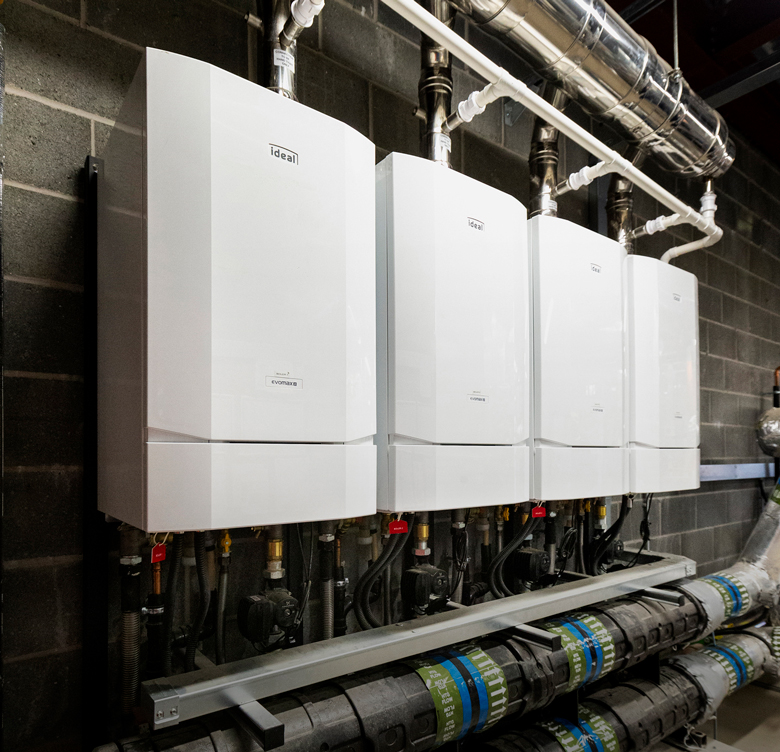
โ€˜Surveying the modern plant room – from boilers to heat pumpsโ€™ CPD provides invaluable advice on the various stages involved in surveying a plant room; from assessment and the requirements for a replacement heat source, through to the potential risks associated with heating system replacement and how to identify these.

With Ideal Heating Commercial pioneering practical solutions for decarbonising commercial heating, the new CPD concentrates on modern, energy-efficient plant room retrofits using heat pumps. Hybrid systems, which include heat pumps with modern condensing gas boilers as a back-up, are also addressed as an alternative solution where heat pumps alone are not feasible.

The new CPD also looks at latest legislation and regulations, and touches on best practice when commissioning.

This new CPD, โ€˜Surveying the modern plant room – from boilers to heat pumps,โ€™ is suitable for all levels of mechanical engineers from graduate through to senior, director and associate, sustainability engineers, building services engineers, engineering technicians, incorporated engineers, chartered engineers and YEN Young Engineers, as well as building contractors and consultants.

Commenting on the release of the new CPD, Richard Brown, Head of Specification at Ideal Heating Commercial, said: โ€œWith the heating industry undergoing change as we move towards decarbonisation, how we approach and survey a plant room must also be modified.  Our new CPD addresses the requirement to decarbonise heating systems and improve energy efficiency from an understanding that, in many circumstances, heat pumps alone may not be viable, and we may need to consider a hybrid approach.  The CPD helps engineers to look at the overall plant room and decide upon the most effective approach.โ€

This latest CIBSE-approved CPD joins Ideal Heating Commercialโ€™s expanding collection of educational resources, which cover the latest industry developments and provides advice on new ways to add value, performance and efficiency to customer heating projects.  Further CPDs address low carbon systems, heat networks and heat interface units, heat pump refrigerants, and boiler heat exchanger materials. For more information on any of Ideal Heating Commercialโ€™s CPD, and to book a place, go to https://idealcommercialboilers.com/cpd-courses. CPDs are delivered by Ideal Heating Commercialโ€™s specification team managers either online or in person nationwide.


This article appeared in the July/August 2025 issue of Energy Manager magazine. Subscribe here.

New Study Finds โ€œSmartโ€ Buildings Still Run Blind โ€“ Experts Say Missing Data Blocks Efficiency

From shopping malls to office towers, AI systems are cutting energy use by up to 36% โ€“ but only when building energy systems actually talk to each other, state energy efficiency experts.

A new study published in Energy Reports evaluates the readiness of buildings for AI-based energy optimization and identifies key system-level challenges. While buildings are responsible for about 30% of global final energy consumption, the study emphasizes that the full potential of AI-driven energy tools depends on one critical factor: data quality and accessibility.

Energy efficiency experts in commercial buildings note that without proper audits and integration, even advanced technologies canโ€™t deliver reliable performance. Most systems simply arenโ€™t built to work together, and as a result, efficiency remains more of a theory than a reality.

Instead of just focusing on better technology, the research proposes a smarter structure. It introduces a six-layer reference model for Intelligent Building Management Systems (IBMS) โ€“ a framework that spans everything from sensors and meters to AI-powered decision-making.

The concept proposed by researchers suggests that a buildingโ€™s lighting, HVAC, occupancy, and other systems must share real-time data across layers to best optimize performance.

The study claims that the biggest roadblock isnโ€™t missing hardware โ€“ itโ€™s missing integration. Traditional setups often rely on fixed schedules and siloed platforms. This means that key areas like HVAC and lighting, which together account for over 50% of energy use in commercial buildings, continue to operate inefficiently, regardless of how advanced the equipment may be.

โ€œEveryoneโ€™s talking about smart tech โ€“ sensors, automation, analytics โ€“ but few are addressing the root issue: how fragmented building data still is,โ€ says Donatas Karฤiauskas, CEO of Exergio, a company developing AI-based platforms for energy optimization. โ€œWeโ€™ve seen this for years. Buildings often have all the right parts, so we decided to build a system that data-connects them. Efficiency only happens when buildings act as a whole โ€“ and that starts with unified data.โ€

Karฤiauskas pointed out that this challenge is especially visible in older buildings, where outdated hardware and isolated systems were never designed to work together. For example, HVAC systems might be controlled by one vendorโ€™s software, lighting by another, and occupancy sensors may not connect to either โ€“ meaning no system has the full picture.

The study notes that even in new developments, mechanical, electrical, and digital systems are frequently designed and implemented separately. It also warns that without real-time data exchange between these layers, the label โ€œintelligentโ€ is often just branding, not a reflection of actual building performance.

But AI-based energy management can make a difference, says Karฤiauskas.

Instead of treating HVAC or lighting as isolated units, IBMS can connect data streams from across the building, adjusting systems in real time to meet actual demand.

โ€œWe didnโ€™t build another device โ€“ we built a connective layer. It links whatโ€™s already there and turns scattered data into coordinated, real-time action. Thatโ€™s what makes the system intelligent โ€“ not the tools, but how they work together,โ€ explained Karฤiauskas.

This connected-systems-first approach is already delivering measurable results in real-case scenarios, not just studies.

In a large commercial shopping mall, Exergioโ€™s platform cut electricity use by 29% and heating demand by 36% โ€“ all without replacing core infrastructure. In a network of office buildings in Poland, the same solution helped slash energy bills by โ‚ฌ88,000 in just nine months.

These improvements werenโ€™t the result of expensive retrofits or large-scale equipment upgrades, argued Karฤiauskas. They came from activating the potential of what was already installed, transforming fragmented building systems into a unified control layer that reacts to real-time conditions, demand, and performance.

โ€œEveryone wants smarter buildings โ€“ but too often, we start by chasing the newest tech instead of fixing the foundations. The future of energy efficiency wonโ€™t be defined by hardware โ€“ it will be defined by how well we integrate, align, and unlock the systems we already have,โ€ concluded Karฤiauskas.


This article appeared in the July/August 2025 issue of Energy Manager magazine. Subscribe here.

Rinnai water heaters provide listed building with over 13 years (and counting) of durability and economy

For free system upgrade support click link below www.rinnaiuk.com/contact-us/ask-us-question

Bridgewater House, built in 1771, is a classic two-and-a-half storey Georgian house designated a Gradeย IIย listed building. It is near the lower end of a line of 10 locks leading from the Runcorn basin of the Bridgewater Canal to the River Mersey. Originally built for the use of theย Duke of Bridgewater, it has since been used for various purposes and has now been converted into offices.

More recently, in 1998, a fire damaged the roof and many of the rooms; the building was subsequently repaired and restored and is now owned by Bridgewater Property Management, which uses it partly for its own purposes and leases the rest of the building as offices to other businesses.

Runcorn-based heating engineer Dave Winrow, who runs the business with his son Benjamin, was asked by the company, in 2012, to come up with an energy efficient solution for the buildingโ€™s heating and hot water as the owners were alarmed by ever rising fuel bills.

Winrow went to look at the old system that comprised two combis and two boilers. โ€œThe archaic boiler system, although very dilapidated was still working, but as it was 10 years old or more it definitely needed replacing with a system that would be easier on running costs.โ€

Winrow decided to install three Rinnai high efficiency commercial instant water heaters, effectively making up a tri-flow hot water package, teamed with two Rinnai E32 boilers to provide hot water and heating to all floors. The installed system reduced the fuel costs by 200%.

Since then, the units have been serviced every year, without fail. But the units have never, ever had a single part replaced โ€“ thatโ€™s approaching 14 years of service providing temperature accurate hot water.

Says Ben Winrow, โ€œThe Rinnai continuous flow water heaters are a fully modulating 54kW unit that gives constant hot water produced separately from the boiler on secondary return. In summer the boiler doesnโ€™t need to fire up at all. It is a prime example of a modulated unit at its best as the unitโ€™s 50kw capability can modulate down to 6kw. It is very clever because it knows exactly how much gas to use to heat the water due to its multi solenoid burner, so it saves fuel and money. With other water heaters they are either full on or offโ€.

โ€œThe site saw heating and water bills tumble from ยฃ4,500 per annum to just ยฃ1500 in the first year of installation. Over the 14 years the savings run to over six figuresโ€.

The Rinnai Sensei N series succeeded the HD range and achieved the same standard of durability and longevity. All appliances are manufactured under strict guidelines of ISO 9001 quality management and ISO 14001 environmental management and come with full manufacturersโ€™ warranty.

Rinnai N Sensei Series continuous flow water heaters are designed to provide domestic and commercial access to vast volumes of cost-effective, clean and temperature controlled hot water. Rinnai aim to supply UK customers with practical, economic and technical solutions for water heating and building heat.

The Rinnai Sensei N Series is the first ever continuous flow hot water heating unit manufactured with stainless steel heat exchangers to be available in the UK – this provides a greatly extended working life at optimum performance to each of the four models in the range.

The four models are: the N1600i giving 954 litres per hour; the N1600e (external) also giving 954 litres per hour (at 50 degrees); the N1300i giving 775 litres per hour and the N1300e also giving 775 litres per hours of temperature controlled at 50 degrees. The two 1600s have load profiles of XXL and are water efficiency class A rated, while the 1300s are load profile XL and are also water efficiency class A rated.

Other features include:

  • Flue up to 30+ metres for concentric
  • Turbo Fan
  • Built-in controller as standard on both internal and external models
  • Cascade Cable assembly allows up to 24 water heaters to be connected and function as one total and complete system. Any number of N-series Rinnai water heaters can be manifolded together enabling the largest capacities on the market.
  • Built in flue damper
  • Air inlet filter
  • Frost Protection โ€“ minus 15ยฐC on the internal versions and minus 20 ยฐC on the external versions
  • New PCB Design
  • Controller as standard โ€“ Lockable, set up of appliance, temperature set up to 75ยฐC
  • Maintenance Monitor for engineers

RINNAI FULL PRODUCT AVAILABILITY 24/7 FOR NEXT DAY DELIVERY of ALL HOT WATER HEATING UNIT MODELS INCLUDING 48-58kW UNITS

SAVINGS OF:

  • 20% REDUCTION of opex cost,
  • 30% REDUCTION of initial cost
  • 15% REDUCTION in carbon
  • 75% REDUCTION of space

For more information on the RINNAI product range visit www.rinnaiuk.com

NIBE unveils direct-to-consumer channel and new training partnership at record-breaking InstallerSHOW 2025

NIBE Energy Systems Limited marked a landmark year of innovation and growth with a headline appearance at InstallerSHOW 2025, unveiling a new direct-to-consumer (D2C) heat pump channel and celebrating major advances in product development, training, and strategic partnerships.

The Swedish heat pump manufacturer welcomed a record number of visitors to Stand 5F46, where it showcased its latest range of low-carbon heating solutions, participated in expert panels, and welcomed special guest and brand ambassador Freddie Ljungberg โ€“ drawing one of the largest crowds of the three-day show.

Bringing heat pumps direct to UK homeowners

A major talking point of the show was the official launch of NIBEโ€™s direct-to-consumer model โ€“ offering homeowners a fully managed route to heat pump installation, including MCS-compliant design, installation and aftercare, all directly from NIBE.

Created in response to rising consumer demand for simplicity and end-to-end service, the D2C model will be available exclusively for Air Source Heat Pump installations and designed to complement โ€“ not replace โ€“ NIBEโ€™s valued installer network. Customers seeking more complex, bespoke systems will continue to be referred to NIBE Pro partners.

โ€œOur new D2C platform is a natural evolution of the market,โ€ said Paul Smith, Managing Director of NIBE Energy Systems. โ€œAs more homeowners explore heat pumps, weโ€™re seeing increased demand for simplicity and end-to-end delivery. By offering this route, alongside our valued installer network, we can reach more customers, deliver high-quality outcomes, and scale our impact in the energy transition.โ€

New partnership with GTEC to expand national training access

Also announced at the show was a new national training collaboration between NIBE and GTEC, one of the UKโ€™s leading renewables training providers. As NIBEโ€™s official Level 3 training partner, GTEC will deliver heat pump qualifications at colleges across the country โ€“ enabling more installers to begin their journey to MCS certification and full NIBE Pro status.

This partnership supports NIBEโ€™s mission to upskill the workforce and ensure the UK has the expertise needed to meet growing demand for low-carbon heating.

Freddie Ljungberg draws the crowds

Freddie Ljungberg, former Arsenal and Sweden football star and NIBE UKโ€™s brand ambassador, made a special appearance on the stand on Wednesday 25 June. Hundreds gathered for an exclusive โ€˜In Conversationโ€™ session, followed by a meet and greet where visitors heard Freddie share his passion for sustainable living and his personal connection to NIBEโ€™s Swedish roots.

Product highlights and speaker sessions

Visitors to the stand explored NIBEโ€™s award-winning product line-up, including:

  • The new S1156 PC and S1256 PC Ground Source Heat Pumps with integrated passive cooling
  • The S735C Exhaust Air Heat Pump, offering active cooling and a compact, outdoor-unit-free design

NIBE experts also appeared across the InstallerSHOW speaker programme, taking part in:

  • The Big Heat Network Debate โ€“ Gulam Seedat
  • Heat Pump FAQs Panel โ€“ Mike Dungworth
  • Heating the Haus โ€“ Rick Clarke

A standout year for NIBE

NIBEโ€™s presence at InstallerSHOW capped a standout first half of 2025. Highlights so far have included a new partnership with British Gas to enhance aftercare services, the launch of NIBEโ€™s first UK show apartment in Bracknell, and continued investment in UK training and education.