The combination of a competitive Asset Adoption Value and a transparent tendering process helped Alumno reduce connection costs by an astonishing 95%.
The Problem
When Alumno Group began developing a new student accommodation project in Twerton, Bath, they were faced with a major obstacle: a prohibitively expensive grid connection quote from the local Distribution Network Operator (DNO). The costs associated with the contestable works were far higher than expected and threatened to derail the financial viability of the scheme.
The project, located at the Jubilee Centre on the site of the former Hollis Building, required a robust and timely electrical connection—but not at any price. To move forward, Alumno needed a more cost-effective and efficient solution.
The Solution
Alumno turned to Vattenfall IDNO, an Independent Distribution Network Operator known for helping developers connect to the grid faster and more affordably. By stepping in to adopt the new connection, Vattenfall was able to provide a dramatically lower-cost alternative.
Through a combination of a competitive Asset Adoption Value and a transparent tendering process for the contestable works—delivered in partnership with Network Power Connections—Vattenfall helped Alumno reduce connection costs by an astonishing 95% compared to the original DNO quote.
Alumno’s Director, Ron Plunz, said:
We’re incredibly glad we reached out to Vattenfall IDNO to adopt the grid connection for our latest student accommodation project. The original quote from the local DNO for contestable works was significantly higher than expected, but Vattenfall offered a much more competitive solution. Their Asset Adoption Value and tendering process helped us reduce our connection fees by 95% — a huge saving that made a real difference to the viability of the scheme. Their support, transparency, and expertise were outstanding throughout.
The grid solution included a new 11kV point of connection and a 1,000kVA HV/LV substation, with all assets adopted by Vattenfall IDNO. The system will serve two half-hourly metered units with a combined registered capacity of 585kVA. An additional 150kVA of capacity for a commercial space on the site is scheduled for energisation in early September 2025, following the successful energisation of the first phase in July.
The Outcome
The cost savings enabled the project to remain financially viable and proceed on schedule. The connection infrastructure was delivered to a high standard, with the substation installed earlier this year, marking a major milestone in the build-out of the site.
Lee Scarth, Business Developer at Vattenfall IDNO, commented:
This is a great example of how Vattenfall IDNO can unlock value for developers. By leveraging our Asset Adoption Value and competitive tendering process, we helped Alumno Group significantly reduce their connection costs while ensuring a high-quality, future-ready network.
The energisation was delivered in collaboration with Network Power Connections, whose team managed the installation and connection works. Alex Wilson, Senior Business Development Manager at Network Power Connections, said:
We’re proud to be delivering this connection for Vattenfall and Alumno. The project demonstrates how collaboration and early engagement can deliver real value and speed for developers. We look forward to energising the site and supporting students in Bath by providing reliable electrical infrastructure.
This project illustrates how Vattenfall IDNO’s approach can deliver substantial cost savings and speed without compromising on quality. For developers of student housing and other large-scale infrastructure, exploring alternatives to traditional DNO connections can unlock vital efficiencies and keep projects moving forward.
Vital Energi has successfully completed a flagship roof-mounted solar project at Glasgow’s historic Kelvin Hall. The landmark project for Glasgow City Council, featuring over 1,000 solar panels and worth approximately £1.5 million, demonstrates Vital Energi’s growing presence in Scotland’s renewable energy sector and its capability to deliver complex technical solutions in challenging built environments.
The ambitious project at Kelvin Hall is a key part of Glasgow City Council’s climate action strategy. It is designed to significantly reduce carbon emissions, supply approximately 20% of the building’s annual electricity needs, and generate £182,000 in electricity savings each year.
The installation is accompanied by seven smaller solar installations across Glasgow schools and daycare centres, collectively supporting the city’s journey toward net zero emissions.
The project showcases Vital Energi’s technical innovation capabilities. From custom-designed lifting equipment for safely transporting panels to the roof to the implementation of abseil-style systems that allowed technicians to install panels on the sloped surfaces, these solutions were essential to overcoming the strict limitations inherent in retrofitting modern renewable technology to the culturally significant building, dating back to 1927.
Scott Lutton, Director at Vital Energi Scotland, said: “Working on Kelvin Hall’s protected Category B listed structure presented unique engineering challenges. Our team developed custom mounting solutions for the distinctive barrel-shaped roof while preserving the building’s historic character. This required specialised safety systems for installers working at height and strategic relocation of inverters to optimise system performance.
“We considered more than just the technical aspects of the project—we actively engaged with the community to ensure the voices of those affected by potential disruptions were heard and respected.”
Beyond its environmental impact, the project has delivered significant community benefits, including educational initiatives and employment opportunities. Glasgow-based contractor, Versatile, was engaged for the installation, supporting jobs in the city’s East End. The project has also included classroom presentations on climate action for local schools through our Climate Education Programme, and is providing raised plant beds, soil and plants for community gardens at the daycare centres involved in the wider scheme.
The project adds to the 46 renewable energy installation projects that Vital Energi has delivered to date across Scotland, which include recent solar projects for NHS Lanarkshire and NHS Tayside. The company installed the landmark Queens Quay Heat Pump scheme in West Dunbartonshire in 2019. This is the largest water-source heat pump system in the UK, which extracts heat from the River Clyde to provide low-carbon heating to over 1,200 homes and businesses.
The solar project was 50% funded by Salix Finance, with Glasgow City Council providing the remaining investment.
In a strategic move to accelerate electric vehicle (EV) adoption and support grid-friendly smart charging, leading EV charging technology company Easee has partnered with innovative energy supplier Fuse Energy. Together, they will launch the UK’s most affordable EV charging tariff at 5p per kWh within specified hours, alongside a compelling hardware offer for residential customers.
The partnership gives Fuse Energy customers the opportunity to purchase an Easee One, the brand’s award-winning smart EV charger for just £899, including full professional installation – and have it up and running in under seven days for standard installs.
The launch coincides with the rollout of Fuse Energy’s new EV tariff, now officially the lowest-cost smart EV charging rate in the UK, which will enable drivers to travel 100 miles for just £1.25, saving significantly on their electricity bills while charging at optimal times for the grid.
“We’re proud to support Fuse Energy’s new tariff with our award-winning charger – built to last, easy to install and simple to use” said Anthony Fernandez, CEO of Easee UK. “With over 870,000 Easee chargers already installed across Europe in residential and fleet applications, this partnership extends our commitment to making EV charging smart, seamless and scalable. Together, we’re empowering more drivers to access lower-cost charging whilst contributing to grid stability.
Easee’s wall box charger is designed to integrate with dynamic, time-of-use energy tariffs and includes built-in Wi-Fi/4G connectivity. The charger can automatically optimise charging times to when electricity is cheapest and cleanest, helping drivers cut costs and emissions.
The smart charging capabilities of Easee’s hardware align with Fuse Energy’s broader vision of transforming energy supply through advanced technology. The new tariff gives consumers a strong incentive to charge during off-peak hours, reducing strain on the grid and shifting demand to periods of high renewable availability.
“Our mission at Fuse is to make clean energy cheaper and smarter for everyone,” said Alan Chang, CEO of Fuse Energy.“This partnership with Easee is a perfect match, combining the UK’s lowest smart charging EV rate with one of the most trusted and future-proof chargers on the market. It’s a huge step towards a more intelligent and affordable electric future.”
By tapping into Easee’s large and growing charger fleet, Fuse Energy also gains access to one of Europe’s most advanced virtual power plant platforms – enabling broader energy flexibility services to support the UK grid as electrification accelerates.
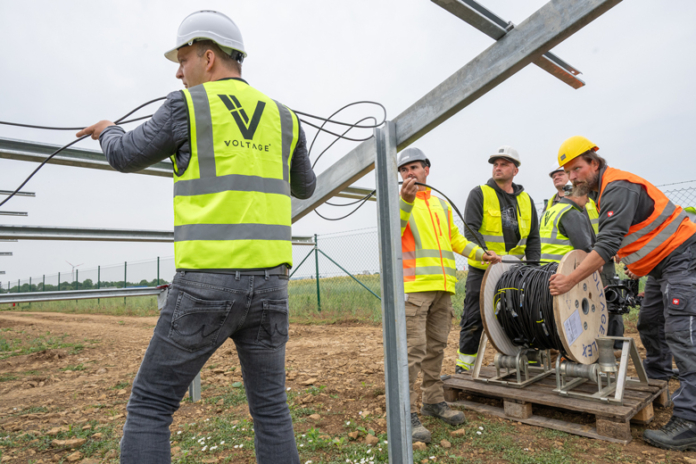
With the successful initial delivery of its innovative PV cabling solutions, Voltage Energy Group (“Voltage Energy”) celebrates its market entry into Europe. As part of a 96.7-megawatt solar power plant near Würzburg, the company is supplying a European customer for the first time with its pre-assembled turnkey cabling solution for photovoltaic systems.
The plant, built by BELECTRIC GmbH based in Kolitzheim, has a total capacity of 96.7 MW and is expected to generate around 105 GWh of clean electricity annually once completed. The power plant consists of three sections, two of which are already connected to the grid. The final 15 MW, located on an area of approximately 10 hectares, are nearing completion and commissioning. Voltage Energy’s pre-assembled cable harnesses are being used for over a third of the installed capacity, ensuring safe, efficient, and long-lasting power transmission from the module strings to the inverters.
“This first delivery to a European customer marks a significant milestone for our company. The local market demands high standards of quality, reliability, and sustainability – precisely where our products excel,” says Georg Urban, General Manager Europe at Voltage Energy.
“Our project with BELECTRIC is the ideal entry point into the European market. Going forward, we aim to focus primarily on supplying large-scale projects of 100 megawatts and above,” adds Andreas Thissen, Sales Director Europe.
The IBEX® solution used in the project stands out for its fast installation, superior weather resistance, and optimal performance under challenging conditions. Factory-assembled and tested to international standards, they not only meet all common requirements for large-scale PV projects but also significantly reduce risks associated with improper installation and incorrect connections often seen in conventional on-site cabling.
Since its founding in 2015, Voltage Energy has delivered over 40 gigawatts of cabling solutions to customers in the United States. The company established its European headquarters in Frankfurt am Main in 2024, laying the foundation for its expansion across Europe, and is continuing to build up local resources.
About Voltage Energy Group
Founded in 2015, Voltage Energy Group (“Voltage Energy”) is a leading global provider of electrical balance of systems (EBOS) solutions for utility-scale solar projects, with group headquarters in Chapel Hill, North Carolina, and its European headquarters in Frankfurt, Germany.
Voltage Energy has demonstrated consistent year-over-year growth and delivers innovative, value-engineered technologies that enhance installation efficiency, safety, and long-term system performance. Deeply committed to service excellence, the company supports smoother project execution through advanced visualization tools such as 3D renders, 360-degree walk-throughs, and virtual reality previews. Its flagship products, LYNX®, ALEX®, and IBEX®, can be tailored into flexible, customized solutions with the agility to meet each client’s unique requirements, underscoring the company’s enduring focus on customer-centric service and long-term success.
Given their exposure to the elements, floodlights need to be durable, robust and offer longevity. As with all luminaires, not all floodlights are manufactured to the same standards. Nelo Neves, Managing Director of LEDVANCE UK looks at what should be considered when specifying a floodlight.
Floodlights serve a very specific purpose, delivering a broad beam of light that is high-intensity. Ideal for large areas such as stadiums, car parks and logistics centres, floodlights provide a broad and evenly-distributed illumination.
As floodlights are installed outside, exposed to even the most arduous of conditions, they need to be incredibly robust. This ensures they can offer reliable performance, even when situated in demanding environments.
To guarantee this high quality and durability, it is important to look for IP and IK ratings. IP66 and IK08 will ensure protection from water and dust ingress, alongside high resilience against impact. To bolster this further, selecting a floodlight that offers C4 corrosion resistance will deliver even greater protection from the elements. Other specifications to look for that extends service life include a breather membrane with silicone sealing ring, which prevents water buildup and condensation – protecting electrical components for an extended lifetime.
An ability to operate within a wide range of temperatures is also hugely beneficial. For example, the Floodlight Area Gen 2 range from LEDVANCE can function between -30°C to +50°C. This means it will still deliver light even in the most extreme of temperatures.
Comfort for those working or undertaking activities within the lit area is very important. To ensure this, a key consideration is the elimination of glare. Using the Floodlight Area Gen 2 range to illustrate this, its universal asymmetric beam angle (48°×85°) ensures precise, glare-free illumination while limiting light spill.
In addition, the flat tempered glass cover allows safe illumination without light pollution; with a ULOR 0% at 0°.
Notwithstanding the need to remove glare, floodlights still need to be able to direct light where it is actually needed. Look for floodlights that have a flexible bracket with wide rotation, as this will enable easy and accurate installation. To further add to adaptability, modern floodlights offer a multi-lumen function with adjustable brightness levels that can be easily adjusted via a dip switch. This allows on-site changes and simplifies planning.
For those applications where sustainability is a priority, floodlights can play a role in securing this. For example, the Floodlight Area Gen 2 range is manufactured using 100% recycled aluminium for the frame and housing.
Focusing on sustainability is where specifying a high efficiency solution will also reap benefits with regards to energy savings. Opting for a floodlight that delivers up to 150 lm/W will maximise the opportunities for energy savings.
Looking at all of these factors, it’s clear to see there is much more to floodlights than just bright light that operates even in challenging weather conditions. By making a considered choice, projects can also benefit from sustainable solutions that create comfortable environments, and offer on-site adaptability.
From ESOS to Innovation: A sustainability blueprint for leisure centres
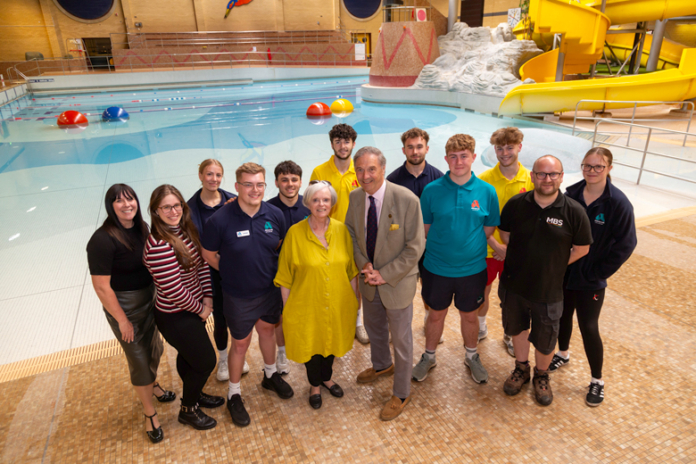
As the pressure mounts on organisations to meet sustainability targets, one not-for-profit is proving that compliance can be more than a checkbox exercise — it can be a catalyst for meaningful change.
In an interview with TEAM Energy, Abbeycroft, shares how it’s turning regulatory obligations like the Energy Savings Opportunity Scheme (ESOS) into a springboard for innovation, action, and community wellbeing.
At a time when leisure centres face rising energy costs and growing scrutiny over carbon emissions, Abbeycroft is taking a proactive approach. With 12 sites across West Suffolk and Babergh, the organisation is embedding sustainability into its operations.
By using ESOS to identify areas that need improvement for both energy efficiency and carbon reduction, the organisation is creating an accountable action plan that can have a positive impact on both the business and the planet.
What sets Abbeycroft apart is its commitment to aligning environmental goals with social value. From installing swimming pool backwashing machines to reduce water wastage and trialling recycling initiatives that upcycle swim gear into new products, Abbeycroft is finding creative ways to cut carbon while supporting community engagement. These aren’t just technical upgrades — they’re part of a broader mission to make leisure more sustainable, accessible, and future-ready.
Graham Paul, Service Director at TEAM Energy, said:
“Abbeycroft exemplifies how community-focused organisations can lead the way in sustainability. Their proactive approach to energy efficiency, driven by data and collaboration, is a testament to what can be achieved when environmental responsibility is embedded into everyday operations. We’re proud to support Abbeycroft on their journey to reduce carbon emissions and create healthier, more sustainable spaces for the communities they serve.”
Chloe Banham, Area Manager at Abbeycroft added:
“Working with TEAM Energy has empowered us to move beyond compliance and take meaningful, strategic action on sustainability. Through ESOS and ongoing audits, we’ve identified practical ways to reduce our environmental impact while improving the customer experience. Sustainability is now embedded in our long-term planning, our teams are engaged, and our sites are evolving and we’re excited to keep driving this momentum forward.”
TEAM’s interview with Abbeycroft highlights how strong leadership and learning are driving momentum. With executive backing and environmental champions at every site, Abbeycroft is building a workforce that is informed, empowered, and invested in change. Strategic partnerships with local councils are also proving vital, helping to unlock funding and align goals across sectors.
From BMS optimisation to remote-controlled sockets and finding new ways to use CHP units effectively, technology plays a central role in Abbeycroft’s journey. But it’s not just about hardware — it’s about using data to make smarter decisions. By tracking emissions and energy use monthly, the team is building a clear picture of what works, what doesn’t, and where to go next.
This is more than a case study in compliance — it’s a blueprint for how public-facing organisations can lead on sustainability without compromising service or financial viability.
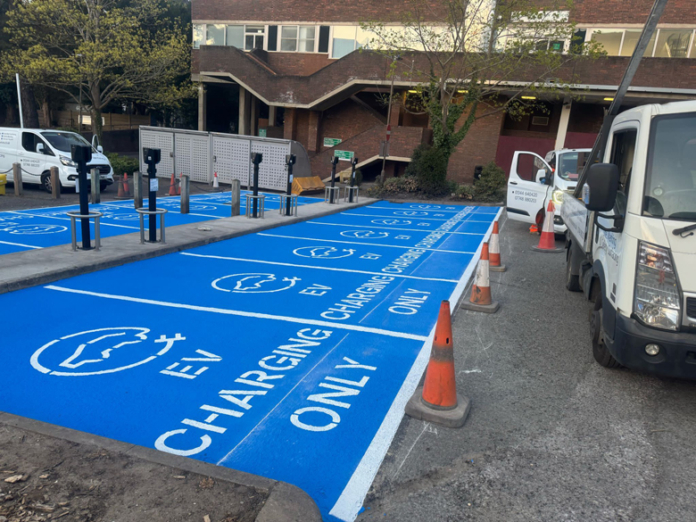
A total of 13 new rapid and ultra-fast charging points are energised and ready to use for the council’s electrified fleet operating out of Gibson Road at the Civic Centre offices in Sutton.
Sutton Council will benefit from new EV charging points following completion of a UK Power Networks Services project.
A total of 13 new rapid and ultra-fast charging points are energised and ready to use for the council’s electrified fleet operating out of Gibson Road at the Civic Centre offices in Sutton.
The completion marks the successful end of a six-month project completed for UK Power Networks Services, which involved excavating the carpark to install a new supply and extensive cable ductwork for future expansion.
David Mitchell, director of UK Power Networks Services, said: “We are excited to collaborate with Sutton Council to install advanced electric vehicle chargers. This initiative is a significant step towards creating a sustainable and eco-friendly transportation network in the area.”
Ian Watts, energy manager, London Borough of Sutton, said: “UK Power Networks Services has delivered exceptional work on this EV project, which will positively impact the Sutton community.”
Rinnai UK’s Operations Director Chris Goggin explains what synthetic gasses are being developed and produced as a possible replacement to natural gas. Further information of production methods will be considered when evaluating the practical and technical feasibility of introducing synthetic gasses into UK and international energy infrastructure.
Since the 1970s when North Sea gas fields were located, the UK had, until recently, become reliant on fossil fuels. To distribute gas into domiciles and commercial premises 176,000 miles of pipeline infrastructure has been installed across the UK. This subterranean energy distribution network provides 40% of total energy consumption in the form of natural gas. Eighty-five percent of UK buildings use natural gas for property heating and hot water. Natural gas is still the prominent domestic and commercial power option.
In terms of societal behaviour and infrastructure the UK is well prepared for any move away from natural gas towards an alternative gaseous fuel that fulfils operational and ecological requirements. What synthetic and ulterior gasses could replace fossil fuels?
Work that identifies potential future gasses has revealed a number of candidates capable of UK infrastructure compatibility. A low carbon gas that can be accepted by present pipelines and behave in a similar, if not identical, manner to fossil fuels is the ideal replacement.
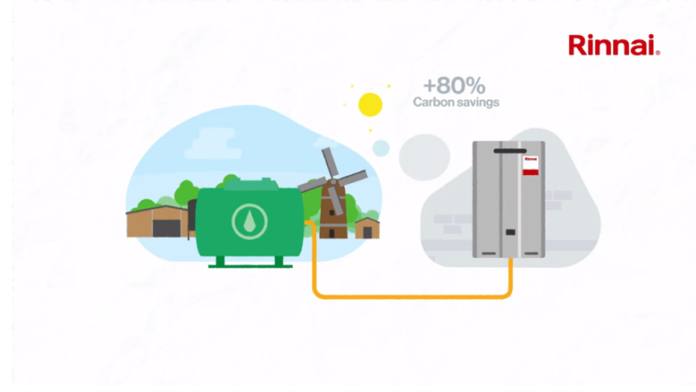
Amongst the list of potential replacements are e-methane and biomethane. E-methane is the abbreviated name given to synthetic methane or renewable methane, a gas which is created by extracting captured carbon dioxide and then blended with green hydrogen, itself produced via renewable energy. Green hydrogen electricity is converted into a storable low carbon gas – e-methane.
Biomethane is produced in a separate process – methane is captured from natural biological waste and forms during a natural process called ‘anaerobic digestion.’ In the absence of oxygen, microorganisms will begin to break down matter yielding a gas – methane. Once impurities are removed the methane gas becomes upgraded and biomethane is created.
Both biomethane and e-methane are capable of identical operating behaviour when compared to fossil fuels and can therefore be placed into existing infrastructure. Biomethane and e-methane can immediately fulfil the role of fossil fuels without any fracture towards appliance operating efficiency, commercial activity, or societal cohesion.
Synthetic natural gas (SNG) is an umbrella term for a variety of gasses that behave and perform very similarly to natural gas. SNG can be produced either using biomass or renewable power. Any gas that is generated via biomass or renewable energy is referred to as Biogas, e-gas, and syngas.
If a gas is created using waste such as manure, the gasification process of production is known as biochemical SNG production. If the process of gas manufacturing involves hydrogen that is renewably produced, then that (SNG) gas derives from a production concept named Power-to-Gas or Power-to-X. These ingredients and production approaches birth end-product e-gas/syngas.
Syngas is potentially interchangeable with any appliance that has previously accepted natural gas. Liquified or compressed Syngas can also be potentially transported through any functioning gas grid for usage or export and can be stored in the exact same environment as natural gas for identical durations of time.
Raw materials required for the creation of syngas arrive in the form of either fossil fuels or bio-waste. These materials are used to create a feedstock which is then inserted into a gasifier in either dry or slurry form. Once inside a gasifier that is low on oxygen the feedstock reacts with steam at a high pressure and temperature. This process creates syngas that is comprised of carbon monoxide, hydrogen and lesser amounts of methane and carbon dioxide.
Although UK public and political confidence in hydrogen requires upholstering, many global economies feel more optimistic in adopting domestic and commercial hydrogen usage. Swedish industrial decarbonising company Stegra has now secured funding of close to €6.5 billion to construct a large-scale green steel plant in Northern Sweden. The new installation will use green hydrogen when manufacturing end-product steel.
Additionally, the UK government very recently has announced that £500 million of funding will be provided towards new hydrogen infrastructure projects. This funding will stimulate regional hydrogen usage in transport, as well as storage networks that link hydrogen manufacturers, industrial end-users, and power stations.
Once the UK likely eradicates fossil fuels from the domestic energy mix a substitute gas will have to be introduced to provide domestic and commercial premises with heat as well as hot water in areas that are economically, practically and technically difficult to electrify.
Practical decision making would prefer a decarbonising substitute gas that can fit seamlessly into the UK gas grid without additional cost. All gasses in this article fit within this remit. The task is to identify one outstanding candidate that is accepted by all energy market fronts – customers, environmental lobbies, and politics.
Rinnai will continue to offer information on potential energies that the UK could adopt soon. Rinnai believes balanced coverage on legislative detail that affects customer fuel options and costs can positively influence UK customer purchasing decision making.
RINNAI OFFERS CLEAR PATHWAYS TO LOWER CARBON AND DECARBONISATION PLUS CUSTOMER COST REDUCTIONS FOR COMMERCIAL, DOMESTIC AND OFF-GRID HEATING & HOT WATER DELIVERY
Rinnai’s range of decarbonising products – H1/H2/H3 – consists of hot water heating units in gas/BioLPG/DME, hydrogen ready units, electric instantaneous hot water heaters, electric storage cylinders and buffer vessels, a comprehensive range of heat pumps, solar, hydrogen-ready or natural gas in any configuration of hybrid formats for either residential or commercial applications. Rinnai’s H1/2/3 range of products and systems offer contractors, consultants, and end users a range of efficient, robust, and affordable low carbon/decarbonising appliances which create practical, economic, and technically feasible solutions.
Rinnai is a world leading manufacturer of hot water heaters and produces over two million units a year, operating on each of the five continents. The brand has gained an established reputation for producing products that offer high performance, cost efficiency and extended working lives.
Rinnai products are UKCA certified, A-rated water efficiency, accessed through multiple fuel options and are available for purchase 24/7, 365 days a year. Any unit can be delivered to any UK site within 24 hours.
Rinnai offer carbon and cost comparison services that will calculate financial, and carbon savings made when investing in a Rinnai system. Rinnai also provide a system design service that will suggest an appropriate system for the property in question.
Rinnai offer comprehensive training courses and technical support in all aspects of the water heating industry including detailed CPD’s.
The Rinnai range covers all forms of fuels and appliances currently available – electric, gas, hydrogen, BioLPG, DME solar thermal, low GWP heat pumps and electric water heaters More information can be found on Rinnai’s website and its “Help Me Choose” webpage.
RINNAI FULL PRODUCT AVAILABILITY 24/7 FOR NEXT DAY DELIVERY of ALL HOT WATER HEATING UNIT MODELS INCLUDING 48-58kW UNITS-
Utilities specialist, Power On, announces the energising of the next significant stages of Brent Cross Town, an entirely new community with a vision to be net zero carbon by 2030.
A huge undertaking, Power On commenced work on Brent Cross Town in 2019 and there are over 70 buildings to be developed. Power On announces the energising of Plot 14, a residential block composed of three buildings that will provide 286 new homes, ranging from studios to three-bed units, along with three maisonettes on the ground floor; and Plot 25, student accommodation providing around 660 private rooms, with communal study and recreation areas and a commercial unit on the ground floor.
Power On has been responsible for connecting and energising all of the plots built at Brent Cross Town so far. This process began with Plot 12, which welcomed its first occupants in early 2025. The company has also connected three other residential blocks (plots 13, 202 & 203). These are residential buildings with a total of 648 apartments and nine retail units to enhance the community as the development progresses.
This also includes Plot 1, a flexible space, over 13 storeys, for office or educational use, part-owned by Sheffield Hallam University, and including flexible retail space, and over 200 long-stay cycle parking places, with 200 lockers and 22 showers.
Electricity
Providing the electricity and water connections for the developments, Power On has already installed a primary substation with space for four transformers. Two transformers have already been installed and a further two will follow in the future as required. As the development progresses, Power On will phase in new elements of the electricity network, with an extension to the primary substation planned for the future, to enable an additional high voltage network. This will involve six kilometres of offsite cabling and BUUK, which owns Power On, will adopt the whole network right up to the exit points for suppliers.
Water
Power On is providing a resilient water network for the development, with two connections onto Thames Water’s network, so that there is a contingency plan in place. If one connection fails for any reason, the residents will still have drinking water and will be able to flush their toilets. With the development constantly evolving and progressing, Power On needs to keep on top of the master flow rates and to ensure that the network meets the water efficiencies that are required of the current and future water network. Working alongside GTC who completed the initial water design for the development, and IWNL for operational queries for both potable water and wastewater requirements, to ensure the networks are compliant and maintain security of supplies.
Early engagement
Michael Boulter, Senior Design Engineer at Power On, says: “With such a huge ongoing development, the phased approach is a complex matter in itself. We are managing each phase and the capacity within that phase, but also always looking at the bigger picture to ensure that we can provide flexibility and certainty to the developer that we have designed to meet current and future requirements for the development. As the main infrastructure and highways need to be installed prior to the plot connections, we are reducing the overall exposure to the master developer. Power On is responsible for designing high-quality networks for electricity, potable water and gas, with gas being removed from future development to help meet the master developer’s net-zero by 2030 targets, and early engagement helps to solve possible issues.”
Communication across all parties
Power on is involved with the master developer and each plot developer throughout the process. From tendering to design, construction to adoption, Power On provides a single point of contact.
Alex Bridge, Senior Project Manager at Power On, says: “We have to ensure the master developer and plot developer loads work with enough capacity for all. With such a long project, buildings can grow, with greater power needs. Changes in how the buildings are heated and cooled will impact the power needs too, and we need to consider things like new technologies and, for example, how electric vehicle usage is likely to change over time.”
High-level considerations
Brent Cross Town is an £8 billion joint venture between Barnet Council and Related Argent. The new neighbourhood will offer 6,700 homes, workspace for 25,000 people, a new high street with restaurants, shops and leisure as well as schools and community facilities. There will be 50 acres of parks, playing fields and state-of-the-art sporting facilities.
Benoit Dufour, Senior Development Manager, Infrastructure Lead Brent Cross Town at Related Argent, says: “Having worked with Power On on our Kings Cross development, we were pleased to be able to appoint the company again for Brent Cross Town. Power On are experts in complex schemes and are known for foresight in solving problems ahead of time. They have worked well with an evolving plan and having a single point of contact has been of huge benefit to us.”
The partnership will be ongoing and will include Power On’s sister companies, GTC and IWNL, with Power On’s parent company, BUUK, adopting all of the electricity and water networks once completed.
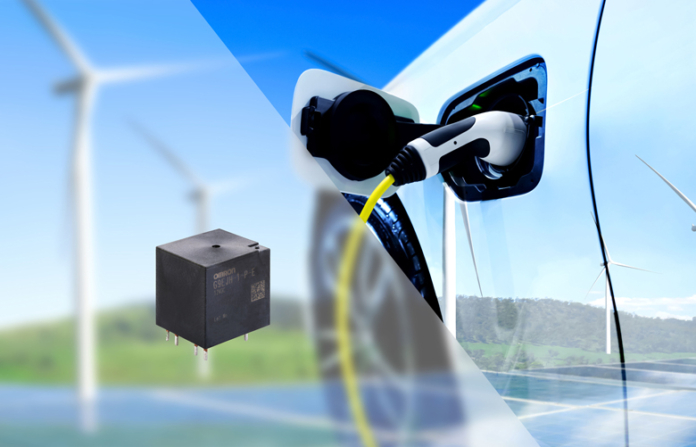
The new G9EJH-1-E brings class-leading miniaturization and industry-standard insulation to electric vehicle and energy-storage systems charging
OMRON Electronic Components Europe has introduced the G9EJH-1-E ultra-compact DC power relay, delivering a space-saving solution for inrush protection in battery-charging systems up to 800V. With class-leading dimensions of 31mm x 27mm, and 30mm high, the relay also meets the IEC 60664 insulation distance specification to satisfy stringent reliability and safety standards.
With its high maximum voltage and industry-standard insulation distance, the G9EJH-1-E is well suited to use in battery energy-storage systems (ESS). The compact dimensions, as well as 12V coil-operating voltage, simplify integration in pre-charging, auxiliary power, and main charging systems in hybrid and electric vehicles (EV/PHEV). Also, its 800V capability meets the needs of the automotive market as typical vehicle battery voltages continue to rise, targeting greater efficiency and faster charging.
With SPST (single-pole single-throw) normally open contacts, the relay operates in series with a current-limiting resistor for inrush protection. Capable of carrying a sustained current of 15A, and handling inrush current up to 30A, the G9EJH-1-E operates and releases within 30ms to provide fast-acting protection.
The contact resistance is less than 100mΩ, ensuring minimal power loss when turned on. On the other hand, the insulation resistance of 1000MΩ and dielectric strength of 2500V between the coil and contacts ensures robust performance in harsh conditions. Housed in a 6-pin PCB-mount package, the G9EJH-1-E is suitable for automated or hand soldering and ensures flexibility for assemblers while simplifying field repairs. With mechanical lifetime rated for over 200,000 operations, and specified for operating temperature from -40°C to 85°C, the G9EJH-1-E ensures outstanding reliability in automotive and industrial environments. The relays are ready now for use in on-board chargers (OBC), service equipment (EVSE), and grid-connected energy-storage (BESS) applications.