
Turning sunlight into revenue: how smart solar energy can power profit and sustainability

Emmanuel Trivin

An opinion piece from Emmanuel Trivin, MD Continental Europe at DCC & Chief Development Officer at Wewise Europe

Investing in renewable energy solutions is becoming a key pillar for businesses to evolve towards more sustainable practices and thrive in the future, but it cannot come at the expense of economic priorities.

In the UK, which ranks third among European countries with the highest electricity prices for businesses, companies must make greater efforts to reduce their operating costs. For many, especially in logistics and manufacturing, energy stability is also a top priority to increase operational resilience and prevent unexpected disruptions.

By embracing innovative solar energy solutions, businesses can meet their sustainability goals and gain a competitive edge, paving the way for long-term success:

Businesses can cut costs with on-site renewables

One of the most effective strategies for reducing emissions and costs is generating cleaner energy directly on-site. By installing solar PV systems, companies can cut their electricity bills by up to 50%, while also reducing carbon emissions and their reliance on the grid. This leaves businesses less exposed to volatile electricity prices driven by market conditions.

When it comes to solar solutions, mid-sized company leaders are seeking reliable, cost-effective, and sustainable options to achieve their energy transition goals. Above all, they expect simplicity and tangible support, particularly in financial terms. Today, several financing options are available to facilitate this transition: direct investment (CAPEX), self-financed with bank loans, or external financing solutions such as leasing

Why lock away precious capital in an upfront solar investment when you can make your energy work for you from day one? With financing options via Power Purchase Agreements, thereโ€™s no heavy CAPEX burden. Instead, you spread the cost over time, protect your cash flow, and keep investing in what matters most to your business. Many companies that choose financing see their energy bills drop by 20 to 40% immediately – all without tying up capital or taking on unnecessary risk.

Financing through PPAs also means peace of mind: predictable payments, performance guaranteed by your provider, and the flexibility to scale your energy solution as your business grows.

The result is simple: faster returns, stronger sustainability credentials, and a real competitive edge. Solar becomes not just an energy solution, but a growth strategy.

Power Purchase Agreements (PPAs), whether implemented on-site or off-site, also provide businesses with a stable and predictable electricity price for 15 years or more. This long-term financial certainty is invaluable for effective budgeting and planning.

Boost operational resilience with on-site smart energy solutions

Operational resilience means keeping your business running smoothly, even during peak demand. By connecting solar PV, storage, EV chargers, and an intelligent energy management software, you optimise energy use, cut costs, and gain independence.

These technologies enable businesses to shift energy use to times when renewable energy is abundant and prices are lower, maximising cost efficiency. By optimising on-site solar generation and storage with an energy management software, buildings can achieve up to 95% energy self-sufficiency. Smart energy management platforms are crucial in this context, enabling businesses to shift energy loads to optimal times allowing core business processes to continue uninterrupted, even during times of high energy demand. This capability is especially beneficial for companies aiming to expand, as it allows them to bypass the often lengthy process of upgrading grid infrastructure by using battery storage and on-site generation technologies.

Drive business growth with renewable energy solutions

Beyond simply reducing emissions, companies should explore the potential of solar energy combined with battery storage as a novel business model to generate additional revenue. The number of businesses selling excess energy in the UK is significant and growing, and projections suggest that this sector will continue to expand at a remarkable rate. With estimates indicating it could reach a valuation of ยฃ41 billion by the year 2030.

By providing flexibility services to the national grid, businesses have the opportunity to monetise their capabilities and play a crucial role in maintaining grid stability. This value leads to enhanced returns on cleaner energy investments, making these initiatives beneficial from both an environmental and financial perspective. Taking a look at the numbers and many benefits, it becomes clear that adopting solar energy and a storage solution is simply a smart strategy for businesses looking to balance profitability with sustainability.

By implementing intelligent energy management software alongside solar and storage solutions, and by leveraging zero-upfront capital PPAs, businesses can cut costs and gain a competitive edge in an increasingly eco-conscious world.


This article appeared in the September 2025 issue of Energy Manager magazine. Subscribe here.

Should I Reduce My Boiler Pressure? A Spirax Sarco Perspective

Image: iStock.com/Evgen Prozhyrko/

Itโ€™s a question we hear more and more: โ€œCan I reduce the pressure of my steam boiler?โ€

The short answer is, โ€œYes, you canโ€โ€”but the real question is: should you? While reducing boiler pressure might seem like a simple way to lower energy consumption and COโ‚‚ emissions, the reality is more complex. Letโ€™s explore the implications, dispel some myths, and highlight better strategies for optimising your steam system, all with the support of Spirax Sarcoโ€™s Advance Consulting service.


Why Consider Reducing Boiler Pressure?

The primary drivers behind this question often include:

  • Lower gas consumption
  • Reduced carbon emissions
  • Compliance with safety or insurance requirements

On the surface, it seems logical: if youโ€™re generating steam at a high pressure (e.g., 10 BarG) but only need 2 BarG at the point of use, why not generate steam at 5 BarG instead? Youโ€™d burn less fuel, right?

Not necessarily. The energy content of lower-pressure steam is also reduced. This means your boiler might need to produce a greater mass of steam to meet process demands, potentially offsetting any perceived savings.


Why Reducing Boiler Pressure May Cause More Problems

Hereโ€™s why reducing your boiler pressure might not be the best move:

1. Reduced Resilience

At higher pressures, boiler water contains more sensible heat, acting as an energy buffer during periods of high demand. Lowering the pressure reduces this stored energy, potentially leading to:

  • Steam starvation during peak demands.
  • Increased boiler cycling, reducing efficiency and longevity.

2. Infrastructure Mismatch

Your current steam system is likely designed for the original pressure and flow rate. Reducing pressure can cause:

  • Higher steam velocities: Steam will need to move faster to deliver the same mass, increasing wear and tear.
  • Erosion: Faster-moving steam carries moisture, rust, and scale, damaging valves, meters, and pipework.
  • Water hammer: High-speed condensate increases noise, vibration, and risks of pipe failure.

3. Safety and Control Issues

  • Safety valves are sized for a specific pressure/volume relationship. Lowering pressure may render them ineffective or non-compliant.
  • Control systems like pressure-reducing valves and flowmeters become misaligned with the new pressure, reducing accuracy and reliability.

4. Poor Steam Quality

Lower-pressure steam has larger bubbles, leading to:

  • Carryover of water into the steam system, reducing steam energy and efficiency.
  • Wetter steam, increasing maintenance costs from erosion and corrosion.
  • Foaming, caused by turbulence at the water surface, especially with poor water chemistry.

5. Steam Trap Inefficiencies

Steam traps are designed for a specific condensate load and pressure drop. A reduction in boiler pressure can lead to:

  • Undersized traps: Unable to manage increased condensate loads, causing inefficiencies.
  • The need for re-trapping the system, adding time and costs.

A Better Approach: Optimise, Donโ€™t Compromise

If your goal is to reduce fuel consumption and COโ‚‚ emissions, reducing boiler pressure isnโ€™t your onlyโ€”or bestโ€”option. Greater savings, with far less disruption, can often be found elsewhere in the steam and condensate loop.

Hereโ€™s how Spirax Sarcoโ€™s Advance Consulting service can help:

1. Optimise Your System

  • Conduct detailed energy audits and surveys to identify inefficiencies.
  • Use digital tools to track energy usage and pinpoint areas for improvement.

2. Improve Maintenance and Monitoring

  • Implement smart monitoring systems to proactively manage performance.
  • Regularly inspect steam traps, control valves, and pipework to maintain efficiency.

3. Upgrade Technology

  • Invest in technologies like heat recovery systems, which can deliver substantial savings without compromising system performance.
  • Consider TargetZero solutions, such as high-temperature heat pumps, to reduce emissions while maintaining output.

The Spirax Sarco Philosophy: Keep It Designed for Purpose

Boiler pressure should generally remain at its original design conditions. Changes can disrupt your system, creating more problems than they solve. Instead, focus on holistic system optimisation, targeting areas with greater potential for savings.

By partnering with Spirax Sarco and leveraging our Advance Consulting expertise, you can achieve meaningful reductions in fuel consumption and emissionsโ€”without risking the integrity of your system.


Ready to Explore Your Options?

Reducing your boiler pressure may seem like a quick win, but with Spirax Sarco, you can uncover smarter, more effective ways to optimise your steam system. Contact us today to learn how our tailored solutions can help you achieve your energy efficiency and sustainability goalsโ€”without compromise.

Letโ€™s optimise your steam system for a better future.

www.spiraxsarco.com


This article appeared in the September 2025 issue of Energy Manager magazine. Subscribe here.

Keith Anderson Honoured by University of Strathclyde for Leadership in Clean Energy

Keith Anderson

ScottishPower CEO Keith Anderson has been awarded an honorary doctorate by the University of Strathclyde – recognising his role in driving forward the UKโ€™s clean energy ambitions and transforming how we power our lives.

Since becoming CEO in 2018, Keith has led ScottishPower through a major green transformation – it was the first integrated energy company in the UK to go 100% green and it now continues to invest at a record level across the country.

Keith is now spearheading a ยฃ24 billion investment programme to supercharge the UKโ€™s clean energy infrastructure, create thousands of green jobs, and help deliver a fairer, more sustainable future. He said, โ€œThis is a huge honour – not just for me, but for everyone at ScottishPower who is working every day to deliver a cleaner, more affordable and more secure energy future that will benefit everybody.

โ€œWeโ€™re not just talking about change – weโ€™re building it. From windfarms to grid upgrades, from community support to climate action, our company is proving that a better future isnโ€™t just possible – itโ€™s already happening.โ€

Professor Sir Jim McDonald, Principal and Vice-Chancellor of the University of Strathclyde, said: โ€œKeithโ€™s leadership in clean energy is not only transforming the sector – itโ€™s inspiring the next generation of engineers, scientists and innovators.

In April this year Keith was awarded British Business Leader of the Year at the British Business Awards. He was recognised for his contribution to the energy sector and broader impact on the UK economy.


This article appeared in the September 2025 issue of Energy Manager magazine. Subscribe here.

Salix supports GMCAโ€™s ยฃ28m Public Building Retrofit fund helping decarbonise Greater Manchesterโ€™s public estate

Salix Finance is proud to be working in partnership with Greater Manchester Combined Authority (GMCA) on an initiative to help decarbonise public sector buildings across the region.

The new Public Building Retrofit fund (PBRf), launched and administered by GMCA, will provide grant funding to public sector organisations to support the installation of low-carbon heating systems and energy efficiency measures in their buildings.

Salix will play a key role in the delivery of the fund by undertaking the technical assessment of funding applications.

With up to ยฃ28 million of capital funding available between 2025/26 and 2027/28, the scheme will support Greater Manchesterโ€™s ambition to cut greenhouse gas emissions and reach net zero by 2038. This is 12 years ahead of the UKโ€™s national target.

This funding for GMCA has been delivered as part of the governmentโ€™s devolution policy, providing mayoral authorities the tools to shape the future of their local areas, while improving accountability and building capacity across the local government sector.

Salix chief executive Kevin Holland said: โ€œWe have built up extensive skill at Salix in delivering innovative, large scale and impactful decarbonisation projects across the public sector on behalf of government.

โ€œOur knowledge is valued across the sector, and weโ€™re delighted to work with Greater Manchester Combined Authority on this new fund.

โ€œOur work on the Public Sector Decarbonisation Scheme equips us well to support GMCA through effective and impactful technical assessments, enabling the successful delivery of retrofit projects.โ€

The fund will be delivered through a competitive application process, with several funding windows opening over the course of the programme.

The first application window is set to open this summer, with additional dates to be announced later in the year by GMCA.

The initiative aligns closely with national policy priorities, targeting the 9% of UK emissions that come from heating buildings.

By supporting the replacement of fossil fuel-based systems and improving building efficiency, The Public Building Retrofit fund is expected to contribute directly to reducing energy consumption and improving comfort in public buildings.

Kevin added: โ€œOur partnership with GMCA shows our stakeholders the breadth of Salixโ€™s capabilities and the value of our trusted expertise.

โ€œWe look forward to building on this relationship and continuing to expand our impact across the public sector and beyond.

โ€œWeโ€™re on a mission at Salix and weโ€™re committed to help the UK meet its ambitious 2050 net zero targets.โ€

For more about Salix visit our website https://www.salixfinance.co.uk/

For full details about the Public Building Retrofit fund, visit the Public Building Retrofit fund – Greater Manchester Combined Authority

Zonal pricingโ€™s off the table โ€“ whatโ€™s next?

Bhikhu Samat

Bhikhu Samat, legal director ย in the energy team at law firm, Shakespeare Martineau

Now that zonal pricing has officially been rejected by the Department of Energy and Net Zero, national pricing reform stands as the viable pathway forward. While some are breathing a sigh of relief and others express disappointment, everyone now has questions about how the UKโ€™s energy industry moves forward.  

With technological advances, such as AI and data centres, steadily demanding more power, an increase in personal energy consumption in the general population, and aging infrastructure putting pressure on the grid, incremental reform will not address the scale of the problem quickly enough. Wholesale transformation is urgently needed โ€“ but what exactly needs to be done?   

Although reform is absolutely needed, itโ€™s important to acknowledge that the current system isnโ€™t broken. The UK has one of the most advanced electricity systems in the world, with other countries looking to it as the benchmark to emulate. Subsequently, those in power may be tempted to simply make small upgrades in specific areas. However, the fact is that the National Grid in its current form wonโ€™t be able to service the Britain of the future. With Keir Starmerโ€™s promise to become a โ€œworld leader in AIโ€ and the governmentโ€™s announcement of ยฃ25 billion investment in a range of digital infrastructure measures including new data centres, the UKโ€™s energy consumption is on the verge of skyrocketing.  

To adequately support and stabilise the use of AI, three foundational issues must be addressed: having enough, stable power to support the data centres; being able to connect sites to the grid easily and quickly; and ensuring affordable electricity prices to attract investment from the global corporations which could select anywhere in the world for the sites.  

The UKโ€™s electricity grid is currently incredibly stable, but thatโ€™s because of its reliance on non-renewable energy sources, with 58% of the grid powered this way according to Uswitch,. Itโ€™s not for lack of renewable energy either โ€“ constraint payments, where renewable producers are paid not to supply power to the grid are a much-criticised feature of the energy industry, underscoring the disconnect between production and infrastructure. The government has poured billions of pounds into innovation in renewable energy sources, including but not limited to, offshore wind, solar and biomass, and while there has undoubtedly been significant progress in these areas, it will take time before the technology that will allow the grid to be both stable and be 100 per cent renewable, can be scaled nationally.  

The connection and infrastructure for developments is too slow catch up to where the demand for electricity actually is. The fact is it can take up to 14 years for a pylon to be built because of the delays in the planning process. Without this vital infrastructure, the grid cannot be effectively upgraded. There are two ways this problem could be tackled.  

In the short term, the government could look at creating Green Energy Hubs. Instead of waiting for infrastructure to connect the power to towns, the government should site communities where there is an abundance of green energy. Earlier this year, plans were revealed to build new towns across the country, further driving their housebuilding agenda. While hundreds of sites have been submitted for consideration, the government should look at prioritising those that are already positioned near renewable energy sources. This would mean that instead of paying constraint payments, the renewable energy companies would be supplying communities, and the money that would have been wasted could be used to incentivise businesses, such as data centres, to also be developed alongside. To effectively achieve this, it will be important for the government to collaborate with NESO, which is releasing its Strategic Spatial Energy Planning Approach, which is mapping out the energy generation and storage infrastructure.  

In the long term, there needs to be a drive to engage communities early on during the planning process. One way of doing this would be to offer a โ€˜community kickbackโ€™ for grid infrastructure development. Typically, local communities object to infrastructure because they are losing something, whether that be access to the land itโ€™s being built on, a scenic view or even the value of their property. By giving them a financial incentive for infrastructure to be built in their town, the planning process could be eased, smoothing community relations and providing social value to the town. 

Affordability remains the final and most visible pressure point to address. Currently, the UK has some of the most expensive consumer pricing in the world, ranking the fourth highest in Europe earlier this year. This is largely due to reliance on gas and fossil fuels for generation and the volatile prices that come with them, coupled with the โ€˜merit orderโ€™ pricing system meaning the price of non-renewable energy drives the price for every grid supplier. For as long as the country is relying on non-renewables for a stable grid, itโ€™s subject to the myriad factors that increase prices, from geopolitical instability to seasonal changes.  

As well as increasing the amount of renewable energy powering the grid, ensuring that properties, businesses and individuals are as energy efficient as possible will help, decreasing average demand. Demand-side resource (DSR) will therefore continue to be crucial to changing consumer behaviour and managing consumption, for example through smart meters, with 67% of homes now having them installed. The government must now educate consumers on making low-carbon choices, such as switching to an electric vehicle or installing a heat pump to help decarbonise homes, to achieve net zero and relieve pressure on the electricity grid.  

While the current governmentโ€™s election promise was to โ€œmake Britain and clean energy superpowerโ€, that will take more than the ยฃ60 billion currently agreed as part of the โ€˜Grid for Growthโ€™ five-year plan announced in 2024. It seems that current government is intending to upgrade and reform the grid, however, without any confirmed details, the industry is stilled left guessing at what exact changes will be made. Comprehensive reform is not just necessary, it is unavoidable. If the UK is to meet its future energy needs, the time for incrementalism is over. Whether the government has political goodwill to tackle all of the issues is yet to be determined.  


This article appeared in the September 2025 issue of Energy Manager magazine. Subscribe here.

The role of data & information in current global energy

Chris Goggin analyses the role and key distinctions between data and information in the current UK and international energy market. The influence of data driven DHW and heating system improvements will be explored, as will the subject of misinformation that is spread across mainstream and alternative media platforms.

Heating appliance and hot water delivery manufacturers are reliant on two abstract inflections of the same tool of communication โ€“ data and information. Both are vital to the UK heating and hot water delivery industry. Without consistent flows of data and information, appliance performance stalls, and UK customers become less aware of cost-effective energies and products.

The first distinction this article will make is the difference between data and information. Data can be used to record performance and judge measurements. Without reliable data and scientifically ratified metrics manufacturing precise technology that provides commercial premises with heating and hot water appliances becomes an impossible task.

Recorded data enables system design upgrading for heating and DHW appliances. Primarily collected data assists system refinement which leads to increases in system efficiency and product life cycle, both of which mean lower customer costs.

Collected data also helps to bring forward better designed systems that do not require as much maintenance as previously designed models. Again, customer costs will be positively affected.

Information regarding energy and appliances can be thought of in two distinct ways: the first way views information in a one-dimensional context. Information is a route for customers to learn about various products, their benefits and what energies best suit said appliance.

Energy policy information is far more malleable in practise. Legislative information can be restructured into a form that compliments a political agenda and subsequently released across multiple friendly media outlets.

This is the main difference between data and information โ€“ data is a result of a logical sequence of scientific methodology that provides confirmed results. Data is vital towards upgrading system performance and component optimisation. Without data, system designers, contractors, specifiers, and customers all lose control of project objectives.

Data ensures areas such as hot water consumption can precisely highlight peak usage times and patterns. Correct system sizing will dictate energy consumption and efficiency whilst preventing over and under sizing a DHW system.

Other areas that data collection for DHW systems enhance include seasonal variations, building type and size, component optimisation and energy efficiency. All elements of data recording and reading create a foundation from which improvements and observations can be made meaning the appropriate system can be selected for a specific property.

Information concerning energy is presented and received by a mass audience in a unique way when compared to data. Energy is a focal point in geopolitics and is therefore prone to being used as a tool of ambition by large economies and sometimes as a weapon. The 1973 Iranian oil embargo being one example.

As energy can be weaponised in a state context, media outlets that are sympathetic to energies that benefit the favoured political movement. This is demonstrated across the western world in one simple distinction: proponents of right-wing political ideals prefer fossil fuels, whilst those on the left favour clean alternatives such as renewables.

Placement of Information on energy policy in selected media can therefore be viewed as partisan and strategic. Where the use of data is concerned with producing tighter operational capabilities, energy policy information is usually aimed towards maintaining or diminishing political support.

Information relating to energy usage has never been so politicised or weaponised. Putin instigated a spike in fossil fuel payments when the invasion of Ukraine began and now Trumpโ€™s โ€œdrill baby drill,โ€ comment has been almost adopted into American Conservative identity.

Trumpโ€™s verbal slogan arrives at a time where public confidence in alternative and renewable energy appears to be declining. Renewable energy has been blamed for the recent blackouts in France, Spain, and Portugal. It is claimed that renewable solar and wind energy fails to connect to the transmission grid in the same way as fossil fuels. There has not been a confirmed cause of this event released by the respective governments.

Consistent UK media and political opposition to renewables that insists that NetZero aims should be reduced due to costs is based on partisan beliefs โ€“ not science. Any political organisation that is reliant on attracting votes through energy policy that promises low costs and uninhabited access to energy will be used despite contradictory scientific advice and information.

Gathered data has outlined that global temperatures are rising and are a result of manufactured activities. Rising temperatures create fertile conditions for drought, cyclones, and rising water levels. All events are potentially catastrophic for life on planet Earth. This knowledge has been attained via various disciplines of data recording. NetZero objectives are resultant from scientific observations.

Designers, specifiers, contractors, and installers should consider using manufacturers of heating and hot water systems that aim to provide unbiased energy policy information and reliable data that demonstrate product benefits in costs and performance.

For free legislative information subscribe to our newsletter today www.rinnaiuk.com/contact-us/newsletter-sign


This article appeared in the September 2025 issue of Energy Manager magazine. Subscribe here.

Clean energy creates a huge opportunity for UK infrastructure

Mark Rooney, divisional director at offsite manufacturer, Premier Modular.

The UKโ€™s latest partnership with Japanese trading company, Sumitomo Corporation, has unlocked ยฃ7.5 billion in funding for clean energy schemes by 2035. This large investment presents a significant opportunity for the clean energy sector to expand at speed in order to help meet the UKโ€™s ambitious environmental targets.  

However, such a large funding boost naturally raises questions about how the corresponding infrastructure can be delivered at pace, without compromising on quality, especially when it comes to the construction methods. This announcement follows the government’s Modern Industrial Strategy and 10-Year Infrastructure Strategy, suggesting that more of the same partnerships could be on the horizon – the pressure is on to ensure this investment is a success.   

Meeting the criteria for speed and quality are modular and offsite solutions, which are by no means are uncommon in clean energy infrastructure projects. Already used across a number of hydroenergy, offshore wind and nuclear installations, modular facilities have predominantly provided ancillary support, such as temporary welfare accommodation or offices for workers during the construction process. However, offering a host of benefits including speed, flexibility, sustainability and cost effectiveness, the sector is currently missing opportunities to deploy modular solutions more widely as part of the project itself.   

A challenge that is unique to clean energy infrastructure is that the project is often in a remote or rural location. This is particularly true for offshore wind farms, as any infrastructure must be situated along the coastline. These locations often come with many constraints, meaning a traditional build would be prohibitively expensive, difficult, time-consuming and potentially even more dangerous for the workers onsite. 

 Modular buildings can be much more practical in remote locations not just because the units themselves are constructed offsite, meaning that the any risk of the unusual geography or weather impacting the build are greatly minimised, but also because they offer innovative solutions which can be designed to fit the unique needs of the site and project allowing challenges to be navigated easily.  

Building the modules in a controlled factory environment also allows for precise manufacturing, which means that no material is wasted. The nature of these projects mean that they are typically under far more scrutiny for their sustainability credentials, making using a sustainable method of construction particularly vital. Accessing investment and funding similar to the Sumitomo Corporationโ€™s often has a rigorous application process, requiring in depth details about how the construction companies involved plan to navigate sustainability requirements while onsite. A modular solution not only minimises waste product but units procured on a rental basis can be used reused and repurposed, creating a circular economy and limiting carbon emissions.   

Speed is also a key decision factor for critical and clean energy infrastructure. The UK government has implemented ambitious decarbonisation, environmental and net zero targets, meaning that time is of the essence to get clean energy projects up and running. While 10 years may seem like a long time to get projects completed, delays, particularly in the planning process, are common, putting pressure on the entire project timeline. Modular solutions are much quicker to build than traditional construction methods, because the majority of construction work is completed in a factory offsite. In fact, itโ€™s possible for the work to be completed in a matter of weeks if necessary.  

To reap the benefits, early collaboration between the clean energy and construction sectors is key. As modular solutions can offer bespoke solutions, early discussions about the challenges of the site, the infrastructure requirements and any additional conditions can help modular designers to begin thinking creatively about any bespoke solutions that are required. Like with any construction project, ample planning time leads to a smoother overall delivery.  

In order for Sumitomo Corporationโ€™s investment to be used efficiently, investors and construction companies need to consider all possible solutions. While it can be tempting to rely on tried-and-tested construction methods, this does not always delivery the highest-quality or most cost-effective results. Modular buildings can provide solutions that future proof projects, while being both sustainable and cost effective. With the governmentโ€™s pledges to bolster the clean energy sector and billion pound investments being agreed, itโ€™s never been more crucial for the sector to explore and interrogate its chosen methods of construction, or risk wasting valuable and limited funds, time and resources.  

For more information: Premier Modular

Smarter, Cleaner, Leaner. Why utility strategy is at a turning pointโ€”and how MEUC helps end-users stay ahead

Robin Hale, Chief Executive, MEUC

The rapid evolution within the energy and water sectors continues unabated, introducing ongoing complexity. Utility professionals are now required to balance carbon reduction commitments, cost optimisation, dynamic regulatory environments, and resilience requirementsโ€”a challenge that defines the current landscape and necessitates advanced strategies and heightened collaboration.

Beyond Traditional Models

Fixed-rate agreements or simple volume contracts are no longer sufficient. Leading organisations are adopting flexible procurement models, incorporating long-term risk management techniques, and responding proactively to shifting market dynamics.

Effective transformation hinges on both strategic approaches and organisational mindset. Across the MEUC Community, energy teams have demonstrated significant results by leveraging digital solutions, conducting comprehensive data analysis, and aligning utility initiatives with broader business objectives. These individuals are transitioning into leadership roles, shaping cost, carbon, and consumption strategies that impact their entire organisations.

Turning Ambition into Action

While aspirations around decarbonisation and efficiency are widespread, successfully implementing these goals across complex estate portfolios remains a substantial task. Achieving progress requires coordination among engineers, executives, various departments, and board-level stakeholders.

Adoption of onsite generation, power purchase agreements (PPAs), flexibility measures, water efficiency improvements, and emerging technologies shows considerable promise. However, real success often relies on incremental progress and cultural adaptation, rather than high-profile declarations. Peer-to-peer dialogue, whether during informal discussions or structured sessions, proves instrumental in sharing valuable insights.

โ€œWhat we get from the MEUC events is essentially โ€˜horizon scanningโ€™. Day-to-day we are in the trenches, dealing with billing and metering issues, figuring out new and novel ways of generating supply. What we lose sight of and find difficult is knowing what is going on in the wider world. We come along to the MEUC events to find out about changes in government policy, whatโ€™s going on in the industry and market changes. We often find we didnโ€™t know about something that is coming along โ€“ what impact is that going to have on us? It enables us to start adjusting our strategy and planning for things like regional pricing. How is that going to impact us? What can we do to influence and affect it? How do we need to adapt and develop our plans around it? Itโ€™s that forward-looking, wider industry view, that we find really valuable.โ€
David Gray โ€“ Energy Supply Manager, Bristol City Council

Precision rather than Reactive Measures

Faced with rising costs, some may consider broad reductions. Yet, sustainable benefits emerge from targeted initiatives: advanced metering, demand-side flexibility, intelligent systems, and behavioural analytics. Such measures facilitate long-term savings without compromising future competitiveness.

Policy trends support this approach. The UKโ€™s Clean Growth Strategy highlights the integral role of energy and water management in enhancing business resilience and reputation. Regulatory frameworks such as ESOS have heightened expectations and scrutiny, incentivising continual improvement.

Resilient Strategies by Design

With risks spanning contractual, market, environmental, policy, and climate domains, resilience must be intentionally embedded into operational frameworks. Foundational capabilities such as flexible contracting, market literacy, and policy awareness, are essential, as is investment in personnel development and industry networks.

The Importance of Engagement

In the digital era, personal interactions remain critically important. Events such as MEUCโ€™s Buying and Using Utilities Live foster open dialogue and peer learning, adding value beyond formal programming.โ€œ

A Deliberate Strategic Pause

MEUC meetings are designed to encourage reflection, recalibration, and knowledge-sharing – not to deliver instant solutions. As expectations rise and margins narrow, such opportunities are becoming increasingly vital.

BUU Live events provide a focused and practical forum for professionals overseeing utility procurement and management. The event aims to refine strategies, enhance resilience, and equip attendees for future challenges.

For further information about MEUCโ€™s Buying and Using Utilities Live โ€“ 15 October 2025, Coventry, visit meucnetwork.co.uk/events.


This article appeared in the September 2025 issue of Energy Manager magazine. Subscribe here.

Control. Visibility. Intelligence: ControlSensor

Prefect Controls Ltd has unveiled its latest innovation in energy management and building control technology: the all-new ControlSensor.

Building on the remarkable success of the previous control unit, which regularly returns a 50% reduction in heating loads, ControlSensor takes energy-saving capabilities to new levels, introducing features that redefine the relationship between building operators and room occupants.

ControlSensor retains all the proven energy-saving functionalities that has made the Irus ecosystem the market leader. Intelligent temperature control, adaptive occupancy sensing, and optimised heating management continue to ensure maximum visibility across a wide range of multi-occupancy environments. Finely tuning energy use to actual occupancy patterns, the ControlSensor helps organisations significantly reduce their carbon footprint while cutting utility costs.

However, what sets the ControlSensor apart is its revolutionary direct-to-room communication capability. For the first time bespoke messages can be sent directly to individual rooms. Whether it’s a reminder about upcoming maintenance, fire drill notifications, or important operational updates, these messages ensure that occupants remain informed. This feature not only enhances safety and compliance but also streamlines building operations, reducing downtime and minimising disruption.

ControlSensor also introduces an intelligent behavioural change system through automated Nudges, designed to gently encourage occupants to make more sustainable choices in their daily routines. The system may suggest shorter shower durations, recommend seasonal clothing to lower heating demand, highlight energy used this week compared with last, or prompt users to adjust room temperatures to more energy-efficient levels. By influencing occupant behaviour in a non-intrusive and supportive manner, Nudges help foster a culture of sustainability, leading to even greater energy savings.

The integration of Nudges is powered by sophisticated algorithms that analyse real-time usage patterns and environmental data. The systemโ€™s suggestions are based on specific room conditions, occupancy levels, and historical use patterns, ensuring each message is relevant, timely, and actionable. Over time, these micro-interventions lead to substantial changes in behaviour, significantly increasing energy-savings potential.

The Irus ecosystem is suitable for both new and retrofit projects, ensuring facilities of all types can benefit from its advanced features without costly overhauls. Space heating, water heating, leak detection, kitchen safety, utility metering, and water wastage are all monitored and controlled from the central dedicated portal.

ControlSensorโ€™s user-friendly interface and intuitive controls make it accessible for both facility managers and end-users, ensuring widespread adoption and ease of use.

Prefect Controls Ltd has long been committed to pushing the boundaries of energy management technology, and the ControlSensor exemplifies this dedication. By combining advanced energy-saving features with direct communication and behavioural change tools, the Irus ecosystem represents a holistic approach to building efficiency. It empowers building operators not only to manage energy consumption more effectively, but also to engage occupants in the sustainability journey.

Data fed back to the portal is analysed by bespoke software tools. โ€˜Optimiserโ€™ identifies faults, high consumption, unoccupied rooms or non-standard profile use, then recommends actions to optimise efficiency. โ€˜Investigatorโ€™ provides the means to drill down from site to individual rooms in search of issues such as supplementary heaters, kitchen safety alarms, system communication failures etc. โ€˜Reporterโ€™ gives operators the ability to make sense of their building services performance by generating reports on a variety of datapoints from block to floor, to flat, to room level – over adjustable time frames.

In a world increasingly focused on environmental responsibility and operational efficiency, the ControlSensor arrives as a timely and transformative solution to meet ambitious sustainability goals and reduce operational costs. With its blend of proven technology and innovative features ControlSensor is an essential component in the future of intelligent building management by providing control, visibility and intelligence.

https://prefectcontrols.com/


This article appeared in the September 2025 issue of Energy Manager magazine. Subscribe here.

Supporting electrification with battery energy storage

Alexandra Kuncewicz, Business Development Manager at Powerstar

Resilient power is vital as our energy infrastructure becomes increasingly electrified.ย  With the Clean Power 2030 Action Plan, and looking to 2050, low-carbon energy is the most significant means to achieving Net Zero. Alexandra Kuncewicz, Business Development Manager from Powerstar offers insight into how battery energy storage can help facilitate electrification for businesses.

Electrification and grid capacity

The Seventh Carbon Budget highlights electrification as the single most important means of reaching emissions reduction targets โ€“ 60% by 2040[1].  Businesses are committed to meeting their sustainability goals, but electrification is heavily dependent on the uptake of green technologies, such as EVs, heating, and powering industrial processes, generally. Where this leads to grid capacity issues, it can impact on sustainability strategies, with a recent survey of businesses finding 44% of UK and Irish companiesโ€™ decarbonisation plans negatively impacted by supplier and infrastructure limitations[2].

Investing in electric transport and manufacturing processes, extending the use of renewables โ€“ these can significantly improve sustainability, but hamper plans if increased electrification takes you over your Agreed Supply Capacity, requiring additional grid connections.  By this January, NESO acknowledged there were 1,700 applications covering 2023/2024, โ€œmore projects already in the queue than are required for the energy system in 2030 or even 2050.โ€[3]   As well as slowing down sustainability strategies through grid connection bottlenecks, the financial implications can make them untenable for many organisations, given that the average cost for a new grid connection for a large business is estimated at ยฃ65,000[4].

Many companies are taking greater control – reviewing existing energy management assets, upgrading, or investing in technologies to support sustainability, security and cost-effectiveness, and to circumvent the need for additional connections.  From a recent report, 43% of businesses surveyed have solar PV installed, with 28% trialling or planning to adopt solar, while 38% have adopted battery storage with 33% trialling or planning to adopt battery storage within the next two years[5].

Investment in on-site battery energy storage

Net Zero and the electrification of your energy management and assets is a journey.  Investing in technologies that support this process incrementally can help lower emissions, while ensuring energy security to critical plant.

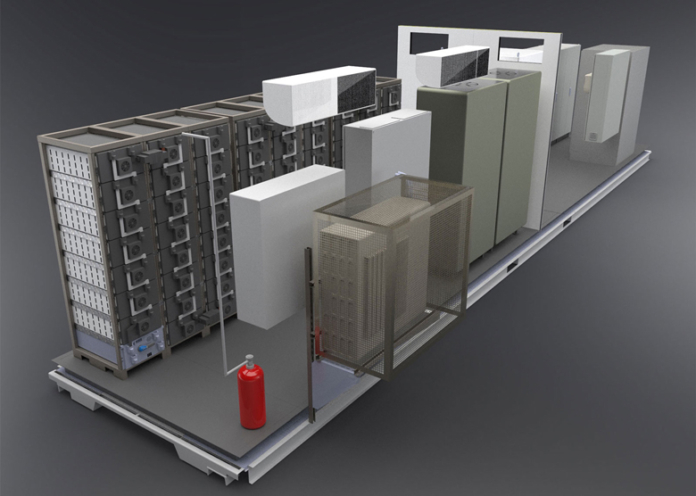
As on-site renewables become the norm, a BESS is a logical asset purchase to maximise investment in these renewables.  The production of renewable energy is determined by weather conditions, and generation may not coincide with the optimal time for usage.  If not used when generated, this is wasted energy.  A BESS allows for this energy to be stored, to be used when needed, or when most cost-efficient.  For example, when grid energy is at peak price, a BESS allows for stored energy to be used, while you can revert to grid energy when prices are lower.  Where businesses are switching fleets to EV, this can create charging problems โ€“ especially where fast-charging demands may push you over your Agreed Supply Capacity.  In this instance, a BESS can facilitate fast-charging, using energy stored in the unit and avoiding the issue of overload on the grid: the BESS stores electricity as DC, which allows for faster charging and, as the chargers are connected to the battery directly, the BESS operates as a buffer.

Battery Energy Storage Systems (BESS), where it incorporates Uninterruptible Power Supply (UPS), can also help to ensure power resilience to critical on-site equipment.  In the event of disruption to grid supply, a modern BESS with UPS can respond in under 10 milliseconds, ensuring operations are protected against grid fluctuations.  And modern BESS provides up to 95% lower losses than traditional UPS, offering added cost-savings and energy efficiencies, helping improve site sustainability.

BESS in action

A large, energy-intensive telecoms provider wanted to reduce energy consumption while ensuring their operations remained stable when switching to an electrified fleet.  Powerstar recommended BESS to facilitate both requirements.  The new system with a 100A 3-phase supply, specified for a heavily-constrained area, allows for rapid-charging of their fleet, with optimised voltage output, and supply resilience through the UPS.  For another client, a large hospital facility, there was a critical requirement for uninterrupted power. Here, a BESS with UPS has reduced the hospitalโ€™s carbon footprint by 190 tonnes of CO2e, generating ยฃ225k annual savings on energy costs.

Working towards electrification and clean power

CP30 is on the horizon, but sustainable energy management must balance electrification alongside grid constraints.  Taking control of your energy infrastructure, with incremental investment in sustainable assets such as BESS, can improve energy security and resilience, lower energy costs, and improve sustainability on the Net Zero journey.

www.powerstar.com


[1] The Seventh Carbon Budget Report, p10

[2] https://www.centricabusinesssolutions.com/navigating-energy-labyrinth-lp?utm_source=cbs_email&utm_medium=email&utm_campaign=0001447+-+UKI_2025_Resilience_FullReport&utm_id=0001447+-+UKI_2025_Resilience_FullReport

[3] https://www.neso.energy/news/next-steps-grid-connections-reform

[4] https://connections.nationalgrid.co.uk/budget-estimate/

[5] https://www.neso.energy/news/next-steps-grid-connections-reform p.24


This article appeared in the September 2025 issue of Energy Manager magazine. Subscribe here.