


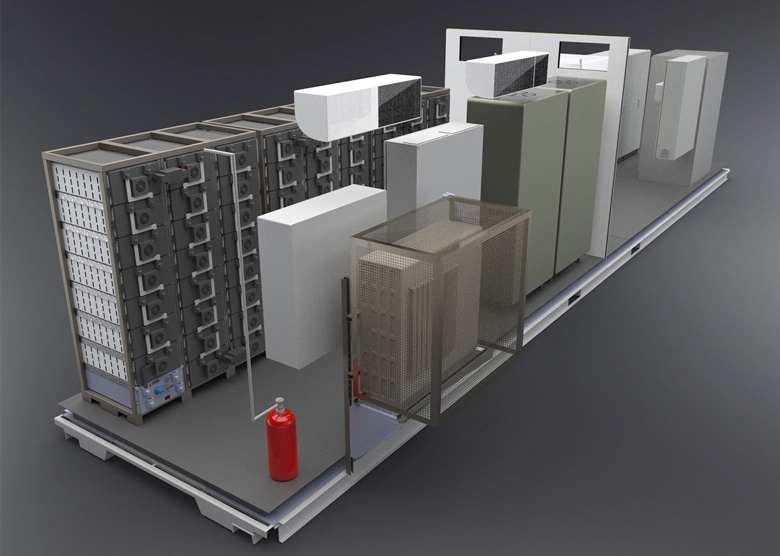

Resilient power is vital as our energy infrastructure becomes increasingly electrified. With the Clean Power 2030 Action Plan, and looking to 2050, low-carbon energy is the most significant means to achieving Net Zero. Alexandra Kuncewicz, Business Development Manager from Powerstar offers insight into how battery energy storage can help facilitate electrification for businesses.
Electrification and grid capacity
The Seventh Carbon Budget highlights electrification as the single most important means of reaching emissions reduction targets – 60% by 2040[1]. Businesses are committed to meeting their sustainability goals, but electrification is heavily dependent on the uptake of green technologies, such as EVs, heating, and powering industrial processes, generally. Where this leads to grid capacity issues, it can impact on sustainability strategies, with a recent survey of businesses finding 44% of UK and Irish companies’ decarbonisation plans negatively impacted by supplier and infrastructure limitations[2].
Investing in electric transport and manufacturing processes, extending the use of renewables – these can significantly improve sustainability, but hamper plans if increased electrification takes you over your Agreed Supply Capacity, requiring additional grid connections. By this January, NESO acknowledged there were 1,700 applications covering 2023/2024, “more projects already in the queue than are required for the energy system in 2030 or even 2050.”[3] As well as slowing down sustainability strategies through grid connection bottlenecks, the financial implications can make them untenable for many organisations, given that the average cost for a new grid connection for a large business is estimated at £65,000[4].
Many companies are taking greater control – reviewing existing energy management assets, upgrading, or investing in technologies to support sustainability, security and cost-effectiveness, and to circumvent the need for additional connections. From a recent report, 43% of businesses surveyed have solar PV installed, with 28% trialling or planning to adopt solar, while 38% have adopted battery storage with 33% trialling or planning to adopt battery storage within the next two years[5].
Investment in on-site battery energy storage
Net Zero and the electrification of your energy management and assets is a journey. Investing in technologies that support this process incrementally can help lower emissions, while ensuring energy security to critical plant.
As on-site renewables become the norm, a BESS is a logical asset purchase to maximise investment in these renewables. The production of renewable energy is determined by weather conditions, and generation may not coincide with the optimal time for usage. If not used when generated, this is wasted energy. A BESS allows for this energy to be stored, to be used when needed, or when most cost-efficient. For example, when grid energy is at peak price, a BESS allows for stored energy to be used, while you can revert to grid energy when prices are lower. Where businesses are switching fleets to EV, this can create charging problems – especially where fast-charging demands may push you over your Agreed Supply Capacity. In this instance, a BESS can facilitate fast-charging, using energy stored in the unit and avoiding the issue of overload on the grid: the BESS stores electricity as DC, which allows for faster charging and, as the chargers are connected to the battery directly, the BESS operates as a buffer.
Battery Energy Storage Systems (BESS), where it incorporates Uninterruptible Power Supply (UPS), can also help to ensure power resilience to critical on-site equipment. In the event of disruption to grid supply, a modern BESS with UPS can respond in under 10 milliseconds, ensuring operations are protected against grid fluctuations. And modern BESS provides up to 95% lower losses than traditional UPS, offering added cost-savings and energy efficiencies, helping improve site sustainability.
BESS in action
A large, energy-intensive telecoms provider wanted to reduce energy consumption while ensuring their operations remained stable when switching to an electrified fleet. Powerstar recommended BESS to facilitate both requirements. The new system with a 100A 3-phase supply, specified for a heavily-constrained area, allows for rapid-charging of their fleet, with optimised voltage output, and supply resilience through the UPS. For another client, a large hospital facility, there was a critical requirement for uninterrupted power. Here, a BESS with UPS has reduced the hospital’s carbon footprint by 190 tonnes of CO2e, generating £225k annual savings on energy costs.
Working towards electrification and clean power
CP30 is on the horizon, but sustainable energy management must balance electrification alongside grid constraints. Taking control of your energy infrastructure, with incremental investment in sustainable assets such as BESS, can improve energy security and resilience, lower energy costs, and improve sustainability on the Net Zero journey.
[1] The Seventh Carbon Budget Report, p10
[2] https://www.centricabusinesssolutions.com/navigating-energy-labyrinth-lp?utm_source=cbs_email&utm_medium=email&utm_campaign=0001447+-+UKI_2025_Resilience_FullReport&utm_id=0001447+-+UKI_2025_Resilience_FullReport
[3] https://www.neso.energy/news/next-steps-grid-connections-reform
[4] https://connections.nationalgrid.co.uk/budget-estimate/
[5] https://www.neso.energy/news/next-steps-grid-connections-reform p.24
This article appeared in the September 2025 issue of Energy Manager magazine. Subscribe here.
