

Turning cold store compressors into revenue generators

High commercial energy costs continue to place sustained pressure on UK businesses. While wholesale prices have eased since their peak, electricity and gas costs remain well above pre-2022 levels. For energy-intensive sectors, this is not a short-term headache but a structural challenge demanding new ways of thinking about energy use.

Few sectors feel this more keenly than cold storage. Between 2021 and 2022, electricity prices for many operators doubled almost overnight. The result has been an urgent drive to improve energy efficiency, reduce carbon emissions, and protect already tight margins, often while relying on ageing infrastructure and operating within strict temperature and compliance requirements.

Yet hidden within this challenge is an opportunity. Under the right conditions, cold store equipment, from compressors and refrigeration packs to ice banks, thermal stores, heat pumps, and glycol chillers, can be transformed from pure cost centres into revenue-generating assets. The key lies not in major capital investment, but in smarter control of when these assets consume power.

Why the grid needs flexibility

Traditionally, electricity systems have worked on a simple principle: generation follows demand. Power stations ramp up and down to match how much electricity consumers happen to be using at any given moment.

As the UK transitions to a low-carbon energy system, that model is under strain. Renewable generation is inherently variable; you cannot instruct the wind to blow or the sun to shine on cue. With less control over supply, the system operator increasingly needs flexibility from the demand side.

This is known as consumer-led flexibility. According to the National Energy System Operator, Britain currently has around 2.5GW of consumer-led flexibility capacity. By 2030, that figure needs to rise to 10 12GW to maintain grid stability and security. For businesses willing to participate, this represents a significant commercial opportunity.

How cold storage facilities can respond

Any asset that can briefly pause consumption, sometimes for only a few minutes, or shift its operation slightly earlier or later than planned, can provide valuable flexibility to the grid. Cold storage facilities are particularly well-suited to this role.

Compressors and related systems can be modulated in response to real-time grid conditions, ambient temperature, and site demand, without risking product integrity or regulatory compliance. Crucially, operators remain in control: participation is voluntary, parameters are agreed in advance, and everyday operations are not disrupted.

During periods of grid stress, facilities can be paid to temporarily reduce consumption. At times of surplus renewable generation, they may also be rewarded for increasing demand. Over the course of a year, depending on asset size and participation levels, many cold stores can generate several thousand pounds in additional revenue.

End to end flexibility services such as FlexGO by Flexitricity identify suitable assets, install the necessary controls and manage participation in flexibility markets, from dispatch through to settlement and payment. This allows site teams to stay focused on operations while their equipment works harder financially.

High energy prices are unlikely to disappear altogether. Grid flexibility offers cold storage operators a practical way to offset costs, reduce carbon impact and unlock new value from existing infrastructure.


How Growers Can Earn Revenue Through Flexible Operation

Energy pressures are not confined to cold storage. Across the UK, growing, rising electricity and gas costs are pushing some growers to the brink. In a recent letter to Ofgem, the National Farmersโ€™ Union warned that energy prices are threatening the viability of many farmers’ and growers’ businesses.

For growers operating controlled environments year-round, energy is typically the second-highest cost after labour. LED lighting, combined heat and power (CHP), heat pumps, water pumps, and refrigeration are essential to maintaining crop quality, but they are also energy hungry.

As with cold storage, these assets can do more than simply consume electricity. With the right controls in place, they can also generate income by supporting the electricity grid.

Flexibility in practice for growers

The principle is straightforward. Any equipment that can pause, ramp down, or shift consumption without affecting output can provide flexibility. For growers, this may include dimming or rescheduling LED lighting, adjusting CHP operation, or briefly delaying non-critical pumping and refrigeration cycles.

Participation does not mean relinquishing control. Growers decide when and how their assets are made available, ensuring crop conditions and yields are never compromised. Flexibility events are typically short and carefully managed.

Depending on the scale of the site and the number of assets enrolled, many growers can earn several thousand pounds a year, an income that directly offsets energy bills while contributing to a more resilient, low-carbon grid.

Providers such as FlexGO by Flexitricity deliver a fully managed service, from asset assessment and installation through to market participation and payment administration. This allows growers to focus on production while turning unavoidable energy use into a strategic advantage.

A new role for energy-intensive businesses

For both cold storage operators and growers, flexibility represents a shift in mindset. Energy is no longer just a cost to be minimised, but a resource that can be optimised, traded and monetised.

As the UKโ€™s electricity system continues to decarbonise, the value of flexible demand will only grow. Those who act early stand to benefit, financially and environmentally, without disrupting the day-to-day realities of running complex, energy-dependent operations.


This article appeared in the Jan/Feb 2026 issue of Energy Manager magazine. Subscribe here.

Selling heat networks in light of Ofgem regulationsย 

On 27th January, heat networks came under Ofgem regulation. In the same way that companies supplying gas and electricity networks must be regulated, now, so too must those with heat networks. Many businesses may be concerned about the how they will cope with the rules and procedures and whether they want to register with Ofgem as a heat network operator or supplier. There is, however, the option of selling heat networks, an idea introduced by heat network specialist, Power On.  

What counts as a heat network? 

It may surprise some to discover that what counts as a heat network is anything with more than two properties sharing a heating system. So technically, a gas boiler serving three flats is a heat network and comes under Ofgem regulation. 

Who needs to register?   

From now (January 2026) all heat network operators and suppliers will require authorisation from Ofgem to allow them to participate in the market. Existing heat networks will be automatically authorised but must still register with Ofgem. New networks (any that begin operating after January 2026) will need to apply for and receive authorisation before they can operate. 

Authorisation will cover a broad set of obligations, which include standards of conduct, performance guarantees, pricing protections, proof of financial resilience and technical compliance under the Heat Networks Technical Assurance Scheme. 

With just 12 months to ensure all of the above and more is adhered to, heat network owners may well be concerned about the time, knowledge, and cost that will need to be invested to meet the regulations.

Sell or succumb  

Rather than succumb to becoming a regulated heat network supplier and operator, some may wish to consider selling their heat network. 

Alex Randall, Business Lead for Sustainable Heat at Power On, said: โ€œMany developers, may decide they do not want to be an energy provider โ€“ they want to be a housebuilder. The same is true for housing associations, local authorities, care homes, student accommodation, buy-to-rent. Selling their heat network may well be their preferred option.โ€ 

Optimising the value of heat networks 

Those considering selling their heat network should take advice on how to optimise its value. Performing a health check is an important first step as there are grants available to upgrade poorly performing networks.   

Power On is holding a webinar: โ€˜Preparing your heat network portfolio for saleโ€™ on Tuesday 10thย February at 10am for details and to secure a place visit: https://www.poweron-uk.co.uk/news/preparing-your-heat-network-portfolio-for-sale

How Policy changes in onshore wind create opportunities in relation to cost efficiencies and energy security

Jamie Baxter

Jamie Baxter, Associate Partner, Carter Jonas

Last yearโ€™s change in government has brought about a change in energy policy more supportive of renewable energy generation.

One of the most significant changes has been July 2024โ€™s Policy statement on onshore wind, along with the governmentโ€™s draft revisions to the National Planning Policy Framework (NPPF). Removing the footnote in the NPPF which had put onshore wind on an uneven footing compared with other renewable technologies has removed a significant barrier to turbine installation.

The government has also committed to doubling onshore wind capacity by 2030. Much of this capacity is likely to come from Scottish projects and repowering projects in England by upgrading existing sites. However, this policy change also presents an opportunity for sites with high energy use, enabling them to generate energy locally, making long-term energy cost savings and supporting energy security.

Sites can install a turbine onsite or nearby which connects directly into the building to provide energy. These turbines often range from 200kW to 4MW. Sizing will be driven by energy demand, planning considerations and grid capacity, depending on how much energy is likely to be exported. The renewable energy will offset consumption from the grid which can often equate to 22-26p/kWh in the current market. Any energy that is not used can be exported to the grid for a lower price of 7-9p/kWh through an export power purchase agreement (PPA).

Site owners should note that sites which have previously been discounted may now be viable, as a result of the advances in technology and increased means of mitigating issues relating to radar and aviation.

High-energy users have often already installed some solar PV at their sites, but energy output naturally peaks during the summer months. Wind turbines, on the other hand, generate electricity all year round but mostly during the winter months. As a result, a turbine can complement an existing solar installation on such sites.

Battery storage can also complement wind turbines, storing excess energy generated onsite to be used later. While battery storage costs have, and continue, to come down, they are still high.  As a result, it is important to consider whether a battery is really required on a project-by-project basis. The main drivers for using batteries on site are where maximising onsite usage of renewable energy is key, potentially due to energy security or other ESG targets, and where there are restrictions on available grid capacity, which results in minimal or no export being available.

As with all renewable energy generation, the resources available vary by location and one of the first stages with any wind project is to understand the local wind speeds. Once these are known, then it is possible to understand the business case in more detail. For example, a 1MW turbine can generate in the region of 3,000 MWh annually (depending on wind speed). Typical costs of ยฃ1.3m – ยฃ1.5m per MW will vary as a result of the logistics of delivery, any planning mitigations and ground conditions. The payback period is highly dependent on energy consumption but the more that is used onsite, the quicker the payback. An export PPA can be arranged for any electricity which is exported, but the turbine should ideally be sized to minimise export.

While the  last yearโ€™s policy change means that onshore wind is again on a level footing with other types of renewable energy generation, turbines still need to pass through the full planning application process. There is no longer the potential for a single objection to derail a wind project, rather the local authorities need to take local opinion into account while assessing the overall value of development. They must also be supported by the necessary surveys, studies and planning case. There is a wide range of constraints which can impact a turbine development and these must be assessed at the outset. One example is nearby residential developments and appropriate clearance distances from paths and roads. One of the benefits of installing wind schemes near a building with high energy use and connecting directly into the building is that it presents a clear rationale for the turbine to be at that location, which can greatly help with building the case with the planning authority.

With a much more positive approach to onshore wind being taken by government, we see huge potential for companies to take advantage of the opportunity to install a wind turbine at their site, allowing buildings to generate their own renewable energy with the potential for considerable savings on energy costs to drive a quick payback on this investment.

www.carterjonas.co.uk


This article appeared in the Jan/Feb 2026 issue of Energy Manager magazine. Subscribe here.

Study: Reliability tops price as key consideration for UK businesses when choosing an energy contract

As the winter months increase demand for  energy usage and bring with them the risk of energy supply disruptions, a new survey from SEFE Energy reveals reliable supply tops price as the key consideration for UK businesses when selecting a new energy contract.

In the survey of 500 UK energy decision-makers across healthcare, retail and industrial sectors, 60% cited reliability as a key consideration when selecting an energy contract, closely followed by price at 58%. Price topped the list of considerations for energy decision-makers in France (70%) and the Netherlands (68%), who were also surveyed, making the UK an outlier among its European peers.

The cost of energy remains a concern for UK businesses. When asked about external impacts on their business, energy costs are cited as a key concern by almost half (45%) of the businesses surveyed, followed by the rising cost of labour (30%) and broader economic downturn (27%).

SEFE Energy supplies gas, electricity and low-carbon energy products to nearly 30,000 UK organisations. Katie Rees, VP Corporate Account Management at SEFE Energy, said: โ€œEnergy is a vital asset for so many organisations โ€“ from a business that needs to power equipment and maintain comfortable lighting and heating for office employees, or a steel producer that needs a constant baseload supply for energy-intensive heavy machinery. Energy suppliers need to build trust with their customers, that they can consistently meet their energy needs.โ€

Other key findings include:

External advice on energy efficiency in high demand; AI assistants a source of counsel

  • Almost three-quarters (73%[1]) of UK energy decision-makers surveyed feel they would benefit from more external advice on how to improve energy efficiency.
  • Energy providers are the most popular source of guidance on energy products among these businesses (47%), followed by energy comparison sites (46%) โ€“ while 32% of UK businesses use an energy broker or consultant and almost a quarter (22%) say they use AI-powered assistants to get advice on energy products.

Reducing energy costs prioritised over emissions reduction in energy goals

  • When asked about their energy goals for this year, reducing energy costs (49%), energy consumption (46%) and carbon emissions (36%) are the top cited objectives for UK businesses surveyed.

Majority looking to explore AI-powered energy solutions

  • The survey points to an interest in the use of AI in energy management, as more than three in 10 businesses surveyed (35%) say they want to improve their understanding of energy consumption through data analytics, while the majority (63%[2]) say they want to adopt AI-powered energy solutions this year.

Katie Rees added: โ€œItโ€™s so important that, as energy suppliers, we listen and act on feedback from our customers. These findings clearly show that reliability and price are front of mind for businesses when choosing the best deal for them and so suppliers must work to build trust that we can deliver on these fronts.

โ€œAs part of the SEFE group, we have a diversified long-term energy supply portfolio from a variety of sources, that allows us to deliver a secure energy supply to the businesses we service.

โ€œItโ€™s also encouraging that so many of the respondents want to improve their understanding of energy consumption through data analytics, as customers can save money by staying close to their consumption data. Put plainly, accurate data leads to transparent reporting, billing and invoicing, and ensures that energy costs are fairly calculated.โ€

For more information about SEFE Energy, please visit: www.sefe-energy.co.uk/


This article appeared in the Jan/Feb 2026 issue of Energy Manager magazine. Subscribe here.    
 

The rise of non-wholesale costs and how to manage and mitigate them

Luke Booth

Luke Booth, Director, Key Accounts at Equity Energiesย 

For years, the story of business energy costs has been dominated by wholesale markets. As geopolitical shocks rippled across Europe and prices surged, energy volatility was seemingly never out of the headlines.

But if youโ€™re tasked with managing energy budgets you may have noticed the pressure on wholesale costs is lifting and stabilising. Instead, the biggest upward force on energy budgets no longer comes from the price of power itself, but from everything wrapped around it.

Non-wholesale costs are the network, policy, environmental, and balancing charges that sit behind every unit of energy consumed and now account for around half of the average business bill. In some sectors, that proportion is even higher. And unlike wholesale markets, which rise and fall with global conditions, non-wholesale costs trend in one direction: up.

This is where the next phase of energy management is heading. Not just negotiating better commodity prices, but understanding the structure of the bill itself, knowing where the hidden drivers sit, and taking proactive steps to reduce exposure wherever possible. Many organisations are already doing this well, while others still treat non-wholesale costs as unavoidable overheads. But there is real opportunity here, and energy managers are central to unlocking it.

Understanding the shifting cost landscape

Non-wholesale costs arenโ€™t new. They fund the infrastructure, policies, and programmes that keep the UKโ€™s energy system functioning and help drive the transition to Net Zero. But the scale, complexity, and impact of these charges have increased significantly over the past decade.

Network charges, which are the cost of maintaining and upgrading the transmission and distribution system, continue to rise as the grid adapts to decentralised, renewable-heavy generation. Policy costs, such as Contracts for Difference, the Capacity Market, and legacy renewables schemes, reflect the scale of investment required to deliver a modern, low-carbon energy system. And even metering and settlement reform, including Market-Wide Half-Hourly Settlement (MHHS), is beginning to appear on bills as the industry prepares for a more accurate, flexible market.

For energy managers, this shift matters because it changes where control sits. We cannot influence wholesale markets. But we can influence many of the conditions that determine how non-wholesale costs apply to your organisation, from the timing of consumption to the type of contract you choose, to how accurately youโ€™ve sized your capacity agreements.

And importantly, these charges are more closely linked to behaviour and operations than most energy teams realise.

Why non-wholesale costs demand attention now

Three forces have brought non-wholesale costs to the forefront for energy managers.

First, they are predictable in a way wholesale markets are not. While wholesale prices spike and soften based on weather, global supply, and market sentiment, non-wholesale charges steadily increase as the UK advances towards Net Zero. For organisations planning budgets, this puts long-term upward pressure on costs.

Second, their scale means they can undermine even the strongest procurement strategy. Itโ€™s entirely possible to secure a competitive wholesale rate and still see costs climb because network charges or policy levies have moved in an upward direction.

Third, and most importantly, they are increasingly influenced by how organisations use energy. The shape of demand has a direct impact on costs such as Distribution Use of System (DUoS), balancing charges, and capacity costs. Understanding and modifying when energy is used, how much is consumed at peak times, even whether equipment operates unnecessarily, can all make a significant difference to the overall cost.

Non-wholesale costs are no longer the passive part of the bill. They are becoming a core part of energy strategy.

The role of data in managing non-wholesale exposure

Once you understand that non-wholesale costs are behaviour-driven, the case for better data becomes very clear. You cannot manage what you cannot see, and half-hourly billing data alone is not enough to uncover the patterns that really matter.

For example:

  • You might be paying higher network charges simply because equipment starts before it needs to.
  • A small number of avoidable demand spikes may be inflating capacity-related costs.
  • Plant cycling overnight could be driving unnecessary exposure to balancing fees.
  • Distribution red-band usage, often accidental rather than operationally required, can unknowingly add thousands each year.

Granular monitoring gives energy managers the ability to pinpoint these issues, quantify their financial impact, and build a targeted case for change. This is where some of the biggest savings lie: in incremental operational adjustments that collectively reduce non-wholesale cost exposure.

Contract structure matters as much as consumption

Behaviour and technology help control non-wholesale costs, but thereโ€™s also significant benefit in reviewing contract structures, so they match your organisationโ€™s needs. Many organisations remain on inherited agreements, like capacity levels that no longer reflect the shape of their operation, or fixed/pass-through decisions that were set years ago and never revisited. Recognising and amending this can deliver immediate, tangible improvements.

Some organisations benefit from fixing specific non-wholesale elements because this provides budgeting certainty, while others achieve better value by passing charges through at cost. In both cases, the decision should be rooted in your organisationโ€™s consumption profile and appetite for risk, instead of being left at whatever previous setting has been agreed.

Capacity agreements are a prime example. Many organisations are overpaying for capacity that far exceeds their real requirement, while others may have set their levels too low which will trigger expensive penalty charges during peak periods. Both problems disappear with accurate baselining and a well-evidenced request to the network operator.

For energy managers, this is an area where technical understanding meets commercial decision-making. And itโ€™s an area where small adjustments can significantly reduce long-term costs.

The growing role of onsite generation and storage

Renewables and storage are often discussed through the lens of decarbonisation and energy resilience, but their role in mitigating non-wholesale costs is becoming increasingly relevant. Solar generation, for example, reduces exposure to DUoS red-band charges during high-usage periods. And in turn, battery storage can help flatten peaks, protect against balancing fees, and create a more predictable demand profile.

The economics are shifting quickly, and recent regulatory changes have strengthened the commercial case for battery storage, particularly for high-consumption sectors and multisite organisations that have predictable but intensive daytime loads. For many organisations, solar and batteries go beyond being a purely environmental choice. They are powerful economic tools that help bring rising non-wholesale costs under control.

A strategic opportunity for energy managers

Non-wholesale costs can be confusing and difficult to navigate, but they are an area where energy managers can make a measurable difference.

I would suggest that the task is not simply to react to charges as they appear on the bill, but to understand the mechanics behind them, use data to challenge assumptions, collaborate with operational teams, and build energy strategies that reduce both cost and carbon.

The reality is non-wholesale costs will dominate energy bills for the foreseeable future, and managing and mitigating them is possible, but complex. However, this approach can become a central part of a broader shift towards more informed, evidence-based energy management.


This article appeared in the Jan/Feb 2026 issue of Energy Manager magazine. Subscribe here.

Beyond Price Certainty: Rethinking energy procurement in a volatile power market

Photo by micheile henderson on Unsplash

For industrial and commercial (I&C) energy consumers, procurement has long been driven by a single overriding objective: price certainty. Fixed-price contracts, long-term supply agreements, and Power Purchase Agreements (PPAs) have been the default tools for managing exposure to wholesale power markets. They deliver predictability, can align with sustainability targets, and provide comfort in periods of rising prices.

Yet certainty alone does not equal value.

As power markets evolve, it is becoming increasingly clear that strategies built solely around long-term price fixing struggle to deliver optimal outcomes over time. In an environment defined by renewable-driven volatility, sharper intraday price swings, and frequent structural change, energy procurement must now balance cost protection and cost efficiency – not trade one for the other.

Why traditional hedging leaves value on the table

Long-term fixed pricing plays an important role in energy risk management, but it has a structural weakness: if markets fall, consumers are locked in at their fixed price and fail to benefit from lower prices.

That cost takes several forms:

  • Embedded risk premiums within fixed prices
  • Trading and structuring fees that are often opaque
  • Opportunity loss when wholesale prices fall below the fixed level

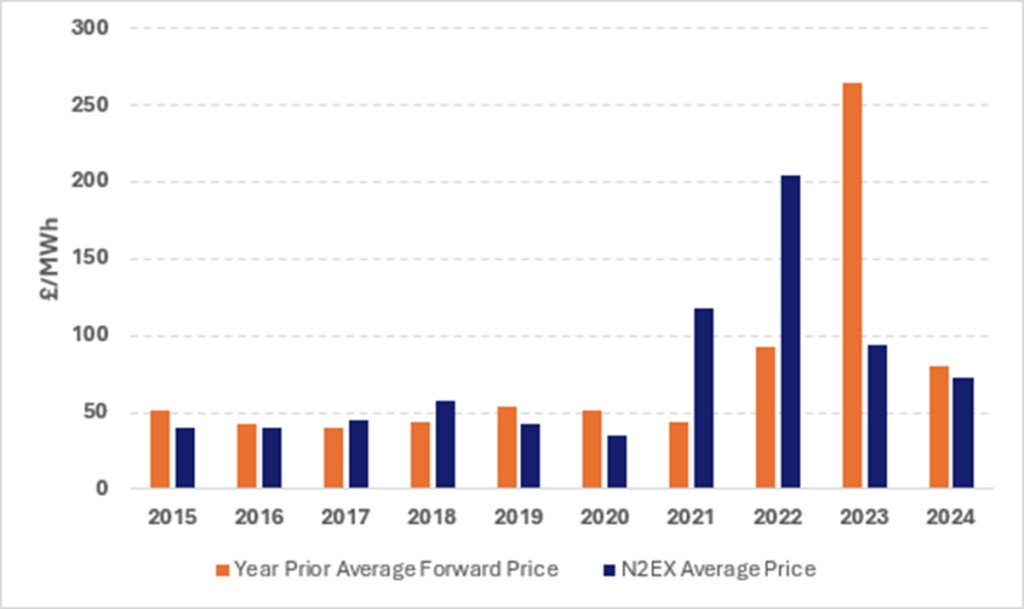
Over the past decade, wholesale electricity prices have repeatedly undershot forward market expectations. In those periods, consumers locked into fixed pricing paid materially more than the realised cost of energy. While this underperformance may not be visible in any single year, it becomes increasingly pronounced when assessed over longer time horizons.

Put simply,ย price certainty does not guarantee cost minimisation.

A broader toolkit for modern energy buyers

Power markets today offer more than a binary choice between fixed and floating prices. Increased liquidity, better data, and a growing ecosystem of financial risk-transfer solutions have expanded what is possible for sophisticated buyers.

Most procurement approaches still fall into one of three categories:

  1. Fixed pricing. Locking in prices offers protection against adverse market movements and simplifies budgeting. However, when prices trend lower or fall sharply, organisations remain committed to above-market costs, often for years.
  2. Floating pricing. Index-linked procurement allows organisations to fully benefit from falling prices and avoids embedded premiums. The trade-off is exposure to extreme price events, which can severely disrupt budgets and cash flow.
  3. Hybrid models. Blended strategies aim to balance these risks but typically require active management, frequent rebalancing, and ongoing market engagement. Each adjustment introduces frictional costs and operational complexity.

While each approach has merit, none fully resolves the tension between protecting budgets and capturing market opportunity.

Separating risk protection from energy purchasing

An alternative framework is one that separates price risk management from physical energy procurement.

Rather than embedding risk protection inside energy supply contracts, this approach uses external, AA-rated insurance to cap exposure to extreme price events. Energy itself continues to be purchased at market-linked rates through an existing supplier, ensuring full participation when prices fall.

Key characteristics include:

  • Protection against upward price spikes through insurance
  • Direct benefit from lower wholesale prices when markets soften
  • No requirement to change supplier or restructure supply contracts
  • Clearly defined cost ceilings aligned with internal risk limits

Because risk is priced explicitly rather than embedded within energy rates, this model improves transparency and avoids many of the hidden costs associated with fixed-price contracts.

Solutions such as the Paratus structure, backed by Lloydโ€™s of London, are designed specifically to operate alongside standard utility supply agreements, offering a practical path to more efficient risk management.

What the data shows

Using UK power price data from 2014 to 2024 (sourced from Bloomberg), a comparative analysis was conducted across three procurement strategies:

  1. Annual forward price fixing
  2. Full exposure to realised market prices
  3. Market exposure combined with insured price protection

Over the ten-year period, the insured market-exposure approach delivered more than ยฃ10/MWh in cumulative savings relative to fixed-price hedging after accounting for the full cost of the insurance.

For a 100,000 MWh annual portfolio, that equates to over ยฃ1 million per year in value, without increasing exposure to extreme price events.

A shift in procurement thinking

The implication is not that fixed pricing or PPAs should be abandoned. Rather, they should be viewed as components of a broader strategy – not the strategy itself.

As markets become harder to predict, resilience comes from flexibility. Procurement models that allow participation in favourable market outcomes, while retaining protection against tail risks, are structurally better suited to todayโ€™s energy landscape.

The era of one-way energy procurement is ending. The future belongs to strategies that recognise uncertainty and are designed to perform because of it, not in spite of it.

In modern power markets, managing energy costs is no longer about choosing between certainty and opportunity. With the right tools, organisations can, and increasingly must, achieve both.

www.paratusltd.com


This article appeared in the Jan/Feb 2026 issue of Energy Manager magazine. Subscribe here.

Maximising the efficiency of commercial boilers

Charlie Mowbray, Senior Product Manager, Ideal Commercial Heating

While modern condensing boilers are designed to achieve high levels of efficiency, their real-world performance can vary dramatically depending on system design, maintenance and method of operation.  Here we explore several key factors that influence commercial boiler efficiency and how best practice can help achieve optimal results.

System Cleanliness

Over time, heating systems naturally accumulate debris, sludge and particles from corrosion which can restrict water flow and reduce heat transfer, forcing boilers to work harder to maintain the required output. Poor water quality can also contribute to premature component failure.

When installing a new boiler into an older system, itโ€™s good practice to isolate the new plant from the existing system. Plate heat exchangers provide full separation between the boiler plant and the secondary system, preventing contaminated water from circulating through the new equipment. On the secondary side, system protection can be enhanced with filters, strainers, or air and dirt separators. These help remove particulate matter and air pockets, improving the overall efficiency of heat transfer. Low loss headers and magnetic low loss headers can also play a role in maintaining hydraulic balance and cleanliness, though they do not provide full separation on their own.

Water Treatment and Corrosion Control

The quality of the water circulating in a heating system has a direct impact on performance. Limescale deposits, for instance, act as an insulating layer within heat exchange equipment, impeding heat transfer. Corrosion, meanwhile, produces debris that can block pipework and strainers.

Adopting a proper water treatment regime is therefore essential. Industry guidance, such as that provided in the CIBSE and ICOM water treatment publications, should be followed to ensure correct treatments are applied, together with ongoing monitoring and maintenance. Consulting a water treatment specialist can help identify appropriate treatments and filtration systems based on system size, materials and water hardness.

Insulating the Distribution System

Insulating the heating distribution system remains one of the most straightforward and effective efficiency measures. Without adequate insulation, valuable heat energy is lost from pipework, valves and distribution manifolds before it ever reaches occupied spaces.

All accessible sections of pipework and equipment installed in the pipework should be insulated with suitable materials rated for the operating temperature. Where possible, preformed insulation kits for plant items can simplify installation and ensure consistent coverage.

Removing Air from the System

Air trapped within heating systems can have a significant effect on both efficiency and comfort. Air pockets reduce water circulation, create cold spots in emitters and increase noise within pipework. As a result, heating plant may cycle or operate more frequently to maintain the required output, increasing wear and energy use.

During commissioning and maintenance, itโ€™s essential to ensure that all air is removed from the system. Manual bleeding of radiators and emitters, along with the installation of automatic air vents at high points such as risers and on top of boilers, can help maintain stable system operation.

The Role of Regular Maintenance

Even the most advanced boiler will not perform efficiently without proper maintenance. Annual servicing by a Gas Safe registered engineer is essential, both to comply with regulations and to maintain optimal performance. A typical service should include inspection of combustion settings, cleaning of heat exchangers, checks on flue integrity, and verification of control function.

Regular maintenance also provides an opportunity to identify emerging issues before they develop into major problems.

Smart Controls and Energy Management

Installing appropriate time and temperature controls ensures that the system only delivers heat when and where it is needed. Weather compensation controls can further enhance efficiency.

For large sites or multiple-boiler installations, incorporating the heating system into a wider building or energy management platform can yield further efficiency gains. Energy management systems enable real-time monitoring of energy use, boiler sequencing, and performance trends. They can identify periods of high demand, highlight anomalies, and support predictive maintenance strategies.

Building Knowledge Through Training

The efficiency of a commercial boiler system depends not only on the technology itself but also on the people operating it. Building managers and maintenance staff should understand how to manage controls, interpret operating data and perform routine checks effectively.

A Smarter Approach to Efficiency

With energy prices high and carbon reduction now a defining goal of building management, optimising the performance of commercial boilers makes sound operational and environmental sense. Whether through effective system design, routine maintenance, or intelligent control, each improvement contributes to lower emissions, reduced costs, and a more sustainable built environment.

idealcommercialboilers.com

Portugal, Italy & Spain domestic and commercial heating and hot water provision

Chris Goggin looks at the modes & methods of heating and hot water provision to domestic and commercial properties in the Latin Euro countries – Spain, Portugal, and Italy. A comparative analysis of national approaches will demonstrate how each economy is making progress in their NetZero targets and how properties in each country uses energy and appliances.

Each EU state is legally required to reduce emissions by the year 2050, yet each European country will face individual pathways of decarbonisation due to the separate geographical, geopolitical, and financial status of the respective examined economies. Current European law ensures that every member state must contribute towards the EU becoming climate neutral by 2050 whilst reducing net emissions by 55% by 2030.

To put the progress of Spain, Portugal, and Italy into context, it is worth mentioning the advancement of the worldโ€™s leading nation in terms of clean electricity introduction – China.

Clean Chinese electrical generation is advancing far beyond any other nation with rapid construction of multiple renewable installations. The Guardian newspaper reported in June 2025, that China had installed 93GW of solar capacity in May 2025 โ€œ100 solar panels every second.โ€ Between January and May 2025, China had included 198GW of solar and 46GW of wind capacity into domestic operations, producing as much electricity as Turkey or Indonesia.

In Spain, its housing stock consists of around twenty-seven million dwellings and can be considered old. Ninety-five percent of Spainโ€™s housing stock was built before 2009 โ€“ 22% of which were constructed between 2000 and 2009. This results in many buildings being more suitable towards traditional methods of heating and hot water production, such as gas and electricity.

There are four differing climates in which building stock must accommodate towards: inland, centrally positioned areas experience extreme conditions – very cold winters and intense summers. The southern coast region also has hot and dry summers with milder winter months. The Northern coast is more comparable towards Western European countries that have plentiful rain, cooler summers, and mild winters. The Mediterranean coast also has mild winters with summers that are not as intense as inland areas.

The effect this has on choices of heating and hot water means that different options are more suitable towards the region that you preside in. However, as Spain consists of old housing and building stock traditional avenues of heating and hot water are primarily used.

Natural gas is the most common energy used in Spanish homes, of which around 40% use natural gas as the main source of energy. Thirty percent of Spanish building stock relies on electricity to deliver heating and hot water to domestic and commercial buildings, making electricity the second in demand energy in Spain. Seventeen percent of Spanish properties employ renewables as a main provider of heat and hot water.

Renewables are a fast-growing source of domestic and commercial power in Spain, renewables expanded by 15.1% in 2023 and is responsible for 50.3% of domestic power generation. Wind is the biggest contributor to this statistic accounting for 23.5% of electrical power, whilst nuclear is second at 20.3%, combined cycle power plants are the third largest provider of electricity at 17.3%. Solar PV is fourth, responsible for 14% of clean fuel.

Heat pumps installations are also gaining traction, in 2022 185,000 heat pumps were sold across Spain โ€“ a 24% increase from the previous year. The total amount of installed units that are spread across Spanish regions is around 1.28 million. This is equal to 29 people out of 1,000 owning a heat pump.

Western neighbours to Spain, Portugal โ€“ have 3.6 million buildings and a further six million residential dwellings. Portugal’s population is estimated to be in between 10.4 and 10.8 million people. Like Spain, the Portuguese weather system also differs from the cooler north to the hotter south. Despite separate climates in Portugalโ€™s regions, a shared and successful approach has been adopted towards Portuguese renewable power production.

Portugal is a European leader in providing renewable energy to its citizens and has outlawed coal-fired power since 2021. Portugal has electrified its domestic power and relies on natural and clean resources to power the country. It could be argued that Portugal is the European leader regarding domestically incorporating renewables.

In 2024 renewables as an umbrella term accounted for 71% of national electricity consumption and has been driven by an expansion of solar PV and hydropower capacity. The primary components of Portugalโ€™s energy mix that created electricity in 2024 consisted of hydropower 28%, wind energy 27%, solar PV energy 10% and biomass energy 6%.

To achieve a high percentage of domestic renewable electricity generation Portugal has significantly increased renewable power production. Solar PV energy has undergone a yearly growth of 37% by integration of new infrastructure into the national grid whilst hydropower also made a substantial impact recording a 24% annual increase.

Portugal has gone from 27% renewable electricity production in 2005, 54% in 2017 and now, as mentioned earlier 71% in 2024. In April 2024 ,95% of all electricity produced in Portugal derived directly from renewable sources. Portugal has also been documented as producing enough renewable energy to supply electricity for six straight days. This means that 100% of Portugalโ€™s power requirements were met by clean energy only during that period.

Other forms of energy assist in providing domestic and commercial heating and hot water. Portugal still has 1.5 million households that use a gas boiler for heating whilst heat pump usage is also rising. 40,000 heat pump units were sold and installed in 2022, an increase of 24% from the previous year. There are twenty-seven heat pumps in use every one thousand people across Portugal.

Italy has around thirty-five million dwellings whilst commercial properties are thought to make up 7% of Italyโ€™s total property market. A north-south divide in terms of climate is also apparent. The Mediterranean south experiences hot and dry summers with wet and mild winters whilst the north also has hot summers but with a colder and wetter winter period. Italyโ€™s Alps region will maintain regular snow fall throughout the winter months and have a warmer and wetter spring as well as summer.

Most of Italyโ€™s power still derives from natural gas usage and fossil fuels โ€“ according to statistics released by the European Commission around seventeen million households used gas as a primary source of heat and hot water in 2022. In 2024, 51% of electrical production was still reliant on fossil fuels.

However, gas use is falling โ€“ it has been reported by global news agency Reuters that Italyโ€™s gas consumption has fallen to the lowest levels in 15 years, recording an annual drop of 2.5%.

Renewables are becoming a key part of the Italian energy mix, by 2030 Italy is working towards a target of 69% renewably generated electricity. In 2024 Italy experienced a 13% increase in renewable production which covered 41% of domestic power demand. In 2023 Italyโ€™s renewable contribution covered 37% of Italian power demand also highlighting an annual expansion. Both hydropower and solar energy were increased by 30% and 19% respectively but wind extraction had a 5.6% decrease due to below average wind conditions.

According to data released on the Statista website Solar power in Italy is used by over 1.6 million dwellings across the country in 2024, up from over 1.3 million in 2023. Residential solar have experienced a 10-fold increase since 2010.

Italy’s heat pump use assists in Italyโ€™s provision of heating and hot water in both domestic and commercial properties. 515,000 heat pumps were sold in 2022, an increase of 35% compared to the previous year. Italy now has a total of reaching a total stock of around 3.25 million installed heat pumps, equivalent to fifty-five residents out of one thousand owning and operating an active heat pump unit.

All countries Spain, Portugal and Italy still incorporate fossil fuels into their energy mix but are all shifting towards cleaner energies, more notably carbon neutral electrification. Heat pump sales are an accepted technology across all three countries whilst solar is a viable option in Italy yet is not viewed as an ideal technology to Spanish or Portuguese customers.

Rinnai is actively searching for content that could equip the contractor, specifier, installer, and UK customer with information on global energy news that could affect UK energy and technology.

***********************************************************************

RINNAI OFFERS CLEAR PATHWAYS TO LOWER CARBON AND DECARBONISATION PLUS CUSTOMER COST REDUCTIONS FOR COMMERCIAL, DOMESTIC AND OFF-GRID HEATING & HOT WATER DELIVERY  

www.rinnai-uk.co.uk/about us/H3

  • Rinnaiโ€™s range of decarbonising products – H1/H2/H3 – consists of hot water heating units in gas/BioLPG/DME, hydrogen ready units, electric instantaneous hot water heaters, electric storage cylinders and buffer vessels, a comprehensive range of heat pumps, solar, hydrogen-ready or natural gas  in any configuration of hybrid formats for either residential or commercial applications. Rinnaiโ€™s H1/2/3 range of products and systems offer contractors, consultants, and end users a range of efficient, robust, and affordable low carbon/decarbonising appliances which create practical, economic, and technically feasible solutions. 
  • Rinnai is a world leading manufacturer of hot water heaters and produces over two million units a year, operating on each of the five continents. The brand has gained an established reputation for producing products that offer high performance, cost efficiency and extended working lives. 
  • Rinnai products are UKCA certified, A-rated water efficiency, accessed through multiple fuel options and are available for purchase 24/7, 365 days a year. Any unit can be delivered to any UK site within 24 hours.
  • Rinnai offer carbon and cost comparison services that will calculate financial and carbon savings made when investing in a Rinnai system. Rinnai also provide a system design service that will suggest an appropriate system for the property in question.
  • Rinnai offer comprehensive training courses and technical support in all aspects of the water heating industry including detailed CPDโ€™s.
  • The Rinnai range covers all forms of fuels and appliances currently available – electric, gas, hydrogen, BioLPG, DME solar thermal, low GWP heat pumps and electric water heaters More information can be found on Rinnaiโ€™s website and its โ€œHelp Me Chooseโ€ webpage. 

RINNAI FULL PRODUCT AVAILABILITY 24/7 FOR NEXT DAY DELIVERY of ALL HOT WATER HEATING UNIT MODELS INCLUDING 48-58kW UNITS-

SAVINGS OF

20% REDUCTION of Opex Cost,

30% REDUCTION of initial cost

15% REDUCTION in carbon

75% REDUCTION of space

For more information on the RINNAI product range visit www.rinnai-uk.co.uk


This article appeared in the March 2026 issue of Energy Manager magazine. Subscribe here.
Getting to grips with energy flexibility and storage

Matt Caville

Matt Caville, Senior Advisor for Decarbonisation of Complex Sites at Energy Systems Catapult

As an energy manager in the public sector, you can help your sites benefit from the growing demand for energy flexibility. Itโ€™s a complex market worth joining, as it can bring in extra income and supports the governmentโ€™s push for more clean power on the grid.

At Energy Systems Catapult, weโ€™ve been funded by the Department for Energy Security and Net Zero (DESNZ) to produce a Flexibility and storage guide for public sector buildings. Here we discuss some of the key findings and practical insights that can help you start exploring the opportunities available to you.

What is flexibility?

Two decades ago, peaks and troughs in energy demand were simpler to manage. The National Grid control room responded by switching centralised power stations on and off. Now, with our increasing use of distributed and intermittent forms of cleaner energy, balancing the grid has become more of a challenge, and thatโ€™s where flexibility comes in. 

Flexibility allows buildings and the National Grid to accommodate fluctuations in renewable energy generation by storing excess generation when it is not needed, and releasing the energy when demand peaks or renewable generation is low.

Public sector organisations can provide this flexibility by installing energy generation and storage projects on their sites, and by signing up to flexibility services that avoid costs, generate revenue and decarbonise operations.

In February, weโ€™re hosting the Innovating to Net Zero conference in Birmingham, where weโ€™ll discuss how we can build flexibility into the energy system. Weโ€™d love to have you along. At the end of this article, youโ€™ll find a link to register for the event and further resources to help you get started on flexibility.

Providing flexibility

As a flexibility provider you make temporary adjustments to how you consume, generate, or store electricity when requested, and get paid by flexibility procurers who purchase these services from you.

To find out more about the flexibility services needed in your local area, check out the Flexible Power initiative run by four of the UKโ€™s distribution network operators. This handy interactive map helps you explore whatโ€™s on offer and how you can take part: www.flexiblepower.co.uk/ 

There is also the Piclo Flex platform providing an independent marketplace for flexibility services across the UK. You can search the competitions at: https://picloflex.com/

Can you participate?

The types of storage technologies, flexibility services and route-to-market that will be relevant to your site will depend on the type, size and context of your site. As a rough guideline, sites with around 500 kW of flexible capacity are typically considered viable for participation in flexibility markets.

  • Medium buildings including those run by local authorities and government departments/agencies are likely suitable for energy storage technologies ranging from hundreds of kWs but typically less than 1 MW.
  • Large buildings such as hospitals and schools could have space for hundreds of kWs to multiple MWs.
  • Campus sites including prisons, hospitals, universities and Ministry of Defence sites could host multiple MWs.

Energy storage options

Our guide includes a detailed description of energy storage systems, how developed they are and whether they are suitable for installation at public sector sites.

Here is a condensed snapshot of some the technologies currently available:

Storage typeRationale
Lithium-ion batteriesCommon for renewable energy integration, grid stabilisation, and backup power due to high energy density and falling costs.
Liquid air energy storageAlthough not yet deployed on a public sector site, it shows potential where reliable long-duration backup power is required during outages such as hospitals.  
FlywheelsProvide instantaneous backup power during short outages, good for use in uninterruptible power supply (UPS) systems such as data centres or hospitals.
Heat-to-heat thermal energy storageUsed in some district heating applications. Limited but growing use for thermal energy storage in public sector buildings.
Electric vehicle smart charging as energy storagePublic sector sites are likely to have access to electric car batteries as part of their fleet. Additional investment required to allow for smart charging.

Demand Side Response (DSR)

This is the practice of adjusting electricity consumption patterns in response to changes in electricity supply, demand or pricing signals. DSR allows an organisation to either avoid costs or generate revenue.

Public sector organisations can work with DSR service providers and aggregators to identify the flexibility potential of specific sites and facilitate their participation in DSR.

Some of the processes used at your sites that are applicable to DSR are outlined in the table below.

Participation can also create opportunities for new projects to increase generation capacity or add storage.

Routes to market

Flexibility service providers help sites and businesses access flexibility markets. Their offerings typically break down into:

  • Software-as-a-service: a provider sells you controls software and access to a market platform to manage your assets and how you participate in flexibility markets. The service is typically charged as a monthly fixed fee related on a ยฃ/MW/year basis. This option potentially allows your site to keep more of the revenue it generates but it requires sector knowledge and resource to operate. Therefore, a third-party operated model is likely preferable for most public sector sites.
  • Optimisation services: an optimiser controls your siteโ€™s assets and access to flexibility markets to maximise revenue from storage, generations and/or Demand Side Response. The optimiser will provide an operations team to manage this. A typical commercial model would be a revenue share, with a site likely to pay 20-30% of its revenue.
  • Aggregators: a company acts as an intermediary between multiple asset owners and the flexibility market. An asset owner may use an aggregator to simplify participation in flexibility markets or because they do not qualify to trade directly in the market.

When forming your business case, you could highlight non-financial benefits beyond your buildings. Look at how your local community could also benefit from your organisation becoming a flexibility service provider.

Strategies for participation

When engaging with a flexibility service provider, they are likely to guide you through a three-stage process:

  • Consultation: including a site survey to understand your requirements, operational parameters and revenue potential.
  • Implementation: provider assesses the site for upgrades, installs controls for the site to actively respond to flexibility markets, and connects you to their control room.
  • Operation: provider advises on the best operational strategy and uses their trading desk to maximise revenue from your assets.

In the guide, we describe various strategies that can help the public sector access the flexibility market. These include:

  • Aggregation: by pooling resources from multiple smaller, distributed energy resources โ€“ and even neighbouring organisations โ€“ public sector organisations can aggregate assets. This includes rooftop solar, batteries, electric vehicle chargers and DSR programs to create a more diverse portfolio that increases the flexibility services you can provide.
  • Time of use tariffs: a pricing plan designed to encourage energy users to consume electricity at times when it is available cheaply. This in turn supports the growth of a sustainable and flexible energy system combining renewable generation and storage.

Next steps

We hope this article prompts you to consider how the public sector assets and the sites you help manage could participate in flexibility.

At Energy Systems Catapult we believe that flexibility and storage will come to dominate energy conversations as we unlock ways to flatten the peaks in demand brought about by our increasingly clean energy system. On 25 February, weโ€™re hosting our flagship Innovating to Net Zero conference in Birmingham, where weโ€™ll explore the practical realities of building flexibility in the energy system, look at the questions keeping energy experts awake and spotlight the pioneers accelerating clean energy innovation.

Join other energy sector professionals, experts, policymakers, investors and tech developers by registering here (book your ticket using the code ENERGY2026 to get ยฃ50 off): https://bit.ly/ITNZ26

Download our Energy flexibility and storage guide and the associated annex on technologies here: https://bit.ly/flex-guides


This article appeared in the Jan/Feb 2026 issue of Energy Manager magazine. Subscribe here.ย ย ย ย 

Solar on prescription: the future of energy in healthcare estates

Fona Keysell and Jim Howlett

Fona Keysell, Director of Consultancy + Jim Howlett, Business Development Manager โ€“ Public Sector at RenEnergyย UK Ltd.

With NHS England spending approximately ยฃ1.4 billion on energy, and demand only rising, the value of solar photovoltaic (PV) is not just a trend, it is increasingly a strategic consideration for NHS estates as decarbonisation continues to fundamentally change how energy is produced and consumed on site. For estates directors and energy managers tasked with delivering net zero ambitions while maintaining resilience and affordability, on-site generation is central to long term planning.

The emergence of electrification

Healthcare estates are extremely energy intensive. Beyond lighting and HVAC demand, many host operations 24/7 and rely on power for specialised medical equipment. Demand is constant, and systems that can produce clean energy, affordably on-site are increasingly attractive.

Currently, an era of electrification is being ushered into the healthcare sector. Electrification enables displacement of fossil fuels when paired with low-carbon electricity generation allowing heat and transport to be decarbonised. When implemented correctly, electrification can reduce greenhouse gas emissions, improve system efficiencies, and support long-term cost control.

However, as with every conversation that centres around sustainability and decarbonisation, it must be grounded in operational reality. The electrification of heat is significantly increasing electricity demand across NHS estates. This demand is increasing faster than on-site generation capacity.

Itโ€™s a pattern that is becoming increasingly common across NHS estates in England and Wales. As more trusts move away from reliance on gas, the reality is that energy costs may rise before the benefits of decarbonisation are fully realised.

Decarbonisation is not something healthcare estates can delay or ignore. As national policy, funding mechanisms, and public accountability continue to evolve, estate teams are under growing pressure to act. This means that if electrification is to be pursued at scale, it cannot be delivered in isolation. Measures are required that both offset increased electrical demand and mitigate long-term exposure to energy price volatility. This is where solar PV presents a clear and compelling opportunity.

Solar as a solution

Solar is increasingly deployed as the solution across the healthcare sector. Implementing and expanding a solar PV portfolio allows healthcare estate managers to transition toward electrification with greater confidence, while meeting rising electric demand and reducing reliance on imported grid electricity. We are already seeing many healthcare estates maximise rooftop potential, leading to additional deployment options, such as carports integrated with electric vehicle charging infrastructure, being explored.

But this is not as simple as including solar as a simple โ€œadd-onโ€ project. The relationship between solar and wider estate infrastructure has evolved, and a more integrated, front-loaded approach to project development has become critical. Large NHS solar schemes now sit within a complex landscape of heat electrification, grid capacity constraints, private wire arrangements, export limitations, and site-wide energy controls.

There are projects where funding has been secured, yet systems remain at risk from not being fully energised or optimised. This can be due to Distribution Network Operator (DNO) constraints, protection settings, or control strategies that have not been adequately considered at an early stage. The result is delay, re-design, and additional cost, often at a point where time, capital, and internal resource are already constrained.

By engaging early with experienced solar and energy infrastructure specialists, healthcare estates can ensure that grid capacity, export management, future electrification plans, and operational constraints are fully understood and designed into the scheme from the outset. This engagement should ideally take place before funding applications are submitted, to ensure value for money is protected. The objective is to avoid stranded assets and ensure that solar actively supports the wider decarbonisation strategy of the estate, rather than creating unintended challenges in the longer term.

Pace setting in healthcare 

While decarbonisation remains a hot button issue for the sector, electrification alone is not a complete solution. Solar PV provides a critical balancing mechanism, helping healthcare estates maintain operational resilience while progressing towards net zero targets, without disproportionately increasing operating costs.

Health estates can realise significant financial and operational benefits by expanding their PV portfolios. Rooftop systems remain the foundation for many sites, but the next phase of deployment increasingly includes solar carports, particularly where electric vehicle infrastructure is also required. To deliver these projects effectively, collaboration and early partnerships with technical specialists is essential ensuring that solar generation, electrification, and grid constraints are considered as part of a single, coordinated energy strategy.

The healthcare estates that invest in well-planned solar infrastructure today will help set the pace for the sector. Leadership will not be defined by speed alone, but by the quality of planning, integration, and delivery. Those organisations that act early, with expertise rather than urgency are likely to become reference points for how decarbonisation can be achieved in a way that is resilient, affordable, and operationally sound.

Find out more: https://www.renenergy.co.uk/


This article appeared in the Jan/Feb 2026 issue of Energy Manager magazine. Subscribe here.