
Taking charge: Addressing the safety risks of the UKโ€™s EV battery surplus

With the UK facing a mounting stockpile of used EV batteries, the risks of unsafe storage are rising.

The UK has been an early mover on EV adoption, with aggressive, legally binding climate targets, pioneering early incentive schemes and grants, and a rapidly expanding charging network all pushing it towards a greener future.

But beneath the surface, a challenge is building – tens of thousands of used EV and energy storage batteries are piling up in the UK, with around 23,500 end-of-life batteries sitting in storage rather than being reused or recycled, according to an FT article[1].

For warehouse and storage managers, recyclers, waste contractors and regulators, the challenge is clear: damaged or poorly stored batteries pose a real and growing fire and environmental risk.

Yet as battery chemistries evolve and energy densities increase, traditional approaches to storage, handling and disposal are no longer sufficient.

Pete Zorgenlos, Head of Product Development (UK & Europe) at New Pig, offers his practical, expert-led guidance on how to safely manage damaged, defective or end-of-life lithium-ion batteries.

Navigating a shifting regulatory landscape

The regulatory environment in the UK is tightening in response to these growing volumes. With the Lithium-Ion Battery Safety Bill and the 2025 updates to the Hazardous Waste Regulations, the “best practice” of yesterday is quickly becoming the legal minimum of today.

In the UK, Li-ion batteries are classified as controlled hazardous waste, and the Environment Agency now demands rigorous tracking and separate collection. When these assets move from storage to transport, the requirements become even more stringent.

This shift places the burden of proof on the facility manager to ensure that every unit leaving the site is not only packaged in UN-approved containers but also chemically stabilised for the journey.

Expert protocols for safe management

Understanding the inherent hazards of Li-ion chemistry is essential for effective risk mitigation. Unlike traditional lead-acid batteries, Li-ion cells contain a flammable electrolyte that can fuel its own fire without the need for external oxygen. Mechanical damage, manufacturing defects, or even minor electrical faults can trigger an exothermic reaction known as thermal runaway.

In a high-density storage environment, this poses a unique threat: the “domino effect,” where the heat from one failing cell compromises its neighbours. This process is remarkably rapid, reaching temperatures between 700ยฐC and 1000ยฐC in seconds, often accompanied by the release of toxic hydrofluoric acid vapours.

Effective management begins with early detection. Strategic handling should focus on identifying the “warning signs” of failure – such as swelling, hissing, or discolouration – before an incident occurs. Expert guidance suggests that suspect batteries should be immediately isolated.

For safe storage while awaiting proper disposal, the battery should be placed in a container filled with cushioning material that is non-combustible, electrically non-conductive, and absorbent.

This “triple-threat” of protection, using specialist non-combustible binders, ensures that if a cell does breach, the impact is contained. Under no circumstances should damaged batteries be placed in regular trash or recycling containers, as this introduces an unacceptable fire risk to the wider waste stream.

Where high-risk or significantly compromised units are identified, further measures may be required, including placing the battery within a specially designed, fire-rated storage case to provide an additional layer of thermal protection.

The physical environment of the storage facility also plays a critical role in battery longevity and safety. Maintaining a stable temperature profile – ideally between 4ยฐC and 27ยฐC – prevents the chemical degradation that leads to internal short circuits.

In the UKโ€™s increasingly volatile weather patterns, climate-controlled storage is no longer a luxury for large-scale stockpiles, it is a fundamental requirement for maintaining the “second-life” value of the battery while ensuring site safety.

Proactive electrolyte leak management

A critical, yet often overlooked, aspect of battery safety is the management of minor leaks during the manufacturing and storage phases.

In instances of minor cell compromise, specialist absorbent mats can be deployed to catch drips and leaks. It is essential that these are composed of chemical-resistant materials specifically designed to absorb lithium-ion battery electrolytes without degrading or triggering a secondary reaction.

Modern industrial solutions offer a technical advantage in these environments. These mats are engineered using a high-absorbency, fine-fibre construction that wicks liquid quickly through an exclusive dimple pattern, ensuring a faster clean-up and a safer floor surface.

Because these mats are specially treated to remain structurally sound even when saturated – lasting up to twice as long as standard alternatives – they provide a reliable line of defence. Whether utilised in roll form to cover large areas or as lightweight pads for smaller tasks, having these materials on hand allows facilities to manage hazardous spills without leaving behind residue or compromised fibres.

Emergency response: cleaning up electrolyte spills

While electrolyte leaks from a damaged battery pack are relatively infrequent, they present immediate hazards to both personnel and the environment.

In the event of a spill, a disciplined response procedure is vital. The spill must be contained by a trained operative if safe to do so and the area ventilated and evacuated for large spills. It is also critical to keep appropriate firefighting measures, such as specialist battery fire suppressants or fire blankets, within immediate reach during the clean-up.

The leaking battery should be carefully placed in a container of chemically inert cushioning material. To address the spilled fluid itself, only inert, non-cellulose absorbents should be used, as cellulose-based materials can react unfavourably with certain battery chemistries.

Once the area is clear, all used absorbents and contaminated PPE must be secured in a sealed bag. Proper disposal is not merely a housekeeping task but a regulatory one; you must contact your environmental or shipping officer to arrange for hazardous waste collection, as neither the batteries nor the spent absorbents can be disposed of in standard waste or recycling streams.

Beyond compliance

As we move toward a circular economy, the ability to safely handle, store, and document the lifecycle of lithium-ion assets will separate the industry leaders from those exposed to significant liability.

Ultimately, safe storage is about more than just avoiding a fire; it is about protecting the financial and environmental value of the UKโ€™s energy transition.

By embedding these expert-led protocols into organisational culture, we ensure that the lithium-ion legacy remains a cornerstone of the UKโ€™s net-zero future, rather than a hidden risk.

For more visit: www.newpig.co.uk


[1] https://www.ft.com/content/cc5ef169-fac1-4af0-9b99-1edd360325e4
Safeguarding Solar Systems: A Guide for UK Businesses

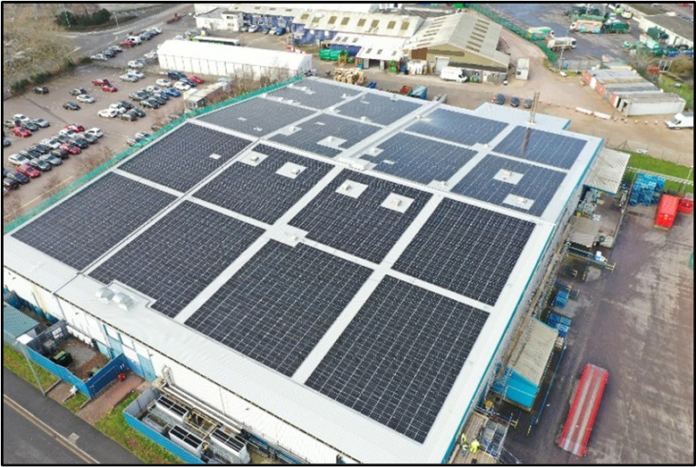
As more UK businesses look to solar energy to help them meet their carbon reduction goals and cut energy costs, safety is coming under increasing scrutiny.

As more UK businesses look to solar energy to help them meet their carbon reduction goals and cut energy costs, safety is coming under increasing scrutiny. Here, Christelle Barnes, UK Country Manager of inverter and smart energy solution provider SolarEdgeTechnologies, explains what businesses need to know to safeguard both their people and property when investing in solar.

Improved economics and increased awareness of solar energy as a viable and sustainable alternative to grid power are leading more companies to go solar. With the potential to benefit businesses large and small, smart energy solutions are cropping up on unused rooftops of manufacturing plants, warehouses, retail outlets, data centres, airports and other transport hubs, and more. Much of the attraction is economic, especially in an environment of rising electricity consumption. However, there is also a strong altruistic motive in installing a solar power system. Lowering a companyโ€™s carbon footprint naturally benefits the environment by cutting down on CO2 emissions and helping to reduce the effects of climate change. Today, a forward-looking corporate environmental program, as part of a broader, robust ESG strategy, has become as essential as a balance sheet, with many leading UK companies promoting their own ambitious zero carbon targets.

Accordingly, solar PV (photovoltaic) systems are now viewed as long-term investments that need to be closely managed and monitored in order to maximise ROI and bottom line savings. As with any serious investment, stakeholders must ensure that the assets they are financing are safe and secure from physical harm. Commercial buildings are high-value assets, and in the event of a fire, property loss and business interruptions can be costly. Of even greater importance is the need to protect the people who work in and visit those buildings, as well as the wider community.

Putting Solar Safety First

With millions of systems installed worldwide, solar PV is proven to be a safe, reliable technology that does not inherently pose a risk to people or property. Commercial infrastructure fires can be caused by many things, including electrical malfunctions in heating systems, factory machinery or even lightning. While fires stemming from solar PV systems are rare, it is important to thoroughly evaluate the safety of any existing or planned installations, particularly when selecting or upgrading system components.

When a building fire is found to originate from a solar PV system, causes may include installation error or improper maintenance, particularly involving connector wear and tear. These errors may not cause a problem initially, but over time they can potentially lead to electrical faults, which, if not caught, can develop into something more serious. Fortunately, advances in solar system technology now enable effective detection and prevention of overheating at the connector level โ€“ a topic Iโ€™ll return to later in this article.

To support safer installations, many technology providers invest in ongoing training. For example, SolarEdge has trained thousands of installation professionals this year alone. However, even when installations are carried out flawlessly, external factors beyond anyoneโ€™s control, such as an animal chewing through a cable, can introduce faults. It is at this point that component selection becomes key.

Safety Begins at the Panel Level

To mitigate potential solar safety risks, it is important to understand how these systems work. The main components of solar systems are PV panels and inverters. The panels generate electrical power by converting solar radiation into direct current (DC). Inverters then convert the DC power to alternating current (AC) used to power homes, buildings and businesses.

As long as the sun is shining, solar panels and cables remain energised with high DC voltages, even if the main circuit breaker is shut off. In the event of a fire, firefighters typically disconnect the grid supply before intervening. They assume there is no risk of electrocution once the grid has been disconnected, allowing the spray of water and creation of holes in the roof so that heat and smoke can dissipate. However, this assumption is not true in the case of a typical PV roof system, as the system is creating its own electricity independent of the grid.

Traditional string inverters typically have limited safety functionality since they do not necessarily reduce the DC voltage when switched off. To meet safety standards, additional hardware may need to be purchased, adding more cost and labour to the installation.

Due to this and other limitations, there has been a notable shift away from traditional string inverters in favour of more advanced systems that leverage DC-optimisation. These systems split the functionality of a traditional string inverter and use Power Optimizers placed directly onto panels to monitor performance in real time. This not only increases energy production and provides more flexibility in system design and layout, but it also improves safety through embedded safety features that are capable of identifying and mitigating faults at a panel level.

There are two safety features in particular to look out for when investing in solar technology. The first is a SafeDC feature. This is a module-level safeguard which minimises the risk of electrocution during installation or standard system maintenance, or in the event of a fire. With traditional inverters, shutting down the inverter or the grid connection will terminate current flow, but DC voltage in the string cables will remain live for as long as the sun is shining, meaning the system still poses an electrocution risk. SafeDC overcomes this problem by automatically reducing the output voltage of each module to a touch-safe level.

The second feature is arc fault detection and prevention. Although rare, arc faults can be triggered by issues like false trips or loose connections and may result in heat buildup that, if undetected, could cause an arc fault to develop. DC-optimised systems monitor terminal blocks for abnormal heat buildup, quickly identifying the source and isolating it to prevent escalation.

Confidence in this technology extends to firefighters installing solar on the roofs of their own fire stations. In the UK, a fire and rescue service selected SolarEdge for 700kW of PV systems on 12 different fire stations and three headquarter buildings due to these and other embedded safety features. 

Know Your Insurance Requirements

As investment in solar increases, safety regulations are being addressed by insurance companies, fire authorities, and utility companies. When planning to invest in solar, it is advisable to include your insurance company early on in the planning stage. Many leading international insurers have developed robust checklists that set out best practice and recommendations on installation methods, rooftop environments, system components, emergency response mechanisms, and other factors. Failure to meet these criteria can result in higher insurance premiums. The customer then has no choice but to retroactively fix the problem, adding considerable expense and a significant delay to the project.

In the UK, as well as globally, an increasing number of businesses are announcing their commitment to decarbonising their operations and achieving net zero. With governments making promises of their own, this signifies a shift to a low-carbon economy and an opportunity to encourage investment and innovation in renewable energy. As the solar industry evolves, so too do the financial opportunities and environmental benefits for commercial businesses. By putting solar safety first, UK businesses can move forward with their decarbonisation strategies with confidence.ย 


This article appeared in the Jan/Feb 2026 issue of Energy Manager magazine. Subscribe here.

Whatโ€™s the cost of a half-degree? Vaisalaโ€™s new Origo slashes cooling waste in data centers

Roughly 80% of the worldโ€™s data centers still rely on air cooling. Fixing a โ€˜half-degreeโ€™ error there can avoid around $805 million in cooling waste every year, about $8 billion over a decade, based on moderate 10 MW sites.

Vaisala, a global leader in measurement instruments and intelligence for climate action, introduces Origo, a next-generation modular measurement platform designed to transform environmental monitoring in data centers and other mission-critical buildings.

Why half a degree matters

A temperature sensor off by just 0.5 ยฐC (32.9 ยฐF) might sound trivial, but for example in a 10 MW data center, that small error can cost more than $800,000 in wasted cooling energy over ten years. In life science cleanrooms, for example, the stakes are even higher: any critical environmental parameter such as temperature or relative humidity can compromise product integrity or research outcomes, with losses that go far beyond energy costs.

Air cooling remains essential in a rapidly evolving data center market

There are an estimated 12,000 data centers worldwide, with the U.S. and Europe accounting for more than a half. While liquid and hybrid cooling are growing fast for high density AI workloads, air cooling remains the universal foundation of data center thermal management. It provides the room-level baseline cooling every facility needs, while liquid cooling adds targeted, high efficiency heat removal for the hottest racks. As a result, hybrid architectures โ€”air for space, liquid for the densest loadsโ€” are now standard in both new builds and retrofit projects.

Impact at scale

Reliable, precise measurement is critical for optimizing air-cooled environments.

โ€œGeneric sensors with ยฑ0.5 ยฐC accuracy drive overcooling and energy waste, costing operators> tens of thousands of dollars annually. Origoโ€™s precise ยฑ0.1ยฐC and ยฑ1 %RH accuracy and stable measurements reduce unnecessary cooling while ensuring the reliable environmental control that critical facilities depend on. It translates to performance that pays for itself in months and protects uptime for years to come,โ€ says Anu Kรคtkรค, Vaisalaโ€™s Product Line Manager for HVAC and Critical Buildings.

Applied at global scale, eliminating the โ€œhalf-degreeโ€ error across todayโ€™s predominantly air-cooled installed base โ€” roughly 80% of the worldโ€™s ~12,000 data centers โ€” would avoid around $805 million in wasted cooling energy every year, totaling approximately $8 billion over a decade.

With data centers consuming about 1.5% of global energy, and demand set to more than double by 2030, precision sensing is essential to keep energy use and emissions in check while safeguarding IT performance.

Designed for todayโ€™s and tomorrowโ€™s critical environments

Origo is engineered for simplicity and long-term adaptability. Its modular design enables monitoring of multiple parameters through Vaisalaโ€™s compatible probes, such as carbon dioxide (COโ‚‚) and dew point sensors, on the same platform. This flexibility makes Origo a future-proof solution that adapts to evolving measurement requirements also in other critical environments such as cleanrooms, life science applications, and semiconductor manufacturing.

Backed by Vaisalaโ€™s commitment to reliability, Origo ensures accurate measurements and dependable performance throughout its service life, helping operators protect processes, reduce risk, and optimize resources.

Origoโ€™s fieldโ€‘replaceable probes allow quick onโ€‘site updates with minimal interruption. Vaisalaโ€™s wide range of services, from accredited calibrations to technical support, is available to complement onโ€‘site expertise.

Key facts briefly

  • The world runs on approximately 12,000 data centers; U.S. + Europe together represent well over a half of all sites
  • Air cooling remains a standard baseline for most facilities; liquid is growing fast for high-density AI, often in hybrid setups
  • A 0.5 ยฐC error can cost a 10 MW data center more than $800,000 in cooling energy over 10 years
  • Vaisala Origo delivers ยฑ0.1โ€ฏยฐC temperature accuracy and ยฑ1โ€ฏ%RH humidity accuracy for stable, reliable environmental control
  • Modular design and multiโ€‘parameter capability suit critical environments such as data centers, cleanrooms, hospitals, production facilities, and semiconductor environments

www.vaisala.com

ClearVUEย Headlines atย EMEX 2025 withย AI for Energy,ย Carbonย and Costย 

EMEX, the UKโ€™s flagship energy management exhibition, saw a commanding presence fromย ClearVUE,ย as the companyย showcasedย itsย revolutionaryย AI-drivenย platformโ€™sย data integrity, decision-making capabilitiesย and cost optimisation,ย designedย to help businesses manage energy,ย sustainability, and compliance with confidence.ย 

During live sessions, ClearVUE technology challenged the limits of traditional energy monitoring, via the introduction of their proprietary AI-model, IRIS. In tandem with ClearVUE.Zero โ€” the companyโ€™s energy and carbon real time data monitoring system โ€” IRIS showed visitors the power of intelligently focusing on energy and carbon savings while driving real change.   

A key feature is IRISโ€™ data-driven and sector specific recommendations that are easily tailored to an individual organisationโ€™s operations. Cost savings, carbon reductions, and net zero procurement decisions are then presented with the level of rigour expected by boards, auditors, and regulators.  

A Real-Time System of Record for Energy and Carbonย 

ClearVUE.Zero provides facilities managers, energy teams, and finance leaders with consistent, timestamped, and verifiable data across multiple sites, production lines and operational activities. Designed to ingest and process high-resolution consumption data from across estate portfolios โ€” down to circuit-level resolution โ€” ClearVUE.Zero facilitates audit-ready reporting for SECR, SBTi, and internal ESG mandates. 

At EMEX 2025, visitors to Stand B20 saw the power of ClearVUE.Zero combined with ClearVUE.IRIS and how it is fast becoming the digital assistant of choice for energy managers and sustainability teams. At their fingertips, and within seconds, they now have enhanced visibility of weekend baseload drift in large logistics hubs, granularity on HVAC anomalies in multi-storey office estates and much more. 

The platformโ€™s ability to compare energy consumption by asset, circuit, or site โ€” at 15-minute intervals and automate scope 1 and 2 carbon tracking โ€” was central to its strong reception among the eventโ€™s technical audience. 

โ€œHaving worked in energy management for over 30 years across the globe, this is the first platform Iโ€™ve seen that truly assists energy managers,โ€ said Dan Smith, Director of Energy Services at ClearVUE. โ€œIt automates the time-consuming data analysis we used to spend hours on and delivers the clarity and accountability that energy managers have been demanding for years.” 

Introducing IRIS: The Embedded AI for Operational Opportunityย 

ClearVUE.IRISโ€™ ability to transform raw consumption patterns into action-orientated recommendations, gives businesses a way to act faster โ€” and with greater confidence. 

At the heart of IRIS is its Opportunity Engine โ€” a continuously updating intelligence layer that interprets live data and surfaces the most impactful interventions across an estate. It detects and it quantifies anomalies, contextualises them, and converts them into clearly defined opportunities, allowing organisations to focus resources on the changes that matter most. 

โ€œThere remains a gap between an organisationโ€™s ambitions and the current status quo,โ€ added Dr David Lloyd. โ€œIdentifying and prioritising the most impactful actions remains an outstanding challenge. IRIS is able to bridge that gap, by transforming company specific data and contextual information into a feasible and credible sustainability strategy.โ€  

What interested delegates the most was the level of precision in IRISโ€™s recommendations. Unlike generic alerting systems, IRIS explains the problem, attributes causality, and ranks actions by savings potential, ease of resolution, and time-to-impact. Each issue is assigned to an owner, complete with rationale and expected benefit โ€” creating accountability across departments. 

Live demonstrations โ€” delivered by ClearVUEโ€™s energy consultants and technical directors โ€” enabled EMEX attendees to interact directly with the platform, explore real case studies, and ask questions in their own words. 

Delegates responded positively to the platformโ€™s ease of use, the breadth and depth of its analytical capabilities, and the high degree of automated number-crunching behind its recommendations โ€” with many noting that IRISโ€™s outputs were already fit for presentation to boards and finance teams. 

Kai Whiting, ClearVUEโ€™s Sustainability Strategy and Content Lead, noted the growing demand from businesses for transparent and actionable intelligence. โ€œThereโ€™s nothing hypothetical about the pressure businesses are under to reduce energy waste,โ€ he said. โ€œIRIS gives us the clarity and credibility to work in partnership with your business โ€” helping identify inefficiencies with real data and delivering measurable outcomes that reduce cost and carbon without the guesswork.โ€ 

Flexer: Market-Facing AI for Procurement and Risk Teamsย 

While ClearVUE.IRIS specialises in operational efficiency and sustainability, a second AI engine โ€” ClearVUE.Flexer โ€” addresses another one of the most complex challenges businesses face: energy procurement. For organisations with flexible purchasing strategies, Flexer provides a decisive edge. It interprets commodity markets and regulatory structures while assessing non-commodity charges (including DUoS, TNUoS, TRIADs, and CfDs) to flag optimal buying windows and highlight avoidable pass-through costs โ€” helping procurement teams act with greater confidence and precision. 

Procurement managers, CFOs, and energy traders visiting the stand saw how Flexerโ€™s forecasting engine could support structured procurement and hedging decisions by exposing where and when cost risk emerges. Forecasted levy impacts, real-time exposure views, and procurement prompts are all presented in the platform with accompanying data logic. 

โ€œOur industry has long needed a tool that understands not just price, but exposure,โ€ said Latif Faiyaz, Head of Energy Trading. โ€œFlexer reads the market in a way most risk models canโ€™t โ€” by combining contextual information with real-time data. That means when the market turns, your business can execute pre-modelled actions with speed, certainty, and full internal audit traceability.โ€ 

Quantified Results: 15.3% Average Identified Savingsย 

Throughout EMEX, ClearVUE revealed new data from recent client implementations. Across the company, there is a track record of having identified an average of 15.3% in actionable energy savings per site โ€” across sectors including manufacturing, education, logistics, and healthcare. 

This figure, based on verified and timestamped opportunities with known kWh and ยฃ values, was shared across the companyโ€™s headline demo slots and featured in its post-event campaigns. ClearVUE also noted improved action closure rates and shortened time-to-impact for clients using IRIS compared to traditional monitoring and targeting tools. 

EMEX Takeaways: From Monitoring to Movementย 

ClearVUEโ€™s presence at EMEX 2025 reinforced a shift already underway in enterprise energy management: moving from passive monitoring to action-led data-driven intelligence. As organisations face increasing pressure to decarbonise, improve cost stability, and report with audit-grade transparency, the appetite for solutions that combine live data with built-in decision support is growing. 

Speaking after the event, David Cole, Director of Global Operations at ClearVUE, reflected on what this shift represents for industry: โ€œWe built ClearVUE.IRIS to meet current and future business needs,โ€ he said. โ€œEvery business now sits at the intersection of rising energy costs, growing sustainability expectations, and increasing regulatory demands. IRIS equips them with the intelligence to navigate that complexity by enhancing human expertise with the power of AI. Weโ€™re already seeing the impact across our global client base: faster decisions, measurable savings, and a marked change in cross-functional alignment. This is the kind of technology businesses need, not just to perform better, but to play their part in a more sustainable world.โ€ 

The company also announced new strategic engagements with stadiums, higher education institutions, and manufacturers โ€” all seeking to align sustainability, finance, and facilities functions under one decision system. 

Next Stepsย 

Following EMEX, ClearVUE has secured bookings for more comprehensive tailored demonstrations and site assessments โ€” inviting organisations to quantify their own savings potential with IRIS and Flexer.

More information, including post-event materials and use case libraries, can be found at: 

www.clearvue.business  


This article appeared in the Jan/Feb 2026 issue of Energy Manager magazine. Subscribe here.

Grid stability and business resilience: how energy managers can stay ahead

Tim Foster

Tim Foster, Director of Energy for Business, Conrad Energy

September marked one year since the closure of the UKโ€™s last coal-fired power station โ€“ a symbolic milestone for the UKโ€™s progress in decarbonising its energy system. The energy transition is necessary and is accelerating quickly, but replacing predictable thermal generation with weather-dependent renewables introduces a new set of operational challenges. And as renewable energy sources such as wind and solar continue to make up a greater share of electricity generation, the need for new forms of stability and flexibility is growing rapidly.  

Hurdles on the path to Net Zero

Unlike traditional power sources such as coal and gas, which can provide steady baseload generation, renewables are inherently variable – solar power peaks during the day and summer months, while wind generation can fluctuate by the hour. This intermittency, combined with the retirement of synchronous generation, has created a grid that is more volatile and harder to balance in the event of sudden changes in supply and demand. This has required grid operators to think differently.

For businesses, an unstable grid can translate into higher exposure to price spikes, capacity constraints, and the risk of curtailment or disconnection. These pressures can escalate into business continuity risks, from downtime and operational disruption to potential reputational damage. For energy intensive operations even short periods of grid fluctuations can halt production lines, affect logistics and compromise critical activities. Additionally, unexpected and increasingly volatile costs, including imbalance charges and penalties for exceeding capacity, add another layer of uncertainty.

Building business resilience

At a national level, operators are responding by investing in new infrastructure designed to stabilise the grid.

NESO is expanding procurement programmes for stability solutions, including synchronous condensers to restore lost inertia and fault level. Alongside this, there are a number of other clean stability solutions that can be deployed. These include battery energy storage systems that can respond instantly, provide real-time frequency support, and use grid-forming inverters to help maintain stable voltage and frequency.

These developments are essential, but largely outside the control of individual businesses. For organisations looking to mitigate their own risks and keep costs down, flexible supply contracts can help shield exposure to volatile market conditions. Smarter energy management is also becoming essential, shifting usage to periods of lower cost or higher renewable generation, or automating consumption changes when the grid is stressed. These automated responses become even more important as sites electrify. Alongside this, real-time monitoring and advanced visualisation dashboards are helping organisations anticipate periods of system stress, respond proactively and avoid costly imbalance charges.

Behind-the-meter energy generation, such as on-site or near-site solar, can be an effective means of achieving this smart energy usage. Providers of behind-the-meter Power Purchase Agreements increasingly include sophisticated data insights to support tailored optimisation strategies. Utilising behind-the-meter energy also helps provide a valuable layer of resilience by reducing reliance on the wider grid.

Keeping momentum

The UK has already established itself as a pioneer in the energy transition and is on a strong trajectory. Compared with other European countries, such as Spain and Portugal which experienced blackouts earlier this year, we are in a relatively strong position โ€“ but not out of the woods just yet.

As the environmental and political landscapes shift, new challenges will continue to present themselves. The sector is well-accustomed to the difficulties of Dunkelflaute โ€“ low wind and solar throughout the winter leading to a drop in the output of wind and solar assets. But this summer, which was among  the hottest on record, raised a new challenge – Hitzeflaute โ€“ high temperatures and low wind speeds.

This heat poses a challenge because it results in fluctuating demand due to decreased output from wind โ€“ which isnโ€™t necessarily covered by solar assets that are less efficient when exposed to soaring temperatures โ€“ whilst demand for cooling increases sharply.

With extreme weather conditions seemingly the new normal, agility and continued investment in infrastructure, innovation, and supportive policy will be needed to strengthen grid stability and ensure businesses are not left exposed.

By pairing national infrastructure development with smarter, more flexible strategies at the business level, the UK can continue to set the pace while building an energy system that is both green and resilient.


This article appeared in the Jan/Feb 2026 issue of Energy Manager magazine. Subscribe here.

What is the future for Natural Gas, LPG & BioLPG in the UK energy market?

Chris Goggin

Rinnaiโ€™s Director Chris Goggin takes a close look at the role of natural gas, LPG and BioLPG in the current and near future UK energy market.

Follow the free Rinnai newsletter for free updates on UK energy policy https://www.rinnai-uk.co.uk/contact-us/newsletter-sign

What are the fuels that presently matter most to the UK consumer and what roles do they fulfil in the current UK energy market? When responding to this question it would be impossible not to mention natural gas despite the unfashionable label the energy source has been designated by the mainstream media. The simple truth, at this moment in time, is that natural gas is as relevant to the UK as any form of energy or power.

Molecules whether they be Natural or LPG still play a central role in everyday life across the UK, from heating and hot water to powering commercial properties, industrial processes and agriculture.  

Although work is underway in transitioning towards cleaner energies Natural gas still provides 85% of UK properties with essential warmth and water heating capabilities. According to figures released by the International Energy Agency (IEA) Natural gas still contributes 36.8% of final UK energy provision in 2024.

LPG and Bio-LPG also have traction in their respective markets as do hybrid systems. Gas in other less carbon intensive forms could very well provide a solution to the future UK clean fuels market. It can be realistically argued that despite the uptake in renewable energy installations and customer access to green power becoming easier, the UK is still heavily dependent on natural gas and other molecules.

The UK is second behind Germany in Natural gas consumption, in a European context, whilst also ranking second in gas generated electrical power in 2024, with 30.3% of final electricity being produced through natural gas. Market statistics published by trusted sources and media show that in 2024 there were 1.5 million gas boilers installed across all sectors in the UK, most of which were replacements.

Legislation was expected to be published in late Autunm 2025, in the Future Homes Standard 2025 and future building standard, although these standards are fully expected to arrive soon, they are not here yet (at the time of writing). These publications will eliminate gas fired systems from new builds.      

Domestic gas boiler installs were greater than heat pump connections by more than 15 to 1 throughout 2024. Although standards will reduce the installs of gas boilers and water heaters in new builds, it is obvious that by numbers alone gas boilers will continue to play a prominent role in UK heating.

Although traditional energies like Natural gas are still dominant, alternative electrified technologies such as heat pumps are beginning to become viable for UK consumers as the go-to option for property heating and hot water in both a domestic and commercial application.  

By 2028 the UK seems determined to install 600,000 heat pumps per year nationwide. That is a huge amount of work set against skills shortage, lack of consumer attention and the logistics involving several levels of infrastructure -not least of all, the electric grid coping with that surge in demand.

In 2024 the number of heat pumps that had been installed in households across the UK stands at around 320,000. More than 65,000 have been installed from January 2024 to May 2025. UK heat pump installations throughout 2024 experienced a 40% increase.

One in eight newly constructed homes were equipped with low carbon alternative technological options. Of the new build homes constructed in the UK throughout 2024, 13% were finished with heat pumps as a primary source of heating and hot water,

UK heat pump adoption is slower when compared to other European markets. Just 19 households per 1,000 households in the UK had installed UK heat pumps last year. Norway had 632 per 1,000 domiciles whilst the number of Finnish households that contain heat pumps is 524 per 1000. These figures reveal that there are fertile conditions for the UK heat pump market to grow โ€“ specifically the commercial sector.

One factor that could prove to be influential in increasing heat pumps sales across the UK is the decarbonising of the national electricity grid. Once this is completed UK national energy distribution will be suited towards electrical appliances like air source heat pumps.    

Off grid customers of fuels have a range of energies to select from, namely LPG and Bio-LPG. LPG was the lowest carbon emitting source of fuel for the 15% of UK businesses and domiciles that function off grid. Emissions from LPG are 33% less than coal and 15% lesser than oil.  From 2023 and 2033 the UK LPG market is expected to grow by 12.82% and has attracted ยฃ600 million of investments between 2022 and 2025.

BioLPG can significantly reduce emissions when compared to oil and LPG. Liquid Gas UK โ€“ the trade association for the LPG and biopropane industry โ€“ has published an industry census revealing over ยฃ100 million is currently being invested in Bio-LPG, whilst the European market for this fuel LPG is expected to expand by 19.80% during 2026 and 2035.

Together, both BioLPG and LPG can reach and decarbonise off grid properties that other fuels and technologies find difficult to locate and effect.         

Other notable synthetic gasses that are worth exloring are e-methane and biomethane. E-methane is the abbreviated name given to electro-methane, a gas which is created by extracting captured carbon dioxide and then blended with green hydrogen, itself produced via renewable energy. Essentially, green hydrogen electricity is converted into a storable low carbon gas โ€“ e-methane.

Biomethane is produced in a separate process โ€“ methane is captured from natural biological waste and forms during a natural process called โ€œanaerobic digestion.โ€  In the absence of oxygen microorganisms will begin to break down matter yielding a gas – methane. Once impurities are removed the methane gas becomes upgraded and biomethane is created.  

Both biomethane and e-methane are capable of identical operating behaviour when compared to fossil fuels and can therefore be placed into existing infrastructure. Biomethane and e-methane can immediately fulfil the role of fossil fuels without any fracture towards appliance operating efficiency, commercial activity or societal cohesion.

Natural gas will maintain a role in UK energy demand for the foreseeable future. It could be argued that carbon neutral gasses could play a significant role in UK power consumption in the present and future. There are 176,000 miles of pipeline infrastructure and there is yet to be any mention of plans to excavate for resale value.

As decarbonising the UK electricity grid faces major structural, operational, and financial challenges, even under the more realistic 2035 target. Significant grid capacity and connection delays remain one of the most serious barriers along with reinforcing transmission networks, clearing long connection queues, and shifting from a firstโ€‘come, first served to first ready, first connected model are essential but progressing slowly, creating uncertainty for investors and slowing renewable deployment.

Both independent and parliamentary analyses emphasise that reaching a fully decarbonised grid requires building and integrating vast new volumes of low carbon generation, offshore wind, onshore wind, solar, nuclear, and largeโ€‘scale storage at installation speeds far exceeding anything in our history.

At the same time, electricity demand is projected to rise by 50% by 2035, driven by the electrification of heating, transport, industry and the rapid expansion of data centres. Financing the transition is another massive challenge, reports highlight the need for capital investment in generation. grid reinforcement and storage with annual spending requirements in the tens of billions and long lead times that heighten risk.

Long duration energy storage, vital for balancing intermittent renewables, still faces high costs, slow deployment, and undeveloped regulatory frameworks. Finally, the planning system remains slow and cumbersome, with renewable and transmission projects often taking years to secure consent an obstacle repeatedly identified as incompatible with rapid decarbonisation timelines.

Together, these challenges mean that grid decarbonisation is technically achievable but demands unprecedented acceleration in delivery, robust policy certainty, and major system wide upgrades.

What are your views of the role of natural gas and the roll out of low carbon electricity? Write to us at https://www.rinnai-uk.co.uk/contact-us/ask-us-question.


This article appeared in the March 2026 issue of Energy Manager magazine. Subscribe here.

West Sussex County Council accelerates towards carbon neutrality with innovative energy initiatives

West Sussex County Council is making significant strides toward its ambitious goal of achieving carbon neutrality by 2030, thanks to their comprehensive climate strategy, innovative funding models, and strong partnerships with industry leaders.

A bold commitment to sustainability

Since setting its carbon neutral target in 2019, West Sussex County Council has implemented a robust Climate Change Strategy, supported by a five-year Council Plan (2021โ€“2026), a Climate Action Adaptation Plan (CAAP), and a dedicated Energy Strategy. These frameworks guide the Councilโ€™s efforts across buildings, transport, procurement, and community engagement, with 20 priority actions identified to deliver the greatest impact in carbon emissions reduction between 2024 and 2027.

Innovative solutions to overcome financial challenges

โ€œFunding is always a challenge, but weโ€™ve secured grants like the Public Sector Decarbonisation Scheme (PSDS) and even developed our own internal funding models to support our local schools with decarbonisation,โ€ said Steven Fall, Energy Manager at West Sussex County Council. โ€œThis has enabled us to continue energy efficiency upgrades, without upfront costs.โ€ The Council has also tackled grid connection delays and has been faced with the complexities of modernising historic building whilst also ensuring essential services remain uninterrupted.

Technology at the heart of transformation

When finding ways to decarbonise their buildings, innovation has taken centre stage for West Sussex Council. Key initiatives include the deployment of solar PV, two large solar farms and over 80 rooftop systems in schools, extensive LED lighting upgrades, air source heat pumps, and advanced battery storage solutions.

The Councilโ€™s solar farms, developed on surplus land including a former landfill site, generate around 13 GWh of renewable energy annually, providing both significant carbon savings and a valuable revenue stream to support further council operations.

The innovative solar PV scheme for schools allows participating institutions to access discounted renewable energy, resulting in substantial cost savings. โ€œFor some schools, this has meant saving tens of thousands of pounds compared to grid electricity,โ€ Fall noted.

Strategic partnerships and data-driven success

Collaboration has been central to the Councilโ€™s progress, with energy partners supporting the Councilโ€™s procurement, project delivery, and grid connections.

The Councilโ€™s Energy Services team relies on TEAMโ€™s Sigma Energy Management Software as the โ€œbeating heartโ€ of its operations. The platform is fundamental to carbon reporting, energy consumption tracking, and financial appraisals, enabling the Council to make informed decisions and respond rapidly to new regulations and funding opportunities.

โ€œSigma is an essential tool for our carbon reporting, energy consumption tracking, and financial appraisals. It supports us with vital grant applications and has become indispensable to our team,โ€ said Steven Fall.

Looking ahead

With plans to expand the solar and battery programme to include more schools, develop a new 16MW battery storage site, electrify its fleet, and install more EV charge points, West Sussex County Council remains committed to its 2030 carbon neutral goal.

โ€œDespite challenges, we continue to innovate and collaborate to make it happen,โ€ said Fall. โ€œWith local government reform underway, strong relationships with local partners are vital to ensure a smooth transition and continued progress.โ€

Read TEAM Energyโ€™s full interview with West Sussex County Council

Data at the heart of a fairer, cleaner energy future

Peter Stanley

Peter Stanley, Chief Executive, Elexonย ย 

The path to Clean Power 2030 and Net Zero is not just about installing more wind turbines, connecting more solar panels, or rolling out heat pumps. 

Itโ€™s about creating an energy system that can respond in real time, giving households, businesses and communities the ability to participate, benefit, and shape their energy use. 

In the decades ahead, electricity will increasingly underpin Britainโ€™s economy, supporting the shift to a cleaner, smarter and more connected society. 

Demand is expected to at least double by 2050 as transport, heat, and industry move from fossil fuels to clean power.

Solar panels, EVs, heat pumps and local batteries wonโ€™t just be devices -they will be living, active parts of our national energy system.

Increasingly, households and businesses will own and control these assets, playing a direct role in shaping how Britain uses and shares energy.

The challenge and the opportunity lie in how we connect to this new world. Clean technology alone will not deliver Net Zero. 

To succeed, the system itself must be intelligent, flexible, and data-driven, with devices and platforms sharing standardised, accurate information in real time. 

Thatโ€™s how we unlock flexibility, reduce costs, and reward participation. 

Bringing together data, innovation and consumers to deliver a more flexible grid

Flexibility is the ability to adjust supply and demand to keep the system balanced. 

In just a few weeks, Elexon will take on a key new role as market facilitator for distributed flexibility, appointed by Ofgem to help coordinate and grow the UKโ€™s flexibility markets. 

The role, which goes live in December 2025, will coordinate and standardise flexibility markets, giving innovators, consumers and system operators the clarity and tools they need to unlock the full value of flexibility across society.  

Through the Flexibility Market Asset Registration (FMAR) solution, we will make registered assets visible across all markets.  

We have published a Market Facilitator Draft Delivery plan, setting clear targets: 

  •  By 1 July 2027, deliver the FMAR digital infrastructure. 
  •  By 31 March 2028, align flexibility services across Distribution Network Operators (DNOs), NESO, and the Balancing Mechanism where it adds value, simplify market arrangements, and explain any areas where alignment isnโ€™t possible. 

We recently implemented a rule change to the Balancing and Settlement Code (modification P444), which allows independent aggregators to directly compensate suppliers for energy differences, boosting market efficiency, grid flexibility, and system security.

The government has also confirmed its minded-to position for Elexon to provide governance for smart energy appliances under the Smart Secure Electricity Systems (SSES) programme, which is designed to create the technical and regulatory frameworks to unlock the untapped flexibility of small-scale devices such as domestic EV charge points and heat pumps.

The government will make its decision at the end of 2025, following a consultation earlier this year.

Turning 500-billion-meter readings into smarter energy

Data lies at the heart of a flexible and secure system.

Removing barriers and unlocking its value to drive innovation and improve services for consumers will be key to a cleaner future.

Elexon will make data from the half hourly settlement accessible via our Insights service, following Ofgemโ€™s consumer consent rules. 

By sharing this data, we aim to facilitate new flexibility tariffs and innovation. 

Once full half-hourly settlement is in place by mid-2027, Elexon will process around 500 billion-meter readings per year.

This is where digital infrastructure matters. Systems that capture, store and share data securely make it possible to: 

  • Offer dynamic tariffs that reward consumers for using energy efficiently.
  • Allow new players, small-scale flexibility providers to participate in the market. 
  • Improve system stability and reduce the need for costly peaking power. 

Flexibility delivering affordability

The impact of flexibility is tangible. Studies show that renewable energy has already reduced UK energy costs by tens of billions of pounds, saving households significant amounts on electricity bills. 

As dynamic tariffs and half-hourly settlement become part of everyday life, households and businesses will gain sharper visibility, greater choice, and real financial incentives to engage with the energy system.

Looking further ahead, we expect automated demand response, Flex-as-a-Service models, and peer-to-peer energy trading to move from the margins to the mainstream. 

These innovations will allow participation to scale effortlessly, turning millions of tiny decisions into a force that strengthens and secures our energy system.

And crucially, flexibility is not only about lowering demand. 

Demand turn-up has the potential to deliver enormous value for industry and businesses too, rewarding organisations that can increase consumption at the right moments. 

Used intelligently, this approach unlocks new economic benefits and harnesses energy when it is abundant, ensuring the system works better for everyone.

Flexibility doesnโ€™t just support Net Zero – it makes the transition fairer and more efficient, spreading benefits across society and ensuring that investment in clean energy translates into lower bills and a more reliable system. 

The future of energy is flexible, digital and inclusive

The UKโ€™s energy transition will succeed when technology, markets and consumers work together. 

By connecting data, systems, and markets, we can unlock the full value of clean energy, encourage innovation, and create an electricity system that is smarter, fairer, and more responsive. 

The promise of Clean Power 2030 is not just more wind or solar – it is an energy system that empowers every household and business to participate, benefit and drive the Net Zero transition forward. 

Peter Stanley is Chief Executive of Elexon, a trusted and independent delivery partner, recognised by government, Ofgem and industry for our reliability and technical excellence. With over two decades of experience managing market settlement and code governance, Elexon continues to deliver the reforms and infrastructure that keep the market working.


This article appeared in the Jan/Feb 2026 issue of Energy Manager magazine. Subscribe here.

FACT – The UK is running out of water!

The National Drought Group has warned England must prepare for an ongoing drought in 2026, unless there is significant rain this autumn and winter

There are concerns about the countryโ€™s water resources because of this yearโ€™s record dry spring and warm summer.

The expert group – which includes the Met Office, government, regulators, water companies, the National Farmersโ€™ Union, Canal & River Trust, anglers, and conservation experts โ€“ met in central London this morning.

They heard during an Environment Agency presentation that England needs at least 100% of average rainfall (482mm) to largely recover from drought by the end of March next year. For context, only two months of 2025 have seen more than 100% so far.

National Drought Group chair Helen Wakeham said:

The recent rain is very welcome, but it needs to be sustained over the next six months to ensure we are ready for next year.

We need a lot more rain this winter to fill up our rivers, reservoirs, and groundwater. Even if it is wet outside, I urge people to use water as efficiently as possible to protect the environment and public water supplies.

The changing climate means we must prepare for more droughts. Securing our water resources needs to be a national priority. We expect water companies to continue their water-saving messaging, even through the winter, as well as carry on reducing leaks.

All sectors – including water companies, agriculture, navigation, and energy โ€“ have been urged to take steps now to increase their resilience for a prolonged drought.

This includes water companies promoting more efficient water use and increasing their efforts to reduce leakage. They must also make sure their assets, such as pipes, pumps and reservoirs, are working well and submit applications for drought permits early to maximise water storage.

Farmers have been urged to check their licences and speak to the EA if they are likely to need flexibility. They have also been asked to look to increase reservoir storage and work with their neighbours to share water, where possible.

Meanwhile the public have been urged to continue to use water wisely, including turning off taps when not in use or fitting a water butt to capture winter rainfall. Everyone has a part to play, to help mitigate the impacts of the dry year.

The meeting heard:

  • despite Storm Benjamin, October (up to 28th) has seen 77%.
  • There has been a regional divide with rainfall. The north west received 190% in September and the north east 171%. The south east received 126% and the east 100%.
  • The rain has helped the two areas of Cumbria and Lancashire, and Greater Manchester, Merseyside and Cheshire both move out of drought status into drought recovery today. While this signals an improvement in this area, the position is fragile and with further dry weather, these areas could move back to drought.
  • Average reservoir storage is now 63.3% compared to the average for this time of year of 76%.
  • Ardingly, in west Sussex,ย  and Clatworthy and Wimbleball both in Somerset, are below 30%
  • The very low level in Ardingly was the reason the EA declared drought in parts of Sussex earlier this month, but recent rainfall has helped.
  • South East Water (SEW) has submitted two Drought Orders to Defra. The first, for the River Ouse, and the second for a non-essential use ban which, if implemented, would see water restrictions on some businesses. Both are still being considered by Defra.
  • Yorkshire Water has applied for, and been granted, one Drought Order for the River Ouse and 44 Drought Permits.
  • Severn Trent has applied for a Drought Permit to help refill Carsington Water reservoir. This is under consideration.
  • Temporary Use Bans (aka hosepipe bans) imposed by Yorkshire Water, Thames, South East Water and Southern Water need to remain in place until their water resources situation recovers.
  • Recent rainfall has helped ease pressure on the agricultural sector but there are concerns heading into winter on feed availability for livestock due to poor grass growth over the spring and summer.
  • Navigation on the Canal & River Trust network is gradually improving including key lock flights on the Oxford and Grand Union Canal now open

The Met Office declared the summer of 2025 as the hottest since records began in 1884, while the spring was the driest in 132 years.

Met Office Chief Meteorologist, Dr Will Lang, said:

“This year has been characterised by notable rainfall deficits across much of England.

“Water is finite and there are competing demands between public use, businesses, agriculture, and the environment. In dry weather, water still needs to be abstracted from rivers, reservoirs, and groundwater and a drought is only over when these levels are fully replenished. This can take months โ€“ sometimes years.

“The National Drought Group praised the public for following the hosepipe bans, where in place, as this has kept more water in local rivers and lakes.

“The Environment Agency continues to work with Government, including Defra and the Cabinet Office, on the drought response, which is still deemed a โ€œnationally significant incident.โ€

Water Minister Emma Hardy said:

“Itโ€™s been encouraging to see the scorched summer lawns returning to green in recent weeks. But we know the prolonged lack of rainfall continues to pose risks to public water supplies, farming, and the environment.

“We are closely monitoring all regions – especially those still experiencing drought โ€“ and working with the National Drought Group and water companies to maintain supplies.

“We face increasing pressure on our water resources. That is why this Government is taking decisive action, including the development of nine new reservoirs to help secure long-term water resilience.”

Waterwise ran its annual Water Night campaign, encouraging people to turn off non-essential taps between 5-10pm in a symbolic gesture to notice daily water habits. Several landmarks, including Mont Orgueil Castle in Jersey and The Mersey Gateway Bridge were lit in blue as a show of support.

Over the course of the spring and summer, water companies โ€“ particularly in the drought areas of Yorkshire, East and West Midlands and parts of Sussex – have also taken the below actions to conserve supplies.

  • Yorkshire Water has repaired 11,113 leaks since the start of April โ€“ one every 26 minutes.
  • Yorkshire Water has sent out around 4,000 water saving kits to customers and donated 500 water butts to local community groups.
  • Yorkshire Water has upgraded 63,000 water meters to make them smart. In total, the firm has installed 164,000 smart meters, saving 2.2million litres per day by identifying leaks.
  • South West Water has launched its Every Drop Counts โ€“ Come Rain or Shine campaign providing practical tips for saving water and supporting customers with water meter advice.
  • South West Water repaired over 16,100 leaks last year, reducing leakage by over 10 million litres a day.
  • Bristol Water has also launched a new Come Rain or Shine campaign and is giving away 1,750 free water butts to customers.
  • Thames Water has accelerated its smart meter rollout, installing more than 72,000 since July.
  • Thames Water has carried out over 580 Smarter Business visits since July, saving over 2.3 million litres per day.
  • Thames Water now has over 50,000 acoustic sensors to detect leaks.
  • Wessex Waterโ€™s Target 20 campaign has been encouraging customers to save at least 20 litres of water per day, roughly 15% of average daily use.
  • Wessex Water emailed over 250,000 customers with tips on how to save water.
  • South East Water has increased leakage repairs by 16% compared to last year, fixing 12,326 leaks between April and September.
  • South East Water has also speeded up the fixing of leaks โ€“ reducing the time taken to fix from an average of 15 days to 12.
  • Affinity Water repaired 9,725 leaks between April and September 2025 – representing a 13.45% increase compared to the same period in 2024

Nicci Russell CEO WaterWise Said:

Our Water Night survey revealed that while 90% of participants were aware of regional droughts experienced across the UK this year, awareness of the long-term risks of water scarcity is far lower.

Only 23% of respondents said they โ€˜know wellโ€™ that the UK could face a significant water shortfall in coming years, with more than half having heard the risk but lacking details. The findings highlight a critical knowledge gap – people notice immediate drought events but may underestimate the scale of the long-term challenge.

Even if water companies plugged all the gaps, we still need everyone at home and at work to reflect how valuable water is in their own behaviour. So, making it easy for all of us to waste less water, and explaining why, is more important than ever.

Saving water as a business is an ongoing endeavour and itโ€™s likely that youโ€™ll have to adjust your conservation strategies over time as operational requirements change over time. In order to identify the most effective methods, youโ€™ll need to have a water audit of your site carried out so you can find the most vulnerable areas across your business.

The next issue of Energy Manager will feature frequently asked questions about drought impacts for business.

In the meantime, if youโ€™d like to find out more, get in touch with the SwitchWaterSupplier.com team today.


This article appeared in the Jan/Feb 2026 issue of Energy Manager magazine. Subscribe here.

People powering the path to net zero

Ian Rodger

Ian Rodger, director public sector decarbonisation, Salix

Taking action on climate change isnโ€™t just about reducing emissions, itโ€™s about improving peopleโ€™s everyday lives.  By making public buildings and homes more energy-efficient, we create spaces that are warmer, healthier, and more comfortable to live, work and learn in.

At the same time, these improvements reduce energy bills, making life more affordable for households and easing pressure on public sector budgets.  Supporting the UK government in its climate goals allows us to achieve these dual benefits: tackling the climate crisis while delivering tangible improvements for our communities across the country.  Investing in low-carbon infrastructure is not only the right thing to do environmentally but also makes economic sense, delivering long-term value for households, organisations and society, now and for generations to come.

At Salix, weโ€™re privileged to work with a wide range of stakeholders, from central and devolved governments to hundreds of public sector organisations, contractors and delivery partners across the UK.  While our roles may differ, we share common goals: to reduce emissions, reduce energy bills and to help people live and work in more comfortable, healthier environments.

At Salix, we focus on how energy is used across public buildings and homes, supporting organisations to reduce demand, improve efficiency and decarbonise heat.  Energy efficiency technology plays a vital role, and our experience consistently shows that people are key to making a difference.  It is the leadership, expertise and commitment of individuals across the public sector that drive progress.  Technology enables change, but people make it happen.  And we see its impact on the people who use these buildings whether itโ€™s lowering household bills or helping a hospital patient recover more effectively because the ward has a better-controlled environment.

That belief in change being possibly takes us to sites across the country.  Over the past year, our teams have travelled extensively to meet stakeholders face to face, visiting peopleโ€™s homes, schools, NHS hospitals, council offices, town halls, libraries and universities.  These visits allow us to see first-hand how energy efficiency technologies – including solar panels, heat pumps, heat networks, building fabric improvements and low-carbon heating systems – are making a real difference to people.  We get to listen, learn and understand the challenges faced by those delivering projects on the ground.

From headteachers creating warmer, lower-cost learning environments, to NHS estates teams decarbonising critical healthcare infrastructure, to councils upgrading civic buildings for their communities, we have met highly inspiring people leading complex projects with determination and pride.  Their work is helping organisations cut emissions, lower energy bills and progress towards ambitious net zero targets.

Our collective impact is significant. Since 2020, Salix has awarded ยฃ2.9 billion to more than 1,200 projects through phases 1 to 3 of the Public Sector Decarbonisation Scheme. By the end of 2024-25, total Public Sector Decarbonisation Scheme grant awards in England reached ยฃ3.7 billion, supporting schemes valued at more than ยฃ4.6 billion. These projects are projected to save more than 550,000 tonnes of COโ‚‚e every year.  Alongside this, we have delivered more than 35,000 energy efficiency improvement measures to improve social housing.

Innovation remains central to our approach. In 2025, deep geothermal schemes were approved for the first time through Public Sector Decarbonisation Scheme, supporting the deployment of novel low-carbon heat technology at the University of York, Countess of Chester Hospital and University Hospitals Birmingham.  

We are equally proud of our work in housing. Through phases 2.1 and 2.2 of the Social Housing Decarbonisation Fund, ยฃ454 million was invested in 2024-25, delivering energy efficiency improvements to more than 17,000 homes.  In the same year, more than ยฃ162 million was paid through the Home Upgrade Grant, enabling improvements to around 10,000 homes and helping reduce fuel poverty while cutting emissions.

Our work extends across the UK. In Scotland, 23 projects benefited from a ยฃ25 million investment through the first two phases of Scotlandโ€™s Public Sector Heat Decarbonisation Fund, with savings forecast at more than 3,000 tonnes of COโ‚‚e each year.  In Wales, we support Digarbon, and the Wales Funding Program helping the public sector and tertiary education sectors decarbonise their estates, with more than ยฃ40 million awarded in the last two years. 

We are also working with both governments to fund solar panels on the roofs of schools, council buildings and universities with funding provided through GB Energy.

Alongside funding and delivery, sharing learning is a core part of how we work.  We engage with people in many ways to exchange insight, build capability and support delivery.  We run regular webinars and learning events, host a podcast featuring world-leading innovators, policymakers and climate experts, including scientists as well as storytellers.  

This is not the time to stand still.  We continue to deliver the Public Sector Decarbonisation Scheme until the currently funded projects complete in 2028 and our work with Scotland, Wales and the Greater Manchester Combined Authority is ongoing.

We are passionate about supporting councils, schools, housing associations, hospitals and universities to improve energy efficiency, reduce environmental impact and create better places to live, work, use and visit. 

There is much more planned for 2026 as we continue to expand how we connect with and support the sector.ย  We are looking forward to the challenges ahead. Together we can make a difference.

We want to hear from you. Visit our website to find out more, join our events, listen to our podcast, and tell us what you think.


This article appeared in the Jan/Feb 2026 issue of Energy Manager magazine. Subscribe here.