

Hydrogen blend trial success at Lincolnshire power station

Follow the free Rinnai newsletter for the latest news of polices and regulations https://www.rinnai-uk.co.uk/contact-us/newsletter-sign

A successful 2% green hydrogen gas mixing trial has been successfully completed at the Briggs power station in North Lincolnshire. This is said to be the first occasion in which a green hydrogen and natural gas blend have been transported through infrastructure to power electrical generation in the UK. The trial was carried out by Centrica and British Gas to demonstrate the feasibility of hydrogen gas blends into existing UK infrastructure.

Across Europe several other separate hydrogen trials involving gas blending are on-going. Countries such as The Netherlands, Germany and Portugal are all in the process of using hydrogen in household appliances, experimenting with hydrogen gas blending in existing infrastructure or adapting existing infrastructure to transport 100% hydrogen in the near future.

Further details on of each trial has been released in a report by the European Clean Hydrogen Alliance in April 2025 titled: โ€œHydrogen-readiness of gaseous fuels distribution infrastructure and heating technologies in Europe.โ€

The European Clean Hydrogen Alliance was started in 2020 by the European Commission and is a collective organisation of over 1,700 members – all of whom are involved in the hydrogen market value chain including governments, private and public investors, research institutions and commercial enterprises.

The European Clean Hydrogen Alliance states its aims as to promote financial investment into hydrogen as well as stimulate hydrogen production and use within the scope of climate friendly boundaries. To achieve these goals the organisation has divided itself into three separate groups of focus:

  • hydrogen production
  • hydrogen transmission, distribution, and storage
  • hydrogen end-use

The first trial refers to โ€œHydrogen City,โ€ a project that is located in Stad aanโ€˜t Haringvliet, situated on the island of Goeree-Overflakkee in The Netherlands. The local community has voted to stop using natural gas as a primary fuel and will instead use locally sourced green hydrogen.

In between 2025 and by the latest 2030 all existing gas infrastructure will be repurposed to transport hydrogen into every domestic and commercial property within the municipality.

Portugalโ€™s leading gas operator Floene has begun a 12% green hydrogen natural gas blend project in Seixal, a city near Lisbon. Newly constructed infrastructure will carry green hydrogen to the local transmission network where a blended mix of green hydrogen and natural gas will be fed to 80 residential, commercial and industrial end users.

By 2030 the Portuguese government is aiming to provide a 15% green hydrogen natural gas mix in all domestic supplies.     

A German project โ€“ H2Direkt is led by energy providers Energie Sudbayern, Energienetze Bayern and utility consultants Thuga. 10 private households and 1 commercial customer have been receiving 100% hydrogen since 2023 in the Bavaria region.

The original test schedule finish date has been recently extended and will go beyond the current year. Initial results of the test indicate that even when exposed to temperatures of -15ยฐC the entire hydrogen infrastructure and the hydrogen heating systems were reliable.

Hydrogen has been identified as a potential gaseous component of the global energy transition. As demonstrated by the four UK and European examples of hydrogen blending and 100% hydrogen usage in this article, progress is being made in highlighting the potential operational value of hydrogen introduction.  

Rinnai will continue to update all UK customers with information pertaining to multiple energy platforms that could affect customer energy and appliance options. Rinnai regularly reviews all international news relating to energy policy, investment and technological ingenuity.  

Follow the free Rinnai newsletter for the latest news of polices and regulations https://www.rinnai-uk.co.uk/contact-us/newsletter-sign

****************************

RINNAI OFFERS CLEAR PATHWAYS TO LOWER CARBON AND DECARBONISATION PLUS CUSTOMER COST REDUCTIONS FOR COMMERCIAL, DOMESTIC AND OFF-GRID HEATING & HOT WATER DELIVERY  

www.rinnai-uk.co.uk/aboutus/H3

  • Rinnaiโ€™s range of decarbonising products – H1/H2/H3 – consists of hot water heating units in gas/BioLPG/DME, hydrogen ready units, electric instantaneous hot water heaters, electric storage cylinders and buffer vessels, a comprehensive range of heat pumps, solar, hydrogen-ready or natural gas  in any configuration of hybrid formats for either residential or commercial applications. Rinnaiโ€™s H1/2/3 range of products and systems offer contractors, consultants and end users a range of efficient, robust and affordable low carbon/decarbonising appliances which create practical, economic and technically feasible solutions. 
  • Rinnai is a world leading manufacturer of hot water heaters and produces over two million units a year, operating on each of the five continents. The brand has gained an established reputation for producing products that offer high performance, cost efficiency and extended working lives. 
  • Rinnai products are UKCA certified, A-rated water efficiency, accessed through multiple fuel options and are available for purchase 24/7, 365 days a year. Any unit can be delivered to any UK site within 24 hours.
  • Rinnai offer carbon and cost comparison services that will calculate financial and carbon savings made when investing in a Rinnai system. Rinnai also provide a system design service that will suggest an appropriate system for the property in question.
  • Rinnai offer comprehensive training courses and technical support in all aspects of the water heating industry including detailed CPDโ€™s.
  • The Rinnai range covers all forms of fuels and appliances currently available – electric, gas, hydrogen, BioLPG, DME solar thermal, low GWP heat pumps and electric water heaters More information can be found on Rinnaiโ€™s website and its โ€œHelp Me Chooseโ€ webpage. 

This article appeared in theย April 2026ย issueย of Energy Manager magazine. Subscribeย here.

Leveliseย launches open calculatorย toolย to accurately model UK solar and battery returnsย 

Free, open-source tool gives half-hourly, market-aligned insight into real system valueย 

Levelise has launched the Levelise Calculator, a free, open-source tool designed to help installers, energy managers, and system designers accurately model the financial performance of battery storage systems. 

Now live at labs.levelise.com, theย Leveliseย Calculator simulates system performance across a full year at half-hourly granularity, enabling professionals to move beyond high-level assumptions.ย 

Unlike conventional calculators, the tool incorporates real UK market revenue mechanisms, allowing users to assess how value stacks up across multiple income streams, including Capacity Market participation, flexibility and response services, and smart tariff arbitrage. 

The calculator is built to work with real operational data. Users can paste consumption and generation profiles directly from spreadsheets, making it suitable for validating proposals, stress-testing assumptions, and comparing design options using site-specific inputs. 

A key differentiator is transparency. The Levelise Calculator is delivered as a single HTML file with no server dependencies. All calculations are visible in the source code, and no user data is transmitted or stored. 

Ivรกn Castro, Managing Director at Levelise, said: โ€œCustomers deserve to understand exactly how energy savings are calculated. That means no black boxes, no opaque assumptions, and no โ€˜trust usโ€™ estimates. By making the code fully open and auditable, we enable installers and energy managers to verify the maths, challenge assumptions, and build confidence in their proposals.โ€ 

The same methodology applies across use cases, from residential battery evaluations and housing developments to commercial and industrial energy strategy. 

Theย Leveliseย Calculator is available now at labs.levelise.com.ย 

New research shows that scaling flexibility technologies is a huge opportunity for UK innovators and could help save billions in energy costs

New research by Energy Systems Catapult identifies the innovations needed to unlock a ยฃ70 billion opportunity for the UK. Achieving the UK governmentโ€™s Net Zero targets at least cost hinges on the high use of renewables, nuclear, and crucially innovations that enable flexibility1.

Technologies with the potential to provide this flexibility at scale include electric vehicles (EVs), heat stores and static batteries, hydrogen storage, and digital services and consumer propositions that coordinate and control the storage and release of energy in an increasingly decentralised approach.

The Innovating to Net Zero 2026 report modelled and assessed four future scenarios for the energy system to understand how variation in energy generation and demand might evolve depending on uptake of new low carbon and flexible technologies.

It has identified five peaks gaps2 in energy supply and demand that will shape the overall scale and architecture of the UKโ€™s cleaner energy system, and the innovations in flexibility technologies and services needed to manage them and unlock opportunities for UK businesses and consumers. The market for flexibility in Europe is expected to reach โ‚ฌ12 billion a year by 2030.

Guy Newey, CEO of Energy Systems Catapult, said:

“Embracing flexibility could help the UK save billions in infrastructure costs โ€“ while giving homegrown innovators a platform to scale up and compete globally.”

The findings are based on the Catapultโ€™s internationally peer-reviewed Energy System Modelling Environment models โ€“ ESMEย and ESME Flex โ€“ the UKโ€™s leading techno-economic whole system models3. The Catapult has published an interactive dashboard for users to explore its scenarios and the energy systems data behind them4.

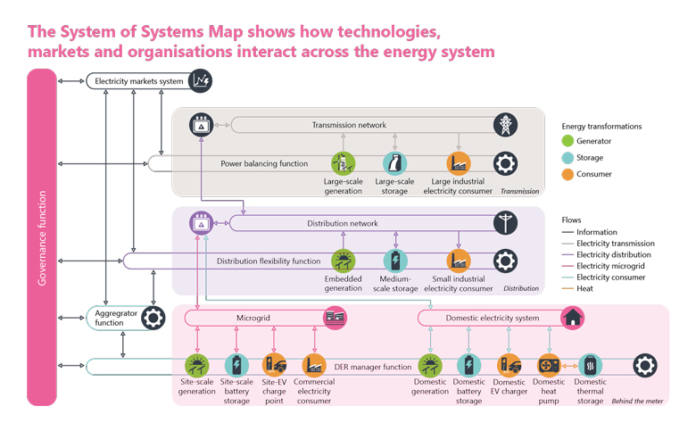
The Catapult has also created a System of Systems Map to help innovators visualise how technologies, markets and organisations interact across the energy system and the information flows between them, allowing more effective solutions to be developed to coordinate and enable system operation.

High renewables with flexibility are most cost effective

Driving cost out of the energy system is essential if we are to transition to a cleaner energy system at the pace and scale needed, while maintaining political consensus for action on climate change.

As more renewable capacity comes online and transport and heating become increasingly electrified (through the growing use of EVs and heat pumps) one of the biggest innovation challenges faced is how to balance the energy system when renewable generation is low and demand is high.

The Catapultโ€™s report shows this is where flexible solutions come in. Commercial and domestic technologies and services are needed that store surplus energy and release it to the grid to smooth out peaks in power and heat demand.

Unlocking the potential of flexibility is therefore an urgent priority to help balance supply and demand in near real-time, and help UK businesses capture the growing commercial opportunities in national and international markets.

ESME and ESME Flex modelled four scenarios to understand what effect different versions of the future energy system have on โ€˜peak gapsโ€™ in supply and demand, and hence the future needs and market opportunities for flexibility.

Key findings include:ย 

  • Electricity consumption could increase by as much as 80% by 2040 in all scenarios through the growing electrification of transport and heat. Data centres could require an additional 28 TWh in 2040, representing 5% of overall demand.
  • Scenarios with the greatest and quickest deployment of renewable capacity, enabled by low-carbon flexibility have the lowest system costs โ€“ with total savings of at least ยฃ70 billion to 2050 compared to the most expensive scenario, which has the lowest levels of renewables and low-carbon flexibility.
  • Flexibility provided by EVs is especially valuable to the energy system. Modelling shows that EV smart charging has huge potential for balancing the grid. V2G shows even greater promise but both need further innovation, including improved integration with the rest of the energy system, to fully deliver on it.
  • Nuclear and renewables complement each other, reducing total system costs. Modelling shows that no new nuclear deployment could lead to additional gas power plants fitted with CCS (+10 GW) and offshore wind (+15 GW) by 2040, increasing system costs by 1.1% (ยฃ50 billion) by 2050.
  • Heat networks combined with thermal storage technologies could provide 300 GWh of flexibility by 2040.
  • Households could provide around 76 GW of electricity flexibilityย by 2040, as well as over 350 GWh of thermal storage.
  • The commercial sectorย could provide 8 GW of flexibility by 2040ย with building management systems being vital enablers.

Innovations needed to unlock flexible opportunities

The Catapult has created a System of Systems Map that highlights how the energy system is transforming from top-down control of tens of power stations to bottom-up coordination of millions of flexible assets.

Historically, a few large fossil-fuel plants have dispatched power, following predictable demand. The system map shows how renewable and flexible storage technologies are increasingly shaping todayโ€™s energy system. These are largely invisible to central dispatch as they sit on the distribution network or behind the meter.

Jon Saltmarsh, CTO at Energy Systems Catapult, said:

โ€œOur approach to balancing supply and demand needs to shift from centralised command of electricity generation to orchestrating flexibility from distributed, smart energy assets, such as EV chargers, static batteries and electric heating. This requires a shift in both mindset and approach and it provides fantastic opportunities for innovation.โ€

Jon Saltmarsh added:

โ€œWeโ€™ve identified five peak gaps in supply and demand that we need to bridge using innovative flexibility technologies. Four of these gaps relate to electricity while a fifth โ€“ the Peak Heat Gap โ€“ may present the toughest system challenge of the energy transition, and the greatest opportunity for innovation.โ€

The report recommends a series of innovations needed to unlock this flexibility so that consumers benefit, innovators capture the opportunities for economic growth, and governments and networks take the lowest-cost approach to transforming the energy system.

Priorities for flexibility innovation include:

Supporting consumer participation in flexibility:

  • Create smart flexible solutions delivered via automation that are transparent to the consumer;
  • Carry out more real-life trials to understand how consumers interact with flexibility technologies, reward consumers for their participation, and donโ€™t disadvantage low-income or vulnerable households.

Accelerating delivery of flexibility from electric vehicles:

  • Improved control and scheduling of EV smart charging;
  • New on-street EV smart charging solutions for homes without off-street parking;
  • Smart charging at depots and truck stops for electrified heavy goods vehicles;
  • Improved consumer propositions for V2G;
  • Standardisation to help lower the cost of V2G hardware, particularly V2G chargers;
  • Improved integration and communication protocols between EVs and the electricity network.

Reducing electricity demand for heating on the coldest days:

  • Testing the flexibility potential of heats pump, particularly on the coldest day;
  • Support rapid scale-up, cost reduction and space-efficient deployment of large heat stores for urban heat networks;
  • Support scale-up and cost reduction of advanced thermal storage technologies such as phase change materials, thermochemical storage and sand-based systems;
  • Develop low-temperature district heat and storage solutions that operate efficiently at temperatures of around 50oC.

Improving the utilisation of networks:

  • Use AI and machine learning to enable real-time visibility and control of the energy network, allowing it to operate safely closer to thermal limits;
  • Develop scalable systems that use AI to improve control and coordination of millions of smart energy assets;
  • New tools and modelling approaches that support network planning across different geographical scales and voltage levels to improve network capacity and grid operability;
  • Enhanced data and information sharing to align national and regional policy and local delivery.
  • Mainstreaming long duration energy storage (LDES):
  • Large-scale demonstrators for hydrogen-fired turbines and hydrogen storage to prove their viability.
  • Scale-up of new LDES technologies, such as high-density pumped hydro storage and liquid air energy storage, building on existing pilot and demonstrator plants.

Becky Sweeney, Business Leader for Homes at Energy Systems Catapult, said:

โ€œThe opportunity for households to participate in and take advantage of flexibility is huge โ€“ around 76 GW by 2040. Innovators who can come up with products and services that make it easy and more affordable for consumers to provide system flexibility will thrive. These could be relatively simple solutions such as an app to support flexible energy use, like the equiwatt proposition trialled in our Inclusive Smart Solutions programme (ISS), or something more complex such as the heat-as-a-service offer trialled in our Smart Systems and Heat programme.โ€

The findings of the Catapultโ€™s report Scaling flexibility to meet the five peaks challenge were launched at the Innovating to Net Zero 2026 conference in Birmingham on 25 February.

The conference will feature insights from real-world energy trials and leading UK innovators5 focused on scaling up technologies to unlock flexibility.

The innovators featured include: Allye; Atamate; BankEnergi; Caldera; Engas Global; ENODA; equiwatt; Keep Energy Systems; measurable.energy; my.energi; Olsights; Powervault; RheEnergise; Sherwood Power; UrbanChain; Voltalis; and Wondrwall.


1. Flexibility: The Catapult defines energy system flexibility as โ€œbalancing energy demand and supply across all time and spatial scales, keeping within the physical constraints of the system.โ€

2. Five peak gaps: The Catapult identified five peak gaps that quantify the amount of flexibility or storage needed to balance the system:

  • Peak Power Gap: the instantaneous maximum gap (in GWe) between supply and demand, driving the need for short-term capacity;
  • Peak Energy Gap โ€“ the maximum amount of energy (in TWhe) to be shifted during a single day to minimise the need for dispatchable power;
  • Peak Daily Gap โ€“ the maximum amount of extra dispatchable power (in GWe) that over the course of a day would bring low-carbon generation into balance with demand;
  • Peak Duration Gap โ€“ the volume of storage needed (in TWhe) to address prolonged periods of low renewables generation;
  • Peak Heat Gap โ€“ the additional heat demand during a period of extreme cold weather that is not cost-effective to satisfy using electricity under current assumptions of technical cost and performance.

3. ESME and ESME Flex are the Catapultโ€™s leading techno-economic whole system models. They are independent of sector interests and are technology-agnostic, having previously been used by the government, the Committee on Climate Change (CCC), industry and academia to identify cost-optimised decarbonisation pathways.

4. Explore the interactive dashboard and download the report: these resources will be available from 08:00 GMT on 25 February.

5. Energy Systems Catapult has published an Insights series featuring Catapult experts and flexibility innovators. Read their insights here.

OCS launches Energy Services, supporting the full energy lifecycle and accelerating Net Zero delivery across UK & Ireland estates

OCS has announced the launch of OCS Energy Services, a dedicated and fully integrated business unit designed to turn Net Zero plans into real-world results through a full-lifecycle delivery model.

The launch brings together OCSโ€™s engineering, renewables, infrastructure, and FM expertise under a single, structured model enabling customers to deliver measurable carbon reduction, energy savings, and long-term estate resilience.

OCS Energy Services packages the organisationโ€™s existing energy and engineering capabilities into a clear, customer-ready offer, providing a full-lifecycle approach across five defined stages: Discover, Design, Deliver, Maintain, and Optimise. This model gives estates and infrastructure owners a consistent route from early assessment through to long-term operational performance, supported by OCSโ€™s national engineering workforce and established FM delivery teams.

Graeme Hamilton, Managing Director of Energy Services at OCS, said: โ€œAcross the market, organisations know what needs to change, but too many plans stall between strategy and implementation. OCS Energy Services has been created to close that gap.

โ€œBy combining engineering, energy and FM expertise into one structured model, we give customers a partner who can uncover opportunities, design buildable programmes, deliver projects safely at scale, and ensure assets continue to perform long after installation. This is about turning Net Zero intent into practical, measurable action.โ€

Operating across the UK and Ireland, OCS Energy Services will support both public and private sector estates โ€“ including NHS Trusts, education, local authorities, commercial portfolios, developers, and infrastructure owners. The new offer spans everything from M&E upgrades, BMS optimisation and heat decarbonisation to solar PV, battery energy storage, and high-voltage grid connections up to 132kV.

Daniel Dickson, CEO of OCS UK & Ireland, said: โ€œLaunching OCS Energy Services is a natural and important evolution in how we support our customers. Decarbonisation is no longer a standalone initiative, it must be embedded into the everyday operation and management of estates.

โ€œBy uniting our technical, operational and infrastructure capabilities, this new business positions OCS as a long-term partner that can deliver both immediate energy improvements and lasting strategic value. We are proud to bring a solution to the market that is practical, scalable and truly aligned to our mission of making people and places the best they can be.โ€

BCS Consultancy launches Data Centre Truths 2026, revealing delivery as Europeโ€™s defining data centre challenge

BCS Consultancy, the global data centre consultancy, has launched its latest flagship industry report, Data Centre Truths 2026: What it takes to deliver in 2026. Based on insights from more than 3,000 respondents across 41 countries, the report examines the real constraints shaping delivery across Europe. The result is one of the most comprehensive, delivery-focused views of the European data centre market to date.

Demand across Europe remains strong with 93% of respondents expecting continued growth over the next 12 months and 78% reporting a notable uplift in demand linked to AI over the past year. However, the primary challenge is no longer whether the market expands, but where and how that expansion can actually be delivered. The research highlights growing regional divergence, as power availability, skills shortages, planning complexity, supply chain volatility and AI readiness increasingly collide on the same projects.

โ€œEuropeโ€™s data centre market is not slowing down, but delivery is becoming far more uneven,โ€ said James Hart, CEO of BCS Consultancy. โ€œFor the first time, securing power and planning approval is no longer enough. In 2026, those are just entry tickets. Pressure around power, floorspace and rack density continues to shape how quickly AI demand can be converted into deployable capacity.โ€

Key findings from the report include:

  • Delivery capacity, not demand, is now the primary bottleneck, with 95% of respondents expecting the availability of skilled professionals to decline further.
  • Skills shortages are already having commercial consequences, with missed deadlines, rising costs and lost orders reported across live projects.
  • AI-driven demand is accelerating, yet only 20% of facilities are considered AI-ready today, exposing a widening gap between ambition and deployable capacity.
  • With 70% of respondents expecting geopolitical events to accelerate locally generated renewable energy, sustainability priorities are prioritising resilience, energy security and community impact in site selection decisions.

The report also provides market-specific insight across the UK, DACH, Italy, the Nordics, Iberia and France, illustrating how delivery constraints differ by region. Additionally, the report looks beyond Europe too, with a quick glimpse at the interesting Middle East market. Local execution capability is becoming a decisive competitive advantage. In some regions, power access and grid queues dominate delivery risk; in others, skills availability, regulatory friction or execution sequencing are proving decisive.

โ€œWhat comes through very clearly is that delivery risk is no longer theoretical,โ€ Hart added. โ€œProjects are being shaped, delayed or lost based on execution realities on the ground. The ability to coordinate and sequence delivery has become a defining factor in who can move fastest to market.โ€

Data Centre Truths 2026 is designed to support operators, developers, investors and policymakers as they navigate a more constrained and complex delivery environment. The report also includes expert commentary from BCS leaders working directly on live European projects, offering practical insight into how organisations are adapting their delivery strategies in response.

The full report is available to download now.

Is the chaos politics of NetZero progressing to NotZero?

For free updates on policy that could affect you follow our newsletter https://www.rinnai-uk.co.uk/contact-us/newsletter-sign

Chris Goggin

Rinnai Director Chris Goggin looks at some of the unreported details of the politics of NetZero, more specifically the ideological challenges to carbon neutrality and climate change policies coming from all areas of the global political spectrum. Mr Goggin reports on how China, Europe, UK and the US are fielding their climate change policies. Additionally, there are further observations on what pledges and agreements could be sacrificed for an approach that relies on the continuing use of fossil fuels.

The evidence behind a global march towards clean and carbon-minimised energies is not doubted by the scientific community. There is a global consensus from the overwhelming majority of scientists who work in this arena  that carbon emissions are a huge factor contributing towards global warming.

It is unilaterally agreed that the โ€œGreenhouse effectโ€ has increased surface temperatures. The data of fast-rising temperatures is open to all interested parties to see without any restrictions. Trapped heat has been the cornerstone of biological life on this planet in the past but now threatens the well-being of all plant and animal life.

The greenhouse effect is a natural process where Earth’s atmosphere traps heat, warming the planet to a habitable temperature. Solar radiation heats the Earth’s surface, which then emits infrared radiation (heat) back out.

Greenhouse gases, such as carbon dioxide and water vapor absorb some of this outgoing heat and re-radiate it back towards Earth, warming the lower atmosphere. This effect can be intensified by human activities, leading to global warming and climate change. 

Sunlight is the primary source of energy that allows the existence of human life. As sunlight reaches our planet it travels through the atmosphere and is then reflected by water, clouds and ice upwards towards space.

Some light travels back into outer space whilst other parts are captured by the atmosphere and redistributed across all directions maintaining warmer, more human friendly temperatures. Any disturbance to this cycle will alter the temperature on Planet Earth.

Adding any more greenhouse gasses to this process like carbon dioxide and Methane lessens our planet’s ability to release energy which is converted to heat. Further greenhouse gasses that fossil fuels perpetuate also spread captured heat and therefore creates rising sea levels, increased natural disaster probability and drought.

This is the supporting science behind global warming. However, there are vocal elements within the range of political parties that are either denying these recorded and calculated observations or ignoring them all together.

For example, China, although an acknowledged culprit in utilising fossil fuels, is working towards widespread renewable energy introduction. Although Chinaโ€™s political system cannot be considered by western values as a democratic state, China is not diminishing the science behind NetZero. According to figures released by the International Energy Association (IEA), as of 2023 Chinaโ€™s domestic energy mix included a 60.9% share of fossil fuels – but is working diligently towards transitioning to clean energy.  

UK mainstream media has reported that China had installed 93GW of solar capacity in May 2025, enough to power 70 million homes for an entire year. This equivalates to 100 solar panels every second. Between January and May 2025 China had included 198GW of solar and 46GW of wind capacity into domestic operations, producing as much electricity as Turkey or Indonesia, which are countries with populations of 100million plus.

One recent BBC article stated that China is: โ€œway ahead in clean energy growth, adding more solar and wind capacity than the rest of the world combined.โ€ The same article says that China has outpaced rising domestic electricity demand through renewable production and reduced its fossil fuel generation by 2%. And it is considering this as a commodity export.

European politics, in comparison, is fractured, with every major economy inside the EU and the UK containing virulent and vocal opposition towards NetZero and clean energy introduction. The main reason behind these objections appears financially based and not science led.   

There are strong calls inside of UK politics to abolish NetZero ambitions in favour of North Sea fossil fuel extraction. A government opposition think tank report released last year prefers a less time stringent approach to a domestic cleaning of the national grid. 

There is a populist belief that the UK outright owns all the gas and oil remaining in the North Sea and therefore should have cheap fuel prices. But we live in a global market economy where producers want the best price for their product and hence the price of fuel is global and not local.

Companies from many different nationalities own North Sea oil, with the UK holding the largest combined equity stake at 46.5%. However, significant stakes are also held by companies from the US, France, Spain, Israel, the United Arab Emirates, China, Russia and Norway, among others.

The recently released report โ€œDecarbonising the Grid Three Scenarios for Achieving Net Zero Powerโ€ presents three pathways that explore different routes towards providing clean and cheap energy for UK customers. An independent energy market analytics company – Aurora Energy Research, has reviewed each pathway and has provided their interpretation of feasibility for Policy Exchange, a current government think tank.

Current plans to decarbonise the UKโ€™s power grid by 2035 will require ยฃ8.2 billion a year of additional investment until 2030 – a total of ยฃ49.3 billon. A further ยฃ11.1 billion a year of additional investment from 2031 โ€“ 2035 a total of ยฃ55.3 billion. The total accumulative investment over 11 years will amount to ยฃ104.6 billion over next 11 years.

The current government aims to acquire huge amounts of capital investment to achieve their aim of decarbonising. Aurora has calculated that ยฃ15.6 billion a year until 2030 is required (total ยฃ93.5 billion) and a further ยฃ4.4. billion a year from 2031 – 2035 (ยฃ22.5 billion) equating to a total of ยฃ116 billion over the next 11 years.

The opposition to government is arguing that a more pragmatic approach should be adopted to ensure a process that creates less financial turbulence to customers and investors. However, some types of pragmatism are now evident in the politics of other large economies inside of the European block. France has banned low emission zones in towns and cities as of May 2025.

These low emission zones are designed to reduce traffic congestion and pollution levels in well populated urban areas of 150,000 inhabitants. Although low emission zones are still in effect, a ban has been imposed for pragmatic reasons of regional financial growth.  

Although banned – a total abolishment of low emission zones is still not guaranteed as a series of legislative measures must be drafted and approved by various political entities before being approved. However, a ban on low emission zones has been passed in French parliament.

Germany is also attempting to revise climate objectives through a newly acquired coalition government between the Conservative Christian Democratic Union and the centre-left Social Democratic Party. New coalition policy adaptations could impact climate ambitions, these include reviewing and possibly reducing land area reserved for wind energy, a rollback on electric vehicle sales targets and a possible repeal of the Building Energy Act โ€“ which replaces oil and gas heating with renewable technologies.

The United States of America has rapidly retracted policies that the previous administration had put in place. For example, the Trump administration has publicly voiced its intention to withdraw $13 billion of funds made available by former President Bidenโ€™s green investment strategy.

Additional climate friendly policy reversals include subsidies for offshore wind projects being stopped by the current American administration. Construction on Equinorโ€™s 810MW Empire Wind project was halted last month due to a change in policy.

 The United States Department of Agriculture (USDA) will no longer fund solar panels or allow equipment produced by foreign companies on USDA approved projects. Economic future relating to agricultural land and domestic energy independence are cited factors in this decision. 

Direct interference of clean energy initiatives appears to be motivated by an ideological position whilst European states have begun withdrawing from ecological pledges for reasons of financial pragmatism. The UK push towards a less intense energy transition contains elements of both ideology and monetary concerns. It could be argued that American influence can be denoted inside of UK populist political opinion.

Rinnai is continuously monitoring all news relating to energy finances, policy, construction and direction. Any information that could affect appliance or energy options will be shared so that the consultant, specifier, installer and UK customer can adjust any potential purchase accordingly.

For free updates on policy that could affect you follow our newsletter https://www.rinnai-uk.co.uk/contact-us/newsletter-sign

RINNAI OFFERS CLEAR PATHWAYS TO LOWER CARBON AND DECARBONISATION PLUS CUSTOMER COST REDUCTIONS FOR COMMERCIAL, DOMESTIC AND OFF-GRID HEATING & HOT WATER DELIVERY

www.rinnai-uk.co.uk/aboutus/H3

  • Rinnaiโ€™s range of decarbonising products – H1/H2/H3 – consists of hot water heating units in gas/BioLPG/DME, hydrogen ready units, electric instantaneous hot water heaters, electric storage cylinders and buffer vessels, a comprehensive range of heat pumps, solar, hydrogen-ready or natural gas in any configuration of hybrid formats for either residential or commercial applications. Rinnaiโ€™s H1/2/3 range of products and systems offer contractors, consultants and end users a range of efficient, robust and affordable low carbon/decarbonising appliances which create practical, economic and technically feasible solutions. 
  • Rinnai is a world leading manufacturer of hot water heaters and produces over two million units a year, operating on each of the five continents. The brand has gained an established reputation for producing products that offer high performance, cost efficiency and extended working lives. 
  • Rinnai products are UKCA certified, A-rated water efficiency, accessed through multiple fuel options and are available for purchase 24/7, 365 days a year. Any unit can be delivered to any UK site within 24 hours.
  • Rinnai offer carbon and cost comparison services that will calculate financial, and carbon savings made when investing in a Rinnai system. Rinnai also provide a system design service that will suggest an appropriate system for the property in question.
  • Rinnai offer comprehensive training courses and technical support in all aspects of the water heating industry including detailed CPDโ€™s.
  • The Rinnai range covers all forms of fuels and appliances currently available – electric, gas, hydrogen, BioLPG, DME solar thermal, low GWP heat pumps and electric water heaters More information can be found on Rinnaiโ€™s website and its โ€œHelp Me Chooseโ€ webpage. 

RINNAI FULL PRODUCT AVAILABILITY 24/7 FOR NEXT DAY DELIVERY of ALL HOT WATER HEATING UNIT MODELS INCLUDING 48-58kW UNITS-

SAVINGS OF

  • 20% REDUCTION of opex cost,
  • 30% REDUCTION of initial cost
  • 15% REDUCTION in carbon
  • 75% REDUCTION of space

Visit www.rinnai-uk.co.uk  Or email engineer@rinaiuk.com  

For more information on the RINNAI product range visit www.rinnaiuk.com


This article appeared in the March 2026 issue of Energy Manager magazine. Subscribe here.

Unlocking new opportunities for retrofit: New CIBSE-certified CPD explains the potential of wireless lighting controls

Prime Controls has launched a new CIBSE-certified CPD module, Unlocking energy savings in buildings with retrofit wireless lighting controls, designed to support the growing demand for smarter, more sustainable commercial building retrofits.

The CPD explores the operational and cost-saving benefits of retrofitting wireless lighting controls in industrial and commercial buildings. Often misunderstood, wireless lighting controls can deliver energy savings of up to 40% on top of existing LED installations, while also providing measurable benefits for occupant wellbeing, ESG performance and sustainability goals.

Authored by Prime Controls (part of Prime Light Group), one of the UKโ€™s market leaders in wireless lighting control solutions, the CPD addresses a key industry knowledge gap around wireless lighting technology. It is aimed at professionals responsible for reducing operational energy use in buildings, including consultants, engineers, facilities managers and sustainability specialists.

Valuable learning opportunities

As retrofit demand continues to surge, driven by energy targets, wellbeing priorities and ESG commitments, this CPD provides a timely and valuable learning resource. 

Key learning points include:

  • The main drivers behind the rise in commercial building retrofit projects
  • How wireless lighting controls unlock additional energy savings beyond LED upgrades
  • Why wireless systems are ideally suited to retrofit, offering scalable, low-disruption and cost-effective solutions
  • Real-world benefits for occupant wellbeing, sustainability and compliance, while dispelling common myths around wireless controls

The CPD is available for both groups and individuals and can be delivered online or in person. Registrations of interest can be made via the Prime Controls website or through CIBSEโ€™s CPD directory.

https://controls.primelight.co.uk/

POWWR Predictions for 2026

David Sheldrake

By David Sheldrake, Global SVP of Sales360, POWWR

1. Continued move towards Net Zero

The UK continues to move forwards on its commitment to achieve net-zero emissions by 2050 and I see no reason for this to change in 2026. After all, the 2050 target has generally enjoyed cross-party support and provides a stable policy framework for all to adhere to.

The UK was the first major economy to sign up to such legally binding targets. These mandate a clear, long-term trajectory for decarbonisation, supported by five-year carbon budgets. It has already made significant progress, reducing emissions by over 50% compared to 1990 levels. Part of this is down to the significant growth in renewables, with over 42% of the electricity mix coming from renewable sources in the past 12 months.

2. Open data empowering the consumer

In the past, energy suppliers have looked at data as being a currency that must be held on to due to its intrinsic value. However, increasingly they are understanding that opening up the data to not only others in the industry, but those in the public sector can be a win-win. I expect this to gather pace in 2026.

As long as the data is clean, more data will always equal more diverse, accurate, and reliable learnings for the industry, so should be encouraged. Further, making this data accessible will only multiply its value. It will become a powerful tool to help those in the public sector ensure they are on the most effective time of use tariffs, will help brokers provide more valuable insight, and help the industry maintain a robust and relevant grid for now and the future.

The latter is a point that must not be overlooked. The end goal of all of this is, of course, to provide a more resilient national energy infrastructure that will be less reliant on external factors and will protect our energy future.

3. Bi-directional use of batteries

In 2026, battery storage systems will be an increasingly popular choice to manage energy costs, enhance energy independence, and provide backup power. They will also be used in the public sector to serve as backup power for when solar and wind energy are unavailable.

There are some big-name players entering the fray too, which will only lead them to expand their popularity. South Korean giant LG Energy Solution (LGES) has a game-changing lithium iron phosphate (LFP) battery; QuantumScape has innovated solid-state battery technology with higher energy density and lower costs; and EV behemoth Telsa’s move into the UK energy market is promoting the benefits of battery storage.

This new breed of solutions with their lower cost and reduced payback time could well surpass solar as the eco solution of choice. After all, being able to charge the battery at cheaper times of use and using it during peak times will only see bills reduce.

4. The year of the flex deals

There is no doubt that Ofgem would like as many as possible to move onto flex deals. Doing so would allow suppliers to purchase energy in blocks accordingly to match the time of use needs. Leading to increased grid resilience.

With the move towards Market-wide Half Hourly Settlements (MHHS) in 2026, the move to flex deals will only accelerate, too. After all, with MHHS, users will know in granular detail what energy they are using, and when.

One of the likely offshoots of this added intelligence is that those in the public sector will use renewables to self-generate energy to offset usage. In addition to enhancing grid resilience, this will mean demand on the grid will reduce and, in turn, a reduction in energy costs. It will be a win, win.

5. The use of nuclear to close the generation gap

Nuclear power will increasingly play its part in addressing the power generation gap in 2026. This is because it provides dependable, 24/7 baseload electricity that complements variable renewable energy sources like wind and solar that are entirely weather dependent.

As the share of variable renewables in the energy mix has increased, the need for stable, dispatchable power sources has also grown. Unlike intermittent sources, nuclear power plants can run at full capacity uninterrupted, providing a continuous supply of energy that can be adjusted to follow demand. This helps bolster energy security.

With fossil fuel reserves facing long-term depletion concerns and legally binding climate targets to hit, nuclear energy offers a long-term, secure energy source for the UK that reduces dependence on imported fuels.

Digital LAEP set to transform Southamptonโ€™s journey to a low-carbon future

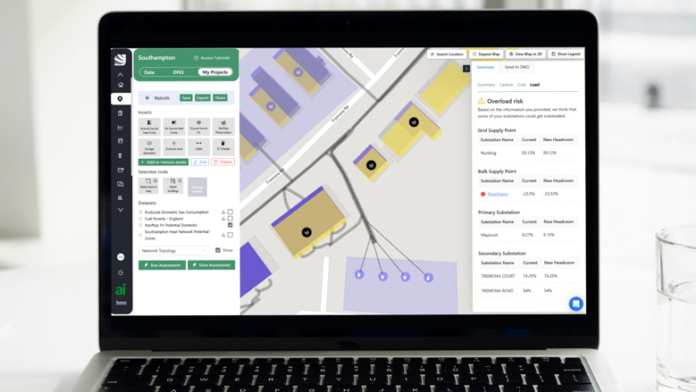
Southampton City Council has begun work on a new Digital Local Area Energy Plan (LAEP), supported by Advanced Infrastructure and delivered through Scottish and Southern Electricity Networksโ€™ LENZA (Local Energy Net Zero Accelerator) tool.

LENZA, which is built on Advanced Infrastructureโ€™s award-winning LAEP+ platform, provides a transformative, data-driven approach for local authorities and network operators to plan for a low-carbon future together.

Funded by Innovate UK, the project will give Southampton City Council a clearer understanding of how the cityโ€™s energy system needs to evolve to meet its net-zero ambitions. By using the LENZA instance of LAEP+, the council can develop its Local Area Energy Plan far more affordably and efficiently than through traditional consultancy-led approaches.

A LAEP is recognised as the leading method for translating net zero targets into local energy system action and is created with input from a range of local stakeholders. It results in a fully costed plan that identifies the changes needed to the local energy system and built environment, detailing what, where, when and by whom the changes will be made.

Advanced Infrastructureโ€™s LAEP+ platform is a collaborative net-zero planning tool that brings together data, maps and modelling into one easy-to-use online space. By digitising the LAEP process, LAEP+ enables councils to create high-quality energy plans up to 54% more cost effectively and 75% faster than traditional consultancy-led methods. This allows local authorities to reduce reliance on expensive bespoke modelling and direct more of their limited resources toward real-world carbon reduction measures.

The Digital LAEP for Southampton will create a clear picture of how energy is used across the cityโ€™s buildings and highlight practical opportunities to reduce carbon emissions. A baseline report will be published later this year, followed by detailed modelling of retrofit options in early 2026. The final plan, delivered in May 2026 through the LAEP+ platform, will present the findings in a fully interactive format that helps the council and its partners make quicker, clearer and more cost-effective decisions.

Southampton presents a distinctive opportunity for Digital LAEP development. As a coastal city with diverse building stock, major port operations and a mix of commercial and industrial activity, its energy needs are highly varied. LAEP+ allows the council to explore scenarios dynamically and compare pathways across different neighbourhoods and building types, helping to reflect the cityโ€™s diverse and evolving local conditions.

Councillor John Savage, Cabinet Member for Environment and Net Zero, said:
โ€œIโ€™m delighted that the council is taking a forward-thinking approach that combines digital innovation with cost-effective planning. By choosing to deliver its Local Area Plan through LAEP+, the council will be able to make informed, data-driven decisions more quickly, update plans easily as new information becomes available, and collaborate more effectively with partners, businesses and residents across the city.โ€

Jessica Lewis, Southampton City Councilโ€™s lead for the project, said:
 โ€œUsing LAEP+ will make the process of producing our Local Area Energy Plan far more affordable and efficient than traditional methods. It saves significant time and gives us a much more accessible way to explore our options. This will help us engage partners and communities as we work together towards a net-zero Southampton.โ€

Lily Cairns Haylor, Head of Product at Advanced Infrastructure, said:
 โ€œLocal authorities are under increasing pressure to deliver net-zero plans with limited budgets. LAEP+ is designed to make Local Area Energy Planning more affordable, reducing the cost and complexity of producing a LAEP while still providing granular and data-driven insights. Weโ€™re excited to support Southampton City Council with a tool that helps them plan for a greener, more resilient future at a fraction of the traditional cost.โ€

About Advanced Infrastructure Technology Ltd

Advanced Infrastructure’s mission is to create a greener and fairer Energy System by making big data, transparency, and traceability accessible to all users of the energy system.

The company provides GIS tools, datasets and APIs to support energy planning and accelerate the deployment of low carbon technologies.

 www.advanced-infrastructure.co.uk

Bruce Towers top marks on school refit during half term with Rinnai

Bruce Towers & Sons, based in the heartlands of East Anglia, recently completed a major refit of Rinnai hot water heating units in four separate plant rooms across two big schools over a half term.

Rinnaiโ€™s N Series hot water heating units were installed in cascade arrangements so that the schools and their thousands of staff and pupils had unlimited volumes of on demand temperature controlled hot water.

Says Bruce Towers, โ€œWe were able to install all the Rinnai units in the required arrangements in four plant rooms. Plant rooms come in all shapes and sizes, rarely are two even remotely similar. The Rinnai units are easy to work and are, in our long experience, a โ€˜fit and forgetโ€™ unit, apart from planned service and maintenance.

He adds,โ€ We use Rinnai because they do what they say they will โ€“ virtually limitless supplies of hot water on demand and in an extremely energy efficient manner. They are space saving, fuel saving and time saving on site. We are a family business and give priority to installing any gas fired appliances in a safe, sustainable way. There is no compromise. We specialise in high quality service and installation. Although we are a regional business we can handle bigger jobs. We are plumbing and heating engineers, not number crunchers.โ€

The Rinnai N series includes the N1600i and N1600e, and both can deliver almost 1000 litres per hour at 50 degrees. The two 1600s have load profiles of XXL and are also water efficiency class A rated. The N1600i and N1600e models weigh 29kg and can both disperse 37 litres of clean temperature controlled hot water per minute.

All of N series models have an additional flow booster setting which allows even higher volumes once prerequisite conditions are met (dynamic water pressure of over 3 bar and water heater set to 40 or below). Other features benefits include:-

  • Stainless-Steel Primary Heat Exchanger increasing durability and providing market leading warranties (Up to 12 years)
  • Low-Nox burner technology futureproofing Rinnai continuous flow water heaters through the utilisation of patented advanced burner technologies.
  • 13-1 turndown ratio โ€“ the largest available on the market.
  • Extremely quiet operation
  • Powerful fan motor to allow for longer flue runs to be achievable as well as a built-in flue damper. Increasing the flexibility of the appliance when it comes to flueing options.
  • Any number of Rinnai water heaters can be cascaded to supply the biggest of hot water demands.

The Rinnai Sensei N Series is designed for small or large commercial applications such as restaurants, hotels, care homes and gyms. Each unit can distribute large volumes of clean and safely delivered hot water that. Rinnai specialise in designing and manufacturing cost-effective domestic and commercial appliances that reliably perform to an optimum standard.

Bruce Towers and Sons are a family run plumbing and heating business established for coming on 35 years, specialising in both domestic and commercial plumbing, heating and gas services. Based in Norfolk the companyโ€™s work extends to the north Norfolk coast, Dereham, Norwich, Kings Lynn, Thetford and surrounding areas. The company also covers other counties including Suffolk, Cambridgeshire, Essex and London.

โ€œAll engineers are fully trained and qualified in the areas they work in, so customers are assured of the highest quality standardโ€, says Bruce Towers,

 โ€œWe cover all types of plumbing and heating work including commercial and domestic projects from design to install and maintenance, so if itโ€™s a tower block to a tap waste we can cover it. Thereโ€™s no project to big or small, so whether itโ€™s an annual service to a full plant room up grade and heating install we can assist you. These projects could include hotels, schools, surgery and leisure centres.โ€

Visit www.rinnai-uk.co.uk  Or email engineer@rinaiuk.com  

For more information on the RINNAI product range visit www.rinnaiuk.com


This article appeared in the March 2026 issue of Energy Manager magazine. Subscribe here.