
voco Zeal Hotels: Balancing energy efficiency and guest experience without compromise

Zeal Hotels was founded in 2012 with a clear ambition: to develop hotels that meaningfully reduce carbon emissions, not only in operation but across their entire lifecycle. That vision has now been realised in voco Zeal Exeter Science Park, the UKโ€™s first net zero carbon hotel, developed in partnership with IHG Hotels & Resorts and Valor Hospitality.

Opened in March 2025, the 142-bedroom hotel sets a new benchmark for sustainable hospitality. Designed to operate entirely on renewable and solar energy, it targets an Energy Use Intensity (EUI) of below 55 kWh/mยฒ. Crucially, the building is energy positive, generating more energy annually than it consumes. In parallel, the construction achieves the RIBA 2030 embodied carbon target, with emissions of under 750 kgCOโ‚‚/mยฒ.

The hotel also forms part of a pilot for the UK Net Zero Carbon Buildings Standard, contributing real-world performance data to help establish consistent definitions and metrics across the built environment in line with national 2050 targets.

Innovation in design and construction

Situated on a 5,000 mยฒ site at Exeter Science Park, the hotel includes a restaurant, bar, conference and private dining facilities, gym, and electric vehicle and e-bike charging. Sustainability has shaped every aspect of its design.

The building follows Passivhaus principles, delivering exceptional thermal efficiency and airtightness. It uses adiabatic cooling and heat-reversible pumps to minimise reliance on traditional mechanical cooling systems. The faรงade features Solarlab vertical photovoltaic panels, the first UK installation of this technology used as rainscreen cladding. Low-carbon materials were also prioritised, including Ecocrete, which offers up to 85% lower COโ‚‚ emissions than conventional cement.

As Zeal Hotels Founding Director Tim Wheeldon explains: โ€œBy harnessing renewable energy sources, implementing energy-efficient designs, and utilising innovative technology, we have created a space that prioritises environmental responsibility while still delivering comfort and quality.โ€

Balancing comfort and efficiency

Achieving net zero performance in hospitality presents a unique challenge. Hotels must maintain consistent guest comfort while managing highly variable occupancy and usage patterns. According to Dan Palmer, who oversees the hotelโ€™s energy management, โ€œWe could always be more efficient, but there is a fine line between guest comfort and energy efficiency.โ€

This is where the Prefect Irus energy management system plays a central role. Unlike traditional building management systems, Irus provides room-by-room monitoring and analysis, allowing the team to understand how individual spaces perform in real-world conditions via the Irus Portal.

Dan highlights the importance of this granular visibility: โ€œDuring extreme temperatures of 30 to 36ยฐC, I can monitor how each room is performing and see exactly how the building is responding.โ€ The system also enabled detailed analysis of solar gains, clearly showing temperature rises on the south-facing elevation as light levels increased.

When persistent hotspots were detected in certain rooms, Irusโ€™ Investigator tool helped trace the issue to heat transfer from a boiler room below. The addition of an extractor fan resolved the problem quickly and efficiently.

The platform also supports the management of adiabatic cooling, using performance data to verify that ventilation rates, humidity control, and thermal conditions are operating as designed.

A platform for continuous improvement

For Zeal Hotels, data-driven insight underpins a culture of continuous optimisation. Irus enables ongoing refinement of heating and cooling profiles, boost times, and integration with wider BMS platforms such as Trend.

โ€œWe are measuring everything in this hotel โ€“ electricity, water โ€“ data is king,โ€ says Dan. โ€œWith Irus, we have the evidence of what works, and that learning will inform future developments.โ€

By combining progressive building design with intelligent energy management, voco Zeal Exeter Science Park demonstrates how net zero hospitality can be achieved without compromising the guest experience, setting a powerful precedent for the wider industry.

https://prefectcontrols.com/


This article appeared in the Jan/Feb 2026 issue of Energy Manager magazine. Subscribe here.

Make 2026 the year your steam system performs at its best

Every January, plants and facilities set ambitious goals: improve efficiency, reduce costs, cut emissions and boost reliability. But for steam-using sites across manufacturing, healthcare, energy and processing, one truth remains constant: When the steam system runs well, everything else gets easier.

Whether 2025 brought progress or pain points, the new year offers a powerful opportunity to reset, refocus and optimise. And the facilities that commit early to steam system improvements often see the biggest gains in uptime, energy savings, compliance and overall operational stability.

Hereโ€™s how to make 2026 your most reliable, efficient and productive year yet.

1. Start With a Clear View of System Health

Most performance problems in steam systems donโ€™t start as major failures, they start as small, almost invisible losses:

  • A trap thatโ€™s slowly drifting
  • A valve thatโ€™s responding less accurately
  • Insulation gaps that bleed heat
  • A strainer thatโ€™s quietly fouling
  • Pressure drops that no one notices (yet)

A system health assessment or trap survey at the start of the year gives you:

โœ” A baseline efficiency score

โœ” A list of cost-saving opportunities

โœ” A clear maintenance roadmap

โœ” Prioritised actions based on ROI

A few hours of insight in January can deliver benefits all year long.


2. Target the Quick Wins That Deliver Big Returns. Optimisation doesnโ€™t have to be disruptive. In fact, some of the highest-value improvements are simple:

  • โœ” Repairing or replacing failed steam traps. A single blow-through trap can waste thousands of pounds a year.
  • โœ” Restoring insulation on distribution piping. One of the easiest and most immediate energy savings.
  • โœ” Cleaning or replacing strainer screens. Restores flow, protects valves and improves process stability.
  • โœ” Checking control valve performance. Prevents drift, improves batch quality and reduces energy input.

These small changes add up quickly especially across large or ageing systems.

3. Modernise Where It Matters. If 2026 is the year you push for investment, target upgrades with proven impact:

โ€ข High-efficiency steam traps. Higher reliability, longer life, lower lifecycle cost.

โ€ข Smart monitoring / digital trap solutions. Always-on alerts for failure, leakage and blow-through.

โ€ข Improved condensate recovery systems. Lower fuel use, reduced emissions and faster heat-up times.

โ€ข Precision control valves. Better accuracy, better product quality, less energy waste.

Not every system needs a full digital transformation but smarter, more reliable components pay for themselves fast.

4. Strengthen Your Preventative Maintenance Strategy. Success in 2026 depends on what you prevent, not what you react to.

  • A strong preventative approach includes:
  • Trap surveys at defined intervals
  • Annual valve and actuator checks
  • Gasket and seal replacements before failure
  • Routine strainer cleaning
  • Scheduled boilerhouse inspections
  • Seasonal system readiness checks

When the right actions happen at the right time, downtime becomes rare and planned, not forced.

5. Build Your +1 Critical Spare Strategy. Last-minute supply issues cost plants more every year. In 2026, smarter facilities will:

  • Hold a +1 spare for high-risk components
  • Keep gasket, disc, and seat kits on hand
  • Stock the most common trap internals
  • Prepare seasonal spare packs for winter
  • Maintain correct sensor, probe and valve spares

With global supply chains still unpredictable, resilience will beat risk every time.

6. Consider a Service Plan as Your Safety Net. A Spirax Sarco Service Plan gives your team:

  • โœ” Predictable maintenance budgets
  • โœ” Regular system inspections
  • โœ” Proactive part replacements
  • โœ” Confidence during audits and compliance reviews
  • โœ” Engineer support when you need it most
  • โœ” Lower energy use through sustained performance

If optimisation is your 2026 resolution, a Service Plan is the fastest way to make it stick.

7. Measure What Matters and Celebrate the Wins

  • What gets measured, improves.
  • Track the KPIs that tell the real performance story:
  • Steam trap failure rate
  • Condensate recovery percentage
  • Cost of steam
  • Product temperature stability
  • Monthly steam losses avoided
  • Maintenance hours saved
  • COโ‚‚ emissions reduced
  • When you quantify success, you justify investment and build momentum.

2026: A Year for Smarter, Safer, More Efficient Steam Systems

Steam may be a traditional technology but optimised steam is a competitive advantage. Plants that make reliability a priority in January stand stronger in every quarter that follows. Whether your goal this year is efficiency, uptime, sustainability, compliance or cost reduction, your steam system is the lever that helps you achieve it.

Ready to Start Your 2026 Optimisation Journey?

www.spiraxsarco.com


This article appeared in the Jan/Feb 2026 issue of Energy Manager magazine. Subscribe here.

New CAย 6683 Cable Locator: Fast, Accurate Cable Detection by Chauvin Arnoux

Chauvin Arnoux UK is excited to announce the launch of the CA 6683 Cable Locator, a high-performance locating solution for accurately tracing cables, wires, and metal pipes in walls and underground. Designed at the Chauvin Arnoux HQ in France, this cable locator is made for electricians, maintenance technicians, and renovation professionals and simplifies fault-finding.

Cable Locator Built For Complex Detection Tasks

The CA 6683 Locator provides an intuitive, reliable method for detecting live or dead conductors, short circuits, metal piping, and circuit elements without destructive or invasive techniques. Its advanced technology offers quick diagnostics and clear visualisation of signal strength and circuit paths, even in challenging conditions. This advanced locator strikes the perfect balance between affordability, versatility, and safety, delivering precise, dependable results while eliminating guesswork.

Designed for demanding environments, the CA 6683 minimises the risk of accidental contact with live wires or hidden infrastructure โ€“ ensuring efficient, secure operation without compromising on performance.

From construction and renovation to ongoing maintenance, the CA 6683 cable locator simplifies detection and enables faster, more informed decision-making on-site.

  • Tracing electrical wiring in walls, floors, and ceilings
  • Locating underground or embedded metal piping
  • Diagnosing short circuits or wire breaks
  • Identifying fuse locations and dead circuit segments

CA 6683 is made to deliver reliable results and measure with confidence!

The transmitter features a built-in voltage detector with a varying external voltage identification range up, adjustable signal power, and offers digital signal coding that allows the use of 7 transmitters simultaneously. The receiver can detect non-contact voltage up to 1000 V AC, with a backlit LCD, adjustable sensitivity, silent mode, and integrated torch for low-light environments.

Both units are compliant with IEC 61010 300 V CAT III standards and are compact, lightweight, and rugged, built for daily use in residential, commercial and/or industrial sites.

The CA 6683 is a complete, ready-to-use kit designed for electrical professionals! It comes with both a transmitter – CA 6683E and a receiver – CA 6683R, pre-calibrated and supplied with all necessary accessories such as

  • Mains plug and lamp socket adapters
  • Crocodile clips and T-stake for ground connections
  • Multi-language user manual and verification certificate
  • Supplied in a durable transport case with spare AAA batteries

Visit the Chauvin Arnoux UK website to learn more about the all-new CA 6683 Cable Locator: https://cauk.net/product-c-a-6683/


This article appeared in theย Jan/Feb 2026ย issue of Energy Manager magazine. Subscribeย here.

Powering the UKโ€™s Net-Zero Future: Energy Technology Live 2026

As the UK races toward its net-zero targets and seeks to strengthen energy security, one event is fast becoming the heartbeat of the transition. Energy Technology Live 2026, taking place 11โ€“12 March 2026 at Birminghamโ€™s NEC, will once again bring together the most forward-thinking minds in energy, manufacturing, infrastructure, and materials to accelerate the UKโ€™s net-zero targets and energy security ambitions. The event is free to attend and offers access to two co-located shows, an exhibition featuring leading suppliers, and a comprehensive conference programme.

A Platform for the Future of UK Energy

Energy Technology Live has become synonymous with innovation and collaboration across the energy sector. The 2026 edition promises to be no exception, offering a vital forum for stakeholders across the UKโ€™s energy ecosystem to explore the next wave of technologies and sustainable solutions, from grid-scale renewables and industrial decarbonisation to battery storage, hydrogen, and AI-enabled systems.

As the industry navigates increasing pressure to decarbonise, shifting markets, and evolving policy landscapes, it is essential that all corners of the sector come together at Energy Technology Live, armed with the knowledge and connections needed to keep pace with change.

โ€œWe canโ€™t wait to bring together the leading innovators and disruptors in distributed, flexible energy and energy storage once again. Itโ€™s your chance to see the very latest technologies up close, while meeting the entire energy value chain -from users, network operators and energy generators to technology suppliers, project developers and sustainability leaders. For two action-packed days, this event brings the energy sector together like nowhere else, with unbeatable opportunities to network, trade and share ideas.โ€ – Marina Rodousaki, Exhibition Director, Energy Technology Live

Featuring Two Shows in One

One of the eventโ€™s key strengths lies in its co-located format, combining The Distributed Energy Show and The Energy Storage Show under one roof.

The Distributed Energy Show offers a platform for energy users, from local authorities and industrial operators to developers and landowners the chance to explore the technologies and services needed to implement flexible, future-ready energy strategies.

Meanwhile, The Energy Storage Show will spotlight advances in battery and energy storage systems for everything from utility-scale projects to on-site and domestic applications.

With one registration granting access to both shows, attendees can explore the full spectrum of solutions shaping the distributed, decentralised energy landscape.

A Conference Programme Powering the Future

At the heart of Energy Technology Live is a three-stage conference programme featuring some of the brightest minds in energy strategy and innovation. The 2026 speaker line-up includes experts from Elexon, HSBC, Modo Energy, Octopus Energy, SP Energy Networks, Zenobe, Centrica, UK Power Networks, Fike, Form Energy, and Roadnight Taylor, with many more to be announced.

Across three stages, attendees can expect keynote sessions, lively panel debates, and practical case studies, all designed to turn bold ideas into actionable strategies.

โ€œWe know that if weโ€™re going to address the challenge of climate change, we need an all-systems approach.โ€ Says Luke Strickland, Net Zero Advisory Lead (Buildings and Cities), Mott MacDonald. โ€œThis event is so great at bringing people together at all scales to explore how we can do things differentlyโ€”because business as usual doesnโ€™t get us to net-zero, and I think thatโ€™s really exciting.โ€

Key themes for 2026 include Flexibility, Next-Generation Storage, Hydrogen, Heat Networks, Solar, Thermal Energy, and Data-Driven Energy Systems, all hot topics for an industry in transition.

Innovation on Display

 Alongside the conference, the exhibit will feature 200+ companies, showcasing products, technologies, and services that support the transition to cleaner, more efficient energy systems. Expect to see key companies such as 2G Energy, Benning Power Electronics, Caldera, Clarke Energy, DSO โ€“ Electricity North West, Energy2, Fike, Flexitricity, Greener Power Solutions, NESO Power Responsive, SunSynk, and Waxman Energy, with many more to be announced.

โ€œEnergy Technology Live is an incredible showcase for emerging technologies. Says Mark Meyrick, General Manager, Ecotricity Smart Grid โ€œWe saw innovations we hadnโ€™t come across before, and being able to speak directly with the people behind them made it more impactful than watching a clip online. I love it for that.โ€

Connecting the Energy Community

Networking has always been a defining feature of Energy Technology Live. Attendees will have the opportunity to connect with peers, suppliers, policymakers and potential partners across the energy ecosystem. The event is designed to spark meaningful connections and long-term collaborations. Whether youโ€™re a policymaker shaping the future of energy, a manufacturer looking to decarbonise operations, or a technology provider ready to scale, Energy Technology Live 2026 offers a rare opportunity to connect, collaborate, and contribute to the UKโ€™s energy transition.

Energy Technology Live 2026 takes place 11โ€“12 March at the NEC, Birmingham. Register for your free pass and gain access to professionals across energy, technology, R&D, industry, and policy sectors at https://energytechlive.com/registration/


This article appeared in the Jan/Feb 2026 issue of Energy Manager magazine. Subscribe here.

Meeting Net Zero targets: Why digital energy solutions matter

Net zero is no longer optional, itโ€™s essential. UK businesses face mounting pressure to cut carbon emissions, comply with regulations, and lead on sustainability. The UK is legally committed to achieving net zero by 2050, with interim targets of reducing emissions by 50% by 2032 and 75% by 2037. Buildings account for around 25% of the UKโ€™s carbon footprint, making them a critical focus for decarbonisation. Action must start now.

Proven Success: Tesco

Tesco, with nearly 3,400 sites, has partnered with E.ON for 17 years, using Optimum and our Energy Management Centre services to cut energy costs, achieving a 50% annual energy reduction. Committed to net zero by 2050, Tesco follows a science-based strategy powered by our energy management systemsโ€™ tracking and data insights.

Why Net Zero Matters

Climate regulations are tightening, and businesses must meet ambitious carbon targets and mandatory reporting requirements. Achieving net zero reduces costs, mitigates compliance risks, and strengthens competitiveness. Itโ€™s not just an environmental goal, itโ€™s about future-proofing your organisation and managing risk.

The Role of Digital Energy Management

Manual reporting and reactive maintenance canโ€™t keep pace with todayโ€™s demands. Businesses need real-time visibility, data-driven insights, and automated controls to achieve goals efficiently. Thatโ€™s where E.ON Optimum comes in. By integrating smart meters, building systems, and IoT sensors, Optimum centralises energy data, covering all utilities, building sensors, and COโ‚‚ into one powerful platform. It transforms energy management from a back-office task into a strategic advantage.

How Optimum Accelerates Net Zero

Optimum is more than a software; itโ€™s an energy intelligence system delivering measurable impact:

  • Real-Time Monitoring and Control
    Visualise energy data across multiple sites to identify inefficiencies instantly, such as excess power use or fluctuating heating demands.
  • Advanced Analytics for Smarter Decisions
    Tools like Day/Night and Weekday Analysis uncover patterns missed by traditional reporting, enabling targeted strategies to cut waste and emissions.
  • KPI Management for Business Alignment
    Link energy data to operational metrics (e.g., energy per stored product or housing unit) for informed decisions balancing sustainability and performance.
  • Simplified Compliance
    Automate data collection and reporting to stay audit-ready without diverting resources from core operations.
  • Remote Multi-Site Management
    Monitor and control energy use across dispersed sites from anywhere, ideal for large portfolios.

Optimum for Every Sector

Regardless of industry, energy goals are similar: reduce costs, meet compliance, and achieve sustainability. Optimum offers:

  • Full visibility of energy consumption
  • Automated reporting and compliance support
  • Environmental monitoring for sensitive goods and occupant comfort
  • Actionable insights to uncover savings and cut emissions

The reporting dashboard below highlights Optimum features that support tracking and management of carbon emissions, ensuring alignment with your sustainability objectives.ย ย 

Now is the time to act

Net zero is urgent. Digital solutions like Optimum empower businesses to control energy use, lower costs, and accelerate sustainability. Whether managing warehouses, housing estates, or retail networks, Optimum turns energy management into a strategic advantage.

Ready to start your journey to Net zero?

Complete our online form for a tailored energy management package.


This article appeared in theย Jan/Feb 2026ย issue of Energy Manager magazine. Subscribeย here.

Controlling what you can control: Turnaround approaches and energy strategy

Milly Camley

Milly Camley, CEO, Institute for Turnaround

Business leaders facing the UK’s energy crisis often feel powerless. Couple sky-high industrial energy prices, the highest in the industrialised world, with continuing inflationary challenges and it’s easy to see why.

Yet our 2025 Societal Impact Report reveals something important: whilst 76% of Institute for Turnaround members anticipate increased demand, often driven by cost pressures including energy, the businesses seeking help aren’t those resigned to failure. They’re organisations determined to control what they can control.

This distinction matters. You cannot control wider trends like global energy markets, however, you can control how your business responds to them.

Assess your Options

For businesses with appropriate circumstances, microgeneration can be an effective solution. For others, the capital investment doesn’t justify the returns.

As part of broader operational turnaround strategies equipment upgrades can deliver multiple benefits: reduced energy costs, improved productivity, lower maintenance expenses and enhanced competitiveness. But timing and financing matter enormously. Replacing everything at once may be financially impossible. Replacing nothing could leave you increasingly uncompetitive.

The approach that works involves prioritising equipment based on energy consumption, operational criticality and available capital. Which upgrades deliver the greatest impact? Which can be financed without compromising short-term stability?

This requires balancing immediate pressures against long-term positioningโ€”exactly the kind of decision-making where turnaround expertise proves valuable. Many businesses remain on energy contracts that no longer serve them well. Procurement strategies that made sense five years ago are often no longer applicable. What contracts are suitable depend on a companyโ€™s risk tolerance and cash flow position and often require specialist advice.

We would encourage looking at supply options, investment and procurement to feature as part of a broader operational transformation that can develop the organisationโ€™s capacity to manage challenges and shocks across both energy but also all areas of its business.

Plan for Multiple Scenarios

The UK’s energy infrastructure faces long-term challenges. This means that energy strategy as part of operational turnaround approaches can be a differentiator for businesses, especially when used to drive broader change and develop a more flexible and nimble approach across operational areas.

However, with insolvencies at double 2020-2021 rates, businesses face genuine constraints. Capital is limited. Management bandwidth is stretched.

This means that businesses need resilience planning that accounts for various futures. By developing robust scenario plans, they can can respond quickly when circumstances change – whilst competitors scramble to react.

Ultimately, the businesses emerging strongest from this period share common characteristics: they act decisively rather than waiting for perfect information, they invest strategically rather than reactively, and they engage expert guidance to avoid costly mistakes.

https://www.the-ift.com/


This article appeared in the Jan/Feb 2026 issue of Energy Manager magazine. Subscribe here.

Planning for pressure: energy resilience strategies for public estates in 2026

As we move into 2026, public estate energy management is entering a new phase. The challenge is no longer just decarbonisation or even cost reduction in isolation. It is about resilience: the ability to operate reliably, affordably, and sustainably under sustained pressure from a changing energy system.

For universities, housing associations, local councils and other public estate operators, the question is no longer whether volatility will affect them, but how well prepared they are to absorb it.

The uncomfortable truth is that pressure is now the default state of the UK energy system and public estates sit directly on the fault line.

Volatility is now structural and public estates feel it first

The UK electricity system is cleaner than ever, but it is also more exposed. Wind and solar dominate marginal generation, while gas remains the price-setter during periods of scarcity. Electricity cannot be stored at scale, and demand peaks are becoming sharper, particularly during winter evenings.

For public estates, this translates into three compounding risks:

Budget exposure: wholesale price swings increasingly pass through contracts, undermining financial planning and multi-year budgeting.

Operational vulnerability: even short disruptions or local constraints can affect essential services, from teaching and healthcare to supported housing.

Strategic lock-in: estates that electrify without flexibility risk becoming more exposed, not less, to future system stress.

In short, electrification without resilience is a false economy.

Resilience is no longer about backup, itโ€™s about flexibility

Historically, energy resilience meant redundancy: backup generators, contingency contracts, or oversized infrastructure. In a renewable-led system, resilience looks different.

Modern resilience is dynamic. It is about how intelligently demand can respond when the system is under pressure.

This is where energy flexibility becomes central to public estate strategy. Flexibility allows buildings to temporarily reduce or shift electricity use during peak periods – when power is most expensive and carbon-intensive – without affecting comfort or operations.

Instead of reacting to volatility after it hits, flexible estates are designed to work with the system in real time.

From passive consumers to active system participants

Demand-side flexibility turns public buildings into grid assets.

With technologies like Voltalisโ€™ demand response solution, heating, cooling, and hot water systems can make small, automatic adjustments – often lasting only a few minutes and invisible to occupants – when the grid is constrained.

The benefits compound quickly:

  • More predictable energy spend, even in volatile markets
  • Lower peak demand, reducing exposure to the highest prices
  • Verified Scope 2 carbon reductions aligned with net zero reporting
  • Improved system resilience, reducing reliance on fossil-fuel backup generation

Crucially for public estates, this can be delivered without capital investment, major retrofits, or behavioural change.

Why public estates are uniquely positioned to lead

Public estates combine scale, diversity and predictability, the ideal conditions for flexibility at system level.

Whether itโ€™s social housing, healthcare facilities, civic buildings, or education estates, these assets already represent a significant share of national electricity demand. Making even a fraction of that demand flexible delivers outsized benefits to both the estate operator and the wider grid.

Real-world deployments are already demonstrating this. At the University of Wales Trinity Saint David, demand response technology installed across student accommodation delivered double-digit electricity reductions, thousands of automated grid support events, and zero impact on comfort, all while contributing directly to institutional decarbonisation goals.

For estate managers, the lesson is clear: resilience is no longer an abstract policy goal – itโ€™s an operational design choice.

2026 strategy: resilience first, optimisation second

As public sector leaders plan for the year ahead, energy resilience should sit alongside cost control and carbon reduction as a core strategic pillar.

That means asking new questions:

  • How exposed is our estate to peak electricity pricing?
  • Can our buildings respond automatically to system stress?
  • Are we designing electrification programmes that reduce risk – or amplify it?

Flexibility is not a future add-on. It is fast becoming a prerequisite for operating effectively in a high-renewables system.

Join the conversation: Innovating to Net Zero 2026

These challenges and the solutions emerging to address them will be at the heart of Innovating to Net Zero 2026, where energy leaders will connect to accelerate real-world impact.

Wednesday 25 February 2026 | Birmingham

The event will explore how to:

  • Build flexibility into the UK energy system
  • Unlock consumer and estate-level adoption
  • Tackle grid bottlenecks without slowing electrification

Voltalis will be attending to share insights from across public estates, housing, and education  and to discuss how flexibility can future-proof energy spend while strengthening resilience at scale.

Planning for pressure starts now

Volatility isnโ€™t going away. Grid constraints will intensify before they ease. And public estates will remain at the centre of the transition.

The good news is that resilience no longer requires waiting for infrastructure upgrades or regulatory reform. With demand-side flexibility, public estates can act now – stabilising costs, supporting the grid, and building systems designed for the pressures of 2026 and beyond.

Because in a volatile energy system, resilience isnโ€™t about standing still. Itโ€™s about knowing when and how to flex.

All together better.

Learn more at voltalis.co.uk.


This article appeared in the Jan/Feb 2026 issue of Energy Manager magazine. Subscribe here.

Energy management and artificial intelligence: How trained large language models can transform software solutions for our industryย 

Chris Lane, Managing Director, of SystemsLink – the UK’s industry-leading utilities, carbon and analytics management software provider.

In case you couldnโ€™t make it in person to SystemsLinkโ€™s Roadshows, this yearโ€™s theme was โ€œEnergy Management and Artificial Intelligenceโ€ โ€“ which truly resonated with organisers and attendees alike.

At these Roadshows the SystemsLink team premiered something we have been working very hard on: The next generation of our flagship energy management software โ€œdaisyโ€ (the clue is in the name!).

Whatโ€™s more debuting daisy allowed SystemsLink to introduce our audiences to the concepts of generative, agentic and predictive AI. Crucially, we could showcase that these types of solutions can only work well if humans and machines can communicate easily. Therefore, these should be powered by a domain-trained Large Language Model (LLM).

But what do I mean by trained?  Well-established LLMs ensure Generative AI such as Chat GPT and Gemini are wholly intuitive in their use of natural languages like English.  However, to meet the very particular demands of energy and sustainability managers, those LLMs need to know a lot more about our industry.

This is why SystemsLink is fine-tuning our proprietary โ€œenergy management softwareโ€ LLM with enormous volumes of data on weather and climate change, carbon factors, published tariffs, historical consumption patterns and so forth.  We are training our AI tools to make sense of all this and help us spot issues, track performance and predict the future.

Ultimately, our clients will be able to harness these capabilities โ€“ combined with their own segregated supply contract, estate, consumption and capital improvement project data โ€“ to predict, respond and accomplish the day-to-day cost management and long-term carbon reduction demands more efficiently.

Like our energy management software, the all new, cloud-native โ€œdaisyโ€ is highly resilient and the data within it highly secure. However, in the era where AI has become mainstream, additional guardrails are essential. 

This means we progressively develop a โ€œhuman-in-the-loopโ€ autonomous decision-making capability for โ€œdaisyโ€; For example, how and when to contact a supplier about an invalid invoice. We will determine the parameters governing what the AI may and may not do in collaboration with our clients. 

This is exciting time for energy and sustainability managers โ€“  if only we could manage our climate as intelligently as โ€œdaisyโ€ manages data!


This article appeared in theย Jan/Feb 2026ย issue of Energy Manager magazine. Subscribeย here.

Taming complexity: navigating the next era of energy management

Sadiq Syed

Sadiq Syed, SVP โ€“ Digital Buildings, Schneider Electric

Energy management has always demanded precision, but today, it demands nerve; weโ€™re operating in a system thatโ€™s been stretched beyond what it was designed to handle.

The electricity grids that many of us depend on were built over a century ago and werenโ€™t created for what they are now expected to support. Decentralised renewables, battery storage and volatile demand have been layered onto existing infrastructure. And at the same time, energy-intense facilities such as data centres are drawing power at a scale driving by cloud services and AI workloads that simply didnโ€™t exist even a decade ago. For energy managers, the pressure is real: every decision carries operational, financial and reputational risk.

The International Energy Agency expects global electricity use from data centres to reach around 945 TWh by 2030, thatโ€™sยญยญยญยญยญยญยญยญยญยญยญยญ roughly equivalent to Japanโ€™s entire national consumption. This growth places unprecedented stress on existing grids, requiring careful balancing of supply and demand, investment in infrastructure, and the integration of renewable energy sources to maintain reliability.

Buildings sit firmly at the centre of this pressure. They account for 30% of energy use worldwide, and they are where efficiency can be gained or lost, fast. Data centres, hospitals, offices and campuses are filled with systems that must run continuously, adapt instantly and prove their performance.  Fortunately, technological advancements offer the promise of smarter, more efficient operations. However, these advancements have created a level of complexity that can be hard to manage. Systems that were once straightforward now generate enormous volumes of data which are often siloed. Yet the real challenge is not in gathering this information but in making sense of it in real-time.

For instance, a poorly optimised HVAC system or mismanaged lighting schedule in a large facility can lead to substantial unnecessary energy consumption and significantly higher operational costs.

Too much data, too little clarity

Most facilities donโ€™t lack data, in fact they are flooded with it.

Energy managers are expected to understand what is happening across HVAC, lighting, power distribution, on-site generation, backup systems and increasingly complex compliance requirements. Too often, that information lives in separate platforms, owned by different teams that are built for different purposes. Pulling together a clear, real-time view of energy performance can feel like detective work.

The result is friction. Decisions are delayed. Problems stay hidden until they become expensive. Itโ€™s telling that a majority of facility managers in EMEA describe their workload as already stretched, with system complexity and advanced analytics adding pressure rather than relief.

In this environment, even small optimisation gaps matter. An HVAC schedule that no longer matches occupancy patterns or a lighting system left running out of hours may seem trivial in isolation, but across a large facility they quietly erode margins and inflate energy bills.

Making complexity work for us

If complexity feels like a burden today, itโ€™s because our tools havenโ€™t yet caught up with the systems we are running. But that gap is closing.

Whatโ€™s changing most is how systems relate to one another. Interoperability is moving beyond basic connectivity towards coordination. Assets can respond to shifting conditions rather than simply reporting on them. Operational behaviour starts to adapt over time. Insights gained in one facility begin to inform decisions in another, reducing the need to relearn the same lessons site by site.

This is where complexity begins to shift from an obstacle to an asset. Data that once overwhelmed teams will organise itself around decisions that matter. Instead of reacting to issues after the fact, facilities can begin to prepare for whatโ€™s coming, whether thatโ€™s seasonal demand fluctuations, evolving load profiles or tighter performance constraints from the grid.

Towards continuous optimisation

The next stage of energy management will be defined by real-time insight and continuous optimisation, where decision-making is proactive rather than reactive. Organisations that fail to make this shift will feel the impact quickly. Inefficiencies compound. Flexibility disappears. Energy becomes a growing constraint rather than a managed resource.

To avoid this outcome, energy managers need platforms that scale with their facilities, integrating new technologies and supporting their long-term goals.

A defining moment

The built environment at a pivotal juncture; energy demand is rising, scruity is intensifying and operational resilience is imperative.

The question is no longer how much data can a building can generate, but whether the people responsible for it can turn that data into decisive action. Those who do will define a new standard for efficiency and resilience. Those who donโ€™t will find complexity working against them.

www.se.com


This article appeared in theย Jan/Feb 2026ย issue of Energy Manager magazine. Subscribeย here.

CPD to Unlock Solar for Public Estates

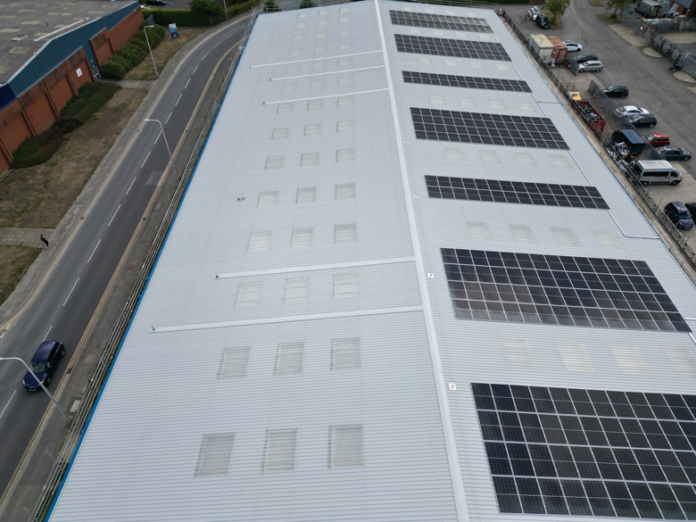
As public sector estates teams and facilities managers accelerate their Net Zero Carbon commitments, the role of solar photovoltaic (PV) technology has shifted from optional to essential. For public sector professionals managing large property portfolios, solar integration can enhance energy resilience, reduce lifecycle costs, and maintain regulatory compliance across a diverse range of asset types.

Garland UKโ€™s latest CPD, โ€˜Solar PV for Sustainable Buildings: Design, Installation, and Compliance Essentialsโ€™, is designed to support public sector facilities managers, estates teams and procurement leads in navigating the growing complexities of renewable energy systems. The session equips professionals with the tools to integrate PV safely, cost-effectively and with confidence, avoiding the common pitfalls that can arise at the intersection of building envelope performance, system compatibility, and regulatory risk.

Closing the knowledge gap

Solar PV is often seen as a design-stage consideration, but its true implications, on maintenance, roof warranties, and long-term building performance, are often realised post-installation. Thatโ€™s where public sector estates teams play a critical role. This CPD specifically addresses that gap, offering practical knowledge that helps local authority and NHS estates teams make informed decisions well before a system is procured or installed.

By focusing on real-world application and operational insight, the training goes beyond the drawing board. Participants explore how to plan for structural loading, roof interface challenges, and the coordination of solar and waterproofing systems, all while ensuring that installations can be maintained safely over time without compromising system warranties or building access protocols.

Guaranteeing system accountability

A common concern for public sector estates managers is the fragmentation of accountability when multiple systems, such as roofing and solar PV, are installed by separate parties. Garland UK addresses this head-on with a Single-Point Guarantee that covers the design, materials, and installation of both systems. This means one provider is responsible for performance, simplifying future maintenance, repair, or dispute resolution.

The CPD also explains how this integrated approach helps avoid premature failure due to incompatibility or poor sequencing. By understanding how solar arrays affect waterproofing membranes, from penetrations and mounting systems to drainage and heat build-up, estates professionals can safeguard their investment and protect against invalidated warranties. This reduces lifecycle costs and ensures that systems deliver performance throughout the asset’s life.

Planning for long-term resilience

With energy prices volatile and carbon reporting becoming a board-level issue, public sector facilities professionals must make smarter, future-proof decisions. Solar PV is one of the few technologies that can provide both cost savings and carbon reductions, but only if itโ€™s specified and installed correctly. This CPD helps estates teams align solar investments with broader asset management strategies, ESG targets, and planned maintenance schedules.

Importantly, the training doesnโ€™t just focus on immediate payback or generation yield. It explores how solar PV can support long-term public sector estate decarbonisation and provide resilience in the face of climate-related operational challenges. Public sector facilities managers will come away with a clearer understanding of how solar PV fits into the wider picture of building performance, funding streams (like PSDS), and environmental compliance.

Supporting smarter descision-making

Developed by Garland UKโ€™s in-house technical experts and approved by RIBA, this CPD provides trusted, peer-reviewed insight at a time when decision-makers need it most. It is tailored to professionals responsible for balancing budgets, maintaining compliance, and delivering sustainable outcomes across a public-sector building portfolio.

As Andy Rooke at Garland UK explains, โ€œPublic sector estates teams face unique challenges when implementing renewable technologies. This CPD was created to give them the knowledge they need to integrate solar confidently, avoid costly design errors, and ensure their systems remain compliant and high-performing across the asset lifecycle.โ€

Book your free CPD

Garland UK offers this CPD as a face-to-face session for public sector teams across the UK. Whether you’re planning a major retrofit programme or exploring solar for future capital upgrades, this training provides the technical and strategic insight to move forward with confidence.

To arrange a CPD session and explore Garland UKโ€™s full range of accredited training modules, visit www.garlanduk.com


This article appeared in the Jan/Feb 2026 issue of Energy Manager magazine. Subscribe here.