

Navigating the Future: A Comprehensive Approach to EV Charging Solutions for Fuel Retailers

By Om Shankar, General Manager & Vice President of Global eMobilityย at Gilbarco Veeder-Root

In the dynamic world of on-the go charging, staying ahead of emerging trends is pivotal for success. The rise of Electric Vehicles (EVs) in the UK presents a unique opportunity for filling station owners to lead the charging market.

And why is that? Itโ€™s because they are among the most attractive propositions for charging infrastructure development since, by their very nature, theyโ€™re easy to get to, there are lots of them, and theyโ€™re built on main roads throughout suburban and urban areas. And, most already provide the services drivers want when charging, including staffed facilities in clean, well-lit locations, food and drink, and restrooms.

Gilbarco Veeder-Root offers a full-service package for EV charging solutions, promising extensive benefits that include revenue growth, enhanced sustainability efforts, and future-proofing of stores.

Although EVs currently account for nearly 17% of new car sales in the UK, the growth in the market is following Norway’s runaway success over the past 10 years, and where EVs now constitute 82% of new car sales. coupled with the UK government’s commitment to phasing out combustion vehicles from 2035 โ€“ just as Europe will โ€“ the EV market is poised for explosive growth. Norway’s success is attributed, in part, to its comprehensive public charging network, emphasising the pivotal role of robust charging infrastructure in the transition to clean transport.

As EV popularity soars, the demand for convenient, effortless, and reliable public charging, especially from high-mileage business and fleet drivers, presents a significant business opportunity for Filling Station owners. Embracing fully-funded EV charging solutions offers various benefits:

  • Revenue Growth: Implementing EV charging solutions serves as an additional, long-term revenue stream, boosting rental income.
  • Enhanced Footfall and Basket Spend: Offering EV charging services effectively drives foot traffic, attracting existing and potential customers and increasing basket spend.
  • Rental Income Boost: A successful EV charging solution can lead to additional rental income through base-rent agreements or profit-sharing models, providing a diversified income stream.
  • Sustainability and ESG Targets: Integrating EV charging aligns with sustainability commitments, appealing to environmentally-conscious consumers and building a future-proof brand.
  • Future-Proofing: Investing in EV charging infrastructure now protects assets against future market dynamics โ€“ especially declining revenue from petrol, diesel and LPG/CNG pumps as EV market share increases and ICE bans take effect, positioning businesses to lead the market, and increase desirability among tenants and customers.
  • Streamlined Solution: Collaborating with an established charge point operator (CPO) ensures a seamless experience, both for customers and end-users alike, allowing property owners to focus on their core business: Gilbarco Veeder-Root can take full, 24/7 responsibility for your EV chargers.

Given the substantial investment required for rapid charging installations, partnering with a full-service, full-site supplier is a prudent approach. Gilbarco Veeder-Root supports the entire process, from planning and technology selection to installation and commissioning, with a suite of cloud-enabled software platforms to efficiently and profitably operate charge points.

Managing over 50,000 charging connectors worldwide, Gilbarco Veeder-Root’s extensive experience, spanning more than 150 years in the filling station sector, sets it apart in the competitive energy retail market. The company not only brings technical expertise but also an innate understanding of ensuring a reliable and profitable energy flow to consumers.

The backbone of Gilbarco Veeder-Root’s offering is the Driivz backend software, enabling efficient network management and revenue generation for charge point operators. Driivz, built on an intelligent, scalable platform, seamlessly integrates into charging networks of any size, providing a comprehensive solution for chains of service stations or industry-leading networks.

Customers experience Driivz through EVerse, a “Do It For Me” solution where Gilbarco Veeder-Root deploys and operates Driivz, allowing customers to focus on their core business while maximizing revenue from their charge points. The EVerse dashboard provides complete 24/7 oversight of charging network status, key performance indicators, and allows for easy tariff adjustments.

EVerse also includes a driver helpdesk, providing support for end-users with questions or issues. If a fault requires on-site attention, Gilbarco Veeder-Root’s extensive field service and technical support network ensures prompt resolution.

Further enhancing the offering is Sparkion, a smart tool designed to optimize electricity supply for maximum profit. Utilizing real-time data and AI-driven algorithms, Sparkion ensures efficient electricity draw from various sources while maintaining optimum charging performance. This intelligent power management system, coupled with daily and monthly energy usage forecasts, can significantly impact a site’s profitability.

In conclusion, with Gilbarco Veeder-Root as a partner, investing in EV charging solutions becomes an investment in the future of properties and a commitment to a greener tomorrow. As the UK steers towards a cleaner and more sustainable future, and fulfils its global responsibility to achieving net zero CO2 emissions by 2050, filling station owners have the opportunity to not only embrace revenue growth but also play a pivotal role in driving the transition to clean energy, improving urban air quality, and enabling sustainable personal mobility.
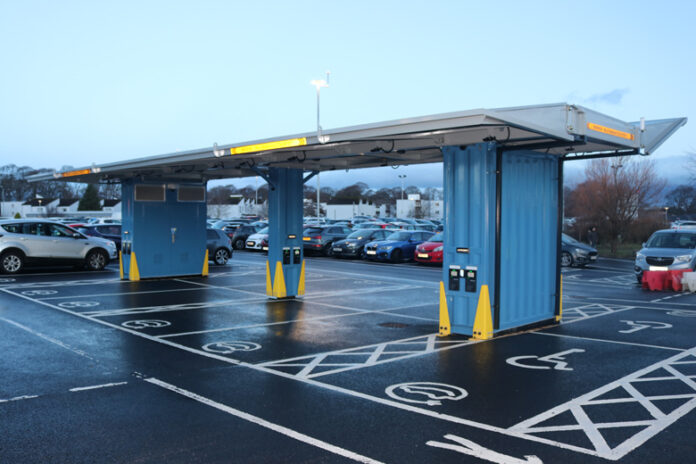

NHS Scotland welcomes its first pop-up solar car park and electric vehicle charging hub

3ti, the UK’s leading designer, installer, funder and operator of Solar Car Parks, has completed the installation of a Papilio3 pop-up solar car park and electric vehicle (EV) charging hub at Raigmore Hospital in Inverness, Scotland. The latest delivery is the first of its kind to be operational in Scotland and provides hospital users with access to 12 charge points boosted by renewable energy.

With a fleet of EVs already in operation at the hospital, Papilio3 will support destination and workplace EV charging, while addressing the growing demand for accessible and convenient charging in an area where long dwell times are common.

The rapidly installed unit has helped Raigmore Hospital quickly boost its EV charging infrastructure and will encourage EV adoption in the area by providing affordable, low-carbon charging for everyone, regardless of access to off-street parking or geographic location.

The multi award-winning Papilio3 is built around a recycled shipping container and can be installed in under eight hours. It can be easily transported and set up almost anywhere in the world, making it the perfect solution for one of the most Northernly located hospitals in the UK. Today, Papilio3 is already in operation at several facilities across the UK, designed to solve many of the challenges facing transport, energy and infrastructure sectors.

Papilio3 offers a significantly improved experience to other charging stations and is pre-fitted with a back-office billing system and a range of technology and user features. The water-tight canopy keeps EV drivers dry, while energy saving motion sensors automatically operate the lights when a customer approaches. Fully operational CCTV also provides additional safety and security for the public.

Papilio3 is available from 3ti on a rental contract and therefore requires no capital investment by customers. With a solar capacity of 19.32kWp, the installed Papilio3 will generate on average 18MWh of electricity annually โ€“ which equates to over 63,000 miles of EV range – and can fast charge up to 12 EVs simultaneously at 7, 11 or 22kW.

Brian Johnstone, Head of Energy, Environment and Sustainability at NHS Highland, said: โ€œAs part of our commitment to supporting the delivery of healthcare in the future, we understand that our environmental responsibilities go beyond our own services. As an organisation, we are looking to develop innovative ways to harness electricity and utilise renewable energy on-site which Papilio3 is a great example of. With the introduction of Papilio3, NHS Highland is now in better positioned to support patients, staff and visitors with EVs at Raigmore. We hope that this investment in EV infrastructure helps to convince others to make the switch over to zero-emission vehicles.โ€

Shaun Wightman-Smith, Business Development Manager at 3ti, commented: “We are proud to deliver another Papilio3, adding to our growing portfolio of applications, this time in the Scottish Highlands. The location of our latest installation showcases the impressive capability of our innovative solar car park, which is designed to provide EV charging infrastructure and reduce grid dependency to a range of facilities in different locations in the UK.

Your Flexible Friend

The new Demand Flexibility Scheme incentivises businesses to reduce their energy consumption โ€“ but how easy is it to benefit from this initiative? We talk to Connected Energy and VEST Energy to find out more.

While the public was focused on scare stories about potential blackouts this winter, the National Grid rolled out a new fund to ensure the lights stayed on across the country.

The Demand Flexibility Scheme (DFS) incentivises businesses and households to reduce their demand on the grid during peak periods. Essentially, companies can get paid for using less energy. This helps the electricity network to flatten out spikes and significantly reduces the risk of blackouts.

โ€œThis scheme is a game changer for the energy flexibility market and is incredibly lucrative for businesses,โ€ says Aaron Lally, managing partner at VEST Energy. โ€œFor just a short amount of time, at set periods throughout the winter, businesses can earn a significant amount of revenue for very little inconvenience. And this is especially true for businesses which have energy storage on site.โ€

How it works

Over the winter period – November to March – there will be at least 12 periods of time known as โ€˜eventsโ€™, when the National Grid will ask businesses and homes to stop drawing energy from the grid. This will be at times when demand is exceptionally high, likely between 4pm โ€“ 7pm – and for short periods, typically an hour.

Each event could last up to four hours, but a business doesnโ€™t have to participate for the full duration. The minimum period is 30 minutes – you get paid for the length of time you take part and the amount your energy consumption is reduced. National Grid has quoted this as ยฃ3,000 per megawatt-hour (MWH).

โ€œWeโ€™ve already seen eight events taking place this winter, with some returns being at a higher price than we anticipated, and it looks likely that weโ€™ll see more than 12 events this winter in total. adds Aaron. โ€œItโ€™s super flexible. A business can participate in all events or decide in advance if a session is not feasible. Youโ€™re not penalised if you donโ€™t take part โ€“ you just wonโ€™t be paid if you choose not to.โ€

How to benefit

While this all sounds enticing, for some companies the challenge is how to square the circle โ€“ after all, you need energy for your operations.

This is where battery energy storage comes in. Any business with a battery energy storage system (BESS) can store the energy they need in advance and draw on that energy during the DFS event. Effectively, the BESS acts as an energy reservoir, meaning you can continue operations as normal while still reducing your grid energy consumption. โ€œThis means no interruption to operations, no turning the lights off or stopping equipment from running – but still knowing that they will be paid at the end of the period,โ€ adds Aaron.

A standard BESS from the likes of UK provider Connected Energy has a 300kW capacity, meaning it can generate ยฃ1,000 of revenue per DFS event. The systems are modular so companies can easily multiply the benefits. VEST Energy works with Connected Energyโ€™s customers to make it simple for them to take part in this market.

So far this winter, there have been eight โ€˜eventsโ€™ meaning a company with a Connected Energy system could have earned ยฃ8,000 by taking part.

โ€œFor many years, our customers have been using our battery energy storage systems to participate in grid balancing services,โ€ says Nigel Dent, Head of Sales, Connected Energy. โ€œBut the Dynamic Flexibility Scheme makes it so much easier for businesses to benefit.โ€

โ€œWith alerts provided in advance, we can ensure that the battery system is fully charged to take advantage of the event. Our customers donโ€™t need to do a thing and will only know they have taken part when they receive their payment at the end of the month.โ€

Other opportunities

DFS is just one of several ways that businesses can make money from their BESS. โ€œThis is definitely the start of more schemes to come. The regulatory environment is becoming more and more pro-flexibility and the direction of travel suggests more schemes will be launched. Businesses will be financially rewarded if they can provide flexibility to the grid โ€“ and thatโ€™s what energy storage can give them.โ€ adds Aaron.

Connected Energy is offering businesses feasibility studies to model these potential revenue benefits from battery energy storage systems. For further details email info@connected-energy.co.uk or contact 0191 495 7321.

Net Zero: 2024 a year for optimism, despite cautious approach from UK businesses

Paul Miller

By Paul Miller, Director at Drax Energy Solutions

On Sunday 3 September, 25,000 cricket spectators sat down for a sold-out T20 game between England and New Zealand at Edgbaston Stadium. What made this game so compelling wasnโ€™t the century-and-a-half-long rivalry between the two teams (although this was no doubt a contributing factor): it was the fact that this was to be the UKโ€™s first ever sustainable international cricket match.

In a day built around sustainability, spectators got a hint at cricketโ€™s future. Red meat was banned from hospitality menus, electric lawnmowers and rollers were used to prepare the grounds, and the entire 25,000-seater stadium was powered by wind, hydro and solar power.

It was an opportunity for Drax Energy Solutions to support Edgbaston Stadium and Warwickshire County Cricket Club to showcase how far theyโ€™ve come in reducing their carbon footprint and provide a blueprint for the future of sustainable sport.

For this to happen in 2023 โ€“ a year in which many organisations were forced to press pause on sustainability pledges to protect themselves against economic instability โ€“ makes this even more special.

For me, it touches on the optimism and resilience weโ€™re seeing right now in the renewable energy market. 2023 proved a difficult year for a multitude of reasons. But in many ways, it highlighted how many businesses are committed to their obligations and are looking for guidance and support on how to stay on course.  

The number of businesses involved in carbon reporting continued to grow last year, and we expect to see much more of this in 2024. Weโ€™re now at a point where we could soon see the introduction of standardised reporting. This would provide organisations with a clear and legally binding framework for quantifying, reporting and verifying their carbon emissions, which, in turn, could help them to deliver on their carbon reduction and removal strategies.

The other positive outcome of this trend is that weโ€™re starting to get a lot more enquiries around fleet electrification, particularly as EV solutions in the UK mature. Weโ€™re consistently seeing business users looking for consultancy, installation, maintenance and management advice on how to move from a traditional ICE fleet to EVs. This is despite the financial restraints of last year having prevented some businesses from progressing at the speed theyโ€™d like.

The REGO market also became a particular area of concern for some businesses last year. Prices exceeded ยฃ20MWh, leaving some businesses with a difficult decision on whether to continue to procure renewable power or delay their commitments and obtain brown or low carbon options.  

Although we expect to see more renewable generation assets come online in the future, which could see prices soften for UK REGOs, purchasing renewable power is still the most cost-effective way of delivering against Scope 2 emission targets. As we progress through 2024, the market should evolve to meet customer needs; however, it is understandably a challenge for many amidst current cost pressures.

Fortunately, the markets are looking more stable this year, providing some much-needed headroom. One of Drax Energy Solutionsโ€™ main priorities this year is to give business users visibility on the suite of decarbonisation solutions we offer โ€“ helping strengthen the balance sheet and deliver against Environmental, Social and Governance (ESG) targets. Although businesses will continue to exercise caution around their finances, Edgbaston has taught us that we can continue to work towards a sustainable future if we collaborate and keep an eye on the mission at hand.

Key takeaways from the new UK Battery Strategy

Ryan Ayrton, Rhiannon Elias, Jennifer Charles,

The UK Government has recently published its new UK Battery Strategy (the โ€œStrategyโ€), which sets out its vision for the UK to have a globally competitive battery supply chain by 2030, to help support economic prosperity and the net zero transition.

The Strategy sets out the governmentโ€™s current and planned activities to support its strategic objectives, as well as establishing a framework and priorities for future work with industry. It also highlights the scale of the opportunity that batteries represent, for example, by 2040, nearly 200 GWh of capacity will be required to satisfy UK battery demand for cars, commercial vehicles, heavy goods vehicles, buses and grid storage.

The Strategy is based around a โ€œDesign-Build-Sustainโ€ approach, which is summarised below:

DESIGN

The government will seek to leverage the UKโ€™s research and innovation base to develop the โ€˜batteries of the futureโ€™ by focussing on the following:

  • Innovation: the Strategy outlines the governmentโ€™s plan to support innovation across the value chain, including by (i) investing ยฃ2bn of new capital and R&D funding for zero emissions vehicles, batteries and their supply chains for five years to 2030; (ii) investing ยฃ50m in UK development facilities, such as the UK Battery Industrialisation Centre; (iii) investing ยฃ11m in competition winners developing technologies across the battery value chain; and (iv) exploring opportunities to promote the establishment of R&D centres in the UK;
  • Access to Financing: the government aims to incentivise battery investment through government-backed finance programmes that are predictable and sustained, for example through the British Business Bank (โ€œBBBโ€), UK Infrastructure Bank (โ€œUKIBโ€) and UK Export Finance (โ€œUKEFโ€); and
  • Battery Safety: the Strategy commits to maintaining stringent safety and product standards in industrial-scale batteries, for example through collaboration across government departments and the engagement of the British Standards Institution (โ€œBSIโ€) with the battery manufacturing industry in the UK.

BUILD

The government plans to develop the battery sector to secure a resilient UK supply and remove barriers to investment through the following:

  • Supply Chains: support will continue to be provided to firms developing domestic mining capabilities, including through the Automotive Transformation Fund. The government also seeks to strengthen the resilience of global critical mineral supply chains and, to date, has signed international critical mineral agreements with seven countries (Australia, Canada, Japan, Kazakhstan, Saudi Arabia, South Africa and Zambia);
  • International Collaboration: the UK will continue to build strategic partnerships to enable technology transfer and cooperation on supply chains and innovation โ€“ the Strategy cites a number of existing bilateral partnerships with the USA, Canada, Japan and Norway. Free Trade Agreements will also be key in reducing barriers and deepening trade relations;
  • Energy Prices and Grid Connections: given the energy intensive nature of battery manufacturing, competitive and sustainable energy prices are key to the development of the battery sector. The Strategy highlights a number of steps the Government is taking to address this, including through various financial relief schemes. On grid connection, feedback from industry has noted that long lead times to access the grid represents a barrier to investment. The government recently published its Connections Action Plan (jointly with Ofgem) to provide actions to reduce project delays in connecting to the transmission network and further measures to acceleration connection timescales are detailed in the Strategy; and
  • Planning and Permitting: The Strategy notes that potential investors in battery projects perceive the planning and permitting processes to be onerous and risky. To address this, the government is seeking to implement a number of planning and permitting reform actions to benefit the emerging battery sector โ€“ for example, it has recently announced a ยฃ24m Planning Delivery Skills Fund to help local planning authorities clear backlogs and ensure they have the requisite skills to respond to developments.

SUSTAIN

The government plans to support a sustainable battery sector, supported by proportionate regulations that drive investment across the supply chain through the following:

  • Skills: the Strategy notes that upskilling across the UK battery supply chain will be essential to satisfy increased demand; in particular, there is an urgent need to increase workforce capability and capacity for the expansion of cell manufacturing;
  • Green Trade: trade in batteries (including their materials, components and waste products) will increase substantially over the next decade. The Report cites the importance of collaborating with international partners to align on environmental standards and remove barriers to trade (with current work ongoing through the WTO and G7 Climate Club); and
  • Circular Economy: scaling up the UK recycling industry will enable a batteryโ€™s economic value to be kept within the UK and reusing and repurposing batteries can significantly extend their useful life and support supply chains for other products. A number of other nations are rapidly expanding their recycling capacities (most notably China) and regulatory changes are being implemented in the EU to establish mandatory minimum levels of recycled content for batteries sold within its borders. The Strategy highlights various government initiatives to support R&D in the field of battery recycling.

Overall, the Strategy sets out a framework to support the developing battery sector in the UK, but given the scale of the opportunity and the rapid projected increase in battery demand over the next few decades, there is a lot of work to be done to ensure that the UK remains competitive in this field.

www.wfw.com

Heat Pumps โ€“ the way forward to decarbonisation.

Matthew Everett

Written by Matthew Everett, an Energy and Carbon Analyst at Salix.

In the UK the built environment accounts for about 25% of our greenhouse emissions and to tackle climate change itโ€™s clear that to reach our net zero ambitions we need a tight focus.

We also need a realistic focus โ€“ together we must meet legally binding targets of reducing carbon emission by 75% by 2035 and achieve net zero by 2050.

How realistic is this? And how are we going to get there?

At Salix we are working hard with the public sector across the country to decarbonise estates and provide a whole series of deadlines to reduce carbon emissions over the next few years.

One of our flagship schemes is the Public Sector Decarbonisation Scheme. This is aimed towards more electrical based solutions across public sector buildings which includes large estates across the country from NHS trusts, to universities, schools, and leisure centers.

The scheme, delivered by Salix and run by the Department for Energy Security and Net Zero, is constantly encouraging us to look at new technologies, fresh approaches and to be innovative in our outlook.

Whilst the schemes look for a holistic approach to managing building stock and we encourage a fabric first approach, it aims to specifically remove old stock of fossil fuel boilers, and to replace these with a type of heat pump. The preferred replacement is often air source, ground source or water source heat pumps.

However, a range of low carbon technologies are also considered, including district heating, hot water electric point of use heaters, solar thermal and biomass boilers, among others. For example, as part of Phase 1 Public Sector Decarbonisation Scheme, Leeds City Council implemented a district heating network powered by household waste to replace old inefficient gas boilers, as well as installing multiple energy efficient technologies, such as solar panels and LEDs, to reduce its carbon footprint.

Embracing Change

Heat pumps come in a variety of designs but are mainly categorized as air source (air-to-air or air-to-water), ground source or water source heat pumps. As technology advances, a variety of refrigerants are being used to enable the right technology application to be applied to the right building design.

Heat pumps generally work well with low flow and return temperatures and being much lower than conventional fossil fuel systems, they often require some infrastructure enabling works and larger heat emitters (e.g. radiators), including the fabric first approach. However, this is not always the case and there may be sound reasons why this is not possible in all applications. 

The idea is that by taking a fabric first approach to buildings, to ensure that they are as efficient as possible in terms of heat retention, we are then able to size and operate heating systems aligned to the improved peak heat loss figures, at low temperatures and improve the coefficiency of performance. In simple terms, we are replacing an old, inefficient fossil fuel boiler, with improved insulation and a new, efficient, electrical heat pump system to achieve the same or improved comfort levels, whilst at the same time, being more efficient and importantly, greener, by saving on carbon. Itโ€™s a bit like trying to get old, inefficient cars off the road!

To determine, what type of heat pump is best for each building, our public sector colleagues will normally engage with qualified architects to determine the fabric first approach and then mechanical and electrical consultants, to carry out feasibility studies to determine the works required, the sizing of the equipment in order to meet the peak load of any building. This will capture any enabling work and focus the task on what type of heat pump is right for your particular application.

For example, Derby Collegeโ€™s installation of water source heat pumps utilises natural resources by drawing water from the nearby Ouse River. It serves as a heating system, replacing gas boilers and contributing to the decarbonisation of the buildings heating. Additionally, they implemented Genius Controls, which operate similarly to movement sensors, regulating heating based on room occupancy.

Bridlington Hospital undertook a transformative project, which involved employing an air-source heat pump capable of meeting 100% of the hospitalโ€™s demand. It also included thermal insulation, modifications to air handling units, and system optimization, to enhance energy efficiency across the hospital estate. Additionally, the integration of 1,600 solar PV systems ensures 100% renewable electrical supply for the heat pumps, leading to zero-carbon heat generation.

Rather than using a heat pump, Exmoor National Park overcame its isolated location by incorporating a biomass boiler. It is situated in an off-grid location with no mains gas, electricity, or water and an ageing oil. Public Sector Decarbonisation Scheme funding helped facilitate a biomass boiler fuelled by local wood resources, along with additional battery capacity for storing energy from existing wind turbines and solar panels. Advanced building energy management systems were also introduced to optimise heating efficiency based on user demands and external conditions. Energy monitors were integrated into their existing wind turbine, solar panels, and batteries, providing real-time data on renewable energy generation. The initiative achieved a lifetime carbon saving of 605 tonnes of carbon dioxide.

These three examples alone are estimated to achieve lifetime carbon savings of 2,305 tonnes of carbon dioxide.

Heat pumps are most definitely here to stay, and the financial support offered from the Public Sector Decarbonisation Scheme from the Department for Energy Security and Net Zero has been instrumental in providing opportunity for public sector clients to launch into their strategic management of building stock, with a low carbon, sustainable, green approach.

www.salixfinance.co.uk

Carrier at the Forefront of UK Energy Transition

As the UK government implements transformational changes to its energy system as outlined in the Energy Act 2023, Carrier is positioned to support customers on their journey towards decarbonisation. Carrier is part of Carrier Global Corporation (NYSE: CARR), global leader in intelligent climate and energy solutions.

The Energy Act 2023 is designed to transform the UKโ€™s energy system by strengthening energy security, supporting the delivery of net zero and ensuring household bills are affordable in the long-term.

According to the Department for Energy Security and Net Zero, the Energy Act is the most important energy legislation in a generation and lays the foundations for greater UK energy independence. Carrierโ€™s energy-saving technologies like heat pumps will be vital to achieving the Actโ€™s objectives, centred around low-carbon and renewable heating and heat networks.

โ€œWe are fully aligned with the goals of the UK Energy Act,โ€ said Oliver Sanders, Carrier Commercial HVAC Director, United Kingdom and Ireland. โ€œWe are committed to being at the forefront of this transformation, and with our innovative and energy-efficient lifecycle solutions we are ready to guide the government and building owners in heat pump applications to help create an energy system fit for the future. At Carrier, we are positioned for sustainability and strive to be a catalyst for positive and energy-efficient solutions that support our customers and wider communities for the long-term.โ€

Carrierโ€™s latest generation of highly efficient heat pumps operate on ultra-low GWP (global warming potential) refrigerants, which contribute to more efficient and lower carbon heating systems in buildings. The commercialisation and construction of heat networks based on heat pumps will also contribute significantly to the decarbonisation of heating, helping the UK reach its net zero target by 2050.

During Carrierโ€™s UK conference in October 2023, Didier Genois, Vice President and General Manager, Carrier Commercial HVAC, Europe, Middle East and Africa, outlined Carrierโ€™s investment in new products and technologies designed to target net-zero greenhouse gas (GHG) emissions across its value chain by 2050, complementing its existing goal of helping customers avoid more than 1 gigaton of GHG emissions by 2030.

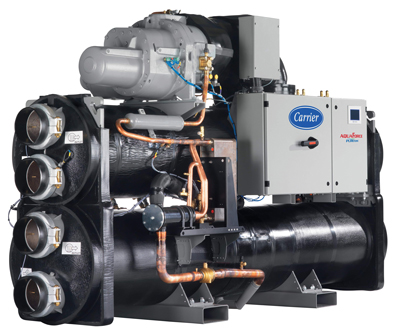
Carrierโ€™s most recent line of high-temperature and very high-temperature heat pumps, the AquaForceยฎ and AquaSnapยฎ 61 ranges, are designed to reduce carbon emissions and energy costs. The advanced units, with capacities from 30 to 735 kW and water temperatures up to 120oC, can harness both natural and waste heat sources, and offer up to six times the efficiency of fossil fuel-powered boilers.

Carrier heat pumps are already being used in heat networks across the UK. Two notable projects include one of the largest banking estates in Glasgow, Scotland and E.ONโ€™s Citigen district heating scheme in London.

Carrier’s commercial heating team take a total solution-based approach, looking at integrating existing services to recover heat and combine heating and cooling to optimise efficiencies across the product life cycle, in heat pump system design and application. For more information, visit www.carrier.com/commercial/en/uk/.

Spain, Germany & Italy repurposing gas networks capable of carrying hydrogenย 

Chris Goggin

Chris Goggin reports on how European economies such as Spain, Italy and Germany are working towards phasing out fossil fuels and repurposing their domestic gas networks & distribution systems to accommodate other fuels including hydrogen.

Natural gas is still the predominant method of heating buildings and hot water provision across Europe. The UK, Spain, Germany, and Italy are economies that use substantial amounts of both natural gas and oil. 

Each country has ambitious and binding decarbonisation targets and large functioning gas networks. What happens to domestic gas infrastructure once natural gas is fully phased out is a problem that each country is attempting to solve. 

Italy, Germany, and the UK are the biggest natural gas markets in Europe whilst Spain uses natural gas as an integral part of its domestic energy mix. All four countries โ€“ UK, Spain, Italy, and Germany share similarities in population and building stock.

Spain has more than twenty-five million residential properties that houses a population just under fifty million. Italy maintains a population of just under sixty million and 26.2 million residential properties. UK population sixty-seven million and has a building stock of over twenty-five million. Germany holds a population of eighty-three million German and 42.5 million residential and non-residential properties.

Spainโ€™s gas transmission network is comprised of 13,361 km of pipeline and is operated by Spainโ€™s largest privatised natural gas distributor Enagas. Spain maintains significant energy security as supply is covered via a main Algeria route, providing an immediate alternative to Russian gas. Spain, however, consumes copious amounts of natural gas and relies on imports to satisfy domestic demand. 

A majority of Italyโ€™s gas network is owned by Snam an independent company. Snam operates a nationwide pipeline network of 32,000 km in length and supplies around 95% of the Italian market. Societร  Gasdotti Italia is the second largest transporter of natural gas in Italy, operating a length of pipeline network of around 1,300 km in length, in southern Italy. 

Germanyโ€™s natural gas transmission network has a total length of 511,000 km and its ownership is currently unclear. There have been multiple reports stating that major national German energy suppliers such as Uniper could become state owned. Doing so would nationalise gas supply making natural gas dispersal less problematic in times of crises.

Italian and German natural gas provision is still heavily reliant on outside exports from Russia. Although actively phasing out Russian gas imports both countries are yet to stop importing Russian gas due to national requirement. 

Without natural gas all mentioned countries will possess thousands of kilometres of unemployed subterranean pipelines. What will each country do with these many miles of unused infrastructure? There is some evidence suggesting that big business and EU states are interested in purchasing gas infrastructure in anticipation of future widespread hydrogen usage.

Italyโ€™s major gas supplier Snam has recently acquired a 49.9% stake in gas pipeline infrastructure. Snam paid Eni โ‚ฌ385 million to connections in pipelines that reach into Algeria and the Tunisian coast all connecting natural gas supplies to Italy.

These connections will give Snam access to a region that could become a future hub of solar produced green hydrogen production. Snam appear to be positioning themselves in favour of future hydrogen dispersal between Europe, Northern Africa, and the Mediterranean.

The German federal government is in discussions with the EU regarding the purchasing viability of purchasing German gas network operator Wiga who are valued at around โ‚ฌ3 billion to โ‚ฌ4 billion. Wiga are already 50% owned by a state-owned organization SEFE (Securing Energy for Europe) and operate a pipeline network of over 4,000 km (2,485 miles). 

Aims within the updated German National Hydrogen Strategy could be achieved through repurposing all current Wiga pipework to transport hydrogen. Doing so will enable the establishment of a national hydrogen network capable of dispersing hydrogen energy for commercial or domestic usage. 

Main Spanish gas grid operator Enagas have also purchased a stretch of gas infrastructure from Spanish gas company Reganosa. Enagas acquired 130 km of gas pipeline for around โ‚ฌ54 million. Enagรกs will use this transmission infrastructure which shares a connection to Portugal to fully integrate renewable hydrogen production and distribution by 2030 within the region. 

As the UK operates 7,630 km of pipework that acts as a supplier of heat and energy into 25 million UK properties, UK energy policy is yet to outline how, or if, current natural gas infrastructure will be used in future power distribution. Continental economies have plans for hydrogen distribution using adapted gas infrastructure whilst UK policy is still unclear.

Although each country will have to find decarbonising solutions applicable to their own energy requirements, geographical positioning and production capabilities, UK decision makers may have to include hydrogen as an energy resource due to the amount of work that has been completed by major EU economies. 

Rinnai is committed to equipping customers, installers, specifiers, and system designers with updated and detailed information concerning domestic and international energy policy that may affect current or future purchasing options.

Visit www.rinnai-uk.co.ukโ€ฏโ€ฏ 

Solar energy – you’re more in control than you thought!

Chris Cowling

Chris Cowling, Aztec Solar Energyโ€™s commercial director, reflects on a mixed, yet fast-moving year for the solar photovoltaic (PV) and battery storage market and looks ahead to even brighter times in 2024.

When reflecting on the past 12 months there would be few that would not struggle to use the word โ€˜challengingโ€™ to describe 2023. It feels somewhat overused, however, coming through a disruptive global pandemic, with an economy impacted by significant conflict in Europe and latterly the Middle East, it has, without question, been just that. Yet 2023 has also seen pockets of real buoyancy, not least in the UK solar energy market.  Underpinned by a strong desire for business owners to protect livelihoods by adopting cost-effective and self-managed approaches to energy and sustainability, while protecting a planet for future generations. 

So, itโ€™s fair to say, 2023 was a real mixed bag โ€“ often presenting a dichotomy of business decisions.

PV โ€“ an investment opportunity

For Aztec Solar Energy, we have been fortunate, the UK solar energy market has seen substantial growth. 2023โ€™s estimate is that it will have reached over 15GW of installed capacity and the upward curve continues expecting to hit 43GW within the next five years. Globally, despite lingering supply chain and trade issues, a similar picture is replicated with continued significant growth predicted. As a share of global energy generation, in 2021 global PV was 3.6%, it had risen in 2022 to 4.5%. It has become the most rapidly growing regeneration technology and one of the best energy investment opportunities.

Volatility

Alongside the ups are inevitably some downs. The complex and ever shifting economic backdrop continues to create volatility and is taking its toll in the general construction market.  Further impacted by predictions that commercial new builds are slowing down, we are seeing debt risk and borrowing rising; yet our access to a wide range of funding options means we can support customers through this.  We too have faced increases in materials costs in early 2023, although we donโ€™t anticipate these continuing. We are optimistic levels will remain constant.

Increased efficiencies

In a relatively new and evolving market, exciting new technological developments often present good news. As we saw in 2023 with the launch of new N-type panels from several different manufacturers. Delivering greater efficiencies, more power, improved robustness and safety features, and reduced degradation. These improvements adding even greater confidence in the solar marketplace.

Safety

Safety remains high on Aztec Solar Energyโ€™s agenda and as such weโ€™ve become avid supporters of the proposed new Solar Stewardship Scheme proposed by trade association, Solar Energy UK. Encouraging the early adoption in 2024 of a Joint Code of Practice for solar PV specifiers, designers, suppliers, operators, and insurers; the RC62 is designed to further improve safety for commercial and industrial rooftop mounted PV installations. In addition to industry-wide standards, it will include a guide for insurers and clients on procurement, ownership, and operation and maintenance. We are keen to see this initiative move forward as soon as possible.

The year of the battery

Predictions for 2024 is that the commercial solar rooftop market is set to take off. With decarbonisation high on the agenda and increased recognition of the benefits of self-generated energy and more affordable storage options, 2024 will see a substantial growth in battery storage installations.

Batteries allow businesses to store power and draw on it when needed, as well as being force charged overnight at lower electricity rates and the energy used in the day when electricity rates are higher. Battery size and costs have decreased over the past 5 years by at least 40%.

So, the next 12 months will be bright. As the PV solar market expands year on year, it will be about how we are all seizing that opportunity. Inevitably, like many other sectors we will be facing resourcing issues and as a sector need to encourage the development of skilled electrical installers to meet the growing demands.

At Aztec Solar Energy our expansion year on year will see further developments with a branding refresh in order that we are best positioned to capitalise on the growth opportunity. Also having recently become the UKโ€™s specialist commercial PV and battery systems partner for the Effective Energy Group, this will accelerate our expansion plans. We are all set to take the business to its next phase.

As both our commercial and private sector landscapes change around us, we will see more PV and battery systems, powering an increasing number of local and national services, creating improved energy security and capitalising on the power of greener energy solutions for all. We should embrace 2024 with optimism and commitment to a brighter and greener future.

For company information contact Chris Cowling, Commercial Director, Aztec Solar Energy Solar Energy, telephone 0845 467 5058, email chris.cowling@aztecsolarenergy.co.uk, Website www.Aztecsolarenergy.co.uk

Changing perceptions around smart buildings

Much of Britainโ€™s housing is over half a century old and was obviously not built with home and building automation technologies in mind. Graham Martin (Chairman and CEO of the EnOcean Alliance) explains how – alongside new builds – retrofits can become a newchampion of energy-efficient and cost-effective building design.

In Europe, buildings are responsible for around 40% of total energy consumption as well as 36% of greenhouse gas emissions. This makes the building industry Europeโ€™s single largest energy consumer, and one of the largest carbon dioxide emitters[1]. Clearly, the building sector has a steep hill to climb in order to improve sustainability within the timeframes set out by the Paris Agreement.

By that same token, buildings also offer vast – and largely untapped – potential to save energy whilst leveraging new smart technologies. In doing so, the quality of life for the people who live and work within these buildings can be dramatically improved. In recent years, many of the most high-profile smart building projects have been in commercial new builds in urban areas. Whilst these projects should rightly be celebrated, they represent a mere fraction of Britainโ€™s stock of buildings. Most properties were built before 1980[2] and are now ripe for modernisation โ€“ needless to say, they were not designed to accommodate a 21st-century way of life.

The needs of the household have clearly evolved: indeed, some features of the modern home could be described as โ€œsmartโ€ (e.g. smart electricity and water meters, smart doorbells and voice assistants like Alexa and Google Assistant). Even so, many households are reluctant to embrace smart technology on anything more than a piecemeal basis. There are a number of reasons for this, but one of the major barriers to a widespread rollout is the perception that smart technologies are expensive, complicated or not particularly useful. For now, the fully integrated smart home remains largely the preserve of the very rich, or the very tech-savvy.

However, recent developments have made smart functionality far more accessible, for new builds and older buildings alike. Crucially, technological innovations have also made these upgrades far more affordable.

To accelerate the transition towards smarter buildings, two things need to happen. One is that Governments need to legislate in order to expedite the issue. From an environmental perspective, the case for doing so is unquestionable. Buildings offer vast potential to make a significant difference on the journey towards a decarbonised society. Indeed, even small improvements in the energy efficiency of buildings can have an enormous impact when scaled up across wider populations. Therefore, more needs to be done to raise and enforce the minimum standards, which will in turn drive innovation across the sector and bring costs down for end users. Governments are already doing this by encouraging energy-efficient retrofits as well as higher standards for all new builds. However, against the backdrop of the wider drive towards net zero, rapid progress is needed to meet climate objectives.

The second thing that needs to happen is on the vendor side. Technology providers must work together more closely. The EnOcean Alliance seeks to enable and promote interoperable, maintenance-free ecosystems based on the wireless EnOcean radio standard (ISO/IEC 14543-3-10/11). Keeping these ecosystems open is vital for encouraging rapid growth in the adoption of smart technologies. Moreover, it also makes these systems essentially future-proof, permitting easy upgrades as new solutions enter the market, whilst eliminating the risk of being locked into proprietary solutions.

The โ€œSonnenblumenfeldโ€ project in Germany is an example of what can be achieved when you combine innovation, community, and political will. The residential complex of 96 energy-optimised apartments uses the โ€œZuhause-Plattformโ€ smart building system featuring EnOcean self-powered wireless technology. As well as offering considerably more safety, security and comfort for the buildingโ€™s residents, energy consumption can also be significantly reduced through building automation.

This residential complex, located in Dรผsseldorf-Lichtenbroich, consists of a U-shaped main building featuring 78 apartments and a roof garden plus a second unit with 18 two-room apartments. Many apartments have been designed specifically to cater for elderly residents, which necessitated the prioritisation of practicality and ease of use in any smart functionality.

Useful smart functions such as climate control, light control, shading control, access control, intercom system, smoke and leakage alarms, administrator and facility management contact, energy consumption data and many more features can be intuitively governed via a simple central display and control unit within the apartment.

The system also provides benefits for property owners and operators, with features such as automatic meter readings, and automatic alerts in the event of, for example, a broken door or window pane. The automation of many of the climate control functions also has the potential to vastly improve the energy performance of the building. As a result of the savings, the apartments have comparatively lower rents compared to average apartments in the same area.

EnOcean technology was chosen for the sensor systems. The sensors and control units use energy harvesting to generate power from the environment: movement, sunlight, temperature variations and magnetic fields (or a combination of these) supply enough energy to power a sensor, operate a switch and transmit radio signals. The self-powered wireless devices are completely maintenance-free and require neither batteries nor mains power. They can be installed on any surface – even on glass – in a matter of minutes, without the need for wiring and installation work. No mess, no disruption, and virtually no installation costs.  This unique combination of advantages is especially important when modernising older properties.

In the Sonnenblumenfeld context, the Zuhause Plattform system can receive EnOcean signals as well as wireless M-Bus signals from the water, electricity and heating counters within the apartment in order to enable intelligent consumption analysis. The administrator can access mid-month and end-of-month consumption data as required.

The success of this project can in part be attributed to commitment from the German government to promoting smart and sustainable building technologies. For example, it has recently implemented the Building Energy Act, which was developed in response to the EUโ€™s Energy Performance of Buildings Directive (EPBD), and specifically its revisions in 2018 and 2023. The directive has the ultimate goal of making the building stock in the EU close to carbon neutral by 2050.

Germanyโ€™s Building Energy Act means that from 2024 all new non-residential builds must have smart automation, while other buildings must be retrofitted with smart automation over the next 20 years, with the first milestones to be reached in 2024 and 2030. All new builds (residential or non-residential) must follow strict energy and sustainability laws, with new fossil-based fuel heating being effectively banned in the future. All EU Member States are committed to adopt the EPBD, whilst the UK is expected to announce similar legislation in the coming years.

Projects like the Sonnenblumenfeld complex show that โ€œsmartโ€ doesnโ€™t necessarily mean โ€œcomplexโ€. It can be simple, affordable, and efficient. Building automation has been proven to deliver significant improvements in security, safety and comfort with greatly reduced energy consumption. Crucially, with technologies like EnOcean providing the building blocks for innovation, smart automation can be implemented with ease and at a relatively low cost within almost any building, old or new.


[1] https://commission.europa.eu/news/focus-energy-efficiency-buildings-2020-02-17_en

[2] https://www.statista.com/statistics/292252/age-of-housing-dwellings-in-england-uk-by-tenuree/