Next generation of home heating to be unveiled

Britainโ€™s leader in Ground Source Heat Pumps, Kensa Heat Pumps, is set to unveil the next generation of home heating and cooling.

At an online launch on 29th February, Kensa will reveal its solution to help bring heat pumps to the masses, decarbonise current and future homes and create green jobs.

The launch will be presented by Kensa CEO, Tamsin Lishman, whoโ€™ll be joined by special guest Chris Stark, Chief Executive of the Climate Change Committee.

Tamsin Lishman, CEO of Kensa Heat Pumps, said: โ€œMass adoption of heat pumps, including Ground Source Heat Pumps, will grow the economy, create green jobs and bring people out of fuel poverty. 

Image supplied by Kensa Group

โ€œWe are about to embark upon the biggest transformation in home heating since the conversion to natural gas fifty years ago. We will show how the next generation of Ground Source Heat Pumps can provide millions with long-lasting clean, energy-efficient home heating and cooling.โ€

For 25 years Kensa has proven that ground source heat pumps can work in all property types. From retrofit projects in high-rise flats to new build housing installations, ground source heat pumps are already reducing consumer energy bills, taking people out of fuel poverty and cutting CO2 emissions. 

Studies have shown installing more heat pumps will:

  • Increase GDP by ยฃ6.8bn by 20301
  • Avoid ยฃ2.5bn (ยฃ1,100 per home) in gas costs2  
  • Networked ground source heat pumps can be almost 20% cheaper (ยฃ290/year) to install and operate than air source heat pumps (ASHP) on an annual basis3

Research also shows mass heat pump adoption improves peopleโ€™s health, and could save the NHS ยฃ1.4bn per year4:

  • 6.5 million homes are estimated to be in fuel poverty5
  • 17,000 premature deaths linked to air pollution annually6 
  • โ…“ UKโ€™s greenhouse gas emissions come from heat7

With the Future Homes Standard set to effectively ban installations of gas boilers in new build homes from 2025, ground source heat pumps are expected to be an essential solution for the Government to meet its target of 600,000 heat pump installations a year by 2028 and propel the UK to Net Zero. 

By 2030 Kensa plans to deliver 70,000 ground source heat pumps a year, a move that will create 7,000 green jobs and put more people in control over when they heat their homes.

Registrations for the online launch are open now:ย www.eventbrite.co.uk/e/the-next-generation-of-home-heating-tickets-807897371787?aff=PRGenย 


1 www.camecon.com/what/our-work/greenpeace-the-economic-impact-of-decarbonising-household-heating-in-the-uk-in-an-era-of-high-fossil-fuel-prices/, Greenpeace, 2022

2 www.nesta.org.uk/report/how-the-energy-crisis-affects-the-case-for-heat-pumps/how-heat-pumps-can-help-tackle-the-energy-crisis, NESTA, 2022

3 www.erm.com/contentassets/553cd40a6def42b196e32e4d70e149a1/low-carbon-heat-study—executive-summary.pdf, EE, 2023

4 bregroup.com/press-releases/bre-report-finds-poor-housing-is-costing-nhs-1-4bn-a-year, BRE 2021

5 www.nea.org.uk, NEA, 2024

6 www.cleanairfund.org/theme/economics, Clean Air Fund, 2020

7 es.catapult.org.uk/guide/decarbonisation-heat/, BEIS, 2018

Collaboration & active co-operation is key to liquid renewable fuels future in commercial and domestic heating hot water market

Close collaboration and co-operation on all aspects of the off-grid renewable fuels market is helping both the appliance manufacturers and the liquid fuels industry make significant inroads into achieving lower carbon footprints for all in the supply chain, all the way to the end-user.

Chris Goggin

“From a manufacturers perspective, and on the journey towards renewable liquid fuels, it became incredibly important that we collaborated with industry members and truly understand the nuances of the LPG market under times of such considerable regulatory overhead and that we start to systematically educate all relevant stakeholders regarding the critical steps in achieving our changing objectives,” Chris Goggin of Rinnai told a recent conference on renewable liquid fuels.

He added, โ€˜This collaboration requires a complete value chain perspective in establishing the reality of practical, economically and technically feasible solutions for the wide array of off grid buildings.

Mr Goggin continued by saying that โ€˜new challenges are around the corner. For example, how will LPG / BIOLPG and Renewable liquid fuels be measured in building performance modelling tools and how will this impact the deployment of such appliances and fuels in the future.โ€™

Rinnaiโ€™s operations director Chris Goggin addressed the recent Liquid Gas UK Conference held in Liverpool. Liquid Gas UK is the trade association for the renewable liquid gas industry across the UK. Members of this trade association represent every position in the UK energy industry from BIOLPG and LPG suppliers, specifiers, heating engineers and installers. 

Chris Gogginโ€™s presentation also announced Rinnaiโ€™s professional relationship with Dimeta that seeks to encourage clean domestic alternative fuel usage in the UK. Both Rinnai and Dimeta aim to advance the national deployment of DME and r-DME that will assist in UK decarbonisation plans. 

A MOU (Memorandum of Understanding) has been agreed upon by both Rinnai and Dimeta through ongoing collaboration. This partnership will work on the following critical areas: appliances, appliance iteration requirements for 100% DME and appliance materials compatibility. The MOU will explore the development and ultimate deployment of DME fuel and appliances. 

As UK energy usage transitions towards cleaner carbon reducing fuels Rinnai has adapted its product range to include hydrogen, solar thermal, heat pumps, BIOLPG and LPG technologies and advanced developments with DME. Domestic, commercial and off-grid properties can decarbonise immediately with Rinnaiโ€™s H3 range of products that have been designed purposefully to introduce a new era of UK clean energy acceptance. 

Rinnaiโ€™s H3 range of products include domestic and commercial heat pumps that offer immediate property decarbonisation. Rinnai is determined to provide UK customers with cost effective low carbon solutions towards domestic and commercial hot water and building heating provision.

Visit www.rinnai-uk.co.uk  

Data: The public sectorโ€™s North Star

Marcus Alexander

Comment by Marcus Alexander, Advisor โ€“ Sites at Energy Systems Catapult

Data is often overlooked when looking to cut costs and carbon across public sector buildings. In theory, it offers everything needed to monitor, predict, and reduce energy use and emissions. In practice, real-world complexity and resource constraints result in data being filed in the โ€˜too frustratingโ€™ bin. Data can be a North Star, guiding the way to better projects and energy procurement, and budget-friendly buildings that help direct funds to vital public services.

The Open Data Strategy laid out a clear roadmap and action plan as to how industries should be harnessing data to realise the economic, social, and technological opportunities that it holds. The energy sector is no different. In recent years it has made significant progress in developing its data capabilities; utilising data across the full energy supply chain to improve the planning and operation of the network. Programmes such as the Energy Data Taskforce have stimulated the industry and spawned a myriad of initiatives that make up the energy data ecosystem.

The good news is that the resulting data and tools can be utilised by organisations pioneering the use of energy for their decarbonisation journeys. Data strategies can start simple, identifying some of the key elements and challenges that need to be addressed, and then iterated on as it develops to provide continual value from your data activities. The Energy Data Management Canvas tool provides an extensive, flexible framework that can be used to shape and plan this development.

Stakeholders and Threads

A key first step in managing energy data is understanding everyone who has a stake in that data and what they hope to get out of it. These โ€œdata stakeholdersโ€ include building owners, facility managers, utility companies, technology vendors, tenants, regulators, and others.

The Energy Data Management Canvas tool encourages the creation of short โ€œdata stakeholder profilesโ€ for projects. These explain who the stakeholder is, what their goals are, what questions theyโ€™ll want answered, and what data could help provide those answers. For example, a building owner may want to track the performance of new HVAC equipment to prove payback.

Documenting user needs makes it possible to follow the data from origin to collection, storage, analysis, and reporting. Doing this mapping upfront prevents dead ends or gaps from cropping up later. It enables trade-offs and priorities to be balanced across multiple parties.

Sources and Collection

Once data stakeholders and their needs are defined, the next piece is identifying data sources and collection methods.

For a building retrofit project, data sources might include meter readings, equipment sensors, weather data feeds, utility bills, and tenant surveys. Legacy systems, proprietary platforms, public databases, and custom collection tools may all play a role.

As options are considered, the canvas prompts several key reflection points:

  • Data quality – What accuracy or granularity is truly required? How can consistency be ensured across disparate streams?
  • Costs – Are there fees to access certain datasets? What is involved in new infrastructure for gathering data?
  • Risks – Are there contractual terms or legal requirements governing the use of certain data? How vulnerable is the data pipeline?

Thinking through these aspects in advance prevents unwanted surprises. It focuses collection efforts on what is essential for stakeholders, leading to responsible data management.

Storage and Governance

Once relevant energy data sources are identified for building projects, decisions must be made about storage infrastructure and governance policies.

On storage, factors like frequency of access, retention requirements, and disaster recovery tolerance determine whether databases, data lakes, or warehouses are most appropriate. The canvas helps assess needs for data security, backup systems, and patching schedules.

Documenting rules that apply to managing privileged data is crucialโ€”from customer privacy policies to regulatory compliance mandates. Roles and responsibilities should be defined across partners. For example, who is authorised to access raw tenant energy usage data?

Taken together, storage and governance tactics ensure operational reliability as well as oversight. They also facilitate trust and participation from tenants. Following established protocols allows more impactful use of building energy intelligence.

Implementation and Operation

Onsite metering can be challenging. Often, sites lack sub-metering, especially when it comes to heating demand or fossil fuel consumption. Additionally, it may be that fiscal meters are not automatically read, and thereโ€™s a lack of ownership and skills for data monitoring. Solutions include upgrading meters, more resource allocated for regular data monitoring, a unified dashboard for all meters, and better granularity of metering to provide valuable insights on fossil fuel and heat use. Free tools like the Business-as-Usual (BAU) Estimator can help.

Once you have a comprehensive baseline, you can begin planning for decarbonisation. This forms the basis of your plan โ€“ and a measure against which you can assess the impact of your proposed interventions. By including aspects such as asset lifetimes and future plans or anticipated changes to your estate, you can estimate the size of low-carbon heating solutions, as well as outline costs based on sizing and necessary alterations.

What does the future hold?

The true potential of energy data is yet to be unlocked. With machine learning and AI, we can manage buildings more efficiently. Big datasets will help us create accurate benchmarks, better understand decarbonisation pathways, and the performance of different technologies in the real world, paving the way for more sustainable practices. Help is available. Step forward โ€˜InSiteโ€™!

Backed by Innovate UK, InSite is a new project to develop a national energy database that holds and synthesises data from 1000s of sites, projects and technologies. The aim is to set benchmarks, unlock finance by demonstrating returns, and cut costs and carbon across UK sites. A pilot is currently underway with NHS England.

www.es.catapult.org.uk

Insite Energy takes over the metering and billing of nearly 3,000 London housing association homes without any costly retrofitting requiredย 

Insite Energyโ€™s contract with Notting Hill Genesis (NHG) sees it deliver credit billing services to 2,857 customers, including those at the Brent House development in Wembley.

Heat network specialist, Insite Energy, has been awarded a contractย by London housing association, Notting Hill Genesis (NHG), to deliver credit billing services to 2,857 customers following a competitive tender.ย 

Commencing this month, the services contract covers a five-year initial period, followed by an expected extension of an additional five years. The anticipated 10-year period is more than three times the average tendered contract length for this scope of services. The contract will see Insite Energy working closely with Orka, the appointed maintenance provider for the scheme, to together provide a high-quality customer service.  

The tender is also unique because NHG is changing providers, a process which has been made seamless by the fact that no retrofitting of equipment is required. By moving residents to credit billing services, the transition from one billing provider to another is more seamless to residents. Meter data and customer information will simply and securely transfer over to Insite Energy, ensuring residents are accurately and fairly billed for the energy they use. Unusually for credit billed customers on heat networks, they will also benefit from easy account management via an online customer portal, โ€˜my insite.โ€™ 

Following a competitive procurement process NHG awarded one of the billing contracts to Insite Energy. The tender response demonstrated Insiteโ€™s high level of quality and service, as well as an approach to digitisation and continuous improvement.   

โ€œWe are delighted not only to strengthen our relationship with NHG, but also to send the reassuring message to other housing providers of how straightforward changing providers can be,โ€ commented Anthony Coates-Smith, Managing Director at Insite Energy.ย ย 

โ€œLike any other paid service, the company that supports you and your residents’ heat network experience must deliver and meet expectations. What this partnership demonstrates is there’s no need to stick with what you’ve got if it isnโ€™t working for you, and that changing needn’t cost a fortune either.โ€ 

This latest contract builds on an already well-established relationship between the two companies, following the success of Insite Energy in an NHG tender in 2016.  

Insite Energyโ€™s collaboration with NHG has centred around the development of VANTAGE, an all-in-one client portal designed to simplify heat network management.

Recent collaboration has centred around the development of VANTAGE, an all-in-one client portal designed to simplify heat network management, with NHG actively providing feedback into the portalโ€™s functionality requirements.  

This new resource was launched at the end of 2021 and is already helping other housing providers, including housing associations such as NHG, to identify potential cases of fuel poverty. By drawing in and analysing data on energy use and missing payments, the system can help prompt intervention to support customers in need.  

Looking ahead, there is scope to further evolve services and collaboration during the 10-year agreement. For example, while the contract covers credit billing services, there is an opportunity to assess and explore low-cost pay-as-you-go (PAYG) models and further optimise billing services and debt management for NHGโ€™s residents.  

โ€œWeโ€™ve worked with Insite Energy for some time now, and we’re excited to extend our working relationship with them further,โ€ Laura Coleman, Heat Network Operations Manager at NHG, added. โ€œIt’s a great position to be in โ€“ minimising disruption to residents and keeping costs down, whilst also ensuring a high quality of service for a good number of years to come.โ€ย 

www.insite-energy.co.uk/businessย ย 

Renewable Energy: The Path Through the Energy Trilemma

Tobias Kueter

By Tobias Kueter, Senior Manager, ENGIE Impact

Addressing the energy trilemma has been a challenge for governments, companies, and even individuals for years.

Trying to improve only one aspect โ€” energy supply security, energy cost, or the environmental impact โ€” has often led to worse outcomes for the others. But increase in fossil fuel prices, combined with ongoing advancement in renewable technologies, makes it now possible to concurrently address each portion of the energy trilemma.

Importance of Addressing the Trilemma

As companies align their business goals and operations with societal expectations and regulatory trends, they face the inherent tensions of the energy trilemma. Simply put, companies will need reliable, affordable, and clean energy to operate. As they do so, they should expect to enhance their reputation and minimise long-term environmental risks, as well as achieve cost savings with the advancement in technology and economies of scale.

Historically, it has not been easy to find energy solutions that effectively address each dimension of the energy trilemma, which led to companies continuing to rely on fossil fuels. Recent geopolitical issues have led to volatility around energy supply and energy prices globally, which has been an opportunity for governments and organisations to reassess the status quo. Europe had become overly reliant on Russia for its supply of natural gas and was now looking for other suppliers globally. The U.S. reaffirmed its reliance on fossil fuels, expanding fracking and discussions around strategic oil reserves. Neither of these approaches addressed the environmental impacts.

The fact remains, investing in renewable energy now is the most attractive short-term and long-term option โ€” and addresses each aspect of the energy trilemma.

The Importance of Renewable Energy

Renewables are becoming less expensive, are more readily (and locally) available than they have been previously, and have a very low environmental impact. They include both energy production for heating (e.g. biogas and geothermal sources) as well as electricity generation (e.g. on-site solar systems, wind turbines, biogas). Some examples of potential interventions include:

  • Power Purchase Agreements (PPAs) and Virtual Power Purchase Agreements (VPPAs) where a company purchases renewable electricity from a specific project, often with a fixed price, for its own use.
  • On-site energy generation through solar PV and/or thermal panels, biogas plants, or geothermal heat sources.
  • Companies signing contracts and partnerships to finance such projects without major capital investments.

These trends have gained momentum as the levelised cost of electricity (LCOE) from renewables has had a downward trend over the last few years. Companies can now bridge the gap between sustainability, energy security, and affordability by strategically adopting renewable energy solutions.

Specific needs and challenges vary between sectors and across regions. The regulatory framework and cost variations also continue to play a major role in these decisions. But even if solutions are not immediately available to instantly decarbonize every organisation, steps can be taken now to address each aspect of the energy trilemma for a long-term decarbonisation strategy.

The Data Behind Renewables

ENGIE Impactโ€™s ongoing assessments of industrial and manufacturing sites have shown that decarbonisation is economically viable today, that many of the financial risks of site-level interventions are a thing of the past, and that the greatest risk posed to organisations currently is inaction. There are now proven technologies, cheaper energy sources, and shorter payback periods that allow any organisation to commit to a bold decarbonisation strategy and programme.

Our research shows:

  • Sites can achieve up to 50% carbon reduction by utilising existing, proven technologies.
  • Five technologies โ€” namely: solar, heat pumps, biomethane boilers, electric boilers, and biomass boilers โ€” account for more than 75% of manufacturing sites decarbonisation levers.
  • 60% of organisations have significantly reduced energy costs as a direct consequence of decarbonisation.
  • Sites working toward decarbonisation are seeing an average of โ‚ฌ500K in energy cost savings.

Financing support from legislations such as the Inflation Reduction Act, and the EU Innovation Fund, as well as new financing models like Energy Savings as a Service (ESaaS), also make the transition to renewables easier โ€” helping overcome each challenge thatโ€™s part of the energy trilemma.

Solving the Energy Trilemma

The energy trilemma has always been present, posing a significant challenge for companies across industries and around the world. However, it is possible to efficiently address it now due to major advances in renewables, increasing stringent regulations, as well as innovative financing models available in the market. Companies recognising the trilemma’s challenges must see that adopting renewables is the key to reliable, affordable, and clean energy โ€” with the added benefits of enhancing reputation and cutting long-term costs. Renewables, with decreasing costs and environmental impact, offer a comprehensive solution, and the data supports its economic viability. Committing to renewables now aligns with both economic and environmental imperatives.

The Renewable Energy Institute

Join professionals from over 150 different countries worldwide and enrol onto the Renewable Energy Instituteโ€™s accredited training courses.

All courses are available to study Online, On-demand, providing flexibility to study whenever suits you. All courses can be viewed at www.renewableinstitute.org

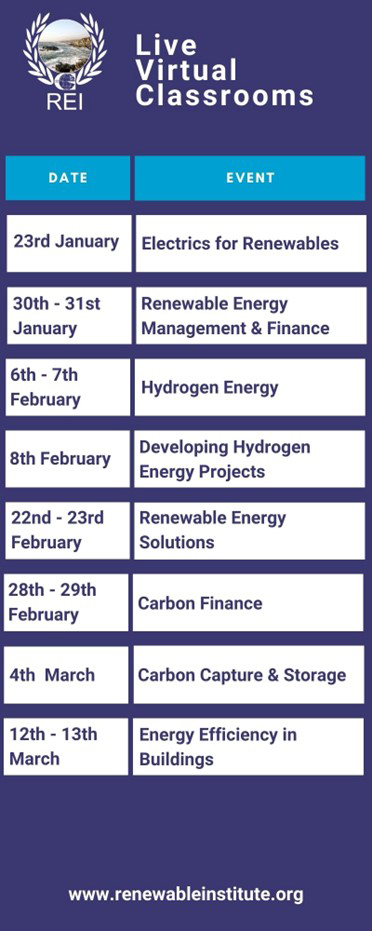
We also have the courses listed here available to study in the Live Virtual Classroom. The Live Virtual Classroom course will run on set dates (please contact the Institute for upcoming course dates) and will feature 1-2 full days (9am โ€“ 5pm UK time) of interaction and networking with the lecturer and other delegates. You will have the opportunity to sit the exam for the internationally recognised Galileo Master Certificate online at the end of the course.

All courses are accredited by the CPD accreditation service and count towards your professional development. ย 

On completion of your studies, you will receive 1 year of complimentary REI membership.

For more information, please contact the REI on +44 131 446 9479 or email us at training@renewableinstitute.org

Be warm, be well, beat fuel poverty: leading North West-based business launches new initiative to educate public on fuel povertyย ย 

Rebecca Armstrong, MD and Craig Stewart, CEO

North West-based energy services company, Making Energy Greener, has launched a new initiative to educate the public on fuel poverty and its impact on vulnerable people. The North West Warmth and Wellbeing initiative comes as part of Making Energy Greenerโ€™s continued investment in helping vulnerable households access funding, spot the early signs of fuel poverty and save thousands of pounds of their energy bills. 

Through the launch of its initiative, Making Energy Greener aims to extend its reach to numerous households, focusing on three key demographics: households with a total income of less than ยฃ31,000; households receiving government benefits such as universal credit, income support or pension credit; and individuals who meet the vulnerability criteria defined by NICE (National Institute for Health and Care Excellence). This includes people with certain medical conditions, disabilities or the elderly who are more susceptible to the adverse effects of cold or fuel poverty.  

In response to the ongoing fuel poverty crisis, some of its initiatives include the creation of an interactive live-chat function that enables individuals to not only assess their eligibility for government support schemes based on income and vulnerability, but also make it as easy as possible for vulnerable households to complete applications and access much-needed retrofit advice. Making Energy Greener will also establish a helpline for eligible households to inquire about available assistance, while building on the 8,000 surveys, 4,000 heating controls, 6,000 heating systems and 17,000 total ECO measures the company has already completed. 

In addition, Making Energy Greener has also made a substantial investment in creating 12 unique videos with the desire to educate the general public. It will also continue its ongoing conversations with a number of grassroots organisations and community leaders with the purpose of bridging the gap between the most unreachable people in society and the large energy companies. 

MEG delivers deep retrofit and energy efficient heating systems for homes across the country. By launching its Warm and Wellbeing initiative – as well as working with local authorities, energy companies, housing associations and landlords – it is its ambition to make every home in the country an eco-home and help eradicate fuel poverty inline with the goal of reaching net zero 2050. 

Rebecca Armstrong, managing director, MEG, said:

โ€œAs a family business, I understand acutely the problems a lot of people are facing at the moment when it comes to fuel poverty. This is a very real issue impacting people across the North West. Everyone should have the fundamental right to affordable clean energy  and this is why I have decided to launch the North West warm and wellbeing initiative in order to help vulnerable people access significant amounts of funding during the extremely colder months. Indeed, I want to make it as easy as possible for vulnerable people to access advice and support.” 

MEG now has access to LA Flex funding in multiple regions across the UK from the Wirral, Liverpool City Region, Manchester City Region, Fylde to Shropshire and Wales,. LA Flex funding is available to residents who have a low household income or an illness made worse by living in a cold home making them  vulnerable to fuel poverty. 

For more information about Making Energy Greener, visit the website, and on social media – Twitter and Facebook.

Rinnai adds R290 heat pump range to decarbonising product listย 

  • R290 High Temperature Air Source Heat Pumps added to Rinnaiโ€™s product options.  
  • The start of 2024 will see Rinnai introduce further decarbonising options across all appliances and energy formats. 

Rinnai has added an additional line of commercial heat pump technology to an already extensive list of decarbonising appliances. The innovative new range of air source heat pumps utilizes R290, a LOW scoring GWP (Global Warming Potential) refrigerant. 

R290 allows for several operational benefits: energy efficiency is improved by 10%, the enabling of water temperature up to 75 degrees Celsius and R290 usage provides compliance alongside the European F-Gas Regulation which focuses on phasing down refrigerant environmental impact.  

Rinnai is continuing to add further low carbon options for UK customers that require low cost, efficient and durable products. Throughout the beginning of 2024 Rinnai will introduce a comprehensive range of systems and appliances that utilize separate energies for domestic, commercial and off-grid properties.  

Rinnaiโ€™s R290 air source heat pump range is available in 11 different sizes, from 6 kW up to 50 kW. All units arrive with control systems that allows time sensitive programming and customization enabling specific customer requirements to be met. 

To preview this exciting new range visitย https://www.rinnai-uk.co.uk/contact-us/request-brochure

Rinnaiโ€™s air source heat pump range is ratified with an ERP rating of A +++ and A ++ depending on size and can also fulfil UK customer decarbonising ambitions. As well as providing an extensive list of low carbon technologies Rinnai also offer a range of online customer services that assist in customer choice and information. 

Rinnaiโ€™s carbon calculation service considers design from a holistic perspective of capital expenditure, operational expenditure, and carbon savings. Rinnaiโ€™s carbon calculation service will compare a customerโ€™s current heating system to Rinnaiโ€™s product list of low carbon, high performance, heating systems that are all proven to reduce cost. This feature will enable customers to view proven benefits when investing in a Rinnai system. 

Rinnai low-GWP range of heat pumps demonstrate Rinnaiโ€™s continuous dedication to producing low cost, highly efficient and thoroughly robust appliances that reduces operational expenditure and carbon emissions.          

 RINNAIโ€™S H3 DECARBONISATION OFFERS PATHWAYS & CUSTOMER COST REDUCTIONS FOR COMMERCIAL, DOMESTIC AND OFF-GRID HEATING & HOT WATER DELIVERYโ€ฏโ€ฏ www.rinnai-uk.co.uk

Rinnaiโ€™s H3 range of decarbonising products include hydrogen / BioLPG ready technology, hybrid systems, and a wide range of LOW GWP heat pumps and solar thermal. Also, within Rinnaiโ€™s H3 range is Infinity hydrogen blend ready and BioLPG ready continuous flow water heaters which are stacked with a multitude of features that ensure long life, robust & durable use, customer satisfaction and product efficiency.โ€ฏ 

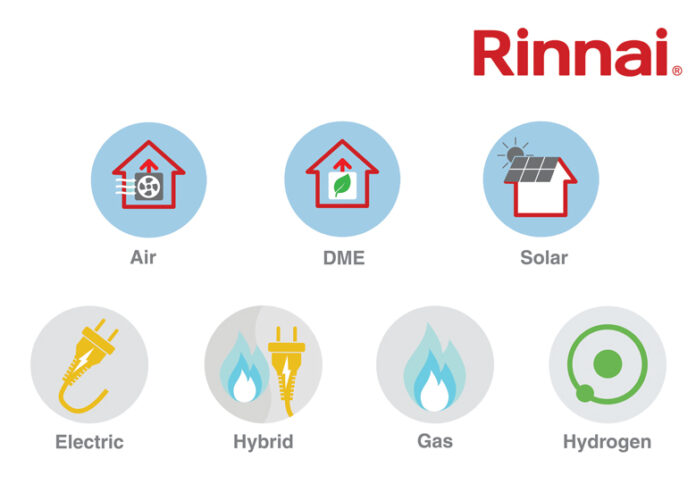
Rinnaiโ€™s range of decarbonising products – H1/H2/H3 – consists of heat pump, solar, hydrogen in any configuration, hybrid formats for either residential or commercial applications. Rinnaiโ€™s H3 range of products offer contractors, consultants and end users a range of efficient, robust and affordable decarbonising appliances which create practical, economic and technically feasible solutions. The range covers all forms of fuels and appliances currently available – electric, gas, hydrogen, BioLPG, DME solar thermal, low GWP heat pumps and electric water heaters.โ€ฏ 

 Rinnai also provide a system design service that will suggest an appropriate system for the property in question. Rinnai offer comprehensive training courses and technical support in all aspects of the water heating industry including detailed CPDโ€™s. More information can be found on Rinnaiโ€™s website and its โ€œHelp Me Chooseโ€ webpage.โ€ฏ 

Visit www.rinnai-uk.co.ukโ€ฏโ€ฏ Or email engineer@rinaiuk.comโ€ฏโ€ฏ 

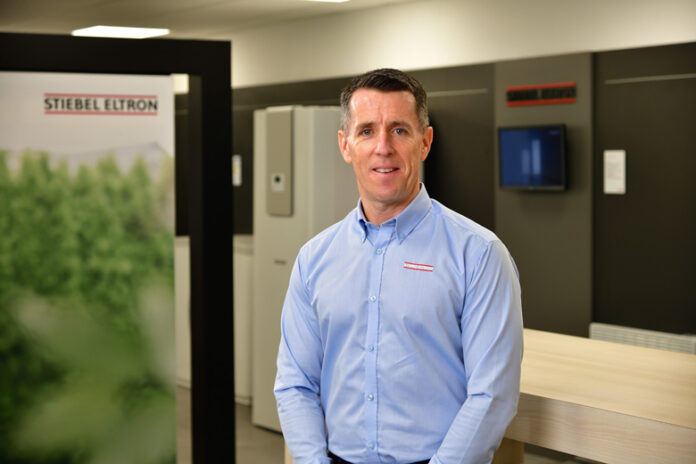
Why the renewable heating sector must challenge the myths surrounding heat pumpsย 

Mark McManus

Mark McManus, Managing Director, STIEBEL ELTRON UKย 

Last month global leaders came together at COP 28 to discuss action which would tackle the worldโ€™s most urgent and pressing environmental challenges. But as the summit reached its climax, controversy emerged as wording to phase out coal, oil, and gas was inexplicably dropped from the conferenceโ€™s deal.  

What ensued was a mass scramble of almost 200 countries on the conferenceโ€™s final day as they looked to salvage a deal which would significantly reduce humanityโ€™s impact on the planet. In the end, they just about agreed to include a move away from fossil fuels following furious condemnation on a global scale. 

Whatโ€™s clear is a widespread desire for greener initiatives which will safeguard the planet moving forward, with reducing carbon intensive fossil fuels top of the agenda. One such initiative is the decarbonisation of home and building environments, something which leading supplier of renewable heating products, STIEBEL ELTRON, is seeking to drive forward.  

Moving towards sustainable heating resources, such as the adoption of heat pumps in buildings, will significantly reduce a nationโ€™s carbon footprint. However, the transition towards heat pumps is being hampered by misinformation around the technologyโ€™s ability to perform effectively when compared to a traditional gas boiler.  

Solutions presented to consumers need to be practical, viable, and above all, an effective option which they can have confidence will perform. So, it is up to the renewable heating technology sector to demonstrate to consumers why heat pumps tick all the boxes when it comes to changing their heating system. 

A common misconception is that transitioning to heat pumps is prohibitively expensive, and while the initial installation cost can be higher than traditional heating systems, itโ€™s crucial to consider the long-term savings and benefits. Being highly energy-efficient, they generate lower operational costs over time, while many governments and energy companies offer incentives and rebates which ease the financial burden of their installation.  

Meanwhile, there are concerns that heat pump systems consume a lot of electricity, however this is not the case. A properly designed heat pump system will use around a third to a quarter less electricity than traditional forms of electric heating. This is because a heat pump should only need electricity as drive energy, with additional energy required gained from the air, earth or groundwater.  

Then there is the notion as to whether heat pumps are too good to be true and can they really be as green as highlighted. The simple answer is: yes. Heat pumps use renewable energy to generate heat, so no CO2 is created on site, and when combined with green electricity to drive them, none at all is generated. Heat pumps thus make a huge contribution to climate protection, saving around 2.5 tons of CO2 annually per system. 

With 28 million households in the UK, this would see savings of 70 million tons of CO2 each year if they were implemented in every home across the country. This leads us to another concern that heat pumps are only suitable in new buildings, but the reality is that they can be successfully used to heat even the oldest properties. Modern heat pumps can be used in renovations, even with radiators, when design is appropriate. Indeed, STIEBEL ELTRON estimates that more than 50 percent of existing heating systems could be converted to heat pumps without the need for major measures. Meanwhile, this could increase exponentially with greater will power from the government to drive forward measures to improve insulation and energy efficiency within buildings.  

Meanwhile, another misconception is a heat pumpโ€™s inability to work effectively when air temperature is below freezing. However, heat pumps on the UK market today can work down to -25 degrees Celsius, with many designed with large surface areas allowing them to work better and more efficiently at lower temperatures.  

The stark reality is that the negative myths surrounding heat pumps are largely unfounded and driven by the those with an interest in maintaining the status quo, no matter what the cost to the planet. Heat pumps will play a vital role in helping humanity rise to the present climate challenges and the renewable heating sector should demonstrate this. 

With 100 yearsโ€™ experience in driving forward renewable heating solutions, and 50 yearsโ€™ experience in manufacturing heat pumps, STIEBEL ELTRON aims to galvanise their adoption and open the door for consumers to implement these sustainable technologies in their homes. For those interested in learning more about the numerous benefits of heat pumps, they should give us a call.  

Mark McManus is Managing Director of STIEBEL ELTRON UK. Since 1924, STIEBEL ELTRON has combined the success factors of technological expertise, quality, innovation, reliability, and customer proximity. Today, it is one of the worldโ€™s market leading suppliers of technology products for building services and green tech. Headquartered in Bromborough, Wirral, the UK branch was established in 2008. 

The hot water challenge

The focus on closing the performance gap for more energy-efficient newbuild schools is causing a rethink of the hot water strategy to avoid large scale energy usage. Rob Erwood, Commercial Sales and Specification Director at Baxi, discusses the uptake of Passivhaus standards for newbuild school programmes and the options for meeting the hot water demand efficiently.

In the drive to meet tighter efficiency requirements for newbuild schools, focus has intensified on designing buildings that achieve reliably high comfortable levels all year round with consistently reduced energy use. This had led to an uptake of Passivhaus design standards to deliver local authority newbuild school programmes โ€“ particularly in Scotland where 35 Passivhaus schools are underway.

On the surface, Passivhaus school buildings will look no different to other schools. But their future proof design, optimised for net zero with reduced heat losses, results in ultra-low energy demand and an excellent indoor environment. The challenge, arguably, lies in the hot water design.

Point of use solutions

When it comes to heating, school buildings built to the Passivhaus standard are designed to require less energy for heating. But the hot water design is central to achieving buildings that are truly energy efficient, environmentally friendly and economical to run.

One option to meet the hot water demand is to use point-of-use electric water heaters or cylinders in areas like washrooms and kitchens as they only use energy when hot water is required. This makes it much easier to monitor, measure and control hot water usage as well as keeping any hot water pipework runs to an absolute minimum to avoid heat transfer losses.

Reducing the kilowatt rating and capacity, increasing control and lowering flow rates will be further considerations. Selecting products with enhanced controls such as a smart thermostat can also help with energy management as it can learn the pattern of hot water usage in the school building over a period of time.

Mind the gap

Take Riverside Primary School, one of the first Passivhaus standard primary schools in Scotland and the first to achieve certification. Rigorous and continual quality verification, which must be evidenced to achieve independent certification, means that this Passivhaus building operates as predicted, with no gap in efficiency levels at the design stage and real-world operation.

The new multi-million-pound school is part of Perth and Kinross Council’s ongoing capital programme of school upgrades and improvements through hub East Central Scotland Limited (hubco) to enhance the environment for learning and teaching across the area.

Instrumental in forming the energy strategy for Riverside Primary School was the multi-disciplinary design, engineering and project delivery company BakerHicks Motherwell, appointed by Perth and Kinross Council to provide mechanical and electrical design services for principal contractor Robertson Tayside.

Avoiding large scale energy usage

Riverside Primary School is designed to be well suited to low-carbon heating. Air Source Heat Pumps (ASHPs) provide the primary heat energy for the school building with separate systems for the heating services, including radiators and underfloor heating and the kitchen domestic services, where the ASHPs provide preheat to a Megaflo Eco hot water cylinder.

โ€œThe hot water strategy was one of the main challenges when designing the system as we needed to avoid large scale energy usage,โ€ explained David Coulter, Associate Engineer and Certified Passivhaus Designer at BakerHicks. โ€œWe wanted to explore using all-electric point-of-use solutions that would only generate energy when required, for example during break or lunch times. So, we asked Baxi for help with the solution.โ€

Baxiโ€™s Public Health technical sales and specification team, headed up by Stephen Lynch, worked with David to identify the selection of equipment required to meet the hot water demand efficiently at Riverside Primary.

โ€œA key benefit of the Heatrae Sadia water heaters is that the units are sized, thereby providing more flexibility to meet accurately the required volume,โ€ David added.

In total, seven Heatrae Sadia Multipoint 15 units, six Multipoint Eco 30, three Hotflo 10, two Hotflo 15, 24 Aquaheat 7 as well as the Megaflo Eco cylinder have been installed within the new school building.

Educational process

Using the Passivhaus standard brings major advantages to schools, making them more efficient and cost-effective to operate and maintain, and helping them meet sustainability goals and lead by example.

However, the concept calls for outside-the-box thinking to achieve the most energy-efficient hot water design strategy. This makes it an educational process for designers and school estates managers alike, as it encourages a rethink of hot water consumption to avoid large scale energy usage and prioritise energy savings.

With Passivhaus certification successfully achieved at Riverside Primary School, which is now nearing the end of its first term, Perth & Kinross Council has achieved its commitment to enhance education provision for children north of Perth and taken a step closer to its net zero carbon ambitions โ€“ with the hot water strategy and point-of-use electric water heaters playing a critical part in its success.

Heatrae Sadia is part of Baxi. For more information on the Heatrae Sadia point of use water heater range, visit: https://www.heatraesadia.com/products/