Riello Unveils Cutting-Edge Certified 20% Hydrogen-Ready Burner Series

Riello, a leading brand in heating and combustion equipment, is launching a high performance RS and RX burner series, specifically engineered for the use of natural gas and hydrogen blends up to 20%. Riello is part of Carrier Global Corporation (NYSE: CARR), global leader in intelligent climate and energy solutions.

This latest innovation underscores Riello’s commitment to providing advanced solutions for energy use. The RS and RX burners have undergone rigorous testing and have been officially certified for seamless operation with natural gas and hydrogen blends up to 20%, adhering to the stringent standards outlined in DVGW CERT ZP 3502 edition 01.12.2022.

This significant qualification is incorporated into the EU-Type examination certificate, affirming the burners’ reliability and compliance with the latest industry regulations.

The RX and RS burners boast exceptional performance, incorporating state-of-the-art technology to ensure precise power control and superior combustion quality across various operational stages.

Derived from Riello’s standard product line, these burners maintain the same level of reliability and robustness, with the key distinction of being specifically tested and certified for the fluctuating blends of natural gas and hydrogen, up to 20% hydrogen content.

This unique capability necessitates an initial adjustment of the burner for safe and reliable combustion within a range of possible blend percentages, making them ready for any potential future hydrogen injections into the UK natural gas grid, should this go ahead, without requiring further adjustments.

For more information, visit: https://www.rielloburners.co.uk/

Cenergist starts work on £1.7m decarbonisation solution at British Geological Survey HQ in Nottinghamshire

Green retrofit - Cenergist is installing a ground source heat pump in a £1.7m decarbonisation project at the British Geological Survey headquarters in Keyworth, Nottinghamshire.

Energy and water efficiency company Cenergist has started work on its £1.7m decarbonisation solution for the British Geological Survey (BGS) headquarters in Keyworth, Nottinghamshire. 

The groundbreaking ceremony was attended by the MP for Rushcliffe, Ruth Edwards, who was also briefed on the project which is a critical part of the BGS’s plan to achieve Net Zero by 2040.

Cenergist was appointed to provide the new decarbonisation solution by the BGS’s parent body, UK Research and Innovation (UKRI). 

Pick Everard created an initial design which Cenergist is turning into a practical detailed solution to convert the current gas-fired heating and hot water system to a ground source heat pump system. The work is expected to be completed by May 2024.

BGS Senior Engineering and Geothermal Geologist, David Boon, said: “Geothermal energy is heat that naturally occurs under the ground and is available 24/7 across the UK.

“This project will demonstrate the deployment of ground-source heat pump technology to decarbonise existing buildings across the public sector estate.”

Daniel Crow, Head of BGS Estates and Facilities, added: “This exciting project gives us the opportunity to blend our observation of the subsurface with leading low-carbon heating.”

Cenergist supports organisations in both the private and public sector, including local authorities and housing associations to decarbonise their heating systems. As well as the UK, Cenergist also operates in Holland, Spain and India. 

Steve Wilkinson, Head of Commercial Projects, at Cenergist, said: “We are very pleased to start works at the BGS headquarters to support its progressive decarbonisation journey.

“BGS’s goals of being Net Zero by 2040 are ambitious, and installing a ground source heat pump system is a significant step forward in achieving this.

“Cenergist has an excellent track record working with public sector bodies to deliver decarbonisation retrofits on time and in budget. We now look forward to completing this exciting project that will future-proof BGS’s headquarters.”

For more information on Cenergist visit www.cenergist.com

What method should you use for carbon accounting?

Just as organisations use financial accounting to establish the facts about their business activities, they’re increasingly using carbon accounting to quantify their environmental impact. There may soon be legal requirements for organisations to report their carbon emissions in standardised ways. Here, we examine carbon accounting reports and discuss the advantages and disadvantages of some of the most widely used methodologies at present.

What is carbon accounting?

Carbon accounting is the process of quantifying the amount of greenhouse gases (GHGs) produced by an organisation’s activities. It’s also sometimes known as greenhouse gas accounting.

Calculating an organisation’s emissions (or carbon footprint)involves reporting on the Scope 1, 2 and 3 emissions. These are defined by the GHG Protocol (GHGP).

What principles apply to carbon accounting?

Just as your organisation’s financial accounts provide a ‘faithful, true and fair’ account of your business performance, your carbon accounts should do the same for your carbon or GHG emissions.

To ensure this, the Greenhouse Gas Protocol requires that carbon or GHG accounting follows these five key principles:

  • Relevance: Your carbon accounts must contain the information other stakeholders – inside and outside the organisation – need to make decisions.
  • Completeness: You should always strive to give the most complete and accurate account of your organisation’s emissions possible. You should explain any exclusions.
  • Consistency: Your accounting should enable comparison of the amount of carbon emissions produced over time. 
  • Transparency: Disclose emissions in a neutral and factual way. You should explain what methodology you are using. Many organisations call on third parties to verify their carbon accounting.
  • Accuracy: The data your organisation shares should always be accurate and credible.

What are the three main methods of carbon accounting?

Most organisations use one of three methodologies to produce their carbon accounts:

  1. Spend-based methodology – This takes the value of the individual goods or services that your organisation has purchased during the accounting period. It then multiplies it by an agreed ‘emission factor’ to quantify your carbon emissions.
    Industry-wide averages of the levels of emissions associated with a particular activity derive these “emission factors”. One advantage of the spend-based method is that it provides organisations with a clear estimation of emissions associated with each financial unit. However, that estimation is based on averages. It may suffer from inaccuracies when used to calculate your organisation’s precise emissions.
  2. Activity-based methodology – Activity-based carbon accounting quantifies your organisation’s emissions based on the activities it carries out. It depends on collecting emissions data from the entire length of your value chain.
    Because it’s based on granular data rather than averages, it makes it possible to provide a more accurate representation of your organisation’s carbon emissions. However, it may be difficult to find all the data you need to cover Scope 3 emissions using this approach.
  3. Hybrid methodology – The Hybrid approach allows your organisation to enjoy the advantages of both the spend-based and activity-based methodologies. You need to gather all the granular data that can be harvested from the length of your value chain. Then, use spend-based methodology to ‘fill in’ any gaps that may be left. For instance, for some of your Scope 3 emissions. It allows your organisation to accurately account for its carbon emissions.

How to choose the right carbon accounting method for your organisation

Every organisation faces different challenges. Choosing the right methodology to account for your carbon emissions depends on your organisation’s particular needs and goals. It also depends on what field your organisation works in, and the length of your value chain.

Consider all three methodologies in the context of your organisation and the reality in which you work. You also need to consider any compliance and reporting standards that affect your organisation.

Importantly, you’ll also need to adopt a method that suits both the data and the resources you have available. If you lack granular data for some of your emissions, then it’s far better to choose the spend-based or hybrid approach to carbon accounting than no approach at all.

Finally, whichever methodology you choose to adopt, you’ll need to communicate the reasons for your choice with all your stakeholders. That way, you’ll have a better chance of achieving the buy-in you need.

Need more help with carbon accounting?

At Drax, we’ve got the expertise to help you with your organisation’s carbon accounting. And in collaboration with our partner, CBN Expert, we’re able to offer comprehensive carbon accounting for your organisation, plus free net zero training worth £2,500.

https://energy.drax.com/net-zero

The Importance of Audits: How to effectively conduct a procurement audit   

Jack Macfarlane

By Jack Macfarlane, Founder and CEO of DeepStream  

Procurement fraud can be crippling for any organisation. In the past year, there has been a 13 percent rise in cases, collectively costing £136.6 billion in damages and lost business.  

Audits are an inspection of a company’s financial situation that ensure procurement processes are secure, cost-efficient, and free of fraudulent activity – all of which are key in safeguarding current and future trading partnerships.  

But why are procurement audits important? How can they lower risks and benefit organisations? And what is the best way to complete an effective audit process? 

The procurement audit explained 

Procurement audits review the entire procurement process from start to finish. This includes looking at supplier contracts, vendor history and current practices undertaken by managers and employees to spot red flags and anomalies in the supply chain and ensure current procurement processes add value to the business. 

Procurement audits ensure contracts are being adhered to, mitigating complicated and unnecessary legal challenges.  

The main objectives and benefits 

Procurement audits help businesses identify ways to achieve the most cost-effective trading relationships, quickly identifying contract or regulatory non-compliance and fraud before they happen. 

Businesses reap several benefits from an effective procurement audit, such as: 

#1 Better spending 

A key premise of procurement is to secure the most cost-effective partnerships where possible by staying up to date with market-related prices and frequently reviewing how money could be better spent.  

When new suppliers enter the market offering more attractive pricing or unpredictable geo-political conditions cause a spike in prices, procurement audits enable organisations to identify opportunities for greater cost-savings, which helps build financial health and stability. 

#2 Improved traceability and fraud prevention 

With the prevalence of procurement fraud, traceability is key.  

Procurement audits allow organisations a plainer view of the entire supply chain, enhancing transparency and eliminating opportunities for fraud.  

A key pillar of fraudulent behaviour is having the opportunity. If a company frequently invests in procurement audits, the risk of being caught becomes higher and instances of fraud are less likely to happen. 

#3 More efficient workflows 

Legacy processes become outdated and new technologies allow businesses to streamline workflows, benefitting financial health. Without frequently auditing current practices, inefficiencies are identified too late or missed, resulting in missed cost savings. 

Procurement audits allow businesses to identify where improved efficiency is needed, including targeted staff training, diversifying and increasing vendors, and removing outdated practices. 

#4 Reduced legal risk 

Procurement is a complex business operation where legal challenges quickly arise if vendor contracts are breached or stringent government regulations and procurement standards are not met.  

Audits create a digital paper trail, helping businesses remain compliant by regularly combing through contracts and regulations, avoiding the cost of legal challenges.  

Conducting an effective procurement audit 

An audit should be conducted by an appointed procurement team overseen by a dedicated incident manager. The incident manager is responsible for ensuring the process is conducted correctly and transparently, ready to deal with any anomalies or problems identified.  

A procurement audit should involve management from the get-go, ensuring any directives are implemented immediately without delays. Regular meetings must be held with every detail recorded and industry guidelines followed. 

Identifying problem areas within the three main categories of procurement is the first step in an audit. These categories are contracts, processes and historical data, which are fundamental to procurement operations.  

To mitigate legal risk and fraudulent activity, audit teams should dissect purchase order forms and store all supplier communications and contracts in a centralised digital platform, such as RFx software. Any suspicious activity should be quickly identified through the audit trail and promptly flagged.  

Audit teams then review vendor selection processes to remove any chance of fraudulent activity happening, looking for an unusually small pool of vendors, inflated vendor prices, repeat selection of vendors and unlikely candidates winning contracts for example. 

Lastly, all key insights should be compiled into a comprehensive report examining potential leads, oversights and red flags, detailing how these are going to be addressed, providing timelines and further suggestions to prevent similar problems in the future.  

Procurement processes are complex and deal with vast quantities of data. It is paramount that there are at least four audits a year. However, a monthly procurement audit is the recommended industry best practice.  

Together with routine audits, additional audits should be standard procedure in the event of any major business change, such as onboarding a new vendor or winning a new contract. 

Ammogen launches world-leading ammonia to hydrogen project

L-R: Alex Goody, CEO of Gemserv, Emma Inch of Yara, Tommy Allsop of Tyesley Energy Park, David Horsfall of Tyesley Energy Park, Freddie Minter of Equans, Artur Majewski of University of Birmingham, Joanna Huddleston DESNZ, Casper Hadsbjerg of H2SITE, Azhar Juna of Gemserv, Ian Parker of Equans, Benoit Ouziel of Gemserv and Professor Martin Freer of University of Birmingham.

On Tuesday 12 March, consortium partners gathered at Tyseley Energy Park (TEP) to mark the launch of the world’s largest and most efficient ammonia to hydrogen conversion project, drastically improving the efficiency, reliability, and economics of ammonia cracking. The project will deliver 200kg per day of transport-grade hydrogen.

The innovative project will use ammonia as a vector for transporting hydrogen globally, developing a novel ammonia cracker and purification technology to convert ammonia to hydrogen.

The project also aims to position ammonia cracking within the UK political thinking through demonstration and crystallise follow-on opportunities to unlock trade corridors between the UK and the emerging global hydrogen market.

In collaboration with the Department for Energy Security and Net Zero, Gemserv, H2SITE, Equans, YARA, and the University of Birmingham, the Ammogen Consortium team are dedicated to driving forward hydrogen fuel supply chains in the UK and worldwide.

This transformative technology is an important piece in the hydrogen supply chain and provides an important link for meeting the growing global hydrogen demand using ammonia as a medium for shipping hydrogen.       

Speaking about the launch, Alex Goody, Chief Executive of consortium lead Gemserv said: “We are delighted to be part of the Ammogen consortium, working with DESNZ. This project is about finding solutions for the transportation of Hydrogen across vast distances, essential in underpinning the Hydrogen economy. Ammogen shows that ammonia can be part of the solution.”

Speaking about the core technology, Jose Medrano, technical director of H2SITE said:We are proud of having designed and constructed the largest ammonia cracker utilizing membrane reactor technology to produce fuel cell grade hydrogen. Ammogen project is a steppingstone for H2SITE, as it validates the fundamental technology we’ll use to scale to tons per day ammonia cracking in the next 2 years.”

The Ammogen project was selected through a competitive UK government funding scheme to develop a £6.7M project, which Gemserv developed and are leading, utilising the expertise of key technology providers, Ammonia supply chain and EPC (Engineering-Procurement-Construction) organisations. The project aligns with the country’s net-zero target policy.

Getting to net zero

Ian Rodger

Ian Rodger, Director of Programmes, Salix Finance

We’re in a race when talking about our climate challenge.

The climate stability of the last 12,000 years has come to an end. Around the world we are seeing this impact today. It is a fact that northern latitudes are now warming faster than the equatorial and some southern regions.

Everyone must commit to net zero. We have no choice.

Collaboration between governments across the world, organisations, businesses and all of us will drive us towards net zero targets.

Collaboration is key.

At Salix our work is fundamental. Every part of our work will have an impact on the big picture. Our mission is to play a leading role in helping the public sector and housing transition to a low carbon future. Our work ensures Government funding is tackling decarbonisation and climate change, enabling action at a local level.

Our climate future is being made today. That is why everyone we speak to, whether it is across governments, or the public sector cannot go fast enough with this work.

We sense this urgency every day.

At Salix we began delivering the Public Sector Decarbonisation Scheme on behalf of the Government in 2020 and since then we’ve delivered more than £3bn worth of funding for this scheme on behalf of government.

More than 20,000 decarbonisation projects are now either operating or in development across the country thanks to this work.

In January 2023 we expanded beyond the public sector to take on housing. We were appointed Government delivery agent for Wave 2 of the Social Housing Decarbonisation Fund and Home Upgrade Grant.

Whether it is through the Social Housing Decarbonisation Fund, the Home Upgrade Grant, the Public Sector Decarbonisation Scheme, Low Carbon Skills Fund and Scotland’s Public Sector Heat Decarbonisation Scheme – our goals are the same.

Every day our teams are looking at complex decarbonisation technologies and how they will work within a particular environment. Together with organisations we discuss energy savings, cost savings, and explore multiple energy efficient measures which are unique to every site.

We’re on a mission to make homes and buildings more comfortable and healthier places to be in. We’re also very keen to visit projects to explore how people have been impacted by the decarbonisation works.

Recently our team visited Salisbury NHS Trust where patients are already seeing the impact of the major new energy efficiency works there.

Carers say the better environment is helping recovery rates. In addition to work completed, the Trust has plans to install 13 low carbon heat pumps to their District Hospital and has received funding from the Public Sector Decarbonisation Scheme.

The Trust already has an impressive set of solar PV panels. In just one building the solar panels have proved 20% more efficient than previous technologies, according to the Trust.

The hospital’s Green Plan maps out its carbon reduction objectives which supports the NHS goals to deliver a carbon net zero healthcare system by 2040.

Interim Deputy Head of Estates at the Trust Thomas Sneddon told us: “The Public Sector Decarbonisation Scheme Phase 3b funding has been a game-changer for our Trust. It represents a substantial investment in our estate’s infrastructure – the largest in recent memory – and a major leap forward in our decarbonisation journey.”

Part of this success is because the Trust has embedded sustainability into its culture and processes. As well as introducing local carbon energy sources it has engaged with the wider community to create more energy efficient ways of working.

It’s fascinating to see how technology, ambition and collaboration are driving these projects at Salisbury.

Our housing work is growing by the day. When our Chief Executive Emma Clancy visited Greater Manchester Combined Authority (GMCA) to look at a Social Housing Decarbonisation Fund (SHDF) project being delivered by Six Town Housing in Bury she was impressed to hear how GMCA had retrofitted 870 homes under Wave 1 of the scheme. This brought them up to EPC band C or above. A further 5,481 homes are expected to be retrofitted under Social Housing Decarbonisation Fund Wave 2.1. This will make living conditions so much better for more Greater Manchester residents.

We’ve also been working with North York Moors National Park Authority.

National parks face huge net zero challenges.

The National Park Authority already collaborates with communities to support the sustainable management of moorland.

And to ensure it retains an abundance of species and habitats, the Authority has placed climate change and nature recovery at the forefront of its vision for growth.

It was awarded funding under Phase 3a of the Public Sector Decarbonisation Scheme to help decarbonise two of its centres; Sutton Bank and Danby Lodge National Park Centres.

Project leaders were determined to replace a carbon emitting kerosene boiler with an air source heat pump.

The Sutton Bank project is now saving an estimated 42 tonnes of carbon annually and as well as being more energy efficient it will create a more comfortable environment for those using the venue.

It’s another case where ambition and collaboration are coming together to create a vision for the future.

When our Salix team recently visited Bristol City Council, we learned how significant changes to the way people work and commute had been influenced by ambitious green technology.

The council has installed various technologies across multiple sites including air source heat pumps and LED lighting. This is all part of the council drive to achieve their 2030 net zero target.

It was inspirational to visit the Bottle Yard Studios which has emerged as an example of environmental responsibility. Work here has included the installation of electrically powered radiant heating solutions and floor to ceiling insulation.

The installation of LED radiant heaters has meant that visiting production units no longer have to bring their own heating. The wall insulation has helped reduce heating loss by about 85%, according to the studios.

These are positive results and have set a good example to others.

We also visited the council’s Welsman Offices which has also benefited from the Public Sector Decarbonisation Scheme and expert support from Salix.

Public Sector Decarbonisation Scheme funding has helped pay for air source heat pumps, replacing the ageing gas boilers and removing the need for gas on site.

We were interested to hear from the council that the project has not only provided jobs but has upskilled contractors and addressed the long-standing heating issues. This is a huge result.

Furthermore, a new water source heat pump which replaced an outdated 15-year-old system has changed staff working habits. It has encouraged people to work from the office more often.

In fact, even commuter habits have changed with people cycling to work, knowing they can have a hot shower when they get there.

It’s as simple as that.

At Salix we have learned that through collaboration – and that means all of us as well as business and governments – we can make these changes happen.

To read more about the projects we work with, visit our website here

Presenting energy management data to the C-suite

Image supplied by Systems Link

Effective energy management is one of the building blocks of decarbonisation. Therefore, presenting accurate, comprehensive and current energy management data to the C-suite or board of directors has never been more important.

Organisations are under pressure to set and reach their net-zero goals and must showcase how they will meet their targets with a detailed plan. Backing up and championing a net-zero strategy requires meaningful data.

Why is presenting energy management data to C-suite directors important?

Amidst the UK net-zero deadline, the Paris Climate Agreement, internal pressure from employees and external pressure from rising customer and supply chain expectations, c-suite directors are required to reduce their organisation’s carbon footprint.

Many organisations must also comply with mandatory schemes, such as Streamlined Energy and Carbon Reporting (SECR) and the Energy Savings Opportunity Scheme (ESOS).

Many of these reports and disclosures are based on energy and carbon emissions data and contain recommendations for consumption reduction initiatives and energy efficiency improvements.

Energy efficiency and decarbonisation are company-wide efforts, and no plan can be successful without board-level support.

What makes an effective energy management strategy?

Energy is one of the main expenditures for businesses to consider, shoulder to shoulder with personnel, premises, and equipment.

Typically, larger organisations have a procurement team that focuses on purchasing energy at the best possible price and developing a risk strategy, while energy managers usually focus on reducing consumption and improve efficiency.

However, many organisations don’t have the in-house resources to manage these, so quite often procuring and managing energy falls to facilities, operations or even finance teams.

A powerful energy management strategy not only covers buying but also reducing energy consumption over time. This should include reviewing what the organisation does well, cutting out wasteful practices, pinpointing areas for improvement, in-depth data analysis and identifying savings opportunities while tracking progress throughout.

But you can’t manage what you don’t measure. Many organisations can’t effortlessly state their current energy use to then make reductions. This is why access to accurate, up-to date and presentable energy management data is vital.

What do C-suite directors need to know?

Directors need to understand and advocate their company’s position and plan to decarbonise their operations and mitigate climate change.

To support this, internal teams must ensure the organisation utilises the most efficient ways to control, monitor and report their energy use.

Methodical energy monitoring and analysis can reveal operating issues that affect performance and quality, as well as uncover efficiency opportunities.

Regardless of whether the performance of individual assets in your organisation’s portfolio is of interest, the C-suite will want collated, comparable data sets converted into clear and engaging representations of a site’s energy profile.

These visuals should support demonstrating the impact of energy efficiency efforts, making investment decisions about consumption reduction projects and new technologies, as well as encouraging and maintaining internal behavioural change.

Once an organisation understands its energy use, cost and carbon targets and the corresponding energy management strategy have a starting point. Setting and communicating targets not only indicates an organisation’s commitment to its supply chain and customers but drives accountability and aligning teams internally.

Top tips for energy managers on how to present energy data

  • Use charts to visually display data – Excel documents can be difficult to interpret and read.
  • Dashboards on your energy software can be shared showing comparative data (league tables against multiple sites within a portfolio that can be reviewed monthly / yearly).
  • Include drill-down functionality in your reporting to allow colleagues to interrogate the data further if they wish.
  • Present the data alongside the organisation’s targets.
  • Show granularity – electricity and gas should be recorded through half-hourly meter data.
  • Demonstrate the investment and ROI of major capital items, for example LED lighting and heating and cooling systems.

This article was provided by SystemsLink, the UK’s leading provider of energy management solutions.

Rinnai hybrid heat pump system improves efficiency at large hotel & golf course resort

Rinnai UK’s team of Heating & Hot Water System Designers have provided a well-recognized hotel, spa and golf resort in the north of England with plans to install one of two new systems that are proven to reduce cost, carbon emissions and improve energy efficiency.

As well as adding 31 executive rooms the 200-bedroom hotel, spa and golf resort will exchange their two traditional storage tank hot water systems for a Rinnai 20% Hydrogen blend ready continuous flow gas fired water heaters and Hybrid air source heat pump system. The hybrid hot water system contains a 10% heat pump prefeed making the best practical use of the existing space and fuel infrastructure. By completing all refurbishments, the hotel, spa and golf resort hope to increase their rating from 4 to 5 stars.

Rinnai design support is on hand to model and design Hybrid heating and hot water systems, for support with your next project call 0300 373 0660 or visit https://www.rinnai-uk.co.uk/contact-us/help-me-choose-product today.

UK commercial and domestic properties are adopting carbon reducing energies in replacement of fossil fuels as part of an international shift that embraces renewably generated energy. By installing a Rinnai hybrid heating system, carbon savings of 267,000 kg over five years can be made when compared to a H1 gas system.

Energy efficiency is a key aspect of system operational performance that affects cost and system durability. The Rinnai UK design team have measured the savings in energy usage that a Rinnai hybrid heating system will achieve when compared to a gas system. Energy savings of 38.5% will be made upon installation of a Rinnai hybrid hot water system utilising state of the art continuous flow water heaters and LOW-GWP heat pumps. The graph below demonstrates proven energy savings upon investment. 


Rinnai’s hybrid heat pump range is designed to satisfy domestic and commercial hot water and heating requirements. The company’s innovative heat pump systems include an ability to switch between settings of heating, hot water and cooling. Recently an R290 heat pump model was added to the expanding range. This innovative new range of air source heat pumps utilizes R290, a LOW scoring GWP (Global Warming Potential) refrigerant. 

R290 allows for several operational benefits: for example, the energy efficient units enable a water temperature up to 75 degrees Celsius and R290 usage provides compliance alongside the European F-Gas Regulation which focuses on phasing down refrigerant environmental impact, as well as having a LOW-GWP of 3.

Rinnai’s range of commercial air source heat pumps omit minimum acoustics via an installed ultra-low sound capability making Rinnai heat pumps suitable for any area with prohibitive sound legislation. Rinnai’s heat pumps, hybrid solar thermal and heat pumps and electrical instant and direct water heaters are part of the H3 range of products. All new models are designed to embolden decarbonisation, energy efficiency and reduce customer costs.

Continuous flow hot water heating from Rinnai includes two N1600 models: the N1600i (internally mounted) provides 954 litres per hour of temperature controlled hot water at 50 degrees.; the N1600e (externally mounted) is also capable delivering 954 litres per hour at 50 degrees. The two 1600s have load profiles of XXL and are water efficiency class A rated. The condensing gas fired water heaters have a 13:1 turndown ratio making them ideal for Hybrid water heating as they will modulate the gas input to suit the temperature lift required which in turn maximises renewable system gains.

Other features include: flue up to 30+ metres for concentric, turbo fan, built-in controller as standard on both internal and external models, cascade cable assembly allows up to 24 water heaters to be connected and function as one total and complete system, built in flue damper, air inlet filter, frost protection – minus 15°C on the internal versions and minus 20 °C on the external versions, new PCB design, controller as standard – lockable, set up of appliance, temperature set up to 75°C and maintenance monitor for engineers.

Rinnai UK’s design team can measure the specific requirements of any residential or commercial property and suggest an appropriate heating and hot water system that compliments the specific dimensions of each site. Rinnai is continuing to produce innovative technology that provides low carbon solutions to all UK customers across a range of applications. Call 0300 373 0660 or visit https://www.rinnai-uk.co.uk/contact-us/help-me-choose-product

We must retrofit our buildings to meet Net Zero

Image shows Martin Fahey
Martin Fahey

Martin Fahey, Head of Sustainability at Mitsubishi Electric

The UK is now decarbonising all sectors of the economy as the country looks towards reaching Net Zero by 2050. The built environment currently makes a significant contribution to our overall carbon emissions, meaning it is a crucial area to tackle when striving to reach this goal.

The UK’s non-residential building stock contributes to almost a quarter of operational carbon emissions in the built environment, and it can therefore play an important role in reducing the environmental impact of our buildings in the coming years.

While in recent years there has been significant focus on ensuring these commercial spaces are constructed sustainably, around 80% of the buildings we will occupy in 2050 have already been built. This means we need to find ways of reducing the carbon footprint of the existing building stock now, if we are to reach these targets in future.

Low carbon retrofitting, where the systems providing heating, hot water and cooling are either upgraded or replaced to improve energy efficiency, offers a more straightforward, cost-effective way of adapting these spaces in comparison to demolish and rebuild. This will help ensure our commercial buildings are operating sustainably, and in line with targets for Net Zero.

Our buildings must be adapted now

The government is already introducing legislation designed to reduce the carbon impact of the built environment.

For example, the Minimum Energy Efficiency Standards (MEES) now requires all new and existing commercial buildings to have an energy performance rating of Grade E or above. These regulations are only set to tighten, with the government expected to commit to all buildings to be rated a minimum of Grade B by 2030.

The UK Net Zero Carbon Buildings Standard, developed by a group of leading industry organisations including RIBA and CIBSE, will also include performance targets for energy use, embodied and lifecycle embodied carbon in commercial buildings.

Investors are also beginning to take into account the green credentials of these spaces, while organisations continue to express an increased preference for leasing and purchasing more environmentally friendly buildings. This means buildings risk becoming ‘stranded assets’ and potentially becoming unlettable if they aren’t adapted to meet these regulatory requirements in the future.

Low carbon retrofitting is the answer

While retrofitting our buildings to lower emissions can ensure they are operating in line with changing regulations, it can be difficult for building professionals to know where to start.

To meet this need, the UK Green Building Council has developed their ‘Delivering Net Zero: Key Considerations for Commercial Retrofit report. This outlines several key areas of consideration when embarking on a commercial retrofit project, starting with understanding the building and its specific requirements. This includes the greenhouse gas emissions associated with its operation and the performance of the systems installed.

Conducting a building assessment can then help identify any systems contributing to high carbon output, as well the scale of the project required. A light retrofit will only require adapting a specific aspect or building component, and so can be carried out while other areas are still in use. A deep retrofit involves making significant improvements or changes to building services, and may require a large-scale intervention such as change of occupancy. It’s therefore vital to plan for any potential limitations to retrofitting well in advance to minimise the amount of disruption caused.

Whole life carbon (WLC), the carbon emissions associated across a building’s entire lifecycle, is another important area to consider. This can help ensure the systems installed balance both operational (the carbon impact of the building being used) and embodied (the carbon used in construction and demolition) carbon, allowing the building to operate as efficiently as possible.

Selecting the right technology is crucial

Upon completing a building assessment, the next step is to opt for a solution that meets your building’s specific requirements.

A Hybrid Variable Refrigerant Flow (HVRF) system is able to provide quiet, energy efficient heating and cooling for a range of applications. The use of water as opposed to a refrigerant removes the need for leak detection in occupied spaces, reducing ongoing maintenance costs while also future-proofing buildings against upcoming changes to the F-Gas regulations. Its decentralised structure can also support a phased installation approach while the number of units can be expanded to meet demand, making it ideal for owners and managers wanting to minimise disruption to occupants.

Installing a heat pump can also improve the energy efficiency of your building. High temperature heat pumps such as the 40kW Ecodan QAHV can deliver hot water of up to 90°C, while lowering carbon footprint and providing significant cost savings. Owners and managers adopting a phased-out approach can also consider opting for a bivalent heat pump system, where the heat pump and gas boiler work in parallel but the former provides a higher proportion of heating to lower a building’s overall carbon emissions.

With buildings owners and managers increasingly having to adapt their spaces in line with changing environmental regulations, it is imperative the commercial sector is not left behind. By retrofitting these spaces with low carbon, energy efficient technologies, we can ensure these buildings are prepared to hit the government’s ambitious, but very necessary, Net Zero goal.

Wave calls for water industry to pay attention to ageing meters

Image supplied by Wave

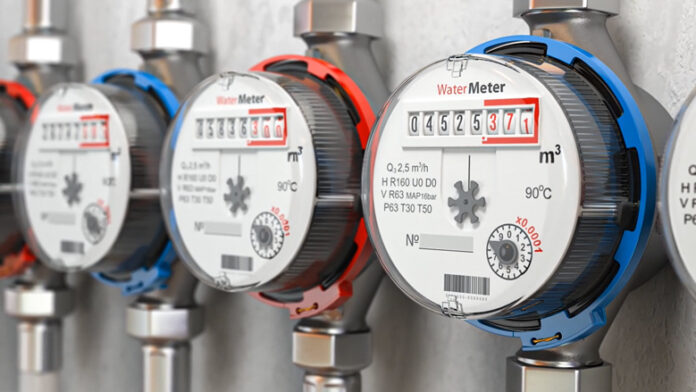
Following the completion of an industry-first project, delving into the lifespan of Non-Household (NHH) water meters, national water retailer Wave is calling for the industry to pay closer attention to the issues surrounding ageing meters.

Wave works with UK businesses to manage their water and wastewater usage and is concerned by the potential volume of non-consuming water meters currently in operation.

The project established that the root cause of many non-consuming meters is that the meter has surpassed its operational age, making it increasingly likely to fail.

The findings were made during ‘Project No Flow’, a collaborative exercise between Wave and specialist data collection provider, Occutrace, investigating business water meters suspected of being non-consuming.

The data sample was made up of Supply Point IDs (SPIDs) with three or more meter reads showing no consumption, taken from a random sample of 2,000 SPIDs. This targeted meters which were in use but not recording any consumption, indicating potential issues with their functionality. 

The investigation discovered that of the 771 meters identified as zero-consuming, 64% of these were found to be degraded to the extent of non-functionality. This finding has substantial implications for customers, Retailers and Wholesalers, with customers facing the potential repercussions of inaccurate billing, Retailers having to correct and revise the bills and Wholesalers seeing the impact inaccurate metering can have on the settlement process.

A key finding from the report was that many Wholesalers do not have proactive replacement programmes in place for NHH meters, something that Wave is eager to see change. By having meter replacement programmes in place and processes that help to identify zero consuming meters, any issues could be identified and resolved sooner, supporting Retailers in delivering reliable meter reads to customers.

This would be beneficial to all parties, and with accurate reads also comes the opportunity to identify any potential inefficiencies or cost savings for customers.

Wave is passionate about working with customers to enhance their sustainability, become more efficient and save on their bills.

Claire Stanness, Metering Operations Manager at Wave and Project No Flow Lead, said: “Project No Flow has sought to establish hard facts and real-world evidence about meters that are not recording consumption to help the market understand the volume of potential zero consuming meters out there. This first of its kind project has highlighted the issues that come with meters that are not recording consumption, issues that affect everyone.

“To solve this issue a highly collaborative approach is needed, from MOSL, Ofwat, Retailers, Wholesalers, and their service providers, all working together towards a common goal of accurate and timely meter reads, with the customer being at the forefront.”

Natalie Martin, Client Services Manager at Occutrace commented, “The research has uncovered key insights into the initial lifespan of meters and how ageing meters begin to fail.

“Providing an important outcome that highlights malfunctioning meters not only impact customer satisfaction but also disrupt accurate billing wholesale settlement processes.

“The project has significantly enhanced the markets understanding of the lifespan of meters and how important accurate readings are in terms of understanding water usage patterns and forecasting demands.”

You can read the full project report here: https://www.wave-utilities.co.uk/advice-guidance/news/wave-join-mosls-user-forum-highlight-issues-non-consuming-water-meters