

Equivalent of 5000 homes served by Vattenfallโ€™s Bristol Heat Network

As part of Bristol City Leap, Vattenfall Heat UK is now serving the equivalent of 5000 homes with heating and hot water via the Bristol Heat Network.

Vattenfall Heat UK acquired the Bristol Heat Network one year ago as part of Bristol City Leap, a 20-year joint venture between Bristol City Council and Ameresco with Vattenfall Heat UK as a subcontractor. Over the next five years Bristol City Leap plans to deliver a total of ยฃ750m in the decarbonisation of Bristol and create 1000 jobs in the process.

Bristol City Councilโ€™s partnership with Ameresco showcases how governments and businesses can join forces with communities to revolutionise a cityโ€™s energy system, from generation and distribution to storage consumption.

Over the next five years, Vattenfall expects to invest ยฃ475 million to grow the Bristol Heat Network, enabling it to provide enough heat to supply the equivalent of 12,000 homes.

There are now 28 commercial and residential buildings connected to the Bristol Heat Network, including Temple Fire Station, Central Health Clinic, Box Makers Yard apartment building, multiple social housing blocks and Hannah Moore Primary School. The network serves enough heat to supply the equivalent of more than 5000 homes. Further connection agreements are signed, and once connected will provide enough heat to supply the equivalent of more than 1000 homes.

Bristol developer, Cubex, delivered the two most recent connections – Millwrights Place and Coopers Court. Following the success of Halo, one of the UK’s most sustainable commercial property outside of Greater London, Cubex have continued to decarbonise their developments and deliver low carbon properties. The connections mark the completion of Finzels Reach, one of the largest brownfield redevelopment sites in the South West.

The prime 4.7-acre site is now home to over 1 million sq ft of new space, comprising 375,000 sq ft of Grade A office space, 737 new homes including 100 affordable homes and 429 Build to Rent apartments, a 168-bed hotel and 30,000 sq ft of leisure space. The properties have achieved 35% energy consumption improvement and 47% less carbon emissions of which 43% is attributed to the heat network connection for heating and cooling.

Heat networks can be switched to different heat sources after installation with minimal disruption to end users, meaning the network can make the most of locally available resources and capture them to supply heating and hot water to homes and businesses. This builds energy self-sufficiency and future proofs the cityโ€™s heating and hot water supply. In the current volatile energy market, the heat network contributes to energy security and resilience, with heating at a fair price to the consumer.

One of the low carbon sources supplying heat to the network is Englandโ€™s largest single harbour-based water source heat pump at Castle Park Energy Centre. Vattenfall has committed to decarbonising the Bristol Heat Network by 2030, making it fossil free.

During the construction of the heat network, Bristol City Leap, Vattenfall and Bristol City Council are minimising disruption to city residents by combining the installation of heat pipes with other major developments โ€“ like planned road works, new commercial developments and the connection of fibre optic broadband.

Jon Sankey, Head of Business Development, Bristol at Vattenfall Heat UK said:

โ€œOur vision for Bristol is a city-wide low carbon heat network that provides reliable heating and hot water at a fair price. The benefits are huge and over the next 5 years, Bristol City Leap expects to generate ยฃ61.5 million of social value in Bristol, with Vattenfall making a substantial contribution through the partnership.

โ€œWeโ€™re ready to deliver local low carbon heat to residential and commercial properties. Weโ€™re actively seeking commercial organisations and communities across Bristol who are looking to connect to the heat network and decarbonise their buildings.โ€

Will Tomlinson, Development Director at Cubex said:

โ€œAs we strengthen our position in the living sector we will be focused on providing โ€˜intelligentโ€™, tech-enabled, sustainable buildings in Bristol and across the South West.

โ€œWorking with Vattenfall Heat UK, our developments have a low carbon heat source that delivers homes with a secure source of sustainable heat. Partnering with a business that shares our values we can build a future that targets net zero emissions.โ€

Joe Downey, Managing Director at Cubex said:

โ€œWe are constantly exploring new ways to reduce the carbon impact of our developments. Being able to work with and learn from great partners such as Vattenfall who are European leaders in their field, is fantastic for us, and we look forward to working with them on future schemes.โ€

Can commercial heat pumps be used for commercial DHW?ย 

Pete Seddon & Sean Ehlen of the Rinnai Tech Teamย look at some answers to whether commercial heat pumps can be used for commercial DHW generation.

The term Domestic hot water requires some definition as it can be misleading.ย ย DHW (Domestic Hot Water) is considered as hot water used solely for domestic properties and dwellings. This is not entirely accurate.

DHW is used for domestic purposes such as showers, sinks, bathing, and general ablutions. DHW heatingโ€ฏmeans thatโ€ฏhot water is used in both domestic and commercial DHW purposes.

Climate change is high on the international policy schedule with focus directed towards reducing CO2 emissions. The heating sector is seen as a significant area that requires the reduction of CO2 emissions. This is leading to many questions regarding new technologies and purposes for commercial DHW heating. Therefore, within this blog we address the frequently asked question: โ€œCan Commercial Heat Pump technology be used for commercial DHW?โ€ 

Commercial DHW and a buildingโ€™s energy.

Quantities of energy a property requires for commercial heating can be decreased by best practice design principles. Guaranteeing the property is thermal efficient will lead to the building requiring less energy for commercial heating and commercial DHW. Although, DHW heating is not concerned by this idea as demand is likely to remain continuous. 

Domestic and commercial premises that include DHW facilities are likely to be supplied by a gas-fired appliance, such as a Continuous Flow Water Heater or Gas Fired Storage Water Heater.  

One of the problems faced with commercial DHW production is that it can be liable to naturally occurring bacteria proliferation. Bacteria can develop if the DHW is not produced or stored properly. The easiest method of counteracting bacterial growth is to decrease storage volumes or use appliances that achieve temperatures above 60 degrees Celsius.

Following the above methods will ensure that bacteria will not have time to grow or will be eliminated promptly by heightened temperatures. The latter is ideal for gas-fired appliances as they can achieve elevated temperatures quickly as system operation includes high temperature on call. 

Until low carbon to zero carbon gaseous fuels such as hydrogen and rDME become available gas appliances will continue to use fossil fuels as their source of energy. Commercial Heat pump technology can therefore play a key role in immediate domestic and commercial decarbonisation.   

Can commercial Heat Pumps be used for commercial DHW?

Commercial heat pump technology can be used for commercial DHW, whether they be commercial air source heat pumps orโ€ฏground source heat pumps.  

Considerations for Heat Pump Purchase

Temperatureโ€ฏrequirements – commercial Heat Pumps will require a tank to transfer and store heat. This will therefore require temperature management owing to the potential proliferation of bacteria in the water. 

Legionellaโ€ฏcontrol – ACOP L8 as well as Building Regulations need stored water to be kept at 60 degrees celsius. This temperature ensures the reduction of Legionella proliferation. 

Hot waterโ€ฏ– Legionella bacteria would be killed off at 55หš C. There are also other measures we can take into fact with the system design to further reduce any Legionella bacterial growth. 

Oversizingโ€ฏ– Prevent oversizing on storage and make sure the water held within the system is used at least once or twice per day. For commercial Heat Pumps with a maximum limit of 55หš C we could look at including immersions within the cylinder. These immersions could be programmed to operate daily at 60หš C or above, thus killing the bacteria. This process would be classed as a pasteurisation cycle.ย 

In conclusion, commercial heat pumps can supply commercial DHW. However, designers must be considerate of the design considerations and performanceโ€ฏrequirements to ensure optimum system is positioned. 

For more information and schematics on domestic hot water heat pump design, download our brochure today!โ€ฏ

Or visit the Rinnaiโ€ฏcommercial heat pumpโ€ฏpageโ€ฏ:

Commercial Heat Pump Technology :: Rinnai UK (rinnai-uk.co.uk)

We recognise thatโ€ฏair source heat pumpโ€ฏdesign is not a straightforward task, so we aim to take the pain out of the process with our design support, capital expenditure, operational expenditure and carbon modelling.

For a free consultation with our heat pump experts contact us today onโ€ฏ0300 373 0660โ€ฏ or Help me choose a product : Rinnai UK (rinnai-uk.co.uk)

Authorising Engineer (Water) – Friend or Foe, Part 1

Roy Sullivan

Confidence in yourย Authorising Engineer (AEW)ย with their knowledge and experience can play a key part in successful water safety management. AE duties are defined in the Department of Healthโ€™s guidance Health Technical Memorandum 00 [HTM00]. The role can be summarised as an independent auditor and an assessor of competency & performance.

In this article, Roy Sullivan of The Water Hygiene Centre discusses some examples of how an Authorising Engineer for Water Systems, AE(W), may be called upon by the organisations they are appointed by and how the AE(W) ultimately can help improve levels of compliance within organisations.

The Authorising Engineer (Water)

According to HTM00 the role of an AE, in any discipline or โ€˜serviceโ€™, includes:

  • Providing independent advice following the current, relevant legislation, codes of practice, standards and technical guidance;
  • Assessing the competency of individuals before their appointment in key roles;
  • Monitoring the performance of the service โ€“ how well does the service meet the operational requirements for function and safety?
  • Undertaking an annual management audit, that is issued to the RP.

HTM04-01 โ€œSafe Water in Healthcare Premisesโ€ does not elaborate, the guidance only stipulates that the AE (W) should:

Itโ€™s a very open brief and one that is often interpreted in different ways.

In practice, the level of support provided by the AE(W) is often proportional to the extent of the water safety difficulties faced by the organisation and the competency of the key members of staff.

The Water Safety Group

Water safety has historically been viewed as โ€œthe management of Legionellaโ€ and was typically seen as an operational estates issue but more recent developments have seen the onus shift towards the end user & the care of patients.

This is partly due to the concern with respect to Pseudomonas aeruginosa and other waterborne pathogens but also as increased awareness of the root causes of Legionella problems places further emphasis on the regular use of outlets as a preventative measure.

In our experience, those healthcare organisations that have regular positive representation from the full range of stakeholders are more successful in managing their water systems’ safety.

In addition to operational estates departments, this includes:

  • Infection Prevention & Controlย โ€“ spreading the message and enforcement (including communication across the modern โ€œmixed-managementโ€ estate (i.e. retained estate, NHS PS & PFI etc.)
  • Consultant Microbiologistย โ€“ credibility and authority;
  • Soft FMย โ€“ cleaning standards, audits, and cleaning staff training;
  • Capital Projectsย โ€“ low-risk designs, consideration of potential issues at the design stage, before work begins and good management during construction and commissioning.

Figure 2 from the HTM04-01 Part B shows the AE(W) (i.e. auditor external consultant) outside but closely linked with the Water Safety Group.

The document states in Paragraph 6.6 that the Water Safety Group “would normally involve representation” from “an Authorising Engineer (Water) / Independent Adviser” (among others).

As part of this role the AE(W) will:

  • Have input on policy and procedures ensuring that these follow the relevant guidance and, where applicable, statutory requirements;
  • Monitor whether the Water Safety Group itself functions as it should, following the Water Safety Group terms of reference;
  • Deliver & explain the findings of their annualย Water Safety Audit.

Often the Authorising Engineer (Water) provides a sounding board for the Water Safety Group, offering an impartial perspective and, in some cases, an element of benchmarking. In cash-strapped public services the question we may be asked is:

โ€œWhat do our contemporaries do?โ€ or โ€œHow do we compare to others?โ€.

An Authorising Engineer (Water) might even be able to recount examples of good practice, perhaps, as well as the cautionary tales that we are better known forโ€ฆ Every AE(W) has a collection of photographs showing all sorts of horrors ranging from elementary plumbing mistakes to incredible microbiological growths!

In addition, an Authorising Engineer (Water) may provide other services including incident investigations, Legionella training, review of water safety plans and/or procedures, design reviews and attendance at enforcement meetings etc.

The Water Hygiene Centre can draw on the experiences of a team of Authorising Engineers (Water) with varied professional backgrounds amounting to well over 80 years of combined experience in the field of engineering, building services, health & safety and estates management. All of whom are actively providing AE(W) services to our clients.

In Part 2 we will discuss how an Authorising Engineer (Water) may be called to assist the organisations they serve.

SP Energy Networks completes ยฃ9M upgrade to support Ayrshire’s green energy push

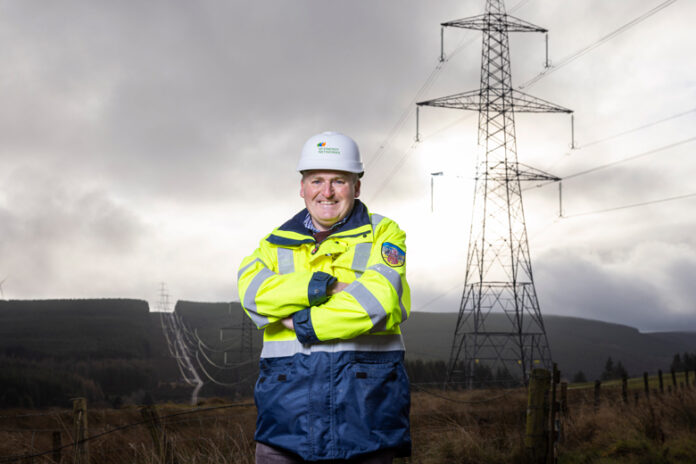
Pearse Murray, SP Transmission Director at SP Energy Networks

SP Energy Networks has successfully completed a key upgrade of overhead powerlines in Ayrshire to help enable growth and support the transition to net zero in the area.

The ยฃ9.5 million project โ€“ connecting Chipperlaigan and  Ayr substations โ€“ started in 2021 and involved comprehensive rewiring and steel works on 29 towers spanning more than five miles.

The project is a stepping stone in the right direction for East and South Ayrshire as the areas progress towards the Scottish Government target of becoming net zero by 2045.

The refurbished route, an integral part of the energy infrastructure in Ayrshire, has undergone a significant transformation as part of SP Energy Networks commitment to modernise and enhance its network.

Originally constructed in 1966, the 275 kV double circuit overhead line serves as a vital link in the regional power grid. The modernisation of the network will help support the growing demand for green energy solutions such as electric vehicles and heat pumps.

Pearse Murray, SP Transmission Director at SP Energy Networks, said: โ€œThis upgrade will help ensure people across Ayrshire can benefit from a modern and resilient electricity network that will make it easier than ever for them to make greener choices in their daily lives.

โ€œOur thanks to local communities for their support as we carried out this vital work in the transition towards net zero carbon emissions  and a cleaner and greener future.โ€

The work in Ayrshire aligns with SP Energy Networks’ commitment to ensuring energy security for the UK, supporting job creation, the supply chain, and the broader economy.

For more information about the Ayrshire project, SP Energy Networks and its services, visit: spenergynetworks.co.uk.

Lucy Electric launches UKโ€™s first non-SF6 Ring Main Unit of its kind, powering the transition to sustainable energy networks

Lucy Electric EcoTec

Lucy Electric, a UK headquartered international leader in power distribution solutions, has launched the UKโ€™s first Ring Main Unit (RMU) for medium voltage networks using synthetic air, paving the way for grid operators to reduce the emissions of running infrastructure as part of delivering Net Zero ambitions.

EcoTec, which has been launched at the companyโ€™s Technology Day at Silverstone, uses a nitrogen and oxygen blend instead of the SF6-gas currently used to insulate critical electrical network equipment. Although the use of such gases is handled in a highly controlled way, a ban on their use in new and replacement switchgear is expected to be implemented in the UK following an EU ban in 2026. Lucy Electric is the first company to bring switchgear to market that meets the specifications of UK network operators, providing companies the ability to install the improved equipment ahead of the ban coming into force.

The launch follows years of feasibility and close working with customers to inform the requirements of this key part of the medium voltage network. The focus has been on cost effectiveness for long-term network planning and emissions reduction. EcoTec is also designed with ease of installation and cost efficiencies in mind by fitting within the same substation housing space as current switchgear and even aligns with existing concrete slab fixings, further reducing emissions of replacement.

Martin Sweeney, Global Head of Product Management at Lucy Electric said:

โ€œAlongside our customers, Lucy Electric is focused on meeting net zero commitments, and EcoTec is specifically designed to reduce the emissions of UK network operators in an efficient and cost-effective way. We have listened extensively to customer feedback to optimise the design of our switchgear such as embedding the control unit and the smart solutions, including remote control available as standard.

โ€œLucy Electric has a long heritage as a 200-year-old British engineering business that has been supplying the UK electricity networks for over a century. The UK is Lucy Electricโ€™s second biggest market, and we are proud to bring the first Ring Main Unit of its kind designed and developed in the UK to meet the specification here, at what is a critical stage of efforts to deliver Net Zero.โ€

Triconnex, one of the largest independent multi-utility companies in the UK is a partner for Lucy Electric in switchgear installations. Ricky Clark, Procurement Manager at Triconnex, said:

โ€œEcoTec will help us meet our targets for emissions reductions in the long-term as well as supporting our continued growth as a key partner for the UK efforts to decarbonise. We are delighted to work with our long-term supply chain partner Lucy Electric to enable the transition to greener energy networks. Their cutting-edge solutions and reliable infrastructure play a pivotal role in our operations. Moreover, the wealth of knowledge held by Lucy Electric’s staff is invaluable to our success.โ€

EcoTec has been designed and developed in the UK for the UK market and comes ahead of the EU F-Gas regulations effective 1st January 2026 which will ban the use of SF6 for up to 24kV and the likely implementation of this by Defra in the UK. The technology will also be adapted for deployment to international markets in the Middle East, Asia, Africa and Australia as a fantastic example of a UK export from British R&D.

www.lucyelectric.com

Siemens paves the way for autonomous grid management with Gridscale Xโ„ข

Siemens has launched Gridscale X, paving the way towards the vision of autonomous grid management, accelerating digital transformation for grid operators at speed and scale.

With Gridscale X, Siemens will provide modular software to support utilities to tackle their most pressing challenges related to the energy transition. Gridscale X makes it possible to scale grid capacity fast, handle the complexity of distributed energy resources (DERs) and increase grid flexibility with the help of software that is easy to deploy and fast to integrate into existing IT and OT environments. This represents a new era of grid management and adds increased value to grid operators across planning, operations, and maintenance; helping networks to adapt to the grid impact of solar panels, heat pumps and electric vehicle charging, for example.

Two new Gridscale X software products build on an already extensive grid software portfolio. Gridscale X DER Insights (link) and Gridscale X Network Model Manager (link) will enable power utilities to gain visibility over their grid and create a centralised network model. DER Insights enables utilities to protect critical infrastructure by gaining better insights into what is happening behind the meter, and how these resources impact grid equipment. Meanwhile, Network Model Manager is a comprehensive network model management application and data repository that supports operators with more efficient grid planning, development, and operations.

Carl Ennis, CEO Siemens UK & Ireland said: โ€œUtilities are under pressure to deliver tremendous change for power grids, driven by a seven-fold increase in distributed energy resources and a tripling of electricity demand worldwide.

โ€œUsing new technologies to transform the grid will be essential in enabling the UK to deliver a net zero economy. Gridscale X will help network operators to handle the integration of renewables, and to optimise grid capacity to meet the anticipated growth in energy demand in the years to come.

โ€œUltimately, digital transformation, powered by modular software like provided by Gridscale X, will enable operators to create a more resilient, sustainable grid for the future.โ€

โ€œAs a part of Siemens Xcelerator, our products are developed with the core design principles of interoperability, flexibility, openness, availability as a service, and the highest level of cybersecurity. This means that Gridscale X can meet and adapt to the evolving needs of the UK Energy and Utilities industry, complemented by Siemens Xceleratorโ€™s open partner ecosystem.โ€

Siemens Xcelerator is an open digital business platform to accelerate digital transformation and value creation. Siemens will be showcasing more about Xcelerator and Gridscale X at its Transform event on 17 and 18 July. To register to attend the free event visit here: https://www.siemens.com/uk/en/company/transform.html

Rinnai – Instantaneous electric water heaters in 21, 24 & 27kW coming soon

Instant electric water heater :: Rinnai UK (rinnai-uk.co.uk)

Rinnai continues to expand products for heating and water heating in all fuels – gas, electric and renewables

Rinnaiโ€™s new range of instantaneous electric water heaters are suited to all commercial and domestic applications that require decarbonising technology capable of delivering domestic hot water needs.

Rinnaiโ€™s innovative approach to producing decarbonising technology has resulted in a DHW electric water heater that has been designed to offer direct heating capability. The technologically advanced bare wiring technology rests in the water enabling the system to achieve the pre-set water temperature quickly and accurately. The electric on demand water heaters are lightweight (less than 4kg) and diminutive (450 x 235 x 94). Rinnai is continuing to provide UK customers with an array of products that cover a range of energies.

For a brochure on the Rinnai range of electric on demand water heaters and low carbon technologies visit https://www.rinnai-uk.co.uk/contact-us/request-brochure and receive a goody bag.

The KW rating within the Rinnai instantaneous electric water heater range is scalable from 21kw, 24kw and 27kw ensuring suitability for a wide variety of applications. A compact design allows easy installation and is proven to increase energy efficiency and therefore reducing operational costs.  Ease of installation and handling are a major feature.

Rinnaiโ€™s instantaneous on demand electric water heater range can maintain an adjustable temperature range from between 20 and 60 degrees Celsius and that can be digitally increased in 0.5 degrees increments. All units can also accept preheated water.

Other features that the Rinnai instantaneous electric water heaters include:

  • overheat protection
  • multi-functionable display
  • full electric control
  • rapid heat up capability
  • quick reaction to sudden shifts in grid capacity output.
  • solar compatible.

All models have LCD screens that provide visual information on current water temperature, operational performance and Eco Mode โ€“ which supplies confirmation of the appliance operating economically and therefore reducing unnecessary energy wastage and costs.

Rinnaiโ€™s instantaneous electric water heater has a renewable system operation setting that recognises incoming water temperatures more than 30 degrees Celsius, then applies only the correct amount of energy to achieve the required temperature uplift making them an ideal solution to use in conjunction with solar thermal and renewable systems.

The product is timed to coincide with UK plans to reduce electrical costs to be the lowest in Europe by 2035. UK energy strategists believe that clean and sustainable electrification is presently the safest way to ensure lower customer costs and carbon emissions.

Rinnai has anticipated this announcement and has accordingly adapted its product offering of low carbon commercial and domestic products to include technologies that support electrification.

This launch follows an ambitious and innovative programme of launching several new products within its H1 โ€“ Hydrogen and DME ready water heaters, H2 โ€“ Hybrid systems and H3 โ€“ Low-GWP heat pumps product categories. These new products will all ensure the company offers a comprehensive range of appliances and systems for heating and hot water suited to both commercial and residential applications.

The programme commenced with the launch of the new low-GWP air source heat pumps with R290 refrigerant. There will also be a new and innovative range of electric cylinders of multiple sizes. Also there will be the introduction of the KCM and E Series of condensing gas-fired water heaters for light commercial and residential applications.

Later in the first quarter of the year will see the launch of plate heat exchangers for larger commercial and industrial sites. Rinnai is determined to provide UK customers with cost effective low carbon solutions towards commercial hot water and building heating provision.

Instant electric water heater :: Rinnai UK (rinnai-uk.co.uk)


RINNAIโ€™S H3 DECARBONISATION OFFERS PATHWAYS & CUSTOMER COST REDUCTIONS FOR COMMERCIAL, DOMESTIC AND OFF-GRID HEATING & HOT WATER DELIVERYย ย 

www.rinnai-uk.co.uk/about us

Rinnaiโ€™s H3 range of decarbonising products include hydrogen / BioLPG ready technology, hybrid systems, and a wide range of LOW GWP heat pumps and solar thermal. Also, within Rinnaiโ€™s H3 range is Infinity hydrogen blend ready and BioLPG ready continuous flow water heaters which are stacked with a multitude of features that ensure long life, robust & durable use, customer satisfaction and product efficiency. 

Rinnaiโ€™s range of decarbonising products – H1/H2/H3 – consists of heat pump, solar, hydrogen in any configuration, hybrid formats for either residential or commercial applications. Rinnaiโ€™s H3 range of products offer contractors, consultants and end users a range of efficient, robust and affordable decarbonising appliances which create practical, economic and technically feasible solutions. The range covers all forms of fuels and appliances currently available – electric, gas, hydrogen, BioLPG, DME solar thermal, low GWP heat pumps and electric water heaters. 

Rinnai H1 continuous water heaters and boilers offer practical and economic decarbonization delivered through technological innovation in hydrogen and renewable liquid gas ready technology. 

Rinnaiโ€™s H1 option is centred on hydrogen, as it is anticipated that clean hydrogen fuels will become internationally energy market-relevant in the future; Rinnai water heaters are hydrogen 20% blends ready and include the worldโ€™s first 100% hydrogen-ready hot water heating technology. 

Rinnai H2 โ€“ Decarbonization simplified with renewable gas-ready units, Solar Thermal and Heat Pump Hybrids. Rinnai H2 is designed to introduce a practical and low-cost option which may suit specific sites and enable multiple decarbonisation pathways with the addition of high performance. 

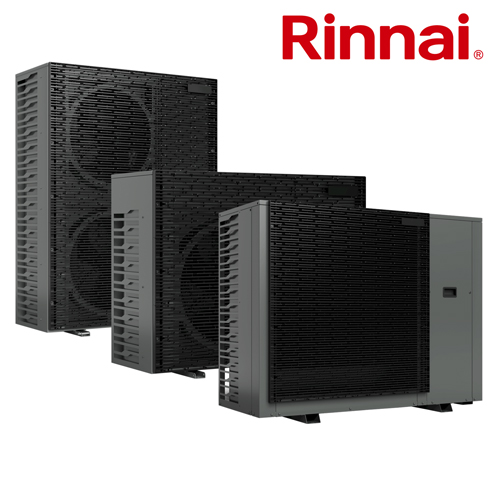
Rinnai H3 โ€“ Low-GWP heat pump technology made easy – Rinnai heat pumps are available for domestic and commercial usage with an extensive range of 4 – 115kW appliances.

Rinnaiโ€™s H3 heat pumps utilise R32 refrigerant and have favourable COP and SCOP. 

Rinnai is a world leading manufacturer of hot water heaters and produces over two million units a year, operating on each of the five continents. The brand has gained an established reputation for producing products that offer high performance, cost efficiency and extended working lives. 

Rinnaiโ€™s commercial and domestic continuous flow water heaters offer a limitless supply of instantaneous temperature controlled hot water and all units are designed to align with present and future energy sources. Rinnai condensing water heaters accept either existing fuel or hydrogen gas blends. Rinnai units are also suited for off-grid customers who require LPG and BioLPG or DME. 

Rinnai products are UKCA certified, A-rated water efficiency, accessed through multiple fuel options and are available for purchase 24/7, 365 days a year. Any unit can be delivered to any UK site within 24 hours. Rinnai offer carbon and cost comparison services that will calculate financial and carbon savings made when investing in a Rinnai system. Rinnai also provide a system design service that will suggest an appropriate system for the property in question. Rinnai offer comprehensive training courses and technical support in all aspects of the water heating industry including detailed CPDโ€™s. More information can be found on Rinnaiโ€™s website and its โ€œHelp Me Chooseโ€ webpage. 

Visit www.rinnai-uk.co.uk  

Or email engineer@rinaiuk.com  

For more information on the RINNAI product range visit

www.rinnaiuk.com

First images of ultra-rapid EV charging stations

The first images of a network of ultra-rapid electric vehicle charging stations have been unveiled by the West Midlands Combined Authority (WMCA).

Nine EV โ€˜filling stationsโ€™ will be located at key road-side locations right across the region, with two sites already identified, in Erdington and south-west Birmingham, and more in the pipeline.

When complete, each of the futuristic-looking stations will have 20 150+KW chargers that can power up cars and vans with 100 miles of range in just 15 minutes.

They will be either a โ€˜linearโ€™ or โ€˜drumโ€™ design depending on each individual site, with covered bays and alongside a convenience store or coffee shop.

Funding for the ยฃ48 million network is part of the regionโ€™s ยฃ1.3 billion City Region Sustainable Transport Settlement (CRSTS) from government supported by private investment.

Andy Street, Mayor of the West Midlands and chair of the WMCA, said: โ€œDecarbonising transport will not be possible unless we have the right infrastructure and itโ€™s no secret that more EV chargers are needed.

โ€œSo, itโ€™s fantastic news that we are now close to securing the first locations for our ultra rapid EV โ€˜filling stationsโ€™. Drivers will be able to use these stations to recharge their cars and larger vehicles in a matter of minutes.

โ€œA huge amount of work by the WMCA, local authorities and the private sector is going into providing thousands of EV chargers right across our region. Together we are now starting to make tangible progress in helping local people and businesses continue the transition to zero emission vehicles.โ€

Cllr Mike Bird, WMCA portfolio lead for transport, and leader of Walsall Council, said: โ€œThe investment in nine super-fast EV charging stations is designed to make alternatives to petrol and diesel vehicles more convenient and affordable, making it easier for people to make that switch and support our net-zero ambitions.โ€

Toshiba Carrier Launches DAISEIKAI 10 Delivering New Levels of Sustainability, Performance and Comfort to UK Homes

Toshiba DAISEIKAIโ„ข 10 โ€“ Designed to perform, engineered to excellence.

Toshiba Carrier UK has launched its new DAISEIKAIโ„ข 10 air conditioner, merging performance and sustainability with sleek aesthetics for superior home comfort. Toshiba Carrier UK is a part of Carrier Global Corporation (NYSE: CARR), global leader in intelligent climate and energy solutions.

Crafted using 43% recycled plastic components, the DAISEIKAI 10 is pioneering in its use of eco-compatible materials, emphasising Toshiba’s constant drive towards home decarbonisation. It is matched by a robust suite of advanced features to enhance air purification and user convenience while minimising energy consumption.

Motion tracking technology ensures efficient cooling by optimising and directing airflow to occupied areas. A sophisticated Plasma Ionizer removes airborne contaminants like dust, pollen and other allergens, and the Ultra-Pure Filter effectively traps up to 94% of the most harmful ultrafine PM 2.5 particles like smoke, viruses and bacteria. The โ€œself-cleaningโ€ coated coil ensures the unit remains clean and efficient, and an ultra-quiet operating mode helps suppress ambient noise.

Designed with supreme comfort in mind, the DAISEIKAI 10 features a Smart Sensing control function app, which is WiFi operated and allows users to choose between indirect or direct air flow. The DAISEIKAI 10 also adopts a new โ€œnaturalโ€ design derived from its material concept, โ€œGo back to the Earth.โ€ The authentic wood grille, sourced from PEFC-certified sustainable forests, positions the product with a distinct aesthetic to appeal to the UK air conditioning market. It is also available in a timeless white.

“The DAISEIKAI 10 reflects our dedication to pushing the boundaries of whatโ€™s possible for air purification and climate control for UK customers in one elegant, eco-conscious product,โ€ said David Dunn, Managing Director at Toshiba Carrier UK, Carrier Global Comfort Solutions, Europe. โ€œWeโ€™ve ensured easy installation too; all sizes of indoor units are compatible with both Single Split and Multi-Split Condensing Units. Built-in Wi-Fi and energy monitoring enable trackable performance insights for ongoing optimisation.โ€

Introducing the DAISEIKAI 10 into the UK market reinforces Toshiba Carrierโ€™s role as a leader in sustainable air conditioning solutions in support of the UKโ€™s 2050 net zero target. It is now available through Toshiba Carrier UK, our authorised distributors and approved installers, symbolising progress towards improved environmental practices in the industry.

For more information about the DAISEIKAI 10 and Toshiba Carrier UK’s commitment to innovation and sustainability, please visit www.toshiba-aircon.co.uk.

The energy transition takes more than renewables

Increasing energy efficiency with resistor technology

At COP28 in November 2023, 119 countries signed the Global Renewables and Energy Efficiency Pledge, committing to triple renewable energy capacity and double energy efficiency improvements by 2030. While shifting to largely renewable sources is important, this pledge recognises the importance of using existing energy sources efficiently too. Here, Mike Torbitt, managing director of Cressall, explains how resistor technology supports energy efficiency mechanisms for existing and future resources.

The pledge has the objective of reaching eleven terawatts (TW) of installed renewable energy generation capacity and an annual rate of more than four per cent of energy efficiency improvements globally by 2030.

With average global temperatures between February 2023 and January 2024 over the 1.5 Celsius above pre-industrial levels goal outlined by the Paris Agreement, the pledge aims to tackle global warming by reducing fossil fuel usage and carbon emissions.

The goal of tripling renewable energy capacity should be within reach for the signatory countries. Energy think tank Ember analysed data from the EU bloc and 57 other countries, finding that an annual renewables deployment growth rate of 17 per cent is required to meet the 2030 target. Renewable capacity grew at this level in the seven-year period between 2016 and 2023, meaning a continuation at the same rate would see the pledge achieve its aim.  

Efficiency issues

However, the prospect of the energy efficiency objective being met is less promising. Increasing energy efficiency is essential to making total energy consumption lower, which will result in fossil fuels making up a smaller share of the energy mix and reduce greenhouse gas emissions.

Unfortunately, the rate of progress for energy intensity, the main measure for the global economyโ€™s level of energy efficiency, fell from two per cent in 2022 to 1.3 per cent in 2023. Energy intensity measures how much energy is needed for a given activity, so its progress increases when energy efficiency is improved.

Currently, the projected rate of energy intensity improvements is between now and 2030 is 2.2 per cent, just over half of the required four per cent. So, why does energy efficiency prove a challenge?

Since energy efficiency improvements need to be made across a range of industries such as construction, industry and transport, it requires a complex and coordinated approach that is more difficult to oversee than power generation.  

Targeting transport

With the transport industry responsible for around 30 per cent of global energy use, the highest of any sector, an increased focus on energy efficiency is key to meeting the COP28 pledge. To improve the sectorโ€™s efficiency, automakers must consider technologies that reduce a vehicleโ€™s energy output.

A key way of doing this is through regenerative braking, which recycles excess kinetic energy to recharge the vehicleโ€™s battery. This principle is already widely applied to hybrid and electric vehicles (EVs), the latter of which convert 77 per cent of energy into power, compared with between twelve and 30 per cent for petrol and diesel vehicles. 

However, EVs are not the only mode of transport that can benefit from regenerative braking, with high-speed trains using this principle to decelerate when approaching stations. By reversing the current in the electric motors, the kinetic energy is recycled and can be used for other parts of the rail network. Consequently, high speed railways applying this principle can increase their level of energy efficiency, with the UKโ€™s HS1 saving enough energy to power over 375 homes each year

For both of these applications, dynamic braking resistors play a crucial role in ensuring that any excess energy is safely reused or dissipated in the case it cannot be recycled. Cressall has over 60 years of experience in providing dynamic braking resistors for transport applications, with the EV2 for electric and hybrid vehicles, and a range of traction resistors for locomotives.  

As 2030 draws closer, the signatories of the Global Renewable and Energy Efficiency Pledge can feel assured that their efforts to increase renewable capacity is largely on track. However, to ensure that the pledge is met, a coordinated approach of using the latest technology to ensure the continued growth of energy efficiency is key.

To learn more about how Cressall dynamic braking resistors can increase efficiency within your application, .