

The Crucial Role of ESG Reporting Tools in Achieving Net Zero Targets

Daniel Usifoh

Daniel Usifoh MSc, MCIPS, Co-founder, Gateway Procurement and AXIOM Sustainability Software

Addressing climate change through sustainability is one of the key business drivers in 2024 and beyond, with organisations in every industry – including energy management – under increasing pressure to transition towards more environmentally responsible practices.

Central to this transition is the concept of net zero โ€“ the balance between greenhouse gas emissions produced and removed from the atmosphere. However, achieving net zero isnโ€™t just about setting ambitious targets; it means tracking your emissions all the way down.

One of the keys to that is Scope 3 emissions – theyโ€™re often given the least consideration due to their complex nature, but they make up 80% or more of the emissions for most businesses.

Challenges tracking emissions

One of the primary challenges businesses face on the road to net zero is the manual tracking of metrics associated with environmental, social, and governance (ESG) performance.

From carbon emissions to social impact indicators, gathering and analysing the data can be daunting, especially for organisations with complex operations. The difficulty is exacerbated for Scope 3 emissions, which typically account for over 80% of total emissions. These include emissions from purchased goods and services, employee commuting, and business travel, and are critical to ESG reporting. Theyโ€™re also challenging to monitor and track.

Enter ESG reporting tools โ€“ digital solutions designed to streamline the process of data collection, analysis, and reporting related to ESG performance. By using automation and advanced analytics, these tools are a more efficient and effective way to manage a businessโ€™s sustainability efforts. And, crucially, pinpoint areas of high energy consumption that can be tackled.

Where manual processes are prone to human error and inconsistencies, ESG reporting tools allow energy management businesses to accurately track their environmental footprint, identify areas for improvement, and measure progress towards net zero targets.

At the heart of ESG reporting tools is their ability to simplify the complex task of sustainability reporting. By aggregating data from various sources and providing intuitive dashboards and analytics, these tools empower businesses to gain actionable insights into their ESG performance. From carbon emissions to water usage to diversity and inclusion metrics, energy organisations can now access a comprehensive view of their sustainability efforts, enabling informed decision-making and strategic planning.

Scope 3 emissions

ESG reporting tools are crucial in addressing the specific challenge of Scope 3 emissions. From initial calculation to ongoing monitoring and support, these tools allow businesses to engage directly with suppliers, identify emission hotspots within the supply chain, and implement targeted strategies for emission reduction. By integrating Scope 3 emissions into their sustainability initiatives, businesses can enhance their overall ESG performance and contribute significantly to the fight against climate change.

Identifying the low-hanging fruit is another area where ESG reporting tools excel. By analysing data trends and identifying areas with the greatest potential for impact, these tools help businesses prioritise their sustainability efforts. Whether it’s reducing energy consumption, improving waste management practices, or enhancing supplier diversity, ESG reporting tools provide actionable insights that enable organisations to focus their resources where they matter most. This targeted approach accelerates progress towards net zero and maximises the return on investment in sustainability initiatives. And crucially, it reduces wasted time and effort, which can be a real risk for all sustainability programmes.

ESG reporting tools provide transparency and accountability โ€“ critical factors in building trust with stakeholders, including investors, customers, and regulators. By openly disclosing their ESG performance data and goals, businesses demonstrate a commitment to responsible business practices and invite scrutiny from external parties. This transparency helps build credibility and fosters a culture of continuous improvement as companies strive to meet and exceed their sustainability targets.

Conclusion

ESG reporting tools are indispensable assets for energy management businesses on the journey towards net zero. By automating data collection, providing actionable insights, and addressing challenges such as Scope 3 emissions, these tools empower organisations to make informed decisions and drive meaningful change. As sustainability continues to move to the forefront of corporate agendas, investing in ESG reporting tools is not just a strategic advantage โ€“ it’s a pathway to a more sustainable future for all.

About the Author

Daniel is an experienced, senior-level sustainable procurement professional passionate about helping organisations in the Humber region and across the UK achieve their sustainability objectives.

Heโ€™s the Co-Founder of Axiom Sustainability Software. This innovative cloud-based platform helps businesses monitor, analyse, and improve sustainability performance in their organisations and throughout the supply chain.

ESG Reporting Software & Sustainability Tools | Axiom (axiom-sustainability.com)

This article appeared in theย . Subscribeย here.

Navigating the Intricate Network of Trade Compliance Obligations

Elena Ozyman

In todayโ€™s globalised economy, businesses are constantly seeking ways to enhance profitability and gain a competitive edge. One powerful tool at their disposal is Free Trade Agreements (FTAs), which have become increasingly important in fostering international trade relationships.ย 

However, of key importance is ensuring compliance with international trade regulations, which has become more challenging due to the growth of complex supply chains, the emergence of new markets and the implementation of strict regulatory frameworks. Therefore, understanding the nuances of Free Trade Agreement (FTA) rules of origin is essential to ensuring businesses make informed decisions without being penalised.

Elena Ozyman, FTA Team Lead at Descartes explains how organisations can leverage FTAs for reduced costs, increased market access and improved competitiveness, as well as understand how to comply with FTA regulations.

Why FTAs?

FTAs are treaties between two or more countries designed to reduce or eliminate certain barriers to trade and investment, and to facilitate stronger trade and commercial ties between participating countries.

They also directly impact a companyโ€™s supply chain and manufacturing processes, as FTAs enable the identification of efficient sourcing alternatives of raw materials and components, as well as the evaluation of target markets. It is therefore no surprise to learn that the systematic consideration of FTAs influences a companyโ€™s decision-making process about manufacturing locations and market expansion strategies, all of which contribute to the profitability of the business and the cross-border movement of goods.

A primary advantage of FTAs is the reduction or elimination of tariffs and other trade barriers. FTAs often involve the elimination or reduction of tariffs and duties on imports and exports between member countries, meaning that companies can import raw materials and components at a lower cost, reducing the overall production cost, or lower the cost of exports for finished goods, increasing the potential for market penetration and profitability. While lower production costs can lead to increased profitability for businesses, the cost advantage can also be passed on to consumers in the form of lower prices for goods and services. Although there are many factors for this, competitive pressure and market demand are two key critical elements.

FTAs also enable organisations to enter new markets that would otherwise be difficult to enter due to trade barriers. This is permitted by preferential treatment and reduced duties that increase their customer base and revenue streams.

FTA Rules of Origin

FTA rules of origin determine a productโ€™s origin within a trade agreement and dictate whether products qualify for preferential tariff treatment under FTAs. These rules vary between agreements due to differing objections and priorities of participating countries. FTA rules serve as a critical safeguard against non-members looking to exploit preferential tariffs established within the agreement. FTA rules of origin precisely define what constitutes local production or substantial transformation within member countries and, by doing so, ensure that only goods meeting these criteria qualify for tariff benefits. 

This stringent verification process prevents trade deflection, where non-members reroute their products through member nations to access reduced tariffs. Thus, FTA rules of origin not only protect the economic advantages intended for member countries, but also foster genuine trade among them to encourage the growth of mutually beneficial commerce and investment. 

However, it must be noted that, knowingly or unknowingly, violating FTA rules of origin can lead to increased tariffs, penalties and damage to reputation โ€” a critical aspect that is usually overlooked in international trade.

Maximising Benefits while Ensuring Compliance

To capitalise on reduced tariffs and barriers provided by FTAs, while ensuring compliance with rules of origin, organisations can implement several strategic decisions.

First, it is crucial to assess and optimise supply chain networks to exploit lower trade costs. For instance, relocating production facilities or sourcing materials closer to FTA partners can help businesses to take advantage of tariff reductions and logistical efficiencies, reducing costs and enhancing competitiveness.

Second, understand market diversification factors. Expanding into FTA covered regions offers companies a compelling opportunity to tap into new markets by tailoring market-specific strategies that align with the preferences and needs of local consumers. However, this entails thorough market research to understand cultural nuances, consumer behaviours and regulatory requirements, before companies can adapt their operations accordingly.

Third, invest in research and development (R&D) with a keen awareness of FTA implications. This involves adopting a strategic approach that tightly integrates the innovation process with sourcing and production decisions. By aligning R&D with the opportunities presented by FTAs, organisations can proactively shape product innovation to capitalise on reduced tariffs and trade barriers. This entails not only creating products that resonate with the diverse preferences of FTA-covered regions but also optimising the entire supply chain to ensure seamless integration of these innovations into production. This interconnected strategy places businesses in an ideal position to maximise the benefits of FTAs, fostering agility, cost-effectiveness, and market responsiveness.

Finally, make sure you understand FTA rules of origin. A common misconception is that FTAs have uniform origin rules. Rather, each agreement is distinct, reflecting the participating countries’ specific interests and industries. The diversity of rules governing eligibility for preferential trade benefits, which includes factors such as country of origin, manufacturing processes, and value-added criteria, complicates international trade strategies. To navigate this complexity, organisations must understand FTA-specifics, product-specific rules, and other provisions of each FTA. It also necessitates ongoing monitoring and adaptation as FTAs may evolve and rules change.

Conclusion

FTAs play a vital role in shaping global commerce, and their rules of origin serve as a crucial framework to safeguard trade benefits and foster genuine economic cooperation. However, it is the businessโ€™ responsibility to recognise the uniqueness of each FTAโ€™s origin rules, stay updated with evolving regulations and tailor their compliance efforts to each productโ€™s specific criteria. 

A trusted partner can help organisations stay informed about the governing FTA and its specifics, optimising their trade strategies and ensuring compliance with the varying rules and preferences of each agreement. 

By following these essential steps, organisations can not only mitigate compliance risks but also leverage preferential tariff rates, contributing to the success and growth of their international trade operations in todayโ€™s interconnected and rapidly-evolving global business landscape. 

Want to know more? Download Descartesโ€™ FTA Guide

About Descartes Systems Group

Descartes (Nasdaq:DSGX) (TSX:DSG) is the global leader in providing on-demand, software-asa-service solutions focused on improving the productivity, performance and security of logistics-intensive businesses. Customers use our modular, software-as-a-service solutions to route, schedule,track and measure delivery resources; plan, allocate and execute shipments; rate, audit and pay transportation invoices; access global trade data; file customs and security documents for imports and exports; and complete numerous other logistics processes by participating in the worldโ€™s largest, collaborative multimodal logistics community. Our headquarters are in Waterloo, Ontario, Canada andwe have offices and partners around the world. Learn more at www.descartes.com and connect with us on LinkedIn and Twitter.

Rinnai’s cost effective and lower carbon hot water heating solution for Surrey Care Home

A large 72 room care home in Surrey with a 123-person occupancy needed to reduce its operational carbon emissions by 20% but maintain a generous hot water supply during peak periods. The owner-operators also needed to re-structure both the operational costs and energy usage.

The Rinnai Design Team sized this commercial care home site by taking into account the peak periods of hot water usage in the morning and early evening. The Rinnai Design Team provided the customer with three options based on the carbon production, energy usage and operational costs. The new options were also compared to the existing, traditional storage system.

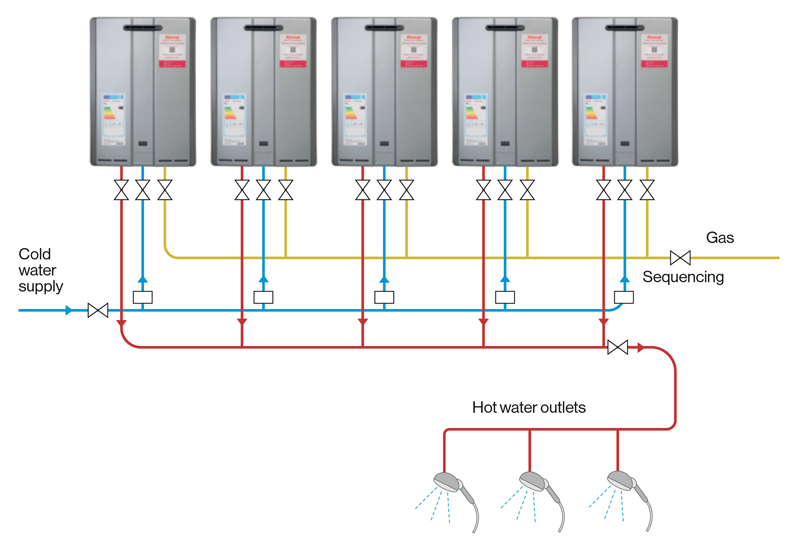
The options included a Rinnai H1 gas-powered system of three N1600 Continuous Flow Water Heaters. Secondly, a Rinnai H2 hybrid system, made up of two 21kW heat pumps and three continuous flow N1300s. Thirdly a Rinnai H3 all-electric solution that utilizes two 50kW heat pumps and two 48kW E-cylinders.

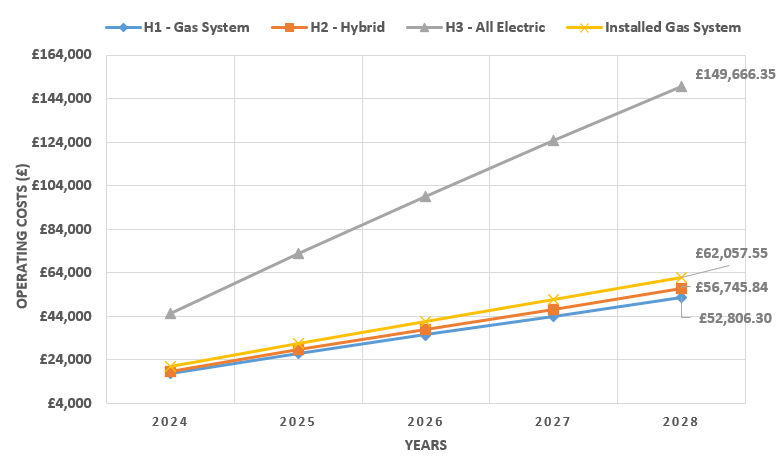
  • the Rinnai H1 natural gas system is the most cost effective at ยฃ52,806.30.
  • the Rinnai H2 hybrid system is at ยฃ56,745.84.
  • the Rinnai H3 all electric system amounted to ยฃ149,666.32The huge gap here is explained by electricity costing around 300% more than gas.

Rinnaiโ€™s decarbonising hot water solutions are represented in the colours grey (H3 all electric), orange (H2 hybrid) and blue (H1 natural gas), whilst the currently installed gas system is highlighted in yellow. The first graph demonstrates the operational costs associated with each system.

As reducing 20% of emissions was a key part of the customers โ€˜must-doโ€™ objectives, all suggested systems are proven to perform to a cleaner standard than the existing traditional system. The Rinnai H1 natural gas, Rinnai H2 hybrid and Rinnai H3 all electric systems offer carbon reductions of 14.9%, 30% and 67.5% respectively.

The following graph depicts the energy savings to be made:

  • the Rinnai H1 natural gas system offers a 14.9% reduction.
  • the Rinnai H2 hybrid system sees a 27.1% reduction.
  • the Rinnai H3 all electrical system yields a 39.7% reduction.

The care home decided that the preferred solution for this particular property would be the H2 hybrid hot water system. The H2 system would offer a reduction in emissions by at least 20%, as well as reducing the initial investment and forecasted operational expenditure by 21.7% and 62.1% respectively, when compared to the H3 all electric system.

Rinnaiโ€™s design team offers all UK customers a report and calculations on carbon and cost comparisons to other systems and fuels. For more information on FREE customer services visit Rinnaiโ€™s website at: www.rinnai-uk.co.uk.

Rinnai continues to provide UK customers with a variety of low carbon and cost-effective technologies that encourage commercial and domestic decarbonisation. No matter the specific requirements of any site, Rinnai can offer the ideal customer solution.     

www.rinnai-uk.co.ukย ย Or email engineer@rinaiuk.comย ย 

This article appeared in theย . Subscribeย here.

Energy Manager vs. Software: Whatโ€™s the Right Fit For Your Business?

Energy is the lifeblood of all asset-intensive companies. However, managing this crucial asset has sometimes been overlooked. 

Crises like the pandemic and the energy market upheaval in 2022, as well as growing demands from sustainability-related legislation, have been a rude wake-up call to businesses who did not treat energy management as a strategic asset. 

Equipped with the knowledge that investing in energy efficiency can set them apart, forward-looking businesses have invested in outsourcing energy management, resulting in more efficient energy use, cost savings, and sustainability goals. 

Those now looking into outsourcing energy management will quickly realise that the question of how to do this effectively has its own challenges. Do you invest in an energy managerโ€™s expertise or lean into the digital precision of energy management software?

In this blog, weโ€™re diving deep into the showdown between the two. Weโ€™ll not only weigh the pros and cons, but also share success stories and practical tips from businesses that have dealt with this strategic question successfully.

The Role of an Energy Manager

Focused on technical leadership, Energy Managers spearhead initiatives aimed at enhancing energy efficiency. Put simply, an Energy Manager oversees the planning, monitoring, and optimisation of energy usage within an organisation, focusing on reducing costs, improving operational efficiency, and meeting sustainability goals. 

To do this, they conduct energy audits, manage projects for energy conservation, and stay updated with the latest in energy technologies.

Thinking of working with an Energy Manager? Make sure your Energy Manager possesses a nuanced understanding of the motivational drivers within your organisation โ€”be it operational excellence, cost reduction, or environmental stewardship. Look for expertise that encompasses a broad spectrum of innovations, from the deployment of smart building technologies to the integration of renewable energy sources and carbon capture solutions.

What is an Energy Management Software?

An Energy Management Software is different to an energy manager, in that it presents a deep analysis of energy consumption and cost through data. This data, in turn, would then need to be analysed by the user. 

However, unlike an energy manager, an Energy Management Software (EMS) offers a comprehensive view of energy use across all levels. Some (like our technology, ClearVUE.Zero) can analyse your data from global assets to site-specific circuits, segmented by energy type. Often, EMS have intuitive, customizable dashboards which enable stakeholders to pinpoint their energy concerns swiftly, facilitating easy access to necessary reports. 

The primary advantages of an EMS include monitoring energy usage, cost reduction, minimising energy needs, and decreasing carbon footprint, alongside promoting adherence to regulations, and fostering an eco-friendly mindset across teams. 

Pro-tip: Opt for a cloud-based EMS, which enhances deployment speed, scalability, and remote access capabilities, supporting diverse devices and locations.

Key Difference and Synergies

To optimise energy management within an organization, both energy management software and energy managers play crucial roles and have unique benefits. Hereโ€™s how they compare to each other:

Energy Management Software:

  • Automation: Automates energy consumption tracking and analysis.
  • Customisable: Offers customisable dashboards and reports for identifying energy savings.
  • Quick Compliance: Facilitates compliance with energy regulations through automated reports.

Energy Manager:

  • Strategic Leadership: Expert in strategizing and implementing energy conservation initiatives.
  • Capitalising on Software:ย  Utilises software data for informed decision-making.
  • Technical Leadership: Leads energy optimisation projects and manages stakeholder engagement.
  • Choosing the Right Solution- What Questions Should a Business Ask Before Making Its Choice?

Answer the questions below to see which tool would be the most effective for your organisationโ€™s needs: 

  • Do we have the in-house expertise to analyse and act on energy data?
  • Can existing IT infrastructure support or provide energy insight?
  • How complex is our energy use and infrastructure?
  • What specific return on investment (ROI) objectives are you aiming to achieve?ย 
  • What level of customisation and scalability do we need?
  • How important is real-time data and remote access for our operations?

If you have in-house expertise and existing infrastructure that provides insight, and do not require massive scalability (e.g. across multiple sites), then you might want to consider working with an Energy Manager. However, if you require a large-scale solution that can be accessed remotely, an Energy Management Software might be a better alternative.

The Best of Both Worlds 

Both solutions offer unique insight that can propel your energy management savings. For an ideal solution, considering combining an energy management softwareโ€™s data analysis capability with an Energy Managerโ€™s strategic insights.

This enables a comprehensive approach to energy management, guaranteeing efficiency and sustainability.

At ClearVUE.Business, weโ€™ve seen first-hand how this can result in operational efficiencies for several businesses. 

For instance, the Morgan Motor Company used our innovative energy management software, ClearVUE.Zero, to measure their painting process, which relies on energy-intensive paint powder-coating ovens and other machinery.

Immediately when starting to use ClearVUE.Zero, the Morgan Motor Company identified machinery that had been powered on needlessly early in their daily production processes for years. Our Energy Managers suggested a simple adjustment โ€“ changing when they switched machinery on or off.

This resulted in the company being able to cut down on energy consumption and save significant sums.

Book a free demo to discover how our technology and energy managers can provide the best insight for your organisation.

https://clearvue.business/request-demo

This article appeared in theย . Subscribeย here.

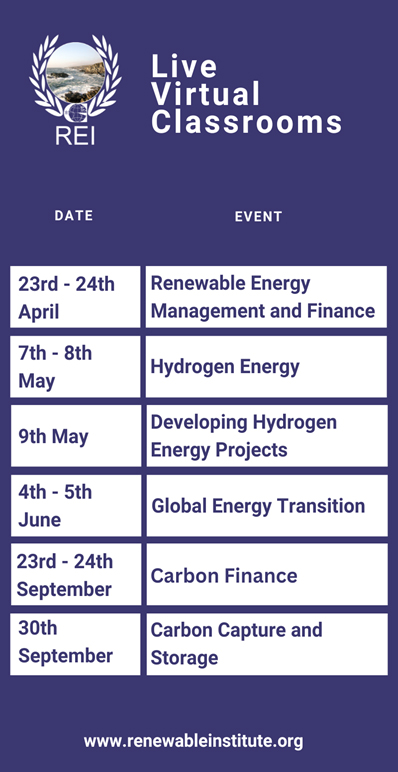
Renewable Energy Institute’s upcoming Live Virtual Classrooms

Join professionals from over 150 different countries worldwide and enrol onto the Renewable Energy Instituteโ€™s accredited training courses.

All courses are available to study Online, On-demand, providing flexibility to study whenever suits you best. All courses can be viewed at www.renewableinstitute.org

Some of our courses are available to study in the Live Virtual Classroom. The Live Virtual Classroom courses will run on set dates and will feature 1-2 full days (9am โ€“ 5pm UK time) of interaction and networking with the lecturer and other delegates. You will have the opportunity to sit the exam for the internationally recognised Galileo Master Certificate online at the end of the course.

All courses are accredited by the CPD accreditation service and count towards your professional development. ย 

On completion of your studies, you will receive 1 year of complimentary REI membership.

twFor more information, please contact the REI on +44 131 446 9479 or email us at training@renewableinstitute.org

This article appeared in theย . Subscribeย here.

Driving net zero with campus heating

With NHS emission reduction target dates looming, hospital trusts need to act now to achieve their sustainability goals. Campus heating solutions could play an important part in the net zero strategy, says Stephen Hart, Baxiโ€™s Director of Integrated Solutions.

Stephen Hart

As part of its commitment to tackling climate change, the NHS has outlined targets for reaching net zero from its directly controlled emissions by 2040, and the emissions it can influence by 2045. Achieving its ambition to become the worldโ€™s first-ever net zero health service will require action across all areas, but decarbonising its buildings is identified as one of the greatest opportunities. More specifically, changing the way in which its hospital estates and facilities are heated will be essential to meet its first target of an 80% reduction in emissions between 2028 and 2032.

The vast scale of the NHS estate, the diversity of buildings and the differing heating systems make the decarbonisation challenge particularly complex for its energy and estates managers. Implementing a highly-efficient centralised campus heat network to deliver reliable heating and hot water to multiple buildings and facilities would provide an effective solution to the problem.

Campus heating and heat networks

Heat networks have been identified as having a crucial role to play in decarbonising heat in UK buildings. The governmentโ€™s ambition is for 20% of UK heat demand to be supplied from heat networks by 2050, up from an estimated 2-3% today. Government and private sector funds are available to help increase uptake rate.

A heat network provides hot water and/or space heating to consumers in multiple buildings (district heating) or consumers in multiple dwellings within a high-rise tower block (communal heating).

Campus heating is a subdivision of district heating and operates in the same way. Where it differs from a district heating system is that the heat generator is also the owner of the buildings which are connected by underground pipes to a central energy centre.

So what compelling benefits do campus heating systems offer NHS energy and estates managers on the pathway to net zero? First, they are well suited to highly populated areas with high heat demand such as hospital facilities. Added to this is their ability to facilitate mass decarbonisation while providing greater energy security. As such, they provide an effective solution to the NHSโ€™s heat decarbonisation challenge within a hygiene and mission-critical healthcare environment.

Third, looking ahead, there is the potential to scale up and become a heat network hub for the local community, unlocking additional future opportunities.

Designing for resilience

When it comes to design, many new heat networks use low-carbon heat sources such as heat pumps or renewable heat such as biomass. They can also use heat recovered from industry or urban infrastructure such as factories or mines and rivers.

Interestingly, CIBSE Code of Practice CP1 suggests that a hybrid engineered approach would reduce CAPEX, making more projects commercially viable while ensuring greater reliability and security as demand on the electrical grid intensifies.

In a typical scenario, 80% of the annual heat might come from the heat pump(s) and the remainder from boilers. However, to achieve the necessary resilience and network reliability that hospitals require, redundancy might need to be as high as 100%. This would mean that 3 MW of air source heat pump capacity, for example, should also have 3 MW of boiler capacity. Heat pump uptime and carbon intensity would be prioritised without the heat network encountering a heat out. And as future-proofed natural gas boilers installed today could run on biofuel tomorrow โ€“ and potentially on site-generated green hydrogen in the future โ€“ full decarbonisation is still ultimately achievable.

According to a 2022 government survey of 130 heat network operators, 48% said they would likely switch to a low-carbon heat source at the end of their generation asset lifetime. This supports the view that, rather than focusing on the carbon intensity of the technology at the outset, the priority should be to create the heat network infrastructure and ensure resilience.

Project stages

Letโ€™s consider the stages involved. The first step is to carry out feasibility and design studies. Consider working with heat experts who can offer digital tools to provide precontract design advice and engineered solutions based on low carbon technology generators to support funding applications.

At the build stage, evaluate the latest manufacturing techniques to make installation as smooth as possible. For example, when designing the energy centre, a prefabricated packaged plant room might be considered the best solution to meet all requirements. If this is the chosen approach, look to partner with heating solutions providers who can supply full in-house offsite manufacturing and engineering capabilities as well as all the products.

Optimise system performance and drive efficient maintenance through wireless remote monitoring and control. A 24/7 real time monitor will enable engineers to diagnose any fault remotely and ensure first time visit success while analysing energy data will help identify opportunities for system optimisation. The aim should be sustainability at no cost to resilience.

In summary, campus heating systems offer a technically and economically feasible opportunity to drive the NHS net zero strategy, reduce its carbon footprint and improve financial sustainability, security and reliability. Partnering with specialists who can provide expert support at all stages will make the process more seamless and straightforward for optimal results.

To find out more visit baxi.co.uk/baxi-packaged-solutions

This article appeared in the . Subscribe here.

How ‘drop-in’ renewable liquid fuels could transform off-grid heating and DHW for building services and consultants

Chris Goggin

Rinnaiโ€™s Chris Goggin looks ahead to the advent of renewable liquid fuels in the mass markets.

As fossil fuel consumption is gradually diminishing from global energy options, the UK will have to locate and utilise alternative energies, some of which will be entirely unfamiliar to British customers. One of these future and somewhat unfamiliar fuel sources will be Renewable & Recycled Carbon Dimethyl Ether (DME).   

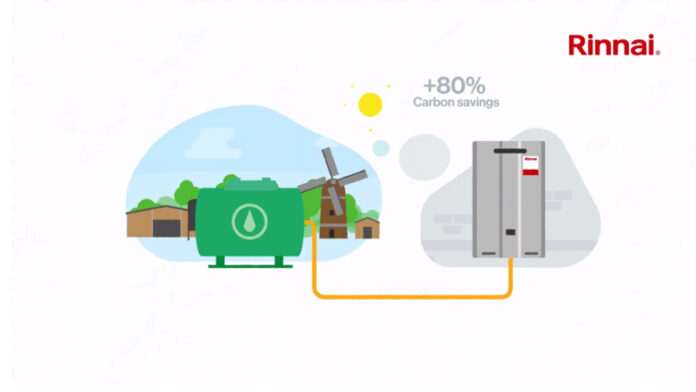
DME is a sustainable fuel that can be produced through a wide range of renewable feedstocks such as waste which allows for quick and long-term sustainable production. DME is chemically similar to LPG and can be blended, โ€˜dropped inโ€™, to existing supply LPG chains, without the need to modify equipment which is a major plus for existing systems and appliances. DME can also be used on its own, as a 100% pure fuel, particularly for industrial or commercial users.

DME combusts cleanly and releases no โ€œsootโ€ emissions and contains many fuel properties that make it easily used in sites and appliances using diesel. it possesses a very high cetane number which is a measure of the fuel’s ignitibility in compression ignition engines.ย 

DME is safe and reduces greenhouse gas emissions by up to 85% thus better improving local air quality when compared to traditional fuels. NOx, SOx and PM readings are all heavily reduced through the implementation of DME. Future capacity of European DME production is set to rise sharply in an approaching time frame further increasing the likelihood of it being introduced nationally at some stage soon.

Netherlands-based renewable and recycled carbon DME producer Dimeta is a collaborative effort by two of the worldโ€™s leading LPG (Liquefied Petroleum Gas) distributors, SHV Energy and UGI International.  Dimeta is at the forefront of contributing to a more sustainable future and increasing access to affordable low-carbon energy by spearheading the production and use of Renewable and Recycled Carbon DME commercially to decarbonize the LPG industry in the UK, Europe and United States.

Dimeta and Rinnai aim to raise customer understanding of both renewable and recycled carbon DME whilst promoting their usage for on off-grid properties. Dimeta is contributing towards the standardization of DME boilers and DME water heaters by assisting in defining UK manufacturing values. Centralized industry standards are to be cleared by regulators later this year. By 2024 boilers that accept renewable and recycled carbon DME could be ready to purchase. 

Rinnai and Dimeta have signed a MOU (Memorandum of Understanding). Both companies will work together to explore blending DME with LPG and used in existing appliances. Dimeta and Rinnai will also aim to develop 100% DME dedicated appliances, including RDME water heaters, RDME boilers and Hybrid RDME heating systems. 

The collaboration between Dimeta and Rinnai will initially focus on the European market to further their knowledge and highlight the importance of collaboration across the whole value chain. 

Rinnai is committed to design and produce RDME low carbon heating to properties not connected to the UK national grid. Rinnai offer technical, economic and practical solutions for UK customers who seek decarbonising DHW and property heat and support installers by sharing this information. 

Renewable and recycled carbon DME, DME, BioLPG and LPG provide vital suppliers of energy to off-grid properties. Rinnai and Dimeta understand that replacement fuels that must not only perform at an identical standard to traditional off-grid fuels but must also ensure decarbonisation. Rinnai are working towards providing UK off-grid customers with a selection of energies and products that encourage carbon neutrality.  

Rinnaiโ€™s H3 range of products include domestic and commercial gas-fired water heaters, solar thermal systems, electric cylinders and low-gwp heat pumps which offer immediate property decarbonisation.

Sign up to the Rinnai Pathways newsletter for regular information and support regarding the changing face of energy and policy in our industry www.rinnai-uk.co.uk/contact-us/newsletter-sign

RINNAIโ€™S H3 DECARBONISATION OFFERS PATHWAYS & CUSTOMER COST REDUCTIONS FOR COMMERCIAL, DOMESTIC AND OFF-GRID HEATING & HOT WATER DELIVERY  

www.rinnai-uk.co.uk/about us/H3ย 

Rinnaiโ€™s H3 range of decarbonising products include hydrogen / BioLPG ready technology, hybrid systems, and a wide range of LOW GWP heat pumps and solar thermal. Also, within Rinnaiโ€™s H3 range is Infinity hydrogen blend ready and BioLPG ready continuous flow water heaters which are stacked with a multitude of features that ensure long life, robust & durable use, customer satisfaction and product efficiency. 

Rinnaiโ€™s range of decarbonising products – H1/H2/H3 – consists of heat pump, solar, hydrogen in any configuration, hybrid formats for either residential or commercial applications. Rinnaiโ€™s H3 range of products offer contractors, consultants and end users a range of efficient, robust and affordable decarbonising appliances which create practical, economic and technically feasible solutions. The range covers all forms of fuels and appliances currently available – electric, gas, hydrogen, BioLPG, DME solar thermal, low GWP heat pumps and electric water heaters. 

Rinnai H1 continuous water heaters and boilersโ€ฏoffer practical and economic decarbonization delivered through technological innovation in hydrogen and renewable liquid gas ready technology. 

Rinnaiโ€™s H1 option is centred on hydrogen, as it is anticipated that clean hydrogen fuels will become internationally energy market-relevant in the future; Rinnai water heaters are hydrogen 20% blends ready and include the worldโ€™s first 100% hydrogen-ready hot water heating technology. 

Rinnai H2 โ€“ Decarbonization simplified with renewable gas-ready units, Solar Thermal and Heat Pump Hybrids. Rinnai H2 is designed to introduce a practical and low-cost option which may suit specific sites and enable multiple decarbonisation pathways with the addition of high performance. 

Rinnai H3 โ€“ Low-GWP heat pump technology made easy – Rinnai heat pumps are available for domestic and commercial usage with an extensive range of 4 – 115kW appliances.

Rinnaiโ€™s H3 heat pumps utilise R32 refrigerant and have favourable COP and SCOP. 

Rinnai is a world leading manufacturer of hot water heaters and produces over two million units a year, operating on each of the five continents. The brand has gained an established reputation for producing products that offer high performance, cost efficiency and extended working lives. 

Rinnaiโ€™s commercial and domestic continuous flow water heaters offer a limitless supply of instantaneous temperature controlled hot water and all units are designed to align with present and future energy sources. Rinnai condensing water heaters accept either existing fuel or hydrogen gas blends. Rinnai units are also suited for off-grid customers who require LPG and BioLPG or DME. 

Rinnai products are UKCA certified, A-rated water efficiency, accessed through multiple fuel options and are available for purchase 24/7, 365 days a year. Any unit can be delivered to any UK site within 24 hours. Rinnai offer carbon and cost comparison services that will calculate financial and carbon savings made when investing in a Rinnai system. Rinnai also provide a system design service that will suggest an appropriate system for the property in question. Rinnai offer comprehensive training courses and technical support in all aspects of the water heating industry including detailed CPDโ€™s. More information can be found on Rinnaiโ€™s website and its โ€œHelp Me Chooseโ€ webpage. 

Visit www.rinnai-uk.co.ukย or email engineer@rinaiuk.comย ย 

For more information on the RINNAI product range visit www.rinnaiuk.com

New deal means Bradford courts will become two of the first in England to be heated by renewable energy

The Bradford Combined Court Centre and Magistrates Court will become two of the first court buildings in England to be heated by renewable energy after signing a landmark deal to connect to the cityโ€™s new heat network.

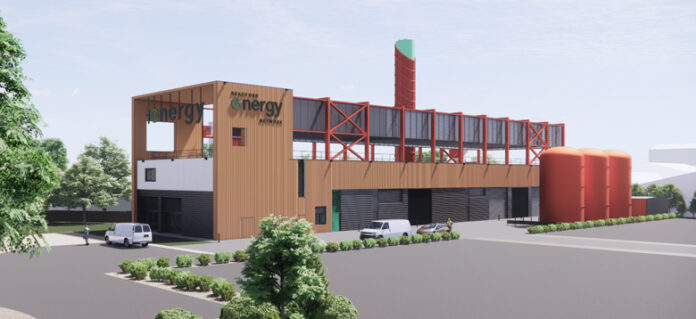
HM Courts and Tribunals Service has signed a 20-year agreement to connect the cityโ€™s courts to the pioneering Bradford Energy Network, a new ยฃ70m development which will become one of the UKโ€™s largest low-to-zero carbon district heating network when it starts generating heat in 2026.

Over the course of the two-decade deal, the two buildings are expected to save 8,000 tonnes of carbon dioxide (tCO2) by connecting to the network.

The government believes heat networks are vital to making net zero a reality in the UK, as they are often the lowest cost, low carbon heating option for high density urban areas which includes cities like Bradford.

The government’s ambition is for heat networks to supply 20% of buildings nationally by 2050, up from 3% today.

Bradford Council granted planning permission for the Bradford Energy Network last September. In its initial phases, it will include 8 km of underground pipework that will supply up to 30 major buildings in the city centre.

The network will be one of the largest in the country to use air source heat pumps. An 8 MW heat pump will be housed in a new energy centre, being built at the junction of Thornton Road and Listerhills Road. The pump can generate enough heat to supply 10,000 homes.

When the network first becomes operational, gas boilers will accompany the heat pump, providing additional heat on the coldest days of the year and acting as back-up and resilience. However, as part of a commitment to make the Network net zero carbon by 2030, the boiler heat will be replaced by alternative low-carbon heat within four years.

According to the World Green Building Council, buildings are currently responsible for 39% of global energy related carbon emissions. When the Bradford courts connect to the Bradford Energy Network in 2026, the use of back-up gas boilers in the energy centre means that carbon emissions related to heating will be reduced by 75%. However, these emissions be eliminated entirely when the network becomes net zero four years later.

Directors of 1Energy, the company behind the Bradford Energy Network, say that connecting to the network will be the most cost-effective way for organisations in Bradford city centre to decarbonise the way they heat their buildings.

To help cover the costs of connecting to the heat network,1Energy and their technical partners, Fairheat, supported the HM Courts and Tribunals Service to secure a ยฃ3.5m grant from the Public Sector Decarbonisation Scheme.

The Public Sector Decarbonisation Scheme is delivered by Salix Finance and is run by the Department for Energy Security and Net Zero.

Bradford is the first of several British towns and cities where 1Energy are developing heat networks with subsequent schemes already in progress in Rotherham, Exeter, and Milton Keynes.

Marissa Granath, Project Director of the Bradford Energy Network for 1Energy, said: โ€œThe Bradford Energy Network is a nationally significant project which will help to build the future of Bradfordโ€™s net zero infrastructure underneath the streets of the city centre.โ€

โ€œSigning a 20-year deal to deliver low-carbon heating to two of Bradfordโ€™s largest buildings shows the faith and confidence HM Courts and Tribunals have in the Bradford Energy Network.

โ€œThere are only two options available to property owners and developers looking to decarbonise buildings in Bradford: a building-scale heat pump or connection our heat network. However, connecting to our network is by far the most economical way to decarbonise heat, with total whole-life costs around 30% cheaper than installing individual air source heat pumps on buildings.โ€

โ€œWe were thrilled that HMCTS were able to secure ยฃ3.5m of grant funding to enable Bradford Law Courts to connect to the heat network and we are excited about working with other building owners in Bradford to help them cut costs and cut carbon emissions.โ€

Salix Director of Programmes, Ian Rodger, said: โ€œWe are delighted to be working alongside HM Courts and Tribunals Service on their innovative decarbonisation journey.

โ€œThis is an exciting project and demonstrates the value that local collaboration and partnerships can have in delivering on our net zero goals.โ€

There are around 350 courts and tribunal buildings in England and Wales. The Bradford Combined Court Centre and Magistrates Court are set to be the eighth and ninth courts to connect to a heat network.

This article appeared in theย .

npower Business Solutions launches community fund to support environmental, societal and educational projects in the West Midlands and Yorkshire

Leading business energy supplier, npower Business Solutions (nBS), has launched a new community fund designed to support projects that help to improve the environment, encourage responsible business and support skills and employment opportunities.

The npower Business Solutions Foundation is open to applications from not-for-profit organisations such as local charities, community interest companies and educational institutions that are located within a 50 mile radius of its offices in Solihull and Leeds.

Projects considered for funding include energy efficiency and carbon reduction measures, waste reduction and recycling initiatives or projects that improve outdoor environments. Depending on the organisation and nature of the project, three levels of funding bands ranging from ยฃ10,000 to ยฃ100,000 will be available to apply for.

Anthony Ainsworth, Chief Operating Officer at nBS, comments:

โ€œAt nBS, we have always supported causes that mean something to us as a company, our colleagues and our customers. The npower Business Solutions Foundation takes this a step further, allowing us to directly support projects that will make a real difference in our local communities.

โ€œWe welcome applications from any relevant organisation, from local schools to sports groups to community arts centres to charities, who have struggled to secure funding to turn their plans into reality. These could range from improving the sustainability of their premises through energy efficiency, to creating a new space that encourages responsible business or supports wellbeing. 

โ€œWe will consider a wide range of projects, so please get in touch to find out more and whether your organisation is eligible to apply.โ€

Applications to the npower Business Solutions Foundation and the allocation of funding will be managed by Charis, an independent organisation specialising in the distribution of financial and product support to vulnerable individuals and community projects.ย  More information, including how to apply to the npower Business Solutionsย Foundation, is available atย npowerbusinesssolutions.com/foundation.ย 

Decarbonising Learning โ€“ How HNES is supporting the education sector

University of Plymouth, Portland Square.

Education can change the world and is the starting point for some of the worldโ€™s best innovators, leaders, reformers and creators. The UKโ€™s educational institutions are uniquely placed to harness knowledge, influence the world to make a difference, and nurture the future generation of climate experts. Indeed, it was professors from University College London who, most recently, have been developing a trailblazing solution to save the Arcticโ€™s sea-ice from rising temperatures due to global warming[1].

However, as education shapes the next generation of sustainable pioneers, how can we ensure that the sector is practicing what it preaches?

The build environment accounts for 19% of the UKโ€™s emission levels, and domestic energy consumption is a huge barrier to the UK realising its Net Zero ambitions[2]. Research from the University of Leeds, alongside 536 other institutions, has found that universities and colleges alone emitted more than 18 million tonnes of carbon dioxide equivalent into the environment in 2020/21[3]. This represented around 2.3% of the UKโ€™s overall carbon footprint. Students must observe that the very institutions educating them on the dangers of climate change and contributions from human behaviour are doing their part to mitigate their own carbon footprint.

Cutting energy bills and carbon emissions in the public and higher education sectors was seen as particularly important by the UK Government, after financial benchmarking revealed that in 2019 schools alone were spending around ยฃ630 million each year on energy[4]. Since then, energy bills have soared, alongside the rising cost of living. As schools and universities increasingly feel the squeeze, the sector needs further support to decarbonise buildings and increase energy efficiency levels.

Heating consumption is a large cost for energy managers across educational facilities. Some of these estates will be connected to a district or communal heating system which distribute heat and cooling from a central source. The technology is a vital aspect of the UKโ€™s transition to Net Zero, often providing the lowest cost, most efficient option for large spaces and high-density areas.

Through its Heat Network Transformation Programme (HNTP), the Government has recognised the role heat networks have to play in the energy transition and has already invested over half a billion pounds to help expand the sector. Gemserv is playing a large role in helping to deliver the HNTP and is the appointed delivery partner to deliver the Heat Network Efficiency Scheme (HNES), just one of the schemes that form part of the programme.

HNES realises that, whilst the Government must continue to support the creation of low and zero carbon heat networks, older networks across the country may not be operating at their optimum efficiency levels and cannot be forgotten. Ensuring that the UKโ€™s existing heat network infrastructure is reliable, cost-effective and keeping occupiers warm and comfortable is crucial to build trust in the technology. HNES has already supported numerous educational institutions to increase the efficiency of their heat networks and has the potential to provide significant cost and energy savings to institutions connected to these heating schemes.

Throughout Rounds 1-4, HNES has funded both capital infrastructure improvements and optimisation studies for existing heat networks connected to the Universities of Plymouth, Leicester and Liverpool, Lancaster University, and the Royal Agricultural University[5]. The University of Wales Trinity St Davids has also received capital funding to improve the efficiency of their heat network. Alongside this, HNES has supported heat networks connected to teaching hospitals across the country, creating an energy efficient space to train future and current health professionals across the NHS.

So far, with the support from HNES, heat networks across the country will save over 97,000 tonnes of CO2e per year, benefitting 32,700 residents, students, teachers, and private and public sector workers. Smaller efficiency improvements to existing networks, alongside new low carbon infrastructure is crucial to ensure an effective energy transition that benefits everyone and shows that Net Zero does not mean higher bills.

You can find out more about the Heat Network Efficiency Scheme at https://gemserv.com/heat-network-efficiency-scheme-hnes/.


[1] Climate change: The ‘insane’ plan to save the Arctic’s sea-ice – BBC News

[2] The real carbon footprint of universities | Times Higher Education (THE)

[3] Analysis reveals scale of tertiary education’s carbon emissions – Priestley Centre for Climate Futures (leeds.ac.uk)

[4] Sustainability and climate change: a strategy for the education and childrenโ€™s services systems – GOV.UK (www.gov.uk)

[5] Heat Network Efficiency Scheme HNES | Gemserv Delivery Partner

This article appeared in theย .