The energy saving technology you’re not totally aware of
There are a range of things you can do to help cut your business’s electricity consumption, whether that’s turning appliances off when you’re not using them or by installing smart meters. But what about using voltage optimisation (VO) technology? Here, James Goodby, director at voltage optimisation specialist Powerdown220, explains all you need to know about VO, helping you determine if this energy saving technology could be of benefit to your business.
VO is a form of voltage management technology that is installed to lower the voltage of the incoming grid supply to the specific equipment in a business premises. Be it for energy savings, carbon reduction or to extend the lifespan of industrial equipment, it provides a reduced supply voltage for the site’s equipment.
In the UK the average voltage supply is 242v, despite the equipment being rated between 207v – 253v, and designed to work most efficiently at 220v. If voltage levels are too high or too low, it can lead to operational issues or unnecessary energy consumption.
When electrical equipment consumes greater levels of energy at higher voltages, VO becomes a commercially viable option.
Does VO suit you?
When discussing VO, equipment can be split in to two categories — voltage dependent and voltage independent. Voltage dependent components vary with voltage changes, while voltage independent equipment remain unaffected by voltage fluctuations.
Put simply, the more voltage dependent equipment on a site, the higher the saving delivered by VO.
When considering VO, companies often overlook the savings that are calculated over time and how VO operates on site. Although equipment, such as LED lighting and inverter drives, deliver low energy and financial savings from VO, over time a financial saving of – let’s say – eight per cent could equate to 60 per cent of a company’s entire consumption.
To put this into perspective, we expect to see savings of between eight to 12 per cent on any site from VO, meaning that somewhere between 40 to 60 per cent of the consumption has been classed as voltage Independent.
What’s more, even on sites where great efforts have been made to reduce electricity costs, with most equipment classed as energy efficient, VO is still expected to provide savings of between four to eight per cent.
Do the math
If VO could be for you then it is time to look at the savings to be made. As with any investment, the return on investment (ROI) and the carbon and energy savings must be measured.
As well as saving on energy costs, VO has the potential to extend the lifespan of equipment and significantly reduce a company’s carbon footprint.
Just look at confectioner Kinnertons, that installed a Powerdown220 voltage optimiser and now receives a saving of 7.52 per cent on its energy bills, along with a saving of 40 tonnes of carbon emissions a year.
To contextualise these figures, Carbon Trust’s research says that a 20 per cent cut in energy costs represents the same bottom-line benefit as a five per cent increase in sales.
VO might just be of benefit to your business after all, whether that’s in addition to or instead of the range of ways you can reduce your business’s electricity consumption.
However, simply comparing utility bills a month before and a month after installation does not consider the variables of dynamic loads. Fluctuating energy demands and external factors necessitate more sophisticated analysis for accurate quantification of VO benefits.
Thankfully, this data can be found in the remote monitoring systems that come with intelligent optimisers, which states the energy, financial and carbon savings being made.
To get started with VO today, use Powerdown220’s free savings calculator to receive your savings estimate.
If you’re interested in reducing the incoming voltage to match your equipment requirements, please visit the www.powerdown220.co.uk.
London’s Heathrow is one of the busiest airports in the world – handling over twenty million passengers each year. The area around Heathrow also has one of the highest densities of hotels in the world. Hotels come at all stages of the star rating system – from 5-star luxury to the budget minded. One of the more up market 5-star hotels, set in over ten acres of lush meadow and woodland, is just a 20-minute chauffeur driven car journey to the Heathrow terminals.
Recently the hotel updated its heating and hot water system to its seventy bedrooms, leisure & spa centre and Michelin starred kitchens using Rinnai Hydrogen blend ready 20% continuous flow water heaters.
The site includes a top-class restaurant, a Polo Bar and Lounge plus an outdoor terrace to indulge in an Afternoon Tea. There is also a fitness zone, two outdoor tennis courts, and a croquet lawn.
A feasibility study conducted by the Rinnai in house design team looked at replacing two aging atmospheric water heaters, joined into a flue dilution system.The study concluded that the existing units of 287 liters each plus existing outputs, were of a sufficient capacity to meet the current demand of guests, kitchens, housekeeping etc.
The feasibility study concluded that the hotel could reduce its carbon from hot water generation if they switched from the existing storage-based system and installed a turnkey package of two Rinnai N Series Hydrogen blend ready 20% continuous flow water heaters plus a 500 L hot water store.
The solution was deemed a viable option for the following benefits:
Reduced onsite carbon
Reduced capital expenditure costs
Reduced operational expenditure costs
ACOP/L8 Compliance
Hydrogen-blends ready
26:1 turndown ratio 4.4kW to 112kW
Fifty percent redundancy should a unit fail.
No single point of failure
Cylinder would weigh approx. 90kg.
12-year warranty
The Rinnai Sensei N Series hydrogen blends ready 20% continuous flow hot water heater range offers a more compact, enhanced combustion design that allows for easier installation, superior operational performance as well as ease of serviceability.
The Rinnai Series is the first ever continuous flow hot water heating unit manufactured with stainless steel heat exchangers to be available in the UK – this gives an extended working life at optimum performance to each of the four models in the range. Added to this are the market leading extended warranties, which accompany the hydrogen Blend-ready 20% and Bio-LPG ready instantaneous water heaters.
The four models are:
the N1600i giving 954 litres per hour (at 50 degrees)
the N1600e (external) also giving 954 litres per hour (at 50 degrees).
the N1300i giving 775 litres per hour and
the N1300e also giving 775 litres per hours of temperature controlled hot water at 50 degrees.
The two 1600s have load profiles of XXL and are water efficiency class A rated, while the 1300s are load profile XL and are also water efficiency class A rated.
All the range is also low-NOx (Less than 26ppm meaning they gain additional points under BREEAM) and the futureproofed continuous flow water heater uses Rinnai’s patented advanced burner technology with a 13-1 turn down ratio – the largest on the market combined with 96% efficiency rating. Integral controls on the units enable the water heater to achieve high efficiencies because of advanced burner control and high modulation ranges.
This wide range of modulation means that energy usage is completely optimised as the water heater through smart inbuilt controls will only heat the water to the temperature required thus preserving energy.
Rinnai offer sizing and support services to ensure that the optimum solution if created for your project whether that be gaseous continuous water heaters, Hybrid water heating systems or commercial heat pumps for support contact Rinnai today for your free site consultation https://www.rinnai-uk.co.uk/contact-us/help-me-choose-product
For more information on the RINNAI product range visitwww.rinnaiuk.com
Can technology save the planet? The sentiment at the World Economic Forum annual conference in Davos evoked an overwhelming yes. Next generation technologies have undeniable potential. Yet, the success of these technologies hinges on how we navigate their implementation.
Here, Stefan Reuther, Member of the Executive Board at automation supplier COPA-DATA, reflects on the World Economic Forum (WEF) annual conference — what change is required to achieve the twin transition?
Pillars of change
Talent development was discussed at Davos 2024 as a critical factor in ensuring a smooth transition to next-gen technologies. It’s not merely about technical skills, but cultivating a mindset of adaptability and continuous learning. As technology evolves, so must our workforce. Initiatives like training programs and upskilling efforts are pivotal in equipping our teams to leverage these advancements effectively.
A robust data backbone is equally crucial. This involves establishing reliable systems for capturing, processing and analyzing data across the entire manufacturing ecosystem. This is essential to provide real-time insights and predictive maintenance, enhancing decision-making in a wide variety of settings.
Industry standards also play a part in fostering interoperability and ensuring quality of new technologies. To get the best out of our tech, we must streamline the development of common protocols and best practices. While this may take time, standardization will further facilitate the integration of new technologies in the long term.
Governments and regulators play a critical role in shaping the landscape of next-gen technologies. They yield power to create an environment where knowledge is shared, resources are mobilized and technology is deployed carefully. While it is crucial not to overregulate new tech, following sensible approaches is a good thing. This is particularly important for technologies that can be used to tackle pressing challenges like climate change.
Actions for the twin transition
The concept of the twin transition — the phrase used to describe the convergence of the digital and green transitions — took center stage at Davos 2024. Recognizing the urgency of climate change, the community discussed the need for actionable solutions to accelerate the reduction of emissions.
It is clear there’s a need for industry-specific solutions for sustainability. While we may all be aiming for similar goals, such as reducing Scope 3 emissions, the methodologies of doing so will differ. Collaborative research and development (R&D) and the sharing of best technology practices will be key to uplift the sustainability of the entire supply chain.
This impacts traceability, transparency and trust. In a previous COPA-DATA article, I discussed the role of independent software vendors (ISVs) in the twin transition. Transparency is key for the success of ISVs, particularly those that use open automation like COPA-DATA. Our software platform allows users to choose any system, equipment or software and ensures it can communicate seamlessly with a no-code approach. Moving away from silos and vendor-lock in is crucial for empowering businesses to understand their data and improve their environmental impact.
This transparency of data is similarly crucial for integrating sustainability into product design and manufacture — another topic discussed at Davos. In addition to considerations like material selection and lifecycle management, businesses can make significant improvements to their emissions by tackling energy intensive processes in their product manufacture. It is impossible to do this without transparent technology that captures and visualizes energy consumption in a harmonized way.
In asking whether technology can save the planet, we find ourselves at the nexus of possibility and responsibility. The discussions at Davos 2024 illuminated the potential of technology to achieve the world’s sustainability needs, but also emphasized the urgent need for collaborative action and change to implement these technologies effectively.
As we reflect on the insights gained and the challenges ahead, we see that there are plenty of options to improve and we must do it now to preserve a future worth living. One thing becomes clear: It’s not about the planet, it’s about us and the lives of our offspring.
To learn more about COPA-DATA, visit the website here.
Smart energy solutions business, SMS, and energy insights software company, Eliq, have joined forces in a strategic partnership that makes energy insights more accessible to Britain’s small- and medium sized businesses (SMEs), enabling them to reduce energy costs and carbon footprint.
Eliq, which develops application software that empowers top European energy suppliers and banks to better engage their domestic customers with energy consumption insights, is now expanding into the non-domestic market. They’ve partnered with SMS – experts in energy data, smart metering, and low-carbon technologies – to introduce an innovative, easy-to-use app solution for SMEs.
The Smart Energy Data app, powered by SMS and Eliq, has now been launched to the market and aims to help non-domestic utility providers and business-facing brands like banks tap into the underserved SME marketplace. In comparison with the industrial and commercial (I&C) space where Government regulations have long required large businesses to monitor and report their energy consumption, there are much fewer options for smaller businesses in Britain when it comes to data visualisation software tailored to their needs.
A study of the UK energy supplier mobile app market revealed a significant opportunity for energy retailers to assist SME customers in managing energy costs through improved app features. The poll surprisingly revealed that only 45% of consumers had downloaded their energy supplier’s app and that the majority of platforms on the market were lacking the advanced features that savvy consumers have now come to expect as standard, such as personalised energy advice and tailored recommendations and alerts.
The app designed by SMS and Eliq aims to help suppliers plug this gap, offering a white-labelable solution that is simple to implement and deploy, including bespoke, digestible energy insights and a novel integration with the National Grid ESO Demand Flexibility Service. This integration enables businesses to seamlessly participate in national energy-saving events and earn financial rewards in return.
With new UK government regulations set to come in from October 2024 which will mandate all non-domestic utility providers to provide ‘free, user-accessible energy use information’ to their SME customers with smart meters installed, the white-labelable app from SMS and Eliq will help suppliers meet these obligations without major investment in their existing digital systems and offerings. Earlier this year, SSE Energy Solutions became the first non-domestic energy supplier to license the app.
The app launch from SMS and Eliq builds on the two companies’ existing relationship. Swedish SaaS provider, Eliq, first joined forces with SMS in 2023 to streamline consent and access to smart meter data and provide personalised energy insights.
Tom Woolley, Smart Product & Strategy Director at SMS, said:
“The SME market plays a significant role in achieving the UK’s net zero emissions targets, yet they’ve often been overlooked in accessing energy solutions for their low-carbon journey. That changes now. By joining forces with Eliq, SMS is changing the game, offering a straightforward, accessible solution for small businesses to navigate their energy usage effectively.
“Our new app isn’t just about data—it’s about empowerment. It gives businesses the tools to understand their energy usage and make informed decisions. But it doesn’t stop there. This app is a catalyst for change; a marketplace where businesses can take positive action. It’s not just about making sense of energy data—it’s about making a difference.”
Håkan Ludvigson, CEO and co-founder of Eliq, added:
“We are thrilled about the partnership with SMS and its transformative potential for British businesses – a key player in the economy and the energy transition. The tailored insights and recommendations from the Smart Energy Data app inform businesses on how to cut costs and leverage SMS’s active support all the way to decarbonisation.”
As the UK moves towards a general election both the opposition party and current UK government are viewing energy costs as a weapon that can be used to attract electoral ballots. Both parties are reviewing their approach to truncating domestic and commercial energy costs.
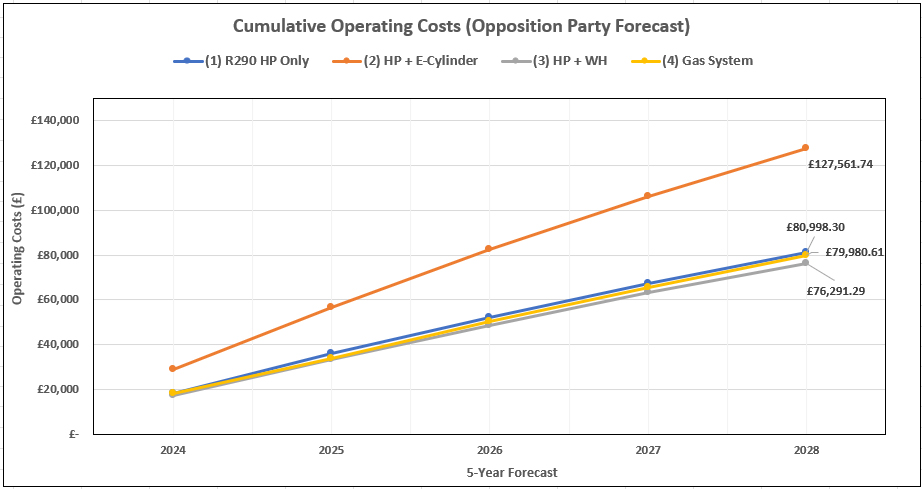
The current opposition party has made public proposals to reduce electrical costs by 23% to moderate UK customer energy costs. Rinnai has produced modelling and a set of calculations that are based on an accommodation block and feature four separate appliances in a heating hot water delivery system as below -:
R290 Commercial heat pump System = 6x 50kW R290 HPs + 6x 800L HP Buffers.
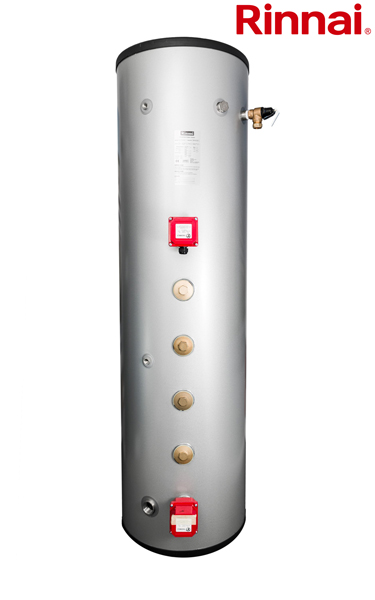
R290 Commercial heat pump system + Electric storage water heater = 4x 95kW iMAX HPs + 2x 800L HP Buffers + 2x 800L E-cylinders electric water heaters e/w 60kW Immersions.
Heat Pump + gas fired continuous flow water heater System = 4x 95kW iMAX + 2x 800L HP Buffers + 4x N1600 continuous flow water heaters + 2x 800L cylinders.
Following is a set of calculations based on the proposed 23% reduction in electrical costs the opposition party suggested as future policy using the above systems and appliances.
This analysis was carried out to understand how the operating cost of each system differs when using forecasted electricity costs, which suggest a reduction of 23% in national grid consumed electricity, compared to the current government forecasted national grid figures.
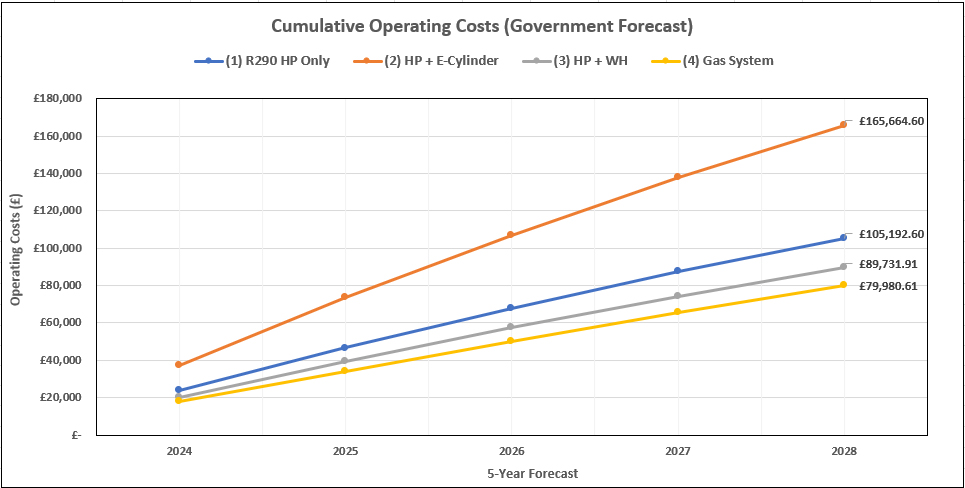
The below graph represents the current governments costs when used in an accommodation block application.
In the below graph please note that HP equates to Heat Pump and WH translates as Water Heater (system).
A Rinnai R290 heat pump will cost £105,192.60; a heat pump and electric cylinder will cost £165, 664.60; a heat pump and water heater system will cost £89,731.90 whilst a natural gas system will produce costs of £79, 980. 61. All costs are measured over a 5-year period.
Below is another graph that represents the costs related to Rinnai products considering the 23% reduction in electric costs the opposition party are forecasting. A Rinnai R290 heat pump will cost £80,998.30; a heat pump and electric cylinder will charge customers £127,561.74; a heat pump and water heater will cost UK customers £76,291.29, whilst a natural gas system will cost £79,980.61. Again, all costs are also based on 5-year period.
Under the current opposition party proposals to reduce electricity costs by 23% a clear beneficial increase is denoted in customer fiscal outlay over a 5-year period. In both graphs the costs relating to the natural gas system stay static and can therefore be overlooked.
Costs of operating a R290 heat pump over 5 years is presently £105,192.60 and under current opposition plans to reduce electrical costs by 23% will be £80,998.30.
A heat pump and electrical cylinder over 5 years presently costs UK customers £165, 664.60. Under opposition plans to offer reductions in electrical costs the same product will cost £127,561.74.
Whilst a heat pump and water heater using the same metric as above currently costs £89,731.90. After reducing electrical costs by 23% the exact same product will require £76,291.29 over a 5-year period.
Clear reductions over a 5-year period are clear when observing heat pump and hybrid systems. Widespread electrification is a main objective by UK policy makers who aim to impose the cheapest electricity costs on UK households by 2035. Investing in a domestic or commercial application electric hybrid heating and hot water system could potentially result in huge reductions of operational costs.
One strong conclusion to be drawn from these figures is that all sites, consultants, contractors and end users should consider all factors before making a commitment to a system or appliances arrangement.
Contractors, consultants and installers who recognize the complexity of the current energy market should form partnerships with those organizations which have arranged their entire product offering to meet and exceed current and future energy policy.
To take advantage of Rinnai services for calculating capital expenditure, operational expenditure and carbon visit https://www.rinnai-uk.co.uk/contact-us/carbon-cost-comparison-form and fill in your project details. Alternatively contact us today on 0300 373 0660.
RINNAI’S H3 DECARBONISATION OFFERS PATHWAYS & CUSTOMER COST REDUCTIONS FOR COMMERCIAL, DOMESTIC AND OFF-GRID HEATING & HOT WATER DELIVERY
Rinnai’s H3 range of decarbonising products include hydrogen / BioLPG ready technology, hybrid systems, and a wide range of LOW GWP heat pumps and solar thermal. Also, within Rinnai’s H3 range is Infinity hydrogen blend ready and BioLPG ready continuous flow water heaters which are stacked with a multitude of features that ensure long life, robust & durable use, customer satisfaction and product efficiency.
Rinnai’s range of decarbonising products – H1/H2/H3 – consists of heat pump, solar, hydrogen in any configuration, hybrid formats for either residential or commercial applications. Rinnai’s H3 range of products offer contractors, consultants and end users a range of efficient, robust and affordable decarbonising appliances which create practical, economic and technically feasible solutions. The range covers all forms of fuels and appliances currently available – electric, gas, hydrogen, BioLPG, DME solar thermal, low GWP heat pumps and electric water heaters.
Rinnai H1 continuous water heaters and boilers offer practical and economic decarbonization delivered through technological innovation in hydrogen and renewable liquid gas ready technology.
Rinnai’s H1 option is centred on hydrogen, as it is anticipated that clean hydrogen fuels will become internationally energy market-relevant in
future: Rinnai water heaters are hydrogen 20% blends ready and include the world’s first 100% hydrogen-ready hot water heating technology.
Rinnai H2 – Decarbonization simplified with renewable gas-ready units, Solar Thermal and Heat Pump Hybrids. Rinnai H2 is designed to introduce a practical and low-cost option which may suit specific sites and enable multiple decarbonisation pathways with the addition of high performance.
Rinnai H3 – Low-GWP heat pump technology made easy – Rinnai heat pumps are available for domestic and commercial usage with an extensive range of 4 – 115kW appliances.
Rinnai’s H3 heat pumps utilise R32 refrigerant and have favourable COP and SCOP.
Rinnai is a world leading manufacturer of hot water heaters and produces over two million units a year, operating on each of the five continents. The brand has gained an established reputation for producing products that offer high performance, cost efficiency and extended working lives.
Rinnai’s commercial and domestic continuous flow water heaters offer a limitless supply of instantaneous temperature controlled hot water and all units are designed to align with present and future energy sources. Rinnai condensing water heaters accept either existing fuel or hydrogen gas blends. Rinnai units are also suited for off-grid customers who require LPG and BioLPG or DME.
Rinnai products are UKCA certified, A-rated water efficiency, accessed through multiple fuel options and are available for purchase 24/7, 365 days a year. Any unit can be delivered to any UK site within 24 hours. Rinnai offer carbon and cost comparison services that will calculate financial and carbon savings made when investing in a Rinnai system. Rinnai also provide a system design service that will suggest an appropriate system for the property in question. Rinnai offer comprehensive training courses and technical support in all aspects of the water heating industry including detailed CPD’s. More information can be found on Rinnai’s website and its “Help Me Choose” webpage.
Over 40 years ago, Calder was founded to address the need for safe and reliable pumping equipment for industrial applications. Seeking to find a place in a less crowded market, Calder specialised in high pressure applications. In the 1990s, the company immersed itself in the stringent standards and regulations of the offshore energy sector and went on to become a much-trusted bespoke supplier to offshore operators.
As the company grew, they focused on new opportunities, particularly in areas that involved difficult and innovative processes. For example, they were instrumental in the development of Cuttings Re-injection (CRI) technology. This is the injection of ground-up stone and rock, from the drilling process into the geology below the oil reservoir. Significantly, cuttings re-injection is an environmentally sound method for disposing of oil & gas drilling by-products. It replaced the traditional method where drill cuttings were left to litter the seabed where they destroyed subsea flora and fauna for miles around.
Today, the pump systems Calder designs and manufactures for energy transition applications are becoming a large part of their portfolio and they are heavily involved in the development of new technology to aid the race to net zero.
The Challenges
Calder’s hard-earned pumping expertise has lent itself well to the energy transition. Indeed, the move felt like a very natural progression for their company. That said, nothing is plain sailing! They set themselves a challenge to explore alternative energy delivery systems. Although they understand high pressures and hazardous areas, many of the applications were new to them. Calder’s engineering team researched and digested everything they could about the new applications. Conferences and seminars were attended, hosted by both renewables companies and suppliers. Case studies and white papers read and absorbed.
Their research identified three broad categories requiring further investigation:
Applications
Firstly, finding applications where Calder’s skills are ideally suited. As they thoroughly understand their skill sets, this is possibly the easiest of the tasks.
There was a significant focus on the hydrogen market due to its promising nature. However, during their initial research they found that while there was a lot of talk, actual progress seemed limited. Of late, there seems more movement in this area and with the technology they have they can comfortably address the specific challenges posed by hydrogen. Indeed, Calder has worked with a number of companies on innovative hydrogen systems using membrane-free electrolysers and high pressure electrolysers.
Their research moved to alternative energy markets such as ammonia, methane, and methanol. Methanol injection, in particular, emerged as a more readily accessible market to break into. Indeed, collaboration with a major engine manufacturer on methanol injection for ships’ engines (as a green alternative to diesel) resulted in a purchase order for a green fuel injection system for an offshore vessel.
Calder’s current pumping technology requires little adaptation for many carbon capture, usage and storage (CCUS) applications. They are actively engaged with operators in the development of pump systems for carbon capture and advanced cooling systems.
They discovered that their high pressure, downhole water injection units enable a gentle transition to geothermal energy recovery applications. Moreover, there is significant opportunity, both onshore and offshore, for the re-purposing of redundant oil & gas wells for geothermal energy recovery.
Calder continues to support their traditional markets and applications, but even here the products are changing. Many new platforms are being built, and existing ones converted, with power-from-shore capability. As an alternative to generating their own power from fossil fuels, platforms receive electric power via cables run from onshore. This move towards electrification has resulted in Calder supplying ever more offshore pump skid packages powered by electric motor.
A recent development has been the MultEjet – a high pressure water jetting pump unit for offshore fabric maintenance applications. This unit features new electric motor drivetrain technology, allowing the incorporation of variable speed, explosion-proof control without need for a separate VSD. This innovation brings to the market portable, self-contained, VSD electric-drive pump units in a compact format not previously available.
Process Fluids and the Supply Chain
Another significant challenge lay in understanding the complexities of unfamiliar process fluids and materials. Calder’s engineers looked in depth into areas such as metallurgy and advanced sealing capabilities – both areas of familiarity through their existing products.
The issue of new process fluids and materials extended beyond their engineering team. Understanding the capabilities of the supply chain to handle alternative energy materials and technologies was a significant challenge. Discussions with suppliers included considerations for cryogenics, sealing technology, and welding methods. On occasions, they sourced new, technology-ready suppliers.
Cryogenics was of particular relevance to energy storage applications and has significant effects on the materials of construction. Material selection had always been an important factor in Calder’s design of pump systems to cope with aggressive liquids and extremes of temperature. However, cryogenics has certainly extended their team’s knowledge in this area.
Sealing technology is an area in which Calder is hugely experienced. However, the unique properties of hydrogen, in particular, demand even greater levels of protection against leakage than many traditional applications. Fortunately, pump units with enhanced leakage detection technology are already successfully deployed in use in some offshore methanol applications and this technology is readily transferable.
One area where Calder identified a need for further knowledge was fusion welding. Traditionally, pipework joints on offshore pump skids have been bolted. A project under discussion with a new customer in the renewable energy sector stipulates that all the pipework joints are fusion welded. So Calder has developed their understanding and will make adjustments to their manufacturing methodology, where necessary, due to the additional welding requirements.
Standards and Regulations
Differences in customer requirements in the energy transition sector compared to traditional oil & gas applications, particularly in terms of standards and materials, were noted. Calder’s engineering and documentation teams sought to understand the new standards and grappled with the challenges of cross-referencing with existing oil & gas standards. They found that in some areas standards aren’t actually written or they are developing. So Calder can apply their existing knowledge of standards and materials to those applications. They foresee that the standards will be a big issue. Despite the challenges, their vast experience of ATEX, NORSOK, and IECEx will be invaluable in the evolving landscape of standards in emerging markets. They recognise that the utilization of their existing electrical knowledge in zoned applications will be a strength for various energy transition projects.
Calder’s Experience
Their first foray into the energy transition was the development of a geothermal energy recovery pump unit for a closed loop, downhole heat exchanger system. Pump selection was critical for this application. They selected the perfect pump for the project – a high flow unit with low running costs and long service intervals. The unit is running onsite and has met all expectations.
Green marine fuel injection is much talked about, whether it be ammonia or methanol. Calder is delighted to have been selected to supply a methanol fuel injection package for a marine vessel. This will operate in an ATEX Zone 2 hazardous environment and is really just the latest incarnation of the hazardous area injection pump units they have been manufacturing for over two decades.
Other recent interesting projects include a twin-pump, duty standby pump skid. This high flow, critical-application unit is for offshore cooling medium duties. Currently in design are pump skids for solar panel production. These chemical injection pump systems will inject polymers during the production process. Collaborations with customers on four other projects are exciting, but are commercially sensitive.
What of the future?
Calder has always striven to develop new markets and to excel in each one. Without doubt, they see their recent projects in the emerging energy transition industries as the start of something big! Given Calder’s experience, it is in the more challenging applications where they can really add value. And that is what they intend to do. Working closely with their customers, design, manufacture and test the pump systems they need, and focus on safety, quality, and reliability. After all, that focus has worked for the last 40 years!
Despite structural challenges in the UK, market-ready AI technology offers a game-changing stimulus for BESS operators and investors
Flux in the global energy market has become normalised during the past two years, reducing the clarity of the role of renewables in the energy mix. And over this period of volatility, clean energy has been regarded as everything from strategic imperative for energy security to being too long-tail to offer remediation to the threat of immediate supply-side shortages.
Despite this, a new normal has begun to take shape with many economies deploying significant subsidies to stimulate renewable energy investments. While China has been busy incentivising its entire renewables supply chain for years, the Biden Inflation Reduction Act and its ‘matching’ by the EU just over 12 months ago brought the world’s three most significant trading blocs into broad, subsidising alignment in each of their respective economies.
Meanwhile, one of the first mover markets in renewable power generation, the UK, has been pegged back in the absence of comparable investment incentives. Without equivalent subsidies, the UK has dropped from a leadership position to eighth in EY’s latest Renewable Energy Country Attractiveness Index.
The report cites the ‘failure of Contracts for Difference (CfD) Round 5 to attract new offshore wind capacity, plus the diminishing of green policies, leaving investors with reduced confidence in UK renewables’. And industry agrees too. The UK Sustainable Investment and Finance Association, which represents £19 trillion of investments, reports that 87% of UK energy businesses agree that changes to policy are essential to make the UK an attractive investment location for green energy.
With the UK languishing in the global marketplace while US customers benefit from battery packs discounted by an effective 45%, technologists point to other ways to sharpen up the sector’s competitive edge without waiting for government handouts. While renewable energy generation technologies have become progressively more optimised, the same cannot be said for the essential – but sometimes overlooked – energy storage technologies that constitute a critical part of the investment case for both operators and investors. And that criticality is growing as the grid struggles to contend as new renewable capacity comes on stream. This has been drawn into sharp focus by data from the electricity system’s balancing market platform, Elexon, that showed in 2022 how the National Grid spent £215m paying wind generators to stop generating power while turning on gas-fired power at an additional cost of £717m.
Stationary storage is therefore an essential component to buffer energy generation from supply and provide a controllable way to balance the renewables contribution to the grid.
So, while the role of storage is incontestable, it had until recently been something of a spanner in the works for investors. That’s because the grid-scale batteries that make up stationary storage don’t last as long as the systems they power. Much to investors’ and operators’ distaste, the only solution to this functional shortcoming is to either oversize the capacity of battery storage solutions at the point of commission by an order of 30 to 50%, or augment deteriorating battery capability partway through the storage facility lifecycle. According to the National Renewable Energy Laboratory, this adds 20 to 30% to a storage project cost – or in hard numbers, another $58.2m to supplement a typical 400MWh, 4-hour system.
However, this challenge has been addressed by market-ready tech that embraces AI to significantly mitigate the oversizing conundrum. Adrien Bizeray, Co-Founder and Chief Data Scientist at Oxford-based Brill Power explains: “Artificial intelligence has a crucial role to play in enhancing the efficiency of battery systems. By identifying latent weaknesses within battery energy storage systems, our AI system mitigates factors that impair overall system performance. Acting as a vigilant monitor, this allows us to detect anomalies early and enables more effective management of conditions that could compromise battery performance.“
Bizeray points to independent validation of Brill’s battery management toolset that can significantly reduce $58m of battery augmentation needed to make a battery last as long as the systems it powers by intelligently managing the load and discharge cycles of the battery. The full suite of Brill technologies provides up to 46% better battery performance, up to 60% longer battery life, and 30% lower lifetime costs.
For investors seeking to avoid the ‘black box economics’ of BESS systems, Bizeray adds: “AI models also contribute to a deeper understanding of the cost dynamics associated with energy storage asset usage. By providing insights into battery degradation and remaining useful life of systems, owners can make better-informed decisions about usage strategy, improving margins and boosting ROI..”
As storage assets become increasingly more important to solve strategic grid problems while the market simultaneously demands end-to-end efficiency from renewables, optimising the performance of BESS using homegrown AI technology looks to be one route to the UK reasserting some form of leadership in the eye of the renewables investors.
Meet Kirti Rudra, a seasoned professional in the energy industry with a remarkable record of accomplishment in accelerating customer decarbonisation strategies. Over her 17-year career, Kirti has successfully negotiated major energy performance contracts with public and private organizations on behalf of energy and energy services providers.
Recently appointed Country Lead for ENGIE Impact UK, Kirti previously helped pivot EQUANS UK engineering teams into a consulting team, led the public sector sales strategy at Centrica, and played a pivotal role at EDF Energy.
As a Chartered Accountant with a BSc (Hons) in Economics, Kirti is skilled in commercial structuring, energy markets, auditing, risk management, and business strategy. Fully committed to doing her part to speed the energy transition, Kirti has been a driving force in delivering sustainable and affordable net-zero solutions that meet the decarbonization needs of leading companies in multiple industries.
What prompted your switch from accountancy to sustainability?
My 20-year-old daughter. She’s the driving force behind my professional advocacy of the energy transition. And I never needed to make a switch. Whether working on energy markets and procurement or sustainability solutions, my goals has been to contribute to building a greener world where she and future generations can thrive. We simply must do better.
Can you highlight the key moments in your career?
A theme runs through those key moments, and it has to do with building that sustainable world. They occurred on projects where I added the most value by developing long-term sustainable business models that deliver win-win commercial arrangements to accelerate the energy transition.
For example, for a project to decarbonize the NHS foundation trust, my role was to spearhead a long-term energy performance contract using onsite generation and energy efficiency measures to generate savings and optimise their staff’s primary efforts – caring for people. That project was recognized by the Health Business Awards and Sustainable Hospital Awards. I also supported the UK’s system of nuclear power plants by optimizing their outage placements, a project that generated significant millions in savings.
Most recently, I reached commercial close on several sites within an on-site solar implementation programme that will yield a total carbon savings of 30kt of CO2 in nine countries. I highlight this because it leverages our new approach to commercial agreements in the decarbonisation space, in which the provider – ENGIE Impact – is incentivised to perform because we have skin in the game. We are not advising from the sidelines. The client’s success is our success.
At ENGIE Impact, we promote highly sustainable solutions with a long-term impact, which can be costly. Our new way of contracting involves no upfront CAPEX for the client and full risk-transfer to the provider, lowering the bar for organisations to decarbonise. By leveraging our resources to scale an on-site solar program across a portfolio of sites in multiple countries, we accelerate the decarbonisation process.
How would you articulate your personal mission?
There’s an infinite number of opportunities to deliver change, but if you do not consider how to drive this change by aligning people and creating win-win commercial strategies, it will not happen.
What do you see as the major hurdles facing the sustainability sector? And what can companies do to combat this?
ENGIE Impact’s 2024 Net Zero Report found that about half of major companies are working towards long term decarbonisation but are encountering hurdles to their progress. They need to navigate competing business priorities, with decarbonisation efforts often falling prey to budget constraints. These organisations are also slow to make decisions about carbon projects, delaying implementation.
Companies need to change their way of working, shifting from a model of doing it all themselves to working with trusted partners. By bringing in experts to manage risk and support their staff, they can start making fundamental changes and adopting a holistic approach in which carbon impacts are integrated into the decision-making process. This is how they will reach their climate goals.
What is your outlook on the future of renewable energy, bearing in mind ENGIE Impact’s Net Zero report?
My outlook is positive. There is growing global momentum to address climate change and transition to renewable energy sources. Companies are realising that accelerating their energy transition is about more than compliance. It gives them a competitive advantage.
ENGIE Impact and its Net Zero Report are realistic about our progress thus far, but by focusing on proven approaches, rethinking decarbonisation strategies, integrating emissions data, and exploring financing alternatives, we believe we can drive positive change.
It therefore comes as no surprise that in 2022, the Department for Education (DfE) launched ‘The Sustainability and Climate Change Strategy’. The aim was for the UK to be the world-leading education sector in sustainability and climate change by 2030.
Fast forward to last November, the environmental audit committee (EAC) cautioned that by 2050 a mere 20 per cent schools in England will reach net zero compliance. It’s clear much more needs to be done.
The need to decarbonise their estates may be high on the agenda for Trusts, Governing Boards, Parent Teacher Associations and head teachers, not to mention their pupils. After all, they all want to ensure that their schools provide the very best environment for learning. However, what cannot be ignored is the financial obstacles that many schools face when it comes to investing in sustainability measures. Ironically, this includes the cripplingly high cost of energy experienced by schools over the past two years.
While schools clearly face a huge challenge to decarbonise, there are relatively simple and affordable steps that they can take towards lowering their energy emissions. Introducing smart meters and basic energy monitoring tools, for instance.
In order to encourage more schools to begin adopting such measures, the DfE recently set out that every school in the UK must produce its own action plan for how they will begin to transition their school, and this is now aligned with the national curriculum.
This provides a fantastic opportunity for children to build and champion their schools’ own energy and carbon reduction efforts. Involving and engaging pupils throughout this process is a brilliant way for schools to begin lowering their consumption and costs through creating informed awareness amongst the school’s main users – the students themselves – to drive action.
Running in parallel with this is the fact that it can teach students invaluable skills, potentially inspiring them to become the energy managers, engineers, and environmental advocates that our society will so desperately need in the future as we continue to combat climate change.
One particular initiative that has seen success through following this student-led approach is the Energy in Schools (EiS) programme – a joint collaboration between the DfE, MyUtilityGenius, and SMS plc. There have already been successful trials carried out in selected schools, with the programme now being rolled out nationwide following very positive early results.
The starting point is to provide schools with a clearer understanding of their energy usage across their buildings. This is first achieved through the installation of smart meters, and then by giving teachers and students access to Microbits – small devices that can be programmed to capture consumption data and record it accurately in near real time. The students are taught how to do this through interactive lesson plans that are a fundamental part of engaging them with the EiS programme.
While the smart meters can give schools an oversight of overall energy usage, Microbits can show exactly when and where buildings are being inefficient – providing a deeper, granular level of insight. This insight, combined with smart meter data, can then help the school make more informed decisions about where energy efficiency improvements are needed around the building – such as introducing soft close doors, double glazing, or better insulation.
What’s significant about this model is that it’s the children themselves who are empowered to lead this change through lesson plans that engage them on the impact of their school’s energy consumption, as well as their own.
Of the 20 different schools involved in initial trials, 85 per cent of participants reported more confidence in their knowledge across energy and climate topics with a better understanding of how much energy they used and how to reduce it. 89 per cent were motivated to take action to reduce energy consumption, incentivised by the metrics provided by the EiS platform. The schools also achieved a 7 per cent reduction in energy usage from the behavioural change that the monitoring provoked. The results speak for themselves, and prove that this type of model can be easily replicated in other schools across the country.
Imagine the full potential of savings – both financially and carbon related – resulting from programmes like these if it included the installation of on-site solar panels, battery storage, heat pumps, or cavity wall insulation. That’s a story for another day, particularly when greater funding is made available for retrofitting creaking school buildings, or indeed the much-needed construction of newer energy-efficient properties.
And there’s also the wider benefits to the community that programmes like these can bring. For example, children educating their parents about the importance of getting a smart meter at home, and being cautious about their own energy usage. Indeed, there is an exciting opportunity for children to become the energy champions of their own households and wider communities, as well as their schools. Afterall, behavioural change so often begins with the younger generation.
Nevertheless, it’s clear that schools and those responsible for managing and governing them must urgently put the stepping stones in place to achieve meaningful decarbonisation, and there are many ways to go about it. Educating, empowering, and inspiring our children to take the lead is proving to be highly successful in this regard. The model for such a novel approach is now proven, and it should be used to replicate success right across our education sector.
It’s well known that the government is looking to increase the number of heat networks in the UK, but there has been little coverage of the plans for exactly how. At Sharenergy, we are calling for community and social benefit to be at the front and centre of the Heat Network Transformation Programme and are taking action through our Community Heat Development Unit project.
The Department for Energy Security and Net Zero (DESNZ) recently held a consultation on proposals to create heat network zones across the country which could then be licensed for development, in a similar way to the PEDL licensing system for companies wanting to look for fossil fuel reserves.
The benefits of heat networks are clear: they can offer heat potentially at far lower costs than individual heat pumps and offer a route to decarbonise heat whilst avoiding extensive, expensive and disruptive retrofit. They can allow households to benefit from heat that would otherwise be wasted from industrial or commercial sources like data centres or – unsustainable as they are – waste incinerators. Further decarbonisation advantages are available through centralised heat storage, which offers the chance to shift times of demand and thereby support intermittent renewable electricity generation. Hot water tanks are an order of magnitude less expensive than chemical batteries and don’t require exotic minerals with dubious supply chains.
Sharenergy’s Community Heat Development Unit project
Sharenergy is a community energy consultancy based in Shrewsbury but active nationwide, with extensive experience supporting communities to develop renewable energy projects. We have helped to secure over £30 million in community energy investments, through over 10,000 individual investments by members of the public. We are a co-operative and have a strong social purpose.
We are working on a Community Heat Development Unit (CHDU) project which brings a data-led approach to identifying where the best chances for successful community heat networks are – drawing on existing experience but adding the crucial element of community ownership and representation that is Sharenergy’s specialism. This 18-month project, running in partnership with Community Energy England and the Marches Energy Agency, will develop a business model that can operate in these ‘sweet spots’, as well as a Community Heat Delivery Unit to support the development of locally-owned networks.
We want communities all over the country to be able to take control in the effort to decarbonise their heat needs. Hence it was essential that we spent some time understanding the consultation proposals and their implications for communities.
What’s being proposed?
The proposal that went out for consultation is that DESNZ, as “Central Authority”, will identify areas in which a heat network has the potential to offer cheaper low-carbon heat than would be achieved through every property installing an individual air-sourced heat pump. Each such area becomes a “designated zone”, and is licensed to a developer by a local “Zone Coordinator”. The coordinator may be the local council, a regional body or combined authority, or DESNZ itself. Zones are licensed through a “competitive and open process”, and four preferred commercial delivery models are given, three of which involve partial ownership by the local authority.
Within a designated zone, many nondomestic properties are likely to be compelled to connect to the heat network. The same would apply to existing communal heating systems, and new buildings are likely to be required to be “heat network ready” on construction.
As a heat network expands within a zone, the developer has the power to compel more nearby sites to connect to it. This applies both to consumers and sites on which significant amounts of heat are generated, such as waste incinerators, which would be identified as potential heat sources by the Zone Coordinator.
The powers being conferred onto these licensed zone developers are significant – both the powers of compulsion and also the monopolistic position they then occupy, able to set the price of heat for buildings that are likely to be reliant on the network. No details on the planned zones are given, but a map showing the output of a preliminary zone modelling exercise appears to show several thousand heat network zones across the country. The Committee for Climate Change (CCC) suggested that heat networks could supply 18% of UK heat demand by 2050 – equivalent to 5 million households and 387,000 nondomestic properties.
The licensing work is due to get underway next year (2025) and will require local authorities selected as Zone Coordinators to work with DESNZ to agree heat network zones. Each zone will be consulted on with the intention of developing a pipeline of heat network builds for the next 10-15 years, with each awarded through a “short competitive process”.
Our questions and concerns
We have three major causes for concern with this process, but all basically boil down to the total neglect of communities from any part of this process. Oversight (via elected politicians) and consultation are not the same as community engagement, and we’re seeing far too many cases where net zero infrastructure is seeing its social support eroded as a result of a failure to address communities’ needs meaningfully.
Our three main questions are:
What lessons have been learnt from previous experiences of licensing monopolistic infrastructure to private operators via a competitive process? The issues surrounding the operation of the rail and water systems should give us pause for thought before embarking on more of the same to supply buildings with heat for the next 40-50 years. Competitive processes reward back-loading of costs and the loading up of infrastructure with debt. Partnership working between the public and private and/or third sector organisations could have a better chance of growing the sector and retaining wealth in our communities. We also think that underlying the whole process should be an understanding that the infrastructure will come into public ownership in the future, after an initial operational phase.
Why is social benefit not considered? Even within a purely privately owned model, the social offers of heat network developers can vary massively. Zone Coordinators must have a mandate to provide benefit to their communities when acting as regulators. Governance should be a legitimate consideration when awarding licences – social enterprises with community purpose are already running theatres, libraries and leisure centres very successfully all over the country.
What is expected to happen for residential properties? No requirement is proposed for residential properties to connect to heat networks within zones, nor any obligation for heat network developers to enable their connection. Domestic properties represent 60% of our heat consumption nationally – it is very conspicuous that no provision is made for them. If it’s too politically difficult, doesn’t that say something about the process they’re proposing? The regulations should encourage, possibly oblige, developers to offer connections to domestic properties and regulate how these connections are treated. Why do half the job?
The amount of infrastructure to be built under these regulations is immense, yet they have not featured on the radar of public political debate. The potential for community benefit – and indeed harm – is great.