
Data centres and the future of low carbon heat in the UK

Shahid Rahman

Shahid Rahman, EMEA โ€“ Data Centre Strategic Account Lead (Engineered IT Cooling Solutions) at Mitsubishi Electric

Data centres are essential in a world where we rely on a substantial flow of information for almost every part of our lives, including commerce, government, education and even entertainment. But they are significant energy users, and their impact on the global energy supply and the environment is a major challenge. In fact, increasing regulation has slowed or halted some data centre development โ€“ the Dutch government banned new hyperscale projects for 9 months, and the Irish government has introduced policies to scrutinize data centres more closely.

All of this means that decarbonising these spaces is a top priority for the country to reach net zero by 2050.

Whatโ€™s more, data centre users are increasingly concerned with their carbon footprint. This has created increasing pressure for data centre developers and operators to provide robust, fault-free services while reducing energy use and emissions โ€“ a difficult balancing act.

Thankfully, solutions already exist that are able to make data centres more energy efficient and minimise their impact on the environment, including adopting a more sustainable way to generate and use heat.

Reusing heat from data centres

One way that data centres can cut the carbon impact of heat is by reusing it. There has been a great deal of focus on using cooling technologies that meet energy-reduction targets, but shifting the focus onto the reuse of heat energy actually gives data centres the potential to decarbonise further and build a greener future. In fact, excess heat from data centres can be used to heat other nearby buildings โ€“ including homes โ€“ and provide them a more sustainable heating source.

A great example of this in action is taking place in Germany. The new German Energy Efficiency Act has made the reuse of โ€˜wasteโ€™ heat a requirement, and data centres in particular will have to achieve 10% heat reuse from 2026, and 20% by 2028.

Several approaches to heat recovery can be applied, depending on a data centreโ€™s heat output and location. One heat recovery model is district heating and cooling as a service: a heat pump recycles the water from the district heat network to cool the data centre. The waste heat from the cooling activity is then collected by the heat pump and pushed to the city network. The reheated hot water from the data centre mixes with the water in the general heat network, increasing the return temperature. Overall, energy consumption across the whole heat network is reduced, and so are energy costs and carbon footprint.

Many leading data centre developers and owners are embracing the benefits of heat reuse. For example, Amazonโ€™s Tallaght data centre located in Dublin uses a system where heat generated by servers is transferred to an air-handling unit and then recycled to warm water. The water is then directed to an energy centre outside the warehouse, where heat pumps further increase the water temperature. This innovative approach not only results in an estimated annual reduction of 1500 tons of carbon dioxide emissions but also provides heating for over 505,000 square feet of local public buildings, 32,800 square feet of commercial buildings, and 133 apartments.

Heat pumps and heat networks to improve energy efficiency in data centres

Embracing technology like heat pumps and heat networks is also critical for reducing the carbon footprint of data centres, and providing heating and hot water more efficiently.

Heat pumps are particularly useful for making the most of waste heat. Data centre output heat is around 30oC to 35oC. Heat pumps can use water at this temperature as a heat source, topping up the temperature to 70oC or even 80oC. This heat energy can be used in the data centre (or nearby buildings) to meet domestic hot water (DHW) demand in washrooms and showers, for example.

Alternatively, it can be used on a wider scale in heat networks connected to buildings and homes located further from the data centre. Households can then be provided with heat and hot water via a large network of pipes. The Climate Change Committee (CCC)estimates that 18% of UK heat could come from heat networks by 2050 (up from 2% today).

Making the right choices for heat reuse

When considering heat reuse as an option for a data centre, there are a number of considerations to make from the earliest stages of design and specification. When looking at linking the data centre to a new or existing heat network, the first step is to ensure that there is an outlet for the waste heat a reasonable distance from the data centre โ€“ or that there is an existing heat network that can use extra capacity โ€“ through heat mapping.

It is then vital to understand what the cooling demand of the data centre is across the year, and to size and specify cooling equipment. The ideal solution is a water-to-water heat pump, or a heat pump chiller. The heat output of the heat pump can then be calculated to establish the annual heat output profile.

A successful match of data centre heat output and local heating requirements is what designers will look for when setting out these projects. Buildings that are close to the data centre, such as nearby offices or public buildings, may not have high heat requirements. However, heat networks which supply domestic customers have higher and more predictable heat demand profiles. Buildings such as hospitals, schools and leisure centres are also sources of heat demand that must be considered.

Energy efficient data centres will lead the way to net zero

There is huge potential for data centres to adopt heat recovery solutions and become part of the UKโ€™s drive to decarbonise heating. Approaches like district heating and cooling allow society to reuse the excess heat from data centres using a heat pump. This kind of process not only enhances energy efficiency in data centres but also contributes to providing neighbourhoods with heat and hot water in a more sustainable way.

As such, framing the data centre sector as part of the solution for our decarbonised future, rather than simply an energy user, has clear benefits for future development and growth.

This article appeared in theย May 2024 issueย of Energy Manager magazine. Subscribeย here.

Seven tips for energy transformation business cases

By Rosa Rotko, Energy Transformation Specialist, Mott MacDonald

Energy and carbon managers might wish for unlimited funds to tackle the challenges of net zero, but they are competing for limited investment resources against many corporate priorities.

According to a poll conducted by Mott MacDonald among ports and shipping industry professionals, 39% found it challenging to secure committed plans and budget for their carbon management projects.

Itโ€™s an issue found across sectors. In my role I engage with a range of large energy users, such as airports, manufacturing firms, water companies and hospitals. A common problem is building business cases for energy transformation and net zero programmes when the costs and benefits fall across the business.

To gain the full picture it is necessary to engage with a wide range of internal stakeholders, including colleagues working in operations, facilities, fleets, commercial, finance, and sustainability. Likewise, some of the costs might be borne by, or benefits accrue to, external stakeholders such as tenants or service providers at the site. 

Here are some tips that may help you draw up a comprehensive and persuasive business case.

  1. Capture all potential revenues. Stacking the full range of revenue potential arising from any investment is a powerful tool. For example, energy generation and storage assets can offer new revenue streams through private wire sales or offering ancillary services to the grid. Emissions reduction initiatives might be monetisable as carbon credits.  Earnings from additional service provision, such as electric vehicle charging or low carbon shore power, might need extra consideration across the business because of the different business models involved. Finally, one should count the increase in customer usage of facilities and additional non-energy related income (such as regulatory revenues linked to utilisation, ability to increase rent or earn commission).
  2. Offset cost savings. Pay-back periods are normally calculated by looking at how long it takes for the net cash inflows from an investment to equal the initial cost. However, it is also important to look at cost savings or avoided costs elsewhere in the business. These could include operational savings (e.g. reduced maintenance of the heating system, fleets or machinery); avoided costs related to grid capacity reinforcement (due to investment in flexibility); and the avoided costs of carbon offsetting in the future, in the absence of investment in emissions reduction. Remember to consider forecasts for wholesale costs and non-commodity costs over the duration of the investment, as energy price assumptions make a huge difference.
  3. Demonstrate the value of price certainty. Reducing price volatility and being able to accurately estimate energy costs is a huge benefit. Being exposed to volatile national and global energy prices increases hedging costs and forecasting risk. This exposure can be mitigated through self-generation, demand reduction or load shifting initiatives. It is important to articulate the value of price certainty, how it feeds into long-term budgets (perhaps linked to a regulatory cycle) and how it affects others such as tenants.
  4. Ask to recycle energy cost savings into further programmes. Some organisations are not allowed to recycle OPEX savings due to regulatory reasons, but others have a practice of โ€˜returningโ€™ any savings to the overall budget. For net zero related initiatives, where there is an ongoing investment need for decades, it would make sense to recycle any resulting energy savings into new measures to cut bills and carbon even further.
  5. Show the full range of co-benefits. Beyond the direct costs and revenues, any decarbonisation measures have a wider range of co-benefits which sometimes are equally, if not more, important in driving action.
    On the financial side, there might be a positive impact on real estate value arising from energy efficiency or provision of new services such as charging infrastructure. For listed companies, investor perception and impact on share price is an important consideration.
    Customer satisfaction is another important metric. Corporates are looking at emissions in their supply chain, and assuming their partners will contribute positively. There is an increasing expectation of access to low carbon electricity and cleaner fuels at sites like transport hubs.
    Reputation with consumers, employees, local authorities and politicians can sometimes be the make-or-break issue for decarbonisation investment: action could determine the ability to grow, while inaction could risk protest by environmental groups.
    There are many other intangible variables. For example, some organisations may be influenced by the requirements of accreditations or certifications they are working towards, or by their regulatory or public interest regime.
  6. Engage with partners who benefit and could contribute to the cost. A particular problem for organisations is coordinating carbon management activity across multiple stakeholders who benefit from efforts at the same site. These include landowners, operators, tenants and service providers.
    It could be necessary to appoint a project manager with a remit to engage with stakeholders, and to build up a coordinated programme with supporting funding commitments. Identify who makes investment decisions for each party, and what drives them; it would be useful to learn how partnersโ€™ business models work, to understand how they can contribute to carbon reduction and the funding of projects. The business case needs to be translated into language which those decision makers can understand โ€“ for example, spelling out the impact on rent for tenants, or the impact on utilisation rates for operations.
  7. Show potential funding sources. A big question is how to balance the financing of capital costs between borrowing, grants, third-party investments and your own balance sheet.

A useful first step is to build an energy transformation roadmap, showing when investment is likely to be made and the expected payback periods. Then it will be easier to consider whether investments can be made on your own balance sheet or in partnership with others such as energy solution providers.

This needs to be overlaid with other capital programmes, to understand where related funding pots might sit: for example, a building modernisation programme could also include energy efficiency or heating upgrades.

It is always handy to have some โ€˜shovel readyโ€™ project briefs written up, in case there are underspends elsewhere or a relevant grant funding round or loan funding scheme opens up. This can sometimes be a fast-moving space, so keep abreast of developments by subscribing to alerts from the Government, relevant local authorities, the UK Infrastructure Bank and others with an interest in your sector.

Hopefully this article raises some points that might be useful for building a business case for energy transformation and net zero programmes. It might trigger you to think of how to consider the potential benefits holistically, including intangible benefits. There are likely to be other factors within your organisation that can be added to this mix, to make an argument for further investment which helps to tackle climate change.

www.mottmac.com

This article appeared in theย May 2024 issueย of Energy Manager magazine. Subscribeย here.

Thermal energy storage: a closer look at the options

Photo by Matthew Henry on Unsplash

The need for an increased reliance on renewable energy regularly surfaces as we try to combat climate change. The latest COP28 agreement spelt it out clearly, calling for a tripling of renewable energy capacity and doubling of energy efficiency improvements by 2030. It is a bold but necessary ambition to get anywhere close to achieving net zero goals in the timescale needed.

A subject that is often overlooked is how best to manage the unpredictability of renewable energy supply. And, when it is discussed, it often focuses on issues at a high level, like grid distribution and national power supplies. However, it can take up to 15 years for expansions to electricity grid transmission and distribution networks to come into effect. With the need for immediate action to limit the impact of climate change, there is an urgent need to look beyond centralised power generation, and towards localised heat generation.

The peaks and troughs in supply from wind and solar resources, and the considerable increase in demand as heat is electrified means it makes sense to look at opportunities for new synergies between the power and heat sectors.

Thermal energy storage (TES) and other forms of long-duration energy storage (LDES) are two promising avenues to maximise the potential of an evolving situation.

The need to adopt methods of TES as we continue the journey towards a more sustainable future is clear. And, as technologies evolve to meet this demand, it is worth considering the wider impact these options might have on our environment, beyond factors like capital costs, efficiency, and energy output. Here we look at two alternatives and consider some of these issues.

Storing energy for heat: conventional batteries

Today the most common forms of energy storage for heat are thermal storage via sensible and latent heat storage using phase-change materials (PCMs), and thermochemical storage. Electrochemical storage options are divided into two categories; capacitors and batteries. Whilst capacitors offer higher efficiencies and increased lifespan compared to batteries, they carry far less charge per unit per mass in comparison.

Batteries have also been the subject of much research on their use in energy storage systems, including integration with renewable technology systems.

Lithium Iron Phosphate batteries (LIPB) have been the subject of several studies evaluating their use, such as on wind farms to store energy for use when the wind isn’t blowing. Their efficiency improves dramatically when more than one battery is used, allowing for complete charge and discharge cycles.

Other papers have focused on improving their efficiency, for example by controlling their operating temperature by using heat mats, or have looked at their impact on the environment through life cycle assessments (LCAs).

A new alternative: The steam battery 

At Spirax Sarco, together with colleagues at Chromalox, we have developed an innovative form of TES: the SteamBattery. This stores heat generated by an immersed electrical heater as high-pressure hot water in a well-insulated vessel.

When steam is needed from the SteamBattery, it is taken from the ullage (gas) space of the vessel, and is either used directly as steam, or indirectly through means of a heat exchanger to connect with a “wet” heating system. The condensed steam is returned to the vessel. As the steam is used, the pressure lowers to the point where the SteamBattery is fully discharged.

It is recharged by the immersed electrical heater, which is able to use electricity from direct renewable sources or from the grid when low-cost renewable power is available. It can both discharge steam and be charged simultaneously, giving flexibility in how it is employed, and as buffer storage. Able to fully charge within 8 hours, it is able to do so overnight.

Considering the wider environmental impact

Using current literature on LIPBs alongside our model, and existing studies for the SteamBattery, we aimed to compare the environmental impact of these two energy storage solutions. There were some limitations, due to the boundaries set by the LIPB studies; notably a cradle-to-gate approach that doesn’t consider either their transportation or disposal at end-of-life.

Once the system boundary was established, a range of comparative environmental impacts could be assessed. Due to differences in the models used between the LIPB study and that for the SteamBattery, we found 10 of the 18 in the LIPB study offered a direct comparison.

Greenhouse gases (GHG): These are the most relevant to climate change impact, and are measured in kg of carbon dioxide equivalence. The results shows that the SteamBattery would emit 8.58 kg/1000 kWh of energy stored throughout its lifetime, whereas the LIPB emitted 16.10/1000 kWh throughout its lifetime. Effectively, the SteamBattery has half the CO2 emissions of the LIPB throughout its useful lifespan.

Effect on ecosystems: We examined six environmental impact categories, including those that cover ecotoxicity and eutrophication in marine and freshwater environments, plus acidification and ecotoxicity in terrestrial ones. For both freshwater and marine environments, the SteamBattery was found to be 95% less impactful compared to the LIPB. This was largely accounted for by the cathode plate manufacturing process needed for the LIPB.

When looking at the terrestrial impacts, a different picture emerges. The SteamBattery’s sulphur dioxide production was 83% less than the LIPB. However, its dichlorobenzene equivalent was higher than the LIPB. A closer examination, considering the impact loads of both products across the different environmental categories, concluded that this was an area for potential improvement rather than a serious flaw.

The assessment further highlighted SteamBattery’s reduced impact on natural resources, such as fossil fuels and water. Notably, the highest environmental loads were predominantly associated with the LIPB, particularly in marine and freshwater ecotoxicity, whereas the SteamBattery’s most significant impact was considerably lower in terrestrial ecotoxicity.

As the need for sustainable steam systems grows, there is a clear imperative to consider more than simply avoiding fossil fuels. The planet’s resilience and future depend on a host of other factors, with environmental considerations high on the list.

This initial study shows a more holistic survey of potential options should always be considered before final decisions are made.

Source: 

Borbala Rebeka David, Sean Spencer, Jeremy Miller, Sulaiman Almahmoud, Hussam Jouhara: (Comparative environmental life cycle assessment of conventional energy storage system and innovative thermal energy storage system, 2021) 

www.spiraxsarco.com

This article appeared in theย May 2024 issueย of Energy Manager magazine. Subscribeย here.

Do air source heat pumps work in cold weather?

Vital Energiโ€™s heat pump experts

Vital Energi experts tell all

Air source heat pumps are one of the most effective technologies for reducing carbon. They harness the natural heat energy present in the air to warm up a space. They work by extracting heat from the outside air and transferring it into a building. The pump uses a working fluid (refrigerant) to absorb heat from the outdoor air, which is then compressed to increase its temperature. This refrigerant is then circulated through a heat exchanger to distribute this heat into a building.

So, if they absorb heat from the air, how are they affected when itโ€™s cold outside?

You might think that if the temperature outside falls below zero, the heat pump will stop working, however even in cold air, there is still sufficient heat for the heat pump to absorb and convert into useful energy.

We had a chat with Vital Energiโ€™s Elliott Sharpe (Strategy & Partnerships Director), Dave Wilkinson (Design Director), Chris Green (Engineering Director), and Liam Grice (Senior Engineer), who advised how you can maximise a heat pumpโ€™s efficiency during cold weather, the best location for it, how you can prepare it for cold weather, and more.

How efficient is an air source heat pump in cold weather?
When we talk about efficiency of an air source heat pump (ASHP), we often consider how many units of heat we get from an ASHP for each unit of electricity used. Because it gets its energy from the surrounding air, we might get 3 units of heat for every 1 unit of electricity, so an efficiency of 300% in the summer months. As the outdoor temperature drops as we head towards winter, the efficiency of an ASHP does reduce. As this reduces, we could find a situation where the heat pump is producing 1 unit of heat for every 1 unit of electricity, which is 100% efficient, this might not sound all that bad, but heat pumps can deliver much higher efficiencies than this when deployed correctly. 

How do you maximise efficiency during winter? 
Generally, during cold weather, the heat pump is operating at its worst efficiency when most heat is required. Careful design of the heat pump and the system it is connected to is important to maximise the efficiency. Understanding that heat pumps may have a reduced capacity at low temperatures is important in correctly sizing the heat pump to cope with this. If you buy a 300kW boiler, that boiler is 300kW all year round. That’s not quite the case for an ASHP, which might provide 300kW in a +10ยฐC ambient temperature, and only 150kW during the coldest of days. The efficiency of heat pumps increases as their supply temperature reduces, so its beneficial to design heat emitters to operate effectively at lower temperature e.g. โ€“underfloor heating can work on a 45C flow. Including buffer vessels or thermal storage can also provide flexibility which can lower the cost of heating from the heat pump. Optimisations of the heat pumps defrost cycle are essential for achieving the best winter performance and should be carefully considered.

Is there anything you can do to prepare your heat pump for cold spells?
Absolutely! The main objective should be to ensure that the heat pump is operating as it should. Proactive maintenance will assist with this, where the entire system should be inspected, refrigerant and oil levels checked, and any issues addressed. Consider scheduling maintenance before winter begins to ensure optimal performance.
In cold ambient temperatures, the heat pump will enter a defrost cycle more often. For optimum efficiency and performance, the air source collector should be unrestricted and free from debris. If you notice any excessive ice build-up on the air source collector it might suggest that the defrost cycle may not be functioning correctly.

ASHP being crane lifted to the roof of a Westminster City Council building

Is there an optimum position or location where an ASHP will perform better during colder months?
ASHPs use fans to move ambient air over the collector. Any restrictions to the air flow will reduce performance. The air is cooled as it passes over the collector, so it is important to minimise air recirculation. Manufactures guidance should be followed to make sure there is sufficient free space around the heat pump and consider any additions such as acoustic panels and their impact on air circulation. Computational Fluid Dynamics (CFD) modelling is a useful investment to make during the design process to make sure the air source collector position is optimised.

Are there specific refrigerants or technologies that can improve winter performance?
When choosing a heat pump, itโ€™s crucial to assess its suitability for various operating conditions over its lifespan. Understand your load profile to determine peak performance needs. If the ambient temperature drops below the design threshold, the systemโ€™s heat output and efficiency will decrease. Consider these factors carefully to select the optimal heat pump technology and refrigerant that precisely meets your requirements.

How can defrost cycles be optimised to reduce energy consumption and output limitations?
Typically, when ambient temperatures are below 7แต’C, ASHPs will need to regularly complete a defrost cycle to remove frost which forms on the coil surface as moisture from the air freezes. The process requires energy to melt the frost, and generally the heating output is reduced during this time, so it is critical the process is completed quickly and efficiently. This can be optimised as part of the commissioning and O&M activities, making sure all temperature probes are fitted correctly and the settings are correct so the defrost process is not more frequent and longer than needed. It is a balance though, because not defrosting correctly causes severe performance issues. If all the frost has not melted and drained away, this will refreeze and eventually create ice which blocks the coil. Manual intervention is often then needed to get the system running optimally again.

Are there any energy conservation measures that can be implemented during the winter months which will help a heat pump run more efficiently?
There is a term often used which is ‘fabric first’. What this means is, the first port of call for any project should be to try and reduce your energy demands first, before looking into any new technology. This fabric first approach could be improving the performance of your windows, to reduce how much heat you lose. It could mean adding more insultation to walls and ceilings. All of these measures will result in your site/building requiring less energy.

Click here to discover more about heat pumps.

This article appeared in theย May 2024 issueย of Energy Manager magazine. Subscribeย here.

How data centres can become an ally towards net zero

Photo by Markus Spiske on Unsplash
Anthea van Scherpenzeel

Anthea van Scherpenzeel, Senior Sustainability Manager, Colt DCS

Commitments and action towards sustainability is more important than ever, and businesses must take action now. Data centres are regularly a topic of conversation due to the high energy consumption needed to power them. For example, it is estimated that global data centre and network electricity consumption in 2022 was around 1-1.3% of global final electricity demand, with data centres accounting for almost a fifth of Irelandโ€™s entire electricity use.

It’s essential that we start making change with tangible targets and responsible roadmaps to reduce the effect of data centresโ€™ energy consumption on the planet. And yet, many in the industry are overwhelmed in how they begin on their sustainability journeys. Whether itโ€™s a lack of environmental, social, and governance (ESG) data, internal expertise, or a culture that prioritises speed and performance over green credentials, the IEA states that improvement is needed as soon as possible in the data centre market.

Looking ahead, in order to successfully address environmental challenges at the rate required to reach a worldwide net-zero economy, science-based targets and roadmaps must be established. It is the duty of those in the market to progress in adopting the most sustainable practices possible so that, as demand rises with new technologies and developing markets, its ESG impact can be reduced. It is more important than ever that actions align with science that sits behind the Paris Agreement, as the AI industry alone is predicted to consume as much energy as the Netherlands by 2027.

How can we set science-based targets?

Science-based targets highlight organisations short- and long-term commitment to combatting climate change. If targets support the Paris Agreementโ€™s aim to limit global warming to 1.5ยฐC above pre-industrial levels, then it is seen to be science-based. The sixth Assessment Report from the Intergovernmental Panel on Climate Change (IPCC) was released not too long ago, and it reiterates the near linear link between the increase in CO2 emissions due to human activities and future global warming. In line with the most recent Net Zero Standard set forth by the Science-based Targets initiative (SBTi), Colt DCS resubmitted its science-based targets in 2023. The aims include fuel, power, waste, and water, among other environmental issues. These objectives are essential for data centres themselves to make progress, as well as helping customers achieve their own net-zero objectives.

In order to prevent the worst effects of climate change and establish a global net zero economy, businesses must cut their greenhouse gas (GHG) emissions in accordance with science-based targets and roadmaps that specify the amount and pace of reduction. This extends to Scope 3 emissions โ€“ which are frequently the hardest to monitor and manage โ€“ where data centre and business leaders must ensure that partners are on the same path to sustainable practices. To be held accountable, the data centre industry must commit, create, submit, share, and disclose their science-based targets.

While science-based targets are essential for to reducing environmental impacts, data centre operators also need to make sure that their sustainability initiatives addresses all 3 ESG pillars. Many companies concentrate on the โ€˜Eโ€™, since it is simpler to evaluate the dataโ€™s granularity, but social and governance issues are also crucial. A deeper focus on the “S” and the “G” can prove to be a crucial distinction, whether it’s in terms of interacting with local communities, protecting, or making sure that governance and reporting are up to par.

Moving from promises, to action

Now that these science-based goals have been established, data centres should then look at turning promises into action. Intelligent transitions to new, environmentally friendly materials, technologies, and energy sources lessen the environmental effect of data centres. Reducing a data center’s carbon footprint can be achieved, for example, by using refrigerants with a lower global warming potential or by moving to greener fuel options and obtaining renewable energy.

In order to guarantee that sustainability becomes an essential component of business strategy, a cultural shift is also required within organisations. In addition to reorienting internal attitudes, achieving goals rests heavily on working together with customers and suppliers. At the heart of the sector needs to be agreement and alignments โ€“ as sustainability canโ€™t be a tick-box exercise.

Measuring progress is a crucial part to the path to sustainability. Good communication with suppliers and partners is essential for tracking Scope 3 emissions in reporting, not only for data centres but also for the companies that use them. This data exchange will be more crucial than ever to obtain a comprehensive picture of sustainability consequences along the whole value chain, especially with the impending EU Corporate Sustainability Reporting Directive (CSRD).

Science-based targets are the way forward

A major reduction in the carbon footprint of the digital infrastructure sector may occur if the data centre industry implemented science-based goals and policies as best practices. Rather than merely focusing on everyday operations, the ultimate goal should be on entrenched acts that start as soon as property is purchased. Data centres need to ensure that every aspect of the site lifecycleโ€”including operations, materials, construction, and equipmentโ€”is as sustainable as feasible. Monitoring embedded carbon is crucial to tracking the entire impact of a project.

This article appeared in theย May 2024 issueย of Energy Manager magazine. Subscribeย here.

New Aztec Solar partnership with Centrica Business Solutions delivers solar PV for Poole Hospital

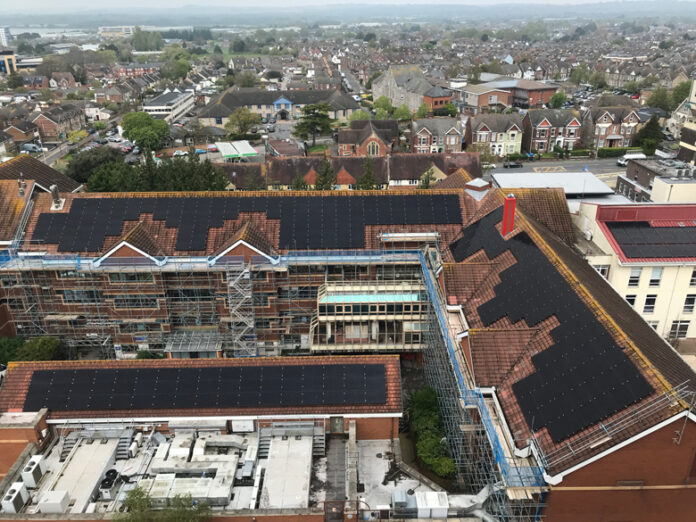
Aztec Solar Energy has become a Centrica Business Solutions energy partner and will complete its first solar PV design and installation project at Poole Hospital in Dorset.ย  The installation is part of University Hospitals Dorset NHS Trustโ€™s transition to net zero.

The project involves five interconnected roofs on one building and will have 470 PV panels, five SolarEdge inverters and 261 optimisers.  Estimates show that it will generate circa 200,000 kWh annually to save circa 50 tonnes of CO2 a year.

Aztec Solar will connect, commission and test the new solar PV system over just two days after installing the panels, inverters and other equipment over the preceding weeks. 

Phil Bryant, Head of Public Sector Sales for Centrica Business Solutions said: โ€œAztec Solar is an excellent addition to our energy partner programme and given their experience in the health sector and their expertise in installing solar PV systems on commercial buildings, they were the ideal company to partner with for the delivery of the project at Poole Hospital.

โ€œWeโ€™re seeing an uptick in demand from public sector and commercial organisations, looking to take advantage of the space above their heads for solar schemes. This provides cost certainty and a source of green power, supporting long-term sustainability ambitions.โ€

Stuart Lane, Sustainability and Carbon Manager for University Hospitals Dorset NHS Trust said: โ€œWe are delighted to announce successful project completions with Centrica Business Solutions and Aztec, overcoming site constraints and height access challenges. 

We are implementing a new roof-mounted photovoltaic system to advance our commitment towards achieving net zero carbon targets. Upon completion, this installation is projected to generate circa 200,000 kWh of power or approximately 5% of Poole Hospitalโ€™s power demand and offset approximately 50 tonnes of CO2 a year.

The solar panel arrays are situated atop the Phillip Arnold blocks and the Dorset Cancer Centre. This partnership underscores our commitment to embrace solar energy as we decarbonise our estate – enhancing healthcare facilities and services for our community.โ€

Commenting on the project Chris Cowling, commercial director at Aztec Solar said: โ€œBecoming a Centrica Business Solutions energy partner is an important step in our businessโ€™ growth in designing and delivering commercial solar PV installations.  Poole Hospital is one of many healthcare buildings that we have provided solutions for, so we understand how important it is to work closely with Centrica Business Solutions to minimise the effects of our installation and the electrical shutdown on patient wellbeing and medical equipment.โ€

BT Group powers up its first EV charger transformed from a green street cabinetย 

Image: Jeff Holmes & BT Group

East Lothian charger pilot is a UK first and will be available to the public free of charge

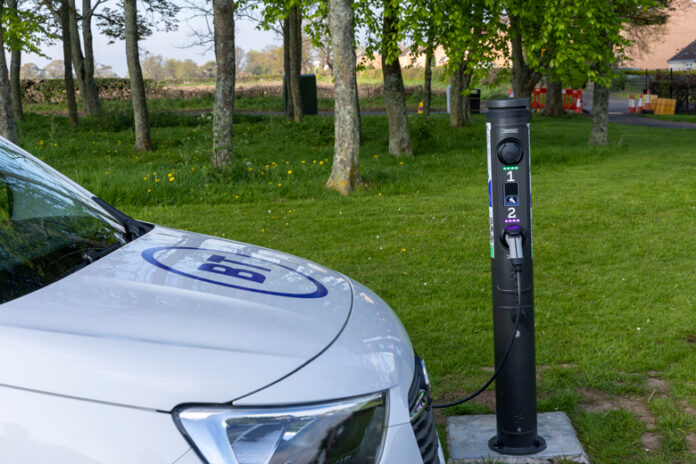
BT Group has announced that its start-up incubation hub, Etc. has installed its first EV (Electric Vehicle) charge point in East Lothian, powered by one of the companyโ€™s green street cabinets as part of a UK-wide trial.

The site in Haddington marks the first phase of a project which could see the wider upgrade of BT Group-owned cabinets, traditionally used to store broadband and phone cabling, turned into charge points across the UK to address the shortfall in public EV charging points.

The charger will be for the use of local residents, who will be able to charge their electric vehicles at no cost for a limited time throughout the pilot1. Users can access the charge point by downloading the trial app from the App Store or Google Play Store. 

The app, which has been designed and developed by BT Group in consultation with EV drivers, includes the features they most want to see including visibility of EV charge points from across the UK. It will also inform on real-time price, availability and charge speed, the ability to start, stop and monitor charge sessions via the app and to filter by connector type, kW speed and charging network.

Electric Vehicle owners will also be able to connect their EV to the app to get live updates on battery levels, estimated costs and charge times, and access to charging history at a glance. Throughout the pilots, BT Group will test elements ranging from the digital customer experience to engineering and technology choices, operational and commercial options.

With 5,052 public electric vehicle chargers predicted to be operational in Scotland2, BT Group has identified up to 4,800 street cabinets that could be used for potential upgrade in Scotland to meet increasing demand.

Cabinet Secretary for Transport at Scottish Government, Fiona Hyslop, said: โ€œThis is an exciting and innovative development in the provision of electric vehicle charging so Iโ€™m really pleased that the first trial in the UK is taking place in East Lothian. 

โ€œThis government is committed to supporting people to make the switch from petrol and diesel vehicles, and our vision for Scotlandโ€™s future public EV charging network highlights the need for private sector finance and delivery to build on our significant investment in the network to date.

โ€œIโ€™m really looking forward to seeing more partnership working like this as we continue to help people in Scotland to make greener transport choices.โ€

Tom Guy, Managing Director, Etc. at BT Group, added: โ€œWe are delighted to launch the first phase of our pilots in Haddington, East Lothian working with the local council, to provide this electric vehicle charging point for local residents.

โ€œOur research shows that 78% of petrol and diesel drivers see not being able to conveniently charge an EV as a key  barrier to purchasing one. We want this to change. 

โ€œItโ€™s critical that we all start to play our part in looking at existing infrastructure to drive innovation at speed to support government set sustainability targets.  Weโ€™re proud to be partnering with local councils across the UK as part of this trial, which presents a unique opportunity to tap into existing assets to drive the important transition to electrification in the UK.โ€

Norman Hampshire, East Lothian Council Leader said: โ€œEast Lothian Council has a strong track record of supporting innovative vehicle charging solutions in public places to accelerate the transition to an electric future. During the design of this trial we worked with BT Group to ensure the charger would be fully accessible, and that trailing cables would not get in the way of pedestrians and others using the pavement. 

โ€œWe are pleased that BT Group is supplementing the wide range of public chargers in East Lothian as this allows the Council to focus on its public service role of providing charging options in areas less attractive to commercial operators. Use of electric vehicles supports the councilโ€™s ambitions to reduce emissions, promote sustainable travel solutions and enhance the local environment.โ€

The next BT Group Electric Vehicle charging trial location will focus next on West Yorkshire, with the business hoping to roll the trial out to up to 600 sites across the UK.


1The electric vehicle charging pilot can be used by local people free of charge until 31st May

2 

Customers who download the app at the location of the trial will need to ensure they have a 4G/5G capable handset and an active plan or pay-as-you-go data services.

Quoted research: Etc. at BT Group research of 4,000 correspondents in the UK and US, commissioned in November 2023 

Retrofitting ageing pump systems offers energy savings

For the transition to high-efficiency, low-carbon buildings, retrofitting outdated heating, cooling and water systems can offer significant opportunities, writes Paul Winnett, operations director, Xylem UK

The retrofit of ageing buildings with high-efficiency pumps and drives offers one of the biggest opportunities to achieve smarter, more efficient buildings. This directly aligns with the International Energy Agencyโ€™s (IEA) Net Zero Emissions 2050 roadmap, updated in September 2023, which urges the global energy sector to double existing efforts to improve the efficiency of buildings.

Accelerated action will support the UK governmentโ€™s net zero pathway and, given that the heating of the UKโ€™s 30 million buildings contributes to almost a quarter of all UK emissions. As a result of the Heat and Building Strategy businesses across almost every sector are already taking steps to use less energy in response to rising utility bills, and to achieve environmental goals.

Across the UK are vast numbers of buildings such as office blocks, shopping centres, hospitals and hotels that were built between 20 and 40 years ago, with outdated heating and cooling systems that consume high amounts of energy.

Simply replacing ageing equipment like-for-like is not the solution. This is recognised by the governmentโ€™s Heat and Building Strategy that says โ€˜decarbonising heat and buildings will require the adoption of new, smarter technologies and practicesโ€™.

Widescale programmes to replace old equipment with high-efficiency technology for heating and cooling, as well as water pressure boosting, would accelerate decarbonisation goals and bring older buildings into a net zero world.

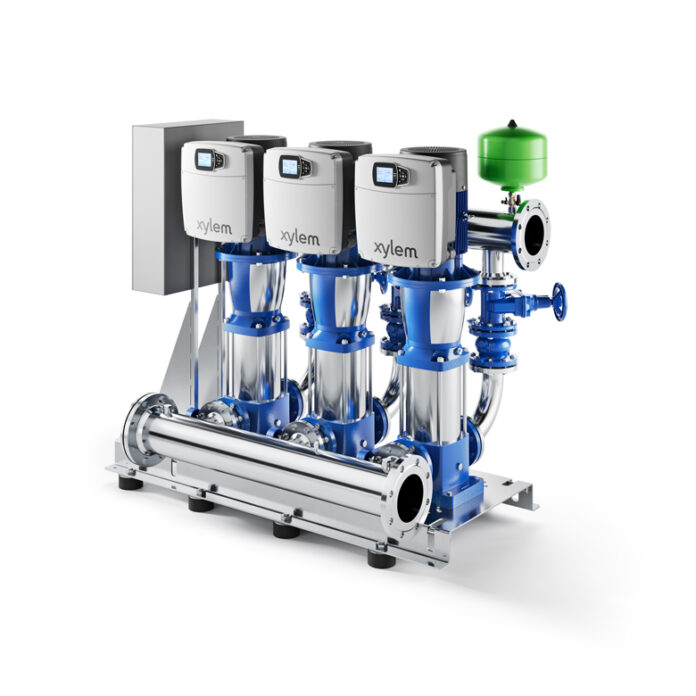
One way to significantly reduce the energy consumption of pumped systems is by switching to variable speed technology. Older pumps typically run at a fixed speed, regardless of demand. Retrofitting with variable-speed drives enables the system to adjust to usage curves.

Upfront capital costs of variable-speed technology may be higher due to their advanced technology, but these costs will be offset over time by expected savings on energy bills. In addition, operational and maintenance costs of variable-speed pumps are generally lower, as they are not running continually and experience less wear and tear.

For large commercial buildings, Xylemโ€™s hydrovarยฎ X is an intelligent variable-speed pump drive, with the highest efficiency IE5 motors, that can cut motor power of pumps by up to 70%. This reduction is achieved by ensuring the pump is only operating at the required speed, depending on demand variations of the system.

The ability to adjust pump speed will have an immediate impact on energy consumption of large buildings, such as hotels, where demand for water and heating fluctuates throughout the day.

Take water pressure in a hotel – in a traditional system, the pumps would be on and the pressure constant. With a variable speed drive, the pumps could run at half their speed during periods of low demand, such as lunchtime when fewer people are in their rooms and increase as guests start checking in and using facilities.   

As the evening goes on and demand rises further, the system will automatically adjust to ensure a constant pressure throughout the building. To achieve this, the system takes pressure or flow readings from sensors to adjust the number of pumps running and their speed, ensuring demand is met while maximum operating efficiency is delivered.

Xylemโ€™s ecocirc XL and XLplus variable speed circulators are designed to manage a similar demand curve for heating and air conditioning systems.

Of course, while retrofitting is essential to decarbonise existing buildings, the use of low carbon technologies in new builds is a must – the governmentโ€™s Future Homes Standard comes into effect in 2025, bringing a set of rules to ensure new homes produce less carbon.

For contractors who are value engineering a project, using cheaper technology may bring down the capital outlay but if they consider the whole lifecycle of the product, high-end low-carbon technology is likely to be more efficient and deliver the most value because of the significant long-term energy savings. 

Understanding HVAC Embodied Carbon

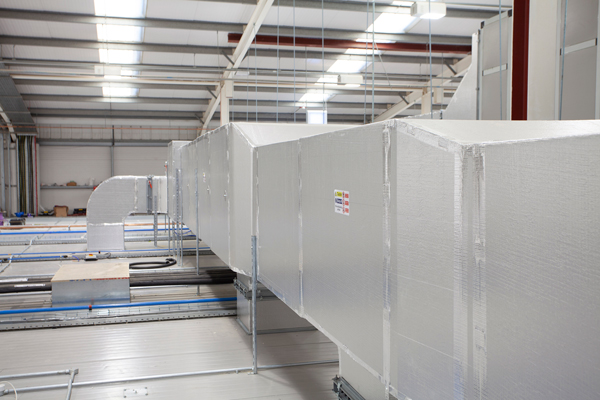
The Kingspan KoolDuct System is an innovative pre-insulated phenolic rectangular HVAC ductwork system.

Marc Nickels, Business Development Manager Kingspan Technical Insulation 

MEP services can account for a significant proportion of both operational emissions and embodied carbon in buildings. The embodied impact can be especially notable in office developments where spaces may undergo numerous Cat-A fit outs during the buildingโ€™s lifespan.

Engineering specialist, Introba, has now released new research looking in more detail at how different specifications of MEP systems can impact embodied carbon. The research, commissioned by Kingspan Technical Insulation, looks at a typical office development. Its findings suggest that limiting use of metals (such as steel or aluminium) is a key factor in reducing embodied carbon from MEP systems, and that the use of pre-insulated phenolic ductwork over conventional lagged galvanised steel ductwork can be beneficial.  

Research

The research looks at a typical 5-storey office building with a gross floor area of 10,000m2. They assessed three different HVAC scenarios:

  • Variable refrigerant flow (VRF)
  • Air source heat pump with fan coil units (ASHP with fan coil units)
  • Air source heat pump with chilled beams (ASHP with chilled beams)

The research considered the total embodied carbon from all three MEP areas for both a Shell & Core and Cat-A fit out. In each case, the public health and electrical designs were kept constant. The embodied carbon for each scenario was calculated using the methodology in CIBSE TM65 – Embodied Carbon in Building Services: A calculation methodology (2021).

In all scenarios, it was assumed that the refrigerant used in all system options was R32 with a global warming potential of 675 kgCO2e. The leakage rates follow the recommendations in CIBSE TM65 with an annual leakage rate of 2% for the ASHPs and 6% for VRF and end of life rate of 1% for the ASHPs and 3% for VRF.

Modelled comparison

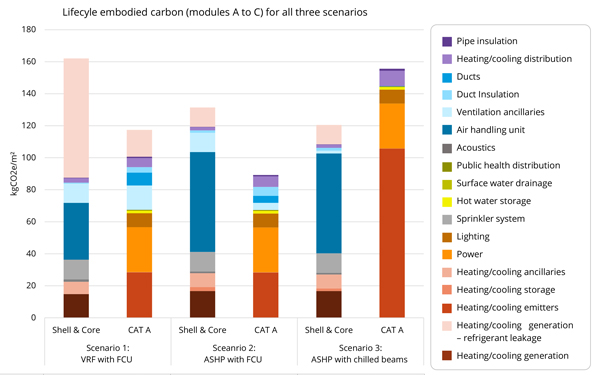
The outputs from the modelling are shown in the graph below.

Graph 1: Lifecycle embodied carbon for Shell & Core and Cat A specifications for different MEP specifications on a typical office case study building.

These showed that the combined embodied carbon from the Shell & Core and Cat-A approaches was lowest under the ASHP with fan coil units scenario. This also had by far the lowest embodied carbon for the CAT-A fit out.

The embodied carbon for the ASHP with chilled beams Shell & Core scenario was lower than the alternatives, however, its CAT-A fit out impact is far higher than for VRF and ASHP with fan coil units. This was mainly due to the high embodied carbon impact of the aluminium chilled beams. This meant that the embodied carbon from the heating/cooling emitters was over 4 times higher than for the other CAT-A fit outs.

Overall embodied carbon from the VRF scenario were the highest of the three which were examined. Refrigerant leakage contributed to 32% of the overall embodied carbon from the VRF scenario. In a high refrigerant leak emission scenario, the embodied carbon from the VRF specification could increase further.

Ductwork

In all scenarios, the ventilation systems were found to have a high embodied carbon impact primarily due to the steel used for the large air handling units and ductwork.

To investigate how reducing the volume of steel could impact embodied carbon, Introba carried out a further analysis. This involved switching from a galvanised steel ductwork specification lagged with phenolic duct insulation, to a pre-insulated phenolic ductwork system. The pre-insulated ductwork system is fabricated from rigid insulation panels with a foil facing โ€“ eliminating the need for galvanised steel ducting.

The results showed that this could have a particularly notable impact on the embodied carbon from the ventilation system for the ASHP with fan coil units scenario โ€“ reducing lifecycle embodied carbon from 100.2 kgCO2/m2 to 88.9 kgCO2/m2. This is a reduction of over 11%.

Embodied carbon emissions for the ventilation system in the VRF scenario also fell by 4.7 kgCO2/m2 whilst change for the ASHP with chilled beams was only 0.3 kgCO2/m2 due to the lower quantity of ductwork needed.

Pre-insulated ductwork also supports potential savings in operational emissions, due to its highly insulated and airtight design.

The Introba research suggested that use of a pre-insulated phenolic ductwork system, such as KoolDuct, over conventional lagged steel ductwork could allow savings on embodied carbon emissions to be reached.

In summary

The research shows that the ASHP with fan coil units scenario had the lowest lifecycle embodied carbon emissions of the three that were examined for the office case study. The embodied carbon emissions for CAT-A fit out for this scenario were also notably lower than for the other approaches that were examined. It also highlighted that further reductions in embodied carbon could be achieved by switching from conventional lagged steel ductwork to pre-insulated phenolic ductwork โ€“ likely due to the reduction in steel used.

For more information: Tel: +44 (0) 1457 890 400 E-mail: info@kingspaninsulation.co.uk Website: www.kingspantechnicalinsulation.co.uk

Sustainable Transformation in Education Through Modular Construction

The urgency for a sustainable transformation within the UK’s education sector is gaining momentum as institutions prepare to launch detailed climate action initiatives by 2025. These initiatives are aimed at deeply integrating sustainability into every aspect of educational endeavours. This aligns perfectly with the wider Environmental, Social, and Governance (ESG) objectives that are becoming increasingly crucial for organisations globally. To reach these lofty goals, one of the pivotal strategies being adopted involves leveraging eco-friendly infrastructure solutions. Among these, modular construction is standing out as the optimal choice for those in the education sector eager to decrease their footprint, promote circularity, and address the environmental dimension of ESG commitments effectively.

The Sustainable Edge of Modular Construction

For educational institutions like schools and universities, modular construction brings an array of benefits. This forward-thinking construction methodology allows for the quick installation of superior infrastructure with hardly any disruption to the educational process. It operates on the principle of producing building components in a controlled factory environment, which significantly reduces the emissions typically associated with traditional construction, such as transport of materials and workforce. Moreover, this approach notably decreases the embodied carbon in buildings, whether they’re intended for use as classrooms, lecture halls, or offices.

Renewable Energy in Construction

The eco-friendly advantages of modular construction are enhanced by the integration of renewable energy in the production process. sets an example with its implementation of large-scale solar panel installations, covering an area of 1,700 square meters, to diminish its carbon footprint and ensure the majority of energy used in production is renewable, whether sourced onsite or from the national grid.

Emphasising Efficiency Through Design

A key aspect of modular construction’s environmental benefits is the adoption of a “fabric first” methodology. This design philosophy focuses on maximising the efficiency of a building’s external shell, selecting materials and components that offer natural insulation and climate control, thus minimising reliance on artificial heating and cooling. This approach not only leads to buildings that are more energy-efficient over their lifespan but also enhances the quality of the internal environment, making it more conducive to education.

Contributing to the Circular Economy

Modular construction is ideally suited to meet the dynamic needs of the education sector while adhering to strict ESG standards. It offers versatile solutions like temporary or adaptable modular units that can be repositioned or repurposed, thereby significantly reducing carbon emissions in comparison to constructing new buildings from scratch.

Incorporating Clean Technology

Extending its sustainability benefits, modular construction easily incorporates technologies like rainwater harvesting, solar power, and geothermal heat pumps into the design of educational facilities. These allow institutions to generate their own renewable energy and even return excess power to the grid. An example of this in action is the initiative by , which adopted air source heat pumps for a fully electric, energy-efficient building.

The Green Future of Educational Infrastructure

As the education sector searches for sustainable infrastructure solutions, modular construction emerges as a leading choice. With its focus on lowering carbon emissions, enhancing energy efficiency, and promoting recyclability, modular construction is at the forefront of helping educational institutions meet their ESG objectives.

The trajectory for educational infrastructure is set towards modular and sustainable practices. For educational bodies aiming to positively impact the environment while updating their facilities, the exploration of modular construction offers a pathway to a sustainable, efficient, and flexible future.