
Is a fabric first approach the best way to heat decarbonisation in buildings?

Sebastian Lunt, Energy Carbon Programme Manager, Salix Finance

Time is of the essence if we are to meet our decarbonisation objectives, with some organisations, including in the public sector, committed to a net zero target by 2030. Although not the entirety of scope one and two emissions, heating in buildings accounts for a notable amount of carbon emissions. In fact, the built environment accounts for about 25% of our greenhouse emissions in the UK.

Since we all know heat decarbonisation is not a quick fix โ€“ the problems mount when attempting to decarbonise at speed and scale in a cost-efficient way. At Salix, we encounter this challenge when supporting our public sector organisations, regardless of their size. Letโ€™s explore whether heat decarbonisation by any means necessary, or a more considered approach is really the best method for buildings in Scotland and the UK more generally.

In nearly all of Salixโ€™s funding programmes we encourage a whole building approach, including the recent round of Scotlandโ€™s Public Sector Heat Decarbonisation Fund. This is in keeping with the Net Zero Public Sector Buildings Standard published by the Scottish Government. The voluntary standard is pertinent to new, or large refurbishment construction projects. A whole building approach is a traditional approach to building improvement, following the mantra of refine, reduce, decarbonise. The approach is a holistic assessment of the all the factors that contribute to a buildingโ€™s energy consumption to identify the most effective suite of solutions. 

Recent developments in the heat pump market have attracted a rethink in recent years about whether energy efficiency measures are needed. Novel refrigerants, newer models entering the market and cascading heat pump configurations can operate with flow temperatures similar to current fossil fuel powered heating systems, without changes to the building fabric, and at a reasonable seasonal coefficient of performance (sCOP).

Heat pumps will work in uninsulated buildings and heat pumps will work in cold environments. With all these innovations established in the market, should we still consider heat demand reduction before heat decarbonisation? Well, the answer is not as clear cut as you would hope. No decarbonisation pathway is right or wrong, it is a balance of different factors and priorities. Decision makers will have to weigh the advantages and disadvantages of each pathway to net zero.

A heat pump that can work at a higher flow temperature in a direct swap with end-of-life fossil fuel plant might have a lower capital cost compared to a whole building approach suite of measures but is likely to have a higher operational expenditure. This is in part due to the cost differential between electricity and fossil fuels, but also that the sCOPs of these types of heat pumps arenโ€™t yet as good as more conventional flow temperatures from heat pumps.

On the other hand, investment in improving the insulation levels of the building fabric will reduce the size of low carbon heating plant required, improve thermal comfort, and reduce the need for electrical infrastructure upgrades. The reduction of electricity consumption can reduce the need to upgrade a buildingโ€™s electrical infrastructure to accommodate the installation of a heat pump. Both of these will reduce the operational energy expenditure of the building, but the upfront cost could well be higher.

To make any informed decisions about the most appropriate pathway, organisations should have a very good understanding of their buildings. A rough list would include, current fossil fuel consumption, heat demand profiles (peak, seasonal and annual), the type of the thermal fabric and its condition, ventilation requirement, local planning permissions, available space, current heating distribution and incoming electrical infrastructure.

With the uncertainties around the energy cost fluctuations, energy security, resiliency of the electrical grid and wider benefits of energy efficiency measures, Salix will continue to promote a whole building, but common-sense, approach to decarbonising buildings. Some energy efficiency measures are simple to implement at a low cost, whilst others have significant cost and deliverability hurdles. In some heritage sites, Salix has seen the successful implementation of low carbon heating solutions without any changes to the building fabric. No one area, or building is the same, so we wouldnโ€™t expect a uniformity in solution either. We have a plethora of case studies showing how solutions can be tailored to the wide breadth of building types in Scotland and the UK.

Have a look at our website area here to find out about the work we are doing in Scotland.

References

https://www.carbonbrief.org/factcheck-18-misleading-myths-about-heat-pumps/

https://www.carbonbrief.org/guest-post-how-heat-pumps-became-a-nordic-success-story/?_thumbnail_id=48213&utm_content=buffer302f3&utm_medium=social&utm_source=twitter.com&utm_campaign=buffer

https://es.catapult.org.uk/tools-and-labs/public-sector-decarbonisation-guidance/

AM17 Heat pump installations for large non-domestic buildings, 2022, The Chartered Institution of Building Services Engineers


This article appeared in the September 2024 issue of Energy Manager magazine. Subscribe here.

Unlocking Clean Energy Transitions; Optimising Steam Systems for Efficiency and Cost Reduction

Image by Pixabay

In the landscape of clean energy transitions, energy efficiency emerges as the unsung hero, often referred to as the “first fuel.” It not only presents one of the swiftest and most economical ways to mitigate CO2 emissions but also holds the potential to slash energy bills and strengthen energy security.

But what exactly is the role of energy efficiency in clean energy transitions?

Energy efficiency stands as the cornerstone in the endeavour to curb energy demand, particularly in scenarios aiming for Net Zero Emissions by 2050. By implementing efficiency measures across various sectors, we can significantly reduce the need for energy consumption while simultaneously curbing greenhouse gas emissions. Moreover, these measures translate into tangible cost savings for consumers, serving as a buffer against unforeseen price fluctuations.

However, the path ahead is not without its challenges.

Despite recent increases in efficiency investments, the pace of global energy intensity improvements has hit a plateau. Progress notably decelerated in the latter half of the previous decade and came to a virtual standstill during the initial years of the Covid-19 pandemic. To effectively navigate towards net zero emissions, it’s imperative to ramp up efforts and double the global pace of energy efficiency progress throughout this decade.

However! Let’s focus on optimising steam systemsโ€”a crucial yet often overlooked component in the realm of energy efficiency.

Steam systems, critical in industrial settings, play a pivotal role in processes ranging from heating to power generation. However, these systems can be known for their energy inefficiencies, often resulting in significant energy losses and inflated operational costs.

By optimising steam systems, we can unlock a myriad of benefits:

  • Improved efficiency; Fine-tuning steam systems through measures such as insulation upgrades, steam trap maintenance, and boiler tuning can substantially enhance overall system efficiency. This translates into lower energy consumption and reduced greenhouse gas emissions.
  • Cost reduction; Enhanced efficiency directly translates into cost savings for businesses. By minimising energy waste and maximising output, companies can slash their operational expenses and boost their bottom line.
  • Enhanced Reliability; Optimal steam systems operate more reliably, reducing downtime and enhancing productivity. This ensures smoother operations and minimises disruptions to production schedules.
  • Environmental Impact; By reducing energy consumption and emissions associated with steam production, optimised steam systems contribute to broader sustainability goals, aligning with clean energy transition objectives.

In conclusion, optimising steam systems represents a tangible and impactful way to drive energy efficiency improvements and advance clean energy transitions. By harnessing the potential of these systems, we can not only benefit from energy savings, and reduced costs but also make significant strides towards achieving a sustainable, low-carbon future. Let’s seize this opportunity to propel our journey towards a cleaner, greener tomorrow.

Supporting article – Energy Efficiency 2023 โ€“ Analysis – IEA


This article appeared in the September 2024 issue of Energy Manager magazine. Subscribe here.

The impact of the latest energy reforms on the UKโ€™s path to net zero

Rob Moore

The UK has seen some positive reforms in the energy sector over recent months which could have a huge impact on the UKโ€™s road to net zero. Rob Moore, Chief Development Officer at battery energy storage company, Connected Energy, shares his views.

The recent establishment of Great British Energy is a strong declaration of the UK governmentโ€™s intent to bring the country closer to net zero. It signals a strong message that the government wants to make Britain a clear-energy superpower and will help to accelerate the drive to meet clean energy targets by 2030.

Significantly, this positive move will see the UK Government following a more Nordic model. It makes a lot of sense for the Government to own generating assets, and for some of those assets to be placed in public ownership. This will enable citizens to reap the benefits of clean energy investment – through lower energy bills and profits for the nation – rather than the bank balances of energy developers.  

The new partnership between Great British Energy and the Crown Estate is a clear statement that this government will accelerate the investment and development of renewable energy projects in the UK.  

As part of this, one of the first policy announcements was the removal of the de facto ban on onshore wind developments. The policy tests that were in place effectively blocked onshore wind developments, making it impossible to get planning approval. With wind power one of the cheapest forms of power, the removal of the ban will support the ambition to double onshore wind developments by 2030, helping to secure investment and derisk projects. This is essential to help meet the UKโ€™s net zero goals.

Perhaps, however, the immediate greenlighting of some very large solar farm projects is more controversial. It makes a lot of sense for the Government to own and manage green energy assets. However, projects being rushed through planning, against the recommendations of planning officers for ecological and landscaping concerns is not a positive move. What we need is appropriately sized, quality solar farms with the ability to connect to the grid; more wind and more energy storage.  

Further policies are also needed to encourage the co-location of energy storage. Government, network operators, and industry, are now well aware of the relative dispatch profiles of BESS and renewable generation, and the opportunity that co-location with storage can bring. As a key enabler of renewable energy generation, energy storage can make a huge contribution to meeting net zero targets by balancing the intermittency of renewables and turning solar and wind into baseload generators. 

If we want the UK to reap the benefits of this acceleration of renewable generation, and meet net zero goals, then policies must also encourage the co-location of energy storage in any new plans.

As Great British Energy seeks to reinvigorate the renewable industry, there is one major challenge ahead. That is the availability of grid connections.

Grid connections are one of the biggest challenges which the country faces in meeting net zero goals. If we are to speed up the acceleration of quality renewables projects, then the lack of grid connection is where the government should start. 

The new Connections Reform project, run by the National Grid ESO, will hopefully go some way in helping to overcome this. The solution, named TM04+, will make it a lot quicker for projects to connect to the UK grid and overcome delays when requesting network connections.  It will see us moving away from a โ€˜First-Come, First-Servedโ€™ approach to a model where projects that are ready to build, with planning consent, are no longer held back by delayed projects that are waiting in the queue ahead of them. This new model will pave the way for more quality projects by moving applications to a โ€˜Use it or lose itโ€™ situation. 

To support this, it is hoped that Great British Energy will make some firm announcements that will bring investment into the network to support more aggressive dispatch models and ensure our network assets are suitable for distributed energy sources.

Overall, it is clear that the new Labour government has ambitious plans to accelerate renewables and clean power. It will take time, and a collaborative approach is needed but the early signs are positive that we are heading in the right direction towards achieving net zero emissions.

Connected Energy is a global leader in developing, building and operating stationary battery energy storage systems using second-life batteries.

www.connected-energy.co.uk


This article appeared in the September 2024 issue of Energy Manager magazine. Subscribe here.

Rinnai Hybrid heat pump system provides practical, economic and technical solution at luxury complex in the City of London

Rinnai Low-GWP 50kW Heat Pump, bespoke thermal stores, Plate Heat Exchangers and ten cascaded I2HY20 Hydrogen- ready continuous flow water heaters specified at new development in the heart of Farringdon district of London.

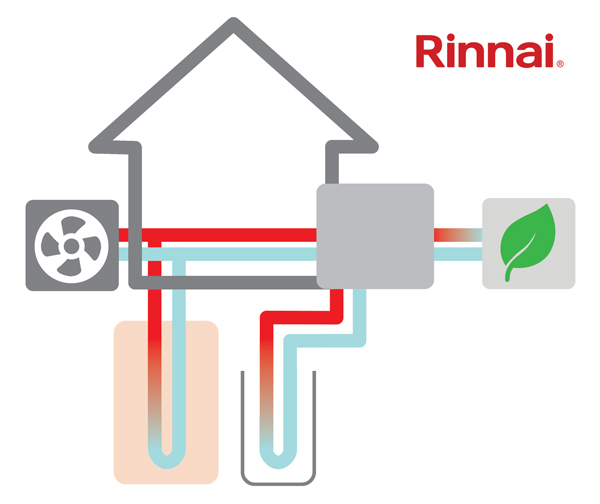
On this site Rinnaiโ€™s Hybrid water heating H2 array of Low-GWP 50kW heat pump plus bespoke thermal water stores, with optimised coil transfer to maximize heat pump performance, have been combined with ten cascaded Hydrogen blends ready (I2HY20 certified) continuous flow water heaters. The systems were delivered in one complete consignment, ready for installation at a new multi-million-pound development in the Farringdon district near the City of London. The expansive complex will comprise of a new luxury hotel, prestigious & contemporary office space plus affordable housing units.

The multi-purpose use of the site meant that only a fit-for-purpose design would satisfy the practicalities and nuances of space, demand, and energy usage in ensuring hot water requirements are met and exceeded 24/7.

The site was originally a Victorian-era schoolhouse for poor children. It was a โ€˜Ragged Schoolโ€™ – the term ‘ragged school’ was used by the London City Mission as early as 1840 to describe the establishment of schools, โ€˜formed exclusively for children raggedly clothed’. From around 1845 until 1881, the London โ€˜Raggedโ€™ schools gave rudimentary education to about 300,000 children who were the poorest of the poor – orphans, waifs, and strays.

The expansive retrofit site will pay respect to this heritage with many of the original features retained in the 150+ bedroom luxury hotel, almost 20,000 sq ft of opulent capital city office space and nine new-build affordable residential units. The hotel group already has one other unit in London with two others planned.

Comments Darren Woodward for Rinnai, โ€™The site is very complex and still has many original features from the Victorian era โ€“ meaning that a full and comprehensive site survey with capital expenditure, operational expenditure and carbon modelling was conducted. We paid special attention to the practical requirements of the site which included 150 luxury bedrooms that needed constant hot water on demand, but we also needed to meet the siteโ€™s decarbonisation credentials. The overall system design meant that a truly hybrid system employing a heat pump, plate heat exchangers, bespoke thermal stores plus Hydrogen-ready hot water heating units was supplied in one complete consignment.

โ€œWe believe that a solution like this is the way forward on the bigger retrofit sites in London and all other UK cities. Once we had the data for capital expenditure, operational expenditure, and carbon modelling we were able to demonstrate to the clients a value proposition of a delivered-to-site-in-one-package. This site has proven that Hybrids can create a practical, economic, and technical feasible solution whereby all technologies and appliances work efficiently in terms of operational costs and lowering the carbon footprint without impacting overall system performance.

——————————————–

RINNAIโ€™S H3 DECARBONISATION OFFERS PATHWAYS & CUSTOMER COST REDUCTIONS FOR COMMERCIAL, DOMESTIC AND OFF-GRID HEATING & HOT WATER DELIVERYย ย 

https://www.rinnai-uk.co.uk/about-us/h3-heat-pumpsย 

Rinnaiโ€™s H3 range of decarbonising products include hydrogen / BioLPG ready technology, hybrid systems, and a wide range of LOW GWP heat pumps and solar thermal. Also, within Rinnaiโ€™s H3 range is Infinity hydrogen blend ready and BioLPG ready continuous flow water heaters which are stacked with a multitude of features that ensure long life, robust & durable use, customer satisfaction and product efficiency. 

Rinnaiโ€™s range of decarbonising products – H1/H2/H3 – consists of heat pump, solar, hydrogen in any configuration, hybrid formats for either residential or commercial applications. Rinnaiโ€™s H3 range of products offer contractors, consultants, and end users a range of efficient, robust, and affordable decarbonising appliances which create practical, economic, and technically feasible solutions. The range covers all forms of fuels and appliances currently available – electric, gas, hydrogen, BioLPG, rDME solar thermal, low GWP heat pumps and electric water heaters. 

Rinnai H1 continuous water heaters and boilersโ€ฏoffer practical and economic decarbonization delivered through technological innovation in hydrogen and renewable liquid gas ready technology. 

Rinnaiโ€™s H1 option is centred on hydrogen, as it is anticipated that clean hydrogen fuels will become internationally energy market-relevant in the future; Rinnai water heaters are hydrogen 20% blends ready and include the worldโ€™s first 100% hydrogen-ready hot water heating technology. 

Rinnai H2 โ€“ Decarbonization simplified with renewable gas-ready units, Solar Thermal and Heat Pump Hybrids. Rinnai H2 is designed to introduce a practical and low-cost option which may suit specific sites and enable multiple decarbonisation pathways with the addition of high performance. 

Rinnai H3 โ€“ Low-GWP heat pump technology made easy – Rinnai heat pumps are available for domestic and commercial usage with an extensive range of 4 – 115kW appliances.

Rinnaiโ€™s H3 heat pumps use R32 refrigerant and have favourable COP and SCOP. 

Rinnai is a world leading manufacturer of hot water heaters and produces over two million units a year, operating on each of the five continents. The brand has gained an established reputation for producing products that offer high performance, cost efficiency and extended working lives. 

Rinnaiโ€™s commercial and domestic continuous flow water heaters offer a limitless supply of instantaneous temperature controlled hot water and all units are designed to align with present and future energy sources. Rinnai condensing water heaters accept either existing fuel or hydrogen gas blends. Rinnai units are also suited for off-grid customers who require LPG and BioLPG or rDME. 

Rinnai products are UKCA certified, A-rated water efficiency, accessed through multiple fuel options and are available for purchase 24/7, 365 days a year. Any unit can be delivered to any UK site within 24 hours. Rinnai offer carbon and cost comparison services that will calculate financial, and carbon savings made when investing in a Rinnai system. Rinnai also provide a system design service that will suggest an appropriate system for the property in question. Rinnai offer comprehensive training courses and technical support in all aspects of the water heating industry including detailed CPDโ€™s. More information can be found on Rinnaiโ€™s website and its โ€œHelp Me Chooseโ€ webpage. 

Visit www.rinnai-uk.co.ukย or email engineer@rinaiuk.comย ย 

The leading event for energy from waste, decarbonisation, alternative fuels, and sustainable energy management

EFD is where you’ll connect with the top players in sustainable resource solutions.

Join hundreds of engaging conversations, strategic meetings, and thought-provoking presentations at this two-day event dedicated to resource, energy management, alternative fuels, and clean energy innovations. Network with potential customers, suppliers, and partners who can revolutionise your perspective and open doors to new opportunities.

The event is part of the wider Environmental Services & Solutions Expo (ESS) – forming one of Europeโ€™s leading events dedicated to the environment and environmental services. The Expo is co-located with the following shows, covering the entire environmental spectrum in resource, land, water, energy, and air:

  • RWM (Resource & Waste Management Expo)
  • EFD (Energy, Fuels & Decarbonisation Expo)
  • WRM (Water Resource Management Expo)
  • CLR (Contamination & Land Remediation Expo)
  • APC (Air Pollution Control Expo)

From local authorities and energy suppliers, to energy from waste, to brokers and consultants, EFD welcomes professionals from across the entire supply chain. Whether you are an energy company looking for an update on regulation, a consumer of energy looking for more sustainable alternatives, or looking for solutions to better manage your energy and decarbonisation needs, EFD has it all.

As the United Kingdomโ€™s top meeting place for sustainable resource & energy management, in addition to land, air, and water services through the co-located shows, it is unmissable for anyone working with or selling into Europe.

Don’t miss out on this chance to take your business to the next level. Join us today!

Date: 11-12 September 2024
Venue: NEC, Birmingham
Hall: 20
Opening Times: 09.30 – 16.30
Register free and find out more: https://hubs.la/Q02NnSmb0

Benefits of a water audit

Businesses looking to improve their water footprint and start operating more sustainably, while reducing their utility bills at the same time, could find it particularly beneficial to have a water audit of their site carried out.

These audits involve comparing water usage, including volumes, against what youโ€™ve been charged for by your water company, with the aim being to reveal any discrepancies and inconsistencies that may have manifested over time, leading to you being billed incorrectly.

Visibility is the name of the game where water consumption is concerned and if you donโ€™t know how youโ€™re using water and where, you can never really be sure that youโ€™re not being overcharged.

As an example of what can happen if you donโ€™t take charge of your bills and know exactly what youโ€™re being charged for and why, take a look at this BBC News report about the Livermead Cliff Hotel in Torbay which is currently in a dispute with Pennon Water Services over estimated bills to the tune of an impressive ยฃ15,000.

It seems that the hotel believes it has been overcharged by thousands of pounds, with bills dating back to between 2012 and 2014, because its water meter wasnโ€™t connected. Although the hotel claims that the meter was known to be faulty, it wasnโ€™t replaced by the water supplier.

Hotel director Anthony Rew explained to the news source that over the course of three-and-a-half years, the business was overcharged 7.5 cubic metres of water per day, when typical usage was 5.5 cubic metres.

He said that the faulty meter was first discovered in 2014, adding: โ€œWe went out to the meter, went to read it, couldnโ€™t read it. [We] put our hand inside where the meter was and pulled the meter out. It wasnโ€™t even attached.โ€

The dispute with Pennon Water Services has now been going on for six years, with the hotel threatened with disconnection for failing to settle the account.

In a statement, the water company said: โ€œWe will always work with our customers to investigate the cause of any consumption concerns. We have different allowances depending on different scenarios to help bring in line a customerโ€™s bill with their own average usage.โ€

How can water audits help businesses?

To avoid distressing and time-consuming situations such as the one Livermead Cliff Hotel has been facing for the last few years, itโ€™s essential that you deepen your understanding of your business water use so that you can identify the most appropriate ways to save water, reduce consumption and drive your bills down as a result.

This is where water audits really come into their own and you may well find that you can achieve up to a 30 per cent reduction in charges for water supply and wastewater disposal as a result.

Itโ€™s also entirely possible that you may be able to put in a claim for refunds for historical overcharges – and weโ€™ve seen some of our clients succeed in getting refunds of ยฃ500,000โ€ฆ and even more!

The audit itself starts with an in-depth analysis of your historical water bills, reviewing a complete record of water supply and wastewater bills going back at least 12 months. If your business incorporates multiple sites and different premises, weโ€™ll need to see bills for each site and from every supplier you have.

Of course, this can be a very arduous task but bear in mind that weโ€™re trying to gain full visibility of your water expenditure so you can enjoy full control over a significant business overhead in the future, so a bit of hard work at the beginning will pay serious dividends later down the line.

As well as asking for copies of your bills, we will also likely need other information as well, depending on the nature of your business. For example, we may need to know the number of public toilets on site, staff numbers, details of leisure facilities like spas, plunge pools and swimming pools, catering facilities and so on.

Once we have all the information we need, we can then carry out a preliminary desktop water audit so you can see exactly where you can save money on bills.

Water-saving measures include the likes of rainwater harvesting, grey water reuse, water leak detection and repair, and water monitoring where remote monitoring equipment is installed to track water flow hourly for ten years. This is particularly effective for identifying leaks, as it will reveal spikes in usage as they happen, suggesting that there may be a leak on site and giving you the opportunity to deal with them quickly.

If youโ€™d like to find out more about this kind of service and the business benefits that come with it, get in touch with the SwitchWaterSupplier.com team today.


This article appeared in the September 2024 issue of Energy Manager magazine. Subscribe here.
Heating control is just as important in Passivhaus projects

Photo credits: Purdown View_UWE Bristol_ยฉTom Sparey

It is far more cost-effective to save energy than generate it!

With 35% of global energy consumption coming from the building sector, its energy use in the construction, cooling and heating of buildings is the largest contributor to carbon emissions. Construction must go through a radical change to meet Net Zero targets to mitigate the climate crisis.

The tools needed to deliver net zero exist today! The University of the West of England (UWE) has first-hand experience at Purdown View, its newest student accommodation development, combining Passivhaus construction with intelligent heating control.

Passivhaus certified

Purdown View is one of the largest Passivhaus certified developments of its kind in the world, it is also a first for the university sector in the UK. Built in the heart of the UWE Frenchay Campus, this project is key to UWE achieving its 2030 sustainability target.

Photo credits: Purdown View_UWE Bristol_ยฉTom Sparey

Constructed in three blocks of up to six storeys, the development comprises studio flats and clusters of four, six and eight bedrooms with en-suite or shared pod shower rooms. In total 900 beds.

The buildings will yield a 54% reduction in running costs and carbon emissions compared with a typical โ€˜good practiceโ€™ building.

So, why does a Passivhaus building require heating control. In a nutshell โ€“ overheating. A serious issue often over-looked. Central control of individual heat sources, and monitoring of every roomโ€™s temperature, ensures heat input cannot be applied when deemed unnecessary by the control criteria.

Individual room control

Irus, from Prefect Controls, is a centrally controlled Building energy Management System (BeMS). It currently manages space and water heating in 70,000+ rooms at more than 130 sites across the UK.

It works on the basis that heat input is only activated to maintain the pre-determined temperature, which, in the case of Passivhaus projects is seldom.

Individual room controllers send data to and from the portal using the existing electrical wiring, a technique known as Mains Borne Signalling (MBS). This is cost effective and negates the expense of installing data cabling.

Occupants can increase the temperature using Boost mode, but the profiles set via the internet portal, cut input after the time limit elapses. This ensures the thermostat cannot be turned to โ€˜maxโ€™ and left there all year.

PIR movement sensors and window open technology means energy is cut when rooms are empty or windows open. The system is always striving to avoid heaters switching on. Ensuring the Passivhaus criteria of not exceeding 25ยฐC for more than 10% of the year is met. Profiles can be changed on a room-by-room basis remotely, to ensure individual occupantsโ€™ comfort. At the end of term, the โ€˜Reset-allโ€™ feature brings every room back to the same profile โ€“ ensuring compliance with the siteโ€™s heating policy โ€“ all this without staff ever crossing a threshold.

Kitchen safety

UWE also specified HobSensus across all the kitchens at Purdown View, Prefectโ€™s hob safety product that integrates with Irus. The device prevents hobs being left on if the person preparing food is distracted or leaves the kitchen unattended. It remotely keeps managers up to date with kitchen activity and triggeringโ€™s.

Award winning

In October 2023, HobSensus won the โ€˜Safety Innovation Awardโ€™ presented by Electrical Safety First, the campaigning organisation recognised by government as the leading authority on electrical safety. A month later the previous Irus/UWE project also won โ€˜Education Sector Project of the Yearโ€™ at the Energy Saving Awards. While this year Purdown Viewโ€™s sustainability credentials were recognised by winning the โ€˜Innovation in Student Housingโ€™ prize at the CUBO Awards.

www.prefectcontrols.com


This article appeared in the September 2024 issue of Energy Manager magazine. Subscribe here.

Strategic Utility Management in a Changing Landscape

Robin Hale, Chief Executive, MEUC

As energy generation and consumption patterns continue to evolve, staying ahead of market dynamics and regulatory changes is more critical than ever.

MEUCโ€™s Buying and Utilities Live Autumn Conference, returning to the AMTC in Coventry on 16 October is an essential event for those buying and using utilities, who are grappling with the complexities the energy and water sectors bring, whilst seeking to capitalise on opportunities.

A Comprehensive Agenda to Empower Your Energy Strategies

Session 1: Regulation and Market Dynamics for Energy and Water
Start your day by delving into the complexities of current market conditions. This session will cover influencing factors for future energy delivery, regulatory strategies, and the challenges being faced by the water industry. Crucial for those considering what lies ahead in this ever-changing landscape.

Session 2: Risk and Reward โ€“ Mapping Out Your Future Energy Consumption
Next, we explore effective risk management strategies and supply security through power purchase agreements (PPAs). This session will also cover integrating on-site generation and storage solutions, aligning your energy strategies with sustainability goals, assisting you in combating the volatility of energy prices.

Session 3: The Future of Energy โ€“ Management and Innovation
Focusing on the evolution of energy markets and technological advancements, discussions will include smart energy solutions, the role of interconnectors and grids in achieving net zero, and strategies for building resilient energy systems that provide widespread opportunities.

Session 4: Emerging Trends and Practical Applications in Energy and Water Management
To conclude the day we will dive into the latest trends and technologies shaping the future of energy and water management. Here you can participate in breakout discussion sessions led by MEUC experts, who will facilitate and direct the discussion,  focussing on practical insights and actionable strategies for improving efficiency and reducing costs.

Throughout the day you can also engage with our supporters. Our exhibition will feature leading companies and solution providers ready to showcase their innovative products and services.

Exhibitors include:
2G | Amber | Ameresco | Corona Energy | Drax | EDF | Energy in Buildings and Industry | Energy Manager Magazine | ENGIE Impact | ENTRNCE | Granular Energy | IMServ | innova | National Gas Metering | npower Business Solutions | SEFE | Shell Energy | SSE Energy Solutions | Strive by STX | Swan Energy | The Energyst | Waterplus | Waterwise | WAVE | WUN

Explore their cutting-edge services and solutions and discuss the presentations with them and your peers in a relaxed environment over coffee, tea and lunch.

Networking and Professional Development: Building Connections and Expanding Knowledge

Attending the MEUC Autumn Conference and Exhibition offers unparalleled opportunities to connect with peers, industry experts, and key stakeholders. This event provides a unique platform to build professional relationships, exchange ideas, and explore potential collaborations.

Our attendance policy, restricted to members, end users, supporters and invited guests, ensures an undiluted, focused and relevant networking environment. The MEUC team are on hand to guarantee a valuable and memorable experience.

In addition, the event represents 5 hours of MEUC CPD, helping you further your professional journey.

Gain a Competitive Edge

In an industry that’s rapidly evolving due to technological advancements and regulatory changes, staying informed and connected is key to maintaining a competitive edge. Attending the MEUC Autumn Conference and Exhibition is the first step in equipping yourself with the latest knowledge and trends, enabling you to make informed decisions. Networking with other utilities professionals will increase your ability to lead your organisation to success in a challenging landscape.

Why wait? Register today – https://meucnetwork.co.uk/events/autumn-conf24/?ueid=34r13yuj

Join the MEUC Community

MEUC extends far beyond hosting events throughout the year. Whilst their Spring and Autumn Conferences and their exclusive evening networking reception at the House of Lords, hosted by MEUCโ€™s President Lord Teverson, are must-attend events, membership offers so much more.

By joining as a corporate member, you also gain access to an extensive array of resources designed to empower you and your organisation. These include weekly briefings, regular meetings, quarterly update webinars, partner webinars, a specialised training course, and on-demand expert support from the MEUC team and wider contacts. These resources ensure members stay informed about the latest regulatory changes, market trends, and technological advancements.

Membership connects you with a network of major energy and water users, creating a platform for sharing insights, solutions, and best practices that drive efficiency and innovation across the sector.

Explore the Benefits of Membership

To find out more, please get in touch: robin.hale@meuc.co.uk.


Using microgrids to unblock the grid connections queue

Image supplied by Eclipse Power

Spencer Thompson, CEO โ€“ Eclipse Power

An investment platform for networks including Eclipse Power Networks. Eclipse Power Networks is a specialist licensed Independent Distribution Network Operator (IDNO).

Where is the power going to come from to meet the growing demands from the electrification of housing, industry, transport, and heating? And, importantly, will grid connections enable expectations and targets to be met?

The new Labour government has pledged to build 1.5 million homes in five years to address the housing shortage. However, already more and more housing developments are being delayed by getting a connection to the grid. Developers are realising that grid connections are being constrained by the queue, which is running close to the terabyte mark.

The need to supply power to more housing developments, coupled with the exponential rise in EV charge point installations is adding significantly to the queue. A new development of a few thousand homes is usually a โ€˜five-year plusโ€™ programme that is built and connected in batches of 100-500. Even getting the first connection can be a challenge. 

The upcoming modifications to โ€˜Connections Reformโ€™ which are due to go live in January 2025 could have a big impact. They include switching the connection queue from โ€˜first come, first servedโ€™ to โ€˜first ready, first connectedโ€™. This is good news for developers who have carefully planned their connection projects. Especially forward-thinking developers who are exploring smarter approaches to connections in response to grid constraints, for example looking to utilise microgrid technology behind the meter.

Assets assemble โ€“ bring on the microgrid

Microgrids are self-contained power networks that connect to the power network at a local or regional level and can run in parallel with the national grid. They usually comprise interconnected loads and distributed energy resources (solar panels, wind turbines, battery storage, and generators) within a defined boundary that work together to meet the siteโ€™s needs, with least possible interaction with the grid. Importantly, microgrids can be integrated with other smart grid technologies to further optimise energy use and enhance grid stability.

Another viable option could be building out and developing a private network (which could include microgrid technology) resulting in a development which needs less import/export capacity from the grid. So, when the developer submits their application for a grid connection, they may be more likely to secure a closer connection date for the project as they will require less capacity. Optimising electricity consumption behind the meter and balancing with exporting/importing to/from the grid is the trick here. The concept has been around the industry for a long time but hasnโ€™t really taken off with the networks and customers. Given the current constraints on the grid, now is the perfect time to deliver innovation as we strive for net zero.

What does this look like?

Recently, a development of around 4000 homes that needed a 20MVA supply from a local DNO was told that the connection would be delayed by six years because of transmission reinforcement upstream. Using a microgrid could turn a 20MVA demand into a 5-10MVA connection, reducing the cost to connect to the grid and, more importantly, the lead time.

Another benefit of microgrids is the revenue model they can enable behind the scenes. They can be developer owned, owned by a network company like Eclipse Power, community owned by local residents, or a combination of the three.

Powering parks and campuses

Outside of the housing demand, there could be even bigger grid benefits from microgrids powering commercial and industrial parks and campuses. Large energy companies have tended to move towards energy parks, rather than single assets, with solar and battery providing several valuable revenue streams. Developers are beginning to work with data centres and even green hydrogen balanced behind the meter in a microgrid. These options have the potential to have a major impact on unblocking the connection queue over the next five to 10 years.

Intelligent planning to benefit the network

More joined up thinking and actively building solar, battery, hydrogen and data centres around the country to map to the network would help reduce constraints in certain areas. At the moment, the rules are that you can connect anywhere. So, all weโ€™re doing is creating this hugely inefficient network. By introducing reasonable rules to control the location of new generation and storage assets, we could provide more benefit to the network while keeping some flexibility around where the technologies connect.

Microgrids represent a smart network future that has been in the background of government and industry thinking for a long time. There are a few barriers still to pass. Some are around governance, especially in the residential sector, where there are regulatory restrictions around how much a microgrid or private network is possible. The regulator, together with various distribution code changes, will be the key to unlocking this. 

For more information, please visit Eclipse Power


This article appeared in the September 2024 issue of Energy Manager magazine. Subscribe here.

Energy Audits Are a Catalyst for Decarbonisation

With rising energy costs and stringent environmental regulations across the UK and rest of Europe, optimising energy use in commercial buildings is not just financially imperative, it is critical in the race to decarbonisation, says Ralph Davies, Head of Sales at Carrier Service.

Buildings are currently responsible for 39% of global energy related carbon emissions; 28% comes from operational emissions produced by the energy needed to heat, cool and power them.

The International Energy Agencyโ€™s (IEA) Net Zero Emissions 2050 roadmap calls for a doubling of efforts to improve building efficiency as part of a broader strategy to achieve global net-zero emissions by 2050.

The roadmap emphasises the need for the deployment of clean energy technologies and energy-efficient building retrofits within this decade to stay on course. An energy audit can be the tool building owners can use to make positive changes to decarbonise their buildings.

Understanding energy audits and their necessity

In terms of Heating, Ventilation, and Air Conditioning, energy audits are a method for identifying inefficiencies in a buildingโ€™s HVAC system. These audits not only help to pinpoint areas where energy consumption can be optimised but also offer a pathway to align with sustainability targets, thereby contributing to the broader goals of reducing greenhouse gas emissions and enhancing energy independence.

A structured approach to audits

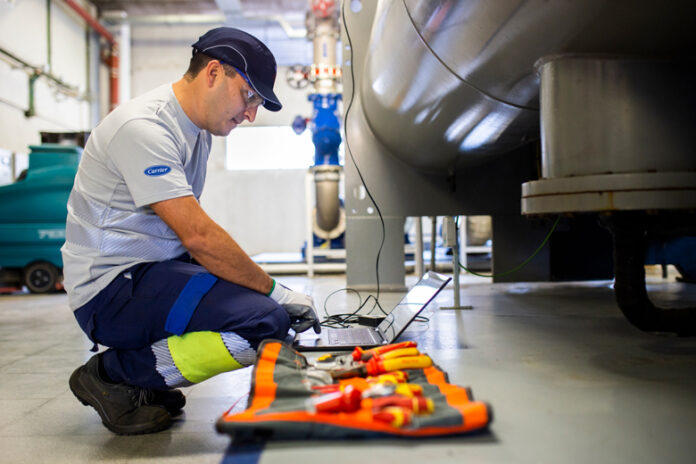
Knowing how to analyse your commercial HVAC system is key to determine if youโ€™re getting peak performance from your investment, as well as diagnose primary sources of energy loss. At Carrier, we follow five key stages when completing an energy audit.

  1. Gathering data – The first step in conducting an energy audit is to gather comprehensive data on the current energy consumption patterns of the system. This involves collecting historical energy usage and costs, monitoring system outputs, and using sensors or meters to record real-time energy usage. This data provides a clear picture of where and how energy is being used within the building.
  2. Establish performance baseline – With the collected data, auditors establish a performance baseline that serves as a reference point for evaluating the efficiency of the HVAC system. This baseline is critical for understanding the typical energy demands and identifying periods of unusually high or low usage, which might indicate inefficiencies or opportunities for improvement.
  3. Setting benchmarks – After establishing the baseline, the next step is to set benchmarks based on industry standards ISO 50002 or BS EN 16247 โ€“ both accepted methodologies in the UK. These benchmarks allow auditors to compare the buildingโ€™s performance against the defined minimum set of requirements and best practices, helping to identify areas where the building underperforms.
  4. Conducting gap analysis – Using the benchmarks, auditors conduct a gap analysis to determine the discrepancies between the current performance of the HVAC system and the established levels. This analysis helps to pinpoint specific areas where improvements can be made and identifies the potential savings and benefits of making those improvements.
  5. Recommending energy conservation measures – Based on the insights gained from the gap analysis, the final step involves recommending specific energy conservation measures.

Recommendations can include simple fixes and adjustments that enhance system performance without extensive upgrades. These may include recalibrating sensor settings to improve accuracy and responsiveness or sealing leaks and improving insulation.

If substantial work is needed to improve efficiency, more complex solutions will be recommended. These upgrades often include installing more advanced AHUs that incorporate heat recovery technologies or replacing a chillerโ€™s fixed speed drive with a variable speed drive, which allows the unit to adjust its output based on real-time demand.

In some case, more substantial recommendations can be made to replace heating systems altogether. The electrification of heat is a key aspect in achieving net zero, and sustainable technology such as heat pumps will facilitate this.

Each recommendation is accompanied by a detailed analysis of the cost of implementation against expected energy savings and CO2 equivalent reduction potential. This step is critical for prioritising measures that yield the most substantial benefits in terms of energy conservation, sustainability impacts, and return on investment.

Additional benefits to energy audits

As well as lowering emissions, there are additional benefits building owners can expect to see if they implement the recommendations from the audit. These include:

Improved occupant satisfaction

An optimised HVAC system can enhance the indoor environment of a building, significantly enhancing occupant comfort and satisfaction. Improved Indoor Air Quality (IAQ) is particularly important as it directly impacts the health, productivity, and well-being of occupants.

Cultural shift towards sustainability

By highlighting the benefits and feasibility of sustainable practices, energy audits can encourage a culture of energy consciousness within organisations, promoting ongoing commitment to energy conservation.

Regular maintenance and expert guidance

Within the auditโ€™s recommendations, on-going servicing and maintenance can prevent energy waste that may otherwise occur due to neglected equipment. Regular servicing not only ensures systems operate at peak efficiency, building managers have the dedicated support of expert technicians who can overcome any challenges during the equipmentโ€™s lifespan.

To find out more about Carrierโ€™s service and aftermarket solutions, including energy audits, please visit www.carrier.com/commercial/en/uk/service.


This article appeared in the September 2024 issue of Energy Manager magazine. Subscribe here.