
Rinnai and Naked Energy Launch Innovative Solar and Heat Pump Integration Whitepaper for Sustainable Heating Solutions

Rinnai and Naked Energy have collaborated to introduce a whitepaper as a precursor to a CIBSE certified CPD, the paper entitled Sustainable Synergy: Integrating Heat Pumps and Solar Thermal to Satisfy the Hot Water Needs of an archetype hotel. This paper and CPD can be preregistered for here.

The whitepaper researches and evaluates in fine detail the financial and operational outputs of a DHW solution comprising of high temperature heat pumps and solar thermal collectors utilized in an obvious commercial setting – an archetypal hotel.

Rinnaiโ€™s Sean Ehlen, together with Zanil Narsing of Naked Energy, have prepared both the whitepaper and CPD to provide the detailed data for building services consultants, system designers, main HVAC contractors and installers to consider when approaching commercial property installations that require strong and sustained system efficiency and maximized reductions in energy usage and carbon loads.    

Within the main body of this paper various DHW systems operational capabilities were compared when satisfying the hot water demand of an archetype hotel. Simulation calculators were produced to highlight how the key metrics of each DHW system compared over a 20-year period.

The findings of this study demonstrate how parallel dual storage SAHPโ€™s (Solar Assisted Heat Pumps) reduce the carbon loads by 96% whilst requiring 49.5% less primary energy, compared to a conventional gas-fired water heater system, in turn maximizing the systems efficiency.

The data extrapolated from this whitepaper further suggests that Rinnaiโ€™s parallel dual storage SAHP (Solar Assisted Heat Pumps) system should be considered by sites and all major end-users such as institutional domains, office blocks, retail malls and chain-hotels. Contractors and consultants are now with an expectation of clientsโ€™ requiring carbon reduction without diminishing performance. All sites are now expected to reduce carbon emissions whilst installing systems aligned with future building standards.

Rinnaiโ€™s latest CPD is part of an overall strategy that aims to supply UK customers with detailed analysis of decarbonising technology towards commercial applications. Rinnai will continue to offer valuable services and information to UK customers that assist in easy and appropriate product selection that delivers operational efficiency.     

Rinnaiโ€™s design team offer a range of services that include cost and carbon calculations as well as a โ€œSite Consultation Formโ€ that details on-site data of current heating and hot water system capabilities. Customers can view the results in a rapid low carbon replacement suggestion by a professional team member.

Visit Rinnaiโ€™s website at https://www.rinnai-uk.co.uk/contact-us/Solar-thermal-and-heat-pump and preregister for this exciting whitepaper and CPD release.

********************************************************************

RINNAI OFFERS CLEAR PATHWAYS TO LOWER CARBON ANDDECARBONISATION PLUS CUSTOMER COST REDUCTIONS FOR COMMERCIAL, DOMESTIC AND OFF-GRID HEATING & HOT WATER DELIVERY

www.rinnai-uk.co.uk/about us/H3

  • Rinnaiโ€™s range of decarbonising products – H1/H2/H3 – consists of hot water heating units in gas/BioLPG/DME, hydrogen ready units, electric instantaneous hot water heaters, electric storage cylinders and buffer vessels, a comprehensive range of heat pumps, solar, hydrogen-ready or natural gas in any configuration of hybrid formats for either residential or commercial applications. Rinnaiโ€™s H1/2/3 range of products and systems offer contractors, consultants and end users a range of efficient, robust and affordable low carbon/decarbonising appliances which create practical, economic and technically feasible solutions. 
  • Rinnai is a world leading manufacturer of hot water heaters and produces over two million units a year, operating on each of the five continents. The brand has gained an established reputation for producing products that offer high performance, cost efficiency and extended working lives. 
  • Rinnai products are UKCA certified, A-rated water efficiency, accessed through multiple fuel options and are available for purchase 24/7, 365 days a year. Any unit can be delivered to any UK site within 24 hours.
  • Rinnai offer carbon and cost comparison services that will calculate financial, and carbon savings made when investing in a Rinnai system. Rinnai also provide a system design service that will suggest an appropriate system for the property in question.
  • Rinnai offer comprehensive training courses and technical support in all aspects of the water heating industry including detailed CPDโ€™s.
  • The Rinnai range covers all forms of fuels and appliances currently available – electric, gas, hydrogen, BioLPG, DME solar thermal, low GWP heat pumps and electric water heaters More information can be found on Rinnaiโ€™s website and its โ€œHelp Me Chooseโ€ webpage. 

RINNAI FULL PRODUCT AVAILABILITY 24/7 FOR NEXT DAY DELIVERY of ALL HOT WATER HEATING UNIT MODELS INCLUDING 48-58kW UNITS-

SAVINGS OF

  • Twenty percent REDUCTION of opex cost,
  • Thirty percent REDUCTION of initial cost
  • Fifteen percent REDUCTION in carbon
  • Seventy-five percent REDUCTION of space

Visit www.rinnai-uk.co.uk  

Or email engineer@rinaiuk.com  

For more information on the RINNAI product range visit www.rinnaiuk.com

Steps to become a Master in Renewable Energy

Join professionals from 150 different countries worldwide and enrol onto the award-winning REIโ€™s Master in Renewable Energy Award.

You will gain access to 15 accredited renewable energy and energy efficiency training courses designed to further your career in the sector.

All courses are accredited by the CPD accreditation service. By studying the Master in Renewable Energy Award you will accrue a minimum of 280 CPD hours.

For more information, head to https://www.renewableinstitute.org/training/accredited-master-in-renewable-energy-award/ or contact us by phone on +44 131 446 – 9479 or by email at training@renewableinstitute.org


This article appeared in the September 2024 issue of Energy Manager magazine. Subscribe here.

Community Microgrids

Liam Johnson

By Liam Johnson: Senior Energy and Carbon Analyst, Salix

Community microgrids are little known outside the world of energy, yet they are a fundamental mechanism in improving the way we consume energy and have the potential to decarbonise the grid one small community at a time.

A microgrid is a small-scale, local-power-based system that provides greater efficiency, reliability and sustainability when distributing energy. Microgrids can be independent of the main grid (off-grid) or incorporated and controlled by it (on-grid). Microgrids can range in size from a single home to a local community and normally contain a diverse range of renewable energy generators.

Microgrids can be operated independently of the grid and can provide reliable sources of power. They can also be a more resilient power source, allowing more isolated communities within the UK greater energy independence, and reducing vulnerability from extreme weather and wider grid disruptions. Examples of isolated communities include the Isles of Scilly who have removed damaging fossil fuel generators for cleaner wind and solar power, and the Orkney Islands who have harnessed tidal and wind power and integrated them into its microgrid. Paving the way for more energy-secure communities.

Microgrids are also more energy efficient than traditional grid infrastructure, this is because, with a microgrid, the community or building is able to reduce energy costs and lower carbon emissions by incorporating a combination of renewable energy sources and fuel storage solutions. This balance between distribution and storage means the introduction of microgrids are low impact making them more favourable in on-grid (connected to the grid) areas with limited capacity for connection.

A study by the UK Energy Research Centre also looked at the growing trend of Grassroots Innovations, of which microgrids are a part. According to the UK Energy Research Centre, there are roughly 3,000 community energy projects in the UK, the majority of which are fed by grassroots initiatives that help to create the localised, sustainable development of energy policy for the community. Microgrids offer the chance to give people control of their energy supply and enable choice of greener and cleaner power sources.

A notable example of this is the Brighton and Hove Energy Service which was created in 2013 and was initially set up to focus on investing in small-scale and local energy projects, such as microgrids. However, due to the unique nature of the service being run by and for the community, its responsibility goes beyond providing electricity or heat, instead also focusing on occupants’ needs for a brighter, warmer and liveable home. In the past few years, the service has installed a wide range of solar PV, LED and undertaken energy-saving surveys across 500 properties, according to a report released by UK Energy Research Centre. Post-project monitoring has revealed that Brighton and Hove Energy Service projects have saved building occupants more than ยฃ42,000 in savings, according to UK Energy Research Centre data. This has enabled Brighton and Hove Energy Service to support those struggling with increased energy costs.

A big part of the success of Brighton and Hove Energy Service was community fund-raising, if there is lack of initial investment this can setback the implementation of microgrids. In communities with limited financial investment from local authorities and businesses limited funding threatens to stifle any incentive to get projects off the ground. Microgrids can be a costly investment, especially if adapting newer technologies to be compatible with older, national grid infrastructure, creating headaches for designers, making planning, building and operating challenging.

Aside from integrating older and newer infrastructure, there are limitations on the size of these grids which are limited by their economies of scale. To set up something which is widespread it would take cross-partnership communication between energy providers, communities and regulatory bodies.  The community would also need to internally train or bring in expertise to set up and run the microgrid, due to the unique circumstances of each site, every area will have specific issues and challenges when implementing.

Despite this however, these projects can be made possible through funding programmes such as the Public Sector Decarbonisation Scheme, through which Salix has supported a variety of wide-scale decarbonisation, from individual buildings to entire university campuses. Cranfield University is a good example, whoโ€™s top-down approach to decarbonisation has been supported by Salix and created the opportunity to work with local businesses such as Nissan and Luton airport.

Microgrids in the UK are just one piece of the puzzle on the path to achieving net zero emissions. They have the potential to change how consumers interact with energy. However, their growth presents new challenges that can be addressed through investment in innovation, leading to job creation in crucial sectors of the economy.

Liam Johnson is Senior Energy and Carbon Analyst at Salix. Salixโ€™s role is to support the UK government in driving the transition to a low carbon future and meet challenging net zero targets. We deliver and administer grant and loan funding on behalf of the Department for Energy Security and Net Zero, the Department for Education and the Scottish and Welsh governments. This is delivered across the public sector as well as housing.


This article appeared in the September 2024 issue of Energy Manager magazine. Subscribe here.

Schneider Electric to invest ยฃ42 million in new manufacturing site in North Yorkshire

Schneider Electric, the leader in the digital transformation of energy management and automation, is investing ยฃ42 million in a new manufacturing facility in Scarborough, North Yorkshire.ย 

More than 200 jobs will be created to meet the increased demand for electrical equipment to drive the UKโ€™s move to cleaner energy including renewable energy sources, electric vehicles, and intelligent, energy-efficient buildings. 

The site, which is almost triple the size of Schneider Electricโ€™s existing Scarborough facility, is a blueprint for sustainable design and operations in the manufacturing industry. It is poised to become a net-zero plant and will use modern technology to reduce energy waste and maximise the use of renewable energy. It is expected to be net-zero in Scope 1 and 2 emissions when it opens in early 2025. 

  • 30% of the facilityโ€™s energy will be produced by a state-of-the art solar energy system, with solar panels covering 50% of the roof, to ensure the building harnesses solar energy efficientlyย 
  • Any energy consumed on site from the national grid will be “renewable certified”ย 
  • An intelligent Building Management System, based on Schneider Electricโ€™s EcoStruxure platform, will ensure energy-efficient operations including light sensors, automated heating and coolingย ย 
  • It will feature one of the first fully electric paint lines in Europe to support decarbonised operationsย ย 
  • It is targeting a BREEAM ‘Excellent’ rating, setting it apart in terms of sustainable construction standardsย 

The site is designed to be environmentally friendly, with sustainable transport options for employees. 

  • Employees will have access to 30 EV chargers on siteย ย 
  • There will be dedicated cycling racks, shelters, and showers on site for bike ridersย 
  • Work is underway with Natural England to create a habitat for protected speciesย 
  • It will promote biodiversity by retaining as many of the existing trees and natural features as possibleย 

Scarborough is a long-established manufacturing base for Schneider Electric, currently employing 450 people. It specialises in the manufacture of low-voltage switchgears which protect and distribute electricity and are crucial to the rollout of sustainable and energy-efficient operations such as EV charging infrastructure and net-zero buildings. 

Kelly Becker, President at Schneider Electric, UK & Ireland, Belgium & Netherlands 

โ€œSustainability is at the core of our purpose, culture and business. Weโ€™re proud to be investing in and developing innovative solutions which will deliver immediate and lasting decarbonisation in the UK, while bolstering the creation of local, green jobs in Yorkshire. 

โ€œThe region has long been part of our operational presence in the UK, and weโ€™re excited to expand this as part of our commitment to investing in the UKโ€™s green economy. The new facility in Scarborough represents a pillar of innovation in net-zero, and one which will be an industry benchmark for the transition to sustainable, energy efficient buildings.โ€ 

Business and Trade Secretary Jonathan Reynolds said:โ€ฏ 

โ€œThis huge investment from Schneider Electric will not only safeguard existing jobs but create 200 new ones. Increasing investment is a mission at the heart of this government, and our modern Industrial Strategy will help us deliver long-term, stable growth that supports skilled jobs.โ€ฏ 

โ€œOur commitment to becoming a clean energy superpower is steadfast, and investments like these in North Yorkshire make a huge contribution to bolstering the UK as a leader in energy management and automation. Weโ€™re showing investors that Britain is back as a stable place to do business, helping to secure the investment needed to make every part of our country better off.โ€โ€ฏ 

David Skaith, Mayor of York and North Yorkshire 

โ€œYork and North Yorkshire has a well-established and thriving manufacturing sector, which is home to an abundance of leading and specialist companies.โ€ฏ 

โ€œSo, it is fantastic to see Schneider make this huge investment in their future in Scarborough.โ€ฏโ€ฏ 

โ€œThis new manufacturing facility will drive new, quality jobs in Scarborough and help us go beyond net-zero to become Englandโ€™s first carbon negative region.โ€ฏ 

โ€œLeaders like Schneider attract other manufacturers, and we welcome investment as we look to become a production and advanced engineering hub of excellence.โ€โ€ฏ 

Stephen Phipson, Chief Executive of Make UK 

โ€œThis is a marvellous example of how sustainable manufacturing can be achieved, creating many highly skilled jobs in the process. Green technologies are going to be the solution to many of the challenges that we face and Schneider should be applauded for pioneering this facility. It is an exemplar model for other manufacturers to follow when they build new facilities.โ€ 

Today, Schneider Electric is a group that employs 5,000 people in the UK and Ireland. Globally, it closed 2023 with a turnover of 36 billion euros. With its head office in London, there are a further 13 operational sites across the UK which specialise in energy management solutions including automation and control, electrical distribution and building management, amongst others. 

Operations will relocate to the new facility at Scarborough Business Park, less than 500m from Schneider Electricโ€™s existing premises. Schneider Electric will be its anchor tenant, which will be managed by principal contractor Caddick Developments.  

Alistair Smith, Director at Caddick Developments 

โ€œAs a long-standing Yorkshire business with sustainability at its heart, we are delighted with Schneider Electricโ€™s commitment to Scarborough Business Park which further bolsters our strong track record of delivering industrial projects throughout the UK as we seek to build developments that support people, community and planet. 

โ€œSchneider Electricโ€™s expansion will deliver much-needed jobs for Scarborough and its commitment to the net-zero agenda will ensure that this facility operates as a gold standard for sustainable growth and energy efficiency.โ€ 

The investment in Scarborough is in addition to a ยฃ7.2 million facility upgrade to Schneider Electricโ€™s site in Leeds, announced in October 2023, meaning the company will create more than 300 jobs in Yorkshire over the next ten years.  

www.se.com

Schneider Electric topping out ceremony.
L to R: John Edwards, Director of Investment, Department for Business and Trade. Gary Hopkins, Plant Director Scarborough, Schneider Electric UK&I. Yann Reynaud, SVP Global ETO, Schneider Electric. Frederic Godemel, EVP, Power Systems and Services, Schneider Electric. Kelly Becker, President at Schneider Electric, UK & Ireland, Belgium & Netherlands. Stephen Phipson, Chief Executive of Make UK. David Skaith, Mayor of York and North Yorkshire. James Farrar, Chief Executive, York and North Yorkshire Combined Authority. David Hall, Vice President, Power Systems, Schneider Electric UK&I. Alistair Smith, Director at Caddick Developments.

Southern based gym group converts to Rinnai’s LOW-GWP ASHP to support decarbonisation programme

Image by Pixabay

A chain of gyms has successfully piloted Rinnaiโ€™s LOW-GWP commercial ASHP (Air Source Heat Pump) with the aim of replacing their existing carbon intensive electric storage water heater systems which rely on multiple electrical immersions. The flexibility of Rinnaiโ€™s bespoke system design capability has even ensured that some of the existing electric water heaters can stay in situ as a part of a cost saving Hybrid heat pump system โ€“ saving the end user on cost and reducing carbon emissions.

Each gym studio that Rinnai had to measure revealed different kW load limits ranging from 8kW to 20kW. Rinnaiโ€™s system design team then decided on the necessary decarbonizing technology required for each individual gym, bespoke design-led packages including a mixture of Rinnai decarbonizing HDW heating technologies was then selected, these include;

  • LOW-GWP R290 ASHPโ€™s
  • Infinit-e Electric Storage water heaters
  • Optimised Heat Pump Cylinder Coil cylinder or plate heat exchanger.
  • Unvented kit (cold water feed).
  • System controls

The Rinnai system selection is supported by unique capital expenditure, operational expenditure and carbon modelling, ensuring that the end user could make practical, economical and technically feasible decisions.

Below is a few graphs that illustrate carbon output, CAPEX costs and system efficiency over 5 years. The graphic inputs are shown only for the 12 kW ASHP, 300 heat pump cylinder and direct electric storage water heaters (E-cylinder 305L) for one of the gyms in the southern region. The first graph focuses on carbon production.  

The second below graph details the CAPEX costs associated with Rinnaiโ€™s 12kW Air Source Heat Pump over 5 years.

Below is a graph that reveals the annual consumption of energy Rinnaiโ€™s 12kW fully electric system.

Rinnai aims to make heat pump design simple and model the reality of total system performance. Including the use of SPF (seasonal performance factors) which analysis the complete system performance for support with your next design contact Rinnai today https://www.rinnai-uk.co.uk/contact-us/help-me-choose-product

**********************************

RINNAI OFFERS CLEAR PATHWAYS TO LOWER CARBON AND DECARBONISATION PLUS CUSTOMER COST REDUCTIONS FOR COMMERCIAL, DOMESTIC AND OFF-GRID HEATING & HOT WATER DELIVERY  

www.rinnai-uk.co.uk/about us/H3

  • Rinnaiโ€™s range of decarbonising products – H1/H2/H3 – consists of hot water heating units in gas/BioLPG/DME, hydrogen ready units, electric instantaneous hot water heaters, electric storage cylinders and buffer vessels, a comprehensive range of heat pumps, solar, hydrogen-ready or natural gasย  in any configuration of hybrid formats for either residential or commercial applications. Rinnaiโ€™s H1/2/3 range of products and systems offer contractors, consultants and end users a range of efficient, robust and affordable low carbon/decarbonising appliances which create practical, economic and technically feasible solutions.ย 
  • Rinnai is a world leading manufacturer of hot water heaters and produces over two million units a year, operating on each of the five continents. The brand has gained an established reputation for producing products that offer high performance, cost efficiency and extended working lives.ย 
  • Rinnai products are UKCA certified, A-rated water efficiency, accessed through multiple fuel options and are available for purchase 24/7, 365 days a year. Any unit can be delivered to any UK site within 24 hours.
  • Rinnai offer carbon and cost comparison services that will calculate financial and carbon savings made when investing in a Rinnai system. Rinnai also provide a system design service that will suggest an appropriate system for the property in question.
  • Rinnai offer comprehensive training courses and technical support in all aspects of the water heating industry including detailed CPDโ€™s.
  • The Rinnai range covers all forms of fuels and appliances currently available – electric, gas, hydrogen, BioLPG, DME solar thermal, low GWP heat pumps and electric water heaters More information can be found on Rinnaiโ€™s website and its โ€œHelp Me Chooseโ€ webpage.ย 

RINNAI FULL PRODUCT AVAILABILITY 24/7 FOR NEXT DAY DELIVERY of ALL HOT WATER HEATING UNIT MODELS INCLUDING 48-58kW UNITS-

SAVINGS OF

  • 20% REDUCTION of opex cost,
  • 30% REDUCTION of initial cost
  • 15% REDUCTION in carbon
  • 75% REDUCTION of space

Visit www.rinnai-uk.co.ukย ย Or email engineer@rinaiuk.comย ย 

For more information on the RINNAI product range visit www.rinnaiuk.com

Registration is now open for EMEX, the Energy Management and Net Zero exhibition being held at Londonโ€™s ExCeL on 20 & 21 November 2024.

Read on to discover how you can secure your free place today and take advantage of the many new, value-added features the show is offering to visitors this yearโ€ฆ

New for 2024, the BSI Academy is a dedicated area from BSI Group, the national standards body of the UK, where you can take part in free, 40-minute CPD-accredited training sessions. Covering vital areas of learning for the sustainability sector, this is an exclusive opportunity to elevate your professional learning at no cost. The three bitesize courses running on both days of the show are: Introduction to Energy Management ISO 50001, Introduction to Environmental Management ISO 14001 and Introduction to Net Zero. Places will be allocated on a first come, first served basis and are an excellent way to improve your knowledge if you are new to this field or if you want to build further on what you already know.

Returning in November are the ever-popular roundtables exclusive to those operating in the public sector space. Places on these are strictly limited to allow for meaningful discussions and this year will cover areas such as: Balancing sustainability investment within ongoing maintenance projects; Property decarbonisation: 2030 strategies and practical supply chain planning and Collaboration and partnerships to share best practice. Table hosts will share their own experiences and encourage group discussion and questions. Most tables will run twice, so you have the opportunity to join two tables on each day, with additional time for networking and making new contacts for the future. Sponsored by Local Partnerships, a joint venture between the Local Government Association, HM Treasury and Welsh Government, they help the public sector deliver projects and change at a local level. Full details of all the sessions are available on the main show website, and places can be reserved as part of the visitor registration form.

Following on from the public sector roundtable success, EMEX is delighted to welcome Mott MacDonald as sponsor of further discussion groups open to all. Following a similar format to their public sector counterparts, the topic under discussion for these sessions will be focused on: Energy strategies and master planning for large energy users and sites. Again, these sessions will be allocated on a first come, first served basis and can be selected via the visitor registration form.

Still focusing on giving visitors to EMEX opportunities to expand their expertise and practical takeaways, the new hands-on workshops are another value-add, free feature for 2024. These fully interactive sessions are designed to demonstrate practical strategies for achieving key goals in energy management and carbon reduction. Hosted by Carbonology and Supply Chain Sustainability School, further details of the different focus areas of the workshops can be found on the EMEX website and places reserved as part of visitor registration.

This year, EMEX is delighted to welcome IEMA (Institute of Environmental Management and Assessment), a global body for environment and sustainability professionals, and the YEP (Young Energy Professionals) as hosts of exclusive peer mentoring sessions. These 10-minute sessions across both show days offer exciting opportunities to make valuable new contacts and receive specialist advice from senior professionals for those both established in their careers focusing on overcoming specific sector challenges and those at the beginning of their journey who may benefit from vocational mentoring.

All of these new, value-added features are completely free for EMEX visitors to attend. Simply register your free ticket today and select which sessions you would like to take part in: https://forms.reg.buzz/mark-allen-group/emex-2024/visitor/em.
For further information on all of these plus the rest of whatโ€™s on at EMEX 2024, visit the website now: https://www.emexlondon.com


This article appeared in the September 2024 issue of Energy Manager magazine. Subscribe here.

The next steps for the UK government in the clean energy transition

Siobahn Meikle

Siobahn Meikle, Vice President for Northern Europe, Eaton

Following their electoral success, the new government has been quick to put into motion its strategy for making the UK a โ€˜clean energy superpowerโ€™. The legislative announcements in the Kingโ€™s Speech, followed by the partnership announcement between Great British Energy and the Crown Estate demonstrate a commitment from the Government to deliver on its promises.

The enthusiastic start is very welcome, and rapid progress is absolutely necessary to deliver the UKโ€™s energy transition. However, there is opportunity for the Government to make even further waves by allocating efforts to enhance energy flexibility in the UK. The energy transition will be delivered through government working in tandem with businesses, and a key part of the latterโ€™s contribution will be increased use of demand side flexibility.

Adapting to a new type of energy source

The Government’s vision for grid transformation is undeniably important: decarbonisation of the grid is essential to the UK achieving its net zero targets. However, this can only happen if the grid and its users are able to fully manage the inherent intermittency of renewable energy generation. In the UK we cannot always guarantee the sunshine, and while wind is more reliable, it is not a certainty either. This means delivering infrastructure which allows for the generation and storage of renewable energy, as well as promoting demand-side flexibility.

One of the solutions lies in enhancing the grid’s capacity to balance intermittency through advanced forecasting and demand response technologies. In buildings, energy storage systems can store excess energy generated during peak production times and release it when renewable energy production is low. Moreover, integrating demand response programmes allows for more flexible energy consumption, aligning usage patterns with renewable energy availability.

Modernising the grid to handle increased renewable energy capacity is a cornerstone of our clean energy future. Demand-side flexibility will play a vital role in bringing it to fruition.

The role of businesses and their buildings

Commercial buildings have an important role to play in delivering progress. As they represent a third of the UKโ€™s energy consumption, ensuring such buildings can leverage innovative solutions to foster a more resilient and adaptable energy system will make a significant contribution to the UKโ€™s net zero ambitions.

Encouraging commercial building owners to invest in the flexible capabilities of their premises will ultimately benefit them by providing them with a degree of independence from the grid and access to zero-carbon energy which they generate themselves. Smart energy management systems, on-site renewable energy generation, EV charging infrastructure and energy storage solutions are all part of the equation. In combination, these technologies make it possible to manage energy use in commercial buildings depending on the conditions of the day.

This might be via the deployment of advanced energy management systems to optimise energy use in real-time and thus enable businesses to respond dynamically to fluctuations in energy supply and demand. More simply, it could be a matter of encouraging businesses to use any onsite renewable generation capacity they may have โ€“ solar panels, for example โ€“ together with energy storage solutions to take advantage of weather conditions, such as a sunny day.

By adopting flexible technologies, businesses not only contribute to the overall stability of the grid they also achieve operational efficiencies that translate into significant cost savings, all while lowering their carbon footprint.

Sharing the weight of responsibility

While the Governmentโ€™s role is pivotal in setting the stage for a flexible energy market, responsibility does not fall solely on its shoulders. Success will require collaboration between government and industry to design the frameworks which will encourage the necessary investment and innovation. This includes developing clear standards for energy storage, demand response, and other flexible solutions.

Attracting private investment to fund the deployment of enabling technologies at scale through policies which foster fair, transparent and easy access to flexibility markets will be vital to ensuring the energy transition is accessible and affordable for all.

Consolidating the positive steps weโ€™re making

The new government’s proactive stance on making the UK a ‘clean energy superpower’ is commendable, and its early actions demonstrate a serious commitment to achieving this vision. However, the success of this endeavour will rely heavily on collaboration between the government and the private sector, particularly in enhancing energy flexibility. By encouraging businesses, especially those in commercial real estate, to adopt flexible energy solutions, the UK can not only manage the inherent intermittency of renewable energy but also ensure a resilient and sustainable energy future.

The Government must continue to play a key role in creating an environment that promotes investment and innovation in these technologies. Ultimately, it is through shared responsibility and cooperation that the UK will be able to achieve its net zero ambitions while ensuring the benefits of the energy transition are widely distributed across society.

www.eaton.com


This article appeared in the September 2024 issue of Energy Manager magazine. Subscribe here.

ยฃ5.5 million retrofit decarbonisation project starts in Notttinghamshire

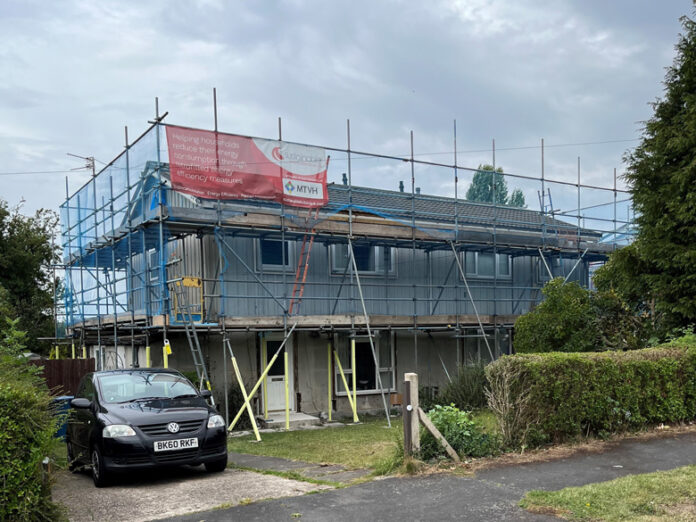
Almost 80 properties are set to receive life changing retrofit decarbonisation measures in East Leake, Nottinghamshire in a ยฃ5.5 million project partnership between Sustainable Building Services (UK) Ltd (SBS) and Metropolitan Thames Valley Housing.

The upgrades installed in the properties will raise the EPC Ratings from EPC D to a minimum of EPC C and include the stripping of asbestos throughout the properties, as well as adding new windows, doors, and external wall insulation.

Having started in August, the partnership will deliver roughly four houses per week with completion expected in March 2025. The project was funded by the second wave of the Social Housing Decarbonisation Fund (SHDF).

Philip Groves, project manager at SBS, said: โ€œThis is a brilliant project that will give the residents a tangible improvement on their quality of life. Not only will the retrofit measures weโ€™ll be installing save on their energy bills each month, but they will also get to enjoy being warmer, healthier, and all round more comfortable in their own homes.

โ€œThis is a small but not insignificant piece of progress in the fight against climate change. Projects like these may only seem like a few dozen houses, but over time they add up until eventually the whole of the UKโ€™s housing stock will be prepared for our net zero future.

โ€œWorking with Metropolitan Thames Valley Housing has been brilliant as well. As partners they have been enthusiastic throughout to ensure the works we deliver are of the highest quality, and that their residents are well taken care of, both things that align with core SBS values.โ€

Many of the houses have received little renovations or improvements in almost 80 years and are British Iron and Steel Federation (BISF), a type of steel framed prefabricated house built in large quantities shortly after the second world war. Because of this, SBS and MTVH carried out additional works to ensure the safety of residents including a full assessment of the stanchions, concrete foundation slabs, and chicken mesh wire.

To learn more about Sustainable Building Services, visit its website here: www.sustainablebuildinguk.com

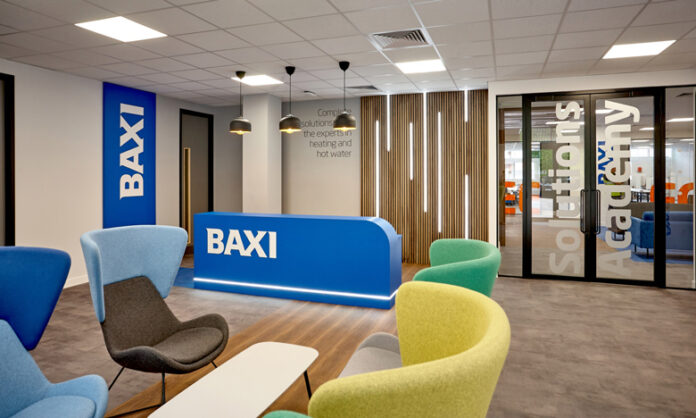
Baxi opens new 10,000sqft flag-ship training facility at Warwick HQ

Baxiโ€™s Solutions Academy will triple capacity, include a digital studio and Baxiโ€™s first dedicated commercial solutions training room

Baxi has opened its new 10,000 sqft Solutions Academy at its Warwick HQ, increasing its annual installer training capacity on the site from 600 delegates in 2023 to 2000 in 2025.

For the first time, a Baxi training facility will have a dedicated solutions training room, allowing installers to get hands on with Baxiโ€™s complete residential and commercial product portfolio under one roof.

The extensive new facility also includes a fully equipped digital studio to support Baxiโ€™s new e-learning platform, to be launched later this year.  Installers will benefit by being able to access live virtual training and pre-learning, as well as being able to extend their in-person training with follow up out-of-class sessions delivered to enrich their overall learning experience. Baxi says the digital platform will give greater accessibility to its content, and will allow people to move forward in their careers at their pace and convenience.

Baxi is expanding its nationwide team of 10 expert trainers, operating out of our four wholly owned facilities and 13 satellite centers based in third party education facilities. It expects to have the capacity to physically train 10,000 installers a year by 2025, with an additional 5,000 installers benefiting annually through Baxiโ€™s e-learning platform.

Ian Trott is Baxiโ€™s Head of UK Training Solutions; โ€œIโ€™m excited about the future โ€“ not just because of our fantastic new training solutions centre in Warwick, but because of our opportunity in supporting commercial sector skills through a dedicated solutions room in Warwickโ€.  The companyโ€™s new focus on solutions training, alongside its traditional product training, is expected to be replicated in Baxiโ€™s other main training centres in Warrington, Dartford and Dublin. Our Warwick investment is important because itโ€™s the blueprint of what we will do in the futureโ€ says Ian. 

The purpose-built facility opens just as the UK Public Accounts Committee reports its concerns that critical targets for heat decarbonisation will be missed. At the same time, a report from the consumer rights group, Which?, concludes that the successful decarbonisation of buildings will only be possible if professionals are equipped with the right skills. It recommends that installers sign up to a mandatory accreditation scheme, designed to create a universal high standard of skills to work with new technologies that will give confidence to homeowners to make the change to clean heat.

Baxi believes its role is to be part of the solution and ensure that installers are equipped with the right skills and knowledge to help customers decarbonise heat and hot water, and just as importantly, to inspire the next generation of installers to be part of the clean heat transition in the years ahead.

โ€œIf you look at technical skills, weโ€™re part of a larger national project to transition traditional heating engineers towards installing new, renewable technologies, and to earn a living through green jobs in our low-carbon future.โ€ Said Baxiโ€™s Ian Trott. โ€œToday we are giving more installers than ever the opportunity to test our products and solutions as part of their career development in the future of heat.โ€ 

For more information on Baxiโ€™s leading training, click here.

The commonality of โ€˜non-standardโ€™ installations of Low Carbon Technologies

Gavin Beresford

Gavin Beresford, Flexible Markets Programme Director, Gemserv Ltd

The challenges of introducing new technologies to consumers are not uncommon in our ever more high-tech and digital world. However, a recent personal experience highlighted these issues when I began the process of installing Low Carbon Technologies in my own home.

Quoting Maslowโ€™s Hierarchy of Needs as an amateur psychologist might be a little bit of a stretch. However, two of its fundamental elements; shelter and property are central to much of life. Installing Low Carbon Technologies in the home directly targets what end users value most: their homes, their shelter.

For many, this can be an incredibly rewarding experience: the excitement of engaging with innovative technologies, the opportunity to actively participate in the energy system while reaping financial benefits, managing energy use, contributing to Net Zero, and enjoying an overall sense of personal or family well-being.

However, things can quickly take a turn. In my case, the issue arose from what my supplier referred to as a ‘non-standard’ EV charger installation. I don’t live in a large mansion – just a typical Victorian semi-detached home. It just so happens that my driveway, and therefore the ideal spot for the charging point, is positioned a few meters away from the main structure of the house.

For my family, the installation has unexpectedly turned into a minor engineering challenge that the installation company has struggled to resolve for several months.  However, my challenges are going to be far from unique.  Our property is fairly typical, and itโ€™s evident there will be many layers of complexity across the GB housing stock, where installers continue to classify these as ‘non-standard’ installations for Low Carbon Technologies.

The Smart Meter rollout has shown us that variability is the norm. Many energy consumers’ unique property situations or personal circumstances don’t always fit neatly into a company’s processes or standard product designs. As an industry, we need to be cautious with the term ‘non-standard.’ Without thoughtful attention to the necessary processes and customer relationships, we risk damaging the experience surrounding what customers cherish mostโ€”their homes.


This article appeared in the September 2024 issue of Energy Manager magazine. Subscribe here.