
Understanding non-commodity costs and what they mean for businesses

Stephen Evans

npower Business Solutionsโ€™ Head of Industry Charges, Stephen Evans, provides us with an overview of this complex area of energy costs.ย 

When it comes to energy costs, most of the recent focus has been on how to reduce the impact of volatile wholesale energy prices on businesses.

However, aside from this, the additional elements added to electricity invoices – the non-commodity costs – are now responsible for a growing share of the overall cost businesses have to pay. 

The steady increase in these costs has had a marked impact on businesses, with many of those consulted in npower Business Solutionsโ€™ latest Business Energy Tracker saying that reducing or simplifying non-commodity costs needs to be a key priority for the new government.

To help demystify non-commodity costs and what they mean for businesses itโ€™s important to consider what they are and how they are impacting the rising cost of energy. 

Firstly though, letโ€™s take a brief step back to look at why these charges became a major part of business energy invoices.

The need to decarboniseย 

In 2000, plans were set in motion to reduce the UKโ€™s dependence on fossil fuels. However, increasing renewable generation required a huge change to our electricity system โ€“ and the costs associated with it. The government encouraged wind generation as an alternative source of power, but the infrastructure was costly to set up. 

As a result, subsidies were created to stimulate and incentivise investment, first through the Renewables Obligation (RO) for large-scale wind farms and biomass, followed by the Feed-in Tariff for small-scale solar, in 2010.

In 2014, Contracts for Difference (CfD) was introduced, replacing RO for all new generation in 2017. That said, the RO will continue paying out subsidies for the next 13 years.

Funding the journey to net zero

The truth is that the cost challenges to businesses now are paving the way for future sustainability. And, these subsidies have worked. We now have wind generation that meets almost 30% of the UKโ€™s total electricity demand, and growing volumes of solar and biomass that currently supply around 10% of our electricity. 

Some of the other key drivers that are causing a rise in non commodity costs as we adapt our energy system for greener energy include:

  • Creating a viable and sustainable infrastructure that will successfully service future generations will take considerable execution. For example, renewable generation sites tend not to be in the same locations as the incumbent power stations, which were not planned around wind or solar yield. Also, rather than having a small number of large generation sites, we now have large numbers of smaller sites and connecting these sites to the central electricity grid requires significantly more transmission and distribution infrastructure to be built.
  • Helping power travel further: Offshore wind and solar farms are often miles away from population centres, unlike the power stations of old that were deliberately placed near towns and cities to limit the amount the generated power needed to travel. Transmission and distribution costs for green energy have to rise to meet this key challenge.ย 
  • Balancing supply and demand: As well as funding green energy subsidies and transmission and distribution costs, electricity consumers also pay towards the cost of balancing the grid and ensuring security of supply. This ensures we always have exactly the right amount of supply to meet demand. As we transition away from predicable fossil-fuel supply to more intermittent renewable generation, it makes the job of balancing the grid much more complex.ย 
  • The price of security of supply: As we rely less on gas-fired power for 24/7 generation, the cost of running these power stations isnโ€™t being met by these ad hoc payments. So they also need a subsidy, which is what the new Capacity Market (CM) delivers, with its focus on ensuring security of supply during periods of peak demand (e.g. over the winter months). But this too is funded via an additional charge added to energy invoices.

Paying now for a sustainable future

The bottom line is that the non-commodity elements added to electricity invoices have risen from around ยฃ100 per MWh in Q1 2023, to ยฃ112 in Q1 2024 โ€“ and are set to jump to around ยฃ132 by Q4 2025.

The good news is that these costs will reduce once these key infrastructures are in place. The investment made up front now will ensure a greener and more sustainable electricity system for future generations.

To find out more about non-commodity costs, download npower Business Solutions’ latest guide here.


This article appeared in the September 2024 issue of Energy Manager magazine. Subscribe here.

How optimising solar can help us all

Daniel Cross

By Daniel Cross, Senor Director of Load Forecasting, POWWR

A recent study found that the sunniest place on earth is on a large plain near the Andes Mountains in Chile, which can see as much sun as Venus. Even on average, the solar irradiance on the plateau is around 308 watts per square meter, meaning that the solar energy potential in the region is roughly twice as high than in Central Europe. However, whether someone is based in Chile or Chichester, they are likely increasingly looking to the skies as a source of power as traditional fossil fuels continue to be phased out.

Solar has gathered momentum as a key power source in the past decade. Partly, this is due to advancements in solar technology and partly this is due to supportive government policies. Its popularity has also been buoyed by the decreasing costs of solar installations, and increasing awareness of the environmental benefits. Plus, there has been the significant advancements in battery technology. 

Better batteriesย 

One of the key areas of improvement in batteries has been in energy density. Modern lithium-ion batteries have far better energy density than in the past, allowing for longer-lasting batteries in smaller, lighter packages. Another key area of improvement has been in charging speed. Innovations in battery chemistry and thermal management are enabling much faster charging times. In fact, some new technologies allow batteries to reach 80% charge in as little as 15 minutes.

In addition, modern solar batteries have a longer lifespan, less degradation, are safer and often have in-built smart battery management systems (BMS) that can monitor battery health, optimise charging and discharging cycles, and predict potential failures. 

Levelling the grid

Enhancements in battery technology is timely. Increasingly volatile extreme weather patterns, data centres required to power the new era of artificial intelligence, population increases in urban areas, and the popularity of electric vehicles are all putting more load on the power grid than ever before.

Advancements in battery technology have paved the way for batteries to play a crucial role in a wide range in large-scale renewable energy storage and, therefore, grid stabilisation. Not only are enhanced battery technologies being integrated into the grid to store energy from renewable sources such as solar to smooth out supply fluctuations. But those being used in public sector solar power systems allow the storing of solar energy for use at night or other times when the sun is no longer reaching the panels. Plus, such efficient battery storage has made it easier for to push excess energy back to the grid at opportune times.

Maximising efficiency

Whether a public sector building gets 12 hours of sunlight a day or 12 minutes, maximising the efficiency and effectiveness of the solar energy system is imperative. The first key aspect of solar optimisation is, unsurprising, ensuring that the angle and direction of the solar panels are adjusted to capture the most sunlight. This means orienting the panels towards the equator and tilting them at an angle that maximises exposure to the sun. Using tracking systems to follow the sun’s path from east to west during the day can make them even more effective. Do make sure that solar panels are placed where they will not be shaded by trees, buildings, or other obstructions throughout the day. 

Using advanced photovoltaic technology to increase the conversion rate of sunlight to electricity can also help. As can regular cleaning of the panels to remove dirt and debris that would otherwise reduce their efficiency. 

There are several ways that technology can help too.Software and Internet of Things (IoT) devices can be used to monitor and track the performance of solar systems in real time. In addition, artificial intelligence (AI) and machine learning (ML) can be used to analyse huge data sets on weather conditions and average cloud coverage to ensure that an end user gets the most out of their system. Finally, data analytics can be used to predict and prevent potential issues before they impact system performance. 

Journey to a renewable future

Another important component is the energy industry itself. Whilst government incentives are welcome, it is also important that suppliers reward those who embark upon a journey towards a renewable future. Energy suppliers need to do all they can to encourage the public sector to use their batteries effectively so that any excess energy produced can find its way back to the grid. After all, it is a win, win. In addition to the obvious environmental benefits, the more that can help with energy production, the more consistent energy supply will be for all.  


This article appeared in the September 2024 issue of Energy Manager magazine. Subscribe here.

Powering change: New Community Energy team launches to help local green ambitions and support UK Government targets

SP Energy Networks has established a new team dedicated to supporting the community energy ambitions of community groups within its network areas.

The team and accompanying community energy strategy recognises the importance of community energy in helping both the UK as a whole and local communities with their ambition to reduce their energy costs and enjoy the environmental benefits that these solutions can bring. Initiatives supported by the team will promote energy autonomy, explore solutions to local energy issues and help to address environmental concerns, fuel poverty, and actively improve communitiesโ€™ capacity to engage with these types of projects.

A recent independent review of community energy, commissioned by SP Energy Networks, found that community-led green initiatives have the power to deliver 2.5m tonnes of carbon savings each year โ€“ the equivalent of powering 2.2m UK homes by 2030.

Community-led energy programmes are a crucial component in achieving net-zero ambitions through the provision of alternative energy sources and grid flexibility to meet the growing demand for low carbon technologies..

As part of the SP Energy Networksโ€™ Community Energy Strategy, a series of dedicated workshops will be delivered to help groups explore the community energy sector, with practical sessions offering technical guidance and signposting to suitable project support. The Community Energy team members will also be on hand to meet with community groups and organisations as well as guiding communities through the energy journey process, providing relevant advice and optioneering.

This initiative also aims to help support national targets, with the newly elected UK Governmentโ€™s Local Power Plan looking to provide grants and low-interest loans for community-led clean energy projects. This will contribute to the strive to produce 8GW of solar and onshore wind in the next five years as part of its broader climate change ambitions.

Nicola Connelly, CEO, SP Energy Networks explains more: โ€œOver the past year, we have worked closely with community energy organisations and key stakeholders to establish how people perceive and understand community energy.

โ€œItโ€™s clear that there is a wealth of ambition across communities but a lack of resources and support to help every project move forward. In setting up our new community energy team we hope to be able to breakdown potential barriers to community energy projects and help more local groups to see the major benefits community energy can bring them.โ€

Emma Bridge, Chief Executive at Community Energy England, said: “We welcome SP Energy Networks taking a proactive approach in supporting community energy groups.”

“By providing technical expertise, funding guidance, and strategic support, this new team will help to empower local organisations to overcome barriers and achieve their renewable energy goals, ultimately contributing to a more sustainable and resilient energy system for all.”

As the network operator for Central and Southern Scotland, Merseyside, Cheshire North and Mid Wales and North Shropshire, SP Energy Networks plays a critical role in helping connecting community energy projects โ€“ ranging from local renewable generation projects to low carbon transport into the grid. To find out more about SP Energy Networksโ€™ Community Energy team and register for updates on available support, please visit: www.spenergynetworks.co.uk/pages/zero_carbon_communities.aspx

Amey lighting the way for inmates to help create sustainable prison estates

Amey, a leading provider of facilities management (FM) services to the public sector, has successfully delivered an innovative Net Zero initiative at HMP Leeds, advancing both sustainability goals and prisoner rehabilitation.

The project involved the installation of energy-efficient 31-Watt LED fittings across 430 cells, replacing outdated 60-Watt dual T8 fittings. The LED lights were manufactured by prisoners at HMP Garth, who gained valuable skills and training through the production process.

This initiative supports the UK Governmentโ€™s ambition to equip ex-offenders with employable skills, ensuring they are job-ready upon release. Research shows that ex-prisoners in stable employment are 9% less likely to reoffend, helping to address the ยฃ18 billion annual cost of reoffending to the UK economy.

Since 2021, Amey has delivered 16 similar LED programmes across the HMPPS prison estate under its Hard FM contract with the Ministry of Justice (MOJ). The success of the HMP Leeds project reflects close collaboration between Amey, the MOJ, prison staff, and the electricians involved. Alongside its social benefits, the project has achieved significant sustainable outcomes, including annual savings of 45 TCo2, ยฃ89,000, and 223,500 kWh, while reducing maintenance costs due to the durable design of the new gear trays.

Pete Mathieson, Business Director for Amey, said: โ€œThis project demonstrates how sustainable initiatives can drive prisoner rehabilitation. By providing inmates with practical skills and work experience, we are helping them build confidence and increasing their chances of successful reintegration into society. Amey is proud to contribute to this vital process of rehabilitation through meaningful work opportunities.โ€

This initiative builds on Ameyโ€™s CRED programme and its collaboration with the Duke of Edinburghโ€™s charity, aimed at enhancing employment prospects for young offenders, post-release.

UK commercial & domestic air cooling: A policy blind spot?

Tony Gittings

Rinnaiโ€™s Tony Gittings looks at the future demand and effects of air cooling on domestic and commercial properties across the UK and Europe. As global temperatures increase, air conditioning units will likely become a requirement for UK and European domiciles and the built environment. What will the effect of air cooling be upon the national electrical grid and UK/ European NetZero ambitions?

Sign up to the Rinnai newsletter today and track UK government policy updates – https://www.rinnai-uk.co.uk/contact-us/newsletter-sign

All present energy policy is firmly centered on reducing fossil fuels and increasing renewables as well as the effects these two fuels produce. Nothing is mentioned of an increase on future demand for commercial and domestic cooling and air conditioning technologies that will influence energy demand and NetZero aims.

Considering rising global temperatures and an increase in UK national humidity levels it would make sense to examine available information that provides some insight into what could happen when domestic and commercial cooling & air conditioning units become a property necessity.

A recent article in the Independent newspaper quoted a survey held by insurers Direct Line questioning London estate agents on air conditioning demand.

โ€œSome 95% of estate agents are seeing an increase in demand for homes with air conditioning as temperatures rise, a survey has suggested. More than four in five agents (88%) also reported a rise in homes coming to the market with built-in air conditioning,โ€ said the report.

This survey suggests that air conditioning is at the very least a sought-after luxury, if not a โ€˜must haveโ€™ appliance such as a washing machine or microwave. A sharp rise in future UK cooling & air conditioning unit demand is expected and the extra power they require for operation passes on strain to the electrical grid.

Last June when temperatures exceeded 30ยฐC (86หšF) the national grid had to utilize coal to provide enough power created by air conditioning usage. This was the first time in 48 days the UK grid had to use fossil fuels.

The Statista webpage has published a number of projections solely focused on the UK air conditioning market. The UK air cooling market is expected to experience an annual growth rate of 3.78% between 2024-2029. Additionally, there is an anticipated volume growth of 2.9% in 2025. There were also record UK sales of air cooling in 2021 at 213,000 confirmed purchases. 2021 is the last available year for definitively confirmed statistics in air cooling sales.

International usage of air-cooling units is also expanding due to sharp rises in regional temperature. Southern France, Italy and Spain now regularly experience plus 40ยฐC heat throughout their summer months. All mentioned countries have had to place into effect a limit on air cooling temperatures so not to place too much strain on the electrical grid.

According to Idealista, a European real estate company, 41% of Spanish housing stock is equipped with air cooling technology. The Spanish air conditioner market is expected grow an annual rate of 4.25% from 2024 to 2029 and an anticipated volume growth of 3.6% in 2025.

In 2022 Spain had to introduce measures that ensured a reduction of energy usage following the Ukraine invasion and successive heat waves that have been attributed to global warming. Spanish authorities maintain legitimate concerns that an increase of electrical demand from air cooling technology could potentially lead to grid malfunctions.

Italy has experienced grid difficulties that amount to periodic blackouts specifically in the business capital Milan during July of this year – 2024. A spike in air cooling technology used to negate severe heat is thought to be a major contributing factor towards these electrical grid shutdowns due to exceeding grid capacity.

Growth in Italian air cooling is projected to increase sharply in the coming years due to excessive heat caused by rising global temperatures. An annual growth rate of 6.96% from 2024 to 2029 is expected as is volume growth of 6.9% in 2025 of Italian purchases of air-cooling technology.

France is another country affected by a rise in uncomfortable summer season temperatures. French domiciles and commercial properties are resorting to purchasing air cooling technology.

French electricity operator RTE has reportedly decided to refrain from exporting end-product electricity. RTE aims to protect the grid from increased demand attributed to air conditioning technology usage. Italy relies on French electrical imports to meet demand and could potentially feel ramifications due to the heat and air-cooling demand in France and in Italy.

French purchases of air conditioning technology are projected to increase over the coming years, with a domestic market annual growth rate of 8.45% between 2024 and 2029 and volume growth of 8.5% in 2025.

Separate national electric grids from across notable economies in Europe are struggling to provide energy demand that satisfies domestic and commercial air-cooling requirements during elevated temperatures. UK, European and international growth in air conditioning units is expected to rise in the coming years with electrical grids requiring updating and maintenance in order to deal with added demand.

UK, European, and global NetZero objectives will be impacted by an expansion in air-cooling technology usage due to the added pressure they impose on electrical grids. In a global movement towards electrification supplied by renewables, national infrastructure that transports electrical energy requires updating costing billions in finances and many, many hours of intricate labour.

It could be argued that grid complications will undoubtedly become more prevalent whilst rising global temperatures cause customers to seek air cooling solutions for their commercial and domestic properties.

Rinnai is determined to keep all customers informed of any changes relating to policy amendments and nuances that affect customer energy options and choice.        

Sign up to the Rinnai newsletter today and track UK government policy updates – https://www.rinnai-uk.co.uk/contact-us/newsletter-sign

RINNAI OFFERS CLEAR PATHWAYS TO LOWER CARBON AND DECARBONISATION PLUS CUSTOMER COST REDUCTIONS FOR COMMERCIAL, DOMESTIC AND OFF-GRID HEATING & HOT WATER DELIVERY  

www.rinnai-uk.co.uk

  • Rinnaiโ€™s range of decarbonising products – H1/H2/H3 – consists of hot water heating units in gas/BioLPG/DME, hydrogen ready units, electric instantaneous hot water heaters, electric storage cylinders and buffer vessels, a comprehensive range of heat pumps, solar, hydrogen-ready or natural gasย  in any configuration of hybrid formats for either residential or commercial applications. Rinnaiโ€™s H1/2/3 range of products and systems offer contractors, consultants and end users a range of efficient, robust and affordable low carbon/decarbonising appliances which create practical, economic and technically feasible solutions.ย 
  • Rinnai is a world leading manufacturer of hot water heaters and produces over two million units a year, operating on each of the five continents. The brand has gained an established reputation for producing products that offer high performance, cost efficiency and extended working lives.ย 
  • Rinnai products are UKCA certified, A-rated water efficiency, accessed through multiple fuel options and are available for purchase 24/7, 365 days a year. Any unit can be delivered to any UK site within 24 hours.
  • Rinnai offer carbon and cost comparison services that will calculate financial and carbon savings made when investing in a Rinnai system. Rinnai also provide a system design service that will suggest an appropriate system for the property in question.
  • Rinnai offer comprehensive training courses and technical support in all aspects of the water heating industry including detailed CPDโ€™s.
  • The Rinnai range covers all forms of fuels and appliances currently available – electric, gas, hydrogen, BioLPG, DME solar thermal, low GWP heat pumps and electric water heaters More information can be found on Rinnaiโ€™s website and its โ€œHelp Me Chooseโ€ webpage.ย 

RINNAI FULL PRODUCT AVAILABILITY 24/7 FOR NEXT DAY DELIVERY of ALL HOT WATER HEATING UNIT MODELS INCLUDING 48-58kW UNITS-

SAVINGS OF

20%                  REDUCTION of opex cost,

30%                  REDUCTION of initial cost

15%                 REDUCTION in carbon

75%                 REDUCTION of space

Visit www.rinnai-uk.co.uk  

Or email engineer@rinaiuk.com  

For more information on the RINNAI product range visit

www.rinnaiuk.com

How healthy are your heat network meters?

Emily Lister

Emily Lister, Sales & Marketing Director at Insite Energy.

When we think about heat network energy efficiency, household meters are not generally the first things that comes to mind. However, correctly operating heat meters are a crucial component of a well-functioning heat network system. Not only do they help ensure residents are fairly and transparently billed, in line with regulations, but they can also play a vital role in monitoring overall system performance and pinpointing faults, thereby reducing operating costs.

The term โ€˜meter healthโ€™ refers to a meterโ€™s overall condition, which in turn directly affects its ability to provide accurate and regular automatic meter readings (AMR and connect to metering systems). As well as giving more precise information, healthy meters are less likely to fail and incur additional costs. This ultimately benefits residents by keeping tariffs lower.

Meter health problems

Unhealthy meters, meanwhile, can give inaccurate data, stop communicating with the billing platform or cease functioning altogether, causing billing issues that are difficult to resolve retrospectively. These include over-charging residents on the one hand, leading to disputes and dissatisfaction, or under-recovering costs on the other, causing potentially serious cash-flow problems for property managers that act as energy suppliers and operators.

Faulty meters can also cause operators to miss or misdiagnose equipment failures, leading to operational inefficiencies and higher maintenance costs.

To protect consumers from these types of difficulties, Ofgem is putting in place stringent metering requirements for heat networks when it takes over as regulator for the sector next year. Smart meters will need to be installed in almost all cases and, as well as meeting specific accuracy standards, all meters will need to undergo timely repairs. Non-compliance may lead to fines and other penalties for energy suppliers, not to mention public censure and possible reputational harm.

Savings and satisfaction

For all these reasons, every energy management plan should include clear-cut strategies for ensuring and maintaining meter health. This is not only good practice but leads to very tangible real-world benefits.

In one recent example at a London housing association, implementing a proactive meter maintenance strategy across 4,807 homes saw the number of bills based on accurate readings increase by a remarkable 117% in 12 months. At the same time, costs went down by around ยฃ75,000 and resident satisfaction improved.

These impressive results were achieved even with a diverse portfolio of meters of different ages and from different manufacturers, as well as a variety of different types of housing tenures. We were helped by the fact that, as the incumbent metering & billing provider, we had access to customer and system information, allowing us to quickly schedule and manage customer appointments, ensuring a smooth process all round. This successful programme is currently being rolled out across a further 2,857 homes.

How to improve your meter health

So, itโ€™s clear why meter health is so important. But what practical, cost-saving steps should you take to optimise your meters and obtain these kinds of benefits?

  • Consider installing remote-monitoring software to identify unhealthy meters and diagnose the cause of the problem. This should also enable you to investigate whether the issue can even be resolved remotely, avoiding a lot of unnecessary house calls, and making for a speedy ROI. Your metering & billing or maintenance provider may be able to help with this.
  • Communicate with residents about the process, emphasising the cost savings and other benefits that stand to be realised. This will help your maintenance team to gain access when callouts are needed.
  • Wherever possible, batch meters that need maintenance together to make the best use of engineersโ€™ time. This is easier to do when thereโ€™s a regular maintenance regime in place.
  • Continuously monitor the functioning of your heat network through data from meters and sensors across the system to maintain meter health and promptly address potential issues. A problem on the network may indicate a problem with a meter, and vice versa.
  • Prioritise meter repairs for cost reduction based on data-driven insights.
  • The best approach is to invest in a holistic meter maintenance contract comprising robust service level agreements (SLAs) and consistent monitoring programmes to spot, prevent and rectify issues proactively โ€“ before they become expensive headaches. As well as improving your meter health, this gives a degree of certainty around future costs and service provision, which benefits residents and property managers alike.

Remember, meter maintenance isn’t just about keeping the hardware running; it’s about ensuring residents’ bills reflect their actual usage, reducing operational costs, ensuring regulatory compliance and improving customer satisfaction. Effective planning and a targeted approach are essential to make all that happen.


This article appeared in the September 2024 issue of Energy Manager magazine. Subscribe here.

Smart technologies: accelerating the journey to decarbonisation

Jodie Eaton, CEO of Shell Energy UK, explores the opportunities presented by smart technologies and artificial intelligence (AI) as businesses navigate the complex landscape of renewables, storage and onsite generation to achieve their decarbonisation goals.

According to the latest progress report to parliament from the Climate Change Committee (June 2023), the UKโ€™s industrial emissions fell by 3% in 2022 to 63 million tonnes of carbon dioxide equivalent (MtCO2e).[1] While positive, the pace of industrial decarbonisation will need to accelerate over the next decade to meet ambitious government targets.

The governmentโ€™s Carbon Budget Delivery Plan (CBDP)[2] requires industrial emissions to fall by 8% on average annually between 2022 and 2030.[3] It also says that there continues to be a lack of available data in the industrial sector, which limits monitoring, evaluation and policy implementation.

Good data is crucial to drive strategic decision-making, especially when it comes to improving business performance and costs. From gathering market trends, to optimising the operational efficiency of production processes or finding ways to control energy spending, accurate and timely data has the potential to deliver significant rewards,

However, accessing the right data can be operationally complex. In fact, the most prevalent obstacle to reducing carbon emissions is a lack of sufficient data to baseline and monitor energy emissions. This insight was revealed in a recent survey commissioned by Shell Energy, where 69% of respondents indicated that access to accurate data was their most significant challenge.[4]

Smart technologies and AI have the potential to provide businesses with access to the kind of data that can unlock opportunities to drive efficiency, plan investment and resolve issues to enhance performance in real time.

A crucial role for smart technologies and AI

Smart technologies can be found on a range of systems including air conditioning units, lighting and energy storage systems, enabling them to both communicate and optimise local energy consumption in response to demand. These enhancements can have a positive impact on energy savings, CO2 emissions, asset life cycle and/or operation and maintenance costs.

As society becomes more reliant on intermittent renewable energy sources, the need to match demand with supply requires accurate forecasting. This has a vital role to play in delivering supply security and identifying how to deploy new technologies effectively to drive efficiencies and optimise performance.

This is where AI comes in. By harnessing big data to quickly analyse past patterns, current conditions and future predictions, AI algorithms can inform generation forecasting by predicting when (and how much) energy is likely to be produced from resources such as wind and solar. This, in turn, can be used to inform future energy management decisions โ€“ maximising efficiencies and helping to balance supply and demand.

AI already supports smart grids and demand side response, by monitoring and diagnosing system problems to avert blackouts, as well as balancing intermittent resources and leveraging load flexibility through curtailment (a deliberate reduction in output below what could have been produced in order to balance energy supply and demand). It also plays a crucial role in optimising the operation of onsite energy storage systems, ensuring the efficient utilisation of stored energy during periods of limited renewable generation, enabling a continuous supply of low carbon energy when needed.

Companies across the manufacturing and construction industries harnessing this capability most effectively, with the former using it to autonomously optimise efficiencies and guarantee backup power in times of peak demand, and the latter to operate seamlessly in harsh environments.[5] Elsewhere, AI is being used to improve wider energy consumption efficiencies. The Google DeepMind project, for example, saw historical data used alongside machine learning capability to accurately predict exacting upcoming requirements, rather than estimated. This, in turn, prevented over-cooling and enabled savings of 40%.[6]

Another area where AI is able to offer significant value is through predictive maintenance in industries including automotive, oil and gas, chemicals and aerospace.[7] Data can be harnessed to proactively flag equipment service requirements ahead of time, rather than waiting for problems to occur and reactively fixing them. This, in turn, helps to optimise the efficiency of equipment and mimimises downtime.

At a Shell refinery in the Netherlands, for example, AI is used to detect valve control issues. With thousands of data points captured every minute, anomalies are spotted and alerts triggered so that further investigation can take place. This not only alleviates the risk of equipment failure, but also prevents parts from being preemptively changed while still in good condition.[8]

Another area where AI can support decarbonisation is through Carbon Capture and Storage (CCS), where it has the ability to improve the efficiency of CCS processes by optimising the capture of carbon dioxide from the atmosphere or emission sources.[9] For instance,  machine learning (ML) and deep learning (DL) can be harnessed to identify the most suitable methods for using captured carbon, whether for industrial processes or safe long-term storage.

Smart technologies working with AI are helping to create intelligent, responsive energy systems. They see a myriad of variables plugged in to provide information not just on energy consumption in real-time, but also on factors that can influence energy use, from external temperatures to the availability of onsite generation or stored energy. This can give businesses far greater control over how they buy, use, store and โ€“ in some cases โ€“ generate their energy to meet fluctuating demand.

The combination of real-time information and forecasting capabilities helps businesses to strike the right balance between load curtailment and operational needs. With advanced knowledge of the expected timing of peak events and energy prices, customers are able to strategically respond in ways that deliver cost as well as energy savings.  

Grid optimisation, optimal use of intermittent renewable energy sources and flexible load management are just a few of the ways in which AI can help energy users to adapt to a rapidly changing landscape. By embracing the potential of smart technologies and AI, businesses can navigate the challenges of decarbonisation with confidence and accelerate the transition towards a sustainable and resilient future.

For more information on how Shell Energy can support your business visit www.uk.shellenergy.com.


[1] https://www.theccc.org.uk/wp-content/uploads/2023/06/Progress-in-reducing-UK-emissions-2023-Report-to-Parliament-1.pdf

[2] https://www.gov.uk/government/publications/carbon-budget-delivery-plan

[3] Progress in reducing UK emissions – 2023 Report to Parliament (theccc.org.uk)

[4] Survey of 100 decision makers spending more than ยฃ250K a year on energy (June 2023)

[5] https://www.startus-insights.com/innovators-guide/applications-of-energy-storage/#:~:text=Manufacturing%20and%20construction%20industries%20leverage,environments%20and%20provide%20backup%20power.

[6] https://deepmind.google/discover/blog/deepmind-ai-reduces-google-data-centre-cooling-bill-by-40/

[7] https://www.startus-insights.com/innovators-guide/emerging-predictive-maintenance-startups/#:~:text=That%20is%20why%20the%20automotive,their%20infrastructures%20and%20remote%20assets.

[8] https://www.shell.com/energy-and-innovation/digitalisation/digitalisation-in-action/industry/_jcr_content/root/main/section/simple/list/list_item/links/item0.stream/1650525120832/dabc9c17a2c9a00d39cb4f442e75d667920c8562/the-shell-journey-towards-global-predictive-maintenance-velthuis.pdf

[9] https://www.sciencedirect.com/science/article/abs/pii/S0048969723025342


This article appeared in the September 2024 issue of Energy Manager magazine. Subscribe here.

Motorists get green light to charge ahead with lamp posts

Studies have proved that 5kW chargepoints can be installed even on older lamp posts.

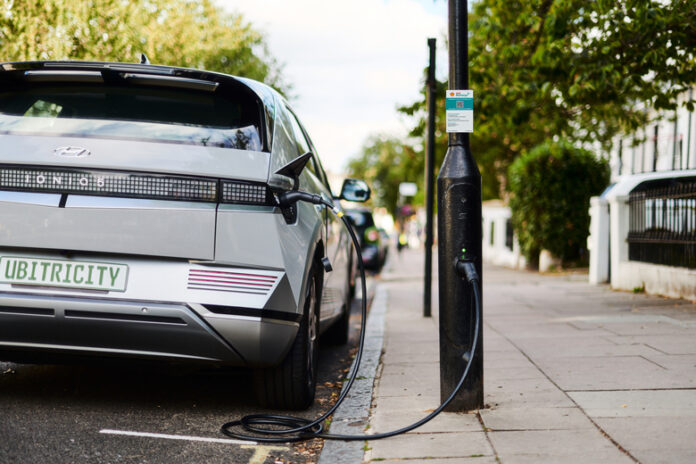
An electric vehicle charging revolution could be underway after UK Power Networks revises guidance to give the green light to use lamp posts to power up.

A series of studies undertaken by the distribution network operator for London, the South and East of England has proven 5kW chargepoints can be installed even on older lamp posts which have thinner cabling than more modern installations.

UK Power Networks worked closely with the UKโ€™s largest public charge point operator, Shell ubitricity to undertake technical assessments, and has now updated its technical guidance to give confidence to the energy industry to deliver a large-scale roll-out of lamp post charging.

The study came after some local authorities on the South Coast of England were ordered to stop installing lamp post chargers on older legacy columns with different wiring. Local authorities own and operate streetlights, with distribution network operators like UK Power Networks delivering the power to them.

The revised guidance is expected to help electric vehicle owners in towns and cities, where it is estimated that up to 60% of people do not have access to off-street parking. It will give all 133 local authorities operating in the area UK Power Networks serves the green light to connect faster 5kW chargepoints to their lamp posts.

Local authorities will also now be able to push ahead with their plans to increase the number of chargers through the governmentโ€™s Local EV Infrastructure Fund. ubitricity internally estimates that for a budget of ยฃ1m local authorities could roll out 700-800 lamp post chargers compared to 60-75 Fast Dual charge points (7-22kW) or 20-25 Rapid Single charge points.

The UK governmentโ€™s electric vehicle infrastructure strategy states that by 2030 between 300,000 and 700,000 public chargepoints will be needed to serve up to 10 million electric vehicles forecasted to be on the nationโ€™s roads.

Mark Adolphus, director of Connections at UK Power Networks said: โ€œThis is great news for customers and lights the way for a vast swathe of new electric vehicle charging stations across the region we serve. It underlines the importance of networks collaborating with the wider energy industry to ensure they can deliver with confidence and certainty.โ€

Stuart Wilson, market unit Lead at ubitricity said: โ€œLamp post charging helps local authorities to rollout out charging infrastructure at scale and allows EV drivers to charge their cars close to home. Over 8 million households in the UK do not have access to off-street parking and without strong public EV charging infrastructure, there is a legitimate concern that people without a driveway will be left behind in the transition to electric vehicles in the UK. This is great news for EV drivers and we are proud to have collaborated with UK Power Networks on this guidanceโ€.

Would you run a marathon in the wrong sized trainers?

Image by SAM7682 from Pixabay

Many of us love the idea of running a marathon, even if we never get close to realising the ambition. For organisations across the UK the marathon that is Net Zero is a race they have no option but to take part in, whether they feel they have trained hard enough or even have any idea how to get up off the sofa and take the first step. But determination and training aside, nobody would be foolish enough to run a marathon โ€“ or set out on the route to Net Zero – in trainers that donโ€™t fit, would they?

Ryan O’Neill

Ryan Oโ€™Neill, chief strategy officer at Equity Energies discusses why so many organisations across the UK feel hamstrung in their Net Zero progress and looks at why a fundamental โ€˜good fitโ€™ is what will unleash the performance needed to win the race.

Would you run a marathon in the wrong sized trainers?

Running a marathon is no small feat. Yet, itโ€™s possible for anyone, even those who consider themselves unfit or have no running experience.

I’m not a marathon expert (I havenโ€™t run one yet), but like any goal, there’s a basic approach to getting there. In the case of running 26.21 miles, you need to focus on two things:

  1. Ambition and Attitude โ€“ You must want to do it and believe youโ€™ll finish. It’s no surprise that longer-distance running tends to be taken up by older people, as life experience and mental fortitude bring determination.
  2. Technique and Training โ€“ It takes hard work to be ready, focusing on form and technique, getting your stride and breathing right, and building stamina and resilience through regular training.

Starting with no running experience to finishing a marathon seems simple enough; Iโ€™ve almost convinced myself to sign up. There’s a lot of work involved, but it is possible. Even those with some running experience must commit to a plan that incorporates these elements to be fully prepared.

Yet, thereโ€™s one more thing to consider. You wouldnโ€™t run a marathon in trainers that donโ€™t fit, would you?

A Different Finish Line

Okay, Iโ€™m not planning on running a marathon soon. But the analogy is useful when thinking about a different journeyโ€”reaching Net Zero.

From an organisational perspective, you might be starting with no experience or could be making progress but are still nervous about the full journey. Regardless, the same two elements matter.

  1. Ambition and Attitude โ€“ There is widespread awareness of the importance of reaching Net Zero from an environmental perspective, alongside understanding the positive commercial impact. This often translates into a strong ambition to get started or to signal intention through setting carbon reduction targets.
  2. Technique and Training โ€“ For many organisations, reaching Net Zero involves complex layers, as any pathway must be commercially viable and maintain business continuity. Understanding your starting point, identifying options, and setting out a (training) plan to work up to the goal is crucial.

On paper, it seems straightforward, but many organisations find it complex to the point of inaction. One of the biggest challenges is embracing the fact that thereโ€™s no single pathway to Net Zero. Every organisation is different and needs a unique plan to succeed. While the goal is equality โ€” everyone reaching Net Zero and unlocking its value โ€” each organisation requires a different approach to get there.

Getting the Size Right

If equality is giving everyone new trainers, equity would be making sure each pair of trainers fits. Without that simple nuance, the first step taken on your jog, let alone the marathon that follows, isnโ€™t going to feel that great.

Itโ€™s the same when it comes to organisations embarking on the journey to Net Zero. We know there is no one-size-fits-all Net Zero solution, yet thereโ€™s still an expectation that people and the organisations they represent can easily choose a path and stick to it, even when theyโ€™re being bombarded with information and options, each claiming to be the silver bullet.

Just grab the first pair of trainers you see and get running. What could possibly go wrong?

For any Net Zero pathway to be a success, it needs to be equitable – designed and implemented in a way that responds to the organisation’s own unique requirements. And when those requirements change, or the options available to support progress evolve, the pathway needs to change too. A runner wonโ€™t think twice to adapting their unique training plan based on how they are feeling, the progress theyโ€™re making, and any obstacles they encounter.

Itโ€™s worth getting it right. Just like any runner will tell you, once you start to feel the benefits, itโ€™s hard to stop. The right Net Zero pathway unlocks commercial, environmental and societal value, and will become an ongoing catalyst for organisational performance. 

You only need to take the first step.

Finisher Medals All Round

The joy of finishing a marathon shouldnโ€™t be reserved for Olympians and professional athletes, and progress on Net Zero shouldnโ€™t be reserved for large corporations or those with ample resources. After all, it is the 50,000+ amateur runners in the London Marathon who, combined, create the most significant impact on personal health, wellbeing, and charity fundraising.

Success will come when every organisation in the UK can move forward in a way that matches their unique requirements, unlocking the benefits of action.

Equality through equity? Now thatโ€™s something worth tying your laces up for.


This article appeared in the September 2024 issue of Energy Manager magazine. Subscribe here.
Underfunded Ventilation in Schools is Failing Our Students

Following a recent survey, CIAT is joining the efforts to raise awareness about the critical need for continued school ventilation spending amidst the UK cost-of-living crisis. CIAT UK is part of Carrier Global Corporation (NYSE: CARR), global leader in intelligent climate and energy solutions.

Reduced investment in heating and ventilation is not just a financial issue; it’s a threat to our studentsโ€™ learning outcomes and overall well-being. A recent survey by the Association of School and College Leaders (ASCL) has revealed a significant decline in classroom conditions, a direct result of government underinvestment.

The survey accumulated 8,585 responses from state-funded secondary and primary schools. Results revealed that 57% of respondents claimed the most recent classroom they taught in was too hot during summer due to poor ventilation, and 28% complained of cold conditions due to inadequate heating systems. Other responses included broken windows and doors (19%) or leaking ceilings (19%).

In a 2023 report, the National Audit Office highlighted that sustained underinvestment had plunged the school estate into decline, forcing around 700,000 students to learn in buildings requiring substantial refurbishment or reconstruction.

According to a Carrier-backed study by researchers at Harvardโ€™s T.H. Chan School of Public Health, these conditions are not just uncomfortable but can lead to elevated CO2 levels and higher concentrations of harmful particulate matter smaller than 2.5 microns (PM2.5) and volatile organic compounds (VOCs). These toxicity levels cause more than just physical complications, severely affecting mental functioning.

The study comprises three related studies into the impact of ventilation and filtration on occupantsโ€™ cognitive function and health in the lab, the impact in buildings in US cities, and in six countries worldwide.

โ€œLab tests revealed that cognitive function scores were 61% higher in green buildings (with low VOCs) than conventional buildings,โ€ said Matthew Maleki, Business Development Manager and IAQ Champion at CIAT UK&I. โ€œIn enhanced green buildings with low VOCs and enhanced ventilation, they were a massive 101% higher.โ€

On average, participants in green-certified buildings saw 26% higher cognitive function scores than those in non-certified, high-performing buildings. Higher scores were identified in critical areas such as crisis response and strategy.

The most significant cognitive function differences were seen in crisis response (73%), the ability to gear decision-making towards overall goals (44%), the capacity to pay attention to situations at hand (38%), and strategy (31%).

โ€œGreen and well-ventilated buildings can generate massive improvements in peopleโ€™s cognitive function and mental health,โ€ said Matthew Maleki, โ€œStudents are not only protected from more physical harms, but they are more productive and less likely to be off sick. Bright, well-ventilated spaces with lots of daylight are vital.โ€

Learn more about CIATโ€™s approach to improving IAQ at www.ciat.com/en/uk/about-us/ciat-4-life


This article appeared in the September 2024 issue of Energy Manager magazine. Subscribe here.