Wave wins new contract with The Energy Consortium

Tony March

National water retailer, Wave, has secured a significant new water framework with The Energy Consortium (TEC) for the next four years.

This is another important win for Wave, securing access to university and museum customers nationally, with a combined annual revenue of ยฃ25m, and growing. Wave is expected to retain 100% of current TEC customers thanks to its commitment to quality, water efficiency and social value.

The new framework will build upon an already strong and trust based, four-year relationship with TEC, formed through their existing framework. During this time, TEC has collaborated at both a framework and customer level to innovate and provide the best outcomes for member organisations.

Most recently, Waveโ€™s Legionella Risk Management (LRM) trial has offered TEC members an exciting opportunity to be part of the first cohort of participants to test new sensors which could reduce excess water used as part of LRM practices in colleges and universities across the country. 

Both organisations are deeply committed to environmental sustainability and community engagement, with TEC and its member organisations volunteering at several of Waveโ€™s recent social value initiatives, including maintenance projects delivered at Washington Wildlife Trust, Worcester & Birmingham Canal and Liverpool Festival Gardens.

Tony March, Director of Public Sector and Industrial Customers at Wave, said: โ€œTEC, its members, associates and Wave are approaching nearly four years of working closely to deliver a water service that is second to none. Wave is delighted to have secured the new TEC framework, which will provide a great platform to build on the fantastic work which is in progress. Together, weโ€™ll work to drive efficiencies, reduce water consumption, improve compliance and continue all our journeys to net zero. 

โ€œThank you to TEC, its members and associates for this amazing opportunity and placing your trust in Wave.โ€ 

Steve Creighton, Head of Members at The Energy Consortium, said: โ€œThis framework enhances the service that TEC has been continuously improving over the last four years and will give our members access to a water partner and service that delivers real benefit and value. Wave has consistently demonstrated exceptional service to our members and possesses a strong understanding of the challenges in our sector.

โ€œTogether, TEC and Wave are committed to driving change and enhancing water efficiency by reducing consumption and waste, aligning with the core needs of our industry for the benefit of all. And we are delighted to have Wave at our upcoming conference in November to promote this message to our member organisations.”

Minimise your building’s energy usage with BEM Services

If you are an energy manager wanting to keep the lights switched on this winter, BEM Services is launching a series of FREE downloadable technical help guides to answer common energy efficiency challenges for the built environment on stand D74 at EMEX 2024.

Then for those with more specific questions, you can benefit from BEM Servicesโ€™ expert rapid, yet reliable consultancy and energy audit service for just a one-off fee with no expensive contracts to help minimise energy usage across all types of buildings.

Mark Boardman, Managing Director, BEM Services, explains: โ€œMany will be hoping this winter there will be more stability in the UKโ€™s energy costs after the sharp rises we have seen in recent years. But businesses can easily adapt by adopting innovative ways to reduce energy use and greenhouse gas emissions that will save costs too.

โ€œIf you are unsure for example, of the best air source heat pump system to use or if solar panels will yield better results, or what type of boiler is more suitable, we can help advise on all of these questions and provide consultancy and audits to determine on what your project needs.โ€

BEM Services advises on a broad range of energy solutions to ensure your project yields positive results in its sustainability efforts and saves you costs in the future. Its team is experienced in creating complex models and designs for various systems that impact heating, lighting, air conditioning, water and more. For further information and to download a series of FREE technical help guides, please visit www.bem-services.co.uk

Why digital twins are a bright idea

Martin Huber

Martin Huber, CEO and Co-Founder of 3D modelling and spatial data company Metaroom by Amrax, discusses how digital twins are opening the door to the adoption of new lighting solutions.

Digitalisation in design and planning isnโ€™t new. For years now, Building Information Modelling (BIM) models have been used to empower designers, architects, engineers and planners to visualise, collaborate, and optimise their designs in virtual environments to accelerate innovation and streamline efficiencies. It is only more recently though that this powerful tech category is coming to the fore in a wider range. Part of the reason can be attributed to Apple Inc. Though its recent Vision Pro headset โ€“ what it has called a โ€˜spatial computerโ€™ – may have been met with a mixed reception, thereโ€™s no doubt it marks an important evolution in the market. Far from simply an entertainment or gaming experience, itโ€™s indicative of a growing transition towards VR and AR use in a wide range of very compelling commercial applications that will appeal to a number of businesses.

One of the most notable of these is spatial design. When BIM technologies are partnered with the latest generation of 3D modelling and spatial data capture, the ability to scan rooms and generate quick true-to-scale 3D models to ensure project-specific customisation and precision can be game-changing. In the past, this process would be incredibly costly, time consuming and fraught with potential risk. Now, anybody, with the minimum of training, can use these platforms to create the ideal design for their needs, and, crucially, easily liaise with other stakeholders to amend and confirm their plans.

Why this matters for the lighting industry is that one of the most experimented with factors is how buildings are illuminated. This stands to reason – lighting has a profound impact on the comfort and ascetic of a building as well as its functionality. Due to higher energy costs and the need for improved sustainability, there is real value to be had in finding highly efficient lighting solutions. Meanwhile legislation, such as the recently introduced amendment to the RoHS Directive, continues to render the need for innovation, especially in terms of efficiency, more critical.

Experimentation with digital twins is not confined to finding out how to light a building with as few light fittings as possible, itโ€™s also about how you can creatively use light to create the best possible environment.

Saving money on traditional lighting solutions will also increase the willingness of building owners/designers and facility managers to allocate more resources to cutting edge technology such as UV disinfection. These lighting solutions can improve the overall healthiness of a space. This isnโ€™t just attractive to the healthcare industry – itโ€™s relevant to any business that seeks to improve the wellbeing of their employees while also reducing time lost to sickness. Higher up on the innovation scale is smart lighting enabled by quantum dot technology. Designers can now create lighting environments that closely mimic actual daylight and can be linked to a building user’s circadian rhythm to dynamically change in line with how sunlight differs throughout a normal day. Research has shown that this has a huge impact on wellbeing and could be transformative during the long winter months or for workers on night shifts.

However, the sector where we are likely to see the biggest demand is within dynamic and IoT lighting systems. This is because digital twins and spatial computing also opens the door to the holy grail of building design – truly smart buildings. As many will be aware, this is the concept that every factor within a building is controlled via a series of smart devices and AI to react in real time to external and internal variables to create, in essence, a living environment. Lighting is obviously one of the major factors within that scenario and companies which provide these smart integrated solutions are going to see major interest in their products.

The final opportunity for lighting companies is working more closely with tech platforms within the 3D modelling space to directly integrate their products into these applications. This will enable users to experiment directly with existing and even potential new products during the design process. Lighting companies will also be able to collect data on how designers are innovating which will provide invaluable product development insights. Closer integration with modelling platforms also has the virtue of helping the technology to develop. Lighting companies can provide their deep expertise to enhance the customer experience by suggesting new functionalities. This in turn should enable users to do even more experimentation driving further innovation in a virtuous cycle.

The reality is that the advent of digital twins and spatial design has the potential to change everything we thought we already knew about lighting design in all aspects of aesthetics, functionality, sustainability, occupancy comfort and well-being, and brand identity. A bright idea would be to begin to integrate virtualisation in strategic lighting design today, as its significance continues to grow in the years to come.  


This article appeared in the October 2024 issue of Energy Manager magazine. Subscribe here.

What is distributed energy and why does it matter now more than ever?

John Behan

With energy resilience high on the policy agenda for the new government, John Behan, CEO of AMPYR Distributed Energy (ADE), discusses the pivotal role that distributed energy and private finance will play in the energy system of the future.

The energy landscape is changing at a rapid pace and, for businesses, the need to decarbonise is driven by both commercial and compliance considerations. Itโ€™s not just a cost concern, but also about mitigating supply risks and creating long-term certainty in a disrupted market. Add into this growing sustainability pressure from stakeholders and the conversation moves from embracing best practice to โ€˜do it or be left behindโ€™.

According to Energy Secretary Ed Milliband, โ€œthe only way to protect ourselves as a country for the long-term is to deliver cleaner, cheaper, homegrown energy โ€“ boosting our energy independence, creating jobs and tackling the climate crisis.โ€ Indeed, as we move away from large-scale centralised generation to a more fragmented decentralised model, distributed energy will take centre stage.

But what is distributed energy, how is it helping to address concerns over resilience, supply security, compliance and decarbonisation, and why is it considered such a game-changer in an energy landscape now giving decarbonisation a sense of urgency not previously seen?

What is distributed energy?

Distributed energy is the name given to energy generated onsite, or close to where it will be used. It includes rooftop and ground mounted solar panels, as well as wind turbines and battery storage. Such resources have an important role to play in the energy landscape of the future and can be used to improve system reliability and reduce overall energy costs.[1] Siting energy generation near where it will be used also reduces transmission losses, mitigates the need for future grid upgrades and enables the rapid deployment of renewables.

How can distributed energy help businesses?

Decarbonising operations and accelerating towards net zero is fast becoming a board-level business priority. Amid energy price volatility, rent hikes, supply chain disruptions and rising inflation, businesses are looking for sustainable, funded solutions to streamline the balance sheet.

To accelerate progress, earlier this year policymakers removed planning permissions surrounding flat roofs, as well as scrapping the 1MW restriction for industrial rooftop solar and relaxing planning around solar canopies on car parks. With the new government looking to fast-track greener energy adoptions and electrifying the grid, the emphasis on tripling the adoption of solar by 2030 has really put the opportunity for onsite generation front and centre for businesses looking to decarbonise. The fact that it can now be achieved with no upfront costs could be a game changer.

Distributed energy offers several business-critical advantages. It not only helps to reduce energy costs (in some cases by up to 50%)[2] and lower carbon emissions, but also supports business resilience by reducing reliance on centralised energy supply. Thanks to the availability of Power Purchase Agreements (PPAs), an agreement that sees renewable energy generation technology installed by a provider and sold to a customer at a cost-effective fixed price, distributed energy is affordable and easy to implement. Whatโ€™s more, it delivers these benefits almost immediately.

Where is distributed energy most beneficial?

Any business where there is available rooftop space can take advantage of rooftop solar, the fastest growing and most accessible form of onsite generation. In fact, there are several sectors where energy use is high, such as industrial centres and warehousing, and so is the potential for onsite generation.

We are engaged with a wide range of businesses, from sports stadia and conference centres to distribution hubs and factories, all keen to harness the benefits of onsite generation. The primary concerns of course are how much will it cost and what the risks might be. When funded by the PPA model, for example, there are no upfront costs, making adoption of renewable energy technologies much more accessible for many.

One sector that has already identified an industry-wide opportunity for solar is the warehouse sector, which is experiencing rapid growth. The UK Warehousing Associationโ€™s (UKWA) own research[3] identified that UK warehousing has the roof space for up to 15GW of new solar, doubling the UKโ€™s solar PV capacity.

Because the UKโ€™s 20% largest warehouses can provide 75 million square metres of roof space, it helps to avoid the need to develop new land equivalent to the footprint of 500,000 houses. Projected to reduce energy costs by between 40-80%, the UKWA estimates that in aggregate rooftop solar PV has the potential to save the industry ยฃ3 billon per year.

Other energy intensive sectors such as data centres are turning to renewable energy to help decarbonise operations as they come under increasing pressure to operate in a sustainable way.

Overcoming risk

Many businesses may think that going beyond renewable energy procurement, to explore areas such as onsite generation, is too daunting, especially with challenges and barriers around grid connections, capacity, returns, pricing and liabilities.

However, when it comes to distributed energy, the models for deployment have been tried and tested worldwide. At ADE, for example, we have an initial fund of ยฃ100m to deploy on projects in the UK and across Europe. What this means in practice is that businesses can access both the expertise and the funding required to secure a system that is right for them, with no upfront costs.

We understand that businesses donโ€™t want renewable energy installations to be a liability, so having a partner that goes far beyond just the acquisition and installation of renewable energy assets and looks for ways to drive optimal performance and value โ€“ year in, year out, is going to be critical.

Making distributed energy systems work hard for business

Ultimately, onsite generation, when done well, can save organisations money, increase energy security, increase business competitiveness and ensure complianceโ€ฆ all while ensuring a better world for us all.

To find out how accessible distributed energy systems are in the UK, visit www.ampyrde.com


[1] https://www.iea.org/reports/unlocking-the-potential-of-distributed-energy-resources

[2] https://blockchain.ieee.org/verticals/transactive-energy/topics/benefits-of-distributed-energy-resources-shifting-the-energy-landscape#:~:text=Distributed%20Energy%20Resources%20Are%20More%20Cost%20Efficient&text=With%20a%20strong%20and%20effective,the%20localized%20cost%20of%20electricity.

[3] https://www.ukwa.org.uk/wp-content/uploads/2022/09/Investment-Case-for-Rootop-Solar-Power-in-Warehousing-August-2022.pdf


This article appeared in the October 2024 issue of Energy Manager magazine. Subscribe here.

Energy efficiency: How flywheel technology can give EV chargers the boost they need without grid upgrades

EVs are more efficient and more sustainable than combustion engine vehicles but public charging infrastructure often fails to deliver the short, convenient charging sessions that people expect, hampering their adoption. Limitations within the grid are often the problem, however flywheel technology can provide an intelligent solution.

Udi Tzuri

Author: ZOOZ Power, VP Product, Udi Tzuri

As the number of EVs hitting the roads increases โ€“ another 815,399 in the first half of this year in Europe alone1 โ€“ charging infrastructure needs to catch up. The European Commissionโ€™s target is for 3.5 million by 20302, and the EVs that will be plugged into them will contribute to the 60% increase in electricity consumption within the same period3, and this will necessitate investments of around โ‚ฌ584 billion in the grid3.

The scale of the investment is huge, and whether it can be delivered on time is another issue. The challenges are mirrored in many other locations around the world โ€“ Californiaโ€™s grid alone needs $50 billion by 20354 simply because it wasnโ€™t designed with EVs in mind. So until upgrades can be rolled-out, which often means waiting years, EV drivers can experience slower than expected charging because the local grid simply canโ€™t supply enough power to meet peak demand.

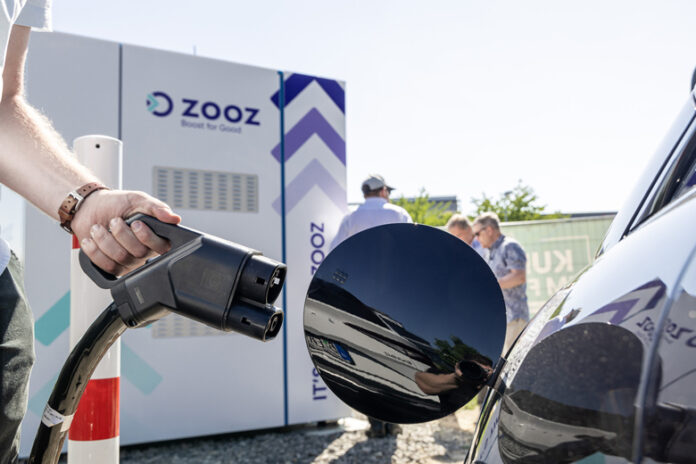
With the urgent need to rapidly expand public charging infrastructure and provide a reliable fast-EV charging experience ahead of grid upgrades, a flywheel power booster named ZOOZTER-100 is the ideal solution for this challenge. This kinetic power booster bridges the gap between the growing demand for ultra-fast charging and the constraints imposed by the grid. ZOOZTER-100 has already been installed at sites in the UK, US, Germany, and Israel, and additional installations are planned in other countries.

ZOOZTER-100 features our patented flywheel technology at its core. The system draws power from the grid at idle times and converts it to kinetic energy by running the flywheel up to 17,000rpm. When an EV is connected to the charger, the stored energy is converted back into power which boosts the grid, so that the EV receives the combined output of both. This approach enables the charger to operate at peak capacity. At our most recent installations in Germany, such as in Reiskirchen and Weiterstadt, a single ZOOZTER-100 at each location successfully doubled the available power to 200 kW in Reiskirchen and increased it to 350 kW in Weiterstadt.

The ZOOZTER-100โ€™s Energy Management System (EMS) optimizes energy use at charging stations by managing power flow between the grid, ZOOZTER, and EVs. It dynamically adjusts distribution based on real-time demand and availability, maximizing efficiency, reducing charging times, and preventing grid overload. With predictive algorithms, the EMS enhances operational efficiency, supports grid stability, and ensures cost savings for charge point operators (CPOs).

The combination of all these capabilities enables (CPOs) to commission new sites in a relatively short time, without the high capital expenditure, lead times and disruption of grid enhancement, allowing them to quickly generate revenue and support the profitable long-term rollout of ultra-fast charging infrastructure. A single ZOOZTER-100 can support multiple charge points and takes up little space on-site.

Another benefit is that the units can be easily relocated in future to new sites that need boosting. These advantages are amplified in locations where very few chargers currently exist: not only do they have great future potential but are also key to the transition from ICE to EV by complementing โ€“ and then superseding โ€“ traditional filling stations.

Sales of new combustion engine vehicles will be banned in Europe from 2035, and by that date, adoption of EVs is estimated to have saved net CO2 emissions of around 2 Gt.5 But with public charging infrastructure being one of the most commonly cited reasons for consumers hesitating to make the switch from combustion engine vehicles to EVs, it is essential that everything possible to ensure that they have the confidence to do so, and that means ensuring that fast chargers can deliver the short charging times that consumers expect. The grid upgrades will come, but until they do, we offer a highly energy efficient, robust, and sustainable solution.

The transport sector in Europe is responsible for around a quarter of the regionโ€™s total greenhouse gas emissions6, and of those, three quarters come from road vehicles6. Electric vehicles are fundamental to reducing that share and enabling countries to meet their new-zero targets by 2050.

1 https://www.acea.auto/pc-registrations/new-car-registrations-0-2-in-july-2024-battery-electric-12-1-market-share/

2 https://alternative-fuels-observatory.ec.europa.eu/general-information/news/new-study-accelerating-eu-electric-vehicle-charging-infrastructure-roll

3 https://ec.europa.eu/commission/presscorner/detail/en/qanda_23_6045

4 https://docs.cpuc.ca.gov/PublishedDocs/Efile/G000/M508/K423/508423247.PDF

5 https://www.iea.org/reports/global-ev-outlook-2024/outlook-for-emissions-reductions

6 https://www.eea.europa.eu/en/topics/in-depth/road-transport#:~:text=Transport%20contributes%20to%20about%20a,these%20come%20from%20road%20transport.


This article appeared in the October 2024 issue of Energy Manager magazine. Subscribe here.

Unlocking public sector decarbonisation funding

Matthew Caville

Matthew Caville, Senior Advisor – Decarbonisation of Complex Sites at Energy Systems Catapult

The Department for Energy Security and Net Zero (DESNZ) and its delivery partner Salix has announced the launch of Phase 4 of the Public Sector Decarbonisation Scheme (PSDS). Iโ€™ve put together a brief breakdown of everything you need to know about the latest scheme and how you can unlock funding for your public sector Net Zero projects.

What funding can I access for my decarbonisation projects?

  • The total amount of funding available has not yet been confirmed and is dependent on Spending Review outcomes.
  • Weโ€™re expecting the application portal to open in mid-October, but โ€“ at the time of writing – no firm date has been announced. Iโ€™d urge you to make sure you register for updates from Salix. This will ensure that youโ€™re notified when a date is announced.
  • You donโ€™t have long to apply once the portal opens. The application portal will close on 25 November 2024. Start gathering information youโ€™ll need for the application now.
  • The scheme will run from 2025/26 to 2027/28. This means that any projects funded by Phase 4 PSDS will need to be completed by 31 March 2028.
  • If your application is successful, you should expect a grant offer letter by May 2025.

What are the key changes from previous funding rounds?

  • Unlike previous phases, Phase 4 will no longer be first-come, first-served. Instead, funding will be based on the cost to save a tonne of direct* carbon (ยฃ/tCO2eLT) per application.
  • Applications will be ranked in order of the cost of carbon and then bucketed into three tiers. The top 30% performing applications will be in the top tier, middle 40% in the second tier, and bottom 30% in the third tier. Applications will be randomised in each tier to determine the final funding allocation with the top tier prioritised.
  • Applications must achieve a direct carbon cost below ยฃ510 per tCO2eLT. In previous phases, this has been ยฃ325 per tCO2e. This opens up opportunities for a broader range of decarbonisation projects.
  • The definition of public sector organisations now aligns with the Procurement Act 2023[1], potentially impacting the eligibility of higher education institutions. This will typically mean higher education institutions that are either wholly or mainly funded by public funds will be eligible.

What support is available?

We want to help ensure youโ€™re successful in your application for funding. If you work in any area of the public sector, weโ€™ve made a wide range of free Public Sector Decarbonisation Guidance available on our website to support you in developing high quality applications for the PSDS.

Check out the guidance, toolkits, and templates; Iโ€™ve listed some of those that might be of interest.

  • Heat pumps guide: this guide covers the types of heat pumps suitable for non-domestic applications, feasibility considerations and complementary technologies to improve system efficiencies. Examples of alternative electric heating solutions are also provided.
  • What the numbers mean: this guide provides a breakdown of the typical types of numbers that are considered best practice to generate as part of your decarbonisation programme and an easy guide on how to interpret them. This will help with getting business cases signed off and applying for Salix Public Sector Decarbonisation Scheme (PSDS) funding.
  • Main guidance on Procurement: this guide aims to help you navigate your Net Zero procurement processes with your procurement team. It covers the basics of public sector procurement, why it is important to make the right procurement decisions and helps you to understand the available routes.

What should I do next?

  • Download the free resources from the our Public Sector Decarbonisation Guidance website.
  • Read the application Phase 4 PSDS guidance notes and check your eligibility. This is especially important if you are a higher education institution given the eligibility change to definitions of a public authority under the Procurement Act 2023.
  • Download the Phase 4 PSDS application form to understand the level and quality of information and data points you will need to gather to make your application, and begin sourcing the information now. Information needed could come from across your origination so itโ€™s advisable to start collating now.
  • Register for an account on Salixโ€™s website and attend Salixโ€™s webinars when they are announced.

*Direct carbon emissions are the release of greenhouse gas emissions associated with fossil fuel use. This means that projects that reduce or replace the use of fossil fuels with lower carbon sources of fuel will have a better cost of carbon saved.


[1] In the Procurement Act 2023, a โ€˜public authorityโ€™ is an organisation that is:

  1. Wholly or mainly funded by public funds or,
  2. Subject to public authority oversight,

AND

  • Does not operate on a commercial basis.

Higher education institutions are independently governed and therefore will not meet the public authority oversight test therefore to be eligible, a higher education institution must meet the wholly or mainly funded by public funds test.


This article appeared in the October 2024 issue of Energy Manager magazine. Subscribe here.

Leeds College of Building Joins Low Carbon Heat Network

Leeds College of Buildingโ€™s North Street Campus is set to benefit from the latest expansion of theย Leeds PIPES district heating network

The network uses heat recovered from non-recyclable domestic waste to provide warmth and hot water to buildings in the city. Theย project is helping businesses and residents to move away from costly fossil-fuel heating systems to more reliable, affordable, and lower carbon heating.

Expansion into the South Bank area of Holbeck and Hunslet comes after ยฃ24.5m funding was secured to further the Leeds PIPES district heating network. This multi-million-pound investment will be key in delivering Leeds City Councilโ€™s ambition of becoming a zero-carbon city by 2030.ย 

Joining the heating network is Leeds College of Buildingโ€™s latest commitment to sustainability and tackling climate change. Over 2,130 staff and students will benefit from the new heating system at the North Street Campus.ย 

David Pullein, Leeds College of Building Vice Principal – Finance & Resources, said: โ€œWeโ€™re delighted to join the Leeds PIPES network. It was an easy decision to make, given the original gas boilers at our North Street Campus only operate at 75% efficiency. Switching over to the heat network brings several benefits, the most significant being a 3,800-tonne carbon saving over 20 years.ย 

โ€œThis low-carbon energy source will significantly reduce our costs and help to bring the site in line with our modern South Bank Campus, which already uses air source heat pumps and biomass pellets.ย 

โ€œMoving to the district heating scheme is one of our largest environmental actions to date. It is a big step in supporting Leeds College of Buildingโ€™s sustainability agenda and the cityโ€™s greener vision for the future.โ€ย 

In total, up to 8,000 people will benefit from this latest Leeds PIPES district heating network expansion, making it the most significant single investment into the project since its inception. Last year, 5,945 tonnes of carbon were saved through the network, led by the Council in partnership with Vital Energi.

Councillor Mohammed Rafique, Leeds City Councilโ€™s executive member for climate, energy, environment and green spaceย andย Councillor Jessica Lennox, executive member for housing,ย said:

โ€œWe are both pleased that many more residents [and businesses] will soon be paying significantly less to heat their homes thanks to this latest expansion of the Leeds PIPES network.

โ€œUKโ€™s homes are some of the least efficient and most reliant on costly fossil fuel gas in Europe, and too many families in our city struggle to pay their energy bills. We are committed to helping households by making our homes greener and fit for the future.

โ€œLeeds is working towards becoming the first net zero city in the UK, and connecting more homes to affordable low carbon heating like Leeds PIPES is a step in the right direction.โ€

Leeds College of Building is committed to sustainability and leading by example. Find out more about how โ€œgreen skillsโ€ are embedded into the curriculum to ensure students are prepared for the future needs of the Construction industry:ย 
www.lcb.ac.uk/about-us/jast-joseph-aspdin-skills-trust

Mitsubishi Electric proves heat pump compatibility with microbore pipework

Joanna Crown

Mitsubishi Electric, manufacturer of the UKโ€™s award-winning Ecodan heat pumps, has published a new white paper revealing that air source heat pumps can now be integrated with microbore pipework, commonly found in new homes built from the 1970s and 1980s. This will reduce the retrofit cost of installing a heat pump and make it more attractive for homeowners to move away from fossil fuel burning boilers.

As the UK pushes towards its legally binding net zero target by 2050, one of the greatest challenges is to decarbonise home heating by moving away from gas boilers. Currently, more than 80% of UK households rely on gas, making the shift to renewable heating technologies, such as heat pumps, a critical part of the solution to reach net zero. However, concerns about retrofitting costs and misinformation about heat pump technology have slowed progress towards the governmentโ€™s target of installing 600,000 heat pumps annually.

The white paper, โ€˜The Mitsubishi Electric Guide to Residential Air Source Heat Pumps and Microbore Pipeworkโ€™, challenges the long-held belief that microbore pipework is incompatible with a heat pump. The papers proves that the transition to renewable heating can be more accessible for homeowners by reducing disruptive and costly retrofits.

Joanna Crown, Mitsubishi Electricโ€™s Product Marketing Manager, explains: โ€œTackling the climate crisis means we need to make low-carbon heating accessible to homeowners. With up to 5 million UK homes fitted with microbore pipework, weโ€™re pleased to demonstrate through our research that modern heat pumps can be effectively paired with these existing systems, saving on both installation costs and disruption.โ€

Microbore pipework, characterised by pipes with a diameter of less than 15mm, became popular in the 1970s and 1980s due to its affordability and ease of installation. Traditionally, these systems were considered incompatible with heat pumps, which operate at lower temperatures and smaller Delta-T (ฮ”T โ€“ the difference between water flow and return temperatures). However, Mitsubishi Electricโ€™s research shows that with the correct design and calculations, Ecodan heat pumps can be successfully retrofitted to homes with microbore pipework.

Key findings in the white paper include recommendations for installers, outlining how to match existing heating system operating conditions with the performance of the heat pump. The white paper also highlights a case study from an installer who successfully retrofitted a heat pump with microbore pipework, emphasising the importance of proper design and calculations to ensure cost-effective and efficient installations.

Joanna Crown adds: โ€œWith UK and Scottish governments grants, i.e. the Boiler Upgrade Scheme of ยฃ7,500 and the Home Energy Scotland grant of ยฃ7,500 to ยฃ9,000, many homeowners are ready to embrace heat pump technology, but the prospect of retrofitting pipes and radiators has been a hurdle. This white paper shows that, in many cases, the transition can be smooth and affordable.โ€

Mitsubishi Electricโ€™s white paper offers practical guidance for installers and homeowners looking to make the switch to heat pumps without replacing their entire heating systems. By addressing the retrofit challenge head-on, Mitsubishi Electric is helping to accelerate the UKโ€™s journey toward a sustainable, low-carbon future.

For more information and to download the full white paper, visit Mitsubishi Electric Microbore Whitepaper – Document Library – Mitsubishi Electric

Crown Estate Scotland welcome GB Energy agreement between Scottish and UK Governments

The organisation responsible for leasing seabed for offshore wind and other renewable energy projects in Scotland has welcomed the signing of a new agreement between the UK and Scottish Governments, which will enable GB Energy to develop partnerships with Scottish public bodies.

Crown Estate Scotland, which plays a critical role in supporting the delivery of low-carbon energy, including offshore wind, carbon storage, and tidal projects, will now engage with GB Energy and other key stakeholders to identify areas of mutual interest to help deliver initiatives crucial to the UKโ€™s net-zero future.

The agreement, signed by the Acting Cabinet Secretary for Net Zero and Energy, Gillian Martin, and the Secretary of State for Energy Security and Net Zero, Ed Miliband, will enable GB Energy to engage with Crown Estate Scotland and other public organisations in Scotland to help develop and deliver supply chains, infrastructure, and other aspects of clean energy which form a crucial part of the green energy revolution.

Ronan Oโ€™Hara, Chief Executive of Crown Estate Scotland, said: โ€œWe recognise that this is a once-in-a-generation opportunity for the UK in general and Scotland in particular to develop a sustainable, long-term energy future. Crown Estate Scotland is uniquely positioned to be at the heart of that mission, leveraging the Scottish Crown Estate and our role as the maritime licensee in Scottish waters to accelerate decarbonisation and support the delivery of net-zero targets.

โ€œI am delighted this progress has been made and that we can now build on this agreement, working closely with the Scottish and UK Governments, GB Energy, and others from across Scotland and the United Kingdom to support the delivery a sustainable and prosperous future for all.โ€

Crown Estate Scotland manages the Scottish Crown Estate on behalf of Scottish Ministers and plays a key role in supporting and enabling green energy ambitions. This includes the awarding and managing of leases and other types of agreements to organisations who wish to use Scotlandโ€™s seabed for offshore wind farms, carbon storage, tidal, and wave energy projects.

These agreements include the recent ScotWind Leasing round, which saw the awarding of 10-year Option Agreements to 20 projects, with a potential combined installed capacity of almost 30GW of clean, green energy. Crown Estate Scotland โ€“ which concluded several significant energy leasing agreements prior to the ScotWind leasing round – also manages the INTOG (Innovation and Targeted Oil & Gas) leasing round – the world’s first offshore wind leasing round of its type, which aims to attract investment in innovative offshore wind projects in Scottish waters, as well as to help decarbonise North Sea operations by supplying renewable electricity directly to oil and gas infrastructure.

Euan McVicar, Chair of Crown Estate Scotland, said: โ€œI know that a lot of work has gone on behind the scenes to secure this important agreement, which we welcome. We now need to take this to the next stage.

โ€œWe are determined that Crown Estate Scotland plays a key role as this agreement is put into practice, working with GB Energy and the Westminster and Holyrood administrations to explore how together we can best deliver for future generations.โ€

Non-league football club decarbonise with Rinnai

A Gloucestershire non-league football club is aiming to decarbonise the whole of its ablutions by installing a high temperature R290 heat pump solution for the DHW requirements in the clubโ€™s washrooms and showers.  The target for the football club is to reduce carbon by installing a state-of-the-art Rinnai commercial heat pump system.

Rinnai produced full data modelling for the site, that focuses on capital and operational costs whilst also reviewing the carbon intensity of different hybrid and heat pump systems so that all the costs and performance parameters where completely visualized for the client. This transparency is critical to users, who can now be made aware of the full costs associated with electrical systems. The operational costs are modelled against the projected cost reductions in electricity prices from valid sources. A breakdown of fuel costs is provided below.

Figure 2: Energy prices and carbon factors used for analysis study.

Figure 3: Energy prices and carbon factors used for analysis study.

When comparing OPEX, CAPEX and carbon reductions information pertaining to the current system is not available, however it is known that the football club uses a gas-powered system. Therefore, a comparison between a Rinnai Heat Pump and Rinnai natural gas powered N1300 can be made and illustrated with visual graphs.

The first graph will detail the amount of carbon reductions made possible through installing a Rinnai high temperature heat pump when compared to a natural gas powered N1300. Rinnaiโ€™s gas system is represented in blue whilst Rinnaiโ€™s High Temperature Heat Pump is highlighted in purple.

Figure 4: Carbon Emissions Lifecycle comparing a H1 and a H3 system for DHW

The above graph demonstrates the carbon reductions achieved through a Rinnai high temperature heat pump. Over five years a gas fired system will emit over 5 times the amount of carbon emissions when compared to a Rinnai heat pump. Overall, there is an 81% reduction in carbon offshoots over 5 years.   

Below is another graph that details the cumulative running costs over a 5-year period. The OPEX costs are compared to a Rinnai N1300 natural gas appliance.

Figure 5: Cumulative Running Costs (OPEX) comparing a H1 and a H3 system for DHW

The above graph illustrates the difference in cost between a Rinnai N1300 (blue) and a High Temperature Heat Pump (purple). Over a 5-year period there is a 23% increase in operational costs. A Rinnai natural gas system will cost ยฃ18,844.71, whilst a Rinnai High Temperature Heat Pump would cost ยฃ24,296.58.

Rinnai will continue to provide transparent examples of carbon reducing technology that results in cleaner local air quality. Rinnaiโ€™s product offering includes multiple technologies that are capable of being powered by current and future clean energies. All commercial operations and premises that require a reduction in emissions should consider manufacturers that can offer a selection of appliances capable of accepting various clean and current fuels.  

To take advantage of the Rinnai design and modelling support service call us today on 0300 373 0660 or visit us at https://www.rinnai-uk.co.uk/contact-us/help-me-choose-product today.


RINNAI OFFERS CLEAR PATHWAYS TO LOWER CARBON ANDDECARBONISATION PLUS CUSTOMER COST REDUCTIONS FOR COMMERCIAL, DOMESTIC AND OFF-GRID HEATING & HOT WATER DELIVERY

www.rinnai-uk.co.uk/about us/H3

  • Rinnaiโ€™s range of decarbonising products – H1/H2/H3 – consists of hot water heating units in gas/BioLPG/DME, hydrogen ready units, electric instantaneous hot water heaters, electric storage cylinders and buffer vessels, a comprehensive range of heat pumps, solar, hydrogen-ready or natural gas in any configuration of hybrid formats for either residential or commercial applications. Rinnaiโ€™s H1/2/3 range of products and systems offer contractors, consultants and end users a range of efficient, robust and affordable low carbon/decarbonising appliances which create practical, economic and technically feasible solutions.ย 
  • Rinnai is a world leading manufacturer of hot water heaters and produces over two million units a year, operating on each of the five continents. The brand has gained an established reputation for producing products that offer high performance, cost efficiency and extended working lives.ย 
  • Rinnai products are UKCA certified, A-rated water efficiency, accessed through multiple fuel options and are available for purchase 24/7, 365 days a year. Any unit can be delivered to any UK site within 24 hours.
  • Rinnai offer carbon and cost comparison services that will calculate financial, and carbon savings made when investing in a Rinnai system. Rinnai also provide a system design service that will suggest an appropriate system for the property in question.
  • Rinnai offer comprehensive training courses and technical support in all aspects of the water heating industry including detailed CPDโ€™s.
  • The Rinnai range covers all forms of fuels and appliances currently available – electric, gas, hydrogen, BioLPG, DME solar thermal, low GWP heat pumps and electric water heaters More information can be found on Rinnaiโ€™s website and its โ€œHelp Me Chooseโ€ webpage.ย 

Visit www.rinnai-uk.co.ukย ย Or email engineer@rinaiuk.comย ย 

For more information on the RINNAI product range visit www.rinnaiuk.com