

Unlocking Winter Efficiency: Optimising Energy Efficiency in Steam Systems

Photo by Aaron Burden on Unsplash

As the winter sets in, the demand for heating systems, particularly steam systems, surges to keep the chill at bay. However, with great demand comes the challenge of ensuring energy efficiency to minimise costs and environmental impact. 

In this article, Spirax Sarco will delve into practical strategies to optimise energy efficiency for your steam system during the winter months.ย 

  1. Regular Maintenance is Key:ย Just like any other engineering system, steam systems require regular maintenance to perform at their best. Conduct thorough inspections, check for leaks, and ensure all components are in prime condition. Addressing issues promptly not only prevents energy wastage but also prolongs the life of the system.
    A Spirax Sarco Steam Trap Managementย planย will give you complete peace of mind that your steam traps are being regularly surveyed and maintained. Any steam traps found to be needing maintenance will be specified, supplied and installed as part of the fixed price of your plan.
  2. Insulation Matters:ย Proper insulation is crucial for retaining heat within the steam system. Insulate pipes, valves, and other components to prevent heat loss. Pay special attention to the condition of any existing insulation to ensure maximum efficiency. Investing in high-quality insulation jackets will pay off in the long run.
    Spirax Sarco’s insulation jackets employ cutting-edge materials and advanced construction techniques to deliver exceptional thermal efficiency. They effectively minimise heat loss and prevent energy wastage, ensuring optimum performance and cost savings for industrial operations.
  3. Optimise Boiler Efficiency:ย The heart of any steam system is the boiler. Ensure your boiler is operating at its peak efficiency by carrying out planned preventative maintenance. Regular servicing including inspecting the combustion chambers and optimising fuel-to-air ratios. Upgrading to a more energy-efficient boiler model may also be a viable option in the long term.
  4. Implement Condensate Recovery Systems:ย Potentially a significant source of energy loss in steam systems is the condensate that forms during the heating process. Implementing condensate recovery systems allows you to capture and reuse this valuable heat, reducing the need for additional energy input. This not only optimises fuel efficiency but also lowers water consumption.
  5. Utilise Variable Speed Drives:ย Variable speed drives (VSDs) allow for better control of pump and fan speeds based on the actual demand. By adjusting the speed of these components to match the required output, VSDs help in minimising energy consumption. This is also effective in periods of varying steam demand, such as during seasonal temperature fluctuations.
  6. Conduct Energy Audits:ย Regular energy audits can provide valuable insights into the performance of your steam system. Identify areas of inefficiency and prioritise improvements. Energy audits may reveal simple adjustments or more substantial upgrades that can significantly enhance the overall efficiency of the system.
    A Spirax Sarco audit is tailored to your process or application and your budget. They can include the complete steam distribution loop, starting with the water treatment plant, right through to process applications and condensate return. We can scope an audit to fit your needs, for instance it can be focused on energy efficiency, health and safety or bestย practice.
    Following the on-site work conducted by experienced Spirax Sarco audit project engineers, a detailed and comprehensive report is produced and presented back to you. We can then provide design and consultancy support to assist in integrating proposed solutions.
  7. Upgrade to Energy-Efficient Controls:ย Consider upgrading your control systems to the latest, energy-efficient models. Advanced control systems enable precise monitoring and adjustment of various parameters, ensuring optimal performance. Smart controls can adapt to changing conditions, further enhancing efficiency during the unpredictable winter months.
  8. Train your team for efficiency:ย The human element plays a crucial role in optimising energy efficiency. Train your personnel on best practices, efficient operating procedures, and the importance of regular maintenance. A knowledgeable and well-trained team can contribute significantly to the success of energy-saving initiatives.

At Spirax Sarco we have an international reputation for the quality of training we provide our customers, designers, installers, system operators and maintainers of steam and condensate systems. Our aim is to ensure that you achieve the maximum benefit from your plant both efficiently and safely.

Training courses are delivered at our state-of-the-art training facility in Cheltenham. We have a fully working boiler house, demonstration rigs providing hands-on fault finding and assembly exercises, and practical areas which allow delegates the chance to get hands-on and put the theory into practice.

In the cold months of winter, optimising energy efficiency in steam systems becomes not just a cost-saving strategy but a responsibility toward a sustainable future. Through regular maintenance, strategic upgrades, and a commitment to best practices, businesses can navigate the winter months with minimised energy consumption, reduced costs, and a positive impact on the environment.

Get in touch to arrange a call with an expert to find out more:ย https://www.spiraxsarco.com/global/en-GB/contact-usย 


This article appeared in the Nov/Dec 2024 issue of Energy Manager magazine. Subscribe here.
Rinnai – Full service from design to carbon savings, CAPEX, OPEX and delivery to site in one single consignment

https://www.rinnai-uk.co.uk/contact-us/help-me-choose-product

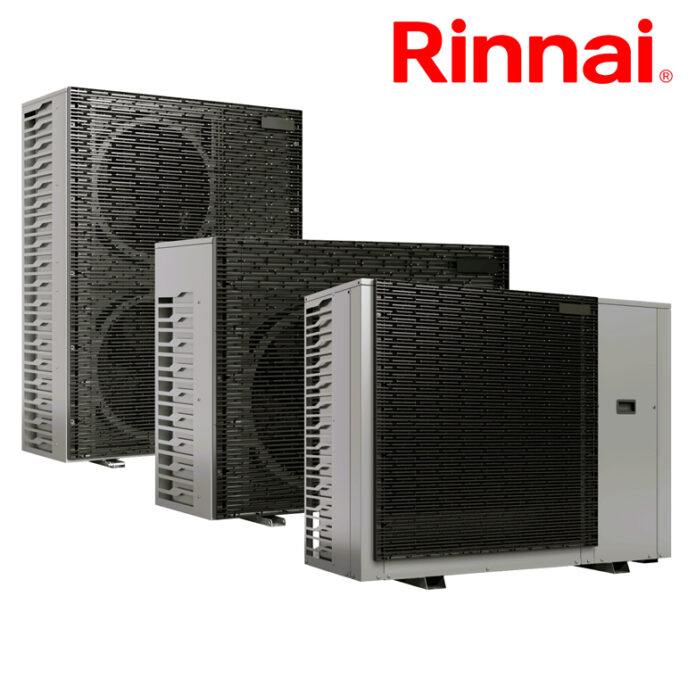
Rinnai offers a TOTAL range of FREE services to all UK customers – installers, consultants, main contractors, architects and national end users โ€“ which offers system designs, carbon reduction calculations, technical services, commissioning and delivery to site in one single consignment. Rinnai offers a range of products for energy efficient heating and hot water provision in natural gas, electricity, LPG and rDME fuels. Rinnai also offers all appliances –  electric and gas water heaters, heat pumps, solar thermal systems and hybrid systems utilising the principle of Practical, Economic and Technical criteria in the choice of system to any commercial site in the UK.

โ€œRinnaiโ€™s services are designed to provide comprehensible purchase options, system design, CAPEX, OPEX and carbon calculations as well as whole consignment delivery to any UK site upon 24 hours of purchasing,โ€ says Technical Head Pete Seddon.

Rinnai’s specialist design team can provide a โ€œSite Consultation Formโ€ that details on-site data of current heating and hot water system capabilities. Customers can view the results in a rapid low carbon replacement suggestion by a professional team member.

Rinnai services include a carbon and cost comparison service that offers a free appraisal of any siteโ€™s current heating & hot water delivery system, along with empirically gathered data driven recommendations for reducing carbon load and all related costs.

If a customer encounters difficulties when selecting a product, a โ€œHelp Me Chooseโ€ service option is available at Rinnaiโ€™s website www.rinnai-uk.co.uk. This service enables easier product selection through direct contact with a Rinnai professional. A customer can be contacted either via a home number, mobile or email at a time convenient for yourself. A Rinnai professional will then advise on purchasing options that complement the unique layout of your property.

Rinnai further provides an array of cost calculation services that will measure your current systemโ€™s output in 5-year CAPEX, OPEX and carbon emission cost comparison. Once all relevant data is collected, a Rinnai team member can suggest an appropriate cost and carbon load reducing heating and hot water system that will accompany the dimensions of your property.

Rinnai services also include whole consignment deliveries within 24 hours of product purchase to any UK site.

Rinnaiโ€™s selection of on-line services enables customer convenience from product viewing, selection and purchase. Rinnaiโ€™s inclusive CPDโ€™s, webinars, videos and calculation services ensure customers can access information that improves product knowledge and provides insight into product operational capabilities.  

RINNAI OFFERS CLEAR PATHWAYS TO LOWER CARBON AND DECARBONISATION PLUS CUSTOMER COST REDUCTIONS FOR COMMERCIAL, DOMESTIC AND OFF-GRID HEATING & HOT WATER DELIVERY  

www.rinnai-uk.co.uk/about us/H3

  • Rinnaiโ€™s range of decarbonising products – H1/H2/H3 – consists of hot water heating units in gas/BioLPG/DME, hydrogen ready units, electric instantaneous hot water heaters, electric storage cylinders and buffer vessels, a comprehensive range of heat pumps, solar, hydrogen-ready or natural gas in any configuration of hybrid formats for either residential or commercial applications. Rinnaiโ€™s H1/2/3 range of products and systems offer contractors, consultants and end users a range of efficient, robust and affordable low carbon/decarbonising appliances which create practical, economic and technically feasible solutions.ย 
  • Rinnai is a world leading manufacturer of hot water heaters and produces over two million units a year, operating on each of the five continents. The brand has gained an established reputation for producing products that offer high performance, cost efficiency and extended working lives.ย 
  • Rinnai products are UKCA certified, A-rated water efficiency, accessed through multiple fuel options and are available for purchase 24/7, 365 days a year. Any unit can be delivered to any UK site within 24 hours.
  • Rinnai offer carbon and cost comparison services that will calculate financial, and carbon savings made when investing in a Rinnai system. Rinnai also provide a system design service that will suggest an appropriate system for the property in question.
  • Rinnai offer comprehensive training courses and technical support in all aspects of the water heating industry including detailed CPDโ€™s.
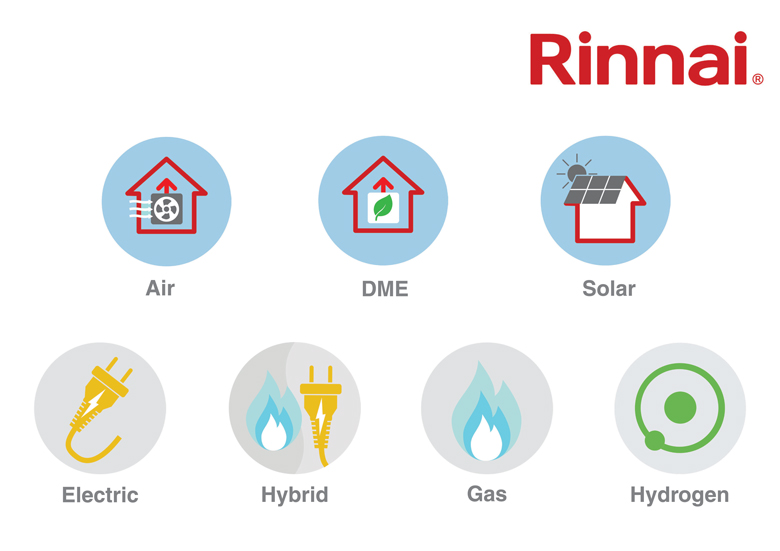
  • The Rinnai range covers all forms of fuels and appliances currently available – electric, gas, hydrogen, BioLPG, DME solar thermal, low GWP heat pumps and electric water heaters More information can be found on Rinnaiโ€™s website and its โ€œHelp Me Chooseโ€ webpage.ย 

RINNAI FULL PRODUCT AVAILABILITY 24/7 FOR NEXT DAY DELIVERY of ALL HOT WATER HEATING UNIT MODELS INCLUDING 48-58kW UNITS-

SAVINGS OF

20%                  REDUCTION of opex cost,

30%                  REDUCTION of initial cost

15%                 REDUCTION in carbon

75%                 REDUCTION of space

Visit www.rinnai-uk.co.uk  

Or email engineer@rinaiuk.com  

For more information on the RINNAI product range visit

www.rinnaiuk.com

Digital monitoring solution ensures clean bill of health for Finnish hospitalโ€™s power supply

Siltasairaala hospital. Photo courtesy of Hospital District of Helsinki and Uusimaa (HUS).

In less than an hour, Helsinki University Hospital switched from the time consuming, physical inspection of its transformers to ABBโ€™s cloud-based digital solution.

Jari-Pekka Korhonen, Operations Manager for the hospital, explains: โ€œWe operate both dry and oil transformers, which require regular monitoring and inspection. For the oil transformers, this required a complete shutdown to take samples โ€“ a massive challenge in a busy hospital performing 87,000 surgical procedures every year and with many patients on life-support.โ€

โ€œWe have transformers scattered across this massive site,โ€ says Korhonen. โ€œMy team canโ€™t physically be everywhere, so we needed to be able to monitor and supervise remotely.โ€

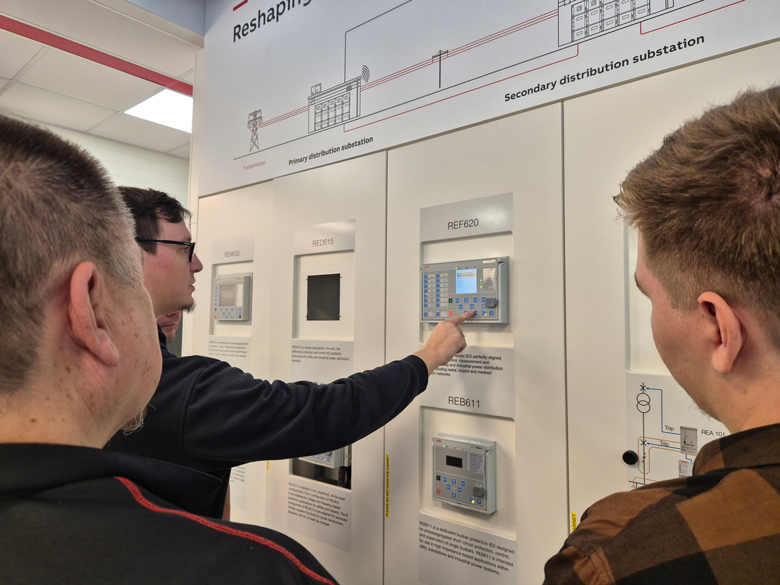
ABB together with HUS showcasing the latest technology in safe, reliable electrical asset management at ABB Training Center.

Using the recently launched ABB Abilityโ„ข Asset Manager for Transformers – a solution developed in partnership with Danish startup Oktogrid – Korhonen and his team are now able to access key operational performance data and real-time trends for the transformers via the cloud. This has not only reduced the requirement for time-consuming physical inspections, and costly shutdowns but also provided the hospitalโ€™s management team with a wealth of actionable data around the performance and efficiency of the transformers.

The solution works with any type, make or aged transformer by measuring sounds and vibrations, the temperature and magnetic field to facilitate real-time, remote condition and performance monitoring, with no asset downtime or redundancy.

Helsinki University Hospital (HUS) is the biggest health care provider in Finland. Responsible for the health of 2.2 million residents of 24 municipalities, HUS treats more or less 700,000 patients every year while employing 27,500 professionals which makes them the second-largest employer in the country.

HUS consumes electrical energy equal to a small town. Supporting this output is a network of transformers, which require regular inspection and occasional shutdown โ€“ an almost impossible task in a hospital requiring 100 percent uptime to safeguard patientsโ€™ lives.

โ€œWe are now getting uninterrupted real time data on the transformers, which wasnโ€™t possible with visual inspections, which could only tell if there was a leak or change in either the temperature of the unit or the sound itโ€™s making,โ€ adds Korhonen. โ€œWe can monitor the transformers 24/7 and are immediately aware of any issues that may require our attention.โ€

Sixten Holm, Business Development Manager from ABB Electrification Service said: โ€œWe are delighted to have helped HUS solve its inspection challenges with our game-changing transformer sensing device. We have significantly reduced the number of physical inspections required and limited the need to perform oil analysis. Crucial data regarding the health of the electrical system is now readily accessible, enabling early fault detection and improved condition-based maintenance.

โ€œThere are many electrical network transformers in the market, which are challenging to monitor without physical intervention and possible shutdown. Some have never been monitored in 15-20 years, due to the high costs and complexity. ABB Ability Asset Manager for Transformers overcomes these barriers as a simple and cost-effective way to modernize the grid.โ€

Learn more about ABB Abilityโ„ข Asset Manager for Transformers here.

Standardised Power Quality measurement

Electrical appliances are designed to function with optimal performance from a constant voltage supply as close as possible to the rated value. Further to this, industrial equipment operating on a three-phase supply requires the three phase voltage levels to be equal and with a 120 degree phase separation.

Poor power supply quality can lead to the inefficient and potentially dangerous operation of electrical systems, and may cause damage to the equipment connected. There could also be increased risks of fire or electrocution, production losses and direct financial cost overruns. Accordingly, it is increasingly important to monitor power quality, particularly in modern electrical systems, making it a key element of tomorrow’s smart networks.

The standard for such measurements, IEC 61000-4-30, not only states specific requirements in terms of power quality, a broad term which traditionally covers the voltage, frequency and waveform supplying an electrical installation, but also specifies the measurement methodology to ensure comparability of results across test instruments.

The IEC 61000-4-30 standard further defines the measurement methods, aggregation periods, and accuracy, for each power quality parameter. These include, frequency, the amplitude of the supply voltage, levels of “flicker”, temporary voltage dips and swells, voltage outages, transient voltages, supply voltage unbalance, voltage harmonics and interharmonics, signals superimposed on the power supply voltage, fast voltage variations, and current measurements.

IEC 61000-4-30 defines 3 performance classes, as follows:

  • Class A – must comply with the highest performance and accuracy levels to obtain reproducible, comparable results.
  • Class S – the accuracy levels are less strict. Class S power quality analysers can be used for statistical surveys and contractual applications for which comparable measurements are not required.
  • Class B – this class was introduced in the 1st and 2nd editions of the standard to avoid making instruments obsolete. In this class, the standard required the measurement method and the accuracy to be specified by the manufacturer in the instrument’s technical data sheet. In edition 3 of the standard, this performance class has been moved to an appendix.

Users should choose an instrument in the class they require, based on their application(s) and according to the issues encountered.

Power quality parameters defined in the standard

  • Network frequency
  • Amplitude of the supply voltage
  • Amplitude of the current
  • The Flicker (as per IEC 61000-4-15)
  • Dips and swells
  • Voltage interruptions
  • Voltage unbalance
  • Current unbalance
  • Voltage harmonics (as per IEC 61000-4-7)
  • Current harmonics (as per IEC 61000-4-7)
  • Voltage interharmonics (as per IEC 61000-4-7)
  • Current interharmonics (as per IEC 61000-4-7)
  • Mains signals
  • Rapid voltage changes (RVC)
  • Current and voltage recording during events

The RMS values are measured and calculated using several test methods and durations.

RMS values refreshed every half-period

This involves voltage (or current) values measured over one period, beginning with a zero crossing of the fundamental component and refreshed every half-period.

This technique is independent on each measurement channel and will produce RMS values at successive instants on each channel in the event of polyphase networks.

This value is only used for detecting and assessing voltage dips, temporary overvoltages at system frequency, outages and rapid voltage changes (RVC).

Measurement over 10/12 periods corresponds to an aggregation of the measurement time intervals.

The values over 10/12 periods are then aggregated on three additional intervals

  • Intervals of 150/180 periods, or 3 seconds,
  • Intervals of 10 minutes,
  • Intervals of 2 hours for Plt measurements (flicker), which are aggregated from twelve 10-minute intervals.

Synchronization of the aggregation intervals for Class A, Source: IEC 61000-4-30

Harmonics and Interharmonics

IEC 61000-4-7 is applicable to instrumentation intended for measuring spectral components in the frequency range up to 9 kHz which are superimposed on the fundamental of the power supply system, and completes IEC 61000-4-30 concerning harmonics.

They are calculated on 10/12-period windows, with a resolution (bins) of 5Hz. These are called harmonic subgroups.

And between 2 harmonic subgroups, there is an interharmonic subgroup.

Illustration of subgroups Source: IEC 61000-4-7

The measurements must be performed at least once up to the 50th order.

An interharmonic centred subgroup without discontinuities, called Yisg,h. must be measured over 10/12 periods.

Events

Swells, dips, outages, transients and RVCs must be measured in a sliding one-period window refreshed every half-period and synchronized at the zero crossing.

Each event is specified on the basis of the voltage and its duration. The instant when it starts must be time-stamped with the Urms start time on the channel where the event originated, and the instant when the dip ends must be stamped with the end time of the Urms value which terminated the event.

The duration of the event is the difference between the start time and the end time.

Voltage thresholds must be defined to capture events. In the same way, a cutoff threshold must also be defined.

In polyphase networks, a dip starts when the Urms voltage of one or more channels falls below the dip threshold and ends when the Urms voltage on all the channels measured is equal to or greater than the dip threshold plus the hysteresis voltage.

Flagged data

Throughout any measurement interval during which outages, voltage dips or temporary overvoltages occur, the results will be flagged with the measurements of all the other parameters made during the time interval in question.

Flicker

This involves network voltage modulation. In terms of lighting, it gives a visual impression of instability due to a light stimulus whose luminance or spectral distribution fluctuates over time.

There are 2 parameters calculated on the basis of the network voltage.

. Pst which is a short-term evaluation based on a 10-minute observation period

‘ Pit which is a long-term evaluation, usually over a 2-hour observation period

Unbalance

Unbalance measurements apply only to three-phase networks. The power supply voltage unbalance is assessed using the symmetrical components method. In the event of unbalance, as well as the positive component U1, at least one of the following components is added: negative component U2 and/or zero sequence component U0.

Mains signalling voltages on the power supply

The transmission voltage of the signals known as “centralized remote-control signals” in some applications, is a burst of signals, often applied to non-harmonic frequencies, which remotely controls industrial equipment, meters and other appliances. The IEC 61000-4-30 standard defines the measurements defines the measurements for remote-control frequencies below 3kHz. The signal transmission voltage measurement must be based on an RMS value of the corresponding ray of interharmonics over 10/12 periods.

Coordinated universal time (UTC)

This is the time scale used as the basis for coordinated radio distribution of the standard calibration frequencies and time signals, which advances at the same rate as international atomic time (TAI) but is deferred by awhole number of seconds. The concept of flagging helps to avoid counting a given event several times in different parameters and indicates that the aggregated value may be doubtful. If a value is flagged during a given time interval, the aggregated values including this value must be flagged and recorded.

The standard therefore specifies the methods and accuracies for the measured parameters useful for correct qualification of the voltage. A measuring instrument can measure all or some of the parameters identified in the IEC 61000-4-30 standard, preferably using the same class for all the parameters. Measuring instrument manufacturers must perform the tests indicated in the IEC 62586 standard before stating that its instrument complies with the IEC 61000-4-30 standard. For full information, the texts can be obtained from Cenelec or other national standardization organizations.

With the CA 8345, Chauvin Arnoux provides a simple, reliable solution for checking your voltage and your overall power quality to IEC 61000-4-30 Class A.

www.chauvin-arnoux.co.uk


This article appeared in theย Nov/Dec 2024ย issue of Energy Manager magazine. Subscribeย here.

Ideal Heating Commercial boilers deliver energy efficient heating for Hull Maritime Museum

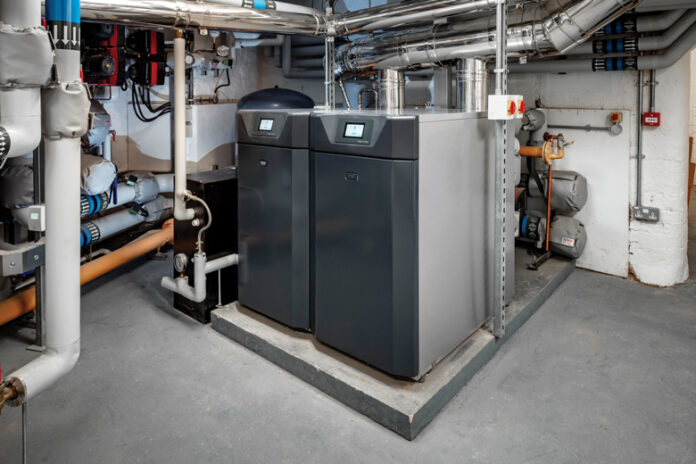
Two Imax Xtra 2 240kW Ideal Heating Commercial condensing boilers have been installed at Hull Maritime Museum as part of a major restoration project to the Grade 2* listed building.

Dating back to 1871 when the building was Hullโ€™s Dock Offices, the Hull Maritime Museum has been in operation since 1975 and had been heated by the same cast iron section boiler for the last 30 years.ย  The boiler had not only outlived its natural working lifespan, but was also energy inefficient.ย With building services being replaced and updated throughout the museum as part of a restoration project that began in 2020, the old boiler has now been replaced by two Imax Xtra 2 240kW boilers installed in cascade on a prefabricated header kit.

The Imax Xtra 2 range of floor standing condensing boilers from Ideal Heating Commercial provide up to 97.7% full load efficiency and up to 108.2% part load efficiency, and have a high 5:1 turndown, making them highly energy efficient. Installing the boilers in cascade, as at Hull Maritime Museum, makes for an even more energy efficient solution as they have a higher modulation ratio than a single larger boiler, so there is less need for each individual boiler to cycle on and off to meet changing demands for heating over a day.  Up to four Imax Xtra 2 boilers can be installed in a cascade  for an output up to 1120kW

Imax Xtra 2 boilers can operate at up to 30ยฐC ฮ”T, and five of the six models – including the 240kW – operate at 26mg/kWh on natural gas.  As with all Ideal Heating Commercial boilers, they are built to last and feature a robust cast aluminium silicon alloy heat exchanger.  Imax Xtra 2 boilers are also highly compact with a small footprint to fit through standard doorways.

All these factors played an important role in the specification of the new boilers, but a further factor which sealed the deal for the client was that Imax Xtra 2 boilers are proudly manufactured in Hull!

The heating contractor on this project, family-owned HF Brown & Son Ltd. that has been in business since 1947, is a long-standing Ideal Heating Commercial customer, who has used the companyโ€™s full range of boilers extensively.  Managing Director Nick Brown is satisfied with this latest installation: โ€œThe whole install appears to be working well and the boilers were an ease to install.  The service and support from Ideal Heating was very good as usual.โ€

Hull Maritime Museum is expected to reopen in 2026.


This article appeared in the Nov/Dec 2024 issue of Energy Manager magazine. Subscribe here.

3 Digital Solutions that Global Buildings Sector Must Implement to Meet Net-Zero Targets

70% of CO2 emissions originate from urban buildings. According to the new report by the Organisation for Economic Co-operation and Development (OECD), digital solutions like Energy Performance Monitoring, Building Information Modelling, and Integrated Data Platforms are crucial to achieve global decarbonisation goals.ย 

OECD released a new report that shows the increasing role of buildings in fighting against climate change. Buildings account for nearly 70% of energy-related CO2 emissions in major cities like New York, Paris, and Tokyo. It highlights the urgency for countries and megacities to decarbonise the building sector.

More than 140 countries have declared net-zero goals, but most of them still lack concrete mechanisms that would help monitor and reduce emissions, especially in the building industry.

Among indicated plans, a global trend has emerged to prioritise retrofitting existing buildings, up from 39% in previous years. Retrofitting is a more efficient option than constructing new energy-efficient buildings.

However, experts from Exergio, a company specializing in AI-driven energy solutions for commercial real estate, state that adopting digital technologies with AI can save up to 30% of energy without the need for deep renovations.

3 Key Digital Technologies That Can Decarbonise Buildings

According to the latest OECD report, Global Monitoring of Policies for Decarbonising Buildings, building owners can incorporate digital technologies into their systems, optimise energy use, and meet sustainability targets.

1. Energy Performance Monitoring and Reporting Systems (EPMRS)

Energy performance systems track and analyze how buildings consume energy in real-time. They show building owners’ existing inefficiencies and assist in optimizing energy use. Traditional energy monitoring includes smart meters, data analytics, and comprehensive reporting programs. 

Donatas Karฤiaukas, CEO of Exergio, has been improving the approach by introducing AI-driven analytics into similar models. 

“AI-based analytics is a more advanced way to monitor energy as it can identify inefficiencies more precisely and faster than traditional ones. With AI, we can detect issues like a malfunctioning sensor before it becomes noticeable, based on subtle changes in energy consumption patterns,โ€ explained Donatas. โ€œAI not only analyzes data but also predicts potential problems, and optimises energy use in real-time. This way we can save up to 30% of energy for our customers.โ€

2. Building Information Modelling (BIM)

Another digital solution, BIM, uses software that can re-create a 3D digital representation of a building’s physical and functional features.

It offers a better way to design, plan, and manage structures, allowing such a “digital twin” to be used for energy performance purposes.

โ€œDigital twins is something that all huge building complexes are going to have alongside traditional monitoring. They help us track how a building uses energy in real-time, and then we can make precise adjustments to optimise performance. Using BIM, we can simulate different scenarios, a key method to foresee and overcome upcoming challenges,” explained Karฤiauskas.

3. Integrated Data Platforms (IDP)

Lastly, IDPs aggregate and harmonise data from various stages of building management to make sure that building managers can access all information on demand.

Unlike BIM systems, IDPs operate through the cloud infrastructure and provide a unified view of energy consumption, project timelines, and other key data that users can access through web interfaces.

โ€œThis technology is not yet widely used but is a part of the future of building management. Upon increasing data volumes and huge operational systems, there is a need for platforms that would integrate all of this information and systemise it for end-users. While working with our platform, we realised that the next step is to allow building managers to understand where the biggest issues currently are or may emerge soon,” elaborated Karฤiauskas. โ€œWe can only achieve that by integrating the data from thousands of sensors and inputs, and weโ€™re talking about a single building here.โ€

One of Exergioโ€™s use cases of implementing similar digital platforms happened in Poznan, Poland, and helped a complex of commercial buildings reduce energy consumption by 20% in 9 months, resulting in over โ‚ฌ80,000 in savings. According to Donatas Karฤiauskas, AI-powered solutions are crucial for these savings.

OECDโ€™s recognition of digital tech can help achieve decarbonisation goals. Governments, building owners, and companies are expected to invest in these technologies now to meet net-zero targets by 2050.


This article appeared in the Nov/Dec 2024 issue of Energy Manager magazine. Subscribe here.
Understanding Meter Costs: The Benefits of an All-Inclusive Pricing Model

When it comes to managing your gas meter, knowing the full extent of associated costs is crucial. At National Gas Metering, they believe in transparency and simplicity, which is why they offer an all-inclusive pricing model for their meter asset management services.

The all-inclusive rental price ensures there are no hidden fees or surprises. With just one monthly payment, you can effectively budget for your metering needs without the worry of unexpected expenses cropping up.

Additionally, emergencies are something they take seriously. National Gas Metering’s emergency call-out SLA guarantees that an engineer will be on-site within 4 hours of your call, no matter where you are in the country. This nationwide coverage, ensures that you receive prompt and efficient support whenever you need it most.

Your meter is not just a piece of equipment; it’s your business lifeline. That’s why they go the extra mile to protect it throughout its entire lifespan, all included in the all-inclusive price.

In essence, understanding the costs behind your meter is essential for effective budgeting and financial planning. Opting for an all-inclusive pricing model not only simplifies your billing process but also provides peace of mind, knowing that all necessary services are covered without additional charges.

For more information on National Gas Meterings services visit their website at metering.nationalgas.com. For enquiries call 0800 001 4340 or follow their linked in page at https://www.linkedin.com/company/national-gas-metering


This article appeared in the Nov/Dec 2024 issue of Energy Manager magazine. Subscribe here.

How Social Landlords Can Become Powerhouses of Sustainability

James Williams

In the fight against climate change, social housing is starting to emerge as one of the innovators. Now, with the Governmentโ€™s Warm Homes: Social Housing Fund wave 3 recently launched, social landlords are increasingly becoming pivotal players in this transformation, evolving from mere providers of affordable housing to powerhouses of sustainability, explains James Williams, co-founder and CEO at Sero.

Social Landlords: The New Powerhouses

In this evolving landscape, social landlords are not just passive recipients of government fundingโ€”weโ€™re starting to see a number of them becoming the driving force behind local decarbonisation efforts. With extensive property portfolios and a duty of care to their residents, social landlords are well positioned to scale up green initiatives and lead the way in energy-efficient living.

By embracing the governmentโ€™s target to electrifying more homes, social landlords are emerging as sustainability pioneers in two ways:

  1. Driving Innovation in Retrofits: Social landlords are increasingly moving away from only applying “fabric-first” approaches, which focus on improving the building envelope (walls, roofs, floors), effectively wrapping the building to enhance energy efficiency. More and more they are also implementing heating system upgrades including Heat Pumps and Solar PV with batteries.
  2. Scaling Renewable Energy Projects: Some social landlords are starting to look at ways that transform their housing stock into micro powerhouses. Funding for Solar PV and battery storage is being increasingly explored through private finance, to enable landlords to either go beyond EPC C or deliver more homes at scale. These renewable energy technologies not only reduce carbon emissions but also have the ability to generate a payback mechanism for landlords whilst also lowering resident energy bills.

Challenges and Opportunities Ahead

Funding is still a key barrier for delivering Retrofit at scale and if we want to meet both the governmentโ€™s 2030 and 2050 targets, then more landlords need to start delivering homes in their thousands rather than hundreds.  Itโ€™s important to remember that government funding, while seemingly generous, only covers 10-15% of the costs. Its purpose is more to stimulate and enable markets, not to sustain them for the long term.

For these future power stations to scale up, we need to be able to bring innovative funding models together โ€“ which requires both private investment and government funding – that can work alongside their highly regulated nature to benefit both parties and understand where the true costs hit.

The good news is, weโ€™re starting to see this happen. The WH:SHF Wave 3 funding opportunity encourages applicants to explore innovative funding options beyond the SHFโ€™s scope and investment. 

Furthermore, the recent announcement that the governmentโ€™s National Wealth Fund will look to provide guarantees for two high street banks to deliver a ยฃ1bn in funding to support retrofit in the sector, is another positive sign. 

From Seroโ€™s perspective, weโ€™re seeing much interest from both landlords and private finance institutions who are keen to use our Energy as a Service model to fund and upgrade homes. The concept being they utilise government funding for their fabric first and heat pump improvements and private finance for installing solar and battery. By charging residents fairly for their consumption and optimising surplus energy revenue streams, they can generate a payback mechanism.

Driving Social Impact

Beyond the environmental impact, the funding has an equally significant social dimension. With many social housing residents facing fuel poverty, energy efficient homes can drastically reduce heating bills.  Itโ€™s hoped that lower bills will mean residents will heat their homes in winter months, improving their comfort and health, reducing serious issues such as damp and mould, as well as enabling surplus funds that can be spent on other essentials such as food as the cost-of-living crisis continues to bite. 

Leading the way for the rest of the UK

Itโ€™s clear that social landlords are no longer simply housing providersโ€”they are becoming vital agents of change in the UKโ€™s journey to net zero and the energy system. By investing in creating energy-efficient homes and renewable energy solutions, they are not only reducing carbon emissions but also improving the quality of life for residents and driving local economic growth.

Looking ahead, as private landlords, developers, and homeowners increasingly face the need to upgrade their properties to meet climate targets, the social housing sector is positioning itself as a leader in sustainabilityโ€”demonstrating that decarbonisation is not just a technical challenge but a social and economic opportunity.

In this sense, social landlords truly are becoming the new powerhouses, reshaping the future of housing to be greener, fairer, and more resilient.

By embracing this role, social landlords are set to influence not just the homes we live in but the communities we retrofit and regenerate for tomorrow. Their leadership in sustainable living could pave the way for the UKโ€™s broader energy transitionโ€”one retrofit at a time.


This article appeared in the Nov/Dec 2024 issue of Energy Manager magazine. Subscribe here.
Six towns and cities to pilot clean heating innovation

Image by Stanislav Hedvik from Pixabay

Businesses and building owners across England are set to benefit from low-cost, low-carbon heating as 6 towns and cities have been selected to develop the countryโ€™s first heat network zones

Developing zones for heat networks in urban areas is the cheapest and most efficient way of delivering the technology, which recycles excess heat โ€“ generated for example by data centres or from factories โ€“ to enable the heating of several buildings at once. 

The ground-breaking schemes in Leeds, Plymouth, Bristol, Stockport, Sheffield, and 2 in London will receive a share of ยฃ5.8 million of government funding to develop the zones, with construction expected to start from 2026. This will help to create tens of thousands of jobs including engineering, planning, manufacturing and construction roles.   

Heat network zones use data to identify the best spots and help to plan and build the technology at scale. They require suitable buildings, such as hotels and large offices, to connect when it is cost-effective for them to do so.  

Minister for Energy Consumers Miatta Fahnbulleh said: 

Heat network zones will play an important part in our mission to deliver clean power for the country, helping us take back control of our energy security.  

As well as energy independence, they will support millions of businesses and building owners for years to come, with low-cost, low carbon heating โ€“ driving down energy bills. 

Tens of thousands of green jobs will be created across the country, and thatโ€™s why weโ€™re investing in developing these fantastic and innovative projects โ€“ developing the first zones in cities and towns across England. 

The new schemes will provide heating using trailblazing sources. Excess heat from data centres โ€“ which would otherwise be wasted โ€“ will provide heating in the Old Oak and Park Royal Development, while the system planned in Leeds will take heat from a nearby glass factory to warm connected buildings. 

Developing heat networks across the country has the potential to create tens of thousands of jobs through delivering a low-carbon heating transformation. 

Types of buildings that could connect to a network include those that are already communally heated, and large non-domestic buildings over a certain size, such as hospitals, universities, hotels, supermarkets, and office blocks. 

The 6 selected towns and cities are part of the governmentโ€™s plan to accelerate the delivery of heat networks across England in areas where zones are likely to be designated in the future. The learnings from these pilots will inform the work to reduce bills, enhance energy security, and achieve net zero by 2050.   

CEO of the Association for Decentralised Energy Caroline Bragg said:  

We are delighted to see government maintaining its support for the heat network sector.  

Heat network zones are crucial for a just transition for our communities – putting the UK on the lowest cost pathway to decarbonising our heat, attracting more than ยฃ3 of private investment for every ยฃ1 of public funding given and creating tens of thousands of local jobs.  

As we begin to deliver zoning at scale, it is crucial that the government and industry continue to work together to ensure heat networks can truly unleash their potential.  


This article appeared in theย Nov/Dec 2024ย issue of Energy Manager magazine. Subscribeย here.

Is Data Management the Magic Bullet for Utilities?

Errol Rodericks

Errol Rodericks, Director of Product Marketing, EMEA at Denodo

Transitioning to clean energy is no small feat. While it is both necessary and worthwhile, it is far more complex than simply making promises and commitments on a governmental or business leadership level. While it is encouraging to see that the new UK government is dedicated to meeting Net Zero goals, there is much more to this process than meets the eye.

Utility and energy providers are a critical part of the carbon emissions puzzle, but they are also under immense pressure that is fundamentally reshaping the industry. Managing data effectively is key to overcoming these challenges. Intelligent, data-driven operations is a critical capability that can support utility CIOs when designing modern assets. This sounds great in theory but how do energy providers make the seamless transition to a ubiquitous service that bridges physical and digital worlds?

The Changing State of Utilities

The energy transition, of course, is driving the industry towards energy conservation, efficiency, and the decentralisation and decarbonisation of energy production. Additionally, there is a growing focus on the electrification of consumption with a rising number of electric goods, and this is happening alongside the automation of industrial processes, an increasing need for customer engagement, and the overall digitisation of business operating models. Energy companies attempting to enable diverse energy supplies must develop and adopt technologies such as virtual power plants (VPPs) which need to be underscored by intelligent operations. And they must do all of this while implementing an increasing number of environmental, social, and governance (ESG) initiatives.

Within this new ecosystem, and with much change, the role of data has become central. It is essential for optimising and managing energy generation resources, providing consumers with insights into their energy usage, and enabling the development of improved services and innovative product offerings. Data has the potential to help companies operate more efficiently and deliver enhanced value to customers across the energy ecosystem. But companies cannot do that if they are drowning in a sea of information.

To maintain service quality, operational reliability, and profitability, the industry must manage data intelligently, and in a way that adds value rather than confusion.

Achieving Net Zero Emissions with Logical Data Management

What utility companies need is a logical approach, rather than a physical approach, to managing data. Traditional data management approaches rely on physically replicating data into a single repository from which it can be managed. In contrast, logical data management approaches leverage technologies like data virtualisation so that utility companies can manage data across multiple disparate systems without having to first consolidate all the data in a single repository.

Even when utility companies rely on data lakehouses to store all their critical data, there will always be some data that remains unconsolidated. Logical data management unites that data so that it can be utilised as if it were all stored within the same repository.

Logical data management platforms enable stakeholders within utility companies to access virtual views of all data in real time, even though the source data is stored across different repositories or stored in silos within a data lake. They also enable the establishment of universal semantic layers, which automatically translate data into the format required on the receiving end.

A Path Towards Ecocentric Operations

The benefits of this approach go well beyond a utility companyโ€™s internal workflows. When we talk about electrification, industrial automation, consumer behaviour change, digitisation, and everything else that needs to contribute to the energy transition, we are talking about an effort that involves collaboration across the energy industry and well beyond.

Making that collaboration effective starts with data, but data sharing โ€“ especially for research work which may have non-standardised outputs โ€“ has traditionally been a struggle. The successful implementation of a logical approach to data management can underpin an Open Data environment, effectively democratising data access so that stakeholders can access the data they need, when they need it, and in their preferred terminology.

With logical data management, energy utility companies can better manage decentralised resources like wind and solar power and optimise grid operations. This enables an ecocentric approach to operations which puts collective progress towards decarbonisation and Net Zero at the heart of how utility businesses grow into the future.

Logical data management platforms seamlessly integrate data from different sources, providing visibility into key environmental performance indicators to track progress against ESG goals. Such platforms also encourage innovation, pushing teams to further explore solutions like VPPs. And they enable utility companies to embrace data as part of a wider environmental ecosystem that can contribute to the long-term preservation of resources and ethical operations.

This is the key to holistically managing sustainability goals ultimately to fulfil Net Zero commitments.