
Could your organisation be OVER-reporting your Scope 2 emissions?

Jaron Reddy

Jaron Reddy, UK & Ireland Manager, ENTRNCE

If carbon reporting is your responsibility, you work hard to avoid underestimating emissions or leaving out any emissions sources. But what if the real problem for your organisation is over-reporting? Oxford Brookes University recently found itself in this exact position. The university discovered this year that it has been overestimating its Scope 2 emissions by up to 39%.

It might feel like good news to know that emissions are lower than you thought. But this level of inaccuracy has serious consequences. Many organisations purchase carbon credits to offset emissions on the road to Net Zero โ€“ but if youโ€™ve miscalculated those emissions in the first place, you could be wasting thousands of pounds.

Ironically enough, overestimating your carbon emissions can set back your decarbonisation journey. If your decisions are based on inaccurate figures for your carbon emissions, your Net Zero strategy may be less effective because you are focusing on the wrong interventions at the wrong times.  This could lead to ineffective investment decisions and a slower journey to Net Zero in the long term.

How does overreporting happen?

So how does carbon reporting be so inaccurate when everyone is following the reporting protocols so diligently? Itโ€™s all about what methods are currently standard for reporting on your Scope 2 emissions (those from the electricity you buy). The Greenhouse Gas Protocol recommends a dual approach. This is reflected in the guidelines for various mandatory schemes such as Streamlined Energy and Carbon Reporting (SECR). Most companies therefore use two kinds of reporting: location-based and market-based.

The location-based method means using the average emissions from the grid in your area. This average is usually applied over an entire year, which means it doesnโ€™t matter when you used the electricity. And it doesnโ€™t matter how โ€œgreenโ€ your electricity supply contract is either.

The market-based method focuses entirely on your electricity supply contract, so a โ€œ100% renewableโ€ tariff delivers zero emissions to report โ€“ on paper, at least. This is the case even though such tariffs donโ€™t represent a direct link between buying energy and funding renewables.

Youโ€™d think that combining the two very different approaches would split the difference and deliver a number close to reality. But because they are both based on flawed reporting methodologies, you could still end up very far from getting a handle on your actual carbon emissions.

The โ€œwhenโ€ matters

The mix of energy sources in the electricity grid changes every half hour, which means it matters a lot when your energy consumption really happens. The location-based reporting method does not reflect the changing carbon intensity of the grid. At times of high renewable output, a kilowatt hour of electricity might produce 20g of emissions โ€“ the weight of a packet of Quavers โ€“ or even less. But at times of heavy fossil fuel use, it might be over 300g. The variability over the course of a year is a staggering 2,000%. Yet the reporting system treats every kilowatt hour as equal in terms of emissions.

To make reporting even less accurate, the data about the generators being used isnโ€™t even up to date; itโ€™s from a two-year-old list.

Oxford Brookes University discovered this when they began working with ENTRNCE. They used our Matcher platform to calculate their actual emissions based on half-hourly grid data, and discovered that they have overreported by up to 39%. Armed with this data, the university has an opportunity to adjust their decarbonisation strategy to reflect their โ€œtrueโ€ carbon footprint.

Opportunity cost

ENTRNCE works extensively in the public sector as well as with businesses, so we know this is a widespread problem. Oxford Brookes University is just one of many universities that could be under unnecessary strain because of overreporting emissions. Many NHS trusts are also likely to be overreporting. At a time when the public sector feels the strain of squeezed budgets, it is important that investment decisions are based on accurate data. Meeting your Net Zero commitments requires you to make the right interventions at the right time. For that, itโ€™s essential to have accurate data โ€“ which the ENTRNCE Matcher platform provides.

Overreporting represents a huge opportunity cost that most public sector organisations canโ€™t afford. We are joining many other expert voices in lobbying to change the official recommended reporting approach to something better. In the meantime, individual organisations can take control by finding a reporting method that actually works. The ENTRNCE Matcher takes your energy consumption in half-hourly bites and aligns it with the grid emissions for the exact same chunks of time. You then get the most accurate possible calculation of your emissions. Why not try our Quickscan service, which only requires us to access the data from your smart meter? Then you can find out your actual carbon emissions and, if you choose, get help on how to optimise your pathway to Net Zero. For a no-obligation test of the service, get in touch.


This article appeared in the Nov/Dec 2024 issue of Energy Manager magazine. Subscribe here.

How these 100-year-old central London flats are proving heat pump sceptics wrong

Image supplied by Kensa

An Edwardian-era social housing estate in Chelsea, central London, is the latest โ€˜complex to decarboniseโ€™ building to get the renewable heating treatment, successfully busting myths about whether heat pumps can work for old and existing buildings.

The Sutton Dwellings estate, built in 1913, has seen 81 flats across four blocks fitted with Kensaโ€™s British-made ground source heat pumps, making these the oldest blocks of social housing flats in the UK so far to be heated using a networked heat pump solution. 

This unique project is part of an extensive regeneration of the estate by housing provider Clarion Housing, which started in 2019. In this phase, each new, modern social home has received highly energy-efficient heating and hot water via its own compact ground source heat pump, that will keep energy bills low for residents while producing zero carbon emissions at the point of use.

Image supplied by Kensa

Like traditional gas boilers, the heat pumps are small enough to be housed inside a cupboard in each flat. However, unlike gas, renewable heat energy used by the heat pump is sourced from the ground via the 27 boreholes drilled deep beneath the estateโ€™s tight, urban footprint. This method ensures thereโ€™s no visible impact on the historic propertyโ€™s traditional red-brick exterior and allows residents to fully enjoy the landscaped outside spaces around each block.

Installing networked heat pumps for Sutton Dwellings showcases one of the solutions to decarbonise existing buildings in the UK, 80% of which are expected to still be standing in 2050. It also busts commonly held myths about heat pumps, proving that:

  • Adaptable: Ground source heat pumps can work for almost any property type, including older buildings and those with limited outdoor space
  • Perfect for flats: Multi-unit dwellings are perfectly suitable for ground source heat pumps, with Kensaโ€™s Shoebox fitting inside a cupboard โ€“ much like a traditional gas boiler
  • Urban compatibility: Dense urban environments pose no issue for ground source heat pump installations
  • Preserve history: Heat pumps can be installed without impacting a propertyโ€™s historical architecture and external features
  • Space saving: Ground source heat pumps require no outdoor storage space, leaving residents to fully enjoy gardens and outside spaces without compromise
  • Affordable: Expected annual heating costs of around ยฃ300 for a 1-bed flat to just over ยฃ700 for a 4-bed flat in the estate demonstrate the affordability of heat pumps for consumers

Installing Kensaโ€™s networked heat pump system marks the third age of heating for the historic flat blocks, which has transitioned from coal fireplaces to gas heating, and now renewable energy. Itโ€™s also an example of how history and modern solutions can work seamlessly in tandem, offering a pathway to retrofit the UKโ€™s other โ€˜complex to decarboniseโ€™ buildings and homes currently heated using fossil fuels.

Regenerating the 100+-year-old buildings highlights how heat decarbonisation solutions can work for the UKโ€™s existing properties, potentially saving others from future demolition. It also follows other major social housing retrofit projects completed by Kensa, including the installation of Shoebox heat pumps in 273 flats across multiple 1960s tower blocks in Thurrock, and over 400 flats across eight tower blocks owned by Enfield Council.

Stuart Gadsden, Commercial Director at Kensa, said:

โ€œOften you see claims heat pumps donโ€™t work, they arenโ€™t suitable for older buildings, there isnโ€™t enough space to install ground source heat pumps in cities. This project is proof you can do all these and more!

โ€œThis was an ambitious project, but at Kensa, weโ€™re always searching for the next innovation, the next solution that can improve people’s lives and be the answer to decarbonising heat in the millions of UK buildings that need it. Hopefully, this project can serve as a blueprint for other social housing providers with properties that need decarbonising.

โ€œWhile this can be seen as a great myth-busting project for renewable heating, particularly ground source heat pumps, the most important outcome will be the benefits felt by residents. With our systems they will be getting low cost, low carbon heating and hot water, allowing them to keep their whole homes warm.โ€

Paul Quinn, Director of Regeneration at Clarion Housing Group said:

โ€œKensaโ€™s contribution to the regeneration of the historic Sutton Dwellings in Chelsea, one of the UK’s first examples of social housing and an incredibly important site for Clarion, has been invaluable. We initially faced considerable challenges in realising our low-carbon, fossil fuel-free ambitions for these densely packed, heritage buildings, but Kensaโ€™s ground source heat pump technology provided the ideal solution. They worked closely with the main contractor and residents to ensure a smooth process, with minimal disruption and their professionalism throughout was exceptional.โ€

John Bromley, Managing Director of Clean Energy & Climate Strategy (Private Markets), Legal & General:

โ€œWe see a huge opportunity in the global transition to a low carbon economy โ€“ particularly in private markets, where Legal & General invests in companies and infrastructure with significant growth potential in the medium to long term. Combining analysis of energy systems with infrastructure and property development expertise led to our equity investment in Kensa: to provide a high-efficiency, scalable heating and cooling solution for homes and businesses.

โ€œIโ€™m delighted to support Kensa as they successfully deploy this technology across varied and complex tenures and locations, including new developments and retrofits like Sutton Dwellings. Supporting the roll-out of reliable, efficient energy solutions is crucial to improving the standard of our built environment and occupier experiences whilst also decarbonising UK properties at scale.โ€

Why isnโ€™t UK commercial solarโ€™s massive potential being tapped?

Jo Parker-Swift

Here, Jo Parker-Swift, CEO and founder at Solivus explores the enormous solar potential for the UKโ€™s unused commercial roof spaces and why itโ€™s time to seize the opportunity.

A quick glance at the news will, most likely, reveal that the UKโ€™s solar capacity continues to grow at a rapid pace. To put it into context, in 2010 just 28,211 households had solar panels. As of 2024, that figure stands at 1.4m homes. That’s a 4,862% increase in 14 years.1

But while certainly a positive step in the right direction for our new energy future, this is just part of the picture. Take a look at the commercial solar market and youโ€™ll likely find a much less progressive stance. In fact, according to a recent analysis less than 10% of the UKโ€™s non-domestic buildings are utilising their available rooftop space for solar energy.2

This is a colossal wasted opportunity on multiple counts. Foremost, there is vast, unused, unobstructed roof space on our schools, warehouses, factories and like and a quarter of a million hectares of it faces south.3

Second, by embracing solar energy, companies can achieve substantial cost savings. In fact, by fully utilising the available rooftop space it is estimated that commercial buildings could save ยฃ35 billion, with lifetime savings reaching ยฃ703 billion.In energy generation terms that translates to 117 TWh of electricity annually. Thatโ€™s enough to power approximately 30 million homes for a year, more than the number of households we currently have in the UK.4

Thirdly and perhaps, most impactful of all, the Department for Energy Security and Net Zero sees commercial solar as vital to its clean power mission. To that end, the government-industry Solar Taskforce continues to point to the โ€œuntapped potentialโ€ of commercial solar.

Clearly then, the argument for commercial solarisation appears conclusive. So, why has there been so little uptake in the UK? In my experience of operating in the solar sector for almost a decade, there are two reasons. The first involves government policy. The second involves the complexities many commercial premises face when installing rooftop solar.

Over the past decade the government has introduced a number of initiatives designed to encourage businesses to transition to clean energy sources. But none have really stuck. For example, 2019 saw the widely-popular Feed-in Tariff come to a rather abrupt end, significantly reducing the financial incentives for new solar installations. Though we now have the Smart Export Guarantee which allows businesses to sell surplus energy back to the grid, the gains to be had are marginally lower.

This trend of stop-start green policy continues to bring uncertainty to the market. As we look to the coming years, the hope is policy evolves to become clearer, more consistent and provide long-term support for the commercial solar transition.

However, that doesnโ€™t mean commercial businesses shouldnโ€™t seize the solar opportunity today. After all, it is the early adopters that are already benefiting from a first-move advantage in terms of significant cost savings, emissions reductions and energy security while their competitors are playing โ€˜wait and seeโ€™.

At the same time, as an industry we must work together in greater collaboration, and with the policy and decision makers, to improve on best practices and foster the innovation needed to enable a bigger and better solar industry.

The other key problem has been the fact that there simply hasnโ€™t been solar panelling light enough and effective enough to take advantage of the commercial space. Itโ€™s estimated that 40% of commercial buildings cannot support the weight of traditional solar panels. That equates to a vast 1,000 square miles of commercial roof space.5 The good news in 2024 is that we now have the lightweight solar technology to change this, and the impact for commercial operators, the country and green economy could be profound.

At Solivus, weโ€™ve installed solar on airports, stadiums, warehouses and more. In my experience, the only regret that most commercial operators have is not going solar sooner.

Now our focus remains on taking the commercial solar opportunity to the entire market. Recent changes to development rights rules mean commercial buildings are able to install solar on their roof spaces without going through some of the typical planning obstacles.

The government has a clear target to increase solar capacity by nearly fivefold to 70GW by 2035 as part of wider plans to power up Britain with cleaner, cheaper and more secure energy sources. Unlocking the commercial solar opportunity will be a critical enabler and we remain committed to playing our part. We hope the government and industry do the same.

For more information please visit www.solivus.com

1https://www.sunsave.energy/solar-panels-advice/cities-and-regions/homes-with-solar

2 https://powermarket.ai/buildings-could-save-35bn/#:~:text=A%20groundbreaking%20analysis%20by%20PowerMarket,leaving%20a%20vast%20untapped%20potential

3 https://files.bregroup.com/bre-co-uk-file-library-copy/filelibrary/nsc/Documents%20Library/NSC%20Publications/123160-NSC-Solar-Roofs-Good-Practice-Guide-WEB.pdf

4 https://powermarket.ai/buildings-could-save-35bn/#:~:text=A%20groundbreaking%20analysis%20by%20PowerMarket,leaving%20a%20vast%20untapped%20potential.

5 https://consent.yahoo.com/v2/collectConsent?sessionId=3_cc-session_8c07c2a6-f965-4ea1-b030-6f9ce25eec9b


This article appeared in the Nov/Dec 2024 issue of Energy Manager magazine. Subscribe here.

How Can Water Be Conserved While Meeting AI Innovation Demand?

Earlier this year, SwitchWaterSupplier.com blogged about how essential data centres are to facilitate the level of connectivity thatโ€™s required for 21st century life to continue as we know it, as well as driving the emergence of innovative new technology.

The likes of servers, storage devices, networking equipment and so on are all absolute necessities these days, managing and distributing vast swathes of data that is transferred between different devices and locations on a global scale every second of every day.

But this level of connectivity certainly doesnโ€™t come without a price and these data centres generate huge amounts of heat in order to operate properly, which means they need to be equipped with advanced cooling systems such as industrial air conditioning and ventilation, and liquid cooling, to maintain constant temperatures and prevent overheating.

Not only does this use a significant amount of energy to facilitate, but billions of cubic metres of water is required to keep these centres up and runningโ€ฆ and with the advent of artificial intelligence (AI), data centre water usage and consumption is only going to increase, at a time when natural resources are being put under increasing pressure from climate change, population growth, water mismanagement and pollution.

A recent report from non-profit organisation China Water Risk found that as AI adoption continues to increase and services like chatbots become de rigueur, more than 20 times the current amount of water will be necessary to power these facilities and others like them.

As such, the question must now be asked: How exactly can water be conserved during data centre operations while ensuring that growing customer demand for AI innovation and cloud technology is met?

Does Microsoft have the answers?

At the start of June, tech giant Microsoft published its data centre community pledge to build and operate digital infrastructure that tackles societal challenges head on while creating benefits and opportunities for local communities.

The pledge focuses on three key areas to contribute to a sustainable future: running carbon negative, water positive and zero waste data centres before 2030, advancing community prosperity and wellbeing, and partnering closely with communities to operate in a way that respects the local environment.

To help it achieve its promise, Microsoft is now asking just how water can continue to be saved as AI adoption continues to grow.

It explains that the last few years have seen significant growth in AI applications and a surge in demand for high performance cloud capabilities, which has increased the power requirements for silicon chips in data centres.

As these chips use more power, they also generate more heat, which means that more intensive cooling is required – and more water is consumed.

Now that Microsoft has pledged to become water positive by 2030 – which means that it will need to put more water back into the natural environment than it abstracts – it is looking to see what innovations can be embraced to reduce the water required for its data centres.

Since its first generation of owned data centres fired up back in the early 2000s, the company has succeeded in reducing its water intensity (water consumed per kilowatt-hour) by more than 80 per cent.

To achieve this, Microsoft has worked to minimise the amount of water required for cooling across all its locations, including operating data centres at temperatures that enable outdoor air to be used for cooling for the majority of the year, which drives down the need for ambient cooling and helps save water day by day.

Regular audits of its centres are carried out to identify weak and inefficient areas, with its 2022 review leading to targeted improvements that successfully eliminated 90 per cent of instances where excess water was being consumed.

Furthermore, advanced prediction models are now being built that will help Microsoft anticipate its water requirements based on incoming operational and weather data in real time.

Tailoring its conservation strategies to its specific locations is another tactic thatโ€™s proving beneficial, such as in Texas, Singapore, Washington and California, where use of reclaimed and recycled water has been expanded. Meanwhile, in Ireland, Sweden and the Netherlands, rainwater harvesting is the priority.

Elsewhere, innovative cooling technologies are now being adopted as a key part of the brandโ€™s water strategy, such as cold plates where direct-to-chip cooling technology provides heat exchange in a closed loop system.

This way of working dissipates heat more effectively than traditional air cooling, providing the silicon with direct chilling and then recirculating the cooling fluid, much like a car radiator works.

To help make this way of working even more efficient, a new generation of data centre designs is now being developed that is optimised for direct-to-chip cooling. This involves changing the layout of servers and racks to make room for new thermal and power management methods.

In existing centres, sidekick liquid cooling systems are now being brought in to circulate fluid that draws heat away from the cold plates attached to the surface of the chips.

As Microsoft observes: โ€œOur newest data centre designs are optimised to support AI workloads and consume zero water for cooling. To achieve this, weโ€™re transitioning to chip-level cooling solutions, providing precise temperature cooling only where itโ€™s needed and without requiring evaporation.

โ€œWith these innovations, we can significantly reduce water consumption while supporting higher rack capacity, enabling more compute power per square foot within our data centres.โ€

Are you inspired to reduce your water footprint?

If youโ€™d like to follow in Microsoftโ€™s footsteps and do more to become water positive in the future, get in touch with the SwitchWaterSupplier.com team to find out more about water efficiency and what can be achieved in this regard.


This article appeared in the Nov/Dec 2024 issue of Energy Manager magazine. Subscribe here.
Traditional cylinders use 1.5 times more energy than cylinders with tight control

No surprises in this statement! But how do you take greater control of water heating?

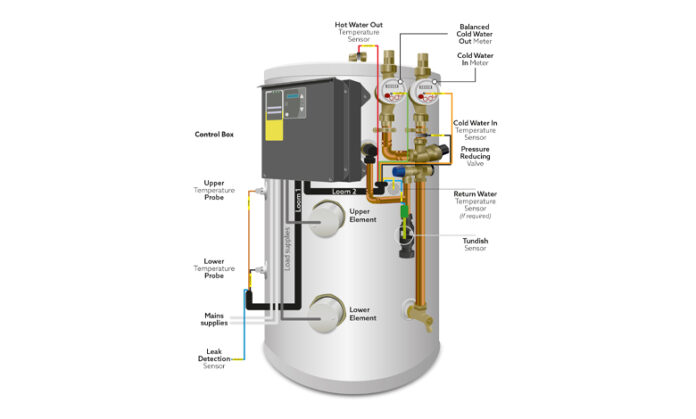
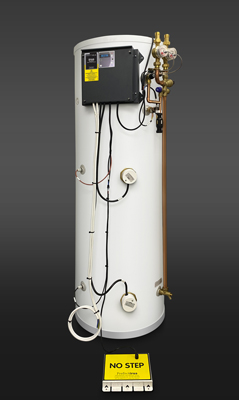
Imagine a โ€˜smart tankโ€™ with on-board controls, that comes out of the factory fully plumbed and wired, ready for quick and cost-effective connection to electricity and water supplies – making savings before it is even filled!

Think how data gathered from meters that measure hot and cold-water volume, and sensors that monitor temperature, water escape and environmental conditions around the cylinder could be used. And all the information is conveniently available to view on an internet portal. Youโ€™d have a clear and comprehensive picture of what is happening, potential issues, and the ability to remotely control your water heating system.

Are we challenging the laws of physics?

A claim of 1.5 times efficiency compared with traditional cylinders could be construed as this.

But it all comes down to control.

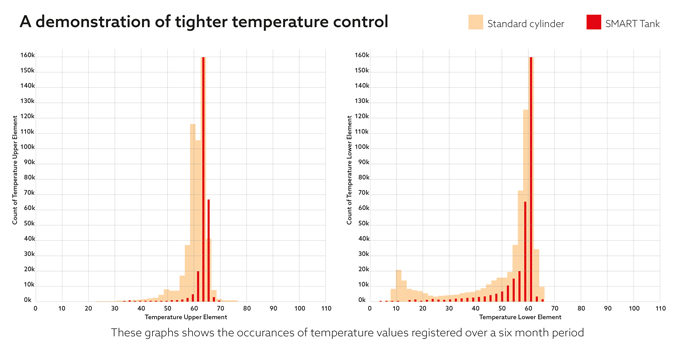
Pockets containing sensors, strategically positioned close to the elements, record precise water temperature at the tankโ€™s core. Energy input is administered to maintain optimal levels. Evidence is logged to prove safety criteria is met, but also that tanks arenโ€™t over-heating.

Analysis proves that traditional tanks with a setpoint of 60ยฐC can return average water temperature readings that are hugely variable. A โ€˜smartโ€™ tank, by comparison, provides much tighter control demonstrating achievement of 60ยฐC + at least once per day.

Data produces reports that present a detailed picture of performance including water use, environmental conditions, temperature, and energy consumption.

A recent trial compared 237 โ€˜smartโ€™ tanks with 186 standard cylinders at similar student accommodation properties, for the period August 2023 โ€“ July 2024.

The result: 33% less energy used on a per bed basis.

But savings arenโ€™t restricted to energy.

Alerts generated by the โ€˜smartโ€™ tank afford quicker responses by on-site maintenance teams to the ensure issues are identified and located accurately. This speeds up the process, avoids hunting for leaks and failed elements, and pinpoints high users of water.

Tundish monitoring indicates pressure vessel issues which enables pro-active maintenance activity.

Data is analysed to provide accurate reporting of the severity of issues and enables prioritisation and scheduling of workload for maximum efficiency.

Safety

Many standard cylinders can be guilty of over-heating. Besides wasting energy these can also be potentially harmful in respect of scalding risk. Stricter monitoring and control of water temperature means over-heating is not an issue.

With traditional cylinders, physically visiting hot water outlets and taking readings is the only way to be sure that water is heated to the required levels. But itโ€™s essential to register this detail to combat the risk of Legionella.

In most cases the โ€˜belt and bracesโ€™ approach is for the cylinder thermostat to be set at maximum to ensure 60ยฐC is constantly met. Accurate control ensures water is heated to statutory temperature levels and time periods, thus saving energy. But more importantly, automatically logging these values provides evidence that water safety plans have been adhered to. The use of hot-water outlet temperature sentinels, that send data back to the system, can remove the need to visit each tap, eliminating additional labour cost.

The takeaway from the trial

SMART Tankโ€™s capability enables operators to implement efficient practices to safeguard the performance of water heating. Standard cylinders, according to the data sample when comparing the median โ€˜smartโ€™ tank with the median โ€˜standardโ€™ cylinder, typically consume 30% more energy per litre of hot water.

Cylinders are usually visited only when issues arise. โ€˜Smartโ€™ tanks provide visibility even when they are in dark cupboards.

prefectcontrols.com


This article appeared in the Nov/Dec 2024 issue of Energy Manager magazine. Subscribe here.

Rinnai hot water heater units chosen & installed at TV studio of global reach soap opera

Rinnai has installed 4 x Sensei N1600i continuous flow water heaters with BMS integration at the television studio complex of an internationally renowned soap opera. The continuous flow Hydrogen Blend 20% certified water heaters will provide efficient hot water to washrooms, showers, dressing rooms and kitchens.

Rinnai Sensei N series 1600 model has a BMS Integration system for the instant on-demand delivery of temperature controlled hot water, making the gas fired water heaters interoperable with building management systems.   

Rinnai offers all sites its continuous flow instant delivery of hot water unitsโ€™ range as a temperature specific and controlled end-product. Rinnai continuous flow water heaters are less than 30kg – a one-man lift, streamlining the entire installation process. Two sizes are available – 47kW and 58kW. Both produce 774 and 954 litres per hour at a 50-degree rise respectively. 

For more details about the Rinnai N series visit https://www.rinnai-uk.co.uk/products/commercial/n-series-commercial-water-heater

Rinnai N Series units maintain the ability to be cascaded together to cope with increased demand. If hot water capacity must be increased further the customer can simply add more continuous flow water heater units. This means that just a single installer could create a system that would produce vast amounts of temperature accurate hot water.  

Rinnai continuous flow systems also maintain the ability to โ€˜plug and playโ€™ a cascaded sequencing control system that will automatically control how many appliances are running at any one time. This advanced control system optimises the water heater usage, which in turn reduces wear and tear and minimises energy usage.

Continuous flow systems are externally fitted units where space is limited. External hot water heaters are fully weather protected and hold IPX5D rating. Installations also arrive with frost protection down to -20ยฐC and will keep each appliance protected so long as the power supply is left switched on. 

Rinnaiโ€™s complete range of hot water heating units are available for next day delivery on orders placed before the previous mid-day.  All units can feature Rinnai commissioning to secure long term warranty guarantees. 

Continuous flow systems heat water upon release and demand meaning that fuel is only used when the system is operational. Traditional stored water units consume fuel and energy when not operational meaning that the customer acquires costs when the water storage heater is in idle mode.

Rinnai can comprehensively demonstrate that its systems can yield financial reductions of nearly 20% of the running cost, over 30% of the upfront cost, over 15% in carbon footprint, over 75% in space and over 85% in weight compared to heated storage systems.

For support in selecting your next water heating solution visit https://www.rinnai-uk.co.uk/contact-us/help-me-choose-product

************************************************************************

RINNAI OFFERS CLEAR PATHWAYS TO LOWER CARBON AND DECARBONISATION PLUS CUSTOMER COST REDUCTIONS FOR COMMERCIAL, DOMESTIC AND OFF-GRID HEATING & HOT WATER DELIVERY

www.rinnai-uk.co.uk/about us/H3

  • Rinnaiโ€™s range of decarbonising products – H1/H2/H3 – consists of hot water heating units in gas/BioLPG/DME, hydrogen ready units, electric instantaneous hot water heaters, electric storage cylinders and buffer vessels, a comprehensive range of heat pumps, solar, hydrogen-ready or natural gas in any configuration of hybrid formats for either residential or commercial applications. Rinnaiโ€™s H1/2/3 range of products and systems offer contractors, consultants and end users a range of efficient, robust and affordable low carbon/decarbonising appliances which create practical, economic and technically feasible solutions.ย 
  • Rinnai is a world leading manufacturer of hot water heaters and produces over two million units a year, operating on each of the five continents. The brand has gained an established reputation for producing products that offer high performance, cost efficiency and extended working lives.ย 
  • Rinnai products are UKCA certified, A-rated water efficiency, accessed through multiple fuel options and are available for purchase 24/7, 365 days a year. Any unit can be delivered to any UK site within 24 hours.
  • Rinnai offer carbon and cost comparison services that will calculate financial, and carbon savings made when investing in a Rinnai system. Rinnai also provide a system design service that will suggest an appropriate system for the property in question.
  • Rinnai offer comprehensive training courses and technical support in all aspects of the water heating industry including detailed CPDโ€™s.
  • The Rinnai range covers all forms of fuels and appliances currently available – electric, gas, hydrogen, BioLPG, DME solar thermal, low GWP heat pumps and electric water heaters More information can be found on Rinnaiโ€™s website and its โ€œHelp Me Chooseโ€ webpage.ย 

RINNAI FULL PRODUCT AVAILABILITY 24/7 FOR NEXT DAY DELIVERY of ALL HOT WATER HEATING UNIT MODELS INCLUDING 48-58kW UNITS-

SAVINGS OF

20%                  REDUCTION of opex cost,

30%                  REDUCTION of initial cost

15%                 REDUCTION in carbon

75%                 REDUCTION of space

Visit www.rinnai-uk.co.ukย ย Or email engineer@rinaiuk.comย ย 

For more information on the RINNAI product range visit www.rinnaiuk.com

Delivering Data-Driven Energy Efficiency Retrofits in Social Housing

Lisa Cairns, Business Development & Improvement Manager at IRT Surveys, part of the Mears Group, explains how by working with a partner that combines new technologies together with empirical data can empower the public sector to make smarter retrofitting decisions.ย 

The governmentโ€™s bid to lift over a million households out of fuel poverty and provide tenants with warmer and cheaper homes[1] has resulted in an ambitious plan to make all rented properties EPC C-rated by 2030. And with four million social homes in the UK, the retrofitting task for local authorities and housing associations is both complex and monumental.

While the ultimate goal may be to achieve net zero across the entire UK housing stock by 2050, a move estimated to cost around ยฃ104 billion, the governmentโ€™s Warner Homes Plan will make significant inroads towards it. To encourage progress, ยฃ6.6 billion will be provided in grants and low-interest loans to fund rented sector retrofit projects over the next parliament. However, even with this funding, delivering cost-effective retrofits across the social housing sectorโ€™s four million homes will require careful planning and budgeting to implement the most effective energy-saving improvements.

To ensure the right energy efficiency improvements are installed and that budgets are not wasted on unnecessary or ineffective measures, local authorities and housing associations need to understand the energy issues affecting individual properties, which include porous brickwork, render delamination, waterproofing problems or lack of insulation.  

The merits of data

The most effective pathway to decarbonisation is to gather data about individual properties within the housing stock. Armed with this information, decision-makers are better informed about the specific improvements each property needs to become energy-efficient, helping them achieve cost efficiency while ensuring residents benefit from smaller bills and warmer homes. 

The use of technologies like thermal imaging plays an important part in data gathering. Thermal imaging surveys deliver precise visual insights into the energy efficiency issues of individual homes, including their thermal performance and the condition of the building fabric. Furthermore, they identify issues frequently missed by other types of survey, such as waterproofing and rendering defects, draughts, porous brickwork, insufficient insulation and unfilled wall cavities. This fabric-first approach, when applied across the housing stock, offers local authorities and housing associations the ability to make highly informed, data-driven, decisions.

Moreover, as individual properties can be surveyed quickly using thermal imaging, it offers an expeditious way to address problems at pace. Its cost-efficiency and convenience are also evident in the fact that it doesnโ€™t require scaffolding and, being non-invasive, doesnโ€™t result in the need for repairs.

More modern, advanced technologies, also complement and enhance the benefits of thermal imaging. One such technology is MappIR, a specially designed road vehicle equipped with visual and thermal imaging and LiDAR technology that surveys streets, housing estates and even cities. Enabling large areas to be surveyed quickly, at low cost, it assesses the fabric of individual homes, identifying problems such as poor insulation, heat loss, water ingress, damp and โ€˜at-riskโ€™ properties.  Recently used in Milton Keynes where it successfully surveyed over 10,000 social homes, MappIR is an effective option for authorities carrying out improvements to โ€˜area-basedโ€™ schemes and โ€˜place-basedโ€™ projects.

Frequently used in conjunction, sophisticated data collection software, can analyse data collected and provide a complete understanding of the energy-efficiency needs of individual homes. Deployed on retrofit projects, the combination can be accurately costed and matched to available financing. Moreover, such software also tracks the progress of a project, monitoring installation rollout and improvements in energy efficiency and carbon reduction, helping local authorities and housing associations to achieve their aims cost-effectively.

In a recent project to retrofit 200 homes in the South of England, thermal imaging and retrofitting software were used together. After the thermal images had been analysed and insulation problems, heat loss and other issues identified, the software processed the data, evaluating the issues using filtering and mapping tools. In doing so, it was able to deliver the most effective retrofit pathway, enabling the housing provider to prioritise improvements, group properties and find relevant financing.

The value of experienced partners

To meet the governmentโ€™s EPC C target, local authorities and housing associations will have to retrofit housing stocks cost-effectively and at speed. And while projects of this scale may be challenging to implement, working with a partner that has a successful history of delivering projects for large organisations, like local authorities, will enable housing providers to remain confident. They will, at the same time, have access to a fast and efficient suite of services that employs advanced technologies, assuring them of an inclusive solution that delivers critical insights.

For more information, visit https://irtsurveys.co.uk/


[1] https://www.gov.uk/government/news/home-upgrade-revolution-as-renters-set-for-warmer-homes-and-cheaper-bills


This article appeared in the Nov/Dec 2024 issue of Energy Manager magazine. Subscribe here.

Why we must be smart and efficient as we journey toward net zero

Liam Johnson

Liam Johnson, a senior energy and carbon analyst at Salix.

Smart buildings are a small but pivotal solution that help plot the course to the UK achieving net zero by 2050. Whether newly built or retrofitted, smart buildings help create more energy efficient, cost effective and liveable spaces.

In a post-pandemic world, the growth of working and studying from home and a decrease in building occupancy rates, year on year with particular emphasis on office space has seen the rise in demand for buildings to be economically viable to run, in terms of heat and light has become essential. A large shift has also occurred to focus on the wellbeing of occupants.

At Salix a large percentage of projects that have received funding from either our Public Sector Decarbonisation Scheme grant schemes or through our older legacy loans schemes have chosen to install or upgrade of their internal Building Energy & Management System. Whilst BEMS have been commonplace in some buildings since the 1970s, with advancement of technology and the introduction of artificial intelligence, these have become more advanced, with the ability to collect and analyse historical data and generate patterns, in some cases predicting future energy usage trends.

Some 40% of the UKโ€™s annual energy use is taken up by buildings accounting for one third of the UKโ€™s carbon emissions according to the UK Committee on Climate Change. Also, across local authorities in the UK building efficiency varies, with some of the poorest performing buildings located in London. In London just 77% of buildings are given a band D, DEC rating.

Itโ€™s clear to me that the governmentโ€™s current target for all public sector buildings to have reduced their by carbon output by 75%, by 2037 can only be achieved by the universal upgrading of such buildings.

The UK government currently has plans to adapt Minimum Energy Efficiency Standard to Non-Domestic buildings as well as current domestic buildings. A major way to do this is by introducing building automation and control systems. This can range from lighting, with the use of motion sensors to detect room occupancy, to installing discrete lighting controls.

The heating system of a building can also use integrated sensors to heat particular rooms based on the heating requirements, these are normally pre-set using a thermostat and deliver heat based on the internal and external temperature set points. As smart buildings and the systems that control them become more advance, more intricate levels of control are needed. As Building Management Systems become more operationally technical to run a requirement is needed for the building manager or estates team to upskill those who carry out maintenance checks. The greater the complexities within a system, the higher the cost to fix or replace.

Through my work and research at Salix, I can see how smart buildings have the potential to become large data stores, collecting historical data and patterns across the year, plotting and forecasting annual consumption.  It ensures the building management team can collect data on energy use temperature, lighting, humidity and even Co2 by monitoring indoor carbon monoxide levels. This not only is at the forefront of improving wellbeing for building occupants but allows maintenance team to respond quickly and appropriately to changing conditions.

Currently a big advantage of improving a buildings efficiency through a BEMS is the ability optimise and monitor renewable energy sources such as solar PV and wind power, this can feedback information into the energy generated by renewable sources of power.

The integration of renewable energy sources creates the ability for several buildings / campuses to decentralise their energy usage, enabling a more widespread and holistic benefit. According to a report commissioned by innovate UK, national grid decentralisation will make up 30% of total electricity generation by 2030.  It emphasises the importance of decentralising energy, lead through the smart building revolution.

Overall whilst building optimisation is largely driven through the collection of data, this data can be stored and can better inform building management teams on patterns and trends.  This data can be used in models, looking at ways to minimise inefficiencies, reduce costs and predict system failures before they become critical. Today most of the current Building Management Systems involve supervised machine learning, meaning the system isnโ€™t fully automated and relies on human input to and supervision to function.

Fortunately for you and me, we can take the very best of AI and thatโ€™s within our gift. It is already playing a vital part in how we adapt to climate change. However, whilst AI is superb for crunching data and analysing patterns, the human brain is still best for reasoning, creativity, empathy, compassion and abstract thinking. For now, anyway.


This article appeared in the Nov/Dec 2024 issue of Energy Manager magazine. Subscribe here.
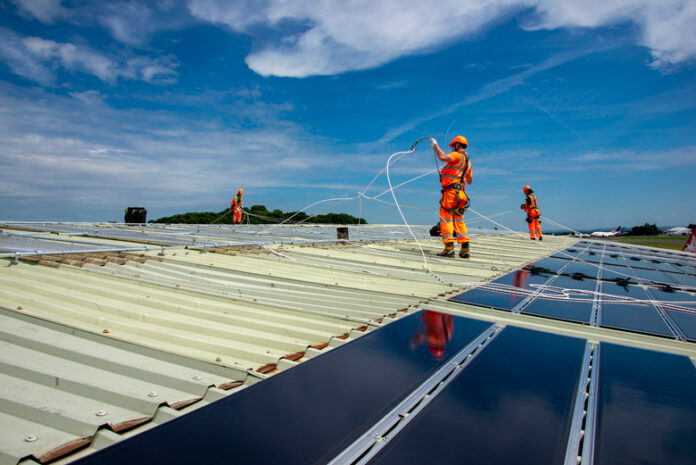
CBFM Announces Expansion into M&E Installation and Maintenance Across the Northeast

CBFM, a long-established local firm in the Northeast, is set to further expand its operations in the commercial and institutional buildings sector. The company will offer bespoke installation and maintenance contracts for full HVAC services including commercial heating and air conditioning with an emphasis on delivery service excellence and energy efficiency.

With a strong customer base in the healthcare, manufacturing, and commercial office sectors, CBFM aims to broaden its service offerings. Based at the Team Valley Trading Estate for many years, CBFM plans to increase its highly skilled workforce of trained and qualified technicians. The expanded services will include site surveys, calculation drawings, installation and maintenance work schedules, and emergency callouts. Specific services encompass the design, installation, and commissioning of air conditioning and cooling systems, heating systems, and hot water delivery systems.

A company spokesperson,Harl Bowman, stated, โ€œWe have built our reputation on service excellence, ensuring the job is done with minimal fuss. Our team of highly trained and qualified engineers consistently deliver outstanding results.โ€

A satisfied customer said, โ€œCBFM manages numerous sites for us in the Northeast, from single comms room systems to a 220-bedroom hotel. The CBFM team is proficient in their work and communication with our customers. They are a first-class company to partner with.โ€

Another customer highlighted CBFMโ€™s high standards, saying, “We engaged CBFM for various building services at one of the largest hotels in the Northeast, including: Ventilation, Air Conditioning, Heating and Plumbing, Catering Equipment & Extraction, Cellar Cooling.

โ€œThe new ventilation system provides guest bedrooms with an energy-efficient, low-noise solution. Heat Recovery Units and the required ductwork and grills were installed by CBFMโ€™s specialist teams. The climate control air conditioning system now supplies both heating and cooling to the function room, ensuring optimal comfort for guests and staff at large events. Concealed air conditioning units maintain the roomโ€™s aesthetics while providing the necessary temperatures. All units were supplied and installed by CBFMโ€™s highly professional air conditioning installation teams.

CBFMโ€™s Gas Safe commercial heating teams also installed the commercial boiler and cylinder, providing essential services to the kitchen and washrooms, along with LPG gas for the kitchen catering equipment.

For the company Dean Baardman added, โ€œBeing based in the heart of the North East allows us to be onsite quickly and deliver service excellence to our clients and customers.

This is the ethos we live byโ€”delivering excellence, everydayโ€

For more information of CBFM services visit https://cbfmheating.co.uk/


This article appeared in the Nov/Dec 2024 issue of Energy Manager magazine. Subscribe here.
Boroughโ€™s Local Area Energy Plan built with digital twin insight

Plan identifies ยฃ2bn Net Zero pathway for Calderdale

A low carbon future for the West Yorkshire borough of Calderdale has been set out in an ambitious new plan that identifies the key priorities needed for the borough to reach its net zero by 2038 target and how that transition can benefit local people.

Compiled by global climate tech company, IES, using its digital twin technology, the Local Area Energy Plan (LAEP) identified changes to the borough’s buildings and energy generation needed to hit the net zero target. The move sees Calderdale become the first Local Authority in West Yorkshire to deliver a LAEP and the only one currently using digital twin technology.

Calderdale Council declared a climate emergency in 2019 and met its 2020 target of reducing carbon emissions by 40 per cent. The borough is home to over 200,000 residents and borders Greater Manchester to the west, Bradford to the east, and Huddersfield to the south. Among its principal towns are Halifax, Brighouse, and Hebden Bridge.

Key changes identified by the Local Area Energy Plan are:

Building efficiency
Retrofitting insulation to over 75,000 homes at a cost of ยฃ300m would unlock savings of ยฃ50m per year and reduce annual electricity demand by 359GWh.

Heat decarbonisation
Replacing fossil fuel heating systems in 100,000 residential and commercial buildings with low carbon alternatives at an approximate cost of ยฃ1.34bn would result in carbon savings of 250,000 tonnes CO2e per year.

Renewable energy generation
A net zero future will mean Calderdale’s electricity consumption would double to 1600GWh per year. A blend of microgeneration through solar, battery storage, and other low carbon electricity sources would be required, along with smart grid upgrades. The rollout of solar alone, in suitable and moderately suitable locations, is estimated to cost just under ยฃ500m. 

Transport
Almost 38 per cent of the boroughโ€™s carbon emissions are derived from transport. It is estimated that over 2,100 public charging points for electric vehicles will be required.

Grid infrastructure
Upgrades will be required at all levels of the network, including upgrading existing grid supply points, constructing new substations, and re-laying/resizing some cables. This work is estimated to require a ยฃ40m investment. 

The cumulative investment would unlock a green jobs bonanza in the borough, with 3,000 skilled workers needed to deliver the changes required and to provide ongoing maintenance.

IESโ€™ Project Lead for the Calderdale LAEP, Nick Purshouse, said: โ€œ

“IESโ€™ digital twin technology has been instrumental in delivering Calderdaleโ€™s Local Area Energy Plan. It provides a comprehensive, visual model of every building in the area, allowing us to test various low-carbon scenarios with scientific accuracy. Our tool not only provides a solid evidence base for decision-making but also enables ongoing monitoring and evaluation of progress.

โ€œIt’s charted the path to achieve net-zero by 2038, providing both the confidence and detailed understanding that Calderdale needs to take effective action.”

Cllr Scott Patient, Calderdale Councilโ€™s Cabinet Member for Climate Action and Housing, added:

โ€œCalderdale met its 2020 target of reducing carbon emissions by 40 per cent, but the borough has bigger, long-term ambitions when it comes to decarbonisation, as part of our priority for climate action. To deliver on our net zero targets, we needed a clear plan informed by data to ensure the decisions we make about energy generation are as effective and sustainable as possible.

โ€œAs the first borough in West Yorkshire to use intelligent digital twin technology to inform a LAEP, weโ€™re proud to be setting a positive example for other authorities looking to drive forward their decarbonisation journey. IES provided us with robust data and actionable insights to ensure our plans drive forward our long-term vision.โ€

The LAEP was launched on 1 November at a major event convened by Calderdale Council, โ€˜From Insight to Action: Local Solutions to Net Zeroโ€™. The next stage for the council will be to work out how to deliver it by developing business cases for priority projects and working with key stakeholders and trusted partners. Collaboration between local government and businesses alike will be key to ensuring success in implementing the LAEP.

The event was attended by a range of public and private sector leaders in the environment and sustainability sector. It was sponsored by Northern Powergrid and showcased some of the work taking place in Calderdale to tackle the climate emergency. From local area energy planning to retrofit projects and policy work, the borough is unlocking barriers to make net zero a reality. The event was also supported by West Yorkshire Combined Authority and UK100.