UK public expects businesses to lead on net zero: why onsite generation is the missing piece of the jigsaw

By Kevin Ball, Chief Commercial Officer at Wattstor

While the UK is moving ever closer to its clean energy and net zero targets, the publication of โ€˜Clean Power 2030โ€™ by the National Systems Energy Operator (NESO), highlighted the scale of the renewable energy challenge. It concluded that, while the governmentโ€™s 2030 target was achievable, it would require a significant amount of investment and a major reform of our energy system.

That is why public and private sector organisations across the country will play an important role in helping to achieve these targets. And, importantly, there is a huge public expectation that they will lead the way.

However, we recently conducted research of more than 2000 UK consumers, which revealed that over half (56%) believe that businesses need to step up their sustainability efforts to help achieve the countryโ€™s net zero targets.

The research  also showed that a significant majority – 70% – believe that businesses should face serious repercussions if they donโ€™t take sustainability seriously.

In fact, one in three (30%) respondents said that they strongly felt that the government should hold companies accountable if they donโ€™t meet net zero targets. In addition, one in four (43%) consumers believe that businesses should have all or most of the responsibility for achieving those targets.

It also revealed some scepticism about whether net zero was achievable, with half (50%) saying they donโ€™t believe the target will be met, and nearly one in five (19%) unsure.

That said, the research demonstrated the potential commercial advantage for those businesses who do invest in sustainable solutions. More than two-thirds (69%) of respondents said that a businessโ€™ approach to sustainability and use of renewable energy was a key factor when choosing to buy from them.

This is a really important point and should be a key factor in making sustainable investment decisions.

However, a well-documented risk is the delay in securing grid connections, in particular for large generation and storage projects, which threatens the UKโ€™s renewable goals. Similar constraints are found in generation capacity which are also hindering economic growth. Itโ€™s this aspect that is slowing down the momentum for businesses to make the switch to clean energy and operate more sustainablyโ€‹.

This is where onsite renewable generation can play an important role.

Building the business case for onsite renewable energy

An increasing number of businesses are exploring the installation of onsite renewable generation and storage. The business case is compelling, as it is a proven way to reduce energy costs, manage carbon emissions, and take advantage of energy price volatility.

For more than two years, the volatility in the wholesale energy markets has been a huge issue for businesses, becoming a major risk factor. Onsite generation helps to mitigate this risk, removing the reliance on the wholesale markets and providing much-needed cost certainty.

The recent NESO report outlined two pathways to achieving clean power by 2030 – Further Flex and Renewablesโ€™ and โ€˜New Dispatchโ€™ – and launched a consultation on its plans to reform the connections process, which it says will โ€œreduce and reorder the queue by prioritising ready projects as well as aligning to locational, and technology needs for the future energy system.โ€

However, these changes will take a while to come to fruition, which is where onsite renewable generation can be the missing piece of the jigsaw.

For example, installing an advanced DC coupled solar and battery system enables businesses to generate and manage their own energy, and connect 4x โ€“ 5x more solar capacity on their premises than the generation capacity typically allowed on the local network. This reduces grid dependence and offers a path towards net zero by maximising onsite renewable deployment.

By storing excess energy and using it onsite, businesses can continue reducing emissions, cutting costs, and enhancing their energy resilience. Furthermore, a well- designed battery system can also provide back-up power in the event of grid failure, enabling businesses to do away with standby diesel generators.

Perhaps most importantly, there is a clear commercial incentive to invest in onsite renewable energy in terms of winning new customers and increasing customer loyalty. This research highlights that consumers want to buy from responsible businesses and have said that it is a key consideration when choosing where they spend their money.

Playing your role in net zero

Our research gauges the expectations UK consumers have when it comes to businesses and net zero. While many companies are already taking it seriously, the results of our survey show that more can be done, particularly when the public believes that businesses should be taking a leading role in the UKโ€™s decarbonisation journey.

At the end of the day, for those businesses that have capacity for an onsite renewable energy system, it therefore not only makes environmental sense. It makes commercial and reputational sense too.

The full report is available here.


This article appeared in the Jan/Feb 2025 issue of Energy Manager magazine. Subscribe here.

Our vision for collaboration and innovation

Davide Natuzzi

Davide Natuzzi, assistant director, energy, carbon and technical, Salix

Over the course of my career, I have observed with great interest Scotlandโ€™s green revolution, working to meet ambitious climate goals and drive a sustainable plan.

Perhaps because of its green landscape, rich natural resources and commitment to innovation, Iโ€™ve seen the country setting strong examples for energy efficiency and decarbonisation. Iโ€™ve observed that an important element of this progress is the availability of green funding which has enabled collaboration between the public sector and private companies.

At Salix weโ€™ve also been involved in this collaboration and innovation, delivering a variety of grant and loan-based schemes that support the decarbonisation of the public sector estate.

As well as delivering grants on behalf of government, at Salix we also provide interest-free loans for energy efficiency measures and heat decarbonisation projects in the public sector.

Our work aligns seamlessly with Scotland’s ambitious target to achieve net zero emissions by 2045. Through the work carried out in partnership with Scottish Government, tailored financial schemes have been created to empower public sector organisations to reduce their carbon footprint and improve energy efficiency.

In 2023 and 2024 we worked with Scottish civil servants to introduce Scotlandโ€™s Public Sector Heat Decarbonisation Fund, a flagship initiative to accelerate the decarbonisation of heat in public buildings across the country.

The fund has offered grant support for projects that improve building fabric efficiency and/or replace fossil-fuel-based heating systems with zero direct emission alternatives. This included heat pumps, biomass boilers and district heating networks.

For Scotlandโ€™s public sector, this scheme represents a step forward in addressing the transition from fossil fuel heating sources to low emission technologies and a more sustainable future for all.

The scheme based its criteria on the quality of applications, awarding funds to those with the highest scores. Applications could fall into two categories: concept applications and detailed applications. This dual approach was adopted to acknowledge that projects may be at different stages of development.

Applications were scored based on quality and using five criteria โ€“ strategic assessment, technical feasibility, financial costs, project delivery and social impact โ€“ with each having a weighted score.

Detailed applications took a single assessment approach to award funding for capital-ready projects after a successful full assessment against the criteria.

Concept applications took a two-stage assessment approach, reserving capital funding based on a concept that demonstrated alignment within scheme criteria. Funding was then confirmed at a later date pending the submission of a detailed application and further full assessment.

Additionally, applications were divided into two project categories: fabric-first and zero direct emission heating projects or โ€˜whole buildingโ€™ and โ€˜fabric-first onlyโ€™ projects. The latter didnโ€™t include heating system replacements.

One particular noteworthy project funded through the scheme took place at Perth and Kinross Councilโ€™s Auchtergaven Primary School. The project took a โ€˜whole buildingโ€™ approach, incorporating both fabric-first and a zero direct emission heating system. Fabric-first measures included roof insulation, building management system upgrades, pipework improvements and heat distribution to enhance the thermal insulation of the 1,200 square meter building.

The project at Auchtergaven also involved the installation of an air to water air source heat pump to fully decarbonise the building and replace a high-carbon intensive oil boiler previously used to heat the site.

I look forward to visiting the school to see the positive impact that the funding has on the building and to the children and teams who use it. Both the council and school can be proud of this work, which was enabled thanks to close collaboration between the council, the school team and contractors.

Through this first phase of Scotlandโ€™s Public Sector Heat Decarbonisation Fund, we have been able to support projects like Auchtergaven, that implement carbon reduction solutions, reduce reliance on carbon-intensive energy sources and positively influence the quality of life for local communities across Scotland.

Other projects funded through the scheme include educational institutions that have leveraged funding to retrofit their campuses with zero direct emission heating systems. Often included in their projects are strategies that encourage a culture of sustainability amongst students and staff.

As Scotland progresses on its decarbonisation journey, initiatives like Scotlandโ€™s Public Sector Heat Decarbonisation Fund demonstrate the importance of collaboration and strategic investment.

At Salix, our role in driving these efforts is key. So, too, is the need for government funding as a key enabler for these organisations to decarbonise their estates and head towards a sustainable future.

With a continued focus on funding opportunities and partnership, Scotland is well-positioned to achieve its net zero aspirations and inspire other nations to follow suit.

The journey is still far from over, but with government initiatives and our support, I believe that, for Scotland, achieving net zero emissions by 2045 is possible.

Have a look at our website and find out more about the work we do.


This article appeared in the Jan/Feb 2025 issue of Energy Manager magazine. Subscribe here.

How to Achieve Net-Zero Emissions with Your Industrial Steam System

Photo by Pixabay

In an era where sustainability is no longer a mere option but a business imperative, achieving net-zero emissions has become a crucial goal for industries worldwide. At Spirax Sarco, we understand the importance of reducing carbon footprints while maintaining operational efficiency. One of the most significant areas where this balance can be achieved is within your industrial steam system.

The Importance of Steam Systems in Industry

Steam is a vital component in a multitude of industrial processes, from power generation and heating to sterilisation and humidification. Despite its widespread use, steam systems are often overlooked in sustainability discussions, yet they offer immense potential for reducing emissions. By optimising these systems, businesses can significantly lower their carbon output and contribute to global climate goals.

Understanding Net-Zero Emissions

Before we delve into the specifics of optimising your steam system, it’s important to clarify what net-zero emissions mean. Net-zero refers to balancing the amount of greenhouse gases (GHGs) emitted with an equivalent amount of GHGs removed from the atmosphere. This can be achieved through a combination of emission reductions and carbon offsetting strategies.

Steps to Achieve Net-Zero with Your Steam System

  1. Conduct a Comprehensive Energy Audit. The first step towards achieving net-zero emissions with your steam system is to understand its current performance. A thorough energy audit will identify areas where energy is being wasted, such as steam leaks, inefficient insulation, or outdated equipment. By addressing these issues, you can reduce energy consumption and, consequently, emissions.
  2. Optimise Steam Generation. The efficiency of your steam generation process has a direct impact on your carbon footprint. Investing in high-efficiency boilers, optimising combustion processes, and using alternative fuels such as biomass or biogas can significantly reduce the emissions associated with steam generation. Moreover, implementing real-time monitoring systems can help maintain optimal boiler performance and prevent energy wastage.
  3. Improve Steam Distribution and Usage. Once steam is generated, ensuring it is distributed and utilised efficiently is crucial. Insulating steam pipes, regularly maintaining steam traps, and recovering condensate are all effective ways to minimise energy loss. Additionally, adopting technologies such as steam flow meters and automatic control systems can help optimise steam usage, further reducing emissions.
  4. Recover and Reuse Waste Heat. Waste heat recovery is an often-underutilised method of improving energy efficiency. By capturing and reusing waste heat from steam systems, you can reduce the demand for additional energy input, thereby lowering emissions. Heat recovery steam generators (HRSGs) and economisers are excellent examples of technologies that can be implemented to achieve this.
  5. Implement Carbon Capture and Storage (CCS). For industries with high carbon emissions, carbon capture and storage (CCS) can be an effective strategy to achieve net-zero. By capturing CO2 emissions before they are released into the atmosphere and storing them underground, businesses can offset the emissions produced by their steam systems.
  6. Engage in Carbon Offsetting. While reducing emissions should be the primary goal, some level of emissions may be unavoidable. In such cases, carbon offsetting provides a viable solution. By investing in projects that reduce or remove carbon from the atmosphere, such as reforestation or renewable energy initiatives, businesses can offset the emissions that they cannot eliminate directly.
  7. Regular Monitoring and Continuous Improvement. Achieving net-zero is not a one-time effort but a continuous process. Regularly monitoring your steam systemโ€™s performance and staying updated with the latest energy-saving technologies will ensure that your system remains as efficient as possible. This ongoing optimisation will help maintain low emissions and move closer to your net-zero goal.

The Role of Innovation and Expertise

At Spirax Sarco, we are committed to helping our customers achieve their sustainability goals. Our innovative solutions and expert services are designed to optimise steam systems for maximum efficiency and minimal environmental impact. From energy audits and system design to advanced monitoring and maintenance services, we provide the tools and expertise needed to achieve net-zero emissions.

The journey to net-zero emissions is challenging but entirely achievable with the right approach. By optimising your industrial steam system, you can make significant strides towards reducing your carbon footprint, enhancing operational efficiency, and contributing to a more sustainable future. At Spirax Sarco, we are here to support you every step of the way.

Achieving net-zero emissions is not just about compliance: it’s about leadership, responsibility, and creating a better world for future generations. Let’s take that step forward together.

www.spiraxsarco.com


This article appeared in the Jan/Feb 2025 issue of Energy Manager magazine. Subscribe here.

Trowers & Hamlins supports first ever carbon credit initiative for social housing decarbonisation

Chris Paul

International law firm Trowers & Hamlins has partnered with the innovative HACT Retrofit Credit Scheme – the first carbon credit initiative of its kind, in the UK and worldwide. Delivered by the Housing Associations’ Charitable Trust (HACT) in collaboration with PNZ Carbon and certified by the Verified Carbon Standard, the scheme unlocks funding for the decarbonisation of social housing, delivering measurable environmental and social value.

Trowers & Hamlins’ participation in the HACT Retrofit Credit Scheme is a key component of the firmโ€™s broader sustainability and social impact strategy, with an ambition to achieve a 90% reduction in carbon emissions by 2050 and to help build a world that is environmentally and socially sustainable.

Chris Paul, Head of the Energy and Sustainability team at Trowers, commented:

“Reducing our own emissions remains our primary focus, but we also recognise that there are actions we can take to address the climate crisis beyond our immediate impact. The HACT Retrofit Credit Scheme facilitates essential funding for retrofitting the UKโ€™s social housing stock with improved insulation and low-carbon heating systems. By leveraging the UK Social Value Bank to quantify the positive impact on residents’ lives, this initiative builds on the valuable work weโ€™ve been doing in the affordable housing sector for many years.”

The decarbonisation of homes is widely regarded as a crucial factor in achieving the UK’s net zero target. Retrofitting social housing is crucial to this effort, improving not only environmental outcomes but also the quality of life for residents. As a trusted advisor in the housing sector, Trowers & Hamlins participation in the HACT Retrofit Credit Scheme has delivered a 120 tCO2e reduction and generated ยฃ69,480 in social value, as measured by the UK Social Value Bank, which assesses residents’ well-being as a primary indicator of social impact.

Antoine Pellet, Head of Retrofit Credit at HACT, added:

“It has been a real pleasure working with a such well regarded and influential group as Trowers & Hamlins on the collaboration of their support of Retrofit Credits, not only the monetary terms to assist with the decarbonisation of UK social housing but also all their support bringing the impact of the project to the sector.

“HACT and PNZ Carbon would like to thank Trowers & Hamlins for their support, which has created a real, tangible difference, and positively impacted the environment and the lives of residents with the funding of the retrofit measures undertaken on UK social homes. This has resulted, as Chris Paul mentions in the reduction of multiple tons of CO2 and facilitated thousands of pounds worth of positive social value impact for the people who live in them. We very much look forward to a continued and strong collaboration for many years to come.”

Rinnai introduces new innovations in unvented water heaters & indirect storage solutions

Rinnai is introducing a wide and comprehensive selection of unvented water heaters to add to and complement the existing range of cylinders solutions.

To learn more visit: https://www.rinnai-uk.co.uk/products/electric-storage-hot-water-solutions

Key features of the Rinnai unvented water heaters are:

  • Venturi Technology:ย The units use patented Venturi technology to minimise expansion, ensuring minimal ongoing maintenance and optimal performance.
  • High Efficiency:ย Engineered to give maximum energy efficiency.
  • Durability:ย Built with high-quality Duplex stainless steel, the cylinders are designed to last, giving long-term reliability.
  • Ease of Installation:ย With a user-friendly design, the installation process is straightforward, saving time and effort.
  • Safety First:ย Equipped with advanced safety features, including a factory-fitted 7bar/90ยบC pressure and temperature relief valve.
  • Eco-Friendly:ย Featuring CFC/HCFC-free thermal insulation, our cylinders are designed with sustainability in mind.

Rinnai continuously expands and updates its entire product offering to include all fuels and appliances for installation as stand-alone units or as part of hybrid systems for larger commercial sites.

The range is available in a wide selection of capacities – from 80 โ€“ 500 litres and in the following model types โ€“ built in expansion, Solar, Slimline, SuperSlimline, Horizontal, Heat Pump and in Heat Pump 28.

Rinnaiโ€™s extensive product range includes a wide selection of electric technologies. Rinnaiโ€™s Infinit-E range is an optional three-phase all-electric water storage heater for commercial hot water applications.

All units are fitted with between one and six titanium elements. The KW rating of the Infinit-E range is scalable from 12kw to 72kw ensuring that all units are suitable for a wide variety of applications. All electrical elements can be fitted to a single-phase supply, should site limitations dictate.

Each element within the appliance range has its own controllable thermostat with a temperature range of between 49 and 90 degrees Celsius. All elements are fuse protected and there is no need for expensive sacrificial anodes due to a tough stainless-steel build.

Each cylinder unit in either unvented or indirect version is manufactured with stainless steel adding durability and enabling extensive warranties. The use of stainless steel also makes the Infinit-E range lightweight and easily manoeuvrable and handled when compared to glass-lined variants. The empty weight of the Infinit-E is 54kg maximum.

Rinnai offer sizing and design support for all heating and hot water heat systems โ€“ simply contact the design team today for support on your latest project

Find out more about Rinnai electric storage heaters today

https://www.rinnai-uk.co.uk/products/electric-storage-hot-water-solutions

https://www.rinnai-uk.co.uk/contact-us/help-me-choose-product

UK energy strategists believe that clean and sustainable electrification is presently one of the best modes of reducing carbon emissions, maximise efficiencies and to also lower end-user customer costs.

Rinnai is determined to offer UK customers assorted options of carbon reducing technology that ensures an improved healthy lifestyle. Rinnai is also keen on informing all UK customers in major changes and developments concerning the international energy market that may affect purchase or power options in the near and far future.

For the latest blog and vlog information on products and policy visit www.rinnaiuk.com and subscribe to the Rinnai newsletter.

Investigating and Optimising student accommodation energy control

New software tools have been developed for Irus, the building energy management system.

Irus currently has more than 75,000 control units across 150 sites on its portal. Heat sources in bedrooms, kitchens and communal areas; hot water cylinders; leak detection equipment; and the kitchen safety devices are all individually controlled and feed data to the portal.

Recent analysis of annual energy consumption at two sites reveals heating load halved during winter months with Irus is in control. Equally impressive is the 28% saved during the summer.

The system doesnโ€™t restrict heating to room occupants – additional heat can be called for at any time. The system maintains comfortable environments but ensures energy isnโ€™t used unnecessarily, for example when rooms are empty, windows are open, or the occupant leaves the room shortly after pressing the boost feature.

Optimiser and Investigator, the two new tools,add to existing control methods and savings by making visible the โ€˜difficult to identifyโ€™ unnecessary use of utilities.

Irus collects data from each control unit, including levels of humidity, light, occupancy, and (as an option) CO2.  It also measures sound pressure, and of course temperature.

Optimising performance

By analysing and interpreting this data Irus Optimiser delivers a prioritised list of the most pressing issues. โ€˜Quick winsโ€™ are identified, and recommendations given to resolve problems such as:

  • Unusually high energy users
  • Rooms where the temperature exceeds the profile
  • Heater Faults and Offline Rooms.
  • Identifying rooms that deviate from the standard profile, and
  • The percentage of rooms that are unoccupied.

A regular prompt, to address small things that cumulatively make a big difference, dramatically improves the efficiency and performance of the building, and adds to the already proven savings.

Deeper investigation of a building

For managers wanting greater scrutiny of their building and how itโ€™s being used, Irus Investigator highlights potential issues.

A panel can be customised to display the most pertinent โ€˜Observationsโ€™ for a particular site. Among many others these include:

  • Load Failure to determine malfunctioning heaters or elements
  • Water Wastage through faulty toilet cisterns
  • Room Vacancy
  • Higher than usual energy or water use, or
  • Unoccupied Rooms where lights have been left on.

Users can select a specific timeframe or view live data as it is collected.

A diagram of the building displays individual floors. When an โ€˜Observationโ€™ is highlighted, the map locates the specific rooms where attention should be focussed. Clicking on the highlight identifies the exact location and from here the user can access the portal control page for that room.

Further investigation of historic data will determine if the conditions are a one-off or there is unusual behaviour at play. For example, rooms displaying higher temperatures than the heating system is supplying, indicates that supplementary heaters are being used. A report can be generated and supplied to front of house personnel, for them to take appropriate action.

The colour-map feature provides a visual comparison across an entire floor. Outliers within an area will determine whether a high humidity issue, for example, is affecting many rooms or is confined to a single room. This helps maintenance teams to pinpoint, and act upon the information in the most appropriate and efficient way.

To help manage planned maintenance, accommodation managers use the โ€˜Occupancy Pattern Observationโ€™ tool to identify all the rooms that have been vacant for the date criteria they have entered

The ability to drill down, from site – to building – to individual room level – affords visibility and intelligence never available before with a building energy management system. Ensuring buildings are performing to their maximum capability.

www.prefectcontrols.com


This article appeared in the Jan/Feb 2025 issue of Energy Manager magazine. Subscribe here.

Genius Energy Lab Unveils Groundbreaking 2024 Industry Report on Ground Source Heat Pumps

Installers and decision-makers can now benefit from long-term operational savings and carbon reduction while navigating upfront cost challenges and regulatory complexities.

As global energy systems face increasing pressure to decarbonise, Genius Energy Lab, a leading innovator in ground source heat pump (GSHP) technology, has released its 2024 GSHP Industry Report. This in-depth study offers critical insights into the factors driving the adoption of GSHPs, highlighting both the opportunities for long-term energy savings and the regulatory and cost challenges still hindering their widespread use. As the push for sustainable solutions intensifies, this report outlines the path forward for increasing GSHP adoption to help meet global climate goals.

Key Findings: A Push Towards Sustainability, With Barriers in the Way

The report reveals that 60% of respondents are motivated by GSHPโ€™s superior carbon reduction capabilities, recognising its potential to significantly reduce emissions. Additionally, 50% of respondents identified the technology’s low running costs as a primary driver for consideration, while 45% cited enhanced energy security as a vital benefit. Despite these advantages, the high upfront costs remain a deterrent, with 40% of industry stakeholders citing a lack of understanding about the technology as a critical barrier to wider adoption.

“A Strong Case for GSHP, But Thereโ€™s More Work to Do”

Richard Davis, CEO of Genius Energy Lab, emphasised the importance of the findings in shaping the future of GSHP technology: โ€œWe believe GSHPs are a pivotal solution in the transition to sustainable energy, but it’s clear from our research that the industry must do more to break down the perceived current adoption barriers. Genius Energy Lab is committed to leading this charge, providing innovative solutions and working with regulatory bodies to make the process easier for all stakeholders.”

The report, based on insights from 64 industry leaders and stakeholders, identifies the total cost of ownership as a crucial deciding factor for those considering GSHP over alternative technologies. Although upfront costs are higher, 33% of respondents appreciate the long-term savings and superior energy efficiency that GSHP systems offer.

Next Steps: Education, Collaboration, and Policy Reform

To drive broader adoption of GSHP technology, the report outlines several key recommendations, including:

  • Enhancing financial education and support to communicate the long-term benefits of GSHP.
  • Streamlining regulatory processes to simplify the permitting and installation of GSHP systems.
  • Developing targeted educational initiatives aimed at bridging the knowledge gap for builders, architects, and decision-makers.

About Genius Energy Lab

Genius Energy Lab is a leader in ground source heat pump (GSHP) consultancy and design, offering over two decades of expertise in large-scale commercial and residential projects. With a focus on innovation, sustainability, and client satisfaction, Genius Energy Lab provides expert design and project oversight services, supporting clients from feasibility through to implementation to pave the way for a cleaner, more energy-efficient future.

For more information on the 2024 GSHP Industry Report or Genius Energy Labโ€™s services, please visit the website or contact CEO Richard Davis at rd@geniusenergylab.com.


This article appeared in the Jan/Feb 2025 issue of Energy Manager magazine. Subscribe here.

Proving Increased Energy Efficiency in Air Handling Units

Chauvin Arnoux UK recently assisted Superior Filter Products (SFP Ltd) in demonstrating the cost effectiveness of a new air filter product within a working environment in a convention centre.

SPF needed to prove how their new efficient and cost-effective filters could offer the same level of airflow and performance, while using far less energy and therefore having a lower energy cost than the customerโ€™s existing filters and reached out to Chauvin Arnoux for assistance.

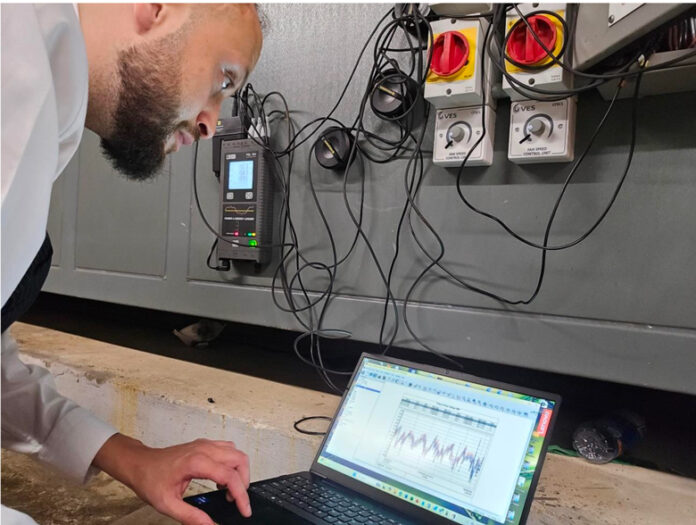
Elliot Ajose, Regional Sales and Technical Manager for CAUK explains how, with the use of a PEL104 Power and Energy Logger and CA1227 Thermo-Anemometer, he assisted SFP Ltd in obtaining the accurate measurement data they required.

The goal of the study was to collect measurable data to compare the energy usage of the HVAC units using the existing standard filters in the convention centre with the new filters supplied by SPF Ltd. The intention being to both prove that the change of filter supplier was feasible from an economic point of view and to show the ongoing savings using the new alternative filters.

The study was conducted in two parts. First a two-hour log to obtain the normal energy use data with the existing filters still fitted in the air handling unit (AHU), and then an additional two-hour motoring and recording session once the filters had been replaced.

Throughout the tests a Chauvin Arnoux PEL104 Power and Energy Logger was used to determine the energy consumption of the air extraction system, and a CA1227 Thermo-Anemometer to ensure that the wind speed was constant at three meters per second. The PEL104 is an advanced power and energy logger capable of logging voltage and current and providing the energy and power results used to determine the total energy usage during the test.

Standard filters first

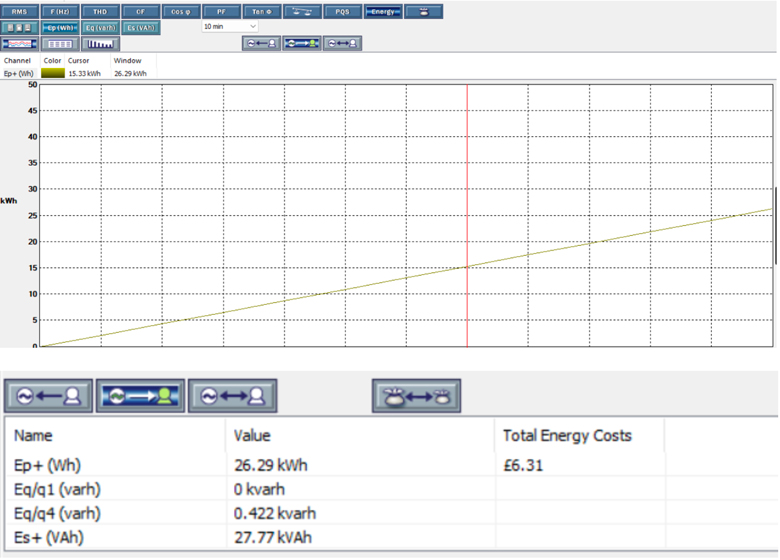
When using the standard filters for the first two hours of the trial, the PEL104 measured a total energy consumption of 26.29 kWh. Basing the total cost of the energy consumed and the UK average electricity price of ยฃ0.24 per kWh, the PEL calculated a final cost of ยฃ6.31 for the two hours. This gives an AHU operating cost for a standard eight-hour day of ยฃ25.24 and an annual cost of ยฃ9,212.

Now the SFP Filters

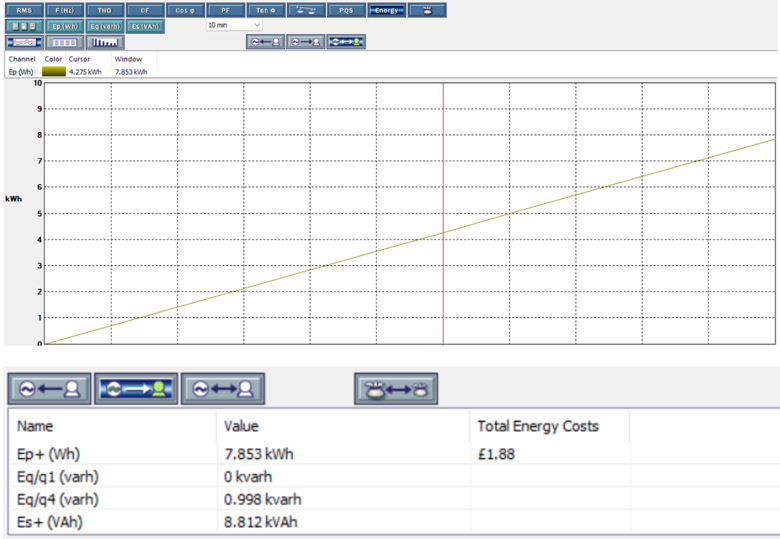
Energy consumption was recorded for another two hours after replacement of the standard filters with the SFP Filters, with the anemometer ensuring that the air flow did not change. During the second two-hour logging period the SFP Filters used significantly less energy, consuming only 7.853 kWh.

This was less than one third that of the original filters. Using the same electricity tariff as noted above, that equated to ยฃ1.88 for the two hours, ยฃ7.52 per 8-hour day and an annual energy cost of ยฃ2,737.

Cost Savings and Efficiency Improvements:

The results proved that the application of the new filters provided significant energy reduction benefits compared to the regular filters. SFP were able to show a near 70% saving in energy use throughout the two hours of the test โ€“ and hence the associated costs.

Specifically, the transition from conventional filters to SFP filters was shown to reduce the energy costs on one AHU by ยฃ6,475 per annum while the air speed remained constant, proving that the increased efficiency and energy saving were not achieved by compromising the airflow. Reassurance for the customer that the function and performance of the convention centre HVAC system would remain unchanged, while the annual energy consumption would be heavily reduced.

Apart from the ongoing cost savings the study also showed that there are environmental gains to be made by monitoring power and energy consumption with a Chauvin Arnoux PEL 104. Identifying the inefficiencies is important for any maintenance team attempting to reduce energy consumption. For the convention centre, the saving that will be achieved through the reduction in energy by moving to

the SFP filters will contribute significantly to lowering their carbon footprint. With the UK generation emissions factor for grid electricity of 0.20707 kg of CO2e per kWh of electricity, the convention centre can achieve on this one AHU an average reduction on overall annual emission of approximately 5.57 metric tons CO2e if SFP Filters are installed.

This is consistent with the UKs ongoing advancements toward the optimisation of energy utilisation and emission reduction across industries, especially due to increasing corporate and public establishments, moving to a sustainable future.

In summary

With the help of Chauvin Arnoux UK, a PEL104 Power and Energy Logger and a CA1227 Thermo- Anemometer, SFP Ltd were able to obtain precise and credible data to prove a reduction in energy consumption, with no effect on performance, for AHUโ€™s fitted with their new filters.

The convention centre has the potential of reducing their energy costs, while at the same time making a positive impact on the environment, by reducing their carbon footprint by 5.57 metric tons of CO2e and saving ยฃ6,475 per year per AHU.

For electricians and facilities management teams, there is little simpler and more economically beneficial, than recording data with the Chauvin Arnoux PEL104 to establish opportunities to increase energy efficiency, decreasing costs and meeting sustainability goals.

This case study shows that monitoring energy consumption is a very feasible and cost-effective way of identifying improvements. It highlights long term commercial perspectives on energy savings and contributing to a more sustainable future for everyone. Itโ€™s an encouraging reminder of how small changes can make a big difference.


This article appeared in the Jan/Feb 2025 issue of Energy Manager magazine. Subscribe here.

How Water Audits Can Help Reduce Your Business Utility Bills

Businesses looking to improve their water footprint and start operating more sustainably, while reducing their utility bills at the same time, could find it particularly beneficial to have a water audit of their site carried out.

These audits involve comparing water usage, including volumes, against what youโ€™ve been charged for by your water company, with the aim being to reveal any discrepancies and inconsistencies that may have manifested over time, leading to you being billed incorrectly.

Visibility is the name of the game where water consumption is concerned and if you donโ€™t know how youโ€™re using water and where, you can never really be sure that youโ€™re not being overcharged.

As an example of what can happen if you donโ€™t take charge of your bills and know exactly what youโ€™re being charged for and why, take a look at this BBC News report about the Livermead Cliff Hotel in Torbay which is currently in a dispute with Pennon Water Services over estimated bills to the tune of an impressive ยฃ15,000.

It seems that the hotel believes it has been overcharged by thousands of pounds, with bills dating back to between 2012 and 2014, because its water meter wasnโ€™t connected. Although the hotel claims that the meter was known to be faulty, it wasnโ€™t replaced by the water supplier.

Hotel director Anthony Rew explained to the news source that over the course of three-and-a-half years, the business was overcharged 7.5 cubic metres of water per day, when typical usage was 5.5 cubic metres.

He said that the faulty meter was first discovered in 2014, adding: โ€œWe went out to the meter, went to read it, couldnโ€™t read it. [We] put our hand inside where the meter was and pulled the meter out. It wasnโ€™t even attached.โ€

The dispute with Pennon Water Services has now been going on for six years, with the hotel threatened with disconnection for failing to settle the account.

In a statement, the water company said: โ€œWe will always work with our customers to investigate the cause of any consumption concerns. We have different allowances depending on different scenarios to help bring in line a customerโ€™s bill with their own average usage.โ€

How can water audits help businesses?

To avoid distressing and time-consuming situations such as the one Livermead Cliff Hotel has been facing for the last few years, itโ€™s essential that you deepen your understanding of your business water use so that you can identify the most appropriate ways to save water, reduce consumption and drive your bills down as a result.

This is where water audits really come into their own and you may well find that you can achieve up to a 30 per cent reduction in charges for water supply and wastewater disposal as a result.

Itโ€™s also entirely possible that you may be able to put in a claim for refunds for historical overcharges – and weโ€™ve seen some of our clients succeed in getting refunds of ยฃ500,000โ€ฆ and even more!

The audit itself starts with an in-depth analysis of your historical water bills, reviewing a complete record of water supply and wastewater bills going back at least 12 months. If your business incorporates multiple sites and different premises, weโ€™ll need to see bills for each site and from every supplier you have.

Of course, this can be a very arduous task but bear in mind that weโ€™re trying to gain full visibility of your water expenditure so you can enjoy full control over a significant business overhead in the future, so a bit of hard work at the beginning will pay serious dividends later down the line.

As well as asking for copies of your bills, we will also likely need other information as well, depending on the nature of your business. For example, we may need to know the number of public toilets on site, staff numbers, details of leisure facilities like spas, plunge pools and swimming pools, catering facilities and so on.

Once we have all the information we need, we can then carry out a preliminary desktop water audit so you can see exactly where you can save money on bills.

Water-saving measures include the likes of rainwater harvesting, grey water reuse, water leak detection and repair, and water monitoring where remote monitoring equipment is installed to track water flow hourly for ten years. This is particularly effective for identifying leaks, as it will reveal spikes in usage as they happen, suggesting that there may be a leak on site and giving you the opportunity to deal with them quickly.

If youโ€™d like to find out more about this kind of service and the business benefits that come with it, get in touch with the Switch Water Supplier team today.

www.switchwatersupplier.com


This article appeared in the Jan/Feb 2025 issue of Energy Manager magazine. Subscribe here.

Discover the technology that’s powering the energy transition

Energy Technology Live is a free to attend exhibition and conference on the 12th & 13th March 2025 at the NEC, Birmingham, and will welcome over 2,500 visitors, 200 exhibitors and 150 speakers. It is set to be the UKโ€™s most important gathering of energy executives, users, engineers and the entire supply chain working towards the UKโ€™s transition to a clean, sustainable and efficient energy system.

The show is an end-to-end showcase of renewable and clean energy technologies and will incorporate the UKโ€™s leading flexible energy event The Distributed Energy Show and the inaugural The Energy Storage Show which is set to be the UKโ€™s largest gathering of its type.

Energy Technology Live provides a platform of the latest technologies and services including Batteries, Cabling, Combined Heat & Power, Demand Flexibility, Engineering Management Testing, Engineering Services, Fuel Cells, Renewable Generation, Smart Grid Technologies and many more.

With a commitment to innovation, collaboration and sustainability, Energy Technology Live will serve as the unrivalled platform for industry professionals, thought leaders, and innovators to explore the latest advancements, trends, and challenges shaping the UKโ€™s energy landscape.  

Five Reasons Why You Should Attend

  1. Discover Innovative Technologies and Solutions: Stay ahead in the rapidly evolving energy sector by exploring advancements such as renewable energy systems, smart grid technologies, energy storage solutions, and efficiency tools. Discover the latest innovations that can enhance your operations, improve efficiency, and help you reduce costs.
  2. Networking Opportunities: Join the Networking Receptions at the end of the first day and network with stakeholders from every corner of the energy supply chain, including manufacturers, suppliers, policymakers, investors, and end-users. Foster new opportunities to build strategic partnerships, expand professional networks, and share insights that benefit the entire chain.
  3. Insight into Market Trends and Regulations: The four-theatre conference will feature expert-led panels and discussions on emerging trends, policies, and regulatory changes. Attendees can gain a comprehensive understanding of how these factors impact their roles, helping them stay compliant and competitive.
  4. Collaborative Problem-Solving: Connect with industry experts and peers across the supply chain to tackle pressing challenges like decarbonisation, resource optimisation, and supply chain resilience. Uncover innovative solutions and strategies that drive meaningful progress for your business and the industry.
  5. Free To Attend: Experience two impactful days of discovering cutting-edge technologies, building valuable connections through networking, and engaging with educational conference sessions. Plus, you’ll receive post-event access to the content, ensuring you can revisit key insights and maximize your learnings long after the show.

Join The Energy Transition

Energy Technology Live will feature over 200 exhibiting companies displaying the latest technologies and services for both the distributed energy and energy storage sectors. The show will represent cutting-edge technologies, and the exhibitor community is made up of companies at the forefront of the energy transition. Companies set to exhibit at the show include AlphaESS, Bender UK, Cheesecake Energy, Clarke Energy, Electricity North West (Construction & Maintenance), Eddicy, Enspec, EWT DirectWind UK Ltd, Himoinsa Power Solutions Ltd, Joulen, Nibs, Norhybrid, Noventa Energy, OVO, Power Responsive, Waxman Energy and many more.

The Essential Conference for the Energy Sector

Over 150 representatives from companies including Ofgem, Octopus Energy, LCP Delta, Flexitricity, Ecotricity, Centrica, SSE Energy Solutions, Bosch, Siemens, Hemiko, Vattenfall, Connnected Energy, Hydrostor and many more have joined the speaker faculty, confirming this conference and exhibition as the essential event for professionals in the flexible and decentralised energy industry.

This dynamic conference encompasses the entire energy landscape in the UK, covering everything from energy storage components to large-scale applications and services driving the energy transition. Themes include Net-Zero Targets, Digital AI and Innovation, District Heating, Policy and Regulation, Energy Flexibility and Energy Storage Solutions.

As the UK energy system undergoes rapid transformation, this conference is designed to keep attendees informed about key developments driving the industry. From the integration of renewable energy sources and shifts in energy consumption to trends in net imports and the push toward Net Zero targets; the conference programme will explore how the industry is adapting to reduce carbon emissions and keep up with the fast-moving sector.

Some notable sessions include โ€˜Panel: Transforming the Energy Sector Through Digital Innovationโ€™, โ€˜Keynote Address: Thermal Storage in the Decarbonisation of Industrial Heatโ€™, โ€˜Panel: The Energy Bill, One Year Onโ€™, โ€˜Panel: Powering Communities: The Future of Local Energyโ€™, and more. 

With dedicated stages for The Distributed Energy Show and The Energy Storage Show, as well as the Energy Technology Live stage sponsored by Voltalis, this event will feature engaging presentations on cutting-edge technical innovations, captivating case studies, high-level debates, and fireside chats with some of the most influential thought-leaders in the industry.

To view the full conference agenda and register to attend for free, visit energytechlive.com.


This article appeared in the Jan/Feb 2025 issue of Energy Manager magazine. Subscribe here.