
Sustainable solar solutions transform Rampton Crossing

In December 2024, DW Windsor supplied new solar lighting solutions to Rampton Crossing to enhance the safety of the crossing for local cyclists and pedestrians.ย 

Situated in the heart of rural Cambridgeshire, the crossing point located in Rampton, Longstanton, is heavily used by the local community. However, due to the lack of adequate lighting, the crossing was not clearly identifiable, posing a significant risk of injury to the public. Given the crossing is also used as a guided bus route, high-level lighting was needed to improve visibility for bus drivers, therefore ensuring safe passage through the area. 

To address this issue, contractor Balfour Beatty Living Places collaborated with DW Windsor to choose lights from its solar lighting collection. Given the challenge of needing a 2000-metre cable for a grid connection, DW Windsor suggested using an off-grid solar solution instead. This approach eliminated the need for grid power, ensuring a substantial reduction in the siteโ€™s carbon footprint. 

With this, a lighting solution was needed that combined functionality, aesthetics, and sustainability, to which DW Windsor provided two Kirium One lanterns along with 100W Torino Sleeve solar panels from its Solar System range. They were installed on 6-metre columns on each side of the crossing to ensure even lighting. 

To ensure optimal performance, DW Windsor collaborated with Balfour Beatty Living Places to develop a solar power design, capable of delivering required light levels year-round. Furthermore, a dimming profile was implemented to provide adequate illumination during peak hours, with integrated passive infrared sensors (PIR) being programmed to activate full output upon detecting movement, returning to a dimmed state after 60 seconds of inactivity. This system significantly reduces energy consumption, aligning with the projectโ€™s sustainability objectives. 

Alan Grant, Design & Development Director at DW Windsor, remarked: โ€œThis project perfectly showcases the benefits of solar lighting in rural environments. By eliminating the need for grid power and leveraging energy-efficient solutions, weโ€™ve demonstrated how technology can enhance safety while supporting environmental goals. Our collaboration with Balfour Beatty has been instrumental in delivering this sustainable solution.โ€ 

The upgraded lighting scheme balances safety, aesthetics, and environmental impact; with solar lighting enhancing the crossing’s appeal for pedestrians and cyclists. By avoiding trenching and grid connection, installation costs are reduced. The solar solution also cuts energy expenses and maintenance, supporting sustainability goals. 

Wayne Shardelow, Senior Lighting Design Engineer at Balfour Beatty, said: โ€œWorking alongside DW Windsor on this project was a pleasure – the team provided expert recommendations, were thorough in their calculations, and worked hard to ensure that the lighting solutions met the specific requirements for illumination, aesthetics and sustainability. Utilising powerful solar solutions is a step in the right direction to ensure that environmentally friendly, long-lasting lighting is there for the future of users of this crossing.โ€ 

Clients and partners  

Client – Cambridgeshire County Council 

Contractor โ€“ Balfour Beatty Living Places 

Lighting supplier – DW Windsor 

The impact of IEC 61850 on the future of the energy sector

As the energy sector navigates rapid changes, the IEC 61850 standard is gaining importance. This standard has evolved into a powerful enabler of smart, flexible, and future-proof energy solutions. Here, Khalid Qarooni, Technical Sales & Business Development Engineer at COPA-DATA, explores the potential impacts of IEC61850 on the energy sector.

Developed by the International Electrochemical Commision (IEC), IEC 61850 provides a set of communication protocols for intelligent electronic devices (IEDs) in digital substations. Combined with advanced automation solutions, such as COPA-DATAโ€™s zenon software platform, this standard enables more efficient monitoring, control, and automation of energy systems. The synergy between IEC 61850 and zenon delivers interoperability, scalability, and resilience for energy infrastructureโ€”key qualities for a sustainable and competitive future.

Key benefits of IEC 61850 and zenon in the energy sector

A major strength of IEC 61850 lies in its ability to create a communication framework that transcends proprietary systems. By establishing a universal standard, IEC 61850 allows devices from different manufacturers to work together seamlessly, removing the constraints of proprietary technologies. zenon further enhances this interoperability by providing a platform to integrate various systems and create a cohesive and flexible environment. This open, standardized approach allows energy companies to choose the best devices for their needs without vendor lock-in, facilitating an adaptable infrastructure that can evolve with industry advancements.

Another tangible advantage of adopting IEC 61850 is the potential for significant cost savings. Traditional substation configurations rely on extensive physical cabling, which is not only expensive to install but also complex to maintain. IEC 61850 replaces much of this physical wiring with secure digital communication, streamlining installation and lowering hardware costs. By implementing zenon with IEC 61850, companies can shift to a digital framework that is simpler to configure and modify, reducing upfront investment and ongoing maintenance expenses while optimizing the space and energy use of physical infrastructure.

The flexibility offered by IEC 61850 also simplifies testing and commissioning, making it easier to conduct in-depth evaluations of equipment and system performance without extensive downtime. zenon supports in-process testing, which allows for modular testing and simulation without disrupting overall operations. This flexibility means that replacing or updating components can be done with minimal impact on daily operations. This also reduces the amount of time and resources needed for testing, helping companies quickly adapt to changing demands.

Advanced analytics and data-driven decisions

By enabling comprehensive data acquisition, IEC 61850 and zenon support the use of advanced analytics, which is essential for maintaining system resilience and anticipating potential issues. With zenonโ€™s analytics capabilities, energy companies can use real-time and historical data to monitor equipment health and system performance, helping them identify patterns, predict failures, and optimize maintenance schedules. This ability to leverage data is particularly valuable in todayโ€™s energy landscape, where proactive maintenance and efficient asset management are critical for maximizing operational longevity and minimizing costs.

IEC 61850 streamlines the flow of information across substation devices, allowing for faster data exchange and improving response times in critical situations. zenon enhances this by offering robust visualization and control options, enabling operators to make real-time decisions based on accurate, up-to-date information. This combination ensures that operators have the information they need at their fingertips, empowering them to respond swiftly to faults, adjust to fluctuating demand, and maintain grid stability with confidence.

Supporting grid development

As the world moves toward smart grid technology, IEC 61850 and zenon provide a strong foundation. Smart grids require highly adaptable and interconnected systems to handle volatile energy sources like wind and solar, which fluctuate based on environmental conditions and geographical location. The interoperability and digital communication protocols enabled by IEC 61850 ensure that distributed energy resources (DERs) and storage systems can be integrated smoothly. zenonโ€™s flexible, scalable architecture supports this by enabling the seamless connection of various components within a smart grid, making it possible to create a resilient, flexible grid that can respond to both supply and demand variations.

The flexible architecture of IEC 61850, combined with zenonโ€™s adaptable platform, enables energy companies to build systems that can grow with emerging technologies. Rather than investing in costly retrofits every few years, companies can adapt their existing infrastructure to meet new regulatory requirements, integrate novel energy sources, or adopt the latest technological advancements. This adaptability ensures that investments in IEC 61850 and zenon yield long-term value, equipping companies with the infrastructure needed to remain competitive and compliant with evolving industry standards.

A smarter energy future

The adoption of IEC 61850, especially when paired with zenonโ€™s advanced capabilities, is not just a technical upgrade โ€” itโ€™s a strategic investment in the future of energy. By ensuring interoperability, reducing costs, enhancing testing and commissioning, and supporting smart grid technology, IEC 61850 and zenon allow energy companies to build resilient, efficient, and future-proof infrastructures. In a rapidly transforming energy industry, companies that embrace IEC 61850 and zenon will be well-positioned to optimize their operations, and achieve long-term sustainable growth.

To explore how zenon can support your power generation operations, visit the COPA-DATA website for more information or to request a demo.

Why independent energy generators will be critical to the UKโ€™s clean power plans

Vish Sharma

Vish Sharma, Head of Power Purchase Agreements, at npower Business Solutions

Independent energy generators – including organisations with on-site energy assets – have become a crucial part of the UKโ€™s energy generation mix. They provide a reliable and secure source of power to homes and businesses across the UK and are largely unaffected by the pressures and volatility of the wholesale energy markets.

That is why, with the UK government outlining ambitious plans for the growth of renewable energy by 2030, we believe that independent generators will play a major role in achieving these targets.

Our latest report – Clean power 2030: Harnessing the power of the UK’s independent energy generators – gauged the views of more than 350 independent generators across the country to get their opinions on recent policy decisions, the new policies they would like to see, and importantly, the role they believe they can play in the UKโ€™s clean energy future.

It revealed that, while a third (33%) of independent generators believe government policies will support development of more independent renewable assets, almost one in four (23%) donโ€™t feel they go far enough yet. Nearly half (45%) are undecided.

Key barriers reported by generators included planning restrictions, difficulties securing investment, long timescales to develop projects and addressing community concerns.

Therefore, nearly two thirds (63%) are calling for a reduction in the โ€˜red tapeโ€™ around renewables, more than half (56%) want more finance packages, grants and incentives for investment in energy generation assets, and almost a third (31%) would like to see the development of the Power Purchase Agreement (PPA) market.

Other answers included a stable and predictable tax regime, accelerated grid connection, reinstating or extending the Feed in Tariff (FiT) scheme, ensuring a guaranteed and fair price for energy production, and more support for innovations such as agricultural photovoltaics.

Making sure the voice of generators is heard

We believe it is important that these views are listened to at the highest level. Independent generators will form a vital part of the clean power mix and need to be supported if the government is to hit its ambitious targets.

For us, there are three core reasons why the voice of independent generators needs to be heard.

  1. Businesses want to buy energy from independent sources
    Independent generators already provide clean and reliable power to a huge number of businesses and households across the UK. Of the generators we surveyed, two-thirds (67%), say they have seen an increase in business demand to buy power from independent sources over the past two years, with 30% saying this was a significant increase.
    In fact, one in five (21%) are already exporting their power to commercial customers via either a fixed or flexible Power Purchase Agreement (PPA).
    The benefits for businesses buying their energy in this way are numerous, including stable pricing, having a guaranteed clean energy supply and greater overall energy security.
  2. They will help the UK achieve its net zero and energy security ambitions
    A huge 80% of those surveyed believe that independent energy generators will play a vital role in the low-carbon transition, by helping the UK achieve both its energy security and net zero ambitions.
    With an increasing number of businesses procuring their power from clean energy sources, independent generators can both meet this demand, and contribute to the UKโ€™s overall low-carbon strategy.
  3. They provide a reliable and long-term source of clean power
    Of those independent generators who are already exporting their power to businesses, the majority (58%) doing so through a fixed Power Purchase Agreement (PPA). One in five (20%) said they currently use a flexible PPA.
    For generators, PPAs are seen as the best route to market for their power and a great way to secure additional revenue. Importantly, independent generators recognise that PPAs also give long-term investor confidence to develop a project.
    For businesses wanting a safe, secure and reliable power source, independent generation assets are able to meet demand without navigating the increasing complexities of the wholesale energy markets.

Supporting independent energy generators now and in the future

So, the message is clear. While the moves taken so far by the new government to accelerate the deployment of renewable energy are promising, as we move ever closer to the 2030 clean power target – and the longer-term 2050 net zero target – the government needs to continue to ensure that its policy matches its ambition.

And, we believe that the only way to do this is by taking the views of independent energy generators into account.


This article appeared in the Jan/Feb 2025 issue of Energy Manager magazine. Subscribe here.

Rinnai to introduce new E-Series

www.rinnai-uk.co.uk/products/domestic/e-series-external-condensing-water-heaters

Rinnai is introducing the updated Rinnai E-Series early in 2025 with the 17CE Condensing External Water Heater. This upgrade ensures UK customers can benefit from the latest advancements in hot water heating technology.

For a brochure on this new range of external water heaters following this link https://www.rinnai-uk.co.uk/contact-us/request-brochure

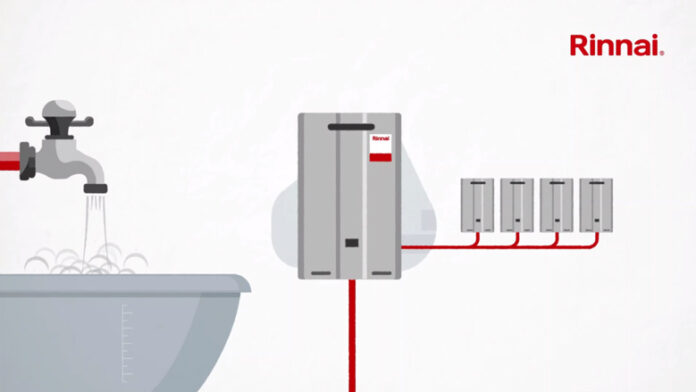
Each unit is designed to reduce customer costs and provide continuous hot and clean water upon demand. The gas-fired water heaters are lightweight so there is no need for heavy lifting gear. The continuous flow water heaters are powerful yet diminutive with a max flowrate of twenty litres per min making them an ideal water heating solution where space is limited.

Inclusion of microprocessors enables the customer to pre-set water temperature delivered accurately to +1 / -1 degree of the set point helping eradicate legionella proliferation and delivery temperature inaccuracies that can create discomfort or scalding.

Rinnaiโ€™s continuous flow hot water systems will only use the required amount of energy to increase water temperature whilst supplying multiple litres of clean hot water. Continuous flow systems do not require energy consumption whilst not in use, meaning that the customer does not pay any costs when the system is not operational.

Both models โ€“ the 17CE are an ideal solution for glamping sites, leisure facilities, festival ablutions, small commercial outlets and where there is a requirement for cost effective and durable condensing water heaters.

The 17CE model weighs just 18kg and the unit is compact ensuring easy installation that requires far less space than alternative systems. The range of temperature is between 37 and 65 degrees Celsius, whilst hot water delivery capacity is twenty litres per minute. Gross efficiency is measured at 93%. Further additions include direct electronic ignition and frost protection.

The 17CE condensing water heater is a Bio-LPG ready water heater and the Natural gas continuous flow water heater is I2HY20 ready for Hydrogen blends of 20%. The range of temperature is between 37 and 65 degrees Celsius. Hot water delivery capacity is seventeen litres per minute.

Rinnai understands the UK customer requirement for cost effective and robust appliances that consistently deliver clean hot water and heating to domestic and commercial buildings across the UK. Rinnai are committed to offering UK customers low cost and practical solutions that cover all energy options.

For design support and assistance contact the Rinnai design team today https://www.rinnai-uk.co.uk/contact-us/help-me-choose-product

RINNAI OFFERS CLEAR PATHWAYS TO LOWER CARBON AND DECARBONISATION PLUS CUSTOMER COST REDUCTIONS FOR COMMERCIAL, DOMESTIC AND OFF-GRID HEATING & HOT WATER DELIVERY

www.rinnai-uk.co.uk/about us/H3

  • Rinnaiโ€™s range of decarbonising products – H1/H2/H3 – consists of hot water heating units in gas/BioLPG/DME, hydrogen ready units, electric instantaneous hot water heaters, electric storage cylinders and buffer vessels, a comprehensive range of heat pumps, solar, hydrogen-ready or natural gas in any configuration of hybrid formats for either residential or commercial applications. Rinnaiโ€™s H1/2/3 range of products and systems offer contractors, consultants and end users a range of efficient, robust and affordable low carbon/decarbonising appliances which create practical, economic and technically feasible solutions.ย 
  • Rinnai is a world leading manufacturer of hot water heaters and produces over two million units a year, operating on each of the five continents. The brand has gained an established reputation for producing products that offer high performance, cost efficiency and extended working lives.ย 
  • Rinnai products are UKCA certified, A-rated water efficiency, accessed through multiple fuel options and are available for purchase 24/7, 365 days a year. Any unit can be delivered to any UK site within 24 hours.
  • Rinnai offer carbon and cost comparison services that will calculate financial, and carbon savings made when investing in a Rinnai system. Rinnai also provide a system design service that will suggest an appropriate system for the property in question.
  • Rinnai offer comprehensive training courses and technical support in all aspects of the water heating industry including detailed CPDโ€™s.
  • The Rinnai range covers all forms of fuels and appliances currently available – electric, gas, hydrogen, BioLPG, DME solar thermal, low GWP heat pumps and electric water heaters More information can be found on Rinnaiโ€™s website and its โ€œHelp Me Chooseโ€ webpage.ย 

RINNAI FULL PRODUCT AVAILABILITY 24/7 FOR NEXT DAY DELIVERY of ALL HOT WATER HEATING UNIT MODELS INCLUDING 48-58kW UNITS-

SAVINGS OF

20% REDUCTION of opex cost,

30% REDUCTION of initial cost

15% REDUCTION in carbon

75% REDUCTION of space

Visit www.rinnai-uk.co.uk  

Or email engineer@rinaiuk.com  

For more information on the RINNAI product range visit www.rinnaiuk.com

The urgent case for campus decarbonisation

Stephanie Parker, Senior Advisor - Decarbonisation of Complex Sites at Energy Systems Catapult, and Nick Solman, Research Fellow at University of Warwick - Warwick Business School.

Stephanie Parker, Senior Advisor – Decarbonisation of Complex Sites at Energy Systems Catapult, and Nick Solman, Research Fellow at University of Warwick – Warwick Business School

Universities account for 27% of public sector emissions. The University of Warwick has  been leading the way in tackling its emissions with its Reduce, Decarbonise, Smart strategy.

Since the early 2000โ€™s the University of Warwick has been increasing the energy efficiency of its buildings beyond building regulations. In 2019, the University set out its goal to make the campus Net Zero for scope 1 and 2 emissions by 2030. This article shares some of the Universityโ€™s experiences in rolling out its Net Zero strategy, and highlights what has been identified to be the most cost-effective measures.

Strategy

The Universityโ€™s buildings were responsible for 95% of scope 1 and 2 emissions in 2019. A  strategy of Reduce, Decarbonise, Smart was adopted. Starting with incremental low-regret investments – implementing the measures that have the highest paybacks first. The below sets out more detail under the different pillars.

Reduce

New build standards: From 2005, the University began building to a level of energy efficiency above the building standards. The financial sweet-spot has been to construct buildings to a near-Passivhaus standard. This has seen the energy consumption per square metre of the campus decrease by 45% from 2005 to 2023 at minimal additional capital expenditure.

Retrofit standards: Much of the Universityโ€™s building stock was constructed between 1970 and 2010 and needs to be retrofitted to achieve Net Zero. Fabric upgrades are undertaken as part of the regular maintenance cycle to minimise costs. Any building that will not be able to meet these standards has been earmarked for demolition.

Net Zero operating procedures: This involves outlining what Net Zero compliant schedules and set points are for each building and ensuring they are not changed. The cost of implementing this paid for itself in a matter of weeks.

Lower flow temperatures: This will increase the efficiency of both the district heating network and heating circuits within the buildings. Some buildings will struggle to meet contracted temperatures (e.g. in student halls) and others will need the heat exchangers to be upgraded. These constraints are delaying the immediate implementation.

Decarbonise

Solar PV: It is cheaper for the University to meet its baseload using solar PV than purchase electricity from the grid. If we produce above baseload and start selling electricity back to the grid, the business case becomes less appealing.

Heat pump solutions: Finding a solution that will be able to meet the Universityโ€™s peak heat demand will be difficult and expensive. Starting the project early, gathering detailed data on heat consumption and how its profile can be changed will be vital to our success.

Electrical storage: Until โ€˜Time-of-Use-Tariffsโ€™ are introduced for businesses no commercial reason to install electrical storage has been identified.

Thermal Storage: The University has used thermal storage for several years to help it meet peak heat demand. Work by colleagues at Loughborough University shows this is a cost-effective way to reduce expenditure on new heating solutions. As heating is electrified, it will help to shift demand away from peak periods when grid electricity to be more expensive.

Smart

Energy management systems: The University needs to move to a system where each building has its own Building Energy Management System (BEMS) that runs on non-proprietary software. These can be linked to a Campus Energy Management System (CEMS) that makes 117 buildings cooperate to minimise peak demand. This will allow the University to reduce capital expenditure on both the heating system and the electricity grid.

Monitoring and control: Research found that a sample of buildings are running 1-2oC hotter than the BEMSs think they are. This is because the thermostats do not provide a representative sample. By increasing the number of thermostats, 15% could be cut from the energy bill of each building.

On-demand heating: For small rooms in occasional use, on-demand heating can deliver large savings. In several seminar rooms, electric radiators with push-button activation were installed. They originally kept the rooms at 21oC. They were set to 16oC, increasing to 21oC when the boost function was activated. This reduced energy consumption in these rooms by 75% and halved peak consumption.

Recoverable heat: Colleagues at London South Bank University showed that if heat that is being wasted near to a heat network, it can be highly cost-effective to recover this, rather than pay to heat rooms and cool equipment simultaneously. Electrical transformers, industrial equipment and server rooms can be very cheap heat sources.

By starting with incremental low-regret investments it is possible to reduce total and peak demand. This lowers energy expenditure now and reduces capital expenditure on new infrastructure.

In future, the ability to load-shift to times when grid electricity is cheaper, and lower carbon will allow further savings to be made. Some technologies โ€“ such as solar PV โ€“ are cheaper than the legacy solution and should be adopted where possible. We have found that the push for Net Zero can be not just greener and cheaper but also make our buildings more enjoyable places to be.

For more information about how to decarbonise universities and other public sector buildings, please check out the Public Sector Decarbonisation Guidance.


This article appeared in the Jan/Feb 2025 issue of Energy Manager magazine. Subscribe here.

Carrier Launches R-290 High-Temperature Heat Pump for an Efficient and Sustainable Future

Carrier has unveiled the AquaSnapยฎ 61AQ, its first high-temperature air source reversible heat pump for commercial applications that uses R-290, a natural refrigerant with nearly-zero Global Warming Potential (GWP). Carrier is a part of Carrier Global Corporation (NYSE: CARR), global leader in intelligent climate and energy solutions.

The AquaSnapยฎ 61AQ has been specifically designed and optimised for R-290, combining Carrierโ€™s innovative engineering with features that deliver high temperatures, increased energy efficiency, noise reduction, and enhanced operational performance. It can deliver high-temperature heating up to 75ยฐC at outdoor temperatures as low as -7ยฐC and operates efficiently in extreme conditions down to -25ยฐC.

The unitโ€™s design makes it perfect for diverse applications such as healthcare and collective dwellings and can integrate seamlessly with building systems to meet a wide range of heating needs while minimising environmental impact.

Tailored to meet the challenges of stricter regulations, including F-Gas, the AquaSnapยฎ 61AQ sets a new standard in performance and sustainability in the race to decarbonise heating. The monobloc version spans capacities from 40 to 140 kW, while the modular version allows connection of up to four units, extending the capacity range to 560 kW.

The use of R-290 refrigerant underscores Carrierโ€™s commitment to sustainable heating solutions. R-290 complies with evolving environmental standards while maintaining reliable performance, and according to IPCC Sixth Assessment Report, has a GWP of 0.02. During product development, Carrier implemented robust safety measures, such as grouping all refrigerant components into a dedicated insulated enclosure and created training programmes to ensure the safe handling and operation of R-290.

The AquaSnapยฎ 61AQ exceeds Ecodesign efficiency standards by up to 30% and its compact footprint provides an ideal solution for both modernisation and new-build projects. The components, such as noise-reduction and advanced inverter compressor technology, offer efficient performance based on demand, and reduced noise levels at 78 dB(A), 10 dB(A) lower than Ecodesign recommendations.

โ€œThe AquaSnapยฎ 61AQ is more than a product, itโ€™s a milestone for Carrier,โ€ Didier Genois, Vice President and General Manager, Carrier Commercial HVAC, EMEA. โ€œBy introducing R-290 to high-temperature commercial heating, we are addressing critical decarbonisation challenges head-on. This heat pump exemplifies Carrierโ€™s vision for a sustainable future, combining superior performance with unmatched environmental responsibility.โ€

โ€œThe AquaSnapยฎ 61AQ is another leading example of Carrier creating solutions to meet its customersโ€™ most pressing challenges,โ€ said Andrew Paddock, Managing Director, Carrier Commercial HVAC, UK&I and Nordics. โ€œThis new solution will empower businesses to reduce their carbon footprint while meeting rigorous operational demands.โ€

The AquaSnapยฎ 61AQ offers digital connectivity to Carrierโ€™s digital platform Abound HVAC Performance for real-time monitoring and predictive maintenance. Customers gain peace of mind with faster, safer and more accurate diagnosis and repair to secure equipment availability and reduce disruptions.

For more information, visit https://www.carrier.com/commercial/en/eu/

Lost connections: Why green energy momentum is at the mercy of grid connection delays

Josรฉ Andres Visquert, Global Head of Grid at BayWa r.e.

When it comes to renewable energy, we have a huge opportunity, and significant progress has already been made. COP28 outlined the goal of tripling renewable energy capacity and transitioning away from fossil fuels, while COP29 agreed on a new climate finance goal. But to make the most of these opportunities, we must accelerate the growth of renewable energy.

Delays, however, are an ongoing problem facing the green energy transition – complicating one fundamental issue for getting clean energy to consumers: grid connection. 2025 must be the year where we address this issue and clear the path for green energy momentum.

The impact of grid connection delays

The shortage of grid connections and insufficient expansion of electricity grid infrastructure represent the final hurdle facing the realisation of renewable projects – but they are arguably the biggest ones. More than 500 GW of potential wind energy capacity in France, Germany, Italy, Spain, Poland, Romania, Ireland, Croatia and the UK are waiting for an assessment of their application for a grid connection.

In a UK study, 75% of market experts named achieving timely grid connections as their biggest hurdle to boosting clean power. This is a particular concern in the UK where solar and wind power is on course to account for just 44% of the nationโ€™s electricity supply by 2030 โ€“ short of the 67% needed to hit net zero by that time. Unless grid connection delays are addressed, the UK governmentโ€™s commitment to decarbonising the electricity system by 2030 looks unlikely.

The causes and solutions

A system not fit for purpose

Raising grid capacity and overcoming delays means doing a lot of things at the same time โ€“ and putting a lot of strain onto the system. This includes trying to incorporate renewables into outdated systems, while trying to get Distribution Network Operators (DNOs) and Transmission System Operators (TSOs) to invest in expansion. It also involves tedious permitting processes and complex financing mechanisms.

Furthermore, grid expansion is currently project driven: the network user applies for a grid connection, the system operator assesses the viability of the connection and finally determines the conditions and cost. Then the user waits until the grid connection is ready.

All this makes for a system that is not fit for purpose. But it can be by reducing complexity. Red tape around permitting must be reduced and dialogue must be improved with local stakeholders to increase acceptance and amplify the benefits of a streamlined system. Data access and transparency must also be improved. Grid flexibility should be boosted to accommodate more renewable energy โ€“ for example with the implementation of flexible connection agreements and deployment of more storage systems. Further, grid assets and systems must be digitalised and standardised.

Supply chain and resources

Global supply chain issues are continuing to affect the delivery of grid components such as transformers, cables and semiconductors – as well as steel, copper and other raw materials. This is creating bottlenecks across the supply chain and delays in connections.

Meanwhile, skilled labour shortages are also problematic – not only making resource planning difficult, but causing delays on the DNO/TSO side and impacting the availability of grid construction contractors that are already at full capacity.

Increased costs and curtailment rates

A lack of grid capacity is leading to increased costs and curtailment rates. With the increased demand placed on the grid and electricity supply, green energy projects end up being switched off and their energy production stopped when the grid is at capacity. However, this curtailment comes at a cost for system operators, with wind curtailment rates hitting a record high in 2024.

These rates make curtailment forecasts essential for developers and asset operators, as the amount of energy that can be sold to the grid is predictable. This way, they can avoid losing revenue and secure future investments by demonstrating the efficiency, financial viability and stability of their projects.

In the UK, there are debates about locational or zonal pricing, based on energy production and consumption. While the merits and drawbacks of this approach are heavily discussed, a much cheaper way of reducing costs and getting the flexibility benefits of interconnectors is to build the right amount of grid.

Connecting to our collective future

The challenges and solutions of grid connection delays may be varied, but ultimately they rely on the same thing: investment. The EU Commission estimates that โ‚ฌ584bn is needed by 2030. And while monetary investment canโ€™t come soon enough, governments, system operators, utilities and developers must invest their time and energy into simplifying grid processes so that there is as little friction for renewables projects as possible.

There is no transition without transmission. If we want to undertake the โ€œGrid Great Revolutionโ€, we need to see the grid from a holistic perspective and the only way is through anticipatory investments. In other words, we need to plan and build the grid well in advance, and more importantly, we need a grid that is aligned with national climate targets and market outlooks.


This article appeared in the Jan/Feb 2025 issue of Energy Manager magazine. Subscribe here.

Will 2025 be a key year in delivering Labourโ€™s โ€˜missionโ€™ of achieving clean power by 2030?

Anthony Ainsworth

Anthony Ainsworth, Chief Operating Officer at npower Business Solutions

It has been a busy few months since the General Election, which saw the Labour Party achieve a decisive victory.

Since then, several major energy announcements from the Department of Energy Security and Net Zero (DESNZ) have been made, all with the key objective of delivering Labourโ€™s โ€˜missionโ€™ of achieving clean power by 2030.

With 2025 set to be a pivotal year in turning these policies into action, who at government is responsible for the big energy decisions? Here, I take a look at what has been announced so far, and why collaboration will be crucial.

A busy first six months

Firstly, itโ€™s worth taking a quick step back to look at what Labour pledged to deliver.

In its General Election manifesto, one of Labourโ€™s key โ€˜missionsโ€™ was to โ€˜Make Britain a clean energy superpowerโ€™. It said that achieving this would cut energy bills, create green jobs, deliver energy security and provide climate leadership.

To do this, it pledged several measures to support both businesses and consumers, including establishing Great British (GB) Energy, setting up the National Wealth Fund and upgrading millions of homes with its Warm Homes Plan. And, of course, hitting that all important target of a clean power system by 2030.

Since 4 July 2024, several measures have been announced, including lifting the โ€˜de factoโ€™ ban on onshore wind, a significantly increased budget for Contracts for Difference Allocation Round 6, approving major solar parks and launching the Clean Energy Mission Control Centre.  

It also published more details about GB Energy, with the Great British Energy Bill currently making its way through parliament. While its primary missions of developing more energy assets and encouraging more private sector investment are needed, there are concerns GB Energy could become a little bit of โ€˜everything to everybodyโ€™ so it needs to remain focussed.

These busy first months culminated in the publication of the Clean Power 2030 Action Plan following recommendations by the National Energy Systems Operator (NESO).

Delivering the plan

So, who are the people and organisations charged with delivering the clean power mission?

Alongside Secretary of State, Ed Miliband, and Energy Minister, Michael Shanks, perhaps one of the most important roles is held by Sarah Jones MP.

She is Minister of State at both DESNZ, and the Department for Business and Trade (DBT). This dual role will see her focus on areas such as industrial decarbonisation and emissions trading, including fuel switching, business and commercial buildings decarbonisation, clean jobs, energy sector investments and green growth sectors.

When looking specifically at the public sector, Miatta Fahnbulleh MP, Parliamentary Under-Secretary of State at DESNZ, is tasked with public sector decarbonisation. With a background that includes a deep academic understanding of how energy works, she will be a key figure over the next few years.

What is also interesting about this government is the appointment of people who are not

Labour MPs, for example James Timpson as Prisons Minister and Sir Patrick Vallance as Science Minister.

While not specific government roles, for energy and business, there have been two notable appointments. Firstly, Chris Stark, former CEO of Climate Change Committee, is now the head of Mission Control for Clean Power 2030. He will be central to overseeing GB Energy and NESO, in addition to Ofgem and the Crown Estate, ensuring they and government departments work better together to achieve the clean power mission.

Secondly, Juergen Maier, the former Siemens UK CEO, is the new Chair of GB Energy. With a strong background in industry, he will be key to ensuring that GB Energy delivers on its promises.

Beyond DESNZ and DBT, energy policy also extends into other government departments, particularly the Treasury and the Ministry of Housing, Communities and Local Government.

Is clean power by 2030 achievable?

Without doubt, there is alot to do. In its recommendations to government, NESO said that achieving clean power by 2030 is achievable, but it will require significant change and investment. And, that this needs to happen very quickly.

It is also important to remember that itโ€™s not just about the longer-term gains.The government also has to address the current market issues impacting businesses and public sector organisations and the price they pay for energy. For example, the lack of liquidity in the wholesale markets has had a huge impact on costs and needs to be addressed.

This is why collaboration will be so crucial to success, not just between government departments, but also between energy, business and trade organisations, businesses, stakeholders and the public sector. In short, 2025 will be a pivotal year for energy and delivering real results against the governmentโ€™s mission.

More information is available in npower Business Solutionsโ€™ webinar.


This article appeared in the Jan/Feb 2025 issue of Energy Manager magazine. Subscribe here.

Pod Point first to sell in wholesale energy market under new P415 regulations

Pod Point, a leading provider of Electric Vehicle (โ€˜EVโ€™) charging solutions in the UK, is pleased to announce that it has entered a new energy flex market and is the first company to sell energy in wholesale markets under the new P415 regulation. The P415 regulation allows companies who are not energy suppliers to sell wholesale energy as a Virtual Trading Party (โ€œVTPโ€).ย 

Entry into new Energy Flex market โ€“ Wholesale market

Pod Point has now entered the Wholesale market in the UK ahead of schedule. Entry into the Wholesale market provides Pod Point with access to the largest segment of the flex market.

This demonstrates further rapid progress in line with the strategy to enter all the major Energy Flex markets, with the Group already operating business-as-usual Energy Flex in the Distribution System Operator and Capacity Markets. 

On 23rd December 2024, Pod Point became the first company to sell energy on wholesale electricity markets under P415, generating revenue for the Group. Pod Point is working with a VTP, providing the Group with another incremental high margin revenue stream to support its customer lifetime value model by rewarding customers for smart charging their car.

Largest UK chargepoint network

Pod Point recently announced that it has more than 250,000 EV chargers โ€“ the largest estate for demand flexibility in the UK โ€“ which provides a substantial โ€œback bookโ€ of customers who can be offered rewards for smart charging.

Demand flexibility: win-win-win for customer, the Grid and Pod Point

Wholesale electricity prices rise during high demand, such as at 6pm on a windless evening, and fall when thereโ€™s excess supply, say at 2am on a windy night. EV chargers can help stabilize the grid by pausing charging during peaks and shifting to greener, off-peak times. This flexibility supports Net Zero by enabling more renewable energy; it helps grid partners reduce costs and avoid capex; and Pod Point to create high value recurring revenues.

Melaine Lane, Chief Executive Officer, said: “Our entry into the Wholesale market represents another important milestone inย Pod Point’sย Energy Flex strategy and creates further momentum in building recurring revenues for the Group. It’s another example of Pod Point taking the lead in Energy Flex as the first company to take advantage of this new regulation.ย  We have the largest Energy Flex enabled chargepoint network in theย UK, with over a quarter of a million chargers, providing significant scale and relevance to the Grid.ย Pod Point has delivered a huge amount of progress in Energy Flex over the last 12 months and we have further exciting plans for this emerging market in the next 12 months.”

Building sustainable schools for a net zero future

Adveco discusses the best options for water heating to enable more sustainable schools now and in the futureโ€ฆ

With more than 32,000 schools in the UK and a business-critical need for heat and hot water, the education built estate has historically represented a significant source of carbon emissions. Unsurprisingly, government expectations have, and will increasingly place the onus on the education sector to lead change from fossil-fuel dependency through the adoption of sustainable building practices and renewable energy. Schools will then integrate sustainability and energy education into their curricula, fostering a culture of environmental responsibility among students. However, it is estimated that at least 70% of the existing education sector building stock will still be in use by 2050 creating a huge challenge in terms of refurbishing school buildings with energy-efficient technologies.

As a hot water specialist with a long history of working with schools, Adveco has considerable experience dealing with the numerous challenges they face securing resilient, guaranteed hot water at a realistic cost. Traditionally the energy source of choice has been gas, but over the past five years new and lower carbon options have given greater choice but also presented new challenges. Recently commissioned research on the adoption of technology shows that gas-fired water heating continues to dominate, accounting for 90% of new or refurbished school systems between 2019 and 2023.

Although all lower carbon technologies (electric water heating, heat pumps and solar thermal) are showing increasing specification, adoption rates have remained generally low, despite available funding for sustainability projects. Of these low-carbon technologies air source heat pumps have exhibited a more rapid uptake in recent years, but the number of sites deploying the technology remains lower than expected and were almost exclusively new build. When questioning consultants and contractors, heat pumps will always be specified for heating, but most are realising that heating and hot water in many cases are best left separate, which from a design perspective makes absolute sense.

Hybrid hot water systems are being specified for new build, but when dealing with retrofit the majority of those questioned confirmed that while initially leaning toward heat pumps, they were encountering problems with cost, infrastructure and design. The cost has been a particular hurdle for schools, not only in terms of capital investment but especially concerns over operational costs which climb when transitioning to electricity. At the time of writing, gas costs 5.48p per kWh (kilowatt hour), versus electricity, at 22.36p per kWh which can lead to substantial operating costs, especially in school buildings with high hot water demands. Of more concern is that electric water heating can place a significant additional load on a buildingโ€™s electrical system.

In school settings with substantial electrical usage, adding high-demand electric water heaters and heat pumps can strain the system. From our experiences, we are already seeing projects adding extremely costly upgrades to electrical infrastructure as part of refit, something better hot water design could help avoid. As a result, specifications are being revised back to gas when connections are available. Reasons cited included it being much simpler, familiar, and cost-effective to replace and run, and new generation appliances were seen to be more efficient with lower carbon and NOx emissions. Most are also 20% hydrogen-blend ready out of the box so offer a future-proof option for the next 15 to 20 years.  

Given the propensity for gas installations, the number of projects incorporating solar thermal installations was also surprisingly low given the proven nature of the technology and the opportunities it presents to offset at least 30% of daily gas demands for water heating for notable carbon emission reduction and operational cost savings. Tertiary education was far more open to the integration of solar thermal. With universities tasked with developing green campuses energy-efficient buildings, and renewable energy installations, the expectation is that by 2026 they should be providing sustainability models and strategies that will be filtered to schools and other education facilities. The expectation therefore is for the adoption curve for solar thermal to increase in line with that seen in heat pumps, as both offer sources of necessary pre-heat to meet the complex high-temperature needs of hybrid school water heating systems. 

So how can schools better embrace sustainability moving forward? Each school building creates new challenges and opportunities for low-carbon water heating. Location, infrastructure, size and usage all inform hot water sizing, design and technology choice. To gain efficiencies that meet demand, whilst cutting emissions and costs requires a thorough understanding of the building and its use. To this end, Adveco advises metering water flow for accurate demand modelling. Itโ€™s a fast, non-invasive activity which is extremely low-cost, yet pays dividends in terms of reduced capital expenditure and accurate modelling of future operational costs. It allows for improved planning and better decision making whether opting to stay on lower-cost gas, adding solar thermal offsetting, or transitioning over to electric water heating with the options of heat pumps or solar to better manage energy consumption and increase carbon reduction. All are fair choices that currently offer a means to bridge to future technologies, such as green gas and new variants of high-efficiency, high-temperature heat pumps which will take schools to net zero by 2050 and beyond.   

https://adveco.co/sectors/education/


This article appeared in the Jan/Feb 2025 issue of Energy Manager magazine. Subscribe here.