
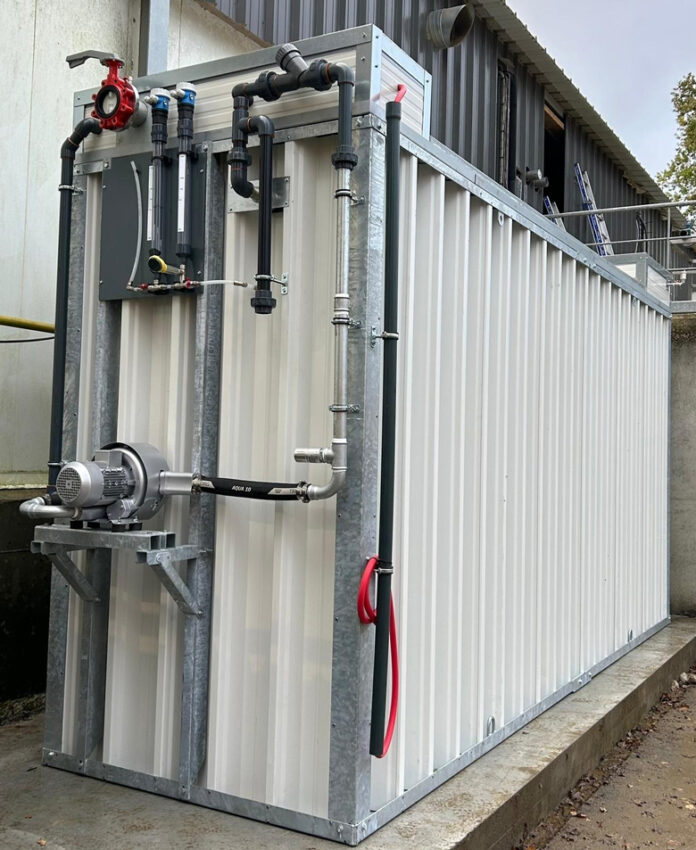
Fafco partners with Pure Thermal to bring IceBat Cold Thermal Energy Storage to the UK Market

Fafco, a global leader in thermal energy storage solutions, has appointed Pure Thermal as its exclusive Sales & Technical Partner/Distributor for the UK and Irish markets.

With over 1,400 operational IceBat systems across Europe, Fafco is now bringing its proven Cold Thermal Energy Storage technology to the UK addressing the increasing demand for cost-effective and resilient cooling solutions.

IceBat: A Game-Changer delivering Cooling Resilience, Peak Shaving and Cost + Carbon Savings

The IceBat system is an advanced Cold Thermal Energy Storage (CTES) Phase Change System that enhances cooling system efficiency while significantly reducing operating costs and carbon emissions.

By leveraging low-cost off-peak electricity to create & store cooling energy, IceBat provides a fast-reacting and highly flexible alternative to conventional electrical battery storage making it particularly suited to the UKโ€™s evolving energy landscape.

Key benefits of the IceBat system include:

  • Provides cooling system resilience. Reduces the need for oversized chillers/plant while ensuring peak or contingent demands can be satisfied by maintaining predetermined cooling capacity levels for use at any time.
  • Enables cooling capacity peak shaving with no additional power supply. Increase on-site cooling capacity from existing systems by accumulating thermal capacity during low demand periods by applying chillers to charge the IceBat.
  • Reduces operating costs via accessing variable/lower electricity tariffs. Maximises and enables the use of low-cost electricity by operating chillers/cooling plant to charge the IceBat when lower cost tariffs are available.
  • Provides application flexibility with a complete range of kWh capacities. IceBat can be applied to a wide range of applications with Thermal Battery capacities from 150kWh to 18,000kWh.
  • Enables carbon reductions to be achieved from cooling systems. Improves the efficiency of existing cooling systems by reducing emissions via operating cooling plant when low carbon input electricity is available
  • Delivers application flexibility & seamless Integration. Works with existing chiller/cooling plant without the requirement for independent cooling plant enabling greater flexibility to be delivered from existing assets.
  • Enables the optimisation of existing cooling systems. IceBat application removes the risk of low demand cooling plant on/off cycling whilst also enabling plant to operate during high efficiency lower temperature overnight periods.
  • Provides scalable performance. Close control provides variable charge and discharge capability precisely modulating energy transfer with a minimum output flow temperature of 0.5ยฐC.
  • Compact Phase Change Technology. With IceBat the storage of thermal energy via phase change is both highly efficient and practical with the space required being 8 x less than if only chilled water accumulation tanks were utilised.
  • Suitable for both retrofit & new Installations. Enhances the performance of existing cooling systems within retrofit applications and integrates seamlessly into new project designs enabling cooling plant capacity to be reduced.

Meeting the UKโ€™s Growing Energy Storage Needs

As energy costs fluctuate and grid resilience becomes increasingly critical, the demand for cost-effective thermal storage solutions is rising. Unlike traditional electrical battery storage, IceBat provides a highly economical and efficient way to store and utilise energy for cooling applications.

โ€˜Weโ€™re seeing increasing requirements for load shifting and also capacity management within cooling applicationsโ€™ commented Garry Broadbent of Pure Thermal, continuing โ€˜having developed a strong relationship with Fafco, and being extremely impressed with their proven track record, we are really pleased to now be appointed as their UK partner as we see significant potential for Cold Thermal Energy Storage in the UK & Irelandโ€™.

With a 40-year track record and an installed capacity exceeding 3.6GWh of Cold Thermal Energy Storage, IceBat is a well proven solution which is now available in the UK with the capability to deliver immediate benefits for both industrial and commercial cooling applications.

To launch IceBat to the UK market Pure Thermal is hosting an open day at the Institute of Engineering & Technology (IET) Savoy Place London on Tuesday the 18th of March with Cold Thermal Storage Technical/Application Seminars throughout the day.

The Fafco and Pure Thermal application/technical teams will be present on the day to provide attendees with case study overviews, system design details and application advice along with a full technical briefing detailing how IceBat is currently applied throughout Europe.

Register to attend the 18th of March technical seminar day and learn more about IceBat by sending an email to info@purethermal.co.uk with the subject Cold Battery Seminar and the session times will be sent through.

About Fafco:

Fafco is a global leader in innovative thermal energy storage solutions, with over four decades of expertise in developing cutting-edge cooling technologies.

https://fafco.fr/en/

About Pure Thermal:

Pure Thermal specialises in advanced low carbon heating & cooling and energy-efficient solutions for the UK and Irish markets, delivering expertise in system design, equipment supply, integration and plant optimisation.

https://purethermal.co.uk/cold-thermal-energy-storage/

SystemsLink successfully reaffirmed as an approved CCS G-Cloud 14 Framework supplier

SystemsLink has been reaffirmed as an approved supplier on Crown Commercial Serviceโ€™s G-Cloud 14 framework. The appointment is for SystemsLinkโ€™s comprehensive suite of energy management and utilities reduction software and solutions.

All public sector organisations โ€“ including local authorities, social housing providers, NHS Trusts, schools and other educational institutions, and blue light services โ€“ can use this agreement to buy energy monitoring and targeting, invoice validation, carbon and ESG tools.

G-Cloud 14 replaces G-Cloud 13, in which SystemsLink was named as a supplier in November 2022. The G-Cloud 14 framework profile went live on 9thย November 2024 and can be accessedย here.

Alan Fordham

Alan Fordham, Commercial Director, said: โ€œWeโ€™re proud to announce this successful award. Utilities management is vital for the sector andย our products enable public sector organisations to save money and make better choices for the environment.

This appointment will help us to continue supporting public sector organisations to meet their ESG requirements and play a key role in the UK in becoming net-zero.โ€

ย What is the G-Cloud framework?

The G Cloud framework is a government-certified online catalogue where public sector organisations can buy cloud-based computing services.

The framework is an agreement between the government and suppliers, and buying services through it is typically easier and faster than entering individual procurement contracts.

Crown Commercial Service (CCS) is the UKโ€™s biggest public procurement organisation and an executive agency of the Cabinet Office.

In 2023/24, the CCS helped public sector organisations achieve commercial benefits equalling ยฃ4.9 billion.

The public sector is under constantly tightening budgets and growing resource demands.

As a G Cloud 14 framework-accredited supplier with decades of experience and data security expertise, SystemsLink can support public sector organisations every step of the way.

You canโ€™t manage what you donโ€™t measure but using the right software can provide accurate and current energy data in a format that is easy to present and demonstrate the impact of energy-saving efficiency projects and decisions made.

Trusted by all organisations no matter how large or complex the estate is; SystemsLinkโ€™s software supports internal resources to pinpoint unusual consumption, helping save the public purse and identify energy wastage.

The software also aids organisations on their decarbonisation and net zero journeys, demonstrating progress made and meeting compliance needs to achieve government targets.

Public sector and other registered users of the framework can find SystemsLink located on the government websiteย Lot 2 Cloud Software: SystemsLink > Energy Management Software.

For more information on energy monitoring, visit systems-link.com. ย 

Rinnai lower costs and environmental impact for expanding launderette group

Rinnai has recently provided a high efficiency water heating solution to a South Wales launderette which needed to replace its old gas boiler as the property wanted to lower operational costs and drive down emissions.

The new owner wants to install new coin-activated washing machines and increase its capacity for more customers. The increase in customers would logically mean an increase in peak demand loading for the hot water delivery system.

The launderette has planned to have 10 washing machines in total but with 2 different models differing in size and hot water consumption.

The site currently employs a low Kw rating gas boiler with 144 liters of built-in internal storage. The current system is only capable of providing 154 liters of peak demand. The new additions of coin-operated washing machines see peak demand increase the loading of hot water delivery to a requirement of 276 liters

The new hot water delivery system needed to reach 276 liters on demand and be able to recover from peak demand conditions within 40 minutes โ€“ the average cycle of a coin operated commercial washing machine.

With a peak demand of 276L already determined, Rinnai UK was able to propose a system consisting of an N1300 continuous flow water heater with an additional 300L storage buffer to hold the peak demand for the washing machines. This system can recover the entire buffer in as little as 23 minutes, meaning this system is also able to cope with any further expansion by the customer as the buffer exceeds the peak demand.

Rinnai can demonstrate the benefits of the N1300 system with the graphs below. One highlights the reduction of harmful emissions whilst the other graph proves the financial benefits of purchasing a Rinnai N1300 system. Both graphs measure the benefits over a 5-year period.

The first graph details how much less emissions are released by the Rinnai N1300 system when compared to the currently installed system. Over five years Rinnaiโ€™s N1300 offers a 17% decrease in costs. 

DHW System โ€“ Carbon Emissions Lifecycle

The Graph below illustrates the difference over 5 years when comparing Rinnaiโ€™s N1300 to the currently installed system in terms of OPEX costs (cumulative running costs). The Rinnai N1300 will require ยฃ13,543.81, whilst the competitor system will cost ยฃ16,281.39. This means Rinnai can reduce 5-year operating costs by 17%.

DHW System โ€“ Cumulative Running Costs (OPEX) 

Gas โ€“ Prices & Carbon Factor

These are the forecasted gas prices as provided by the Department for Energy Security and Net Zero. More can be seen using the following link: Green Book supplementary guidance: valuation of energy use and greenhouse gas emissions for appraisal – GOV.UK (www.gov.uk)

Rinnai will continue to provide low cost, feasible and technical solutions for any commercial premises aiming to maximise daily operations. Rinnai technology is designed to produce total system efficiency meaning that commercial operators can rely on Rinnai systems to elevate operational output at a reduced cost.  


RINNAI OFFERS CLEAR PATHWAYS TO LOWER CARBON AND DECARBONISATION PLUS CUSTOMER COST REDUCTIONS FOR COMMERCIAL, DOMESTIC AND OFF-GRID HEATING & HOT WATER DELIVERY

  • Rinnaiโ€™s range of decarbonising products – H1/H2/H3 – consists of hot water heating units in gas/BioLPG/DME, hydrogen ready units, electric instantaneous hot water heaters, electric storage cylinders and buffer vessels, a comprehensive range of heat pumps, solar, hydrogen-ready or natural gas in any configuration of hybrid formats for either residential or commercial applications. Rinnaiโ€™s H1/2/3 range of products and systems offer contractors, consultants and end users a range of efficient, robust and affordable low carbon/decarbonising appliances which create practical, economic and technically feasible solutions.ย 
  • Rinnai is a world leading manufacturer of hot water heaters and produces over two million units a year, operating on each of the five continents. The brand has gained an established reputation for producing products that offer high performance, cost efficiency and extended working lives.ย 
  • Rinnai products are UKCA certified, A-rated water efficiency, accessed through multiple fuel options and are available for purchase 24/7, 365 days a year. Any unit can be delivered to any UK site within 24 hours.
  • Rinnai offer carbon and cost comparison services that will calculate financial, and carbon savings made when investing in a Rinnai system. Rinnai also provide a system design service that will suggest an appropriate system for the property in question.
  • Rinnai offer comprehensive training courses and technical support in all aspects of the water heating industry including detailed CPDโ€™s.
  • The Rinnai range covers all forms of fuels and appliances currently available – electric, gas, hydrogen, BioLPG, DME solar thermal, low GWP heat pumps and electric water heaters More information can be found on Rinnaiโ€™s website and its โ€œHelp Me Chooseโ€ webpage.ย 

RINNAI FULL PRODUCT AVAILABILITY 24/7 FOR NEXT DAY DELIVERY of ALL HOT WATER HEATING UNIT MODELS INCLUDING 48-58kW UNITS-

SAVINGS OF

20%                  REDUCTION of opex cost,

30%                  REDUCTION of initial cost

15%                 REDUCTION in carbon

75%                 REDUCTION of space

Visit www.rinnai-uk.co.uk  

Or email engineer@rinaiuk.com  

For more information on the RINNAI product range visit

www.rinnaiuk.com

Capturing the moment โ€“ Government support for carbon capture and storage

Chris Paul and Diana Lupa, Trowers & Hamlins LLP

Chris Paul and Diana Lupa, Trowers & Hamlins LLP

We all understand that getting to Net Zero creates real challenges. It means reducing greenhouse gas emissions, with any residual remaining emissions being offset by measures that remove greenhouse gases from the atmosphere. That means planting trees, but carbon capture and storage offers the potential for more scalable reductions. That is why Carbon Capture, Utilisation and Storage (CCUS) forms a key part of the UK Government’s strategy to reach Net Zero. 

Just weeks after the UK became the first G7 country to phase out coal-fired power plants as part of its energy mix, the Government confirmed its commitment to carbon capture and storage with up to ยฃ21.7bn of funding over the next 25 years to support two major CCUS sites – the East Coast Cluster on Teeside and the HyNet site in the North-West and North Wales. The recent Budget also committed ยฃ3.9bn (between 2025 and 2026) for CCUS Track-1 projects aimed at accelerating decarbonisation within the industrial sector and supporting flexible power generation.

Scaling up CCUS needs investment, but the Government also has a key role in developing the regulatory and policy landscape to develop the market. In this article we’ll explore how CCUS fits into the UK’s energy transition. 

Developing technology

Carbon Capture and Storage (CCS) refers to a range of technologies that either remove CO2 directly from the atmosphere (which can help address historical CO2 emissions), or extract CO2 produced from emission point sources such as heavy industrial processes, power generation or hydrogen production.

The extracted CO2 is compressed, transported and injected into deep geological storage, such as depleted oil and gas reservoirs or saline aquifers. This secure storage is critical in ensuring that captured carbon does not escape to the atmosphere. Carbon Capture, Utilisation and Storage (CCUS) takes things a step further by utilising the captured CO2 as a feedstock in other practical applications.

While these technologies may not be new (the first commercial CO2 storage project has been operating since the mid-1990s), the real challenge is to implement them at the scale needed to achieve Net Zero. There is talk about the potential for the UK to become a global leader in the sector, but that requires sustained Government support and the development of self-supporting business models.

Regulatory framework

The Energy Act 2023 establishes the basis for the economic regulation of carbon transport and storage and is the primary legislation framework for Industrial Carbon Capture, Greenhouse Gas Removals and Low Carbon Hydrogen Production business models. Ofgem is expected to grant the economic licences for onshore/offshore transport and storage to carbon network operators, though the secondary legislation is awaited.

Regulations passed earlier in 2024 set out the Secretary of State’s role in directing carbon capture and carbon transport and storage counterparties in offering contracts to eligible entities. Other relevant legislation includes the Great British Energy Bill (establishing GB Energy to co-invest in clean energy projects) and the Planning and Infrastructure Bill (intended to reform the planning system and accelerate the delivery of infrastructure).

Wider opportunity

Scaling up CCUS has the potential for unlocking green growth and helping the UK to manage the Net Zero transition. According to the recent Offshore Energies UK (OEUK) publication, the sector has the potential for creating 50,000 jobs and protecting a further 100,000 jobs across the UK. Delivering CCUS will help the UK retain domestic energy-intensive industries (such as steel, cement and glass production), avoiding offshoring significant parts of our economy. 

CCUS also has an important role to play in providing flexibility for a decarbonised electricity grid. The UK Government has set a challenging target to decarbonise the grid by 2030. Investing in more solar and wind generation is only half the picture. The intermittent nature of renewable energy requires investment in storage and flexible power generation. The Teeside cluster gives a good example of how new gas-fired power stations with CCUS may help plug that gap. CCUS can also enable upscaling the production of low-carbon hydrogen, which provides more options for energy storage and can help decarbonise heavy industry.

The combination of low-carbon electricity, CCUS and clean hydrogen production has the potential to attract carbon-intensive businesses to co-locate in these new low-carbon clusters. The much-hyped Green Industrial Revolution just got real.

www.trowers.com


This article appeared in the Jan/Feb 2025 issue of Energy Manager magazine. Subscribe here.

Digital twins: a key tool to transform the UKโ€™s energy sector

Chris Wilton

Chris Wilton, Sector Lead, Utilities, Ordnance Survey

The UK energy sector has faced mounting pressure in recent years to become more efficient and sustainable, particularly in light of the UKโ€™s commitment to achieve net zero by the year 2050. Not long after making that commitment, the UK government launched its first energy sector digitalisation strategy, which aimed to bring the energy sector into the modern day and increase the efficiency and effectiveness of how energy is managed in the UK. With this in mind, the government hoped to improve the visibility of energy assets, lower costs for both businesses and consumers, use resources in the most efficient way possible and ensure consumers are satisfied. As the UKโ€™s energy landscape continues to evolve, harnessing the power of digital technologies โ€“ namely through the use of digital twins โ€“ is key to ensuring the UK reaps the rewards of a more efficient, safe and innovate energy sector.

Digital twins as a critical tool

A digital twin โ€“ as the name suggests โ€“ is a digital model of a physical object using a large array of data to simulate real-world conditions, from maintenance records to design specifications. They are an important enabler of digitalisation across the energy sector, with a broad range of players, from energy generators to distributors, using the technology to not only map energy assets, but also monitor the potential effects of adjustments to optimise operations, and the impact of supply to end customers.

Creating a digital map of a network and its assets is particularly important for risk and efficiency modelling. The forecasted risks associated with assets โ€“ whether they be environmental risks, risks to consumers, or behavioural risks like theft or vandalism โ€“ can have a serious negative impact on the efficiency or service provided by the energy networks. For example, by drawing on digital twins, energy companies can look to assess vulnerabilities and forecast future issues by adjusting the technologyโ€™s parameters. This is important to avoid any unforeseen issues with assets that may cause a major incident, as was the case with the Wessington gas incident in 2022.

Similarly, companies could employ this technology to drive innovation by simulating changes. For example, using digital twins to assess how much more efficient a network can be if investments are made into specific assets, or through the consolidation of infrastructure, and evaluating the environmental and efficiency impacts as a result. This would ensure they are making informed decisions, providing actionable insight into the asset network and working towards the goals of the UKโ€™s digitalisation strategy.

The role of location data in digital twins

To effectively leverage the power of digital twin technology, key players in the energy sector โ€“ across gas and electricity, and generation, transmission, distribution or supply โ€“ all need to have access to reliable and accurate data, specifically location data. As the UKโ€™s national mapping agency, at Ordnance Survey we see key decisions being made every day on infrastructure and assets, all using Ordnance Surveyโ€™s authoritative location and addressing data. Our up-to-date geospatial data ensures that the representations of these assets and the surrounding environment is as accurate as possible. Combined with the ability to monitor asset performance, accessing the precise locations of these assets through OS location data will prove valuable in understanding possible threats or risks to efficiency and safety, such as encroachment and proximity risk.

UPRNs (Unique Property Reference Numbers) are the authoritative identifier of properties in the UK, but they are not limited to houses. Energy assets can be associated with UPRNs for easy location identification. They play an important role in ensuring any digital twins accurately represent and reference specific properties or objects within the virtual environment. Plus, knowing an assetโ€™s specific location can also provide a foundation to layer other datasets onto, such as how crowded an area is, or how dense vegetation is, if there are nearby pipes or if the area is at particular risk of extreme weather events. All of these insights can be tied together with a common thread โ€“ the location. It is the combination of datasets brough together that makes a digital model so valuable for companies attempting to adapt their networks, allowing them to make informed decisions related to safety, efficiency and innovation.

As the landscape of the UKโ€™s energy sector continues to evolve, digital twin technology is becoming increasingly more important for ensuring the energy sector is acting with the goals of the energy digitalisation strategy in mind. From optimising asset performance, improving risk management and driving innovation across the sector, equipping this digital twin technology with accurate, authoritative location data has serious potential to transform the energy sector, helping the UK on its way to achieving net zero by 2050.


This article appeared in the Jan/Feb 2025 issue of Energy Manager magazine. Subscribe here.

AI in the energy sector – Uses and challenges of AI in energy

Tom Cash

A recent IBM study revealed that 74 per cent of energy and utility companies are turning to AI to solve data related challenges. This move is expected to dramatically boost efficiency and reduce environmental impact, with uses ranging from predicting energy demand to optimising grid maintenance. Here Tom Cash, director of automation parts supplier Foxmere, explores its uses andย challenges in energy, particularly in terms of infrastructure.ย 

A large portion of the UK’s energy grids and power infrastructure was constructed in the mid-20th century โ€” in the 1960s and 1970s. This means that the average age of electricity transformers is around 63 years. 

It was originally designed for a simpler energy landscape, long before renewable energy, electric vehicles (EVs) and smart grids became widespread. As a result, the UKโ€™s energy networks are struggling to accommodate new energy demands and to deal with extreme weather events. 

The UK, like many countries, has seen more frequent and severe weather disruptions, such as storms, flooding and heatwaves in recent years. These extreme weather events are causing power outages, which disrupt daily life and lead to significant economic losses. 

Alongside these challenges, the UKโ€™s population is projected to reach 70 million by 2026, driving up energy demand even further. These growing needs, combined with a rising reliance on digital technologies, place increasing pressure on the energy sector to modernise and become more resilient. 

Smarter forecastingย 

AI is helping to manage these complex energy demands, particularly through smarter forecasting. Accurate forecasting is essential for balancing supply and demand, especially when integrating renewable energy sources such as wind and solar power, which are intermittent by nature. 

AI can analyse vast datasets, including weather patterns, historical consumption data, and renewable energy outputs, to predict both consumer demand and renewable energy production days in advance.

This predictive capability allows energy providers to plan electricity flows more effectively, ensuring power is delivered where itโ€™s needed most while minimising waste. 

For example, Google, in collaboration with DeepMind, developed an AI system capable of predicting wind power output 36 hours in advance, leading to a 20 per cent increase in the commercial value of wind energy. Such innovations are crucial for scaling up the use of renewables, strengthening their business case and encouraging broader adoption.

Additionally, virtual power plants (VPPs) are also emerging as a significant application of AI in energy management. VPPs aggregate distributed energy resources, such as solar panels, wind turbines and battery storage, and reduce reliance on expensive, less efficient power plants that are usually used during peak demand.

By using AI algorithms, VPPs can predict energy supply and demand patterns, enabling utilities to encourage consumers to use energy when renewable generation is high, which could reduce annual grid costs by $10 billion. 

Predictive maintenanceย 

Beyond forecasting, AI is changing infrastructure management through predictive maintenance. Traditional maintenance schedules are rigid, often leading to unnecessary inspections or delayed repairs. 

By analysing data from sensors embedded in power plants, substations and transmission lines, AI can predict equipment failures before they occur. This not only prevents costly unplanned outages but also extends the lifespan of critical infrastructure components

In fact, AI use in predictive maintenance has been shown to reduce breakdowns by 70 per cent and maintenance costs by 25 per cent. A great example of this is National Grid ESO (Electricity System Operator) in the UK, which is leveraging AI for predictive maintenance to monitor their energy infrastructure. 

Instead of relying on outdated inspection schedules, they use AI to continuously monitor sensors on critical equipment, such as power lines and substations, to detect potential failures before they occur. This approach is a part of their broader digitalisation strategy to support a decarbonised and reliable electricity system. 

Addressing the challenges

While AI brings significant benefits to the energy sector, it also introduces challenges, particularly concerning infrastructure and energy consumption. 

The increasing demand for computing power to run AI models requires substantial energy, adding to the sectorโ€™s overall consumption. The International Energy Agency (IEA) has raised concerns that electricity consumption could increase significantly as AI becomes more integrated into everyday technologies, such as search engines and digital assistants.

These energy demands must be carefully managed to avoid exacerbating the sectorโ€™s environmental impact. However, the benefits of AI โ€” such as improved grid optimisation, smarter forecasting, and predictive maintenance โ€” can offset these challenges. 

By partnering with parts suppliers like Foxmere, energy companies can integrate essential automation components that enable smarter grids and predictive maintenance into their plants.

Such collaboration supports the energy sector in overcoming infrastructure challenges and meeting the growing demand for sustainable energy solutions while reducing waste, enhancing energy efficiency and accelerating the transition to renewable energy sources.

Contact Foxmere for more information or a no-obligation quote to receive spare or obsolete automation parts.

The art of success for our net zero projects

Anna Kuratnikova

Anna Kuratnikova is a client Support officer at Salix, here she shares her advice to those organisations delivering decarbonisation projects

As a client support officer at Salix, I have the privilege of witnessing the full range of our clientsโ€™ decarbonisation projects โ€“ from small primary schools to ambitious multi-million, multi-site estates. Over three years at Salix, I have noticed one pattern: the most successful projects are not only those with a winning technical solution but also those with a well-built team and a proactive approach to stakeholder management.

You’ve got the technical part covered. You know your building specs, the most efficient heat pumps, the best insulation on the market, your heat emitters, and cash flow. But do you have the people?

Any organisation can slip up and fail to successfully decarbonise their sites to the desired level simply because they were not successful in engaging with their consultants, board of directors, funders, employees, and neighbours. The list of stakeholders is vast but not limitless. I separate them into three groups: people who give you money and permits, people to whom you give money, and people affected by the project.

As project managers delivering a decarbonisation project, it is paramount to have your board of directors and funders on side. The most successful projects Iโ€™ve seen did not start with receiving a Public Sector Decarbonisation Scheme  grant; the work had been ongoing for a long time beforehand. There needs to be a real ambition for sustainable changes, and that has to come right from the top of an organisation. No matter how good a project manager, if the general appetite for sustainable changes within the organisationโ€™s leadership team has not reached the required level of urgency to propel transformation, the project might struggle.

On the other hand, approaching the project with your stakeholders in mind has shown remarkable results. We know of projects where close attention was paid to mitigate the financial burden of expensive projects for short-of-funding schools. The whole building approach with the addition of insulation, solar PVs, and batteries ensured an enthusiastic buy-in from school governors. Careful technical handovers with detailed staff training allowed for the smooth running of low-carbon heat systems and increased the satisfaction of the project with students and teachers, who in turn showed acute interest in the project and its relation to climate change.

Of course, at Salix, we very much appreciate the paramount importance of decarbonising your buildings. However, we require an open communication channel and reliable, regular information to reassure us that the project is adhering to the scheme criteria so we can release your Public Sector Decarbonisation Scheme funding.

Over our four years of delivering the Public Sector Decarbonisation Scheme, we have found one of the bottlenecks in so many projects is the underestimation of the importance of timely engagement with your local authority to seek your planning permit and with your Distribution Network Operator. This is fundamental to securing sufficient energy supply. The most successful projects we see are the ones that make sure they establish relationships and clear channels of communication and escalation with the planning authorities and Distribution Network Operators in advance. The most successful project managers have a good understanding of their planning rights and are confident in communicating the effectiveness of the Public Sector Decarbonisation Scheme as a Department for Energy Security and Net Zero-funded initiative vital to decarbonising the public sector.

Letโ€™s discuss the people you pay โ€“ your contractors, consultants, and surveyors. These people are vital to delivering your project. Not all organisations we see have enough internal expertise and capacity to manage a complex decarbonisation project in-house. It is essential that you have a solid relationship with the external teams supporting you in delivering your project. Make sure that issues are raised in time, reporting is to a good standard, and that you are confident you have all the information about the progress of your project. A good practice adopted by some Public Sector Decarbonisation Scheme grant recipients is to include conditions of the grant in their tendering packages and reach a balance in quality/cost assessments of the tender returns.

The last category of stakeholders is the least predictable. As many estates managers jokingly share with me, they are the least liked people in the building. This is because it is their job to shuffle people around during works, and this often causes disruption on site. Theyโ€™re the ones occupying parking spaces for construction site needs! Most estate managers take it with a pinch of salt and characteristic resilience because the temporary inconvenience is inevitable for the benefit of long-lasting positive effects. The ultimate challenge, though, is to keep positive relationships and clear, proactive communication with everyone affected by the project. Even one unhappy neighbor engaging with the local media can create delays and sour all the positive effects of the hard work.

We have seen brilliant examples of organisations proactively engaging with their local community. This means warning them in advance about the upcoming construction that might be potentially disturbing for a number of weeks. In the overwhelming majority of cases, a proactive approach is appreciated, and the goal of decarbonization is supported by most. Every project has the potential to engage local communities, increase knowledge, involvement, and interest. I have witnessed educational organizations incorporating newly installed heat pumps into their curriculum, interested parents inquiring about the technology and considering installing it at home, and students passionately talking about the effect of their schoolsโ€™ initiatives on their future.

Working with the daily flow of forms, reports, and applications, it is so easy to forget that the ultimate goal of sustainable schemes is to reduce our impact on the environment and improve peopleโ€™s quality of life. The main success factor of these projects is also people, their passion and collaboration, ability to relate, and focus on a people-oriented approach.

Identifying crucial stakeholders and engaging with them in advance gives your project a head start in the environment of very strict deadlines. Tailoring your engagement to each group of stakeholders supports you in the race against time with climate change.

Donโ€™t forget your people are your most important asset.


This article appeared in the Jan/Feb 2025 issue of Energy Manager magazine. Subscribe here.

Complexities of UK energy procurement

Chris Goggin

Chris Goggin observes how the UK procures its energy and the complexity in which it is then distributed and reacquired. As the UK progresses towards Net Zero Rinnai looks to assist the industry in understanding what roles specific energies will fulfill and what approach the UK utilizes towards both the national and international energy markets.

For more details of national and international energy and policy sign up to the Rinnai newsletter https://www.rinnai-uk.co.uk/contact-us/newsletter-sign

UK domestic energy procurement and distribution is a complex process that is reliant on a number of separate countries, huge commercial enterprises and separate forms of energy. The UK currently imports and cultivates energy from a tangled mass of outlets and prime suppliers. For example, we have electricity from interconnectors held by Belgium, Denmark and The Netherlands, LPG from America as well as the extraction of Norwegian North Sea natural gas and oil.

UK Electrical power company Drax has recently issued a statement on its website stating in their headline: โ€œUK Spends ยฃ250 million each month Importing Record Volumes of Electricity from Europe.โ€ This means that 20% of the UKโ€™s monthly electrical energy requirements are wholly reliant on outside influence.

Extensive outside ownership heavily contributes towards meeting the UKโ€™s power demand: one of the UKโ€™s largest energy suppliers is Scottish power who distribute gas and electricity to over 5 million private households and commercial premises. Scottish Power is a subsidiary of global Spanish energy company Iberdrola.

State owned French electrical company EDF accounts for 18.5% of total UK market share in wholesale electrical generation. In 2023 EDFโ€™s nuclear facilities provided around 13% of the UKโ€™s total power demand. EDF supply energy to over 5 million UK customers.

Additional layers of complexity within the UK energy market become prevalent once scrutinised. Not all oil and gas extracted from UK North Sea territory is owned by UK companies but by private foreign investors. For example, the Rosebank oil field is owned by Norwegian state enterprise โ€“ Equinor. Norwegian gas reserves were responsible for satisfying 58% of the UKโ€™s gas demand during 2023.    

Online non-partisan energy news outlet, Energy Monitor released a story in January 2024 stating that at least 40% of oil and gas licenses in the UK North Sea oil and gas fields were passed on to foreign investors.

Any profits earned by the investors do not enrich the UK treasury nor do investors have to follow NetZero guidelines; and any energy extracted from UK territory can be immediately sold on the open market to any bidder โ€“ NOT direct to the UK.

So, energy extracted in the UK by foreign investors is occasionally purchased by the UK government from the international market. To add further confusion to this scenario, UK companies that also acquire gas from home waters export 46% of their product to other countries. UK Domestic demand is ignored in favour of making bigger profits from the international energy market by UK companies.

International geopolitics heavily influences global energy prices and distribution routes as well as highlighting the commercially driven nature of the global energy market. The Ukrainian / Russian war exposed Shell for buying Soviet gas at cheap prices despite their being international financial sanctions placed on Russia. Shell continues to work with Russia due to preset contractual agreements.

As the intricacies of the present international energy market are complex and confusing, the UK is moving towards clean renewables that are not subject to cost spikes nor interfering geopolitics that beset fossil fuels. In 2023 the UK energy mix consisted of 36.7% renewables. In 2024 that share has increased to 43.1%.

The current plan by the UK government is to increase naturally sourced energy extraction such as solar and wind power and to eventually cease fossil fuels. UK oil and gas usage has discernibly dropped over the last decade, in 2014 the UKโ€™s energy mix included 58.1% of fossil fuels โ€“ in 2023 that number has dropped to 32.2%.

The UK government is particularly keen on introducing an age of cheap and clean electrical power and has very recently publicly released a document entitled: โ€œClean Power 2030 Action plan: A New Era of Clean Electricity.โ€ This governmental report details the UK governmentโ€™s ambition of fueling UK domiciles and commercial properties with green electricity at low cost.   

This document also provides further objectives in adding clean power to the UK national grid. Renewables will increasingly play a huge role in the UK domestic energy mix; the UK government aims to increase overall and individual capacity of renewably sourced power. Offshore wind will be increased to 43 โ€“ 50GW, onshore wind will be expanded to 27-29GW, whilst solar power capacity will also be increased to 45 โ€“ 47GW.

A move towards renewables means that UK domestic energy security is strengthened whilst NetZero targets can be met whilst customer costs will lower in time. Modern energy extraction and distribution is a complex process driven by geopolitics and corporate commercial ambition. By expanding renewable capacity, the UK aims to reduce reliance on outside influences and to cease operating as a net importer of energy.

However, the UK approach to energy cultivation and distribution is heavily reliant on external players who do not necessarily have to abide by UK rules and regulations. Huge companies such as EDF and Scottish Power will have to follow instructions passed down by foreign organizations, a process that could harm the validity of domestic energy security and customer cost control.

Rinnai will continue to monitor global energy issues and deliver non-bipartisan news items that best represent the current machinations of the international energy market. Any change in legislation or market conditions that may affect product and energy options will be shared accordingly. 

*************************************************************************************

RINNAI OFFERS CLEAR PATHWAYS TO LOWER CARBON AND DECARBONISATION PLUS CUSTOMER COST REDUCTIONS FOR COMMERCIAL, DOMESTIC AND OFF-GRID HEATING & HOT WATER DELIVERY

www.rinnai-uk.co.uk/about us/H3

  • Rinnaiโ€™s range of decarbonising products – H1/H2/H3 – consists of hot water heating units in gas/BioLPG/DME, hydrogen ready units, electric instantaneous hot water heaters, electric storage cylinders and buffer vessels, a comprehensive range of heat pumps, solar, hydrogen-ready or natural gas in any configuration of hybrid formats for either residential or commercial applications. Rinnaiโ€™s H1/2/3 range of products and systems offer contractors, consultants and end users a range of efficient, robust and affordable low carbon/decarbonising appliances which create practical, economic and technically feasible solutions.ย 
  • Rinnai is a world leading manufacturer of hot water heaters and produces over two million units a year, operating on each of the five continents. The brand has gained an established reputation for producing products that offer high performance, cost efficiency and extended working lives.ย 
  • Rinnai products are UKCA certified, A-rated water efficiency, accessed through multiple fuel options and are available for purchase 24/7, 365 days a year. Any unit can be delivered to any UK site within 24 hours.
  • Rinnai offer carbon and cost comparison services that will calculate financial, and carbon savings made when investing in a Rinnai system. Rinnai also provide a system design service that will suggest an appropriate system for the property in question.
  • Rinnai offer comprehensive training courses and technical support in all aspects of the water heating industry including detailed CPDโ€™s.
  • The Rinnai range covers all forms of fuels and appliances currently available – electric, gas, hydrogen, BioLPG, DME solar thermal, low GWP heat pumps and electric water heaters More information can be found on Rinnaiโ€™s website and its โ€œHelp Me Chooseโ€ webpage.ย 

RINNAI FULL PRODUCT AVAILABILITY 24/7 FOR NEXT DAY DELIVERY of ALL HOT WATER HEATING UNIT MODELS INCLUDING 48-58kW UNITS-

SAVINGS OF

20%                  REDUCTION of opex cost,

30%                  REDUCTION of initial cost

15%                 REDUCTION in carbon

75%                 REDUCTION of space

Visit www.rinnai-uk.co.uk  

Or email engineer@rinaiuk.com  

For more information on the RINNAI product range visit

www.rinnaiuk.com

ESG Brings Together Industry Leaders to Discuss the Future of the UK Energy Market and Its Benefits for Consumers

ESG hosted its annual Smarter Energy Insights Forum on Friday 24th January 2025, bringing together over 100 industry experts at The Brewery, one of London’s most historic venues.

The event facilitated vital discussions on the future of the UK energy market, exploring evolving industry roles, energy pricing, flexibility, and the balance between innovation and regulatory intervention.

This year’s forum marked the 10th anniversary of the event, featuring a lineup of speakers from key industry organisations, including:

  • Victoria Moxham, Director of Customer Code at Elexon
  • Joseph Cosier, Senior Policy Manager at Ofgem
  • Naomi Baker, Senior Policy Manager at Energy UK
  • Mark Coyle, Director at Coylenergy
  • Kate Mulgavy, Consultant at Cornwall Insight
  • Ed Rees, Senior Policy Manager at Energy UK

The event provided a platform for discussions on the imminent rollout of Market-Wide Half-Hourly Settlement (MHHS), highlighting both the compliance challenges and the opportunities for innovation and enhanced customer outcomes. The key themes included:

  1. Innovation and Flexibility. The UK’s energy market is evolving rapidly, with a focus on greater consumer flexibility enabled through the integration of distributed energy technologies, and emerging strategies to optimise the energy system supported by AI. However, balancing these advancements with regulatory requirements and system-wide needs remains a critical challenge.
  2. The Evolving Role of Energy Tariffs. With the shift to Market-Wide Half-Hourly settlement, the tariff landscape is transforming. Emerging models, such as time-of-use tariffs, offer opportunities for smarter energy consumption but should be combined with measures to inform and protect consumers as enacted through regulatory frameworks.
  3. Inclusivity in the Energy Transition. Ensuring that the benefits of the smart energy transition are accessible to all consumers-particularly vulnerable groups-remains a priority. The success of Clean Power 2030 will be a balance of market reforms, infrastructure planning and consumer engagement.
  4. Sustainable, Long-Term Solutions. Temporary price caps and market interventions introduced during the energy price crisis are not enduring answers and will requirement replacement long-term with an enduring energy market that works for all consumers and achieves lower bills inherently through the new technologies and commercial models as they scale in adoption.

โ€œThis event was a great opportunity to connect with so many industry experts, customers, and partners for a truly thought-provoking day on the UK energy market and where it is heading. A huge thank you to our speakers for sharing their insights on the most impactful and emerging topics shaping our industry. We look forward to continuing the conversation and exploring these key themes further.โ€ – Steve Roche, Managing Director at ESG

Shaping the Future of the Energy Market

The forum reinforced the importance of markets for consumer flexibility, data sharing based on consent, and turning technology into cost and emissions saving consumer benefit as part of a sustainable and inclusive energy future. The event speakers emphasised the need for continued collaboration between stakeholders, policymakers, and consumers to ensure that the UK’s energy market remains competitive, adaptable, and equitable while advancing the country’s long-term energy and environmental goals. While organisations have their own delivery priorities, engaging in the emerging changes and delivery programmes will help shape them to deliver the benefits described in a way that reflects their needs.

For more information on how ESG can support your energy business through the energy transition, contact us via www.esgglobal.com

How to Make Smart Energy Moves in the Commercial World

Andrew King

Andrew King, Founder of SGT

Andrew King is the founder of SGT, a Buckinghamshire-based business, helping organisations across the UK find commercial energy tariffs that meet their needs while keeping costs low. Heading into a new year, Andrew believes it is important to consider your energy finance situation and make smarter moves in the commercial world. Andrew discusses his advice to business leaders taking on the challenge.

The commercial energy world is a jungle. Energy prices go up, regulations change overnight, and everyone is pushing the โ€œgreenโ€ agenda. It is a lot to keep up with. But, if youโ€™re not taking charge of your energy finance strategy, you are leaving money on the table – and nobody likes doing that.

Power Purchase Agreements

Youโ€™ve seen it – energy bills that make your accountant cry. And with all the geopolitical drama and supply chain headaches, those bills are not getting smaller anytime soon. The smart players are locking in their rates with Power Purchase Agreements (PPAs). These agreements are like saying, โ€œHey, Iโ€™ll take price certainty, please.โ€ Plus, many PPAs give you access to renewable energy, which makes you look good to customers and regulators. In essence, a PPA is a long-term contract between an electricity generator and a buyer to secure the supply of renewable electricity at a predetermined price. PPAโ€™s can last between five to 25 years, meaning they can weather the storm if the market rate spikes.

Upgrade Without Going Broke

Energy efficiency is the low-hanging fruit of cost savings. But hereโ€™s the catch – upgrading your equipment or building systems can feel like a mountain of upfront costs. Energy Performance Contracts (EPCs) offer an โ€œact now, worry laterโ€ approach. The service provider designs and installs energy-saving measures and guarantees the savings. The organisation pays back the service provider over time with the savings. If the organisation saves less than promised, the service provider pays the difference.

Green loans often have lower interest rates and with an EPC, an energy service company does all the work and gets paid from the savings they create. You get the upgrades without touching your own wallet.

Make Your Own Energy

How about cutting out the middleman and generating your own power? Solar panels, wind turbines and even battery storage systems are all on the table. While this can be expensive, there are ways around that. Solar leasing, for example, lets you install solar panels for little to no upfront cost. You pay a fixed monthly fee that is usually less than your old energy bills. The government is also handing out tax breaks and grants for businesses willing to go green.

Get Smart About Carbon Credits

Carbon markets can feel like Monopoly money for grown-ups, but they are serious business. If youโ€™ve got emissions to offset, you can buy credits. But here is the pro move: instead of spending cash on credits, invest in cutting your emissions. Carbon capture, low-carbon fuels, or energy-efficient systems are like hitting two birds with one stone – you save money and improve your sustainability.

Start With an Energy Audit

If you are serious about saving money, an energy audit is your best friend. Audits tell you where you are wasting money and how to fix it. Maybe it is as simple as using energy during off-peak hours or sealing up leaks. Quick wins like these can start saving money right away.

For bigger projects, an audit helps you figure out what gives the biggest bang for your buck. Maybe it is a CHP system or better insulation. Either way, youโ€™re making informed decisions, not just guessing.

Whatโ€™s New in Energy Finance?

Blockchain technology is shaking things up, letting businesses trade energy directly with each other. No middlemen, and no extra fees. And AI? It is like having a crystal ball for energy pricing and project planning. These tools give you the edge to stay ahead of the pack and should be utilised by all organisations.

The Bottom Line

Want to be the business that survives and thrives? Start thinking long-term. Educate your team, partner with experts, and keep an eye on market trends. Itโ€™s about being proactive, not reactive. The businesses that plan ahead are the ones that win big.

Energy finance isnโ€™t rocket science. Itโ€™s about making smart moves that save money, keep you compliant, and make you look good doing it. With the right tools and strategies, you can turn energy from a cost into a competitive advantage. So, are you ready to take charge?


This article appeared in the Jan/Feb 2025 issue of Energy Manager magazine. Subscribe here.