

Students, hospital patients among those to see modernised spaces thanks to Public Sector Decarbonisation Scheme

Energy efficiency upgrades to create better buildings for local people and help put UK on track for 2050 net zero targets

Schools, hospitals, libraries, leisure centres and town halls across England are among the latest public buildings set to benefit from a multi-million-pound investment to reduce energy use, cut carbon emissions and modernise essential community spaces.

The ยฃ815 million of funding, delivered through Phase 4 of the Public Sector Decarbonisation Scheme, enables public sector organisations to install a range of energy efficiency and low-carbon technologies including heat pumps, solar panels, insulation and low-energy lighting.

This includes 244 projects.

The scheme is delivered by Salix on behalf of the Department for Energy Security and Net Zero. The Department has published a full list of grant recipients available on www.gov.uk.

The building improvements will reduce reliance on fossil fuels, lower energy bills, and contribute to the UKโ€™s ambitious goal of reaching net zero by 2050.

The Phase 4 projects are expected to save direct carbon emissions of around 164,000 tonnes per year โ€“ the equivalent to taking roughly 330,000 average diesel cars off the road.

Phase 4 is delivered by Salix with project work running until 2028 when projects complete. Salix works closely with each public sector organisation to ensure projects are successfully delivered. The team at Salix offer one-to-one support through relationship managers as well as a whole host of tools through our website and regular webinars and workshops.

Salix chief executive Kevin Holland said: โ€œFrom school classrooms to hospital wards and libraries to swimming pools, this funding is making a real difference for our communities.

โ€œPeople who use these buildings – and thatโ€™s all of us – can enjoy warmer, more comfortable spaces that are easier and more efficient to heat and to power. These buildings are being future-proofed for generations to come.โ€

Alongside the Department for Energy Security and Net Zero, Salix supports the NHS, schools, council, universities and other organisations to meet net zero ambitions.

Since the launch of the Public Sector Decarbonisation Scheme in 2020, nearly 1,500 projects have been funded to decarbonise thousands of buildings.

Salix work alongside organisations supporting the installation of solar panel and heat pump projects and other energy efficiency measures. This effort rejuvenates public buildings and raises climate action awareness.

New projects receiving funding in Phase 4 include:

Northumbria Healthcare NHS Foundation Trust, North East
Received ยฃ5,939,357 to decarbonise Hexham General Hospital. Air and water source heat pumps will replace existing systems, alongside new thermal stores, heat meters, and a cooling system.

Shropshire Council, West Midlands
Awarded ยฃ2,454,400 to decarbonise SpArC Leisure Centre in Bishopโ€™s Castle. Measures include an air source heat pump, pipework upgrades, and a new building energy management system.

Merseyside Police, North West
Granted ยฃ758,000 to decarbonise Lea Green Training Centre in St Helens. Upgrades include air source heat pumps, solar panels, LED lighting, roof insulation, and a new energy management system.

Diverse Academies Trust, East Midlands
Awarded ยฃ2,025,465 for Tuxford Academy in Nottinghamshire. An old boiler will be replaced with an air source heat pump. Additional improvements include LED lighting, ventilation, and a cooling system.

Breckenbrough School Limited, Yorkshire and the Humber
Received ยฃ688,500 to decarbonise Breckenbrough School in North Yorkshire. The project includes an air source heat pump, pipework improvements, roof insulation, and an energy management system.

London Borough of Hackney, Greater London
Granted ยฃ6,594,250 to decarbonise nine schools. All will receive air source heat pumps, thermal stores, and building energy management systems to boost efficiency.

Chesterfield Borough Council, East Midlands
Awarded ยฃ2,394,413 to decarbonise Staveley Healthy Living Centre. Improvements include air source heat pumps, ventilation systems, and a new energy management system.

Liverpool Hope University, North West
Received ยฃ310,000 to decarbonise multiple campus buildings. Upgrades include air source heat pumps, electric heaters, loft insulation, and improved glazing.

Alsager Town Council, North West
Granted ยฃ141,500 to decarbonise Alsager Civic Hall in Cheshire. The project includes an air source heat pump, solar panels, roof insulation, LED lighting, and a building energy management system.

Wiltshire Council, South West
Awarded ยฃ939,594 to decarbonise Bourne Hill council offices in Salisbury and Devizes Leisure Centre. Both sites will receive air and water source heat pumps.

For a full list of grant recipients, visit www.gov.uk

Kevin added: โ€œClimate change is on our doorstep, and we have no time to stand still.

โ€œTogether we can achieve positive results on climate. Addressing the energy efficiency of our public buildings moves us in the right direction.

โ€œThe Public Sector Decarbonisation Scheme breathes new life into these buildings, that might otherwise have been left to deteriorate. Today’s funding creates better facilities for communities and a healthier future for us all.โ€

The evolution of the UK hot water & heating market

Rinnaiโ€™s Chris Goggin examines the current UK heating and hot water markets with a detailed statistical analysis of each notable sector to reveal the preferred methods of supplying both residential and commercial properties with warmth and DHW. This review will also look at the impact of legislation upon customer options.

For free market and legislative updates join the Rinnai newsletter https://www.rinnai-uk.co.uk/contact-us/newsletter-sign

Technology used for heating and hot water options is both a major contributor and solution for lowering emissions. Gas boilers have long been identified as a cause of rising global temperatures but still the gas boiler maintains a central position in heating and hot water options due to customer convenience, cost, current infrastructure and regulations allowing for their permissibility for the mid to long term.

In time, if hydrogen gas mixes are made available, UK emissions emanating from natural gas-powered systems can also be reduced. However, despite a large increase in the portfolio of available appliances that deliver domiciles and commercial properties with heating and hot water, there is still widespread UK customer reluctance to purchase alternative forms of technology, such as solar, heat pumps and hybrid DHW systems. If gas boilers and water heaters are readily available and there are plentiful reasons as to why this is the case, ranging from a distress sales situation to a lack of trained installers through to cost and perceived practicalities.

This is problematic towards the aim of decarbonising 28 million dwellings and a further 2 million commercial premises in the UK. By 2028 the UK is determined or at least has the ambition to install 600,000 heat pumps nationwide. In 2024 the total number of heat pumps that had been installed in households across the UK stands at around 320,000. More than 65,000 have been installed from January 2024 to May 2025. UK heat pump installations throughout 2024 experienced a 40% increase โ€“ predominantly due to the government funding afforded to them.

Although, renewable energies and technologies are undoubtedly rising and have never been more attractive to UK customers, the problem is centred on more convenient, familiar and cost-effective energy โ€“ natural gas.    

Gas boilers remain the dominant form of heating and hot water provision for domestic and commercial properties. Domestic gas boiler fittings are greater than heat pump connections by more than 15 to 1 in 2024. Despite national heat pump targets, only one in eight newly constructed homes were equipped with low carbon alternative technological options. Of the new build homes constructed in the UK throughout 2024 13% were finished with heat pumps as a primary source of heating and hot water. This is set to change with the Future homes standard and future building standard โ€“ however the replacement market remains a serious barrier for adoption.

A recent article published in the national UK media revealed that 1.5 million gas boilers were fitted across all sectors in the UK, most of which were replacements. Cost is an important factor once a UK household decides not to accept heat pumps over gas boilers. Costs relating to initial heat pump purchase for domestic properties range in between ยฃ5,000 and ยฃ18,000 whilst initial purchase costs of gas boilers start at ยฃ1,600 and can be up to as much as ยฃ6,000 – the figure skyrockets with commercial systems yet the sizeable cost difference between gas fired systems and heat pumps remains. High income households and successful commercial enterprises are more likely to view heat pumps as a viable purchase option.

Domestic and commercial Heat pump utilisation is vital towards UK national decarbonising efforts. If NetZero targets are to be met 450,000 households will have to make the switch to heat pumps every year by 2030. Heat pumps offer clean energy usage that alleviates the atmosphere from toxic pollutants in a way that gas boilers cannot albeit to be truly effective the UK government must continue the greening of the electricity grid.

Other alternative forms of clean energy that have become attractive to UK customers include solar. UK residential solar installations throughout February 2025 have contributed a large percentage of UK national solar capacity โ€“ 58MW and account for 73% of newly placed renewable schemes.

Statistics accumulated and released by the Microgeneration Certification Scheme (MCS) state that in between January 2024 and January 2025, 2000,010 home solar PV installations were implemented. 2024 saw 2.3GW of solar deployment across the UK, 20% of this is attributed to domestic rooftop solar panels with a further 20% deriving from commercial premises.

A rise in solar purchases can be explained by a drop in average cost to installation in UK household. January 2024 witnessed a domestic mean price of ยฃ9,238, whilst in December of the same year the average cost dropped to ยฃ7,561. The total average for the year rested at ยฃ 8,198.

Policy is contributing towards the way in which homeowners and businesses select heating and hot water options. The UK alongside Ireland and Portugal were the only three European heat pump markets to expand last year, with sales in France and Germany being significantly reduced due to electrical costs, regulatory and political uncertainty as well as a lack of progress in new construction projects.

Heightened public awareness and acceptance of renewables due to policy amendments is also responsible for a huge increase in solar power distribution. Since 2010 there has been a 18,000% increase in total UK solar capacity. Solar options are popular amongst homeowners with an estimated 1.5 million UK domiciles owning solar panels.

Policy updates and NetZero aims continually produce better market conditions, refinement in technologies and increases in personnel capable of delivering decarbonising product installation. In 2024, 9,062 individuals successfully completed heat pumps training qualification courses, equating to a 15% increase from 2023.

Despite the dominance of gas boilers as heating and hot water provision for domestic and commercial properties alternative clean and renewable energy markets continue to grow and gain traction. Additional legislation like the Future Homes Standard 2025 and more stringent conditions towards EPCs (Energy Performance Certificates) will strengthen directives that enforce cleaner energy technologies upon households and commercial dwellings.

Future UK energies aim to be carbon neutral, all current renewable markets are in a healthy position and continue to expand with additional growth expected in the coming years. Work on encouraging lower income households also continues. It is estimated that only 19% of heat pumps are in the poorest third of areas whilst 45% are installed in the richest third of neighbourhoods. Initiatives like the Boiler Upgrade Scheme are assisting these ambitions.

Domestic and commercial properties are adapting the way in the which the UK seeks out and distributes cleaner energy, meaning that natural gas usage will be at some point be vastly reduced, then eliminated altogether.  

To discuss a range of decarbonising solution with Rinnai experts contact us today https://www.rinnai-uk.co.uk/contact-us/help-me-choose-product


This article appeared in the October 2025 issue of Energy Manager magazine. Subscribe here.

New vision for low carbon Bristol announced as more homes and businesses than ever now connected to heat networkโ€ฏย 

Image: JonCraig_photos

As Bristol moves to a low carbon future, low carbon heat and energy provider Vattenfall is constructing the district heating network as part of the Bristol City Leap programme โ€“ the team has unveiled its vision for over half of all Bristolians living, working and learning in the city to be kept warm by the Bristol heat network by 2050.ย ย 

A major milestone has been achieved with Vattenfall now supplying or will supply low carbon heat to the equivalent of 11,500 homes in Bristol. 35 buildings have already connected with five more currently in the process of connecting. 

In the last year, Bristol has seen existing buildings retrofitted and connected to the heat network alongside new urban developments and state-of-the-art commercial spaces. Each building represents a commitment to decarbonising their heating systems while supporting Bristolโ€™s carbon neutrality goals.โ€ฏ 

Work to deliver the vision continues apace as Vattenfall begins preparations to construct a new heat network area in the city centre called the Frome heat network area, spanning from the Frome Gateway Regeneration area to Harbourside, with works expected to begin later this year.  

Vattenfall has also submitted an application for planning permission for the Bath Road Energy Centre – a large air-source heat pump facility near Bristol Temple Meads. It is designed to generate low carbon heat for over seven thousand more buildings and reduce carbon emissions by up to 65%.โ€ฏ 

In the last year: 

  • Soapworks, a new urban development, has agreed to connect to the heat networkย 
  • Welcome Building, a commercial building, has connected to the heat networkย 
  • Vattenfall has upgraded historic pipework in Redcliffeย ย 
  • Vattenfall has installed new heat network pipe routes in Bedminster (via Windmill Hill City Farm) and Temple (as part of the development of Bristol Temple Quarter) which will allow new buildings to be connected and help interconnect the heat network areas into one single citywide networkย 

Heat networks provide a city-scale solution to decarbonising heat, enabling a faster transition away from individual gas boilers. New energy centres embedded into the cityโ€™s industrial architecture will capture heat already available in the environment from places like the floating harbour, data centres and even abandoned mines. 

By distributing centrally generated heat to multiple buildings โ€“ sourced from water, air, and waste heat โ€“ there is a widespread reduction of carbon emissions, improved operational efficiency, and resilience of energy systems at both a building and city level. This is good for customers who benefit from a more secure, reliable and fairly priced service. 

Dom Barton, Vattenfall’s Director of Heat Networks – Bristol, said:

โ€œWeโ€™ll be working hand in hand withโ€ฏcommunities across Bristolโ€ฏto remove fossil fuels and create a low carbon future where we live, work and learn.โ€ฏThousands of homes and businesses are already benefitting from our reliable, resilient heat networks and weโ€™re working to connect thousands more.โ€

Levelise Launches Hub 2 for Smarter Home Energyย 

Levelise, the UKโ€™s leading – and only – company delivering flexibility services directly to households, has announced the launch of its next-generation home energy device: Hub 2. Now 80% smaller and 90% lighter, the Hub 2 is quicker to install and easier to integrate into homes, while continuing to deliver savings and direct payments to homeowners. 

The new Hub 2 takes energy optimisation even further for homes with solar and battery systems, maximising both savings and earnings. For homeowners, the compact Hub 2 fits seamlessly into the home, intelligently managing energy use to lower bills by optimising when and how stored energy is used, all without compromising comfort.  

Homeowners remain free to choose their energy supplier, while Levelise takes care of the rest – automating home comfort and generating direct income through smart energy trading. By syncing with time-of-use energy tariffs, the Hub also ensures you buy electricity at the cheapest rates and use stored energy when prices peak. 

Installers can now get systems fully installed and commissioned in just 20 minutes, thanks to enhanced connectivity. The process is smarter and faster than ever: quick-fit wall mounting, plug-and-play connectors (no hardwiring required), and a simple three-step app-based commissioning flow mean youโ€™re up and running in no time. 

Ivรกn Castro, Operations Director at Levelise, said: โ€œWith Hub 2, weโ€™re making it easier for both installers and homeowners to be part of the energy flexibility future. Households can turn their solar and battery systems into income-generating assets while supporting a greener, smarter grid. Intelligent optimisation extends battery life and maximises energy savings, so with the Hub 2, your battery works smarter, lasts longer, and performs better.โ€ 

By aggregating thousands of home batteries across the UK, Levelise has built a powerful Virtual Power Plant (VPP). This enables households to participate in grid flexibility services – earning income by trading excess capacity into the energy markets and providing balancing support to the National Energy System Operator (NESO).  

Since its inception in 2019, Levelise has focused on innovation and continuous improvement. Over 5,000 Hubs are already installed across the UK and it remains the only operator trading solely with home assets at scale. Their proven trading success has translated directly into financial results for households, having paid over ยฃ2m to its domestic customers with batteries to date, with 94% exceeding their projected flexibility payments since 2019, and with average earnings and savings for homeowners at ยฃ490 per year. 

Furthermore, Levelise flexibility payments can now be included in finance deal assessments, helping reduce the effective payback period and improve the overall value proposition. This means future flexibility income can be factored into affordability checks and financial modelling, making it easier to access financing for smart battery installations. 

The Levelise hub is now compatible with seven battery manufacturers, including Solax, Alpha and Afore. The Hub 2 will be available to installers as part of a package, including a hybrid inverter, a 10kWh battery and the Levelise Hub 2, priced from ยฃ3,100 (exc. VAT). Other packages are also available. 

The Future of Heat Networks

Robin Abram

The introduction of the new โ€˜Heat Networks Market Frameworkโ€™ represents a watershed moment. It aims to transform heat networks from proven-but-niche solutions into fully regulated utilities. Robin Abram, Associate Director, Heat, at Last Mile Asset Management, explains how they are primed to cut up to 17% of Britain’s emissions from heating buildings.

Building confidence through heat network regulation

With the Government targeting 1.5 million new homes in the next five years, will regulation be a platform for growth, or will it slow the expansion of this low-carbon heating solution?

Establishing regulation is a vital step in building confidence throughout the value chain. Historically, housing developers have often been left in less-than-ideal circumstances when it comes to their heat networks, often having to manage the asset themselves or outsource them to a provider.

The new regulations aim to remedy this situation by requiring all heat networks to be operated by a regulated heat network operator that is authorised by Ofgem. Ofgem will begin regulating the sector in January 2026.

The new regulations build on both the success of the Heat Trust standards and the Chartered Institution of Building Services Engineers’ (CIBSE’s) Code of Practice 1 (CP1). Recognised as strong voluntary standards, they will now form the basis of the Governmentโ€™s regulatory approach. 

By requiring authorised operators to operate heat networks, this removes the burden from developers to act as a utility provider and assures investors of the proper, ongoing operation of their assets. Heat networks have a major role to play in delivering low carbon heat and utility-level regulation solidifies their position as a future-proof asset that will serve as a long-term investment.

At Last Mile, we have always operated with the mindset of an already regulated heat network provider and believe standardisation will help improve consumer confidence. All of our heat networks are designed and built to CP1 standards, and we have signed all our heat networks up to the Heat Trust to meet the highest standards ahead of regulation.

Regulation as a foundation for heat network growth

While forthcoming regulations under Ofgem’s oversight promise to build market confidence with essential consumer protections and technical standards in the form of the Heat Network Technical Assurance Scheme (HNTAS), they must be carefully calibrated to avoid stifling innovation and hampering development.

As a regulated utility provider in water with over 25,000 satisfied customers, we recognise the benefits of regulation. Consumers, developers and investors all benefit from technical regulations and consumer protections. And as many of the proposed regulations and technical standards are based on successful existing gas and electricity network regulation models, we are keen to see the best parts of those models replicated to ensure confident growth in the sector.

However, flexible, forward-looking regulation should be designed to allow the sector to move quickly, bolstering developersโ€™ and consumersโ€™ confidence, while supporting the transition to net zero. For heat networks to fulfil their promise and expand from today’s modest 3% market share to a projected 20% by 2050, regulation must serve as the springboard for growth, rather than a barrier to progress.

Site-by-site authorisation could hinder new networks

HNTAS, which is set to be piloted mid-way through 2025 and is currently expected to come into force in 2026, will require new and existing heat networks to be โ€˜certifiedโ€™, i.e., authorised to supply heat to customers, on a site-by-site basis. The certification pathway comprises a series of gateways along the full heat network lifecycle of design, construction, completion and operations, that together ensure the network is more likely to meet operational requirements. This process is intended to create a level playing field to hold the heat networks industry to account and ensure a high-quality efficient utility is delivered to the consumer.

However, many consider such an approach to be overtly onerous, with significant potential to stifle the heat networks industry. It risks diluting the governmentโ€™s intention to promote heat networks industry as a key component of decarbonising heat produced and consumed by our new and existing building stock.

This site-by-site authorisation process is also stricter than for other utilities like gas. Whereas equivalent gas legislation allows developers to be audited annually, heat network developers would be required to certify each individual site through several gate stages. This could create an unlevel playing field and risk slowing progress toward broader net-zero goals, especially as the government proposes to build 1.5 million new homes over the next five years. These additional authorisation โ€˜hoopsโ€™ could deter developers from adopting heat networks due to potential delays. While each heat network is unique in its size and layout, consistent principles around technology, network type (decentralised and centralised), and performance expectations could help balance oversight with progress.

Consumer pricing

Under the new regulations, existing heat networks will need to meet enhanced standards. Given the history of some networks performing poorly โ€“ part of the reason regulations are being introduced following the Competition and Markets Authority report into heat networks โ€“ itโ€™s assumed that some will find it difficult to meet the new standards. Nevertheless, consumers will benefit significantly as the regulations ensure standardised levels of performance.

Until the regulation consultations are finalised and take effect in January 2026, Last Mile is focused on supporting the development of new low-carbon heat network that meet or exceed upcoming standards.  By designing our networks to align with Heat Trust and CP1 standards, we aim to provide reliable, high-performance heat delivery. This also means that there should be little consumer-facing change that impacts the daily service or performance of the heat networks weโ€™re building in low-carbon housing developments across Great Britain. Consumers will have new protections and continue to benefit from the high level of performance our networks deliver nationwide.

Heat network pricing should be transparent and fair. With new regulations come opportunities for new tariffs and pricing structures. For example, fixed-rate prices in ambient heat networks are simple, effective, and a suitable form of pricing for the system. Heat network operators can charge a fixed monthly fee, and then homeowners can shop around for electricity suppliers to run their heating. Any regulations or metering requirements that would inhibit such innovation would not be in consumersโ€™ best interests, and we believe approaches to metering should be appropriate to the form of heat network in use.

What next for heat network regulation?

Heat networks currently account for almost 3% of UK heat. If the market is properly regulated while encouraging innovation and rapid delivery, the market share could expand to 20% of all heat by 2050, representing an investment potential of between ยฃ60 to ยฃ80bn, the largest heat network investment opportunity in all of Europe.

We want to see the new regulations and technical standards shaped to encourage growth and investment, so that heat networks fulfil their low carbon cost effective potential.

Speak to our team if youโ€™d like to learn more about how we can support projects with fully compliant, future proof solutions.

https://lastmile-uk.com/


This article appeared in the September 2025 issue of Energy Manager magazine. Subscribe here.

Baxi survey: Care home leaders need further support to achieve heat decarbonisation goals

Jeff House

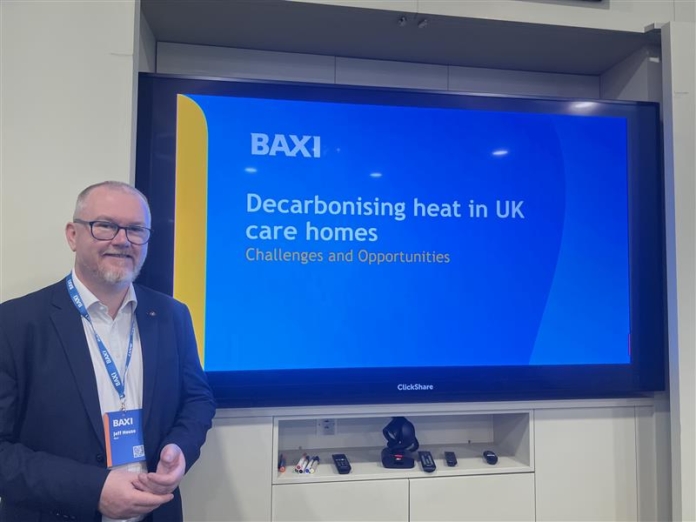
Baxi surveyed over 400 senior and middle management care home managers in both the private and public sector this summer in an effort to understand the enablers required to help decarbonise the sector.

The survey found a strong appetite for decarbonisation from those who responded. A promising 46% of respondents said they had already decarbonised their heating systems, with 50% indicating they are taking steps to do so.

Care homes are a vital sector to consider as we move towards greener and more efficient homes and buildings. However, despite the positive outlook on low carbon tech among care home bosses, Baxi found that gas boilers are still a prominent technology in the sector, with 42% of respondents listing them as their main heating system.

Baxiโ€™s survey revealed a number of barriers that are preventing further exploration of decarbonisation options in the care home sector. The survey also preceded an industry-led focus group, with care home energy managers and a mechanical and electrical contractor, with the aim of exploring the topics raised in more detail.

Running costs were viewed as a key consideration when exploring decarbonisation options for 85% of respondents, meaning that any low carbon solutions will need to consider affordability as a priority. System efficiency and ease of installation were also marked as key drivers of decarbonisation for 42% and 39% of respondents respectively. The focus group emphasised that continuity and reliability of heating systems are essential.

Baxiโ€™s survey indicated that care home managers are keen to find out more about decarbonisation and to access support. 76% of respondents stated they were interested in reviewing their options for low carbon heating and hot water. Over 40% of the surveyโ€™s participants agreed that technical advice, easier access to funding support, and being granted access to case studies from other care homes would help to accelerate the pace of decarbonisation across the nationโ€™s care homes.

The focus group clearly highlighted the need for guidance on both the options available to decarbonise their facilities, and how to develop an achievable plan for decarbonising their heating provision.

In the private sector, respondents experience challenges with funding application processes, and struggle with strict eligibility criteria and resource requirements. In the public sector, care homes tend to struggle more with competition delays to funding and what they felt was โ€˜bias and discriminationโ€™ throughout the process.

Policy recommendations

Baxi understands the importance of reliable and efficient heating systems across the care home sector. The heating and hot water specialist has laid out five clear steps for the Government to help ramp up the decarbonisation of the UKโ€™s care homes, removing barriers that are preventing some facilities from making the switch.

  1. Introduce funding schemes and ringfence specific funding for care home heating system decarbonisation to ensure clarity and funding certainty to care homes
  2. Provide specific guidance to care homes to help them to better understand eligibility and application processes for funding
  3. Address the specific skills gap in the care homes sector to help deliver heat decarbonisation projects
  4. Create databases of contractors and developers with expertise of the care sector
  5. Address the imbalance in price between gas and electricity to lower the cost of electrical heating systems by accelerating plans for rebalancing levies

Jeff House, Director of External Affairs and Policy at Baxi, said: โ€œIt’s encouraging to see from the survey that there is clear appetite among care home leaders to decarbonise their heating and hot water provision, but the evidence of some clear barriers mean there is plenty to be done in order to make this ambition a reality.

โ€œWeโ€™d like to see the Government give the care sector some much needed focus through funding dedicated to heating decarbonisation, and specific guidance around eligibility and access. Doing so will not only ensure the sector benefits from clarity and certainty, but will also ensure the wider supply chain can be mobilised in a bid to tackle what has felt like something of a net zero blind spot up to now.โ€

The full findings of Baxiโ€™s survey have been published in a report, which can be downloaded here.

For more on Baxiโ€™s commercial heating and hot water solutions visit: Baxi Commercial Heating and Hot Water Solutions.

Flex appeal: rethinking how we keep the lights on

Daniel Murrant

Daniel Murrant, Practice Manager – Networks and Energy Storage, at Energy Systems Catapult

Britainโ€™s energy system is undergoing its most profound transformation since the Industrial Revolution. The drive to eliminate fossil fuels is essential for Net Zero, but it also brings new challenges. Chief among them is how we keep the electricity system balanced. As the role of coal and gas diminishes, the answer lies in developing new forms of โ€˜flexibilityโ€™ โ€“ and this concept is reshaping the way we power our lives.

Policymakers, regulators, and the system operator are all grappling with how best to deliver on flexibility. But what exactly is flexibility, and why has it become one of the most important concepts in energy policy?

Flexibility matters more than you think

In simple terms, flexibility is about ensuring the lights stay on when renewable generation does not line up with demand. Our recent report Enabling Distributed Flexibility for Net Zero defines it as โ€œbalancing energy demand and supply across all time and spatial scales, keeping within the physical constraints of the system.โ€

Put another way, at every moment of every day, at any location, the amount of electricity going into the grid must equal the amount being taken out, while accounting for storage, transmission, and conversion losses. Unlike gas networks, which can cope with hours of imbalance, electricity systems have no such tolerance. Even a small mismatch risks a system failure. This is why flexibility is not an optional extra: it is essential to a functioning, decarbonised energy system.

There are four broad ways of delivering flexibility:

  • Supply-side flexibility: adjusting generation up or down. In the past, this often meant increasing or reducing output from coal or gas. In a low-carbon system, it may involve hydrogen-fired turbines. SSE Thermal and Siemens energy are collaborating on โ€œMission H2 Powerโ€ to develop gas turbines that can run entirely on hydrogen.
  • Demand-side flexibility: shifting or reducing electricity use. A familiar example is charging electric vehicles (EVs) when supply is plentiful, often at lower prices. Companies such as Ohme are developing smart chargers that automate this process for drivers.
  • Energy storage: adding or removing energy from storage technologies such as batteries, pumped hydro, or thermal storage. Much more of this will be needed in future, with companies like RheEnergise developing innovative storage approaches.
  • Interconnection: importing or exporting electricity through cross-border interconnectors. These links allow energy to flow where it is most needed. National Grid Ventures is exploring hybrid interconnectors that also connect offshore wind farms directly into the system.

Why the old flex playbook no longer works

For decades, flexibility was almost entirely about supply. If demand rose, more coal or gas was burned. Stockpiles of fuel provided security, and costs were relatively predictable. That model is no longer viable. Renewables cannot be controlled in the same way, and volatile fossil fuel prices have exposed the risks of over-reliance on gas.

Instead, the system must diversify. Demand-side flexibility, storage, and interconnection must all play a much larger role, alongside new forms of clean supply-side flexibility. At the same time, electricity demand is rising sharply as cars, heating, and industrial processes switch away from fossil fuels. This combination of increasing demand and more variable supply makes flexibility more important than ever.

The transition is not only technical but behavioural. Consumers will increasingly interact with the energy system in new ways, whether through EV charging, smart appliances, or home energy storage. Real-time management of demand at scale will be just as critical as innovation in generation.

Innovating to Net Zero 2026

At Energy Systems Catapult, we are exploring how flexibility can be delivered through our Innovating to Net Zero 2026 programme (ITNZ 2026). Using our whole-system models such as ESME and ESME Flex, alongside market, consumer, and digital insights, we are analysing how different forms of flexibility can close the gaps between supply and demand โ€“ what we call โ€œpeak gaps.โ€

These peak gaps will define the shape of the future energy system. Our work is assessing not only the technical solutions available, but also the enabling conditions required to unlock them โ€“ from market signals and regulation to consumer engagement. We are also examining progress to date, including the impact of the Clean Power 2030 target, and what more is needed to secure a resilient and affordable low-carbon system.

A central part of ITNZ 2026 is engaging with innovators. From technology developers to service providers, their insights are essential to our analysis. By highlighting barriers and exploring how they can be overcome, we aim to help create the conditions for innovation to thrive. This collaboration is critical if we are to build a flexible system that is fit for Net Zero.

Whatโ€™s next for flex?

The journey to Net Zero requires more than replacing fossil fuels with renewables. It requires a transformation in how we balance the system, manage demand, and design markets that reward flexibility. Britain has the expertise and the innovators to rise to this challenge. The task now is to create the right environment for them to succeed โ€“ so that the electricity system of the future is clean, reliable, resilient, and affordable.

For more information, visit: https://es.catapult.org.uk/


This article appeared in the September 2025 issue of Energy Manager magazine. Subscribe here.

Smart Meter Accuracy: The foundation for a reliable, low-carbon grid

Image by Pixelharvester from Pixabay

Umair Ejaz, Senior Product Marketing Manager, Tuxera

Smart meters are central to digitalised energy systems, enabling accurate billing, real-time pricing, and data-driven decarbonisation strategies. Utilities, regulators, and customers rely on them to operate for up to 15 to 20 years, providing uninterrupted data that supports energy efficiency targets, carbon reduction plans, and energy consumption insights.

Yet, despite their importance, millions of smart meters globally are falling short due to persistent data accuracy issues. Unlike outright device failures, these inaccuracies often go unnoticed initially, quietly eroding operational efficiency, customer trust, and ESG reporting accuracy. For energy companies, maintaining data integrity is critical to enabling effective grid management, protecting revenue streams, and ensuring regulatory compliance.

The silent risks of data inaccuracies

Data inaccuracies in smart meters are often harder to detect than full device failures. These silent issues build over time, with missed logs and delayed data transmissions accumulating until they cause billing disputes, regulatory breaches, and operational inefficiencies.

Without accurate data, consumption analytics and forecasting models become skewed. Customers may receive incorrect bills, undermining trust and increasing service complaints, while utilities face avoidable administrative costs and reputational damage. For manufacturers, field errors linked to data issues translate into increased warranty claims and higher support burdens, damaging market confidence in smart meter rollouts.

What causes data degradation in smart meters?

Todayโ€™s smart meters operate under high data load conditions, continuously recording and transmitting usage data while managing event logs and firmware updates. This high-frequency operation puts significant stress on the internal NAND flash memory used in meters, which has a finite number of write/erase cycles. To manage this wear and ensure long-term reliability, smart meters typically rely on two embedded software components working in tandem: the flash controller and the file system. The flash controller handles how data is physically written to and managed on the memory, managing operations like wear leveling and bad block management. The file system organizes how data is structured, accessed, and maintained at the application level. Together, they form a coordinated software stack that improves data integrity, reduces memory stress, and significantly extends the operational life of the flash storage.

With every new data collection or update, the older obsolete data has to be cleared, otherwise the memory starts to wear out quickly. Without software optimised for flash management, these operations accelerate memory wear, leading to errors and silent data corruption. In many cases, standard file systems fail to manage these cycles efficiently, making meters prone to data degradation before their intended operational lifespan ends.

Additionally, the realities of energy distribution networks mean that power outages and voltage fluctuations are inevitable. These conditions can interrupt write processes, leading to corrupted or incomplete data. If smart meters lack the resilience to detect and recover from these events, inaccuracies can become embedded in utility datasets, undermining all subsequent analysis and reporting.

The financial and regulatory consequences of inaccuracy

Data inaccuracies have direct financial implications for energy companies. Incomplete or incorrect data can lead to revenue losses from inaccurate billing and refund requirements, while increasing customer service workloads due to disputes and complaints. Over time, these issues erode cash flow and increase the cost to serve, impacting operational budgets and efficiency metrics.

Regulatory compliance is also at risk. National and regional authorities impose strict data accuracy and uptime requirements for smart meters, with non-compliance triggering audits, fines, and, in some cases, enforced replacement programmes. Replacing meters can cost ยฃ250โ€“ยฃ350 per unit, quickly escalating into significant unplanned expenditure when large fleets are affected.

Data accuracy is also essential for ESG reporting, underpinning carbon accounting and energy efficiency metrics. Inaccurate data threatens the credibility of sustainability claims, damaging investor confidence and affecting utilitiesโ€™ ability to secure green financing for decarbonisation projects.

From a field operations perspective, software-related data failures are often mistaken for hardware faults, leading to unnecessary technician callouts and premature device replacements. This further drives up operational costs while reducing the efficiency of existing infrastructure investments.

Building resilience through software-level accuracy

While many smart meters include hardware features to provide some resilience during outages, such as backup batteries, the most impactful and cost-efficient improvements come from optimising the software layer.

Flash-aware, transactional copy-on-write file systems can ensure 100% data integrity even under high-frequency logging and repeated power interruptions, maintaining reliable operation over decades. These systems are designed to handle over 15,000 hard power-offs without data loss, enabling rapid system recovery and minimising downtime.

By managing memory wear efficiently, advanced file systems reduce the risk of silent data corruption without requiring additional flash capacity or larger devices. This is crucial for resource-constrained environments typical of smart meters, where space, power, and cost constraints limit hardware expansion. In many cases, software-led optimisation can deliver 5โ€“10% savings per meter, providing substantial cost reductions across large-scale deployments while ensuring longevity and accuracy.

Protecting operations, revenue, and decarbonisation goals

Smart meter data integrity is foundational for energy companies seeking to improve operational efficiency, maintain revenue stability, and advance decarbonisation targets. Beyond billing accuracy and minimising replacement costs, reliable data plays a crucial role in managing energy distribution. Consumption data collected from meters is used not only to balance supply and demand in real time but also to inform future forecasts, shaping long-term planning for infrastructure investment and sustainability strategies. As this data is shared across the energy ecosystem, from utilities to regulators and grid operators, it becomes central to the coordination of energy flow, policy compliance, and readiness for emerging energy challenges.

Every inaccurate data point increases the risk of billing errors, non-compliance, and reputational damage while undermining the effectiveness of demand-side management and grid optimisation efforts. For energy companies, ensuring smart meter accuracy means reducing operational costs, avoiding unnecessary replacements, and maintaining the integrity of ESG reporting frameworks.

By focusing on embedded software resilience rather than costly hardware upgrades, utilities and manufacturers can address the root causes of data inaccuracies and extend the operational life of meters. This approach protects revenue, meets regulatory expectations, and aligns smart metering infrastructure with broader energy transition goals.

Closing the data gap for a smarter energy future

As energy systems become increasingly data-driven, the ability to maintain accurate, uninterrupted data from smart meters will be a key differentiator for utilities. Flash-optimised, resilient file systems are critical tools in closing the silent data gap, safeguarding business value, and enabling data-driven decision-making across the grid.

Smart meter accuracy is about building a smarter, more resilient, and efficient energy system. By addressing accuracy at the software level, energy utilities can support a low-carbon transition while ensuring operational reliability, financial stability, and customer trust.

In the drive to modernise energy infrastructure, accuracy is the foundation for success, and it starts with how data is managed and protected within every smart meter.


This article appeared in the September 2025 issue of Energy Manager magazine. Subscribe here.

Join the net zero journey at emex, ExCeL, London on 19 & 20 November 2025!

For more than a decade, emex has championed the vision of a net zero future, with a mission to lead, inform, and support UK industry on its journey toward achieving net zero. The outstanding free-to-attend conference programme split over four theatres brings a huge draw of 3,500+ visitors. It is not only a great opportunity for industry experts to engage with their peers, but be recognised as a thought-leader in the net zero space. Not only a show, yet a driver for growth, where the industry comes together to network, share ideas and tackle today’s challenges.

As the sector grows, we welcome an even bigger audience into the 2025 show including everyone involved with smart and connected buildings, as well as our loyal visitors from the energy, sustainability and facilities management space. emex will pair thousands of key decision-makers with a vibrant array of exhibitors showcasing the latest technology and solutions-focused innovations to drive UK businesses towards a net zero future.

What to expect at emex?

One of the biggest draws for visitors to the show is the firstโ€‘class free programme of content on offer split across two days. The outstanding content takes place over four theatres, where visitors can take full advantage of solutionsโ€‘focused learning from 130+ industryโ€‘leading speakers in panel discussions, presentations and case studies.

Whatโ€™s more, reflecting the showโ€™s expansion into the world of connected buildings, weโ€™re delighted to take a new step into the emex journey and announce the launch of Smart Buildings & Built Environment. Weโ€™re also welcoming back the everโ€‘popular theatres covering: Energy & Carbon Management Strategy, Energy Future & Flexible Networks and Sustainability & Net Zero.

Our fifth content space at emex – in partnership with Estates Gazette, hosts a variety of workshops, roundtables and the allโ€‘important networking opportunities that continue to engage visitors at the show. Plus, handsโ€‘on training and much more. Net zero experts are provided with the opportunity to deliver their expertise providing engaging and informative content to our diverse audience to continue or start their net zero journey.

Also, new for 2025 is an exclusive partnership with Cornwall Insight who are the preโ€‘eminent provider of research, analysis, consulting and training to businesses and stakeholders in the UK and Irish energy markets. Theyโ€™ll be helping visitors upskill on changes in the UK energy markets by delivering training sessions on relevant topics. This is aunique opportunity to talk to the experts and futureproof knowledge on this rapidly changing area. emex will explore the latest innovative solutions to common challenges, such as tackling rising energy costs, navigating regulations and standards and future-proofing your business.

Whatโ€™s more, this year’s sessions will offer practical insights into the future of energy management, from the impact of smart technologies and AI, to decarbonising high-impact and growing industries such as data centres.

Top leaders from well-known UK and global organisations will address repositioning the business case for embedding sustainability into their organisations, keeping on track for net zero goals, and how their climate resilient plans can be adapted for your organisation.

Closing the conference, a completely new feature for 2025, a pitch competition with five innovative startups battling it out for a prize in front of a panel of judges from Finance, Retail, Telco, Logistics and Airports sectors.

Are you ready to be part of the journey for 2025?

emex is the perfect opportunity for you to join the conversation and hear all about the evolving market. 

We welcome a considerable array of visitors from SMEs to multiโ€‘nationals, across the wide spectrum of both the private and public sectors. Whether you have a limited budget or there are millions to invest in sustainability solutions for you and your teamโ€“ this show provides something for everyone who walks through the doors.

What also makes emex an unmissable event?

Over 100+ exhibitors are given the space to place their brand and business in front of thousands of decision-making professionals from across the energy management and smart buildings sector.  From the most innovative products, exhibitors are given the window to win new business – maintain their competitive edge and stay at the forefront of the industry.

Registration is completely FREE and gives you access to all of these features and much more.

Visit our website to explore further, and we look forward to welcoming you in November as we open the doors on emex 2025. 

LINK https://forms.reg.buzz/emex-2025/emex-2025-registration-emag


This article appeared in the September 2025 issue of Energy Manager magazine. Subscribe here.

Cura Energy unveils LiveEye: Actionable intelligence for smarter energy management

Cura Energy, a leading specialist in smart energy and building solutions, has announced the launch of LiveEye, a next-generation energy management platform. LiveEye is designed to turn complex energy data into actionable intelligence for businesses of all sizes, and across all sectors.

Empowered by independently collected, real-time energy data, LiveEye gives organisations clear visibility of their energy use, including consumption rates, source, function, and the effects of weather. This transparency makes it easier than ever to pinpoint savings opportunities, reduce waste, and optimise performance across entire estates.

Actionable insights

Powered by Honeywell SaaS, LiveEye is intelligent and self-learning, recognising typical energy usage patterns and flagging anomalies that could be wasting money. Actionable alarms highlight exactly where to focus, eliminating the need for constant screen-checking or manual report analysis. Organisations can also verify the ROI and impact of energy initiatives through a dedicated measurement and verification module, aligned with IPMVP standards, to ensure consistent and reliable results.

Data security is at the core of LiveEyeโ€™s design. As an ISO 27001 certified solution, it gives customers the confidence that their energy data is protected to the highest international standards.

โ€˜Final piece in the jigsawโ€™

Commenting on the launch of LiveEye Carly Higglesden, Managing Director of Cura Energy, said:

โ€œ2025 has been a significant year for Cura Energy. We have made significant investments in both the operational and commercial infrastructure of our Energy Monitoring Solutions (EMS) service. LiveEye is the final piece in this jigsaw. It completes Curaโ€™s portfolio of energy services, giving our customers the fully integrated energy data solution theyโ€™ve been asking for. We believe it is the perfect partner for a more active approach to energy management. It brings together real-time analytics, customisable dashboards, and intelligent automation to make energy management simpler, smarter, and more effective than ever before.โ€

With nearly 15 years of experience in Energy Monitoring Solutions (EMS), Cura Energy combines LiveEyeโ€™s advanced technology with expert validation, interpretation, and optimisation support. The result is a powerful, scalable platform suitable for everything from single-site operations to complex multi-site estates, helping businesses cut operational costs, reduce emissions, and stay ahead of energy compliance demands.

LiveEye is now available through Cura Energyโ€™s turnkey EMS packages, with both online and in-person demonstration sessions open for booking.