

Smart water metering: The hidden advantage for developers

With builds facing increasing costs, lower margins, and longer sales cycles, developers are searching out new ways to add value to their projects. Matthew Ling, director of business development at Leep Utilities, talks about why more developers are turning to smart water meters to improve build project outcomes.

The UK has an acute water scarcity crisis, with more areas moving into drought status. Helping to combat this issue, Ofwat is aiming for suppliers to reduce leakage by 17% between now and 2030. Essential to this project is the roll-out of smart water metering, without which, could lead to England alone experiencing a daily water shortage of more than six billion litres by 2055, according to the Environmental Agency.

Smart water metering, known as Advanced Metering Infrastructure (AMI), does exactly as it says on the tin. It replaces traditional ‘dumb’ water meters that need manual reading with more advanced metering infrastructure. Sharing some similarities with smart electricity and gas meters, smart water meters automatically and regularly transmit meter readings to the water company using a proprietary data connection.

However, the benefits of adopting AMI and smart metering go far beyond automated meter reading and national leakage reduction. We see developers gaining significant benefits across the whole of the construction process, helping to redress increased build cost, lower margins, and a difficult house-building market that’s currently being squeezed.

Protecting profits and people

Utility infrastructure is at constant risk during the build process, from heavy machinery, excavation work, and human error. And when water pipes get damaged – and we see this happen regularly – the consequences can be severe on both timelines and budgets.

Without smart metering, a burst pipe during construction can keep flowing undetected for days or weeks, causing substantial water loss, potential contamination issues, and incurring emergency repair costs. On top of this, developers are then faced with significant bills for water they didn’t know they were using.

With AMI, water readings are sent to the water company every half hour, making it possible for the supplier to see water usage in near real-time across the entire site – and as a result, to quickly detect unusual or excessive water consumption, for example, if construction equipment has damaged a pipe.

A recent example shows the power of the AMI system when smart meters detected seven behind-the-meter leaks on the very first day of operation at a development site. These leaks would have stayed hidden with traditional metering and could have cost thousands of pounds in wasted water, property damage, and complaints from any future residents of the property.

AMI also reduces work site risk, helping to keep workers safe by removing the need for people to read meters. It means fewer people visiting active construction zones, which are inherently hazardous locations, and simplifies life for everyone by removing the need to make appointments and plan visits.

Maximising site potential

Fitting more units onto a development site can dramatically increase project profits, particularly in high-demand urban areas where land values are high. AMI helps developers to get the most from network capacity through sophisticated water balancing techniques that weren’t possible before.

Traditional planning approaches use conservative estimates of water demand, which can result in overbuilding on infrastructure that isn’t required, or artificial limits on development density.

With AMI, developers can get detailed usage data that allows more precise demand forecasting and water network optimisation. This data-driven approach can support planning for higher density developments on constrained sites, unlocking additional revenue potential.

Reducing infrastructure charges

One of the most significant financial benefits of AMI for developers lies in the potential for reduced infrastructure charges from incumbent water companies.

Recent Ofwat changes mean that connection rebates have now been replaced by environmental components that reduce the connection fees for developments that can demonstrate lower per-capita water consumption through design and technology.

AMI systems provide the robust usage data necessary to negotiate these reductions for individual properties. But by demonstrating efficient water usage patterns across completed developments, it becomes easier for developers to secure lower infrastructure charges for future phases or projects.

Making properties more attractive to customers

Today’s homebuyers increasingly value environmental responsibility and cost control, and properties equipped with smart water metering offer them both.

AMI technology enables water companies to offer more customer-friendly billing approaches. At Leep, for example, as well as offering traditional billing based on estimated usage, we’re looking into offering monthly direct debit billing based on actual usage.

We believe this approach improves affordability by enabling residents to spread costs more evenly and budget more effectively – particularly important given the current cost-of-living crisis.

Arguably properties equipped with smart water meters are less likely to experience water-related complaints, contributing to stronger developer reputations and improved sales prospects for future projects.

Supporting sustainable water practices

Water scarcity is becoming an increasingly critical issue, with London and the other major metropolitan areas now classified as water-stressed regions, according to the Environment Agency’s water stress report.

As environmental regulations tighten and water continues to become an increasingly precious resource, developments that can demonstrate compliance with emerging water efficiency standards will have clear advantages in planning applications and buyer appeal.

Creating competitive advantage

For developers, AMI can create real opportunity to optimise developments of any size. From protecting construction budgets and maximising development density, to enhancing customer satisfaction and future-proofing properties, AMI technology offers compelling advantages for developers willing to embrace innovation.

While we are working with forward-thinking developers who have begun adopting AMI in their projects, widespread use remains limited – seemingly due to a lack of awareness rather than cost or complexity concerns.

At Leep, we are now installing AMI as standard across all new developments, recognising the technology’s benefits for network management, customer service, and regulatory compliance. It gives developers access to advanced capabilities without additional cost or complexity.

As the property development landscape becomes increasingly costly and competitive, technologies that deliver measurable benefits across multiple dimensions will become key to success. The question isn’t whether AMI will become ubiquitous on property developments – it will – but whether developers will regret not choosing to adopt it earlier.
www.leeputilities.co.uk/ami

CES partners with solar giant to help businesses with net zero transition

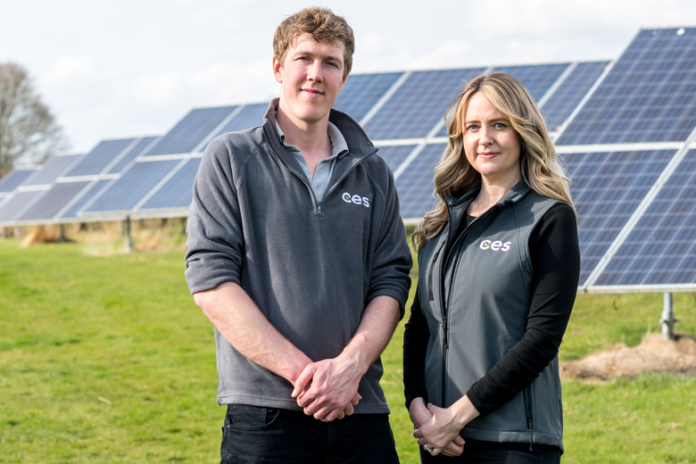
CES managing director Joe Collison and operations manager, Heidi Vaughan

Leading Midlands’ electrical services company CES has been named a Premier Partner by industry-leading provider of innovative solar energy solutions TCL SunPower Global, helping UK businesses make the transition to greener, cheaper energy.

CES – formerly known as Collison Electrical Services – has built an established reputation for delivering high-performing medium to large scale solar projects across the UK, and is looking to strengthen that through the collaboration with TCL SunPower Global.

Director of CES Joe Collison said: “In just our first quarter, we have been upgraded from authorised to Premier Partner, primarily thanks to our commitment to using the SunPower range of products. Premier Partner status is usually awarded to companies based on volume of projects, but in our case it was in recognition of our track record and potential.”

SunPower Premier Partners are community-based solar installers selected because their level of expertise and professionalism is deemed to match the quality and durability of the SunPower brand.

Joe added: “The government’s drive towards net zero means the demand for the best quality and most efficient solar panels is greater than ever, so we are delighted to be working with TCL SunPower Global to provide the panels for our solar systems.

“It is very important to us that everyone we work with shares our ethos for sustainable business practices that protect people and places, and TCL SunPower Global is the perfect fit. Together we can help businesses make the transition to clean power and to enjoying the many benefits that brings, including improved efficiency and lower costs. Our expertise in creating fully integrated solar power and storage systems, coupled with TCL SunPower Global’s market leading solar panel technology, will help achieve the significant business growth we are targeting over the next few years.”

Joe said the full range of businesses, from large manufacturing sites to agricultural business, would benefit from switching to solar-generated power. CES, which is based in Ford near Shrewsbury, also specialises in creating complete off-grid systems, such as solar arrays, battery storage integration, and generator upgrades, for properties and businesses in remote or rural locations.

TCL SunPower Global’s UK sales director Jon Juxon said: “As a company, TCL SunPower Global is committed to offering a simple, effortless path to sustainable living using our innovative energy solutions across the world.

“Our partnership with CES is another step towards helping businesses and individuals in the UK to make the transition to a cleaner, cheaper way of living, and we are very happy to be working with Joe and the team.

“Our core beliefs – that energy generation should be renewable, sustainable and not to the detriment of the planet and the people who live on it – align perfectly with the CES way of doing business. I look forward to our partnership flourishing as we help the UK achieve net zero.”

The partnership with TCL SunPower Global is part of a major strategic investment by CES as it bids to tap into the rapidly growing renewables market in the UK, boosted by the government’s target of 100 million solar panels being installed as part of the new Clean Power 2030 Action Plan.

10 years not out: Green Economy lays foundation for ECB decarbonisation

Solar Panels on The Point at Emirates Old Trafford, home of Lancashire Cricket Club.

A partnership going back to 2015 laid the groundwork for a widespread sustainability drive at all levels of English and Welsh cricket.

  • Green Economy (formerly Enworks) was commissioned to lead a comprehensive review and strategy development for ECB in 2015.
  • The work led to the development of a framework for ECB to understand its Scope 1 and 2 emissions and identify areas for sustainable improvements.
  • This initial review and strategy proved to be an invaluable starting point for every professional cricket club in England and Wales. 
  • Green Economy’s work led to a pilot project at Lancashire County Cricket Club and the creation of a successful carbon reduction plan.

A national blueprint for decarbonising sports venues has been set through Green Economy’s work with the England and Wales Cricket Board (ECB).

Sustainability consultancy, Green Economy, part of the Growth Company, designed a sustainability roadmap for stadiums and club facilities across England and Wales, leading to changing behaviours and reductions in carbon emissions. 

Commissioned in 2015, Green Economy was tasked by the ECB, the governing body for professional and recreational cricket, to develop a cohesive, environmental strategy to establish a national position on sustainability.

It was of increasing importance for the game to take positive action, while also enabling venues to compete in the lucrative hospitality market.

Bruce Cruse, Director of Facilities & Infrastructure, ECB said:

“The work we commissioned Green Economy to deliver has been fundamental to establishing our environmental strategy, whilst providing practical tools for venues to use.” 

To establish a base level of green credentials, Green Economy visited all professional cricket venues to assess existing energy use, resource efficiency and operational challenges at both large and small venues.

The resulting strategy enabled consistent reporting and informed decision-making. It was also scalable to support clubs of all sizes in starting or accelerating their sustainability journey, whilst demonstrating return on investment to prioritise action.

Green Economy’s work equipped decision-makers with the tools, data, and confidence to act, and aligning funding with action plans.

Cruse added: “Clubs across the country now have a clear roadmap, with many accessing funding and support based on the strategy’s recommendations and the development of their own plan.”

Green Economy piloted its work at Lancashire County Cricket Club, providing enhanced one-to-one support to build a comprehensive carbon-reduction plan which led to Solar PV installation across the site.

Part of The Growth Company, Green Economy provides expert support to help businesses, organisations and regions accelerate net zero, whilst growing the local green supply chain – delivering an equitable transition to net zero for all.

Amy House, Director, Green Economy said:

“The ECB’s commitment to a sustainability roadmap has set a precedent for sports venues nationwide. We’re proud to have been able to help the ECB begin its journey, which has continued evolving over the last ten years.

“By working closely with clubs, we were able to design tools and frameworks that not only reduce emissions but also make robust business sense, lessons that apply far beyond cricket.”

Find out more about Green Economy’s sustainability and net zero services by visiting their website.

https://www.greeneconomy.co.uk/business-support/decarbonise/consultancy

Britain’s largest electricity and gas networks join forces to make local climate action simpler and faster for councils

UK Power Networks, Cadent and SGN have launched a ‘Common Ask Template’ to cut admin and fast-track local Net Zero projects.

Three of Britain’s leading energy networks – UK Power Networks, Cadent and SGN – have joined forces to launch a first-of-its-kind ‘Common Ask Template’ to cut admin and speed up delivery of local Net Zero projects.

For the first time, local authorities can provide the information networks need once, in a simple format.

The three networks serve more than 25 million people across the country. By agreeing one shared format, they are reducing paperwork, avoiding repeated requests and freeing up council staff time – making it easier to plan the upgrades needed for a low-carbon future, and helping local authorities’ resources go further.

Hounslow Council is already using the template, with a further five local authorities adopting it through the Greater London Authority (GLA)’s Outer East London LAEP (Local Area Energy Planning), which covers both SGN and Cadent customers.

The template means the right infrastructure – from Electric Vehicle (EV) chargers to low-carbon heating – can be planned and built sooner.

What it means for communities:

  • A single format where all networks and councils share information just once—streamlining both gas and electricity planning
  • Faster action – fewer delays and faster investment decisions
  • Smarter targeting – utilities can invest where local communities need it

UK Power Networks’ DSO has created a blueprint for others to use both in and outside of our licence area.

It’s designed to work for every council – whether just starting their climate plans to those with advanced modelling in place – and to support projects right through to 2050.

Lynne McDonald, head of local net zero at UK Power Networks’ DSO said:“Local authorities are working hard to cut carbon, but too often they’re asked for the same data again and again. This simple change means they can spend less time on paperwork and more time delivering real benefits for their communities.”

Cllr Katherine Dunne, portfolio holder for Climate, Environment and Transport at London Borough of Hounslow said: “This new initiative from UK Power Networks has saved us a lot of time by making it easier to share our Local Area Energy Plan outputs with electricity and gas networks.

“Without it, we’d be sending our forecasts to multiple electricity and gas utility companies in different formats at different times – which can be a real drain on resources. It’s made our job easier and it’s clear that UKPN really care about improving customer experience, even if their network only covers a very small part of our Borough.”

Lorna Millington, future networks manager at Cadent “The journey towards achieving net zero is going to take a truly collaborative effort where we share intel, insight, and work together on the energy transition.   

“This joint project with UK Power Networks & SGN is a great example of what happens when like-minded organisations come together to get things right, share results, and iterate approach to ensure results. With decarbonisation being at the heart of Local Authorities and Energy Networks focus, we need to continue to collaborate in order to make 2050 happen.”

Poor cyber defences will fast erode energy sector innovation

Mark Edgeworth

Mark Edgeworth, CEO at Hicomply

Smarter grids, cleaner tech, AI-fuelled optimisation, rapid innovation and tech adoption in the energy sector are changing how we generate, distribute and manage power. But while the sector is charging towards net zero, its cyber defences are still playing catch-up.

Every innovation creates a new attack surface. Every integration opens the door to compromise. And in an environment already destabilised by war, espionage and state-sponsored sabotage, that’s a risk the UK can’t afford.

Critical infrastructure, critical exposure

Cyber threats to energy infrastructure are no longer just hypothetical. The onset and continuation of the war in Ukraine and the global repercussions have made that incredibly clear. From successful attacks on Ukraine’s energy grid to attempted breaches at European utilities, it’s now clear that energy and critical infrastructure is a frontline target.

These aren’t just the work of state-backed hackers. Ransomware gangs, criminal networks, and hacktivist groups also view the energy sector as a high-value prize. In 2024 alone, several energy providers across Germany and the Nordic region reported attempted cyber intrusions linked to both political and financial motives.

For the UK, playing a key role in Europe’s shift to low-carbon and decentralised energy, the risks are only becoming more urgent.

Enter CAF: From compliance to command centre

The Cyber Assessment Framework (CAF), developed by the NCSC, isn’t a bureaucratic tick-box exercise. It’s fast becoming the operating manual for cyber resilience in critical infrastructure.

CAF doesn’t just help organisations meet the UK’s NIS Regulations. It forces a wider reckoning with real-world exposure. Four pillars – risk management, protection, detection, and minimisation – form a blueprint for understanding where the weaknesses lie, how bad the fallout could be, and what needs to happen next.

Whether it’s outdated equipment, sprawling supply chains, or skills shortages, CAF brings order to chaos, giving boards and CISOs a common language to address cyber risk before it becomes cyber failure.

Strategic defence, not cyber theatre

CAF works because it’s brutally practical. It helps you identify weak points, benchmark maturity, and focus limited investment on the areas that matter most. No fluff, and no false comfort.

That’s why Hicomply and Waterstons developed a 14-question CAF barometer, a straight-talking tool designed to show energy organisations where they stand and where they’re exposed.

Security threats won’t pause, and our response can’t either.

No more “nice to have”

Every new vendor, every new grid connection, every integration tool adds another layer of complexity and another potential point of failure.

Energy resilience isn’t just about keeping the lights on anymore. It’s about defending the data, systems and infrastructure that underpin everything from homes to hospitals to heavy industry.

UK energy providers have a real opportunity to lead the way globally in cyber resilience. The momentum is there. Now it’s time to match it with resilience.

More than 350,000 European companies to get energy efficiency support under major EU financing initiative

More than 350,000 companies across Europe are set to make energy efficiency gains through a €17.5 billion financing initiative by the European Union.

The energy efficiency for small and medium-sized enterprises (SMEs) initiative, led by the European Investment Bank (EIB) Group and supported by the European Commission, seeks to help SMEs using proven energy-saving technologies to lower their energy bills and boost their resilience and competitiveness.

The €17.5 billion financing effort by the EIB Group will nearly double the current level of support during the 2025-2027 period. It will target energy efficiency and decarbonisation steps taken by SMEs and will use a combination of existing and new financial products, including debt and equity instruments.

The initiative aims to mobilise total investment of over €65 billion by 2027 for energy savings by SMEs, helping to close a market gap in Europe. The initiative was announced at a conference in Brussels. Speeches at the event will be available on EBS.

“This is a significant step up in support to help companies cut energy costs,” said EIB Group President Nadia Calviño. “And because SMEs are the backbone of the EU economy, this is also an important step in enhancing Europe’s competitiveness.”

“SMEs are at the heart of Europe’s economy and way of life. But they invest in energy efficiency at only half the rate of larger companies,” said Commissioner for Energy and Housing Dan Jørgensen. “This EIB initiative supported by the Commission will be key to close the investment gap, simplify access to financing, and accelerate the deployment of energy efficiency solutions. With more energy-efficient SMEs, we boost our economy, we benefit our climate, and we keep a healthy heartbeat in communities across Europe.”

To streamline access and support for businesses, the initiative will introduce a “one-stop-shop for energy efficiency for SMEs.” This is a single-entry point that integrates the full EIB Group intermediated lending offering, simplifying engagement and accelerating implementation.

Under the new initiative, the EIB Group will back dedicated investment platforms working alongside private sector partners, specifically targeting SME energy efficiency projects. Beyond financing new concrete projects, these platforms will broaden the investor base and attract crucial capital into Europe’s energy efficiency ecosystem.

The EIB Group is partnering with the Solar Impulse Foundation, a nonprofit organization, to promote a model known as “servitisation” or energy efficiency as a service. First announced at the United Nations Climate Change conference COP29, this novel approach involves companies shifting from selling physical products to delivering outcomes. For example, instead of purchasing energy efficient heating or lighting equipment, SMEs pay for the warmth or light they use. The service provider retains ownership of the equipment and ensures its performance. This model eliminates upfront investment costs for businesses, making it easier and faster to adopt energy efficiency measures.

“Energy efficiency is Europe’s most powerful and undervalued resource, ” said Bertrand Piccard, initiator and chairman of the Solar Impulse Foundation. “Every kilowatt-hour spared is money earned and emissions avoided. The Solar Impulse Foundation has already identified over 1,600 profitable solutions that prove efficiency is not a cost but a gain. With this initiative, we can now bring these innovations to hundreds of thousands of SMEs across Europe,  boosting their resilience, competitiveness, and ultimately the EU’s industrial leadership.”

The Commission is also launching today a dedicated working group under the European Energy Efficiency Financing Coalition, focused on SMEs and mid-caps, with the aim of addressing barriers and developing financing solutions adapted to the needs of small businesses across Europe.

The backing by the Commission will include EU budget guarantees and advisory services offered through the investment programme known as InvestEU and the LIFE Clean Energy Transition sub-programme.

Together, these measures reflect the commitment of the EIB Group and the Commission to supporting SMEs in their green transition and, by extension, to accelerating Europe’s competitiveness and decarbonisation drives under the EU’s Clean Industrial Deal and Action Plan for Affordable Energy.

Unlocking energy efficiency investments

At the event, the EIB Group presented a new report highlighting the organisation’s experience in supporting energy efficiency across Europe, along with findings from the EIB Investment Survey on the key drivers of  and barriers to energy efficiency investments among EU firms. The report finds that, on average, European businesses spend more of their turnover on energy bills than their US counterparts. At the same time, European firms have responded to high energy prices by investing in energy efficiency.

Ecotricity achieves prestigious Ethical Accreditation

“Britain’s Greenest Energy Company” has been awarded Ethical Accreditation from The GOOD Shopping Guide and has achieved a top-ranking GSG Ethical score of 98 in the Energy Suppliers Ethical Comparison Table. The GOOD Shopping Guide therefore verifies Ecotricity as one of the UK’s most ethical energy suppliers, based on its policies and practices towards the Environment, Animals and People.

Having gone through the rigorous research process to achieve Ethical Accreditation, Ecotricity now stands with Octopus Energy and 100Green which have also achieved Ethical Accreditation in the energy sector.

Why does Ecotricity do so well on Ethical Ratings?

As a pioneering supplier of renewable electricity, Ecotricity is on a mission to end fossil fuels. With a top score in the Energy Mix criterion, Ecotricity provides exclusively renewable energy to British households. The company’s electricity is not just certified green, but certified vegan too and their gas mix consists of carbon-neutralised natural gas and sustainable green gas.

Founded by Dale Vince in 1995 as Britain’s first green energy company and founder of the global green energy movement, Ecotricity achieves top scores in all Environmental research criteria. In a sector notorious for environmental harm, Ecotricity celebrates 30 years of sustainable energy thanks to its green gasmill, solar and wind parks.

The GOOD Shopping Guide has also awarded Ecotricity with Ethical Innovator status– a research category exclusively awarded to companies and brands with the highest ethical standards. This impressive achievement is testament to Ecotricity’s commitment to sustainable policies and practices throughout its business endeavours, such as achieving carbon neutrality by 2025.

Kat Alexander, Director of The GOOD Shopping Guide said:

“Ecotricity’s approach to energy supply reflects a deep-rooted commitment to ethical innovation. From eliminating fossil fuels to pioneering vegan-certified gas, the company continues to challenge industry norms and expand the boundaries of sustainable infrastructure. Ethical Accreditation reflects Ecotricity’s integrity, transparency, and its role in driving meaningful change across the energy sector.”

Visit Ecotricity’s page on The GOOD Shopping Guide to find out more information about how the company was assessed. This includes details on the ethical benchmarks energy companies must pass and information on how Ecotricity performed against each criterion. For further detail or to request exclusive content, please do not hesitate to get in contact.

More about The GOOD Shopping Guide

For 25 years, The GOOD Shopping Guide has been the trusted authority on ethical and sustainability ratings. Our comparison tables have been used by millions to compare brand scores on all sustainability, animal welfare and fair trade issues across over 70 sectors and industries. The research includes environmental track records, animal welfare and human rights issues, which encompasses a wide range of ethical criteria. All the research is published on the Ethical Ratings Tables, which raises awareness about the ethical and unethical brands within each industry.

Our Ethical Accreditation system formally endorses those brands that reach our ethical benchmark standard. This is held as a badge of honour by 150+ companies, including Highland Spring, Green People and Aviva. This makes complex ethical choices easy for consumers, employees and businesses.

Future-Proofing Energy Storage

How Hardware Standards Secure Infrastructure that Lasts. Timothy Huo, Southco

Energy, Evolved

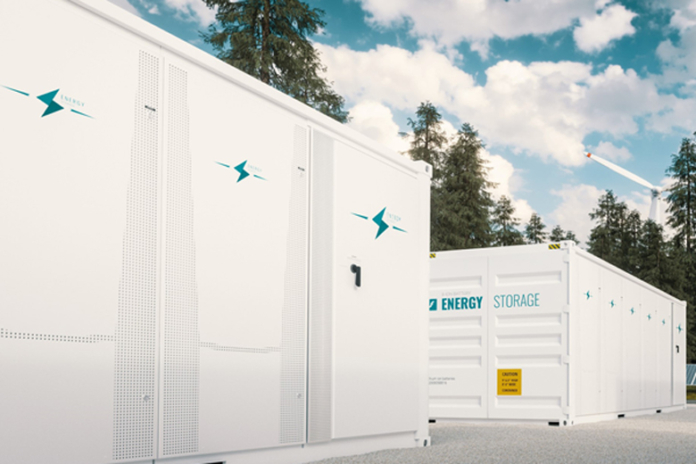
Ready or not, energy infrastructure across the globe is evolving. Power companies and governments alike are implementing new features to support alternative energy sources, and battery energy storage systems (BESS) are at the heart of all of it. These systems make sure that the grid provides a stable output of energy, even when production from alternative sources wanes.

With such a critical role in energy infrastructure, storage systems need to be extremely reliable. If they go down on a low production day, it could mean rolling blackouts for an entire region. That’s why the enclosures that safeguard these systems need to meet strict standards, so users can rest easily knowing that their BESS can withstand the harshest environmental conditions and safely contain failures when they occur.

For an enclosure to pass rigorous testing, every component on that enclosure must be trusted not to fail.

Let’s explore some of these standards and considerations, the environments they are used in, and the hardware that can help meet them.

UL 50E: Protecting Enclosures from Water, Dust & Corrosion

Outlining specifications for enclosures in non-hazardous environments with environmental considerations, UL 50E covers gasket compression, fastener performance, and other factors that protect an enclosure from the elements.

Its goal is withstand everyday wear caused by water, pollution, dust, and corrosion. Naturally, the most vulnerable parts of an enclosure are the doors and access panels, so designers need to get the hardware right to make sure their enclosure meets this standard.

One of the most reliable ways to meet this standard is with a strong compression latch and quality gasket. However, keep in mind that the larger and thinner your panel is, the more likely it is to flex under compressive force.

This flexing can open small gaps between the panel and gasket if not addressed in design, and often the best way to solve this problem is with a multi-point compression system. It provides simultaneous compressive force at numerous places across the edges of a panel, giving it less room to disperse and flex before another latch reinforces it.

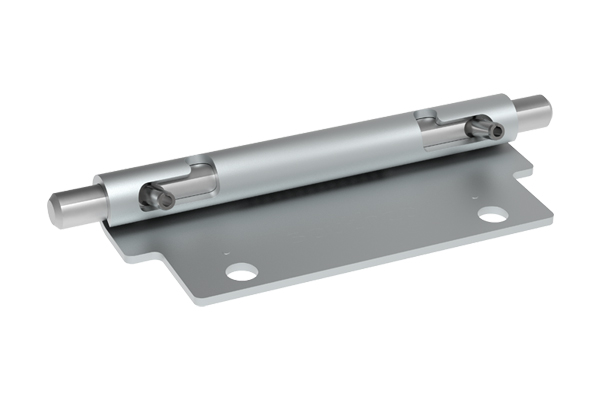
Additionally, even if an enclosure is sealed against water and dust, that protection won’t last forever if the panel’s hinges cannot also withstand those conditions.

Just as a chain is only as strong as its weakest link, an enclosure is only as secure as its weakest component. Designers need to ensure that there are no weak spots that the elements can erode over time, from latch to hinge.

IP65, IP66 – Fine Particle and Water Jet Protection

In environments where fine particles like sand or dust in the atmosphere are common, IP65 is a critical rating to achieve. These particles cause abrasive wear for hinges and other moving parts, shortening their lifespan and preventing smooth operation. This rating also resists low-pressure water spray, so installations near open water have some protection.

For applications that need additional protection from water, IP66 devices resist strong water jets, such as heavy rain, hoses, and waves. This rating is the preferred one for outdoor industrial equipment like BESS installations.

Sealed latching solutions like the Southco F2 Compression Latch System are an ideal option for meeting these ratings and protecting your BESS enclosure from the elements.

Explosion Resistance

While specific regulations for explosion resistance are uncommon, it may be the most important quality in a battery enclosure.

While other regulations work together to prevent an arc explosion from happening in the first place, in the event of catastrophic battery failure, the enclosure and its door are the last line of defense between contained damage and total system collapse.

This is where the right access hardware is absolutely critical. Panels are the only parts of the enclosure designed to open, and are the most likely point of failure. They need to be strongly secure.

To achieve this, manufacturers need a trusted partner to help develop a strong, reliable access system for their panels. The forces at work here are so strong that a standard latch may not be enough. Some systems even have a series of sturdy hooks that latch into the frame, dispersing energy throughout the enclosure without breaking.

Finding a partner that can laser-focus on this issue and design the right system for the job can stop an accident from becoming a catastrophe in a battery energy storage system.

UL 94 – Fire Protection

This standard covers flammability for certain plastics based on their burning behavior. Those that have seen a lithium-ion battery fail should know exactly why this is important for BESS enclosures.

With so many battery enclosures close together, if one fails, the surrounding enclosures need to be protected from that failure. Damage from a fire in a single enclosure can damage surrounding ones, causing a chain reaction that damages the entire system.

In terms of flammability, the gasket is the most likely point of failure, so it needs to withstand the heat of battery failure. Make sure gaskets in electrical enclosures are durable enough that fire and heat don’t escape through gaps in the access panel.

Security and Monitoring

Finally, in addition to all the environmental considerations, designers need to plan for the human factor. Battery energy storage systems are often built in remote locations without a consistent human presence to monitor them. In these conditions, it falls to hardware to prevent entry from curious passersby or worse, vandals.

Luckily if designers have followed the safety standards above, they are already prepared for this kind of tampering. One of the best ways to prevent forced entry is with a multi-point latching system, the same kind that achieves UL50 E compliance and explosion resistance.

While locks only guarantee a certain level of security, making these panels harder to access can be a significant deterrent to theft and vandalism.

In more remote locations, electronic monitoring and access control can also be a massive asset. Keep an eye out for hardware with integrated sensors or, even better, remote access sharing. Tools like the Keypanion™ App from Southco are great ways to get started with wireless access sharing and tracking, so you can tell exactly who has accessed your equipment, and when.

Protecting the Future of Energy

While the renewable energies industry is expanding across the globe, battery energy storage systems are in their infancy compared to traditional energy infrastructure. At this stage, reliability is the most important factor when it comes to earning public trust, and these standards combine to form an enclosure that can easily withstand its environment and resist the powerful forces at work in the case of battery failure.

This means that every component of the enclosure needs to withstand the environment they are placed in over time, from the latch to the hinge. If even one part of the enclosure fails, the security of the entire structure can be compromised.

Having the right access hardware can make all the difference when enclosures are tested in extreme environmental conditions.

“Energy infrastructure is evolving fast, and our previous experience in infrastructure improvement has emphasized the importance of reliability, resilience, and high performance in new technologies,” says Southco Business Development Manager Phil Taylor.

Demonstrating reliability and resilience through both design and operation will pave the way for even more growth in the future as the public sees the benefit of BESS.  When designers follow these standards and ratings, they can ensure that the future of energy infrastructure remains bright.

The unspoken sustainability skills gap in facilities management

As the UK ramps up sustainable building efforts, a developing skills gap in facilities management threatens progress. In this article, Sam Arje, senior energy consultant and EnCO practitioner at Team Energy, explains the sustainability skills gap, its impacts, and the need for targeted training – without which even the most advanced sustainable buildings risk underperforming.

The UK government has made bold commitments to building a ‘clean power army’ of skilled workers to tackle climate change and achieve its net zero target by 2050. This narrative dominates headlines and policy discussions, focusing primarily on renewable energy installation, retrofitting, and construction. And, in some ways, rightly so. These technologies are crucially needed, and will play a central role in helping the UK to reduce its emissions.

Yet, there’s a gap in the conversation. One that threatens to undermine vast sums of sustainable infrastructure development and put organisations’ economic sustainability at risk: the sustainability skills crisis in facilities management.

Given the scale and urgency of decarbonising the UK’s built environment sector, which accounts for roughly 40% of the nation’s total emissions, a lack of sustainability skills is more than just a minor operational hiccup for building managers. It’s a fundamental threat to the UK’s sustainability goals and organisations’ financial longevity and reputation.

Understanding the sustainability skills gap

Traditional facilities management has focused on reactive maintenance and compliance with health and safety regulations, among other tasks. It’s a challenging sector, and navigating it successfully takes a concerted effort from teams of engineers and managers with varied skills.

However, low-energy, low-carbon buildings – whether new or retrofitted – now set the agenda. Growing in their complexity and equipped with state-of-the-art technologies, they require a host of new skills to manage them.

For example, smart building technologies and internet of things (IoT) integration is a primary way in which new energy efficient buildings are managed. Their data feeds into sophisticated building management systems (BMS) that track performance metrics against KPIs, and which can use multiple data sources to optimise the performance of key assets like heating, ventilation and air conditioning (HVAC) and lighting systems.

These technologies are powerful, but it takes skill to manage and derive insight from them. And while building management technology has ramped up significantly, there hasn’t been a universal and corresponding increase in the skills of the facilities managers and their teams.

On top of this, there’s now a need to account for the cost and carbon savings achieved through sustainable buildings, to feed this back into organisational ESG goals. This demands a knowledge of carbon accounting among facilities teams, alongside the ability to track and reduce emissions. Ideally, this happens under a recognised framework, or an industry requirement like ESOS, but achieving compliance requires a deep understanding of the framework’s technicalities and requirements.

What’s at stake for businesses

The immediate consequence of a sustainability skills gap is that low-carbon and low-energy buildings will fall short of their specifications, and fail to deliver on their promise. The performance gap –between a building’s energy and emissions savings on paper versus in practice – is a recognised phenomenon. Several factors can contribute to this discrepancy, and one of them can be a deficiency in the skills within a facilities or buildings management team. Sophisticated technology and management systems lose effectiveness without people who understand them; the ability to interpret data, optimise settings, and respond to any anomalies in performance.

The financial stakes are high too. Building new energy efficient buildings, or retrofitting existing ones with sustainable technologies, can cost vast sums of money. Suboptimal performance represents a significant waste of investment. It’s also an opportunity cost, reducing the energy (and therefore cost) savings that smart building tech can deliver. In this age of carbon accounting, there’s a further risk of underperforming with regards to Scope 1 and 2 emissions, or missing the Scope 3 expectations of customers.

Sustainability skills gaps can have ripple effects throughout an organisation. Elsewhere I’ve talked about how it’s important for companies to have a top-to-bottom approach to developing their energy efficiency skills. As teams move forward together, everyone benefits. However, if having a sustainability skills gap leads to buildings performing poorly in terms of their energy efficiency and emissions, it affects more than just those buildings. It can undermine the confidence in an organisation’s clean, low-carbon technology adoption. In short, high-profile underperformance encourages doubt and scepticism.

On one hand, the skills gap is here and now. There simply aren’t enough people with the right knowledge to deal with the slew of requirements, standards and new technologies that sustainable buildings must embrace. However, looking to the horizon, the consequences of inaction could become worse. This is why organisations across the UK need to ask themselves, what will our buildings be like in the next 10-15 years? They need to deal with the now, and the future.

Training is the way

The surest way to bridge the skills gap in sustainable building management is through training and support. And working with an energy efficiency trainer and sustainability consultant is an ideal way to do this. Energy efficiency training equips building users with new knowledge and skills to reduce energy consumption, waste and cost by making changes to their behaviour. It can be rolled out organisation-wide, or in bespoke scenarios it can be tailored to the needs of energy and facilities managers.

On top of this, working with a carbon reduction consultant can help set a foundation on which carbon accounting and reporting can be based, while facilities managers get up to speed through a multi-layered approach to training. This could include online learning, building management certifications, and hands-on technical training using the right software.

Ultimately, without skilled operators who understand complex sustainable systems, even the most impressive buildings will fail to deliver on their environmental and economic promises.

Global award for electricity firm cutting industry emissions

UK Power Networks won the Best Commitment to Carbon Reduction in Supply Chains award at the Chartered Institute of Procurement & Supply’s prestigious ceremony in London.

A UK electricity firm has won a global award for its outstanding work to cut carbon emissions by its suppliers.

UK Power Networks won the Best Commitment to Carbon Reduction in Supply Chains award at the Chartered Institute of Procurement & Supply’s prestigious ceremony in London.

The company introduced an innovative carbon reporting portal which highlights carbon hotspots across its 160 participating suppliers.

Firms receive a bespoke report containing insight about their carbon footprint, including difference year-on-year, split of contract emissions and primary emissions sources, which is externally verified. Suppliers also receive a data quality score, data quality guide, and suggestions for improvement. In 2024, this led to a significant improvement in accuracy of reporting, clearly signposting where to target carbon reduction efforts and ultimately to a 20% reduction in emissions from UK Power Networks’ supply chain. 

The company also developed a carbon reduction tool for its own major projects, which cut emissions by about 19%.

Key to the success was the firm rolling out a Code of Conduct for its supply chain last year, and so far over 80 per cent of companies have signed the code.

Judges commented: “It’s wonderful to see the collaborative approach taken in sharing best practice and addressing similar challenges across the supply chain. Providing good educational support in response to carbon reporting fatigue has yielded impressive results.”

Katherine Jennings, continuous improvement manager at UK Power Networks, said: “We are honoured to receive this global recognition for our commitment to driving down emissions across our entire supply chain.

“With our Science Based Target commitments, it’s vital that we collaborate closely with our suppliers and invest in innovative solutions. This ensures we’re not only making tangible progress toward a Net Zero future, but also empowering our colleagues and partners as we build a cleaner, greener energy network that serves millions.”