Chauvin Arnoux Launches New L400 Data Logger Series in the UK

Chauvin Arnoux, a global leader in electrical measurement solutions is proud to announce the launch of its L400 Data Logger Series across the UK, Wales, Scotland and Northern Ireland. Comprising the L411, L412, and L461 models, this new range of easy-to-use loggers provide electrical professionals and facility managers with a reliable and connected solution for long-term monitoring of voltage and current.

The L400 Series supports predictive maintenance and energy efficiency

The L400 series offers effective diagnostics, predictive maintenance, and energy consumption management. By recording electrical data over extended periods, the instruments help users detect issues such as overheating, overloading, or power variations before they become critical. They also support energy optimisation by enabling detailed load studies and tracking consumption trends across equipment and installations.

The L411, L412 and L461 have advanced functions for seamless data monitoring

With their USB and Wi-Fi connectivity, the L400 series can be used as remote sensors and integrated into IT systems for seamless data transfer and analysis. Each model features a backlit LCD display, extended memory with SD card storage, and compatibility with Data Logger Transfer software โ€“ allowing users to configure, download, and analyse data with ease. The web server ensures real-time display and remote control via smartphone, tablet, or PC on any android/windows application.

They are practical, reliable and built for demanding environments

Designed for everyday use, the L400 Series has wide measurement capabilities, from 0.08 to 3000 A AC and up to 1500 VDC for applications such as photovoltaic systems. Housed in a compact, rugged IP54-rated casing, the loggers are built to withstand tough site conditions and extreme temperatures ranging from – 20ยฐC to – 50ยฐ C.

With flexible current sensors for quick installation, battery and USB power options โ€“ the L400 range meets all compliance standards.

โ€œThe L400 Series are intuitive data loggers built to enhance efficiency, safety, and reliability. With advanced predictive maintenance, energy optimisation capabilities, and flexible connectivity options, they provide facility managers and electrical professionals with a smarter, more reliable way to manage modern infrastructuresโ€ said Elliot Ajose, Regional Sales and Technical Manager, Chauvin Arnoux UK.

The L400 Logger Series are available now in the UK, Wales, Scotland and Northern Ireland through Chauvin Arnouxโ€™s network of authorised distributors and partners. For further information, visit their website: http://bit.ly/46LcoLN


This article appeared in the October 2025 issue of Energy Manager magazine. Subscribe here.

Building Sustainable Energy for the Future of Data Centres

Ben Pritchard

Ben Pritchard, CEO, AVK

As digital technologies continue to shape the modern world, data centres have emerged as vital infrastructure underpinning countless sectors, from finance and healthcare to artificial intelligence and entertainment.

However, with their growing significance comes an equally expanding environmental footprint. As the urgency to address climate change intensifies, the spotlight is firmly on how data centres can balance rising demand with responsible energy management.

Effective energy strategies are essential to minimise environmental impact and ensure resilience, grid stability, and long-term operational viability. In today’s environment, achieving sustainability goals requires immediate action and a long-term vision. The data centre sector is uniquely placed to lead by example, demonstrating how innovation, flexibility, and collaboration can forge a path toward a net zero future.

Closing the Gap Between Demand and Supply

Data centres are among the most energy-intensive facilities globally, with demand projected to rise steadily in the coming years. According to industry forecasts, global electricity consumption from data centres could reach up to 8% of total demand by 2030. Meanwhile, while promising, the expansion of renewable energy infrastructure has not yet matched the pace required to meet this growing need sustainably.

Bridging this gap calls for adaptable, forward-thinking energy management strategies. Deploying scalable microgrid solutions that integrate renewables such as solar and wind alongside transitional fuels like hydrotreated vegetable oil (HVO) offers a pragmatic route to strengthening both on-site and grid-level resilience. These hybrid systems allow data centres to optimise their own energy use while contributing to broader energy transition efforts.

Harnessing Flexibility for Grid Stability

In the shift towards a greener energy landscape, grid flexibility is paramount. Data centres have a significant opportunity to support grid stability by adopting intelligent energy management systems. By embracing technologies that enable dynamic load management, on-site energy storage, and grid-responsive operations, facilities can become active participants in balancing energy supply and demand.

Microgrids, particularly when combined with smart control technologies, allow facilities to operate independently or in synchrony with the main grid. During periods of peak demand, surplus energy can be exported back to the grid, reducing the need for carbon-intensive peaking plants. This approach transforms data centres from passive energy consumers into active contributors to a more sustainable and resilient energy system.

Looking ahead, the integration of large-scale campusesโ€”sometimes exceeding 1 GW of capacityโ€”into local energy ecosystems will become increasingly critical. Flexible energy assets will not only underpin site reliability but will also play a central role in national decarbonisation strategies.

Preparing for Tomorrow with Innovation Today

While the ultimate renewable energy mix for data centres is still evolving, it is crucial to design and implement energy systems with future fuels in mind. Hydrogen, biogas, sustainable aviation fuels (SAFs), and other emerging technologies will form essential parts of tomorrow’s decarbonised energy landscape.

Forward-looking designs incorporating adaptability ensure that today’s investments remain relevant as the energy landscape evolves. Systems engineered for fuel flexibility can transition seamlessly from current low-carbon alternatives to fully renewable fuels, future-proofing infrastructure and reducing the risk of stranded assets.

Innovation must also extend beyond technology. Investing in the next generation of skilled engineers, project managers, and energy specialists is fundamental. Training programmes, apprenticeships, and industry collaborations are vital to cultivating a workforce ready to meet the complex challenges of sustainable energy management in data centres.

Collaborating Across the Ecosystem

Achieving meaningful progress towards net zero demands extensive collaboration across the supply chain and wider community. Early engagement between power systems specialists, renewable energy providers, planning authorities, and utility companies can unlock synergies that drive more effective project outcomes.

For instance, planning data centres as integrated components of local energy ecosystems opens up opportunities for waste heat recovery. Excess thermal energy generated during data centre operations can be harnessed to supply district heating networks, benefitting residential developments, swimming pools, and businesses. Proactive stakeholder engagement can help identify such opportunities early, ensuring that projects deliver broader societal benefits and foster positive community relationships.

Collaboration can also help optimise energy strategies across portfolios. Coordinated approaches to load balancing, site clustering, and shared renewable generation assets could further reduce emissions and enhance the digital economy’s overall sustainability.

The Role of Standards and Policy Support

While technology and collaboration are critical, supportive regulatory frameworks and industry standards are equally important. Clear policies that incentivise the deployment of low-carbon technologies enable flexible grid participation and encourage investment in future-ready infrastructure, which will accelerate the journey towards sustainable data centre operations.

The development of internationally recognised green certifications and energy performance standards for data centres is also helping to raise the bar across the industry. These frameworks not only provide benchmarks for best practices but also offer reassurance to stakeholders that sustainability claims are underpinned by verifiable metrics.

Organisations operating within this sector must advocate for policies that enable progress while remaining agile enough to adapt to evolving requirements. Building an open, transparent dialogue with regulators and policymakers will be key to shaping a supportive landscape that enables innovation to flourish.

Conclusion

The transition to a net zero future represents one of our time’s most complex and urgent challenges, and data centres have a critical role to play. Through strategic energy management, innovative system design, flexible operations, and broad collaboration, the sector can redefine its relationship with the environment.

Energy management is no longer a back-end concern but fundamental to business resilience, reputation, and responsibility. By embracing technologies and approaches that bridge today’s realities with tomorrow’s aspirations, data centres can not only meet the demands of the digital economy but also do so in a way that champions environmental stewardship and social responsibility.

The path ahead will require ambition, investment, and ingenuity, but it offers immense opportunity for those ready to lead the way.

www.avkuk.co.uk


This article appeared in the October 2025 issue of Energy Manager magazine. Subscribe here.

Public Sector Decarbonisation Scheme: A ยฃ630M Investment In Heat Pumps?

Earlier this year, the government confirmed a further ยฃ630 million investment for fourth and final phase of the UK’s Public Sector Decarbonisation Scheme (PSDS), but what form will this investment take? The aim is to encourage the ramping up of cleaner, more sustainable energy systems in our public buildings. The scale of investment clearly demonstrates that the incumbent administration is getting serious about hitting net-zero targets, and whatโ€™s more, it puts heat pumps right at the heart of the national decarbonisation effort. Adveco considers what this all means and how successful it has been at making public building decarbonisation with heat pumps a real priority for the UK.

The Public Sector Decarbonisation Scheme: A Real Game Changer

The PSDS was created to support public sector organisations in cutting down on their carbon emissions and using less energy. To date, the sector has made more than 3,270 applications valued at more than ยฃ6.3 billion. Of these applications, 1221 have been granted with awards totalling ยฃ2.9 billion since Phase 1.

This latest ยฃ630 million is targeting a range of energy efficiency upgrades. From solar panels to better insulation, and, of course, a lot more heat pumps. The scheme is aimed at a wide range of public buildings โ€“ schools, hospitals, care homes, community centres, which combined together represent a not inconsiderable contributor to the nationโ€™s carbon footprint.

This investment signals a continued drive to usher the public sector into a future based on low-carbon heating. Itโ€™s about moving away from those old fossil fuel systems. By offering financial inducement, the PSDS is trying to negate the initial, potentially high, cost barrier that often prevents public organisations, which constantly struggle with budget constraints adopting greener technology. Itโ€™s a proactive move, and important for making sure that public building decarbonisation with heat pumps becomes the norm, not just something a few places are able to embrace.

Heat Pumps: Taking Centre Stage?

Heat pumps are a central pillar of communication for the PSDS. Correctly deployed, they can be an efficient means of cutting carbon emissions from building operations. Unlike traditional, and still very popular, gas boilers, which burn fossil fuel to generate heat, heat pumps can extract thermal energy from the environment (whether itโ€™s the air, ground, or water) into a building. This process still requires an energy input, in this case electricity, so while not a true renewable, they do at least represent a low-carbon technology able to release as much as four times the thermal energy compared to that required to operate.  That said, air source heat pumps (ASHP), which are by far the most popular options still only one of over 30 different technologies which have received PSDS funding so far, and many new technologies are in development.   

The PSDS is specifically pushing for replacing older gas boilers with heat pump technology, including air source, ground source, and even water source heat pumps. This direct swap is a key part of making public building decarbonisation with heat pumps happen quickly and effectively. Adoption has not been uniform but is now increasing following an initial high demand in Phase 1. Despite 848 projects incorporating ASHPs having been funded, PSDS-funded technology installations which incorporate ASHPs number just 345, and average just under ยฃ100,000 per project, so they account for a small part of the PSDSโ€™ overall funding.

For public buildings, which often need a lot of heating and hot water, installing these ASHPs will help address the environmental impact a building has. Operational costs will increase when compared to equivalent gas systems they replace, as electricity continues to be more expensive. But for new builds, which do not have the option of new gas connections, the application of heat pumps will dramatically reduce direct-electric heating costs.

But this will have an impact, and many will not have considered or planned for subsequent, and not inconsiderable, increases in operational costs.

Advecoโ€™s Part in Helping Public Sector Decarbonisation

As experts in commercial hot water and heating systems, we at Adveco are in a great position to help public sector organisations make the most of their funding, especially those seeking applications under the ยฃ1m mark. We offer a full range of heat pump products designed to be implemented to reduce emissions from energy-intensive water heating applications, which are often operationally critical. The ADV-W and ADVS-W air source heat pumps have been specifically developed for commercial applications. These systems can be put into brand new buildings or fitted into existing ones, giving you efficient and reliable hot water.

But itโ€™s not just about the heat pump units themselves. Adveco also brings expertise in designing and putting together entire low-carbon hot water systems. This includes integrating thermal storage, which helps heat pumps work better by letting them run more consistently and store hot water for when itโ€™s most needed. Focusing on the whole system design like this makes sure that the investment in public building decarbonisation with heat pumps really pays off in terms of efficiency and long-term sustainability.

The Wider Impact Of The Public Sector Decarbonisation Scheme

As well as being good for public sector buildings getting the upgrades, this investment is intended to send a really strong message to the whole market. By showing clear, continued government backing for heat pumps and other low-carbon technologies, the expectation is for the PSDS to encourage further innovation and growth in the low-carbon heating sector. This โ€˜upstreamโ€™ effect could lead to better heat pump technology, increased manufacturing here in the UK, and a more skilled workforce. All of which ultimately makes the technology more accessible. It must be said, however, that many in the industry question the governmentโ€™s belief that this will also lead to notable decreases in unit costs, making heat pumps affordable. The technology used in heat pumps is not new; it uses the same production lines as the refrigerant industry, the global output of which dwarfs heat pump production. As such, the unit price point of components is unlikely to reduce; therefore, without considerable government subsidies, heat pump prices are unlikely to fall in line with the price of current gas water heaters. This is a real potential stumbling block for the PSDS later in this decade if prices do not fall as has been suggested.

As a route to decarbonisation, the capability of heat pumps to cut emissions is inarguable, and success stories that come out of these PSDS projects will hopefully inspire private sector organisations to jump on board too. As more public buildings show just how good decarbonisation with heat pumps can be, the hope is that it will be able to build necessary confidence and speed up the adoption of these technologies across the whole of the UK.

There are wrinkles in this vision, and the private sector will, for the most part, have its eye firmly on the bottom line. It will always react more favourably to the carrot rather than the stick. The PSDS investment shows the government can support this space, but the private sector continues to wait for similar levels of support. For many smaller businesses, the capital investment and operational costs just do not stack up, and that is a problem, as the ripple effect the PSDS aims to create is absolutely vital for the UK to hit its national net zero goals.

In the wider scheme of things, a ยฃ630 million investment is nothing compared to the billions needed to update and upgrade national energy infrastructure or replace aging systems across the commercial built estate. Itโ€™s a first volley in a complex and potentially protracted battle to win hearts and minds that is necessary to see the country embrace and achieve net zero by 2050. The government isnโ€™t just changing public buildings; itโ€™s attempting to kick-start a much bigger shift in how we think about energy. At Adveco, we can help that conversation at the board level; we can help organisations understand how they can best apply government funding or their own investments into their buildings to secure real carbon savings today. Critically, this can be achieved without the punishing capital investment which so often comes with it, and which can so often derail sustainability strategies before they have a chance of implementation.  Whether planning to transition from gas to electric, or trying to achieve the best value from new build specification, talk to the experts first who can walk you through lower-carbon and renewable alternatives โ€“ from heat pumps to solar, electric and beyondโ€ฆ

https://adveco.co/sectors/public-sector/


This article appeared in the October 2025 issue of Energy Manager magazine. Subscribe here.

Heat networks: how next-generation regulations and standards will deliver for customers and the environment

Louise Manfredi

Heat networks are a hot topic, not only as a result of new legislation, but as weโ€™re seeing a step-change in functionality and efficiency. In this article, Louise Manfredi, CEO of Leep Utilities, talks about how Ofgem regulations and fifth-generation approaches are making heat networks a sound investment.

The UK government recently announced that Ofgem will take over regulation of heat network providers. Itโ€™s welcome news for heat network customers, who until now havenโ€™t had statutory protection, and are often tied in to contracts they canโ€™t influence or exit. Unlike gas and electricity, heat network customers canโ€™t simply switch heat suppliers, and their costs are based on shared infrastructure that canโ€™t be changed at an individual level.

Ofgem will start to regulate heat networks in January 2026, and its published requirements are pretty much as everyone expected. Providers will be required to deliver fair pricing and clearer billing, including notice of tariff changes, as well as ensuring they meet the technical standards needed for efficient and reliable services. Ofgem will also provide a formal dispute resolution service for customers and suppliers.

Some heat network providers do already meet these requirements, but for many this will mean a significant workload to bring systems and processes into alignment. Work on these systems needs to be advanced if providers want to be sure of meeting the 2026 deadline.

Overall, the new rules bring heat in line with the regulation of other energy sources, broadly speaking, and will provide a solid foundation for investment in a sector that will significantly expand over the next few decades.

Supporting the move to net zero

Itโ€™s easy to understand why heat networks are increasing in popularity and number. They are ideal for providing efficient, low-carbon heat, particularly in dense urban areas. Heat is generated centrally from a range of different sources and distributed through a pipe network to nearby properties.

With the UK on a firm path to net zero greenhouse gas emissions by 2050, heat networks offer an unrivalled opportunity to reduce the carbon associated with heating homes and businesses, as well as providing cost-effective energy solutions.

Itโ€™s estimated that 3% of heating systems in the UK are provided through heat networks currently, and that for the UK to reach its 2050 target this number will need to increase to around 18%.

The total investment expected across the sector between now and then will be somewhere in the region of ยฃ80bn, not only for building new heat networks, but to upgrade older heat networks to meet the latest technical specifications.

Itโ€™s time for a new generation

Todayโ€™s modern heat networks are a far cry from where they started, in London in the late 19th Century, when excess heat from the coal-fired Battersea power station generated steam that heated local homes through concrete ducts. The irony of this location is not lost on us, as Leep has been a utility partner for the redevelopment of Battersea power station over the last few years.

Every new generation of heat network since then has become increasingly efficient โ€“ operating at lower network temperatures, and integrating new and sustainable fuel sources, and waste incineration to recapture energy that would otherwise be lost.

Today, the UK has approximately 18,000 heat networks, many of which are legacy third-generation networks, built from the 1970s onwards in response to the oil crisis of the time. These networks are fuelled in the most part by centralised gas boilers โ€“ highly unsustainable โ€“ and heat the network to nearly 100ยบC โ€“ unnecessarily hot.

Heat networks: the next generation

Fourth-generation networks addressed some of the failings of earlier technology, reducing the network temperature to below 70ยบC and enabling the integration of renewable power sources and energy from waste. But in fact, the recent focus on net zero has enabled us to quickly move on to a new generation of heat network.

But fifth-generation heat networks represent a major evolution in how we deliver heating and cooling. These systems operate at near-ambient temperatures (typically between 10โ€“30ยบC), allowing them to integrate a wide range of low-grade and waste heat sources that were previously unusable.

It means we can now recover energy from multiple and unconventional sources, such as sewage treatment processes, or waste heat from the ventilation shafts of the London Underground โ€“ something that is already happening today. It also includes heat rejected from cooling systems, which will help to create a more balanced and efficient thermal energy network.

Rather than relying on a single centralised energy centre, fifth-generation systems enable networks and buildings to be fitted with heat pumps that raise the ambient temperature to meet internal demands. These same systems could operate in reverse to provide cooling, feeding surplus heat back into the network where it can be reused by others.

While a mix of technologies will continue to play a role in the short term โ€“ and Leep will take a technology-agnostic view on this โ€“ the long-term transition is likely to be led by the deployment of large-scale heat pumps capable of displacing gas-fired CHP and traditional boiler plant. It will pave the way for cleaner, more resilient heat infrastructure that is capable of serving city-scale networks which could eventually be interconnected.

Itโ€™s an exciting time to be involved in heat networks, and we are actively exploring a range of optimisation strategies and future potential across our own portfolio. Projects like Media City UK in Salford, where a centralised energy centre delivers heating, cooling and power to a 200-acre mixed-use development show what is already possible, and what future expansion may look like.

As networks continue to evolve, Leep is focused on how they can play an even greater role in supporting the UKโ€™s journey toward net zero.

www.leeputilities.co.uk/heat-networks


This article appeared in the October 2025 issue of Energy Manager magazine. Subscribe here.

Scottish Water tops latest water and wastewater survey

Lila Thompson, chief executive, British Water

A strong performance on following policy, sustainability, communication, and contractual approach means Scottish Water has risen to the top of the 2025 annual water company survey carried out by leading trade association British Water which reviews combined water and wastewater companies against 12 key performance areas.

Key findings from the survey include:

  • Most significant rise from United Utilities, moving to joint third place with Anglian Water in 2025, from tenth place in 2024
  • Most significant fall was Wessex Water, down four places to eighth place from 2025
  • South West Water came bottom due to low scores on working digitally, transition between regulatory asset management plan (AMP) periods, and innovation.

British Waterโ€™s annual UK Water Company Performance Survey asks contractors, consultants and suppliers to rate their clientsโ€™ performance in 12 areas, including professionalism, contractual approach and communication over the last 12 months.

For the fifth year running, innovation is the lowest scoring area โ€“ at a time when there are widespread calls for water companies to find new ways of working to address key challenges.  The average score for innovation was 6.3 out of ten, remaining unchanged from 2024.

Scottish Water leads on innovation, with an average innovation score of 7.5 against an industry average of 6.3, while Southern Water trails with an average innovation score of 5.1.

Dane Beauchamp, British Waterโ€™s newly appointed head of programmes, said, โ€œIt is disappointing to see innovation continue to score poorly year-on-year, despite the pressing challenges facing our sector. Innovative ways of working and thinking are crucial for the water sector to address challenges such as population growth, climate change, and affordability, and many of our British Water members are ready to deploy proven, scalable solutions.

โ€œThe sector really does need to step up its collaboration efforts and its support of initiatives, such as Spring, to rapidly increase the adoption of innovation,โ€ added Beauchamp.

The second lowest scoring area was working digitally, with an average score of 6.4 out of ten, an improvement of only 0.1 from 2024. This indicates that strategic use of building information modelling (BIM) and many other digital methodologies, communication of requirements, and operating robust and efficient digital systems, remains mostly unchanged.

The highest scoring area in the survey was success in following external government and regulatory policy, which revealed an industry average of 8.0, with United Utilites the top scorer at 8.6 and South West Water on 6.6. This category looks at areas such as health and safety, quality assurance, and environment.

For impact on the supply chain, public utility Scottish Water scored the highest, with 7.8, against the industry average of 6.8, and high scores for engagement with the supply chain, willingness to absorbs inflationary costs, and supporting businesses and people to thrive and in sector to thrive. South West Water and Southern Water were joint last in this category with a score of 5.7.  

Lila Thompson chief executive, British Water said, โ€œIn todayโ€™s resource-constrained market, the supply chain plays a vital role in helping utilities meet customersโ€™ expectations, and failure to engage could result in water companies underdelivering the vast programme of works in the AMP8 investment period for England and Wales, and other significant investment programmes across the UK,โ€ said Thompson.

The third lowest scoring area in the survey was AMP transition, including effort and commitment to reducing disruption, handling of tender process for establishing framework agreement, and coordination to ensure access to sites.

โ€œThe fact we are continuing to see low scores for innovation, digital working, and AMP transition is a clear indication that work still needs to be done as we start AMP8, especially if we are to improve the landscape in AMP9 and beyond,โ€ said Thompson. 

โ€œThe sector will be better able to tackle its shared challenges by bringing together individual companies, including utilities and the supply chain, along with the close engagement of key sector organisations such as Water UK, UKWIR, Spring, The Institute of Water and CIWEM – as well as British Water’s UK, technical and international forums and the Water Industry Forum,โ€ she added.

British Waterโ€™s annual survey was first undertaken in early 2003 in response to companies asking for feedback on how they were viewed by the industry supply chain, and how they were seen to compare with others. The survey seeks views of individuals working in the industry rather than a corporate standpoint and on this occasion, the majority of responses related to the water and wastewater companies, rather than water-only companies.

The survey reflects a variety of opinions across the supply chain at every level of business. This range of views provides valuable insights for the industry into how water companies interact with their supply chain, how the supply chain feels about this, and the progress water utilities have made over the years.

The 2025 survey results, and those from previous years, can be viewed here.

Preventative approach vital for water resilience

Following acquisition by Grundfos in 2023, remote telemetry and data analytics company Metasphere has entered a new era. To explore what this means for the company, its customers, and the wider water sector, chief executive Lau Pinholt Jensen shares his perspective.ย 

The water sector needs to move beyond simply responding to crises to actively preventing them, says Metasphereโ€™s chief executive, Lau Pinholt Jensen. One year into his role, he argues that this proactive approach is only possible with the seamless integration of data, analytics and a significant shift in thinking.  

“With climate change accelerating and extreme weather becoming the norm, a proactive, end-to-end approach is more critical than ever. The water sector can no longer afford to simply react,โ€ explains Jensen.  

โ€œA full circle solution – one that links data from a sensor in the field to a smart, analytical insight, and then to a physical action that prevents an issue from occurring – is the only way to build truly resilient and futureproof water networks.” 

With a background rooted in business transformation and mergers and acquisitions (M&A) from his time at Grundfos and Hexagon, Jensen has been instrumental in navigating Metasphere’s integration.  

Agile response

According to Jensen, Metasphere will continue to focus on its core markets in the UK and Australia. Meanwhile, its solutions will be offered globally as Grundfos Connect Sewer Insights, a new product under the Grundfos brand.  

“This shift isn’t just about scale; it’s also about agility,” says Jensen. “With more countries and more specific requirements, we need to be even more agile. This agility is a necessity, with a rapid increase in the number of tasks, from integrating into new systems to navigating the UK’s latest asset management plan (AMP) cycle for England and Wales. 

โ€œWhile expanding globally, our commitment to our home markets remains strong, as evidenced by our focus on AMP8,โ€ he adds. 

Jensen believes the acquisition was a “perfect fit” for both companies. Metasphere’s focus on predicting and preventing spills for a cleaner, greener world aligns with Grundfosโ€™s mission to solve global water and climate challenges.  

“We’ve moved beyond just telling water utilities where a spill will happen, we can now actively divert the water to prevent the spill from ever occurring. The water sector is collecting an extreme amount of data from all over its systems, but it often fails to create the value they hoped for.  

โ€œThe analytics layer is where the true value lies, because it solves larger, system-level problems – not just operational ones,โ€ says Jensen. 

Jensenโ€™s vision is for Metasphereโ€™s suite of products to identify pumps that are consuming excessive energy. Through this deeper integration, we could then recommend more sustainable, energy-efficient alternatives from the wider Grundfos portfolio.  

This integrated approach, which combines data collection, analytics, equipment, and expertise, would create a “full circle” solution for water utilities, explains Jensen. 

Making data make SENSE

Jensen provides a glimpse into the company’s future and a sneak peek at a new product which was launched at this year’s Water, Wastewater & Environmental Management Expo (WWEM) in Birmingham, UK, on 17-18 September 2025.  

SENSE is a modular system that can be used as a standalone product or combined with other units. It marks a significant step for Metasphere, moving them beyond traditional sewer level monitoring and expanding their capabilities into new markets.  

โ€œThe development of SENSE has been largely driven by client demand, aiming to provide an even more reliable and versatile solution,โ€ says Jensen. 

The productโ€™s modular design, which includes a telemetry unit and a radar unit, gives Metasphere the flexibility to expand into new sensing capabilities.  

Key features: 

  • ATEX compliant: The SENSE system is ATEX compliant. 
  • Modular design: SENSE is a two-part system that can be used together or as separate, standalone products.  This release coincides with a new Metasphere radar sensor, which will expand our sewer level monitoring range.  
  • RS485: RS485 is an industry standard, which is reliable and would allow for multiple sensor connectivity. The SENSE device communicates with the radar unit (sensor) using RS485 at a physical level. 
  • Flexible power: Can be powered by external sources up to 24V, offering greater flexibility and longevity. 
  • Enhanced sensing capabilities: The radar unit offers a sensing range of 10+m, more than double the previous capability.  
  • Third-party integration: The system’s design allows for the integration of multiple sensors, including third-party sensors, and is digital sensor agnostic, meaning it can receive data in multiple formats or from multiple sources. This opens up a much wider range of applications such as low-cost sewer flow monitoring. 
  • Extended battery life: The telemetry unit has a longer battery life, with an estimated lifespan of eight or more years. 
  • Customer-driven development: The system’s design and future expansion plans are based on customer needs and pain points, with Metasphere actively seeking feedback to develop future sensor add-ons for parameters like pressure and environmental conditions such as temperature. 

In addition, by providing valuable data, SENSE allows water utilities to develop sustainable solutions that are both effective and fiscally responsible. 

Seamless transition 

Regarding the recent acquisition, Jensen’s goal is for clients to continue working with Metasphere as they always have. However, the benefits of being part of a larger organisation like Grundfos will become increasingly apparent. 

“Alongside our in-house experts, Metasphere is now supported by the vast resources of Grundfos’s global research and development team. This enables us to respond to a greater number of customer requests in an ever more agile way,โ€ Jensen explains. 

Integrated approach

Jensen sees the competitive landscape in the smart water technology space intensifying, but he believes Metasphere’s integrated approach of devices, analytics, and pump solutions gives it a unique advantage. The company is also adapting its portfolio to address new challenges posed by climate change, such as droughts and flash floods. 

A key focus for Metasphere is addressing the problem of “alert fatigue,” where utilities are overwhelmed by the sheer volume of data and alarms. Metasphere’s analytics layer helps to filter this data, ensuring that only the most critical alerts are highlighted, providing value beyond just operational issues and helping to solve problems at a higher, systemic level.  

When asked about the future of technology like artificial intelligence (AI) in the water sector, Jensen stresses the importance of “making data countโ€. By leveraging the expertise of Grundfos’s specialists, Metasphere can extract maximum value from the data it already collects. 

Looking ahead, Jensen’s vision is simple, “I’m excited to see Metasphere finally have the chance to live out our ambitions fully. Now we have a larger playing field, I canโ€™t wait to see Metasphere continue to think bigger and play an even greater role in creating a cleaner, greener world.” 

Jensen expresses his pride in the Metasphere team, who have embraced the challenge of integration with remarkable cooperation. He acknowledges that the process has been demanding. “I’m really proud of them,” he says. 

Wave announces over 10 billion litres of water saved in a boost to national water resilience

Wave leadership planting trees at Deeping Gate.

Wave, the multi-award-winning water retailer, has revealed it has supported the saving of 10.47 billion litres of water since kicking off its Social and Sustainability initiative in October 2021, a new report has revealed.

The sustainability-focused utilities provider today published its latest Social and Sustainability Promise report, outlining its performance over the past financial year and the record-breaking savings for its customers. Alongside this, it also revealed it has achieved its five-year water-saving target one year ahead of schedule.

This remarkable achievement is equivalent to 4,000 Olympic swimming pools or feeding Niagara Falls for over an hour. It was made possible through Waveโ€™s active water management service, which supports its customers to improve their water efficiency.

With the UK predicted to have a shortfall of nearly five billion litres of water per day by 2055, according to the Environment Agency, this milestone is a significant contribution to national water savings and long-term resource resilience.

In addition to exceeding its water-saving target by supporting its customers in improving their water efficiency, Wave has continued to invest in its people, planet, customers and communities. In the last year alone, the national water retailer has:

  • Saved 3.1 million kg of CO2
  • Completed 2,068 volunteering hours
  • Attended 11 volunteer events
  • Replaced 259,975 paper bills with e-billing
  • Attained an 82% employee engagement rate across their employee survey
  • Achieved gold for Best CSR strategy and Health and Wellbeing at the UK Employee Experience Awards
  • Continued to deliver market improvement projects, including launching a legionella monitoring solution trial in partnership with Infersens

Despite having a strong year of growth, with revenue and profits rising as well as welcoming over 48 new employees to its 320 + team, Wave relocated its Peterborough office earlier this year, deciding to downsize as part of its continued focus on being an environmentally conscious business. 

The newly refurbished 1,300 sq.ft office is fitted with a brand-new energy-efficient heating and cooling system, passive infrared sensor lighting and consumes no gas โ€“ saving 22 tonnes of CO2e and diverting 12 tonnes.

Lucy Darch, Chief Executive Officer at Wave, said:

โ€œWith growing demand on water resources, and the recent Cunliffe Review bringing a renewed spotlight on companies to deliver on their commitments, the water industry is currently navigating a period of significant change.

โ€œI am incredibly proud to say that we havenโ€™t just continued to meet the objectives set out in our annual Social and Sustainability Promise – weโ€™ve exceeded them, working with our people, wholesalers, customers and communities to make a real difference to our planet.

โ€œThe progress weโ€™ve made over the past 12 months is truly a testament to the hard work and dedication that define who we are and the impact we strive to make.โ€

The achievement of this water-saving milestone comes following the Durham-headquartered retailer becoming the first company to be crowned โ€˜Water Retailer of the Yearโ€™ for the third time at the prestigious 2025 Water Industry Awards in Birmingham.

As one of the UKโ€™s highest-rated business water retailers, with an excellent customer retention rate, rated excellent on Trust pilot and a transactional net promoter score (NPS) of +22, Wave was praised for its excellence within the utilities sector.

To find out more about Wave and to read the Social and Sustainability Promise for 2024/25 in full, click here: wave-utilities.co.uk/sustainability.

The Labour Surge: What the UK’s renewable energy agenda means from a legal perspective

Samuel Mills

With the Labour Party having just passed its first year in government, the direction of travel is clear: the UKโ€™s energy future will be green, publicly anchored and legally reconfigured. Samuel Mills, charted legal executive at Roythornes Solicitors, explores the legal perspective of what this means.

Since Keir Starmer was elected as Prime Minister last summer, the key policy signals around the energy agenda have revealed a deliberate attempt not merely to accelerate renewable deployment, but to reshape the regulatory and market structures through which energy is developed, financed and delivered.

For businesses, communities and individuals these changes amount to far more than policy headlines. They are creating new obligations, opportunities and risks in areas ranging from planning law to procurement, from subsidy frameworks to corporate governance. For legal practitioners the implications are profound – we have moved from incremental evolution to an environment defined by policy acceleration and structural transformation.

A year of change

Perhaps the most transformative move so far is the launch of Great British Energy, the new publicly owned energy company. Having received Royal Assent in May 2025, GBE has been allocated ยฃ8.3 billion for strategic investments across the sector, marking a clear shift towards the state acting not only as regulator but also as market participant.

For investors and developers this raises novel legal questions: how will competition law apply where the state is both referee and player? What procurement frameworks will govern GBE partnerships? How will accountability to Parliament intersect with contractual obligations to commercial partners? These questions will shape transactions in the years to come.

Aside from that headline grabbing policy, one of Labourโ€™s first energy acts was to scrap restrictions that had effectively halted new onshore wind development in England since 2015, reopening a development pathway that had been politically frozen for nearly a decade. For developers, communities and local authorities the legal questions are now less about whether projects can proceed and more about how planning frameworks, community benefit models and grid capacity will shape delivery.

Labourโ€™s first Contracts for Difference (CfD) auction also marked a notable expansion in renewable generation capacity, with offshore wind making up a significant share of awards. Estimates suggest as much as 4.9GW could come online from this round alone, and the governmentโ€™s commitment to faster and larger auctions means developers will need legal support at pace, particularly around subsidy compliance and procurement law.

Energy secretary Ed Miliband has also made clear that solar is back on the agenda both at utility and rooftop scale. Commitments to streamline planning processes for solar farms and to expand rooftop deployment will inevitably generate legal friction around agricultural land use, biodiversity net gain obligations and local opposition โ€“ somewhere which lawyers will play a critical role in advising on project viability, connection prioritisation and disputes over grid access.

The legal market’s new reality

These developments have significantly reframed the market around energy, and that is already having an impact on businesses, communities and individuals.

For businesses, Labourโ€™s agenda signals a need to embed compliance and resilience into their energy strategies. Supply chain audits, land acquisition contracts and subsidy applications will all demand more rigorous legal oversight.

From a community perspective, the return of onshore wind and the growth of solar mean a fresh wave of consultation processes, community benefit agreements and potential disputes. Legal practitioners will increasingly be asked to balance local consent with national policy imperatives.

When it comes to the impact on the individual, the implications will be felt most directly in consumer rights, energy pricing and the regulation of new technologies from home batteries to rooftop solar leases. Clear contractual frameworks will be essential to avoid mis-selling scandals of the type that dogged earlier renewable rollouts.

Labourโ€™s first year has laid the groundwork for what amounts to a reconfiguration of the UKโ€™s energy landscape, anchored in public investment, legislative reform and a commitment to net zero by 2030. Crucially this reconfiguration is not linear: it is political, accelerated and structural, and the creation of GBE, the removal of planning barriers and the expansion of subsidy mechanisms all point to a state that is no longer a distant regulator but an active participant.

Closing argument

For the legal profession this demands a broader advisory perspective, one that integrates regulatory, commercial and public law dimensions. Practitioners must engage with clients not only as legal counsel but as interpreters of a shifting political economy. Success in this environment will rest on agility, foresight and an ability to anticipate how todayโ€™s legislative reforms will shape tomorrowโ€™s disputes and opportunities.

Labourโ€™s surge into the renewable space has changed the rules of the game. The next phase of the UKโ€™s energy transition will be shaped as much by legal frameworks as by technological innovation. For businesses, communities and individuals alike the challenge will be to navigate a landscape where law, policy and politics are more tightly intertwined than ever before.

The energy transition is no longer just an environmental project – it is a legal one too.


This article appeared in theย October 2025ย issue of Energy Manager magazine. Subscribeย here.

Rinnai R290 heat pump & cylinder system powers major name hotel in Birmingham

Leading Northwest contractors, Winrow Building Services, has recently completed an installation of a new high-performance system for heating and hot water production at a 100-plus bedroom Birmingham City Centre hotel.

The hotel is part of one of the biggest hotel chains in the world and the system has been augmented with SPF calculations and complete system integration for maximum operational efficiencies. 

The new system consists of 2 x 27kW R290 heat pumps optimised with a bespoke 800 L prefeed vessel and 2 x 500L electric cylinders with 48kW of immersions. The new system replaces an old electric cylinder system of a 1500L storage and 36kW of immersions.

Sited in the heart of England, this Birmingham hotel is ideally located to explore the attractions of the city and the West Midlands. The bespoke Rinnai R290 system upgrade ensures reliable hot water delivery across the hotelโ€™s 111 bedrooms, restaurant and bar area, along with its five conference rooms that can support up to 200 guests.

โ€œThis project was all about delivering energy efficiency and long-term reliability,โ€ says Ben Winrow, Project Manager at Winrow Building Services.

โ€œThe Rinnai system was straightforward to install, and the bespoke design made integration seamless. The client now benefits from lower running costs, reduced carbon footprint, and a future-proofed system.โ€

Winrow Building Ltd is a family-owned and run business of over 30 yearsโ€™ experience in designing, supplying and installing heating and hot water systems and solutions.

Adds Dave Winrow โ€œOur goal with each and every job is to offer the utmost value to clients by prioritising energy and environmental savings without compromising efficiency and performance. Rinnai support us in achieving this with full system integration, SPF calculations and expert supportโ€

Rinnai has R290 heat pumps as part of its array of an extensive list of decarbonising appliances. R290 is a LOW scoring GWP (Global Warming Potential) refrigerant and allows for several operational benefits:

  • energy efficiency is improved by 10%, thus enabling water temperature of up to 75 degrees Celsius.
  • R290 usage provides compliance alongside the European F-Gas Regulation which focuses on phasing down refrigerant environmental impact.
  • Rinnaiโ€™s R290 air source heat pump range is available in 11 different sizes, from 6 kW up to 50 kW. All units arrive with control systems that allow time sensitive programming and customization enabling specific customer requirements to be met.

Rinnaiโ€™s has a wide and comprehensive selection of unvented water heaters to add to and complement the existing range of cylinders solutions.

Key features of the Rinnai unvented water heaters are:

  • Venturi Technology: The units use patented Venturi technology to minimise expansion, ensuring minimal ongoing maintenance and optimal performance.
  • High Efficiency: Engineered to give maximum energy efficiency.
  • Durability: Built with high-quality Duplex stainless steel, the cylinders are designed to last, giving long-term reliability.
  • Ease of Installation: With a user-friendly design, the installation process is straightforward, saving time and effort.
  • Safety First: Equipped with advanced safety features, including a factory-fitted 7bar/90ยบC pressure and temperature relief valve.
  • Eco-Friendly: Featuring CFC/HCFC-free thermal insulation, the cylinders are designed with sustainability in mind.

RINNAI OFFERS CLEAR PATHWAYS TO LOWER CARBON AND DECARBONISATION PLUS CUSTOMER COST REDUCTIONS FOR COMMERCIAL, DOMESTIC AND OFF-GRID HEATING & HOT WATER DELIVERY  

www.rinnai-uk.co.uk/about us/H3

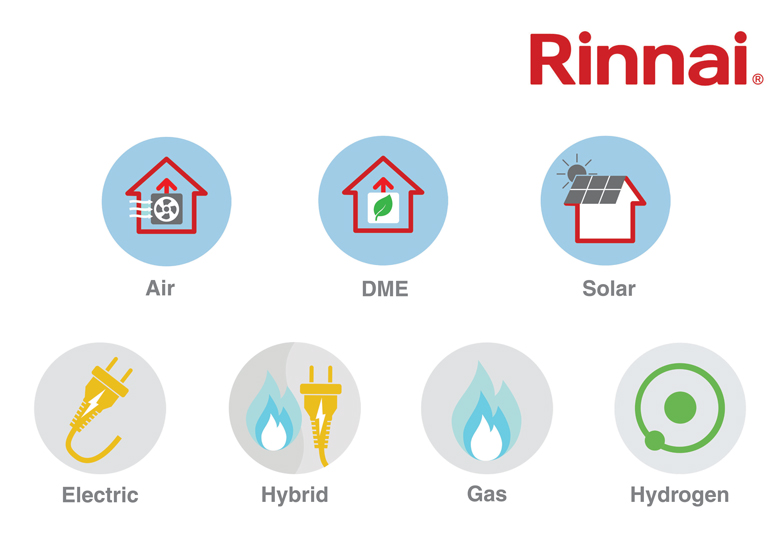
  • Rinnaiโ€™s range of decarbonising products – H1/H2/H3 – consists of hot water heating units in gas/BioLPG/DME, hydrogen ready units, electric instantaneous hot water heaters, electric storage cylinders and buffer vessels, a comprehensive range of heat pumps, solar, hydrogen-ready or natural gas  in any configuration of hybrid formats for either residential or commercial applications. Rinnaiโ€™s H1/2/3 range of products and systems offer contractors, consultants and end users a range of efficient, robust and affordable low carbon/decarbonising appliances which create practical, economic and technically feasible solutions. 
  • Rinnai is a world leading manufacturer of hot water heaters and produces over two million units a year, operating on each of the five continents. The brand has gained an established reputation for producing products that offer high performance, cost efficiency and extended working lives. 
  • Rinnai products are UKCA certified, A-rated water efficiency, accessed through multiple fuel options and are available for purchase 24/7, 365 days a year. Any unit can be delivered to any UK site within 24 hours.
  • Rinnai offer carbon and cost comparison services that will calculate financial and carbon savings made when investing in a Rinnai system. Rinnai also provide a system design service that will suggest an appropriate system for the property in question.
  • Rinnai offer comprehensive training courses and technical support in all aspects of the water heating industry including detailed CPDโ€™s.
  • The Rinnai range covers all forms of fuels and appliances currently available – electric, gas, hydrogen, BioLPG, DME solar thermal, low GWP heat pumps and electric water heaters More information can be found on Rinnaiโ€™s website and its โ€œHelp Me Chooseโ€ webpage. 

RINNAI FULL PRODUCT AVAILABILITY 24/7 FOR NEXT DAY DELIVERY of ALL HOT WATER HEATING UNIT MODELS INCLUDING 48-58kW UNITS-

SAVINGS OF

20%              REDUCTION of opex cost,

30%              REDUCTION of initial cost

15%              REDUCTION in carbon

75%              REDUCTION of space

Visit www.rinnai-uk.co.uk Or email engineer@rinaiuk.com  

For more information on the RINNAI product range visit www.rinnaiuk.com


This article appeared in theย October 2025ย issue of Energy Manager magazine. Subscribeย here.

Schneider Electric showcases healthcare innovation with NHS Trusts

Schneider Electric, the leader in the digital transformation of energy management and automation, brought together industry experts, healthcare professionals, and technology leaders to explore the future of healthcare energy infrastructure and digital transformation for estates.

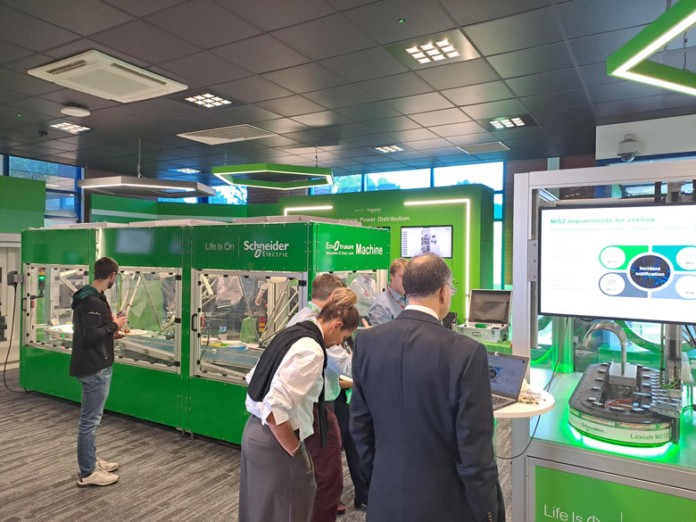
The event, held at the Schneider Electric Innovation Hub at the University of Warwick Science Park, brought together estates, operations, and digital services leaders from Nottingham University Hospitals NHS Trust (NUH) to explore the latest advances in energy optimisation, asset monitoring, and digital transformation in healthcare settings.

The full-day interactive session featured hands-on demonstrations of Schneider Electricโ€™s innovative technologies, including Building Management Systems (BMS), Connected Services Hub, and SmartSpace Connected Room Solutions. Attendees experienced first-hand how these solutions can deliver measurable energy savings, enhance operational resilience, and support sustainability goals across complex healthcare estates.

Highlights from the day included:

The event further strengthened the partnership between Nottingham University Hospitals NHS Trust and Schneider Electric, following a pilot scheme at NUHโ€™s Linden Lodge last year. New technologies including personalised and voice-activated environmental room controls were trialled and evaluated to enhance care for patients with reduced mobility.

Discussions at the University of Warwick Science Hub further explored the evolving landscape the Trust is facing, and how to continue to improve patient environments, regulatory compliance, digitalisation, and decarbonisation.

โ€œThe NHS provides essential services, 24/7. It canโ€™t afford for unplanned maintenance, downtime, or electrical outages. This unique operating environment is one where we thrive. Close collaboration is crucial for success, which is why these events are so important for long-term success in ensuring we deliver smart, sustainable solutions that drive efficiency, resilience, and digitalisation. Weโ€™re excited to continue this series of events with other partners to keep driving progress.โ€ Notes Kas Mohammed, VP of Digital Energy at Schneider Electric UK&I.

Lisa Yates, Digital Services Senior Commercial Analyst at NUH NHS Trust added:  

โ€œOur ongoing partnership with Schneider Electric demonstrates leadership in delivering future-ready, patient-centric environments across both greenfield developments and complex, legacy healthcare estates. In-person events play a critical role in demonstrating the mechanics of smart building systems and showcasing how tech can transform clinical spaces into adaptive, efficient, and human-centered environments. This understanding is integral for our digital teams within the NHS as we work to set a new standard for modern healthcare infrastructure.โ€

Related resources