
Smarter prison pumps driving the MOJ net zero mission

John Calder, technical director at Dura Pump.

The Ministry of Justice (MOJ) has committed to achieving Net-Zero carbon emissions by 2050, but decarbonising prisons presents one of the toughest challenges in the public sector. With an ageing infrastructure operating 24/7 at near maximum capacity, these facilities are difficult to retrofit and expensive to maintain. 

Yet within this complexity lies a critical, underused opportunity to upgrade inefficient pumping systems. As well as improving the resilience of existing infrastructure and reducing running costs, modern and intelligent pump systems can generate significant carbon reductions. 

How old pumps are increasing carbon and cost

In many UK prisons, pump systems are decades old and use outdated control methods. They run at a fixed speed regardless of demand and their output is not adjusted to meet peaks and troughs. Meaningful forms of monitoring and feedback are not recorded which would allow efficiency and energy savings to be identified. 

Running pump systems this way consumes far more energy than necessary and puts additional pressure on equipment, increasing wear and failure risk. 

Given the pressure on His Majestyโ€™s Prison and Probation Service (HMPPS) facilities and a ยฃ1.8 billion backlog in maintenance works, additional operational and financial strain caused by the failure of pump systems risks exacerbating the challenge.

Smarter and more modern pumps for improved control

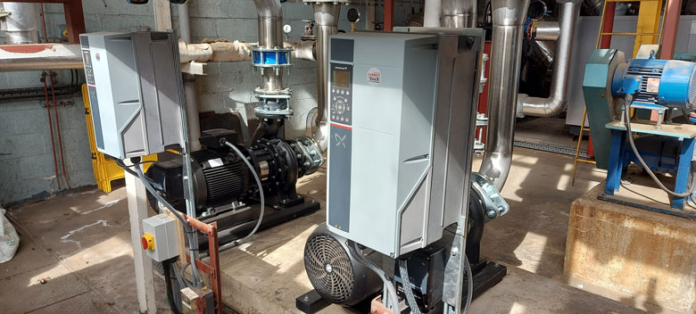
Modern intelligent pump systems now offer a clear way forward; they use variable speed drives (VSDs), monitoring sensors and control software to match output to real-time demand. This technology allows pumps to respond dynamically to demand, meaning that if less output is needed, the system uses less energy.

These smart pumps also monitor performance continuously, which gives teams visibility and helps them spot small issues before they become big failures. This reduces energy use but also extends the lifespan of the pump system and reduces the risk of failure. Fewer emergency breakdowns and unplanned costs contribute to more reliable operations. For facilities who are under pressure to reduce emissions and demonstrate progress, targeted pump upgrades can provide measurable improvements in the short term. 

Installing VSDs alone can cut pump energy use by 30% to 60% depending on the system. For a prison running 24/7 this quickly adds up.

In most cases, upgrading a pump system does not mean starting from zero; VSDs can be retrofitted onto existing pumps. This keeps costs down and minimises disruption, two major considerations in a secure environment like a prison. 

Contributing to meet MOJโ€™s 2050 targets

The road to Net Zero will take time, but that does not mean waiting to act. Energy use in pump systems is an area where the MOJ can make early progress. Pump upgrades can be rolled out to a planned programme, and each installation will make an immediate difference to energy use and emissions. 

By modernising prison pump systems, the MOJ can gain a clear and measurable return on both carbon reduction and cost savings. With consistent design and implementation, these upgrades can be scaled across the estate. This helps future-proof assets and supports the MOJโ€™s wider sustainability goals. 

Carbon savings are only one part of the benefit; reduced operational costs and increased systems resilience will support the success of the prison estate in the short, medium and long-term.

Data-driven control for better decisions  

The data that smart pump systems offer is among their most important features. Prison estates can transition from reactive to proactive maintenance by monitoring energy consumption, system pressure and fault warnings in real time. Estates teams can identify patterns and problems early, before turning maintenance strategies into action, instead of waiting for a failure to happen.  

With information on system performance available in real-time, decisions about replacements or upgrades can be made based on facts rather than guesswork, which is crucial in a high-pressure environment with tight budgets. They can also improve the control of the systems where the BMS is not fully functional. 

Pump systems might not be the most visible part of a prison estate, but they are among the most evident pieces of infrastructure that can bring about change. Smart pump systems reduce energy use, cut emissions and improve reliability. With the constant pressure to meet Net Zero goals, prisons need solutions that deliver results without major disruption. Modernising pumping infrastructure is a smart, strategic step in that direction. 

Join the sustainability journey at emex, ExCeL, London on 19 & 20 November 2025!

For more than a decade, emex has championed the vision of a sustainable future, with a mission to lead, inform, and support UK industry on its journey toward achieving net zero. The outstanding free-to-attend conference programme is a huge draw with more than 3,500+ visitors expected for 2025 as the show expands to involve those involved with smart and connected buildings.

What to expect at emex?

An outstanding free-to-attend conference programme with focused content across four themed theatres where visitors can take full advantage of solutionsโ€‘focused learning from 100+ industryโ€‘leading speakers in panel discussions, presentations and case studies. emex welcomes back everโ€‘popular content hubs covering: Energy & Carbon Management Strategy, Energy Future & Flexible Networks and Sustainability & Net Zero as well as introducing the brand new Smart Buildings & Built Environment theatre.

The Smart Buildings & Built Environment space will host dedicated content around this exciting new topic. From retrofitting to the role of AI and IoT in connected buildings, there are plenty of sessions to give you answers and food for thought in your own sphere and emex is delighted to have the support of Estates Gazette who will be chairing this exciting new theatre. Considered by many to be โ€œThe Bible of Commercial Propertyโ€, for the best part of 200 years, Estates Gazette has provided essential news, insights, and market intelligence for generations of property professionals.

The fifth content hub at emex is our Workshops & Interactive Space, that hosts a variety of workshops, roundtables, hands-on training and allโ€‘important networking opportunities that continue to engage the audience at the show. Visitors have the chance to participate in smaller, interactive groups and is an opportunity not to be missed. Join intimate mentoring sessions, delivered by ISEP and YEP, navigating your corporate path can be tricky at times, regardless of how many years of experience you have under your belt. If you have professional challenges that you would like to discuss or would simply like to expand your network, the dedicated mentoring sessions on offer at emex from ISEP and YEP are perfect for you. Senior ISEP members will be on hand to provide career guidance and insights for those established in their careers and the YEP, who support the next generation of energy industry leaders, will be available for those who have not long started out. 

Also at emex, following the runaway success of their participation in 2024, BSI Academy are back again with CPD-accredited training on energy management, environmental management and net zero. BSI Group is the national standards body of the UK and being able to take part in these free bitesize courses to elevate your professional learning is an opportunity not to be missed. These sessions are free to attend and can be booked as part of your registration to emex.

As part of the intimate learning on offer in November, the show is delighted to announce an exclusive partnership with Cornwall Insight! The pre-eminent provider of research, analysis, consulting and training to businesses around the GB and Irish energy markets, this is an emex exclusive and will give visitors the opportunity to upskill on topics such as: how the market for energy ‘flexibility’ is evolving; the structure of Corporate Power Purchase Agreements and how they can benefit end users and what the outlook is for business energy costs over the coming years. All of these sessions are free to attend and can be booked as part of your registration to emex

Closing the conference, a completely new feature for 2025 โ€“ Pitch To Your Peers – a pitch competition with innovative startups battling it out for a prize in front of a panel of judges from the finance, retail, telco, logistics and airport sectors.

After hours, the end of Day 1 of emex will see a People, Planet, Pint meetup at The Fox, ExCeL where you can relax and network informally with other visitors over a couple of drinks. 

emex prides itself in practising what we preach, which is why we’re delighted to offer our visitors a more sustainable way to find their way round everything the event has to offer. Our easy-to-use event app offers visitors the opportunity to schedule meetings with peers and exhibitors, plan your visit with the conference programme at your fingertips, view exhibitor and speaker details, access the floorplan to make your way around the event!

Visit the emex website to find out more. Registration is completely FREE and gives you access to all of these features and more.

https://forms.reg.buzz/emex-2025/em-magazine


This article appeared in theย Nov/Dec 2025ย issue of Energy Manager magazine. Subscribeย here.

Integrated refurbishment delivers energy and carbon savings at Towers School

Turning a Maintenance Problem into an Energy Opportunity

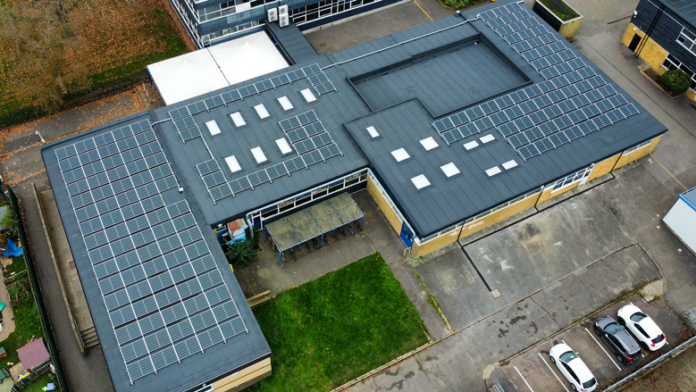
When the facilities team at Towers School in Kent discovered that one of their teaching blocks had a leaking flat roof, the immediate priority was to stop the water ingress and protect the building. But as they reviewed the condition of the roof, they saw a wider opportunity. The project could not only address the buildingโ€™s maintenance needs but also contribute to the schoolโ€™s long-term sustainability goals.

At a time when many schools face rising energy costs and mounting pressure to decarbonise their estates, Towers Schoolโ€™s approach reflects a broader shift towards more integrated, value-driven refurbishment.

The decision was made to take a joined-up approach, combining the roof refurbishment with a solar pv installation. The aim was to improve thermal performance, reduce carbon emissions, and stabilise energy costs through on-site generation. Working with building surveyors Carrรฉ Building Consultancy and technical experts from Garland UK, the school developed a single, integrated project that would deliver measurable performance improvements and financial returns.

A Coordinated Approach from Design to Delivery

From the outset, the focus was on coordination and accountability. Rather than treating the roof and solar works as separate contracts, the school wanted a single delivery partner who could design, oversee and guarantee both systems together. That decision shaped the entire project, removing the usual complexities that arise when multiple contractors are responsible for different aspects of the same roof.

Sam Rigden, Technical Manager at Garland UK, carried out detailed surveys and design work to specify a new waterproofing and insulation build-up using its StressPly Flex Plus bituminous membrane system. The solution was selected for its long service life, robust mechanical strength, and high thermal efficiency. The upgraded roof achieved a U-value of 0.18 W/mยฒK, significantly enhancing the buildingโ€™s energy performance and reducing heat loss across the block. Once the new waterproofing was in place, a bespoke Solarise photovoltaic system was installed, designed and engineered to integrate seamlessly with the roof structure.

Measurable Reductions in Energy and Carbon

The outcome has been immediate and quantifiable. The solar array now generates over 40,000 kilowatt hours of clean electricity every year, offsetting a significant portion of the schoolโ€™s grid consumption. The system is estimated to save over ยฃ13,000 in first-year energy costs and prevent over 17 tonnes of carbon dioxide emissions each year. The combined investment has delivered a payback period of just 4.5 years, meaning the system will continue to provide cost and carbon savings for decades after it has paid for itself.

For the school, these figures represent more than just operational savings. They are evidence that sustainability-led refurbishment can be financially viable within tight public-sector budgets when projects are properly integrated and technically assured. The improved roof insulation reduces heating demand throughout the winter months, while the solar generation cuts reliance on grid power, particularly during daytime teaching hours. Together, these improvements have delivered measurable reductions in both energy use and operational carbon, with minimal disruption to teaching activities.

Digital Oversight and Asset Management

A key factor in maintaining quality and performance throughout the project was Garland UKโ€™s technical oversight. Site inspections were carried out twice weekly during the works, ensuring that every element of the design specification was met. All activity was recorded through Garlandโ€™s digital Roof Asset Management Programme, known as RAMP, which provides clients with live project data, photographs, and inspection records. This digital record now forms part of the schoolโ€™s ongoing asset management system, helping the estate team plan future maintenance and monitor performance over time.

Removing Risk Through Single-Point Accountability

Perhaps the most distinctive feature of the Towers School project is the approach to warranty and risk. The schoolโ€™s roof and solar systems are protected under Garland UKโ€™s Single-Point Guarantee, which covers both design and installation across the full system. In practical terms, that means the school has one source of accountability for the performance of the entire installation. If an issue arises, whether with the waterproofing or the PV array, the estate team contacts Garland directly. There is no division of responsibility or dispute between manufacturers and contractors over which component is at fault. For estate managers managing large and complex property portfolios, this level of clarity can significantly reduce administrative burden and future risk exposure.

By capturing the full project history in one digital platform, the schoolโ€™s estate team can now manage its roof assets more proactively, a model increasingly relevant to public-sector estate strategies.

A Model for Smarter Estate Investment

This project illustrates a growing shift in how energy and estate managers are approaching capital works. Rather than delivering single-issue repairs, many organisations are beginning to combine building fabric upgrades with renewable installations to maximise return on investment and reduce disruption. Integrated refurbishment provides an efficient route to net zero, improving energy performance, extending asset life and supporting financial resilience.

By aligning the refurbishment of existing assets with sustainability objectives, the school has achieved long-term energy and carbon savings, improved the resilience of its estate, and enhanced the learning environment for its students. It stands as a model for other schools and public-sector organisations facing the dual challenge of maintaining ageing infrastructure while advancing towards decarbonisation.

Building for the Long Term

For the education sector in particular, the lessons are clear. Sustainable refurbishment does not have to mean large-scale new builds or disruptive installations. By integrating roof, fabric, and renewable technologies within one coordinated design, estate managers can unlock efficiencies, extend the life of existing assets, and deliver measurable outcomes that support both operational and environmental goals.

Towers Schoolโ€™s project demonstrates the potential of integrating condition improvement and energy generation in a single programme, an approach that combines cost efficiency with measurable sustainability outcomes. Itโ€™s a reminder that sometimes the most powerful route to decarbonisation starts not with new technology, but with a smarter, joined-up way of thinking about the buildings we already have.

www.garlanduk.com


This article appeared in theย Nov/Dec 2025ย issue of Energy Manager magazine. Subscribeย here.

UK fire services tackle a solar panel fire every two days

New research from global business insurer QBE reveals UK fire services faced a fire involving a solar panel once almost every two days in 2024, marking a 60% increase in the past two years (2022-2024).

Data collected by QBE from Freedom of Information (FOI) requests to UK fire services in August 2025 also reveals fires are rising faster than the rate of installations, which could indicate incorrect installation or maintenance.

 2022202320242022 – 2024
Fires involving a solar panel107128 (+19.6%)171 (+33.6%)+59.8%
Total solar panels nationally1,309,4471,506,406 (+15%)1,697,231 (+12.7%)+29.6%

Source: QBE FOI (Aug 2025) & UK Government Solar Photovoltaics Deployment Statistics (Aug 2025)[1]

The findings come as the UK sees record levels of solar panel installations, driven by commercial demand and government net-zero incentives. As of August 2025, there were 1,834,584 solar panels installed across the UK[2].

Adrian Simmonds, practice leader for property risk solutions at QBE Insurance says: โ€œSolar technology is an essential part of the UKโ€™s clean energy transition, but the rapid pace of deployment is cause for concern for risk management. Our analysis shows fires involving solar panel fires have risen at twice the rate of new installations over the past two years. Safe solar panel installation and maintenance are essential to reducing fires.โ€

Source: QBE FOI (Aug 2025) & UK Government Solar Photovoltaics Deployment Statistics (Aug 2025)

Adrian Simmonds continues: โ€œWe strongly encourage property owners to carry out formal risk assessments, engage certified installers, and ensure regular inspections and cleaning. These simple steps can significantly reduce the chance of fire.โ€

QBEโ€™s research also reveals the majority of incidents involving a solar panel took place in residential buildings.

Number of solar panel fires in 2024, by reported location
Residential buildings97 fires
Commercial properties27 fires
Solar farms17 fires
Industrial buildings10 fires

Source: QBE FOI (Aug 2025)

Notably, only 37 fire services out of the 49 services nationally were able to provide data, suggesting the number of solar panel fires is actually much higher than reported.

Improper installation is a frequent cause, with loose connections, damaged wires, or faulty wiring leading to arc faults or other electrical issues. Other factors include component defects, high current, and external factors such as moisture, extreme weather, and dirt or foliage on the panels. 

The FoI data suggests that the majority of fires originate in the inverter or on the solar panels themselves.

Origin of solar panel fires in 2024
In the inverter21 fires
On the solar panel20 fires
DC cabling16 fires
Battery bank12 fires

Source: QBE FOI (Aug 2025)

The inverter is the hardest-working component in a solar panel system, prone to failure if installed incorrectly or poorly maintained. It generates significant heat, meaning poor ventilation, dust build-up, or blocked cooling systems can quickly elevate fire risks[3]. Solar panel inverters can be positioned indoors and outdoors, but there should be no obstruction, good ventilation and timely replacement.

Under the Clean Power Action Plan, the UK aims to generate enough clean electricity to meet its annual demand by 2030, accelerating deployment from 18 GW to 45-47 GW[4].  In particular, the plan aims to increase rooftop capacity on commercial buildings, warehouses and industrial buildings. The UKโ€™s 20% largest warehouses alone can provide 75 million square metres of roof space, which is estimated to support around 15GW of rooftop solar capacity[5].

QBE welcomes this opportunity for cleaner energy but warns that precautions are needed to mitigate fire risks on large, often complex buildings. Robust design, cabling, and isolation systems can help prevent and control fires, protecting property and business continuity[6].

A growing concern is also the rapid adoption of lithium-ion batteries in new solar installations.

Simmonds said: โ€œMost new domestic and commercial systems now include battery storage, introducing additional fire risks when units are installed in lofts, airing cupboards or upper-floor spaces that are difficult to access in an emergency. Combined with limited inspection and cleaning, these installations increase the likelihood and potential severity of fires.โ€

In 2024, QBE revealed that UK fire services tended to a lithium-ion battery fire once every three days (1,330 in total)[7]. QBE expects that as lithium-ion battery use expands, battery units could soon become a leading source of fires linked to solar panel systems.

Simmonds noted that extreme weather conditions could further exacerbate these risks. โ€œRoofs and panels should be inspected after storms or high winds, as even minor dislodgement or debris can increase fire risk.โ€

Systems are typically designed to withstand speeds of up to 120 miles per hour, yet recent storms such as Storm Ashley have exceeded this threshold[8]. High winds can uplift panels or expose cabling, while hail, dust and prolonged heat can damage surfaces and insulation. Property owners should therefore apply โ€œone-in-100-yearโ€ criteria at the design stage and carry out roof inspections following major storms, hail or flooding.

QBE recommends that homeowners and businesses:

  • Use certified solar panel installers (MCS-accredited)
  • Conduct annual inspections and clean solar panels to prevent overheating or debris buildup
  • Check that firemanโ€™s switches and arc-fault detection systems are correctly installed and accessible
  • Avoid mounting solar panels on combustible roofs or ensure proper separation and fire-resistant barriers
  • Inspect installations after extreme weather events such as high winds, hail or flooding


[1] UK Government Solar Photovoltaics Deployment Statistics (Aug 2025), https://www.gov.uk/government/statistics/solar-photovoltaics-deployment  

[2] https://www.gov.uk/government/statistics/solar-photovoltaics-deployment  

[3] RC62: Recommendations for fire safety with PV Panel installations, p11 โ€“ 12.

[4] https://www.gov.uk/government/publications/clean-power-2030-action-plan/clean-power-2030-action-plan-a-new-era-of-clean-electricity-main-report

[5] https://www.gov.uk/government/publications/solar-roadmap/solar-roadmap-united-kingdom-powered-by-solar-accessible-webpage

[6] QBE Solar Panel Installation Risk Management Guidance (June 2025), p7-9,   https://qbeeurope.com/document-library/risk-solutions/qbe-solar-panels-installation-risk-management-guidance/

[7] QBE Lithium Ion FOI, May 2025, https://qbeeurope.com/news-and-events/press-releases/fires-caused-by-lithium-ion-batteries-double-in-two-years/

[8] https://www.metoffice.gov.uk/blog/2025/met-office-deep-dive-for-september-3

Can the grid keep up? As global temperatures rise so does the need for cooling

Tony Gittings

Can our electricity grids handle the heat – and can governments accommodate growing demand without infringing upon Net Zero ambitions? Rinnai Managing Director Tony Gittings looks at the accelerated increases in demand for cooling technology due to global warming.

Rinnai Applied is at The Elemental Show. London Excel November 19-20 2025

A requirement for properties to be cooled during summer months is becoming ever more sought after by both international and UK customers. Global temperatures have proven to be rising, largely due to human activity. Records have confirmed that 2024 was officially the warmest year on record and the first calendar year that the average global temperature exceeded 1.5ยฐC above pre-industrial level.

In recent times the UK has also recorded the highest ever temperature, 40.3C on 19th July 2022 in Lincolnshire. Official Met Office data has confirmed that 2025 was the hottest summer since records began in 1884. From the 1st of June (2025) to 31st August, the average temperature was 16.10ยฐC, 1.51ยฐC above the long-term meteorological mean temperature. The previous record was set in 2018 and was recorded at 15.76ยฐC.

Incidentally, all five of the hottest average temperatures recorded in the UK were in between 2002 and 2025. These officially recorded figures can be viewed as being indicative of a trend that demonstrates the local UK climate of increasing heat.

This official data highlights why air conditioning and cooling is fast becoming a burgeoning problem for the property stock during the UK summer period. It is estimated that 3% of UK homes currently have air conditioning, whilst some researchers have projected that as many as 79% of UK domiciles will contain cooling devices by 2085.

In well populated predominant countries such as China and the USA air conditioning is far more prevalent. Over in the USA around 90% of homes have air conditioning according to a 2020 federal-government survey. The number of homes in China that utilise air conditioning is around 60%. In Hong Kong 99% of dwellings possess AC units.

In the European block โ€“ where demand for building cooling has been historically lower when compared to the more humid and hotter climates of America and China, around 20% of private dwellings own air conditioning facilities. Of this percentage France accounts for 25% and in Germany only around 3% of homes are in ownership of cooling technology.

HVAC systems in all the aforementioned countries will experience an increase in demand not only in private accommodation but also in public and commercial premises.  A major future issue is now expected regarding the expansion of cooling AC systems: how will the increase of electricity production, distribution and usage affect NetZero ambitions across the globe? And how will international governments ensure the farming of reliable and responsible sources of power that will fuel additional pressure on separate national grids.

The UK government is in the process of drafting a โ€œCooling Outlookโ€ document โ€“ which aims to present a series of measures that identify policy, data and practises which guarantee air conditioning is aligned with global cooling pledge commitments.

The Global Cooling Pledge (GCP) was established during COP28 by the United Arab Emirates. The GCP consists of a coalition of voluntary countries, cities and non-state organisations that are committed to reducing cooling-related emissions by 68% before 2050.

Further aims held by GCP members include increasing access to sustainable and responsible cooling by 2030 as well as improving the efficiency of new air conditioning units by 50%, also by 2030. The GCP further aims to absorb cooling into national and global climate goals and set forward ratified building standards that utilise strict and sustainable material procurement practises.

A key element of the GCP will be widespread international cooperation that will share gaps in policy, data and technological improvements. Countries that have signed up for the Global Cooling Pledge include: the US, Canada, UK, Germany, France, Spain and the Netherlands.

In relation to domestic UK framework, the precise purpose of the โ€œCooling Outlookโ€ document will be to offer a single authorised paper of all aspects concerned with UK cooling; issues that will be explored and improved upon consist of policy refinement, cooling related data accumulation and sharing, government interdepartmental collaboration in creating a shared understanding of domestic cooling approach and promoting the adoption of sustainable cooling technology.

A majority of air conditioning units are powered by electricity and renewable sources of fuel such as wind or solar. European gross electricity consumption in the year 2023 shows that 45.3% was derived from renewable sources. UK figures from between January 2024-2025 demonstrate that 42.3% of all generated electricity was cultivated via clean renewable resources.

Clean Chinese electrical generation is advancing far beyond any other nation with rapid construction of multiple renewable installations. It was reported in June 2025, that China had installed 93GW of solar capacity in May 2025 โ€œ100 solar panels every second.โ€ Between January and May 2025, China had included 198GW of solar and 46GW of wind capacity into domestic operations, producing as much electricity as Turkey or Indonesia.

American electricity is dominated by natural gas where 43.1% of electrical output is produced via fossil fuels. But the second highest contributor to national electricity supplies is met by renewables who account for 21.4%.

As more utility scale renewable projects are added to European, UK, Chinese and American power grids, larger volumes of clean electricity can be accessed by air cooling technologies, meaning that AC units can be considered a clean utility. 

Due to rising global and domestic UK temperatures the use of cooling technologies is projected to rise across all countries. As to limit any additional emissions that could be added to international and national carbon loads, preparations and measures that specifically focus on air conditioning must be implemented towards official environmental targets.

The Global Cooling Pledge (GCP) and the UK โ€œCooling Outlookโ€ document are evidence that an increase in cooling systems used by buildings in summer are under serious observation.

Rinnai constantly monitors any movement in policy that affects commercial and residential heating, air conditioning and hot water options. Contractors, specifiers, system designers and consultants will be kept informed and updated on any news items that supply insight into potential adaptations of UK governmental and global energy direction.   

For free market and policy information follow our exclusive newsletter https://www.rinnai-uk.co.uk/contact-us/newsletter-sign

www.rinnaiuk.com

Offsetting income while advancing sustainability goals: a Severn Trent case study

Explore how demand-side response could unlock new revenue and reduce energy costs without disrupting critical operations. Andrea Ferrari, Customer Success Manager at Enel X, looks at Severn Trent Water, which has successfully enrolled seven sites in the Capacity Market, generating over ยฃ670,000 in revenue while supporting sustainability and resilience goals.

Until recently, generation was seen as the main controllable resource on electricity grids. By bringing more capacity online at peak times, for example, grid operators could keep the system in balance.

However, the grid of tomorrow must be able to respond to a much larger proportion of renewable generation, and its variable output. By paying businesses and consumers for flexibility in their electricity use, demand-response schemes help grid operators leverage demand โ€“ rather than supply โ€“ to balance the grid.

Severn Trent Water is one of the UKโ€™s largest water and wastewater utilities, supplying more than two billion litres of clean drinking water per day to over eight million people across central England, and in North and Mid-Wales. With a strong focus on collaborative innovation, the company is proud to offer the second lowest average combined bill in England โ€“ reflecting its commitment to delivering value through strategic partnerships and forward-thinking solutions.

The challenge

Severn Trent wanted to explore ways to save money on one of its biggest overheads. Electricity typically accounts for around 10% of operating costs for UK water companies, with pumping alone making up a significant portion of this. Working with Enel X, Severn Trent identified demand-side response as a potential route to reduce its OPEX by unlocking new value from its energy usage โ€“ without disrupting critical infrastructure.

Severn Trent also wanted to explore how flexible it could be with its processes, as this could help it deal with other operational challenges โ€“ such as maintenance programmes, or water extraction restrictions. Participation in a demand response programme would provide it with real-world testing conditions, without risking continuity of service.

As a regulated operator of critical national infrastructure, Severn Trent must meet strict operational criteria, which places some limits on its energy flexibility. In addition, key processes and equipment might not be available for turning down during events such as storms or pipe bursts. Operational stability was therefore a fundamental requirement for any energy flexibility pilot undertaken by the business.

The solution

As a business that consumes a lot of electricity, with energy-intensive processes that can occasionally be turned down or rescheduled to help reduce demand on the grid, Severn Trent is well-placed to participate in demand-flexibility services such as the Capacity Market. This critical scheme acts as a virtual safety net, ensuring that the UK has sufficient electricity capacity to meet demand, and helping support decarbonisation of the electricity grid.

These demand reduction programmes align with broader environmental objectives, including long-established participation of generation assets in the wider Severn Trent Group, such as biogas-fuelled combined heat and power (CHP) plants.

In 2022/23, Severn Trent engaged Enel X as a flexibility aggregator and technical partner for participation in the Capacity Market. Working in close partnership, the two businesses collaborated to identify candidate sites, and establish the feasibility of each.

โ€œEnel X simplified the pre-enrolment process, supporting us with feasibility assessments and proven modelling tools to forecast potential value and define viable demand-response windows.โ€

Helen Ewing, energy analyst, Severn Trent Water

With operational stability a non-negotiable, the joint team conducted a thorough audit to assess which sites and assets could safely provide flexibility without disrupting operations. This technical evaluation included analysing load profiles, operational constraints and historical energy consumption data. The audit identified five megawatts (MW) of flexible capacity across seven candidate sites, which could participate in energy flexibility trials without impacting day-to-day operations.

A well-structured partnership

The partnership enabled Severn Trent to enrol a total of 5MW of assets in the Capacity Market and also helped demonstrate its ability to meet its capacity obligations through three mandatory satisfactory performance days (SPDs).

Thereafter, Severn Trentโ€™s participation was based on agreed flexibility windows, and underscored by operational feasibility. The business needed to make only minor procedural adjustments to align with event schedules, with windows carefully coordinated to avoid impacting core operations while still making a valuable contribution to the Capacity Market โ€“ and in turn Great Britainโ€™s energy security.

The results

To date, Severn Trent has released around ยฃ670,000 in revenue from its Capacity Market participation. This new revenue stream has helped fund power resilience upgrades and offset rising energy costs, directly supporting Severn Trentโ€™s mission to keep customer bills low.

By building flexibility into its operations, Severn Trent is actively contributing to wider grid resilience, demonstrating its commitment to not just relying on others, but playing a proactive role in strengthening the electricity system.

The project has also helped demonstrate the resilience of the businessโ€™ energy systems, and supported Seven Trentโ€™s broader sustainability targets. These include a triple carbon pledge โ€“ to be carbon zero, to use wholly renewable power, and to have an all-electric fleet of vehicles by 2030.

Looking ahead

In the three years Severn Trent has worked with Enel X on capacity turn-down services, the business has learned that flexibility is not just technically feasible, but strategically beneficial. What began as a one-year trial partnership has been extended, most recently with the signing of a four-year contract.

โ€œThe collaboration is productive and well-structured. Enel Xโ€™s support is helping build our internal confidence in managing flexibility without risk to operational productivity.โ€ Stephanie Cawley, director of operations, Severn Trent Water

Severn Trent is keen to grow its participation in the Capacity Market, scaling flexibility across more of its roughly seven thousand sites. It is keeping an eye on wider flexibility opportunities, including recent reforms that could open up the wholesale market. The company is also looking at automating more of the processes involved to reduce the need for manual action by site teams, while continuing to build on strong staff recognition of the environmental and financial benefits.

Renewables at the core of future power systems

Hybrid platforms are hailed as the next big step for renewable energy โ€“ promising stability, scalability and efficiency. Yet every approach, from custom builds to cloud-only systems, shows its cracks. Now the single-track hype โ€“ relying solely on OT, IT or custom builds โ€“ is over, and only hybrid automation may bridge safety and profitability. Here, Stefan Hufnagl, Industry Specialist Energy at automation supplier COPA-DATA, examines why single-track approaches in energy automation fall short โ€“ and how hybrid platforms can secure both safety and profit.

Renewable energy is no longer a fringe technology. It is becoming the backbone of future power systems, driving rapid investment and reshaping how electricity is generated, stored and delivered. Last year, in 2024, renewables accounted for a record 86 per cent of global power additions, according to the International Renewable Energy Agency (IRENA), largely due to significant growth in solar and wind power.

The transition is far from simple. As solar parks, wind farms and hybrid systems grow larger and more complex, operators face a pressing question: How do you balance the operational safety demanded by the grid with the commercial pressures of energy trading?

Renewable plant operators need to ensure grid serviceability and profitability. Advanced industrial software helps to navigate.

The answer lies in the long-discussed convergence of operational technology (OT) and information technology (IT). For years, OT has been synonymous with deterministic control systems such as programmable logic controllers, supervisory control and data acquisition environments and fieldbus communication. These are technologies designed for reliability, stability and safety.

Information technology, by contrast, is about agility, confidentiality and availability. It relies on cloud platforms, forecasting tools, databases and trading interfaces. In the modern world of distributed energy resources (DER), these two universes cannot remain separate. To succeed, software must span both. Industry experts agree that integrating information and operational technologies is crucial to improve efficiency, reliability and resilience in modern grids, enabling real-time control and data-driven decision making.

Selecting the optimal operations platform

When building an operations platform for renewables, operators today face three broad approaches.

Some operators build custom platforms, stitching together operating systems, frameworks and cloud services to create highly tailored environments. While innovative, these solutions demand high development effort, deep expertise and constant upkeep. This makes them costly, fragile and difficult to scale.

Others rely on traditional OT software. Reliable and proven for plant-level control, these systems support industrial protocols and ensure stability. Yet they struggle to extend across fleets or integrate with cloud platforms, leaving operators exposed to vendor lock-in and limited growth potential.

A third approach is software-as-a-service (SaaS). SaaS platforms are attractive because they arrive ready to use, offering fast deployment, portfolio management and trading interfaces out of the box. They scale naturally across fleets and enable sophisticated dashboards and analytics. Yet they are less suited to local control. Their reliance on external infrastructure raises questions about security, availability and data ownership. For operators managing hybrid assets or legacy equipment, SaaS often lacks the necessary flexibility.

Each of these approaches brings strengths, but none alone delivers the balance of safety, flexibility and scalability that renewable energy demands. The answer is not to discard existing strategies but to combine them. A hybrid model lets operators draw on the robustness of OT, the scalability of the cloud and the flexibility of custom development without inheriting their weaknesses.

Combining software benefits for professional and scalable DER operation with zenon

This is where platforms like zenon, from COPA-DATA, stand out. Acting as a bridge between operational and information technology, zenon unites plant-level control with fleet-wide portfolio management. It’s hardware-agnostic automation core supports more than three hundred communication protocols, integrating seamlessly with both legacy and new assets. Independent industry partners highlight zenonโ€™s built-in capabilities for data acquisition, data management, visualization and control.

At the point of interconnection, zenon delivers secure substation and grid control with gateways for protocols like IEC 60870, IEC 61850, DNP3 and OPC-UA, ensuring compliance with utility communication standards. Its IIoT Services โ€“ from REST-APIs and dashboards to centralized device management โ€“ help plant and fleet operators manage their renewable plant operations reliably and profitably.

Flexibility underpins the platform. Operators can start with no-code templates and progress to advanced customization, while deploying in the cloud, on the edge or on-premises. Embedded cybersecurity, central user management and virtualization support ensure operational resilience while meeting IT demands.

A decisive decade for OT and IT convergence

The convergence of OT and IT is no longer optional. It defines renewable energy today. Plants that focus only on safety risk are missing market opportunities, while those chasing profits without stability risk undermining the grid. Sticking with a single approach, whether custom, legacy or cloud-only, leaves operators exposed.

Success in the coming decade depends on software that unites both sides. Hybrid, scalable platforms such as zenon show how operational resilience and commercial opportunity can finally coexist. Industry observers note that enhancing both information and operational technologies together will accelerate the integration of distributed energy resources, improve grid market operations and increase overall system resilience. By embracing such integrated platforms, renewable energy operators can confidently meet the twin demands of grid stability and profitability โ€“ ensuring the renewable revolution continues safely for years to come.

Embrace hybridization with zenon.

UKโ€™s first solar heat operations and maintenance service to boost performance by 15-30%

Naked Energyย launches its dedicated operations and maintenance (O&M) service for solar thermal.

Solar thermal is different from conventional solar PV panels in that it generates renewable heat rather than electricity. Naked Energyโ€™s Virtu collectors can be up to ten times more efficient than traditional PV panels. 

Its VirtuHOT collectors generate clean heat up to 120 ยฐC , while its VirtuPVT collectors combine PV and solar thermal to generate electricity and heat up to 75 ยฐC. The latter is the worldโ€™s first evacuated hybrid solar collector to receive TรœV certification, solidifying its status as a game changer in the solar industry.

The service has already been rolled out across ten of Naked Energyโ€™s projects, and is predicted to show a performance uplift of up to 30%.

Underpinning the service is Clarity 24-7, Naked Energyโ€™s real-time monitoring software platform, the only one of its kind for the solar thermal industry. Alongside regular maintenance and prevention, the software platform gives a live view of how much energy Naked Energyโ€™s collectors are generating. The O&M team can proactively identify potential issues and remedy them before they become problematic. 

The platform uses Google Big Query and Open Meteo data to analyse how systems should perform based on ambient temperature and local environmental conditions. This enables trend analysis of historical performance and over time enables the platform to accurately predict how solar thermal systems will perform in future weather conditions. 

Additionally, Clarity24-7 can also monitor other heating technologies, such as heat pumps, turning it into a system performance monitoring platform. 

Naked Energyโ€™s O&M service comes at a critical time, with poor performance of renewable projects costing the industry dearly. Across the wider solar sector, underperforming solar PV systems are estimated to have led to USD$4.6 billion in preventable losses in 2023.

This is particularly pressing for the decarbonisation of heat, which is responsible for 70% of the UKโ€™s industrial energy demand. Optimising the performance of renewable heat technologies is critical to encouraging industry to decarbonise their heat.

Christophe Williams, CEO, Naked Energy, said: โ€œHeat decarbonisation is one of the biggest challenges of our time, but it has to be as dependable and efficient as possible. Weโ€™re incredibly proud of the Clarity 24-7 platform, the first of its kind in our industry, and how easy the platform makes it to help every installed system deliver the thermal output it was designed for.โ€

Jonny Williams, Head of Operations & Maintenance, Naked Energy, said: โ€œThe industry has a real problem with underperformance, especially that which can be easily avoided. With good data and disciplined maintenance, we can generate a higher and more consistent heat output with fewer call-outs. At a time where renewable energy reliability is being called into question, the importance of services like this canโ€™t be overstated.

โ€œThe platform also gives clients access to see exactly how much energy their projects are generating, giving them clarity on energy consumption and security that theyโ€™re getting as much value as possible.โ€

Naked Energy has sold its Virtu product range to more than 20 countries and is well-established in the UKโ€™s and Europeโ€™s commercial and industrial space, having signed deals with landmark clients, such as the British Library and Mandarin Oriental Hyde Park, London.

Limescale protection in commercial heating & hot water systems – the numbers that add up to significant savings

RINNAI APPLIED IS AT THE ELEMENTAL SHOW LONDON EXCEL NOVEMBER 19/20TH 2025

Rinnaiโ€™s Chris Goggin looks in detail at the cost savings in both time and energy costs that comes with effective scale protection to all systems.

https://www.rinnai-uk.co.uk/contact-us/ask-us-question

Limescale within the heating & hot water systems at commercial sites across the UK is a common problem associated with hardwater areas. About 60% of mains water supplied in the UK is classified as โ€˜hardโ€™ and this produces limescale deposits which reduce the efficiency of heating & water-heating appliances and systems. This means increased operating costs. Just 1.6mm of scale can reduce system efficiency by 12%.  This leads to greater costs on energy fuels and site time through remedial works combatting the limescale.

The existence of limescale, in a heating & hot water system, simply adds a significant cost. These repercussions from limescale build up can have a lot of negative outcomes, but most importantly it has significant effects on reducing the efficiency of water heating technology, in turn increasing the amount of energy needed to be consumed to meet hot water demands within commercial buildings.

Limescale increases the energy consumed as it impedes the heat transfer efficiency of plate heat exchangers, water heaters, and other technologies, therefore, forcing this technology to input more energy to retain the same level of performance.

This report aims to highlight the expected operating expenditure (OPEX) and carbon production savings when installing scale protection, compared to various thicknesses of scale buildup within DHW systems.

Industry studies show the figures regarding the percentage increase in energy usage as the thickness of scale increases.

Just recently the Rinnai Technical Dept made a collective Case Study of three hotels – small, medium, and large.

  • A small three star hotel with twenty-five rooms
  • A medium four star hotel with seventy-five rooms
  • A large five star hotel with 150 rooms

To conduct this study a gas system was sized for each archetype. The systems modeled for the sites are:

  • Small hotel – 2 x N1600 + 300L storage
  • Medium hotel – 6 x N1600 + 800L storage and
  • Large hotel – 16 x N1600 + 2000L storage, respectively.

The purpose of comparing different sized hotels is to show how the expected OPEX and carbon production savings increase as the size of the commercial building increases. This shows that scale protection is important for every system in a hard water area, and that the importance of this protection increases as the system size and hot water demand increases.

For the three* small hotel measured over a 10-year period as the thickness of scale increases from having no limescale to having 4mm of limescale results in showing that for every mm increase in limescale, the carbon production increases by 14,978kgCO2. Therefore, if scale increased to 4mm, the system would produce an additional 59,912kgCO2 compared to a fully protected system.

The output is similar from an operating costs perspective. For every mm increase in scale thickness, the operating cost to run the DHW system, for a small 3* hotel, increases by ยฃ3,200. While if the scale thickness increases up to 4mm, the increase in costs totals to ยฃ12,799 over a 10-year forecast period, which is a percentage increase of 28%.

The second case study looks at a medium sized hotel and a higher star rating, which suggests higher hot water demand. This increase in hot water demand along with increased scale thickness portrays even higher carbon production and operating costs differences compared to a fully protected DHW system.

Results here show that for every mm increase in scale within a DHW system, the increase in carbon production and operating costs is 40,864kgCO2 and ยฃ8,829, respectively. Therefore, when comparing a fully protected system to a system with a scale buildup of 4mm it shows forecasted carbon and OPEX savings of 163,465kgCO2 and ยฃ34,677 over a 10-year forecast period.

The final case study looks at the top of the range, large 4* hotel, as means to highlight how important scale protection is as a siteโ€™s hot water demand grows. As seen by the graphics one & two, the increase in carbon and OPEX per mm of scale build up is 101,793kgCO2 and ยฃ21,820, respectively. Therefore, comparing a DHW with 4mm of scale to a fully protected system with no scale, the expected savings for an archetype hotel of this size for carbon and OPEX, over a 10-year period, are 401,049kgCO2 and ยฃ86,684, respectively.

Fig 1: Carbon Production at different scale thicknesses over a 10-year forecast (2025 – 2034).
Fig 2: Operating costs at different scale thicknesses over a 10-year forecast (2025 – 2034).

In summary โ€“ Why prevent and protect from limescale build UP?

  • Increases energy efficiency: Improves heat transfer, which will lead to lower fuel consumption.
  • Lowers maintenance costs: Extends the life of equipment and reduces the need for manual cleaning.
  • Improves water quality: Cleaner surfaces in pipes and fixtures lead to better water hygiene. 

Rinnai offers a range of products preventing limescale build -up and has a close working partnership with AQUABIONยฎ, a patented galvanic and electrolytic solution in a self-cleaning package.  In this process, minute amounts of high-purity zinc ions are released and react with calcite. Calcite crystals are modified into adhesion-neutral aragonite, which is simply discharged into the water.

Different to other water treatment units the patented AQUABIONยฎ operates without current, chemicals or magnets. The two swirling chambers each upstream and downstream agitates the water and is responsible for the self-cleaning effect of AQUABIONยฎ units themselves. AQUABION is both chemical and electricity free and is a fully recyclable water treatment system enabling both end users and water treatment providers to tackle the problems of limescale without impacting the environment. It serves as a viable alternative to a commercial water softener with its environmental benefits.

************************************************************************

COMMERCIAL, DOMESTIC AND OFF-GRID HEATING & HOT WATER DELIVERY

www.rinnai-uk.co.uk/about us/H3

  • Rinnaiโ€™s range of decarbonising products – H1/H2/H3 – consists of hot water heating units in gas/BioLPG/DME, hydrogen ready units, electric instantaneous hot water heaters, electric storage cylinders and buffer vessels, a comprehensive range of heat pumps, solar, hydrogen-ready or natural gas in any configuration of hybrid formats for either residential or commercial applications. Rinnaiโ€™s H1/2/3 range of products and systems offer contractors, consultants and end users a range of efficient, robust and affordable low carbon/decarbonising appliances which create practical, economic and technically feasible solutions. 
  • Rinnai is a world leading manufacturer of hot water heaters and produces over two million units a year, operating on each of the five continents. The brand has gained an established reputation for producing products that offer high performance, cost efficiency and extended working lives. 
  • Rinnai products are UKCA certified, A-rated water efficiency, accessed through multiple fuel options and are available for purchase 24/7, 365 days a year. Any unit can be delivered to any UK site within 24 hours.
  • Rinnai offer carbon and cost comparison services that will calculate financial, and carbon savings made when investing in a Rinnai system. Rinnai also provide a system design service that will suggest an appropriate system for the property in question.
  • Rinnai offer comprehensive training courses and technical support in all aspects of the water heating industry including detailed CPDโ€™s.
  • The Rinnai range covers all forms of fuels and appliances currently available – electric, gas, hydrogen, BioLPG, DME solar thermal, low GWP heat pumps and electric water heaters More information can be found on Rinnaiโ€™s website and its โ€œHelp Me Chooseโ€ webpage. 

RINNAI FULL PRODUCT AVAILABILITY 24/7 FOR NEXT DAY DELIVERY of ALL HOT WATER HEATING UNIT MODELS INCLUDING 48-58kW UNITS-

SAVINGS OF

  • 20% REDUCTION of Opex Cost,
  • 30% REDUCTION of initial cost
  • 15% REDUCTION in carbon
  • 75% REDUCTION of space

Visit www.rinnai-uk.co.uk  Or email engineer@rinaiuk.com  

For more information on the RINNAI product range visit www.rinnaiuk.com


This article appeared in the Nov/Dec 2025 issue of Energy Manager magazine. Subscribe here.

Schneider Electric launches new battery energy storage solution, Schneider Boost Pro, equipping buildings with advanced energy management

Schneider Electric has announced the launch of its cutting-edge local battery energy storage solution, Schneider Boost Pro, across Europe. The new solution helps both commercial and industrial sites to cut energy costs, reduce their carbon footprint and ensure their operations continue to run smoothly.ย 

Driven by the continued electrification and the growing transition from COโ‚‚-intensive oil and gas-based production to more sustainable manufacturing approaches, renewables now generate 50% of the electricity used in the EU. Increasing this figure is proving challenging, however, due to renewable variability, intermittency and the need for grid modernization to deliver a flexible and interactive system. 

Schneider Boost Pro is a solution that supports the energy transition by delivering energy storage capabilities that enhance flexibility, stability, and efficiency in power supply across industrial and commercial buildings. 

The Schneider Boost Pro battery storage system is also suitable for deployment in depot environments to support the charging of heavy-duty vehicles such as buses and trucks. Additionally, it can be integrated into transit infrastructure โ€“ such as along highways โ€“ where reliable and high-capacity charging solutions are essential.

Scalable from 200 kWh to 2 MWh, by combining up to 10 units, Schneider Boost Pro is part of Schneider Electricโ€™s end-to-end solution to optimize energy operations as demand grows. This comprehensive solution includes power distribution, EV chargers, edge control, software and services. 

Schneider Boost Pro offers a range of benefits tailored to the needs of modern buildings, through the following use cases:

  • Self-Consumption Optimization: Stores surplus renewable energy to maximize its use and increase energy independence.
  • Extra Power Allocation: Balances energy use across different sites, using a pre-charged battery energy storage system when the required energy demand is higher than the energy available. Also provides reliable backup power during outages.
  • Tariff Management: Enables customers to manage self-consumption and load shifting. Battery charges during off-peak hours, when electricity prices are low, and discharges during peak hours, when prices are high, to reduce energy costs.
  • Revenue Generation: Responds to transmission system operator (TSO) signals to flexibly manage energy use, enabling additional income streams while supporting grid stability.

Key Product Features of the Schneider Boost Pro Battery Energy Storage System: 

  • Scalability: Up to ten Schneider Boost Pro units can be combined, delivering a total capacity of up to 2โ€ฏMWh โ€“ ideal for growing energy demands.
  • Certified Cybersecurity by Design: Ensures comprehensive data protection and encrypted communications, meeting the highest security standards.
  • AI-driven insights: Integrates with EcoStruxure Microgrid Advisor, a cloud-based, AI-powered solution capable of forecasting weather conditions, site production, demand schemes and market conditions, enabling more accurate predictions and optimized decision-making.
  • Support and Service: Starts with expert installation and includes tailored service and maintenance plans, rapid response times, and the option for remote maintenance to ensure maximum system uptime.

Jean-Baptiste Hazard, Senior Vice President and Head of eMobility at Schneider Electric, said: โ€œWith the emergence of a new energy landscape, driven by the increased use of renewables and accelerated electrification, smart storage solutions are an essential part of any electrical system. By 2030, commercial and industrial buildings will face up to 35% higher electricity demand, driven largely by deployment of EV charging infrastructure. Yet, many organizations are constrained by limited grid capacity and intermittent renewable generation.”

Schneider Boost Pro empowers businesses to deliver intelligent, flexible energy management through smart battery storage. This is crucial in the new energy landscape as it helps balance the variability of renewable energy sources and reduces pressure on the grid during peak demand. It means businesses can become more resilient, efficient, and sustainable in their operations โ€“ enabling our customers to reshape their energy strategies for the future.