
Rinnai Applied launches R290 commercial and industrial range of heat pumps – up to 410kW

RINNAI APPLIED IS AT THE ELEMENTAL SHOW LONDON EXCEL NOVEMBER 19/20TH 2025

Rinnai Applied have made its first major launch with the introduction of its R290 range of commercial and industrial heat pumps. Rinnai Appliedโ€™s new high efficiency and eco-friendly heat pumps arrives in a wide variety of sizes from 40kW to 410kW and uses the propane-based refrigerant R290.

To request a brochure on this new innovative range simply follow this link https://www.rinnai-uk.co.uk/contact-us/ask-us-question

The systems have variable water temperature deliver capability. Hot water rises to seventy-five degrees Celsius can be achieved making the commercial heat pumps ideal for high temperature applications.

The refrigerant R290 maintains a GWP (global warming potential) of 0.02 and is exempt from F-Gas regulation. Rinnaiโ€™s R290 commercial and industrial heat pump boasts a market leading SCOP, BREEAM and LEED energy ratings and modular installation capability for the entire range, as well as the guarantee for an easy fitting due to a flexible footprint.

The contemporary design ensures high levels of operational efficiency even at partial loads and offers maximum accessibility to the refrigeration circuit compartment. The R290 range of heat pumps deliver lower total product life cycle costs that do not compromise on performance. Rinnaiโ€™s R290 heat pumps are specifically purposed to reduce CAPEX and OPEX costs to a minimum.

Says Managing Director Tony Gittings on the launch, โ€œRinnai is also simplifying Heat Pump design with (SPF) Seasonal Performance Factors. SPF helps establish the true system performance including Pumps, Cylinders and Ancillaries.โ€

The Rinnai Applied R290 range operates at low sound levels and is fully compliant with ECODESIGN (EU) standards ensuring ultra-low impact through design and operation. These heat pumps are tailored towards every site and task meaning a perfect fit for every application.

Flexibility and system versatility is a key feature of the R290 heat pump commercial and industrial heat pump range with the inclusion of smart control logic that can manage up to six units, five of which being controlled by a master unit. This arrangement prioritises system performance whilst minimising wastage.

The main benefits are:

  • Lower Total Life Costs: These units are engineered to keep your long-term costs down without compromising performance.
  • Eco-Friendly by Design: By tapping into renewable energy sources and using natural refrigerant propane (R290), they help you hit top-tier energy ratings like LEEDยฎ and BREEAMยฎโ€”and stay ahead of F-Gas and PFAS regulations.
  • Top-Tier Efficiency: Fully compliant with ECODESIGN (EU) 2016/2281, they meet or exceed all the key energy performance standardsโ€”SEER, SEPR, and SCOP.
  • Tailored for Every Job: With three optimised versions, there is a perfect fit for every applicationโ€”whether you are focused on cooling, heating, or both.
  • Quiet Operation: Smart design keeps compressor noise locked down, so you get powerful performance without the racket.

Managing director of Rinnai UK and Rinnai Applied – Tony Gittings comments, โ€œthe entire industry supply chain needs to collaborate so that delivery of optimum, truly green, and highly efficient products can be provided to the UK HVAC commercial building sector:

โ€œFor the building services consultants, designers, larger M&E contractors, and end users it could mean that they will adapt to this changing market by asking more from the links in the supply chain. I have spent my career โ€“ almost 45 years now – in product manufacturing and I have never seen a greater need for flexibility and versatility from the manufacturers and suppliers.โ€

โ€œWhether you are upgrading an existing system or planning a new build, these units are ready to deliver comfort, compliance, and cost savings. Also, I want to give special mention to specialist HVAC Sales Engineers – these are highly skilled and experienced analytical people who help customers understand Applied Products and how they can be efficiently and optimally utilised. These practitioners also select products and prepare proposals for clients which include quantifiable data to support HVAC systems offered.โ€

โ€œThe HVAC manufacturer will need to be a true partner to all those in the design, installation, and commissioning sector. We will need to offer design; full evaluation of each site in terms of practical, economic, and technical considerations; full quantitative data on CAPEX, OPEX services and life cycle costings.โ€

At Rinnai we offer all these services within our product range with the belief of โ€˜Creating a Healthier Way of Living.โ€™ For the wider publicโ€

For free design support and carbon modelling of your next large scale project contact our design experts today https://www.rinnai-uk.co.uk/contact-us/help-me-choose-product

Visit www.rinnai-uk.co.uk  

RINNAI OFFERS CLEAR PATHWAYS TO LOWER CARBON AND DECARBONISATION PLUS CUSTOMER COST REDUCTIONS FOR COMMERCIAL, DOMESTIC AND OFF-GRID HEATING & HOT WATER DELIVERY  

www.rinnai-uk.co.uk/about us/H3

  • Rinnaiโ€™s range of decarbonising products – H1/H2/H3 – consists of hot water heating units in gas/BioLPG/DME, hydrogen ready units, electric instantaneous hot water heaters, electric storage cylinders and buffer vessels, a comprehensive range of heat pumps, solar, hydrogen-ready or natural gasย  in any configuration of hybrid formats for either residential or commercial applications. Rinnaiโ€™s H1/2/3 range of products and systems offer contractors, consultants and end users a range of efficient, robust and affordable low carbon/decarbonising appliances which create practical, economic and technically feasible solutions.ย 
  • Rinnai is a world leading manufacturer of hot water heaters and produces over two million units a year, operating on each of the five continents. The brand has gained an established reputation for producing products that offer high performance, cost efficiency and extended working lives.ย 
  • Rinnai products are UKCA certified, A-rated water efficiency, accessed through multiple fuel options and are available for purchase 24/7, 365 days a year. Any unit can be delivered to any UK site within 24 hours.
  • Rinnai offer carbon and cost comparison services that will calculate financial and carbon savings made when investing in a Rinnai system. Rinnai also provide a system design service that will suggest an appropriate system for the property in question.
  • Rinnai offer comprehensive training courses and technical support in all aspects of the water heating industry including detailed CPDโ€™s.
  • The Rinnai range covers all forms of fuels and appliances currently available – electric, gas, hydrogen, BioLPG, DME solar thermal, low GWP heat pumps and electric water heaters More information can be found on Rinnaiโ€™s website and its โ€œHelp Me Chooseโ€ webpage.ย 

RINNAI FULL PRODUCT AVAILABILITY 24/7 FOR NEXT DAY DELIVERY of ALL HOT WATER HEATING UNIT MODELS INCLUDING 48-58kW UNITS-

SAVINGS OF

20% REDUCTION of opex cost

30% REDUCTION of initial cost

15% REDUCTION in carbon

75% REDUCTION of space

For more information on the RINNAI product range visit www.rinnai-uk.co.uk

Revealed: The top 10 most confusing energy terms that can trip up UK SMEsย 

Daljeet Kaur

For many small and medium-sized businesses, managing energy bills has become another daily challenge โ€“ squeezed between rising costs, shifting regulations, and a steady flow of confusing terms that seem to appear with every government update, including the upcoming Autumn Statement in November.  

With fluctuating energy prices, increased National Insurance contributions, and upcoming changes like Transmission Network Use of System (TNUoS) charges from April 2026, SMEs are under constant pressure to keep track of whatโ€™s affecting their costs. Plus, navigating a constant stream of updates across various channels like social media, TV, online forums, and online news โ€“ no wonder small businesses are feeling the pressure. 

But new research from SME business energy supplier Valda Energy suggests itโ€™s not just price rises making things harder. A lack of understanding around key energy-related terms, whatโ€™s known as energy literacy, is now another surprising barrier to better cost management. 

Energy jargon: A growing business risk

According to Ofgemโ€™s 2025 report, one in seven UK businesses doesnโ€™t fully understand what makes up their energy bills. And among those with lower energy literacy, a group that makes up over half of the surveyed businesses (53%), there is a significantly higher likelihood of struggling with energy payments. 

“Business owners are continually exposed to a barrage of media discussions, from changes to โ€œTNUoS chargesโ€ or โ€œNet Zero targetsโ€, and itโ€™s not always obvious what those mean for day-to-day operations or the bottom line,โ€ says Daljeet Kaur, chief operating officer, at Valda Energy. 

More than a third (37%) of micro businesses also reported that they believe business energy has the same terms and conditions as domestic energy โ€“ a simple but expensive misunderstanding. 

For small business owners already stretched thin, unclear energy language can mean overpaying for power, signing unsuitable contracts, or simply losing confidence in how they can manage their costs. 

The top 10 most confusing energy-related terms

In response to these findings, researchers at Valda Energy analysed over 75,000 online, forum, and social conversations to identify the energy-related terms that people most often admit they โ€œdonโ€™t understandโ€ or find โ€œconfusingโ€.  

The unit kilowatt-hour (kWh) is officially the most frequently questioned term online, despite being widely used in billing and contracts. Valda Energyโ€™s 2025 analysis reveals it has been questioned nearly 3,000 times online in the past 12 months, with many unclear on the difference between kilowatt (kW), which refers to power capacity, and kilowatt-hour (kWh), which measures energy consumption. 

The analysis also uncovered that hot-topic terms like โ€˜heat pumpsโ€™ and โ€˜green energyโ€™ ranked closely, appearing 2,756 and 2,612 times, respectively.  

Hereโ€™s the list: 

  1. Kilowatt-hour (kWh) – The standard unit for measuring electricity consumption, representing the energy used by a 1,000-watt appliance running for one hour.ย 
  2. Heat pumps – Electrical devices that extract heat from air, ground, or water sources to provide efficient heating and hot water. While having high upfront costs, heat pumps can significantly reduce carbon emissions and running costs compared to gas boilers.ย 
  3. Green Energy – Electricity generated from renewable sources such as wind, solar, hydro, and biomass that produce little to no carbon emissions.ย ย 
  4. Great British Energy – A planned publicly owned clean energy company announced by the UK government to accelerate renewable energy development.ย ย 
  5. Smart Meter – Smart meters are the newer generation of gas and electricity meters that automatically send meter reads on a half-hourly basis. These are known as SMETS (Smart Metering Equipment Technical Specifications). There are several different types of smart meters; the latest versions of these meters are known as SMETS2.ย ย ย 
  6. Net Zero – A state where the volume of greenhouse gases produced is balanced by those that are removed from the atmosphere. The end goal is to negate the build-up of greenhouse gases. Currently, the UK target is to reach Net Zero by 2050.ย 
  7. Ofgem – The Office of Gas and Electricity Markets is a government regulator for gas and electricity markets. Ofgem sets the rules energy suppliers must follow, protects consumer rights, and monitors the energy market.ย ย 
  8. Inflation – The rate at which general price levels increase over time across the economy. In the energy market, this can affect costs through higher wholesale prices, network charges, and supplier operating costs.ย ย 
  9. Energy price cap – A limit set by Ofgem on the maximum amount suppliers can charge domestic customers per unit of energy. While this is widely discussed online and on TV, it is not linked to what businesses pay for energy.ย 
  10. Department for Energy Security and Net Zero (DESNZ)- The UK government department responsible for energy policy, security of supply, and delivering net zero emissions by 2050.ย 

Many business owners have now taken to online forums to question these terms โ€“ โ€œIโ€™m trying to make sense of Ofgemโ€™s energy price cap, does it affect businesses?โ€ and โ€œAs a small business, does anyone have experience with heat pumps?โ€ 

Why this matters for small businesses

โ€œOur research consistently shows that unclear terminology isnโ€™t a minor issue; it directly affects how small businesses manage and plan their daily operations,โ€ says Daljeet.   

In a world flooded with misinformation, she advises small business owners to seek direct clarification from their energy suppliers or regulatory bodies to avoid costly mistakes.  

“Thatโ€™s why weโ€™ve created our new official SME energy glossary, where business owners can find simple, reliable explanations from a trusted source. Our glossary is designed to give them the clarity and confidence that they need to handle these harder economic times.โ€  

Valda Energy aims to help close the knowledge gap and empower SMEs with the knowledge they need to make more informed decisions. 

By demystifying the intricacies of business energy language, small businesses can make better choices about tariffs, budgets, and energy-saving options. Understanding the basics is one of the easiest ways to protect margins, plan ahead, and stay competitive in a volatile market. 

The role of measurement and verification in meeting carbon emission targets

Nicola Gresty

Nicola Gresty, Energy and Carbon Programme Manager, Salix

Decarbonisation has emerged as a dominant trend across public, private, and domestic sectors since the UK governmentโ€™s 2019 commitment to achieving net zero emissions by 2050. Initiatives such as the Public Sector Decarbonisation Scheme (PSDS) have been instrumental in advancing this agenda, particularly within the public domain, and have formed a core part of my role at Salix.

A significant focus has been placed on enhancing building efficiency by reducing heat demand through a fabric-first approach. This involves upgrading elements such as double or triple glazing and cavity wall insulation. When combined with the installation of low-carbon heating technologies such as heat pumps, organisations can significantly reduce their reliance on fossil fuels, particularly natural gas.

The impact of the Public Sector Decarbonisation Scheme has been substantial, with more than 1.2 million tonnes of carbon dioxide saved annually. However, this raises a critical question: how can we be certain that the reported savings are accurate? As earlier phases of the Public Sector Decarbonisation Scheme have concluded, theyโ€™ve laid the groundwork for annual carbon reporting.

Once organisations have operated their new heating systems for at least a year, they are required to report on their energy usage. Yet, it has become clear that monitoring and verification (M&V) are often overlooked once the initial decarbonisation goals are met.

So, what exactly is M&V and why is it essential? This question is increasingly relevant for grant recipients entering the post-completion phase. Monitoring refers to the collection and recording of performance data, while verification ensures the accuracy and reliability of that data. Within the context of the Public Sector Decarbonisation Scheme, M&V pertains specifically to carbon savings.

Low-carbon heating systems, like any technology, may not always perform as expected. This makes ongoing monitoring crucial for providing a detailed, year-on-year assessment of actual carbon reductions. In the Public Sector Decarbonisation Scheme, M&V plays a pivotal role in evaluating the effectiveness of government-funded low-carbon solutions across a wide spectrum of public sector organisations, from NHS trusts and police stations to primary schools.

One key tool in this process is Heating Degree Day (HDD) data, which helps quantify savings by accounting for variations in weather. For instance, if the baseline year was unusually warm, heating demand would have been lower, potentially skewing results. Heating Degree Day data normalises these anomalies, offering a more accurate and proportional comparison across different time periods and geographic areas. This methodology is embedded in the Public Sector Decarbonisation Scheme annual carbon reporting, enabling public sector bodies to assess performance and strategically plan future sustainability initiatives.

While validating carbon savings is essential, effective Monitoring and Verification (M&V) goes further, creating a valuable feedback loop that informs future decision-making. When organisations can identify underperforming systems, they gain insight into where energy efficiency opportunities are being missed. This enables early interventions, enhancing both financial returns and environmental impact.

The integration of digital technologies, such as smart meters, supports this process by enabling real-time performance tracking. This reduces reliance on manual reporting and enhances transparency across operations.

However, the success of M&V depends not only on technological solutions but also on cultivating internal expertise. Many public sector organisations face resource limitations, highlighting the need to upskill staff in areas such as carbon accounting, data analysis, and system optimisation. This need is increasingly evident through our engagement with Public Sector Decarbonisation Scheme grant recipients.

The data collected through schemes like the Public Sector Decarbonisation Scheme has the potential to inform national policy, spotlight best practices, and shape future funding models. In this way, M&V contributes not only to accountability but also to collective learning across the public sector.

By continuing to gather and analyse this critical data, we have the opportunity to showcase the environmental and financial value of decarbonisation projects. Itโ€™s not just about measuring impact at the point of installation, itโ€™s about understanding how those impacts are sustained and improved over time.

Looking ahead, I believe that any new or ongoing decarbonisation efforts must be underpinned by a robust M&V strategy. This will empower organisations to confidently link installed measures to actual carbon savings, paving the way for more predictable and impactful outcomes.

We remain optimistic about the future. As the UK advances toward its 2050 net zero target, the role of M&V will become increasingly vital. By embedding M&V into our organisational culture, we move closer to a future where carbon savings are not only projected but also proven.

www.salixfinance.co.uk


This article appeared in the Nov/Dec 2025 issue of Energy Manager magazine. Subscribe here.

From field to insight: IMSERV rebrands and develops new tools for smarter energy management

Jo Cox

IMSERV has launched a new brandย that marks its transition from metering services to full energy data intelligence. The move will also see the leading meter services provider invest in a pipeline of customer-led, data-driven products and solutions that deliver greater visibility, flexibility and sustainability to meet growing demand for better energy management and control.ย 

Suppliers, businesses, and the public sector are driving these innovations, as they seek higher-quality data to give them the confidence to make informed decisions, at a time when managing energy remains a major challenge.

For more than 30 years, IMSERV has helped its customers tackle the challenges others avoid, from complex metering portfolios and shared circuits to inconsistent data. The new IMSERV combines one of the UKโ€™s most experienced field engineering teams with in-house technology innovation, giving customers the clarity and confidence to manage energy more intelligently. This is supported by a new wave of products and services designed around their needs.

One new development focuses on shared and multi-occupancy sites. The solution allows for detailed energy use data at the sub-unit level. This enables businesses to compare usage across sites or units, identify hotspots, and make informed decisions to reduce energy consumption. By combining field and data expertise, IMSERV is tackling industry problems at source, delivering improved visibility across the sector. These innovations support a fairer, more flexible and lower-carbon energy system for everyone.

Jo Cox, CEO of IMSERV, said: โ€œFor decades, IMSERV has been a trusted partner in metering and data services, helping businesses manage some of the most complex energy challenges in the market. As costs rise and sustainability targets become tighter, and in response to significant industry developments such as Market-wide Half-Hourly Settlement, the need for clear, reliable insights has never been greater. This launch marks the start of a wider programme of innovation, with new solutions to help our customers see, understand and optimise their energy use.

โ€œWe are now entering a new phase of innovation. We are combining our engineering expertise with advanced analytics to provide customers with the clarity and confidence they need to make informed energy decisions. Our new brand reflects this focus, with new products in development that deliver the visibility, flexibility and fairness our customers are asking for.โ€

IMSERV Astral will power these developments. Built on technology gained through the acquisition of Astral Tech earlier this year, the platform combines information from meters, assets and customer systems into a single, secure and intelligent environment. It connects what happens in the field with analytics that help customers act quickly, improve accuracy and manage energy more efficiently.

The technology supports IMSERVโ€™s 300 accredited engineers nationwide, who maintain more than 1.25 million UK meters and cover around 60 per cent of the Market-Wide Half-Hourly Settlement market, ensuring the accuracy and reliability every customer can depend on.

IMSERVโ€™s new brand brings its purpose to life: to make the complex simple. It reflects the companyโ€™s confidence in tackling complex challenges across the energy sector and its commitment to practical innovation that delivers measurable results. 

IMSERV will also be present at industry events, including Future of Utilities: Smart Energy, where it will showcase its latest insights on data innovation and customer-led solutions.

Blue lights go green thanks to innovation from UK Power Networks

As the UKโ€™s emergency services change to electric vehicles and estates, UK Power Networks is launching a new initiative designed to simplify and speed up the transition.

The โ€˜Blue Lightโ€™ project will help ambulance, police, and fire and rescue services plan and deliver the low-carbon technologies they need, from electric vehicle (EV) charge points to energy-efficient upgrades for depots, while keeping critical operations running smoothly.

Emergency services typically operate across multiple sites, and with highly specialised fleets, tightly controlled budgets and reliability is critical. The process of managing multiple applications for new electricity connections, can also be complex for these essential services.

Blue Light is creating a first-of-its-kind digital tool that will show emergency services exactly where and when extra electricity is available, and how to use it most efficiently, making it quicker, cheaper and easier to plan and deliver low-carbon upgrades across their sites.

Developed with input from emergency services workers, the tool will bring together information on each siteโ€™s future energy needs in one place โ€” replacing the need to gather it from multiple sources โ€” making it easier to plan suitable connections, minimise delays and better coordinate streetworks with other utilities.

By combining research, customer engagement, and advanced data modelling, Blue Light will give emergency services faster, clearer insight into their connection options, replacing the need for multiple applications and repeated discussions, helping to reduce costs and deliver connections more efficiently. The project is currently in its development phase, with a proof-of-concept tool co-designed with emergency service organisations.

Luca Grella, head of innovation at UK Power Networks, said: โ€œEmergency services play an essential role in keeping our communities safe, and their transition to low-carbon technologies must be made as seamless and efficient as possible. Through the Blue Light project, weโ€™re bringing together, for the first time, all the information needed to plan new electricity connections into one easy-to-use tool.

โ€œThis means emergency services can see exactly where electricity capacity is available, explore practical options to use it efficiently, and plan upgrades without lengthy, repeated processes. By simplifying and speeding up connections, weโ€™re improving the customer experience while ensuring critical operations stay resilient as the UK moves towards Net Zero carbon emissions.โ€

Picture caption: The โ€˜Blue Lightโ€™ project will help 999 services plan and deliver the low-carbon technologies they need.

Why one-way hedging no longer works in todayโ€™s energy market

Michael Doherty

Michael Doherty, Director of Structured Solutions and Origination, Paratus

For years, energy procurement strategies could rely on a simple model: hedge forward, lock in price security, and minimise exposure to volatile spot markets. That approach no longer fits the realities of todayโ€™s energy landscape.

Market dynamics have fundamentally shifted. Price movements are now larger, more frequent, and harder to predict. The traditional belief that locking in a fixed forward price guarantees stability and competitive advantage is increasingly challenged by multi-year evidence – particularly when falling market prices mean the benefit of cover is forfeited. In addition, forward hedging carries an embedded premium, much like paying for insurance, which often results in a higher cost than simply taking market outcomes over time.

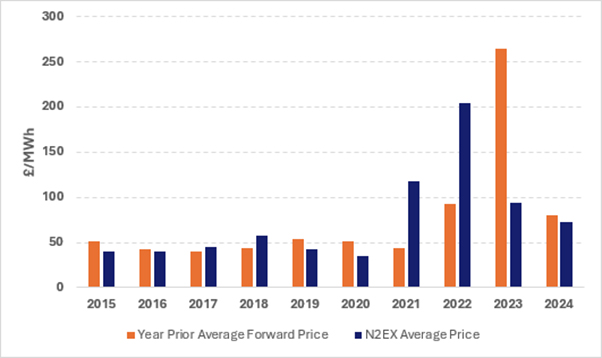
Bloomberg commodity fair value index

The problem with โ€˜set-and-forgetโ€™ hedging

Many corporate energy buyers are left with a binary choice:

  • Fix all volumes
  • Float all volumes
  • Or attempt a static mix between the two

In practice, this leaves procurement teams with a narrow toolkit. It is easy to fall into the โ€˜habitโ€™ of hedging mechanically on a year-by-year basis, constrained by what solutions are available from their suppliers or advisors. But when we examine the outcomes across the last 10 years, a pure forward-hedging strategy performs the worst of all approaches tested.

In our analysis, we compared four strategies over multiple years:

  1. Fixed: hedge everything at the average forward price (i.e., based on an average of how the market valued the โ€˜front yearโ€™ in the preceding year e.g. the daily value of 2015 during 2014)
  2. Float: expose everything to realised spot prices
  3. Flexible protection policy:ย activate coverage when market prices rise to a predetermined trigger, calibrated to the average forward cost, while paying a premium

 The findings are striking:

  • Pure forward hedging produced the highest cost outcome
  • Pure floating had lower average costs, but with extreme volatility – a strategy few corporates would accept
  • Hybrid policy – pre-set triggers with flexibility, meaningfully improved resilience and cost outcomes

Why?

  • In 6 out of 10 years analysed, the realised price was lower than the forward price-hence it was a better strategy NOT to hedge in these years
  • However, in some years e.g., 2021 the realised price was more than double what a buyer could have hedged it at the year before
  • Before collapsing again, the next year to ~33% of the forward valuation
  • Overall, there is no one size fits all strategy but being overly conservative can be value destructive in the long run

A New Hedging Paradigm: Flexibility Over Rigidity

The conclusion is clear –

A one-way, always-hedge procurement strategy is not fit for purpose in this volatile market.

Energy consumers need optionality, the ability to move between fixed and floating exposure as conditions change. This requires:

  • Forward hedging frameworks enriched with market context
  • Trigger-based risk overlays
  • Tools that allow dynamic decision-making instead of static annual hedges

This is the direction sophisticated market participants are already moving. Our goal now is to broaden access to these insights and support procurement teams that are time-constrained and under-resourced, yet responsible for billions in energy spend.

The message to energy buyers is simple:

In volatile markets, flexibility isnโ€™t optional, itโ€™s a competitive necessity.

The results from our analysis of Bloomberg forward curves and N2EX baseload prices are clear: strategies that maintain some exposure to actual market prices consistently outperform rigid, single-track hedging policies. The market is simply too unpredictable for a one-way strategy to be fit for purpose.

Our analysis also shows that over a 10-year horizon, an insurance approach finishes approximately ยฃ10 per MWh better off – factoring in the full cost of the policy. This equals to ยฃ1 million per annum for a 100,000 MWh portfolio. In other words, flexibility doesnโ€™t just reduce risk – it delivers value.

For those interested in exploring the modelling, assumptions, or results in more detail, our team would be pleased to walk through the analysis.  

In todayโ€™s energy environment, flexibility is a measurable advantage.


This article appeared in the Nov/Dec 2025 issue of Energy Manager magazine. Subscribe here.

How HVAC appliances can contribute to grid-interactive buildings

Don Dulchinos

Don Dulchinos, Director at the OpenADR Alliance

Grid-interactive buildings utilise smart technologies and connected systems to optimise energy use and interact with the electricity grid. This new generation of smart buildings is transforming energy management, helping to deliver much greater energy flexibility. Used increasingly in energy flexibility programmes, they offer efficiency for users, and cost savings. 

Importantly, they can actively contribute to balancing the supply and demand of energy, reducing strain on the grid.

These โ€˜intelligentโ€™ buildings โ€“ mostly commercial but residential as well โ€“ can adapt energy use dynamically. Instead of playing a passive role in simply drawing down energy, they reduce demand when the grid is under stress, particularly during peak use.

The growing importance of distributed energy sources

By storing and drawing power from different distributed energy resources (DER) buildings like this treat electric appliances and systems as potential grid resources. 

When we talk about DER, this might include heat pumps, water heaters and other heating, ventilation and air-conditioning (HVAC) systems and appliances or more often today, renewable energy sources like solar PVs, battery storage, or electric vehicles. In commercial buildings, Building Energy Management Systems or BEMS can aggregate these DERs.

Smart buildings and connected homes and technologies are not new of course. Weโ€™ve seen talk of development around this for a while. But recent advances in grid connectivity and standards, and more recently, the integration of AI for smart automation, have accelerated these developments. 

What we are now seeing are more use cases where grid-interactive buildings are enabling the localisation, generation and consumption of energy, while working around the bottlenecks in the distribution network.

The role of industry standards

As an industry alliance that represents both manufacturers and users of HVACR products, and increasingly BEMS, the OpenADR Alliance is witnessing innovation in action. The adoption of these new technologies is driving this progress with the potential to unlock other benefits.

Standards play a crucial role in driving this innovation, particularly in enabling efficient demand response within energy management systems, while governments and regulatory bodies support this by mandating these standards. 

In the US, the CTA-2045 specification (also known as the certified version EcoPort) enables smart appliances and devices to connect directly to energy management systems (commercial or residential) through a universal port. This interoperability promotes flexibility and adaptive energy consumption across appliances, playing a crucial role in encouraging customers to adopt greener practices. 

Any EcoPort-certified control module, when plugged into an appliance or building energy management system, can reliably establish communications that meet the requirements of the CTA-2045 standard.

The UK has followed suit, with two standards published in 2021 โ€“ PAS 1878 and PAS 1879 โ€“ setting out the requirements for energy smart appliances (ESA). The Department for Energy Security and Net Zero (DESNZ) led the development of PAS 1878, incorporating OpenADR as one of the criteria that an electrical appliance must meet to perform and be classified as an ESA. PAS 1879, on the other hand, addresses the demand side response operation of these appliances.

DESNZ has emphasised the significance of innovation in smart technologies in their ambitions to reach net zero by 2050 โ€“ and the role standards will play in driving this transformation.

The governmentโ€™s Flexibility Innovation Program is also contributing to this effort by supporting innovative solutions, including the development of ESA for the delivery of interoperable demand side response as part of its program.

Early implementations

Particularly in the US, these are largely restricted to water heaters, a major source of load response across households. EcoPort provides a standard interface for energy management signals and messages, enabling communication with various devices, such as building energy management hubs, residential gateways, sensors, and more unlikely candidates like pool pumps and EV chargers.

A real-world example is in Oregon, where utilities have implemented OpenADR programs using certified, CTA-2045 equipped devices. Local utilities have focused on compliant smart water heaters and HVAC, which temporarily reduced energy consumption during periods of high demand. This has resulted in a significant reduction in peak demand during hot summer days, taking the pressure off the grid and ensuring customers maintained a comfortable environment.

The success of these sorts of programs demonstrates the huge potential for similar initiatives. By using technology and fostering greater collaboration between governments, energy providers, product manufacturers, and customers, thereโ€™s an opportunity to create a positive energy future.

With the growing range of products and systems now available, grid-interactive buildings are on course to become a major contributor to this. 


This article appeared in the Nov/Dec 2025 issue of Energy Manager magazine. Subscribe here.

Is Your Steam System Winter Ready?

Photo by Aaron Burden on Unsplash

As temperatures begin to drop, steam systems across the UK and Ireland face their toughest test of the year. Winter conditions can expose vulnerabilities that may go unnoticed during milder months, leading to costly downtime, energy losses, and safety risks.

Now is the perfect time to act. By preparing your system early, you can protect performance, reduce operating costs, and ensure your site continues to meet its sustainability goals throughout the colder months.

At Spirax Sarco, we know that steam is at the heart of many essential processes. Thatโ€™s why our Steam System Audit Services are designed not only to keep your operations running smoothly but also to support decarbonisation and long-term efficiency.

Why Winter Readiness Matters

Cold weather can magnify common steam system issues. Small inefficiencies that are manageable in summer can quickly become critical problems when demand rises and temperatures fall. Proactive preparation helps you to:

  • Maintain reliability and uptime during peak demand.
  • Avoid unplanned maintenance and emergency shutdowns.
  • Reduce unnecessary energy losses and operational costs.
  • Safeguard equipment and personnel from winter-related risks.

Key Steps for Getting Ready

A few simple but essential checks can make all the difference:

  • Inspect and replace steam traps โ€“ Worn or leaking traps can lead to freezing, water hammer, and unnecessary energy losses.
  • Insulate exposed pipework โ€“ Proper insulation of steam delivery piping and condensate lines helps prevent heat loss and keeps systems running efficiently.
  • Drain residual condensate โ€“ Stagnant condensate in pipes can freeze, leading to cracks, leaks, and expensive repairs.
  • Schedule a steam system audit โ€“ A professional review identifies hidden inefficiencies and areas for optimisation that routine checks might miss.

How Spirax Sarco Can Help

Our audit engineers use advanced diagnostic tools to assess steam trap performance, monitor system conditions, and uncover opportunities for improvement. From there, we provide clear, practical recommendations to strengthen reliability and efficiency; while helping you move closer to your decarbonisation targets.

Whether itโ€™s ensuring your boiler house is running at peak efficiency or optimising distribution across your site, our experts are here to support you every step of the way.

Why Wait?

The best time to prepare your steam system for winter is before the first frost arrives. Early action means peace of mind: knowing your system is resilient, efficient, and ready to meet seasonal demand.

If youโ€™d like support in preparing your system for the colder months, get in touch with our team to schedule an audit or consultation today.

Together, letโ€™s make sure your steam system is ready for whatever winter brings.

www.spiraxsarco.com


This article appeared in the Nov/Dec 2025 issue of Energy Manager magazine. Subscribe here.

Intelligent building control โ€“Harnessing data and automation to achieve net zero

The decarbonisation of the built environment is central to global efforts to mitigate climate change. With operational emissions from buildings contributing approximately 28% of total global carbon dioxide emissions (according to the Global Alliance for Buildings and Construction), innovative technologies are required to address both energy efficiency and carbon reduction at scale. Sophisticated cloud-based energy management systems such as Irus, are emerging as a key enablers in the drive to net zero within the multi-occupancy buildings sector (PBSA, BTR, Co-Living, Hotels etc.).

For these operators where electric-based heating and hot water loads are significant, the decarbonisation of the grid will provide benefits from lower Scope 2 emissions. However, intelligent building control systems will identify internally where targets are not being met and improvements can be made โ€“ for example, energy waste through heating empty rooms, or when windows are open.

A Technical Overview

Functioning as a centralised IoT-driven control platform that integrates multiple data streams from across a buildingโ€™s infrastructure, these systems primarily focus on space and water heating, traditionally the most energy-intensive aspect of building operations.

Key technical components include:

  • Individual room environmental sensors and control: Temperature, occupancy, humidity, light, sound pressure and CO2 sensors integrated within the ControlSensor feed real-time environmental and behavioural data into a central control Portal.
  • Data. Insight. Action: Historical and real-time data is analysed to optimise setpoints, modulate heating loads, and minimise unnecessary energy expenditure.
  • Cloud-based Analytics Engine: Bespoke software tools process vast amounts of data, providing continuous optimisation.
  • API Integration: Could enable seamless interoperability with existing Building Management Systems (BMS) and other platforms, renewable energy assets, and external data sources (including weather forecasts).

Decarbonisation Mechanisms

1. Demand-Responsive Heating Control
Traditional time-based heating schedules often fail to reflect actual occupancy and usage patterns, particularly in student accommodation, leading to substantial energy wastage. This tech uses real-time occupancy detection to enable demand-led heating control, ensuring that rooms only use energy when required. This granular control reduces both energy consumption and peak load demand.

2. Adaptive Setpoint Optimisation
Temperature setpoints are adjusted within defined comfort bands based on variables such as external temperatures, occupancy, and interaction with the system by the room occupant.

3. Predictive Maintenance and Fault Detection
By monitoring equipment performance trends, anomalies can be identified – indicative of equipment inefficiency or impending failure, enabling proactive maintenance. This optimises asset life cycles and avoids the carbon costs associated with inefficient equipment operation.

Quantifying the Impact

Irus installation analysis has shown operational energy savings in the range of 30โ€“35%, with heating load in some cases reduced by as much as 50%, depending on building type and baseline system efficiency. These savings directly translate to substantial COโ‚‚e reductions, contributing materially toward corporate ESG reporting, regulatory compliance, and sustainability certifications such as BREEAM and GRESB.

For large building portfolios, centralised control and data aggregation, facilitates portfolio-wide energy optimisation strategies, consistent reporting frameworks, and the ability to benchmark asset performance across multiple sites.

Enabling the Transition to Net Zero

Intelligent building control exemplifies the convergence of IoT, cloud computing, and AI-powered control in delivering practical decarbonisation pathways for the built environment. By enabling precise, responsive, and predictive control of building systems, it empowers facilities managers, energy consultants, and sustainability professionals to materially reduce operational carbon footprints while maintaining occupant comfort and operational resilience.

As regulatory pressures tighten and the financial implications of carbon-intensive operations grow, the integration of intelligent control systems will become an increasingly indispensable component of net zero building strategies.

https://prefectcontrols.com/


This article appeared in the Nov/Dec 2025 issue of Energy Manager magazine. Subscribe here.

Smarter hospitals, healthier outcomes with Optimum

In todayโ€™s healthcare landscape, hospitals face a unique set of challenges. From rising energy costs and ageing infrastructure to the critical need for clean air and uninterrupted operations, the pressure to deliver safe, efficient, and sustainable care has never been greater.  E.ON Optimum is a cutting-edge energy management platform designed to meet these complex demands.

The Healthcare Energy Challenge

Hospitals are among the most energy-intensive buildings in the public sector. With 24/7 operations, strict climate control requirements, and a wide array of medical equipment, inefficiencies can quickly escalate into operational risks and financial strain. Traditional building management systems (BMS) often fall short with fragmented data, limited visibility, and reactive maintenance leaves facilities teams struggling to keep up.

Optimum changes the game.

By integrating seamlessly with existing infrastructure, including legacy BMS and smart meters, Optimum provides intuitive dashboards for monitoring, managing, and optimising energy use and air quality across the entire hospital estate.

Optimising Energy, Maximising Value

At the heart of Optimum is its ability to turn complex data into actionable insights. Hospitals can visualise energy consumption and inefficiencies in real time whether across a single ward or an entire multi-site trust.

  • Cost Savings: Facilities managers can confidently track anomalies, benchmark performance, and plan interventions. Optimumโ€™s automated alerts flag excess energy use, such as HVAC systems running overnight due to faulty sensors. In one use case, a single faulty sensor was costing our customer over ยฃ26,000 annuallyย in wasted energy. With Optimum, the issue was detected and fixed remotely, saving 120,000 kWh and delivering instant ROI.
  • Improving Patient Comfort and Air Quality: Indoor air quality isnโ€™t just a comfort issue; itโ€™s a matter of patient safety. Poor ventilation can increase the risk of infection transmission, especially in high-traffic areas like waiting rooms and wards. Optimum enables hospitals to monitorย COโ‚‚ levels, humidity, and air circulationย in real time, helping facilities teams maintain healthy environments and comply with infection control standards.
  • Remote Diagnostics and Maintenance Efficiency: Hospitals often operate with lean maintenance teams stretched across large estates. Optimumโ€™s remote access capabilities empower engineers to diagnose and resolve issues without unnecessary site visits. Whether itโ€™s a boiler fault in a surgical wing or a lighting anomaly in a car park, teams can respond faster, reduce downtime, and prioritize high-impact interventions.

The Energy Solution for Modern Healthcare

Healthcare organisations often face tightening budgets, greater accountability, and the urgent push toward net-zero. Optimum addresses each of these challenges head-on: 

  • Budget Relief: Optimum isnโ€™t just a tool; itโ€™s a strategic asset. Organisations using the platform have reported annual savings that far exceed the cost of implementation, with some achieving six-figure reductions in energy spend. These savings can be reinvested into frontline services, equipment upgrades, or sustainability initiatives.
  • Customisable dashboards: Hospitals can customise dashboards, tag meters by department, and track performance across multiple sites. Customisable dashboards let teams compare air quality across departments, spot underperforming zones, and act before issues escalate improving patient outcomes and staff wellbeing. Whether managing a single acute care facility or a regional trust, Optimum adapts to your needs.
  • Net Zero Alignment: The platform supports carbon reporting and sustainability tracking, helping hospitals meet government targets. Features like load analysis, benchmarking, and project tracking enable decision-makers to plan and validate energy efficiency projects with precision.
  • Future-Proofing: Optimumโ€™s open protocol architecture ensures compatibility with a wide range of technologies from legacy systems to emerging IoT devices, meaning todayโ€™s investment wonโ€™t become tomorrowโ€™s limitation.

The screenshot below features our simple, customisable dashboard giving you a clear view of energy and gas consumption across multiple sites making performance tracking simple.

A Trusted, Secure Partner

Already trusted by thousands of organisations, Optimum has been independently verified by Verdantix as a leader in reporting, monitoring, and controls. It combines innovation with robust reliability.

Data security is paramount in healthcare. Optimum is hosted securely in European data centers and we align to strict security standards, ensuring sensitive information is encrypted both in transit and at rest. For NHS trusts and private hospitals alike, this provides peace of mind alongside performance.

A Healthier Hospital Starts with Smarter Energy

In a world where every kilowatt and every carbon tonne matters, E.ON Optimum offers more than just data, it offers clarity, control, and confidence. For hospitals striving to deliver safe, sustainable care under pressure, Optimum is the digital backbone that turns insight into impact.

Are you ready to take control of your hospitalโ€™s energy future? Visit our website or speak to our experts to learn more. https://www.eonenergy.com/business/building-and-energy-management/optimum.html


This article appeared in the Nov/Dec 2025 issue of Energy Manager magazine. Subscribe here.