



If you are responsible for any aspect of the electrical installations in a building, you will undoubtedly have encountered the IET Wiring Regulations. But did you know that these ubiquitous regulations now include references to energy efficiency? Julian Grant of Chauvin Arnoux explains.
The IET Wiring Regulations, which have been around in one form or another for almost 140 years, have traditionally focussed on two things. These are safety, to protect users of electrical installations from electric shock and other hazards, and capacity, to ensure that equipment and cables are correctly sized to supply the connected loads without danger of overheating. Since the summer of 2018, however, the regulations have also highlighted something else: energy efficiency.
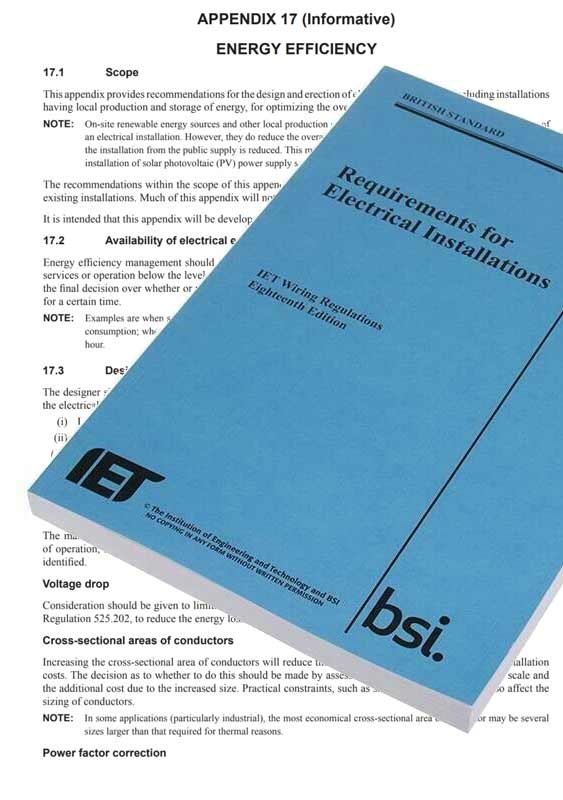
At the moment, the coverage of energy efficiency is tucked away in Appendix 17, and this appendix is designated as ‘informative’ which means that observance of its contents is not compulsory. With this in mind, why should you care about it? There are two very good reasons.
The first is that whatever the regulations say or don’t say, we all have a duty to make sure that electrical installations don’t waste energy, because wasted energy means higher energy bills and unnecessary environmental impact. The second reason is that there are plans for a future amendment to the regulations which will include an expanded section on energy efficiency that could well involve compulsory requirements. Now is a great opportunity to prepare for this and get ahead of the game!
So what’s to be done? Appendix 17 makes some very practical recommendations, the first of which is that the load profile for the installation should be determined, to provide accurate information about exactly where and when energy is being used. For new installations at the design stage, this can only be done by calculation, but the appendix specifically states that its provisions also apply to modifications on existing installations, and in these cases, it will often be possible to carry out actual measurements.
Armed with the load profile information, it’s time to consider voltage drops and conductor sizes. This is nothing new, of course, but the appendix notes that to optimise energy efficiency it may be preferrable to specify larger cables than those that would have been selected purely on the basis of current carrying capacity. This will reduce losses in the cables and help to ensure that loads are supplied at the correct voltage for efficient operation.
Another aspect to consider is the arrangement of the loads. Where should they be positioned to minimise the length of the cable runs? And can they be grouped so that non-essential loads can be turned off to reduce peak demand and so that some groups of loads can be controlled automatically? This may be possible, for example, with lighting loads which can be controlled by light sensors so that they are turned on only when needed. In fact, the appendix notes that ‘solutions for lighting control can increase energy efficiency by more than 50%.’
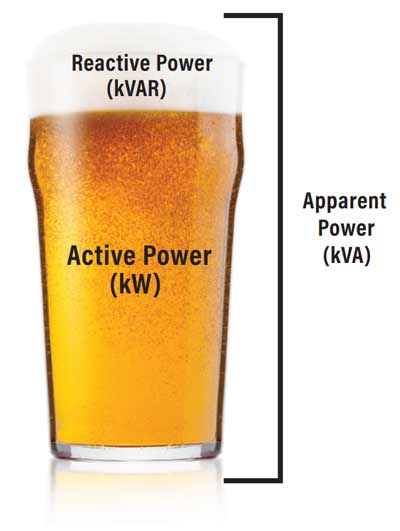
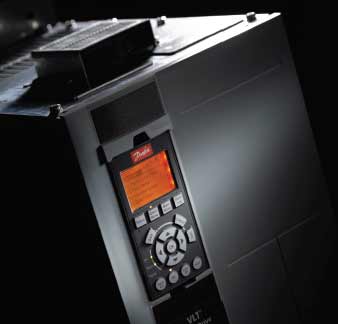
Power factor is also highlighted in the appendix, which suggests that in many cases it may be better to provide power factor correction for individual loads or at local distribution boards rather than to provide overall correction for the whole installation at the main distribution board. Those involved with electrical installations are additionally encouraged to look closely at motors and how they are controlled, since using the latest high-efficiency motors and/or installing variable speed drives rather than fixed speed starters can unlock very substantial energy savings.
While Appendix 17 makes a wide range of recommendations, there is one common theme that runs throughout and that is the importance of measuring and monitoring. In addition to recommending an accurate initial determination of the load profile, the appendix states that ‘provision must be made to allow the measurement and recording of energy consumption throughout major parts of the installation …’ and ‘to achieve a design capable of delivering a high level of energy efficiency, all available energy consumption data must be taken into account.’
Overall, there’s no doubt that Appendix 17 provides building managers with a lot of food for thought relating to energy efficiency, particularly when upgrading existing installations or planning new ones. Getting to grips with the recommendations of the appendix may present a few challenges but, if it does, it’s worth remembering that the experienced support team at Chauvin Arnoux is there for you and is always ready to provide expert advice and guidance.
