


Steve Scrimshaw, Vice President UK&I, Siemens Energy
Ahead of the spring budget, the Chancellor, Jeremy Hunt, spoke of a ‘clean energy reset’ which sounded like a promising step on our net zero journey. There are certainly elements of last week’s announcement that will help us to move the dial forward, but the UK needs to work hard to ensure that we benefit from the booming clean energy industry.
Grant Shapps, Secretary of State for Energy Security and Net Zero, has been hinting at more to come with “Green Day” later this month, which promises to introduce several environmental policies. Let’s hope for pragmatic, targeted legislation which tackles some of our biggest net zero challenges simply and effectively.[1]
Green is good business
After three decades working in energy, I can say that competition between countries for green investment and innovation has never been so strong. Global investment in the green transition hit USD 1 trillion dollars last year, a figure that is set to triple by 2030. [2]
Far-reaching legislation, like the United States’ Inflation Reduction Act (IRA) and the European Union’s eagerly awaited Green Deal Industrial Plan are being hailed as gamechangers for the planet’s net zero journey. Neither act is perfect, but they are comprehensive and pragmatic, granting necessary subsidies to wind and hydrogen projects. They give the sector some of the tools it needs to get on with the job at hand, right now. As Ursula von der Leyen said in her address at the European Commission last week; The race is on.[3]
The budget made significant commitments including £20bn on carbon capture and storage (CCS) and expansion of nuclear power that will certainly support our energy transition. However, planning, consent and construction of new sites takes time and resources. It is a long-term process. And while we wait for this to be realised, what can we do now to accelerate hydrogen projects, make sure our energy markets are fit for the net zero transition and grow the skills needed for green jobs?
The UK Government needs to get under the skin of the sector, reducing complexity, enabling decisive policy decisions to be made and helping us to retain our status as a decarbonisation frontrunner.
Bridging the gap to greener solutions
As we highlighted in our National Endeavour report, delivering a net zero electricity system by 2035 relies on building a significant amount of new infrastructure. This includes dispatchable low-carbon generation using clean fuels like hydrogen and we can’t do that overnight. As the UK’s climate change committee warned, a reliable, secure and decarbonised power system by 2035 is possible…just not at this pace of delivery.[4]
Our net zero success hinges on how our grid responds to a changing energy mix.
Today, we need around 40% natural gas for a sustained electricity supply.[5] Our power grid relies on a dispatchable source of electricity to prevent blackouts. That’s why natural gas, which burns cleaner than other fossil fuels, remains a necessary short-term solution to meet our nation’s ever-growing energy demands, while we solve the intermittency challenge of renewables.
Technology plays a significant role here – last week, we handed over the Keadby 2 site in Lincolnshire to our customer, SSE Thermal. A Siemens Energy combined-cycle, high-efficiency turbine will enable the site to be one of the cleanest and most efficient gas-fired power station in Europe.[6] With the ability to reach full power in just 30 minutes, the turbine complements the intermittency of renewable generation.[7] When the sun doesn’t shine, or the wind doesn’t blow, the turbine generates electricity as cleanly and efficiently as we can using gas. And what’s more, it’s hydrogen-capable, so when the time is right, we can transition to hydrogen-blended gas to further reduce emissions.
SSE Thermal’s next site, Keadby 3 is already in planning stages and will be a carbon capture plant, so the vast majority of emissions from this site won’t enter our atmosphere.
Creating the tech we need for the energy transition
Technology is helping us make incremental gains, but 40% of the solutions we expect will take us to net zero by 2050 are not ready for today’s market.[8] Just last month, a world-first bio-methanol pilot run by the Net Zero Technology Centre and Siemens Energy successfully powered an aero-derivative gas turbine on bio-methanol.[9] This creates potential for as much as a 75% reduction in offshore CO2 emissions, paving the way for existing offshore assets to operate using low-carbon fuels, with no need for extensive modifications. The eight proposed investment zones announced in the budget could help to accelerate green innovation like this, so we can all start benefitting from new technologies more quickly.
Making connections and taking action
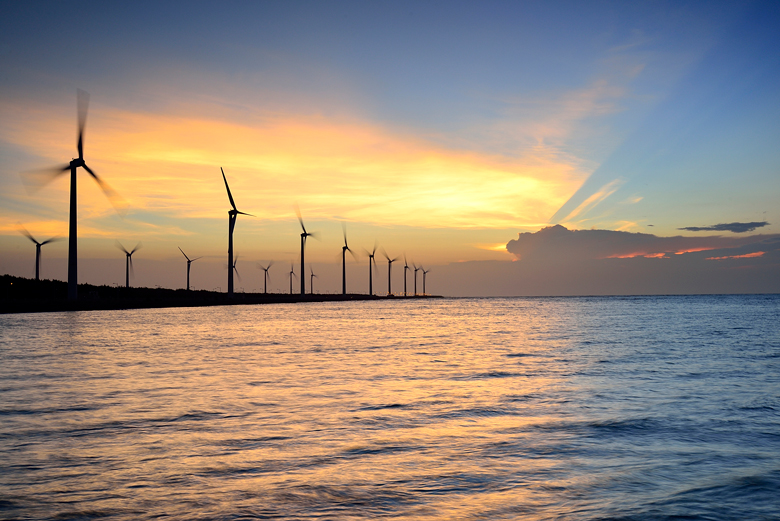
Our grid infrastructure is the beating heart of the transition, and renewable generation will feed our demands, significantly reducing fossil fuel usage. This month, the Climate Change Committee (CCC) forecast that by 2035, c.70% of British electricity will come from solar and wind farms.[10] To make this a reality, we must solve the challenge of grid capacity and invest in our wind sector, keeping it attractive in a world with significantly higher costs. We need to see changes to the consenting and allocation process, and the realities of commodity costs and interest rates addressed in CFD (Contracts for Difference) budgets, to ensure key projects make FID (Final Investment Decision).
I don’t deny that there’s a lot of change that’s needed. But broad investment, simplification of regulatory frameworks and wholesale grid infrastructure upgrades would go a long way in accelerating our progress and bolstering our energy security. Let’s see if “Green Day” gives our sector the direction and tools it needs to deliver net zero.
[2] https://ec.europa.eu/commission/presscorner/detail/en/speech_23_1672
[3] https://ec.europa.eu/commission/presscorner/detail/en/speech_23_1672
[5] https://www.ukoog.org.uk/onshore-extraction/uses
[8] https://www.linkedin.com/pulse/why-energy-resilience-essential-global-security-christian-bruch
