Solving climate change through collaboration

As climate change intensifies, the risks and damages from extreme weather events have become increasingly critical for businesses. In response, OMRON Device & Module Solutions Company collaborated with Weathernews Inc. to develop advanced weather IoT sensor designed to mitigate these risks. The result is an innovative, cost-effective sensor module for real-time, on-site weather monitoring, providing businesses with a powerful tool to improve efficiency and enhance resilience against climate-related disruptions.

Samira Amani

Samira Amani, Senior Product Marketing Manager, at Omron Electronic Components Europe B.V.

With climate change causing increasingly unpredictable and extreme weather patterns and events, the need for continuous weather monitoring to support effective disaster management has become increasingly essential. Access to local, real-time weather data is more critical than ever before. Accurate and timely weather data is increasingly vital for day-to-day operations within many sectors, including agriculture, energy infrastructure, meteorology, oil and gas, transportation and logistics, and smart cities.

Conventional approaches to mitigating the risks associated with climate change are increasingly struggling to cope in the face of more extreme and deadly weather. Almost every industry is exposed to the effects of climate change. At construction sites, precautions must be taken against strong winds and heatstroke. In agriculture, reliable real-time weather data and historical trends are crucial for optimal crop management, helping to increase yields and improve decision-making around irrigation, planting, and harvesting. Outdoor event and leisure facilities need accurate weather data to ensure that activities on-site are safe. As global weather systems become more extreme and unpredictable, effective weather monitoring is becoming an increasingly challenging task.

The sooner an incoming weather event can be identified, the more effectively it can be prepared for. In contrast, if it is identified too late, the effects can be catastrophic. Furthermore, general weather sensors are comparatively expensive in terms of their unit price and operating costs, requiring large-scale installation on-site. As well as higher installation and maintenance costs, they often require specialised training to mitigate or prevent any faults and failures. This presents a barrier for sites, locations and communities that require accurate weather data, yet lack the financial resources and on-site engineering expertise to purchase, install and operate the highly sophisticated sensors used by specialist meteorological facilities.

To address this growing issue, Omron recently joined forces with Weathernews, one of the world’s largest private weather information companies. Together they sought to develop a more accessible, flexible, and cost-effective multi-purpose weather sensor, which can be used to address gaps in weather data coverage, and provide precise, immediate, and highly localised weather data. This in turn can help to improve resilience to natural disasters and the effects of climate change.

Having collaborated on the development of sensing devices since 2017, and previously used the company’s products in other applications, Weathernews approached Omron to propose the development of a versatile, compact, and cost-effective sensor with minimal maintenance requirements.

The project was not without its challenges. While Omron possesses considerable expertise in sensor and embedded technologies, a weather sensor was not something that the company had previously attempted. Weather and climate observation are highly complex disciplines, and accurate datarequires a deep understanding of the various patterns and phenomena that can influence meteorological behaviour. The company collaborated closely with Weathernews to gain a better understanding of the mechanics of weather, and gain insight into precisely what the market needed in a sensor solution.

Omron also carried out its own research to explore and in some cases challenge mechanisms of weather, as Weathernews Inc. Technical Director Yuichiro Nishi explains: “We had been impressed by OMRON’s superior technology, creativity and implementation from the planning stage of this project. For example, we are taught that the shape of raindrops is flattened when water droplets are crushed by air resistance, but OMRON, without being bound by conventional wisdom, actually photographs raindrops with a high-speed camera to understand the theory and reality of raindrop shapes, and then applies this knowledge to the design and shipping inspection processes. We would like to express our gratitude to OMRON for demonstrating the ability to take action through various experiments and other means to achieve a high level of quality.”

Of course, results obtained under laboratory conditions are no substitute for the real world environment. For instance, when a prototype sensor was installed on the rooftop of a building or in other high-rise locations, Omron’s engineers observed an unexpected phenomenon whereby the number of raindrop detections jumped due to raindrops adhering to the sensor and staying there when it rained, and also due to the shaking of the raindrops caused by the wind. In order to prevent this phenomenon, engineers obtained weather knowledge and feedback from Weathernews and reviewed the product’s structure in terms of software and hardware, resulting in a product structure preventing raindrops from staying on the sensor.

The wind direction and velocity sensors presented additional challenges. The sensor needed to be able to detect wind velocity of up to 50 m/s. 50 m/s is an extremely strong wind, equivalent to 180 km/h, and capable of downing trees and overturning heavy vehicles. Since the sensor was developed for use in environments such as construction sites where strong winds at altitude can put equipment at risk, it was necessary to find a solution. Omron designed and built a wind tunnel machine specifically to test the sensor, however this could not create truly representative conditions simulating 50 m/s wind. Instead, the company used a more powerful wind tunnel at an external site, which allowed engineers to make the necessary calibrations to ensure that the sensor would perform.

By the end of the rapid 15-month development period, Omron had developed a composite sensor capable of acquiring multiple streams of weather data simultaneously from a single unit. The sensor in effect combines seven separate sensors into one, providing accurate real-time measurement of wind direction, wind velocity, rainfall, temperature, humidity, barometric pressure, and light levels – all within a single compact unit. Crucially, the sensor is plug-and-play, requiring only a power supply to function. Installation and maintenance are much simpler compared to more complex weather sensor systems and requires little in the way of specialist training.

The sensor is rated IPx3 and optimised for outdoor installation. It contains no moving parts, which reduces the risk of malfunction and breakage, and has minimal cleaning and maintenance requirements. Currently, only wired communication via RS232 is available for Europe, while wireless methods like LTE-M and LoRa are being considered for future implementation. This allows the sensor to connect seamlessly with various devices and systems, with expanded communication options on the roadmap.

The weather sensor holds great potential as a cost-effective, flexible, and highly accurate solution for real-time weather monitoring, particularly in remote areas and sites where reliable data is difficult to obtain. Its capabilities enable higher efficiency in data collection and analysis, helping to reduce the risks associated with natural disasters by providing more effective early warnings at a local level.


Retrofit in 2024/5: From “How Are We Going to Do This?” to “How Can We Make It Business as Usual?”

Andy Sutton

Andy Sutton, co-founder and chief innovation officer at Sero

In 2023 and early 2024, the discourse around retrofit was dominated by the barriers, particularly the lack of funding. Fast forward nine months, and while funding remains a key topic, the conversation has evolved. Now, the focus is on how landlords are exploring funding beyond grants, developing strategies to deliver at scale, and making retrofit a standard practice.

The Shift: What’s Driving It?

Several factors have contributed to this shift. The private sector’s growing interest in investing in retrofit projects, coupled with the release of Wave 3 of the Warm Homes Social Housing Fund, has certainly played a role. However, the most significant driver is the determination of landlords to make retrofit a reality.

Key Drivers of Change

  1. Fuel Poverty and Energy Efficiency: The energy crisis has heightened awareness of fuel poverty. Boards are increasingly motivated to improve the energy efficiency of homes to reduce residents’ energy bills. In 2025, we anticipate that more landlords will define their decarbonisation strategies based on the potential reduction in residents’ fuel bills.
  2. Mainstreaming Retrofit in Asset Management: Retrofit is becoming a core component of asset management. The connection that retrofits done well, addresses competing priorities, such as improving conditions for damp and mould has been made. There is also a growing recognition that retrofit is an enhanced form of planned maintenance, which, if well-planned, can reduce the additional cost of retrofit.  
  3. Integrated Budgets: A notable trend is the merging of decarbonisation and planned maintenance budgets. This integration allows landlords to transition from merely maintaining properties to both maintaining and improving them. This approach is expected to gain traction in 2025, with more landlords aligning their decarbonisation strategies with their planned maintenance.

The journey from questioning the feasibility of retrofit to embedding it as a business-as-usual practice is underway. With continued innovation, commitment, and the Wave 3 allocation announcements in 2025, next year I have every confidence we’ll see large-scale projects delivered and increasing confidence throughout the sector that it can be done. 

Lessons Still to Learn in 2024 and Beyond

The announcement of continued funding under the Warm Homes: Social Housing Fund Wave 3, despite some delays, was a welcome development. Notably, the introduction of the Strategic Bid has been pivotal in shifting landlords’ focus towards delivering retrofit at scale. However, there are still critical lessons to be learned.

Addressing the Boom-Bust Cycle

One significant issue that remains unaddressed is the boom-bust cycle created by the application process and funding requirements. While the Strategic Bid process has introduced some flexibility by not strictly stipulating the homes to be improved, the need to specify homes and measures upfront continues to constrain delivery. This project-centric approach forces the sector to plan retrofit works as discrete construction projects rather than as ongoing processes.

Learning from Past Challenges

The sector has seen funds returned due to the inability to deliver within the stipulated timeframes. Understanding why this happens and identifying necessary changes is crucial. The rigid entry requirements and project-based thinking needs to evolve to support a more fluid and process-oriented approach to retrofit.

Moving Forward

To truly embed retrofit as a standard practice, we must learn from these challenges. This involves rethinking the funding application process to allow for greater flexibility and continuity, enabling landlords to plan and execute retrofit projects more effectively. By addressing these issues, we can start to break the boom-bust cycle and address some of the issues being faced within the supply chain. 

Taking things forward into 2025, the hot topics I think we’ll see…

As we look ahead to 2025, several key trends are poised to shape the retrofit landscape, driven by technological advancements and regulatory changes. Here are some of the hot topics I expect to dominate the conversation:

Focus on Supply Chain Delivery, Quality and Compliance

As landlords gear up to deliver their Wave 3 funding allocations and embark on larger-scale projects, addressing supply chain issues will undoubtedly be a major focus in 2025.

This will involve not only addressing the skill shortages but also fostering collaboration within the supply chain to maintain high standards and meet project timelines.

We are already hearing about enforcement actions against contractors who fail to adhere to PAS 2035 standards, and we know landlords are also concerned about not repeating the delays experienced in previous waves. Learning from these past challenges and increasing our focus on quality and consistency is essential to ensuring timely project completion within funding and PAS 2035 requirements. By focusing on these areas, we can make significant strides in embedding retrofit as a standard practice in the housing sector.

High-Temperature Heat Pumps: A Cost-Effective Solution?

Increasing amounts of emerging data suggest that overall the annual efficiency of high-temperature heat pumps may not be significantly less efficient than their low-temperature counterparts. The installation costs for high-temperature heat pumps are typically much lower, as they often don’t require extensive home modifications. In contrast, low-temperature systems frequently necessitate the replacement of existing radiators and distribution systems, significantly adding to the installation cost.

Given this emerging data on performance, the cost differential makes high-temperature heat pumps an attractive option for those looking to balance upfront investment with operational expenses.

Energy Market Reform: A New Era of Regulation and Innovation

The energy market is on the cusp of significant reform, with Ofgem taking on the responsibility of regulating heat networks. In 2025, we can expect Ofgem to focus on how to effectively regulate this space, with an emphasis on tackling fuel poverty and ensuring warm homes for all. This regulatory shift will be a critical component of broader energy market reforms, which aim to evolve and mature the flexibility and demand within the grid.

Leading the Charge in 2025: Sero’s Vision for Decarbonisation

At Sero, we are thrilled about the opportunities that 2025 holds. Our partnerships with forward-thinking landlords who share our passion for innovation and resident-centric decarbonisation are truly inspiring. Together, we are poised to drive fresh thinking and transformative change.

As we embark on this journey over the next year, I am confident that we will showcase how effective retrofitting can be achieved, sharing the learnings we’ve gained in 2024 to really tackle what needs to be done in 2025 and beyond. Our collaborative efforts will not only enhance the lives of residents but also address the sector’s need for delivering at scale, whilst providing affordable and healthy homes. We are committed to making a real, tangible impact, setting new standards for the industry.

University of Kent set to cut emissions by 50% through new carbon reduction strategy

The University of Kent (UoK) is set to cut emissions by 50% through a new carbon reduction strategy developed in partnership with technology company Siemens, as it continues to work towards achieving its net-zero targets. Developed following an Investment Grade Audit (IGA) undertaken to get a detailed assessment of the University’s energy performance, the strategy sets out a roadmap to reduce carbon emissions across its Canterbury and Medway campuses – home to over 19,000 students.

The first major step towards the reduction of energy consumption on campus will see the installation of LED lighting in all buildings and upgrades to all building management system controllers, as well as space optimisation and an updated metering system to maximise energy use across the estate. The plan also outlines an ambition to install an 0.74 MW rooftop solar PV array, which will generate more than 675,000kWh electricity each year. All of the zero-carbon energy generated on site will be consumed across the University’s campuses.

In 2021 the University of Kent agreed on an ambitious yet achievable target of reducing scope 1 and 2 greenhouse gas emissions to net zero by 2040 and scope 3 emissions to net zero by 2050. The University’s aim is to reduce emissions by at least 50% by 2030 compared to the baseline year of 2018/19.

Andrew Smyth, Head of Sustainability, SI-Buildings GB&I, Siemens UK and Ireland, said: “Decarbonising large estates represents a huge challenge for the higher education sector, and this type of collaboration will be vital in supporting institutions across the UK in achieving net zero. Our strategic plan puts the University on a path to eliminating emissions while reducing fixed costs, improving energy demand management and updating ageing infrastructure through digital transformation. This will not only reshape the University’s relationship with its campus estate but will form the basis of its efforts to achieve net zero through innovation and sustainable investment. We look forward to continuing to support the organisation on this journey in the years ahead.”

Georgina Randsley de Moura, Acting Vice Chancellor added: “Our partnership with Siemens is central to our commitment to embed carbon reduction across our operations and place sustainability at the heart of our decision making. We have unique strengths as a university in tackling climate change and are determined to bring together the talent and endeavour of staff, students and the wider community to make a tangible impact. This includes developing an estate which is fit for the future, embracing modern technology and external partnerships where they can act as a catalyst to delivering our mission.”

Funding for the scheme will be provided by Siemens Financial Services through a flexible financing package, allowing UoK to begin repayment only once the upgrades to the estate have been delivered.

ABB partners with World Green Building Council to Drive Sustainable, Energy-Efficient Buildings Across Europe 

ABB’s Smart Buildings Division has announced a new collaboration with the World Green Building Council’s (WorldGBC) European Regional Network (ERN), aimed at advancing sustainable, energy-efficient building practices across Europe.  

ABB has joined WorldGBC’s European Regional Network as a Regional Knowledge Partner to drive progress in low-carbon, energy-efficient buildings that align with Europe’s sustainability goals. Leveraging its expertise in electrical and automation technologies, ABB also aims to collaborate with industry leaders to advance innovative customer solutions. This partnership will provide ABB with access to a robust network of experts and member organizations, fostering valuable insights and feedback. Together, they will contribute to meeting key sustainability frameworks, such as the Energy Performance of Buildings Directive (EPBD), while supporting a cohesive approach to shaping building policy across Europe. 

The World Green Building Council is dedicated to accelerating sustainability in the built environment, working with governments, businesses, and organizations to drive systemic change around the world. Through its European Regional Network of over 20 Green Building Councils and nearly 5,000 members, WorldGBC is a catalyst for positive change which aims to reduce the environmental footprint of buildings across their entire lifecycle. Recent initiatives spearheaded by the network include the #BuildingLife project to develop an EU Roadmap, with a full set of recommdations to address Whole Life Carbon (WLC) in buldings across Europe, as well as 12 National Decarbonisation Roadmaps initiated to address national level needs.  

“With buildings responsible for approximately 30% of final energy consumption and for 26% of global GHG emissions, the opportunity for impact is enormous,” said Mike Mustapha, President of ABB Electrification’s Smart Buildings Division. “Our collaboration with the World Green Building Council’s European network will support ABB’s efforts to share expertise and partner with organizations that maintain similar values and ambitions toward a sustainable, low-carbon future. Together, we have the potential to advance smarter, more energy-efficient buildings across Europe that foster resilient, inclusive communities.” 

Laura Pallares, Head of the Europe Regional Network (ERN), WorldGBC said, “We couldn’t be more delighted that ABB has joined us as a regional member. The journey to net zero relies on partnerships and collaboration with like-minded organisations. Through our mutual vision for electrifying the built environment and commitment to sustainability, the opportunities for progress are endless.”  

Aligned with its sustainability goals, ABB’s participation also reflects its dedication to addressing trends like the shift to electrified, urbanized environments. ABB’s innovative automation and energy management technologies are designed to optimize energy use, integrate renewable sources, and enhance building intelligence, enabling customers to meet these emerging challenges effectively, while enjoying a more comfortable, personalized living and working experience. 

This collaboration marks another step in ABB’s sustainability journey to provide products and solutions that support our customers sustainability needs while also reflecting its commitment to advancing a sustainable built environment across Europe. 

Find out more www.worldgbc.org  www.abb.com  

Pressure Builds for the Energy System Transformation in 2025

Image courtesy of Eclipse Solutions

As 2024 comes to a close, it’s worth looking in the rearview mirror to see how far we have travelled and look ahead at the journey to come. Spencer Thompson, CEO of Eclipse Power Group shares his thoughts on the progress made in 2024 towards the energy system transformation and what we might expect in 2025.

For the energy industry, 2024 has been an absolute whirlwind year for all sorts of different reasons. The length of the grid connection queue continued to dominate the agenda and became an election issue. It’s encouraging that the new government is trying to step in and accelerate the issue. The additional focus and a new sense of urgency is welcome but it’s probably too late to accelerate anything now. A reflection that I think is being recognised among the key stakeholders. Which goes some way to explaining the delay to Connections Reform, which was due to go live on January 1st but has been pushed back to Q2, 2025 by Ofgem.

It’s both disappointing and encouraging that Connections Reform has been pushed back a year. Disappointing, because as an industry we really need to be moving forward significantly in order to deliver sufficient energy security to fuel growth for the country. And encouraging, because it shows that Ofgem has taken notice of the pushback the reforms received during the public consultation.

Clean Power 2030 is a welcome ambition, which does need to be resolved quickly as many of the candidate projects will take two to three years to deliver. With sensible selection criteria, it can work, but we mustn’t lose sight of the investment already made in these project developments.

Connection timeframes of 10 years and over are widely regarded as unacceptable. They will inevitably hold back the growth aspirations of the new Labour government. But grid connectivity is bigger than just a GB problem. Connecting renewable electricity sources to the grid to hit Net Zero targets is a global issue. We are seeing countries like Australia making some great advances with regional renewable development zones, which is certainly something we should be looking closely at in the UK.

Elsewhere, countries like Greece, Italy, Poland and Germany have hundreds of local Distribution System Operator (DSOs), which are the equivalent of our Distribution Network Operators (DNOs) but operate and run their own local energy. This makes them more adaptable to local energy solutions including microgrids and private networks, and potentially create social tariffs that utilise local energy.

The noise building around microgrids has triggered the smarter developers to look at different and more innovative solutions to save cost, keep building and reduce the length of time to connect to the grid.

More pressure might come from developers thanks to the Future Homes standard, set to be introduced in 2025. This will see changes to building regs to require new build homes to reduce carbon emissions to 75% – 80% of previously built homes. Less access to renewable power means less carbon reduction, which in turn could mean no planning permission to meet house building targets. When large developers see the potential for local energy solutions, they will add their voice to calls to devolve power from central to local levels.

It’s giving impetus to a ‘think global, act local’ approach to decentralise the management of electricity supply. The industry is divided on this, of course. Bringing this out into the open could hopefully see this becoming more of a focus in 2025.

Grid connection challenges extend beyond the energy industry. Planning constraints and nimbyism still present enormous obstacles. Local authorities face conflicting pressures. Councils and LAs obviously want to preserve their local environments and keep their communities happy, but most have also declared a climate emergency and know that they must act on it. That means granting planning permission for the electricity infrastructure to support renewables and unlocking access to the grid for such projects.

The part that the energy industry plays in the country’s economic ecosystem is important, but it is does not operate in isolation. As pressure builds from central and local government, from industry, developers and energy consumers, the industry is under pressure to act. That’s not to say that it has been resting on its laurels over the past years, but things are definitely coming to a head. It calls for strong leadership to break through the barriers to progress, and an appetite for making bold moves, such as shutting down the queue for six months to put the brakes on, understand what’s actually needed, and support real deliverable projects. With that in mind, it does make sense to give more time to consider all the options for Connections Reform.

All in all, if 2024 was a whirlwind, throwing up more questions than answers, 2025 is likely to see a raft of different solutions being considered, some discarded and some adopted. So, instead of seeing the past year as frustrating, let’s consider it one of growth leading to new ideas. Ultimately, 2025 may echo to the sound of ‘Don’t Look Back In Anger’ in more ways than one.   

The misleading spin surrounding net zero

Andrew Normand

Andrew Normand, business development director at Encora Energy, explains why talk of blackouts and rationing of energy use are being misused to stigmatize the opportunities of the energy transition

In the latest round of political wars, Net Zero has become a hot topic amid conflicting views on the benefits versus the costs. As part of this, several apocalyptic scenarios have been thrown around as probable outcomes of the drive for a clean power system by 2030.

While the energy transition is complex and it will have to evolve to ensure that it manages costs and risks effectively, these dire predictions imply unmanaged risks and frame opportunities as disadvantages. While this is mainly just political posturing, pandering to this will delay a necessary transition and miss huge opportunities in improved competitiveness.

What will prevent a blackout?

The most apocalyptic prediction being passed around is the danger of blackouts, periods where the supply doesn’t meet demand and the electricity grid fails, leaving homes without power. However, most talk seems to ignore that we have a Capacity Market specifically designed to avert such a scenario.

The Capacity Market is an ongoing initiative designed to ensure that there is enough supply capacity in the UK electric power market so that electricity is available when called for and the system doesn’t fail. Essentially, it’s a payment for projects in a range of technologies that can affect supply/demand on the grid by either exporting to the grid or reducing demand from it, along with an obligation to do this on demand from the National Energy System Operator (NESO).

As part of a full range of scenario plans conducted every year, future capacity requirements are modelled and then an auction is conducted to subsidise capacity to ensure that we have spare capacity ready to go when required. The NESO constantly monitors demand and supply balance for margin and loss of load probability and if there is a danger of demand not meeting supply, NESO issues a Capacity Market Notice which acts as a warning that if the system does become stressed, all contracted projects must work to balance the system or lose their payments.

Over the ten years that this system has been in place, there have been a total of 14 capacity market notices and all have worked as required to bring capacity available and have all been cancelled prior to expected point of low supply.

There are plenty of interesting debates within the industry on the specifics of this system, how it might evolve and how it balances the risks of overpaying for idle capacity versus the risk of system problems, but any suggestion that we are somehow sleepwalking into system failure without understanding the nuance of this system is misleading.

Rationing or just efficient use?

The next misleading argument comes from the spectre of rationing.

One of the major factors that must be considered, principally with solar and wind, is: what happens when the sun doesn’t shine and the wind doesn’t blow? Too often this is left as a straw man rhetorical question without beginning to address the complexity and opportunities that this actually poses.

If intermittent non-dispatchable generators such as solar and wind aren’t generating sufficient power to cover demand, the slack is picked up by a range of other technologies, including batteries, nuclear, hydro power, interconnectors from other countries, gas power and demand side response (DSR). The last of these, DSR, is often vilified as a penalty or imposed restriction, but this is misleading because it’s a source of great opportunity.

With the transfer to large-scale wind and solar, there is an increasing amount of power available very cheaply as the price of these energy sources has fallen dramatically in recent years. The downside of this is that it’s time-dependant, it can’t be switched on and off at will, a problem that the world has until recently spent little time considering and has a lot of chance to improve on. A great deal of the expense from the transition comes from the extra infrastructure that it takes to spread that load out over time and keep working in the old ways. Minimise this and the cost drops which is a real opportunity to be a differentiator between countries that can exploit the new cheap power and those that just dumbly stick to paying extra for the privilege of power whenever.

DSR is all about that intelligent energy use. Through DSR services, businesses and consumers can turn up, turn down or shift demand in real time. They are encouraged to do this, not forced. Under DSR, businesses and consumers increase, decrease or shift their electricity use in response to a signal to help balance Britain’s electricity system. In return they receive strong financial incentives, can lower their bills, reduce their carbon footprint and play an important role in the transition to a low-carbon energy system dominated by renewable energy.

Making the most of this requires smart thinking often aided by innovative and tech-savvy solutions so that we shift power use to match power supply and all that extra infrastructure with all the additional cost becomes less and less.  

How do commercial and industrial users make use of this?

Commercial and industrial users have tended to be the biggest adopters of DSR. They have much more opportunity to work with the electricity market and have predictable energy use cycles that they can adapt to profit from their flexibility. Those that aren’t capitalising on this flexibility are missing out.

The possibilities to benefit from energy flexibility are varied and depend on the industry, energy use pattern and other flexibilities, but there is a wealth of ingenuity and innovation being called on to make the most of these opportunities. Typical methods for flexibility include changing the profile of their power use such as heating away from peak time, storing energy either thermally or with batteries, using behind-the-meter generation, and changing operations to reduce their demand on the grid at peak periods.

Rather than force critical industries to operate in a different manner, this gives them the opportunity to find ways to save money by making use of the cheaper power periods and avoiding times when it is more expensive.

Does this also apply to everyday home users?

While industry and commercial users are often ahead of the game in terms of enjoying flexibility benefits, everyday home users are also starting to benefit from shifting demand away from peak times for those who want it with special tariffs and cut-price periods.

Octopus Energy has introduced a “flux” import and export tariff optimised to give consumers the best rates for using and selling energy during peak periods. They can power their home with 100% renewable energy on this tariff, which is designed exclusively for solar and battery owners.

Meanwhile, NESO has introduced its Demand Flexibility Service (DFS), which allows suppliers to offer occasional periods (an hour here and there when capacity margins are high) in which any additional power they use is free.

British Gas has deals including half price on a Sunday which you might know of because of the adverts with former springboard diver, Tom Daley, and former Paralympian swimmer, Ellie Simmons, who do their laundry and wash the car on a Sunday because the electricity they use is cheap.

Offering these real cut-price sessions shifts demand to off-peak times, reducing the need for electricity at peak times, which in turn will reduce the need for those expensive dispatchable systems. This will help to cut prices for us all.

This is all about DSR and encourages people to switch away from peak times. So, when you hear of “rationing” be aware that this term has a very different meaning that doesn’t reflect reality.

Where does this go?

These behavioural patterns will continue to evolve as new market initiatives come on line and more consumers and businesses benefit from them. This is a far cry from disingenuous talk of blackouts, rationing and bans of energy use at specific times. Instead, considered capacity analysis and cut-price incentives to move demand to non-peak times will bring benefits in the form of lower prices for everyone, even at peak times.

Kelly Becker, President at Schneider Electric UK and Ireland, Belgium and Netherlands, discusses the evolving UK energy and industry landscape in 2025

Kelly Becker
  1. Businesses can be empowered to turn the challenge of energy volatility into a key business opportunity. 

“Energy price volatility is set to continue impacting global markets in 2025, posing challenges to supply chains, production costs, and operational budgets. However, this volatility also presents businesses with a unique opportunity to drive innovation, enhance energy efficiency, reduce future costs, and accelerate sustainability to secure long-term growth. 

“Ultimately, the cheapest energy is the energy that’s not used. Next year, we need to see more industries adopt energy efficiency measures, including uptake of digital tools, energy audits, and equipment optimisation. Paired with proper training, this will help businesses cut costs, shrink environmental footprints, and build resilience against volatile energy prices. Widespread uptake of digital technologies will also support economic and industrial growth and create new, highly skilled jobs.” 

“As consumers and stakeholders place more emphasis on sustainability, businesses that prioritise energy resilience and environmental responsibility will gain a competitive edge. By demonstrating leadership in energy efficiency, we’ll see companies not only able to protect their bottom lines but also enhance their brand value and reputation in an increasingly eco-conscious market.” 

  1. An ambitious Industrial Strategy will enable the UK to edge closer to regaining its position as a manufacturing superpower. 

“In 2025, the UK Government will publish its Industrial Strategy. This will provide much-needed certainty for industry and investors. A robust and ambitious Industrial Strategy, alongside a clear action plan for decarbonising the power system, will help the UK to regain its position as a green manufacturing superpower. The UK is a hotbed for cutting edge technology and skills and that makes it well positioned to meet growing demand for smart energy solutions that power greener buildings, factories, and electrical grids.  

“The Government has already acknowledged how important electrification and net zero will be to achieving UK economic growth and prosperity. Next year, we need to turn this into our biggest opportunity yet – with measures supporting the acceleration of digitalisation and electrification as well as highly skilled jobs which can maximise the UK’s competitive advantage globally and create new trade opportunities.  

“Targeted incentives, infrastructure development, and smart regulation will help to create the stability that UK manufacturing needs to thrive next year and beyond.”  

  1. Skills shortages will be the key challenge for achieving a ‘Just Transition’.  

“Building on the theme of this year’s COP event, the ‘Just Transition’ will continue to reshape the global energy landscape in 2025 by prioritising inclusivity and equity in the shift to a greener economy. At its core, this principle aims to balance environmental, economic, and social priorities to ensure that the benefits of the energy transition reach all sectors of society.  

“The biggest challenges to delivering this so far have ranged between funding and investment, policy, regulation, education, and training. Addressing these challenges will require a holistic approach that balances environmental, economic, and social goals, and in 2025, we’ll see more businesses taking the initiative in the collective pursuit of a ‘Just’ energy transition.  

“We can expect businesses to work more closely with education providers to prepare workers for new roles in the green economy and increase understanding of the opportunities available. Apprenticeships, for example, offer an alternative career route which is dynamic, flexible and can help us to innovate at every level, bridging progress and sustainability. The Government has rightly recognised that the current apprenticeship levy must be reformed, and Schneider Electric looks forward to working with the Government to deliver this. And, with younger people increasingly interested in organisations that focus on sustainability, the curriculum itself should reflect more green skills. As we look ahead, it’s vital that these skills become an integral part of education, training, and careers advice as this will form the basis of the ‘Just Transition’.”  

https://www.se.com/uk/en

University uses heat pumps to decarbonise heating

The replacement of gas boilers with air source heat pumps is helping Bournemouth University in its aim of decarbonising heat across its extensive campus.

The university has 17,000 students and 2,000 staff. Its main site is at the Talbot Campus, with 14 academic buildings including Dorset House, home to the Doctoral College, which provides support to the postgraduate research community. Previously heated with three commercial gas boilers, the building was identified as one to focus on as part of a decarbonisation plan.

“We were successful in being awarded Low Carbon Skills Funding to create a heat decarbonisation plan for the Talbot Campus,” explained Lois Betts, Sustainability Manager for Bournemouth University. “Our plan aims to achieve a 50% reduction across all scopes of emissions by 2030-31 against a baseline of 2018-19.”

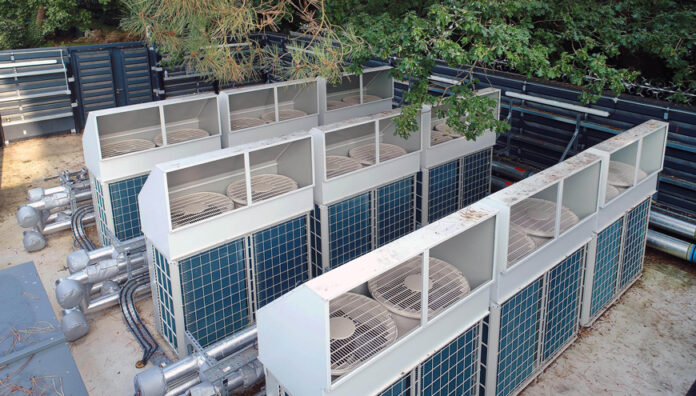
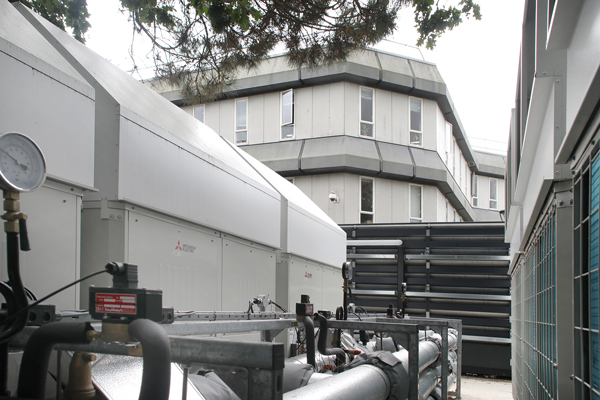
Nine CAHV-R air source heat pumps from Mitsubishi Electric have been installed in a special compound to replace the gas boilers. The CAHV-R units can deliver domestic hot water up to 70°C, which will be used for both heating and hot water throughout Dorset House.

“If we’d chosen a low temperature heat pump, we would have had to replace all the pipework and radiators throughout an operational building which was just not feasible,” commented Dave Archer, Energy manager for the University.

A single CAHV-R unit can deliver up to 40kW of capacity and each unit can work in a cascade system to reach higher capacities of up to 640kW. The award-winning CAHV-R uses lower Global Warming Potential (GWP) R454C refrigerant, to deliver a robust, low carbon system for the provision of sanitary hot water and space heating.

For Dorset House, it also means that the multi-unit system can deliver capacities to match the different load requirements of the building throughout the year, and can also rotate operation between units, to help extend equipment life.

The installation of the heat pumps and a dedicated acoustic enclosure was undertaken by mechanical and electrical contractors, Lowe & Oliver, as Chairman, Paul Tuson explained: “We were responsible for the full installation of the air source heat pumps to replace the existing boiler system, along with an acoustic enclosure.”

Sustainability is a top priority for Bournemouth University as Lois Betts explained: “We’re keen to create a campus environment that makes it easier for our students and staff to make the right choices for the environment and reduce their carbon footprint.”

You can watch a video on the project below or by clicking here:

The backbone of a Net Zero Strategy: The Carbon Reduction Plan  

Timothy Holman

A detailed carbon reduction plan is essential in outlining the steps necessary to reduce carbon emissions and to provide a structured approach to achieving sustainability goals.

Timothy Holman, Head of Consultancy at TEAM Energy explains why a carbon reduction plan is crucial for supporting public and private sector organisations long-term carbon reduction strategies.

Where a carbon reduction plan sits with an organisation’s net zero strategy

Whether an organisation wants to transition to net zero to secure procurement opportunities, retain climate conscious customers or become a leader in sustainability, knowing what their end goal is vital.  Where a Carbon Reduction Strategy helps to fix targets, establish a scope and set a baseline to measure success against; a Carbon Reduction Plan sets out actionable changes that your organisation will implement to cut down on its carbon emissions and make the transition to net zero successfully.

A carbon reduction plan serves as a practical roadmap. It provides a clear and structured approach to minimising carbon emissions, which is essential for achieving sustainability goals. By setting specific carbon reduction project targets and milestones, organisations can systematically reduce their carbon footprint. A structured carbon reduction approach ensures that all efforts are aligned with business objectives and the overall goal of achieving net zero emissions.

Plan to support compliance, reputation and cost savings

Additionally, a detailed carbon reduction plan enhances compliance with regulations. Governments and regulatory bodies are increasingly mandating organisations to demonstrate their commitment to reducing carbon emissions. By adhering to standards such as PPN 06/21, organisations can ensure that their carbon reduction efforts are in line with regulatory requirements as well as enhancing transparency and accountability.

Supported by a carbon reduction plan, an organisation can enhance their reputation among stakeholders, including customers, investors, and employees. By demonstrating practical action moving towards a net zero future, rather than just a hollow commitment statement, organisations can help to retain existing customers and be attractive to new ones, as more consumers and supply chain partners are becoming environmentally conscious. A thorough carbon reduction plan can help to differentiate an organisation from its competitors by showcasing how they are applying best practices in carbon reduction and energy efficiency.

Furthermore, implementing a detailed carbon reduction plan can lead to significant cost savings. By increasing awareness of energy use and efficiency, organisations can identify areas where they can reduce operational expenses. For example, implementing energy efficient technologies and practices can lower energy consumption and reduce utility bills. Carbon reduction successes in this area can lead to significant milestones and can be measured against the targets set out in an organisation’s Carbon Reduction Strategy.

Helping to implement net zero actions

Developing a carbon reduction plan that effectively contributes to achieving an organisation’s sustainability targets, as outlined in its strategy, requires gathering essential inputs from across the entire operation. A good starting point is to conduct a full energy audit and survey of the building to identify energy waste and opportunities for carbon savings. Other inputs can include obtaining Energy Performance Certificates (EPC) to understand the base building energy efficiency and using Display Energy Certificates (DECs) to assess current energy performance.

If applicable, Energy Saving Opportunity Scheme (ESOS) audits identify effective ways to save energy, and ESOS Action Plans will include projects that can contribute towards an organisation’s carbon reduction plan. Recommendations from MEES reports, Decarbonisation Audits and information obtained through TM44 Air Conditioning Inspections begin to build a picture of all the components needed to implement a plan.

Level up with innovation

However ambitious an organisation’s targets are, fostering innovation will play an important role. With 2025 around the corner, time to start a cost effective journey to meet the 2050 Net Zero deadline is dwindling and if a Carbon Reduction Plan is in its early stages, innovation will make a huge difference. The later action is started the more expensive it will be to reach the targets set in an organisation’s strategy as innovative solutions could have a longer lead time to achieve their goals. Whether innovation is adopted to develop products and services that are sustainable, or innovative solutions are used to drive emissions reduction, new technologies can help realise, or even hasten, an organisation’s goal.

Creating the optimal plan for your organisation

It’s important to understand the scope and resources available to build an appropriate plan, take each step one at a time; a requirements specification will help to shortlist carbon saving projects that meet your needs. Assemble all the information you have from the inputs relevant to your organisation (DECs, EPCS, ESOS, for example) and make calculations of potential carbon savings and costs for projects. 

TEAM Energy’s carbon reduction specialists can help with the calculations, guide how to prioritise carbon saving projects, create a timeline and ensure that targets and objectives within a strategy remain intact.

Taking simple steps

In conclusion, a detailed carbon reduction plan is essential for supporting an organisation’s long-term carbon reduction strategy. It breathes life into the journey an organisation must take in order to reach net zero emissions and provides a step-by-step approach to reducing carbon emissions, leading an organisation’s enhanced compliance, improved reputation, making cost savings along the way. For those who have not yet begun their journey, a carbon reduction plan can really help to breakdown what may seem like an insurmountable task.


About TEAM

TEAM is an energy and sustainability consultancy. It helps organisations with large energy estates reduce consumption and carbon emissions to save money and meet commercial and compliance targets on their journey to net zero.

Founded in 1985, it has a long history of helping customers navigate changing definitions and certification standards. TEAM Energy is an Employee Ownership Trust (EOT), with employees having a direct stake in its customers’ success.

www.teamenergy.com

Energy flexibility critical to meet challenges of rising demand and climate change, says energy trends 2025 white paper

Resilience and a sustainable energy system are crucial responses to increasing energy demands and climate change, says GridBeyond’s latest report

As global energy demands rises alongside the challenges of climate change, the need for a resilient and sustainable energy system has never been more urgent, according to GridBeyond’s latest white paper Energy trends 2025 – The rise of the demand side.

Now in its sixth edition, the report offers an in depth analysis of the energy systems in the UK, Ireland, USA, Australia and Japan highlighting their shared challenges like aging infrastructure, rising energy demand, and the need for innovation. It concludes that achieving net zero targets – particularly the near-term goal of a 2030 net-zero electricity sector – will require a smarter and more flexible energy system.

Noting that the distributed energy resources market is expected to more than double by 2027, the report emphasises the critical role of energy flexibility in building resilient and adaptive energy systems, such as the role of virtual power plants (VPPs), electric vehicles, corporate power purchase agreements (CPPA), energy procurement and energy storage.

In the road to decarbonisation assets are also moving closer to the grid edge, with EVs, small- and large-scale renewables generation and heat pumps poised to connect into a vast, decentralised network – offering capacity akin to several nuclear power plants. Given significant declines in costs (more than 90% in the last 15 years) battery energy storage systems (BESS) will also play a crucial role in providing flexibility and supporting inflexible technologies (such as solar PV).

While reducing energy consumption or utilising flexibility is often the most obvious way for businesses to reduce impact where it’s crucial for assets or processes to maintain continuous operation (inflexible assets and operations) this may not be possible. As a result, many companies are procuring energy from renewable generation sources as part of their net zero plans, meaning CPPAs, certificate trading and more sophisticated procurement strategies will also play a big role in 2025 and beyond.

Building on the success of its predecessors, Energy trends 2025 – The rise of the demand side offers a comprehensive study of how businesses and grid operators can meet the challenges of an ever evolving, global energy landscape.