

Centrica Business Solutions accelerates Solihull Hospitalโ€™s journey to net zero with new energy centre

Centrica Business Solutions has extended its two decade-long partnership with Solihull Hospital and announced plans to develop a new energy centre as it continues to decarbonise the hospitalโ€™s estate and unlock significant savings.

The energy centre, which is due to complete in spring 2026, will see the existing Combined Heat and Power (CHP) unit replaced with an energy efficient 2MW cascade heat pump system to meet the hospitalโ€™s high heating demands.

Once operational, the state-of-the-art energy centre will deliver more than 75% of Solihull Hospitalโ€™s heating requirements and reduce its carbon emissions by 1,185 tonnes each year.

Centrica Business Solutions has remained the hospitalโ€™s energy partner for the past 20 years and has been responsible for maintaining and upgrading the energy assets across the estate. Following todayโ€™s announcement, Centrica Business Solutions will continue to work closely with Solihull Hospital for up to 18 years.

The latest project follows a string of energy saving solutions the business has delivered for Solihull Hospital. This included modifications to the existing Building Management System to optimise performance and improve efficiency, with updated outstations and the introduction of time scheduling and set points; along with cavity wall insulation and the replacement of 2,500 lights with LEDs. These improvements, together with the new energy centre, will reduce the hospitalโ€™s carbon footprint by 1,812 tonnes per year, alongside delivering ยฃ62,000 in cost savings per year, based on the Trustโ€™s current energy tariffs.

Operated by University Hospitals Birmingham NHS Foundation Trust, Solihull Hospital is an acute general hospital providing a range of outpatient and inpatient services. Centrica Business Solutions is working closely with the Trust to ensure patient disruption is minimised throughout the project. 

Phil Bryant, Head of Business Development at Centrica Business Solutions, said: โ€œHospitals are facing increased pressures to balance their intensive energy demands with cost and carbon savings across their large estates.

โ€œWeโ€™ve been a proud energy partner for Solihull Hospital for 20 years and together weโ€™ve worked to make the hospital estate more energy efficient by providing and maintaining low-carbon solutions. The new energy centre marks the next step on the hospitalโ€™s decarbonisation journey, and we look forward to seeing the results.โ€

Martin Richardson, Executive Director at Solihull Hospital, said: โ€œOur partnership with Centrica Business Solutions has really helped us set a standard for sustainable healthcare. Weโ€™ve been able to maximise our savings as well as make the hospital a more comfortable place for patients and staff.

โ€œWe have plans to continue to work alongside Centrica Business Solutions for years to come, with a goal of reaching net zero in the not-too-distant future.โ€

The energy reduction measures were funded through, the Department for Energy Security and Net Zero (DESNZ) Public Sector Decarbonisation Scheme; encompassing Salix as the delivery body with development and procurement via the Carbon Energy Fund (CEF). CEF supports NHS Trusts and public body organisations to improve energy infrastructure and reduce overall emissions.

Paddy Hendry from the Carbon and Energy Fund (CEF) said: โ€œWe were extremely pleased to be asked by the University Hospitals Birmingham NHS Foundation Trust to lead on the Procurement and development of their continued route to net zero. This is an exceptional project to be part of, delivering sustainable Healthcare in true collaboration. The CEF managed approach embraces the project from feasibility through procurement, construction and contract and performance assurance (M&V).โ€

https://www.centricabusinesssolutions.com

Insights and Implications of UK Wholesale Electricity Prices for Businesses

Graham Paul

UK wholesale electricity prices has been a focal point of discussion and analysis, especially given the recent volatility and price fluctuations. In this article, Service Delivery Director at TEAM Energy, Graham Paul delves into the trends and their implications for UK businesses.

The UK wholesale market energy crisis has been a challenging period for businesses, marked by increased costs and operational difficulties.

Recent Trends and Market Insights

Over the past year, the UK wholesale electricity market has exhibited notable trends:

  • Price Peaks and Troughs: Prices spiked during high demand and low renewable generation periods, while dipping during high renewable output and lower demand.
  • Increased Renewable Generation: The growing integration of renewables has contributed to a more sustainable energy mix, stabilising prices despite their inherent volatility.
  • Impact of Fuel Prices: Fluctuations in natural gas prices have significantly influenced electricity prices, underscoring the interconnected nature of energy markets.

Impacts on UK Businesses

The energy crisis has profoundly affected UK businesses:

  1. Higher Energy Bills: Increased costs have eroded profits and raised operational expenses.
  2. Price Increases: Businesses have had to raise prices, potentially impacting sales and profit margins.
  3. Operational Adjustments: Some businesses have reduced hours, closed temporarily, or laid off staff to manage rising energy costs.
  4. Delayed Investments: Higher costs have led to delays in planned investments and growth initiatives.
  5. Competitive Disadvantage: Energy-intensive businesses have faced a competitive disadvantage compared to those with lower energy needs.

Labour Governmentโ€™s Key Energy Policies and Actions

The Labour government has introduced several key energy policies:

Key Energy Policies

  1. Net Zero by 2030: Aiming for a net zero electricity system by 2030, increasing renewable energy sources.
  2. Great British Energy: Establishing a public energy company to control UK energy production.
  3. Energy Efficiency Upgrades: Upgrading homes to improve energy efficiency and reduce fuel poverty.
  4. Onshore Wind and Solar: Lifting the ban on new onshore wind farms and promoting rooftop solar to triple capacity by 2030.
  5. National Wealth Fund: A ยฃ7.3 billion fund to support energy projects.
  6. Planning Reforms: Easing the building of energy infrastructure.
  7. Onshore Wind Taskforce: Collaborating with industry to overcome barriers to wind farm development.
  8. Onshore Wind Industry Taskforce: Collaborating with industry and regulatory bodies to overcome barriers to wind farm development.

Challenges and Risks of Increased Renewable Energy

Renewable energy sources like wind and solar are intermittent, leading to price volatility in the wholesale market. The UK uses a marginal cost pricing system, where the price is set by the most expensive method needed to meet demand, often natural gas. This can still influence wholesale prices despite cheaper renewable production.

Hereโ€™s how it works:

  1. Electricity Generation Mix: Electricity is generated from various sources, including natural gas, coal, biomass, nuclear, hydro, wind, and solar. Each of these sources has different production costs.
  2. Demand and Supply Matching: To meet the electricity demand at any given time, the grid operator dispatches electricity from the cheapest available sources first (e.g., wind, solar). If demand exceeds the supply from these cheaper sources, more expensive sources (e.g., natural gas) are brought online.
  3. Setting the Price: The price of electricity for all suppliers is set by the cost of the last (most expensive) unit of electricity needed to meet the total demand. This is known as the โ€œmarginal cost.โ€

Integrating more renewables requires costly grid upgrades. Energy storage solutions and balancing mechanisms are needed to mitigate intermittency, adding to overall costs. Ensuring policies and regulations keep pace with renewable growth is crucial to avoid uncertainty and hindered investment.

While renewable energy offers long-term benefits for sustainability and cost reduction, addressing these challenges is essential to ensure a stable and efficient wholesale electricity market.

Geopolitical Events Impacting UK Wholesale Electricity Prices

The UK wholesale electricity market is interconnected with global energy markets, making it susceptible to geopolitical events that cause price fluctuations. Key factors include:

  • Russia-Ukraine Conflict: One of the most significant events to impact the UK energy market, this conflict led to a 12% surge in gas prices in January 2025 due to disrupted gas exports via Ukraine. The increased competition for LNG in Europe has driven up prices globally.
  • Middle East Instability: The Middle East remains a major source of global energy supply, producing nearly 30% of the worldโ€™s oil. Tensions in the region caused Brent crude oil prices to rise by 4% in late December 2024, impacting gas and electricity costs.
  • US Energy Policy: In December 2024, President Biden banned new offshore oil drilling in US coastal waters to tackle climate change, reducing future US oil production and potentially straining global supply. The US has been a key LNG supplier for Europe and the UK since the Ukraine crisis. President Trump plans to reverse this ban, aiming to increase oil and gas production by unfreezing offshore drilling and lifting fossil fuel restrictions. These policy changes can influence global oil prices, market dynamics, and international relations.
  • Sanctions: These can significantly impact energy markets. For instance, Western sanctions on Russia after the 2014 Crimea annexation hindered their energy infrastructure investments, raising natural gas prices due to perceived risks. Ongoing sanctions related to the Russia-Ukraine conflict continue to influence energy prices, contributing to market volatility.

Impact of Ofgemโ€™s MHHS Programme on UK Wholesale Prices

The Market-wide Half-Hourly Settlement (MHHS) Programme aims to create a more flexible, efficient, and accurate electricity market by settling all trading based on half-hourly data. This can lead to:

  1. Efficient Market Operations: Reducing discrepancies and improving market operations.
  2. Accurate Price Signals: Reflecting the true cost of serving customers at different times.
  3. Reduced Price Volatility: Leading to more stable prices.
  4. Innovative Solutions: Enabling new products and services like time-of-use tariffs and vehicle-to-grid solutions.

MHHS Benefits for Businesses

Businesses in the UK can expect several benefits from the MHHS Programme:

  1. More efficient market operations and accurate pricing can lead to lower energy costs for businesses.
  2. Access to detailed half-hourly consumption data allows businesses to better manage their energy usage and identify opportunities for savings.
  3. The programme will support the development of innovative energy solutions, such as battery storage and smart appliances, providing businesses with more options to optimise their energy consumption.
  4. By enabling a more flexible and efficient energy market, the MHHS Programme supports the UKโ€™s transition to a low-carbon economy, helping businesses meet their sustainability targets.

MHHS Programme Risks

The MHHS Programme, valued at ยฃ1.6 billion in net benefits from 2021 to 2045, aims to improve market efficiency, reduce costs, and enhance flexibility. However, several risks need effective management:

  1. System Changes: Transitioning to half-hourly settlement involves complex changes, potentially causing delays and increased costs.
  2. Data Privacy: Handling large volumes of consumption data raises privacy and security concerns.
  3. Market Readiness: The readiness of suppliers and network operators to adopt new processes is crucial.
  4. Financial Costs: Implementation costs may exceed initial estimates.
  5. Regulatory Compliance: Ensuring compliance with regulations throughout the process is vital.
  6. Stakeholder Coordination: Effective engagement with industry participants and consumers is necessary for smooth implementation.

Conclusion

The UK wholesale electricity market has seen significant changes over the past year due to fuel costs, renewable energy integration, weather conditions, geopolitical events, and regulatory changes. Businesses must stay informed about these trends to make strategic energy procurement decisions and optimise their energy strategies. For more detailed insights on wholesale electricity prices visit TEAMโ€™s UK Energy Wholesale Prices Market Review.

Organisations in the UK face growing pressure to meet net zero targets. Energy efficiency has the greatest potential to make the biggest impact on organisationsโ€™ emissions, energy use, and costs in the shortest amount of time.

According to the International Energy Authority (IEA), over the last two decades, global energy efficiency measures have halved the amount of carbon emissions that would have otherwise been released due to population and income growth. Between 2000 and 2022 alone, energy efficiency measures have helped reduce the energy intensity in buildings and transport by 35% globally.

Many organisations havenโ€™t done the basics of energy efficiency improvements, which means each one has a wealth of untapped potential for carbon reductions and energy savings.

www.teamenergy.com


This article appeared in the March 2025 issue of Energy Manager magazine. Subscribe here.

Rinnai provides peace of mind with future proof water heaters at Huddersfield Care Home

Rinnai has supplied two N Series continuous flow water heaters to the Sycamore Care Home in Huddersfield, ensuring a reliable and efficient hot water heating system. Installed by CBFM, the system includes a 300L cylinder store, providing a first-hour flow rate of 2407L and a continuous flow rate of 1907L, with a recovery time of just 15.7 minutes at 60ยฐC with a 50ยฐC temperature difference.

The Rinnai N Series water heaters are the pinnacle of commercial water heating, offering fully modulating (58kWh โ€“ 4.4kWh) and fully condensing stainless steel heat exchangers. These water heaters have been independently tested for hydrogen blends of 20% and renewable liquid fuels like Bio LPG, ensuring future compatibility with greener gases.

One of the standout features of the Rinnai N Series is its impressive 12-year warranty, providing peace of mind and demonstrating the company’s commitment to reliability and durability. This long-term warranty ensures that customers can trust in the performance and longevity of their hot water heating system. To find out more about the Rinnai N series visit https://www.rinnai-uk.co.uk/products/commercial/n-series-commercial-water-heater.

CBFM, known for its bespoke installation and maintenance contracts, emphasizes service excellence and energy efficiency. Harl Bowman of CBFM stated, “We have built our reputation on service excellence, ensuring the job is done with minimal fuss. Our team of highly trained and qualified engineers consistently deliver outstanding results”.

In addition to the installation at Sycamore Care Home, CBFM’s Gas Safe commercial heating teams recently installed a commercial water heater and cylinder at a local community centre, providing essential services to the kitchen and toilets, along with LPG gas for the kitchen catering equipment.

To find out more about CBFM services visit https://cbfmheating.co.uk/.

Rinnai offers cost-effective domestic or commercial hot water solutions, with a variety of options based on location and requirements. Their design team can size any site and suggest optimum solutions based on installation space and customer needs. Rinnai also provides full product availability 24/7 for next-day delivery of all hot water heating unit models, including 48-58kW units.

For more information on the Rinnai product range which includes R290 heat pumps, electric instant, gas fired, solar thermal and electrical storage, contact us today https://www.rinnai-uk.co.uk/contact-us/help-me-choose-product.

RINNAI FULL PRODUCT AVAILABILITY 24/7 FOR NEXT DAY DELIVERY of ALL HOT WATER HEATING UNIT MODELS INCLUDING 48-58kW UNITS-

SAVINGS OF

  • 20% REDUCTION of Opex Cost,
  • 30% REDUCTION of initial cost
  • 15% REDUCTION in carbon
  • 75% REDUCTION of space

Visit www.rinnai-uk.co.ukย ย Or email engineer@rinaiuk.comย ย 

For more information on the RINNAI product range visit www.rinnaiuk.com

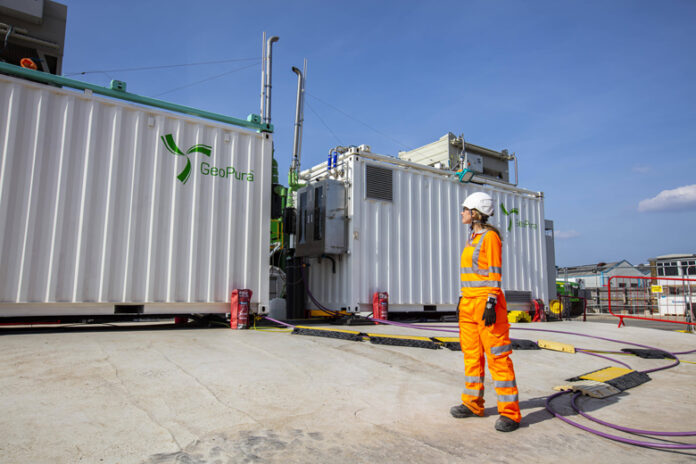
GeoPura & Siemens Financial Services join forces to boost green hydrogen deployment

Siemens Financial Services has signed a financing deal with GeoPura, to support the pioneering hydrogen specialist in its next phase of growth.

A global leader in zero emission power, GeoPura provides hydrogen-fuelled clean energy, so its customers can decarbonise their consumption of temporary, backup, off-grid, and grid augmentation energy. Successful delivery has led to an ever-growing pipeline of business, as well as multi-site and multi-year contracts, significantly increasing turnover, balance sheet strength and headcount and hiring its first hydrogen apprentices.

The GeoPura solution uses renewable energy, normally solar PV or wind, to create hydrogen. This fuel is then transported to customer locations, where a hydrogen power unit (HPU) converts it to electrical power. Customers simply rent the units and pay for the fuel used. The power generation process is clean and carbon free โ€“ with pure water the only by-product – eliminating harmful CO2, NOx, SOx, and particulate matter emissions entirely. The process improves local air quality and provides a safe and healthy environment for those nearby.

The business is already working with the Ministry of Defence, Balfour Beatty, the BBC, and National Grid, among others, to help reduce their carbon footprint. GeoPura is also one of largest green hydrogen producers in the UK and is in the process of constructing additional production sites  with support from investors and government subsidies secured under the first hydrogen allocation round (HAR1) in 2023; if selected GeoPura also intends to take part in HAR2.

Roadblocks to hydrogen rollout

Often cited as a โ€˜fuel of the futureโ€™[i], enabling widespread use of hydrogen comes with challenges. For instance, green hydrogen, as produced by GeoPura, is more expensive than hydrogen derived from fossil fuels, because of the cost of setting up renewable energy infrastructure and the electrolysis equipment needed to produce the hydrogen[ii].

So far, GeoPura has raised ยฃ92 million to date from its investor panel and financing will continue to be an important enabler of its growth. However, a further challenge here is the novelty of the equipment and technology, in a sector which is still in development. This is why it is important for GeoPura to partner with knowledgeable financiers, who understand the technology and have an eye on the companyโ€™s long-term vision.

GeoPura & Siemens Financial Services

GeoPura was looking to refinance existing HPUs, trailer mounted Multiple Element Gas Containers (MEGCs or tube trailers) and Multiple Cylinder Packs (MCPs). Siemens Financial Services (SFS) was the natural choice of partner due to the teamโ€™s deep knowledge of the industry.

Apart from the confidence that this partnership with an established business generates, it also allows GeoPura to scale as it grows. Similarly, access to affordable finance means the business can accelerate its growth.

Starting from scratch

Derek Bulmer, Chief Financial Officer, GeoPura, explains why the discussions ahead of the deal with Siemens Financial Services were so important. โ€œIn our case, the assets are fairly new and the business model is new too. So, from a financing perspective, it goes against the grain of how you would fund something.

โ€œBecause of this, timing was everything. It took around 18 months from when we began initial conversations with Ollie Finkill and the team at Siemens Financial Services (SFS) before we arrived at the right solution at the right time. Why did we want to work with SFS specifically? Of course, they have a reputation that precedes them. And they can scale financing sums as we grow. But they also really understood the product and the technology.

โ€œIt was a tricky project but the SFS team was calm, dedicated, and determined to make sure we were able to come to an appropriate solution. I felt that we had the same goal because SFS is invested in sustainable transformation. We see this as a lifetime collaboration, not a one-off deal.

โ€œPrivate financing has a huge role to play in wider sustainable transformation. It’s going to take an infrastructure change, which entails large capital investment. And for that capital to be affordable and effective, it has to come in the form of asset finance. SFS are holding their own with leading banks in this respect, which is very impressive.โ€

Investing in sustainability

The resulting financing solution is a 4-year facility. Ollie Finkill, Head of Specialist Finance, SFS UK, shared why the financier was ultimately able to say yes. โ€œWe canโ€™t deny this is a difficult area, since businesses like GeoPura are at the beginnings of an expected high-growth trend, and there are many unknowns. However, we had multiple incentives.

โ€œThe strength of GeoPuraโ€™s business plan, its success to date in raising cash, and the good residual value in the assets being funded โ€“ the HPUs themselves, as well as the containers and cylinder packs โ€“ all contributed to our ability to see this deal through. This was true asset finance, led by growth potential, not balance sheets. We are proud to be part of the work GeoPura is doing.โ€

Watch โ€˜Manage your Energy Transition towards Hydrogenโ€™, a Siemens expert workshop, here. Learn about clean technology financing with SFS here.

Will you be at the 2025 Distributed Energy Show on 12-13 March? Donโ€™t miss Ollieโ€™s panel discussion, Financing the Future: Unlocking Asset Capital for Net Zero Goals, (Theatre 1, Day two, 10:05 – 11:00): https://distributedenergyshow.com/full-conference-agenda/ ย 

You can also find Siemens Financial Services at the Scottish Energy Futures Conference on 4-5 March.


[i] https://www.weforum.org/stories/2023/12/why-hydrogen-is-the-fuel-of-the-sustainable-future/

[ii] https://www.weforum.org/stories/2023/12/why-hydrogen-is-the-fuel-of-the-sustainable-future/

Versatile ESS options from Ecobat Battery

By offering viable solutions that address the power storage requirements of both commercial and residential sectors, Ecobat Battery, in conjunction with the appropriate Pylontech products, can provide a tailored package that makes on demand energy deliverable, in whatever situation.

Residential Solutions

The driving factors behind installing an ESS, whether part of the development of an existing property, or incorporated into the design of a new build, is to save both energy and money

Ecobat Batteryโ€™s role is twofold: as Pylontechโ€™s UK distributor partner, it is able to deliver it products, but of equal importance, with more than 70 years of battery power storage experience and a team of knowledgeable professionals, it can not only work with its customers to define the ideal product solution, it can also provide the necessary back-up and service arrangements to keep it in peak condition, which are invaluable attributes that are difficult to replicate.

With design and aesthetics in mind the Pelio system is a modular solution that is stackable to up to four units high and subsequently provides from five to 20 kWh capacity from the same footprint.

The Pylontech Force series is another modular system, although this solution takes things to another level, both in terms of the number that can be stacked together (up to seven), and their individual capacity. It also opens up the options on the high voltage side of the equation, as the series is available in low voltage L1 and L2, and high voltage H1, H2 and H3 derivatives.

In addition to these existing models, Ecobat Battery will, in the first quarter of 2025, have another powerful product in its armoury with the introduction of the Force H3X, which is an all-in-one modular system that incorporates four models addressing both single and three-phase requirements.

Commercial Solutions

For large scale utility, commercial or industrial facilities, the options are no less compelling, with air cooled and liquid cooled alternatives, in both cabinet and container formats.

For further details, please visit Ecobat Battery at: https://www.ecobatbattery.com/applications/energy-storage-solutions/


This article appeared in the March 2025 issue of Energy Manager magazine. Subscribe here.

The decarbonisation dilemma: navigating the energy crisis

Matthew Everett

Matthew Everett, Energy and Carbon Analyst, Salix

In an increasingly volatile world, energy markets are facing relentless pressure. Geopolitical tensions, economic uncertainty, and shifting regulatory landscapes are driving price fluctuations and supply chain disruptions. The ongoing war in Ukraine continues to impact global gas markets, while conflicts in the Middle East threaten oil and liquefied natural gas supply chains, particularly through key maritime routes. Meanwhile, political shifts in major economies, including the US and EU, are reshaping energy policies.

For organisations across all sectors, these challenges translate into rising operational costs and increased exposure to energy market volatility.

Among those most affected by the many external factors, are public sector bodies which must not only absorb rising energy costs but also work towards ambitious decarbonisation targets. In the UK, we have a legally binding target to achieve net-zero greenhouse gas emissions by 2050. The clock is ticking.

The UK public sector manages the largest property portfolio in the country with more than 300,000 individual properties. However, most public sector buildings still rely on burning fossil fuels for heating, contributing to approximately 2% of the UKโ€™s total greenhouse gas emissions. Meeting these targets is no small task, but dedicated funding mechanisms exist to support the transition.

At Salix, we support the public sector in securing government funding to deliver ambitious decarbonisation projects, ensuring that financial barriers do not stand in the way of meaningful progress. Weโ€™re proud of the strides weโ€™ve made in our mission to help save the planet, working across the public sector and housing. Yet, the scale of the challenge remains vast, and the need for coordinated action is greater than ever.

The government aims to cut greenhouse gas emissions from public sector buildings by 75% by 2037 compared to 2017 levels. Achieving this requires significant investment in energy efficiency upgrades, low-carbon heating, and renewable technologies โ€“ all while operating within severe financial constraints.

Inflation has exacerbated these demands, with 76% of councils expressing concern over the impact of rising costs on project deliverability within the restrictions of national schemes, according to a 2024 report by the Local Government Association.

With the energy market prone to uncertainty, it is critical for public sector bodies to have effective procurement strategies to achieve their decarbonisation goals. Well-structured procurement approaches may ensure energy is secured at favourable rates while also facilitating the adoption of low-carbon technologies, energy efficiency and fabric improvements, consultant support services and contractor implementation.

However, procurement may be another hurdle that the public sector must face. Unlike private businesses, and with good reason, public sector organisations operate within rigid procurement frameworks. While these frameworks promote transparency, fairness, and accountability, there can also be, challenges such as complex compliance requirements, lengthy approval processes and restricted supplier options. Procurement policy is often price-driven; for instance, public sector procurement requires a value-for-money approach, which could, some argue, compromise on quality.

Decarbonisation adds further complexity due to the evolving technology landscape, market uncertainties, limited expertise within procurement teams, and the need for integrated solutions that take a whole building approach. Sustainability teams, where they exist, at times may be under-resourced and lack the expertise to navigate complex decarbonisation projects.

This challenge is reflected in a 2024 Local Government Association survey, which found that 60% of councils have been deterred from applying for government grants due to the substantial time and resources required for applications. Decarbonisation efforts remain fragmented, with nine in ten councils stating they lack a sufficient financing plan to reach net zero by 2050. The longer these projects are delayed, the more emissions continue to accumulate rather than decline.

We believe that targeted funding mechanisms like the Public Sector Decarbonisation Scheme play a crucial role in supporting the public sector, ensuring they have the financial resources required to deliver their decarbonisation projects. The scheme provides grant funding for heat decarbonisation and energy efficiency measures for public sector buildings and has already allocated ยฃ2.5 billion in grant funding, excluding the current Phase 4 of the scheme.

For more information on the schemes, visit our website here. To learn about the impact of our work on local communities, check out our news area here.

The ongoing energy crisis, combined with a lack of expertise, limited resources, rigid procurement frameworks, and unpredictable funding, makes decarbonisation an even greater challenge for the public sector.

Initiatives like the Public Sector Decarbonisation Scheme provide crucial financial support in meeting the net zero targets. The high demand for Public Sector Decarbonisation Scheme funding highlights its necessity, with applications often exceeding available resources.

Beyond enabling immediate carbon reductions, the Public Sector Decarbonisation Scheme funding drives long-term impact โ€“ stimulating demand for contractors, consultants, and technical expertise while strengthening the low-carbon economy. By investing in decarbonisation today, the public sector can drive immediate carbon reductions while building the skills and supply chains essential for a more resilient energy future โ€“ leading by example in the transition to net zero.

To discover more about our work at Salix, click here.


This article appeared in the March 2025 issue of Energy Manager magazine. Subscribe here.

Breathe easy – The impact of poor air quality on health and wellbeing

It might surprise you that, in some cases, indoor concentrations of pollutants like particulate matter, volatile organic compounds (VOCs) and biological aerosols can exceed outdoor levels, often as a result of activities like cooking, cleaning and the use of certain products. ย Here Claire Robinson, sales director at IAconnects, a specialist in IoT monitoring solutions, explores the risk that poor air quality poses for employees, and the role facilities managers play in mitigating this.ย 

There are several studies evaluating the impact of air quality on productivity, with a clear link between the two. Research suggests that poor air quality can reduce productivity by up to ten per cent. This, combined with the higher rate of sick days seen in environments with poor air quality, is estimated to cost the global economy over ยฃ178 billion annually.

However, there are even more serious implications of poor air quality. Exposure often leads to reports of headaches, eye irritation and fatigue amongst employees. Itโ€™s even linked to heightened stress and anxiety levels.

Long-term effects include the increased risk of chronic respiratory conditions, such as asthma and, more recently, itโ€™s been reported that there could be a potential link between poor air quality and dementia.

In 2019, the Alzheimerโ€™s Society brought together a roundtable of experts in neurology, epidemiology and environmental risk, and the behaviour of metals in the brain. They agreed that more research is needed but confirmed that poor air quality has a definite impact on the heart, and thereโ€™s a strong link between heart and brain health. So, itโ€™s possible that long-term exposure to air pollution could increase the risk of developing dementia.

Clearly, this is extremely disturbing for employees, who have very little control over the quality of air they breathe in while in the office.

A national move

In the UK alone, there are several initiatives aimed at improving air quality in workplaces. For example, The Air Quality Grant Scheme provides funding to local authorities, supporting projects that raise awareness and reduce air pollution.

Recent projects include initiatives to educate schoolchildren, provide e-cargo bikes for businesses and train healthcare professionals to help vulnerable populations reduce exposure to air pollution. Over ยฃ53 million has been awarded to more than 500 projects since 2010.

There are also more targeted programmes like Schoolsโ€™ Air Quality Monitoring for Health and Education (SAMHE), which encourages the use of digital tools for monitoring indoor air quality.

While this project focuses on schools only, it can provide valuable insights applicable to office environments.

Making a change

Tenants must be familiar with the impact that certain products and practices can have on air quality. According to studies by environmental agencies, cleaning products are responsible for 20 to 30 per cent of indoor VOC emissions โ€” this increases to 50 per cent in offices during and immediately after cleaning has taken place.

This also applies when choosing paints, carpets and even furniture. If chemical products, like paints and solvents, are stored on-site, they should be in ventilated areas away from occupied spaces.

One way that employees can have a direct impact is by limiting indoor pollutant sources. This includes restricting activities like burning candles or using aerosols. Burning a single paraffin candle for one hour can emit up to 10 mg of particulate matter, depending on the type of wax and wick used. Disturbingly, this level is comparable to second-hand smoke in a confined space.

On a positive note, there are natural ways to reduce carbon dioxide and VOC levels, such as incorporating plants into occupied spaces. Of course, itโ€™s important to be aware of employeesโ€™ allergies when doing so.

Facilities managers (FMs) also play a critical role in improving air quality within buildings, but before they can tackle the problem, they must know where they currently stand. This is why technology that enables accurate, real-time monitoring is key to improving air quality over time.

FMs can take responsibility for air quality by ensuring that their sites are equipped with IoT monitoring solutions that enable tenants to have a clear view of their air quality, and how this changes over time. With this information, they can start to make informed decisions โ€” for example, about the types of products that they want to use.

The average person spends approximately 90,000 hours at work over their lifetime โ€” a percentage of which is usually spent in an office environment. FMs have a significant role to play in improving air quality and, in turn, employee health.

Discover your air quality monitoring potential โ€” visit the IAconnects website, fill in its questionnaire and get a personalised score https://iaconnects.co.uk/indoor-air-quality-scorecard/


This article appeared in the March 2025 issue of Energy Manager magazine. Subscribe here.

Power to the people: How IDNOs can supercharge the public sectorโ€™s path to net zero

With net-zero deadlines fast approaching, the UK public sector faces a paradox: big targets with small budgets. Despite bold goals, much of the sector remains unaware of key tools that could transform the electrification journey. The recent Vattenfall Networks seminar revealed an astounding gap in awarenessโ€”of the attendees, only one of 15 had heard of IDNOs. Yet IDNOs might just be the accelerant needed to bring the Public Sectorโ€™s green ambitions to life.

As councils and NHS trusts strive to meet net-zero targets, many are only just discovering the role that Independent Network Operators (IDNOs) could play in their journey. According to the UK Governmentโ€™s Net Zero Strategy: Build Back Greener, the public sector is expected to lead by example, transitioning to sustainable energy solutions across all infrastructure projects. However, with government funding spread thin, reaching these ambitious targets demands creative, cost-effective solutions, like IDNOs. Brent Councilโ€™s Francesca Campagnoli captured the current knowledge gap perfectly: โ€œThis was all completely new to meโ€. With so much at stake, the public sectorโ€™s introduction to IDNOs is long overdue.

The knowledge gap

This lack of familiarity with IDNOs isnโ€™t just surprisingโ€”itโ€™s a barrier. The Public Sector Decarbonisation Scheme (PSDS), which has allocated over ยฃ1 billion to assist public bodies in reducing emissions, has been crucial but still leaves funding gaps. Jacob Kupferberg, from Brent London Borough Council, highlighted these challenges: “The two main obstacles are governance and funding”. Limited resources and complex bureaucratic processes slow down decarbonisation efforts, while public scrutiny adds pressure to perform efficiently.

IDNOs like Vattenfall Networks are designed to bridge some of these gaps, offering a lifeline through both funding and project acceleration. Their Asset Adoption Value (AAV) payments, a concept new to most public sector organisations, can significantly reduce upfront infrastructure costs.  By reducing initial project expenses, AAV payments ease budgetary pressures, helping councils and trusts improve the economics of their electrification projects.

Suzanna Lashford, Head of Business Development at Vattenfall Networks, explained the rationale: “The public sector is under pressure to deliver ambitious net-zero goals with limited budgets. IDNOs can be the key to unlocking these projects, giving councils and NHS trusts the financial support to move forward with electrification”. With increasing emphasis on decentralisation and local accountability, as noted in the governmentโ€™s Ten Point Plan for a Green Industrial Revolution, partnerships with IDNOs align with these goals by offering flexible, localised solutions.

From theory to practice: beyond funding

IDNOs offer more than just funding. They bring a streamlined, end-to-end approach to grid connections, which many organisations discovered could fast-track their projects. Francesca observed, “If IDNOs have priority on highway permits, it means they can perform grid connections more efficiently”. For councils managing time-sensitive projects, this competitive edge is a game-changer, particularly in urban regeneration or infrastructure-heavy initiatives where delays are common.

Severine Turgis from Central London Community Healthcare NHS Trust emphasised how IDNOs simplify project delivery: “Knowing that they [IDNOs] help with applications and follow through on commitments gives me confidence when I pitch the idea to my directors”. This full-cycle support fills critical resource and expertise gaps, allowing public sector teams to focus on the bigger picture of decarbonisation without being weighed down by logistical barriers.

For many, learning about IDNOs was eye-opening. Joy Olokpa, Carbon Zero Program Manager at Hammersmith and Fulham Council, valued IDNOsโ€™ comprehensive support, noting that they could โ€œrelieve some of the burden on us by managing every stepโ€. The Public Accounts Committee recently pointed to the need for better infrastructure management within the public sector, emphasising that streamlined processes and external expertise could enhance project efficiency. IDNOs, with their holistic approach, seem well-suited to meet these recommendations.

A call to action for the public sector

If public sector organisations are serious about meeting net-zero goals, IDNOs need to be part of the conversation. This starts with educating key stakeholdersโ€”energy managers, sustainability directors, and facilities teamsโ€”on the advantages IDNOs offer. The UK public sector is at a critical crossroads, balancing ambitious net-zero targets with tight budgets and limited awareness of key solutions. IDNOs present a promising path forward, offering both financial and operational support that can help councils and NHS trusts navigate the challenges ahead. Itโ€™s time for the public sector to recognize the value of IDNOs, unlocking a partnership that could prove vital to achieving a sustainable future.

www.vattenfall.com


This article appeared in the March 2025 issue of Energy Manager magazine. Subscribe here.

SmartTank tackles Legionella concerns – remotely

The SmartTank system is designed, to save water and energy. But it also helps with Legionella compliance. Providing real-time data, predictive insights, and automation to manage water temperature and overall system performance. It is particularly effective in student accommodation and buildings of multiple occupancy, where Legionella risks must be carefully monitored and mitigated.

Real-Time Temperature Monitoring

Legionella bacteria thrive in water temperatures between 20ยฐC and 45ยฐC, with the optimal growth rate around 37ยฐC. With standard cylinders it is impossible to measure temperatures precisely. Using pocketed sensors SmartTank continuously monitors at the core of the cylinder, ensuring the danger zone is avoided.

Automated Alerts and Notifications

The system provides automatic alerts. This helps ensure operators or maintenance staff are notified of unusual activity and excessive consumption, allowing them to take prompt action to correct issues. Alerts can be customised based on the facility’s needs and compliance requirements.

Data Logging and Reporting

The Irus Portal keeps comprehensive logs of water temperature, flow, and tank status. These are used for audit trails and to demonstrate compliance with Water Safety Plans. The data is available in real-time, making it easy to access historical data, generate reports, and comply with regulatory inspections.

Remote Monitoring and Control

The systems remote monitoring, means compliance is maintained even when on-site personnel arenโ€™t available. It can be remotely accessed via online devices to check conditions, adjust settings, or receive alerts.

Optimised Tank Performance

SmartTank monitors cylinder parameters to ensure optimal operation and water safety. Keeping the system running efficiently helps prevent conditions that could foster Legionella bacteria growth, such as stagnation or insufficient circulation.

Proactive Maintenance

Through the combination of predictive analytics and continuous monitoring, the system predicts potential issues before they occur, helping to schedule preventative maintenance. For instance, the system identifies trends that suggest insufficient water temperatures are being met, or potential malfunctions, such as escape of water.

Compliance with Regulations

UK regulations require frequent checks and records for Legionella control. These include keeping water temperatures within safe ranges, performing risk assessments, and conducting periodic testing. These tasks can be simplified by automatically generating data that demonstrates compliance with Water Safety Plans, such as those from HSE (Health and Safety Executive), ACOP L8 (UK).

The systemโ€™s ability to document temperature trends, risk assessments, and corrective actions helps student accommodation providers meet their regulatory obligations.

Easy install

Factory fitted with on-board controls, pre-wired and pre-plumbed, SmartTank arrives on site ready for efficient, consistent installation. Connection to the cold water supply, hot output, and electrical wiring to the mains makes the fitting process time effective and efficient.

Savings

Recent studies have demonstrated that standard hot water cylinders use 1.5 times more energy than SmartTank, to achieve the same results. This is primarily due to tighter temperature control. Management of over-heating, over consumption, and identification of leaks and water wastage, quickly contribute to even greater savings.

In conclusion, the Irus SMART Tank supports Legionella compliance by combining real-time monitoring, automated control, and data logging. It ensures that water temperatures and quality are managed within safe parameters. It reduces the risk of Legionella growth, and simplifies the compliance process with automated alerts and reports. This makes it an invaluable tool for maintaining a safe water system in multi-occupancy accommodation.

SMART Tank recently won the ENERGY SAVING AWARDS, Water Saving Commercial Product of 2024 category.

www.prefectcontrols.com


This article appeared in the March 2025 issue of Energy Manager magazine. Subscribe here.

International Technology Award forย gamechanger Shoebox NX heat pump

Kensa Shoebox NX Ground Source Heat Pump - Airing Cupboard

The innovative Shoebox NX ground source heat pump from leading British manufacturer Kensa has been recognised on the world stage at the Energy Institute’s International Energy Awards, taking home the International Technology Energy Award.

The 2025 awards received over 140 entries from a record 29 countries. In a category celebrating groundbreaking innovations set to disrupt the industry, Kensaโ€™s Shoebox NX received the Technology award, highlighting its game-changing potential to decarbonise homes at scale and make efficient, low-carbon heating more accessible.

Designed and manufactured in the UK, the Shoebox NX enables large-scale adoption of renewable heating through the networked heat pump model, providing thousands of homes with efficient, low-carbon heating in one go. The compact heat pump can also help solve energy efficiency challenges, with the potential of lifting EPC ratings by up to two bands in low-scoring properties.

Networked heat pumps are already transforming the UKโ€™s heating landscape. Thousands of homes, from new builds to century-old Edwardian social flats, are currently heated by Kensaโ€™s original Shoebox heat pump. More than a decade after its predecessorโ€™s launch, the Shoebox NX is set to build on that legacy and support Kensaโ€™s ambition of connecting tens of thousands of homes a year to networked heat pumps. 

In social housing networked heat pumps are helping providers decarbonise their stock, boost energy efficiencies and cut resident energy bills. Theyโ€™re also ensuring new build homes meet the upcoming Future Homes Standard, which will phase out installing gas boilers in new properties.

Since its launch in February 2024, the Shoebox NX has also won Innovation Product of the Year at the 2024 Unlock Net Zero Awards and the Best Heat Pump at the 2024 Build It Awards. Kensa was named Independent Innovator of the Year at the UK Housing Awards for how networked heat pump systems are decarbonising social housing and reducing residentsโ€™ energy bills.

By 2040, up to 8,000 UK homes a week could be connecting to ground source heat pumps, primarily through the networked heat pump model. This is expected to attract over ยฃ100 billion in investment, creating tens of thousands of green sector jobs.

Tamsin Lishman,ย Kensa CEO, said:

โ€œItโ€™s brilliant for the Shoebox NX heat pump to receive this prestigious Energy Institute award. The game-changing, compact heat pump has redefined what ground source heat pumps can deliver.

โ€œWhen designing, our goal was to create a high-performance heat pump that delivers reliable, efficient heating for those who need it most. The Shoebox NX does exactly that – and more – and brings us closer to a future where every home has access to better, more efficient heating.

โ€œThe Shoebox NX is a superb example of British innovation, engineering and manufacturing, and tackles one of the biggest challenges in the transition to net zeroโ€”decarbonising heat at scale. From social housing flats to listed buildings and new build homes, the Shoebox NX is destined to become a cornerstone of the UKโ€™s heating future.โ€