Denbighshire is one of the most picturesque counties in the whole of the UK with the Vale of Clywd a designated Area of Outstanding Natural Beauty and St Asaph cathedral, which is acknowledged to be the oldest of its kind in Wales with its origins dating back 1400 years.
With this background of pedigree and culture the county council has embraced NetZero and strives to utilse all technologies to make as many of its properties as fuel efficient as possible.
The Denbighshire Energy Team are continuing work to drive down energy usage and costs across its expansive and nuanced estate. The Team has managed projects across Council buildings, including schools and care homes to improve building energy efficiency and reduce emissions and usage costs over the longer term.
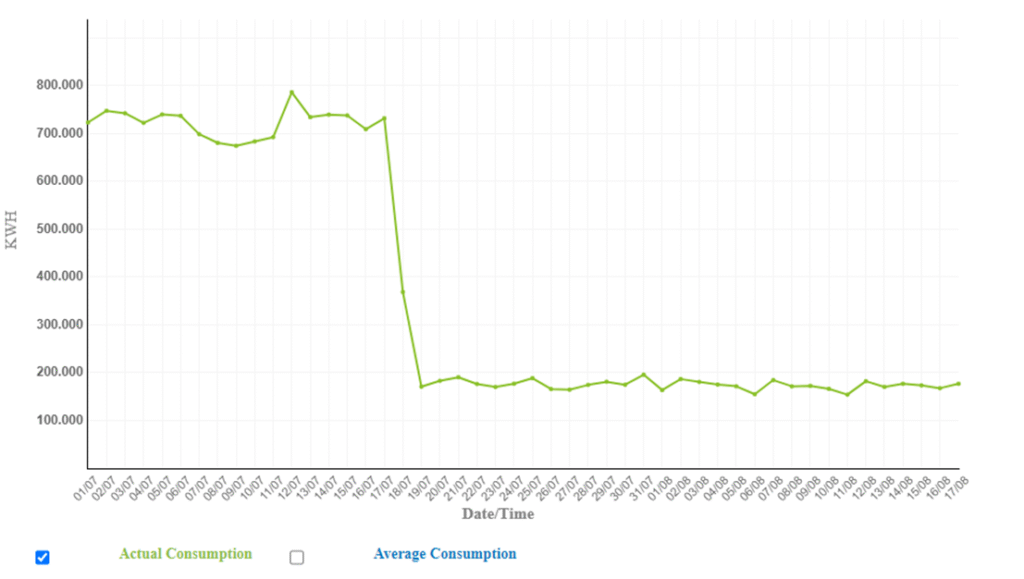
At the Council owned and operated Cysgod Y Gaer Residential Home for 30 occupants the fuel consumption for the hot water heating system has been slashed from 750kWh to just 200kWh per day – with the support of Rinnai products and design support services.
“This is a care home where we recently removed two hot water cylinders that were heated by the main heating boilers. We replaced them with high efficiency Rinnai water heaters that only heat water on demand. We can see the gas consumption has decreased from an average daily consumption of 750kWh down to 200kWh per day’ said a manager from the Denbighshire Energy Team.
Figure 1: care home gas consumption (AMR data). Reduction from c750kWh/day down to ~200kWh/day post installation of Rinnai units.
The Rinnai units installed are models from the N Series range. The Rinnai N Series continuous flow hot water heater range offers a more compact, enhanced combustion design that allows for easier installation, superior operational performance as well as ease of serviceability all points that have assisted in reducing overall cost to the council.
The Rinnai N Series is the first continuous flow hot water heating unit manufactured with stainless steel heat exchangers – this gives a greatly extended working life at optimum performance to each of the four models in the range.
The four models are:
the N1600i giving 954 litres per hour (at 50 degrees)
the N1600e (external) also giving 954 litres per hour (at 50 degrees).
the N1300i giving 775 litres per hour and
the N1300e also giving 775 litres per hours of temperature controlled hot water at 50 degrees. The two 1600s have load profiles of XXL and are water efficiency class A rated, while the 1300s are load profile XL and are also water efficiency class A rated.
All the range is also low-NOx (Less than 26ppm meaning they gain additional points under BREEAM) and the futureproofed continuous flow water heater utilises Rinnai’s patented advanced burner technology with a 13-1 turn down ratio – the largest on the market combined with 96% efficiency rating. Integral controls on the units enable the water heater to achieve high efficiencies because of advanced burner control and high modulation ranges. These features ensure that the system optimises gas usage meaning that the council can squeeze every ounce of energy out of the water heating process and reduce energy usage by 73%.
This wide range of modulation means that energy usage is completely optimised as the water heater through smart inbuilt controls will only heat the water to the temperature required thus preserving energy.
Rinnai is a true global player in the manufacture of domestic and commercial appliances and operates in almost 50 countries. Rinnai’s mission is to “create a healthier way of living” through advanced combustion technologies and water control technologies. Therefore, Rinnai has created its H3 initiative. This consists for hydrogen ready and BioLPG ready water heaters and boilers, Hybrid solar thermal and heat pump solutions and LOW-GWP heat pumps.
The solar PV installation at Springwell Alternative Academy Grantham
Wellspring Academy Trust has completed the first phase of its solar panel rollout as it bids to cut energy costs and enrich education around sustainability
Wellspring Academy Trust has completed the first of six planned solar PV installations across its school network, marking a significant step toward reducing energy costs and embedding sustainability into everyday learning.
The first system, installed at Springwell Alternative Academy Grantham in Lincolnshire, by renewable energy specialists Geo Green Power, was completed over the Easter break.
Five further installations will follow over the summer at Ebor Gardens Primary School in Collingham and four Leeds schools including Green Meadows Academy, Victoria Primary Academy, Penny Field School, and Springwell East Academy, the largest site in the project.
Once all six systems are live, the combined installations will generate more than 341,650kWh of clean energy annually, cutting 85 tonnes of CO₂ emissions and saving the Trust an estimated £92k per year.
These savings will be reinvested into classroom resources and staff development, directly benefiting students and teachers alike.
Mark Marples, Project Manager, said: “Energy costs directly affect our school budgets, so investing in solar power means we can channel those savings into enriching the education we provide. More importantly, our commitment to sustainable practices offers students a real-world example of renewable energy in action, helping them understand the science behind solar power and the importance of sustainability.”
Wellspring Academy Trust committed funding for these solar panel installations through a combination of school revenue and school condition allocation funding. In total Wellspring is investing in excess of one million pounds into solar PV across its estate. Wellspring has committed to this funding ahead of the UK Government’s announcement of £200 million in funding through the Great British Energy initiative, which will help to put rooftop solar panels on around 200 schools and 200 NHS sites in its first phase, saving hundreds of millions on energy bills.
“We’re excited to be part of Wellspring Academy Trust’s journey toward sustainable energy and can’t wait to return in the summer to complete the remaining installations,” added Kitty Cunningham, Operations Director at Geo Green Power.
“We were happy to accommodate the Trust’s request to install during the holidays. Solar installations cause minimal disruption, and we’re experienced in working around day-to-day operations to ensure seamless project delivery. We are just as happy to install during term time for the education sector and all of our operatives have enhanced DBS checks to enable them to work in school settings.”
With projects like this, schools across the UK can lead the way in sustainable education, increasing students’ knowledge and making smart financial decisions for the future.
As the UK continues its journey towards Net Zero by 2050, nuclear energy is emerging as a critical source of clean, reliable power. The industry currently delivers £5bn in direct spend and £4.9bn in GVA to the North West economy and is projected to triple to £15bn by 2030.
With the increasing growth of the nuclear sector and emphasis on hydrogen power, Martin O’Rourke, Commercial Director at Birchwood Park, shares how the North West’s nuclear industry is shaping the future of clean energy solutions, with strategic investment and cross-collaboration.
New technologies
Advancements in Small Modular Reactors (SMRs) and next-generation fission reactors are paving the way for more efficient, flexible, and cost-effective solutions across the industry. This is furthered by the government’s recent commitment to removing barriers to nuclear expansion, allowing for greater flexibility in site selection and streamlining planning regulations. It signals a shift from simply replacing legacy infrastructure, to reshaping the nuclear landscape through innovation.
Technologies like SMRs address some of the biggest challenges the renewable energy industry currently faces in the transition to a net zero power system. They offer a means to decarbonise energy-intensive industries whilst providing a consistent baseload power to complement weather-dependent renewables. This grid reliability will be key in preventing energy shortages during periods of low renewable generation.
The North West is at the forefront of nuclear research and development and is home to nearly 50% of the UK’s R&D efforts. Birchwood Park plays a crucial role in this – housing industry leaders like the UK National Nuclear Laboratory, Amentum, Cavendish Nuclear, Rolls-Royce SMR, and Nuvia.
Nuclear’s role in hydrogen
Hydrogen is increasingly gaining momentum as a solution for the decarbonisation of heavy industry, transport, and heating – and nuclear energy is set to play an important role in the production of low-carbon hydrogen.
Currently, renewable-based hydrogen faces the same challenges as the wider renewables industry, relying on sources like wind or solar which are fluctuating. Scaling up hydrogen production will require a stable, low-carbon energy source, and nuclear is uniquely positioned to deliver this demand. Nuclear-produced hydrogen offers a stable, more predictable supply of power – allowing industries to commit to scaling up without the worry of intermittent production challenges.
The integration of nuclear within hydrogen projects also strengthens the case for a whole-system energy approach, in which energy storage solutions are reliable and thus able to effectively complement renewable generation. This ability to produce low-carbon hydrogen at scale will be pivotal in the UK’s net zero journey, and the North West is already leading the way in driving innovation across these projects.
Economy and jobs growth
The North West’s nuclear sector supports more than 13,000 direct and 100,000 indirect jobs, and employment in the industry is expected to grow by 49% by 2030. As the industry expands and shifts towards Net Zero, ensuring that the workforce keeps pace with this demand will be essential.
Collaboration between the public and private sectors is key to addressing the industry’s skills gap and developing a future-ready workforce. The Northern Nuclear Alliance (NNA) is playing a pivotal role in tackling these challenges, connecting nuclear companies with government, regulators, universities, and training providers to align skills development with the sector’s needs. By strengthening these partnerships, the industry can build a pipeline of skilled professionals capable of delivering the next generation of nuclear energy projects, aligned with the wider industry’s sustainability objectives.
In line with the immediate talent needs of the nuclear industry, bridging the skills gap will be fundamental in the UK’s wider decarbonisation goals. Ensuring a diverse, highly skilled workforce will only accelerate the introduction of low-carbon technologies, and allow the UK to advance its research in areas like nuclear, hydrogen production, and energy storage. Birchwood Park’s role as a hub for knowledge sharing and skills development will be crucial in supporting this – providing essential infrastructure for decarbonisation professionals.
The UK’s nuclear industry is at a defining moment. It is no longer solely about large power plants, it is about new technologies that are making nuclear more flexible, scalable, and sustainable. However, for the industry to actualise Net Zero, ongoing investment, policy support and public trust will be essential.
A holistic approach to nuclear development must remain a priority, ensuring next-generation technologies work alongside renewables and complementary projects like hydrogen production. At Birchwood Park, we see first-hand how collaboration fuels the industry, as organisations based here continue to lead the way in shaping the future of clean energy. The foundations for growth are already in place and it’s about ensuring we have the talent, investment, and innovation to make it happen.
This article appeared in the June 2025 issue of Energy Manager magazine. Subscribe here.
Becca Weight, Salix Energy and Carbon Programme Manager
The UK has committed to reach net zero by 2050, while the public sector has set an important interim milestone of reducing emissions by 75% by 2037 compared to a 2017 baseline. These ambitious targets are driving action across the public estate to improve the energy efficiency of public buildings.
The primary way to achieve this is often to improve the building fabric and implement controls and behavioural strategies to reduce the energy demand of buildings and to install a low carbon heating system, typically a heat pump. Whilst these interventions will result in reduced direct carbon emissions, depending on the design and operation of the system the building users can be confronted with uncertainty around optimisation and the possibility of higher annual energy bills. To protect the public purse and ensure the revenue available goes towards delivering vital public services, as opposed to soaring electricity bills, energy storage can be explored as a buffer to these high costs through shifting energy demand away from peaks.
The Heat and Building Strategy (2021) highlighted the need for energy storage to produce a flexible energy system, one that is cost-effective, efficient and secure. The expected role of energy storage is there; through thermal stores (storing hot water in tanks or in district heating systems) and/or battery storage (storing energy as electricity), though the potential feels yet to be fully realised in the UK. The Climate Change Committee’s Seventh Carbon Budget suggests the need to deploy 35 GW of short-duration batteries by 2050, more than a ten-fold increase on 2023 levels, demonstrating we still have a way to go in terms of achieving the flexible energy system we need to decarbonise at scale and pace.
Energy storage will be an important tool in operationalising the decarbonisation of heat across the public sector. Thermal stores have multiple economic, technical and environmental benefits for heat pump systems and district heating as identified in CIBSE AM17 (2022) and CIBSE CP1 (2020); they can provide system stability, resilience and crucially for the public sector, peak-lopping. Peak-lopping means that large storage volumes can be used to meet the demand at peak times, allowing the potential for both reducing the size of electrical grid connection and reducing peak demand charges to optimise energy spending. With public sector organisations often experiencing delays and unexpectedly high costs when requesting an upgrade through their Distribution Network Operator (DNO) as part of a decarbonisation project, the benefits of thermal stores should definitely be considered.
Furthermore, it is expected that the Heat Network Technical Assurance Scheme (HNTAS) will build on the standards set out in CP1. Heat networks currently provide 2-3% of the UK’s heat demand but are expected to provide 20% by 2050 to reach net zero. With the expected future implementation of low carbon heating plant in energy centres, thermal stores will provide future flexibility for heat networks therefore improving the consumer experience. Based on this direction of travel those designing new, or extending existing, heat networks would do well to consider the role of thermal stores as early on as possible to avoid unexpected costs or delays in achieving HNTAS certification.
Battery storage will play a similar role in enabling the public sector to decarbonise their building stock. When combined with renewable energy installed onsite, for example rooftop solar, the energy created can either be used or stored for later use. The ability to use energy generated onsite reduces reliance on the grid, saving the building user valuable money. Depending on demand, batteries can also be used to store electricity imported from the grid at cheaper times of the day which can either be used during peak periods or sold back to the grid.
As with any energy project, an objects appraisal should be conducted to explore the benefits and limitations of energy storage, which will be bespoke to each building. Design, spatial and planning requirements must be considered early on in the design process to give confidence in the feasibility of installation.
At Salix we deliver the Public Sector Decarbonisation Scheme on behalf of the Department for Energy Security and Net Zero. Public sector organisations are eligible to apply for grant funding for heat decarbonisation and energy efficiency projects, with new schemes historically running annually. Applicants are encouraged to take a whole building approach to decarbonisation to ensure that low carbon heating systems are designed appropriately, that the thermal comfort of building occupants is maintained and that projects present good value for public money. To achieve this approach applicants are eligible to apply for thermal stores and battery storage in conjunction with the installation of a low carbon heating measure in each building proposed. Whilst there are some restrictions around utilising grant funding for commercial gain (e.g., applicants are typically not permitted to export electricity to the grid), the inclusion of these measures in the eligible technologies list demonstrates technical justification and political drive for the implementation of these technologies as part of a bundle of decarbonisation measures.
If we are to reach net zero, with critical action required at a time of financial cuts across the public sector, it is crucial for public sector organisations to leverage their experience, passion and funding towards low carbon solutions that provide value over the long term. Energy storage will be an important tool in achieving this, based on the financial savings available, and its role is only expected to grow as we continue our net zero pathway.
Project will aim to supply national landmarks and reduce the city’s gas demand by 10%
The UK’s leading low-carbon city heat network developer, 1Energy, has secured £21m of investment from the government for a city-wide heat network for Oxford.1
The company plans to initially invest an additional £100mn of private capital2 to develop, build and operate the first phase of the Oxford Energy Network.3 1Energy’s investment into the project over time could amount to more than £500m as the network expands to connect more buildings.
Alongside engaging major institutions in the city – Oxford City Council, Oxfordshire County Council, the Zero Carbon Oxfordshire Partnership (ZCOP)4, Oxford Brookes University and the University of Oxford – 1Energy is working to advance the network, with plans to begin construction in 2026 following engagement with the local community and securing planning consent.
By initially targeting organisations with high heat consumption, the project could reduce Oxford’s fossil-fuel gas demand by up to 10 per cent.5 The network is also projected to reduce carbon emissions by 15,000 tonnes a year – approximately two per cent of Oxford’s entire annual emissions – by cutting emissions from connected buildings by up to 81 per cent.
The project will enable the world-leading city to decarbonise heating, a major source of air pollution and carbon emissions in the UK.6 Some of Britain’s most iconic, grade-one listed buildings in the city could soon be warmed by low carbon heat rather than gas boilers.
1Energy’s approach complements the environmental leadership shown by Oxford and ZCOP, aligning with the city’s ambitious plans to decarbonise while respecting its architectural character and historic setting. The network intends to help lay the foundations for a healthier, cleaner future for its residents.
As well as helping Oxford achieve its climate goals, the project expects to improve the lives of those who live and work in the city by reducing air pollution, improving public health.7 The network is projected to reduce the amount of air pollutants that can cause respiratory problems8 by five per cent before 2030.9 1Energy has established a community benefit task group – that includes major institutions in the city – that is exploring how the network can support community projects, tackle fuel poverty and boost local employment.
Andrew Wettern, CEO of 1Energy, said:
“Oxford is already at the very forefront of city decarbonisation and low carbon energy through the work of the University, and the Zero Carbon Oxfordshire Partnership and its constituent members. We are thrilled to add to this success by enabling the city to decarbonise heat through the Oxford Energy Network.”
“Oxford has more than 1500 listed buildings across the city, so the decarbonisation challenge for Oxford is much harder than many other cities. The Oxford Energy Network matches perfectly to the challenge because it will be invisible and silent, it will supply the temperatures required by these historic buildings to maintain their warmth in the winter, and it will be easier and cheaper for customers to connect to the network than to create their own low-carbon heat onsite.”
“By using the Oxford Energy Network as a model for other historical cities and towns, we can deliver heat decarbonisation in a way that preserves our heritage, across many more cities and towns at pace.”
City-wide evolution
Home to the Oxford Leading Sustainable Corporations Programme and Oxford Institute for Sustainable Development, the city has long led the global conversation around sustainability. World-renowned organisations across the city have also set ambitious air pollution targets and climate goals that require them to rapidly move away from gas boilers.
Heat networks offer the lowest-cost, simplest, fastest route to decarbonising heat in cities and towns, requiring the fewest building-retrofit measures.10 As this low carbon heat is transferred via underground, water-filled pipes, they also preserve the aesthetic of our historic city centres.
The Oxford Energy Network will bolster the city’s stature, adding another element to its long-standing leadership on sustainability.
As the first company in the UK to use ‘deep green’ private capital11 to build city-scale low-carbon heat networks like the Oxford Energy Network, 1Energy has ambitions to deploy £1bn within the next 8 years into new low carbon heat networks across the UK – decarbonising heat in additional national landmarks.
Through reducing the use of gas, these networks help reduce public health costs12 and protect organisations against sudden gas-related energy price hikes.13
Footnotes
1 1Energy secured this investment from the UK Government’s Green Heat Network Fund (GHNF) to assist with the development and construction of the first phase of this network. This public investment represents less than 17% of the anticipated cost of delivering the first phase of the network.
2 From the DHUK UK Fund operated by Asper Investment Management, an ‘Article 9’ (the highest level of ESG) fund under the Sustainable Finance Disclosure Regulations.
3 After completing phase one of the Oxford Energy Network, 1Energy plans to expand the network to provide low-carbon heat to the majority of Oxford by 2050, ultimately requiring more than £500mn of investment.
4 ZCOP is a partnership of leading institutions and employers working to achieve a zero carbon and resilient Oxfordshire by 2050.
5 Low-carbon heat for the project will come from multiple sources, including heat pumps which will extract heat from Oxford’s air, concentrate it, and turn it into useable heating (like a refrigerator, but in reverse).
6 Heating accounts for over 21 per cent of Britain’s air pollution (ECIU; Airly) and more than a third (37 per cent) of total carbon emissions (Energy Systems Catapult).
7 More than 1,100 people a year in the UK are developing the most prevalent form of lung cancer as a result of air pollution (Guardian).
8 Carcinogenic nitrogen oxides (NOx) and sulfur oxides (SOx).
9 The network could save 168 tonnes of these air pollutants over a 20-year period, which is equivalent to taking 7,000 domestic boilers out of use.
10 While not every network is the same, Innovate UK estimates that connecting to a heat network could cost 60-80 per cent less than installing individual building-level heat pumps and running costs could be 30-40 per cent lower (Innovate UK: p.31).
11 Funding that qualifies as ‘Article 9’ under the Sustainable Finance Disclosure Regulations. The most stringent classification, these funds are required to have sustainability as their primary objective. Less than 5% of institutional investor funding is ‘deep green’.
12 In England, nitrogen dioxide alone was estimated to cost the NHS and social care over £81mn in 2017 alone (Pimpin et al. 2018).
13 1Energy sources most of its energy from UK-based renewables, meaning the cost of heat from the Oxford Energy Network is insulated against international price fluctuations in gas.
Chris Goggin reviews the recent decision to reverse renewable investments in favour of increasing fossil fuel opportunities. BP is the latest global energy company to reduce investments in clean power projects and what this means for the direction of international and UK Net Zero objectives.
BP has formally announced a strategy reset of their targets set five years ago by the previous chief executive who has since left the company. During 2020 BP announced a new strategy that would aim to reduce oil and gas production at 40% by the end of the decade.
Investments would instead target the emerging low carbon energy market. BP promised to limit fossil fuel production to around 1.5 million barrels a day by the end of the decade. For perspective, in 2018 BP produced 3.7 million barrels a day.
Since then, BP has recently scaled back these objectives and redefined their approach – BP will now reduce production by 25%, meaning that BP will still produce around 2 million barrels a day by 2030. BP will now direct $10 billion a year of investment towards oil and gas projects whilst reducing $5 billion a year from their green energy strategy.
Current CEO Murray Auchincloss is quoted as saying: “Our optimism for a fast [energy] transition was misplaced, and we went too far, too fast.”
BP will now refocus on starting 10 large-scale fossil fuel projects by 2027 with a possible 8 to 10 more by the end of the decade – 2030. Amongst the projects supposed to be cancelled is the £100 million HyGreen Teesside green hydrogen project. This facility was supposed to contribute 5% of the UK’s aim of introducing 10GW of hydrogen capacity into the UK grid by 2030.
BP has lost commercial ground to their rivals Shell and ExxonMobil in the last 2 years and has effectively lost a quarter of its market value. Shell and ExxonMobil have seen their market value increase over the last 2 years, as both companies have been concentrating on oil and gas production.
To replace lost revenue BP is planning to sell $20 billion of assets including the noteworthy BP subsidiary and solar power developer – BP Lightsource. BP also plan on potentially selling an additional subsidiary, lubricant company Castrol as well as their network of service stations in an attempt to cut $5 billion of costs by 2027.
Additional influences that BP are subject to include the 5% (£3.85 billion) stake share that activist hedge fund Elliot Management has acquired. An activist hedge fund is an organization that invests in a company and exerts pressure to force managerial and strategic change. Elliot Management is widely expected to demand changes to increase market value.
BP’s competitors Shell and ExxonMobil in contrast have pursued opportunities that focus on fossil fuels rather than renewable alternatives. Shell announced last year that they will reduce carbon-based climate targets. Shell’s previous aim was to weaken carbon emission intensity of all sold energy by 20% at the end of the decade. The new objective is to reduce carbon emission intensity by between 15-20%.
Carbon intensity refers to the carbon produced through each unit of activity as opposed to released atmospheric emissions. Shell’s new target allows the organization to produce more gas at lower emission intensity but will raise overall emissions as production increases.
Shell has also failed to set out “Scope 3” emission targets associated with their gas production and distribution. Scope 3 emissions consider the entire range of emissions created through an organizations value chain including elements that exist outside of direct company control like, suppliers, customers and product disposal. Shell’s gas business is expected to grow 50% by 2040.
In 2021 Shell announced they will reduce oil output every year for the entire decade from the 2019 peak of 1.9 million barrels a day. Having completed a 2021 $9.5 billion sale from a stake in a Texas Permian basin project Shell announced that this had reduced its daily oil production to 1.5 million barrels a day. Shell now plans to begin enough fossil fuel projects to add 500,000 barrels a day by 2025 highlighting a shift in strategy.
Shell has also stopped investing in offshore wind opportunities and instead focused on expanding their current portfolio of oil and gas projects.
ExxonMobil have not actively embraced renewable or alternative energies in the same way. The American organization instead aims to reduce carbon emissions by introducing a variety of low carbon energy sources into their product inventory.
ExxonMobil will invest around $20 billion to add fuels such as hydrogen, carbon capture and biofuels between 2022-2027.
Currently, ExxonMobil is the stronger company when compared to both Shell and BP. In 2024 Shell reported a net income of $5.4 billion in the third quarter of the year, down from $6.3 billion the previous year. BP reported a 30% reduction in net income at the same time, at $2.3 billion. Exxon Mobil announced net income in the third quarter at $8.6 billion – a 5.1% reduction from the previous year.
Gross yearly profits for ExxonMobil rested on $84.234 billion, Shell $23.72 billion whilst BP’s yearly gross profit is not as well advertised but published a net income of $8.9 billion down from $13.8 billion the previous year.
A subjective interpretation of current oil and gas companies moving focus away from ‘clean’ energy aims is that market and consumer demand for fossil fuels remains strong across all continents. NetZero aims are not as highly valued by both the consumer and shareholder when compared to lower energy costs and share prices.
However, an objective view could also claim that large energy companies will return to clean power objectives once the global market is in a better condition to be able to return profits from renewable investments.
Rinnai will continue to provide constantly updated data-driven information and knowledge that equips the UK customer to make informed choices to assist in specifying, installing and maintaining heating and hot water delivery products and systems which are technical, feasible and economic.
For the latest of energy and policy matters join the free Rinnai newsletter
Hannah Audino, Buildings Decarbonisation Lead at the Energy Transitions Commission
Heat pumps are the core of decarbonising the UK’s building stock. Their superior efficiency means they require 3-4 times less energy than gas boilers and electric resistive heating and can deliver clean heat and comfort to households, with the potential to lower energy bills.
Deployment has remained stubbornly low and far behind European peers – but is the tide starting to turn? In March, a record 4,000 applications were submitted for the government’s grant for £7,500, which can meet 60-95% of the cost of buying and installing a heat pump. This reflects a loosening of requirements for cavity wall and loft insulation, and a relaxation of planning policy to allow installation within one meter of a neighboring property. These are welcome developments; deep insulation is not essential for heat pumps to provide equivalent heat and comfort as a gas boiler – the Energy Transitions Commission’s report, Achieving Zero-Carbon Buildings, busts this myth.
But we are far from where we need to be. Buildings account for 40% of the UK’s carbon emissions. To meet the government’s target of reducing emissions by at least 68% by 2030 (compared to 1990 levels), it is targeting 600,000 installs a year by 2028 – that’s a 10-fold increase from today.
This is achievable – but with less than three years to go, policy needs to act fast. There are five key priorities.
Firstly, the government must provide investment certainty. The Future Homes Standard – regulations on “zero-carbon ready” new buildings – was due to come into effect in 2025 but is still yet to be announced. The government should announce an immediate ban on gas boilers in new homes, and a ban on their sale in existing buildings from 2035. This is critical to scaling the heat pump market, lower upfront costs and build local supply chains and skills.
Secondly, it is imperative that gas and electricity prices are rebalanced to actively incentivise heat electrification. In the UK, a kWh of electricity costs four times more than a kWh of gas, virtually eroding the efficiency benefit of heat pumps on energy bills. In comparison, in Norway and Finland, gas and electricity cost virtually the same; as a result, there are 50-60 heat pumps installed per 1,000 households a year, compared to less than 5 in the UK.
A two-pronged approach is needed. The government must remove levies which are currently disproportionately applied to electricity; revenues from carbon pricing can compensate. Alternatively, they can be passed – gradually – onto gas, with revenues used to finance heat pumps for lower-income households. This must be underpinned by a well-designed power market that ensures electricity prices better reflect the proportion of low-cost renewables installed on the UK’s grid.
Thirdly, the government must continue to fund its heat pump and energy efficiency grants beyond 2026. Over the medium-term, subsidies should target lower-income households. For other households, the government should offer low-cost finance at zero-interest rates. Banks also have a role to play through mortgage top-ups at favourable rates; there is increasing evidence that heat pumps and energy efficiency improvements augment a property’s value.
Fourth, a coordinated and locally led approach is needed, involving local government, energy and network companies, and businesses. Street-by-street decarbonisation strategies can coordinate upgrades to local distribution networks, invest in local skills, and serve as a one-stop-shop to streamline installation. Crucially, they should identify where networked ground-source heat pumps can be deployed; these are 4-5 times more efficient than gas boilers, serve entire blocks of flats or streets, and are financed by the private sector (repaid through a standing charge) and so reduce the upfront cost for households.
Finally, one of the biggest challenges is incentivising landlords to install heat pumps instead of resistive heating; heat pumps cost 4-5 times more to install, but cost households 3-4 times less to run. This is imperative both for electricity grids and supporting lower-income households in the transition. The government should implement its proposals to ensure rental properties have a minimum Energy Performance Certificate rating of C by 2030, and provide low-cost finance that is repaid directly through rental income.
It is entirely feasible to fully disconnect the UK’s buildings from the gas grid by 2045, at the latest, while lowering energy bills and improving living standards. But achieving zero-carbon buildings will not be easy – millions of individual households must be incentivized to make changes to their home that, in many cases, have a sizeable upfront cost. This requires strong national ambition, a clear role for the private sector, and unwavering policy.
Join professionals from over 150 different countries worldwide and enrol onto the Renewable Energy Institute’s accredited training courses.
All Institute courses are available to study Online, On-demand, providing flexibility to study whenever suits you. Our full catalogue of accredited courses can be viewed on our website: www.renewableinstitute.org
We also have a selection of our courses available to study in the Live Virtual Classroom. The Live Virtual Classroom course will run on set dates and will feature 1-2 full days (9am–5pm UK time) of interaction and networking with the lecturer and other delegates. You will have the opportunity to sit the internationally recognised Galileo Master Certificate exam online at the end of the course.
All courses are CPD accredited and can be used as evidence of your continued professional development.
On completion of your studies, you will receive 1 year of complimentary REI membership.
More than a third of UK schools continue to grapple with key challenges in achieving heating system decarbonisation.
Technical difficulties, power requirements and funding were among the challenges facing schools upgrading to low carbon heating solutions.
Despite these issues, 90% of schools report net zero as a key priority, while an additional 99% confirmed that they already have net zero plans in place.
93% of school estates managers would likely consider installing a hybrid heat pump system.
A survey conducted by Baxi of 200 state school estates managers, consultant engineers and M&E contractors has found that while enthusiasm for net zero and support for low carbon heating systems in schools is thriving, persistent barriers remain.
The survey found extremely strong support for net zero within schools, with 90% of estates managers who responded agreeing that net zero is a priority, a sentiment echoed by 78% of consultant engineers and contractors. 99% of the school estates managers surveyed reported having a net zero plan in place. Experience and satisfaction with low carbon heating systems within schools was also high, with 95% of school estates managers having replaced a fossil fuel boiler with a heat pump in their buildings previously. 97% of all school estates managers (87% of all respondents) viewed heat pump performance and operating costs favourably.
Despite the strong support for low carbon heating and net zero in schools, the study also uncovered significant challenges faced by respondents when opting to install a low carbon heating system. The most prominent was technical difficulty as a barrier to deployment. With 36% and 39% of school estates managers and consultant engineers and contractors respectively identifying the challenge, there may be a skills gap which can stall decarbonisation projects.
Both groups also agreed that additional electricity capacity needed for low carbon heating solutions was a challenge, with 36% of consultant engineers and contractors outlining this as a barrier to decarbonisation.
School estates managers identified other core challenges, including the financial and technical feasibility of school heating system changes, infrastructure requirements, and the length of project timelines as any major refurbishment projects are typically restricted to the fixed window of time of the summer holiday period.
Additionally, the UK’s electricity pricing is placing a persistent barrier in front of those at the forefront of decarbonising state schools.
The study did identify potential solutions in the form of hybrid heat pump systems and prefabricated packaged solutions. Among Baxi survey respondents, hybrid heat pumps are a popular solution, with a slight preference for this technology over a standalone heat pump system.
80% of the consultant engineers and contractors surveyed would be likely to recommend a hybrid system, and support for hybrids among school estates managers increased with school size. This could be attributed to several factors, including costs, integration with existing hydronic systems, and the shorter installation timeframes required to install a hybrid solution versus converting to a standalone heat pump system.
However, grant support for hybrid heat pump solutions under the Public Sector Decarbonisation Scheme (PSDS) is limited, despite strong backing for the technology.
Policy recommendations
Baxi is calling for four clear steps that we believe the Government must take to ramp up the decarbonisation of our state schools and remove barriers preventing the installation of hybrid heating systems within public buildings.
Include heating system upgrades for schools within existing public sector support schemes, utilising GB Energy to support
Include hybrid heating systems within existing support schemes
Address the imbalance in price between gas and electricity
Address the skills gap to help deliver clean energy projects.
Read the survey report here. Find out more about Baxi’s solutions for schools on our website.
This article appeared in the June 2025 issue of Energy Manager magazine. Subscribe here.
Sparked by geopolitical uncertainty and challenges around demand, the 2022 energy crisis thrust energy security and stable power supply into the spotlight for businesses across Europe. This is particularly true in the UK, where our dependence on gas and power generation led to increasing energy costs, supply chain disruptions, and heightened concerns over long-term affordability for businesses.1
More recently, as price volatility and reliability concerns returned, many companies switched suppliers with some prioritising short-term cost reductions over long-term stability. A record-breaking 113,000 businesses changed energy providers in October 20242.
But is this transactional mindset holding some businesses back?
I believe that focusing on price and viewing energy as just another cost on the balance sheet underestimates its true potential as a strategic asset that can drive growth, resilience and competitive advantage.
So, how can businesses shift to a smarter, more strategic approach that enables them to derive greater value from their energy contracts? One approach is to harness a classic psychological theory: Maslow’s Hierarchy of Needs3, and his concept of ‘laddering up the hierarchy’ to match one’s evolving needs.
Step one: Build on the strongest foundations
Maslow’s Hierarchy of Needs is a psychological theory exploring human needs and motivations through an ascending five-stage model, beginning with our survival essentials such as food and water.
The core principle is simple: humans need to meet their essential survival needs before they can consider growth needs. The same principle applies to businesses: just as humans need reliable sources of food and water, organisations need reliable energy provision.
When businesses have complete confidence in their energy provider’s ability to withstand market volatility, they are more willing and able to invest in long-term growth. In an unusually volatile environment of geopolitical tension, fluctuating prices and regulatory changes – this requires an energy supplier that is financially robust. Ideally, they should have several decades’ experience navigating international energy markets, advanced trading capabilities, extensive business and government relationships, and broader stakeholder networks.
This is why I think getting the basics right is critical. If I were looking after procurement, I would want certainty that the partner I choose could provide the level of service they have committed to throughout the duration of the contract – no matter what else is happening in the world.
Step two: Diversity of supply equals security
Maslow’s second tier – safety and security – is equally fundamental for creating an optimal energy strategy. During times of volatility, it is more important than ever that energy supply is both predictable and adaptable to changing market conditions, so businesses can survive, find stability and therefore focus on growth.
The 2022 energy crisis highlighted how relying on a single energy supply source creates vulnerability. Businesses that seek out providers with access to a diverse energy portfolio have been more successful in shoring up future energy security and mitigating market volatility.
A diversified portfolio can include alternative power sources such as liquefied natural gas and biomethane in addition to conventional gas and power. This helps to spread the risk, enabling businesses to reduce dependence on any single energy source, therefore helping to manage energy price and security while staying resilient against market and regulatory changes.
Renewable energy sources such as wind, solar and hydro can also be used for similar purposes. As the United Nations notes: “Reliable renewable energy technologies can create a system less prone to market shocks and improve resilience and energy security by diversifying power supply options.”4
While choosing a provider based on price alone is an understandable choice for businesses, it inevitably reduces the customer-supplier relationship to a commodity exchange and nothing more.
Selecting a trustworthy energy provider that can provide security, handle market fluctuations, and in some cases, unlock untapped revenue streams for businesses, elevates that relationship to a strategic one. In turn, this relieves businesses from having to constantly monitor and navigate market volatility, giving them a chance to focus on the bigger picture and foster growth.
Step three: Building stronger energy relationships
The next tier of Maslow’s theory, ‘love and belonging’, may seem somewhat removed from energy contracts. However, as businesses evolve and their needs become more complex, building meaningful relationships with their energy provider becomes key to unlocking value. It is also a growing trend.
According to a recent article in Procurement Magazine, while price and cost savings remain a primary objective, procurement’s role has grown to focus on broader value creation. The publication adds that “procurement leaders are now looking beyond immediate cost reductions to consider long-term value including sustainability benefits, innovation opportunities and strategic partnerships.”5
Meaningful progress can happen when businesses prioritise long-term relationships with their energy providers, viewing them as collaborators rather than mere commodity suppliers. This is a view shared by Hydro, which sees long-term partnerships as key to its decarbonisation journey. “As we work towards net-zero, selecting the right energy partner is a board-level priority. We needed a provider that understood our industry, our ambitions, and could support us in the long run,” says Lars Lysbakken, Energy Portfolio Manager at Hydro.
Though decarbonisation is often discussed in the procurement process, it can be overlooked in favour of day-to-day pressures. Organisations can maintain progress on their ambitions to reduce emissions while meeting near-term business needs through working with an energy provider that offers tailored decarbonisation strategies and options that can be scaled up – such as renewable natural gas, energy management strategies, energy efficiency consultancy, or environmental products.
This type of relationship enables businesses to get maximum long-term value while meeting their energy goals securely, reliably and in a cost-effective manner.
Step four: Tailoring your energy strategy
The fourth stage of Maslow’s theory – confidence, achievement, and individuality – might be the most relevant and exciting, as impactful energy providers recognise and adapt to businesses’ unique needs.
While short-term fixed contracts can provide stability, they can also limit flexibility and hinder the longer-term strategies needed for transformational growth. The right energy provider can tailor solutions to match specific operational and strategic goals, or even risk appetite. Flexible purchasing products and power purchase agreements (PPAs), combined with a mix of conventional and renewable options can all help to meet changing needs.
Bespoke relationships empower businesses to evolve from passive energy consumers to active players in the energy landscape. Flexible procurement plans provide them with the confidence that they can adapt swiftly to market changes and adopt a more agile and resilient energy strategy that puts businesses in control.
Step five: Unlocking peak potential
At the pinnacle of Maslow’s hierarchy theory lies self-actualisation, which he describes as the freedom to realise true business purpose and direction. Transposed to the energy world, this would enable a procurement relationship to go beyond delivering power and gas, and empowering businesses to thrive.
As the world transitions to net-zero emissions, energy systems are becoming increasingly decentralised, with more renewable, local electricity entering the grid. Battery systems can help to balance supply and demand, giving businesses the power to become more self-sufficient and take charge of their energy needs.
Virtual power plants (VPPs) are also revolutionising how businesses manage energy, integrating distributed resources such as solar, battery storage, and flexible demand into a single intelligent network. By optimising energy use and market participation, VPPs like EGO6 – recently acquired by Shell in Italy – contribute to a more flexible, sustainable and resilient energy system that can empower industrial and commercial customers to take control of their energy strategy, security and decarbonisation pathways.
At this level, the relationship with the energy supplier is focused on enabling customers’ innovation, resilience, and industry leadership.
How psychological theory powers possibility
In an increasingly uncertain world, energy can be seen as a dynamic force for positive change through strategic relationships that can fuel innovation and drive competitive advantage.
Maslow’s Hierarchy of Needs illustrates how the most enriching outcomes come from responding to higher aspirations. The same can be applied to the energy sector. At a foundational level, reliability and security are essential. However, real and sustained value emerges when businesses prioritise partnerships that elevate their ambitions, rather than merely meeting their basic requirements.
Energy has the potential to be more than just an additional cost on balance sheets, it can be a catalyst for progress. By working with trusted energy allies, businesses can evolve from keeping the lights on to achieving their boldest vision for the future.
References
[1] The report: protecting the UK from a future energy crisis (October 2024)