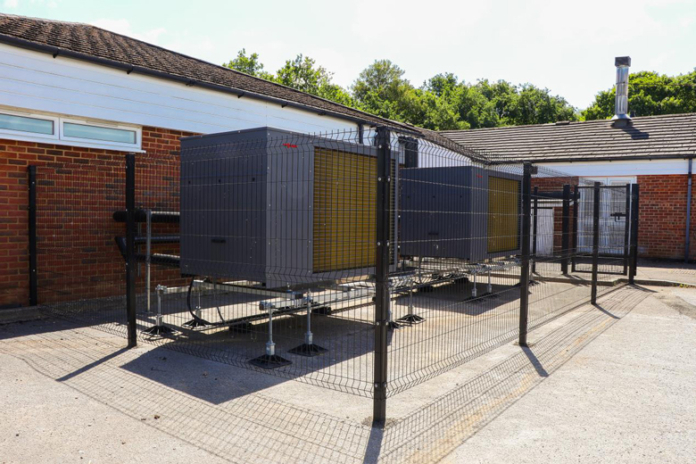

Ideal Heating Commercial takes extra care with the heat network at Huddersfield specialist housing development

Ideal Heating Commercial POD Heat Interface Units (HIUs) and Evomax 2 condensing boilers have been installed into Ash View Extra Care in Huddersfield as part of a heat network designed to heat the 50 one and two bedroom flats and communal areas, along with hot water, at this new development for Kirklees Council.  Ash View Extra Care is a specialist housing development, designed to maintain the independence of older people who have care and/or support needs. 

Ideal Heating Commercial has supplied four Evomax 2 100kW wall-mounted boilers in cascade as the energy centre at Ash View Extra Care, and 50 POD HIUs with first fix kits and factory fitted hard wired Mbus heat meters. 

Evomax 2 is the UKโ€™s number 1 selling wall hung commercial boiler.  Highly efficient, it has up to 99.6% full load efficiency and up to 110% part load efficiency, can operate at up to 30ยฐ ฮ” T, and boasts a high turndown of 5:1.  The four Evomax 2 boilers at Ash View Extra Care are running in cascade on a standard height frame and header kit delivering 400kW of output for an energy efficient solution, as the cascade can turn down to accurately match any load from 400 – 20kW (20:1). This method also increases the proportion of time where the boilers are modulating at part load, instead of cycling on and off, to satisfy the changing demands of the network over a day.

The PODs installed in each of the self-contained flats at Ash View Extra Care are indirect i305 HIUs, meaning they contain two highly efficient stainless steel brazed plate heat exchangers to provide complete separation between the heat network for both heating and hot water.  For the users at Ash View Extra Care, the POD HIU is reassuring in its familiarity, looking just like a domestic combi boiler from the outside and with similar controls, but instead of burning gas it uses heat exchangers to transfer thermal energy from the distribution network. Its small footprint and compact overall envelope mean it can readily fit in a kitchen or airing cupboard or existing utility area.

As well as being energy efficient, a key benefit of employing a heat network at a facility such as Ash View Extra Care is safety as there are no flue routes or gas connections to accommodate within the premises.

V&T (Plumbing & Heating Services) Ltd. were contracted to install the heating system at Ash View Extra Care via Equans, the principal contractor.  V&T install hundreds of Ideal Heating domestic boilers each year and had no hesitation in choosing Idealโ€™s commercial products for this project, based on past performance and back up support received: โ€œOur past experience of working with Ideal boilers had an impact on selection, especially with the aftercare service providedโ€ comments Tom Crawford, Design Engineer at V&T.  โ€œWhen we were looking at which HIUs / boilers to propose for the scheme, we looked at the commercial range offered by Ideal and decided to go with both the POD and Evomax 2 as they both met our criteria. It also made sense to stick with one manufacturer.โ€

Tom has been pleased with the outcome: โ€œOur engineers on site had no issues installing the POD HIUs and found them very similar to the Ideal domestic combi boilers.โ€  POD HIUs have been specifically designed for hassle-free installation, with a first fix kit available which can be delivered and installed ahead of the POD unit so all services can be piped up, filled, flushed, and tested in advance.  โ€œThe engineers also found installing the Evomax 2s, mounting frames and header arrangement easily; these were fitted in a matter of hours.โ€

V&T benefited from Ideal Heating Commercialโ€™s free commissioning service on the Evomax 2, which automatically applies a five year warranty on the appliance at no extra cost. 

For more information on Ideal Heating Commercial, visit https://www.idealcommercialheating.co.uk/.


This article appeared in the October 2025 issue of Energy Manager magazine. Subscribe here.
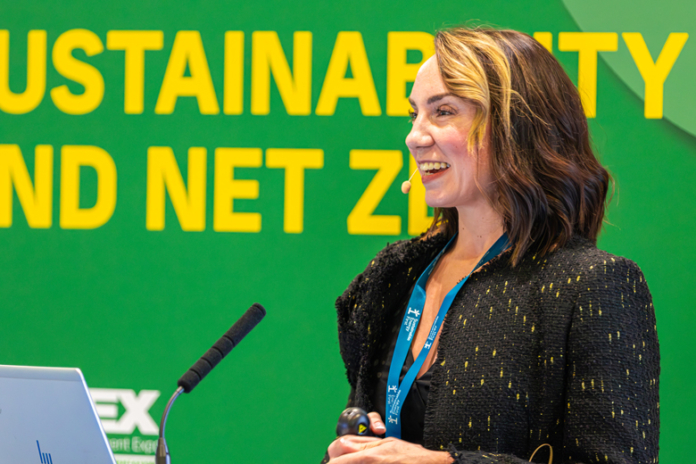
The emex 2025 agenda is live!โ€ฏโ€ฏย 

Renowned for the outstanding learning opportunities on offer, you can once again expect plenty of first-class,โ€ฏfree-to-attend sessions across our four themed theatres atโ€ฏemex, meaningโ€ฏthere reallyโ€ฏis a session for everyone. And, don’t forget that all of these sessions will be delivered by industry experts from across the net zero spectrum, all excited to help you with your sustainability journey.โ€ฏโ€ฏโ€ฏ 

Whatโ€™s on the agenda so far?

After the welcoming address, by Lord Rupert Redesdale, Conference Chair the Energy & Carbon Management Strategy Theatre opens with Kate Mulvany, Cornwall Insight, forecasting energy costs, regulation and market changes. As the energy landscape undergoes rapid transformation, the role of the energy manager is evolving. Dan Smith, Director of Energy Services, ClearVue Business, gives perspective for those ready to shape the next chapter of energy management.โ€ฏโ€ฏ 

As โ€œgreenhushingโ€ emerges as word of the hour, we must reframe the net zero narrative. From pitching to your CFO from the perspectives of sustainability directors, to preparing for future reporting requirements, Sarune Ringelyte, Director, Sustainability, Savills in the Sustainability & Net Zero Theatre, will discuss what the true ROI of energy efficiency and emissions reduction is and Alice Andreasen, Chief Corporate Affairs Officer, Newcastle International Airport, tells all about the business case for net zero.โ€ฏ 

With rising energy costs, tighter regulations, and increasing financial premiums for inefficiency, leaders are caught in a perceived conflict between building sustainability and business sustainability. This narrative will be challenged through practical insights into making commercially sound sustainability decisions in the built environment by Anna Maclean, Co-Founder & CEO SRE, Jill Fowler, Transformation and Sustainability Director, JLL, and Kam Singh, Executive Director โ€“ ESG, EMCOR UK in theSmart Buildings & Built Environment Theatre

Responsible and efficient energy consumption remains a priority for organisations. According to Cornwall Insight, as of April 2025, the average small business energy bill is approximately 70% higher than it was in โ€˜21โ€“22.โ€ฏ emex explores why โ€˜whenโ€™ you use energy is now more important than โ€˜how muchโ€™ you use.โ€ฏโ€ฏโ€ฏ 

The sustainability narrative shifts toward future-thinking business models, we must prepare to adapt to a changing world. Climate resilience is a key factor in long-term planning. Is your organisation ready?โ€ฏโ€ฏ 

The future? Driven by the promise ofโ€ฏAIโ€ฏandโ€ฏsmart technology, it looks smart. Mike Pitts, Deputy Director, Innovate UK informs us that buildings will tell us how to build better. emex looks atโ€ฏopportunitiesโ€ฏpresented by these technologies inโ€ฏpredictive maintenance,โ€ฏenergy modelling, andโ€ฏdata processingโ€ฏfromโ€ฏAI,โ€ฏIOTโ€ฏandโ€ฏdigitalโ€ฏtwins whilst addressing theโ€ฏpractical realitiesโ€ฏofโ€ฏintegratingโ€ฏtheseโ€ฏtechnologiesโ€ฏsuccessfully.โ€ฏ 

Our Energy Future & Flexible Networks Theatre addresses flexibility markets and will host sessions featuring Vanessa Jones, Power Responsive Officer, NESO and Rebecca Beresford, Director of Markets, NESO

What else do we have in store for emex this year?

Thereโ€™s plenty of other learning opportunitiesโ€ฏto get involved with including free-to-attend workshopsโ€ฏfromโ€ฏBSIโ€ฏTraining Academyโ€ฏandโ€ฏCornwall Insight, plus mentoring sessions hosted by the Institute of Sustainability and Environment professionals [ISEP] andโ€ฏYoung Energy Professionals [YEP].* (*Places are limited across all of these features so please register early to take part).โ€ฏ 

Closing the show, we welcome a new pitch competition with five innovative startups battling it out for a prize in front of a panel of judges from Finance, Retail, Telco, Logistics and Airports sectors.

No matter where you are in your decarbonisation journey, your budget, or your career stage, from workshops to informative presentations, there is a session made for you.

Watch this spaceโ€ฆ

Keep an eye on the website and speaker pages with more fresh updates.

Visit the emexlondon.com website to see the full preliminary 2025 agenda. Registration is completely FREE. Secure your spot now: https://forms.reg.buzz/emex-2025/reg-editorial-enerygy-manager-mag

This is just the beginning… there’s more to come for the show!โ€ฏโ€ฏ 

More workshops, more networking opportunities and more informative sessions to be announced soon.


This article appeared in the October 2025 issue of Energy Manager magazine. Subscribe here.

Wave announces over 10 billion litres of water saved in a boost to national water resilience

Wave, the multi-award-winning water retailer, has revealed it has supported the saving of 10.47 billion litres of water since kicking off its Social and Sustainability initiative in October 2021, a new report has revealed.

The sustainability-focused utilities provider today published its latest Social and Sustainability Promise report, outlining its performance over the past financial year and the record-breaking savings for its customers. Alongside this, it also revealed it has achieved its five-year water-saving target one year ahead of schedule.

This remarkable achievement is equivalent to 4,000 Olympic swimming pools or feeding Niagara Falls for over an hour. It was made possible through Waveโ€™s active water management service, which supports its customers to improve their water efficiency.

With the UK predicted to have a shortfall of nearly five billion litres of water per day by 2055, according to the Environment Agency, this milestone is a significant contribution to national water savings and long-term resource resilience.

In addition to exceeding its water-saving target by supporting its customers in improving their water efficiency, Wave has continued to invest in its people, planet, customers and communities. In the last year alone, the national water retailer has:

  • Saved 3.1 million kg of CO2
  • Completed 2,068 volunteering hours
  • Attended 11 volunteer events
  • Replaced 259,975 paper bills with e-billing
  • Attained an 82% employee engagement rate across their employee survey
  • Achieved gold for Best CSR strategy and Health and Wellbeing at the UK Employee Experience Awards
  • Continued to deliver market improvement projects, including launching a legionella monitoring solution trial in partnership with Infersens

Despite having a strong year of growth, with revenue and profits rising as well as welcoming over 48 new employees to its 320 + team, Wave relocated its Peterborough office earlier this year, deciding to downsize as part of its continued focus on being an environmentally conscious business. 

The newly refurbished 1,300 sq.ft office is fitted with a brand-new energy-efficient heating and cooling system, passive infrared sensor lighting and consumes no gas โ€“ saving 22 tonnes of CO2e and diverting 12 tonnes.

Lucy Darch, Chief Executive Officer at Wave, said:

โ€œWith growing demand on water resources, and the recent Cunliffe Review bringing a renewed spotlight on companies to deliver on their commitments, the water industry is currently navigating a period of significant change.

โ€œI am incredibly proud to say that we havenโ€™t just continued to meet the objectives set out in our annual Social and Sustainability Promise – weโ€™ve exceeded them, working with our people, wholesalers, customers and communities to make a real difference to our planet.

โ€œThe progress weโ€™ve made over the past 12 months is truly a testament to the hard work and dedication that define who we are and the impact we strive to make.โ€

The achievement of this water-saving milestone comes following the Durham-headquartered retailer becoming the first company to be crowned โ€˜Water Retailer of the Yearโ€™ for the third time at the prestigious 2025 Water Industry Awards in Birmingham.

As one of the UKโ€™s highest-rated business water retailers, with an excellent customer retention rate, rated excellent on Trust pilot and a transactional net promoter score (NPS) of +22, Wave was praised for its excellence within the utilities sector.

To find out more about Wave and to read the Social and Sustainability Promise for 2024/25 in full, click here: wave-utilities.co.uk/sustainability.

From boilers to brilliance: Why networked ground source heat pumps are the future of new build heating

Neal Herbert

Neal Herbert, GTC Managing Director

The Old Guard โ€“ Gas Boilers in a New Home

In the world of residential development, thereโ€™s comfort in familiarity. For decades, developers have relied on gas boilers to heat new homes. Theyโ€™re simple, well-understood, and easy to install. Plumbers know them inside and out. Logistically, theyโ€™re compact – six boilers to a pallet – making on-site storage a breeze. And from a cost perspective, theyโ€™re a winner.

Homeowners too are comfortable with gas. Boilers are tucked neatly into kitchen cupboards and are easy to maintain, thanks to a robust national network of service providers like Homeserve. Repairs are straightforward, and energy bills, while not always cheap, are at least predictable.

But the world is changing. The demand for sustainable solutions and reduced carbon emissions is pushing the industry towards greener alternatives.

The Transition โ€“ Air Source Heat Pumps

As gas boilers begin to fall out of favour, individual air source heat pumps have emerged as the next step. On paper, they sound ideal. They’re more energy-efficient – delivering up to three units of heat for every unit of energy used – and they align with sustainability goals.

But the reality is more complicated.

Installing air source heat pumps isn’t plug-and-play or fit and forget. They require different plumbing infrastructure, which means extra training and time. Theyโ€™re also logistically cumbersome – each unit takes up the space of three pallets, increasing transport and storage needs. Installation sites must be carefully chosen, often impacting the external aesthetics of a home, particularly in terrace builds.

For homeowners, while the efficiency is an upgrade from gas, bills can still be high in winter. Repairs may also be harder to source, given the relative lack of industry expertise and knowledge.

Here today โ€“ Networked Ground Source Heat Pumps with Smart Technology

Enter the game-changer: Networked Ground Source Heat Pumps.

These systems are designed to overcome the limitations of both gas and air source heating. Installed underground with the indoor unit conveniently located inside the home – often under the stairs or near the hot water tank, Networked Ground Source Heat Pumps provide a familiar and space-saving setup for developers and a discreet, efficient solution for homeowners.

For developers, the advantages are compelling:

  • 15 units per pallet, drastically reducing transport and on-site storage.
  • Lower costs compared to individual air source heat pumps.
  • Simplified electrical infrastructure, with demand on par with gas boilers with no costly reinforcements or substation upgrades needed.
  • Bring a complete end-to-end heating, hot water and cooling solution.ย  This inclusion of passive cooling helps Part O Building Regulation compliance.

For homeowners, the benefits are even more persuasive:

  • 4:1 efficiency, year-round.
  • Uncompromised performance in cold weather – unlike air source heat pumps, ground source heat pumps donโ€™t struggle in winter.
  • 30% reduction in energy bills, thanks to a bundled smart thermostat.
  • Low maintenance, with all parts and servicing – including boreholes – covered by GTC.
  • Remote control, learning behaviour, and seamless integration via the smart thermostat app.

Itโ€™s a true “fit-and-forget” system, backed by UK manufacturing, lifetime guarantees, and a domestic customer service centre. And yesโ€”itโ€™s fully Future Homes Standard-compliant and eligible for Greener Grid Payments, meaning itโ€™s good for the planet and your pocket.

www.gtc-uk.co.uk

BSUoS Charges to Rise 46% from October 2025 โ€“ What This Means for Corporate Energy Buyers

Neil Fraser

Neil Fraser, Client Relationship Manager โ€“ Non-Commodity Specialist, Optimised.

From 1 October 2025, the UKโ€™s electricity balancing chargeโ€”known as the Balancing Services Use of System (BSUoS)โ€”will rise significantly, with the tariff increasing from ยฃ10.74/MWh (1.074 p/kWh) to ยฃ15.69/MWh (1.569 p/kWh). The new rate will remain in place until 31 March 2026.

This 46% increase will have a direct impact on businesses with pass-through energy contracts, as BSUoS costs are itemised separately on invoices and passed directly to end-users. For companies with substantial electricity consumption, the change will represent a noticeable uplift in costs.

What is BSUoS?

BSUoS stands for Balancing Services Use of System. It is a charge set by the UKโ€™s National Energy System Operator (NESO) to recover the cost of keeping the electricity grid stable and secure. These costs cover activities such as:

  • Adjusting generation when demand suddenly changes
  • Managing supply during periods of constraint
  • Maintaining system frequency and reliability

Since April 2023, BSUoS has been recovered from final demand users through their suppliers. For businesses on pass-through contracts, this means the charge is shown transparently as a line item on invoices and fluctuates in line with NESOโ€™s six-monthly tariff updates.

The October 2025 Increase

The next tariff change (Fixed Tariff 6) will see BSUoS rise by nearly half compared to the Aprilโ€“September 2025 level. For illustration:

PeriodBSUoS Rate (p/kWh)Consumption (kWh)BSUoS CostChange
Aprโ€“Sep 20251.0741,400,000ยฃ15,036โ€”
Octโ€“Mar 20261.5691,400,000ยฃ21,966+ยฃ6,930

For a business consuming 1.4 GWh over six months, this represents a cost increase of nearly ยฃ7,000 purely from BSUoS charges.

Why This Matters for Corporate Buyers

For organisations managing large or multi-site portfolios, the upcoming rise underscores the importance of understanding the components of pass-through contracts. While these contracts provide transparency and can offer cost advantages when markets fall, they also expose businesses directly to changes in regulated charges such as BSUoS.

Key considerations include:

  • Budget certainty: Forecasting for April 2025โ€“March 2026 should include higher BSUoS costs.
  • Procurement strategy: Weighing the pros and cons of fixed vs pass-through contracts depending on appetite for risk and transparency.
  • Efficiency focus: Reducing overall consumption can help mitigate the impact of rising non-commodity costs like BSUoS.

Looking Ahead: Forecasted BSUoS Rates for 2026

The October 2025 increase is part of the UKโ€™s evolving energy cost landscape, with balancing costs expected to remain under pressure as the grid transitions to higher levels of renewables and flexibility services. NESO sets BSUoS tariffs twice a year, meaning further adjustments can be expected from April 2026. We will continue to keep you updated but at present, the forecasted rates for April 2026 โ€“ October 2026 are:

April-26 to September-26 โ€“ 1.455 p/kWh

October-26 to March-27 โ€“ 1.103 p/kWh

For corporate buyers, understanding these changes – and building them into procurement and risk management strategies – is essential to staying in control of energy budgets.

References

https://www.neso.energy/industry-information/charging/balancing-services-use-system-bsuos-charges?

www.optimised.net


This article appeared in the October 2025 issue of Energy Manager magazine. Subscribe here.
Wasted wind and the UKโ€™s curtailment challenge

Why clean energy goes unused and how technology can help

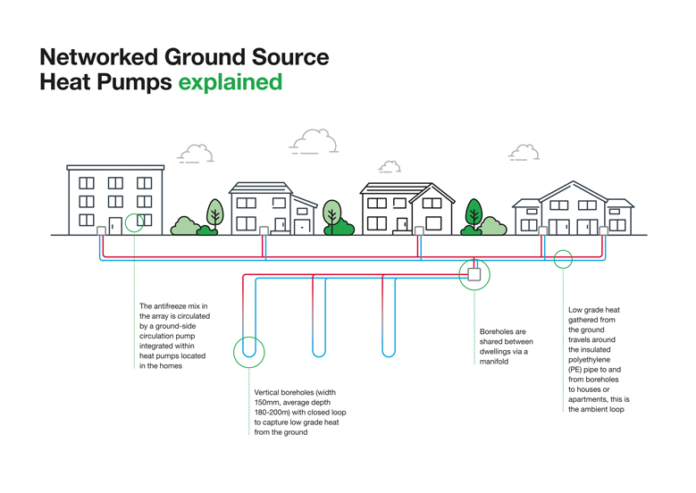
According to the Times, in 2025 UK households effectively paid ยฃ810 million for Scottish wind farms to stand idle, highlighting a growing problem in the countryโ€™s renewable energy sector. Here, Mike Torbitt, managing director of resistor manufacturer Cressall, explores the causes behind the UKโ€™s wind curtailment issue and explains how resistor technology can help stabilise the grid and make the most of renewable energy.

How curtailment works

Curtailment happens when wind farms are asked to reduce or shut down generation of electricity, even where generation conditions are optimal. The reason is rarely the turbines themselves. It usually happens when the grid cannot take in the amount of power being generated, or there is no demand for it at that time.

On paper it sounds like an occasional technicality. In practice, it has become a regular issue of the UKโ€™s energy system. Every time turbines are switched off, revenue is lost, bills rise and carbon savings are wasted. For consumers, that means paying for energy that never reaches their homes โ€” a frustration that grows as wind makes up more and more of the power mix.

Most of the UKโ€™s wind power comes from Scotland, where land and wind resources are plentiful. The challenge is transporting that electricity to where itโ€™s needed. Transmission south of the border is limited so when output surges, the system cannot always absorb it. In June 2025, the Financial Times revealed that wind farms were paid to switch off 13 per cent of the time they could otherwise have been producing.

The costs are also mounting. Operators are compensated for shutting down, but those payments ultimately come from household energy bills. Environmentally, the waste is even starker: each megawatt-hour curtailed means another load of carbon that could have been avoided โ€” the equivalent of the electricity used by around 330 homes.

The scale is particularly clear in Scotland: according to Recharge News, the nationโ€™s grid-constrained producers curtailed 37 per cent of their output in the first half of 2025. That amounts to about 1.5 terawatt-hours of lost clean energy โ€” enough to power 1.2 million homes for a year.

How to capture lost power

There is no single solution to preventing curtailment, but there are possible ways forward. New grid infrastructure and cross-border interconnectors would allow Scottish surplus wind to reach areas of higher demand. Vast storage schemes, from factories producing batteries to pumped hydro, would be capable of soaking up excess power and delivering it at the appropriate moment. More advanced control systems would also even out the peaks and troughs of supply and demand.

Protective technologies have an important function in surge control in renewable energy. Resistors act as thermal valves for high-voltage systems, dissipating excessive electrical power as heat to prevent overvoltage or equipment loss. Dynamic braking resistors (DBRs), for example, can be connected to generator circuits or inverters to absorb sudden spikes in power output, helping to stabilise voltage and maintain grid frequency.

Elsewhere, neutral earthing resistors (NERs) limit fault currents in high-voltage direct current (HVDC) systems and protect transformers and switchgear against thermal and mechanical stress. Properly engineered NERs ensure that the system can safely tolerate transient faults without triggering unnecessary trips, maintaining grid reliability and stability.

By incorporating DBRs and NERs, energy systems can safely handle the variable nature of renewable generation, absorbing or redirecting excess energy rather than wasting it. This improves overall grid efficiency and allows a higher proportion of renewable energy to reach consumers.

Curtailment is not just about wasted energy. Itโ€™s about missing the opportunity to cut carbon, lower bills and strengthen the UKโ€™s energy security. With the right infrastructure and the right protective systems in place, the country can capture far more of the renewable power already being produced.

Cressall provides expert NER and DBR resistor solutions to help grids safely manage renewable energy surges. For more information and to view technical datasheets, visit the website.

Billions in grid connection rebates going unclaimed as UK developers miss out on โ€˜free moneyโ€™

Vattenfall IDNOโ€™s new consultancy service aims to close the knowledge gap after 65% of decision-makers admit theyโ€™ve never heard of IDNOs

A shocking knowledge gap is costing UK developers and the public sector billions of pounds in missed funding. According to Vattenfall IDNO, a regulated Independent Distribution Network Operator, 65% of Facilities Managers, Energy and Sustainability Managers, and Development Directors theyโ€™ve spoken to were not aware of the role IDNOs can play in reducing project costs.

At the heart of this oversight is the Asset Adoption Value (AAV) โ€” a regulated rebate paid when an IDNO adopts the grid connection assets required for a new connection. The size of the AAVs is based on the type and size of the grid connection and can significantly reduce the overall cost of electrical grid upgrades but are frequently overlooked, or claimed by contractors without the client ever knowing.

โ€œDevelopers are missing a trick,โ€ says Suzanna Lashford, Head of Business Development at Vattenfall IDNO. โ€œThis is effectively free money โ€” a regulated rebate that offsets capital expenditure. Yet itโ€™s still flying under the radar for more than half of the people involved in procuring new grid connections within the public sector and the wider construction industry.โ€

This knowledge gap is particularly relevant to the public sector, where upgrades for EV infrastructure, electric boilers, decarbonisation or new building projects routinely struggle for funding.

Simple grid connections: A game-changer for sub-2MVA projects

To close the knowledge gap and simplify the process, Vattenfall IDNO has launched Simple Grid Connections, a new consultancy service specifically designed for commercial developers, UK businesses, and public sector organisations requiring grid connections under 2MVA.

For just ยฃ1500, the service provides:

  • Expert analysis to find the most cost-effective Point of Connection
  • Full support for grid connection applications and amendments
  • A mini tender process to reduce contestable works costs
  • A detailed quote including an Asset Adoption rebate
  • Free legal support for wayleaves and land rights
  • A money-back guarantee: If they cannot save the client money on their overall connection fees, they will refund the Vattenfall consultancy fees.

โ€œWe created the Simple Grid Connections service to take the pain and confusion out of grid upgrades,โ€ says Bilgin Oralerkaya, a Senior Business Developer, and Manager of grid consultancy service at Vattenfall IDNO.

โ€œThereโ€™s so much money being left on the table โ€“ whilst carbon reduction and net zero projects struggle for funding โ€“ it’s a crazy situation! Commercial grid applications can be complex for people who are not familiar with the process but our team has developed a powerful tool to help clients identify a suitable Point of Connection and can submit grid applications on their behalf, which massively reduces the administrative burden, maximises the chances their application being approved, and saves them money at the same time.โ€

Billions in AAVs unclaimed

With construction costs rising and sustainability targets tightening, every pound matters but industry insiders estimate that billions of pounds in potential AAV rebates remain unclaimed across the UK due to lack of awareness or poor advice.

Ron Plunz, Director at Alumno Group that designs and builds student accommodation, has benefitted directly from Vattenfallโ€™s service:

โ€œWeโ€™re incredibly glad we reached out to Vattenfall IDNO to adopt the grid connection for our latest student accommodation project. The original quote from the local DNO for contestable works was significantly higher than expected, but Vattenfall offered a much more competitive solution. Their Asset Adoption Value and tendering process helped us reduce our connection fees by 95% โ€” a huge saving that made a real difference to the viability of the scheme. Their support, transparency, and expertise were outstanding throughout.โ€

The message is clear: grid upgrades cost less if developers work directly with an IDNO to adopt the assets. With the launch of Simple Grid Connections, Vattenfall IDNO is arming the UK property sector with the tools โ€” and the knowledge โ€” to make smarter, more affordable energy infrastructure decisions.

www.vattenfall.co.uk


This article appeared in the October 2025 issue of Energy Manager magazine. Subscribe here.

Diocese of Guildford completes first phase decarbonisation journey with heat pump installations across 11 schoolsย 

Two Viessmann Vitocal 200-A Pro 64 kW air source heat pumps have been installed at The Chandler CofE Primary School in Witley, near Godalming.

The Diocese of Guildford has taken a significant first step towards decarbonising its entire school estate, by installing low-carbon heating systems at 11 schools across Surrey. The move is part of a long-term sustainability programme supported by funding from the governmentโ€™s Public Sector Decarbonisation Scheme (PSDS), which is administered by Salix Finance.ย 

Back in 2021, the Diocese โ€“ backed by specialist consultancy ReEnergise โ€“ successfully applied for a Low Carbon Skills Fund (LCSF) grant, also administered by Salix Finance. This funding enabled ReEnergise and the Diocese jointly to develop detailed heat decarbonisation plans (HDPs) for 41 Church of England schools across Surrey. ย 

Using the data from these plans, ReEnergise helped the Diocese to understand the estateโ€™s energy performance, build a programme of action, and submit a PSDS grant application in late 2022 for the capital works for the first tranche of schools. With a focus on investing in schools with ageing, fossil-fuel heating systems, and targeting the most carbon- and cost-effective sites for replacement, the grant was approved in early 2023. 

Nigel Aylwin-Foster, Director at ReEnergise, said, โ€œThe LCSF and PSDS grant allocation and administration processes are technically and commercially rigorous, such that any education authority will need expert support in developing and submitting credible and compelling applications. It fell to us to support the Diocese of Guildford with their applications, both of which were successful. At ReEnergise, we are proud of our 100% success rate in PSDS applications.โ€ 

The delivery and installation phase began in mid-2023, with ReEnergise acting as project managers. At this stage, detailed heat loss calculations and energy efficiency audits were carried out to confirm the expected carbon savings that would come from the project. 

Following a competitive tender process, Viessmann Climate Solutions was selected as the heat pump technology supplier, providing air source heat pump systems tailored to each schoolโ€™s requirements.  

Jonathan Grist, Commercial Sales Director at Viessmann Climate Solutions UK, said: โ€œIt has been great to partner again with ReEnergise, who are incredibly experienced and knowledgeable in school decarbonisation programmes. Besides Viessmannโ€™s role as a technology supplier, weโ€™ve enjoyed helping to educate children and staff at the schools in how heat pumps work.  

โ€œOur customers know we are never far away. Now the heat pumps are installed, weโ€™re continuing to support the Diocese and ReEnergise with remote energy and performance monitoring, ensuring the heating systems are optimised for energy efficiency.โ€โ€ฏ 

The units ranged from the compact 10 kW Vitocal 150-A heat pump at Newdigate Pre-School to a 384 kW system using three Vitocal 200-A Pro units at The Priory School in Dorking. In total, 15 individual systems were installed across 11 schools, with the works carried out by Aston Cord Energy Services Ltd between July 2024 and March 2025. 

Simon Hayes, Managing Director at Aston Cord Energy Services said: โ€œDelivering decarbonisation during term time in live school environments brings unique challenges, requiring meticulous planning and execution. Iโ€™m proud of the Aston Cord team for their professionalism and adaptability throughout.โ€ 

Now fully commissioned and operational, the new systems are expected to save over 466 tonnes of CO2 annually due to the removal of fossil fuel heating. They will also reduce total energy use by almost 1.8 million kWh, due to the much greater efficiency of heat pumps compared to gas boilers. This equates to a 70% reduction in total annual energy consumption across the upgraded schools. 

Mike Giles, School Buildings & Estates Manager for the Diocese of Guildford said: โ€œโ€‹โ€‹With the support of the PSDS, we have taken a vital first step toward our sustainability goals. These 11 installations are just the beginning. The heat decarbonisation plans and first PSDS grant have laid strong foundations upon which we can continue to build moving forward.โ€  

The PSDS installation of air source heat pumps has provided schools with vital funding to replace outdated, fossil-fuel heating systems with cleaner, more efficient alternatives. For many schools, it has been a great opportunity to make significant progress toward Net Zero, reduce energy bills, improve learning environments for pupils and encourage further pupil awareness of sustainability.  

In the future, it is hoped that the project will serve as a blueprint for other educational authorities, Dioceses and trusts embarking on their own decarbonisation journeys. 

The 11 Diocese of Guildford schools with new heat pumps are: 

  • Busbridge C of E Junior School 
  • Chilworth C of E Infant School 
  • Crookham C of E Infant School 
  • Newdigate C of E Infant School 
  • St Bartholomew’s C of E Primary School 
  • St Matthew’s C of E Infant School 
  • St Peter’s C of E Junior School, Farnborough 
  • St Peter’s C of E Primary School, Farnham 
  • The Chandler C of E Junior School 
  • The Priory C of E Secondary School Dorking 
  • Wonersh and Shamley Green C of E Primary School 

A circular future for road construction

Andrew Leah, General Manager at Duraproducts

Effective water management through the installation of drainage systems and units is becoming increasingly critical for the future due to accelerating climate change. Disrupted water cycles and extreme weather, particularly flooding, are intensifying meaning construction engineers require a solution which can quickly and efficiently directing rainwater away from key urban areas. This not only prevents water damage to properties and infrastructure but can also control how the water enters important systems, like sewers.

A material focus

However, traditional water management solutions can be heavily reliant on materials such as concrete, presenting significant environmental challenges. The energy-intensive production of concrete, coupled with its limited recyclability, substantially contributes to embodied carbon emissions in road construction projects. Besides this, the rigid nature of concrete structures is failing to adapt to unpredictable weather events associated with climate change, leading to weakened protection and increased damage.

In contrast, water management solutions made from recycled and recyclable polymer offer a practical alternative. Their energy footprint is significantly lower, from local material acquisition to installation and eventual recovery and reuse. The lightweight, modular design enables efficient manual installation, removing reliance on heavy machinery and the unnecessary use of fossil fuels. Furthermore, the durability of recycled polymer units out-performs traditional alternatives in the face of extreme weather events.

A circular approach is gaining traction in the wider road construction sector, with Saudi Arabia’s world-first plastic road trial serving as a prime example. There, recycled polymer materials effectively replaced traditional asphalt, significantly reducing the high energy consumption and carbon emissions associated with its production. Proving polymerโ€™s effectiveness in a large-scale scenario, the pilot project pushed the long-overdue discussion on standardised processes for green road construction.

As water resources are being stretched to their limits and the harsh weather events increasingly frequent, the whole lifecycle of water management solutions must be considered to create truly energy-efficient and effective solutions that mitigate climate impacts but also reduce the industryโ€™s carbon footprint.

Framework support

Life Cycle Assessments (LCAs) have become important tools for accurately measuring the environmental footprint of construction projects, offering a comprehensive analysis of their cradle-to-grave impact. Embraced by planners, designers, and contractors, LCAs enable the comparison of materials and processes while also setting performance benchmarks and guiding the development of โ€˜greenโ€™ building codes. By integrating LCAs into decision-making, the industry accelerates the adoption of sustainable practices, driving more environmentally responsible construction. LCAs can play a crucial role in construction by providing a comprehensive evaluation of water consumption, depletion and availability, making them essential for both water scarcity and flooding. LCAs can help optimise water use, reduce environmental impact, and enhance resilience against flooding. With climate change intensifying extreme weather conditions leading to an increase in both scarcity and flooding, LCAs can provide the data and insights necessary to create more sustainable and water-conscious built environments.

Much like LCAs, there is a rising demand for Environmental Product Declarations (EPDs), which include Environmental Impact Assessments and Environmental Management Plans. Serving as key indicators of responsible environmental practices, EPDs are gaining traction not only for identifying potential environmental challenges but also for facilitating meaningful discussions with stakeholders to address these concerns. This growing demand underscores their role in enhancing transparency and credibility across the industry. While initial scepticism may arise regarding simplified models and assumptions, the standardized insights provided by EPDs far outweigh such concerns. EPDs can provide transparent, third-party verified data on the environmental impact of construction materials including their water consumption and contribution to flood resilience. By assessing productโ€™s water footprint and hydrological impact, EPDs help inform construction professionalsโ€™ decisions that support water conservation and flood mitigation strategies. EPDs can also be beneficial for identifying opportunities for water reuse and recycling in material production and building operations. By incorporating EPDs into building planning, the construction industry can reduce water consumption, improve flood resilience, and support long-term water sustainability. EPDs can be utilised to serve as an essential tool for building a more water-conscious and resilient future.

As technology continues to evolve and data becomes more accessible, the accuracy and reliability of both LCAs and EPDs will see significant improvements, reinforcing their essential role for industry professionals committed to achieving environmental transparency in their projects. Innovations such as artificial intelligence, machine learning and data tracking will enhance the precision of environmental impact assessments, increasing the accuracy of the insights into resources and sustainability performance.

As access to high-quality environmental data expands, LCAs and EPDs will become even more indispensable tools for architects, engineers, and developers striving to enhance sustainability, reduce carbon footprints, optimize resource efficiency, and promote responsible construction practices. Ultimately, this progress will drive the widespread adoption of eco-friendly materials, circular economy principles, and innovative green building solutions, shaping a more sustainable future for the construction industry.

Future outlook

Duraproducts, a pioneer in sustainable construction since 2003, has witnessed a surge in demand for its eco-friendly solutions and offers a variety of sustainable and efficient water management solutions. Manufactured from hydraulically efficient polymer materials, Duraproductsโ€™ combined kerbing and drainage solutions effectively protect surfaces with large useable volumes. To ensure large areas can be drained quickly and safely the units feature multiple inputs along the kerb line.

To reduce the challenges of climate change, the widespread transition to innovative, energy-efficient water management solutions is on the horizon. For those involved in building and design โ€“ contractors, architects, and designers โ€“ this presents a significant opportunity. Consciously selecting sustainable drainage materials, particularly those incorporating recycled polymers, not only demonstrates a commitment to the environment but also plays a critical role in making urban landscapes climate change resilient.

Duraproducts fosters circularity by creating environmentally friendly products that play an active role in reducing climate change. For more, visit https://www.duraproducts.co.uk/

The Power of Connection: How Peer-to-Peer Networking Drives Business Success

Claire Slade, Communications Manager, MEUC

In todayโ€™s complex utilities environment, no business can thrive in isolation. Market volatility, regulatory shifts, new technologies, and growing sustainability expectations mean that every organisation is navigating change on multiple fronts. Companies face unique challenges but also share common pressures – with that comes the opportunity to learn and collaborate.

This is the essence of peer-to-peer and B2B networking: building relationships, sharing knowledge, and creating solutions that benefit not only individual organisations but also the wider industry. At the MEUC, we see this every day, as members exchange insights, benchmark approaches, and collaborate on energy and water management solutions.

The Benefits

  • Shared knowledge and expertise. No two organisations are identical, yet many face similar issues: how to navigate volatile energy markets, negotiate contracts effectively, comply with regulations, or integrate new sustainability goals into procurement. Networking allows businesses to tap into the collective knowledge of their peers. Lessons learned by one organisationโ€”whether in hedging strategies, on-site generation, or demand flexibilityโ€”can quickly translate into new approaches for another.
  • Trustworthy, real-world insights. Advice from suppliers, consultants, and policymakers has its place, but nothing is quite as valuable as hearing directly from those โ€œin the trenches.โ€ Peer conversations are candid and rooted in lived experience. They can uncover both pitfalls to avoid and best practices worth replicating, giving businesses a clearer picture of what works in practice rather than theory.
  • Efficiency and problem-solving. Networking shortens the learning curve. Instead of spending weeks or months testing approaches in isolation, businesses can leapfrog challenges by learning from others who have already trialled solutions. This efficiency is particularly valuable when operating under tight budgets, timeframes, or regulatory deadlines.
  • Benchmarking and performance improvement. Peer-to-peer forums allow businesses to compare their performance and practices against others in their sector. This benchmarking provides a reality check and can highlight areas where improvement is neededโ€”or where an organisation is leading the way. For senior decision-makers, these insights can directly inform strategy.
  • Relationship building and collaboration opportunities. B2B networking isnโ€™t only about knowledge-sharing; it also lays the foundation for longer-term partnerships. Whether itโ€™s co-developing a sustainability project, collaborating on innovation pilots, or simply maintaining trusted contacts in the industry, these relationships often become a source of tangible business value.
  • Fostering Collaboration and Knowledge-Sharing. At MEUC, fostering these connections is at the heart of what we do. Our mission has always been to create spaces where major energy and water users can exchange ideas openly, share experiences, and collectively raise their voices in the marketplace and with policymakers.

Events that bring people together

Our flagship Buying & Using Utilities Live conferences and exhibitions are designed with networking front and centre. Each session brings together experts, suppliers, and end-users to discuss challenges and opportunities, while the exhibition floor and breaks provide the perfect environment for informal exchanges. Members consistently tell us that the most valuable takeaways often come from conversations in the margins – discussions sparked over coffee in the exhibition hall.

Targeted webinars and updates

Beyond major events, our regular webinars offer members the chance to engage with peers on specific issuesโ€”from electricity procurement to water regulation. These sessions are interactive, giving participants the chance to pose questions, share experiences, and hear from fellow professionals grappling with the same issues.

A trusted, independent community

What makes MEUC unique is its neutrality. As an independent body representing the interests of major users, we provide a safe space for open discussion. Members know they can share experiences candidly, without concern for sales pitches or agendas. This trust creates the conditions for genuine collaboration.

Supporter and partner collaboration

We also create avenues for members to engage constructively with suppliers and service providers. By framing these interactions around education and collaborationโ€”rather than simply salesโ€”we help build stronger, more productive relationships that benefit all parties.

A Community That Works Together

The challenges ahead for major energy and water users are significant: achieving net zero targets, adapting to market reforms, ensuring resilience in an era of climate uncertainty, and delivering value in tough economic conditions. No organisation can face these challenges alone.

For the MEUC Community, the value is immediate – practical insights, contacts, and solutions – and long-term, in the form of relationships that support their businesses for years to come.

In a rapidly changing landscape, the organisations that succeed will not be those that go it alone, but those that embrace the power of community. By connecting, collaborating, and sharing knowledge, MEUC members are not just keeping pace with change – they are helping to shape the future of how utilities are bought, managed, and used.

www.meucnetwork.co.uk  


This article appeared in the October 2025 issue of Energy Manager magazine. Subscribe here.